

Pollinator Post 4/2/26 (2)

The Wild Radish, Raphanus raphanistrum (family Brassicaceae) grows in abundance along the shoreline here. While the plants are considered a common weed, I often find interesting insects on them.
The Wild Radish, Raphanus raphanistrum is a member of the family Brassicaceae. The species is native to western Asia, Europe and parts of Northern Africa. It has been introduced into most parts of the world and is regarded as a habitat threatening invasive species in many areas. It spreads easily and is often found growing on roadsides and other disturbed ground.
The plant is an annual that grows up to 30 in. tall, variously branched to multi-stemmed, with distinct slender taproot which does not swell like that of the cultivated radish. The inflorescence is a lax raceme, terminal or arising from the leaf axil, with up to 42 flowers. The flowers have 4 white (sometimes yellow or purple-pink) petals, often with dark veins. The 4 upright sepals are shorter than the petals, and have sparse bulbous-based hairs. There are 6 stamens (2 short and 4 long) and one style with two stigmas. The flowers are a significant source of pollen and nectar for a variety of pollinators, especially honey bees during early spring. Female Mining Bees (Andrena) frequent this plant to obtain pollen and nectar. Other pollinators include cabbage white butterflies and a few hover flies (Syrphidae).
Wild radish (Raphanus raphanistrum) · iNaturalist



Wow, what happened to this Wild Radish? Many of its stems are enlarged and deformed, twisting this way and that.
This branch tip is so severely deformed that the flowers on it are placed in awkward angles.
This stem has been literally twisted into a pretzel! iNaturalist has helped identify these deformed structures as stem galls induced by Cynipid Gall Wasps, Phanacis sp. (family Cynipidae). What a surprise – I have always thought the Cynipids only induce galls on Oaks!
Phanacis is a genus of cynipid gall wasps (family Cynipidae) that induce galls specifically on herbaceous plants, particularly within the Asteraceae family. These tiny wasps, found in Europe, produce galls on plants where larvae develop and feed. They represent a distinct, non-oak galling cynipid wasps in the tribe Phanacidini.
Phanacis species create galls on the stems or roots of their host plants, which serve as nurseries and food sources for the developing larvae. Similar to other gall wasps, females lay eggs in plant tissues, inducing abnormal growth through chemical stimulation, forming a specialized gall.
There are quite a few Lady Beetles (family Coccinellidae) on the plant. Surely there must be food for them here?
A Seven-spotted Lady Beetle, Coccinella septempunctata (family Coccinellidae) is patrolling a deformed shoot tip with withered flowers.
Native to Europe, the Seven-spotted Lady Beetle, Coccinella septempunctata (family Coccinellidae) has been repeatedly introduced to North America as a biological control agent to reduce aphid numbers. It has since spread to many states, where it has outcompeted some native species, including the Coccinella. The Seven-spotted Ladybeetles are large; adults may reach a body length of 0.5 in. Their distinctive spots and conspicuous colors warn of their toxicity, making them unappealing to predators. When threatened, the beetles can secrete a fluid from joints in their legs which gives them a foul taste.
Searching hard with my macro lens, I finally found some tiny aphids clustered on a young developing seed pod. iNaturalist has helped identify them as Turnip Aphids, Lipaphis pseudobrassicae (family Aphididae).
Ah, the aphids are attacking the flower buds as well. They are mainly concentrated at the shoot tips.
Turnip Aphids, Lipaphis pseudobrassicae (family Aphididae) are prolific pests primarily affecting cruciferous crops such as turnip, mustard, radish, cabbage, and broccoli. They are known for rapid reproduction, producing up to 25 generations per year in warm climates. Turnip Aphids are small measuring roughly 1.4 to 2.4 mm in length. They are typically pale greenish-yellow, grayish-green, or olive green. Their bodies may be covered in a light, white waxy substance. They are commonly found in dense colonies on the undersides of leaves and on terminal flowering spikes. These aphids feed by sucking plant sap, which causes direct physical damage and leaves the plant susceptible to viruses. Heavy infestations lead to stunted growth, yellowing foliage, leaf curling or cupping, and potentially plant death. Turnip Aphids are highly effective vectors for plant viruses, capable of transmitting over 10 different types.
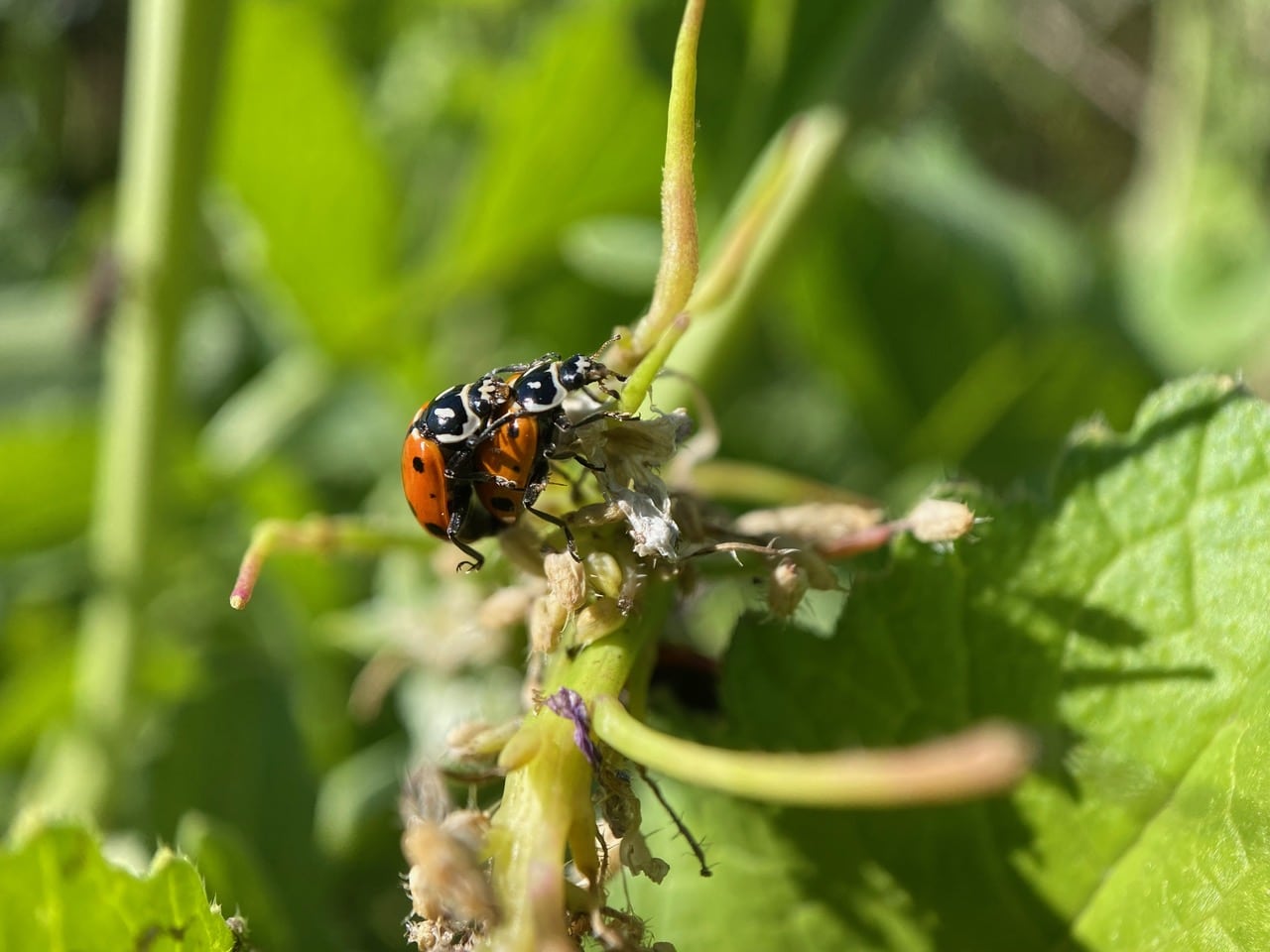
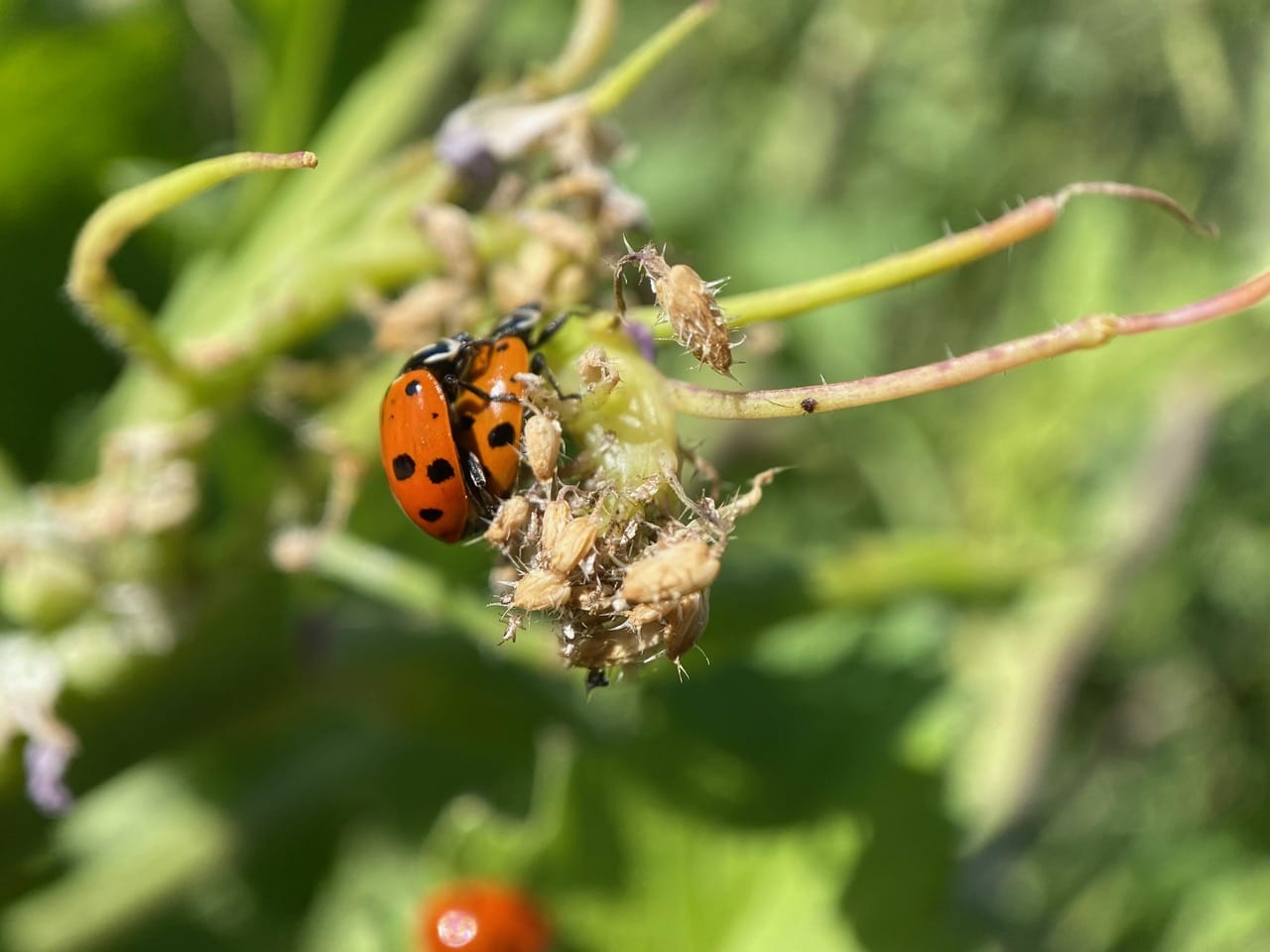
Now that I have found the aphids on the plant, it is not surprising to see a mating pair of Convergent Lady Beetles taking a stroll through the withered flowers ravaged by aphids. Sex does not have to preclude food!
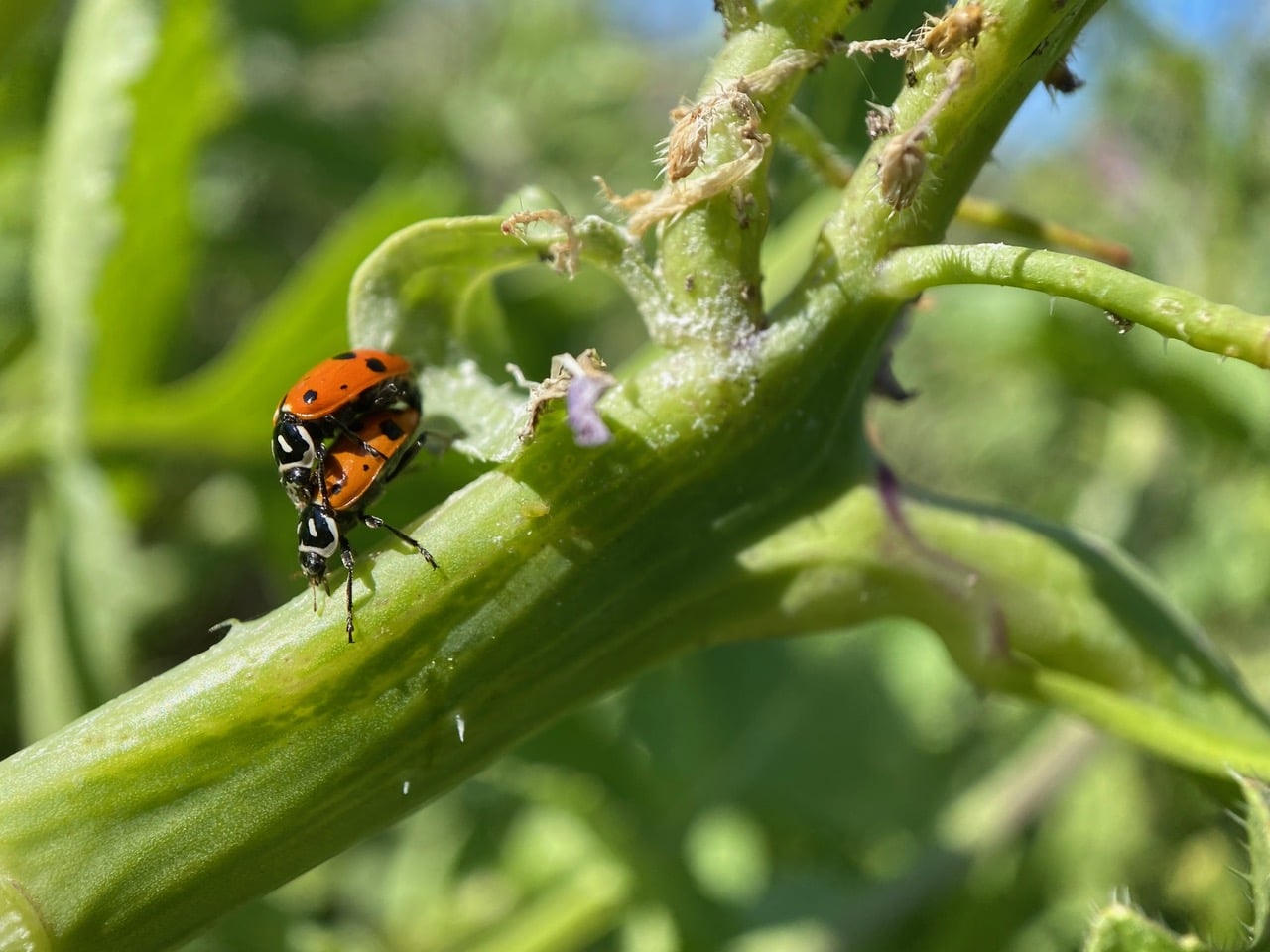
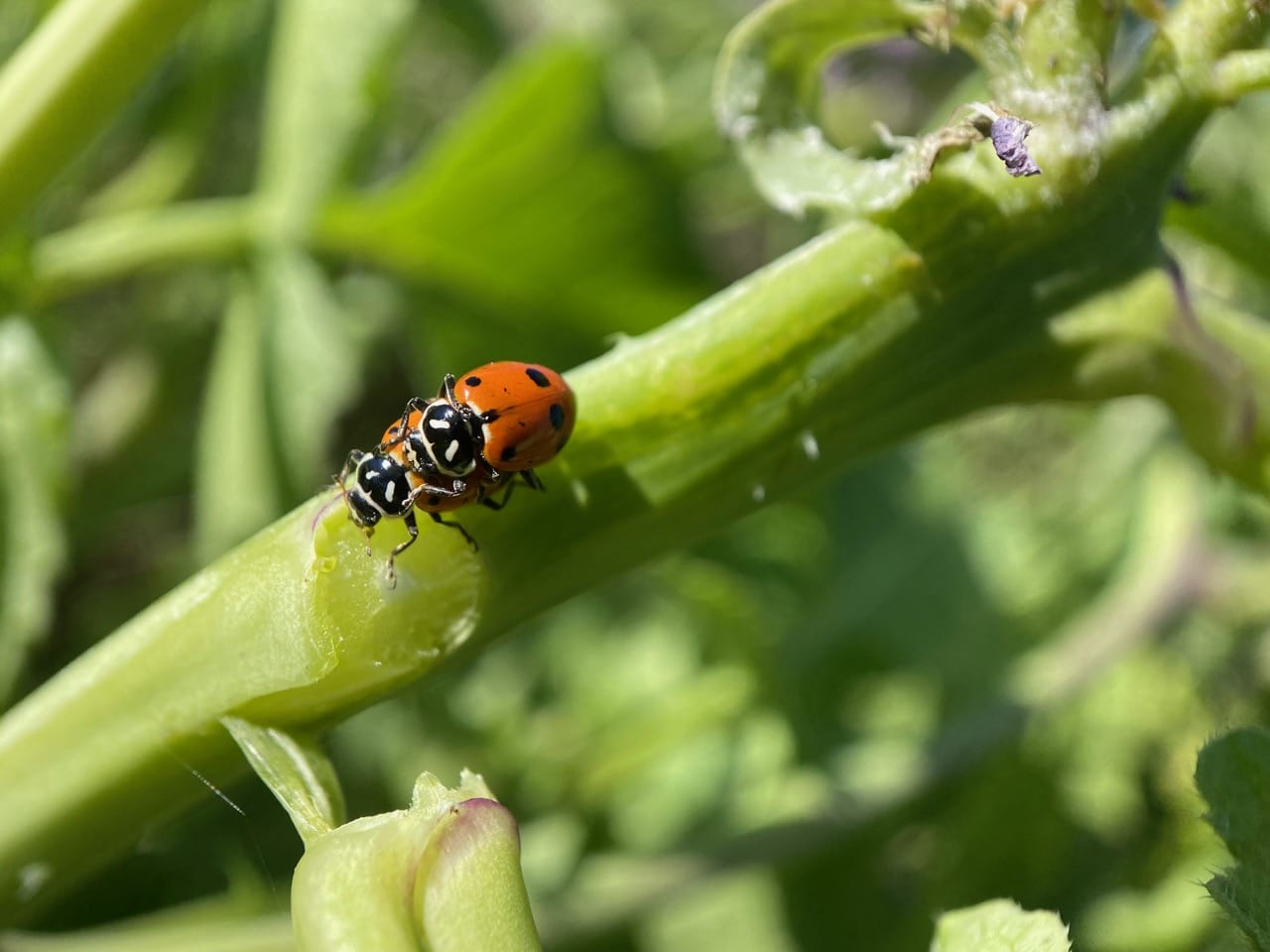
The female beetle at the bottom is doing all the walking, while the male goes for the ride, their genitals engaged.
I think only the female lady beetle gets to feed in this position.
The pair finally descends the stem from the withered flowers, still an intact unit.
The two converging white lines on the black pronotum give this species of lady beetles their name Convergent Lady Beetles, Hippodamia convergens. Like other lady beetles, they are voracious predators of aphids as adults as well as larvae.
The Convergent Lady Beetle, Hippodamia convergens (family Coccinellidae) is one of the most common lady beetle species in North America, widely recognized for its role in biological pest control. These beetles are found across various habitats, including forests, grasslands, and suburban gardens. The beetles are dome-shaped, typically measuring 4-7 mm in length. They are named for the two white markings on the thorax that angle toward each other. The orange-red elytra are usually marked with varying numbers of black spots, but some spotless individuals are sometimes seen. The species is known for distinct migration patterns, often moving from agricultural areas to mountainous regions to overwinter in large aggregations.
While widely sold as a biocontrol agent for gardens and greenhouses, some experts caution against releasing purchased beetles. Purchased beetles are often collected illegally from the wild rather than reared, which can affect native populations in their natural habitats. Additionally, they may leave the release area quickly or introduced pathogens to local lady beetle fauna.
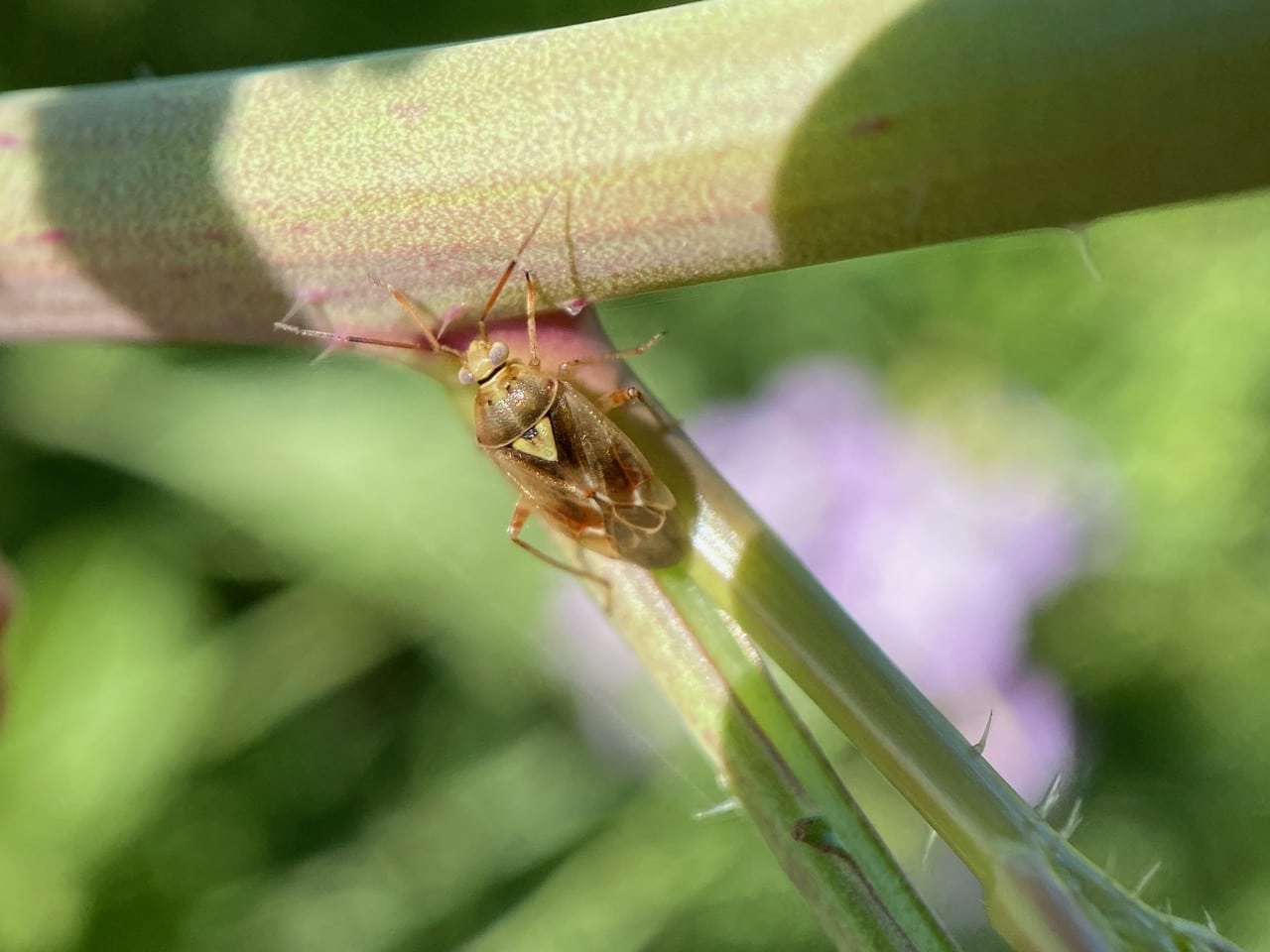
A Western Tarnished Plant Bug, Lygus hesperus (family Miridae) is on the move on the Wild Radish.
Commonly referred to as Lygus Bugs, the species is a serious pest on strawberry in the Central Coast of California. Adults are about 6 mm long, oval and rather flattened. They are greenish or brownish and have reddish-brown markings on their wings. In the center of their back is a distinct, bur small, yellow or pale green triangle that helps distinguish them from other insects. The cunei (singular cuneus), triangular-shaped areas near the end of the forewings are translucent, blending with the coloration of surrounding body parts. The immature forms are pale green and resemble aphids. They can be distinguished from aphids by their more rapid movements.
In general the Lygus Bug’s abundance is highest after winters of higher rainfall. This causes more lush grows of vegetation such as mustards and other weeds that support a higher abundance and survival of the bugs during the winter and spring. Damage to crops and garden plants are caused by the bugs’ piercing-sucking mouthparts that extract fluids from the plant tissues.
One useful feature in identifying members of the family Miridae or plant bugs is the presence of a cuneus; it is the triangular tip of the corium, the firm, horny part of the forewing, the hemielytron. The cuneus is visible in nearly all Miridae.

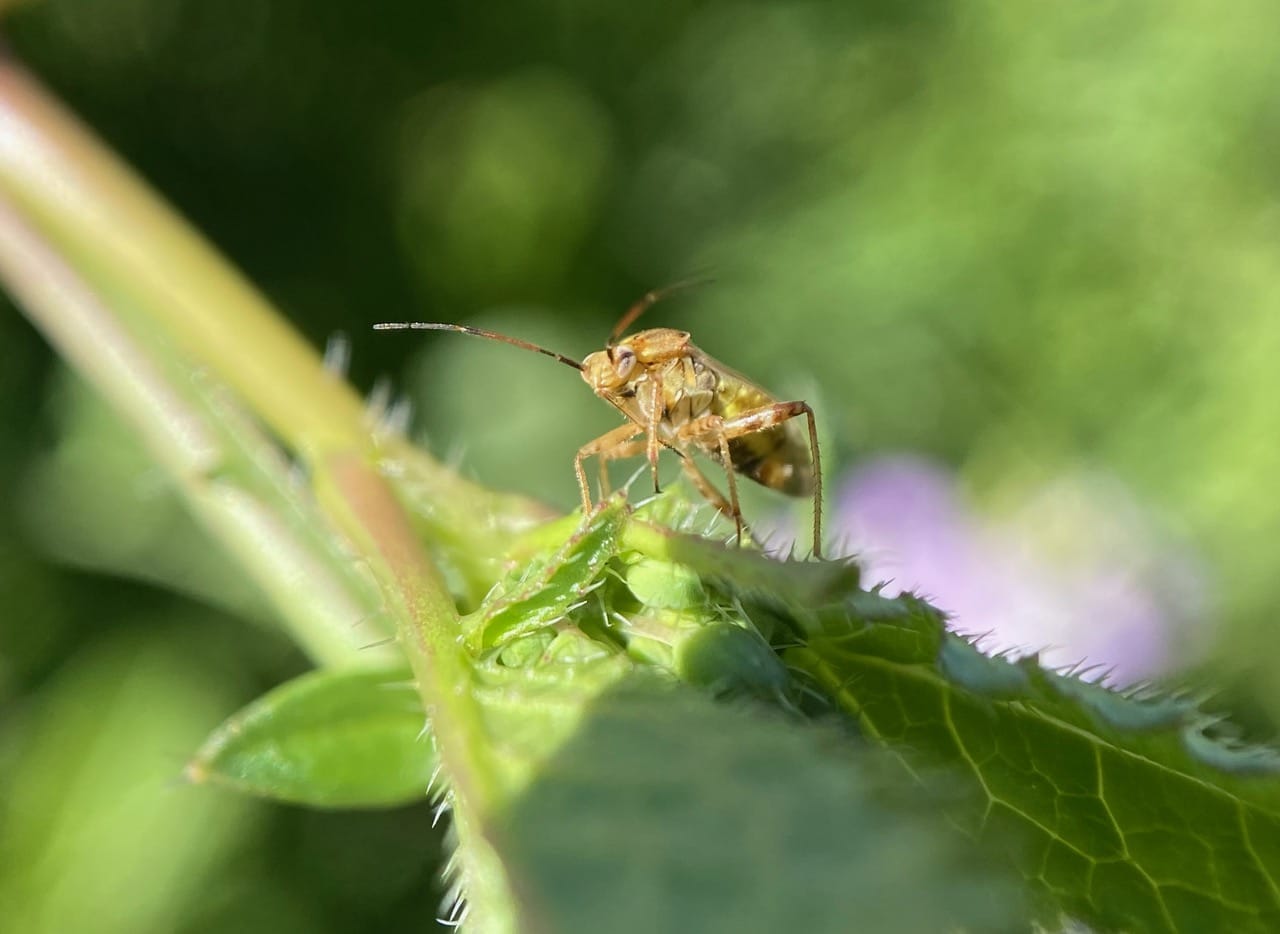
A ventral view of the Western Tarnished Plant Bug, Lygus hesperus (family Miridae) shows the rostrum, its piercing-sucking mouthparts that is folded under the body when not in use.
The defining feature of Hemipterans or “true bugs” is their “beak” or rostrum in which the modified mandibles and maxillae form a “stylet” which is sheathed within a modified labium. The stylet is capable of piercing tissues and sucking liquids, while the labium supports it. The stylet contains a channel for outward movement of saliva and digestive enzymes, and another channel for the inward movement of pre-digested liquid food. The rostrum is usually folded under the body when not in use.

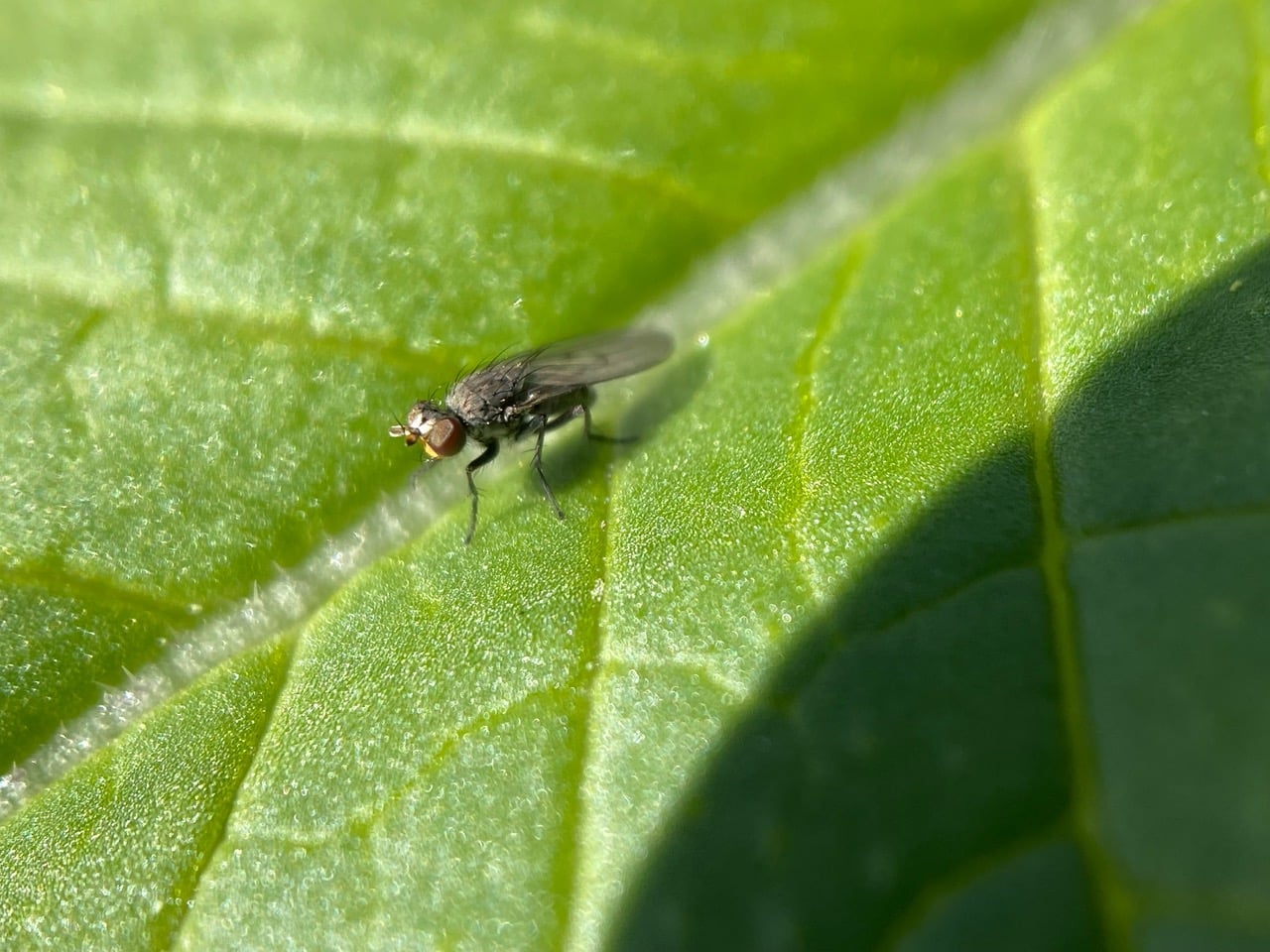
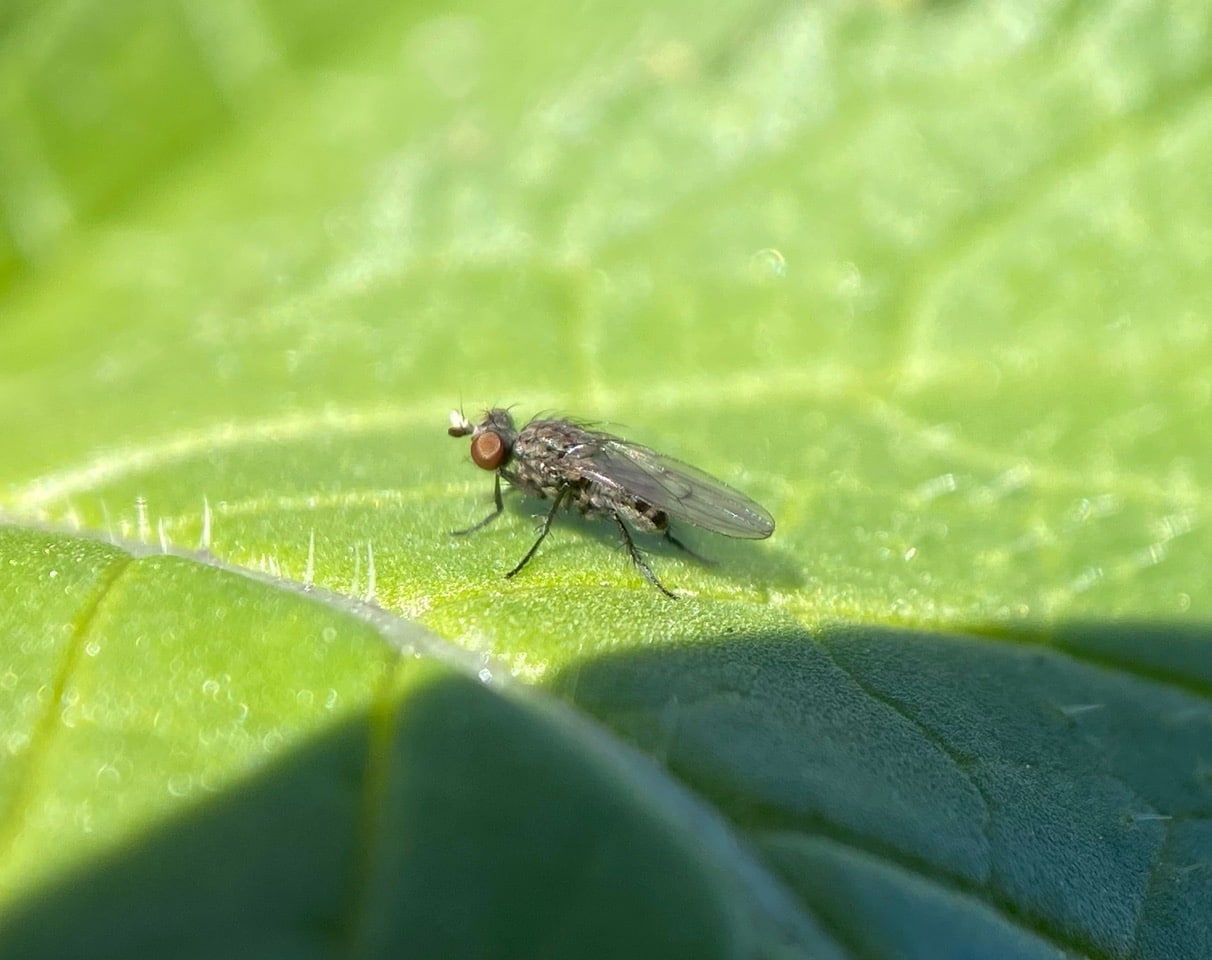
A small fly is perched on a Wild Radish leaf. iNaturalist has helped identify it as a member of the genus Schoenomyza (family Muscidae).
Flies in the genus Schoenomyza belong to the family Muscidae (which includes the house flies). While specific dietary data for this genus is limited, they share general feeding habits with other Muscidae, which are often saprophytic (feeding on decaying organic matter) or zoophagus (feeding on animals). The adult flies are often found on foliage and flower nectar. The adults may also feed on organic decaying materials, plant secretions, and animal feces. The larvae typically breed in and consume decaying organic matter, such as vegetation or corpses.
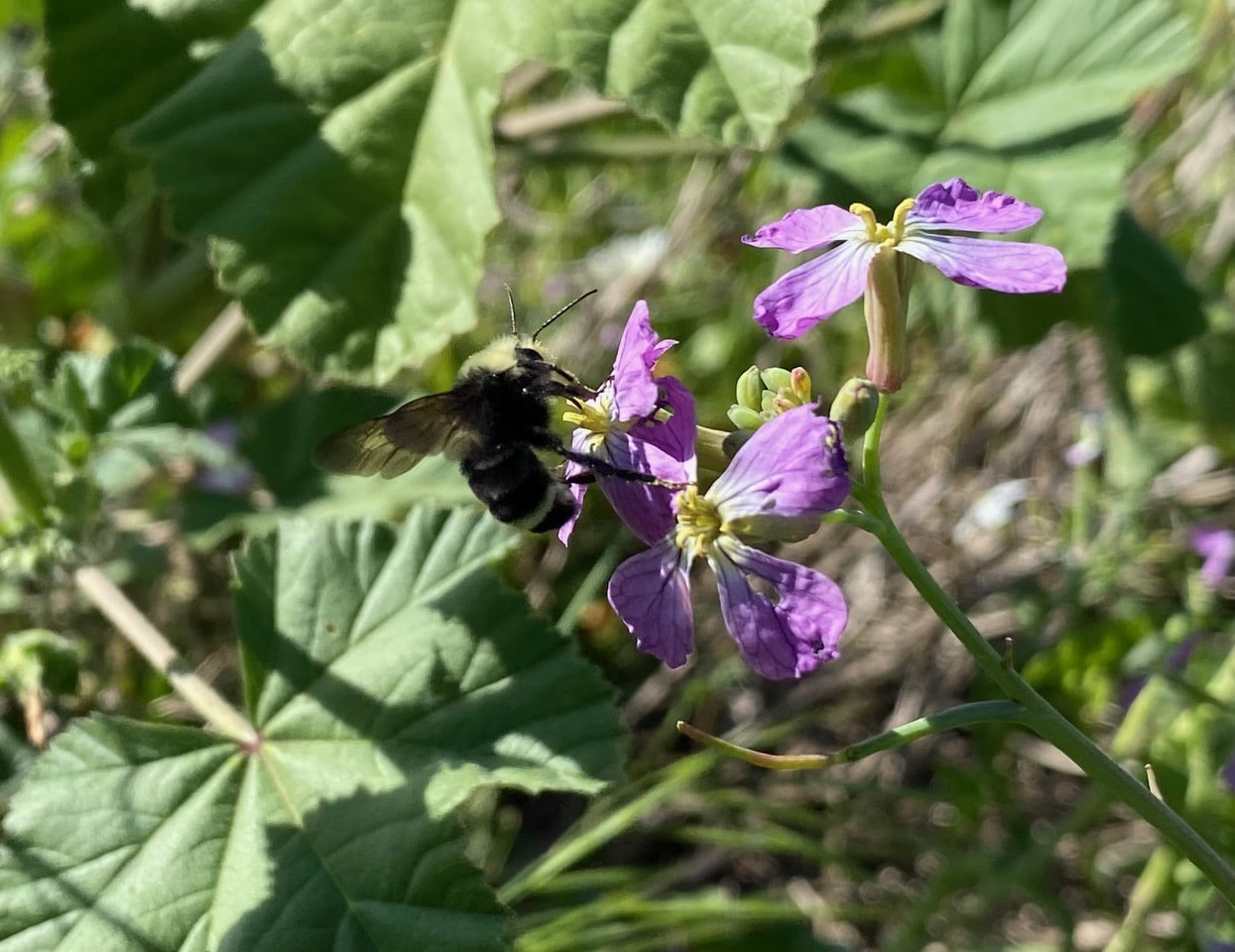
A Yellow-faced Bumble Bee, subgenus Pyrobombus (genus Bombus, family Apidae) is struggling to forage on the radish flowers blowing in the wind.
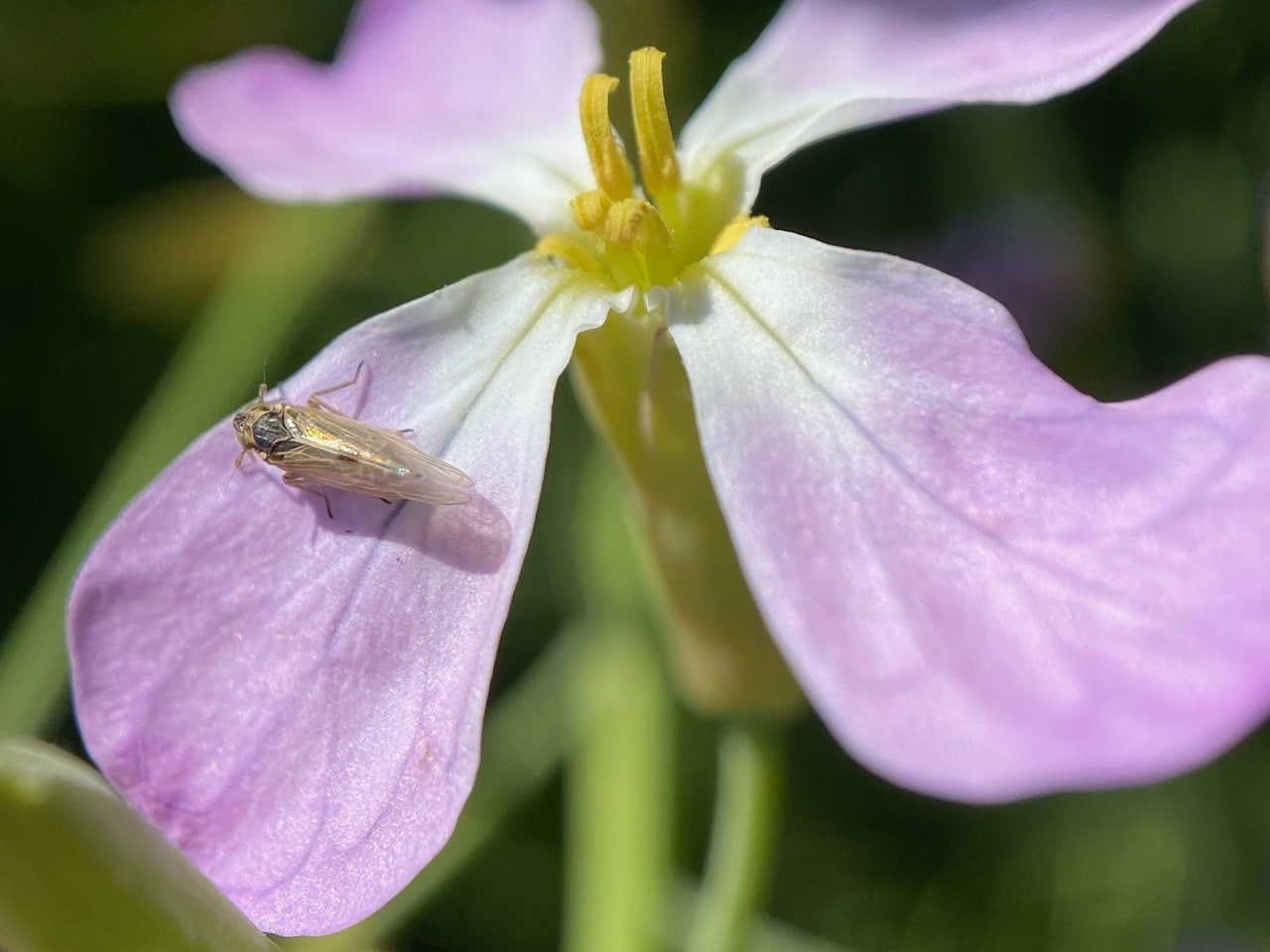
A small Hemipteran (“true bug”) with translucent wings that have a golden sheen is perched on a petal of Wild Radish. It hops away before I could take in more details. I think it might be a Leafhopper in the family Cicadellidae.
Over 380 species of Leafhoppers (family Cicadellidae) occur in California. Many different flower, fruit, and vegetable plants and woody ornamentals host leafhoppers. Some leafhoppers are specialists that feed on only several closely related plant species, while others are generalists that feed and move among many different plant species. Adult leafhoppers are relatively long compared with their width, wedge-shaped, and commonly less than 1/4 inch long. Leafhoppers have one or more long rows of small spines along the entire length of their hind legs. They are active insects that walk rapidly sideways or readily jump when disturbed. Like other Hemipterans, Leafhoppers have piercing-sucking mouthparts that they use to feed on plant sap. Their feeding causes leaves to develop pale specks (stippling). In heavy infestation, leaves and shoot tips may turn yellow then brown and curl and die. Leafhoppers also excrete honeydew on which blackish sooty mold grows, fouling foliage, fruit, and surfaces underneath infested plants. Some leafhopper species transmit plant pathogens that cause plant disease.