

Pollinator Post 4/18/24
It’s time to check on the California Pipevine, Aristolochia californica at the Tilden Regional Parks Botanic Garden. I never tire of observing the insect drama that plays out on the plant predictably every year.
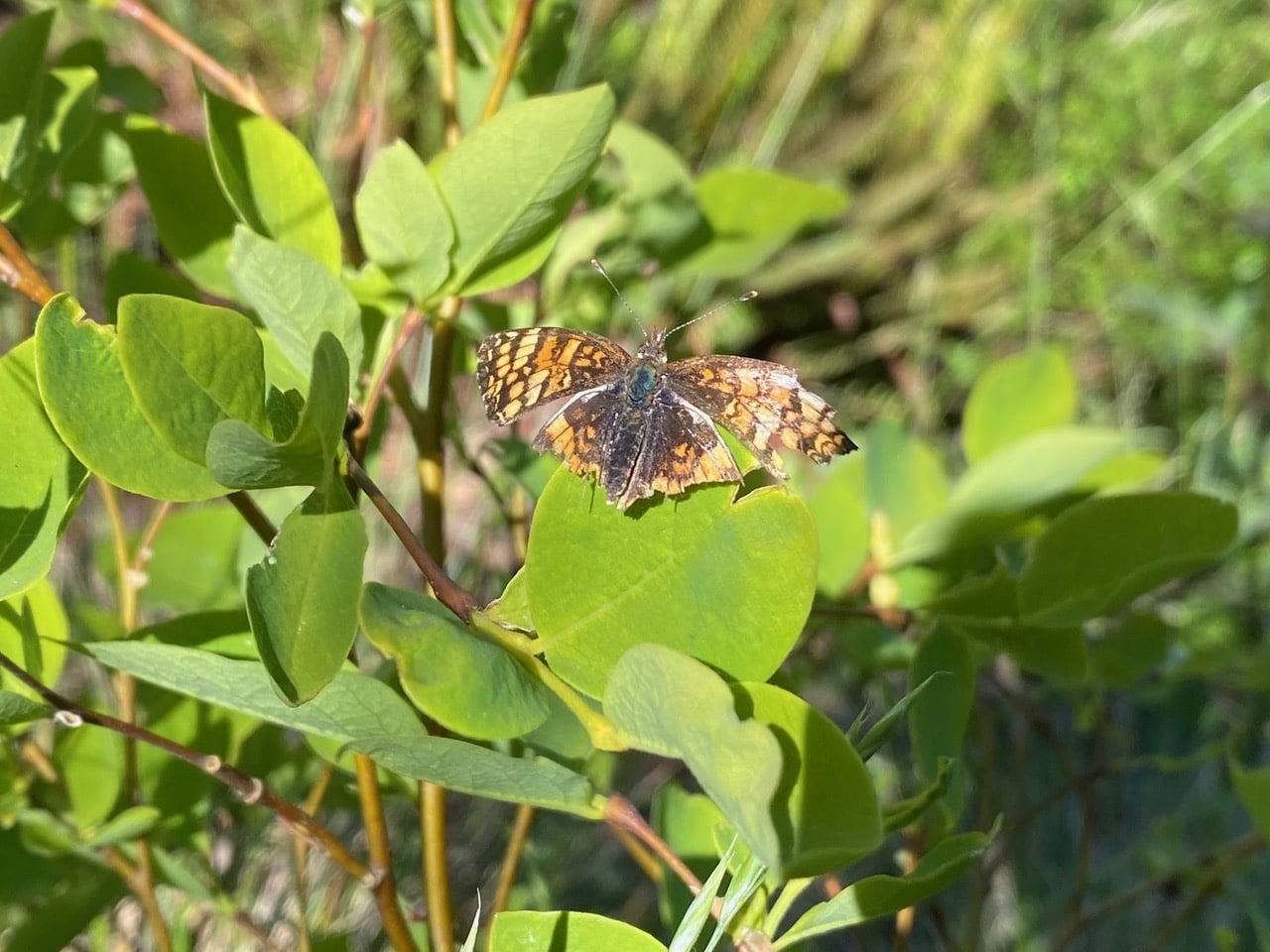
A small butterfly maneuvers itself into the morning sun on the foliage and spreads its wings. Wow, what happened to the poor thing? I didn’t know that a butterfly can still be alive with so much of its wings missing. There’s so little of its wings left it’s hard to identify it to species, but I think it might be a Field Crescent, Phyciodes pulchella (family Nymphalidae). The species’ season just started – there are 3-4 flights from April – October in lowland California. Caterpillar hosts include various Asters.
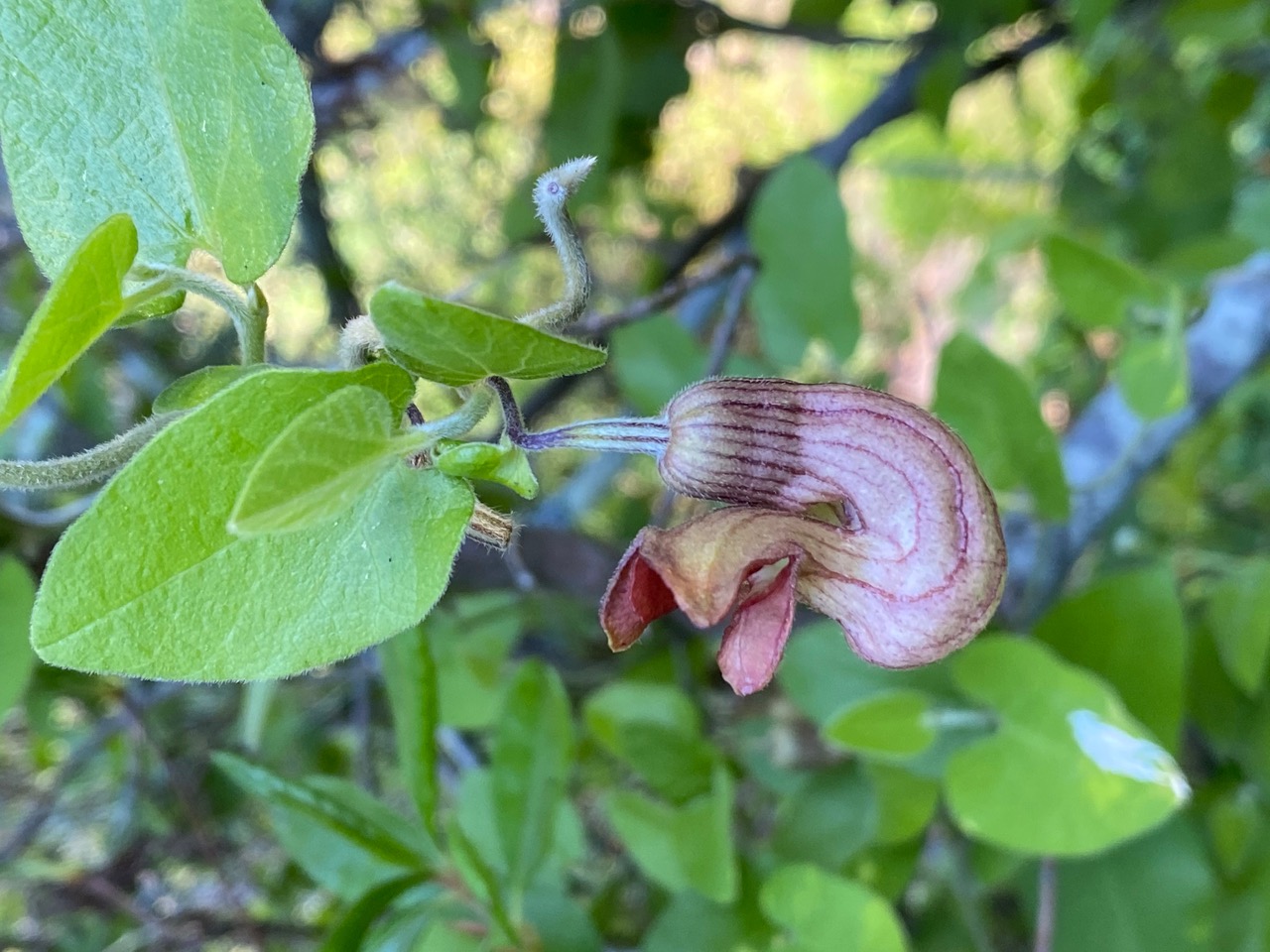





I make my way directly to the robust stand of California Pipevine in the garden. There are only a few flowers left on the old vines.
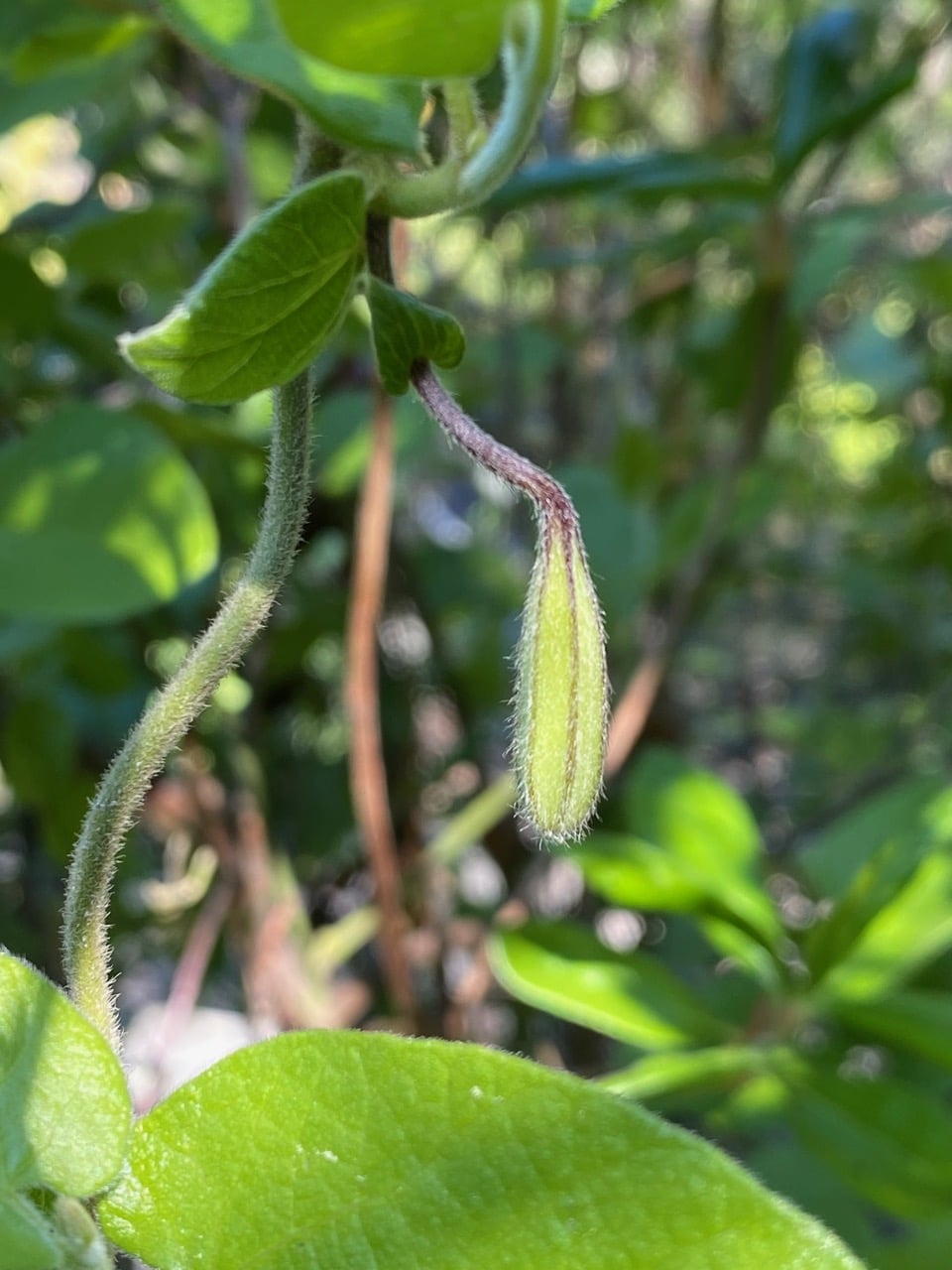
Small ribbed fruits have replaced the flowers.
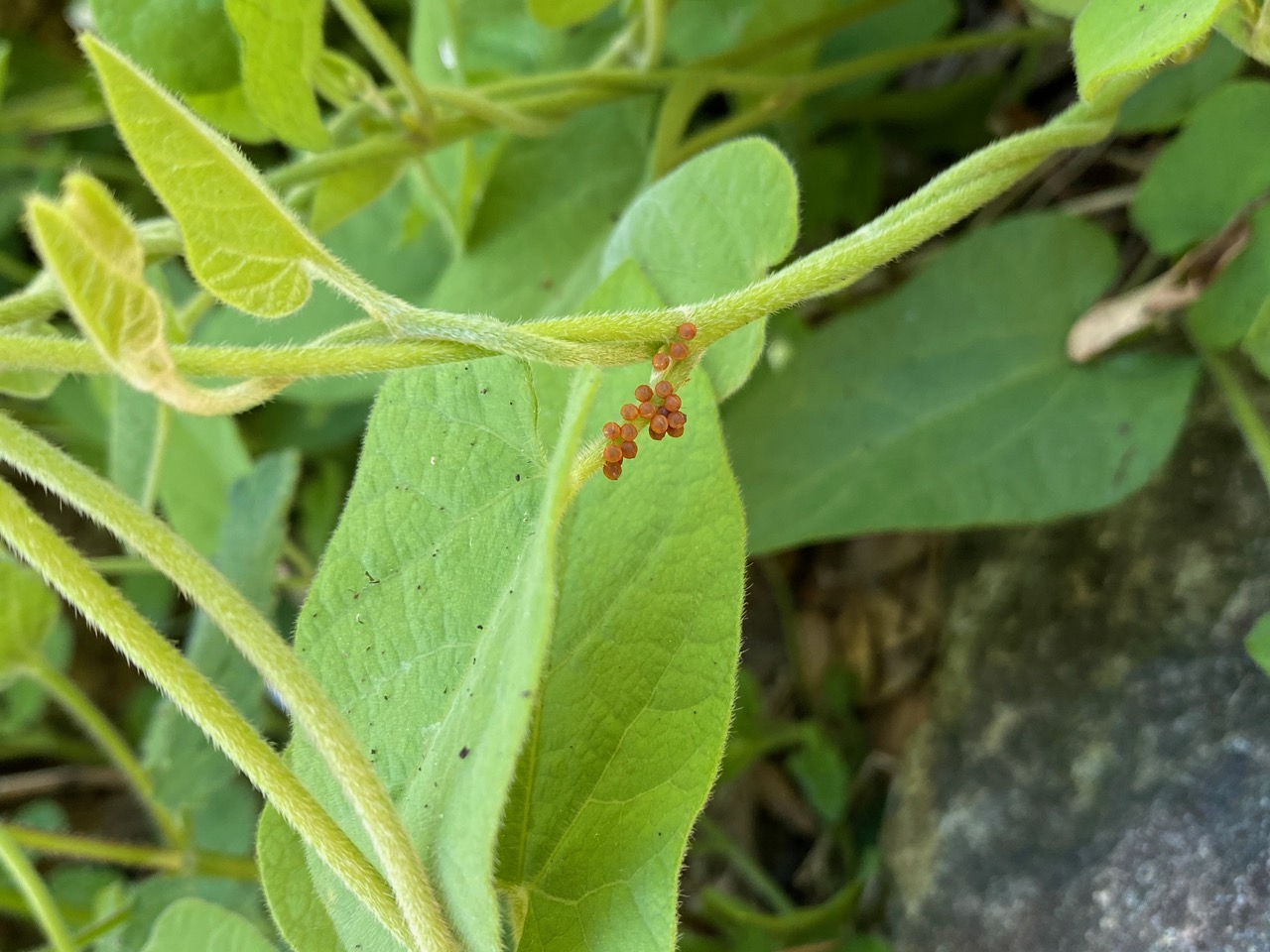
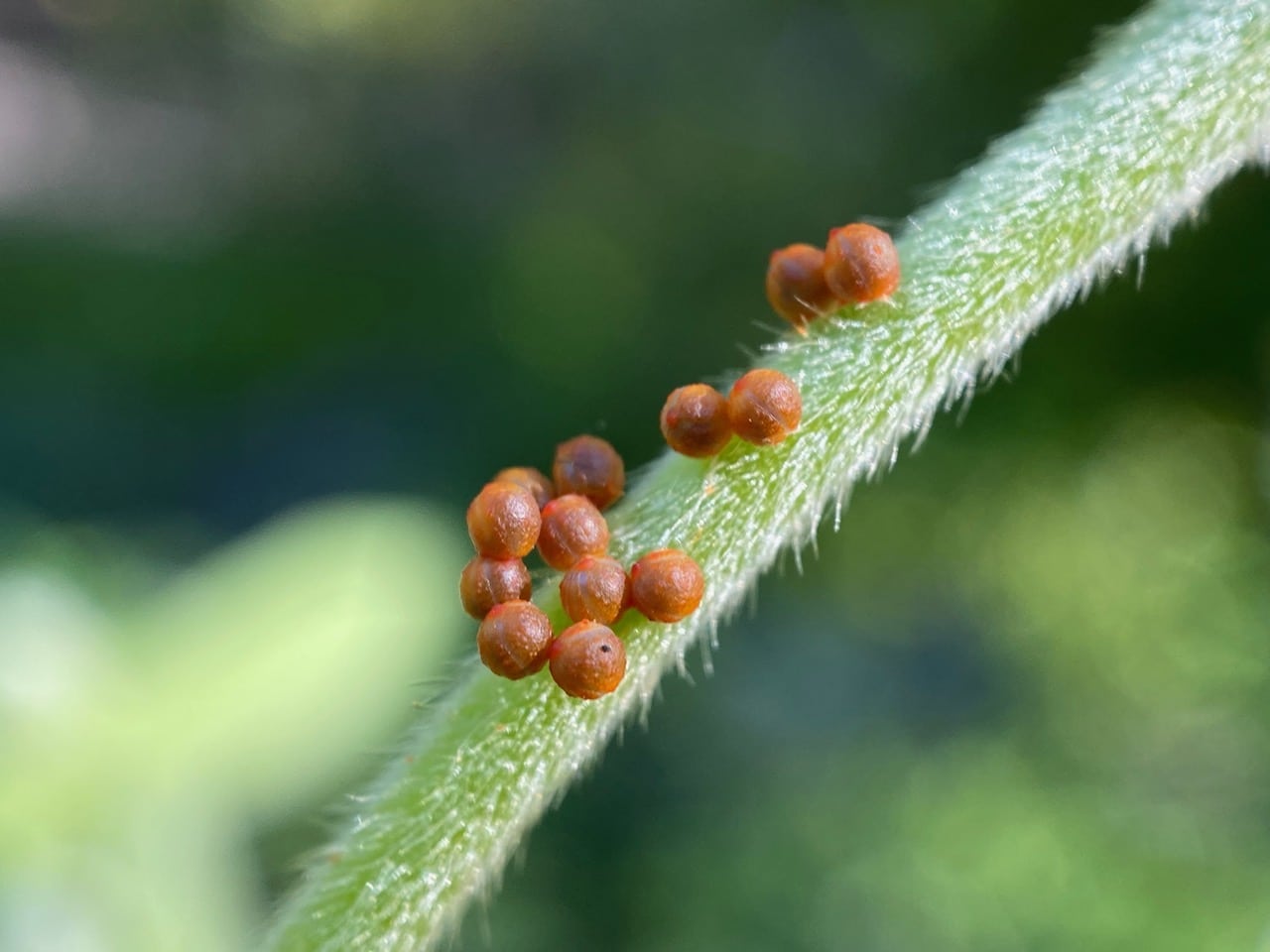
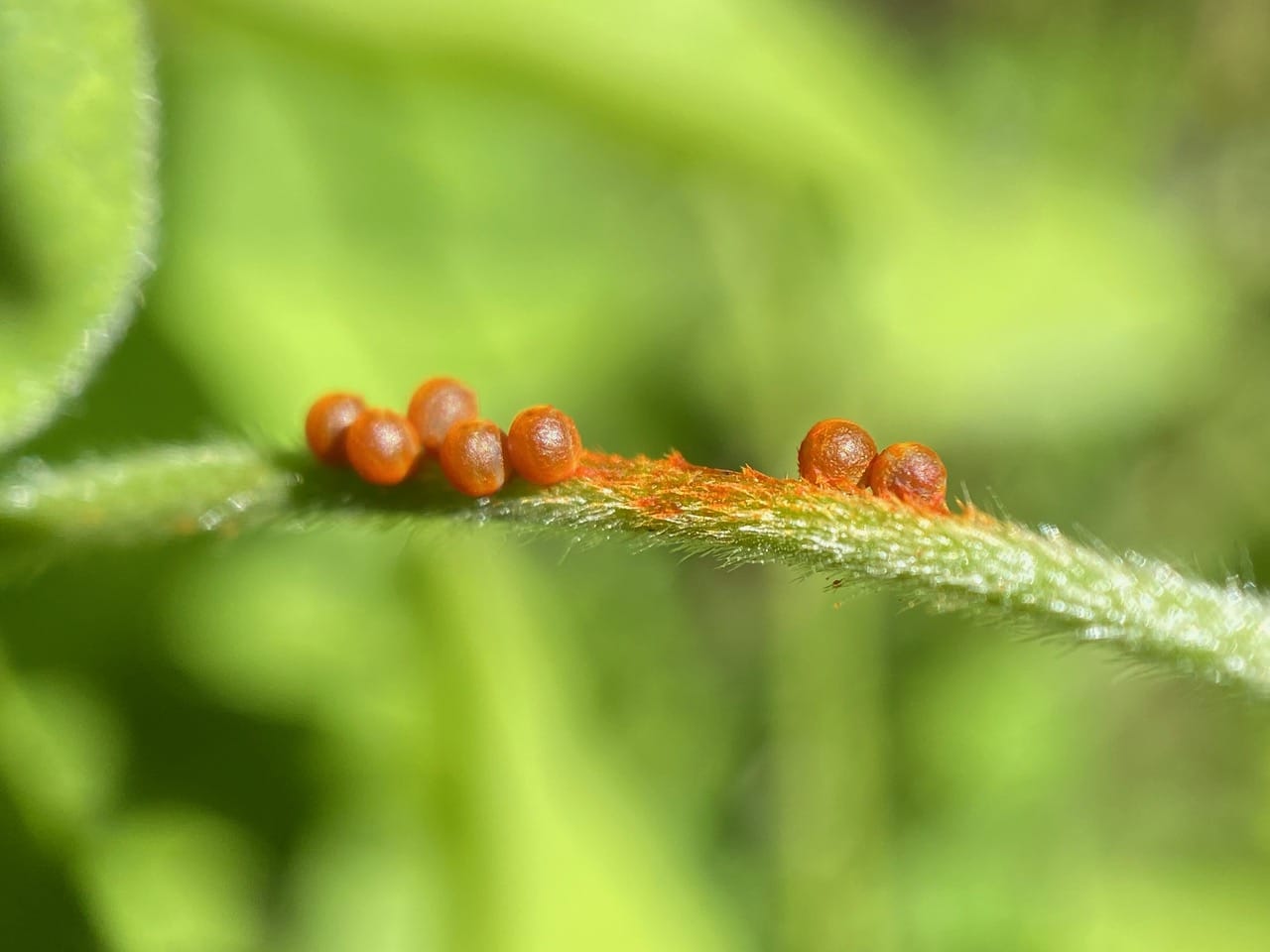
As I entered the garden, I encountered several Pipevine SwalIowtail butterflies flitting around. It’s a good sign that they might have started to reproduce. I check the low-growing young pipelines for their eggs. These are easy to spot, as they are orange.
The eggs are usually laid on the stems, or the underside of tender leaves.
Pipevine Swallowtails lay their eggs in small clusters of usually less than twenty, often on young leaves or stems of Pipevine plants, members of the genus Aristolochia. In California, the only species that their caterpillars eat are the California Pipevine, A. californica. Through the intricate slow dance of co-evolution, the pipevine swallowtail has co-opted the alkaloid chemicals that the plant produces to defend itself. Few other insects will chew on the pipevine plant because of its toxicity, but the pipevine caterpillars sequester the aristolochic acids in their bodies, making themselves toxic to potential predators. The chemical protection even survives metamorphosis and extends to the adult butterfly.
Some eggs seem to be missing in this cluster. Predation?
These eggs look empty. Have they hatched? But I thought the newly hatched caterpillars usually eat their own egg shells. I look around the plant for small caterpillars, but don’t find any.
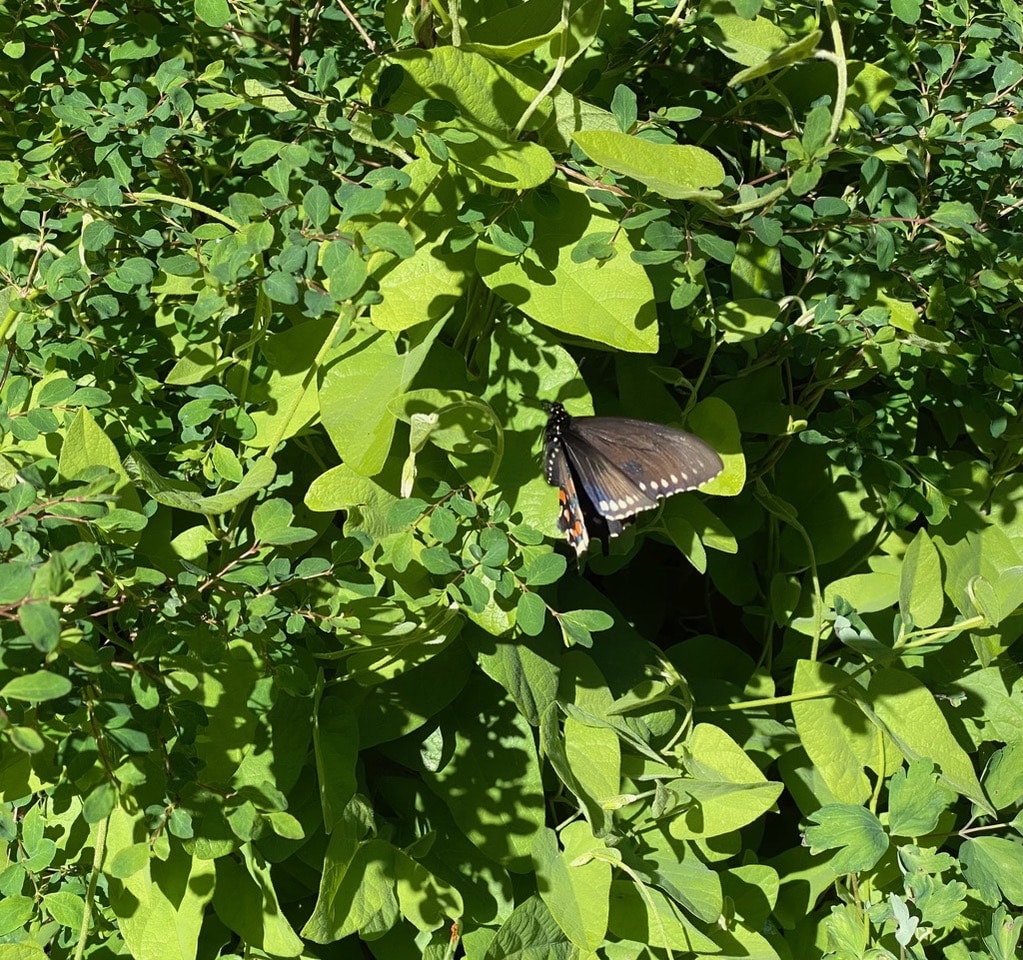
A female Pipevine Swallowtail is scouting for oviposition sites among the young pipevines. She pays most attention to the tender shoots and leaves. She may also be taste-testing for the poison concentration of the plant to make sure that it is appropriate for her young. Swallowtails belong to the family Nymphalidae, or brush-footed butterflies. Nymphalids are known to stand on only four legs while the two front legs are curled up close to the body. Females use these two front legs to taste-test host plants before laying eggs on them.
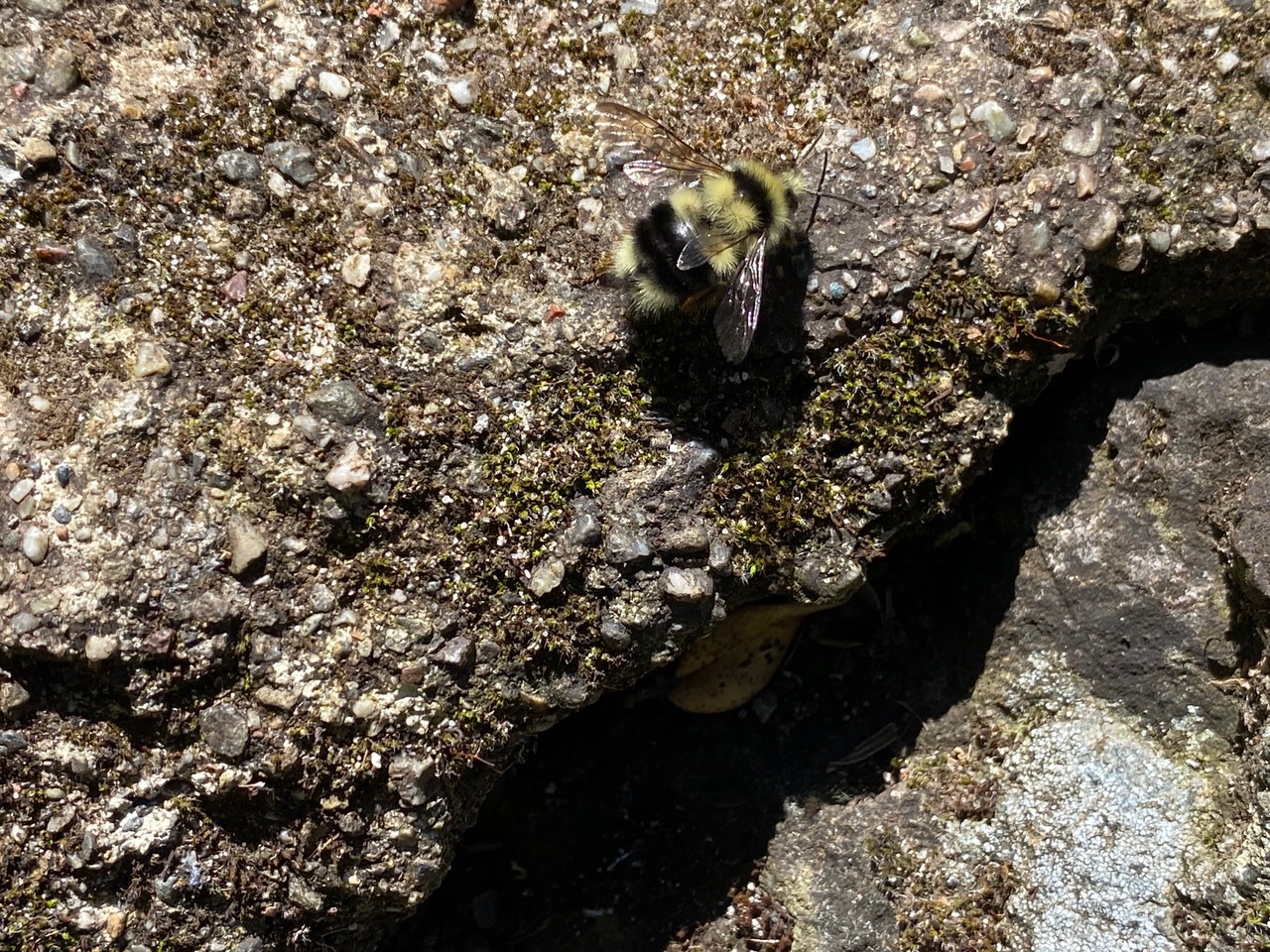
An agitated Black-tailed Bumble Bee, Bombus melanopygus (family Apidae) is running around erratically on a paved path. She looks perfectly healthy, and does not seem to be running away from a predator. I have seen this behavior in bumble bees before, and have wondered if these bees had been parasitized. Just two days ago, we have seen a Conopid fly. Some members of Conopidae specialize in parasitizing bumble bees, even making their hosts bury themselves before they die so that the fly larvae can pupate safely underground.
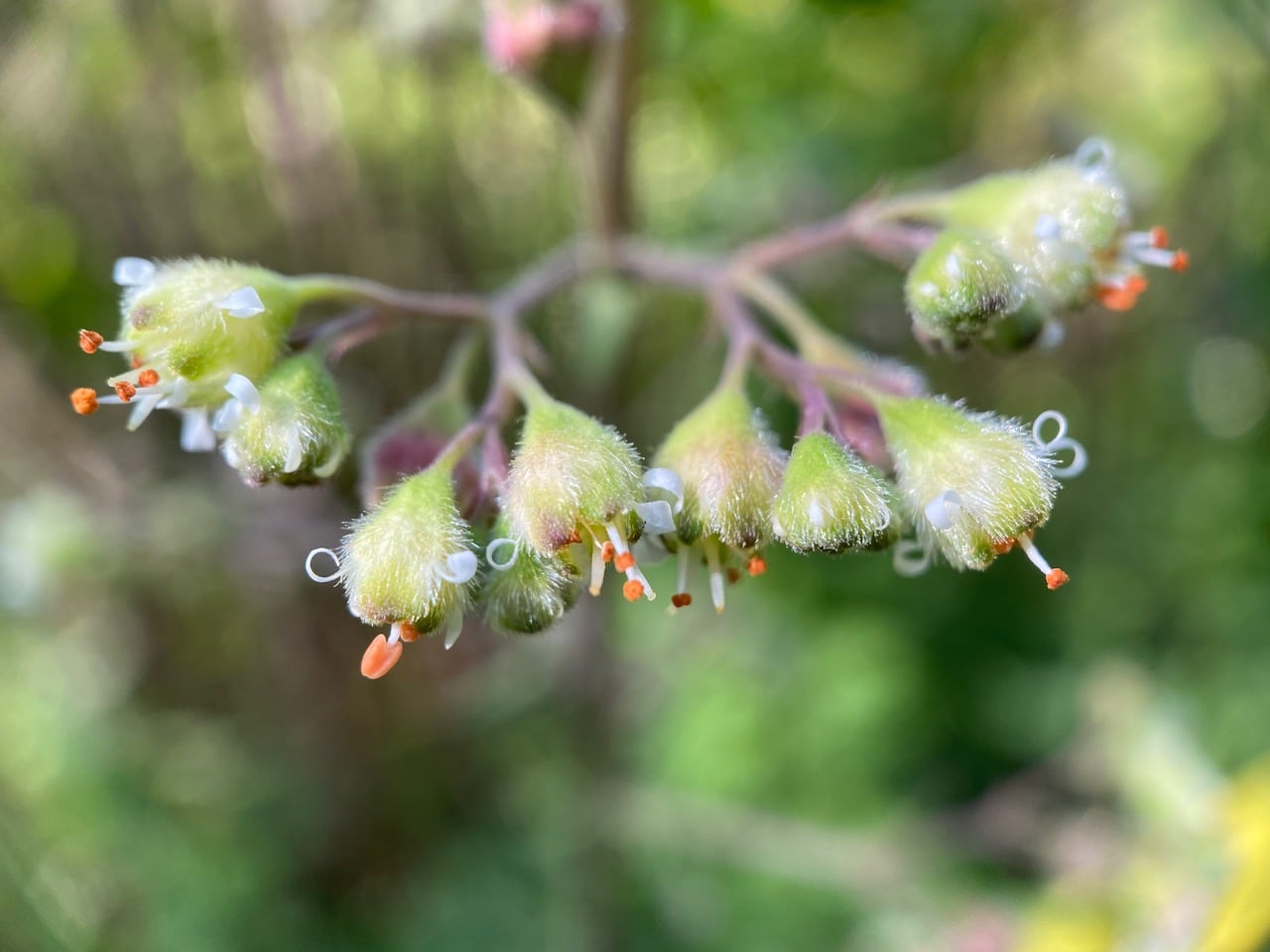
The Alumroot, Heuchera sp. (family Saxifragaceae) is blooming profusely.
Heuchera, commonly called coral bells or Alumroot, is a genus consisting of about 55 species of evergreen or semi-evergreen herbaceous perennials, all native to North America. The plants belong to the saxifrage family (Saxifragaceae), generally found in woodland or mountainous environments growing primarily in crevices or well-drained steep slopes. The name coral bells refers to the plant’s bell-shaped flowers. The other common name, Alumroot, referencences the medicinal use of some of the species as an astringent to stop bleeding. In horticulture, Heuchera is popularly used as a ground cover primarily for its foliage, and tidy, clumping habit. Many species also have attractive flowers favored by butterflies and bees. Individual tiny flowers are bell-shaped and appear in panicle inflorescence, which means a cluster or grouping of flowers along the stem.
The bell-shaped flowers grow in groups of branching stalks, with four to five flowers per group (panicle). These branching stalks originate on a long leafless central stem (scape) that rises above the foliage.
Close up, the charming flowers look like something conjured up by Dr. Seuss! The hairy flowers are bell-shaped, with five minute white petals appearing as curly straps rising between the fused calyx. Protruding from the flower are five stamens with large anthers, and a two-pronged style. Any insect that probes the flower for nectar would come away with lots of pollen as well.
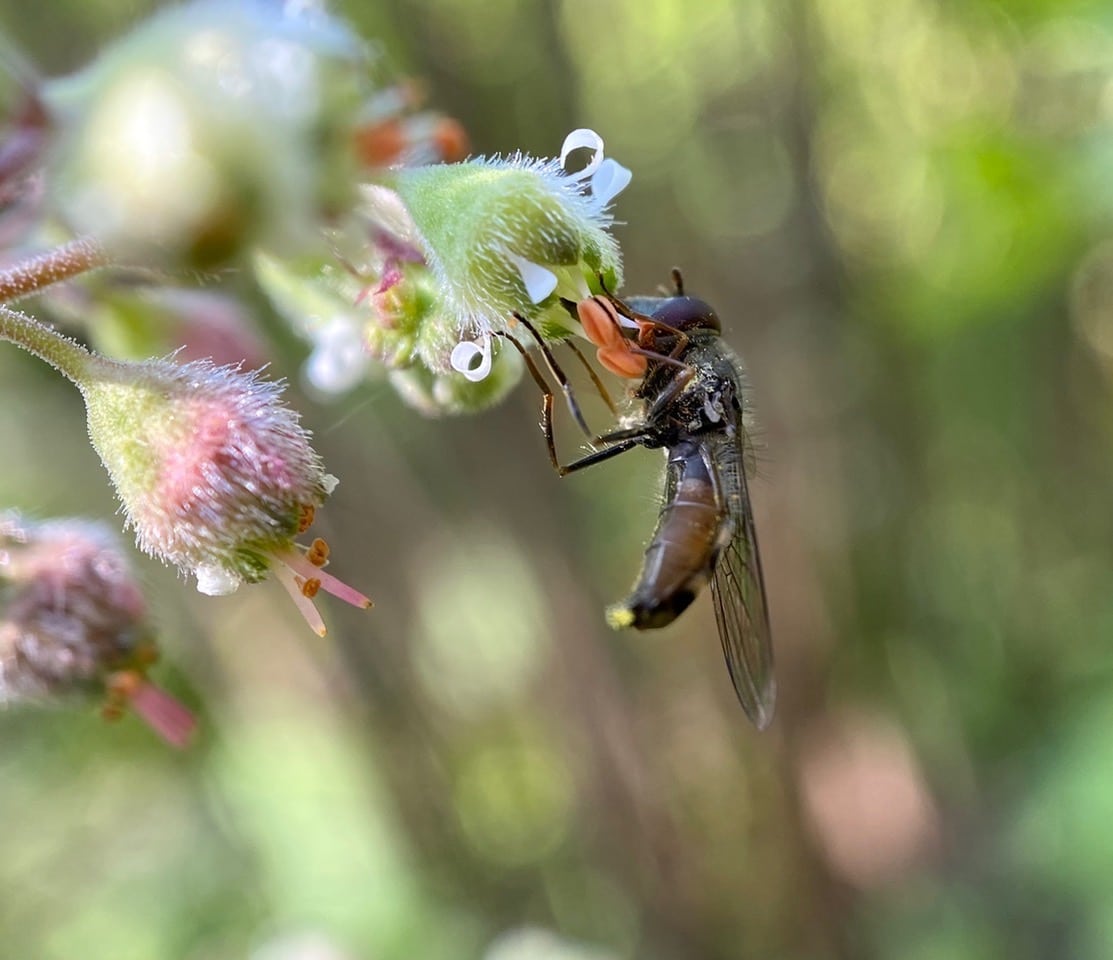
A Sedgesitter, Platycheirus sp. (family Syrphidae) is sticking its proboscis into an Arumroot flower for nectar. The anthers of this flower has not dehisced to release pollen, otherwise the fly would come away with lots of pollen on its body. Note the spent flower on the left of the picture. The anthers have withered, showing the remaining two-pronged style with stigmas at the tip – these are the female parts that receive incoming pollen.
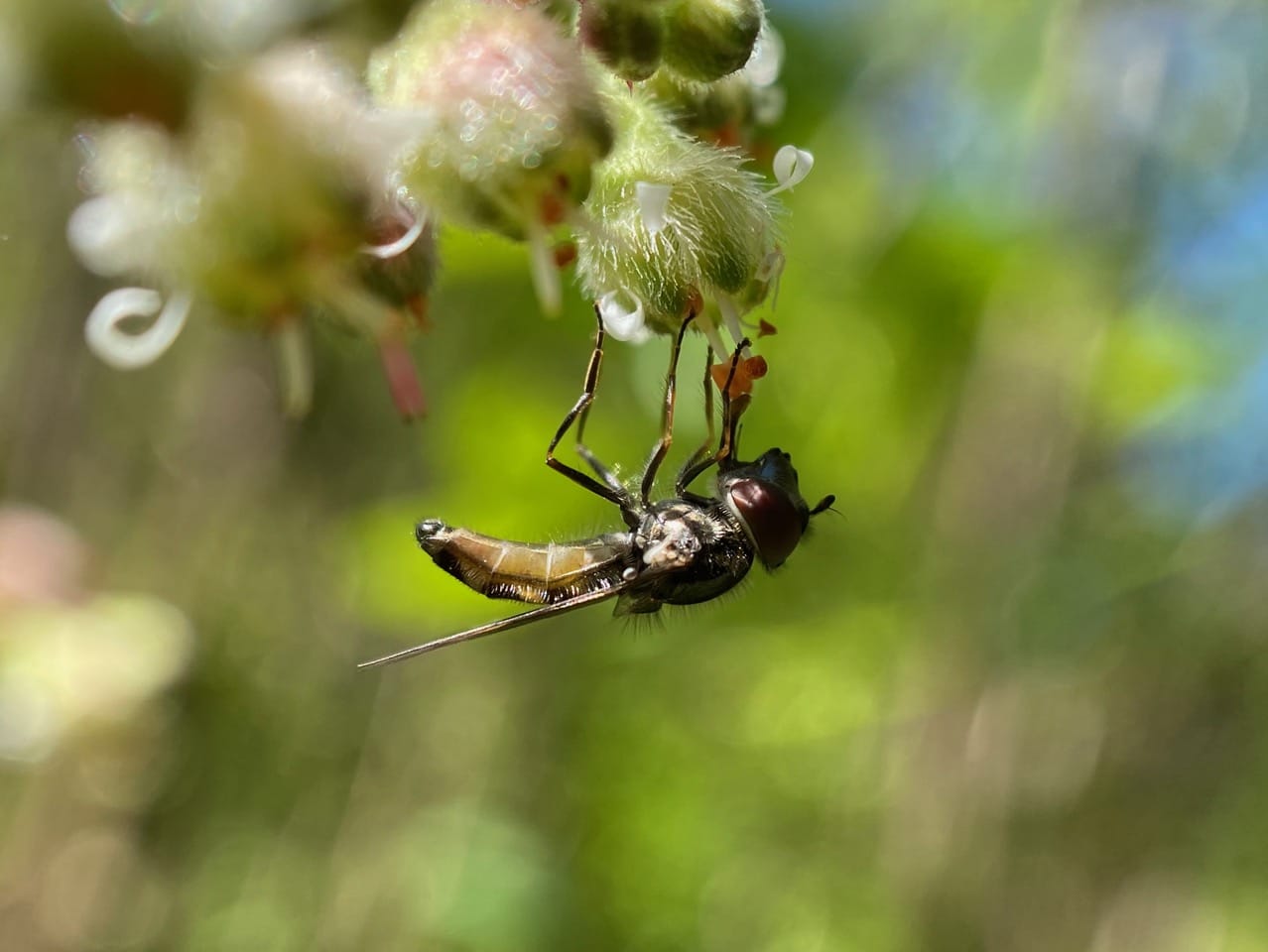
The same hoverfly is now feeding on the pollen of Arumroot.
The fly’s proboscis is on the anthers.
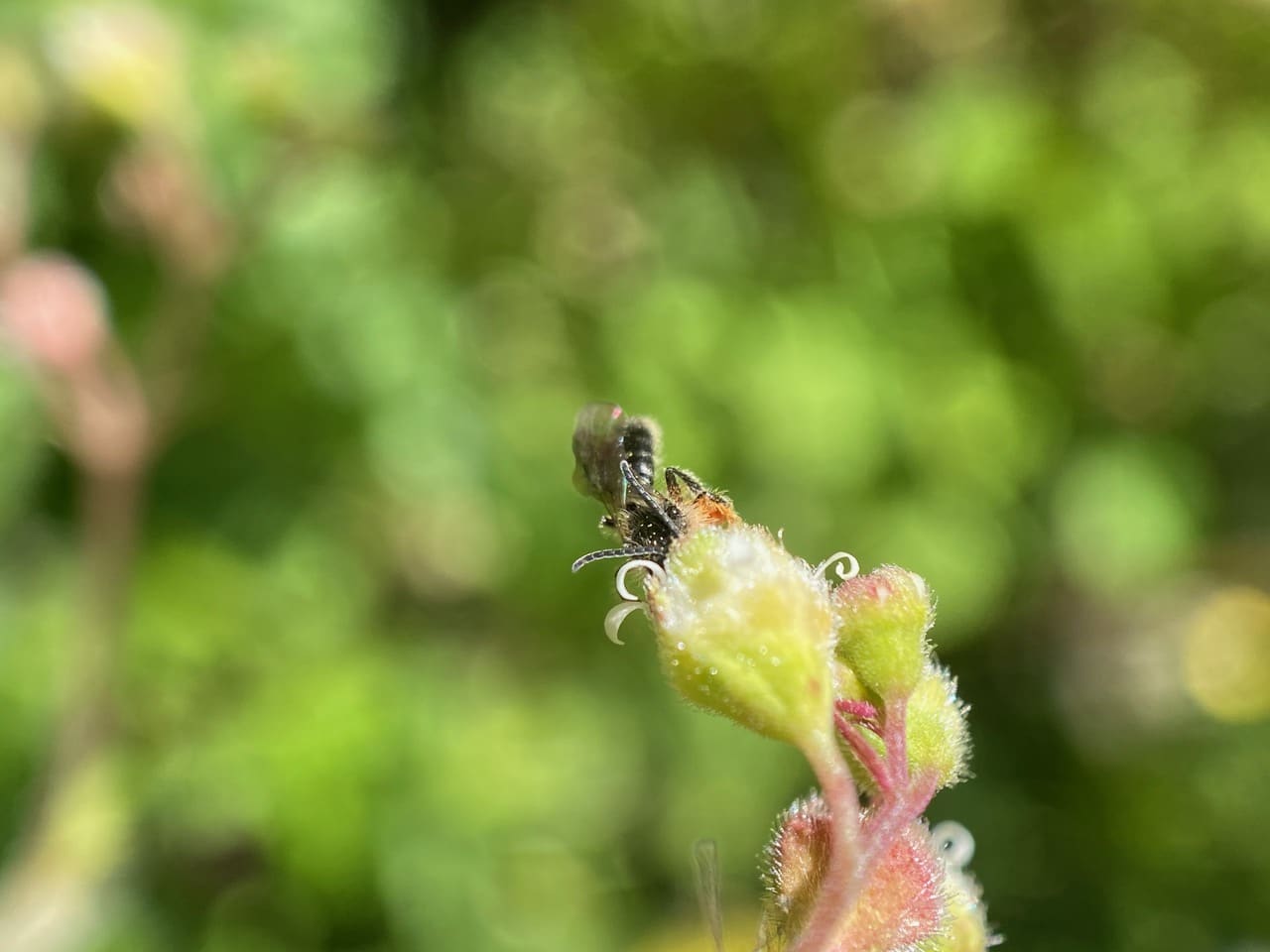
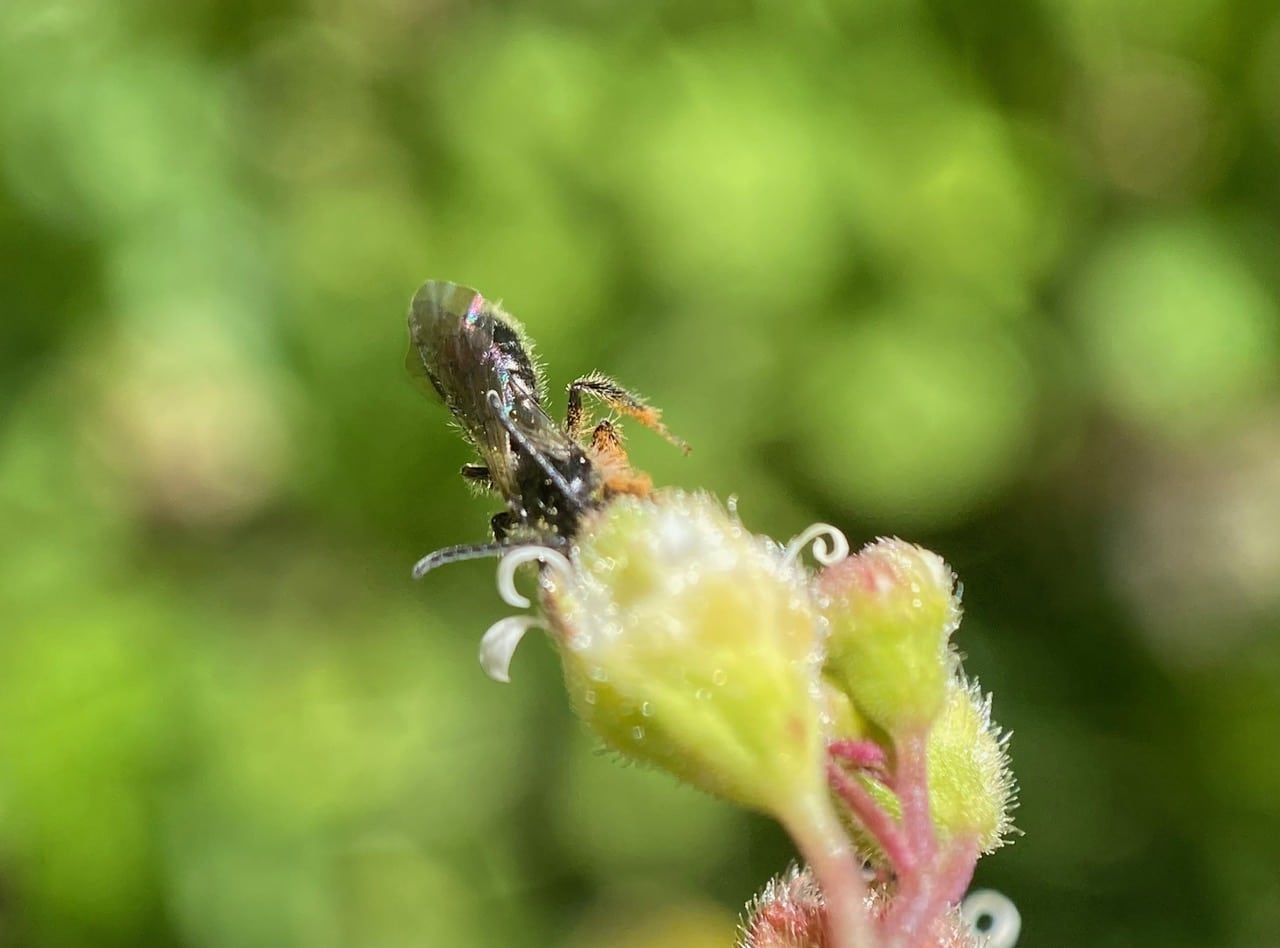
An insect even smaller than the Sedgesitter flies in. At first I thought it was a midge, but it has those long antennae of a male bee! It sticks its whole head into an Alumroot flower
As the bee pulls out of the flower, the hairs of its legs have picked up some of the orange pollen. Unfortunately I don’t get a look of its face before it flies off, so am not able to tell what bee it is. This reminds me that some of our native solitary bees are tiny. They look like gnats/midges when they fly around flowers.
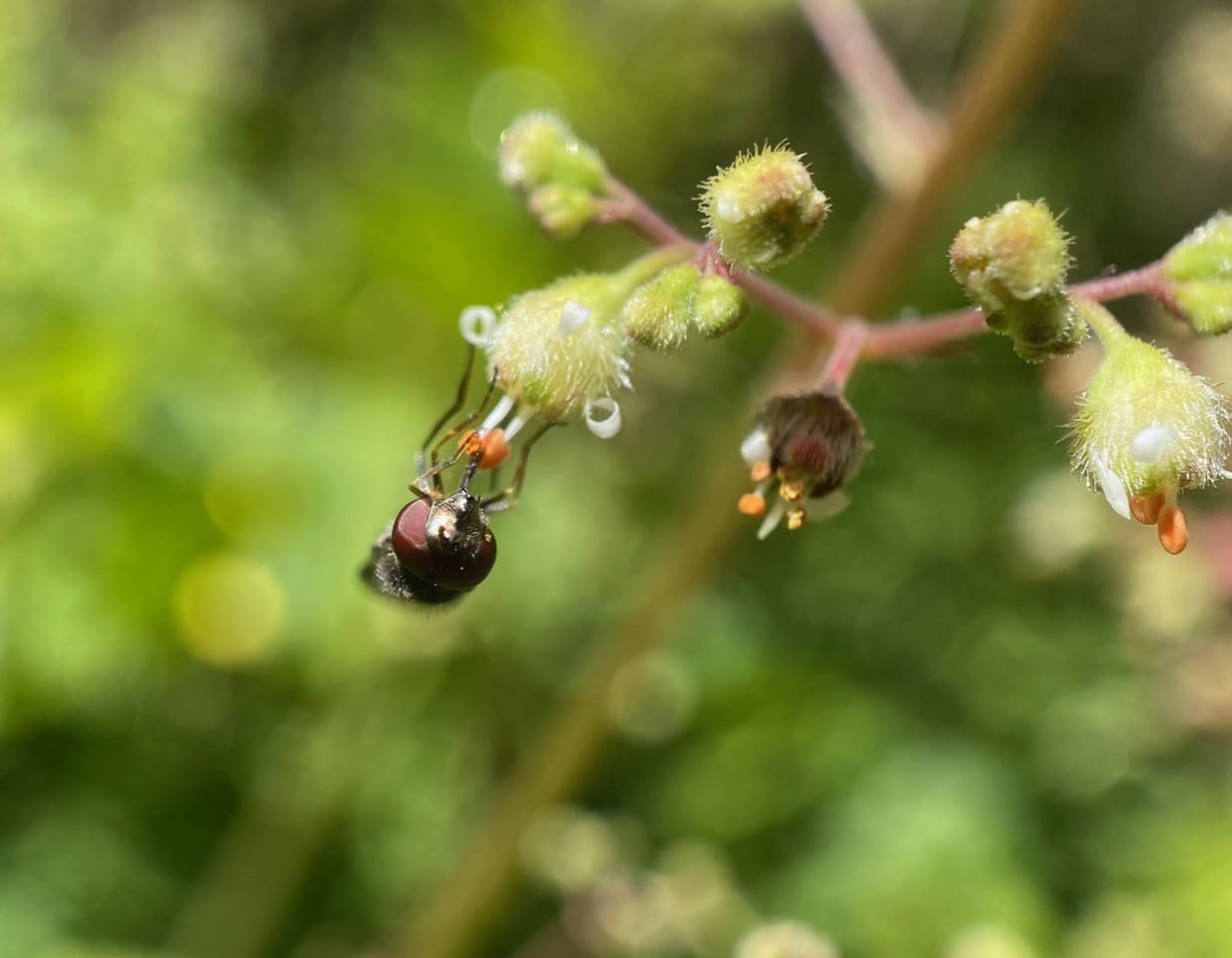
Interestingly the Arumroot flowers are also visited by larger bees. I see some foraging Black-tailed Bumble Bees, Bombus melanopygus hang upside down on the flowers. The branches are apparently sturdy enough to support their weight without drooping.
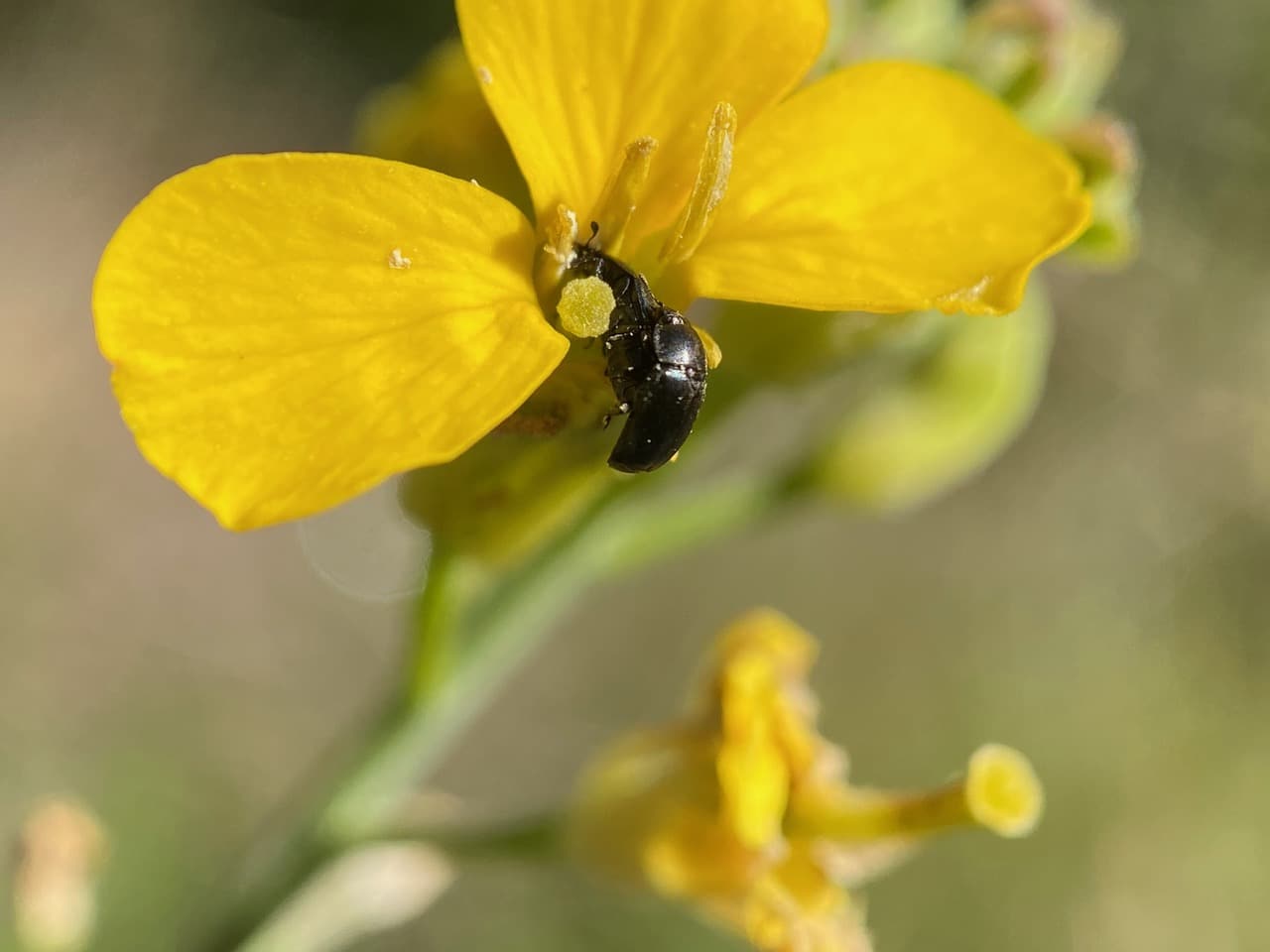
The Sand-loving Wallflowers, Erysimum ammophilum are still in bloom, though poorly. It is still infested with the Common Pollen Beetles, Brassicogethes aeneus (family Nitidulidae).
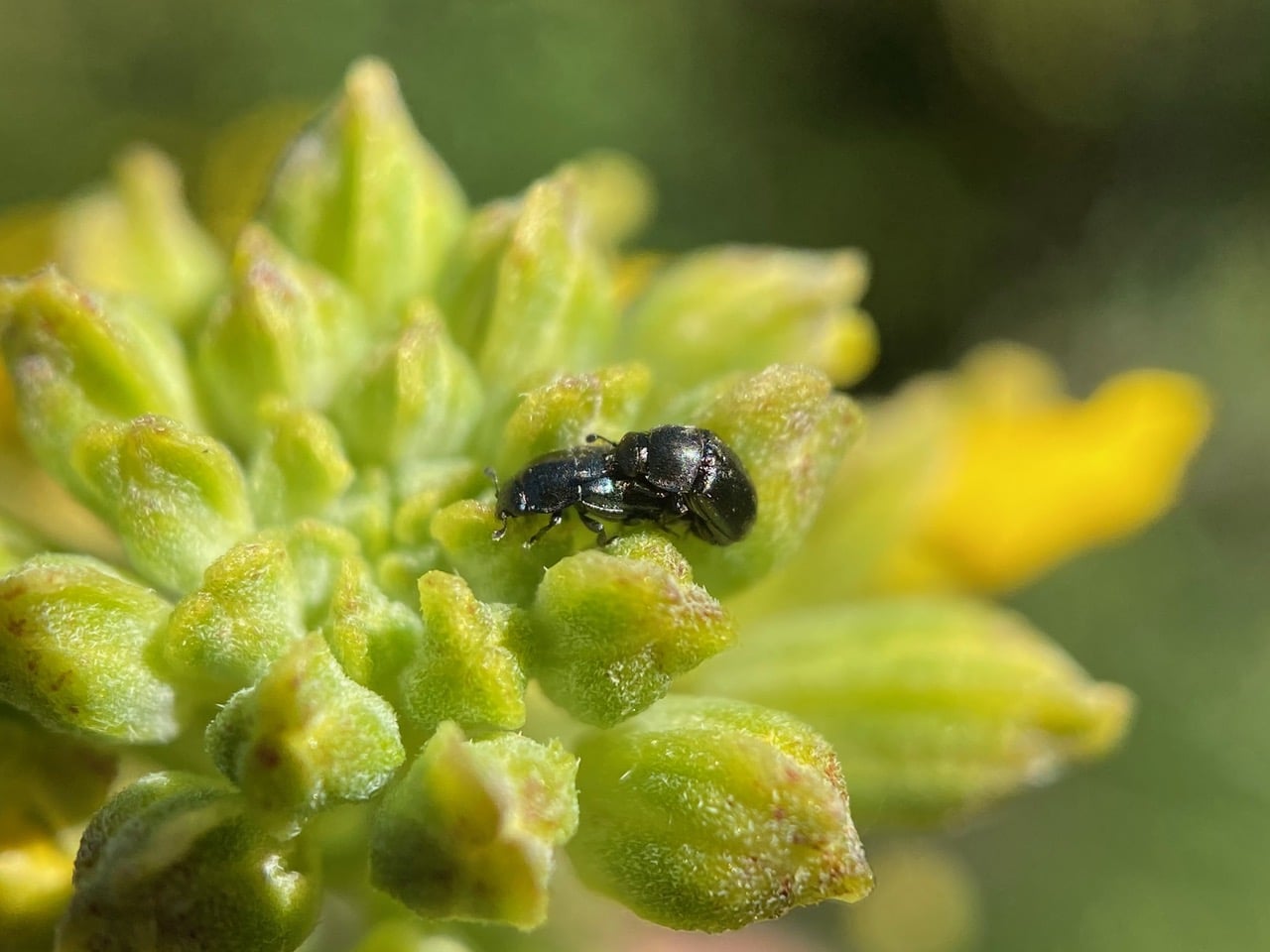
The Common Pollen Beetle, Brassicogethes aeneus (family Nitidulidae) is found in Europe, Northern Asia and North America. Adults are 2-3 mm long, black with a hint of metallic green, and have knobbed antennae. It is a known pest of oilseed rape. It is unclear whether the beetles contribute to the pollination of the crop. The female beetle lays its eggs in the flower buds of the host-plant and the larvae develop within the flowers. Both adults and larvae feed on the pollen and nectar in the flowers.
Beetle reproduction is proceeding in full force.