

Pollinator Post 4/17/26 (2)
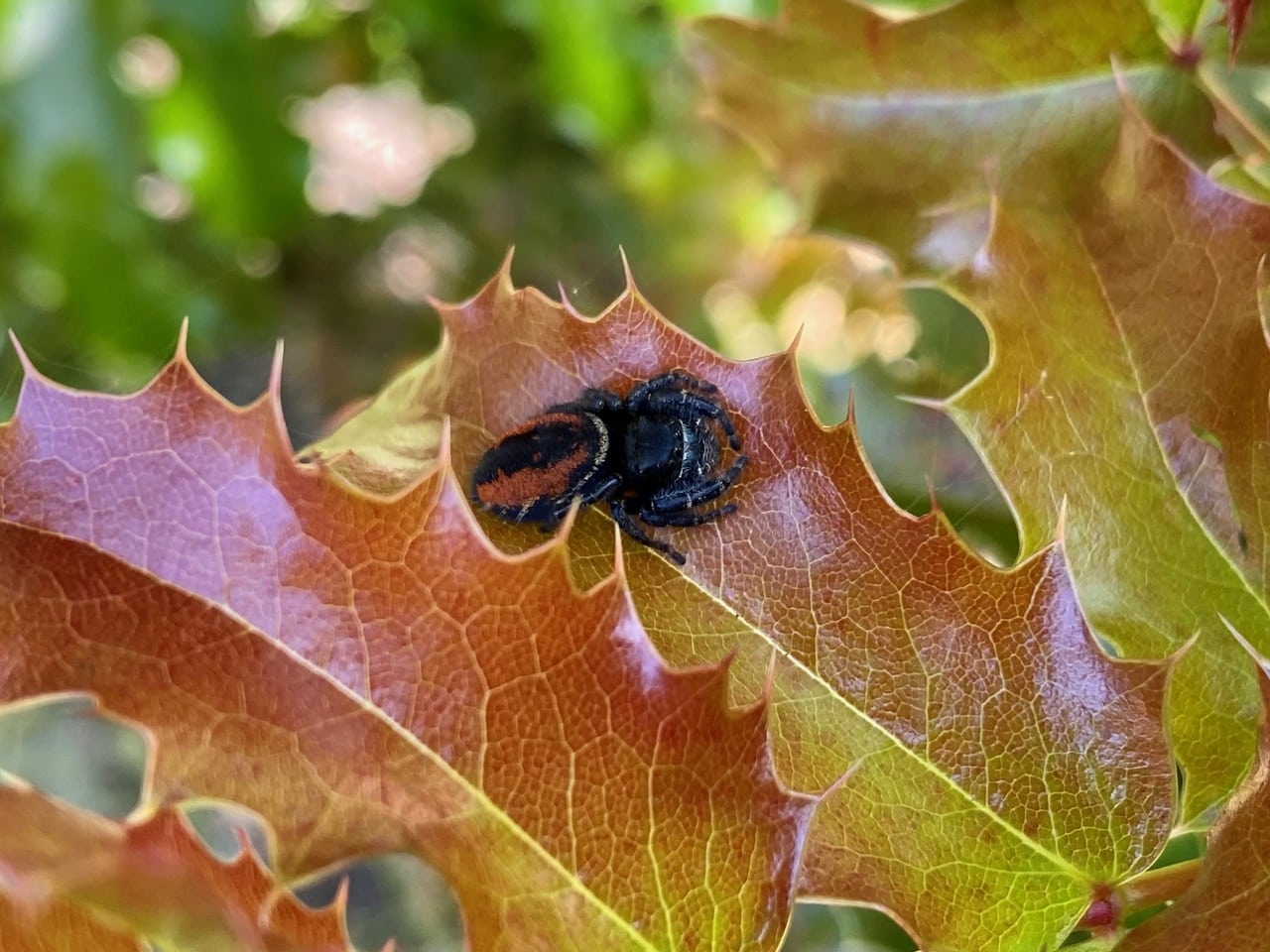
A female Johnson’s Jumping Spider, Phidippus johnsoni (family Salticidae) is resting on a leaf of Oregon Grape, Berberis aquifolium.
Also known as the Red-backed Jumping Spider, Phidippus johnsoni is one of the largest and most commonly encountered jumping spiders in western North America. Males have an all-red abdomen, while females have black and yellow markings on their abdomen. Salticids are free-roaming hunters. They do not weave a web to catch prey. They stalk, then pounce on their prey. Just before jumping, the spider fastens a safety line to the substrate. It can leap 10-20 times their body length to capture prey. Their movement is achieved by rapid changes in hydraulic pressure of the blood. Muscular contractions force fluids into the hind legs, which cause them to extend extremely quickly.
Phidippus johnsoni – Wikipedia
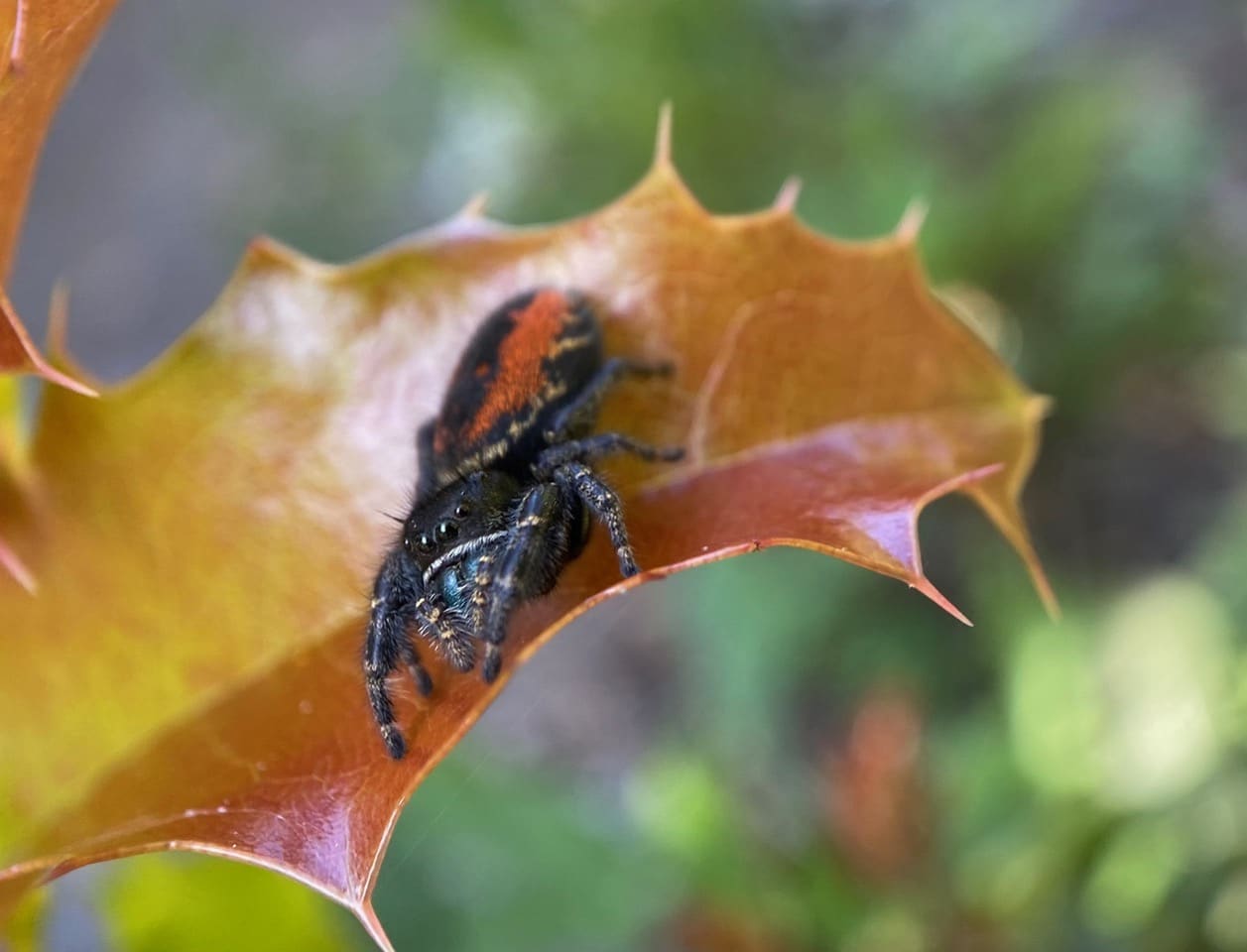
Her hairy pedipalps partially covering her iridescent blue chelicerae, the spider has her anterior median eyes transfixed in front of her.
The pedipalps are jointed appendages, much like small legs. They are used by the spider to sense objects, shape their webs, and to aid in prey capture and feeding. In male spiders, the pedipalps are also used to deliver sperm during mating.
Jumping spiders have excellent vision, with among the highest acuities in invertebrates. The 8 eyes are grouped four on the face (the two big Anterior Median Eyes in the middle, and two smaller Anterior Lateral eyes to the side), and four on top of the carapace. The anterior median eyes provide high acuity but small field of view, while the other six eyes act like our peripheral vision, with lower resolution but broad field of view. Since all eight eyes are fixed in place and can’t pivot independently from the body like human eyes can, jumping spiders must turn to face whatever they want to see well. This includes moving their cephalothorax up and down, an endearing behavior.

Whoa, that’s a big Pipevine Swallowtail caterpillar! It will be pupating soon, transforming into a chrysalis.
Adult Pipevine Swallowtails, Battus philenor (family Papilionidae) have a wingspan from 2.75 to 5 inches. The dorsal wings of an adult male are black with vibrant blue iridescence on the hind wings. Female iridescence is duller in appearance. Bright orange spots are visible on the back end of the ventral wings. Adult males spend most of their time feeding and searching for mates. Females lay clusters of orange eggs on or under pipevine leaves (Aristolochia sp.) which contain aristolochic acids toxic to many vertebrate animals. The larvae feed on the leaves and sequester the toxins which are passed on to future pupa and adult butterflies. The bright orange spots present on larvae and adult butterflies are thought to serve as warnings to potential predators. Adult Pipevine Swallowtail butterflies feed on the nectar of a variety of flowers.
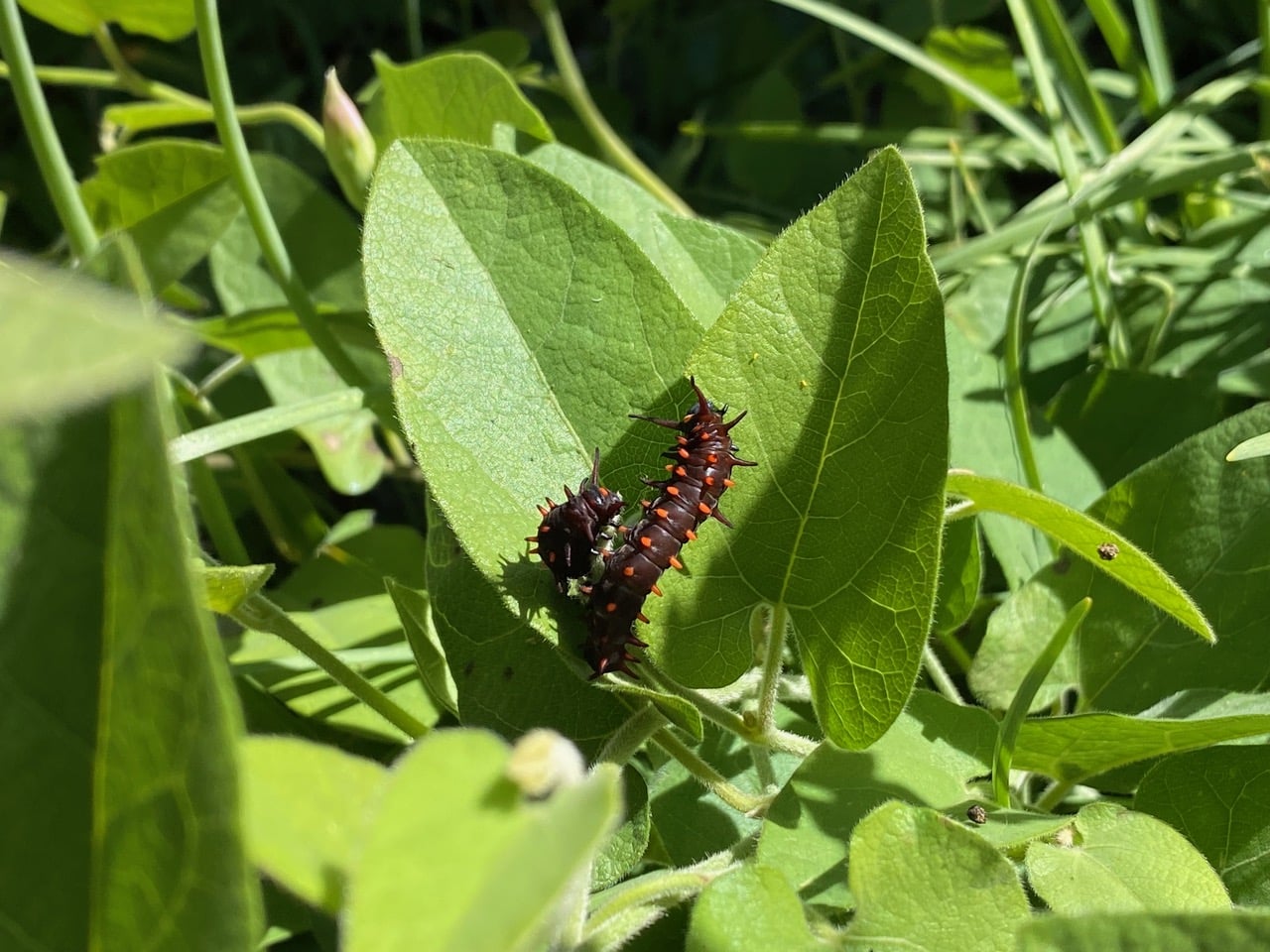
Two Pipevine Swallowtail caterpillars are feeding on adjacent leaves of California Pipevine, Aristolochia californica.
Pipevine Swallowtail caterpillars feed exclusively on plants in the genus Aristolochia (pipevines). They consume leaves, stems, and seedpods, sequestering poisonous aristolochic acids from the plant to become toxic to predators. Young, reddish-spiny caterpillars often feed together on young leaves or stems. As they mature into their dark, spiny form, they often feed alone.

This leaf has been nibbled on the edges, and there is frass (caterpillar poop) scattered below. Feeding scars and frass are sure signs of hidden caterpillars.

Turning over the leaf, I find these young caterpillars feeding in aggregation on the edge of the leaf.

These young caterpillars have begun to disperse and to feed on their own.

Very young Pipevine Swallowtail caterpillars are clustered on a shoot tip.

A female Pipevine Swallowtail is flying low over the young pipevine shoots, stopping occasionally to check the plants, apparently looking to lay her eggs. Females tend to select younger, smaller leaves on which to oviposit, and they assess the plant’s size to ensure enough food for the larvae.
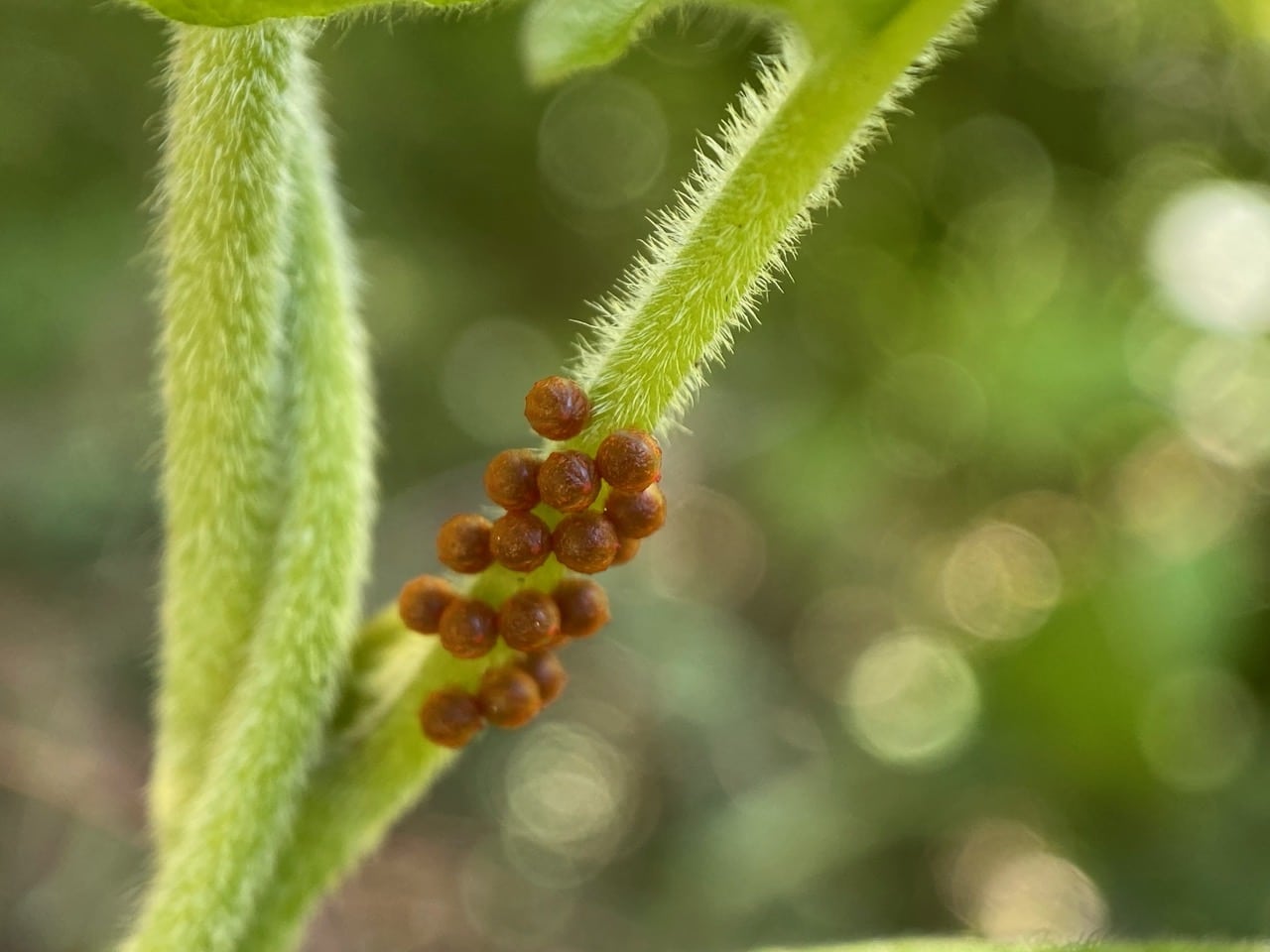
Since the females are still laying eggs, there might still be eggs on the plants. I look thoroughly and finally find this cluster attached to a young stem.
Pipevine Swallowtail eggs are small, red-to-orange, and spherical, often laid in clusters of 5 to 20 on the stems and leaves of the host plants (genus Aristolochia). The eggs hatch in 4-10 days, depending on temperature. Once hatched, the tiny caterpillars immediately eat their own egg shells.

A Soldier Beetle, Podabrus sp. (family Cantharidae) is checking every nook and cranny on this California Pipevine. Would it eat the eggs or young Pipevine Swallowtail caterpillars?
The Soldier Beetles, family Cantharidae are relatively soft-bodied, straight-sided beetles. One of the first described species has a color pattern reminiscent of the red coats of early British soldiers, hence the common name. They are also known commonly as Leatherwings because of their soft elytra.
Soldier beetles often feed on both nectar and pollen as well as predating on other small insects such as aphids, small caterpillars, and insect eggs. The larvae are often active, and feed on the ground, hunting snails and other small creatures. Adult beetles also contribute to pollination as they feed on nectar and pollen. Soldier beetles are generally considered beneficial insects by gardeners.

Predation scene? A survivor is hanging by its lonesome self, surrounded by large pellets of scattered frass. Has a predator come by and fed on the aggregated young caterpillars on this leaf?
While Pipevine Swallowtail caterpillars are toxic to most predators due to their diet of aristolochic acids, some insects, including spined soldier bugs (a kind of predatory stink bug) can attack and eat them, even without triggering the caterpillar’s defense mechanism (the osmetarium).
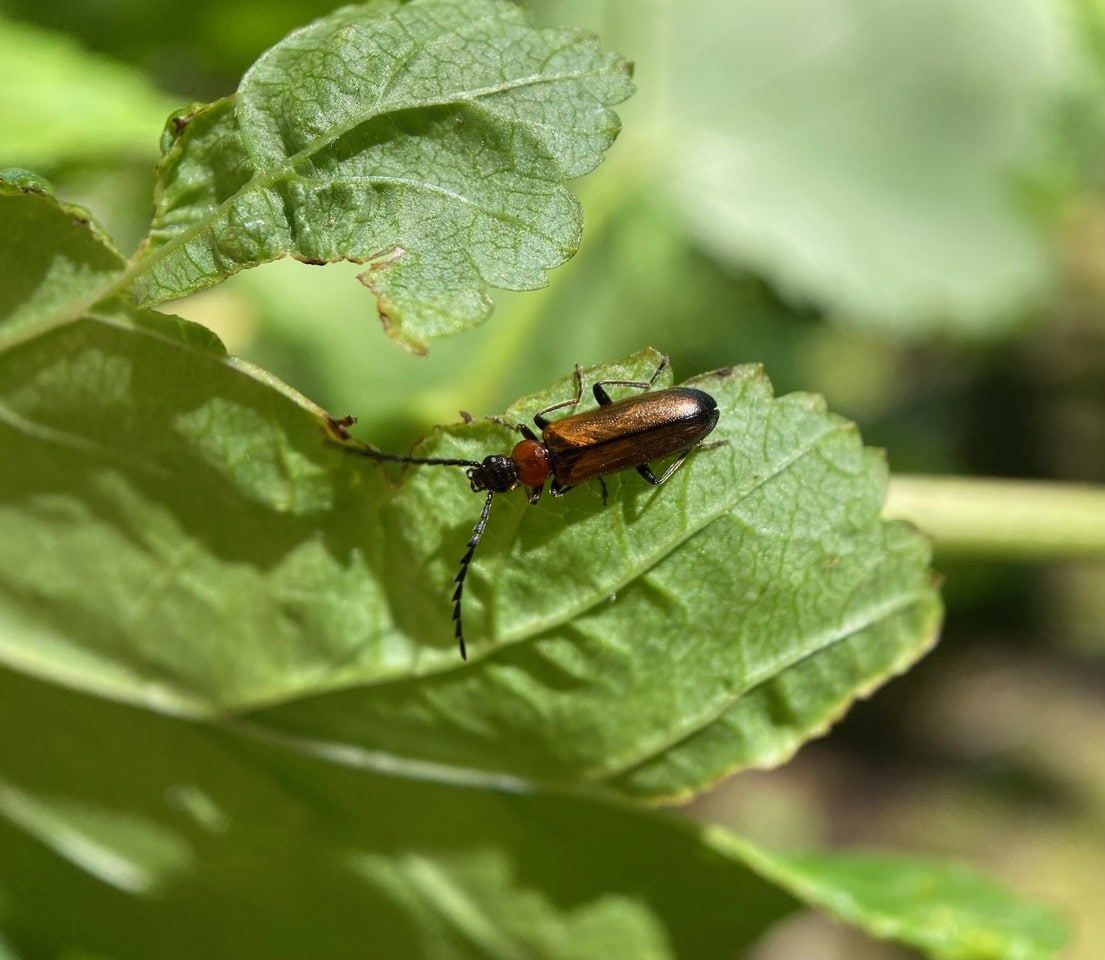
Nearby, another kind of Soldier Beetle, Dichelotarsus sp. (family Cantharidae) is perched on the underside of a Ninebark leaf.
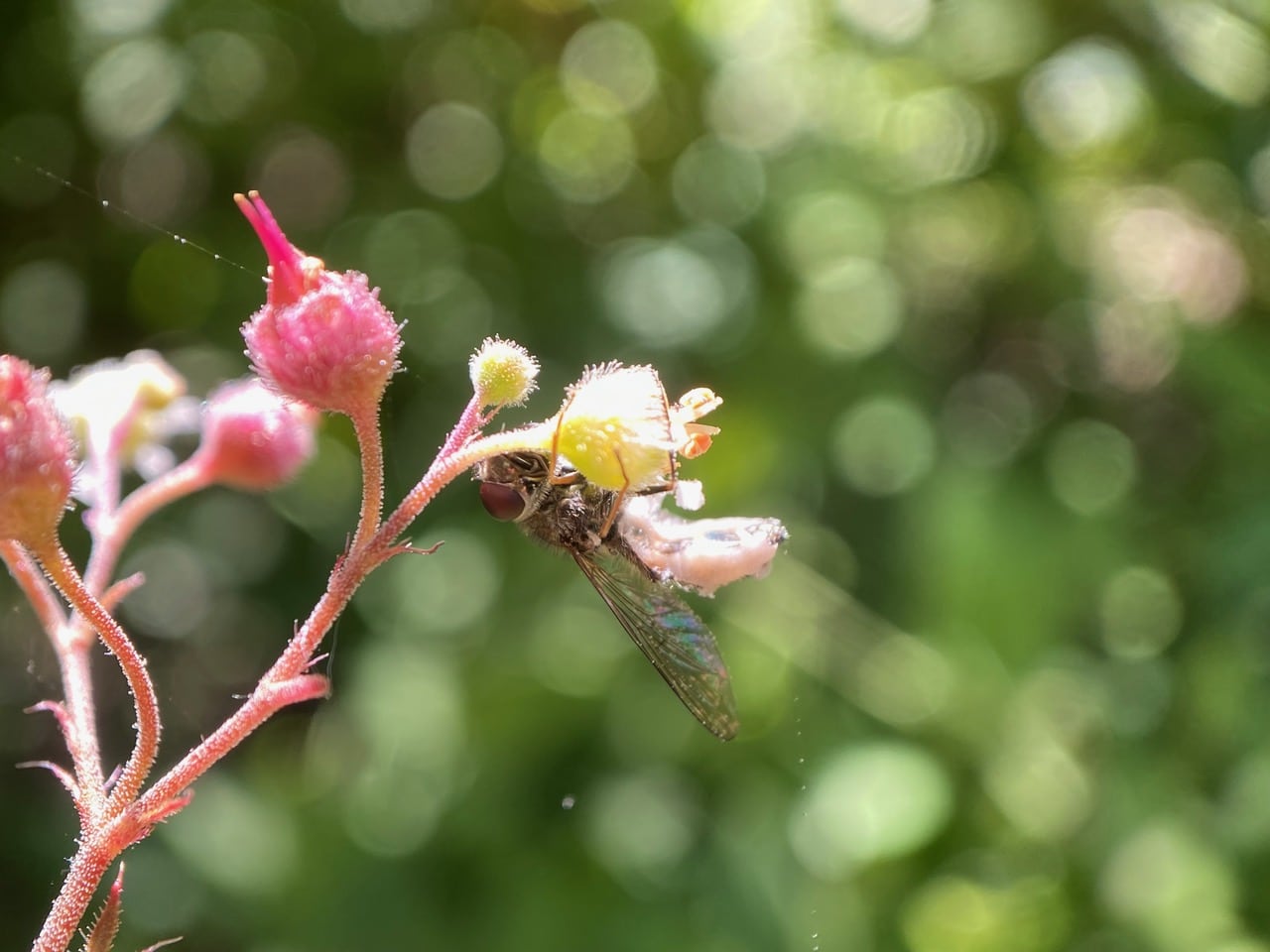
Grasping a terminal flower of an inflorescence of Alum Root, Heuchera sp., a Sedgesitter, Platycheirus sp. (famy Syrphidae) is hanging upside down, wings spread, motionless. What’s with the hover fly’s abdomen?
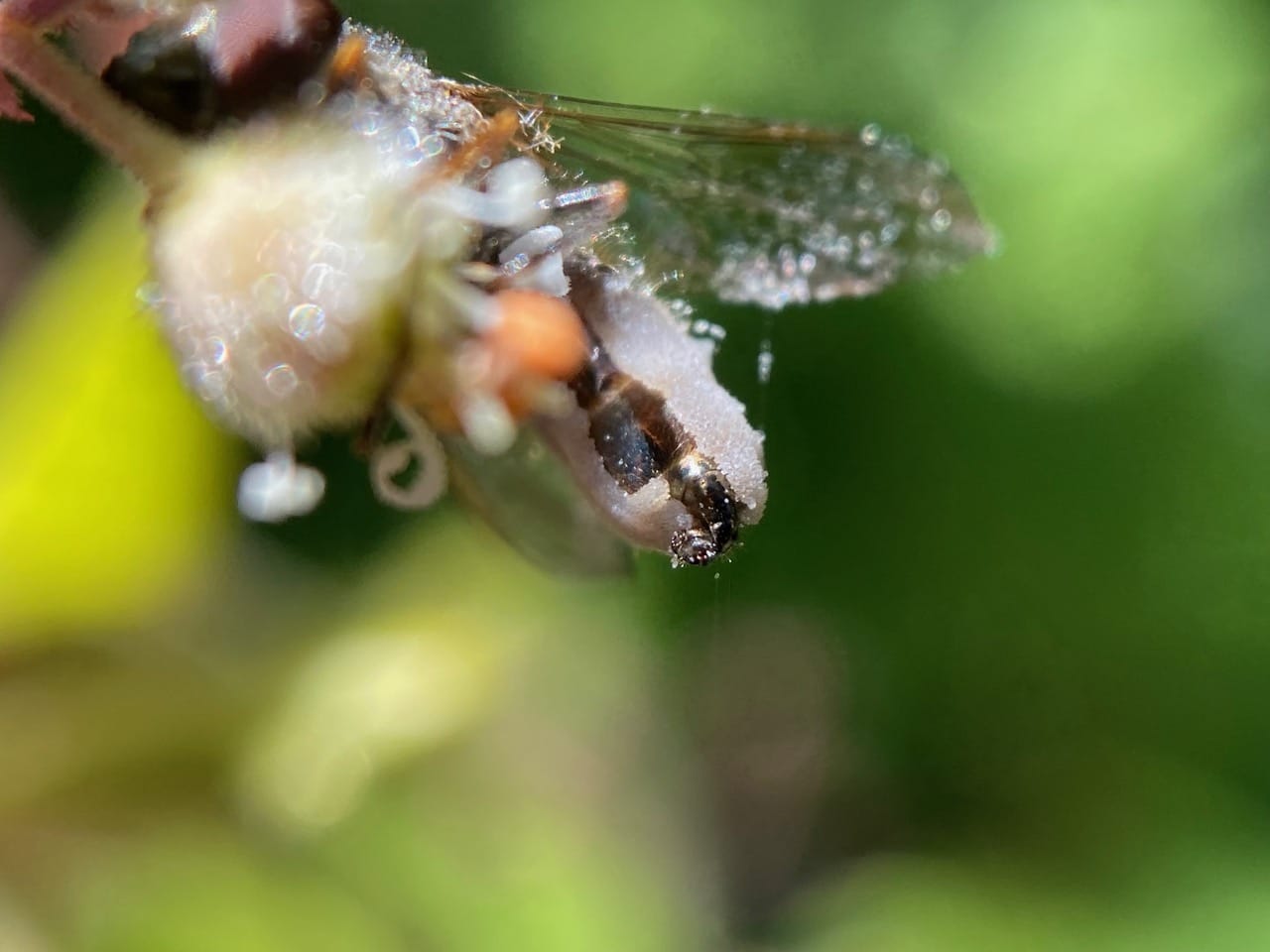
Closer examination with the macro lens shows that the coating on the fly’s abdomen looks grainy.
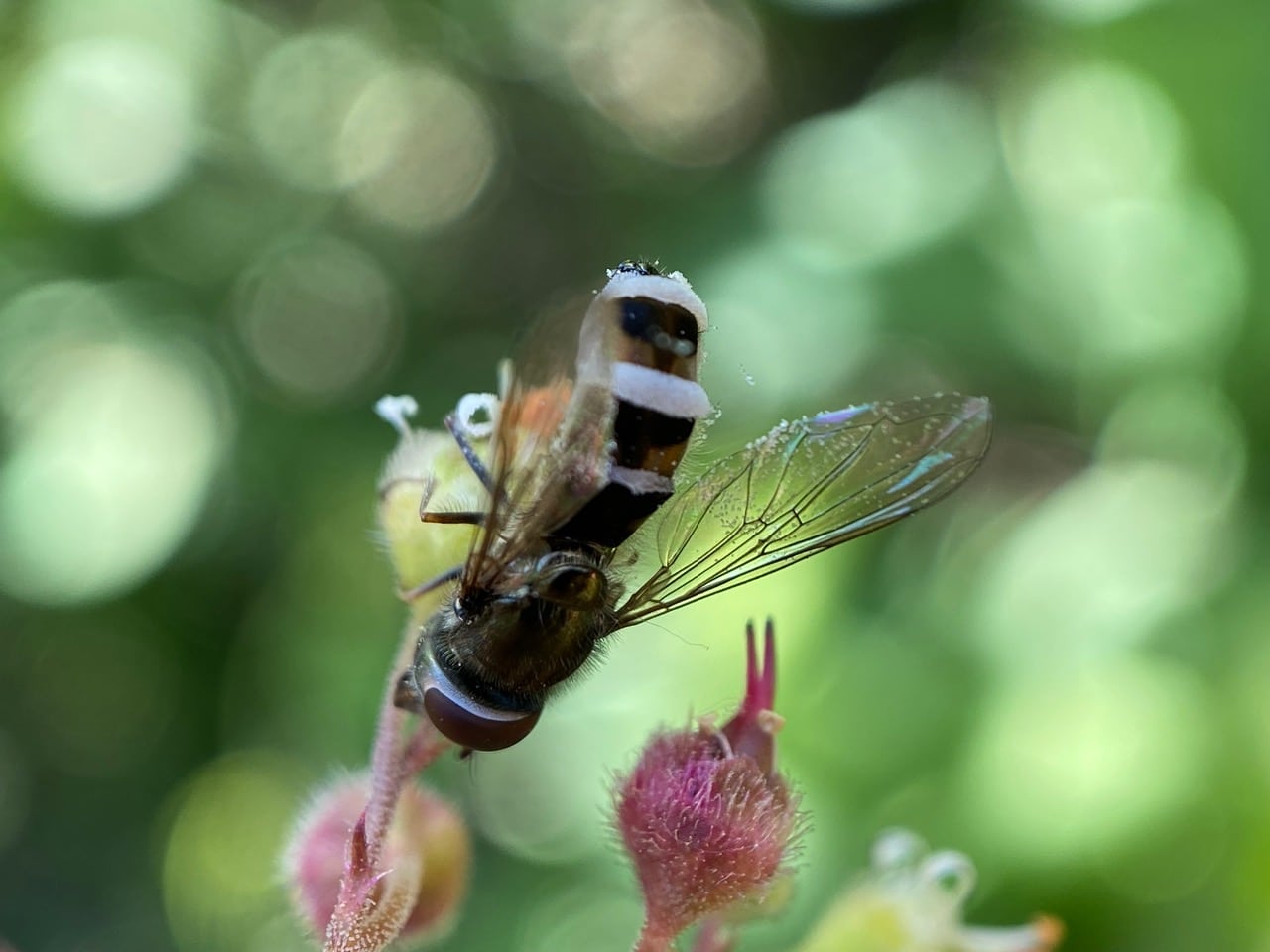
I raise the inflorescence so I could see the dorsal surface of the fly. Wow, just as I have suspected, the spaces between the abdominal segments are bursting out with the same grainy stuff. Some of the grains have been scattered onto the fly’s open wings. The poor fly has been a victim of a pathogenic fungus Entomophthora muscae (family Entomophthoraceae). I have seen other flies infected by the fungus, but not a hover fly.
The name Entomophthora means “insect destroyer”. The fungus is transmitted by airborne spores and only affects adult flies. When a spore settles on an appropriate fly’s body, it germinates and penetrates the fly’s exoskeleton. The fungal hyphae grow throughout the body of the fly. As the body is distended, the light colored membranes between the darker hard segments are exposed, giving the fly a characteristic striped appearance. Under the right conditions, the fungus produces numerous sporangia (spore-bearing structures), each with a single spore, that grow out of the cracks in the membrane. When these spores (conidia) are released, they shoot out, leaving a halo of conidia around the dead fly.
Once inside a fly, fungal hyphae grows into the fly’s brain, causing a distinct change in behavior, often called “summit disease”. The fly crawls upwards as high as possible, going to the tip of the branch, flower, stem or leaf it is on. Sometimes the infected fly attaches itself by its extended proboscis to the surface it is on, where it may remain for days or even weeks. Before it dies, it spreads out its legs, stretches open its wings above the thorax and angles the abdomen away from the surface. The elevated location and distinct posture improves the chances that the ejected spores will travel freely to infect new hosts. This fly disease occurs most often in spring and fall in temperate regions, when cool and humid conditions predominate. E. muscae infection has been observed in adult flies in the families Calliphoridae, Culicidae, Drosophilidae, Muscidae, Sarcophagidae, Scathophagidae, Syrphidae and Tachinidae.

Douglas Iris, Iris douglasiana is blooming profusely along the path. These large flowers are usually pollinated by bumble bees, but I don’t see any bumble bees come near them even after waiting a long time.
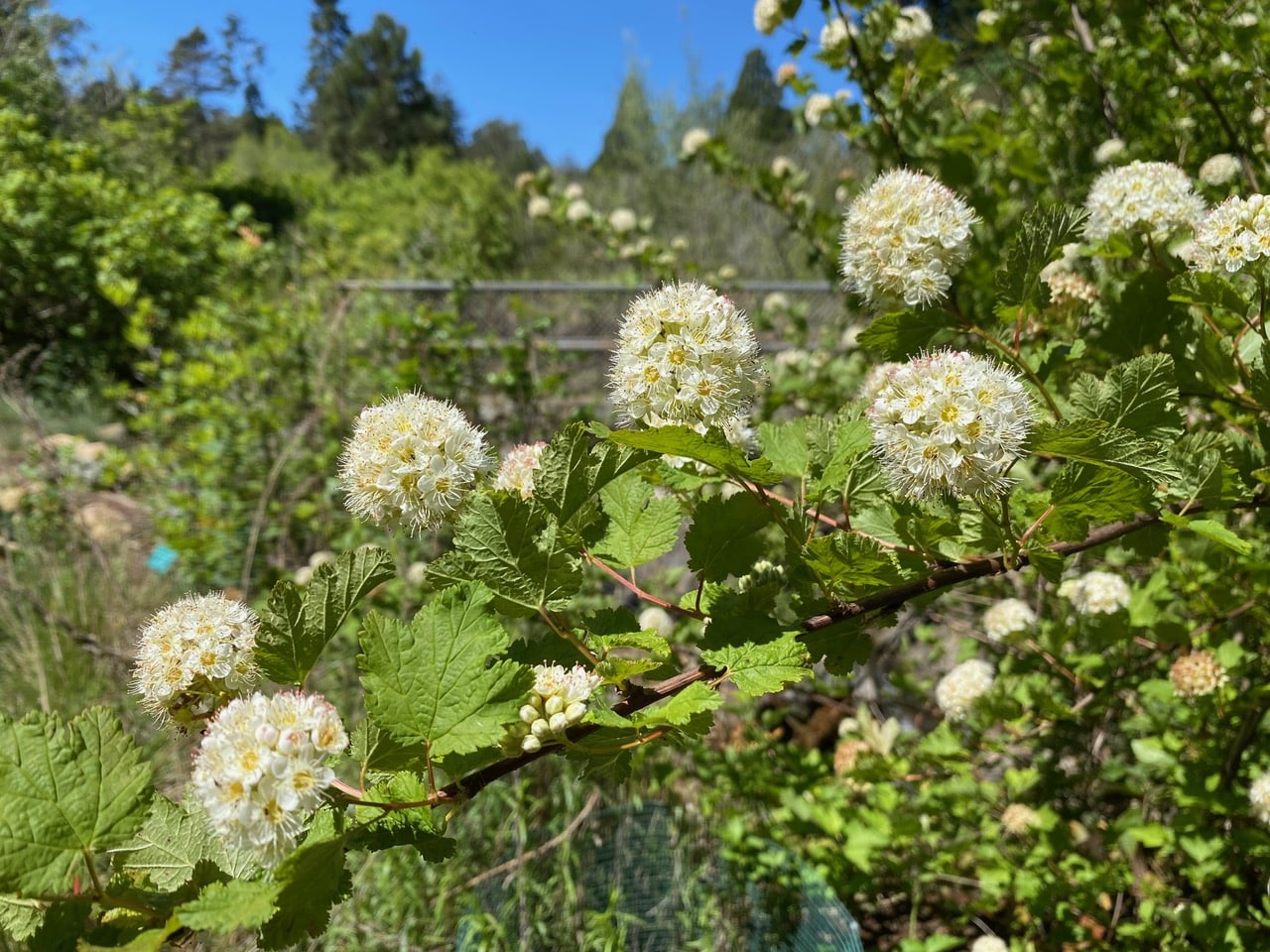
Soft pompoms of clustered flowers are beautifully displayed on the arching branches of Pacific Ninebark, Physocarpus capitatus. One would expect the shrub to be buzzing with insect activity, but that’s not the case.
The dense deciduous shrub in the rose family is native to western North America. The plant produces ball-like clusters of small white flowers with five petals and numerous red-tipped stamens. The globular clusters of white flowers are eventually replaced by reddish 3 to 5-chambered fruits. The unique fruit is an inflated glossy red follicle which turns dry and brown and then splits open to release the seeds.
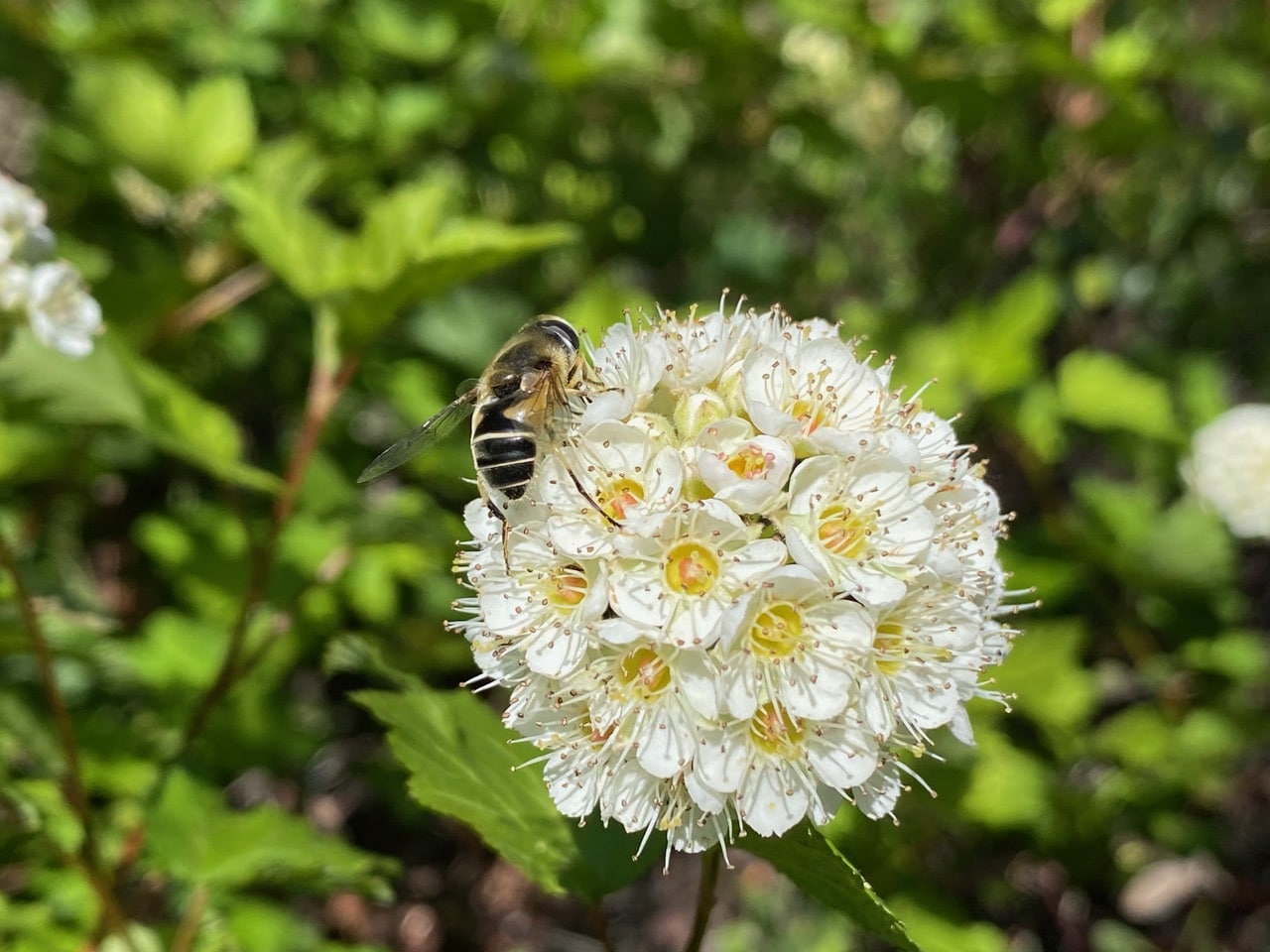
A Black-footed Drone Fly, Eristalis hirta (family Syrphidae) is foraging on an inflorescence of Pacific Ninebark.
Hover flies, also called Syrphids, make up the insect family Syrphidae. They are commonly seen hovering or nectaring at flowers. The adults of many species feed mainly on nectar and pollen, while the larvae (maggots) eat a wide range of food. In some species, the larvae are saprotrophs, specifically detritivores, eating decaying plant and animal matter in the soil or in ponds and streams. In other species, the larvae are insectivores, preying on aphids and other soft-bodied insects.
The Black-footed Drone Fly, Eristalis hirta is found in Western North America and Northern Europe in raised bogs, ditches and temporary pools. The larvae are aquatic, occurring in shallow, nutrient rich standing water and in cow manure and compost heaps. Also known as “rat-tailed maggots”, the larvae have a siphon on their rear end that acts like a snorkel, helping them breathe under water. The siphon can be several times the length of the larva’s body. The larvae are saprophagous, feeding on bacteria in stagnant water rich in decomposing organic matter.

A small wasp-like insect is foraging on a Pacific Ninebark flower. Judging by its scruffy appearance and thick antennae, I suspect it might be a Cuckoo Bee. iNaturalist has confirmed that it is indeed a Cuckoo Bee, Nomada sp.(family Apidae).
Nomad Bees in the genus Nomada is one of the largest genera in the family Apidae, and the largest genus of Cuckoo Bees. Nomada are kleptoparasites of many different types of ground-nesting bees as hosts, primarily the genus Andrena. They lack a pollen-carrying scopa, and are mostly hairless, as they do not collect pollen to feed their offspring. Adults visit flowers for nectar. The bees are extraordinarily wasp-like in appearance, often with yellow or white integumental markings on their abdomen.
Nomad Bees occur worldwide. All known species parasitize ground-nesting bees, and their habitats and seasonality correlate closely with their hosts. In early spring, females scout out their hosts, searching for nests to parasitize. The female Nomada sneaks into the host’s nest while the resident female is out foraging, then lays eggs in the nest. The parasite larva that hatches out kills the host offspring and feeds on the host’s provisions. This type of parasitism is termed brood parasitism. The parasites pupate in the host cell and finally emerge as adults the following season along with the hosts.
While we might shudder at the thought of cuckoo bees in our garden, the presence of cuckoo bees actually indicates a healthy population of their host bees, suggesting a diverse and thriving ecosystem. Parasitism is a natural part of many ecosystems, and cuckoo bees play a role in regulating the populations of their host species. Cuckoo bees, while not collecting pollen for their own young, still visit flowers for nectar and inadvertently pollinate plants in the process. Cuckoo bees are also a food source for other animals, further contributing to the food web.

Yerba Santa, Eriodictyon californicum is blooming well on the ridge. A Bumble Bee comes by to take nectar, but I fail to capture the moment.
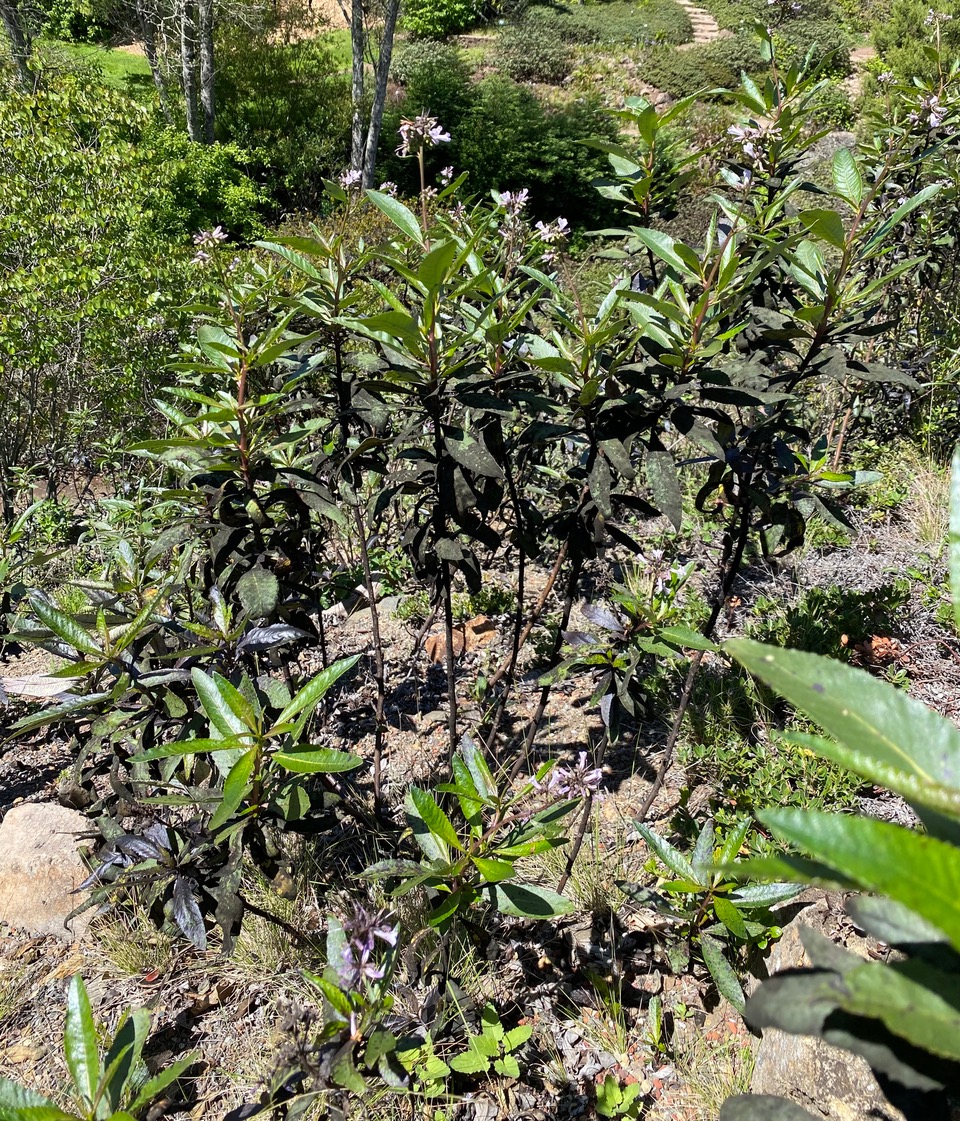
Why are the older leaves of Yerba Santa often covered with black sooty mold?
Sucking insects on the plant feed on sap and leave behind honeydew, a sugary, sticky substance that covers the foliage. The sooty mold fungus feeds on this honeydew, resulting in a black, soot-like covering, particularly on the upper surfaces of leaves. The natural, resinous coating of Yerba Santa leaves helps the sticky honeydew adhere and traps soot or dust, providing an ideal, permanent home for the mold. While it looks severe, the mold usually does not kill the plant. It can, however, block sunlight, which may lead to reduced photosynthesis and premature leaf drop.
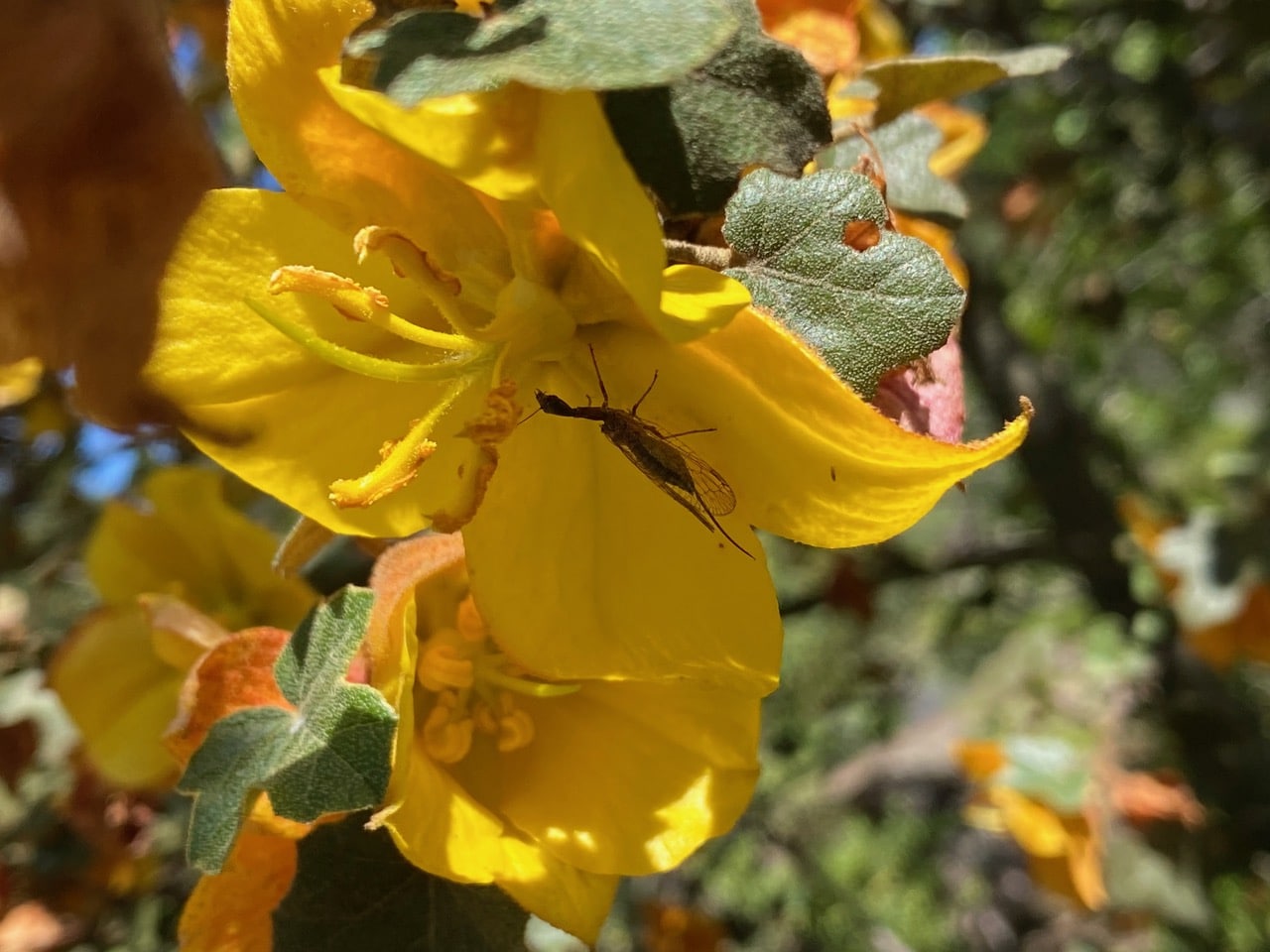
I stop by the Flannel Bush, Fremontodendron californicum by the front gate, hoping to see some pollinators at work on the large, showy flowers. Where are the Carpenter Bees? In the long silence, I finally see an insect – a female Snakefly in a flower.
Snakeflies are a group of predatory insects comprising the order Raphidioptera. They are a relict group, having reached their apex of diversity during the Cretaceous before undergoing substantial decline. Adult Snakefly has a notably elongated thorax which, together with the mobile head, gives the group their common name of snakefly. The body is long and slender and the two pairs of long membranous wings are prominently veined. The head is long and flattened and heavily sclerotized. The mouthparts are strong and relatively unspecialized, being modified for biting. The large compound eyes are at the sides of the head. Females have a large and sturdy ovipositor which is used to deposit eggs into crevices or under bark. Snakeflies are holometabolous insects with four-stage life cycle consisting of eggs, larvae, pupae and adults. Both adults and larvae are predators of soft-bodied arthropods such as aphids and mites.