

Pollinator Post 4/16/24 (2)
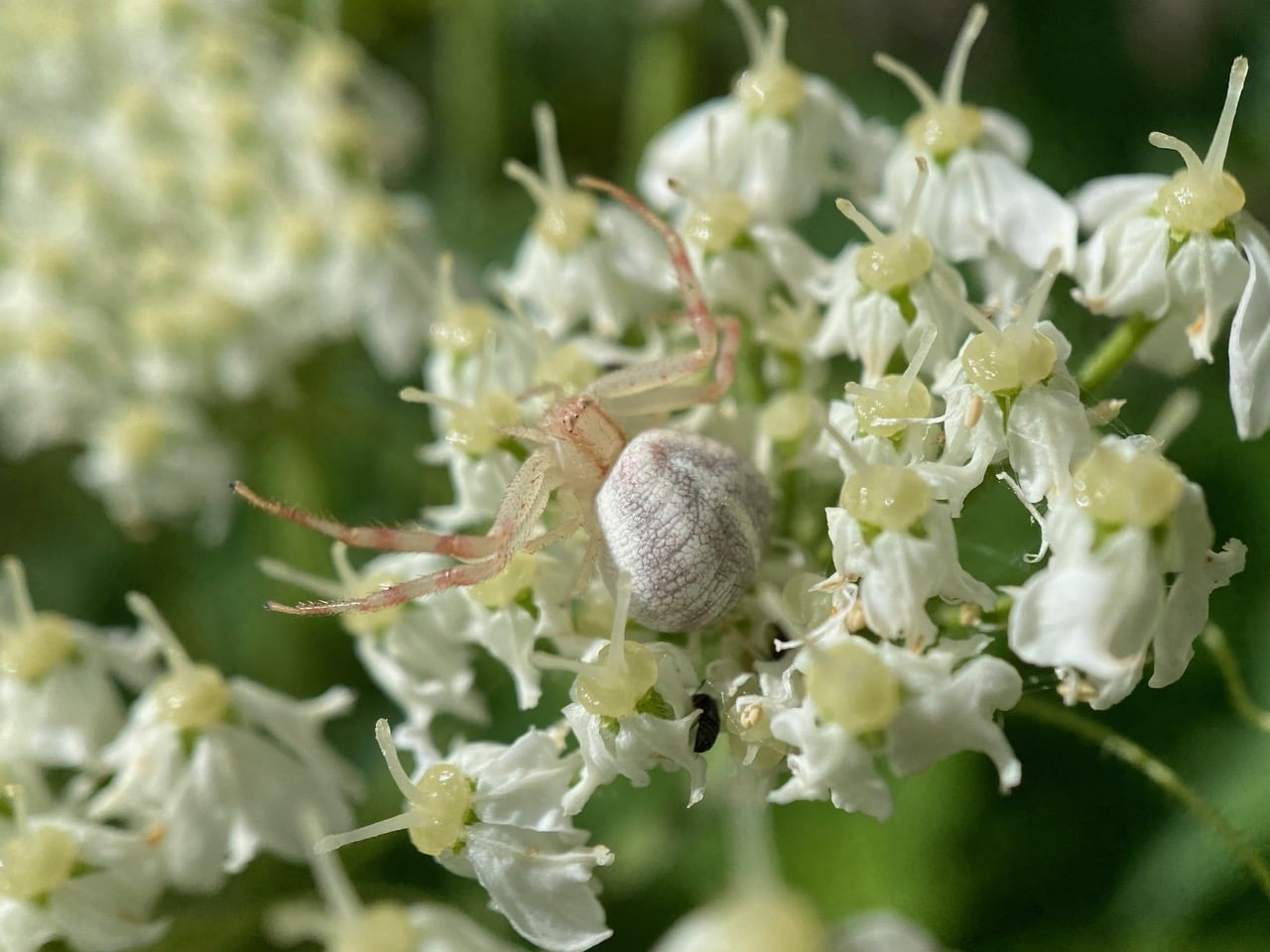
Whoa! I didn’t see this large, pale Crab Spider, Misumena vatia (family Thomisidae) for a long time while photographing the insects on the umbel of Cow Parsnip flowers. The spider’s camouflage is uncanny. Her upraised front legs blend in with the forest of protruding styles of the flowers.
Crab Spiders (family Thomisidae) are usually yellow or white. This ultimately depends on the flower on which these ambush predators are hunting (active camouflage). They have the ability to change between these colors based on their surroundings, using visual cues. The color-changing process is not instant and can take up to 25 days to complete. Depending on the color of flower they see around them, the spiders can secrete a liquid yellow pigment into the body’s outer cell layer. The baseline color of the spider is white. In its white state, the yellow pigment is sequestered beneath the outer cell layer so that the inner glands which are filled with white guanine are visible. While the spider is residing on a white flower, it tends to excrete the yellow pigment instead of storing it in its glands. In order to change back to yellow, the spider must first produce enough of the yellow pigment. For this reason it takes these spiders much longer to turn from white to yellow than it does the reverse. The color change from white to yellow can take between 10-25 days while the opposite color change takes only about 6 days.
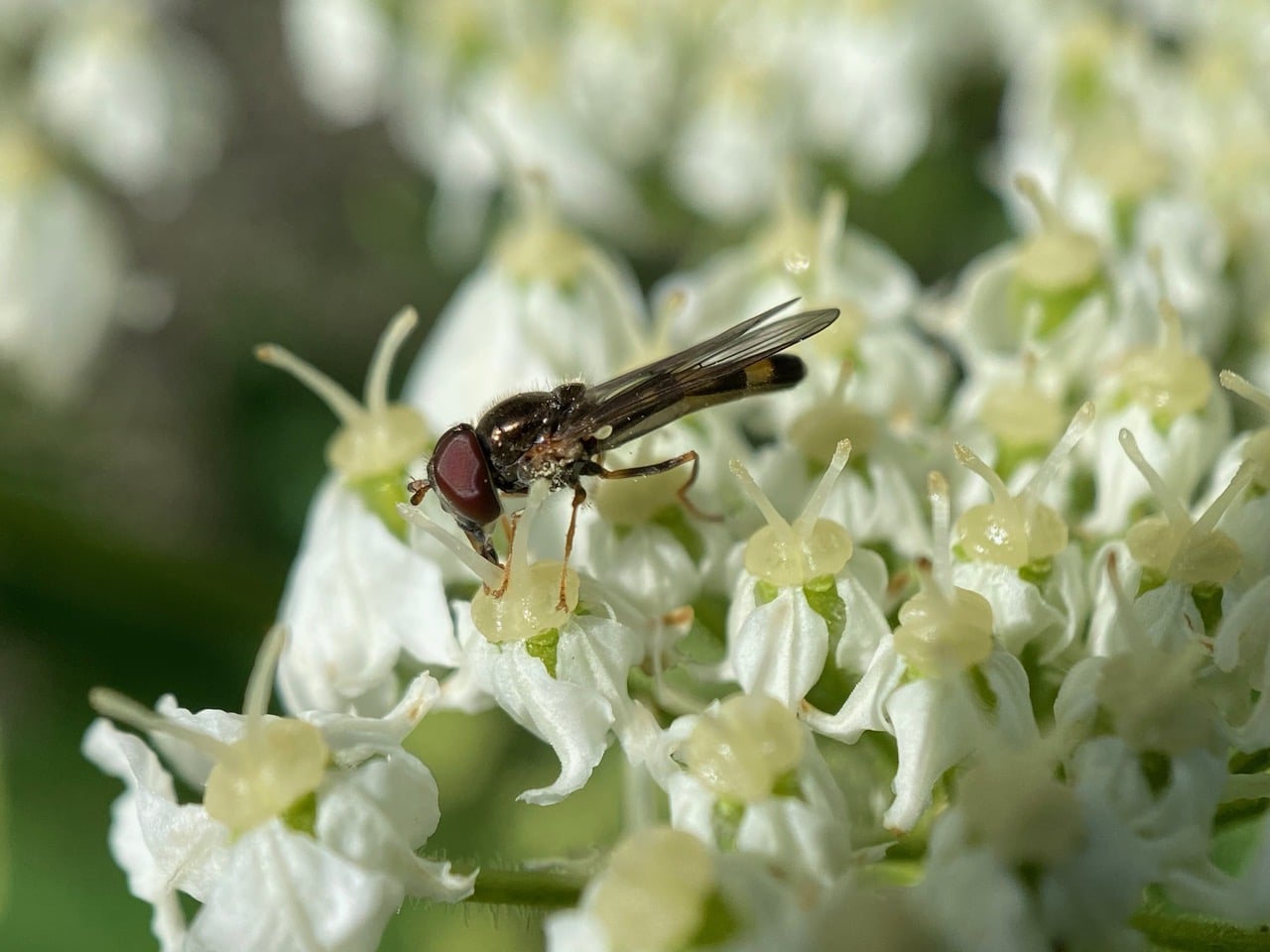
A Sedgesitter, Platycheirus sp. (family Syrphidae) is feeding from the style base of a Cow Parsnip flower. Note that despite appearances, the succulent, swollen white structure is not the ovary. Members of the carrot family, Apiaceae have inferior ovaries, located beneath the petals. You can see glimpses of the green ovaries between the petals. I notice that most insect visitors to Cow Parsnip flowers have their mouthparts aimed at the swollen style bases, probably where the nectar is produced.
Platycheirus is found in grass and herb vegetation. Adults of many species feed on pollen of wind-pollinated plants, such as Salix, Plantago, Poaceae, Cyperaceae, but they visit other flowers also. Many stay active during cold and rainy weather. Larvae feed on aphids.
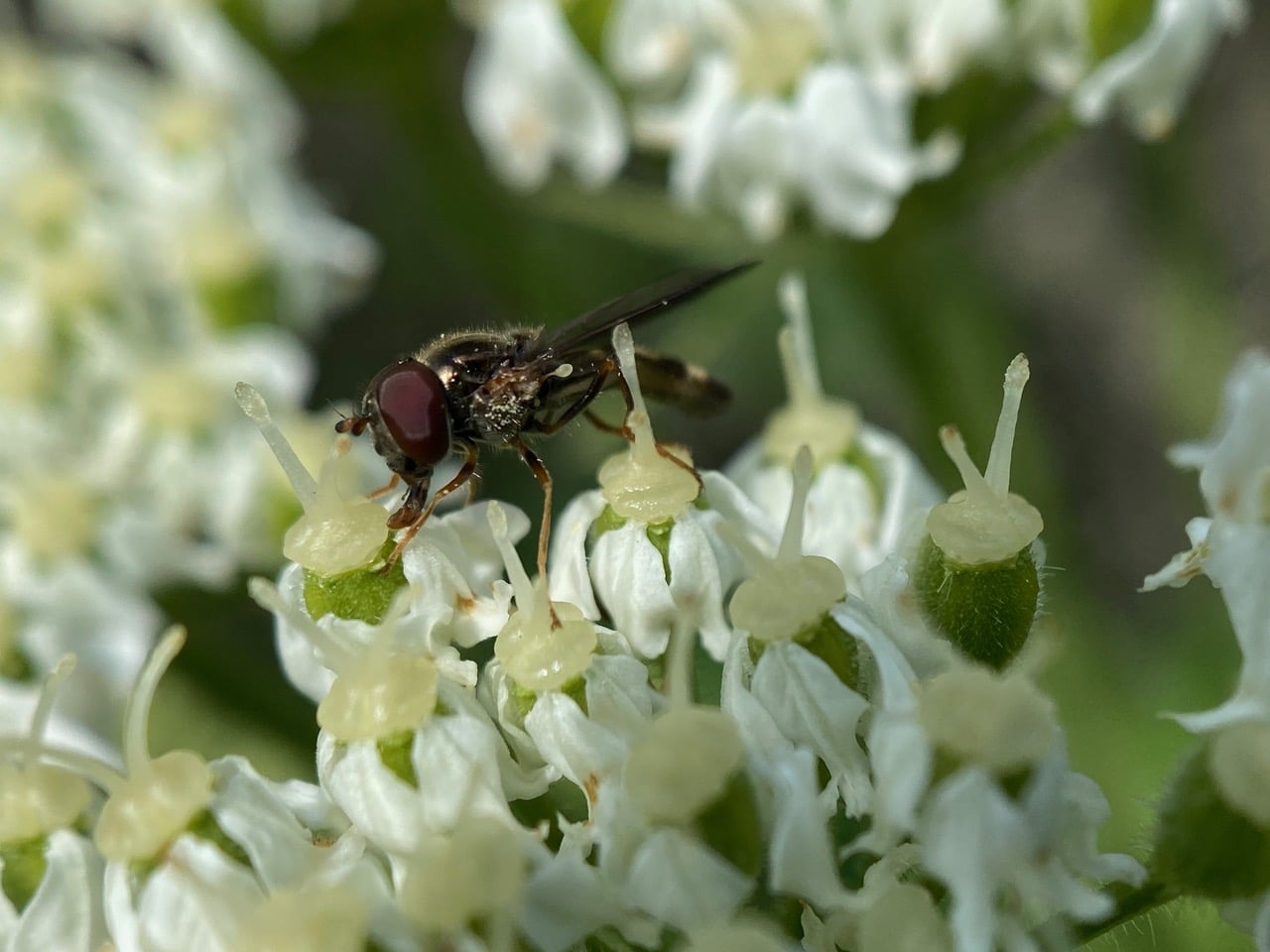
Where the petals have fallen off the flowers, the green ovaries are visible.
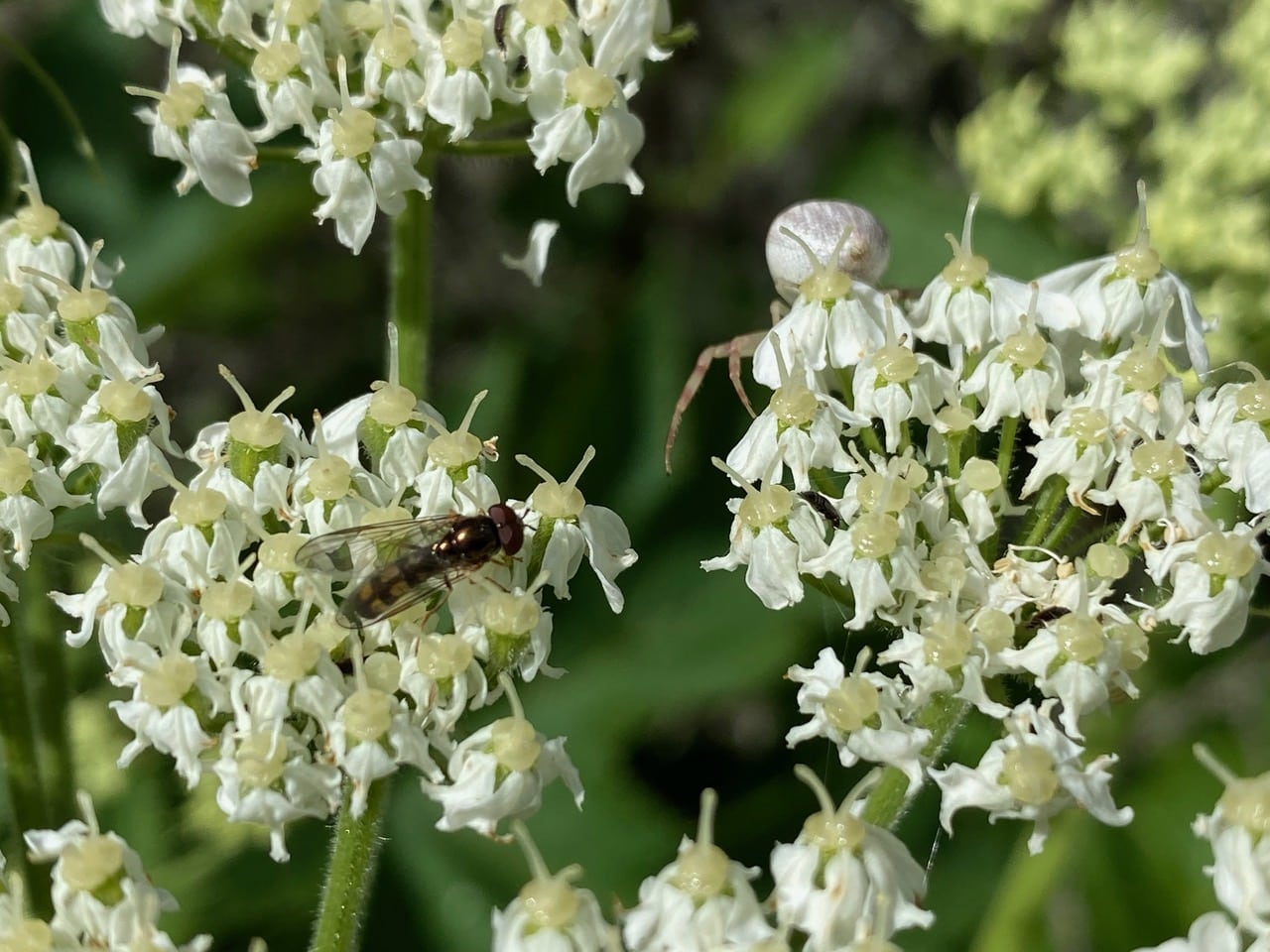
Ooh, the little Sedgesitter is walking towards the ambushing Crab Spider!

I watch in trepidation as the little hoverfly actually crosses over to the other umbel where the Crab Spider is lying in ambush. Expecting predation action, I turn on the video camera.

Whoa, there’s another Crab Spider, Misumena vatia hidden among the flowers in that umbel! Her long front legs are outstretched, ready to grab any insect that comes close.
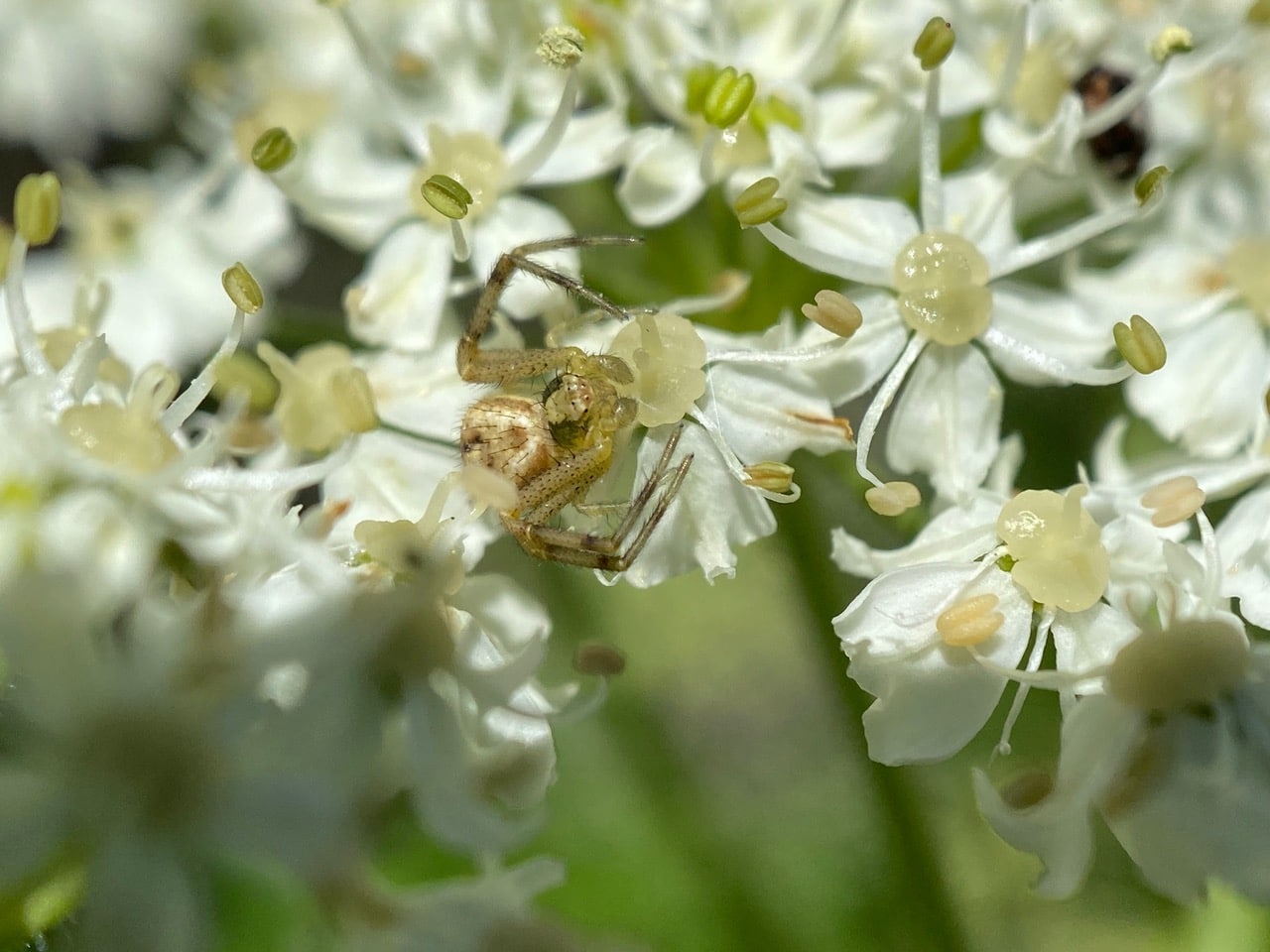
And here’s a different species of Crab Spider, Mecaphesa sp. (family Thomisidae) trying its best to look like a flower. Cow Parsnip flowers are spider city! Nectar and pollen are abundant here, but they come with risks!
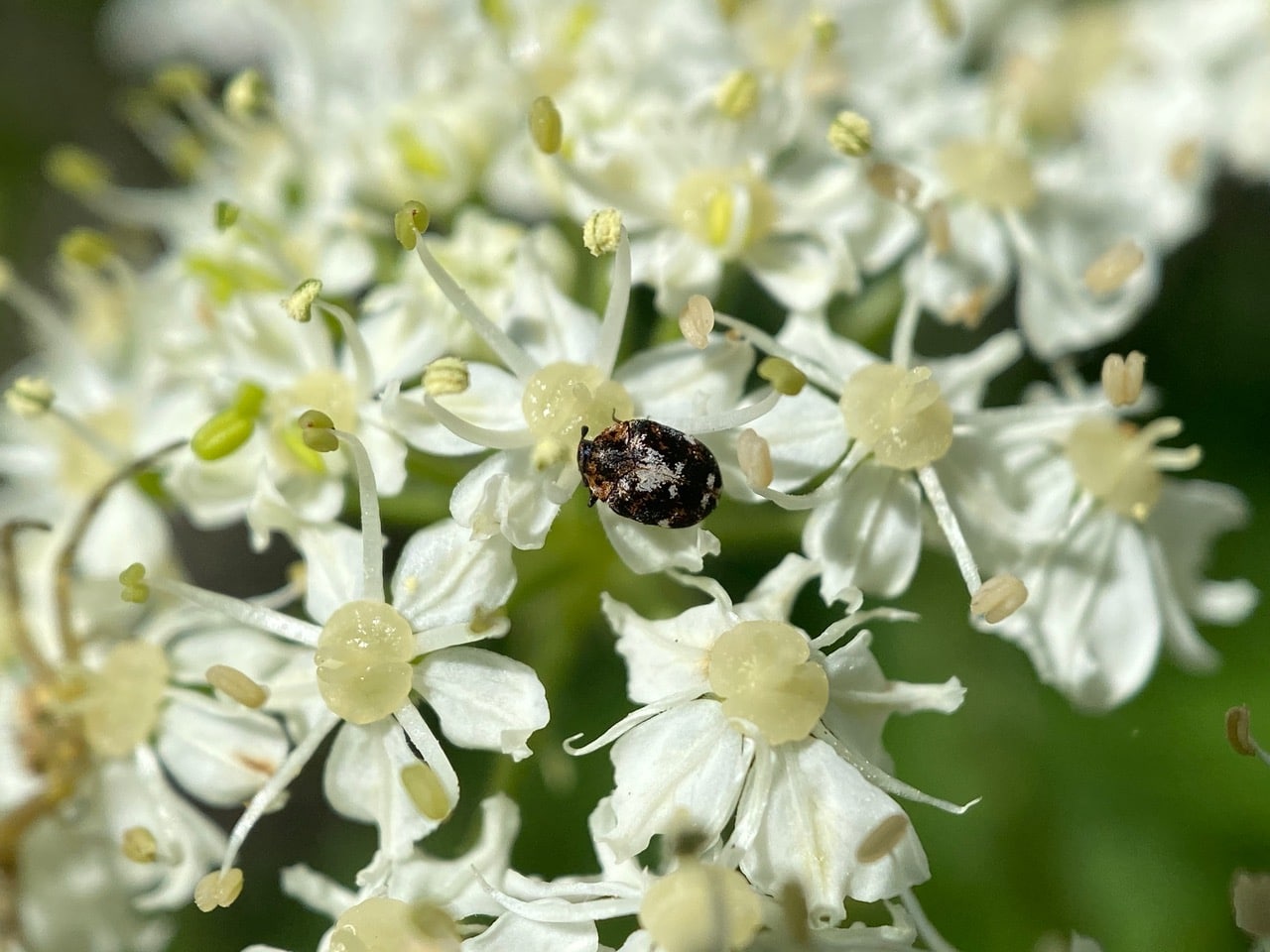
A Skin Beetle, Anthrenus lepidus (family Dermestidae) is feeding on a style base of a Cow Parsnip flower.
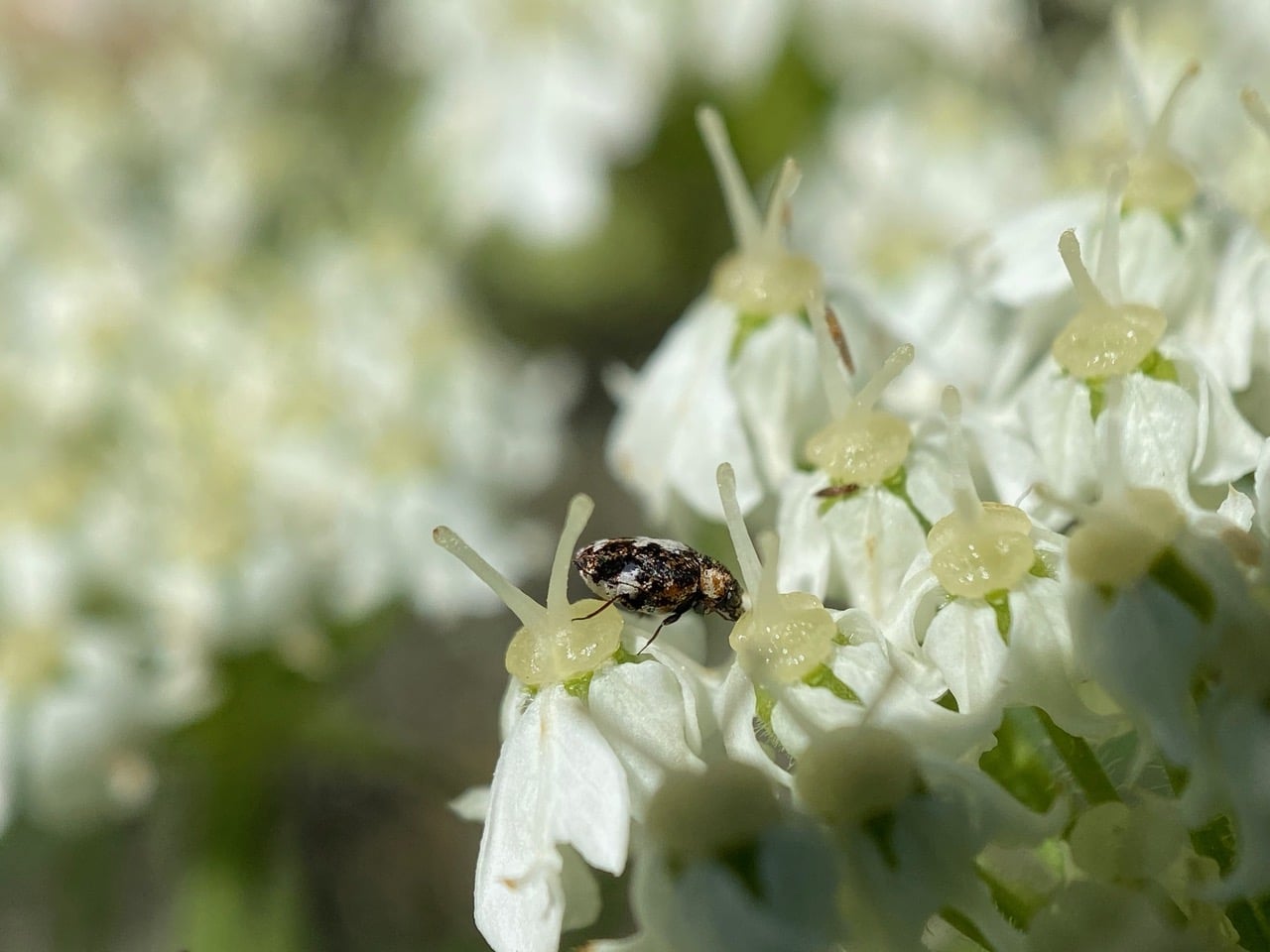
Dermestidae are a family of Coleoptera (beetles) that are commonly referred to as skin of carpet beetles. Ranging in size from 1 to 2 mm, the beetles typically have clubbed antennae that fit into deep grooves. Most Dermestids are scavengers that feed on dry animal or plant materials, such as skin or pollen, animal hair, feathers, dead insects and natural fibers. The larvae are used in taxidermy and by natural history museums to clean animal skeletons.

Hey, this Skin Beetle has climbed on a style to feed on the stigma!
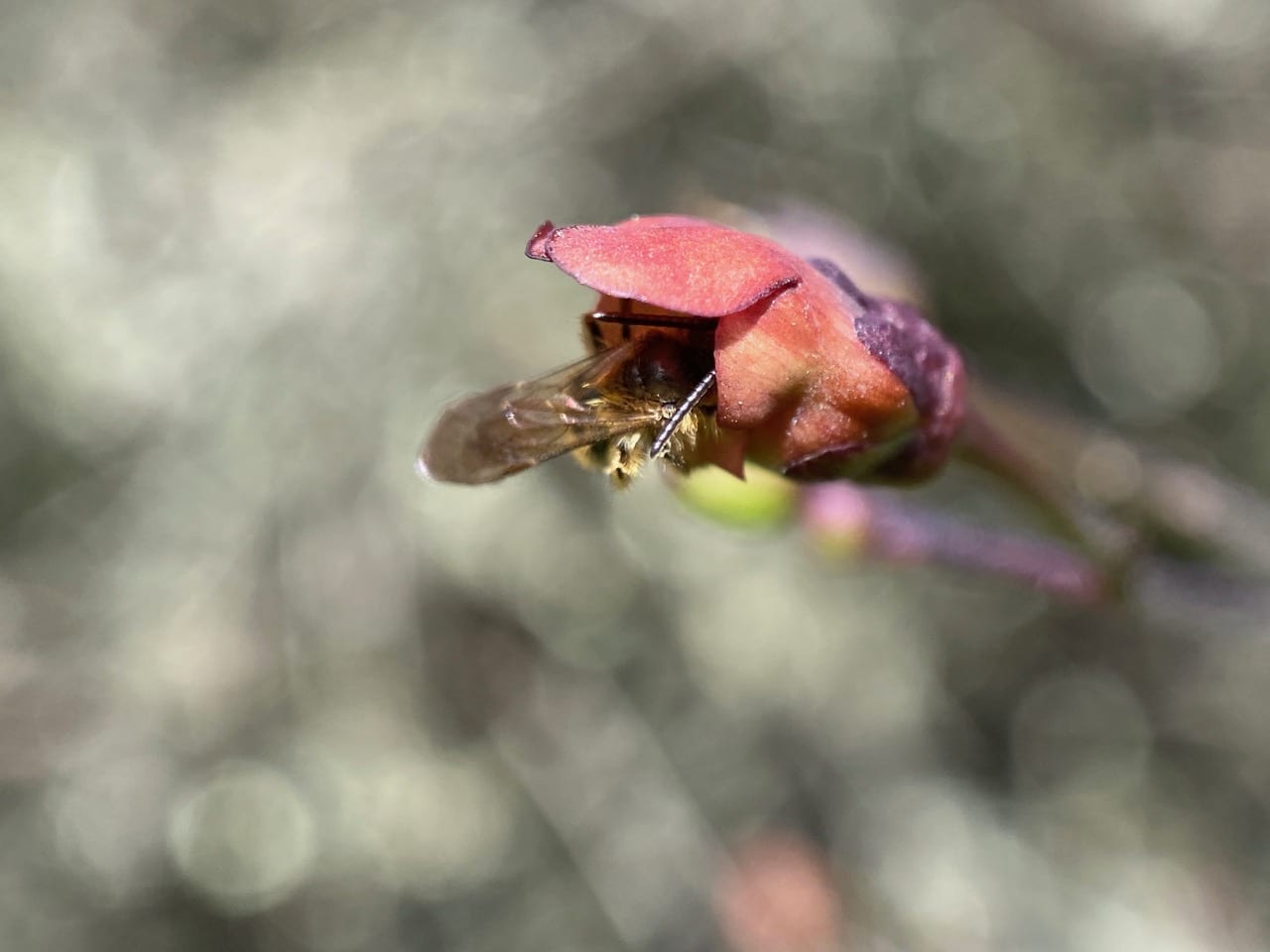
Many of the Bee Plants, Scrophularia californica along the northern section of Skyline Trail have been clipped (by deer? people?) before they even bloom. The few that have survived the onslaught have started to bloom, attracting a slew of little bees, and an occasional hoverfly. Someone with long antennae is reaching into a Bee Plant flower, fitting in snugly.
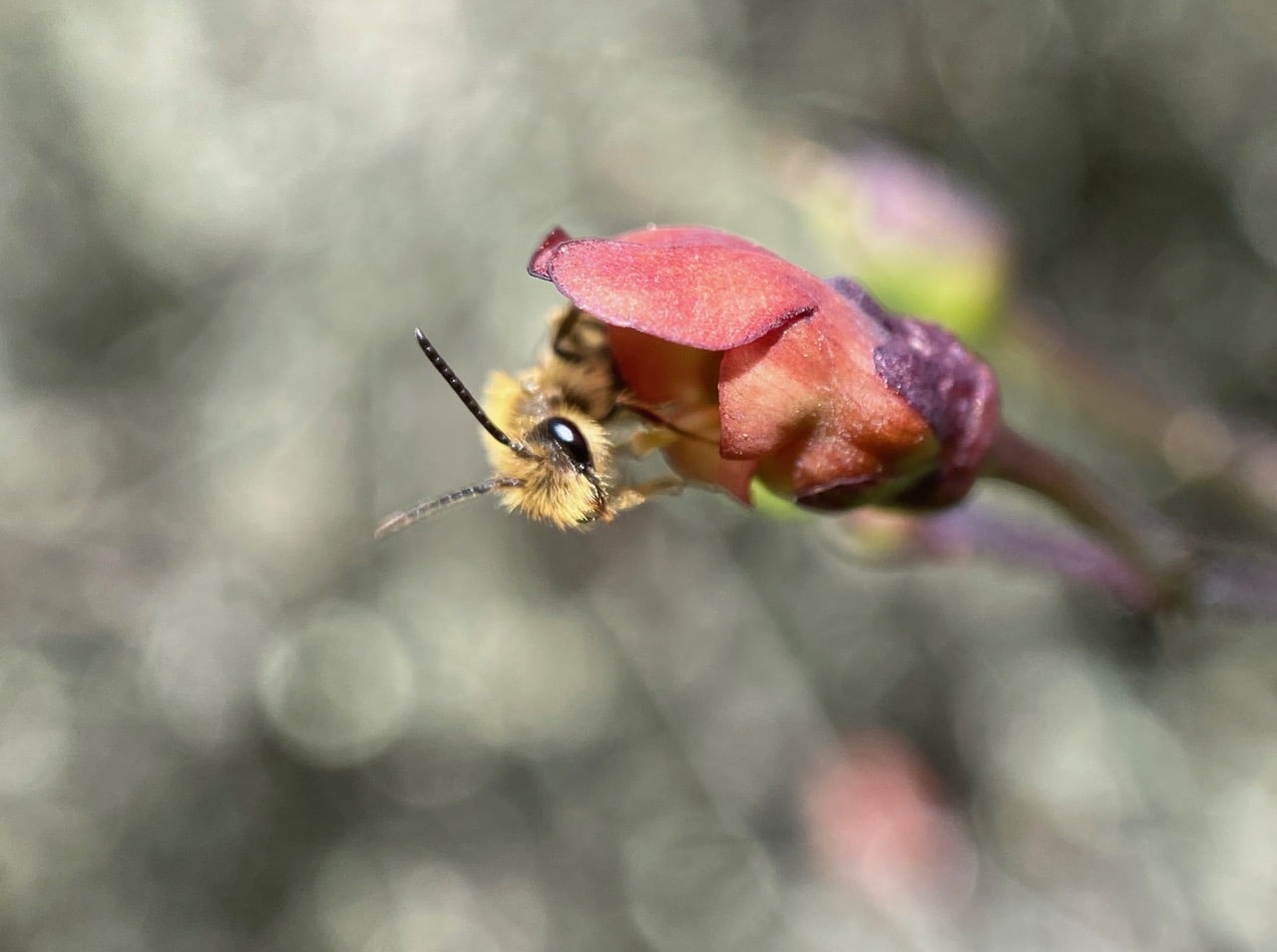
When the bee comes out, I see that it is a male Mining Bee, Andrena sp. (family Andrenidae).

Here’s another little bee visiting a flower of Bee Plant.

It’s another male Mining Bee, most likely a Golden-haired Miner Bee, Andrena auricoma (family Andrenidae).
The species is found in western United States, and is relatively rare outside California. The females are 8-10 mm in length, and males are 6-9 mm long. I have seen them visit several species of flowers in past years, so the bees are probably polyphagous, and not specialist pollinator for Bee Plant.
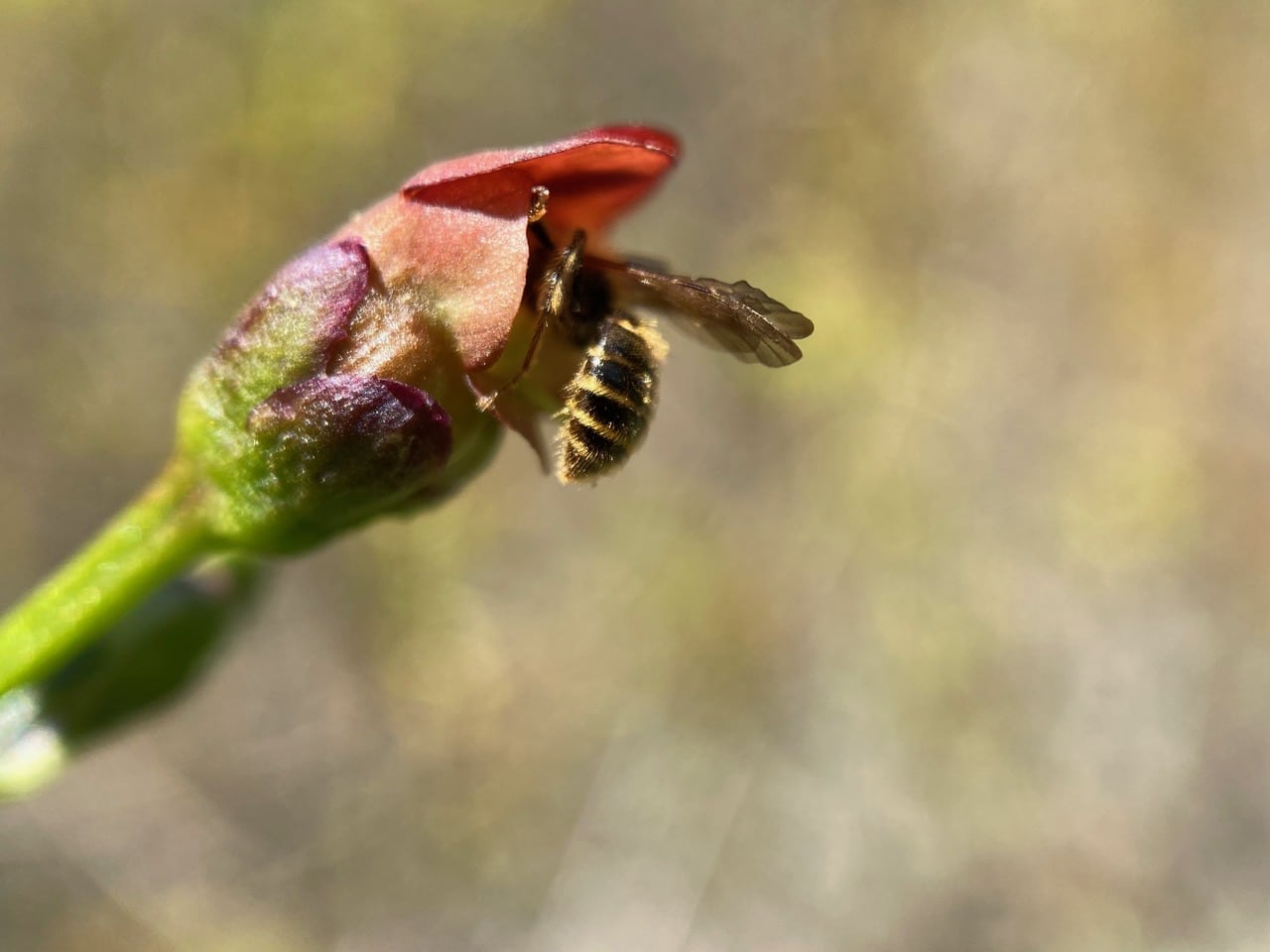
Another Golden-haired Miner Bee, Andrena auricoma visits a Bee Plant flower.
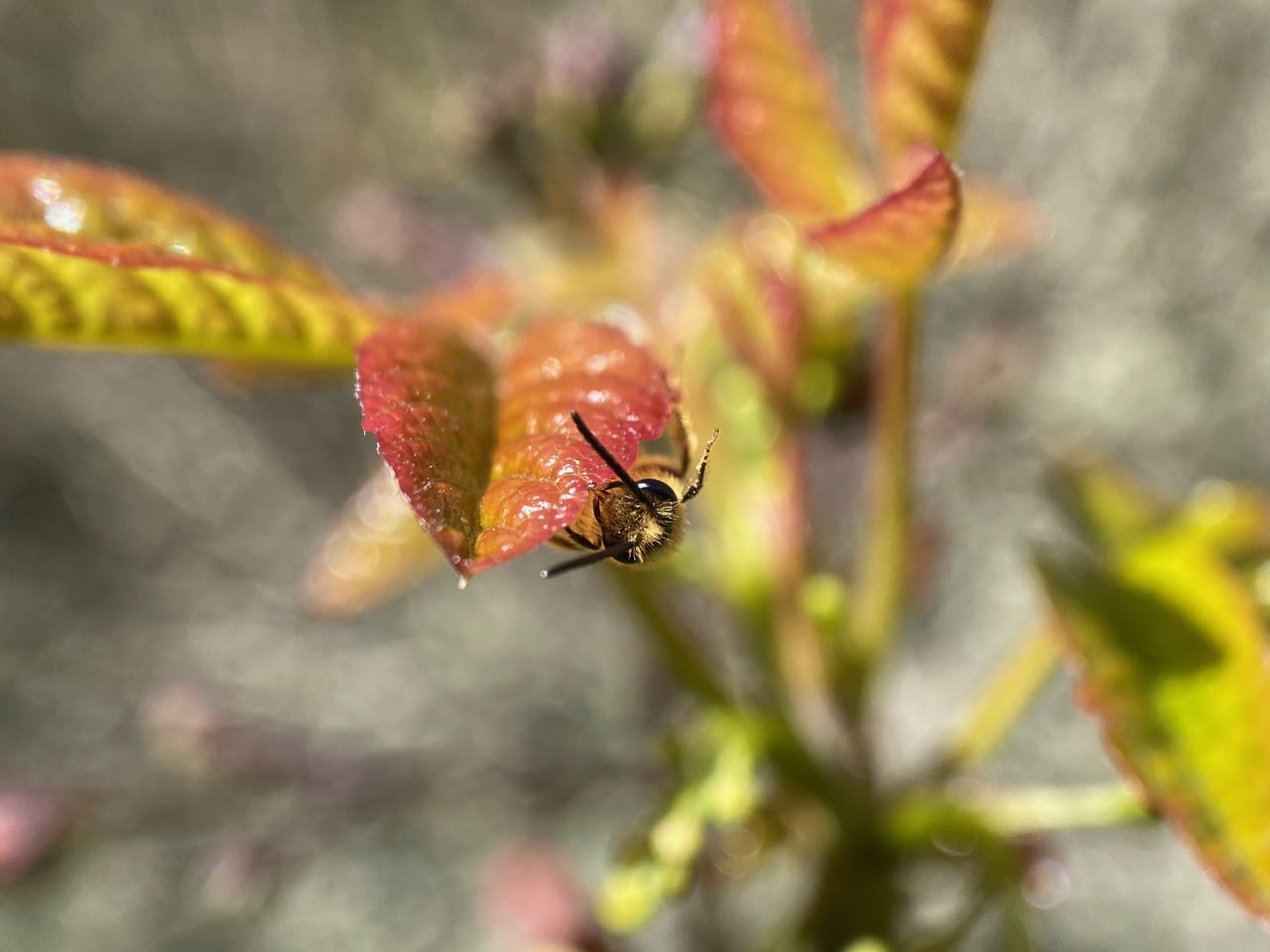
It flies away and lands on a Poison Oak leaf. It is a male with long antennae.

The bee scrambles to the top of the leaf. The Golden-haired Miner Bees tend to have a scruffy appearance. Their golden hairs are coarse and of various lengths. The bees are fond of basking in the sun on cold mornings. The large leaves of Cow Parsnip serve that purpose well.
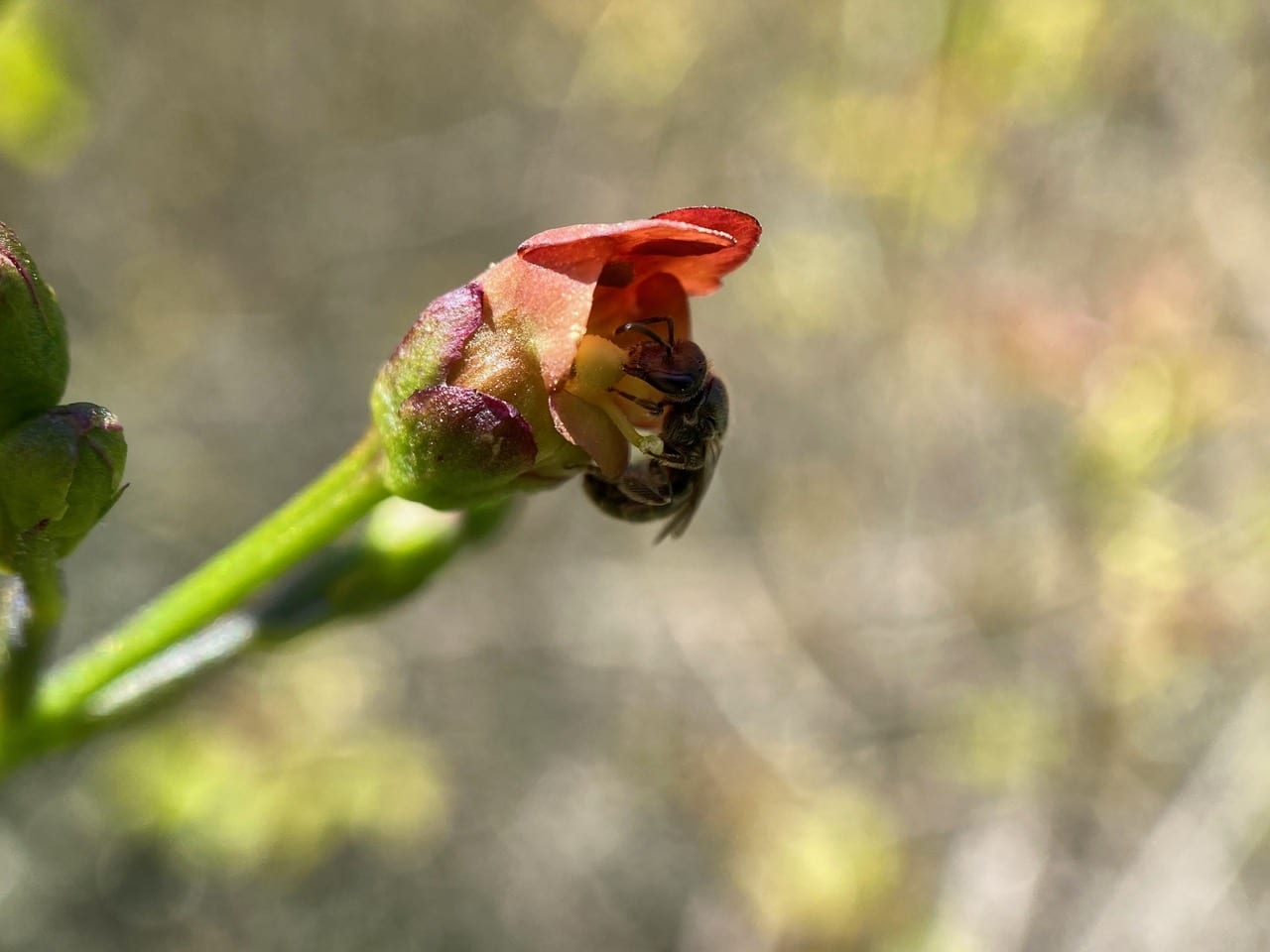
A female bee (with short antennae) is perched on the rim of a Bee Plant flower for a long time. Even though the light is poor in this direction, I can see that she is using her mandibles on an immature anther. The flower is in its female phase with the relatively fresh style directing forward towards the bee’s belly. The Bee Plant is protogynous, the female parts maturing before the male parts. The stigma is receptive to incoming pollen in the female phase, before the anthers of the same flower release their pollen. The bee has to use her mandibles to extract pollen from the anthers. You would not see a male bee do this, as they do not collect pollen to provision the nest.
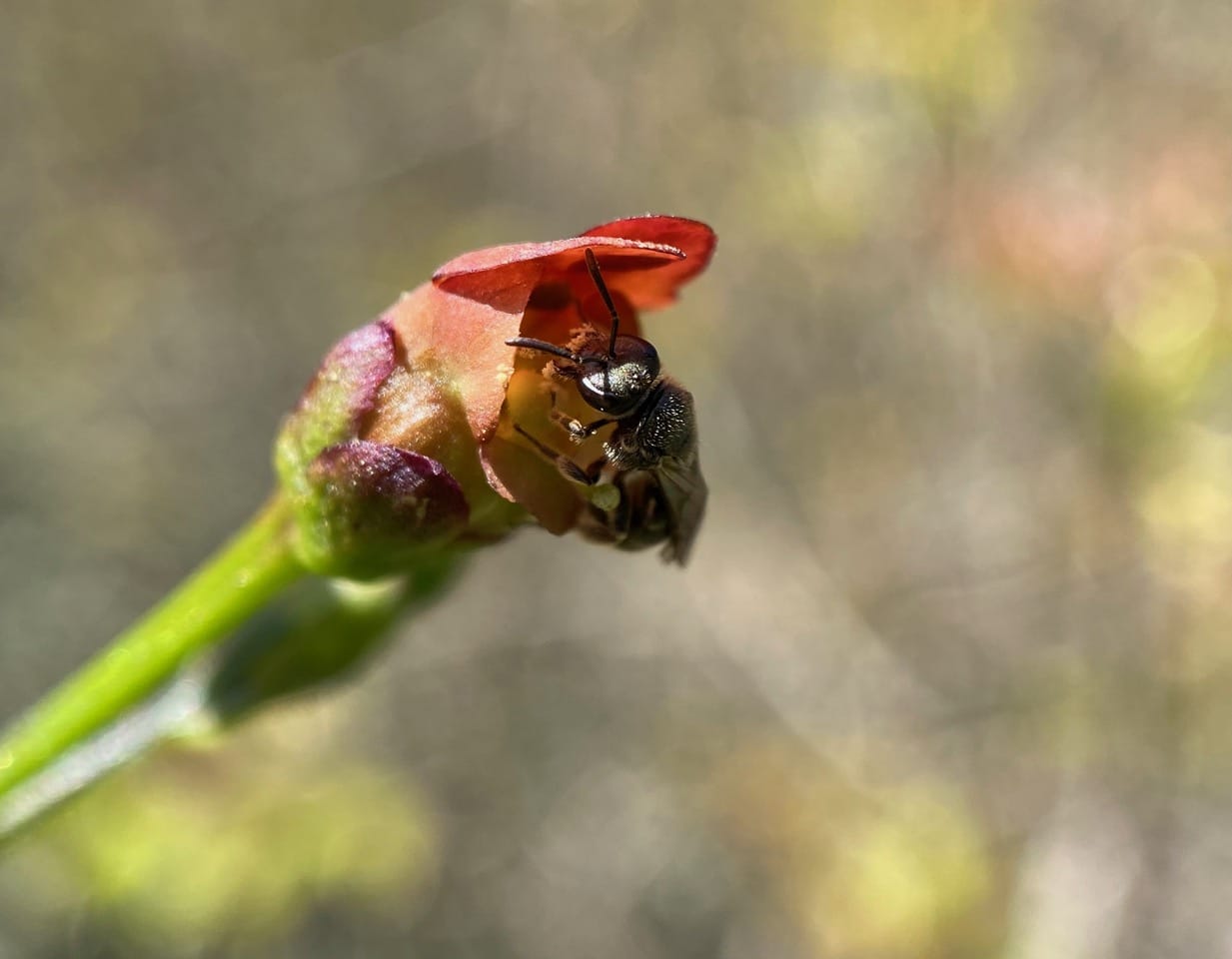
There, you can see the pollen in her mandibles.
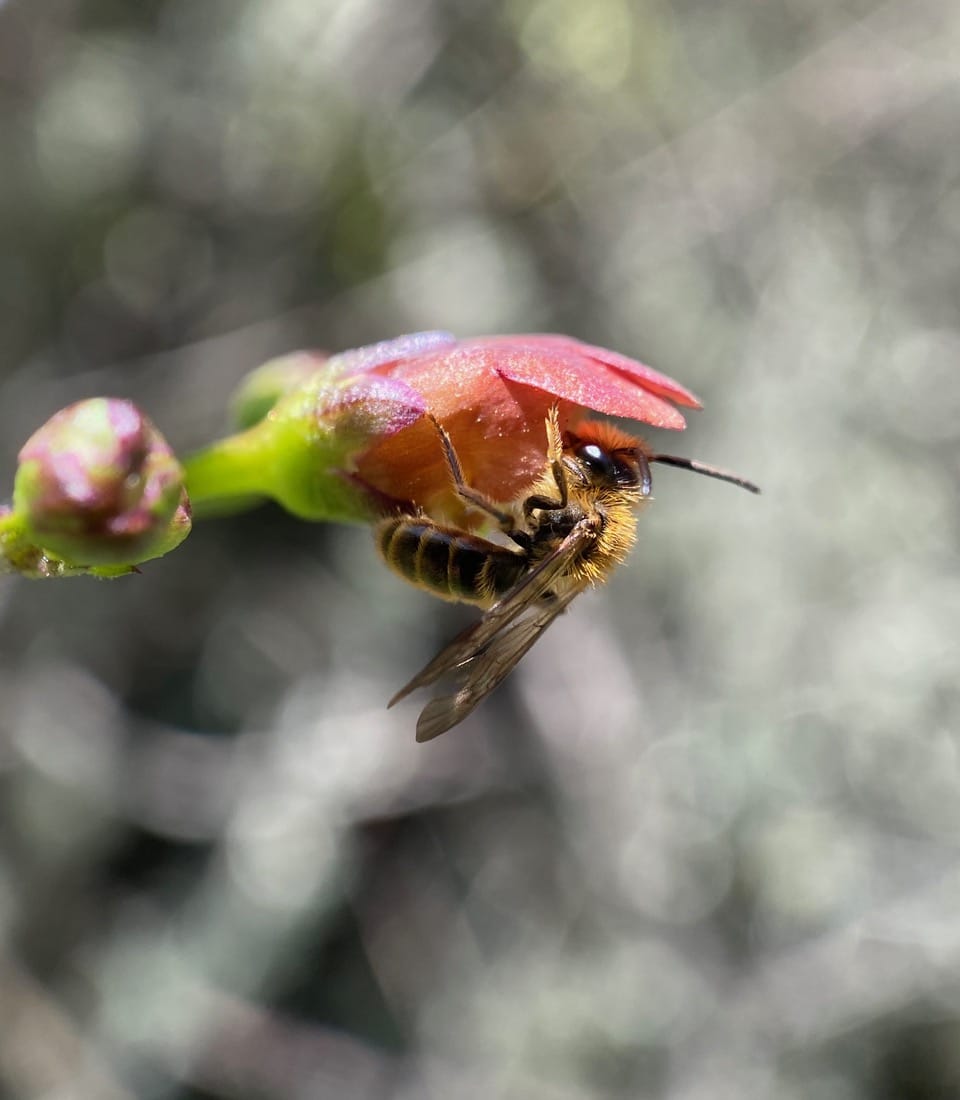
A male Golden-haired Miner Bee, Andrena auricoma visits a Bee Plant flower. He is probably here for nectar.
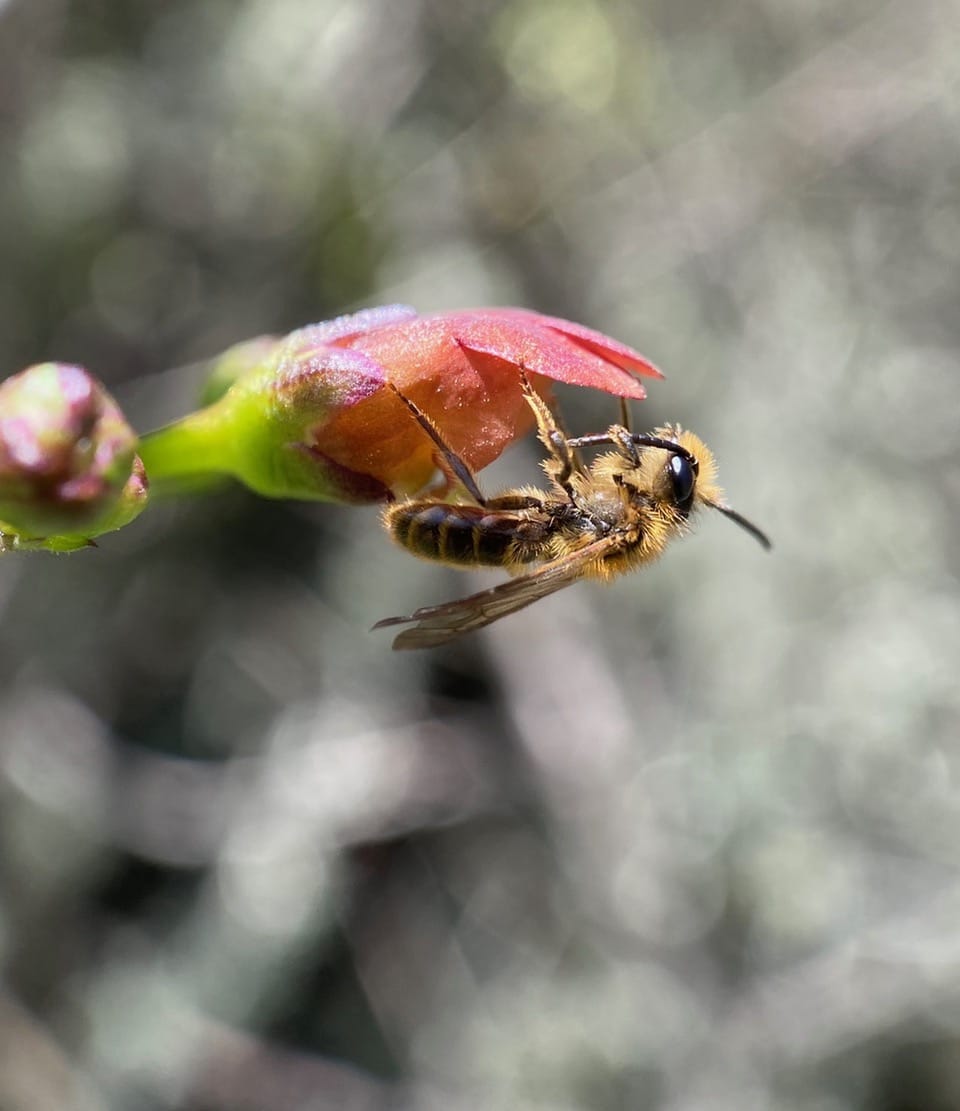
Before flying off, the bee cleans his antennae – “Gotta look good for the girls!” The male bees far outnumber the females on the Bee Plant today. Perhaps in the coming days, we’ll see more females.
In many solitary bees, males tend to emerge from their nests before the females. The female is able to determine the sex of her offspring while she’s laying her eggs. The fertilized eggs will develop into females, while those not fertilized with sperm will develop into males. This system of sex determination is termed haplo-diploidy. Female bees tend to lay female eggs first, in the back of the nest, while the male eggs are deposited in the cells closer to the entrance of the nest. The males, usually smaller, develop faster and emerge before the females, conveniently freeing the path for their sisters.
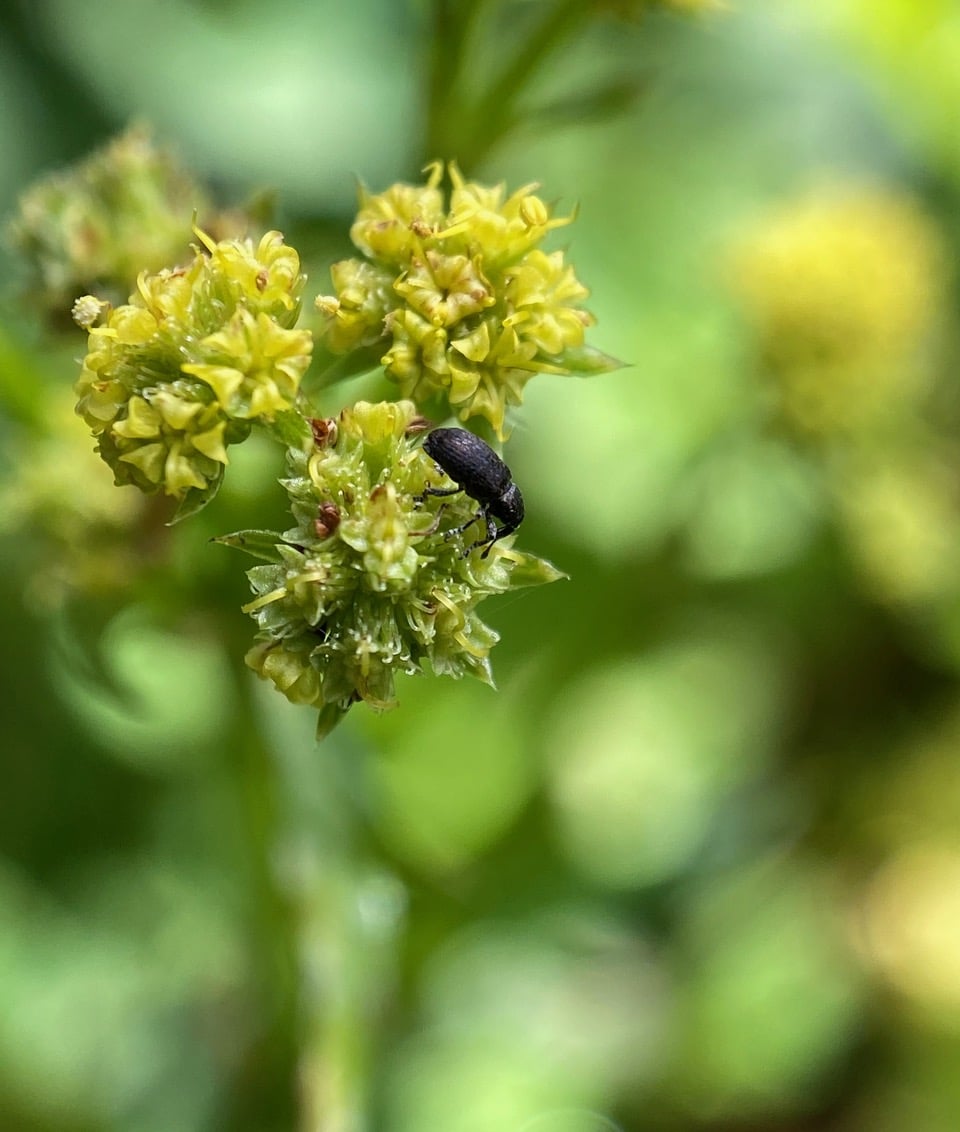
A little Weevil is foraging on the flowers of Pacific Sanicle, Sanicula crassicaulis.
Weevils (family Curculionidae) are also called snout beetles. Curculionidae is one of the largest beetle families (about 40,000 species). Most weevils have long, distinctly elbowed antennae that may fold into special grooves on the snout. The snout is used not only for penetration and feeding but also for boring holes in which to lay eggs. The mouthparts are quite small and located at the end of the rostrum (snout), designed for chewing. Many weevils have no wings, while others are excellent fliers. Most are less than 6 mm in length. The majority of weevils feed exclusively on plants. The fleshy, legless larvae of most species feed only on a certain part of a plant – i.e., the flower head, seeds, fleshy fruits, stems, or roots. Many larvae feed either on a single plant species or on closely related ones. Adult weevils tend to be less specialized in their feeding habits. The family includes some very destructive agricultural pests.
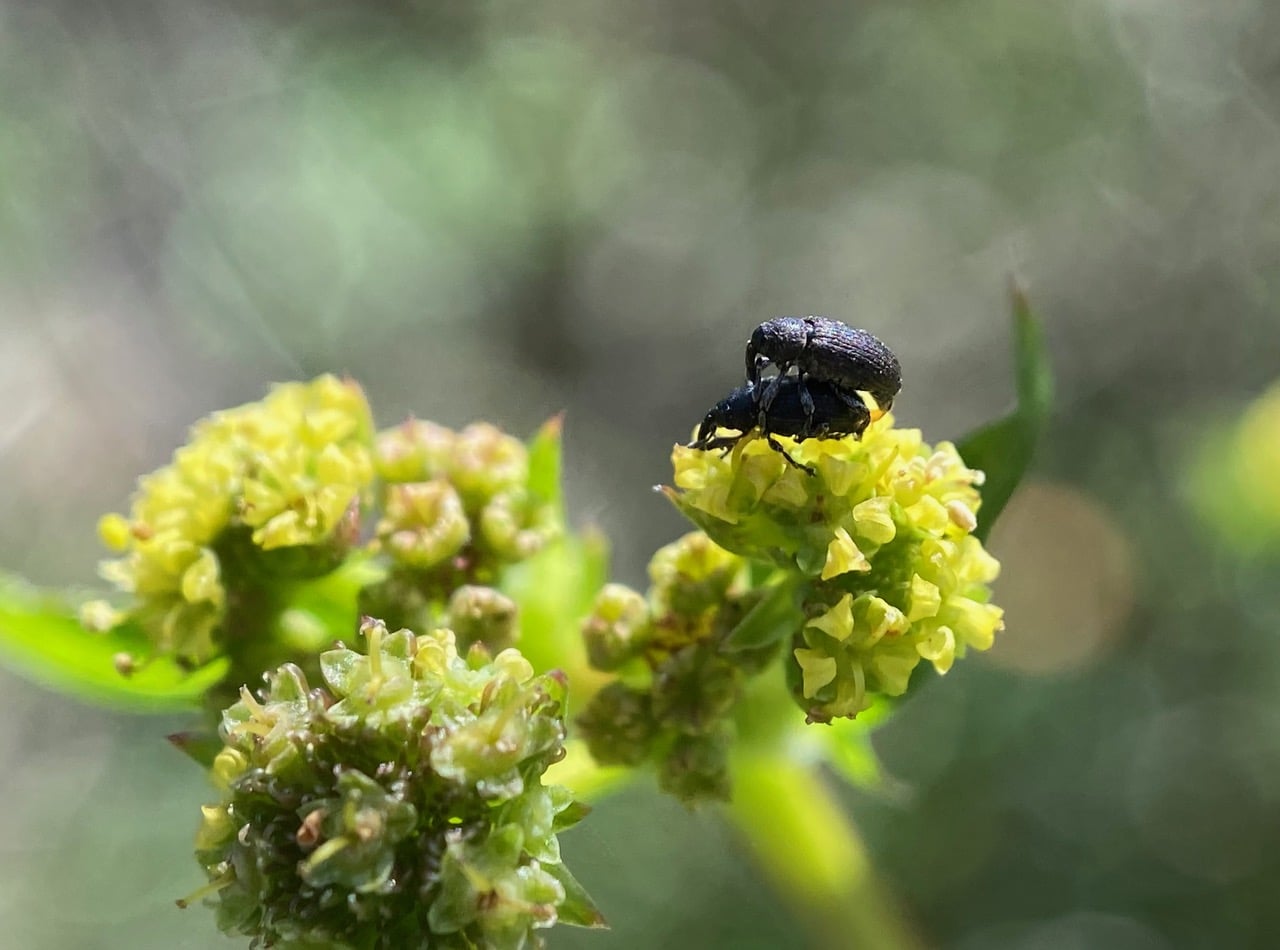
A pair of Weevils are mating on Pacific Sanicle flowers.
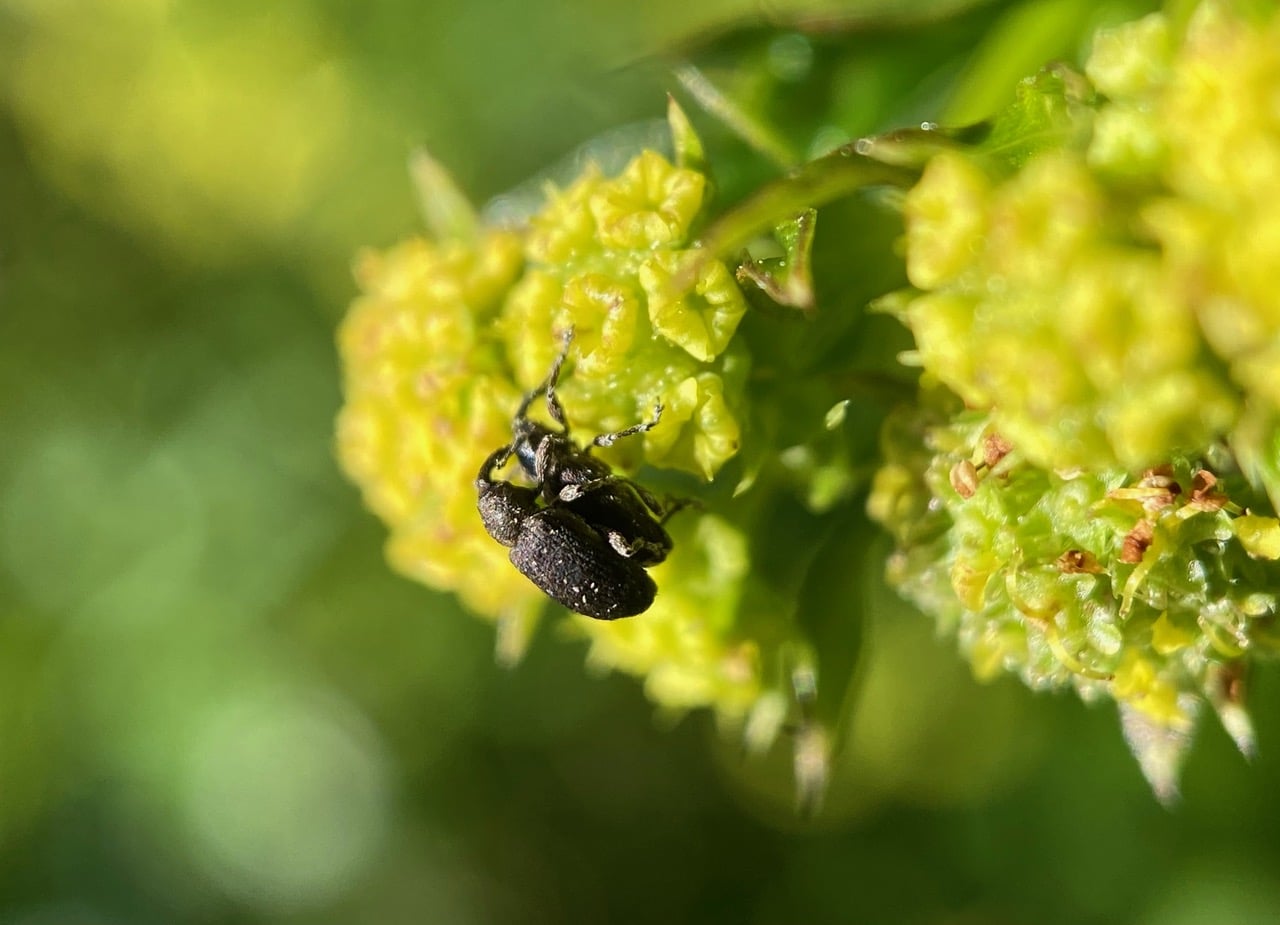
Here’s another mating pair!

Everywhere I look on the sanicle, the weevils are mating!

A Weevil approaches a mating pair on the flowers of Pacific Sanicle, Sanicula crassicaulis.
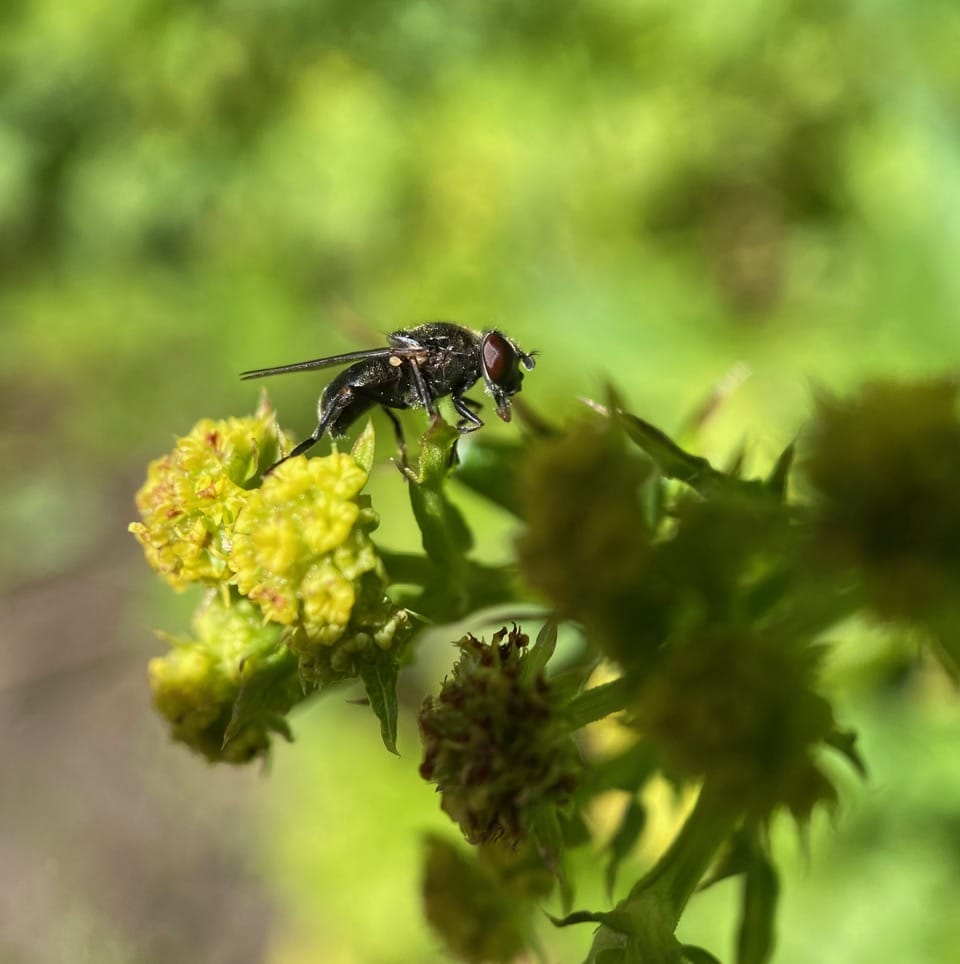
A Blacklet hoverfly, Cheilosia sp. (family Syrphidae) is foraging on a Pacific Sanicle.
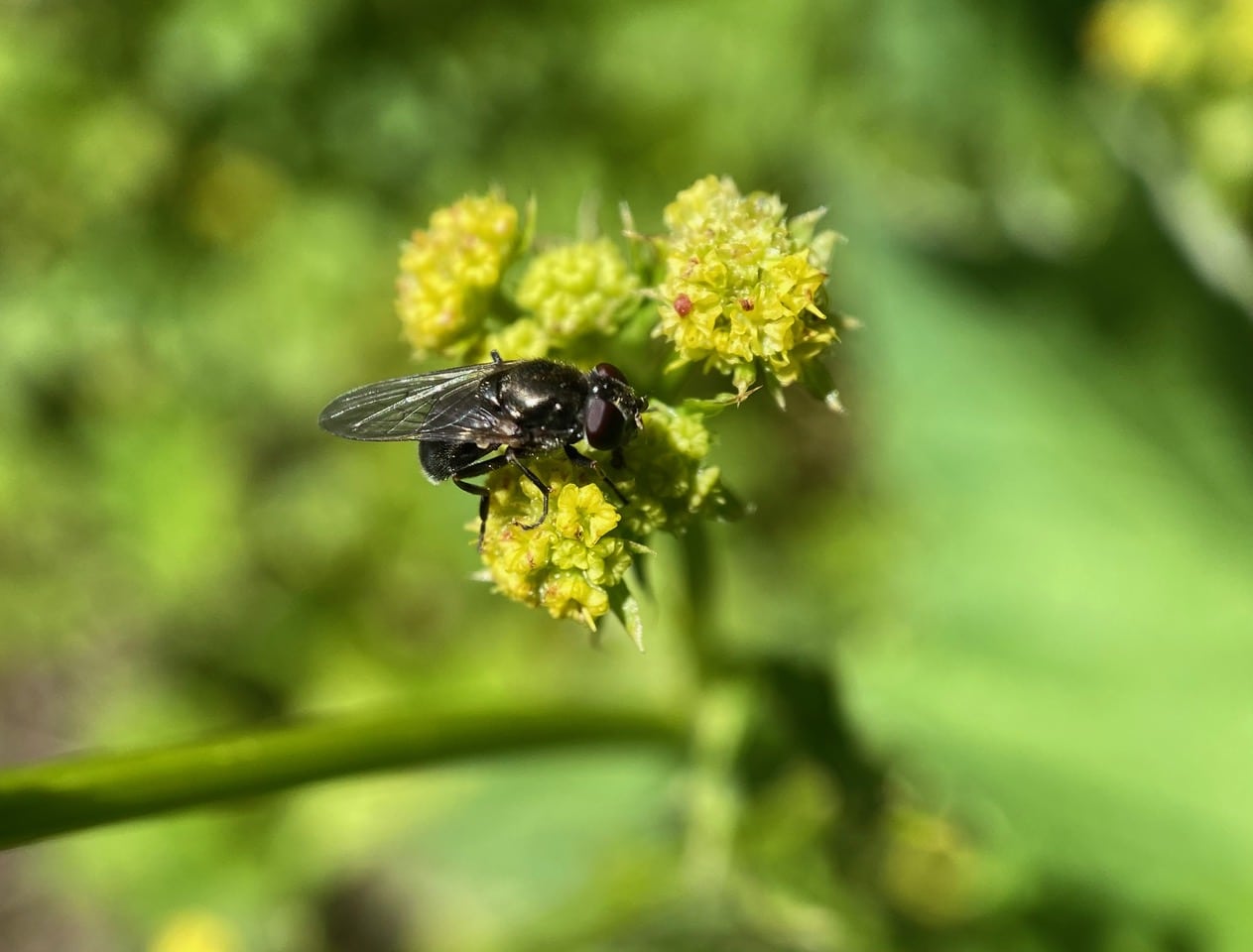
Black and glossy, without bright colors, the Blacklet is a rather unusual hoverfly. Blacklets tend to hold their wings folded over their wings, instead of spread out at an angle, fighter-jet style. Although it is one of the most species diverse genera of Syrphidae, its biology is little understood. Where known, the larvae of Cheilosia species feed in the stems of plants or in fungi.
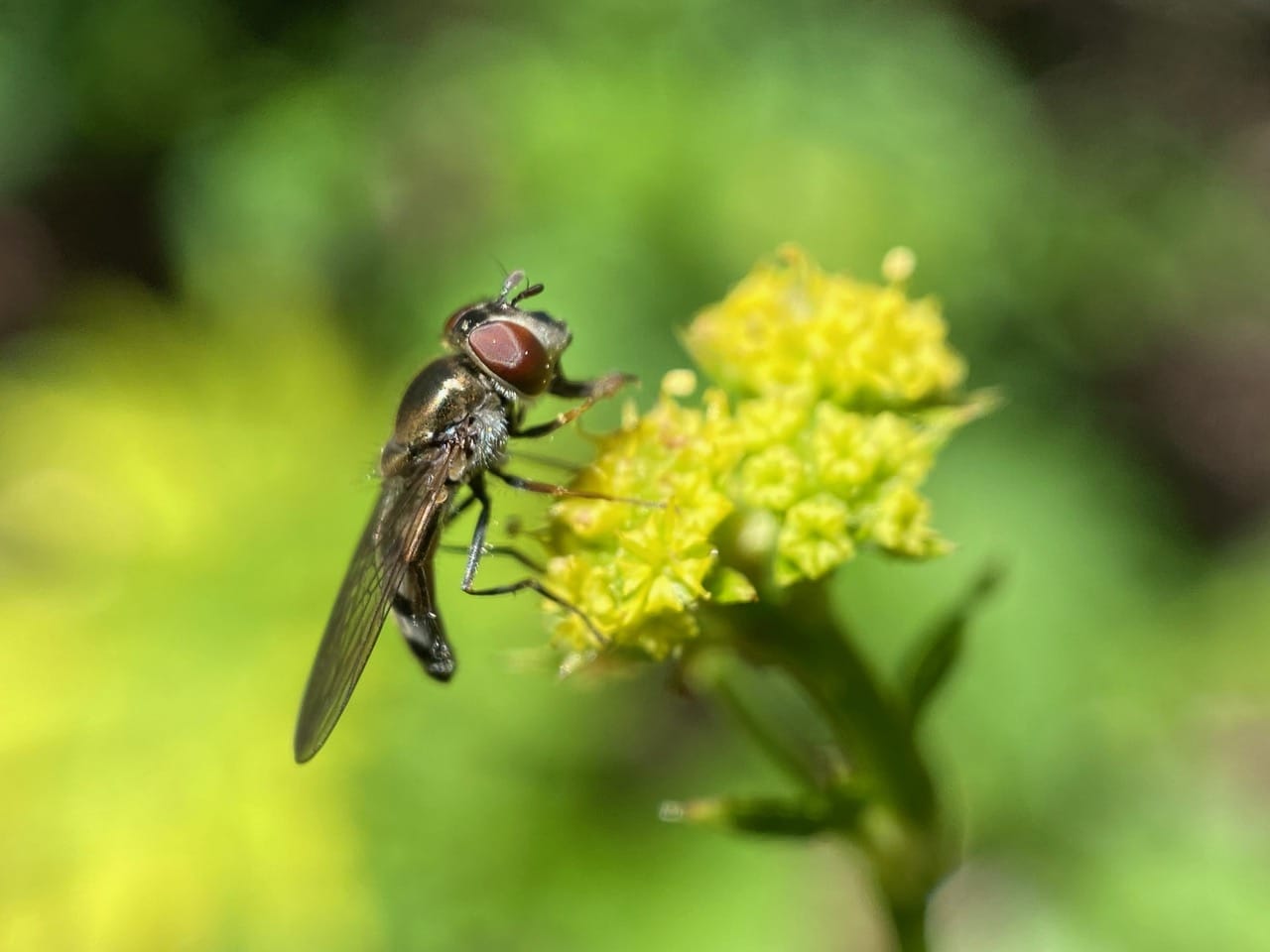
A Sedgesitter, Platycheirus sp. (family Syrphidae) forages on a flower cluster of Pacific Sanicle, Sanicula crassicaulis.

A Variable Checkerspot caterpillar has made itself a nice retreat on a leaf of American Wintercress, Barbarea orthoceras. Is it about to molt?

A Sedgesitter, Platycheirus sp. (family Syrphidae) is foraging on the flowers of American Wintercress.

It’s a treat to get a glimpse of the pattern on the Sedgesitter’s abdomen. The hoverfly usually has its wings closed over its abdomen, concealing its black-and-yellow markings.