

Pollinator Post 4/15/24 (1)

3 pm on Dunn Trail. Some of the Acacia trees near the trail head at Skyline Blvd. have been cut down. The debris has been piled along the trail. Interestingly, this section of the trail has been filled in with wet dark soil. As I approach a large wet patch, I notice a number of large insects flying over it. Most are holding something under themselves – Empidid Dance Flies in courtship display!
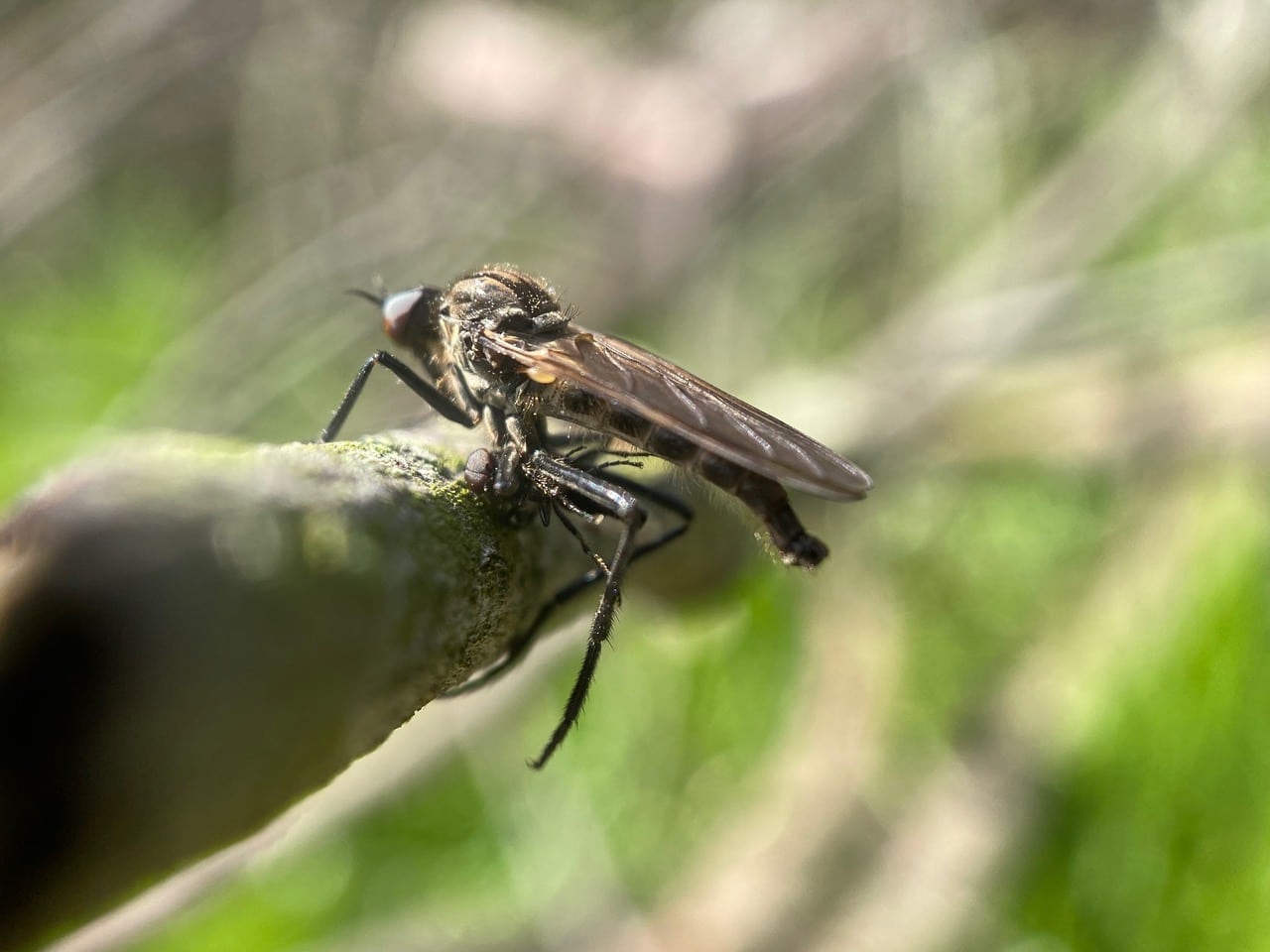
I wait a long time before a fly lands on a cut acacia branch. It is a hefty species I don’t recognize – dark with smokey wings.
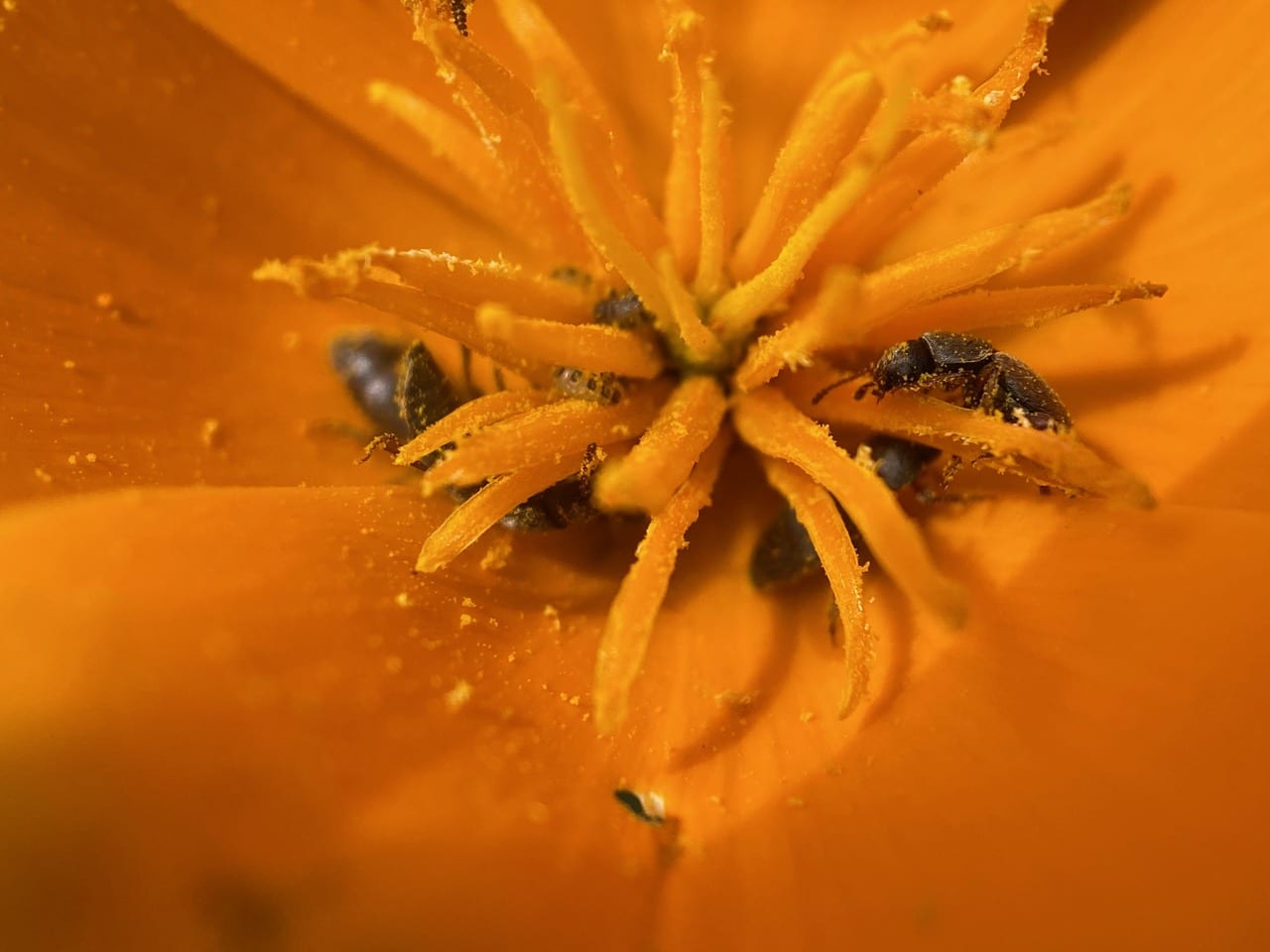
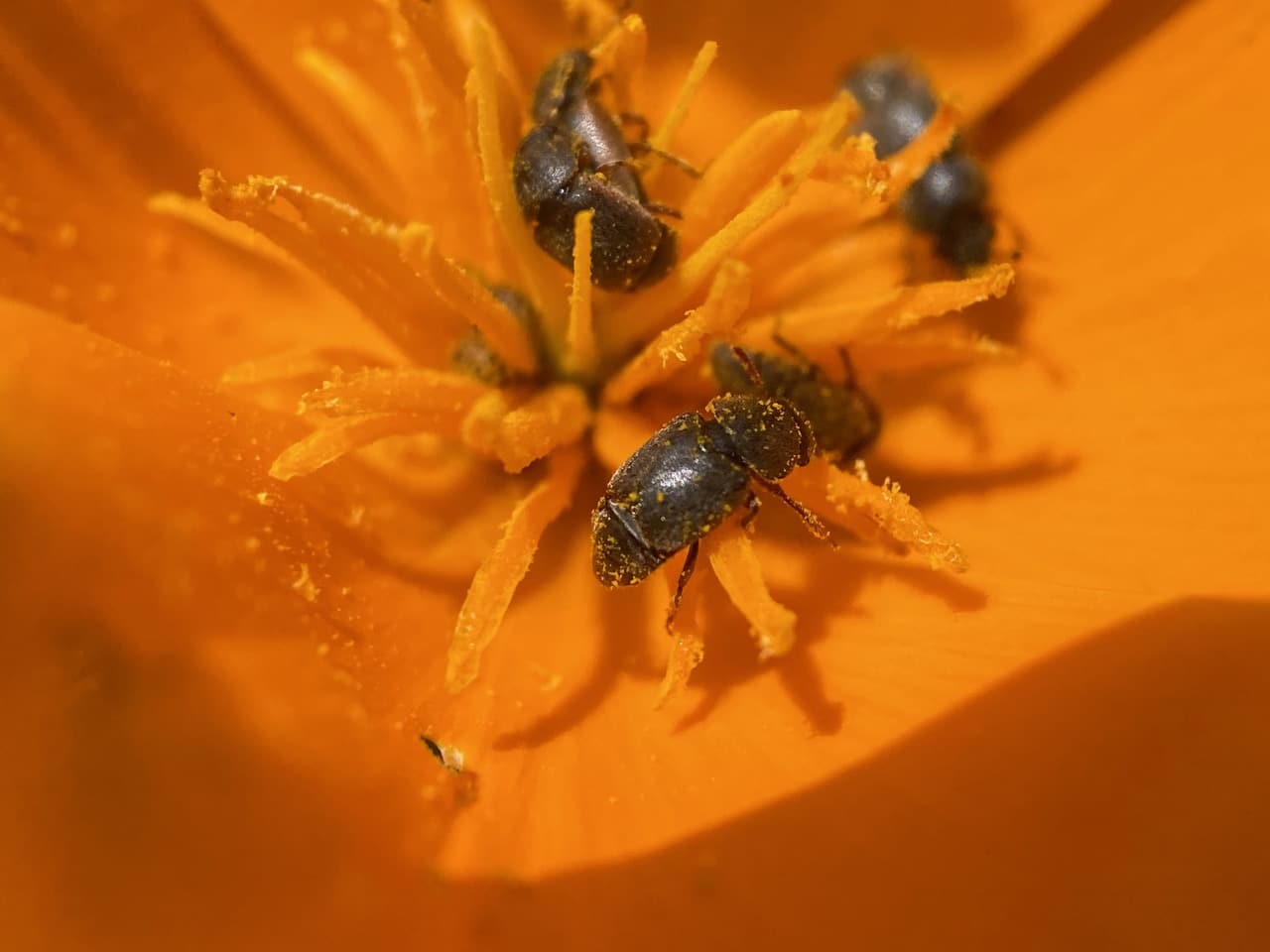
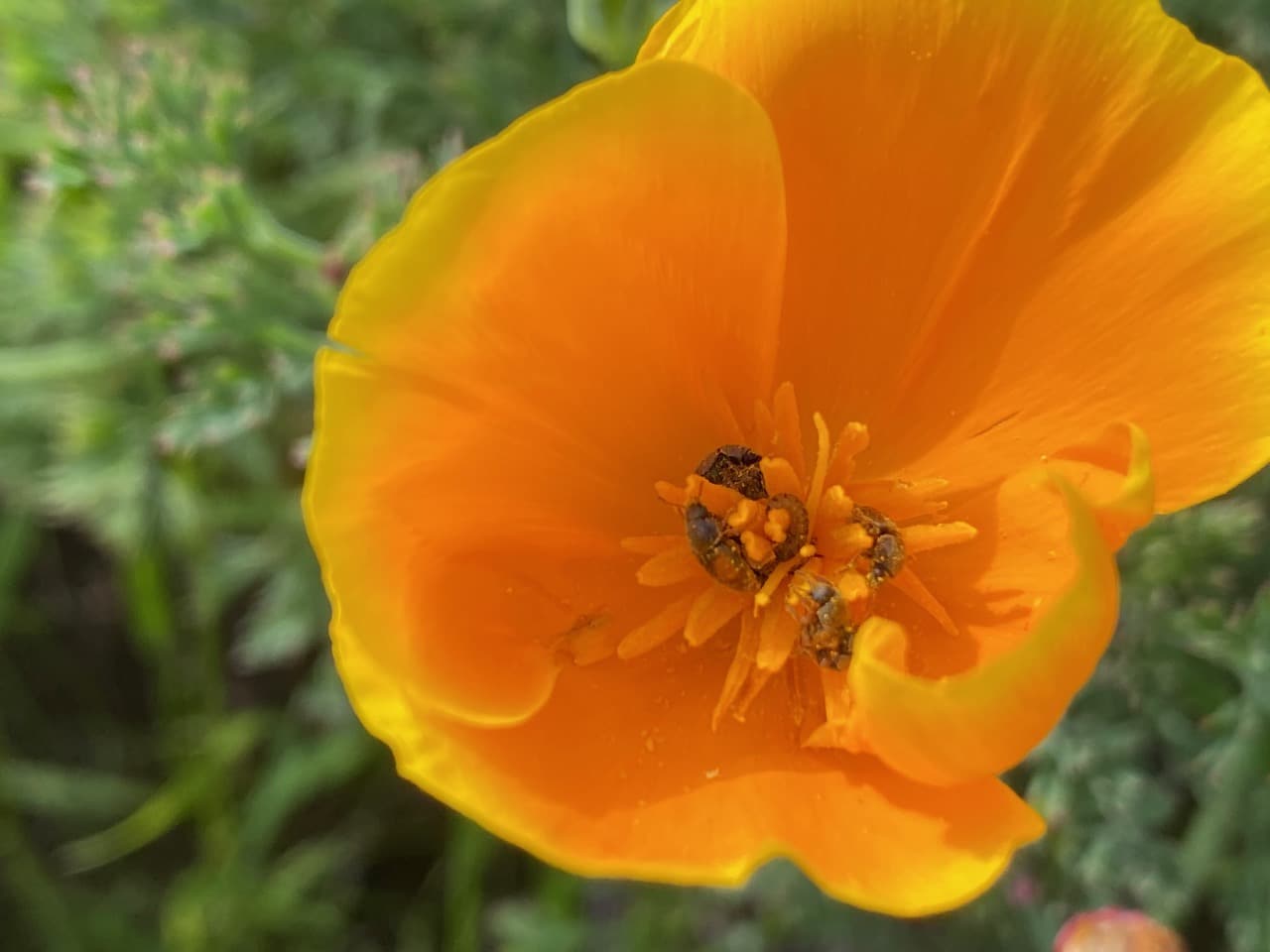 I peer into a California Poppy blooming by the trail side. Wow, it’s a cauldron of activity!
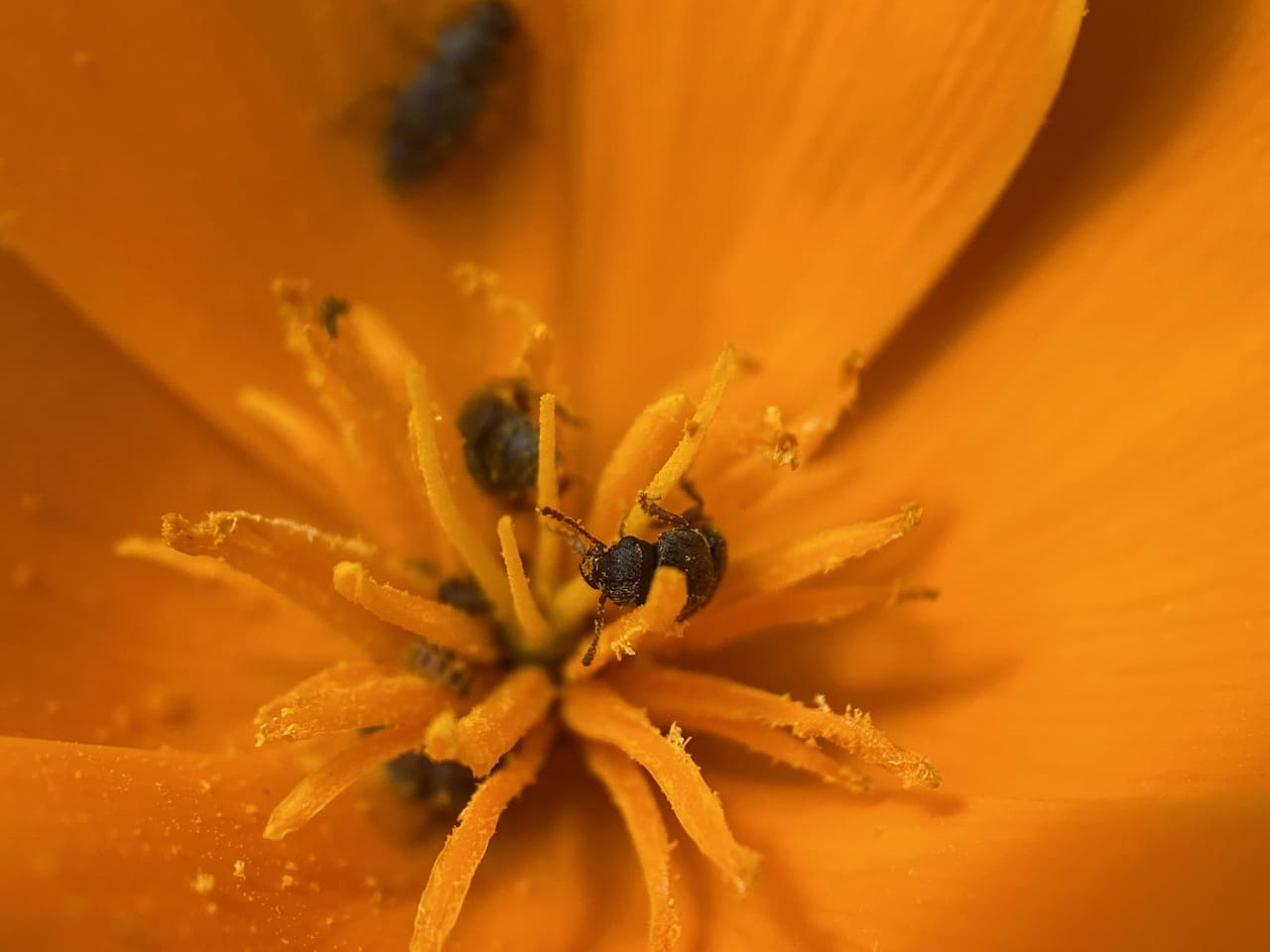 Some dark beetles are rummaging among the stamens, and pollen is scattered everywhere.



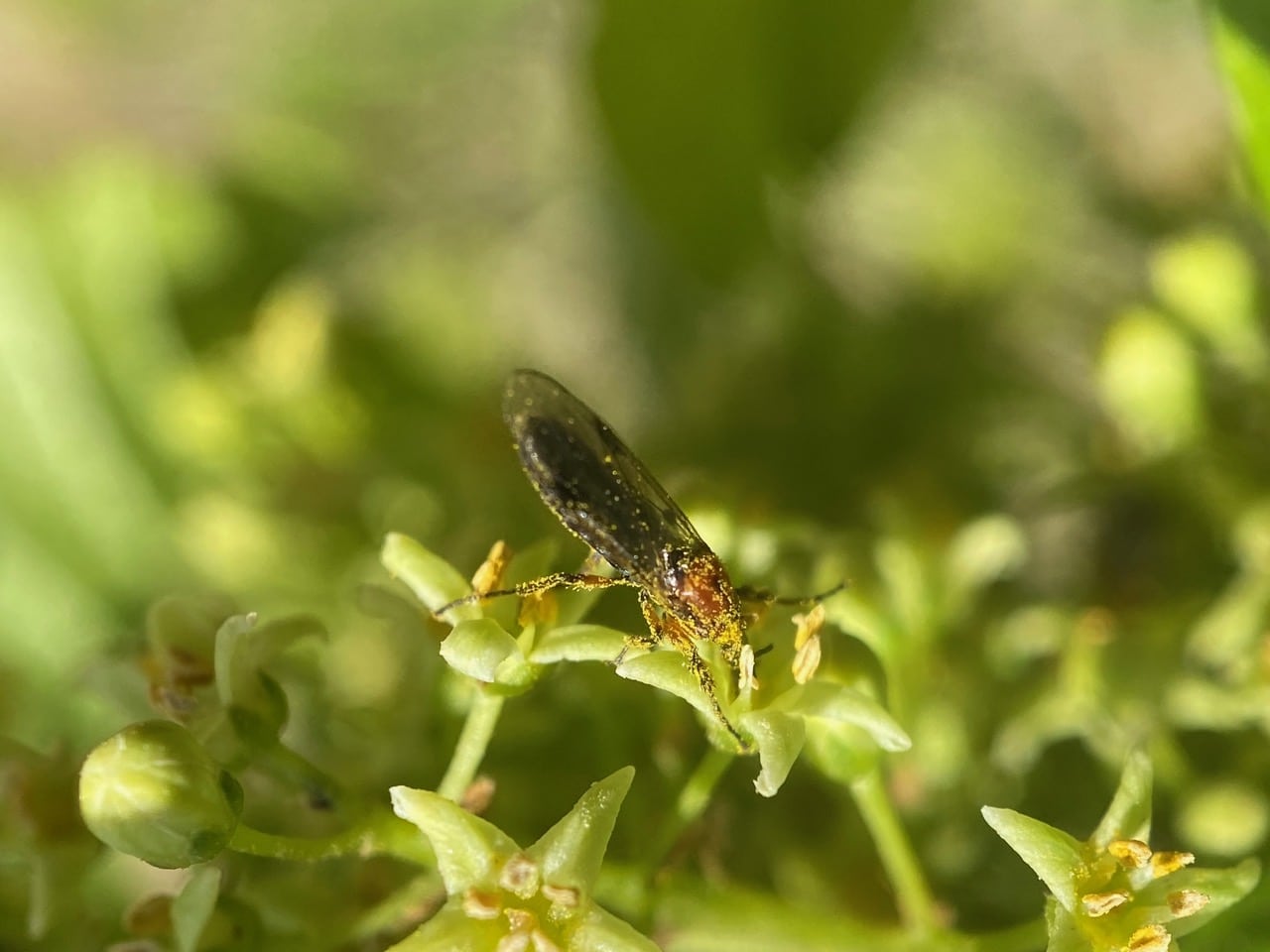
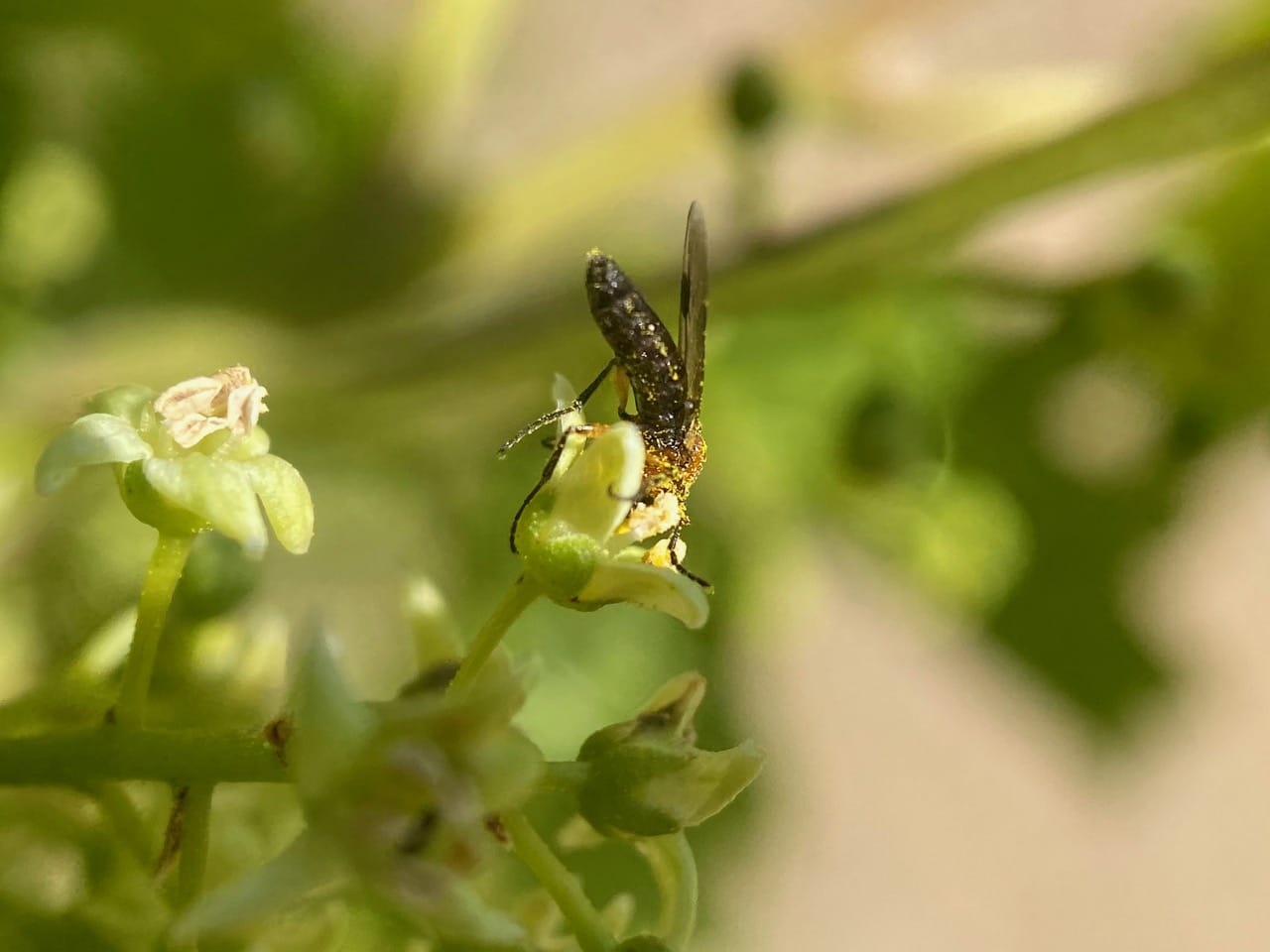
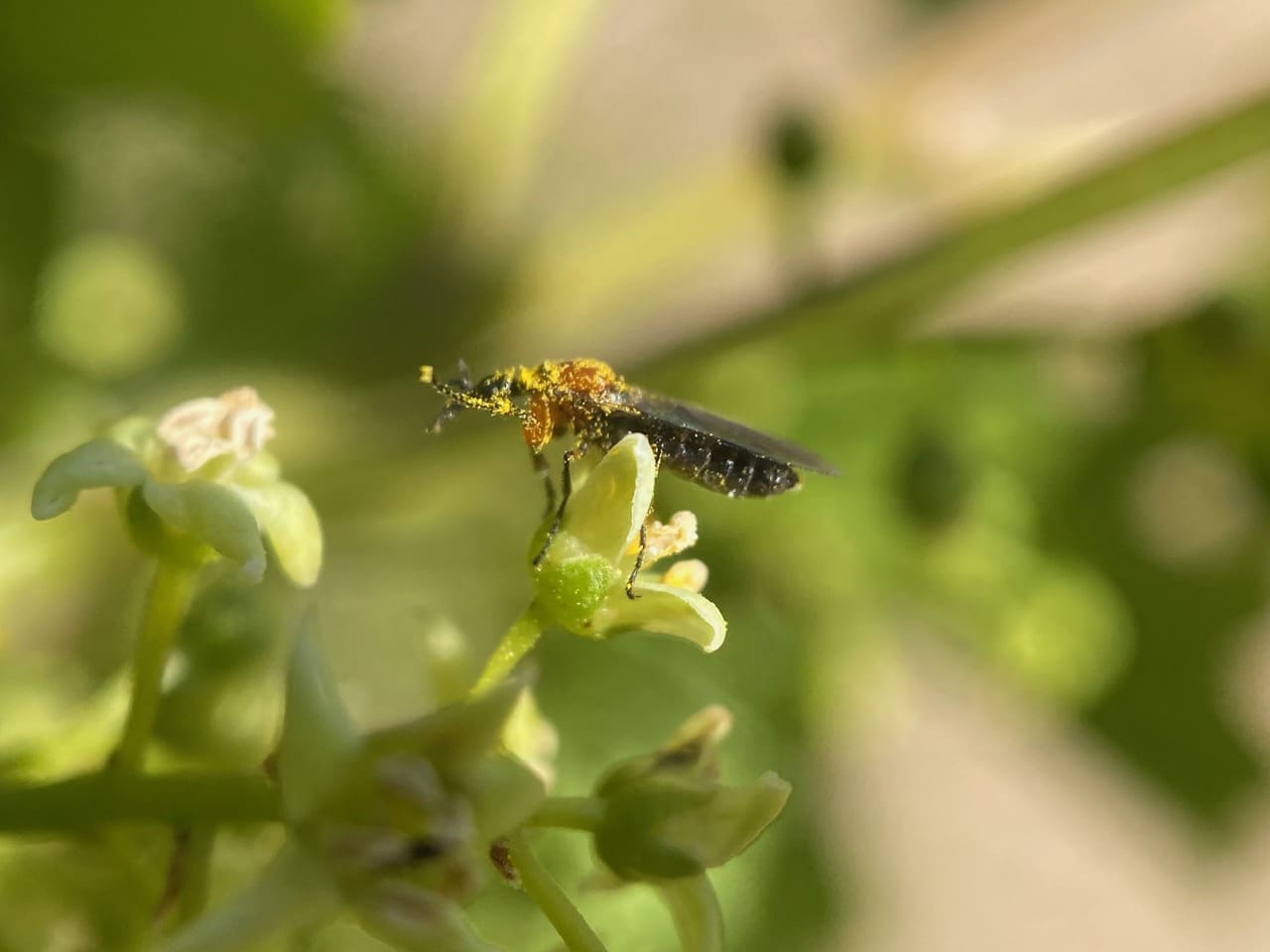
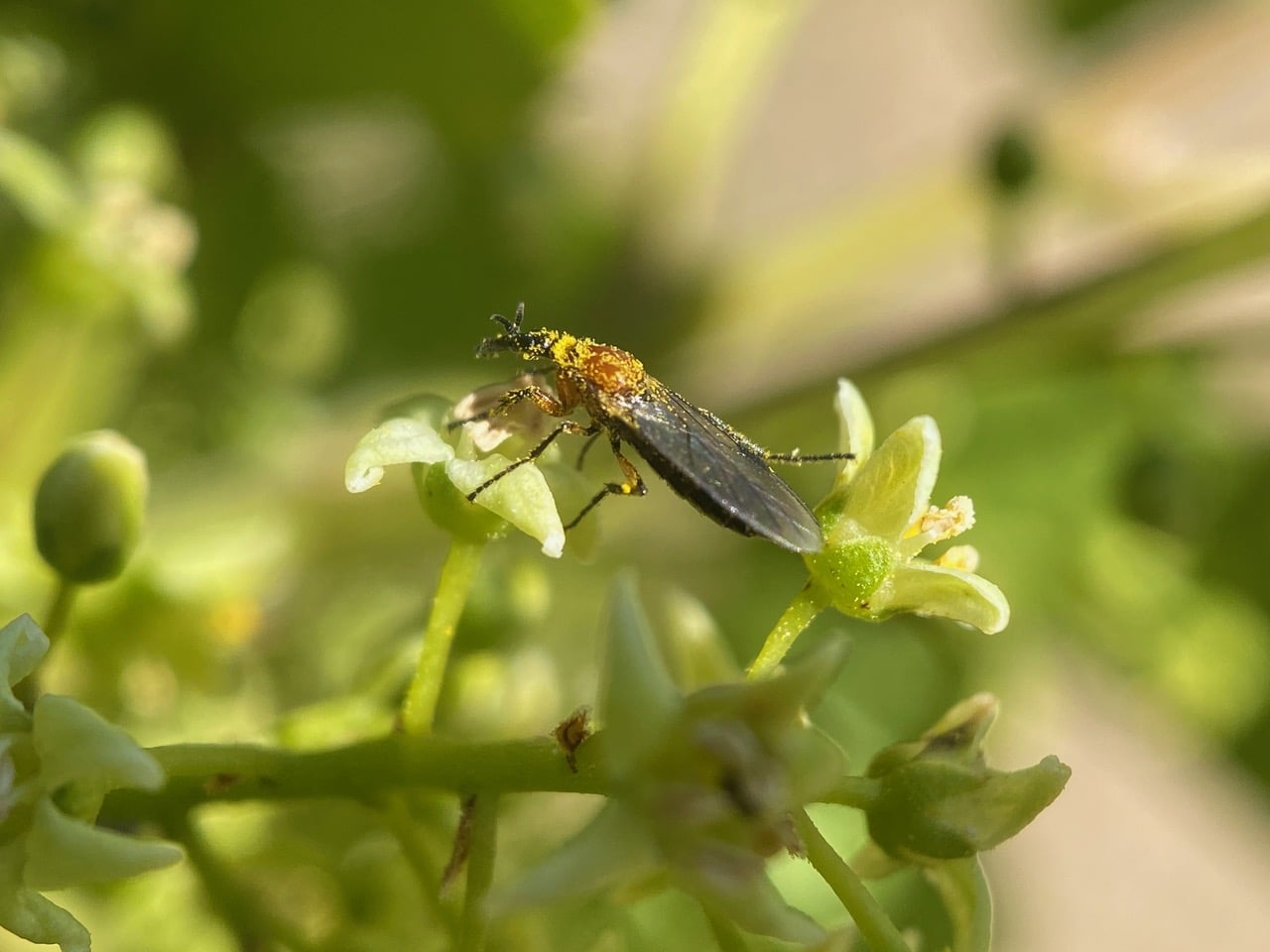
 Some small insects are swarming over a large, bushy Western Poison Oak, Toxicodendron diversilobum that is in glorious bloom.

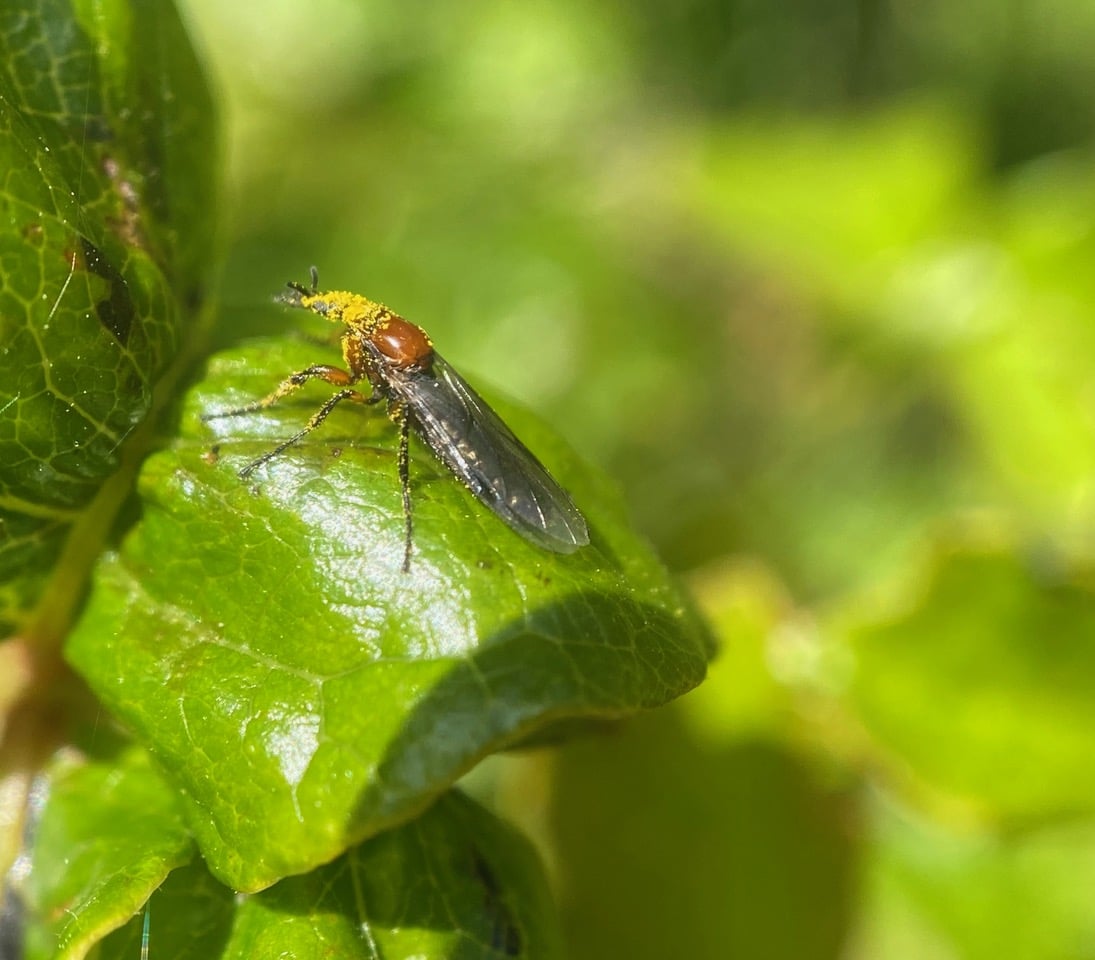


I bend down to look under the fly – yep, he is holding a very small insect. The ladies are not likely to be impressed by his offering!
Dance Flies, in the family Empididae, get their name from the habit of males of some species to gather in large groups and dance up and down in the air in the hopes of attracting females. They are predominantly predatory and they are often found hunting for small insects on and under vegetation in shady areas. Both genders may also drink nectar. Male dance flies give their sweeties a nuptial gift to eat while they mate. The gift is thought to enable her to complete the development of her eggs. Males may wrap their gifts in balloons of silk or spit, hence the other common name of Balloon Flies.
I wait around the wet patch for a while hoping to see a successful mating, but the flies eventually disperse with increasing human activities on the trail as the afternoon wears on. Why did the flies choose this spot for their courtship display – over wet soil? Perhaps the species lays eggs in damp soil, and there’s a good chance that the males might meet a potential mate here? Depending on the species, Empidid larvae occur in soil, water, or decaying plant materials.
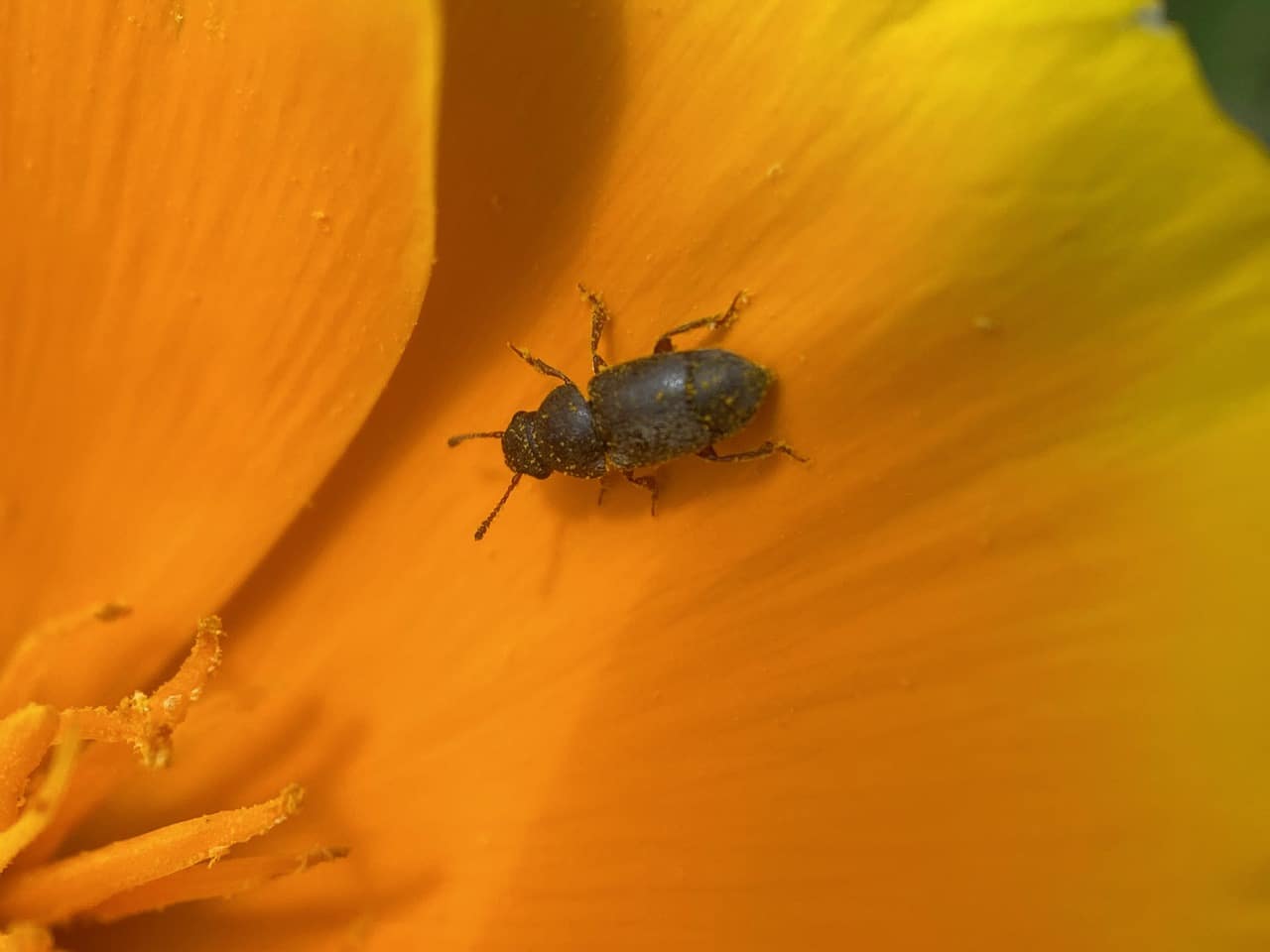
I peer into a California Poppy blooming by the trail side. Wow, it’s a cauldron of activity!Some dark beetles are rummaging among the stamens, and pollen is scattered everywhere.I finally get to see one of the beetles in good light. These are the Short-winged Flower Beetles, Amartus tinctus (family Kateretidae).
Members of the family Kateretidae are also known as Short-winged Flower Beetles, as their elytra (wing covers) do not completely cover their abdomen. They are found worldwide except in New Zealand. Adults are anthophagous feeding on flowers, while the larvae are spermatophagous, feeding on pollen inside the corolla.
See those small greenish things with black spots at the base of the stamens. Those are the larvae of the beetles.
There’s a pair of the beetles mating in the back.
Beetles are among the first insects to visit flowers and they remain essential pollinators today. They are especially important pollinators of ancient species such as magnolias and spicebush. The beetles eat their way through petals and other floral parts. They often mate and defecate within flowers, generally making a mess. This behavior has earned them the nickname of “mess and soil” pollinators.
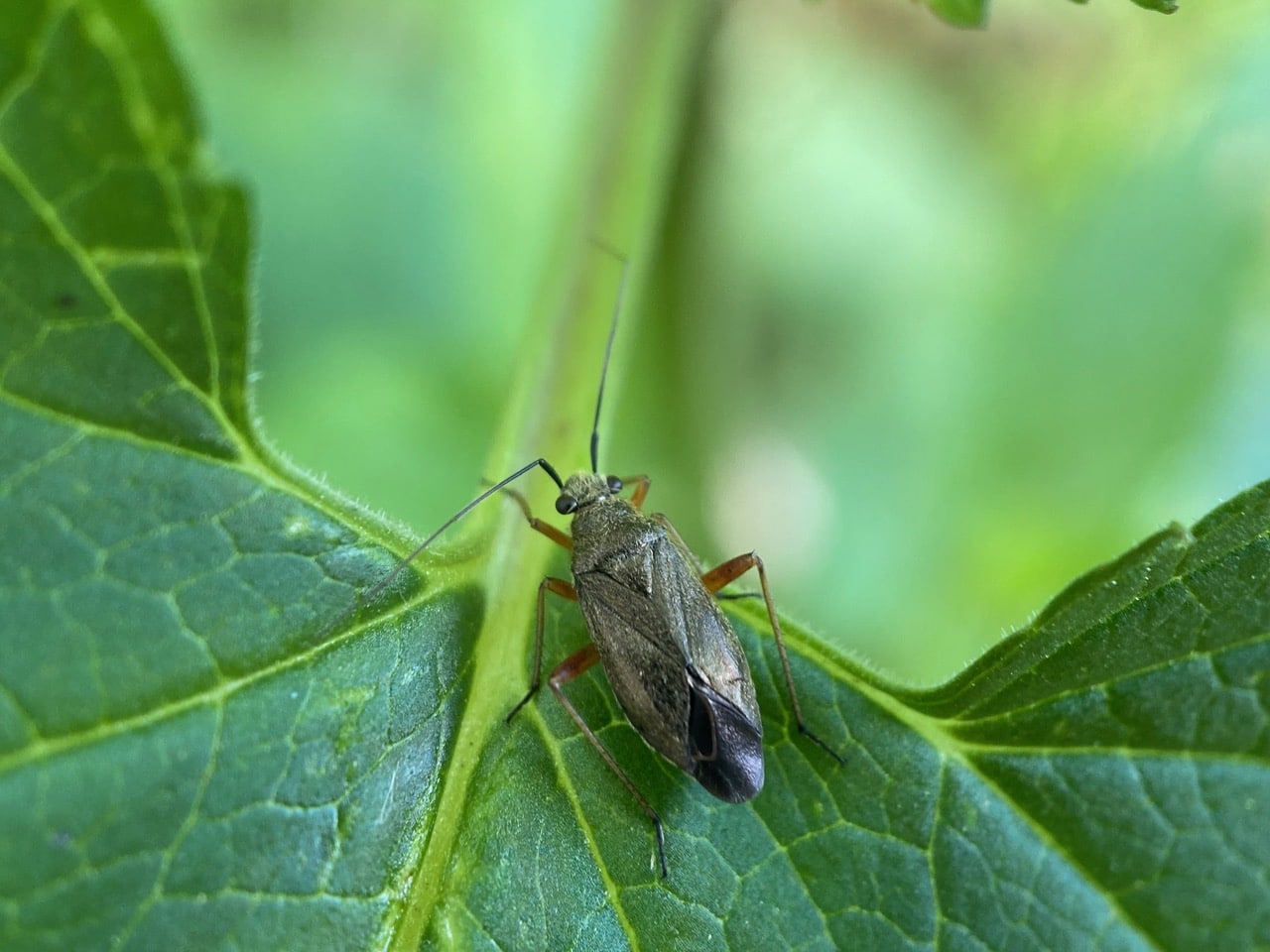
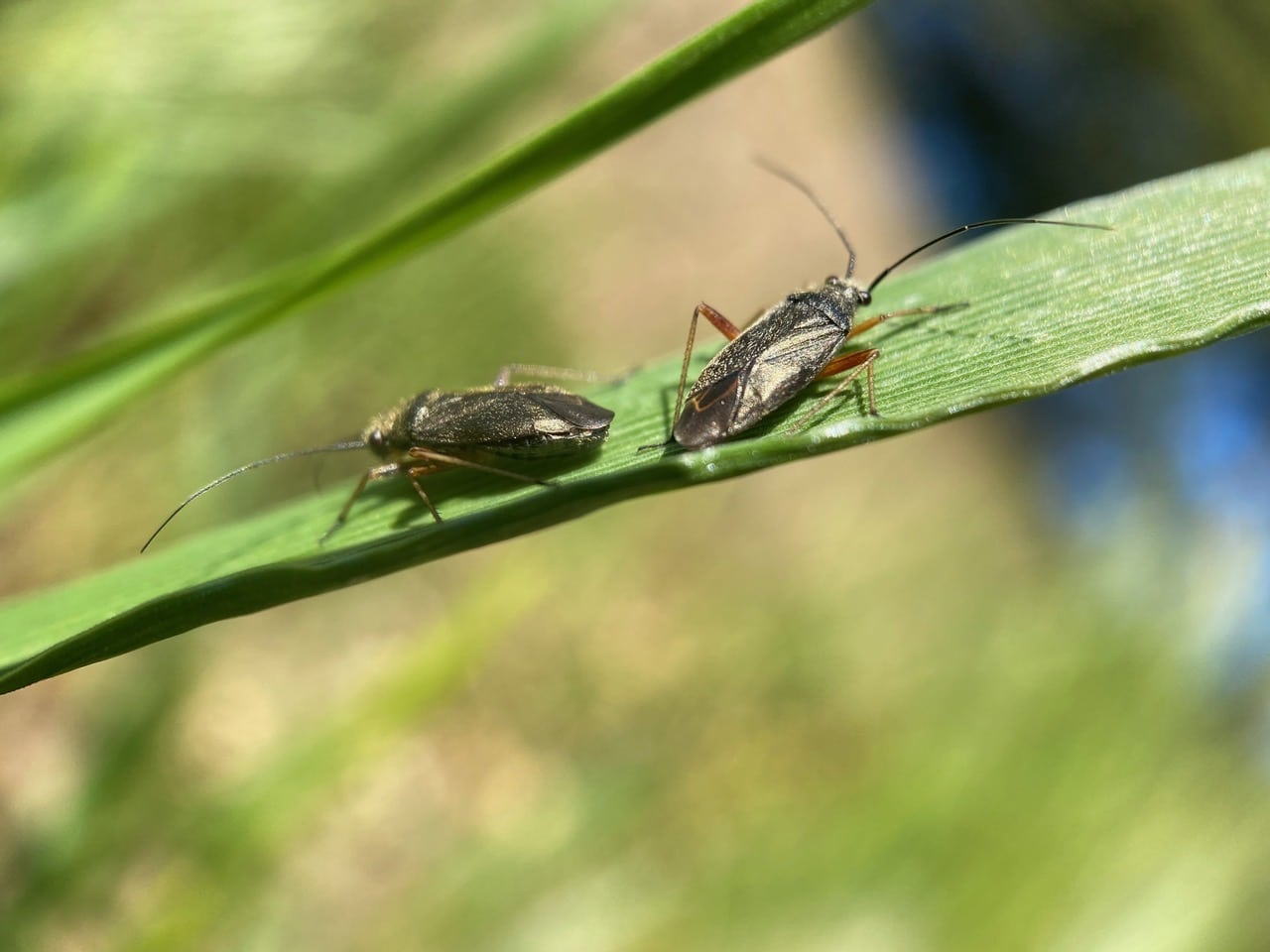
A Black Grass Bug, Irbisia sp. (family Miridae) is perched on a leaf. In the shade the bugs appear black, but where well lit, the scales on their body shine a dazzling bronze.
Mirid bugs are also referred to as plant bugs or leaf bugs. Miridae is one of the largest family of true bugs in the order Hemiptera. Like other Hemipterans, Mirids have piercing, sucking mouthparts to extract plant sap. Some species are predatory. One useful feature in identifying members of the family is the presence of a cuneus; it is the triangular tip of the corium, the firm, horny part of the forewing, the hemielytron. The cuneus is visible in nearly all Miridae.
Irbisia is commonly found in chaparral, open woodlands and grasslands in western North America. The host plant for Irbisia are grasses (Poaceae), but late in the season the adults disperse to many other plants.

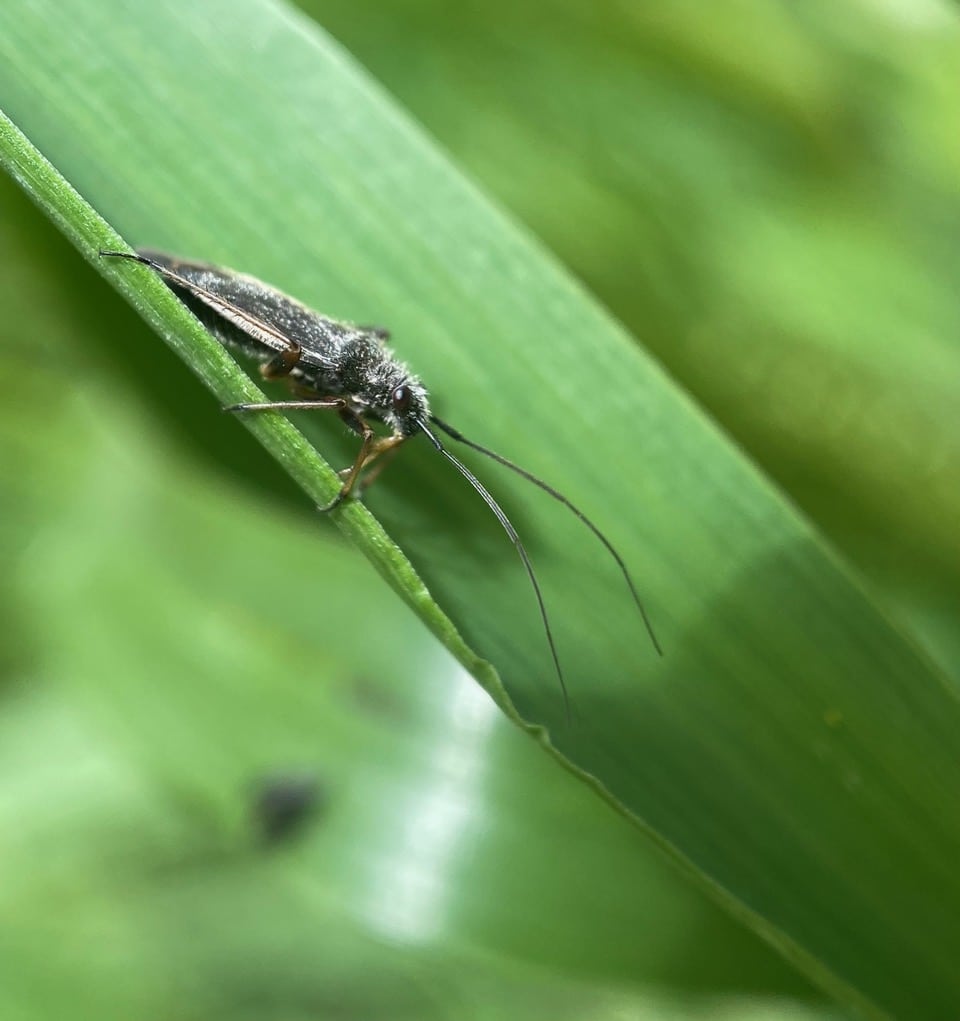
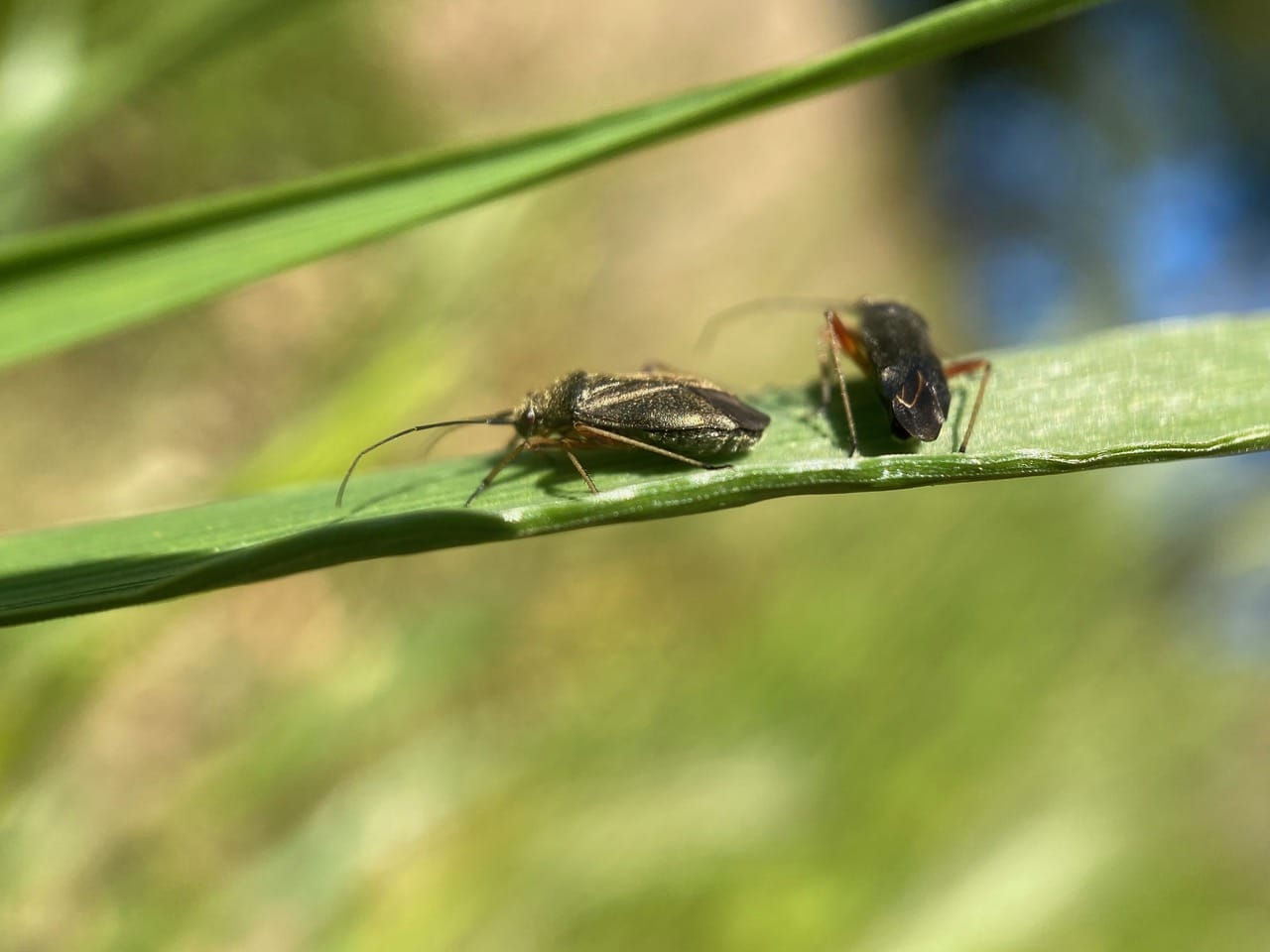
With its rostrum lowered, a Black Grass Bug, Irbisia sp. is feeding on a blade of grass.
The defining feature of Hemipterans or “true bugs” is their “beak” or rostrum in which the modified mandibles and maxillae form a “stylet” which is sheathed within a modified labium. The stylet is capable of piercing tissues and sucking liquids, while the labium supports it. The stylet contains a channel for outward movement of saliva and digestive enzymes, and another channel for the inward movement of pre-digested liquid food. The rostrum is usually folded under the body when not in use. Seed bugs are able to feed on seeds by injecting digestive juices into the seeds and sucking up the digested contents as a liquid.

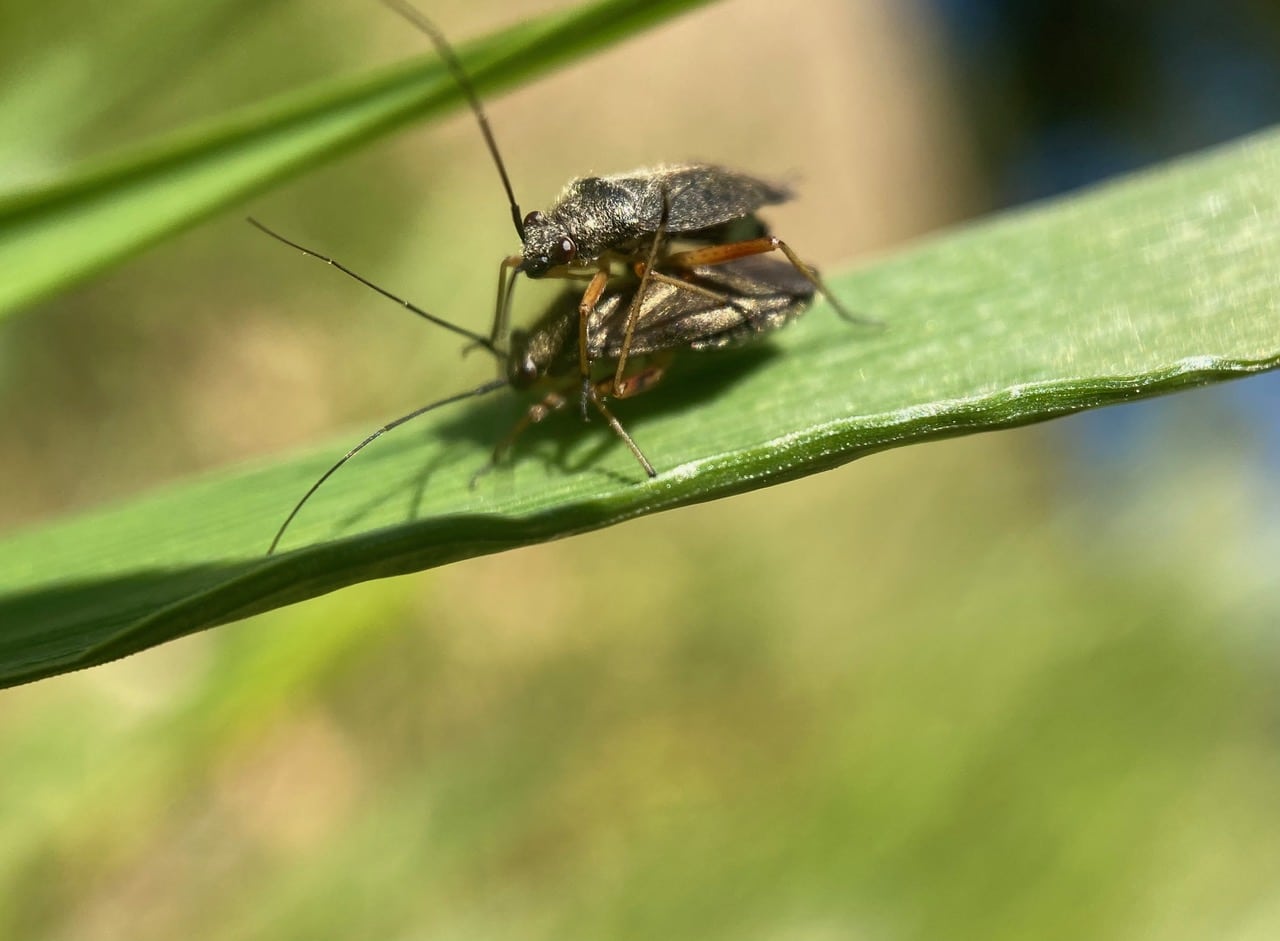
I sense that something interesting is going to happen here. The two Black Grass Bugs appear to be posturing, the one on the right getting ever closer to the other….
The male on the right lunges forward…
… and mounts the female. Interesting indeed!
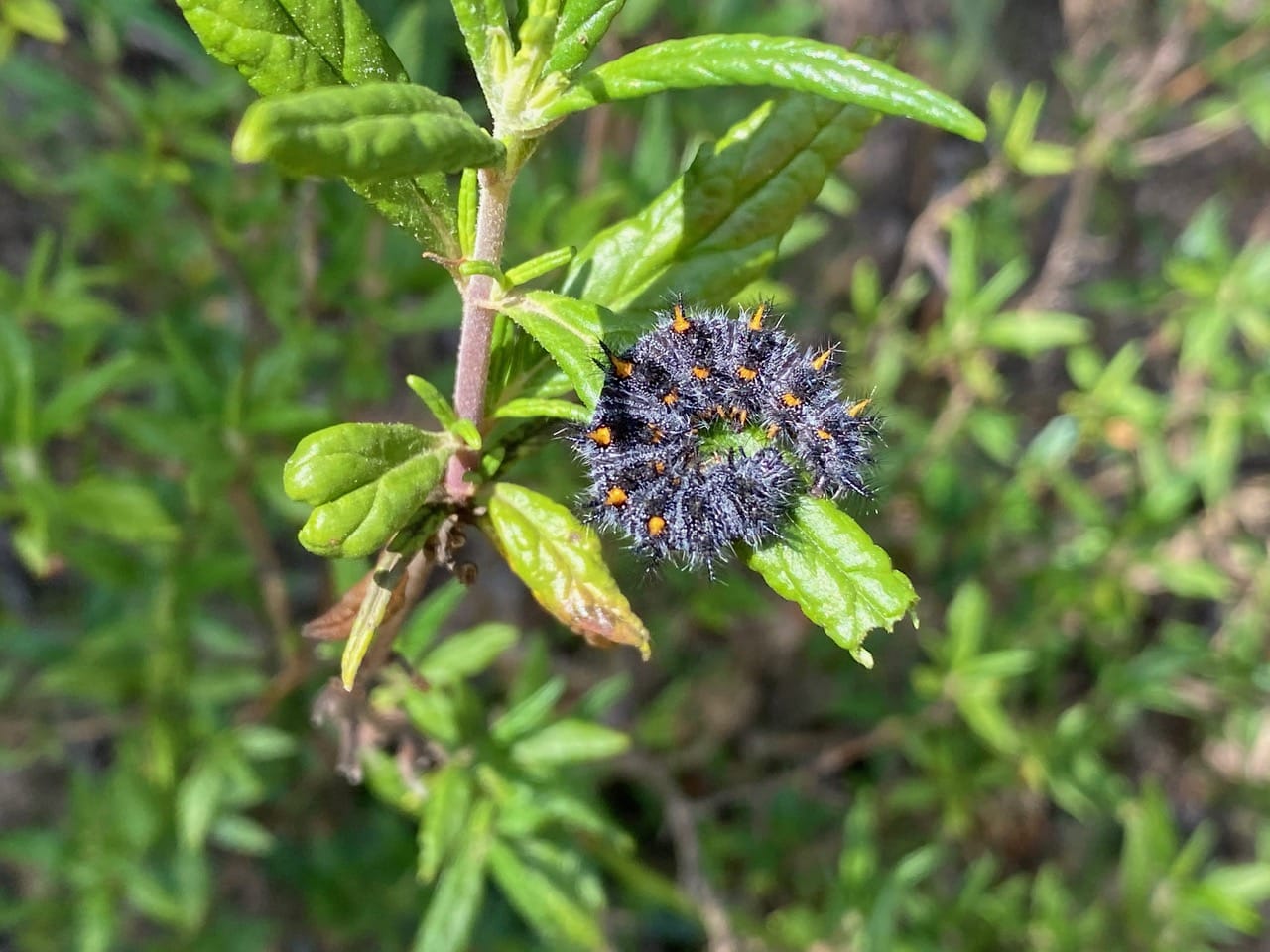
Most of the Variable Checkerspot caterpillars I find along this trail feed on the California Bee Plant. But occasionally I do see them on the Sticky Monkeyflower, Diplacus aurantiacus, just like this one. The caterpillars have a wide-ranging appetite, feeding on a variety of plants, but they seem to gravitate to these two plants. These plants provide the caterpillars with iridoid glycoside, a chemical that imparts unpalatable taste to birds, protecting the caterpillars from predators. Larvae feed in large, loose groups on the host plants. Individuals overwinter (enter diapause or hibernation) as third or fourth instar larvae in sheltered sites under bark or dead branches, in hollow stems and in rock crevices. Pupation begins in early to mid April and the adult flight season begins between mid-April and May and continues into June. The adults feed exclusively on nectar, and have a life span of about 15 days.
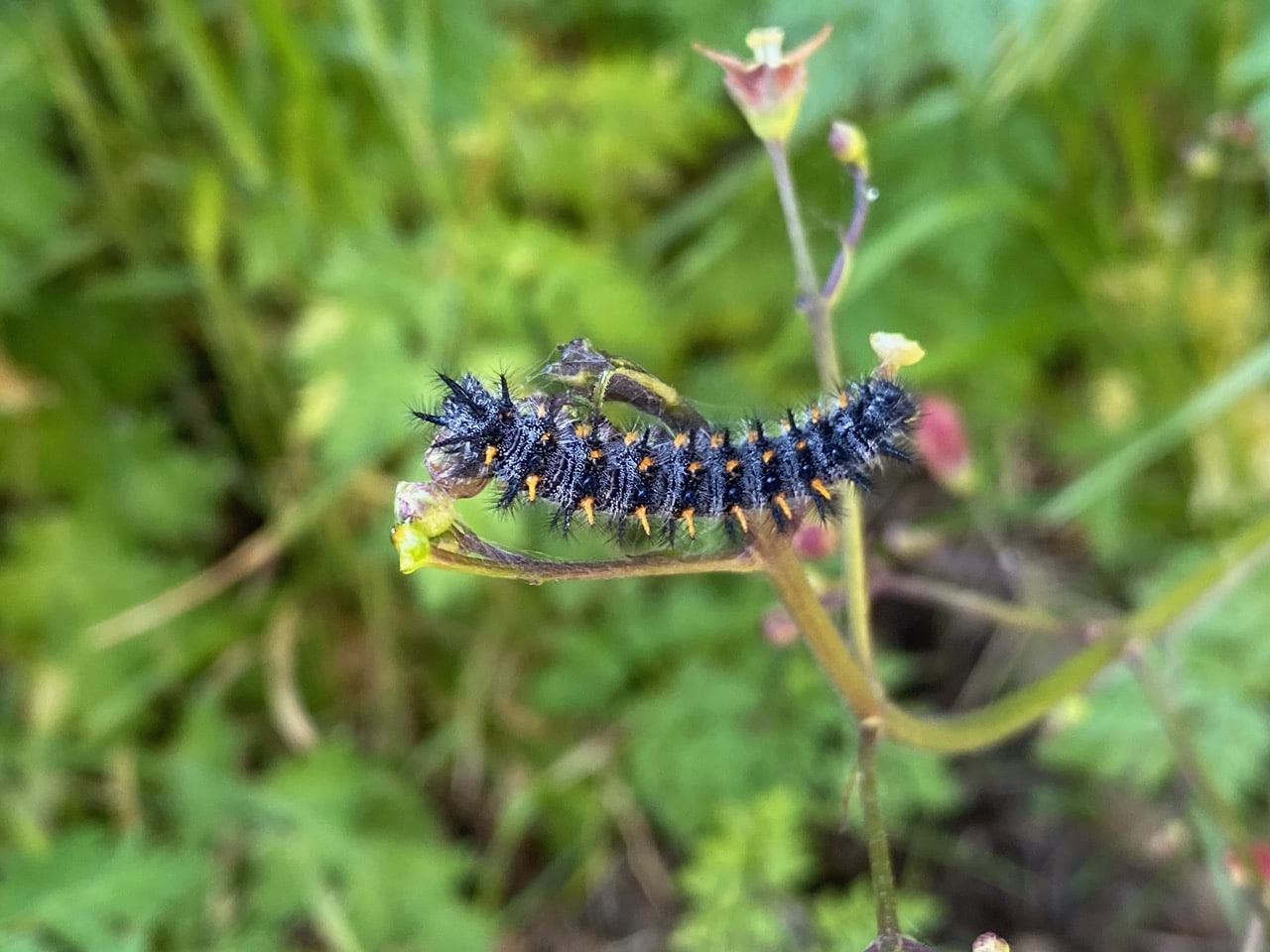
This large Variable Checkerspot caterpillar is feeding on a leaf of Bee Plant, Scrophularia californica, and dropping its frass (insect poop) down to the leaves below.
Wow, I didn’t know that the caterpillars even feed on the flowers of Bee Plant! This large caterpillar has secured itself to the thin floral branches with a network of silk.
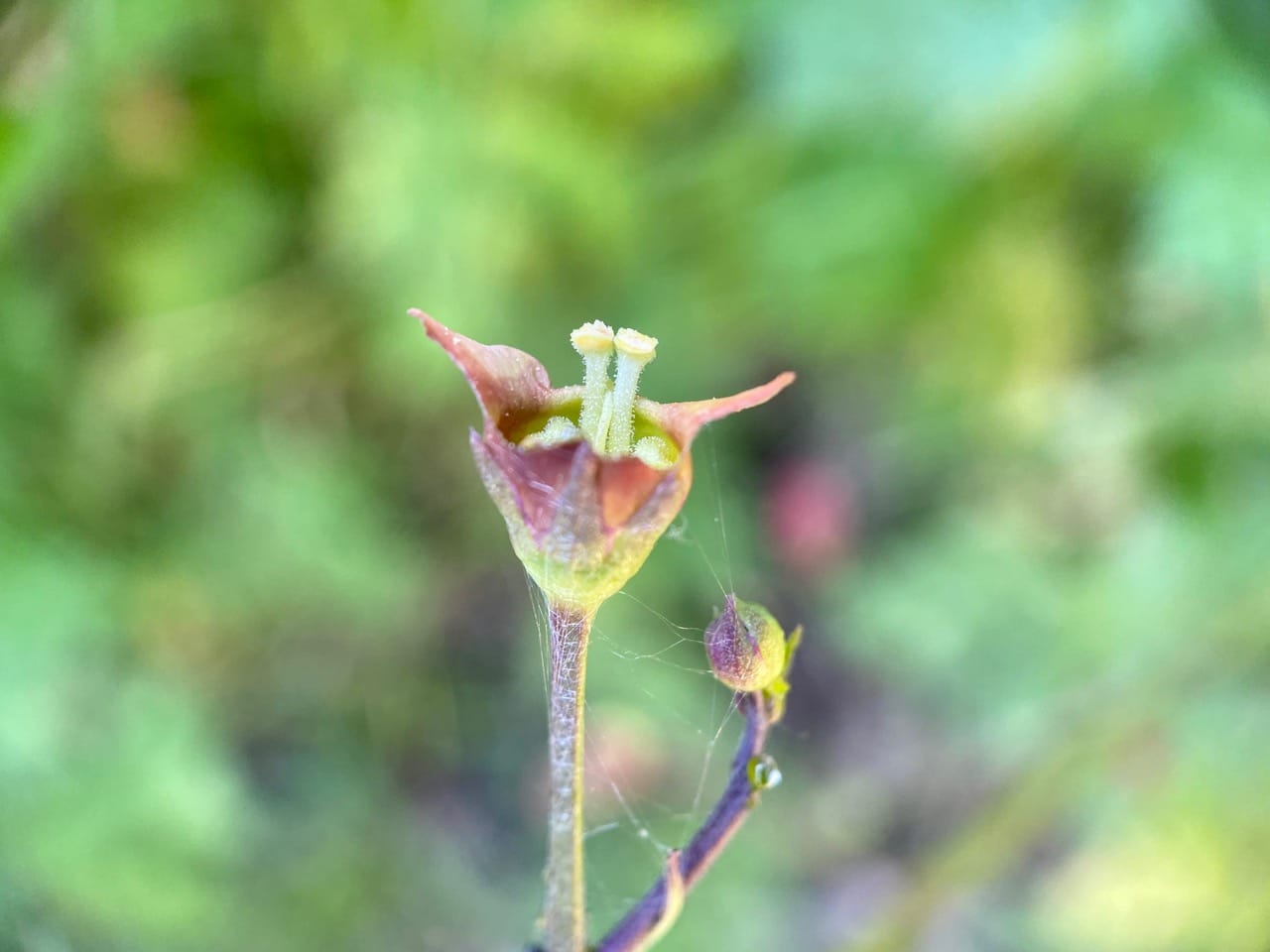
Look what the caterpillar has done – it has eaten all the petals of this Bee Plant flower, leaving the calyx with the exposed stamens. Two of the stamens are up, but the other two have yet to emerge. The caterpillar’s silk strands are still visible.
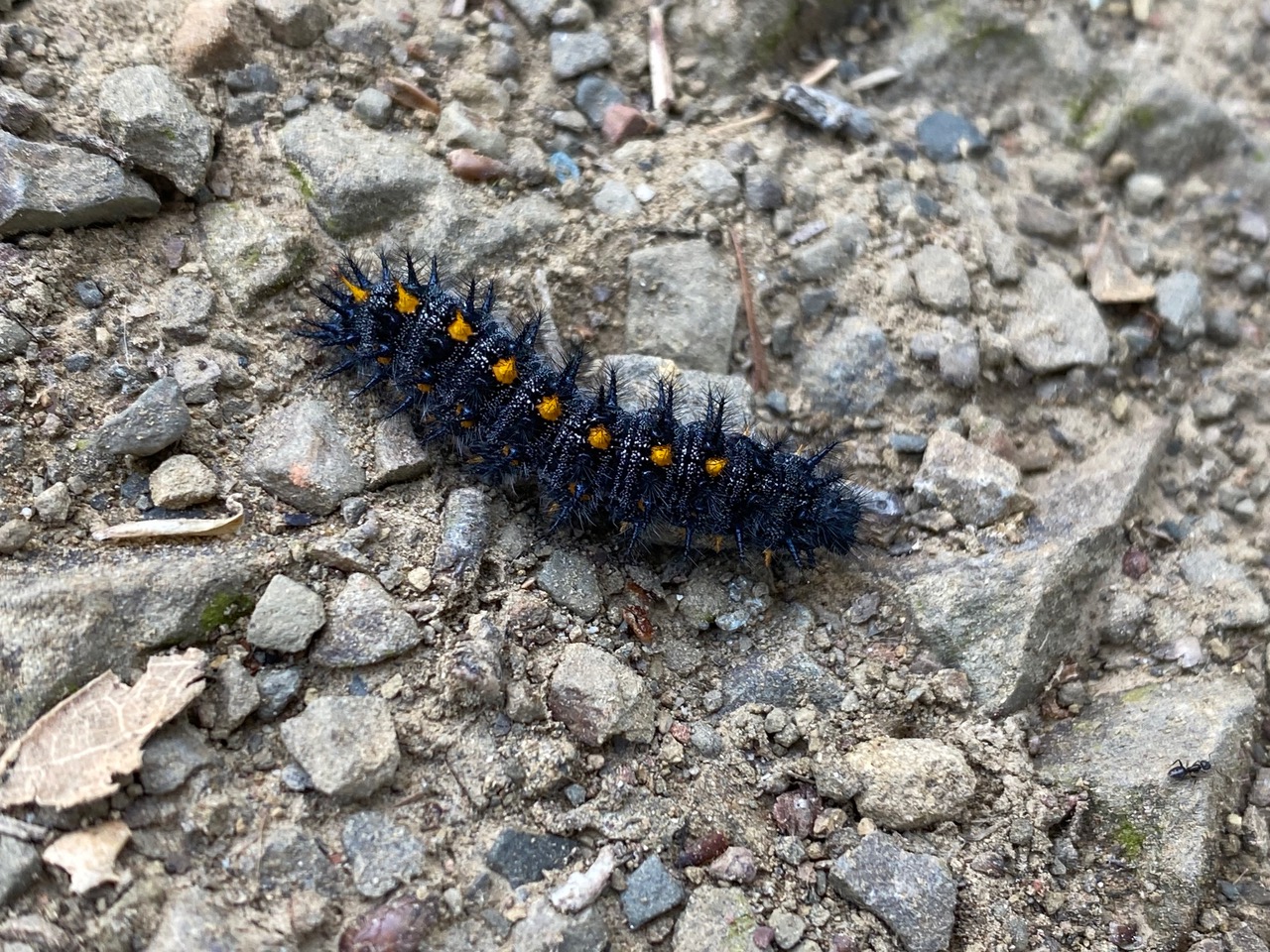
A Variable Checkerspot caterpillar is making its way across the trail. Obviously it is on its walk-about in search of a safe place to pupate.
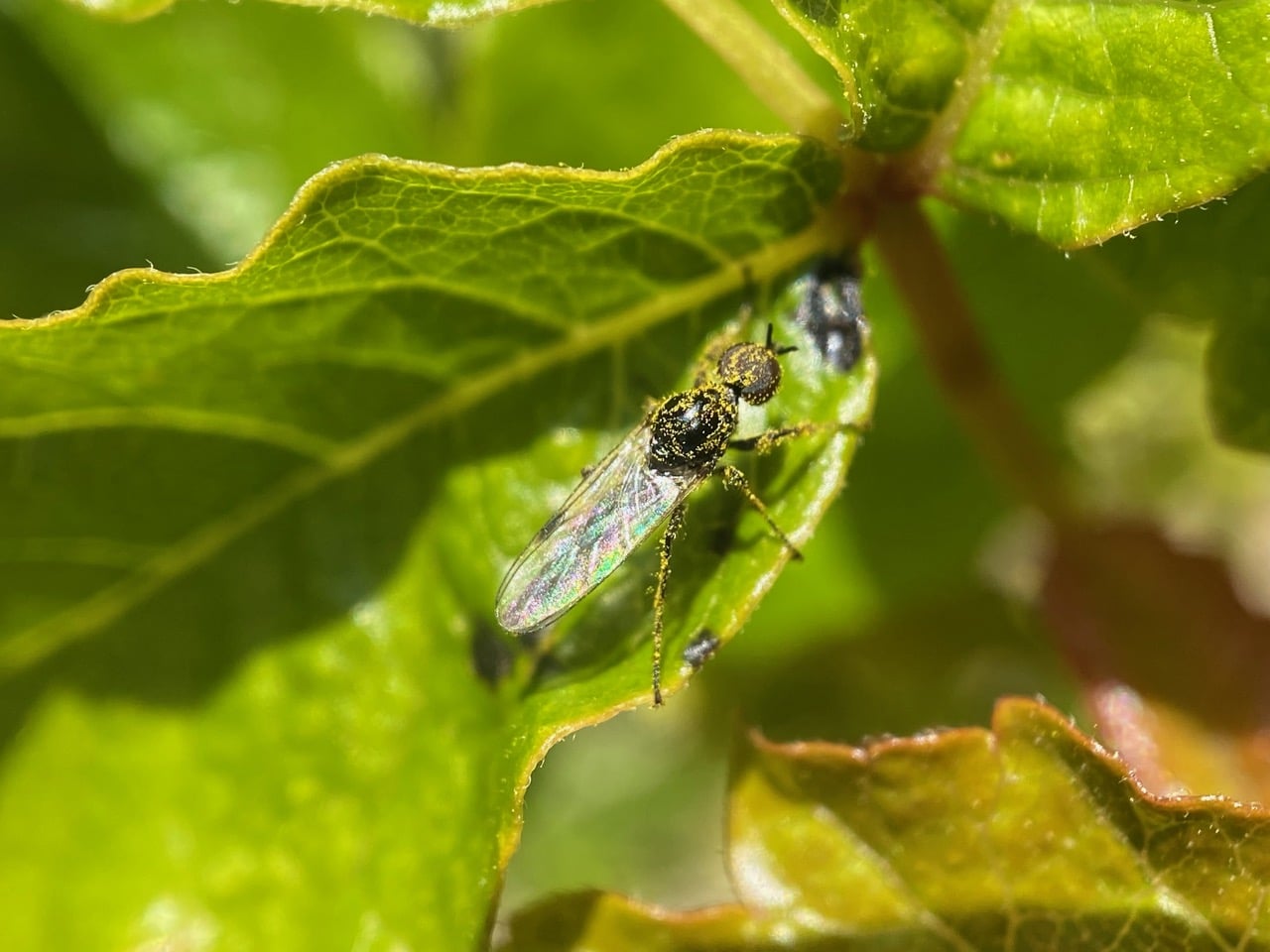
Some small insects are swarming over a large, bushy Western Poison Oak, Toxicodendron diversilobum that is in glorious bloom. I wait for some of the insects to land. Ah, these are March Flies, Dilophus sp. (family Bibionidae). This male already has some pollen scattered over his body.
March Flies (family Bibionidae) generally live in wooded areas and are often found on flowers – adults of some species feed on nectar, pollen, and honeydew, while adults of other species don’t feed at all; and in either case, they are very short-lived. They are considered important pollinators in orchards. They are also important food for other insects and spiders. The larvae feed en masse on rotting organic materials like leaves, wood, compost, and rich soil.
March flies exhibit extreme sexual dimorphism – the sexes are morphologically distinct. The female is usually more colorful, has small eyes on the sides of long, narrow head, while the all-black males have huge eyes that touch in the middle and are split in half horizontally. Scientists speculate that the split makes it easier for them to see the other males that are above and below them in a mating swarm. Males gather in swarms that can blanket the ground and low vegetation. Female are attracted to the party and select mates in the frenzy of fly bodies.
This female March Fly must have done some serious nectar diving to end up with so much pollen on her head!
A female March Fly is taking nectar from a Poison Oak flower.
Ah, this is how it is done – with total abandon!
The fly emerges with her head covered in pollen, which she wipes off with her front legs.
On to the next flower!
Close by, a male March Fly is also covered with pollen. These small flies are the perfect size for pollinating the Poison Oak flowers.
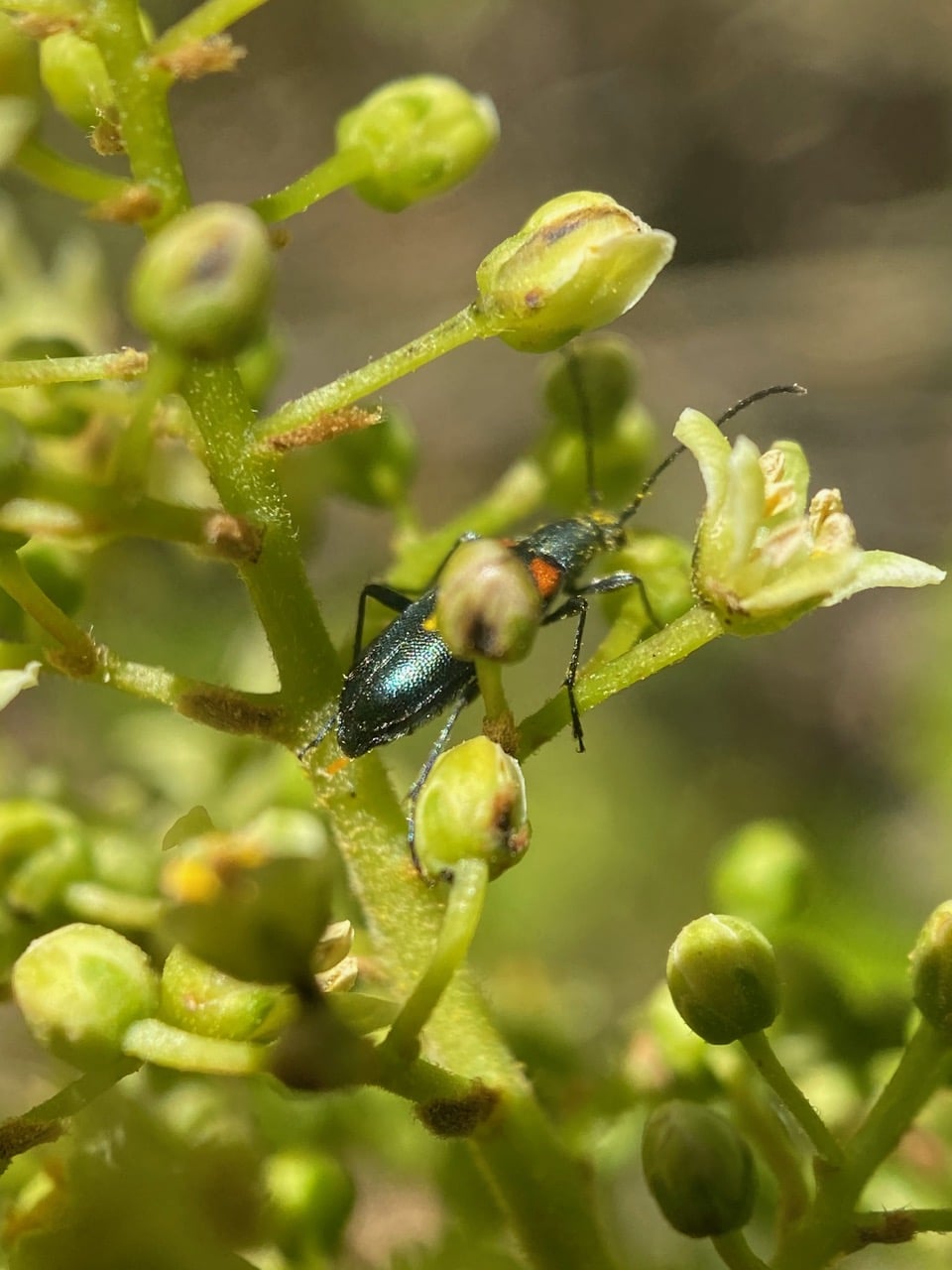
A small but attractively iridescent Flower Longhorn Beetle, Grammoptera militaris is moving around among the flowers of Poison Oak.
Flower Longhorn Beetles (family Cerambycidae, subfamily Lepturinae) are usually among the smaller members of their family. These beetles have a narrow body and very long legs. The thorax is markedly less wide than the wings, while the elytra tips are often pointed. They also share the family trait with other Cerambycids of having very long antennae. Sexual dimorphism is found in some species. The beetles are found on flowers where they feed on pollen and nectar, and are considered pollinators. They have a particular affinity for the umbel flowers of the carrot family, Apiaceae. The beetles spend their larval days as borers, just like other Cerambycids. However they are not considered pests, as they select trees that are stressed, dying, or dead.
Grammoptera militaris is a small beetle, 4-6 mm long. It is found in California to Baja. Recorded larval hosts include Juglans, Umbellularis, Acer, Quercus. Adults visit flowers of Heracleum, Ceanothus, Mimulus, Aesculus, Rhus, Amaranthus.