

Pollinator Post 4/14/23 (2)

Pacific Sanicle, also known as Pacific Snakeroot, is blooming in profusion along Skyline Trail from the Steam Train entrance. Hardly anyone pays attention to this inconspicuous plant as its flowers are tiny. It is in fact one of the most common plants at Skyline Gardens. The plant is less than three feet tall. Leaves are rounded and palmately lobed, with sharply-toothed margins.
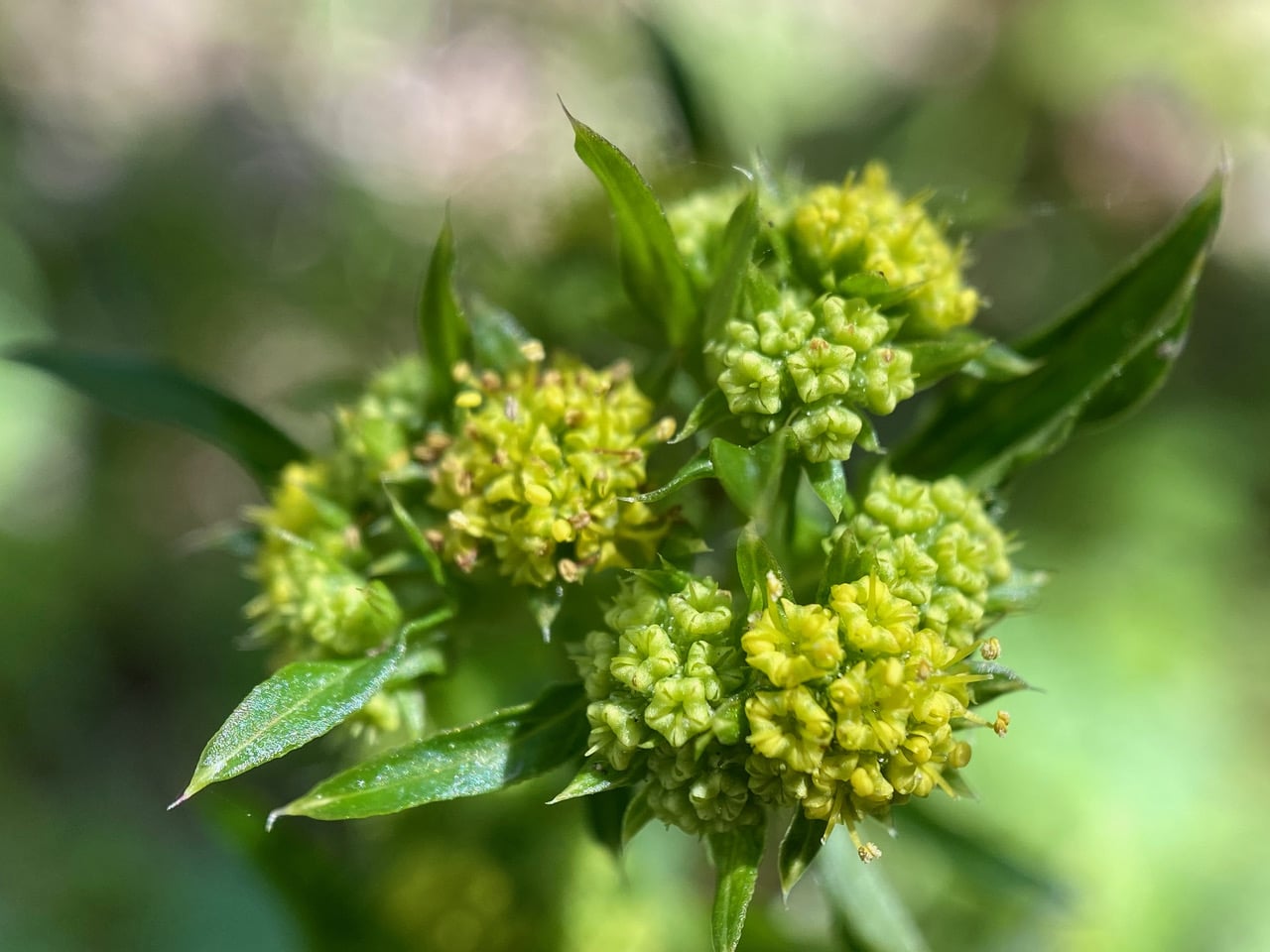
Pacific Sanicle, Sanicula crassicaulis is a native perennial in the carrot family Apiaceae. Tiny yellow flowers are borne in small, spherical clusters at the ends of long, branching stems. Close examination show unusual flower structure, with the tips of the petals rolled inward. About half of the flowers are bisexual, the rest male; but the two types are difficult to distinguish without magnification. There are five pale yellow stamens that curl inward before maturity and extend well beyond the petals when mature. Bisexual flowers have one pistil, which is not developed in male flowers. The ovary is inferior and the two pale yellow styles extend slightly from the flower throat, diverging in a “V” shape.
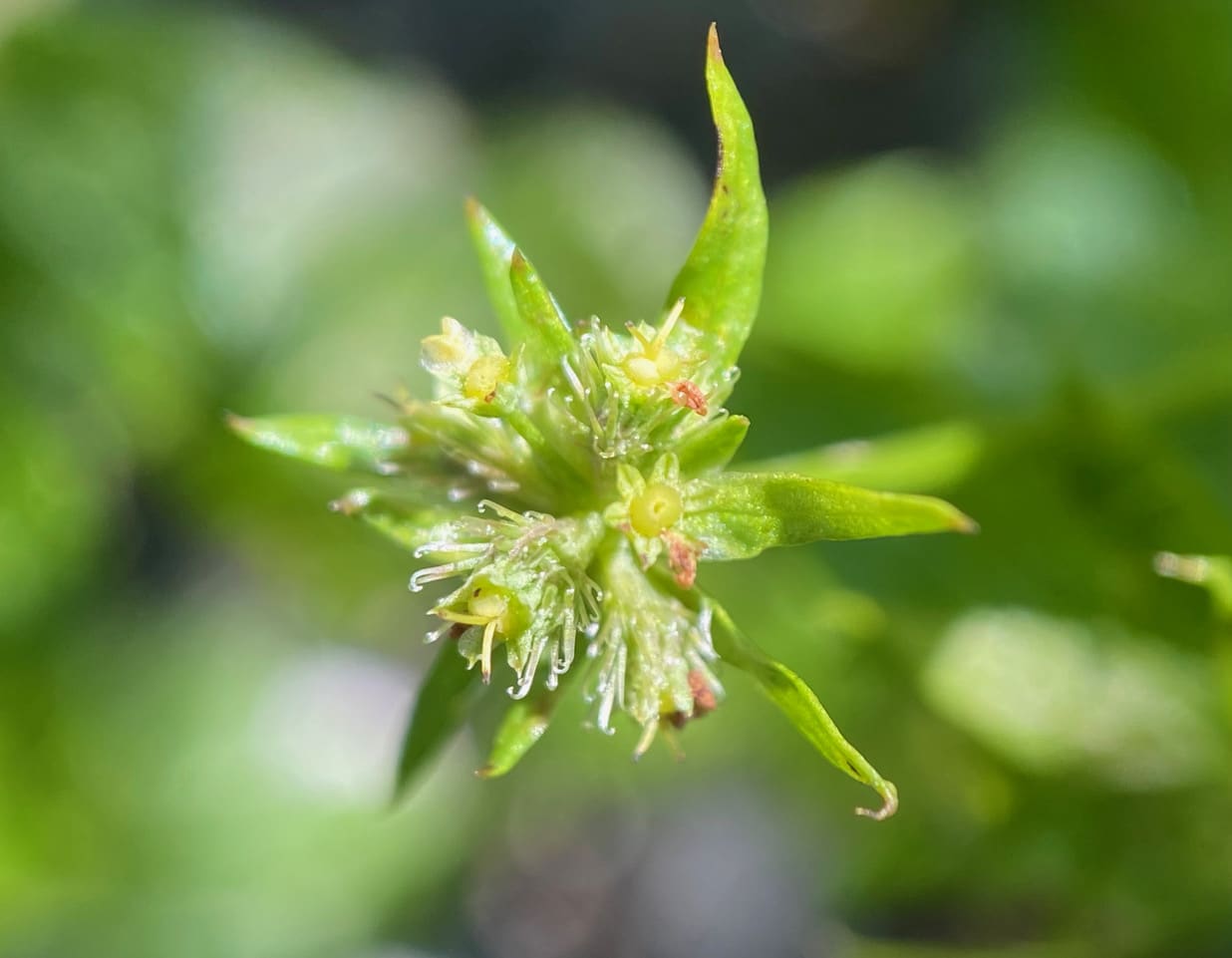
This cluster of spent flowers are developing into fruits. The fruit consists of two dry, adjacent one-seeded halves, covered on the outsides with sharp, hooked prickles, perfect for hitching a ride on animal fur – or socks.
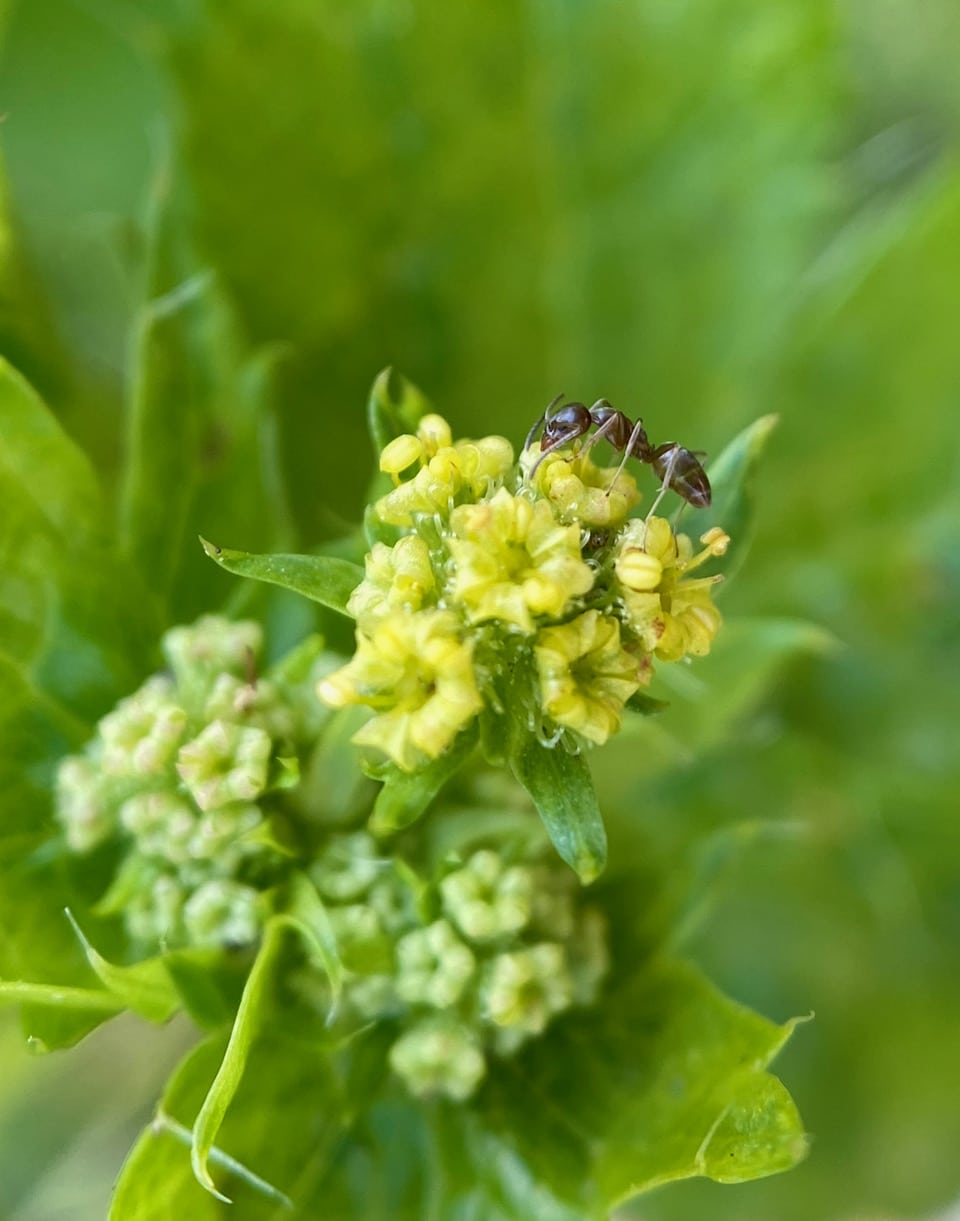
An American Winter Ant, Prenolepis imparis is foraging on the Pacific Sanicle flowers.

About the size of the ant, a black Weevil is clambering on a cluster of Pacific Sanicle flowers.

Just as I have observed last spring, these tiny black weevils commonly hang out on the Pacific Sanicle flower clusters. I have not found them on any other plants. The beetles do not seem to fly. When disturbed, they simple drop from the plant and play dead. That’s not even a cluster of fresh flowers. Maybe it’s a female excavating holes in the ovaries in which to lay her eggs?

After poking its head between the flowers, the weevil emerges with flecks of debris on its body. Note the pair of antennae that are attached to the snout.

Weevils, family Curculionidae, are also called snout beetles. Curculionidae is one of the largest beetle families (about 40,000 species). Most weevils have long, distinctly elbowed antennae that may fold into special grooves on the snout. The snout is used not only for penetration and feeding but also for boring holes in which to lay eggs. The mouthparts are quite small and located at the end of the rostrum (snout), designed for chewing. Many weevils have no wings, while others are excellent fliers. Most are less than 6 mm in length. The majority of weevils feed exclusively on plants. The fleshy, legless larvae of most species feed only on a certain part of a plant – i.e., the flower head, seeds, fleshy fruits, stems, or roots. Many larvae feed either on a single plant species or on closely related ones. Adult weevils tend to be less specialized in their feeding habits. The family includes some very destructive agricultural pests.

Hey, there’s a movement on a Pacific Sanicle leaf. Perched on the edge of the leaf, a tiny Katydid nymph is waving its impossibly long antennae. It’s the tiniest katydid nymph I have ever seen! It’s so hard to see the insect in this light!

The nymph is an immature California Chaparral Katydid, Platylyra californica (family Tettigoniidae). It is a common but seldom seen California katydid, inhabiting native chaparral vegetation throughout the state.
Insects in the family Tettigoniidae are commonly called katydids or bush crickets. They are primarily nocturnal in habit with strident mating calls. Many species exhibit mimicry and camouflage, commonly with shapes and colors resembling leaves. The diet of most katydids includes leaves, flowers, bark, and seeds, but many species are predatory, feeding on other insects, snails, or even small vertebrates such as snakes and lizards. Some are considered agricultural pests.

Katydid males have sound-producing organs located on their front wings, which are rubbed together, called stridulation. They use this sound for courtship, which occurs late in the summer. Females use the sound produced by the male to judge his fitness, preferring louder and more fluent trills.
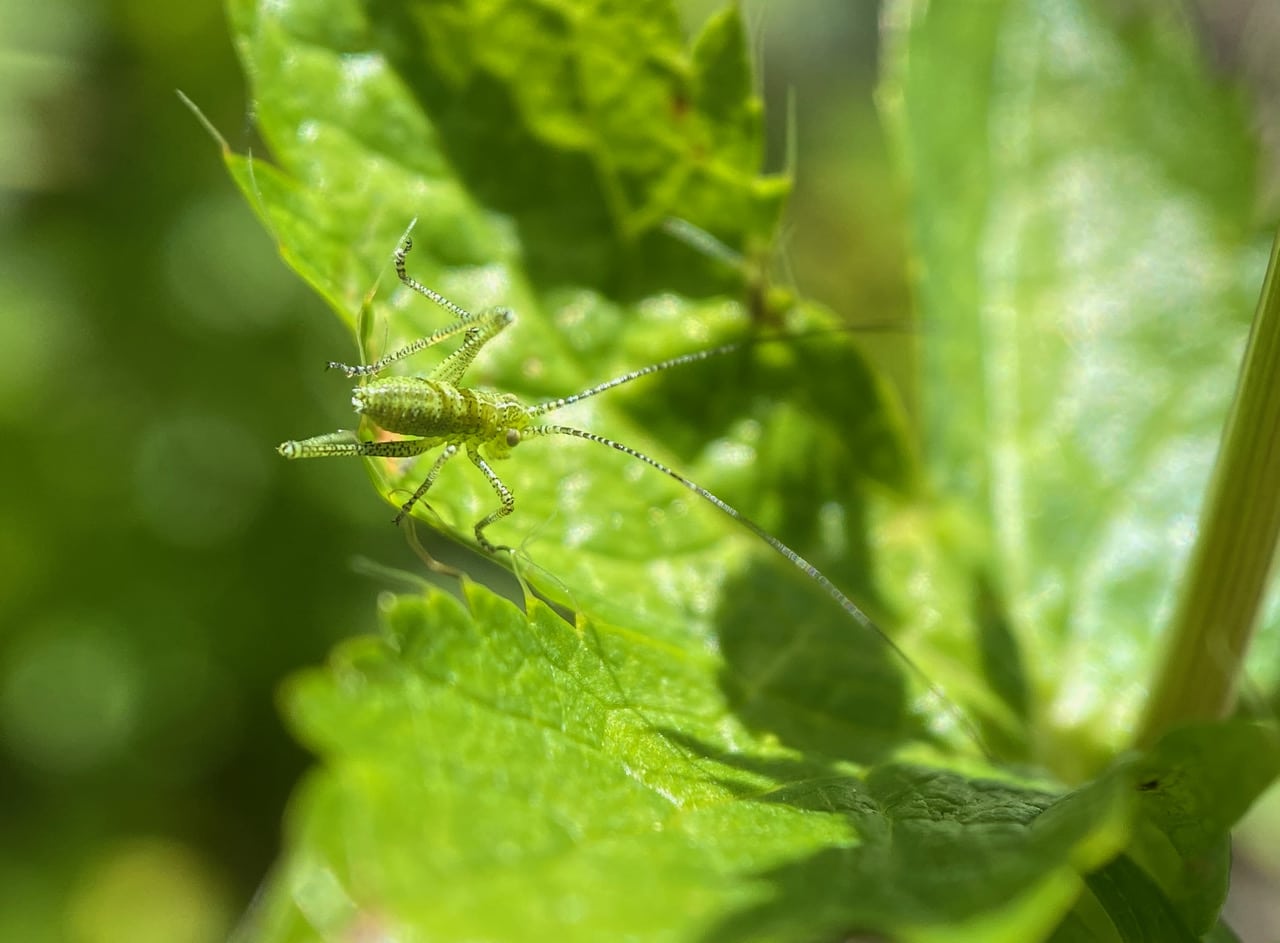
Katydids, like other members of the order Orthoptera, practice incomplete metamorphosis without a pupal stage. Newly hatched nymphs look like their elders and eat the same foods. Nymphs lack the adults’ wings and reproductive organs; these gradually appear as the nymph grows and sheds several times until full maturity.
To see what the adult California Chaparral Katydids look like:

Uh oh, an Odorous House Ant, Tapinoma sessile appears on the leaf and approaches the katydid.

The Katydid flees to the other side of the leaf. The Ant loses interests and heads the other way. Phew, I’d hate to see the baby katydid attacked by the ant!

The rocky slope above the trail at Siesta Nose has turned into a sea of Blue Dicks! Despite the thin soil, the abundance of rain has turned the slope a pretty green.

Some Greater Bee Flies, Bombylius major and an occasional bumble bee forage among the Blue Dicks flowers, Dipterostemon capitatus. What a happy to place to be!
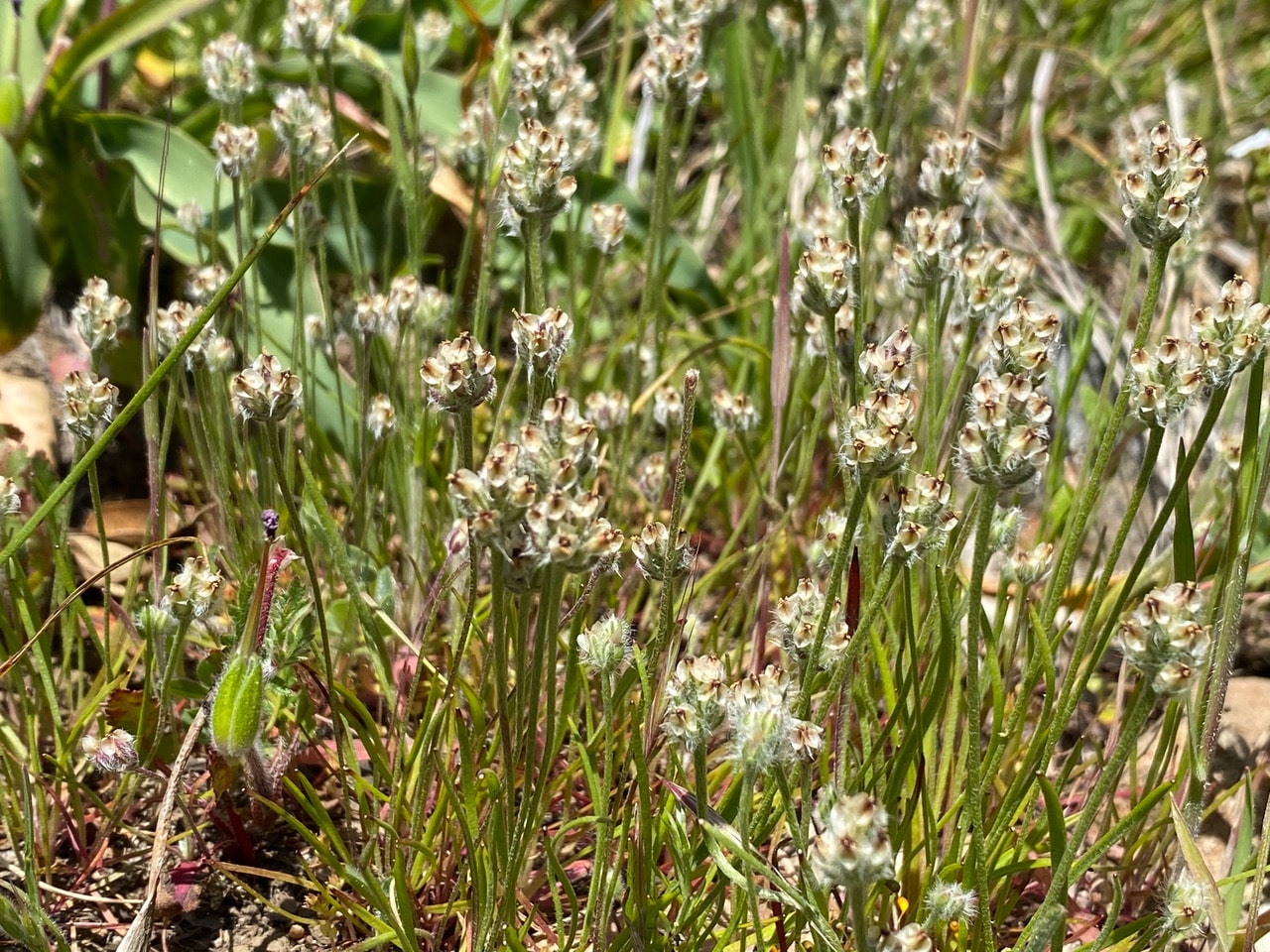
Among the sparse green vegetation on the slope is a miniature forest of Dotseed Plantain, Plantago erecta. The small, unassuming annual herb has needle-like leaves and translucent flowers clustered on a stalk only 2-3 inches tall. Plantago erecta is a host plant for the Common Buckeye butterfly, as well as several species of the Checkerspot butterflies.
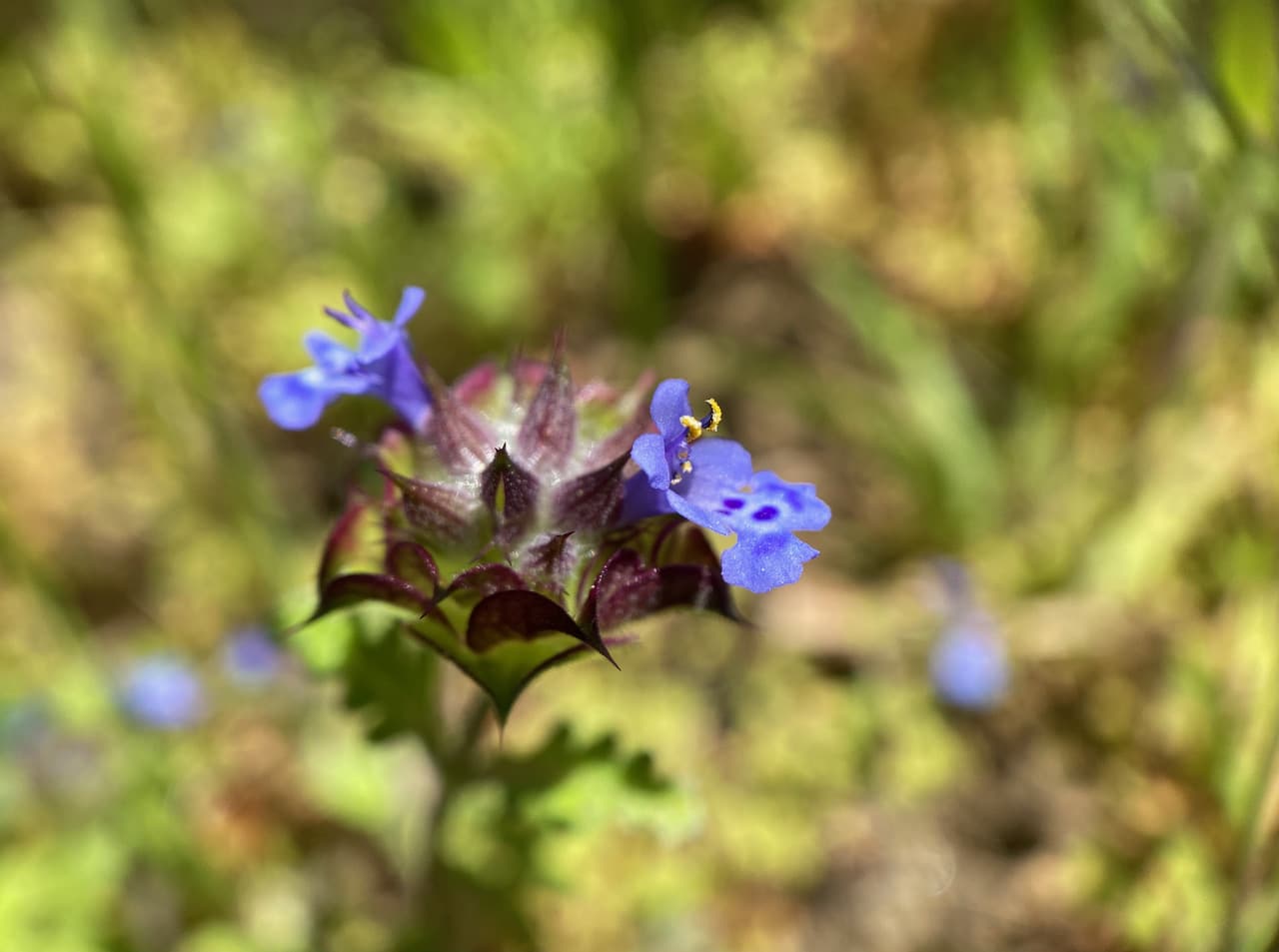
Below the trail at Siesta Nose a small patch of Chia, Salvia columbariae has come into bloom. Another miniature wonder that requires one to be on hands and knees to appreciate!