

Pollinator Post 4/13/26 (2)
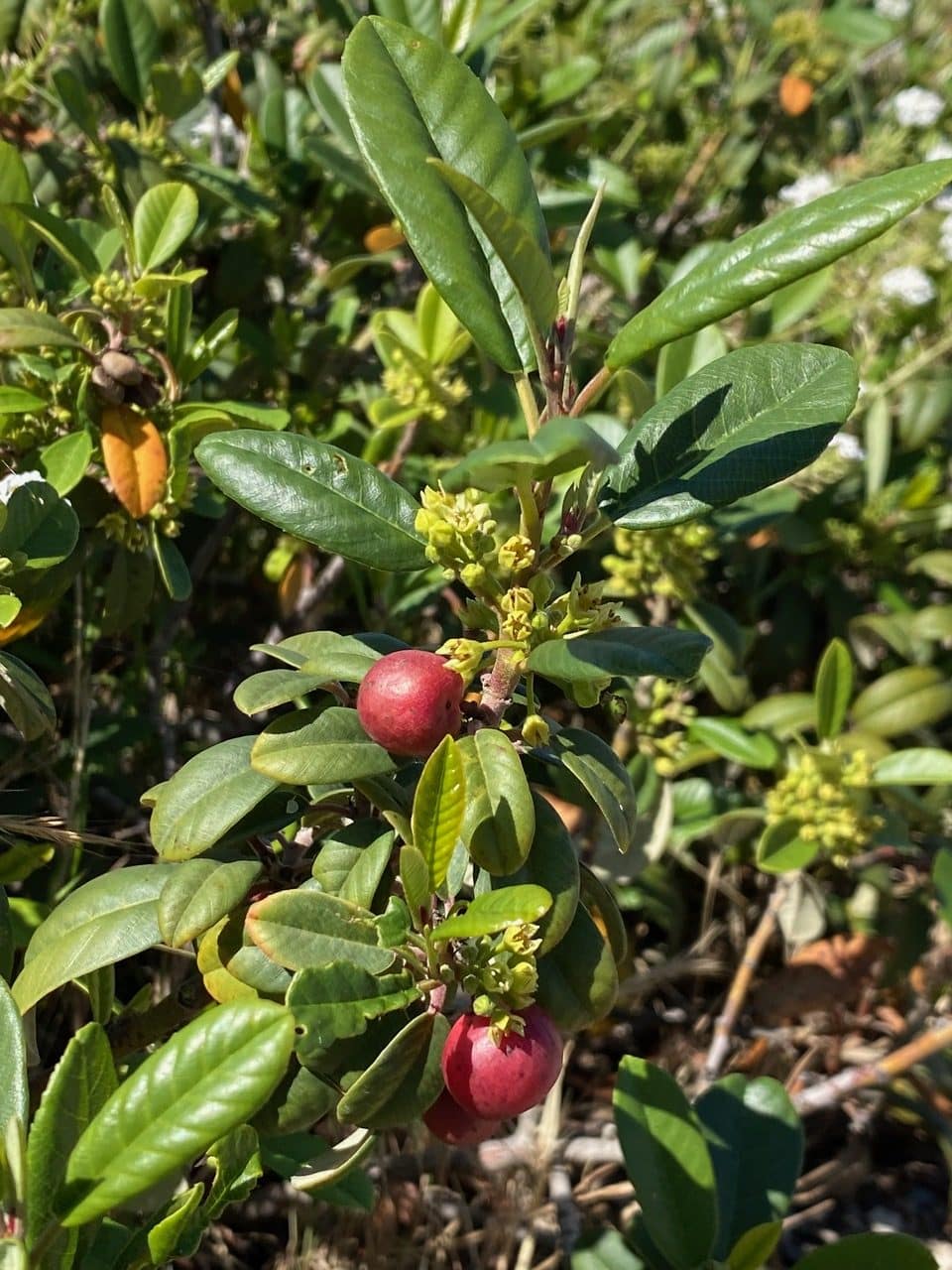
While a few of last year’s fruits are still hanging on the branches, this California Coffeeberry, Frangula californica is starting to bloom again.
Coffeeberry





The flowers of California Coffeeberry, Frangula californica are small, about 4mm wide, greenish-white to yellow-white, often blending in with the foliage. The flowers grow in dense clusters in the leaf axils. The flowers have five petals and five sepals. Despite being inconspicuous to humans, the flowers produce nectar and are highly attractive to bees, butterflies, and other pollinators. After pollination, the flowers mature into berries (drupes) that turn from green to red, and eventually black when ripe.
Two Argentine Ants, Linepithema humile (family Formicidae) are foraging on a fading Coffeeberry flower.
An Argetine Ant is checking out a fresher Coffeeberry flower.
The Argentine Ant, Linepithema humile (family Formicidae) is native to Northern Argentina, but it has been inadvertently introduced by humans to many countries, and is now an established invasive species in many Mediterranean climate areas worldwide. The success of the species can be attributed to their lack of aggression between the colonies. There is no apparent antagonism between separate colonies of its own kind, resulting in “super-colonies” that extend across hundreds or thousands of kilometers in different parts of the their range. Genetic, behavioral, and chemical analyses show that introduced Argentine Ants on separate continents actually represent a single global supercolony.
The Argentine Ants are ranked among the world’s worst invasive animal species. In its introduced range, the Argentine ant often displaces most or all native ants and can threaten native invertebrates and even small vertebrates that are not accustomed to defending against the aggressive ants. This can, in turn, imperil other species in the ecosystem, such as native plants that depend on native ants for seed dispersal, or lizards that depend on native ants for food.
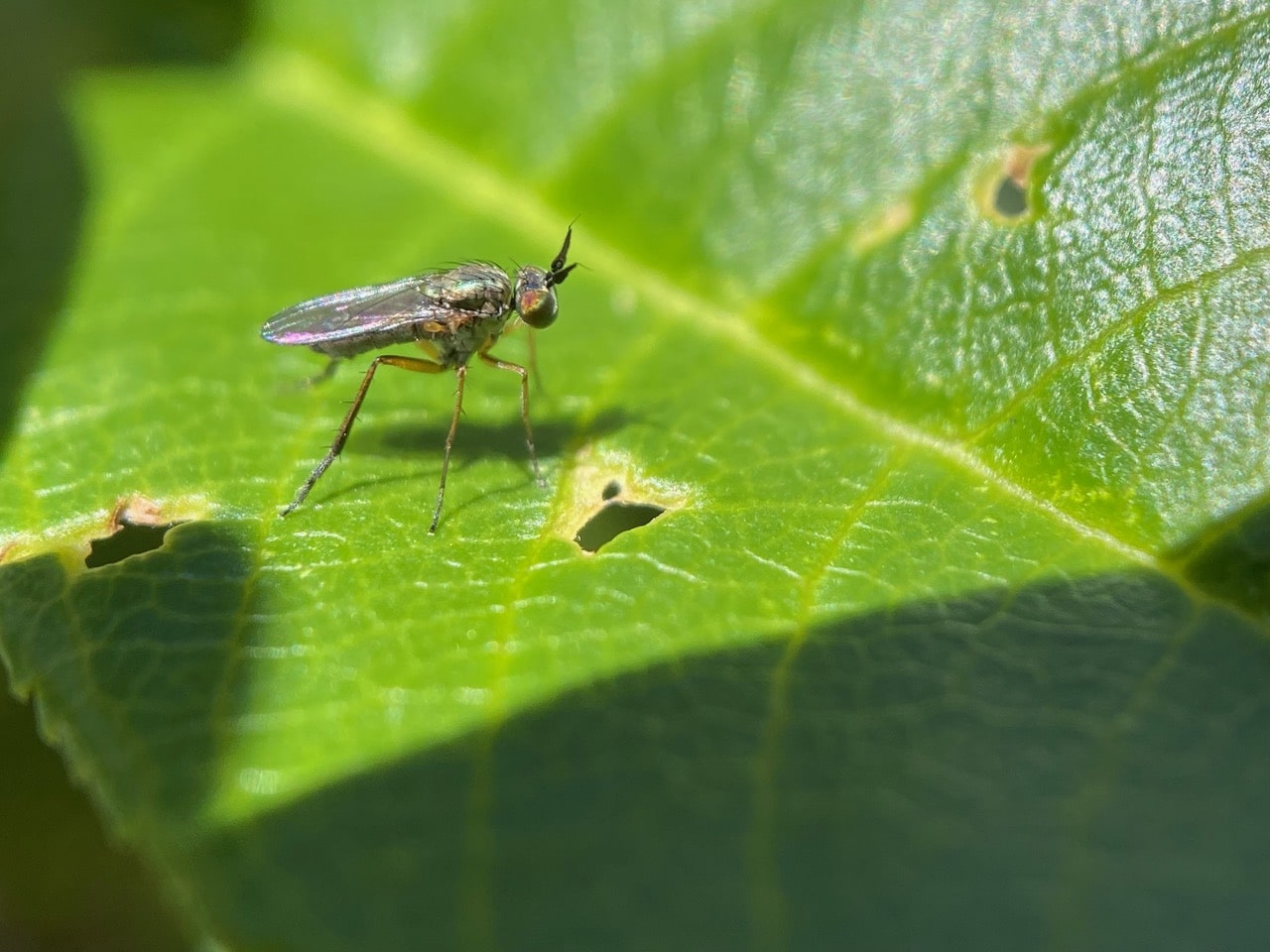
A small long-legged insect has landed on a Coffeeberry leaf. iNaturalist has helped identify it as a Long-legged Fly, Syntormon sp. (family Dolichopodidae).
Syntormon is a genus of small, long-legged flies (family Dolichopodidae) often found in moist, wetland habitats and sunny spots near vegetation. They are generally small (3.5 – 4.5mm), with a brassy or metallic green body. They are predatory as larvae and adults, feeding on smaller invertebrates. Adults are often seen hovering or hunting on vegetation. Larvae are generally found in damp soil or leaf litter. Pupae can be found attached to foliage or within detritus.
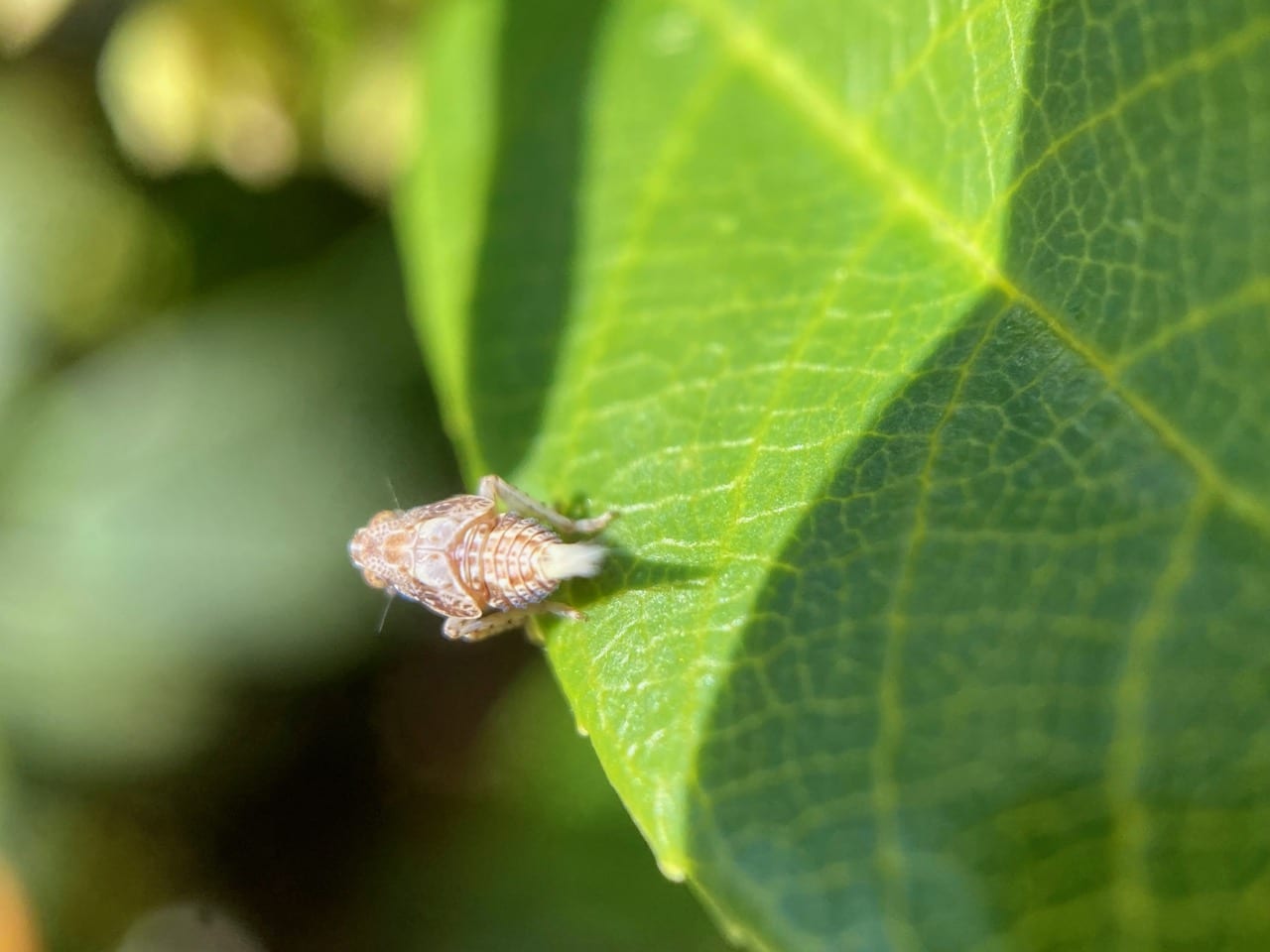
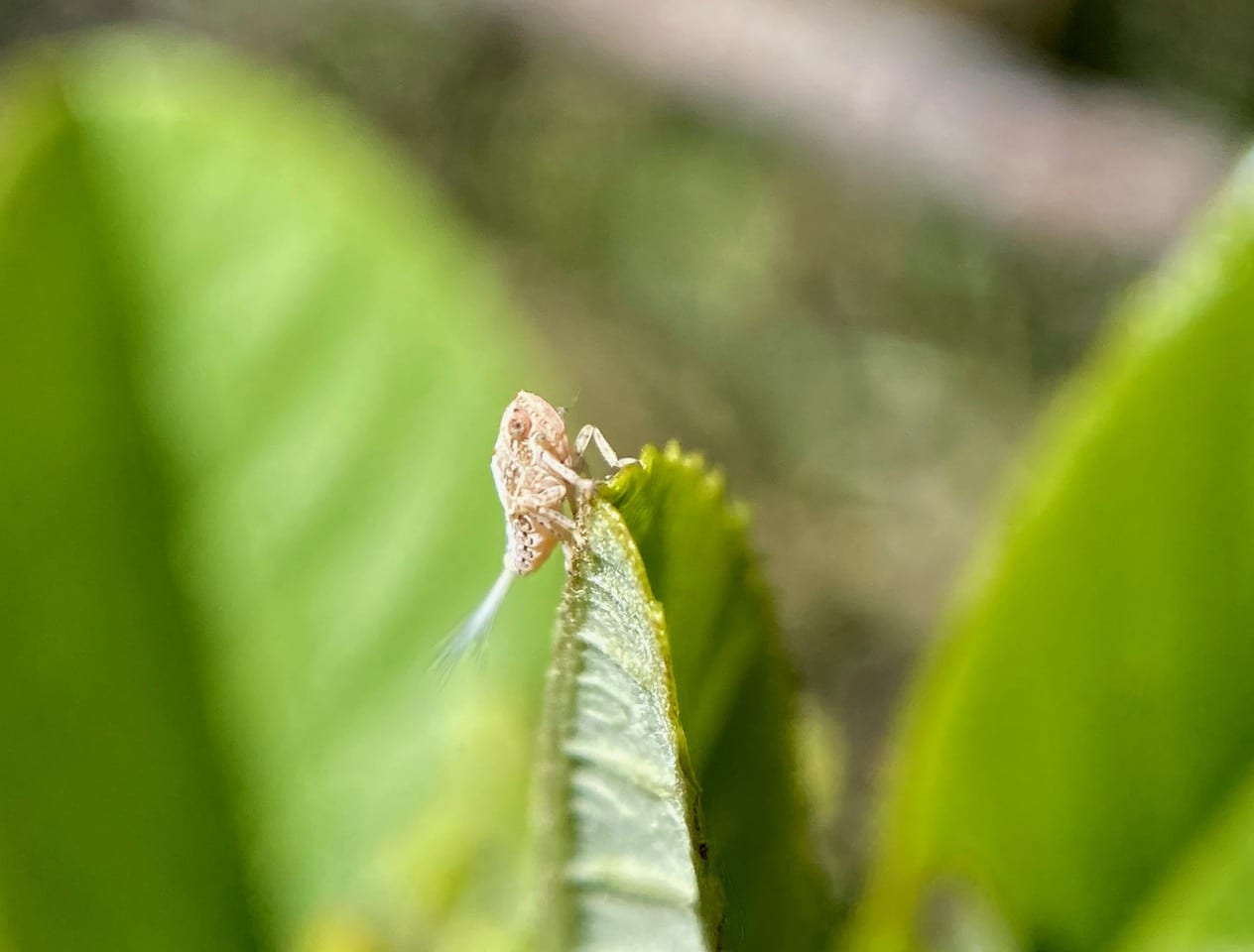
I have only quick glimpse of a small insect before it hops off the Coffeeberry leaf. It has a tuft of white filaments extending from its rear end. Ah, it is a nymph of a Planthopper (family Tropiduchidae)!
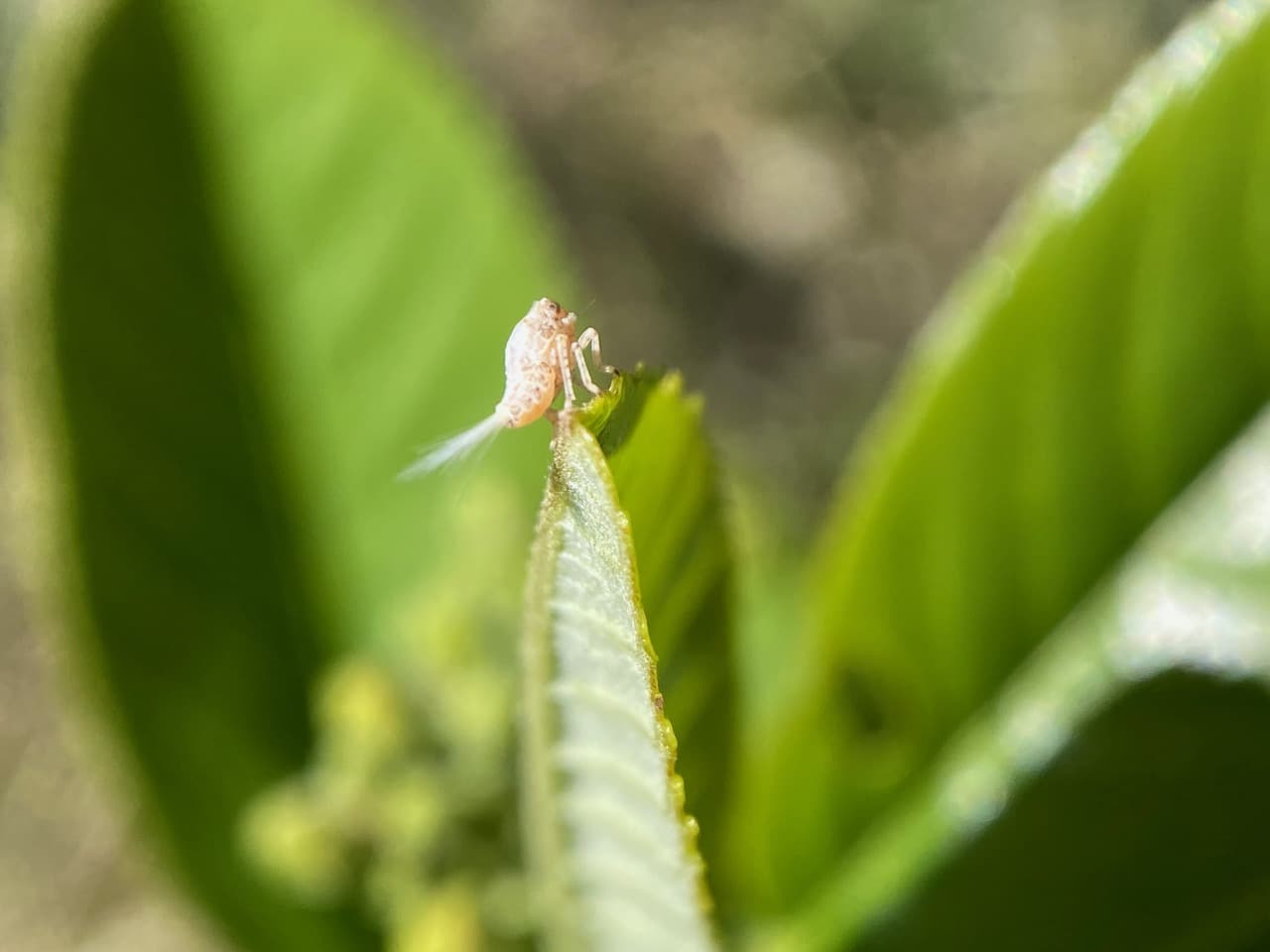
Ooh, here’s another, smaller one, perched on the tip of a Coffeeberry leaf.
Tropiduchidae is a relatively small, advanced family of Planthoppers, often called “Tropiduchid Planthoppers” within the order of “true bugs”, Hemiptera. They range from 5 to 13 mm in length, with many exhibiting flattened forms with nodal flexion in the tegmina. Some display short forewings and a box-shaped body. They are distributed worldwide, primarily inhabiting trees and shrubs without causing significant damage. Planthopper nymphs secrete waxy, fiber-optic-like filaments from their abdomen as a protective mechanism. These “tails”, which can look like fluffy cotton or shimmering, iridescent sparks, serve to distract predators, assist in gliding while jumping, and stabilize them mid-air. Both adult and nymphs have piercing-sucking mouthparts for feeding on plant sap.
Planthoppers may be small, but they attract mates from afar by sending vibrational calls along plant stems and leaves using fast, rhythmic motions of their abdomen. The Planthoppers have the first mechanical gear system ever observed in nature. The tiny bug uses mechanical gears on its joints to precisely synchronize the kicks of its hind legs as it jumps forward.
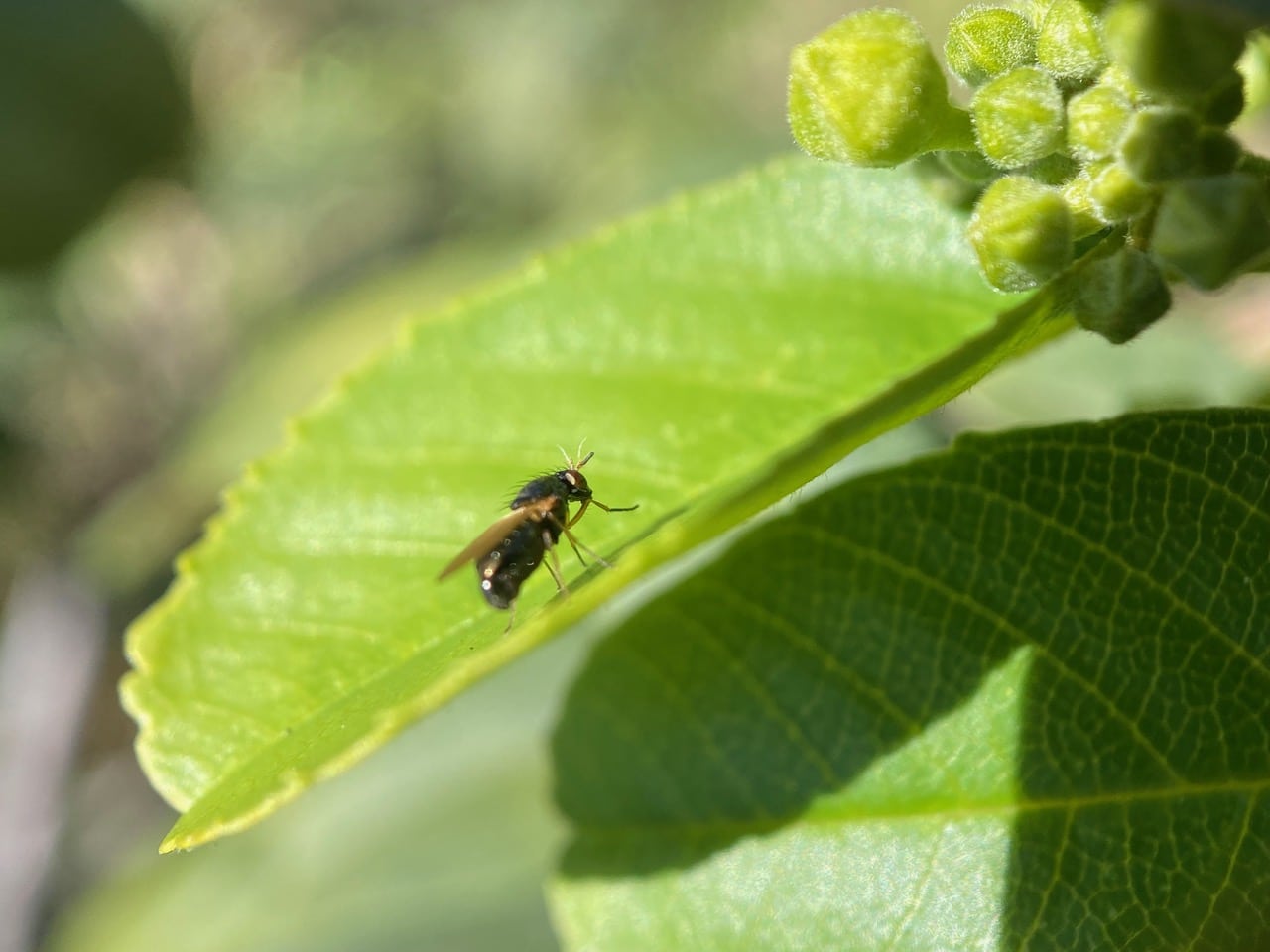
A tiny, glossy black insect is grooming itself on a Coffeeberry leaf. iNaturalist has helped identify the fly as a member of the genus Calliopum (family Lauxaniidae).
Some 1800 species of Lauxaniidae have been described, but no common name has been assigned to the family. They have a cosmopolitan distribution. Most species inhabit forests, where the adults usually are found sitting on leaves of the moist and shady understory. Lauxaniidae are small flies (2-7 mm in length). They are often rather plump, dull, yellowish-brown or black, or partly lustrous flies. Many species have iridescent reddish/purplish or greenish eyes. Larvae are mostly saprophagous, feeding on decaying vegetation, soil, bird nests, etc. Adults may visit flowers.
In North America, the genus Calliopum is only recorded from the West. These flies are small, dark, or metallic, often with vibrant, banded eyes.
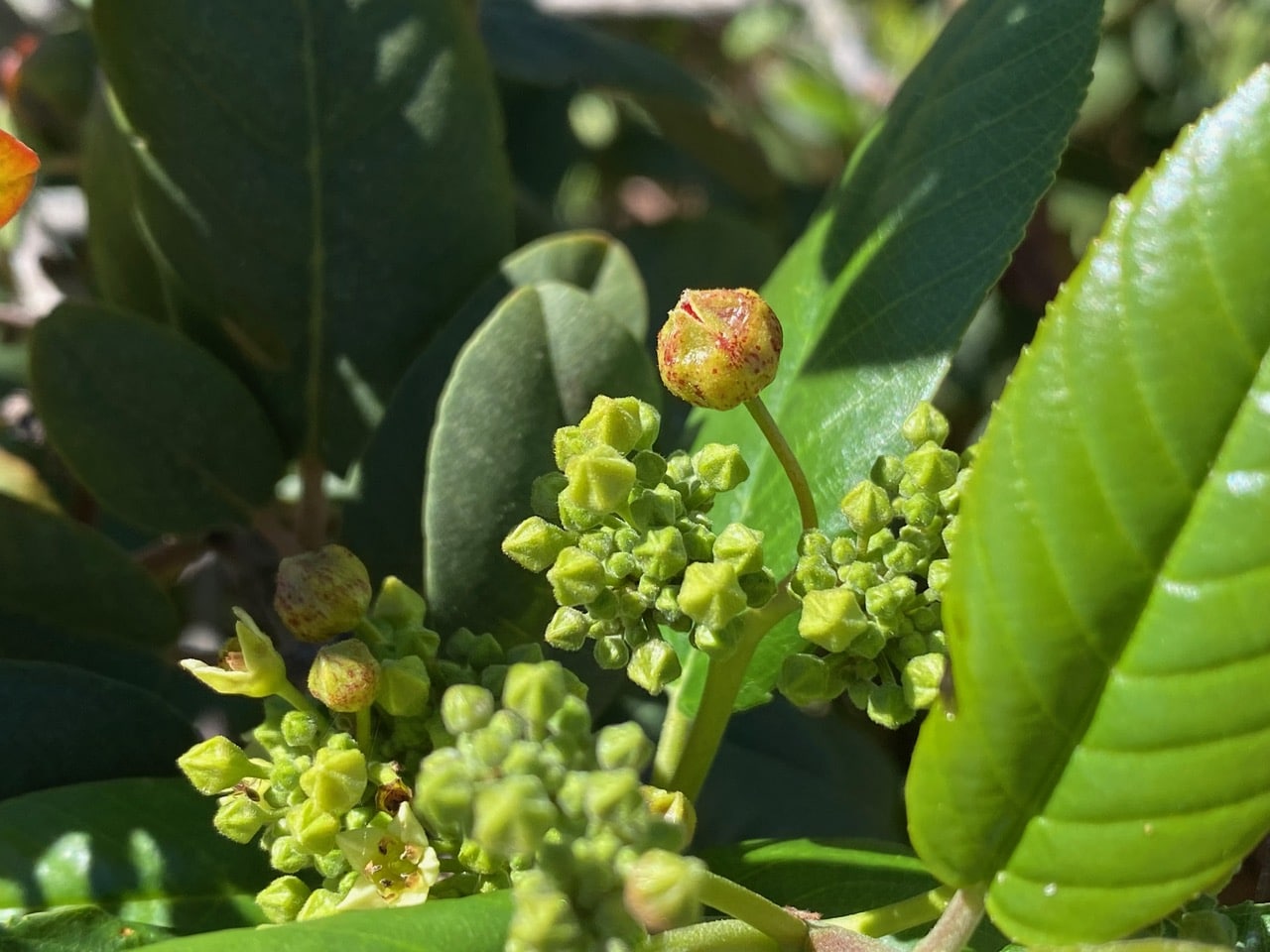
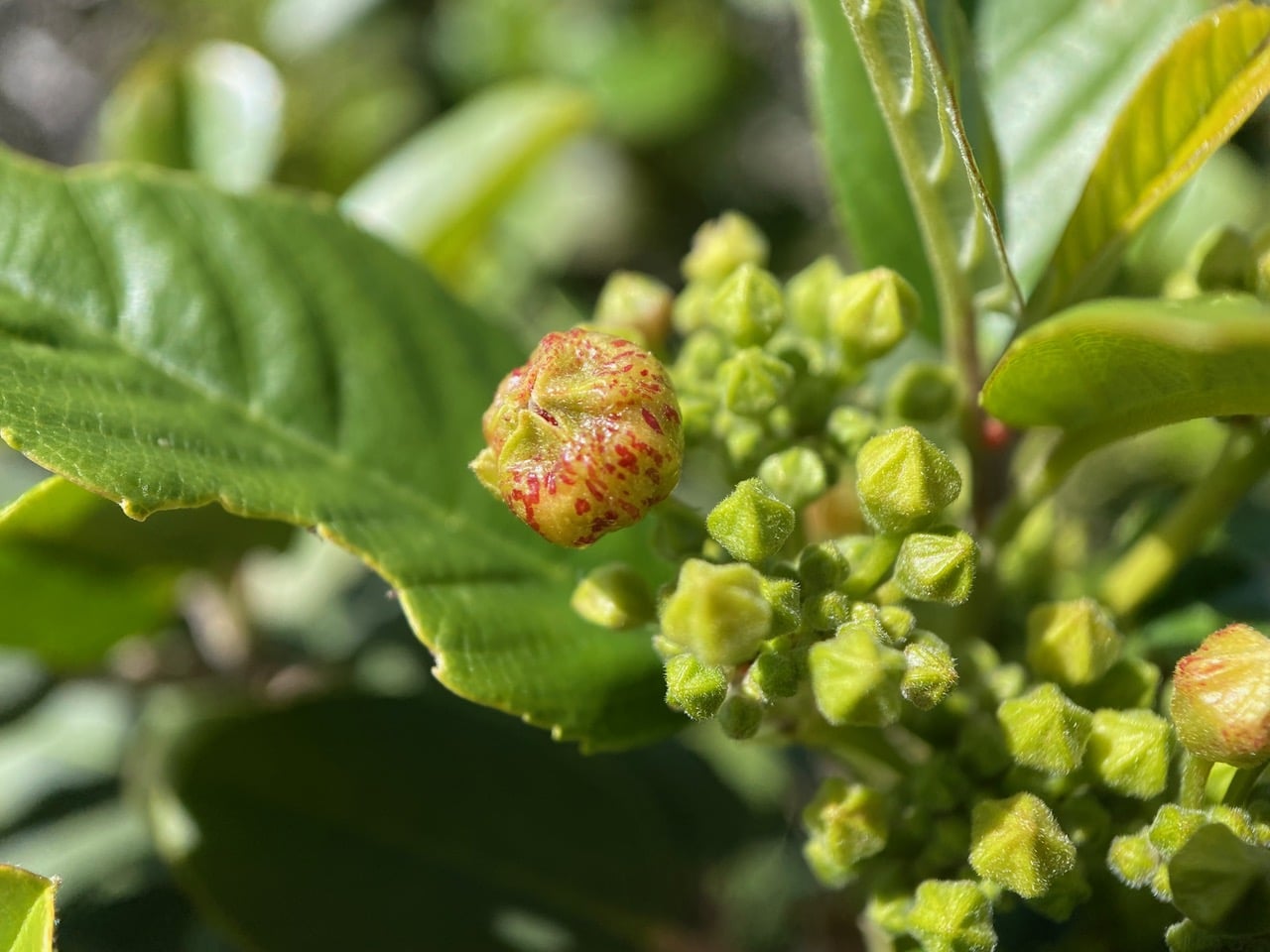
Among the cluster of Coffeeberry flower buds are some large, bloated ones with red speckles. Some of these are beginning to gape open at the tip.
The distorted, enlarged, often reddish flower buds stand out from the normal, small greenish-white flowers.
These bloated, red-speckled growths on Coffeeberry are actually flower bud galls purportedly induced by a gall midge, Asphondylia sp. (family Cecidomyiidae).
Plant galls are abnormal growths, resembling tumors or warts, that form on plants due to the influence of other organisms such as insects, mites, bacteria, fungi, or nematodes, providing them with food, shelter, and protection. The gall-inducing organism lays eggs or penetrates the plant tissue, triggering a response in the plant. The plant cells begin to proliferate and reorganize, forming the gall tissue within which the gall organism feeds, protected from predators and harsh environmental conditions. Different gall-inducing organisms can create galls with unique appearances, shapes, and colors, allowing for identification.
Asphondylia is a cosmopolitan genus of gall midges in the family Cecidomyiidae. All species in this genus induce galls on plants, especially on flowers and flower buds.
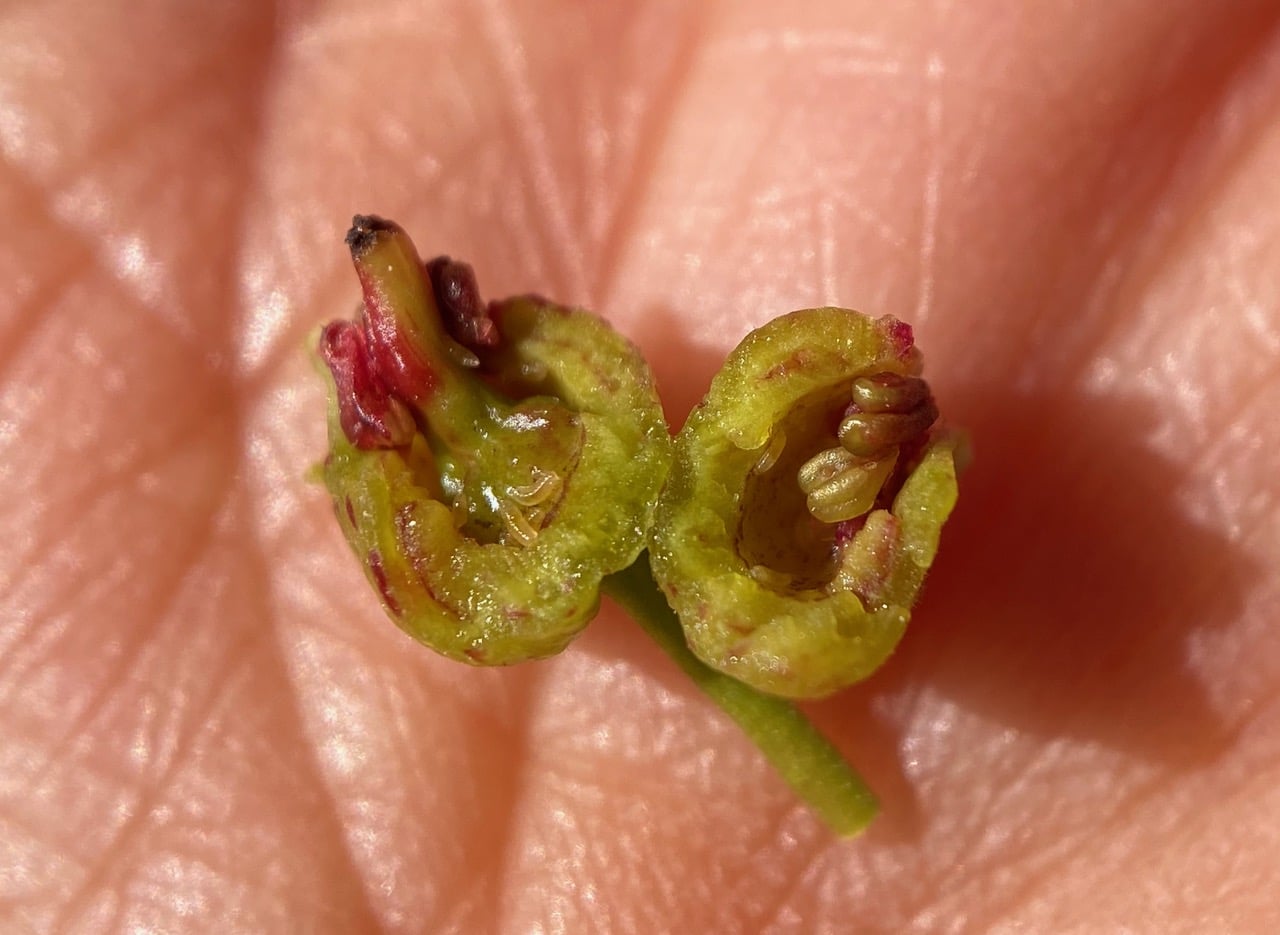
With my finger nails, I break open a Coffeeberry flower bud gall that has gaped open. The interior of the gall is very similar to that of a normal flower bud, with anthers that turn red on maturity, and a central pistil consisting of an ovary and style. If you squint hard enough you might see the tiny, worm-like larvae near the base of the ovary on the left half of the gall, and a couple more larvae on the walls of the right half. Wow, I have expected to see more mature larvae since the gall has already gaped open. I wonder if the larvae pupate in the gall.
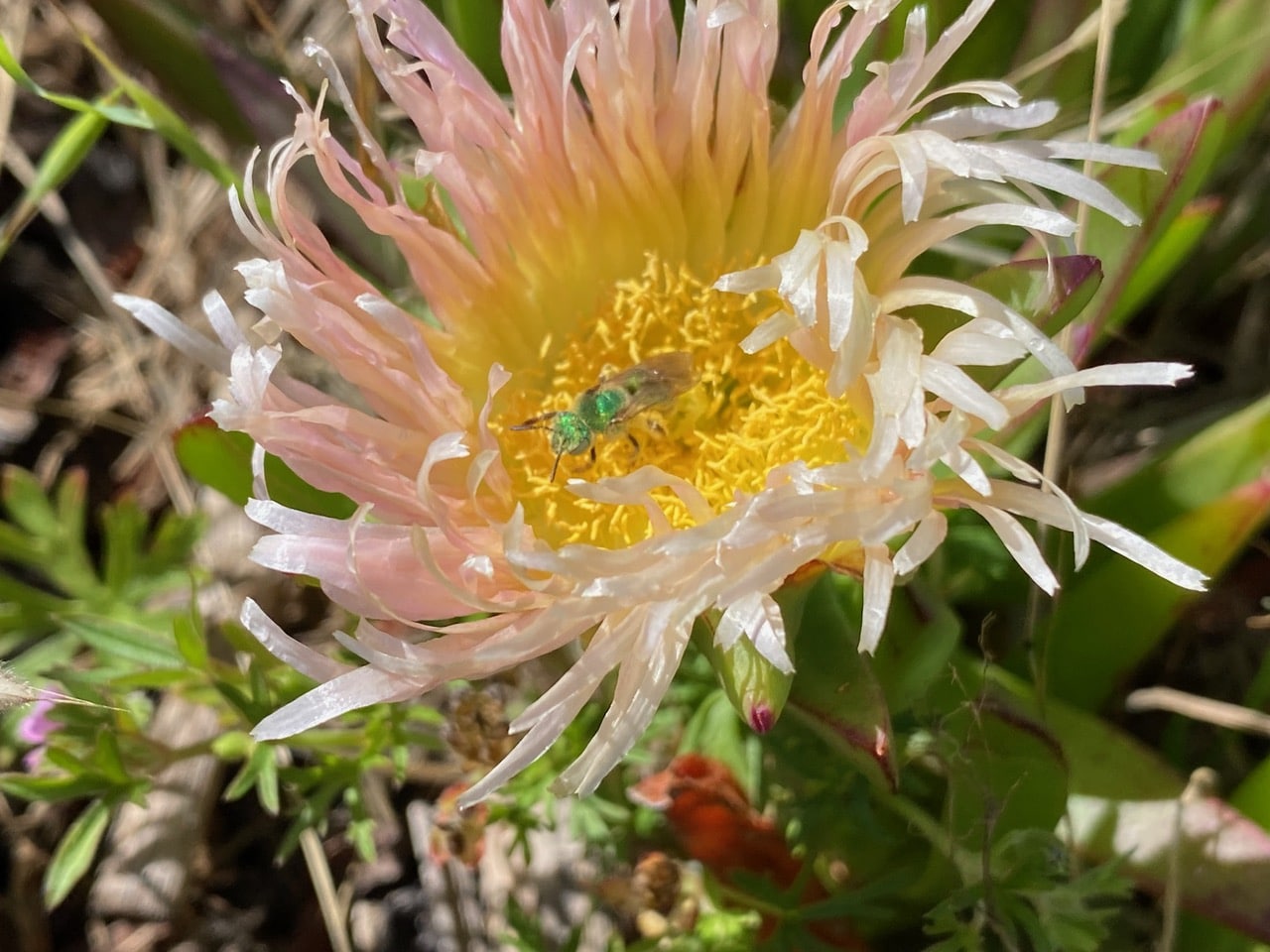
A female Fine Striped Sweat Bee, Agapostemon subtilior (family Halictidae) is rummaging among the stamens of a Sea Fig flower, Carpobrotus edulis.
Agapostemon bees, or metallic sweat bees, are ground-nesting, often communal pollinators known for their bright green, metallic appearance and for being bivoltine (two generations per year). The first generation emerges in spring, and the second, larger generation emerges in late summer. Agapostemon bees are medium-sized (7-14.5 mm), featuring a metallic green or blue head and thorax. Many females have striped abdomens, while others are entirely metallic green. They are generalist pollinators, visiting a wide variety of flowers, including asters, sunflowers, and fruit crops. Females are efficient and fast-flying carrying pollen on their hind legs.
Mated females overwinter in the soil and emerge in early spring to establish nests in the ground, often in aggregations (close to one another). They prefer to nest in loamy soil in flat, sloped, or bank areas, creating tunnels with individual brood cells. Although solitary, some species are communal, sharing a single entrance while maintaining separate tunnels. Females create balls of pollen and nectar in each cell, laying a single egg on each, which the larva consumes upon hatching. Males usually die after mating in late summer, while mated females hibernate through the winter.
The Fine Striped Sweat Bee, Agapostemon subtilior is a small, widespread species found across North America. They are active from late spring to fall, with all-green females measuring roughly 11 mm, and males (slightly smaller) displaying a black-and-yellow striped abdomen. Like other Agapostemon bees, they are solitary ground-nesters, and are polylectic, foraging from a wide variety of flowers.
The bee lifts off from the flower, showing her prolific pollen load and her pollen-dusted body. Maybe it’s time for her to return to her nest to deposit the harvest.