

Pollinator Post 4/13/23 (2)

The short stretch of Skyline Trail through Diablo Bend is a walk through purple paradise.




Silverleaf Lupine, Lupinus albifrons is blooming gloriously, to add to the unrivaled scenery with a view of Mt. Diablo.
For all the lupine flowers on offer, I am rather surprised to see few pollinators. The Black-tailed Bumble Bees, Bombus melanopygus remain the predominant visitors, followed by the Digger Bees, Anthophora sp. The numbers of Yellow-faced Bumble Bees, Bombus vosnesenskii are increasing, but slowly. These three species are the only insects that can access the nectar and pollen of lupine legitimately, effectively pollinating the flowers.
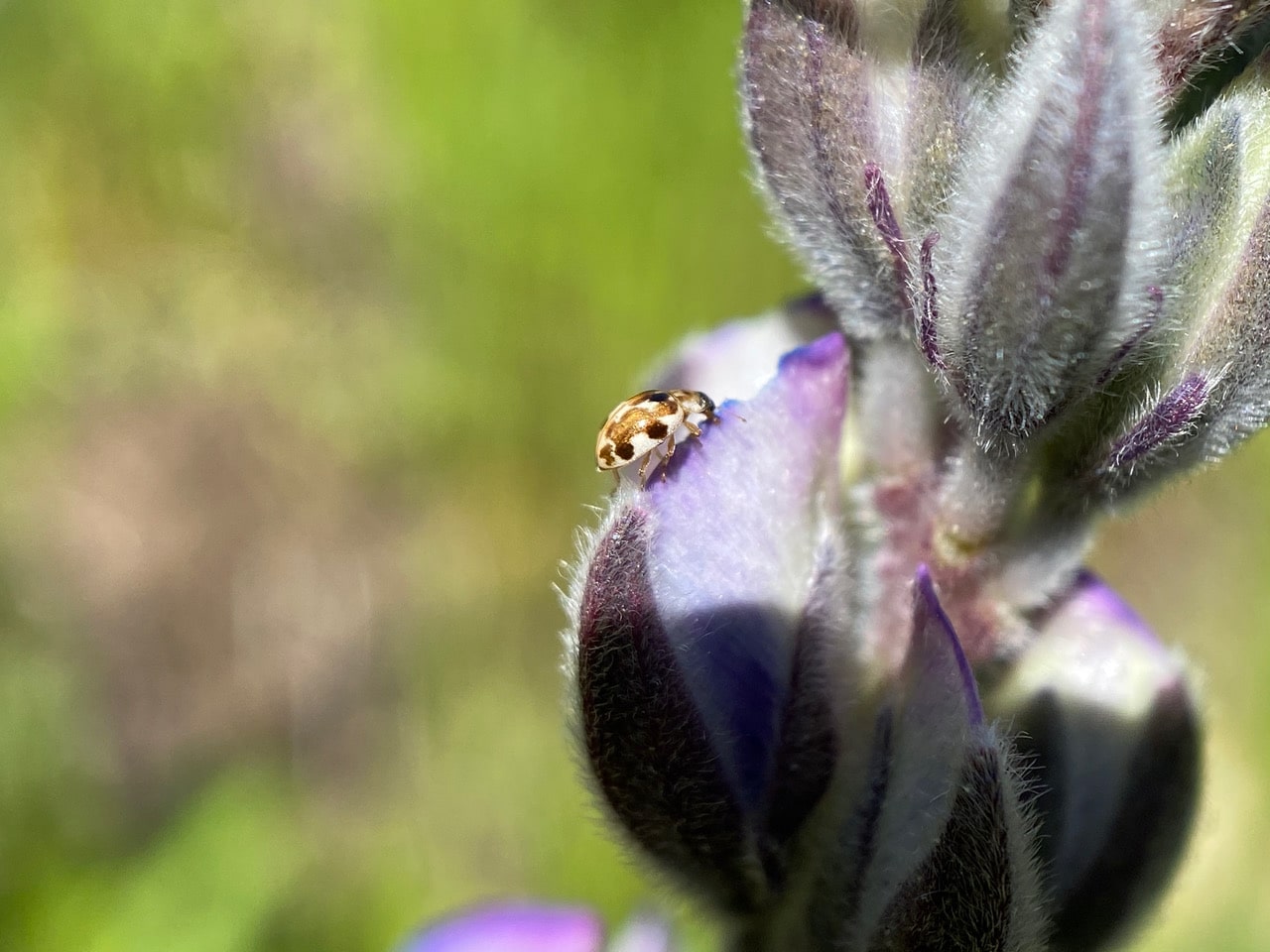
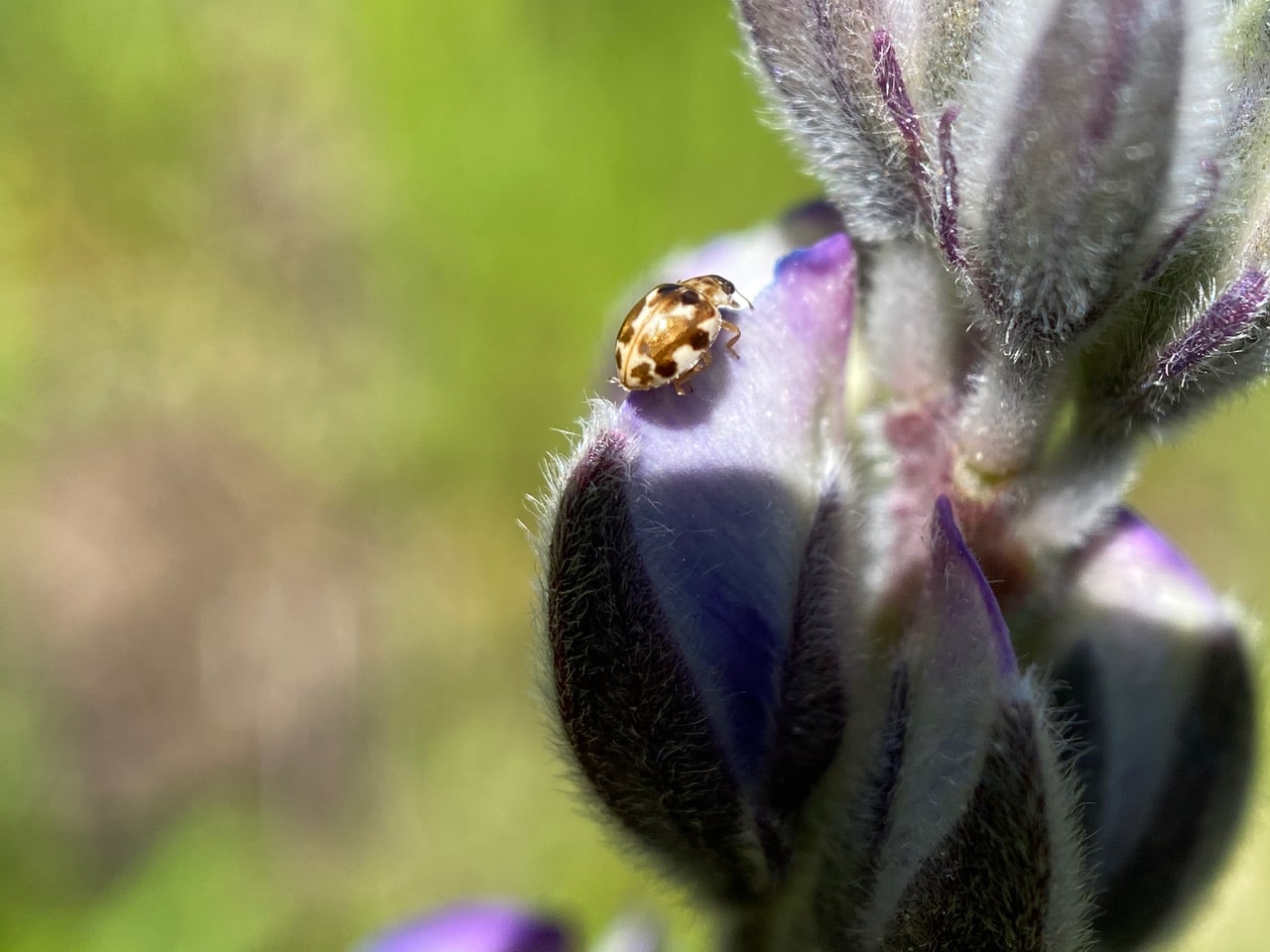
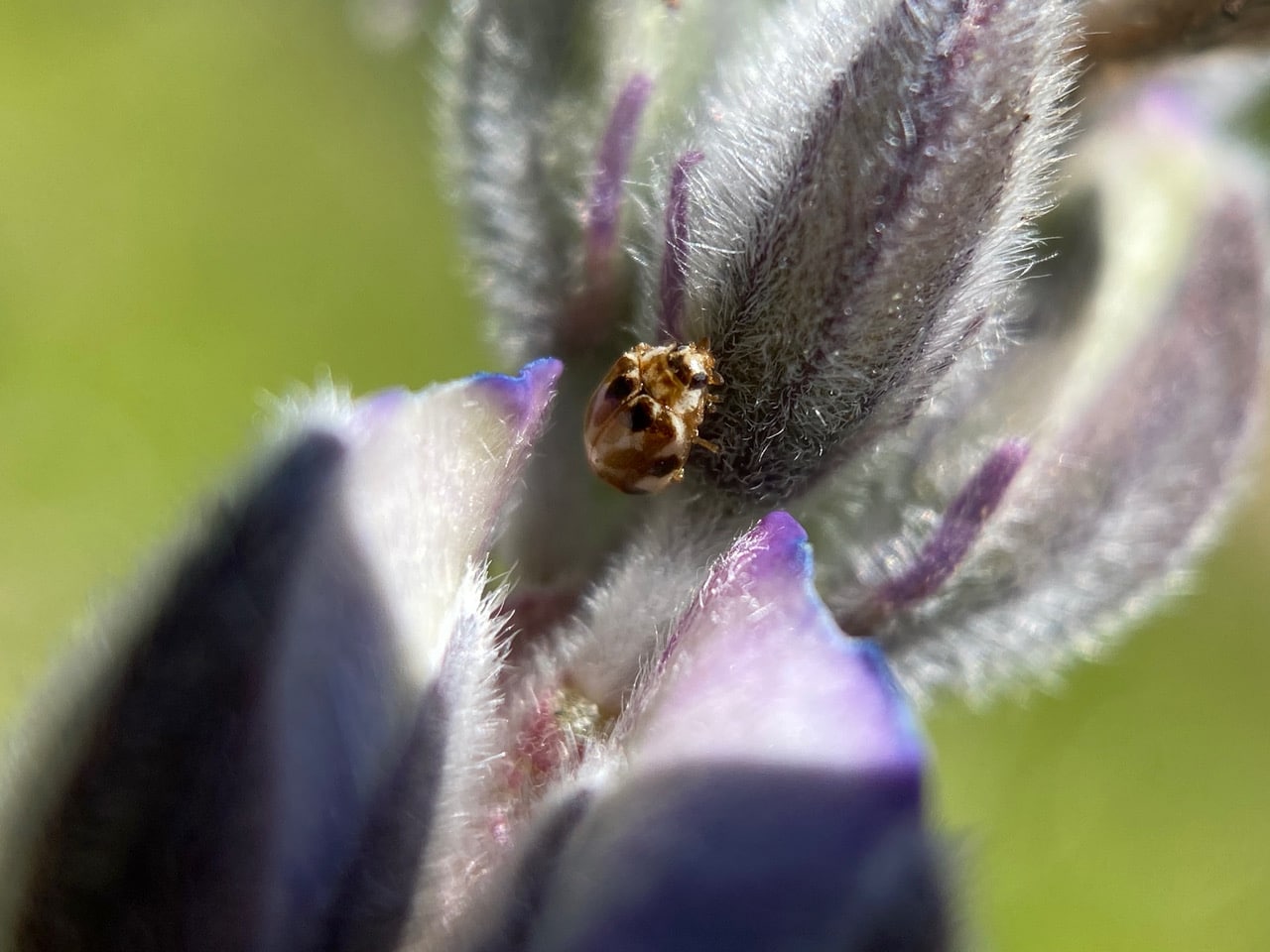
Hello, who’s this? At first glance I have mistaken it for a skin beetle. But my macro lens reveals a different beetle, completely new to me! iNaturalist has helped identify it as the Twenty-spotted Lady Beetle, Psyllobora vigintimaculata (family Coccinellidae) – a mouthful of a name for a critter only 2-3 mm in length. Wow, we are revving up the number of ladybeetle species for Skyline Gardens!
How are the spots counted, when the markings on the beetle’s elytra are irregular blotches of two different colors?
The Twenty-spotted Lady Beetle, Psyllobora vigintimaculata (family Coccinellidae) is found in North America, especially the west coast. The elytra have dark, orange or bicolored spots on a white background. There are four or five distinctive dark spots on the pronotum arranged in an “M” shape. The patterns on the elytra are highly variable.
The species is found in early spring, occurring is numbers on the foliage of various shrubs. In summer and fall, they are often found on plants with powdery mildew on which the beetles feed. It has been proposed that the beetles be used as an alternative to fungicides for the control of the fungus in agricultural settings.
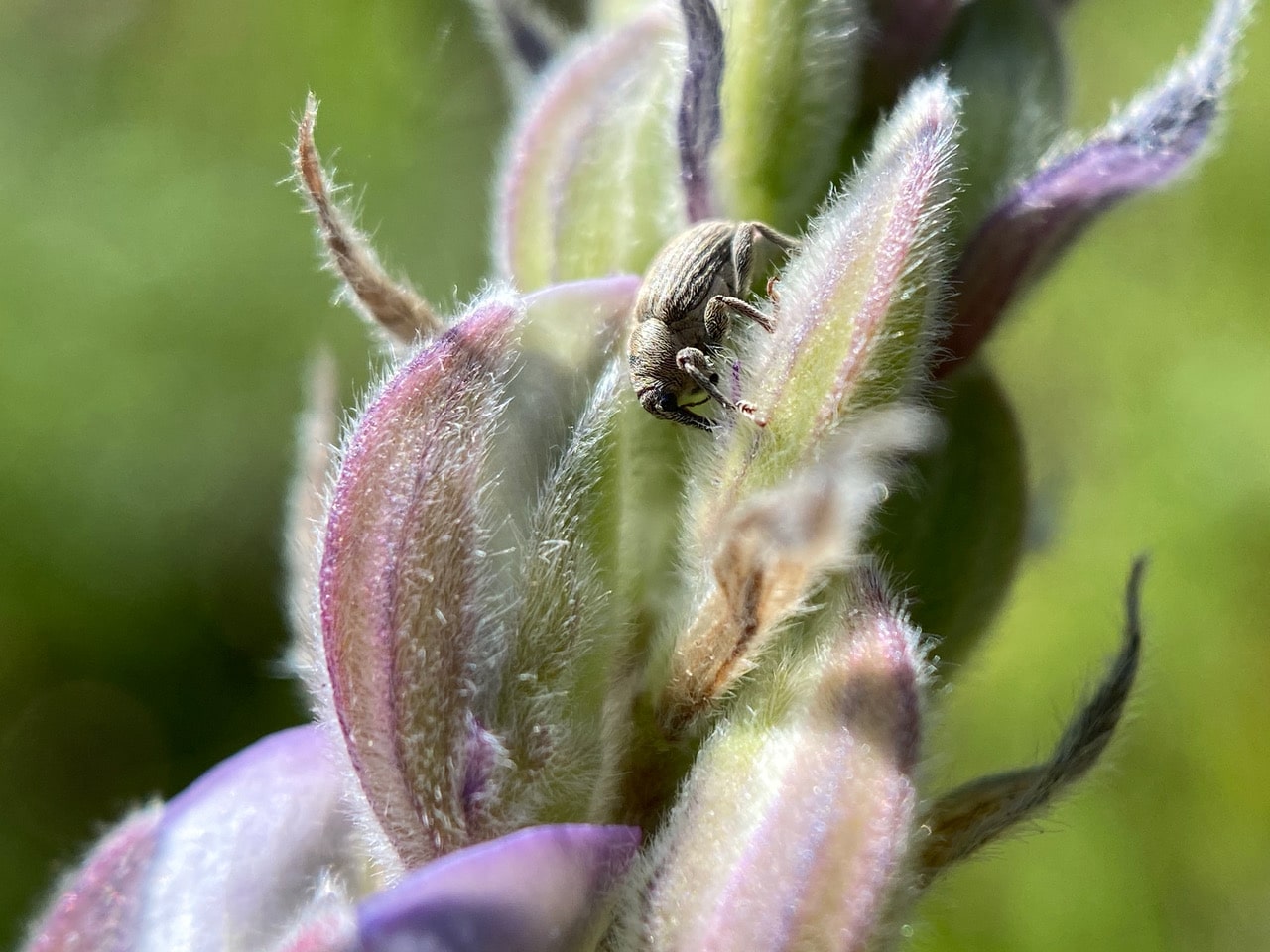
Another beetle is hunched over, feeding on a Silverleaf Lupine flower bud. It is a weevil in the genus Tychius (family Curculiondae) or leguminous seed weevil. The weevils feed on various plants in the pea or Fabaceae family; larvae feed on reproductive parts.
Weevils, family Curculionidae, are also called snout beetles. Curculionidae is one of the largest beetle families (about 40,000 species). Most weevils have long, distinctly elbowed antennae that may fold into special grooves on the snout. The snout is used not only for penetration and feeding but also for boring holes in which to lay eggs. The mouthparts are quite small and located at the end of the rostrum (snout), designed for chewing. Many weevils have no wings, while others are excellent fliers. Most are less than 6 mm in length. The majority of weevils feed exclusively on plants. The fleshy, legless larvae of most species feed only on a certain part of a plant – i.e., the flower head, seeds, fleshy fruits, stems, or roots. Many larvae feed either on a single plant species or on closely related ones. Adult weevils tend to be less specialized in their feeding habits. The family includes some very destructive agricultural pests.
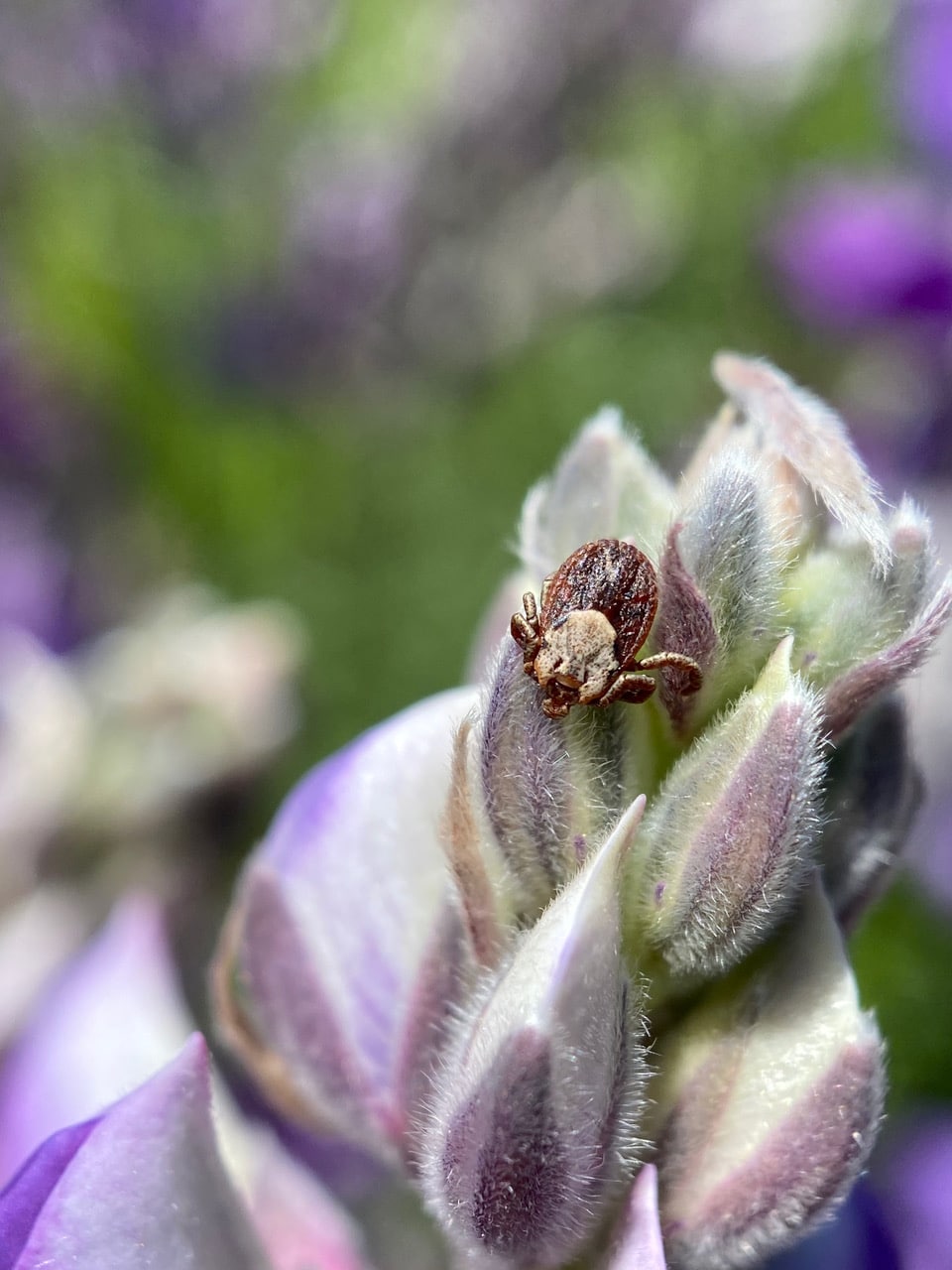
An adult female Pacific Coast Tick, Dermacentor occidentalis is clinging on a Silverleaf Lupine inflorescence by the trail. This species is widely distributed throughout California except for the very arid areas of the central valley and south eastern desert region. The immature stages feed on rodents, especially squirrels, while the adults prefer large mammals such as cattle, horses, deer and humans.
Capable of transmitting various diseases through their bite, ticks are a nuisance to those of us who spend time in the wilds. Surely they must serve a larger ecological role that eludes us? What good are tick?
The tiny blood-sucking parasites benefit the ecosystem in which they live by serving as food for other species such as reptiles, amphibians, and birds. Many Woodland animals feed on them, including wild turkeys and western fence lizards.
By transmitting diseases to their hosts, ticks contribute to their major evolutionary purpose of controlling the populations of various animals all around the globe. The diseases ticks transmit help weed out sick and infirm individuals in the host populations, giving more space and opportunities for younger and healthier animals to thrive, keeping host populations within the carrying capacity of the land. Like it or not, ticks are a leading participant in the natural selection process of a number of animal species. They are even used as an indicator of an ecosystem’s overall health and stability.
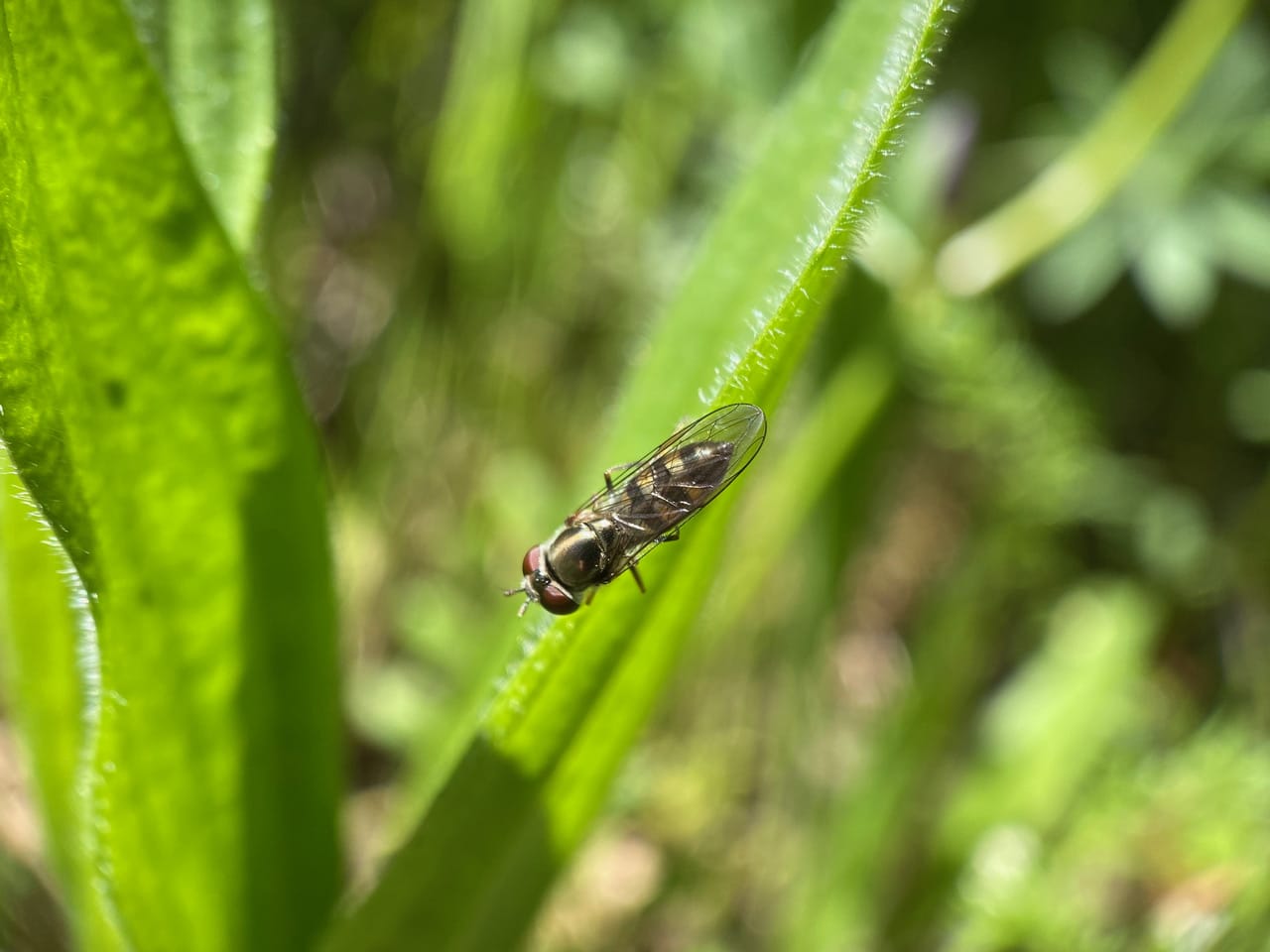
A shiny Hover Fly with black and yellow banding on its abdomen comes to rest on a plantain leaf.
Hover Flies, also called flower flies or Syrphidae flies, make up the insect family Syrphidae. The adults of many species feed mainly on nectar and pollen, and are often seen hovering and nectaring at flowers. They are important pollinators of flowering plants in many ecosystems worldwide. The larvae feed on a wide range of foods. In many species, the larvae are insectivores and prey on aphids, thrips, and other plant-sucking insects. In other species, the larvae are saprotrophs, eating decaying plant and animal matter in the soil or in ponds and streams.
Many species of Hover Flies exhibit Batesian mimicry; they are brightly colored, with bands of yellow resembling the bees and wasps. The mimicry provides the fly with some measure of protection from potential predators, although the flies are harmless and lack a sting.
After feeding in a flower, a fly exits a Blue Dicks, Dipterostemon capitatus, its body dotted with yellow pollen.
Aah, the good life of caterpillars! The young caterpillars of the Variable Checkerspot butterfly tend to hang out in aggregation, feeding voraciously on their host plant (here, a California Bee Plant), and resting in the morning sun, gathering energy for the the next phase of their development into adulthood – metamorphosis.
Near by, a young Crab Spider (family Thomisidae) rests on a Blackberry leaf.
Members of the family Thomisidae do not spin webs, and are ambush predators. The two front legs are usually long and more robust than the rest of the legs. Their common name derives from their ability to move sideways or backwards like crabs. Most Crab Spiders sit on or beside flowers, where they grab visiting insects. Some species are able to change color over a period of some days, to match the flower on which they are sitting.