

Pollinator Post 4/13/23 (1)
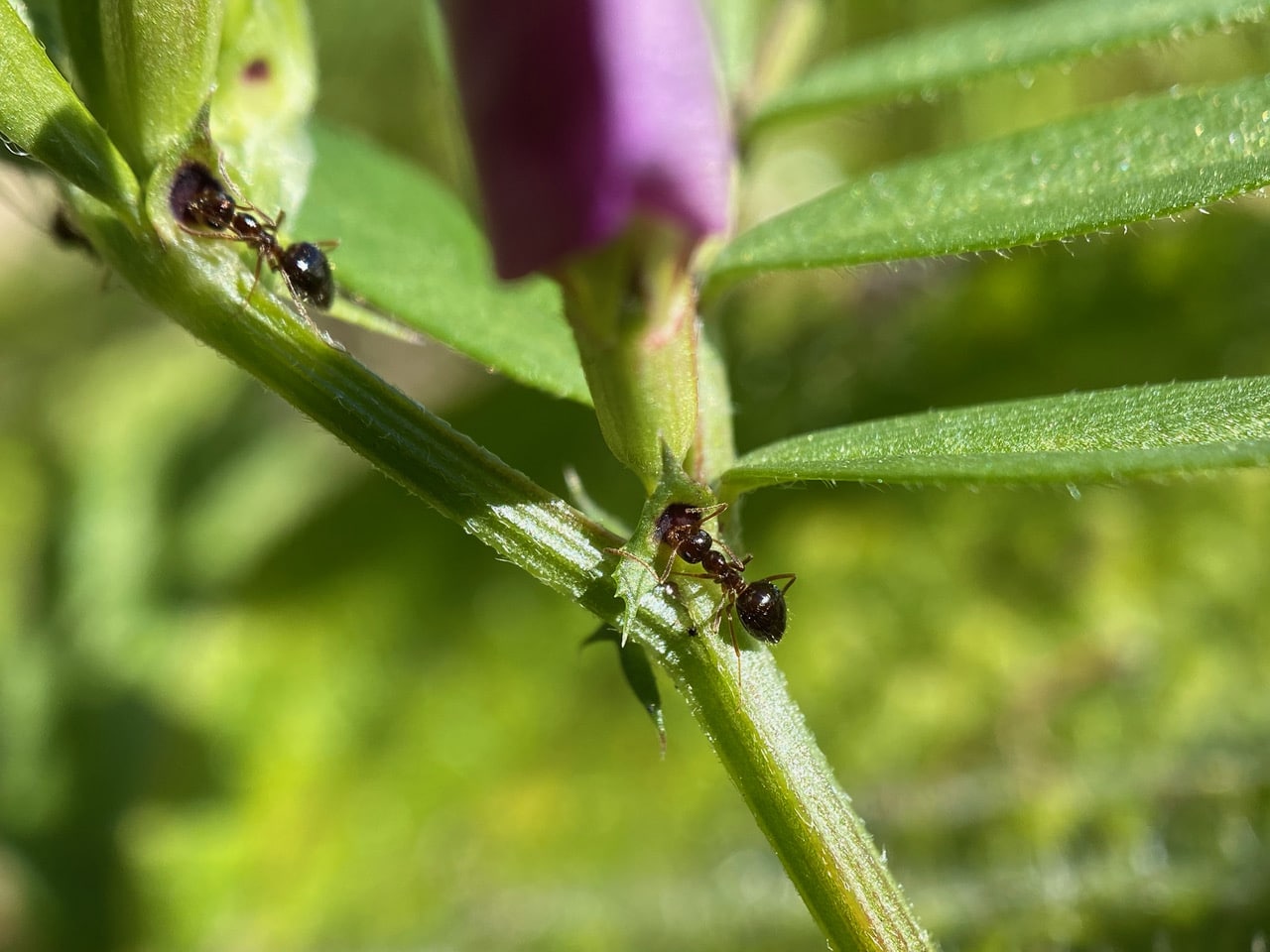 I stop by a Common Vetch, Vicia sativa that is teeming with ants. There is but a single unopened flower bud; what is all the excitement about?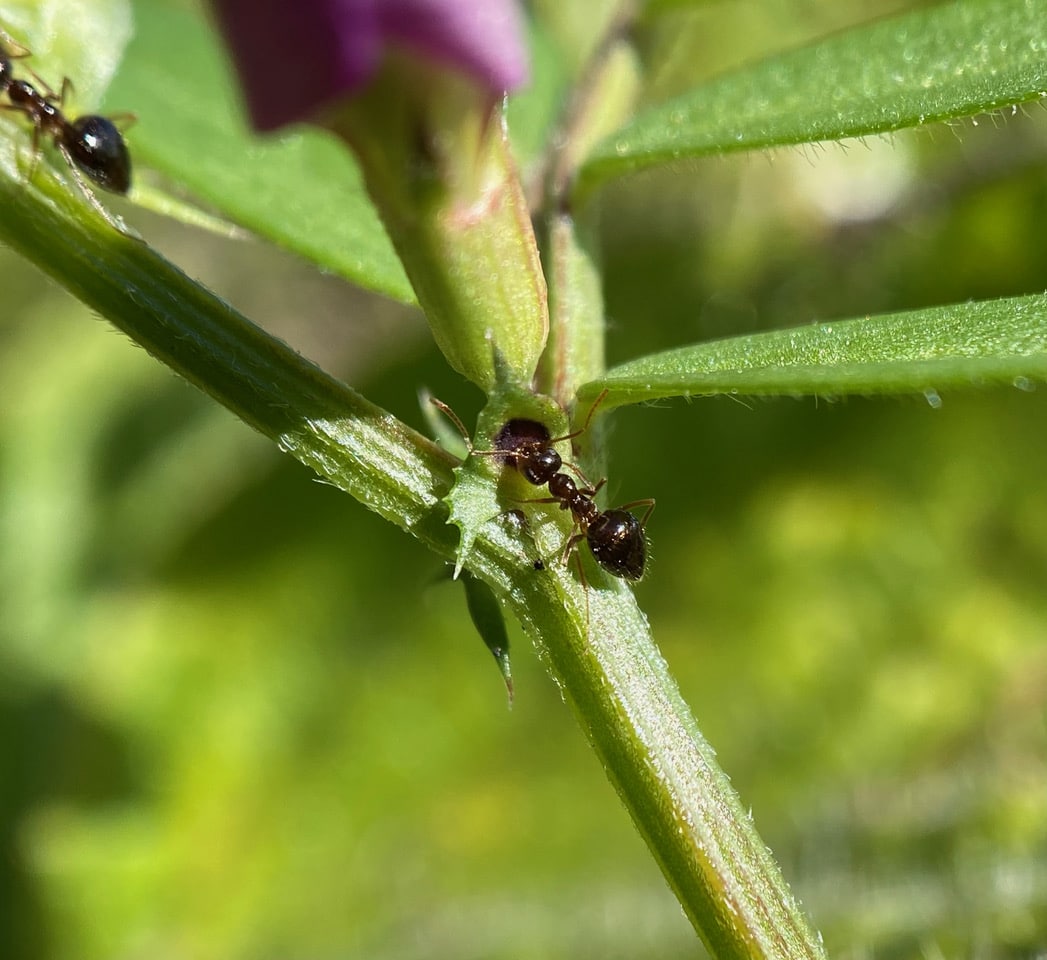
An American Winter Ant, Prenolepis imparis is feeding on the sugary exudate secreted by a dark reddish gland situated in a depression on the underside of a stipule at a leaf axil. This gland is an “extra-floral nectary”. For the sweet reward, the ants aggressively attack all other insects and even mammals that might feed on the plant, acting as body guards.
Extrafloral nectaries have been reported from over 90 families of flowering plants and ferns, mostly from tropical and subtropical regions. With protection from ants, plants producing extrafloral nectar are known to suffer less from herbivory.
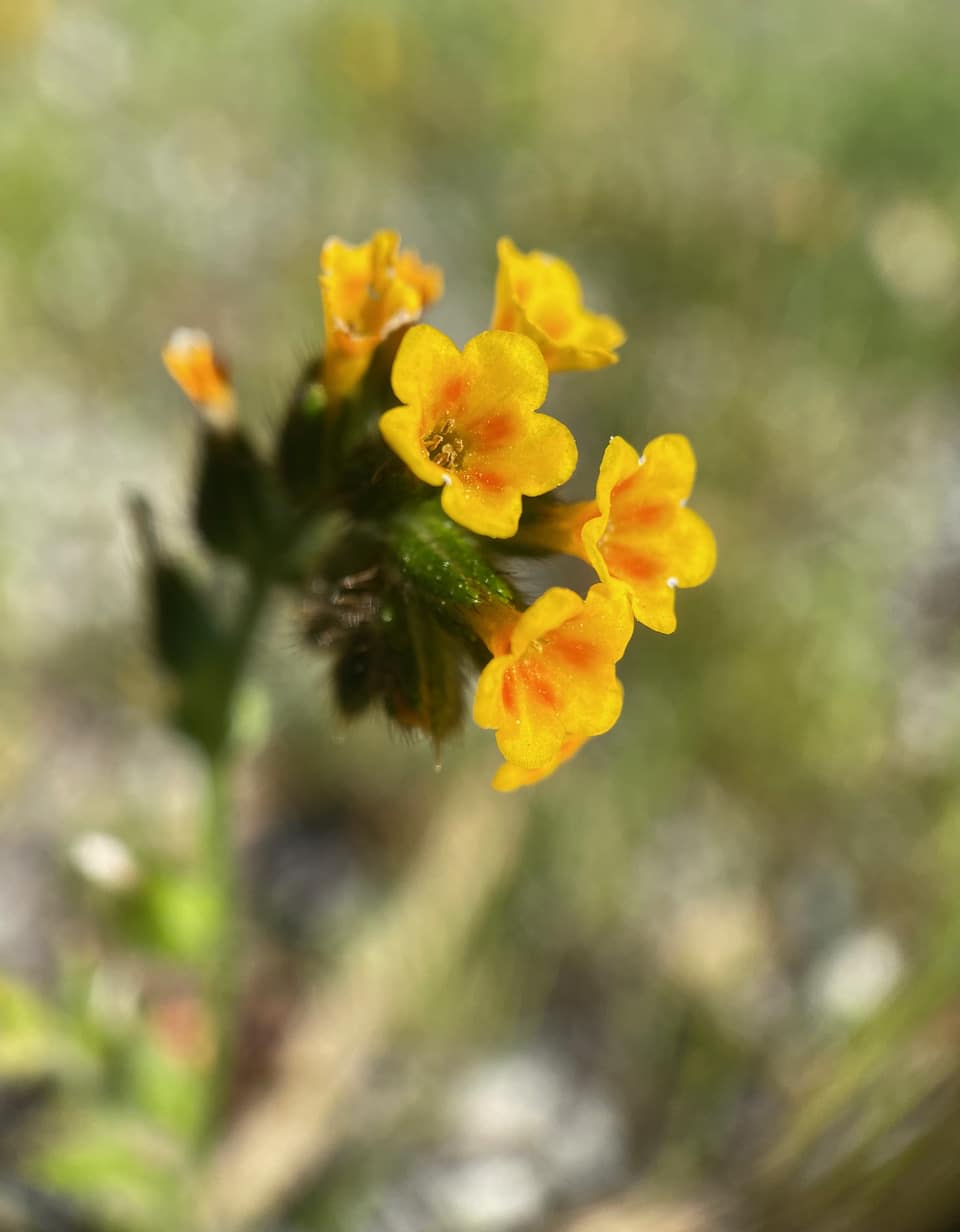
Although the Common Fiddleneck, Amsinckia intermedia is in peak bloom, there is no sign of pollinator this sunny morning.

Pollen has been scattered in some of the flowers, showing that perhaps they have had visitors.
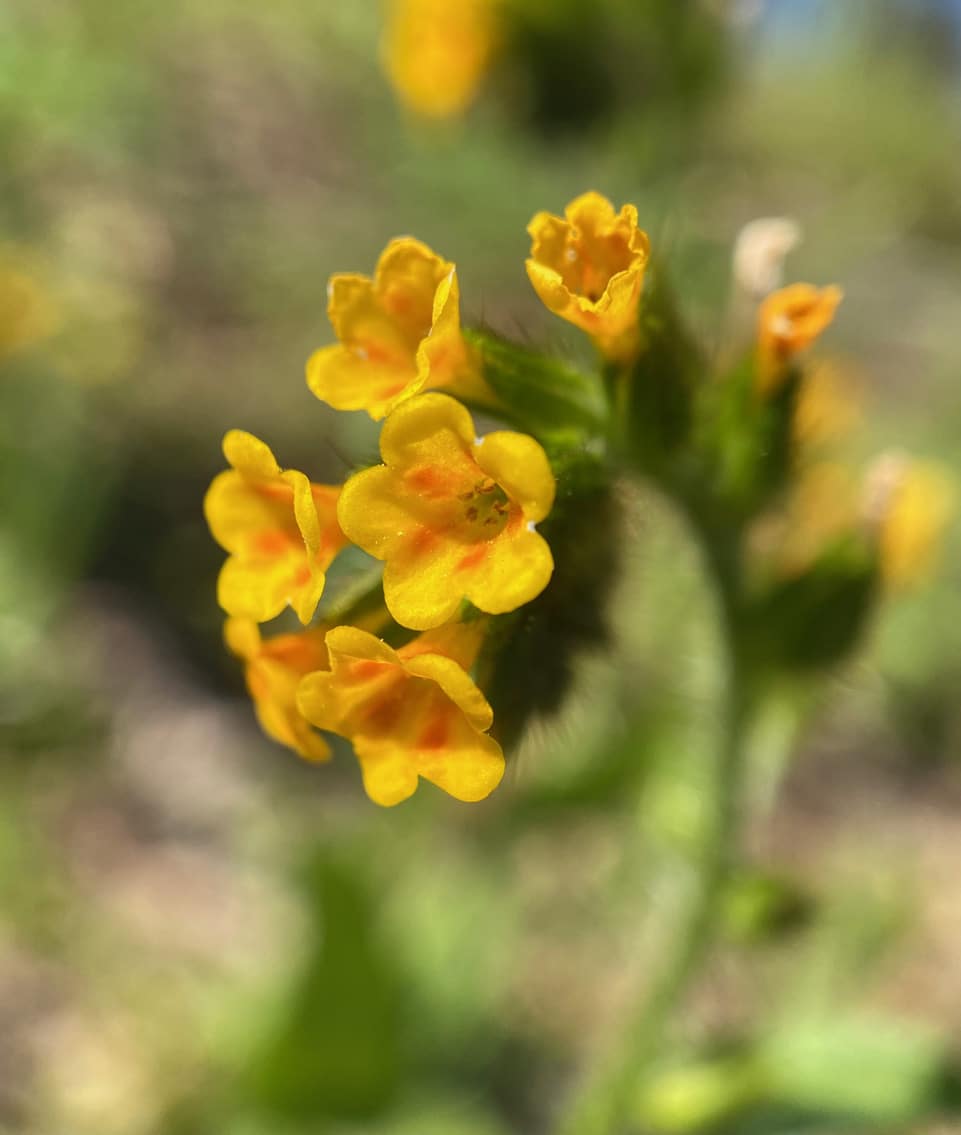
The five petals of Common Fiddleneck are fused into a tube for most of their length, then separating into broadly flaring, rounded lobes. Many of the bright yellow flowers are marked with orange blotches. The small flowers are arranged in a scorpionoid cyme, which unwinds as the flowers open. The flowers require pollinators with long probosces to access nectar through the narrow floral tube. So far I have seen Greater Bee Flies and a Pacific Orangetip butterfly perform that feat.
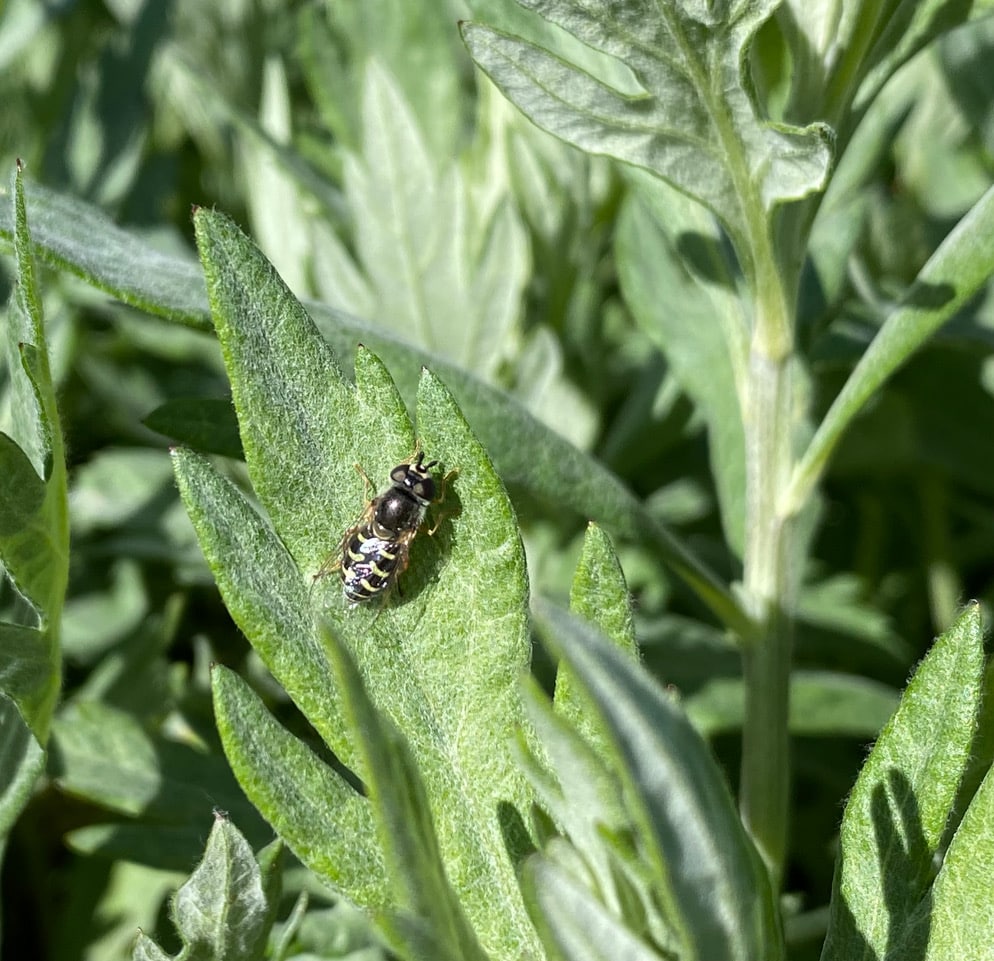
A Hover Fly, Scaeva affinis (family Syrphidae) with black-and-white markings on its abdomen comes to rest on a Mugwort leaf. Adult hover flies visit flowers for nectar and pollen, and are good pollinators. Scaeva affinis has aphidophagous larvae (that feed on aphids). Females lay eggs near aphid colonies on plants. Later this morning, I witness this egg-laying behavior on a Silverleaf Lupine.

A tiny caterpillar, only about 4 mm long is resting on a leaf of Coyote Brush, Baccharis pilularis.
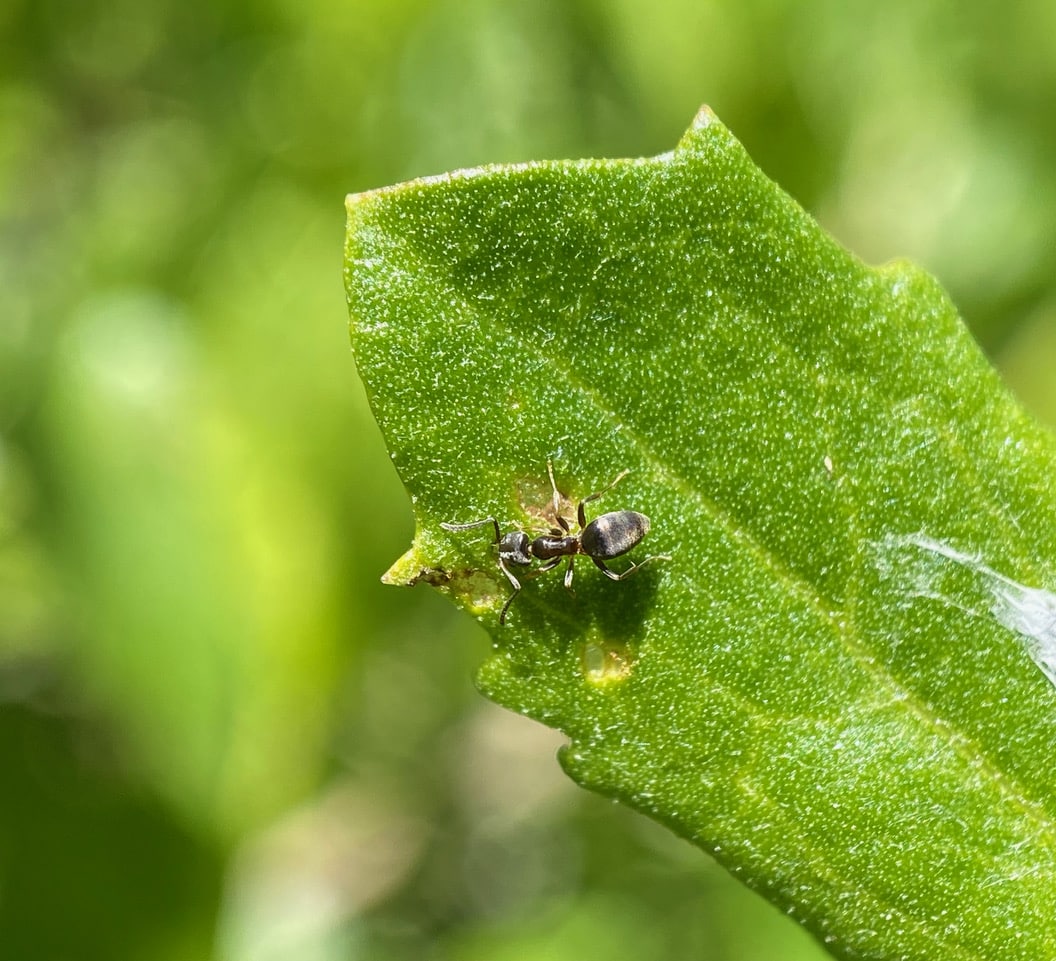
On the same plant, several Odorous House Ants, Tapinoma sessile are foraging, checking on every feeding scar on the Coyote Brush. Are they hunting caterpillars?
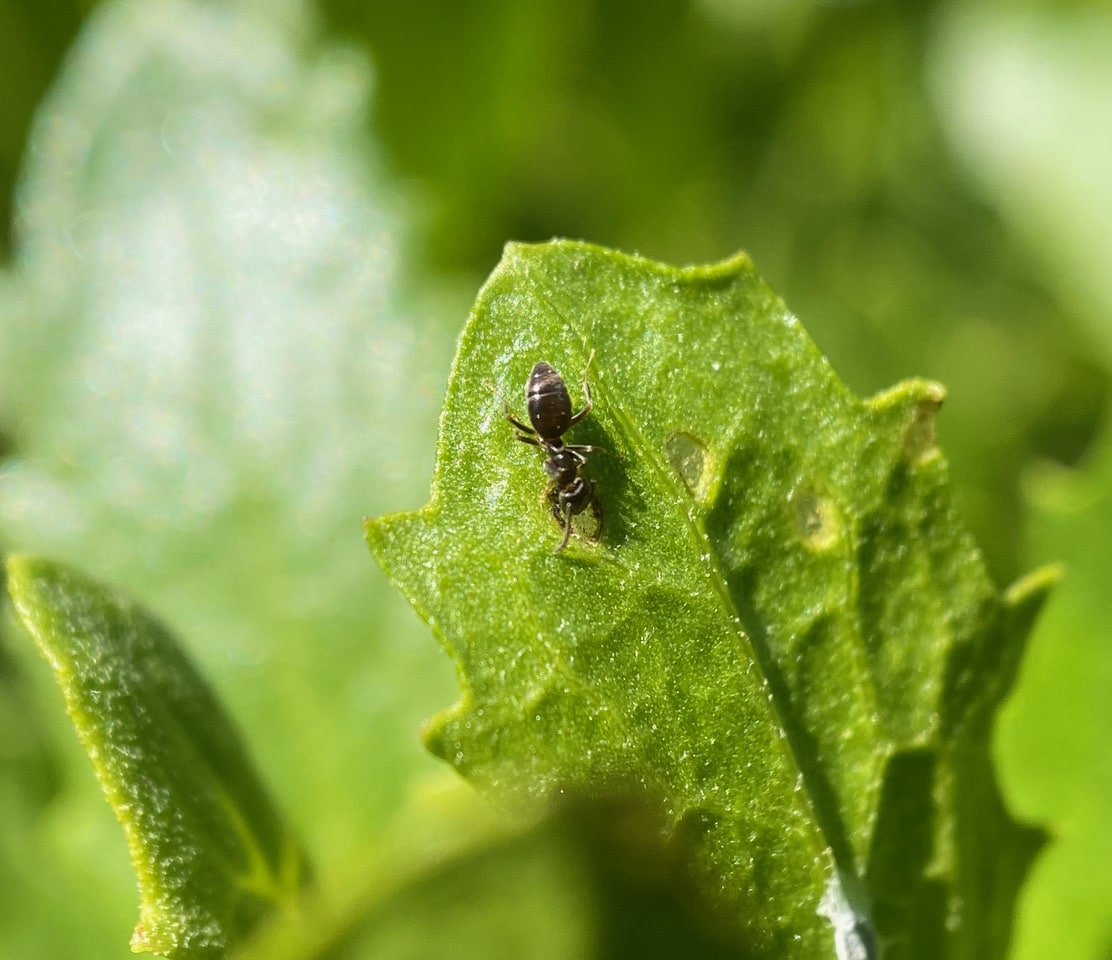
Another ant is intensely investigating the feeding scars on the back of a Coyote Brush leaf.
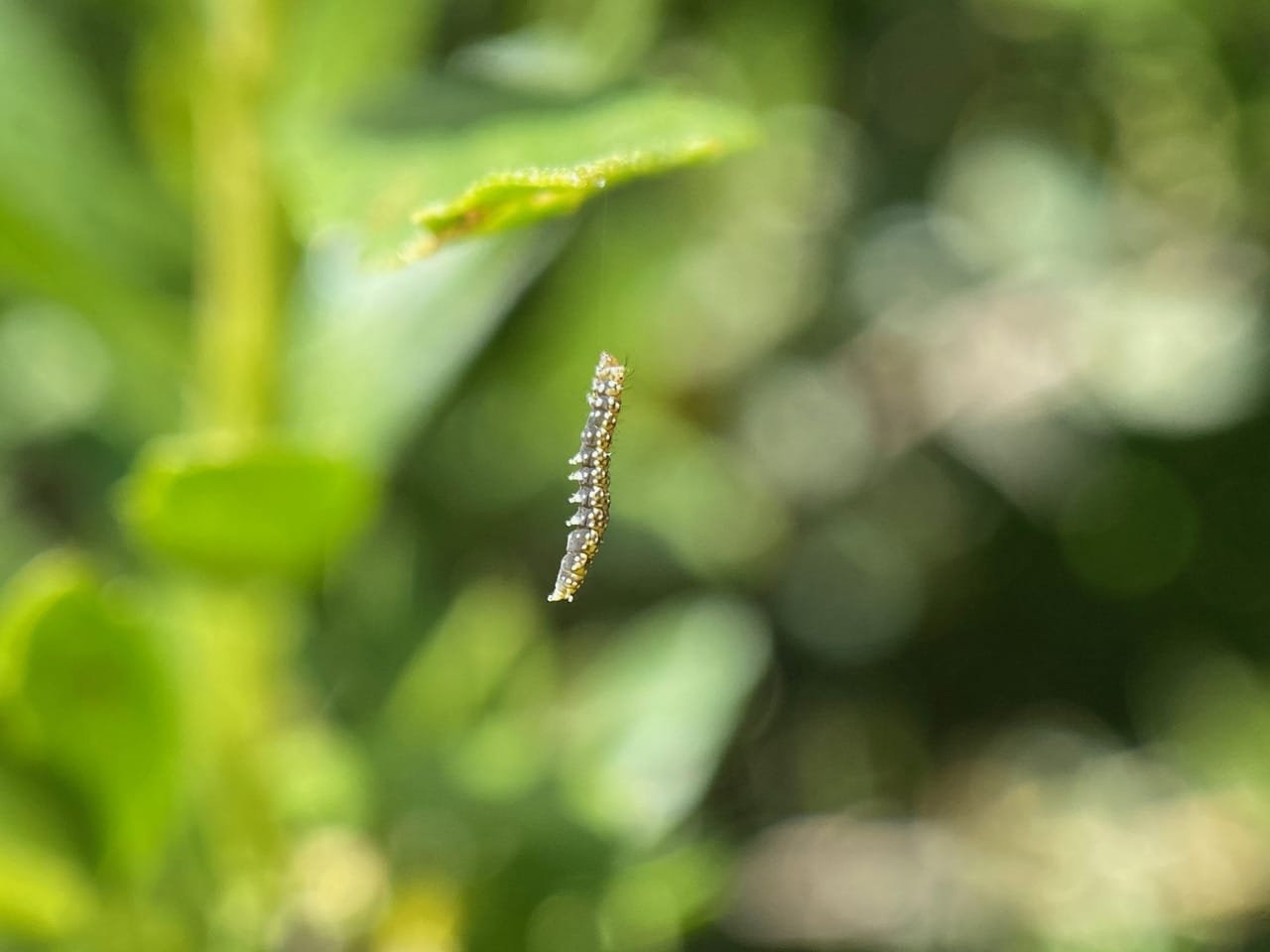
A caterpillar bungee jumps off a leaf, and dangles freely on a strand of silk to escape the ants. When danger is over, it skillfully makes its way back onto the leaf, despite being blown about by brisk winds.
Caterpillars of both moths and butterflies are able to produce silk. Like spiders, they produce silk through a spinneret. This tube-like structure is located on the lower lip of the caterpillar’s mouth. Silk is generated as a liquid in modified salivary glands and secreted through the spinneret. As it makes contact with air, it solidifies into a silk strand. Silk is one of the strongest natural fibers – pound for pound, silk outperforms steel in tensile strength.
Many kinds of caterpillars use a single strand of silk as a “safety line” to anchor themselves to the plant on which they feed. When disturbed, they “spit and jump”, dropping down and hanging from the silk line. When the danger has passed, the caterpillar draws the silk back in and makes its way back to the leaf to resume feeding.
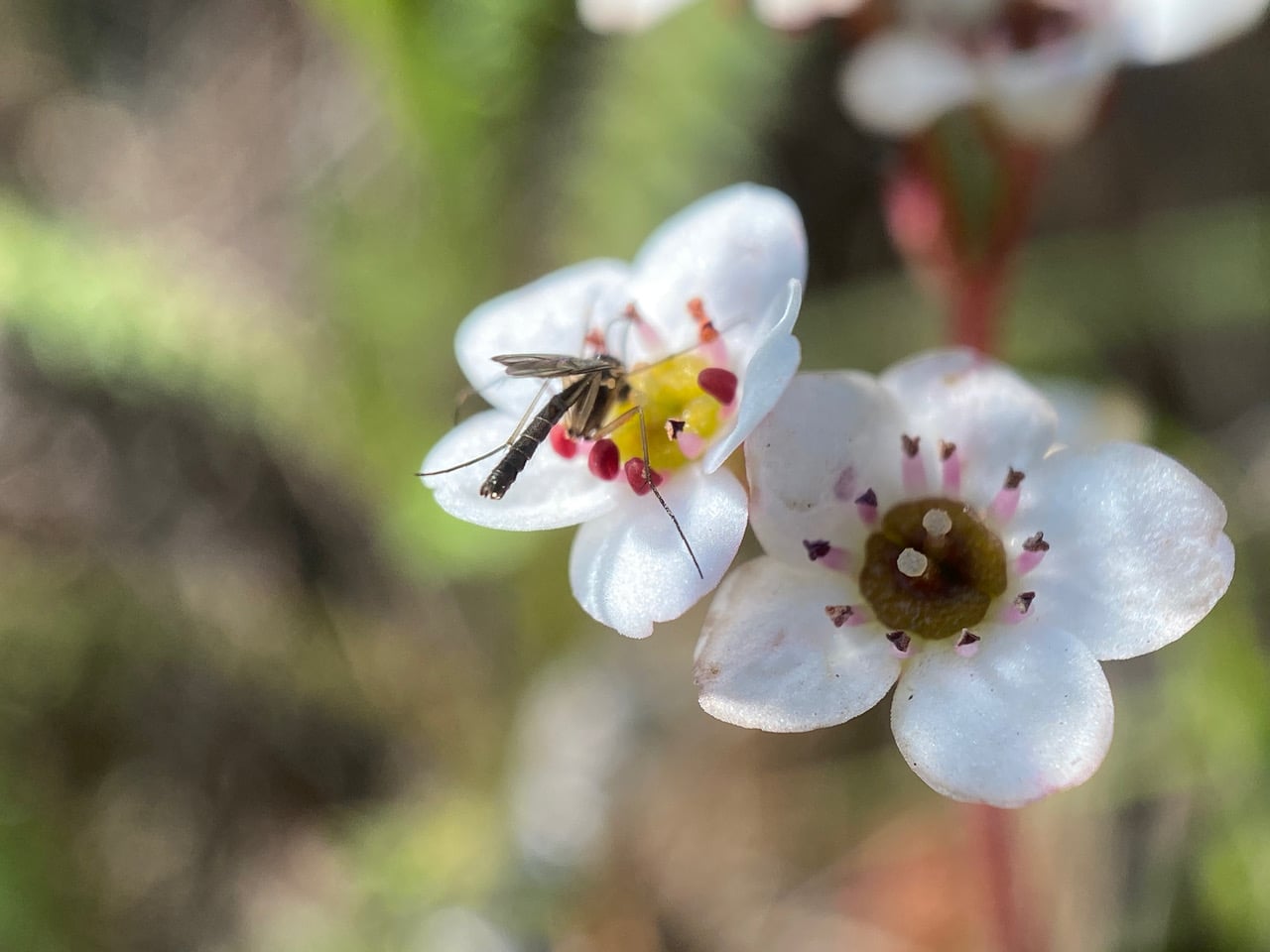
A slender, long-legged midge lands on a flower of California Saxifrage, Micranthes californica, apparently to take nectar.

As the fly takes off, you can see that some pollen has adhered to its legs. Note that the flower is in the process of releasing pollen from the red anthers. The fly appears to be a member of the superfamily Sciaroidea that comprises the Fungus Gnats and Gall Midges. Might these flies serve as pollinators for these small flowers?
The superfamily Sciaroidea comprises the Fungus Gnats (family Mycetophilidae) and Gall Midges (Cecidomyiidae). As nematoceran flies, sciaroid adults generally have long segmented antennae, while their larvae have a well-developed head and mouthparts. Most fungus gnats live in forests with their larvae occurring in fungi, dead wood and soil. The larvae of Mycetophilids form plant galls.

More and more of the whimsical disc-like fruits are appearing on the slender stalks of Fringe Pod, Thysanocarpus curvipes. So far I have not seen any insect visitor to the plant.