

Pollinator Post 4/12/24 (3)

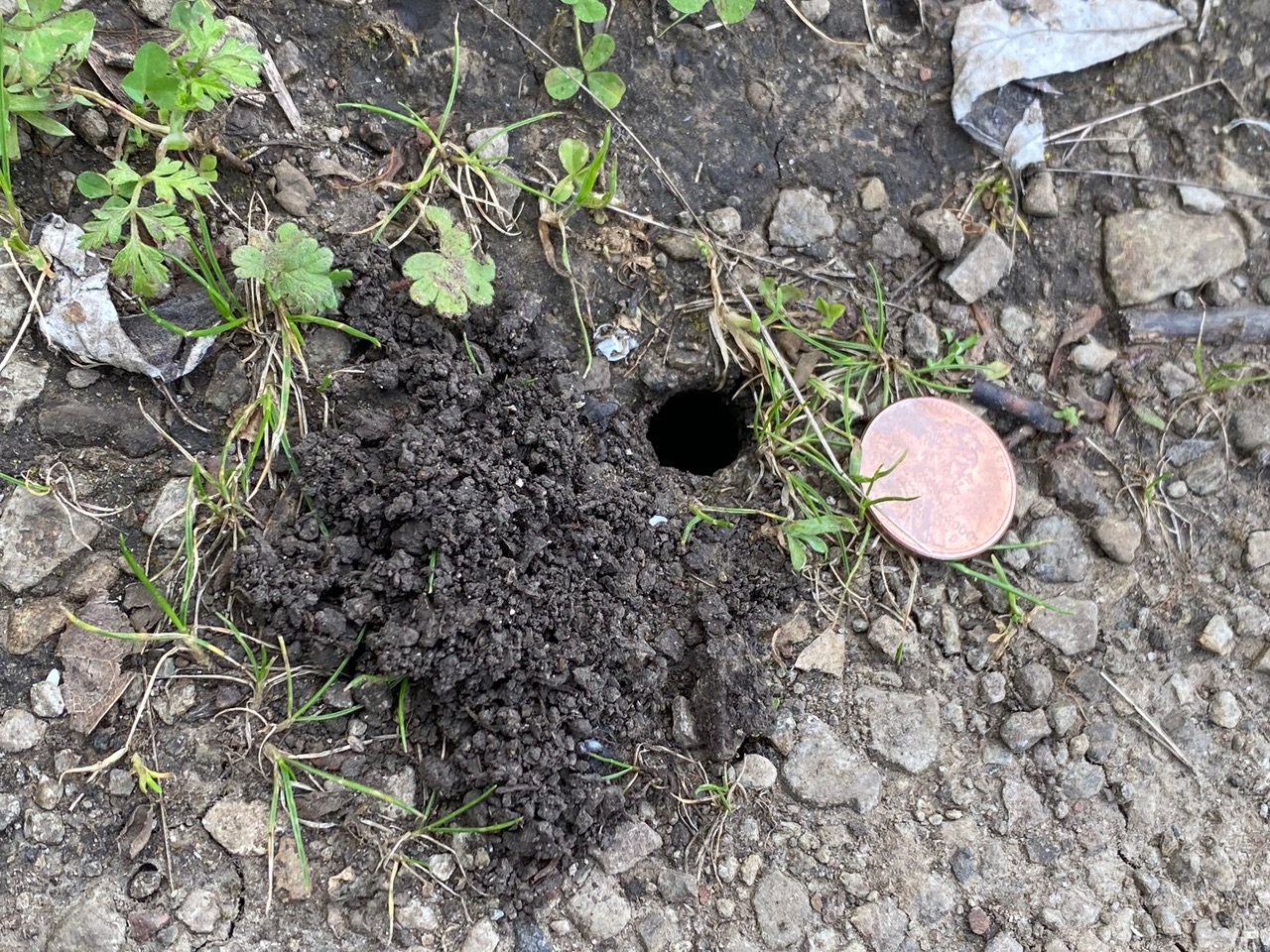
There are small, uniform holes on the side of the trail. They appear to be recently excavated, considering the darker soil that has been brought up. I place a penny down for scale.
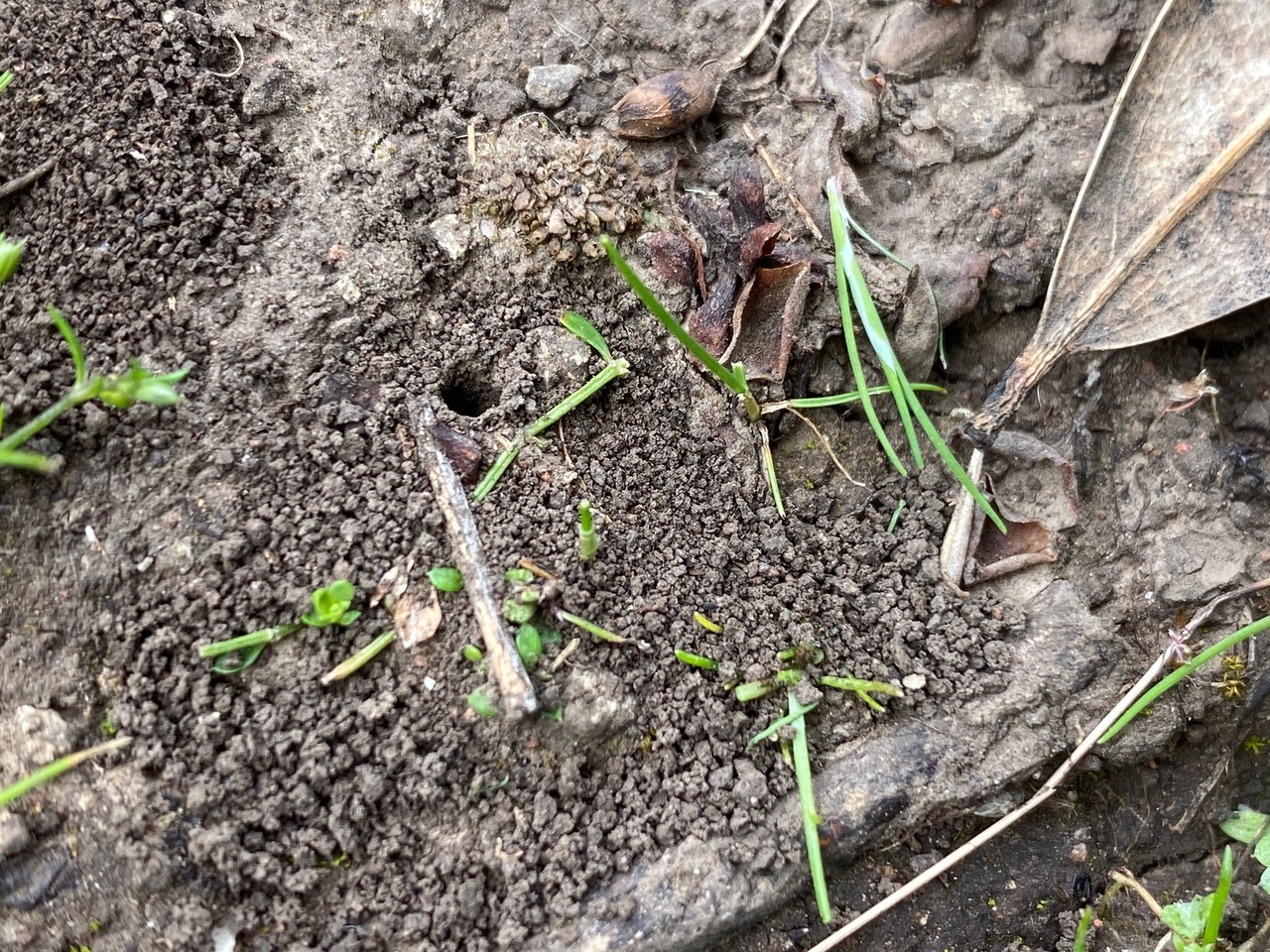
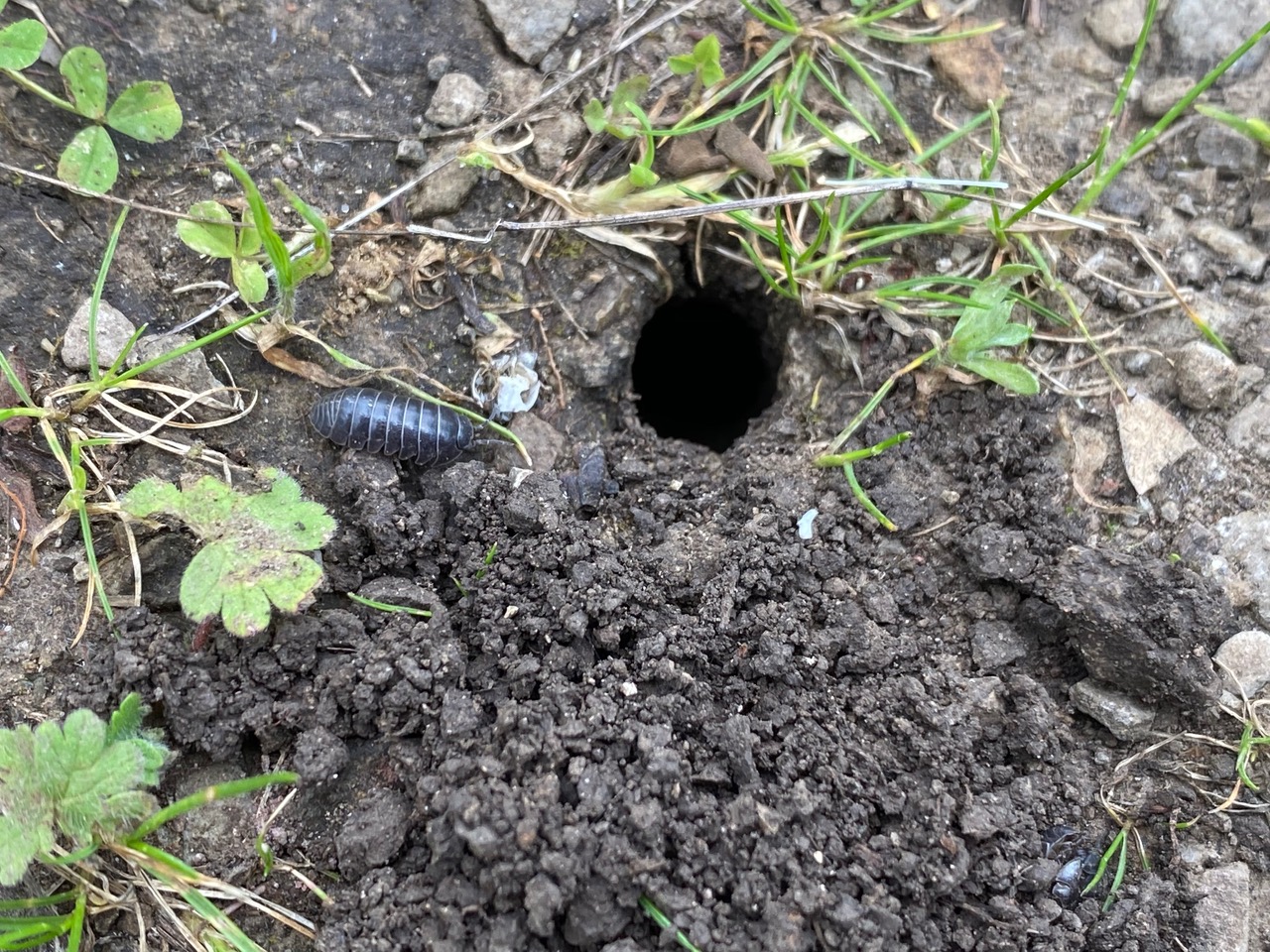 A Common Pillbug trundles along merrily towards the hole, but then decides to turn away. Wise move – pillbug body segments make up a good portion of the midden around the burrow!
Here’s one of the holes with a low tumulus on the rim. Could it be the nest entrance of a ground-nesting bee, such as the Mining Bees (family Andrenidae). These small, slim, wasp-like bees have been busy visiting our early wildflowers. Surely the females must have established some nests? Did the bee cut up the plant materials around the hole? (I didn’t disturb the spot at all.) I mark the spot so I could return for future observations. When we step off the trail, we risk destroying these bee nests.
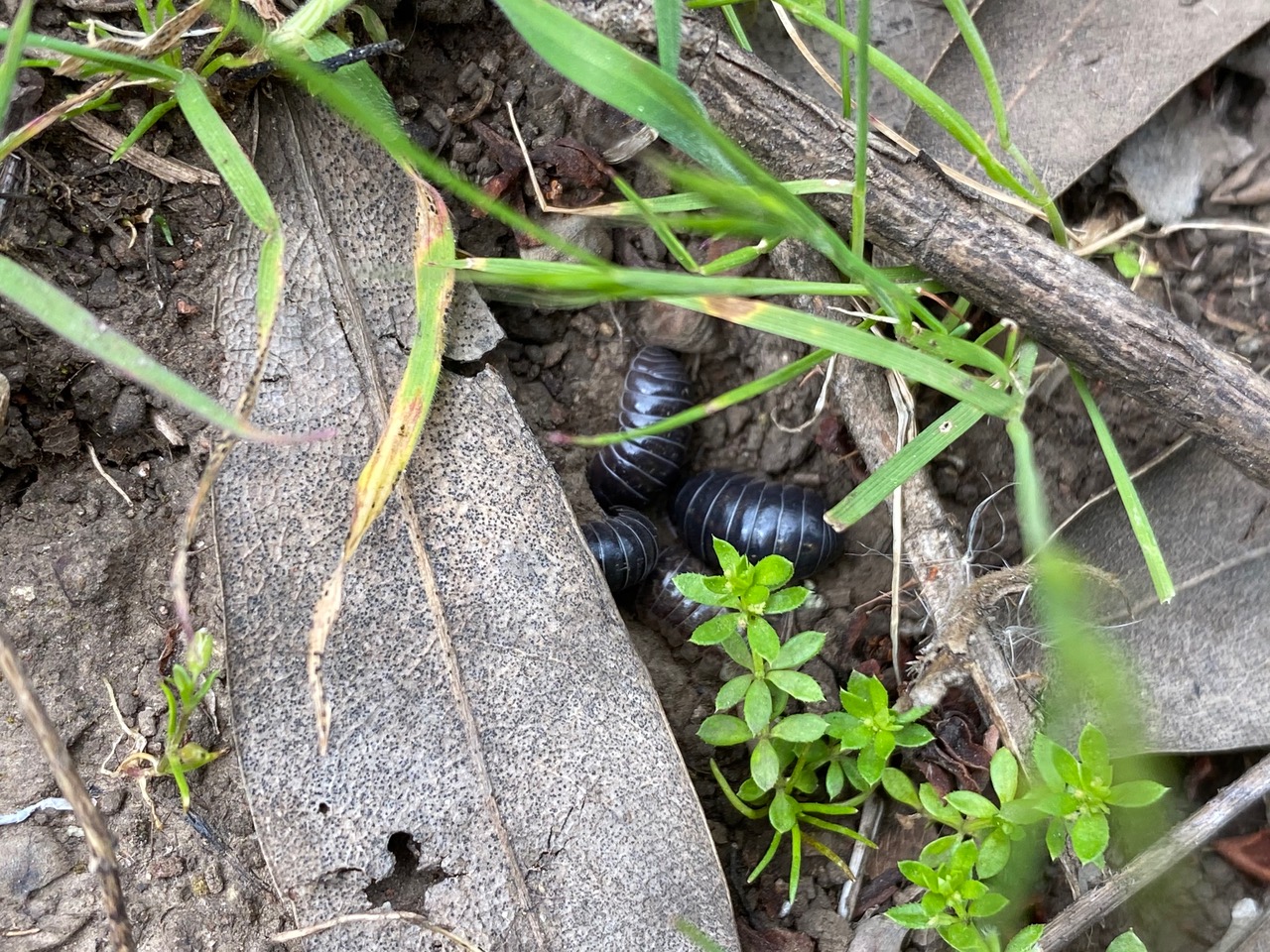
Nearby, some Pillbugs are resting under the leaf litter.
The Common Pillbug, Armadillidium vulgare, is an isopod, a type of non-insect arthropod also known as a terrestrial crustacean. It is sometimes called a roly-poly due to its ability to roll into a ball when disturbed. This defensive behavior makes it look like a pill, hence the name pillbug. Pillbugs are nocturnal, though they may be found during the day in the soil or under debris. Pillbug feed mainly on decaying plant leaves and other decomposing materials. They serve a vital function in the ecosystem as decomposers and recyclers.
Like crabs and other crustaceans, pillbugs tote their eggs around with them. Overlapping thoracic plates form a special pouch, called a marsupium, on the female’s underside. Upon hatching, the tiny juvenile pillbugs remain in the pouch for several days before leaving to explore the world on their own. When born, pillbug young have only six pairs of legs. They get the seventh pair following their first molt.
Further along Skyline Trail, I come across a bigger hole. The owner seems to have done some house cleaning after the last rain, piling wet soil and small bits of insect exoskeleton outside the entrance. I look for traces of spider silk around the entrance hole, but don’t see any.
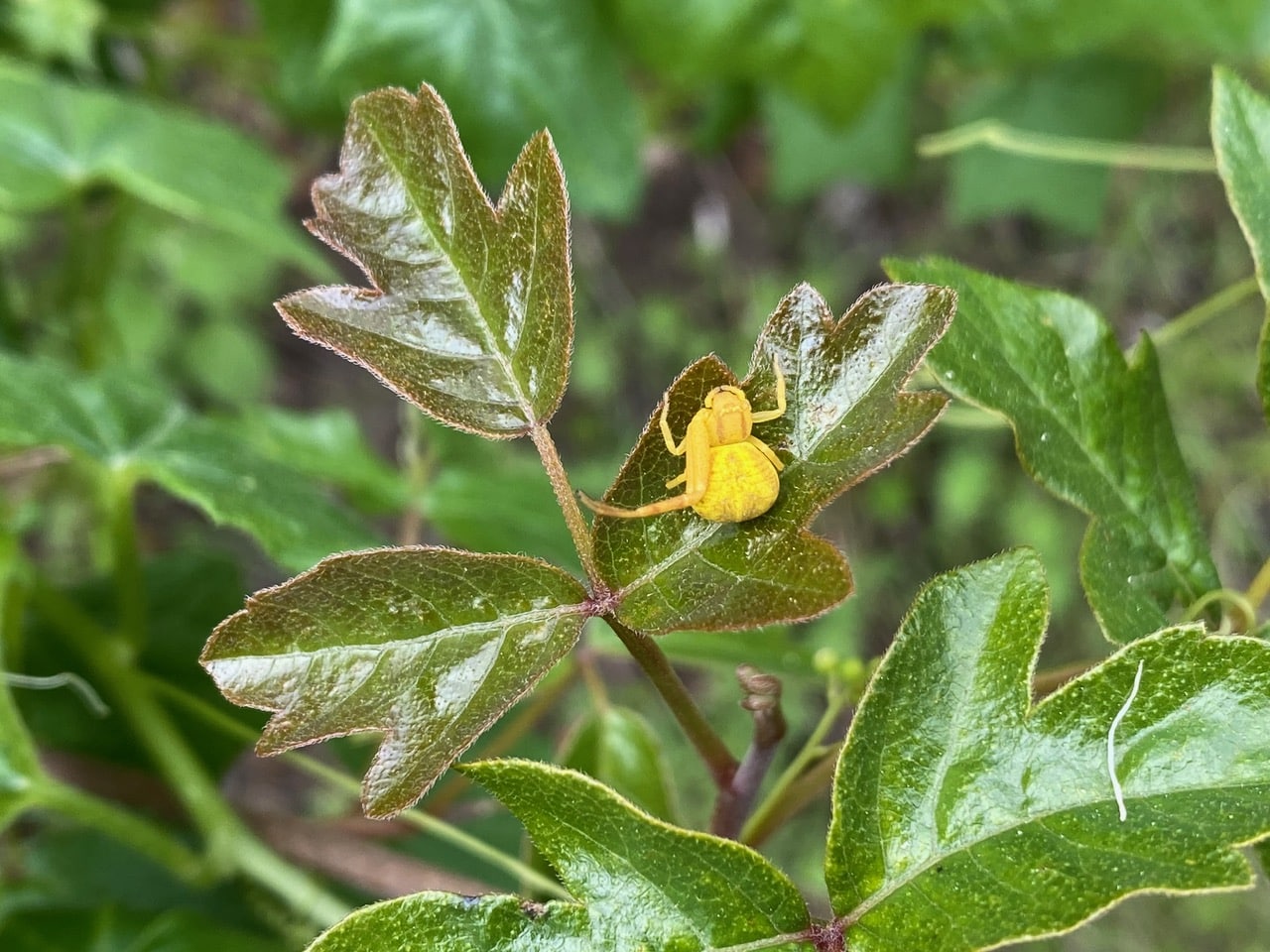
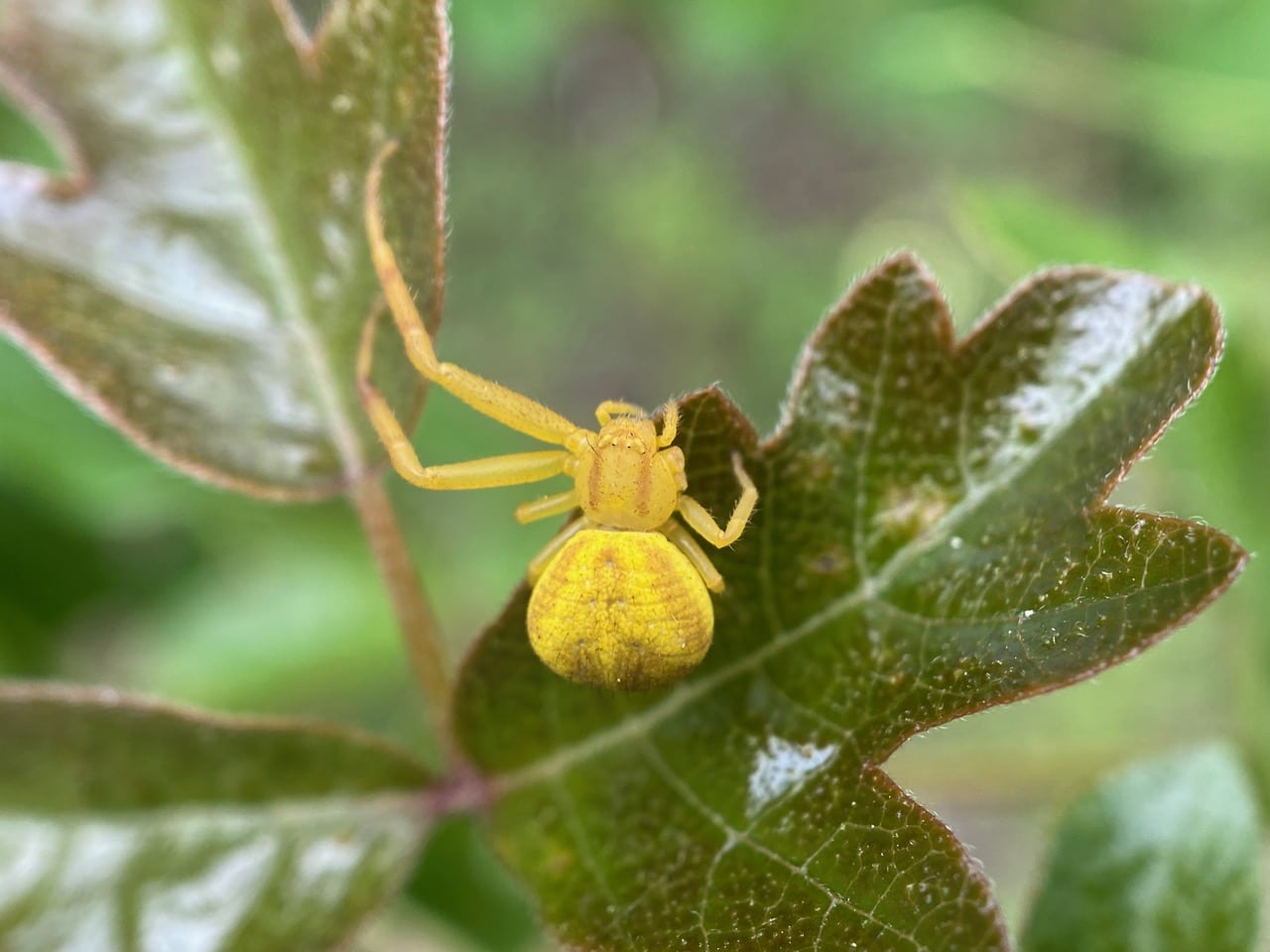
A Common Pillbug trundles along merrily towards the hole, but then decides to turn away. Wise move – pillbug body segments make up a good portion of the midden around the burrow! A bright yellow Goldenrod Crab Spider, Misumena vatia (family Thomisidae) is resting on a young Poison Oak leaf.
As the spider stretches its front legs forward, I realize that she is missing those legs on the right side. Wow, that’s startling. Did she lose those legs in a struggle with a prey? She is already an adult, and won’t be undergoing anymore molts. There’s no chance of her regenerating those lost limbs. How will she hunt? It goes to show that the life of a predator is not an easy one.
A spider’s body is covered in a hard outer skin known as an exoskeleton. As the spider matures it has to shed its skin to allow for growth. A spider can go through 20 or more molts before it reaches its full, adult size. Not only does the shedding allow for growth, but it also allows for regeneration. It a spider loses a leg, it is able to grow a new leg provided it still has at least one more molt left in its life cycle. In most species the new leg is thinner and shorter than the original leg. It can take two or three molts until the regenerated limb matches the original in appearance.
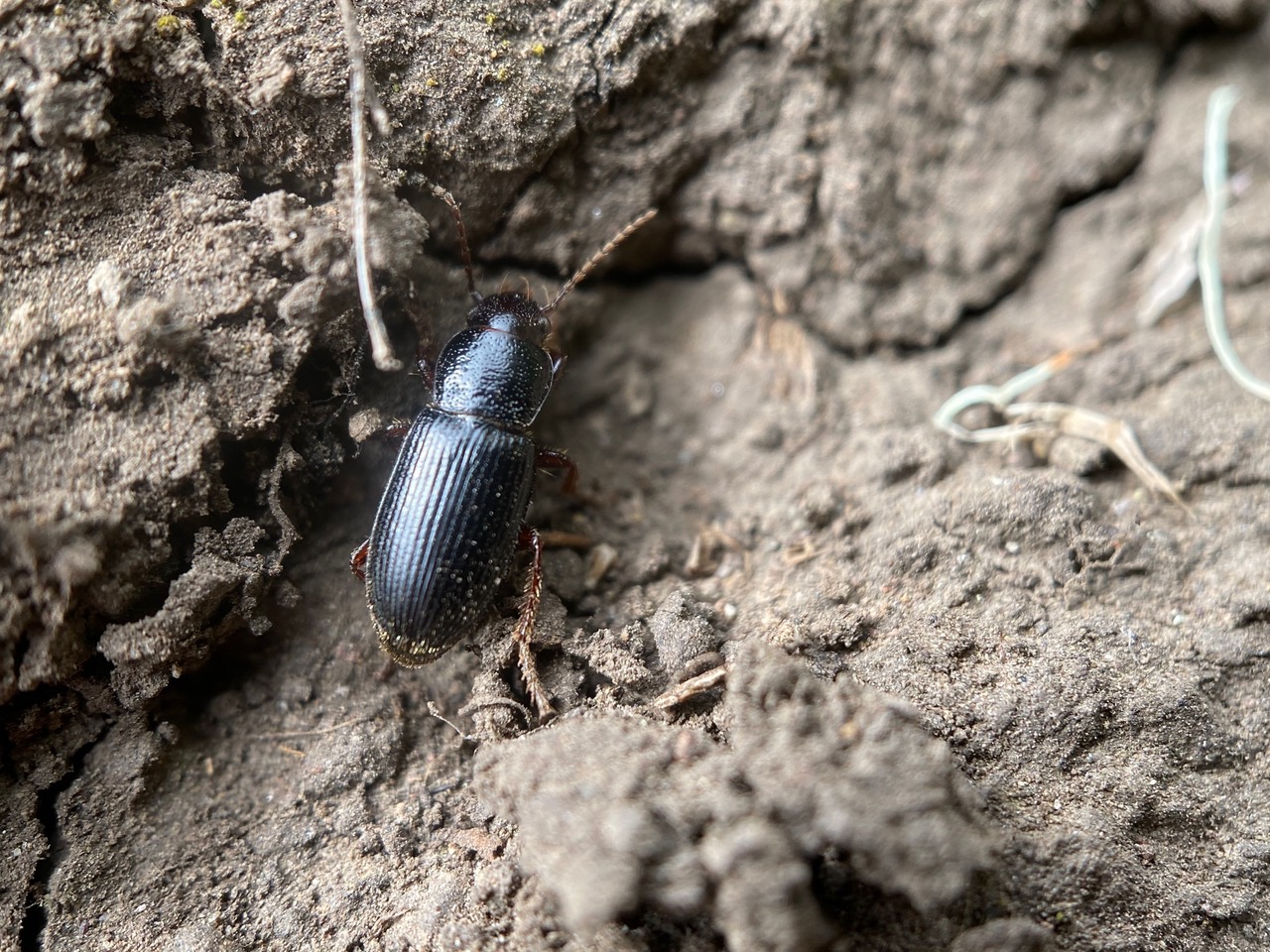
A Ground Beetle (family Carabidae) on the trail runs away from my camera. Many Carabids have fused elytra, and are flightless.
Ground Beetles are a large, cosmopolitan family of beetles with more than 40,000 species worldwide. It is one of the most species-rich animal families. The beetles are commonly found under the bark of trees, logs, or among rocks. Most species are carnivorous and actively hunt for any invertebrate prey they can subdue. They are common in crops, gardens, landscapes, and woodlands. Adults are mostly night-active, ground-dwellers. However, adults of some species will climb plants during the night to feed on caterpillars and immatures of other insects. As predators of many pests, most ground beetles are considered beneficial insects. Adult females lay eggs individually in soil. After hatching, larvae develop through four increasingly larger instars. Most species pupate in a cell they form in soil, commonly several inches beneath the surface. Most species complete their life cycle from egg to adult in about 1 year.