

Pollinator Post 4/11/ 25 (2)
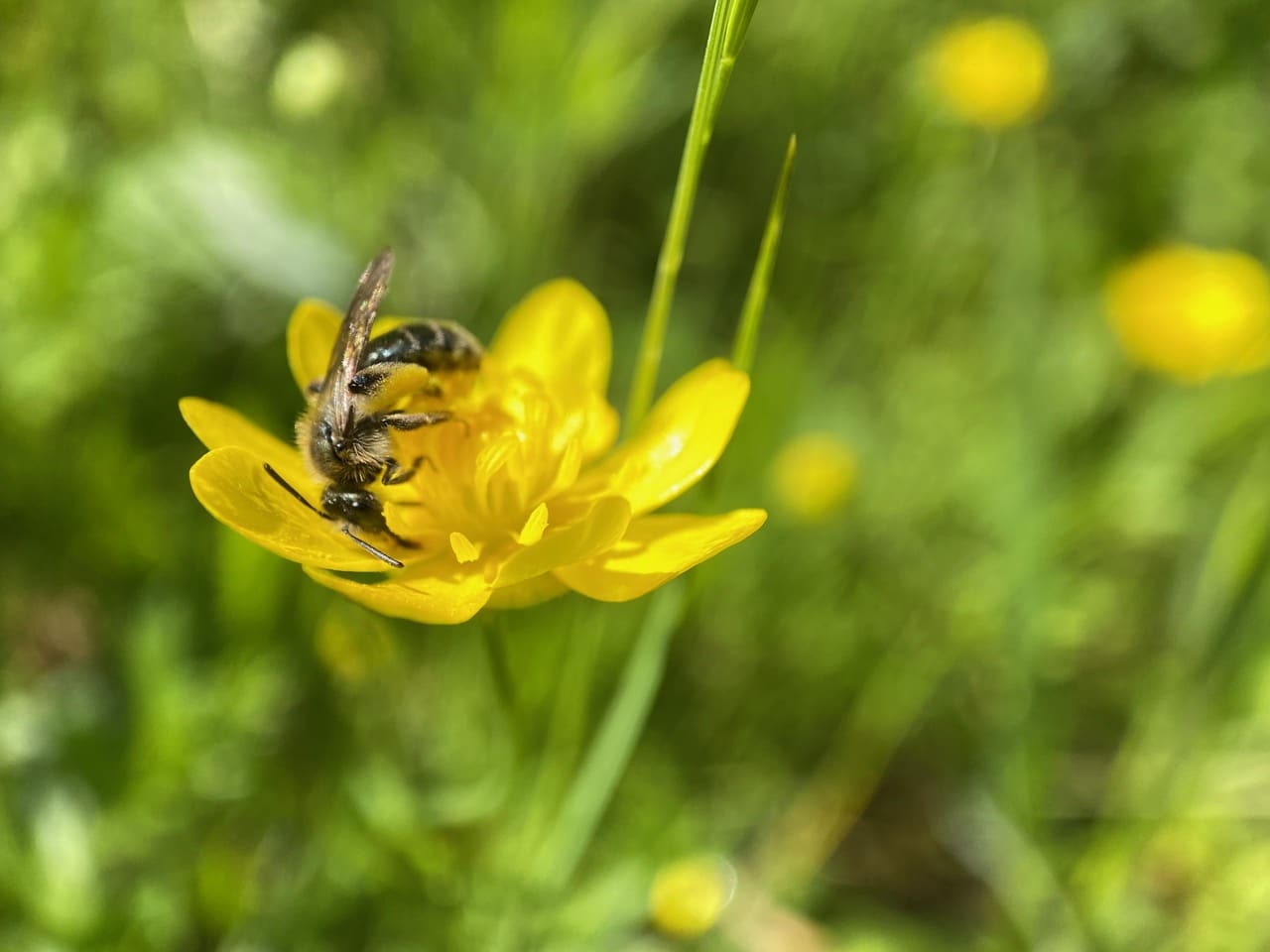 Many female Miner Bees, Andrena sp. (family Andrenidae) are out and about foraging on the California Buttercup flowers, Ranunculus californicus. Their modus operandi is by now very familiar to me. Pivoting in one direction atop the stamens, the female Andrena scrapes off pollen from the anthers with fast movements of her legs. Simultaneously, she lowers her head to probe for nectar at the base of each petal.
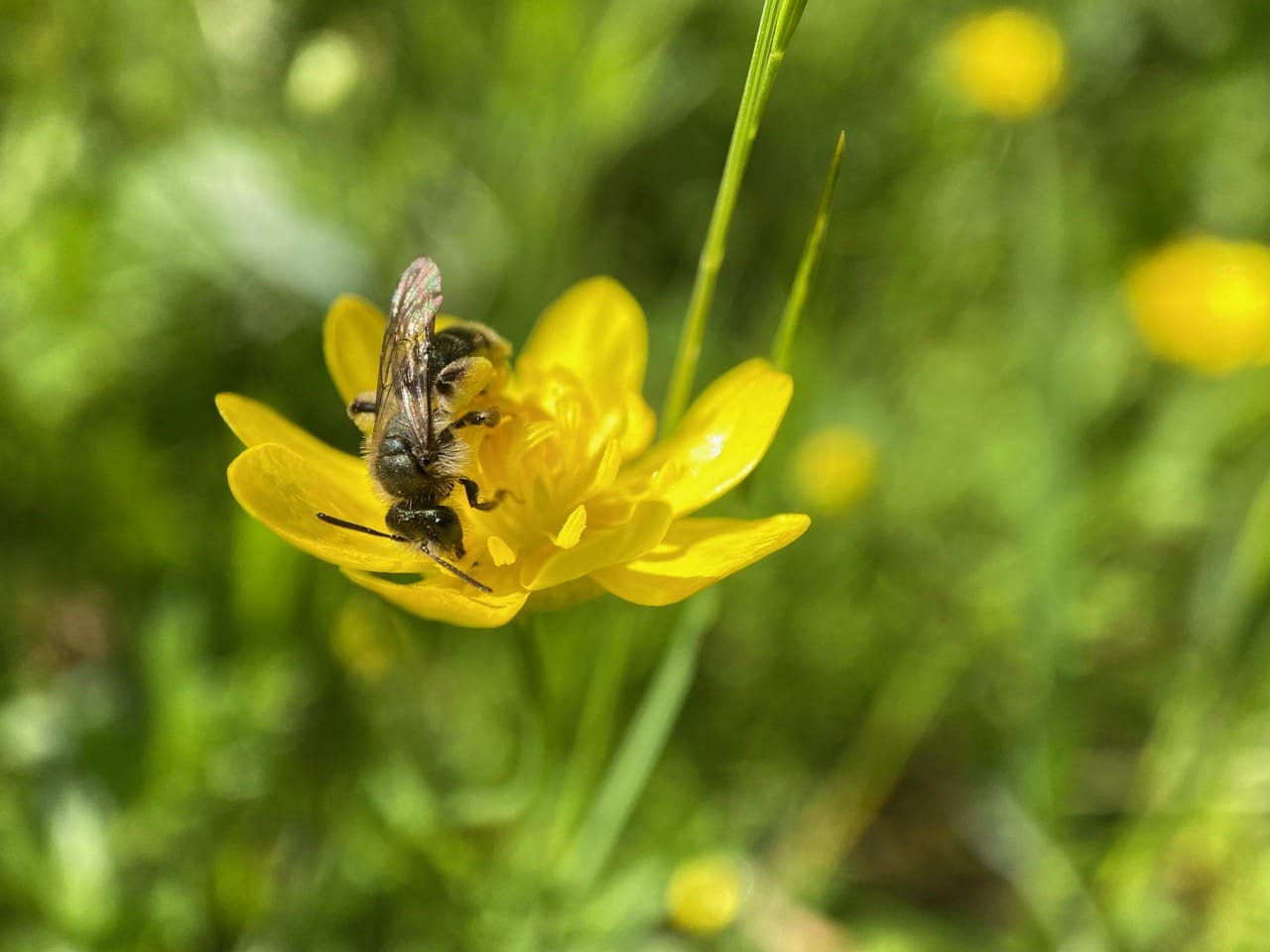
The foraging behavior is so typical across the female Andrena individuals, I wonder if the species isn’t a specialist on Buttercups, Ranunculus sp.
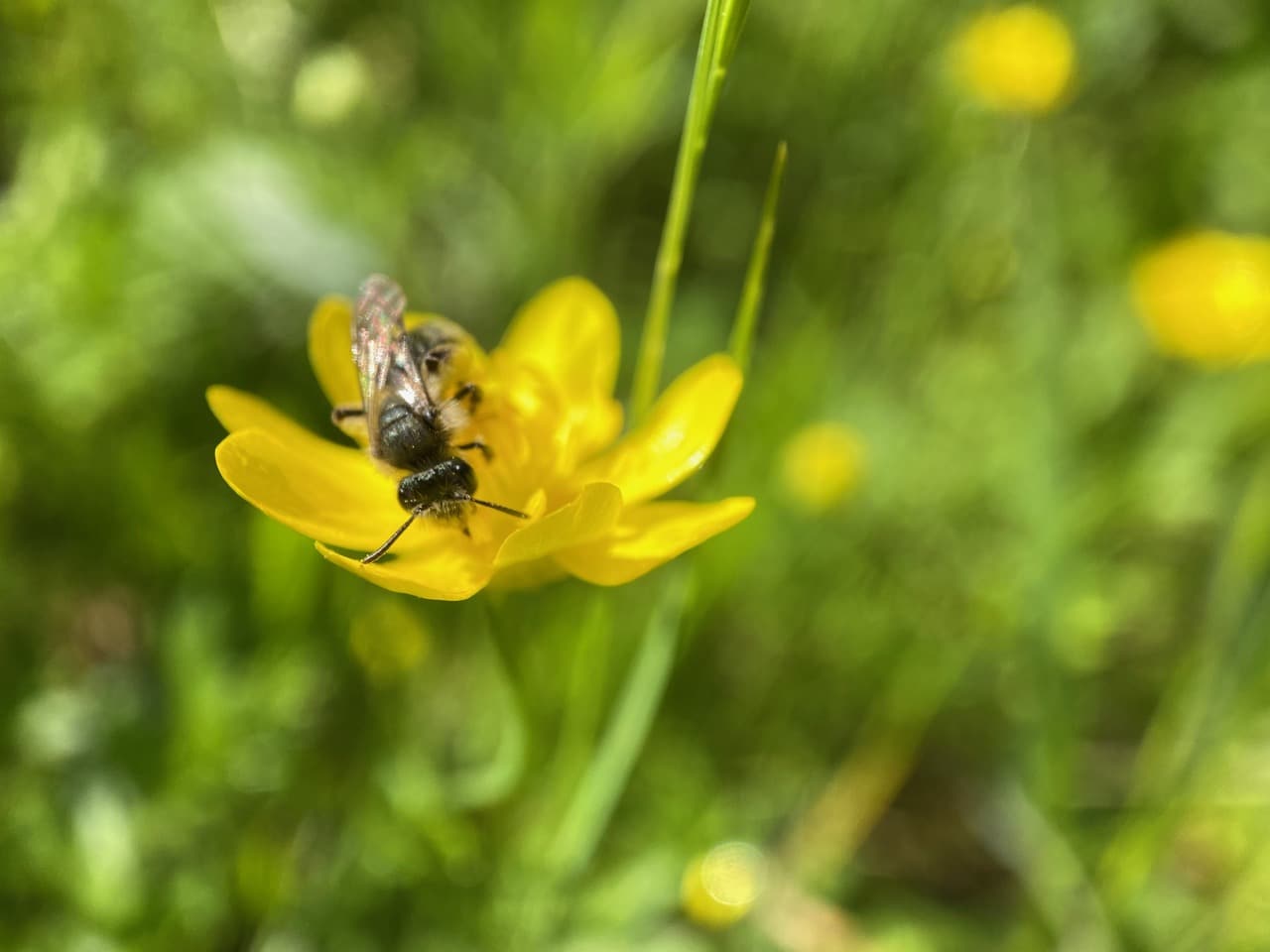
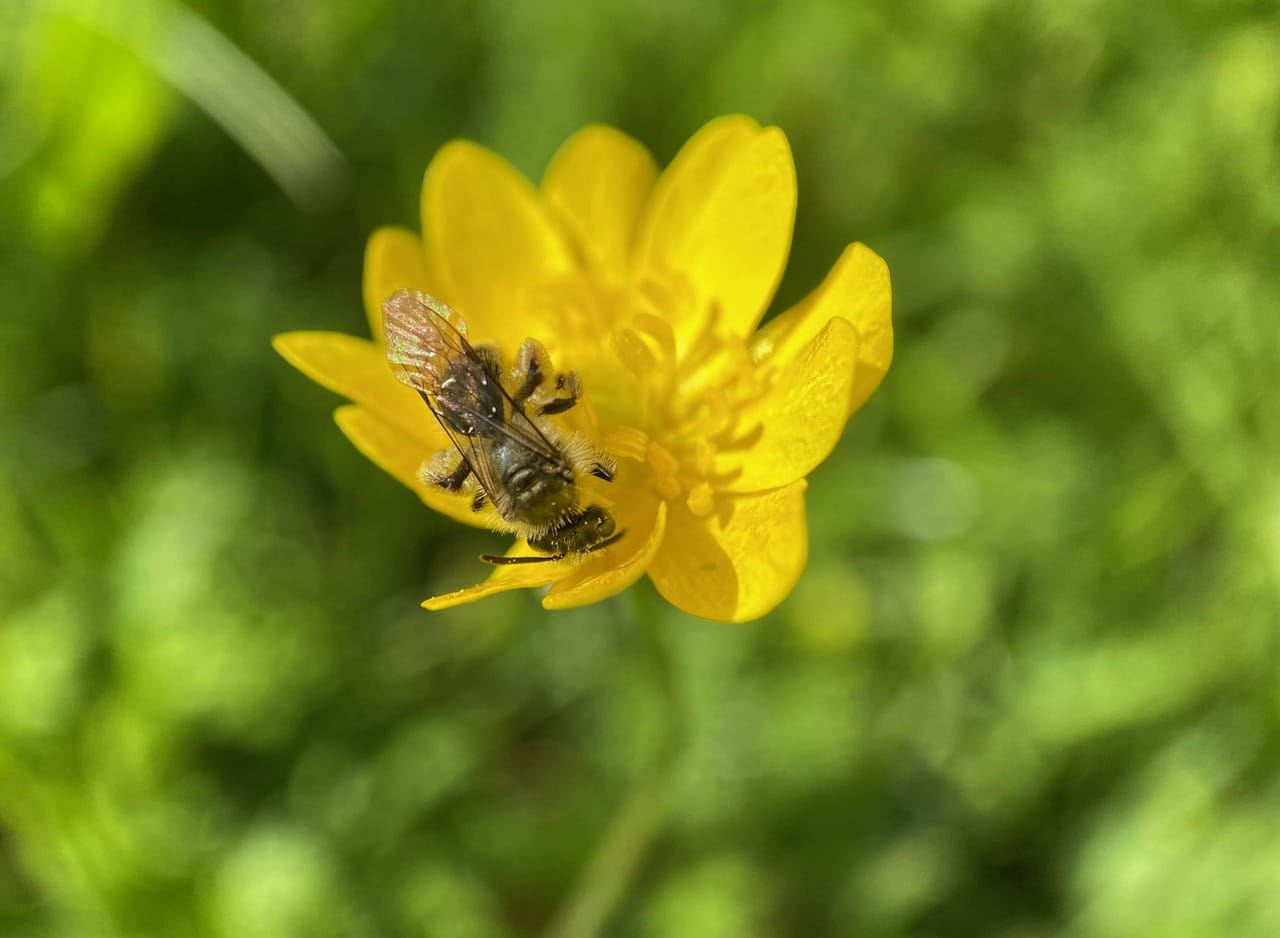
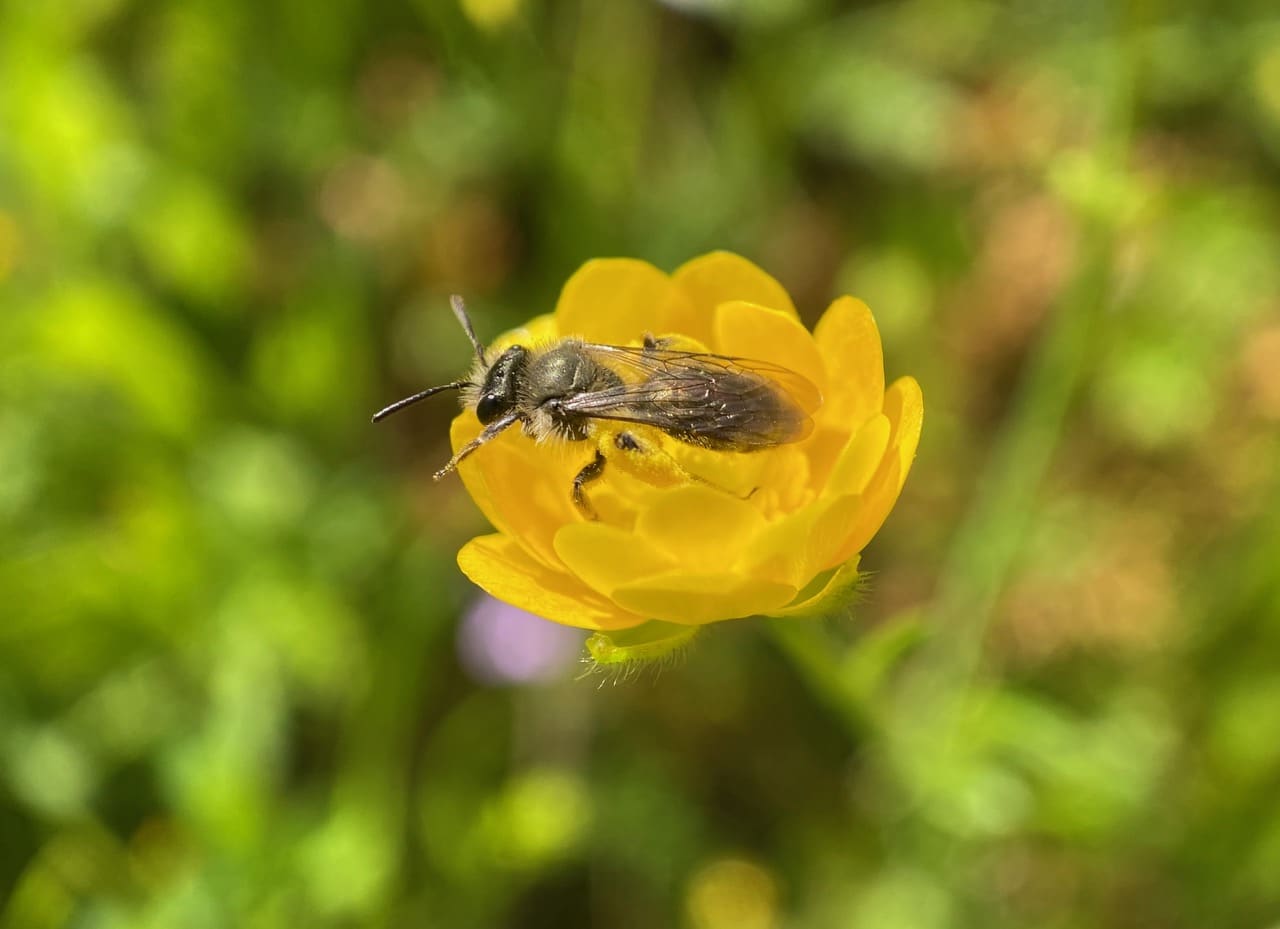




Bees in the family Andrenidae, commonly called miner bees or mining bees, are solitary ground-nesters. Andrenids are fairly small bees, usually dark-colored, and often banded. They are identified by the dense bristles (scopae) at the bases of the legs and the shin-like sections (tibias) of the legs, as well as by certain creases and grooves on the face and head and by unique wing venation. Many Andrenids resemble wasps – slender with long abdomen.
Most andrenids are specialist pollinators whose life cycle is timed to correspond precisely to the blooming of specific flowers.
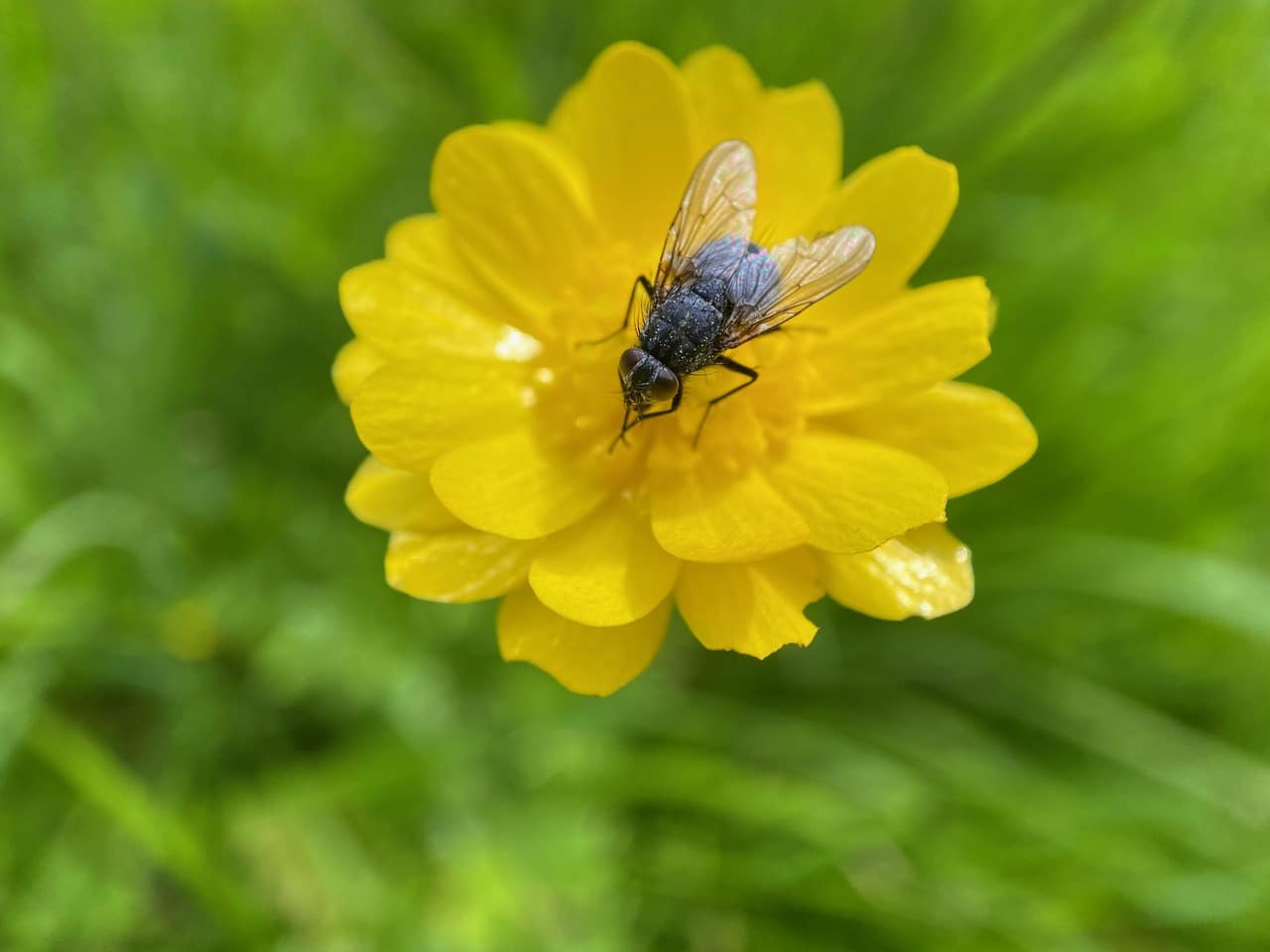
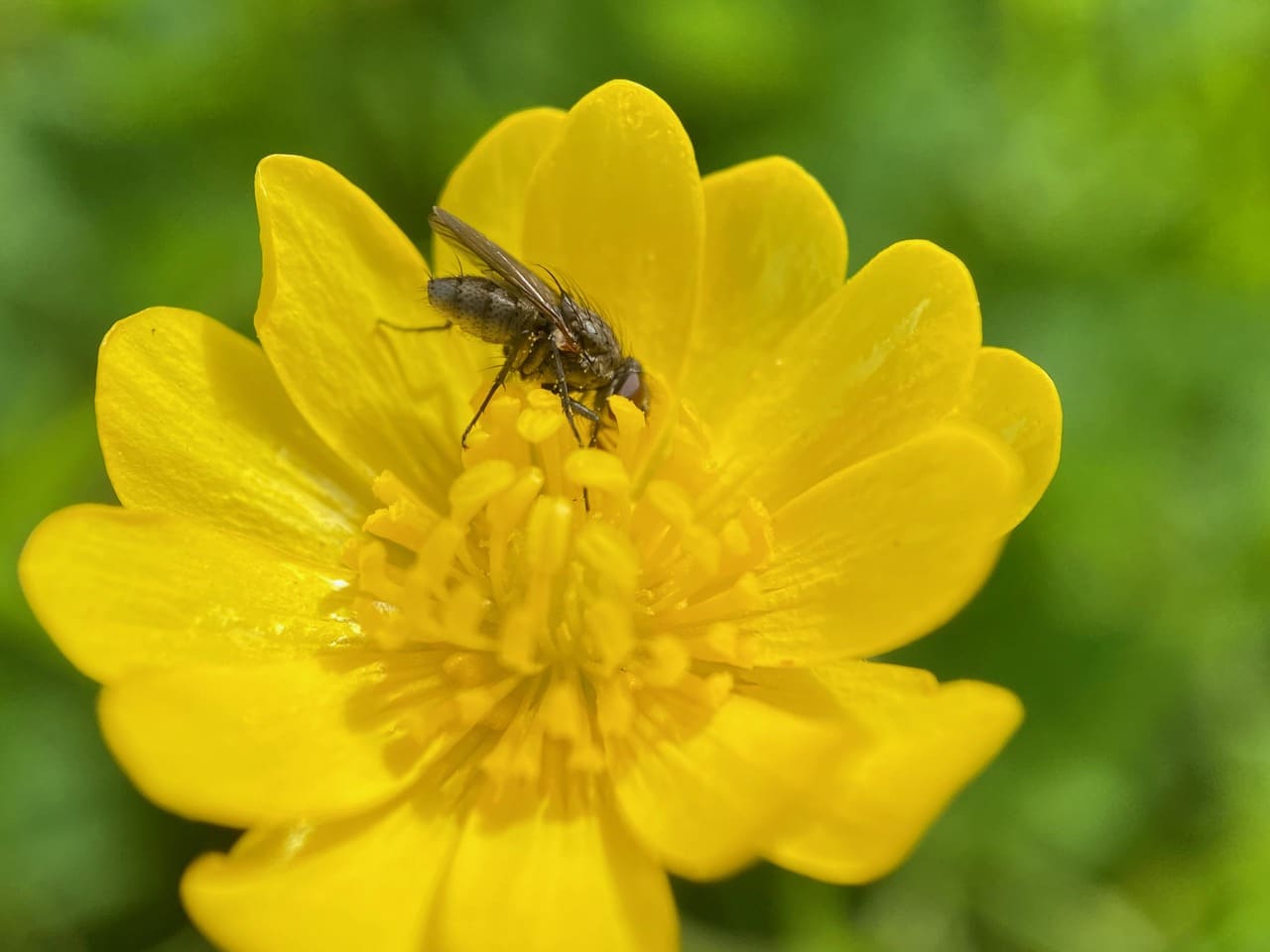
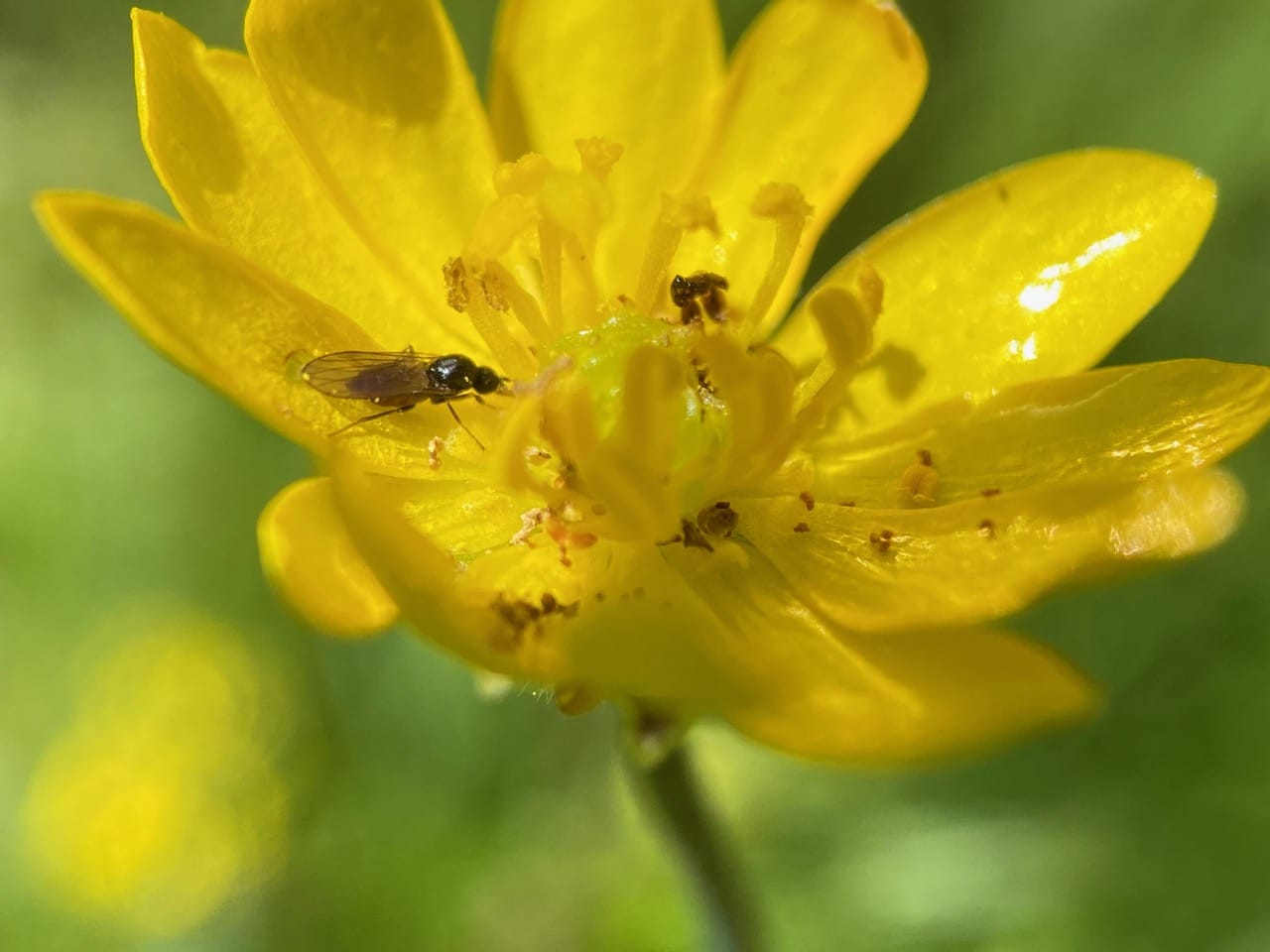
An unidentified fly is partaking of the nectar and pollen feast offered by the buttercup flower.
I never tire of watching the female Miner Bees, Andrena sp. (family Andrenidae) work the buttercup flowers. Hopefully one day someone would provide definitive identification of the species.
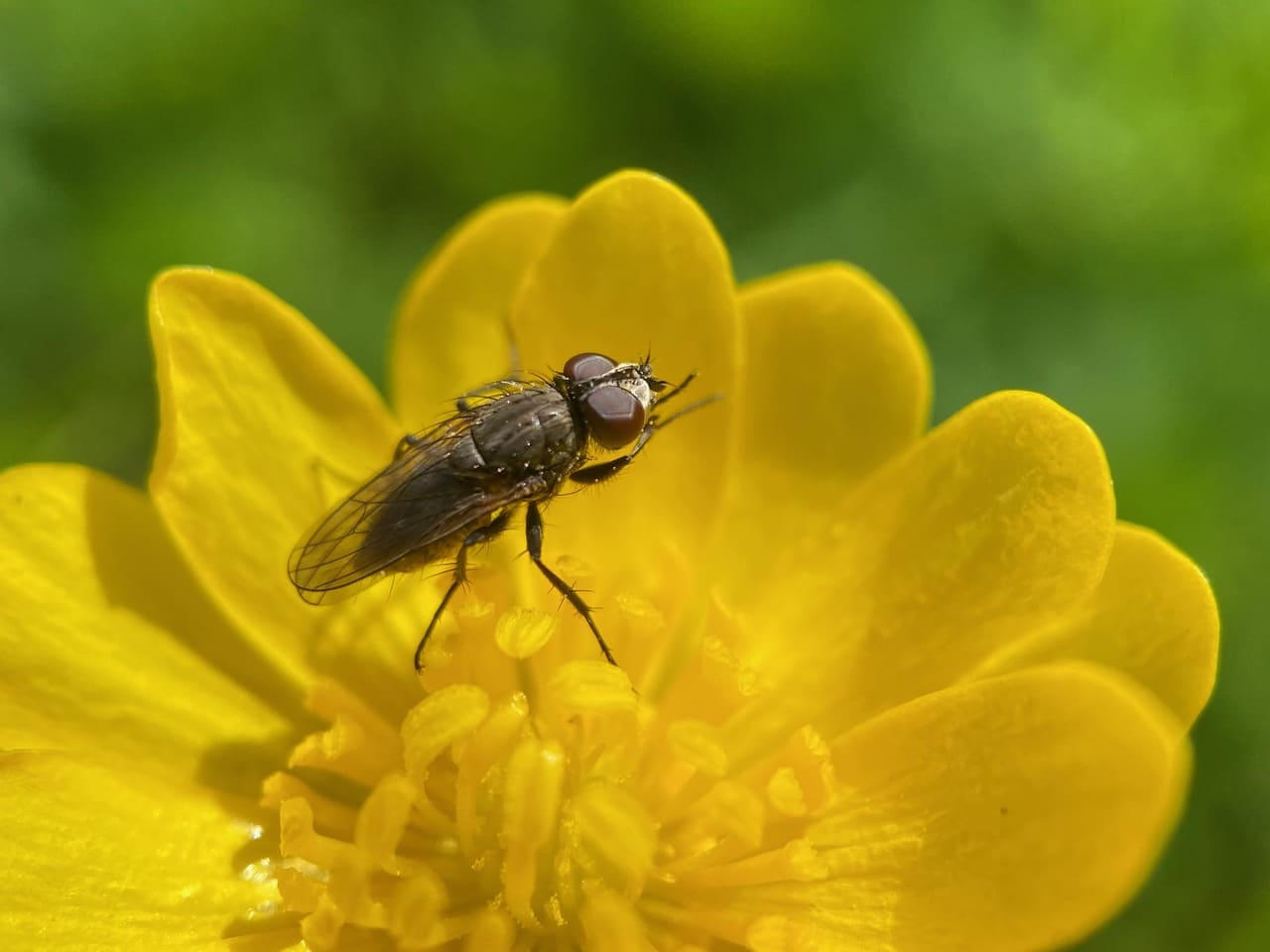
A fly is probing for nectar at the base of a buttercup petal.
iNaturalist has helped identify it as a Root-maggot Fly, Leucophora sp. (family Anthomyiidae).
Antho- is a prefix derived from the Greek anthos for “flower”. So why aren’t these flies called flower flies instead of the dreadful common name they have been given? The name flower flies are sometimes used for members of the hoverfly family, Syrphidae.
Members of the family Anthomyiidae are commonly called Root-maggot Flies. They are small to medium-size flies that resemble house flies but are somewhat more slender. They are usually dull gray or black and silver in color. The larvae typically feed in stems and roots of plants. Many are considered crop pests, and may attack root crops such as onions or rutabagas. Other species may feed on decaying matter, on feces, or are predators of other insects. Adult flies are important pollinators, usually feeding on nectar and pollen.
The scopae on her hind legs and her “arm pits” (propodeal corbiculae) filling up with yellow pollen, a female Miner Bee, Andrena sp. is hard at work on a young buttercup flower.
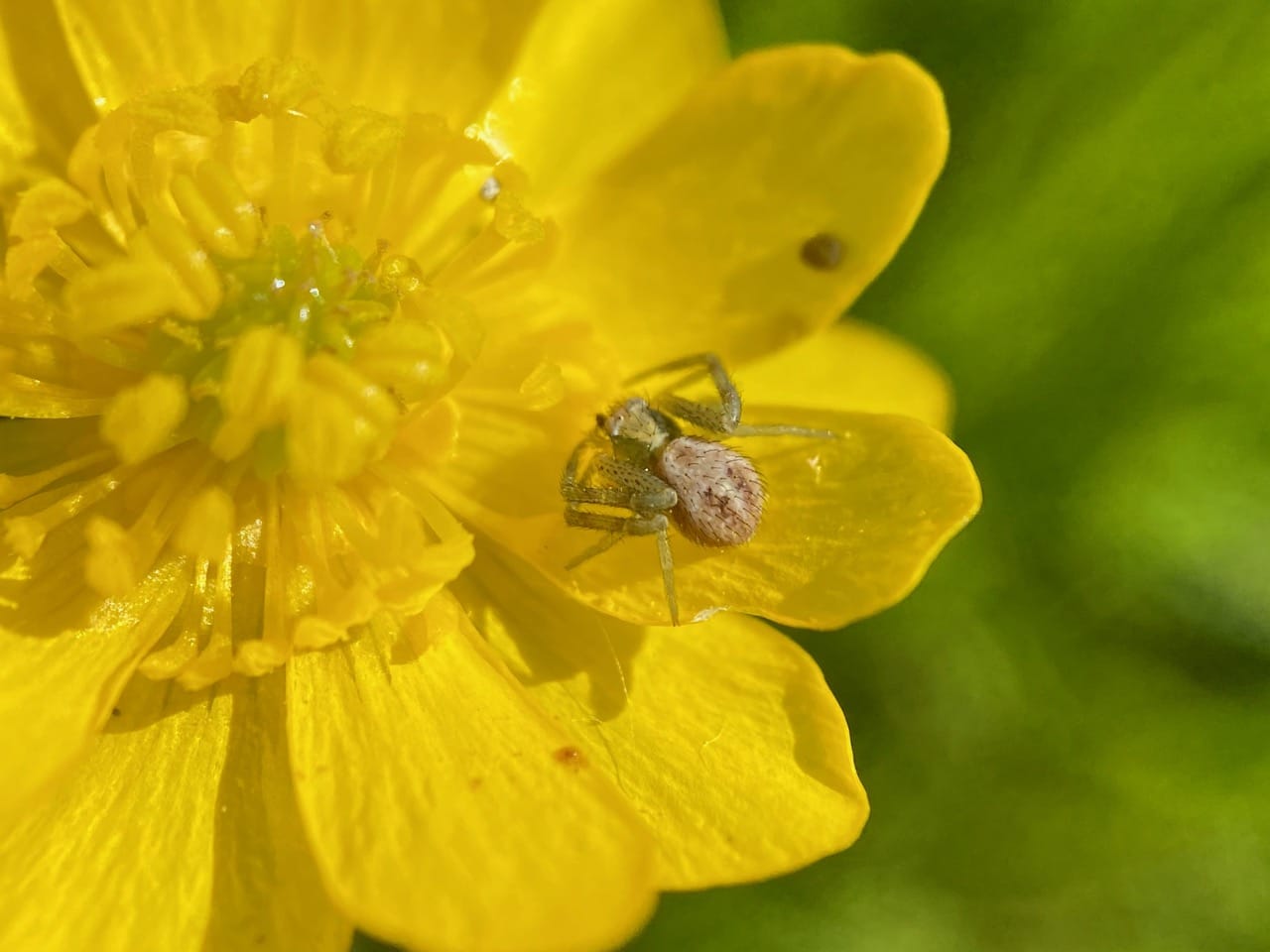
Its powerful front legs flexed back, a tiny Crab Spider, Mecaphesa sp. (family Thomisidae) has stationed itself on a petal of a buttercup flower.
Members of the family Thomisidae do not spin webs, and are ambush predators. The two front legs are usually long and more robust than the rest of the legs. Their common name derives from their ability to move sideways or backwards like crabs. Most Crab Spiders sit on or beside flowers, where they grab visiting insects. Some species are able to change color over a period of some days, to match the flower on which they are sitting.
Mecaphesa asperata, the Northern Crab Spider is found in North and Central America, and the Caribbean. The ambush predator generally lurks in similarly colored flowers for visitors such as bees and flies. It is similar in appearance to the better-known Goldenrod Spider, Misumena vatia. Mecaphesa can be distinguished in that the carapace, abdomen and legs are covered with numerous short stiff spines.
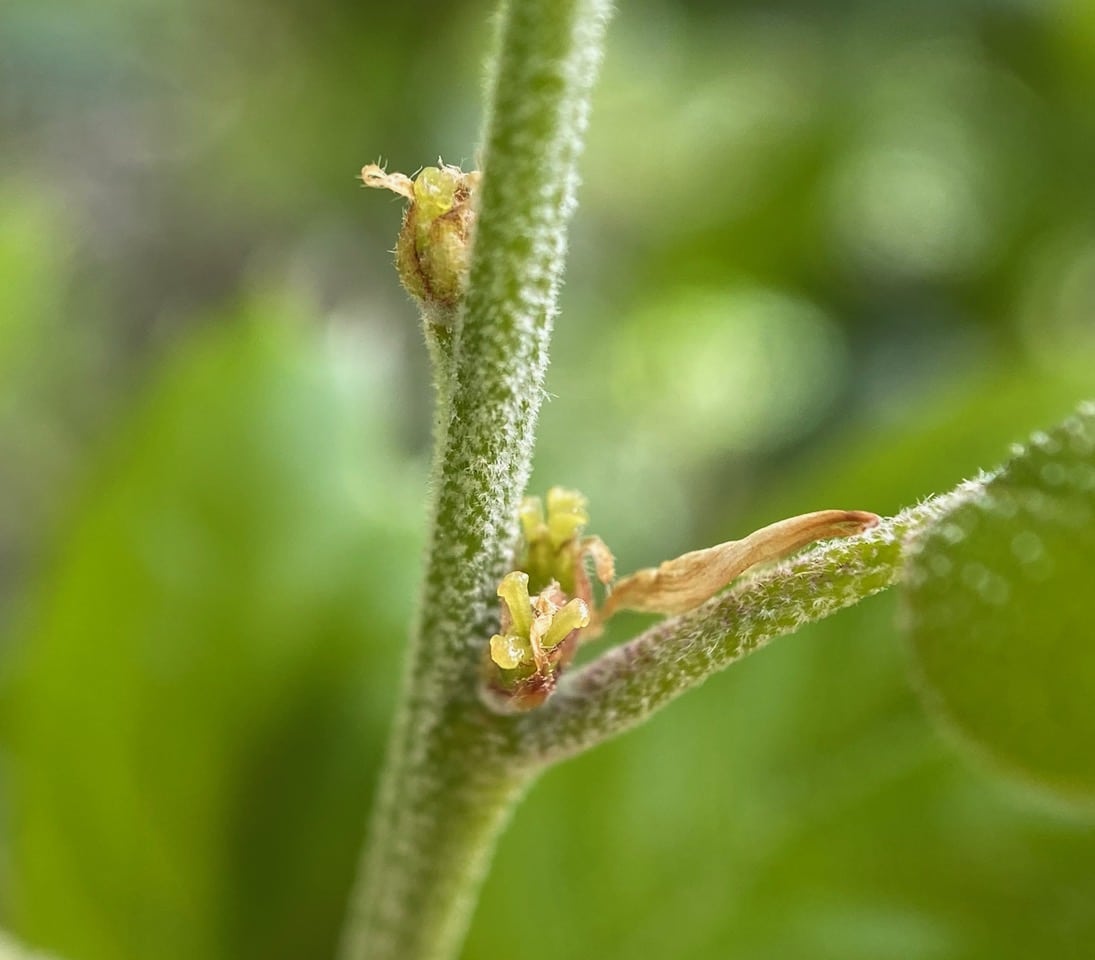
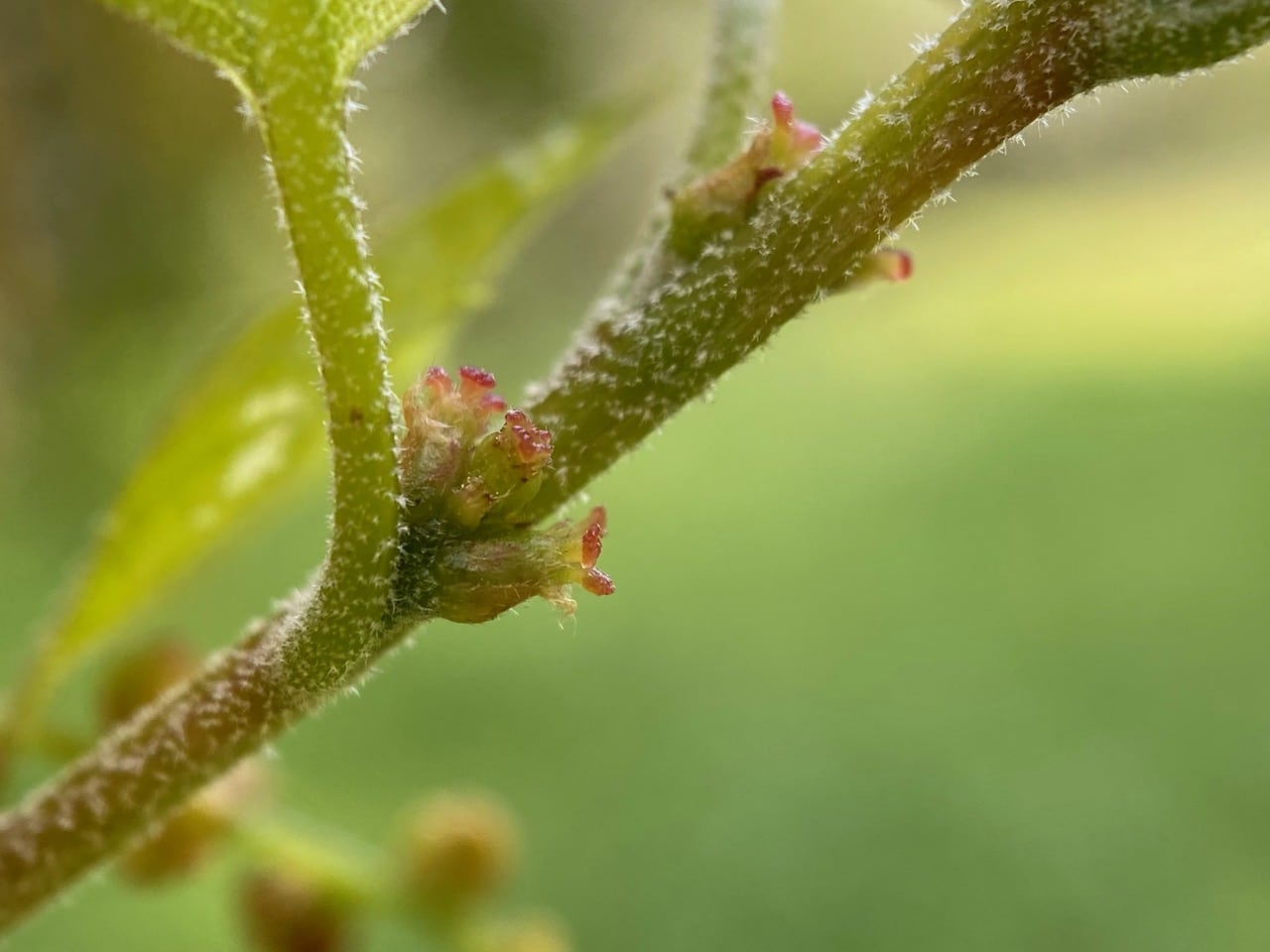
Near the Laurel picnic area, I stop to check on some low-hanging branches of a Coast Live Oak, Quercus agrifolia. Most of the male catkins have withered, and I thought I might find some female flowers. After a long search, I finally realize that the female flowers on this tree are not red, as I had expected, but yellowish green. Except for the color, these are the same as the ones I have seen before – petal-less, with three-lobed stigmas protruding from some bud scales at the leaf axils.
The oaks are monoecious, with separate male and female flowers borne on the same plant. The male flowers are borne on pendant catkins and release copious pollen when shaken by the wind. The flowers are wind-pollinated, dependent on the pollen landing on the receptive stigmas of the female flowers on a nearby tree.
Oh, there are some young female flowers on this same oak tree that bear a tinge of red. I wonder what determines the color of the flowers – age, sun exposure, or other factors?
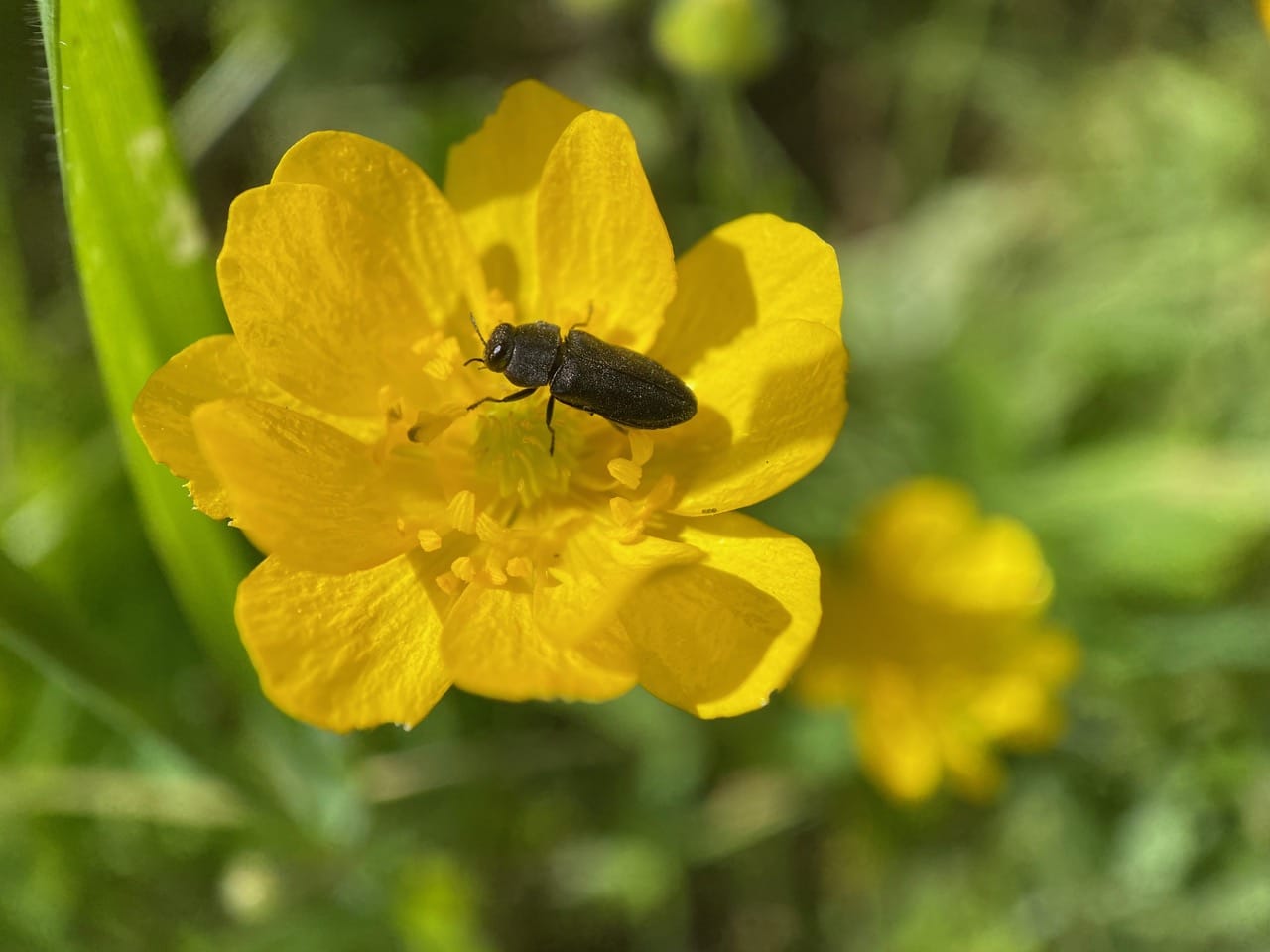
A Jewel Beetle in the subgenus Melantaxia (family Buprestidae) is foraging on a buttercup flower.
Buprestids are sometimes also called Jewel Beetles because of their glossy, iridescent colors. The larger and more spectacularly colored ones are highly prized by insect collectors. Their elytra have been traditionally used in beetlewing jewelry in some Asian countries. The iridescence common to these beetles is not due to pigments in the exoskeleton, but instead is caused by structural coloration, in which microscopic texture in their cuticle selectively reflects specific frequencies of light in particular directions. Buprestid larvae are known as flathead borers. They bore through roots, logs, stems, and leaves of various types of plants, ranging from trees to grasses. Adult jewel beetles mainly feed on plant foliage or nectar, although some species feed on pollen and can be observed visiting flowers.
Members of the subgenus Melantaxia have an affinity for yellow flowers, such as buttercups and dandelions. I have seen them gather in large numbers to feed and mate on dandelion flowers.
A Dance Fly, Anthalia sp. (family Hybotidae) is resting on a buttercup flower that appears like the aftemath of a binging party. These herbivorous Dance Flies often gather in large numbers on flowers to feed on pollen and nectar, leaving a mess of frass and plant debris. The flies are, however, good pollinators for the flowers.
A Sedgesitter, Platycheirus sp. (family Syrphidae) has landed on a buttercup flower in the shade. The hover fly’s metallic body could look so much better in brighter light.
Platycheirus is found in grass and herb vegetation. Adults of many species feed on pollen of wind-pollinated plants, such as Salix, Plantago, Poaceae, Cyperaceae, but they visit other flowers as well. Many stay active during cold and rainy weather. Larvae feed on aphids.
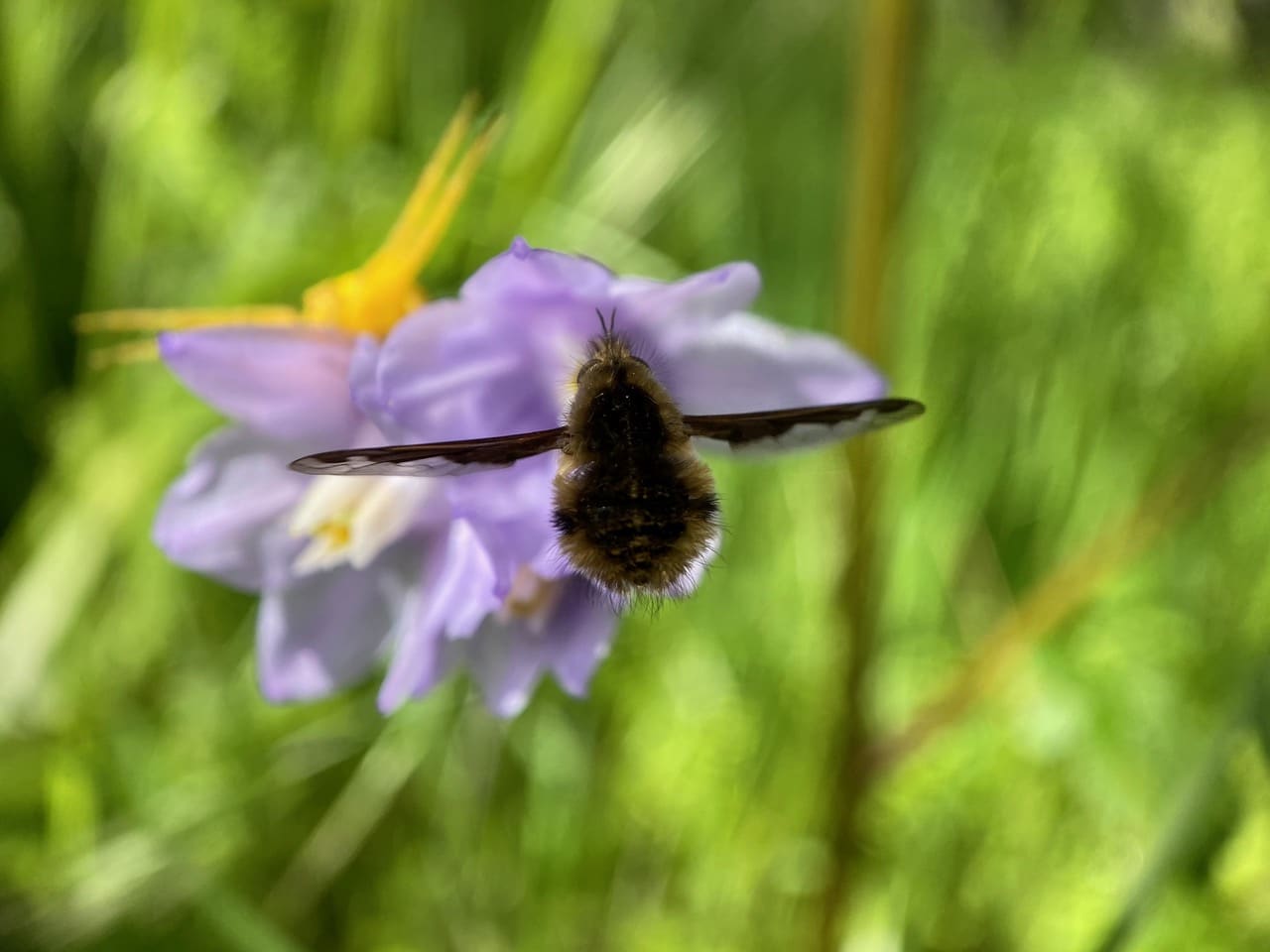
A Greater Bee Fly, Bombylius major (family Bombyliidae) is hovering in front of a Blue Dicks flower. With the macro lens jammed on my camera, I have to take this still shot and video up close. Guess what’s that blurry yellow thing in the back, atop the other flower?
Bombylius major, commonly known as the Greater Bee Fly is a parasitic bee mimic fly in the family Bombyliidae. It derives its name from its close resemblance to bumble bees. Its flight is quite distinctive – hovering in place to feed, and darting between locations. The species has long skinny legs and a long rigid proboscis held in front of the head. Bombylius major is easily distinguished from the other local species of Bombylius for having wings with dark leading edge, hyaline trailing edge with sharp dividing border. This feature is visible even as the fly is hovering. Adults visit flowers for nectar (and sometimes pollen) from a wide variety of plant families, excelling at small tubular flowers, and are considered good generalist pollinators. Often the pollen is transferred between flowers on the fly’s proboscis.
The bee fly larvae, however, have a sinister side. They are parasitoids of ground-nesting bees and wasps, including the brood of digger bees in the family Andrenidae. Egg deposition takes place by the female hovering above the entrance of a host nest, and throwing down her eggs using a flicking movement. The larvae then make their way into the host nest or attach themselves to the bees to be carried into the nest. There the fly larvae feed on the food provisions, as well as the young solitary bees.
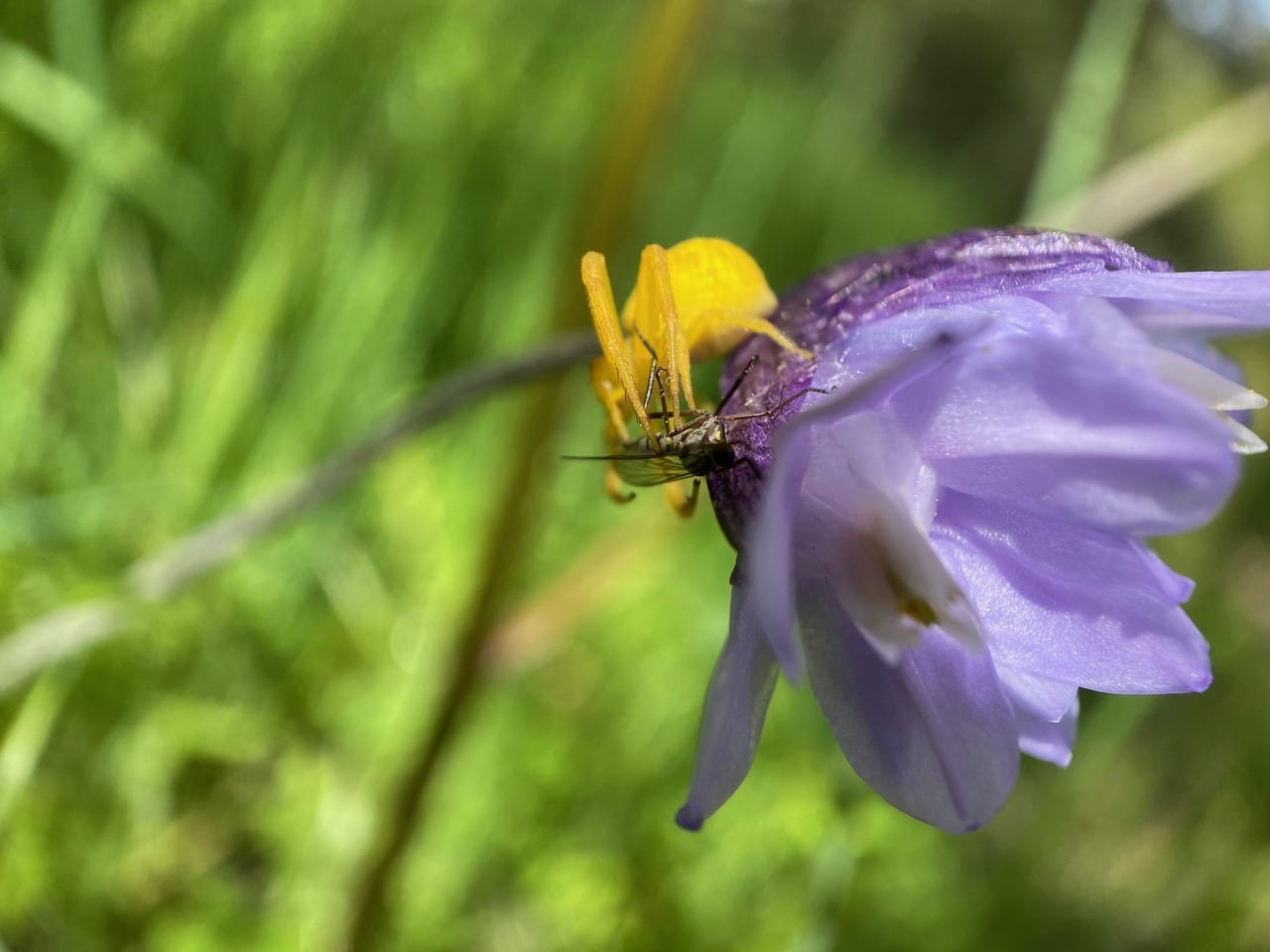
When the Bee Fly left, I realize that this is the same Blue Dicks on which I have seen the big yellow Crab Spider earlier. She is now dealing with a small prey she has captured.
Oh Wow, the prey is a Dance Fly!
The Dance Fly puts up a valiant fight, and finally flies away free after a scuffle, much to my surprise. Imagine overcoming a predator so much bigger! Those long legs were sure useful in fending off the spider fangs.