

Pollinator Post 4/11/23

The caterpillars of the Variable Checkerspot butterfly, Euphydryas chalcedona are easy to spot – they tend to congregate on the top of the California Bee Plant, Scrophularia californica where they feed on the tender leaves. The larvae are growing up fast, assuming a more complex color pattern on their body after each molt.


 Fading flower parts still attached, a fruit is developing at the end of the peduncle. The fruit is a many-seeded capsule.




Ooh, my first Woodland Star of the year!
The five petals of Woodland Star, Lithophragma affine (family Saxifragaceae) are bright white with deep long lobes or teeth. I am not in the habit of sniffing flowers, but now I am paying more attention to scents, after learning about Woodland Star’s pollination biology. A study has found a remarkable diversity in the scent compounds produced by the flowers. Every species of woodland star produces a unique floral bouquet to attract specialized pollinators. The plant has coevolved with a group of specialized moths in the genus Greya, that pollinate and lay eggs only in woodland star flowers. It is a sort of love-hate relationship. Although the plants lose some of their developing seeds to the moth larvae, the benefits the plants receive from pollination usually outweighs the costs.
Many of us are familiar with the story of the Yucca and the Yucca Moths, a much-celebrated mutualism between the plant and its pollinators. Well, like the Yucca Moths, the Greya moths that pollinate the Woodland Star are in the family Prodoxidae! In both cases, the moths visit the flowers to lay eggs, not to seek food. In the process of oviposition, their bodies come into contact with the pollen of the flower. So tight is the mutualism that every species of Lithophragma is pollinated by its own species of Greya moth!
As in most moths, the Greya moths are nocturnal and navigate their world predominantly by their sense of smell. White flowers show up well in the moonlight, and scents travel just as well in the dark. The Woodland Star and the moths have shaped each other’s evolution.
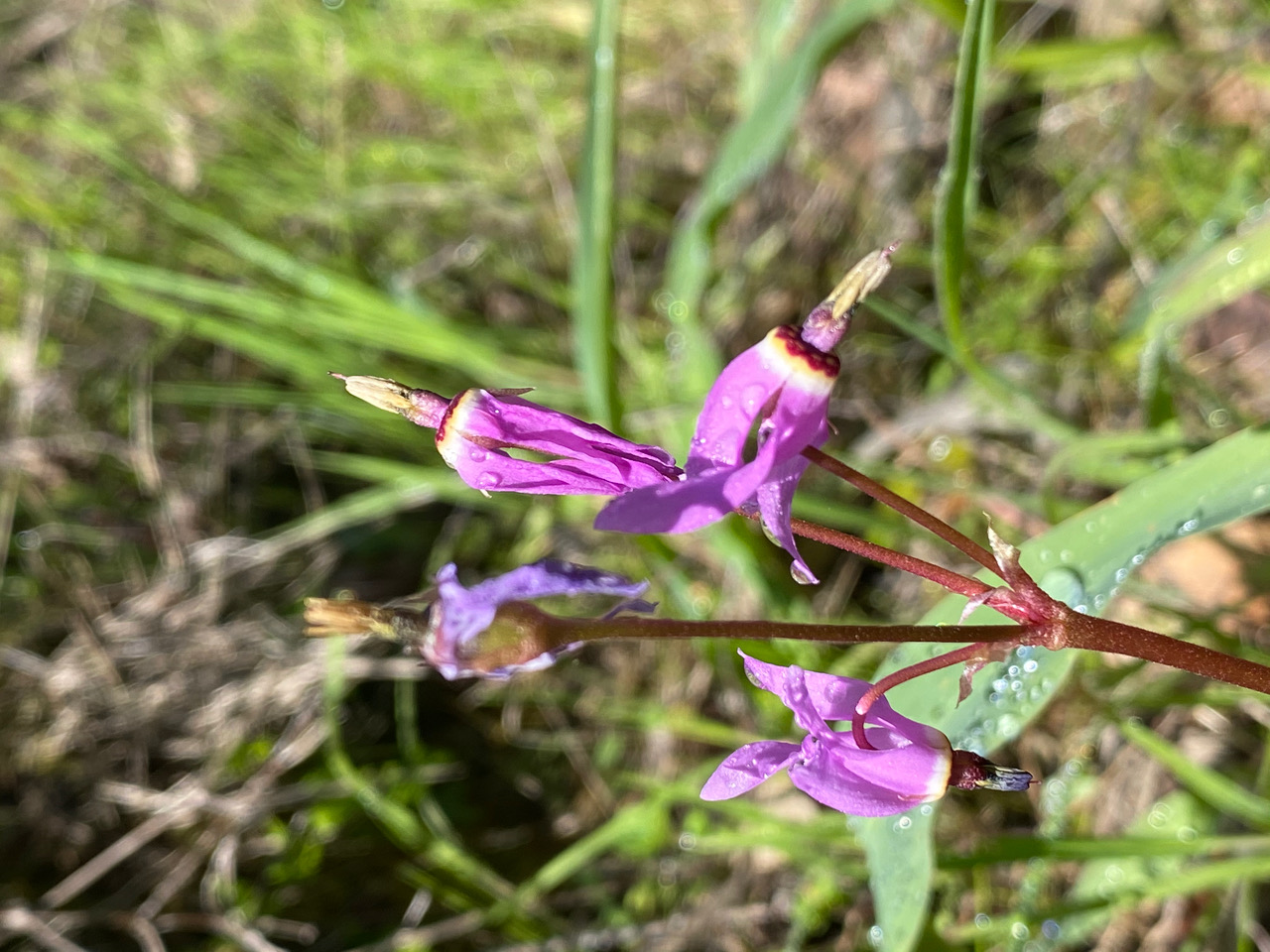
The flowers of Henderson’s Shooting Star, Primula hendersonii (family Primulaceae) are fading. The originally nodding flowers have straightened up their peduncle (flower stalk) to point skyward.
Fading flower parts still attached, a fruit is developing at the end of the peduncle. The fruit is a many-seeded capsule.Wet with dew, the Small Baby Blue Eyes, Nemophila heterophylla (family Boraginceae) is blooming nicely along the moist banks of Skyline Trail. Except for the size, there’s nothing about the flower that reflects its common name. The name comes from sharing the same genus with the Baby Blue Eyes, Nemophila menziesii which are mostly blue. Small Baby Blue Eyes, Nemophila heterophylla
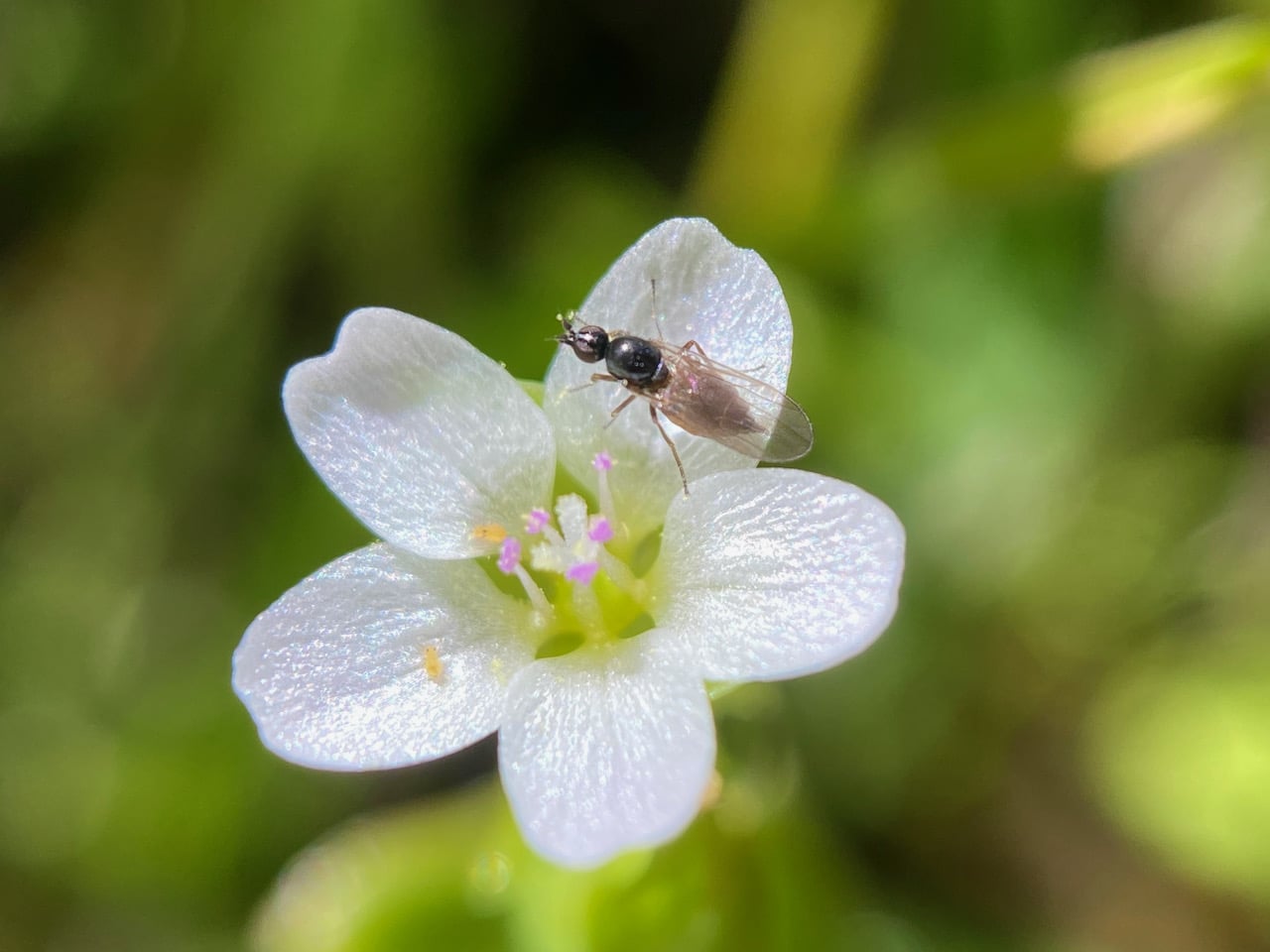
Hey, there’s that tiny hump-backed fly again! It seems to visit every small flower in this garden this time of year. The Micro Bee Fly (family Mythicomyiidae) visit small flowers from a wide variety of plants for pollen, and are probably effective pollinators. The larvae are gregarious parasitoids of solitary bees. Little else is known about these flies. Maybe that’s why it was given that family name – a creature of myths?
That mythic fly again!
There are two Mythicomyiids in this view of the Small Baby Blue Eyes.
Close-up of the top fly (the highest magnification I can muster with my macro lens). The fly is about 3 mm long.
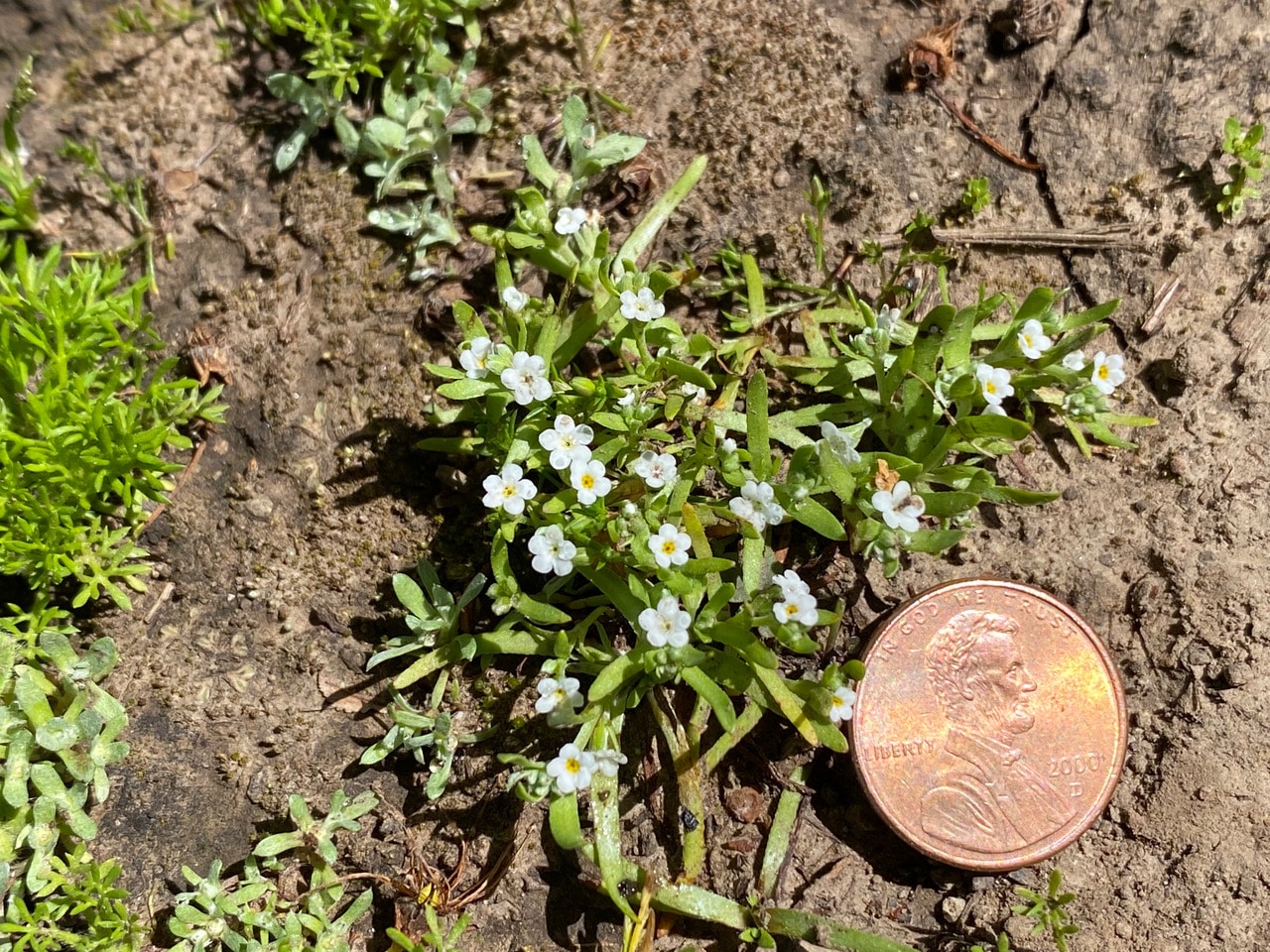
You would be hard pressed to find a smaller popcornflower! What is this wetland species doing on the edge of the trail?
The Low Popcornflower, Plagiobothrys humistratus (family Boraginaceae) is endemic to the Central Valley of California, where it grows in grassland habitats, including vernal pools and other wetland areas. It is an annual herb with a prostrate growth habit. The inflorescence is a series of tiny white flowers (1 or 2 mm in length) accompanied by bracts. Who pollinates these pixie flowers? Micro Bee Flies? Ants?
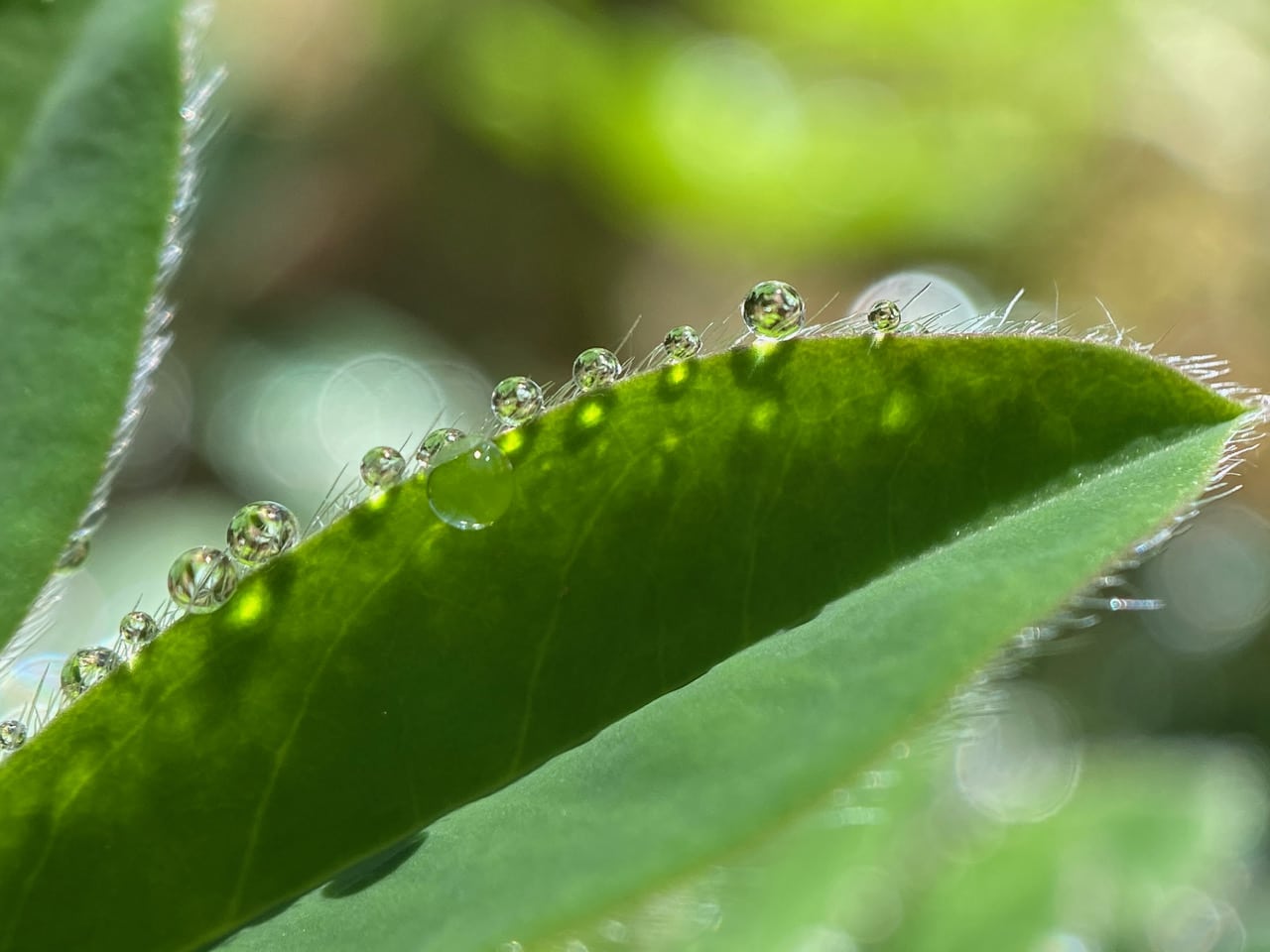
I love the way lupine collects water on its foliage. I think these leaves belong to Succulent Lupine, Lupinus succulentus.
Each drop along the leaf edge reflects the world around it, and lights up the leaf with a miniature spot of filtered light.
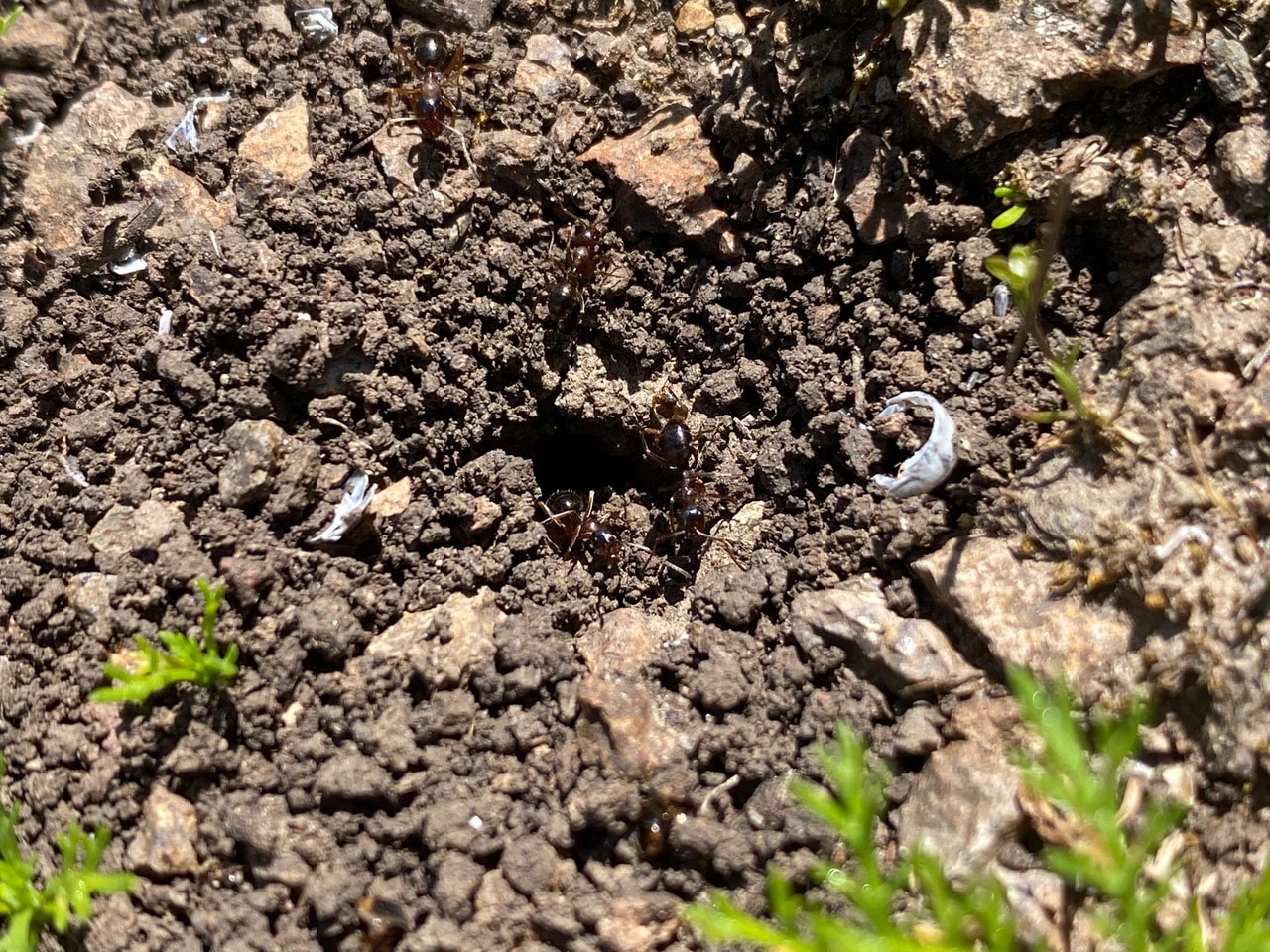
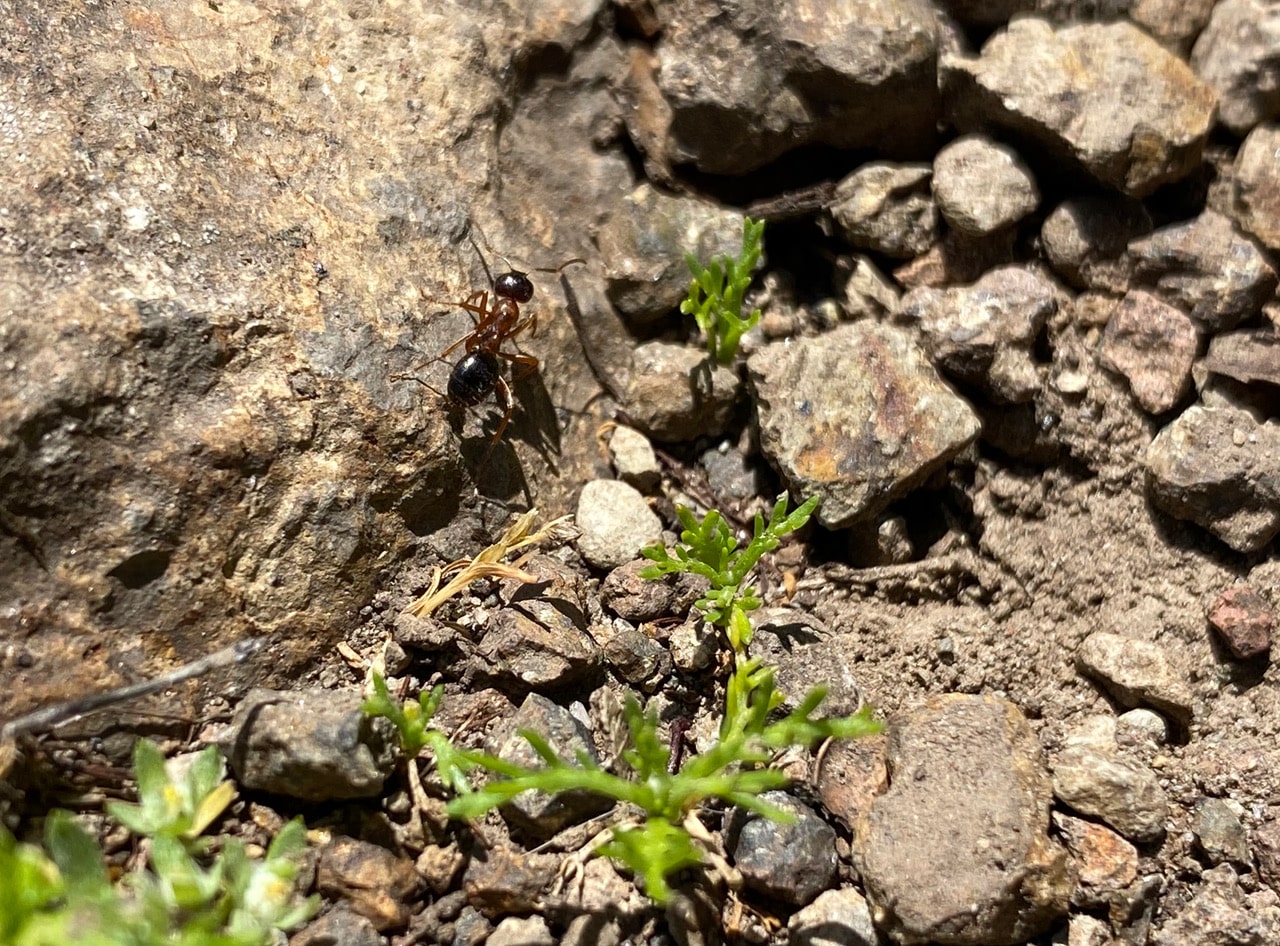
I notice some ant activity around a rocky outcrop in the middle of the trail. It is nearly noon time and photography is almost impossible with all the glare and harsh shadows.
Some large ants with reddish-brown thorax are going in and out of a hole among the rocks, moving dirt out and dumping it away from the entrance. Nest excavation?
Field Ants belong to the genus Formica (family Formicidae). In North America, the Fusca-group Field Ants, Complex Formica Fusca is the most diverse in western mountain ranges, with partially distinctive Pacific and Rocky Mountain species compositions. The ants occur in grasslands and open woodlands.
They feed on aphid honeydew as well as scavenge dead arthropods. They are also predators of common forest pests and are considered to be beneficial to the forest. Colonies of field ants comprise of polymorphic workers – major and minor worker ants differing in size. The number of major workers is always in the majority.
Field Ants lack a stinger. They defend themselves by spraying droplets of formic acid when threatened, which causes most enemies to retreat. They also can bite. Add the formic acid, and the bite can feel like a sting.
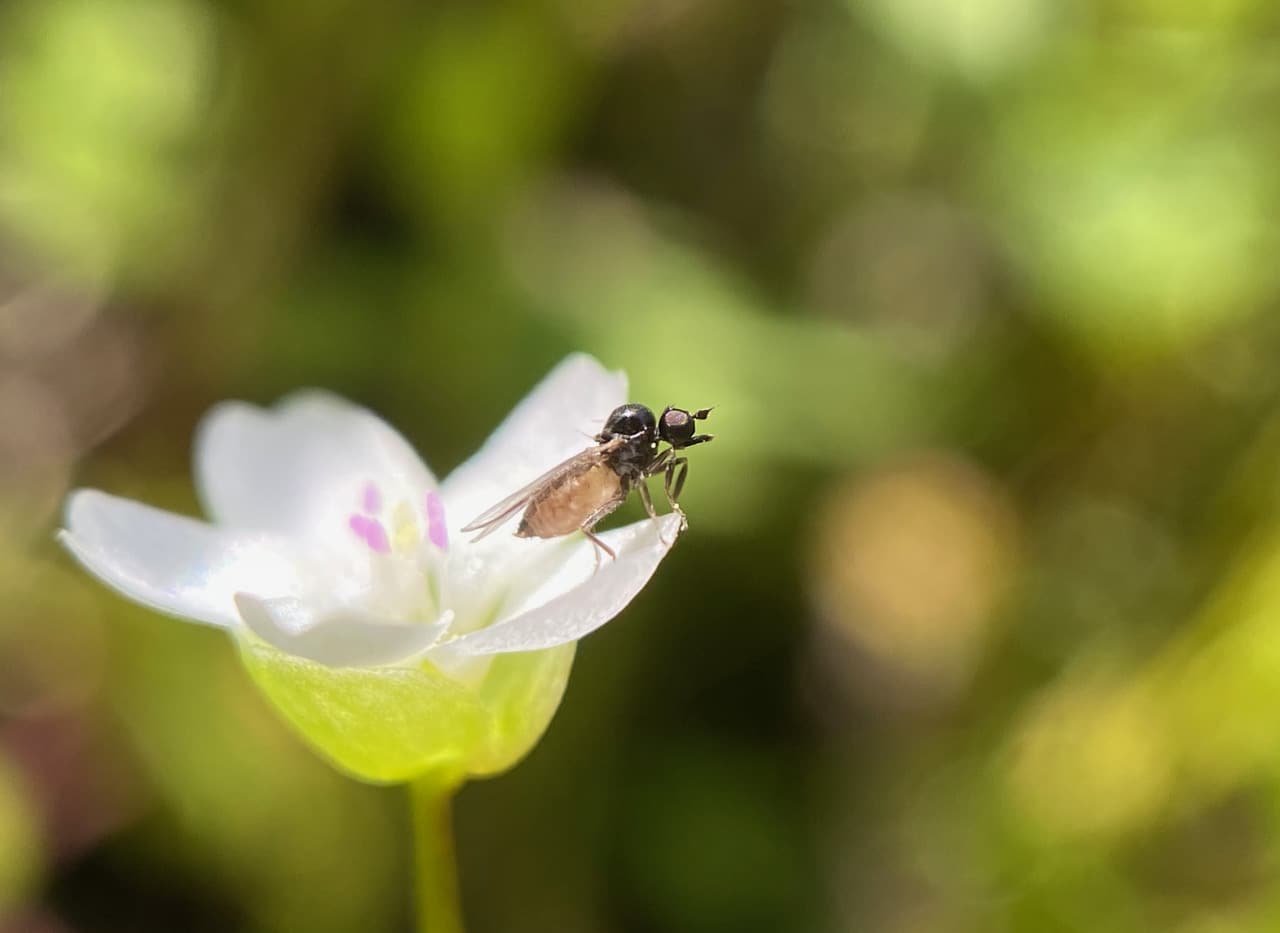
A Micro Bee Fly (family Mythicomyiidae) is perched on a flower of Miner’s Lettuce, Claytonia perfoliata. It’s probably a female – its eyes do not meet in the center on top of the head. Male flies tend to have “holoptic” eyes.
Whoa, it’s a gravid female ready to lay her eggs!