

Pollinator Post 4/10/23 (2)
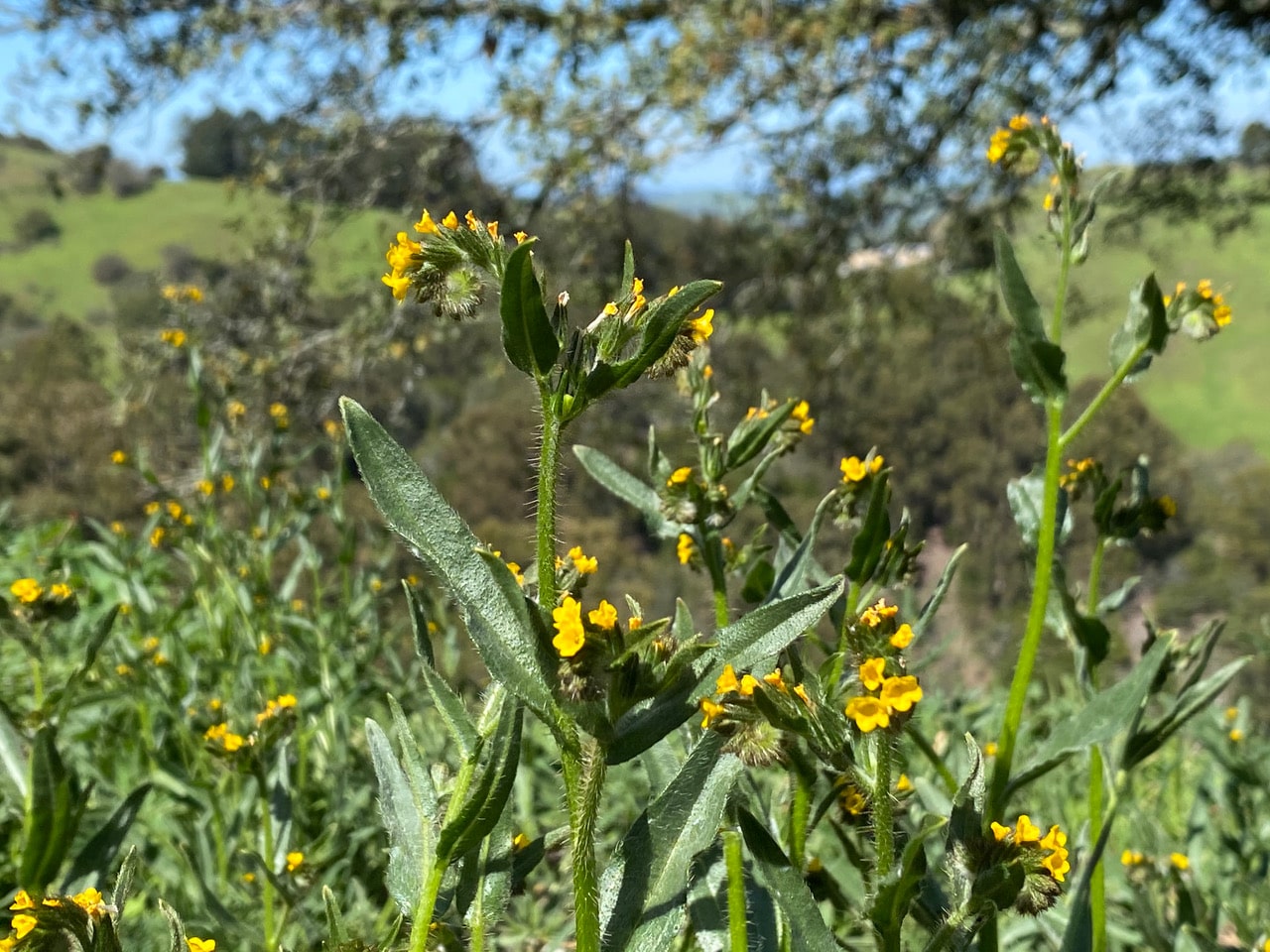
The Common Fiddleneck, Amsinckia intermedia along the paved road to the Water Tank is putting up quite a show.
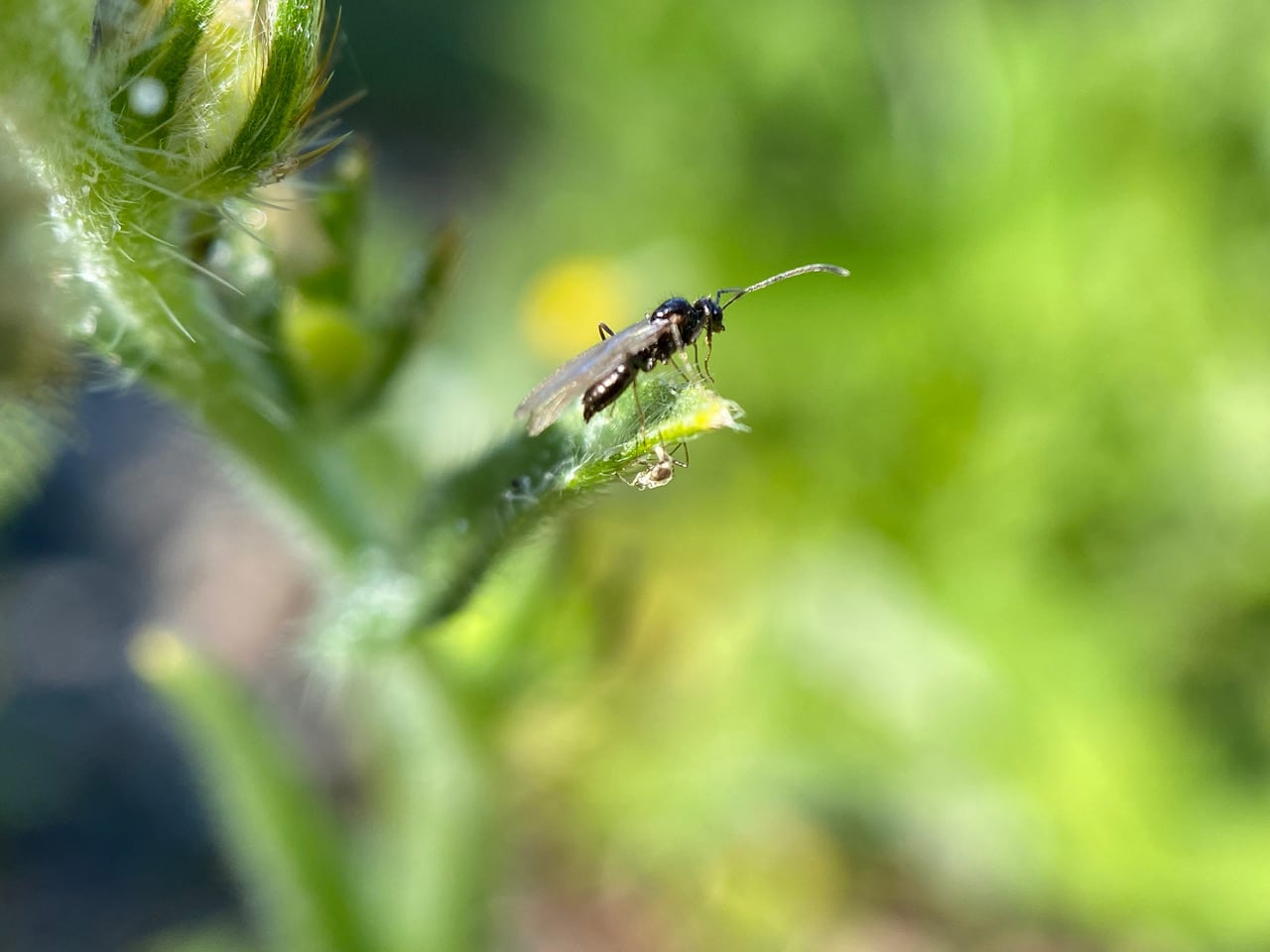
I still see an occasional male alates (winged reproductives) of the American Winter Ants, Prenolepis imparis flying around and landing on the plants. Is this part of a protracted nuptial flight (I thought they last only a day)? Or are these males stragglers late for the big party?

A large ant, the Fusca-group Field Ant, is foraging around the flower buds of Common Fiddleneck. It seems to be feeding on honeydew excreted by the aphids, instead of the aphids themselves.
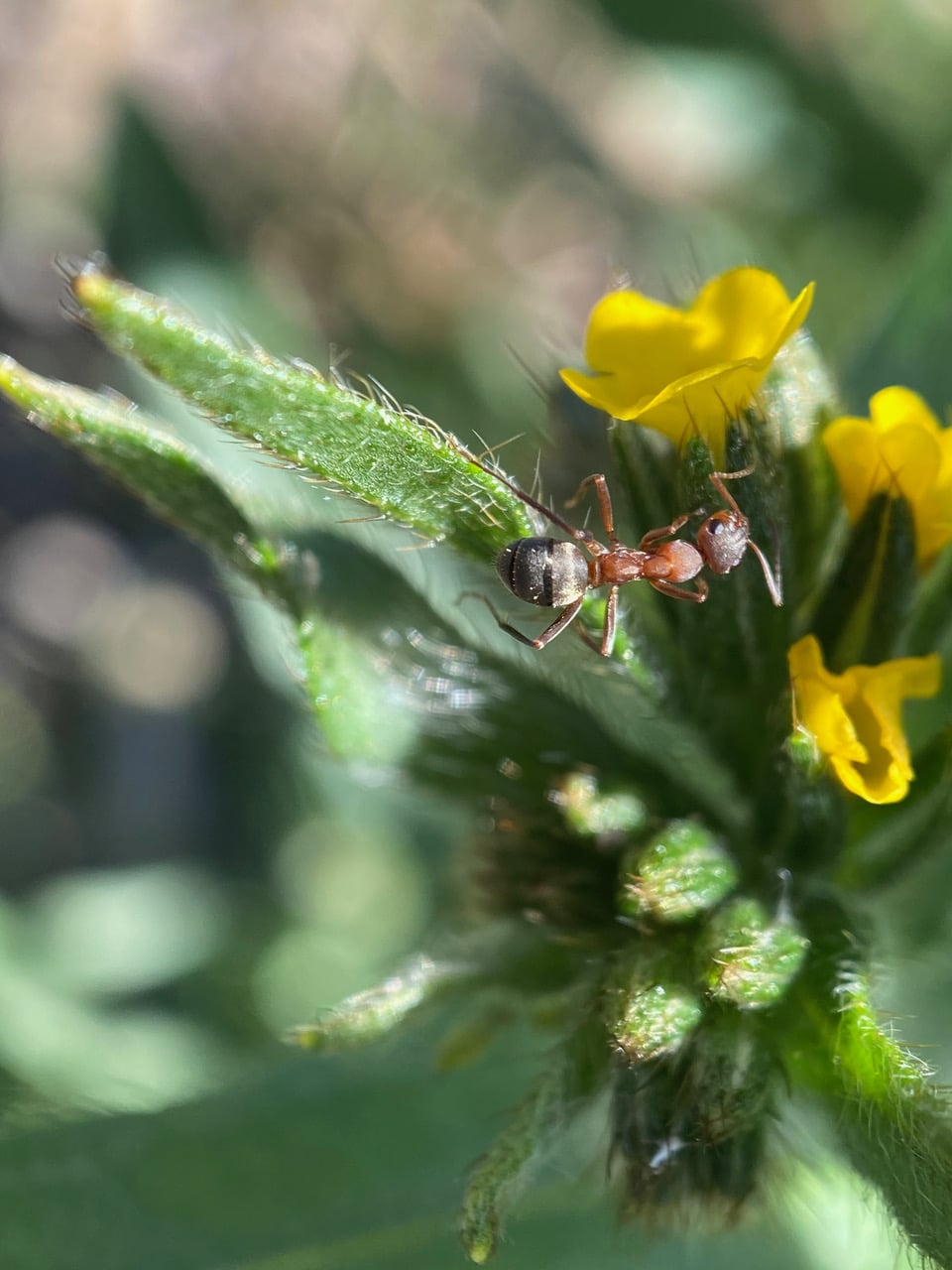
Field Ants belong to the genus Formica (family Formicidae). In North America, the Fusca-group Field Ants, Complex Formica Fusca is the most diverse in western mountain ranges, with partially distinctive Pacific and Rocky Mountain species compositions. The ants occur in grasslands and open woodlands.
They actively gather honeydew from source insects, and extrafloral nectar. They also prey on insects and spiders; also scavenge small dead invertebrates, honeydew on leaf litter and plant surfaces, etc.
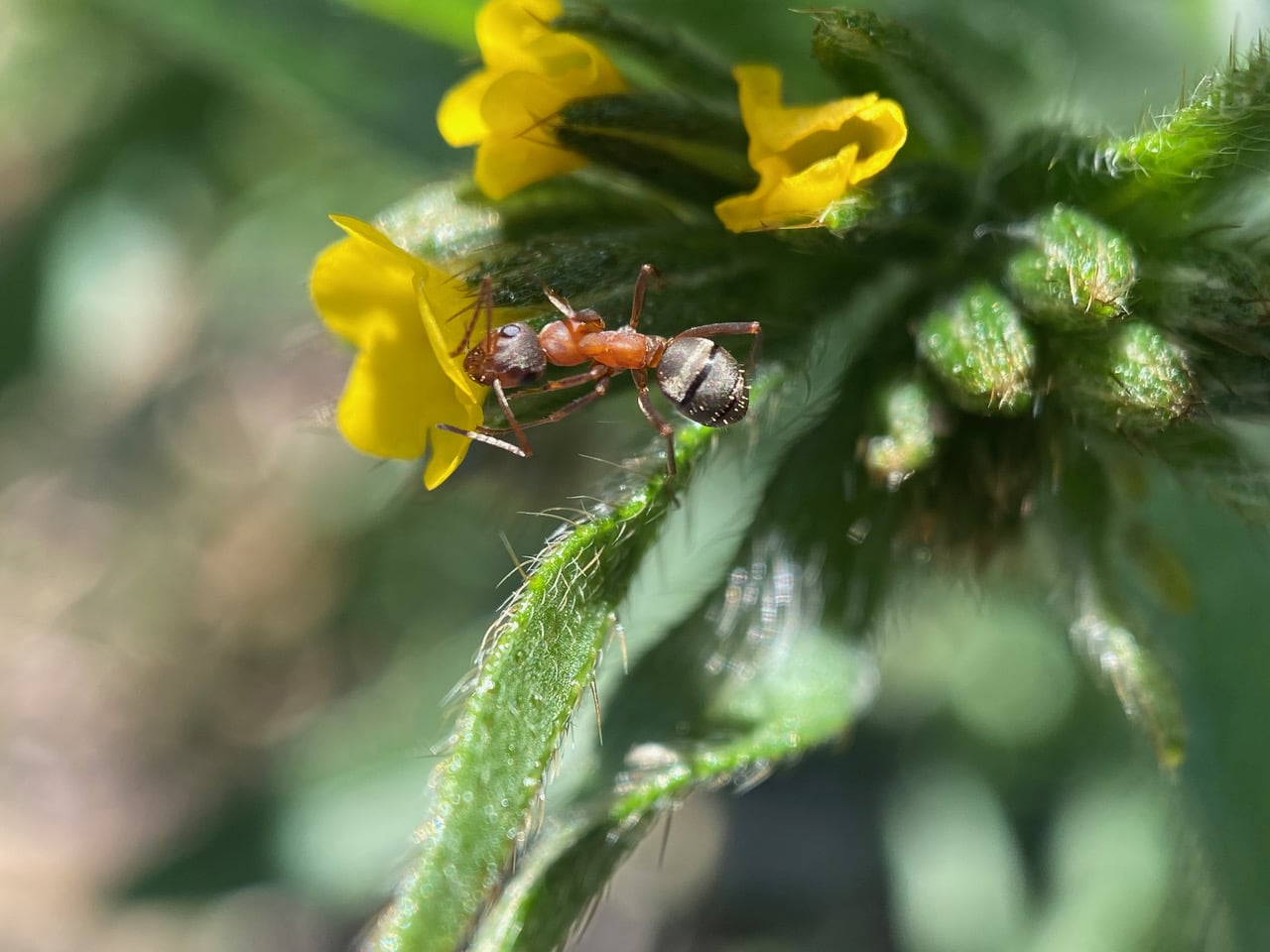
Field ants lack a stinger, but instead possess a circlet of hairs around an opening at the tip of their abdomen where formic acid is expelled as a defense mechanism. They can also bite. They may pinch skin with their mouthparts, and then squirt formic acid into the wound, giving the sensation akin to a sting.
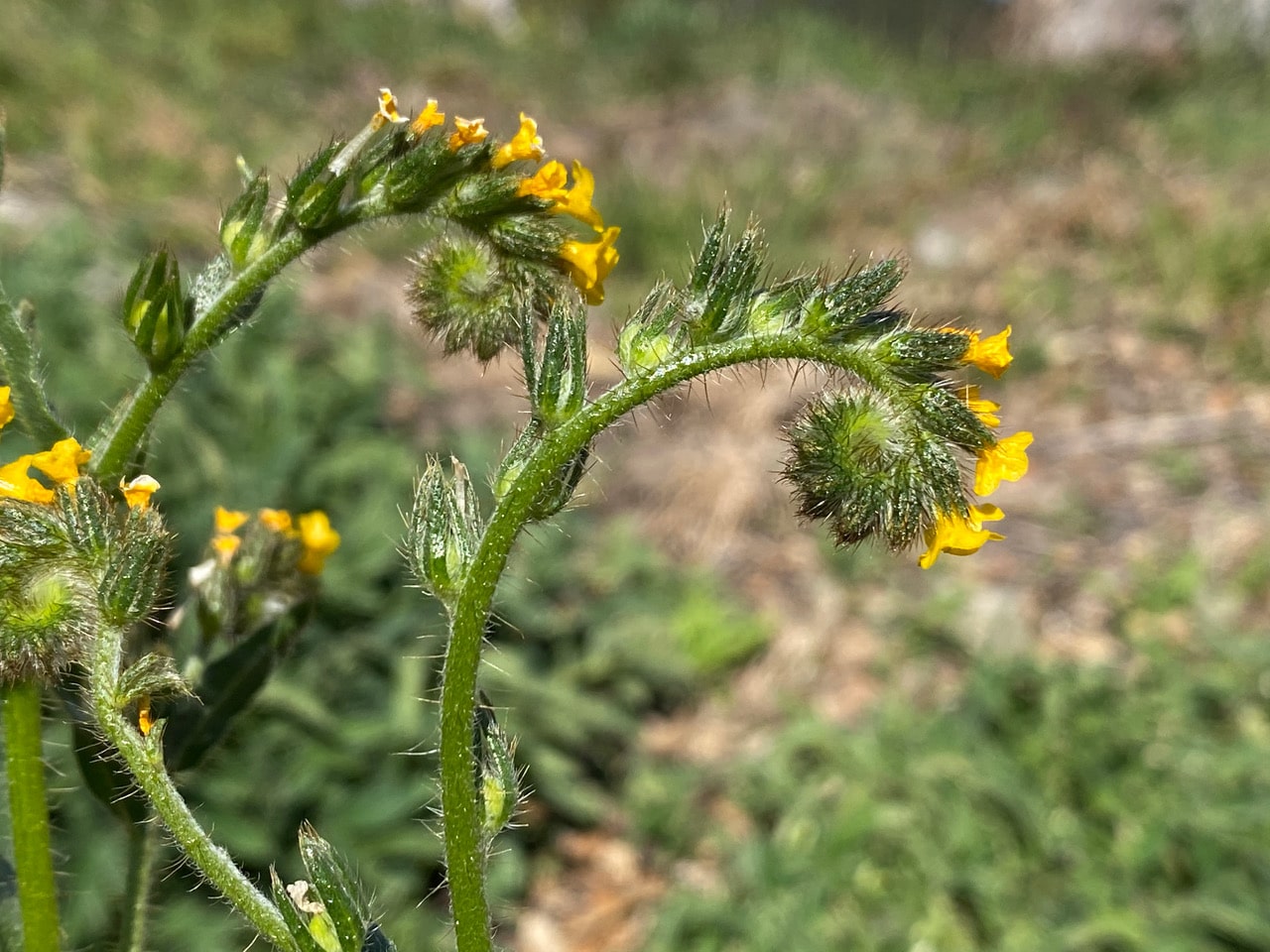
As new flowers open up along the scorpionoid inflorescence of Common Fiddleneck, older flowers fade and drop off behind them, while fruits develop in the persistent calyces.


At maturity the four-lobed fruit breaks into four one-seeded nutlets. (This Fiddleneck is heavily infested with aphids, hence the abundance of milky droplets of aphid honeydew.)
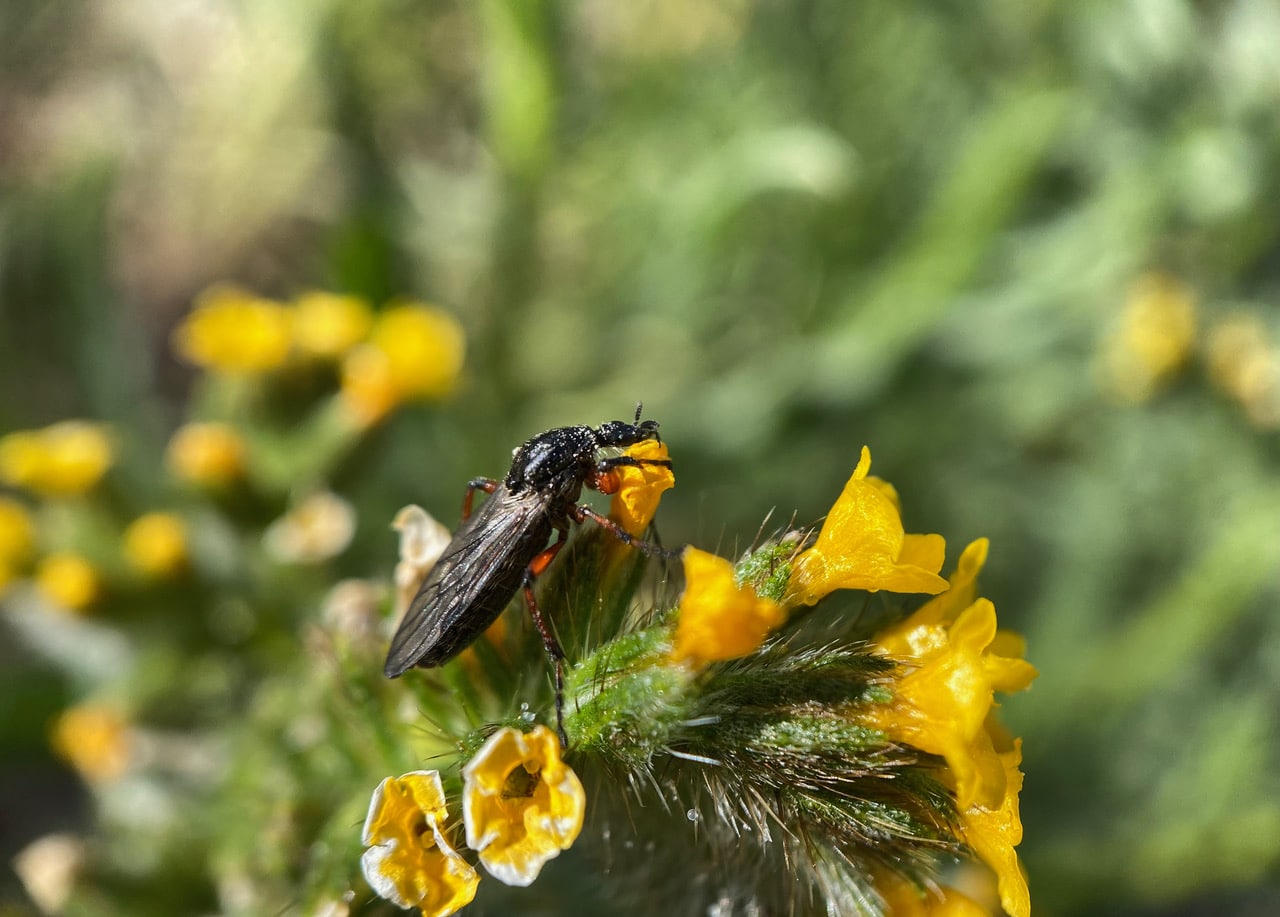
That’s a large March Fly! It is a female Bibio xanthopus (family Bibionidae), one of the most common species of Bibio in North America. The body is black with pale colored pile and legs that are predominantly rufous. Females have smoky black wings.
The fly’s head and thorax are dusted with pollen. Has she been poking her head in the small Amsinckia flowers?
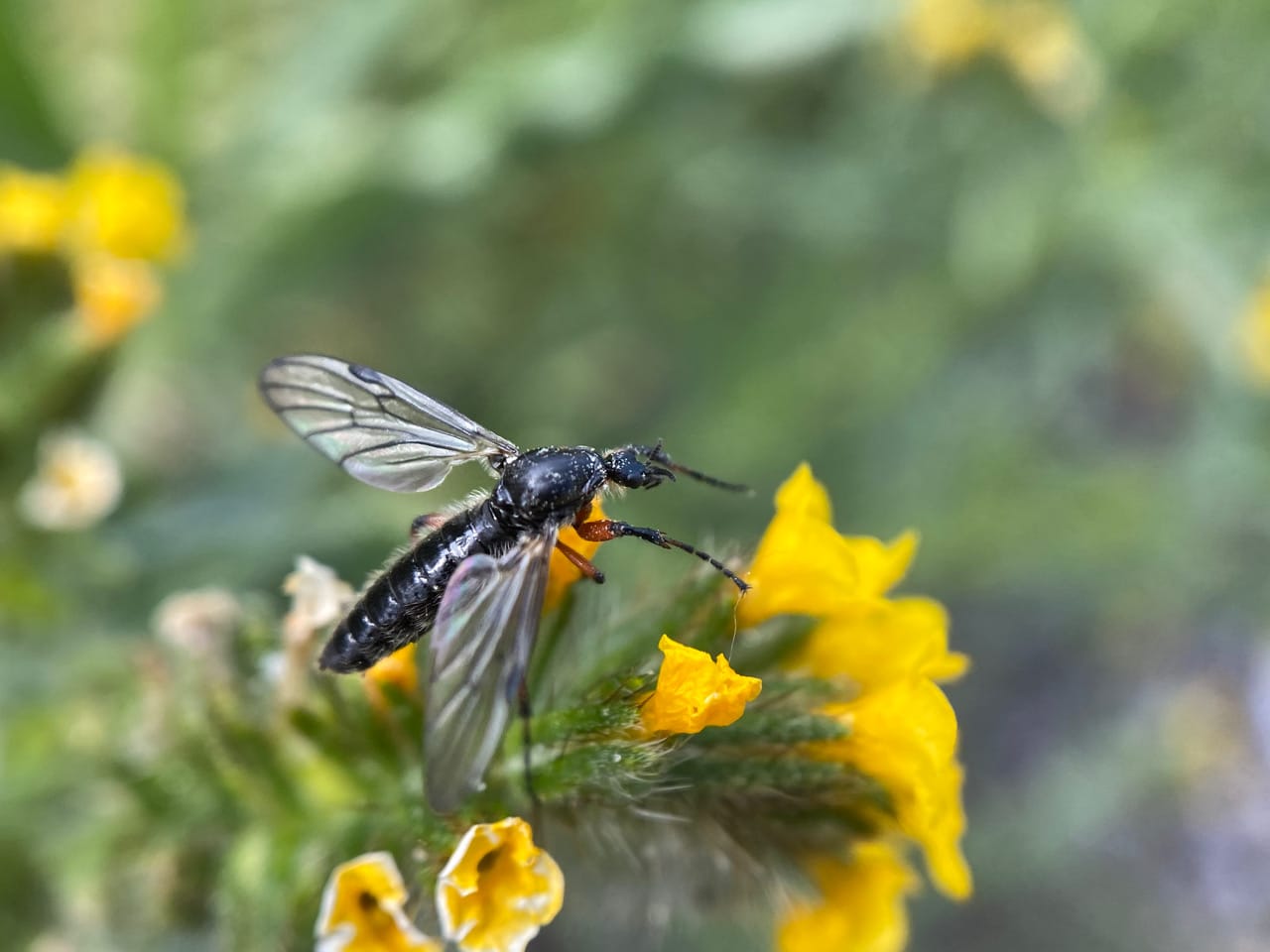
Sensing my intrusion, the March Fly takes off into the air.

It’s a clumsy flyer – the lift off is so slow it is caught in two frames. The pale pile on the black body is visible in these photos.

March Flies (family Bibionidae) generally live in wooded areas and are often found on flowers – adults of some species feed on nectar, pollen, and honeydew, while adults of other species don’t feed at all; and in either case, they are very short-lived. They are considered important pollinators in orchards. They are also important food for other insects and spiders. The larvae feed en masse on rotting organic materials like leaves, wood, compost, and rich soil.
March flies exhibit extreme sexual dimorphism – the sexes are morphologically distinct. The female is usually more colorful, has small eyes on the sides of long, narrow head, while the all-black males have huge eyes that touch in the middle and are split in half horizontally. Scientists speculate that the split makes it easier for them to see the other males that are above and below them in a mating swarm. Males gather in swarms that can blanket the ground and low vegetation. Female are attracted to the party and select mates in the frenzy of fly bodies.

A sliver of a Soldier Beetle barely 6 mm long, Podabrus cavicollis is feeding on something on a leaf of Common Fiddleneck – a green aphid?
The Soldier Beetles, family Cantharidae are relatively soft-bodied, straight-sided beetles. One of the first described species has a color pattern reminiscent of the red coats of early British soldiers, hence the common name. They are also known commonly as Leatherwings because of their soft elytra.
Soldier beetles often feed on both nectar and pollen as well as predating on other small insects. The larvae are often active, and feed on the ground, hunting snails and other small creatures. Soldier beetles are generally considered beneficial insects by gardeners.

The heavy aphid infestation has brought in a new species of Ladybeetles to the Fiddleneck. I wait patiently to take a picture of the Convergent Ladybeetle, Hippodamia convergens as it runs along a leaf towards me. In an unexpected and comical moment, the beetle overshoots the leaf tip! It manages to turn around without dropping off the leaf.

Where are the usual California Ladybeetles, Coccinella californica? Most of them are milling around on the ground under the Fiddleneck. The sun is low in the sky, the wind has whipped up and the temperature has suddenly plummeted. I think the beetles are calling it a day, seeking shelter among the leaf litter.

This mating pair of California Ladybeetles is not wasting any time!

The fog is rolling in, obliterating the green hills. I zip up my jacket and head for home.