

Pollinator Post 4/10/23 (1)
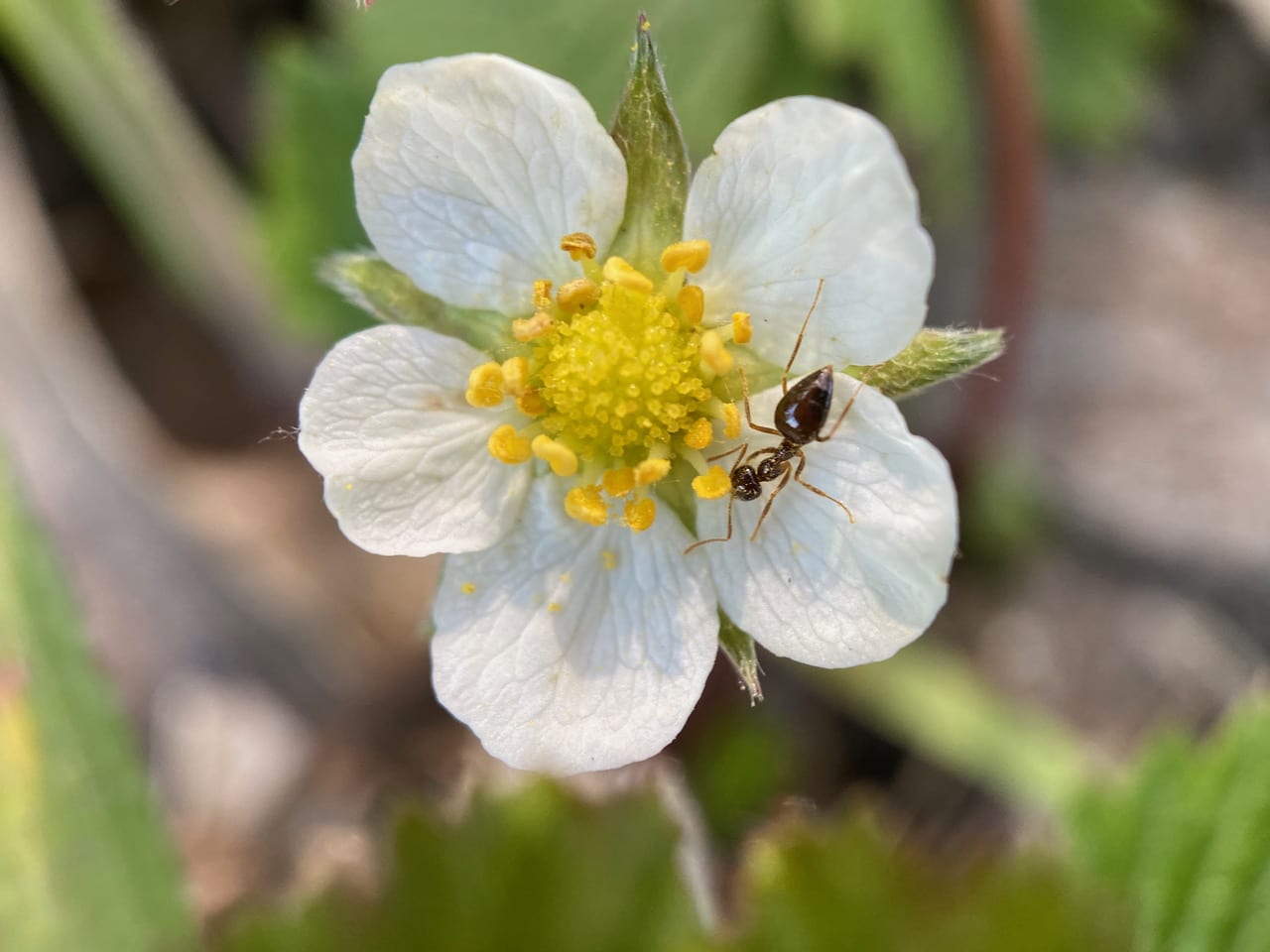
A Winter Ant, Prenolepis imparis is reaching under the stamens of a Wood Strawberry flower. Fragaria vesca to access the nectary underneath.
Native to North America, the Winter Ants are generalist omnivores that nest deep within the ground. Unusual among ants, Prenolepis imparis prefers lower temperatures, including near freezing, and is only active outside the nest during winter and early spring. The colony enters estivation (a hibernation-like state) and becomes inactive above ground for the warmer months, during which time eggs are laid and brood are reared. Reproductives overwinter and emerge on the first warm day of spring for their nuptial flight. The queens are much larger and distinctly lighter in color than males.

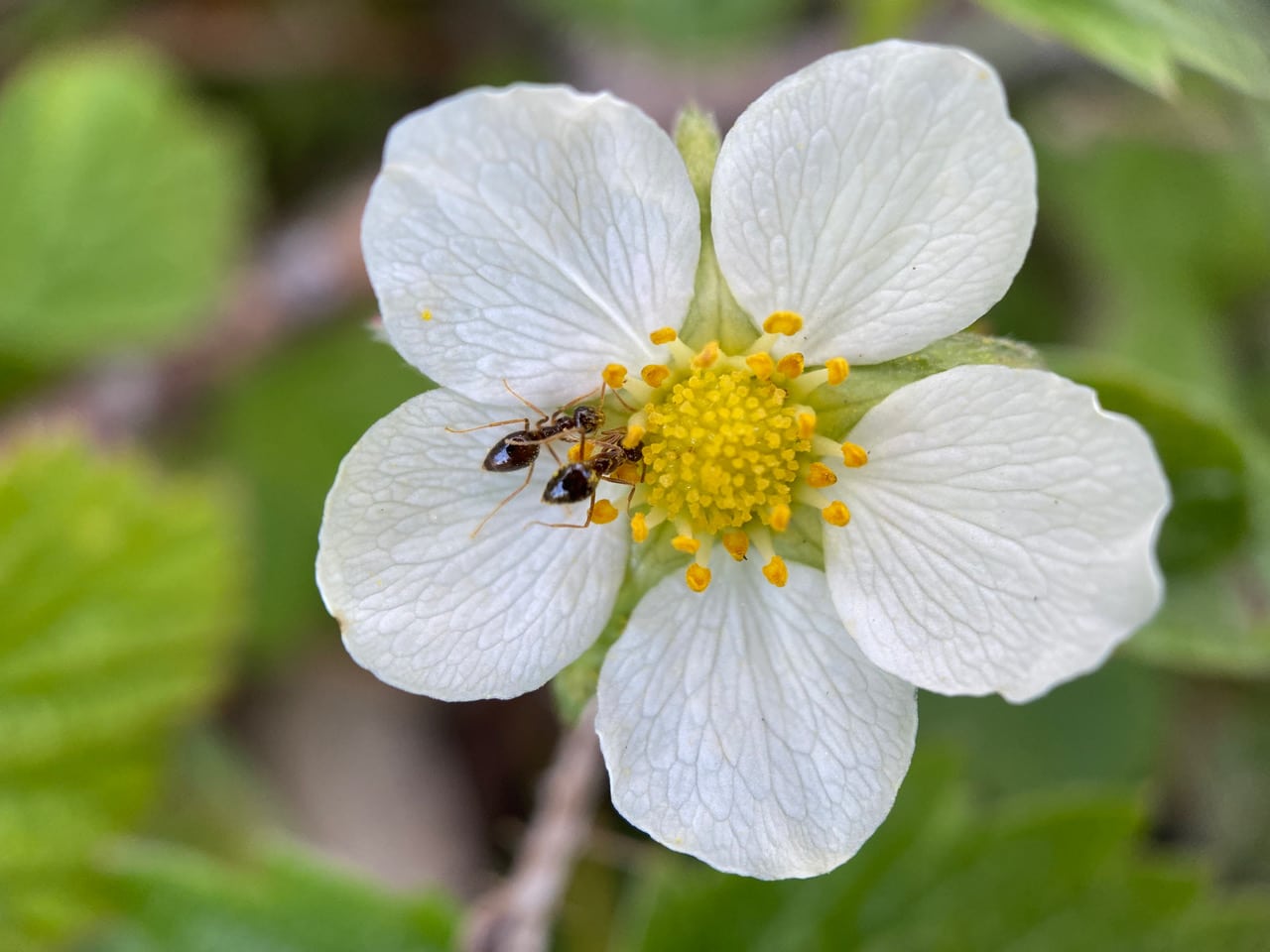 Two Winter Ants, Prenolepis imparis are foraging for nectar on a Wood Strawberry flower, Fragaria vesca. Perhaps the ants are pollinators for the ground-hugging plants that are connected by runners?
In botany a stolon – also called a runner – is a slender stem that grows horizontally along the ground, giving rise to roots and shoots at widely spaced nodes. Fragaria vesca primarily propagates via runners, but viable seeds are also found in soil seed banks and they are known to germinate when the soil is disturbed.
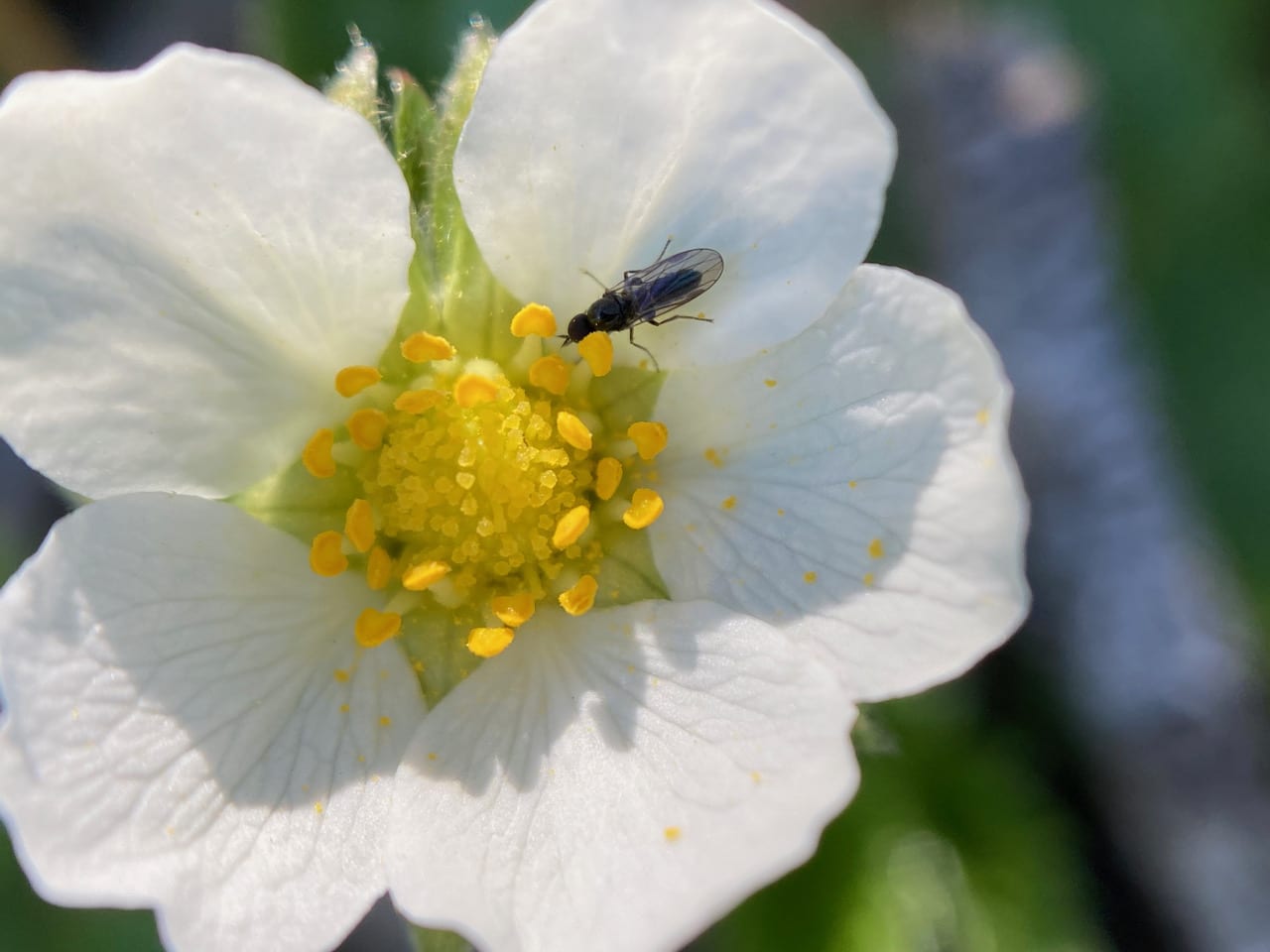
A Micro Bee Fly (family Mythicomyiidae) is feeding on strawberry pollen. In side profile, the tiny fly has a distinct humpbacked thorax. Mythicomyiids hold their wings together over the abdomen when not flying (unlike the Bee Flies in the family Bombyliidae). The tiny flies visit small flowers from a wide variety of plants for pollen, and are probably effective pollinators. The larvae are gregarious parasitoids of solitary bees.
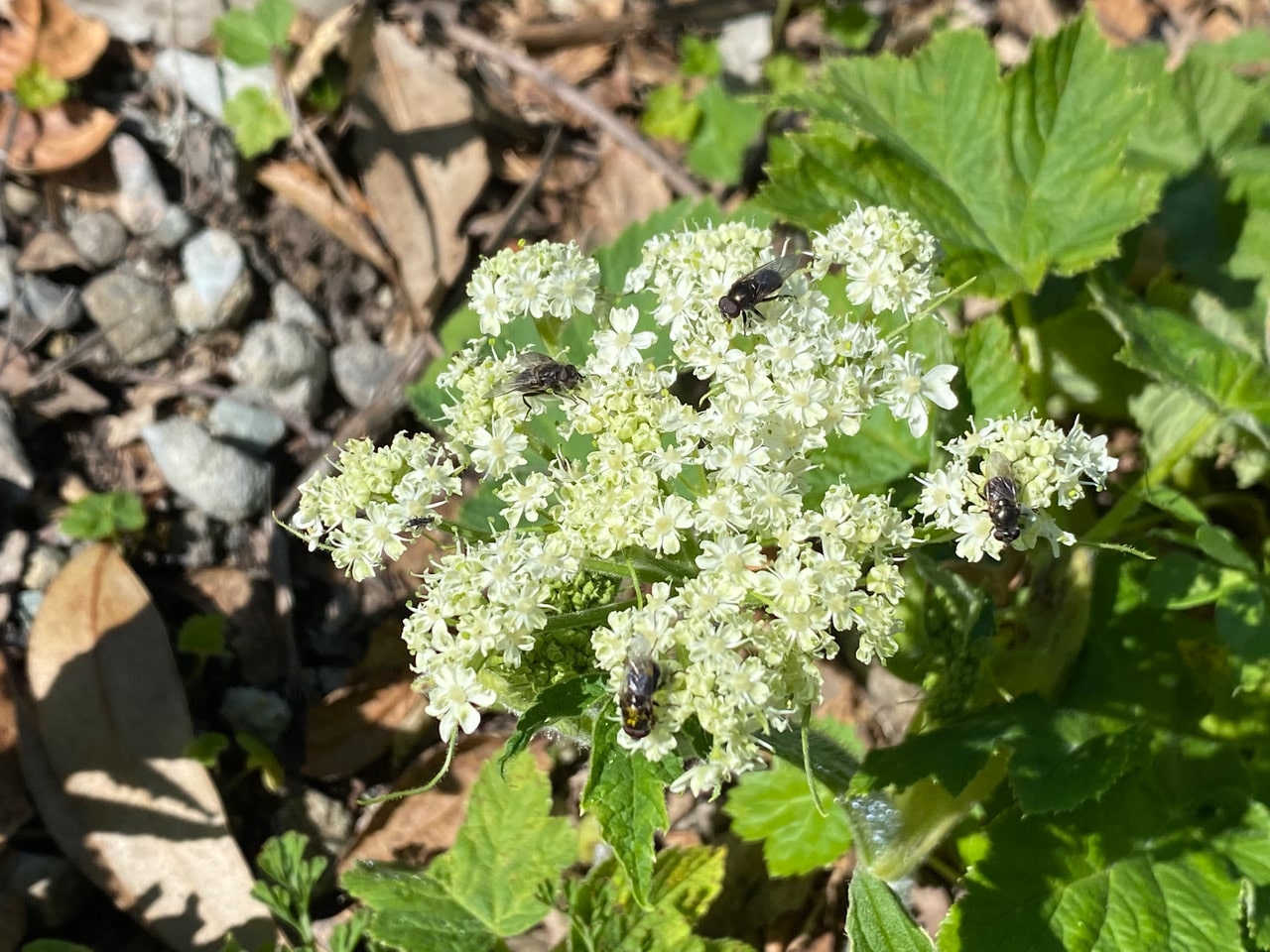 One of the first flowers of the Cow Parsnip to bloom, and the inflorescence has already attracted many flies!
 Because of the large size of its compound umbels, Cow Parsnip is one of the best sources of nectar and pollen for a wide variety of insects, especially flies, small bees, wasps, and beetles.
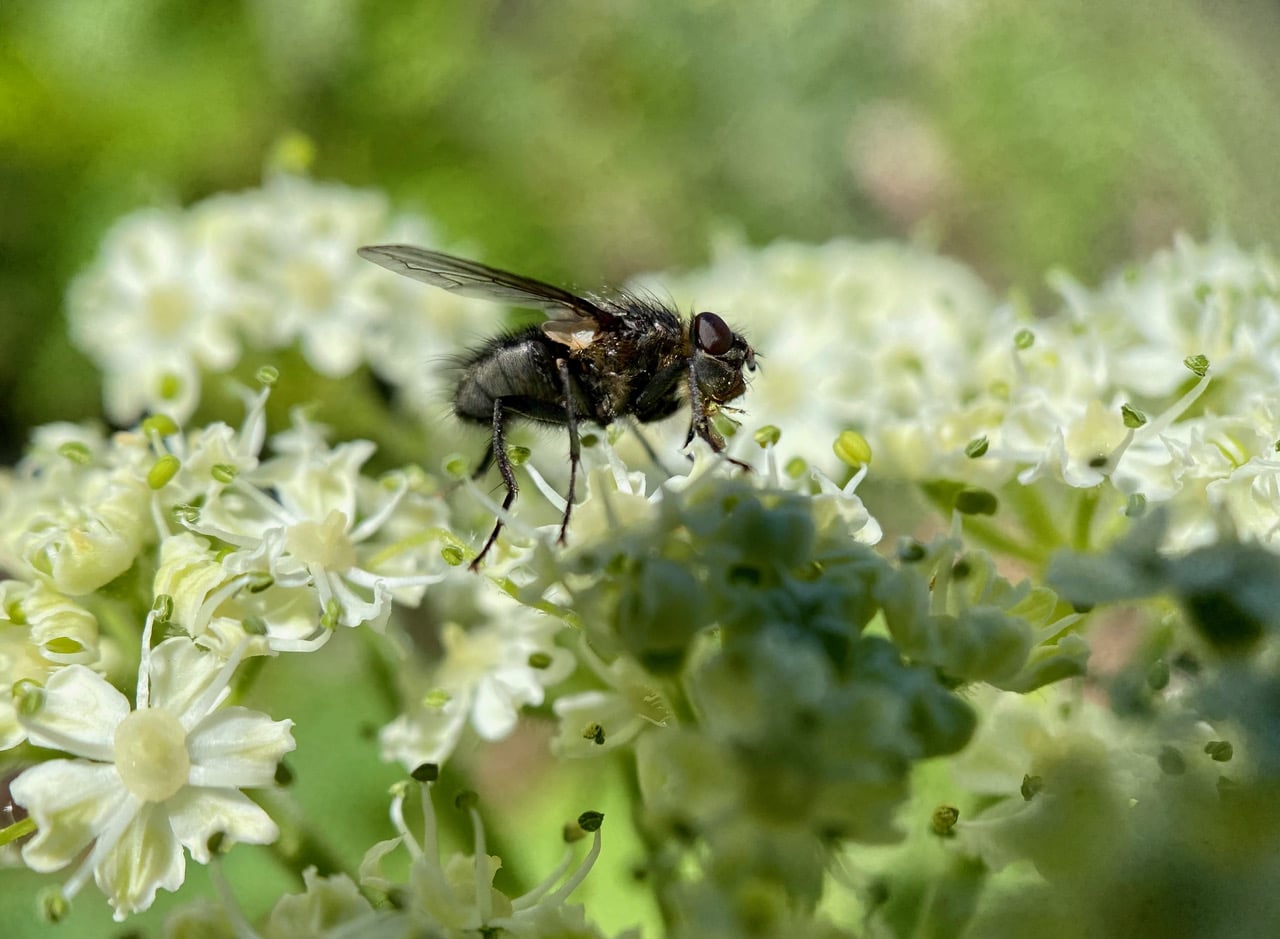 The dark fly is a member of the blow fly family Calliphoridae.
 The Calliphoridae are variously known as blow flies, carrion flies, greenbottles, and bluebottles. Adults are usually brilliant with metallic sheen, often with blue, green, or black thoraces and abdomens. There are three cross-grooves on the thorax; calypters are well developed. Females visit carrion both for proteins and egg laying. The larvae that hatch feed on dead or necrotic tissue, passing through three instars before pupation. After the third instar, the larva leaves the corpse and burrows into the ground to pupate. Adult blow flies are occasional pollinators, being attracted to flowers with strong odors resembling rotting meat. The flies use nectar as a source of carbohydrates to fuel flight.

While their dietary habits might seem revolting to humans, Blow Flies play an important role in the larger ecosystem – as decomposers/recyclers, and occasionally pollinators.