

Pollinator Post 4/1/23 (2)

Some Blue Dicks, Dipterostemon capitates are blooming nicely at Diablo Bend, attracting some bees and flies. A queen Yellow-face Bumble Bee pays a quick visit to the flowers, her weight causing the cluster to bend down dramatically. A Greater Bee Fly, Bombylius major hovers over the flowers and sticks its straight long proboscis into them without having to land. Unfortunately, the fly is one of the most elusive subjects to photograph!

A small fly lands to feed on the male flowers of an Oregon Manroot, Marah oregana. It has some stiff bristles on its abdomen – a Bristle Fly (family Tachinidae)? The fly has its head in the flowers for a long time, and I wonder if its tongue is long enough to reach the nectary under the fused stamens, or whether it is simply feeding on the pollen.
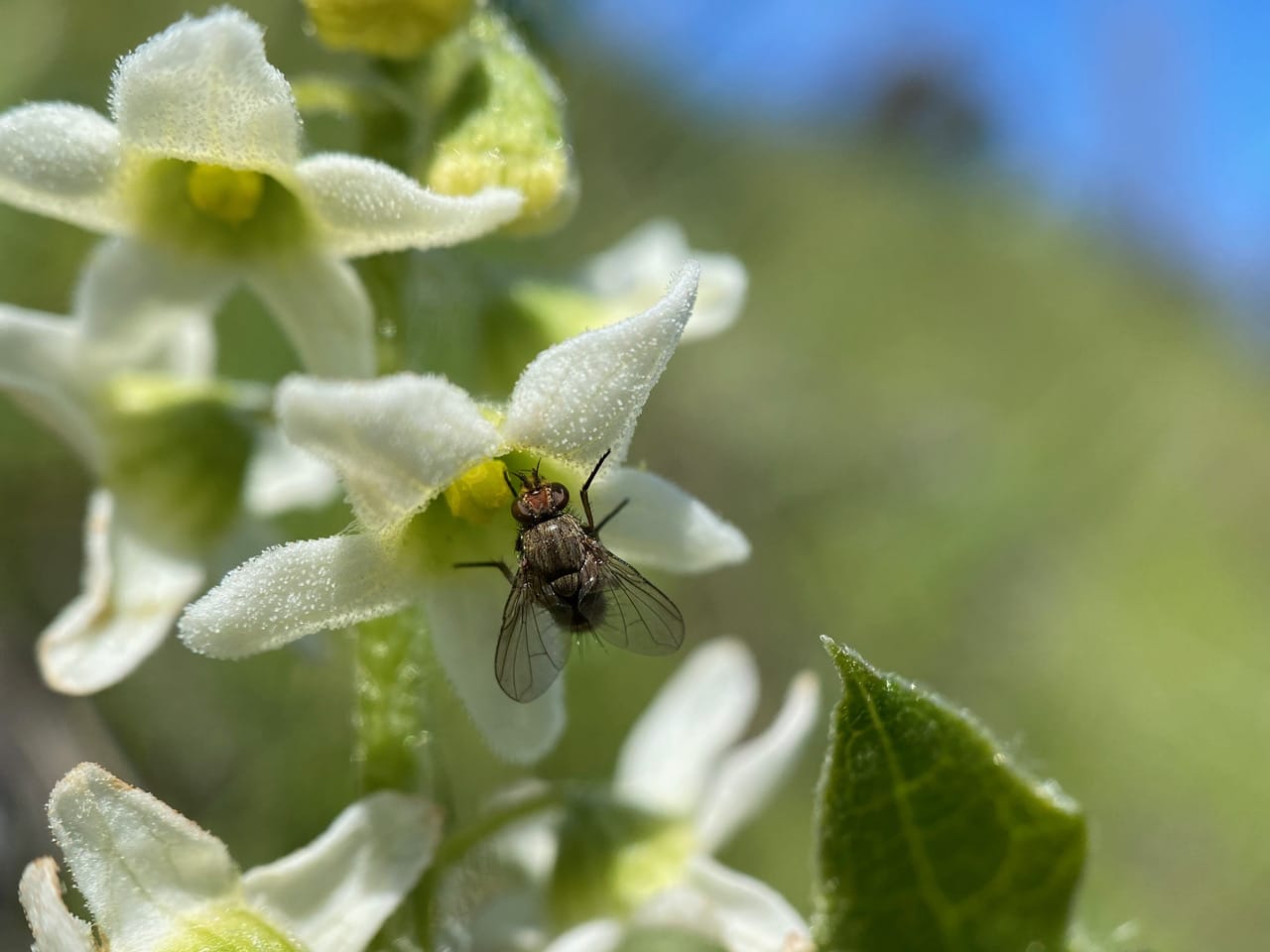

After sampling a couple of flowers, the fly emerges into the light with some pollen adhering to its head and thorax. Might the fly serve as an incidental pollinator for Marah?
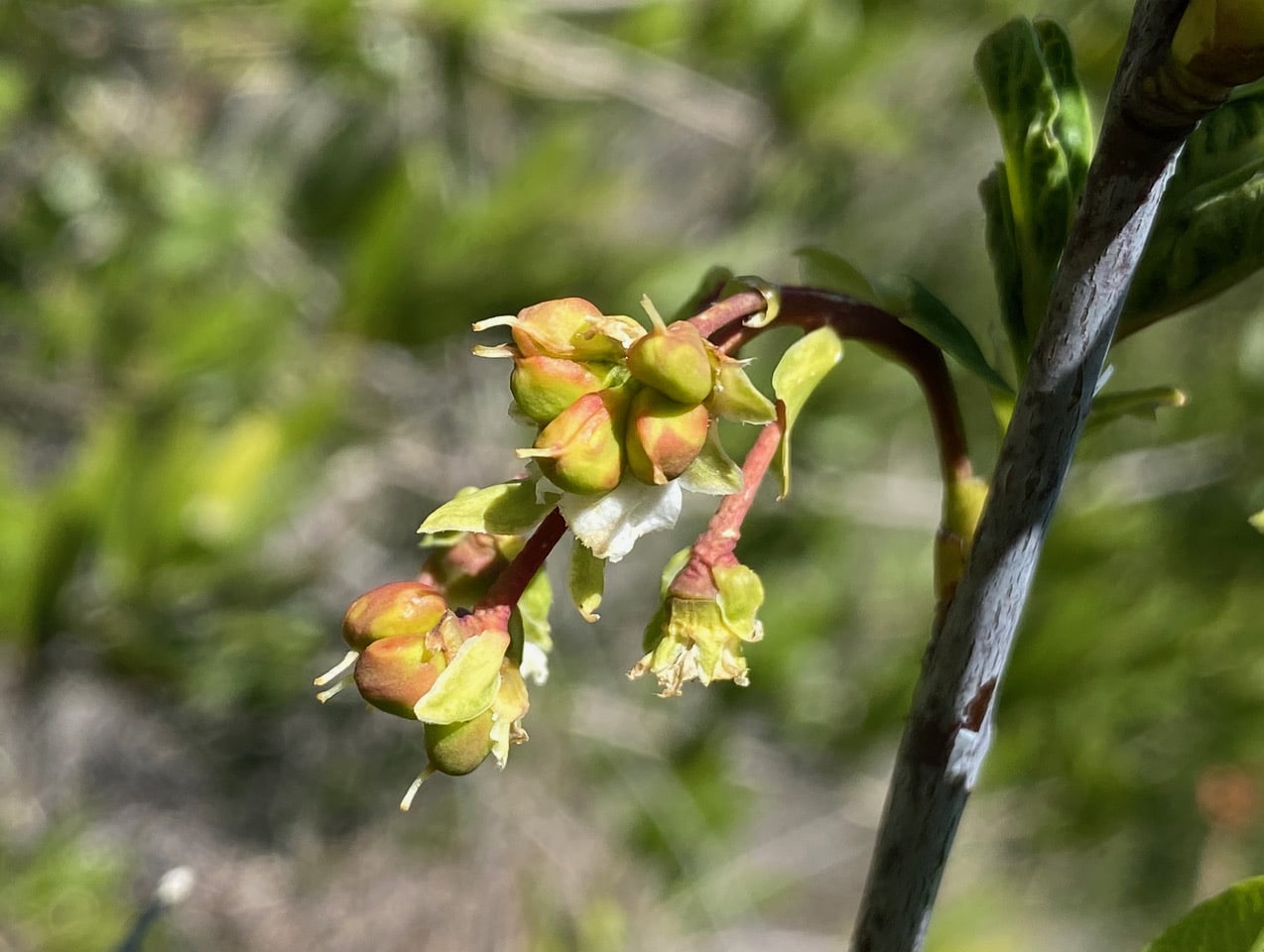
Along Skyline Trail, the flowers on a female Osoberry, Oemleria cerasiformis are fading, and some berries are beginning to develop in their wake. The 1/2 inch fruit of Osoberry, numbering up to 5 per flower, start out tan to pale orange, transition through pink to reddish purple, then ripens bluish black with a thin waxy coat. The seed is a stone, or pit, that contains cyanoglucosides (the bitter, toxic compounds also found in almonds). The fruits are edible and are eaten by birds and small mammals.
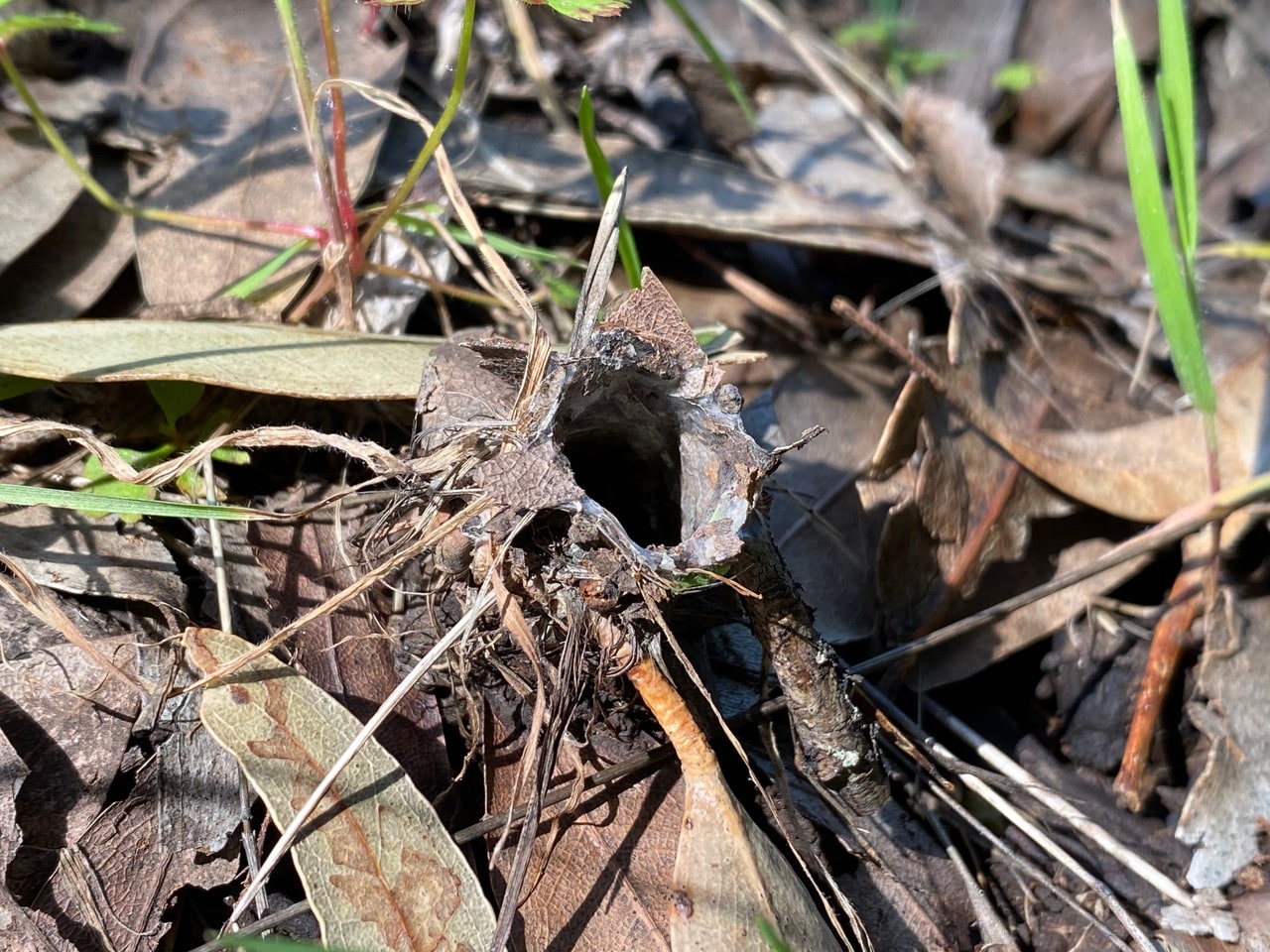
Finding a turret of the California Turret Spider, Atypoides riversi is always a thrill. This one is in plain sight, but well camouflaged among the leaf litter on the side of the trail.
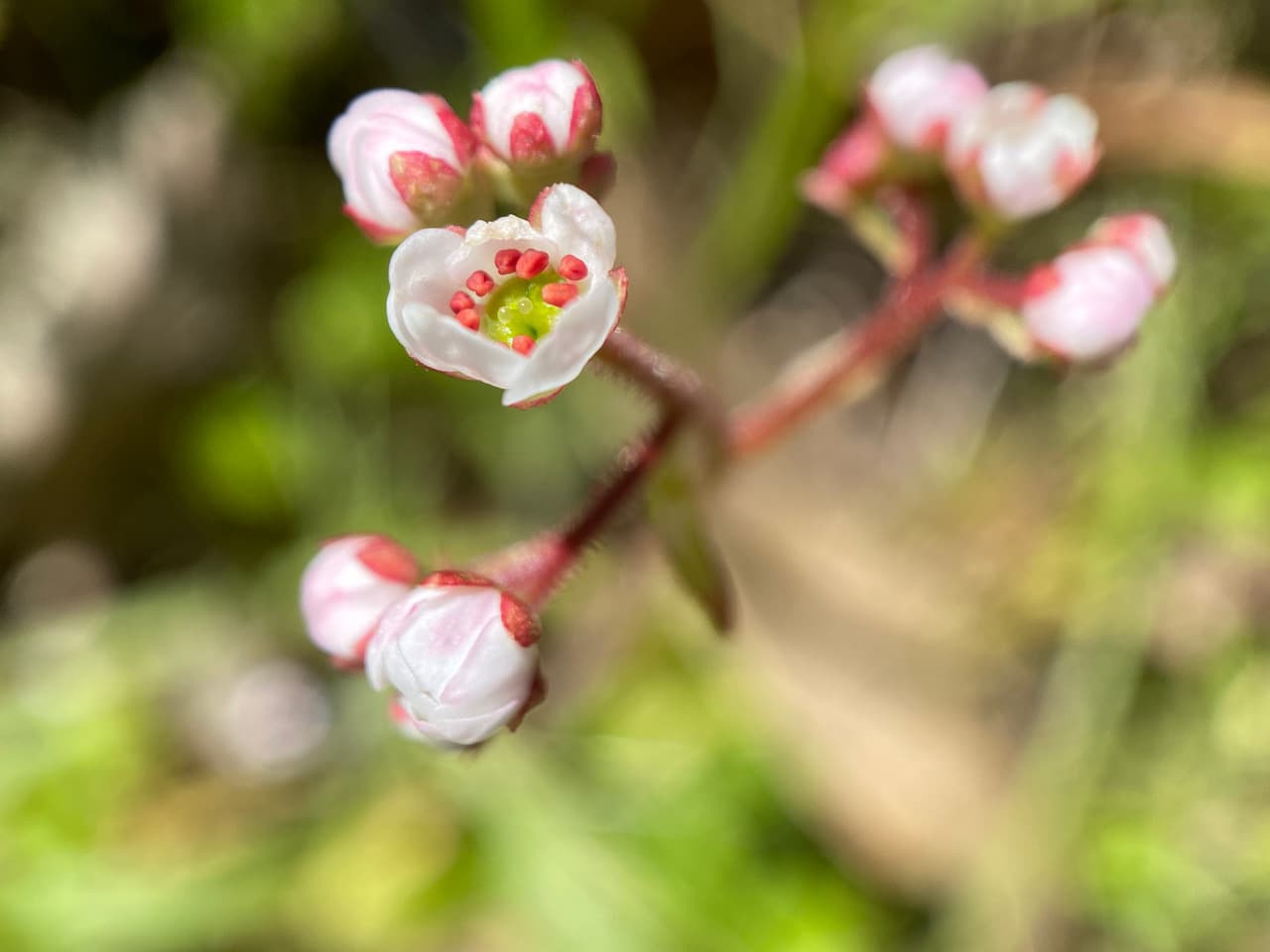
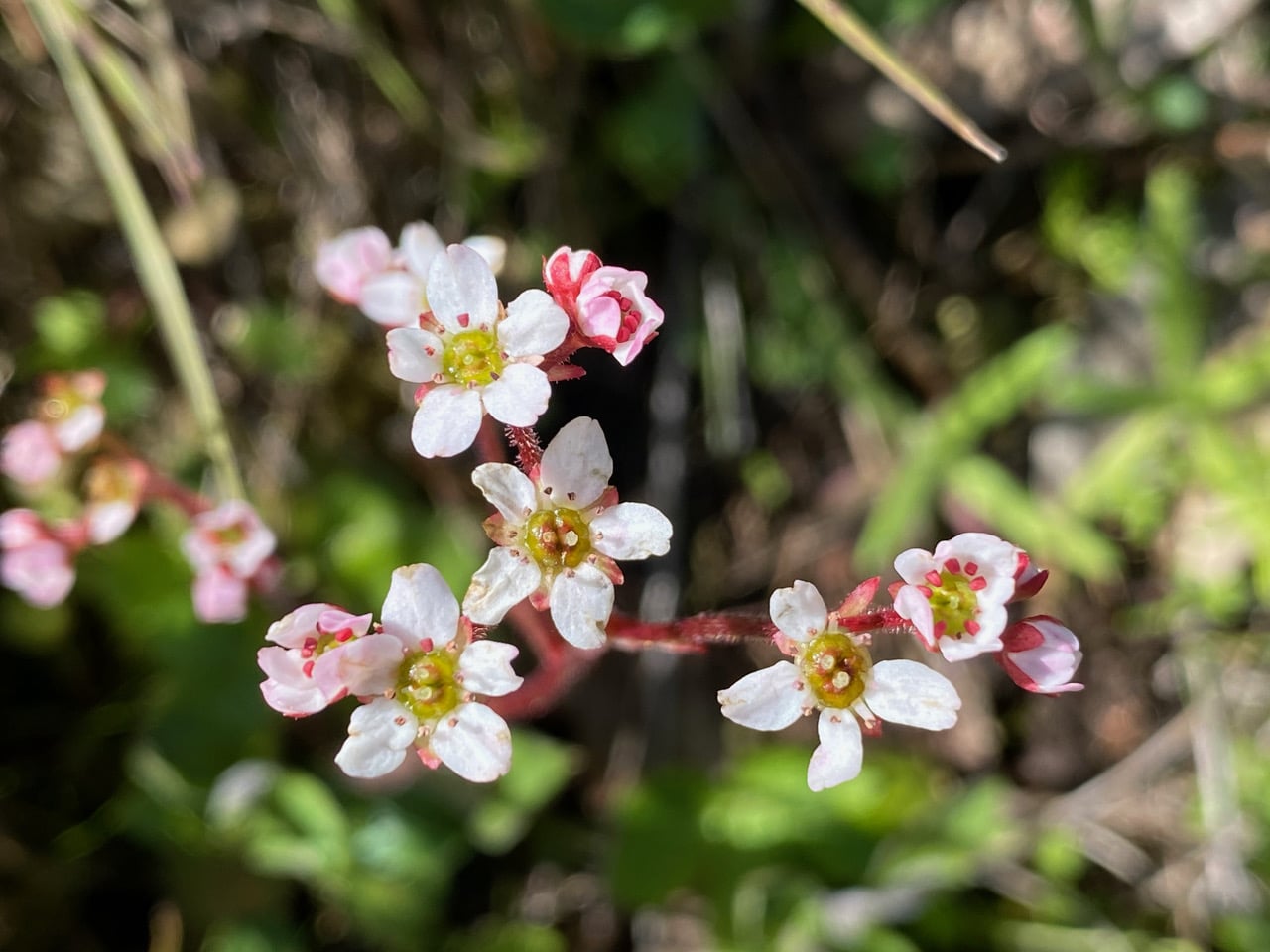
More California saxifrage, Micranthes californica on the wet banks have come into bloom. Most of the colors come from the reproductive parts of the small flowers – ten bright red anthers surround a green pistil.
As the flower ages, the spent anthers lose their color, and the 2-chambered ovary turns a dull reddish green. I have yet to see the resulting fruits. Once the petals drop, it’s probably very difficult to locate the plants.
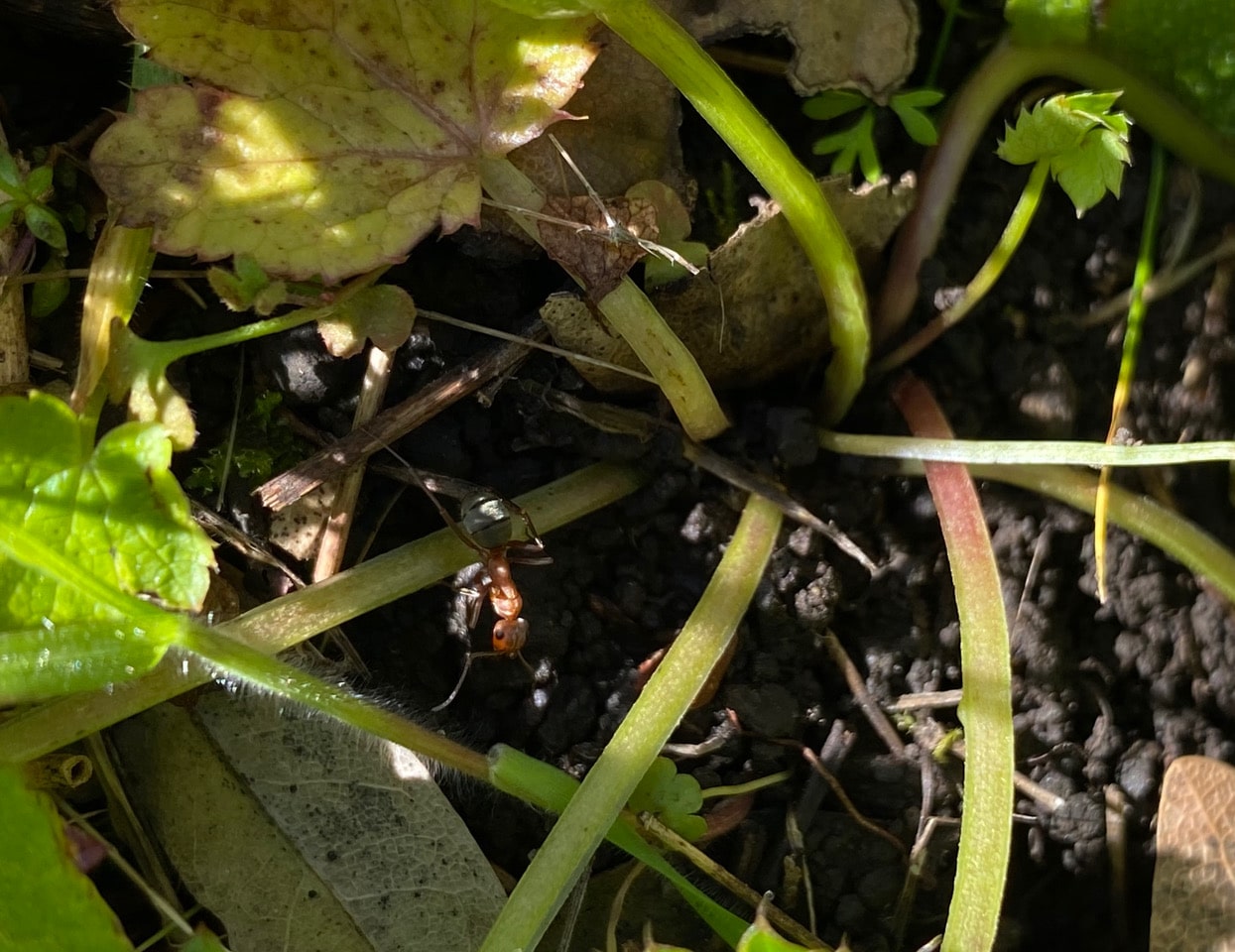
I detect some movements in the undergrowth around the California Saxifrage. A Fusca-group Field Ant, Complex Formica Fusca is on the move in the shadows. It is the largest of the four native ant species I have found in Skyline Gardens so far. These handsome ants have reddish head and thorax, dark greenish-gray abdomens with distinct black bands.
In North America, the Fusca-group in the genus Formica is most diverse in western mountain ranges, with partially distinctive Pacific and Rocky Mountain species compositions. The ants occur in grasslands and open woodlands. Formica ants actively gather honeydew from source insects, and extrafloral nectar. They also prey on insects and spiders; also scavenge small dead invertebrates, honeydew on leaf litter and plant surfaces, etc.
Field ants lack a stinger, but instead possess a circlet of hairs around an opening at the tip of their abdomen where formic acid is expelled as a defense mechanism. They can also bite. They may pinch skin with their mouthparts, and then squirt formic acid into the wound, which may feel like being stung.