

Pollinator Post 3/9/26 (1)
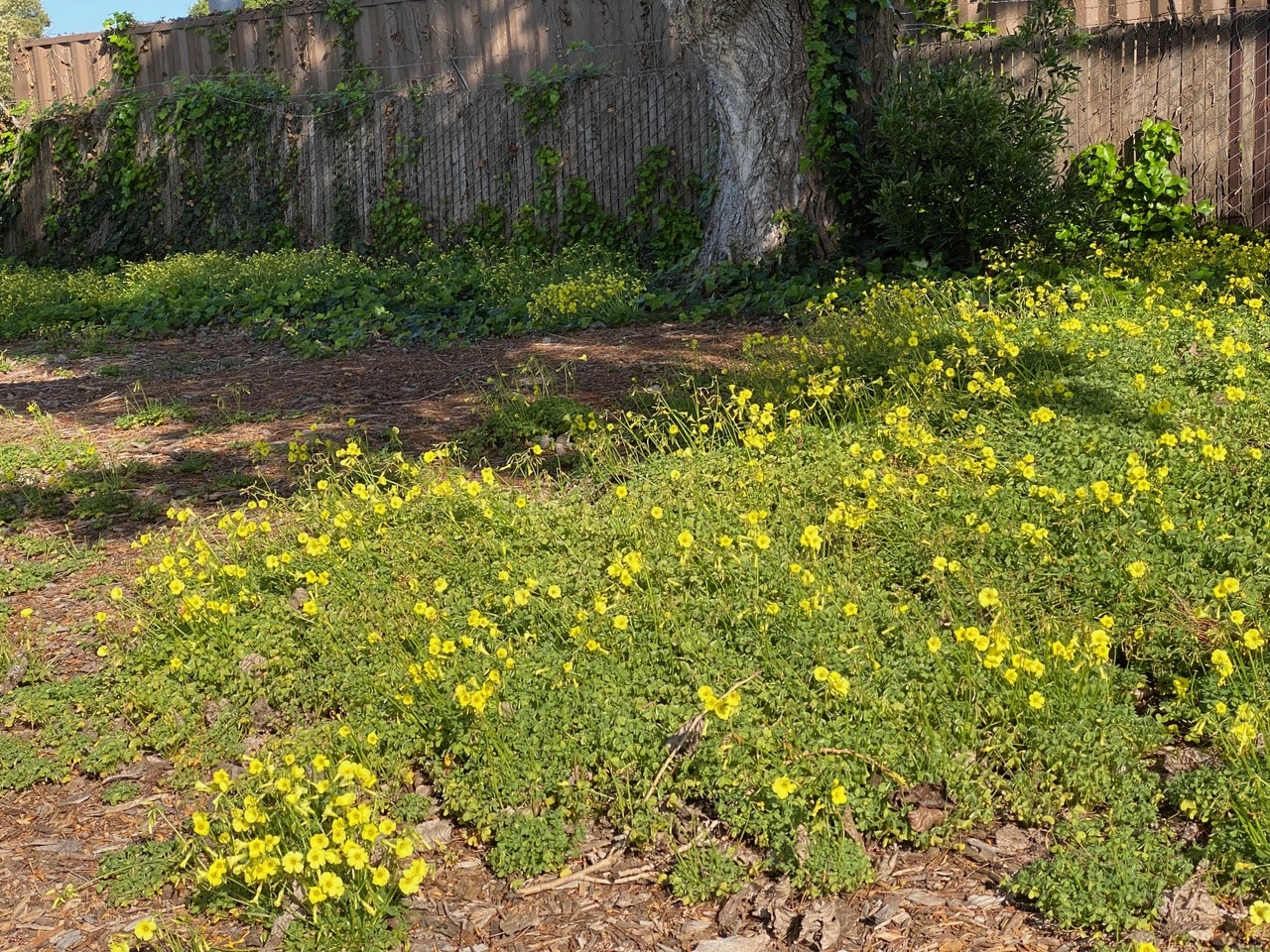
I met Tea, a professional gardener at a native plant event recently, when she showed me how to thoroughly remove the invasive Bermuda Buttercups, Oxalis pes-caprae from the garden. Tea has since asked if I were interested in collaborating with her on an article she plans to write about the subject. I agreed to take pictures while she demonstrates the process. With permission from Crab Cove, we are here at the park to work on our project.
Bermuda Buttercup, Oxalis pes-caprae (family Oxalidaceae) is a low-growing perennial found along the coast of California. The plant was introduced as an ornamental from South Africa in the early 1900s. It is now a persistent nuisance in home gardens and has taken over the coastal grasslands. Despite the beautiful flowers, Bermuda Buttercup is essentially sterile in many areas (including North America), relying entirely on bulbs to spread. The plant produces small, white bulbs (often called bulblets or bulbils) attached to the main bulb or along the underground stem (rhizome) in spring. Each plant can produce over 20 bulbs per year, which are spread by contaminated soil, garden tools, composting, and construction equipment. Rodents may eat or move the bulbs, depositing them in new locations, such as in caches. Such disturbances allow the plant to colonize rapidly in lawns, gardens, and natural areas. Specialized roots can pull the bulbs deeper into the soil, making them difficult to remove and allowing them to persist through summer dormancy.
What’s The Little Yellow Flower That’s Everywhere Right Now?
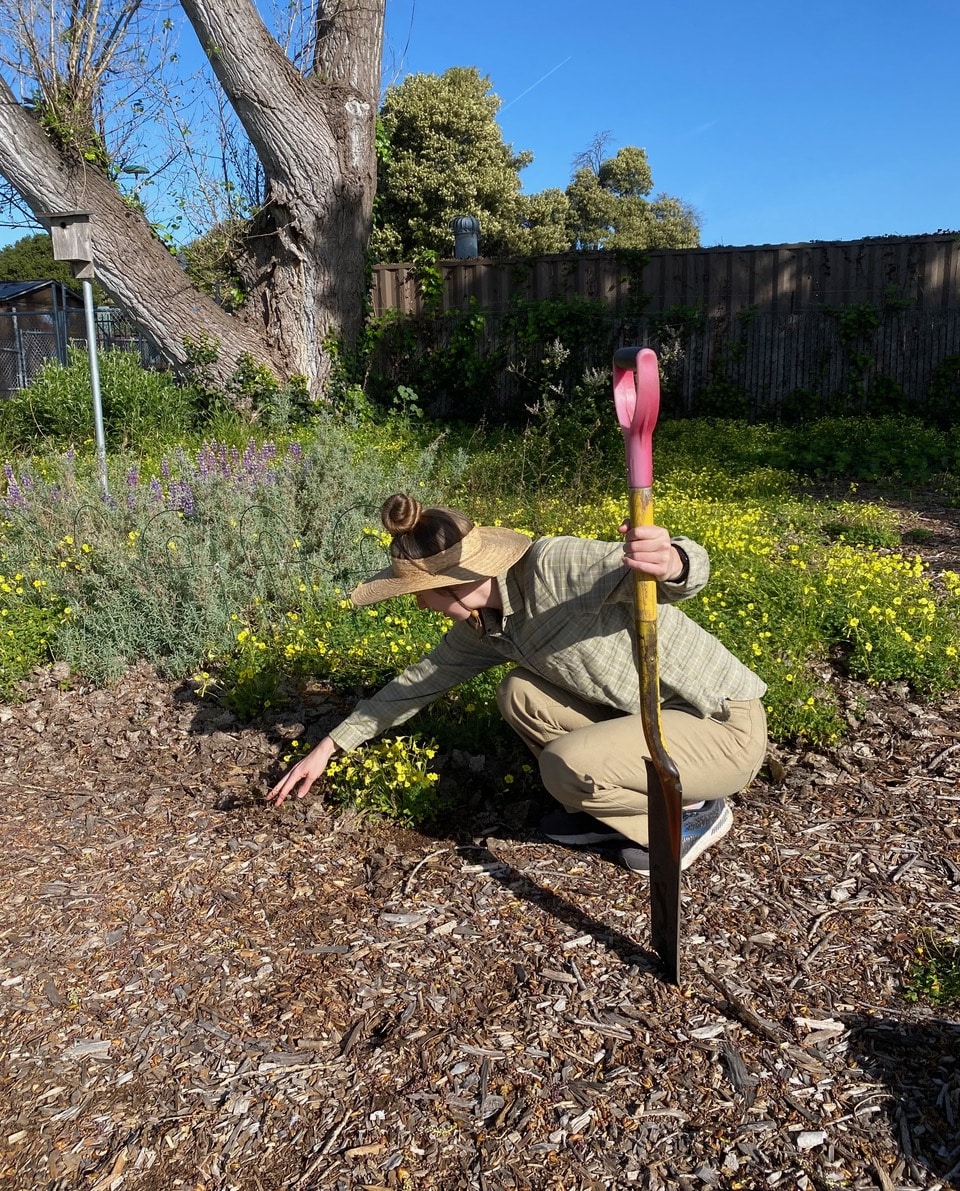
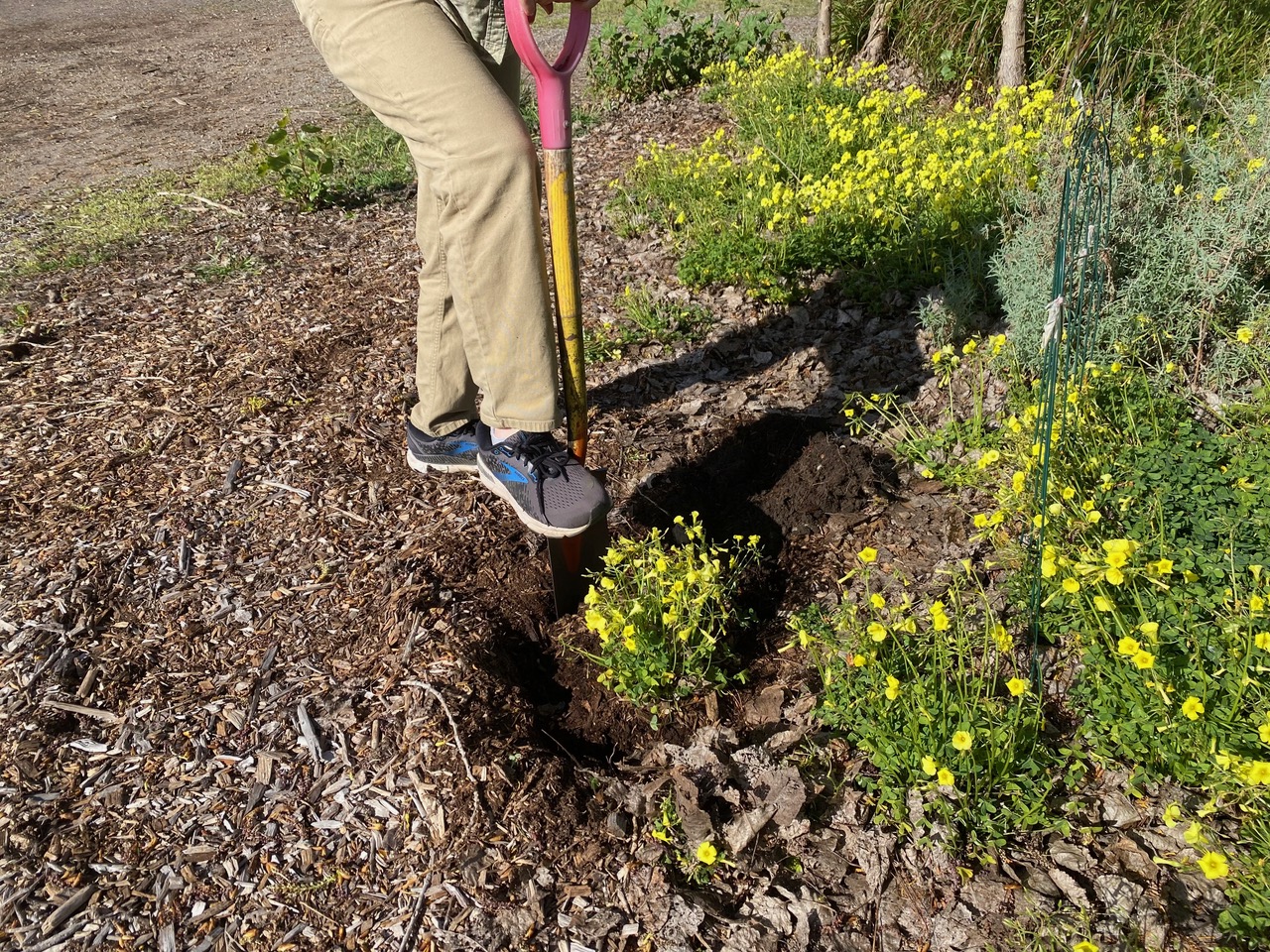
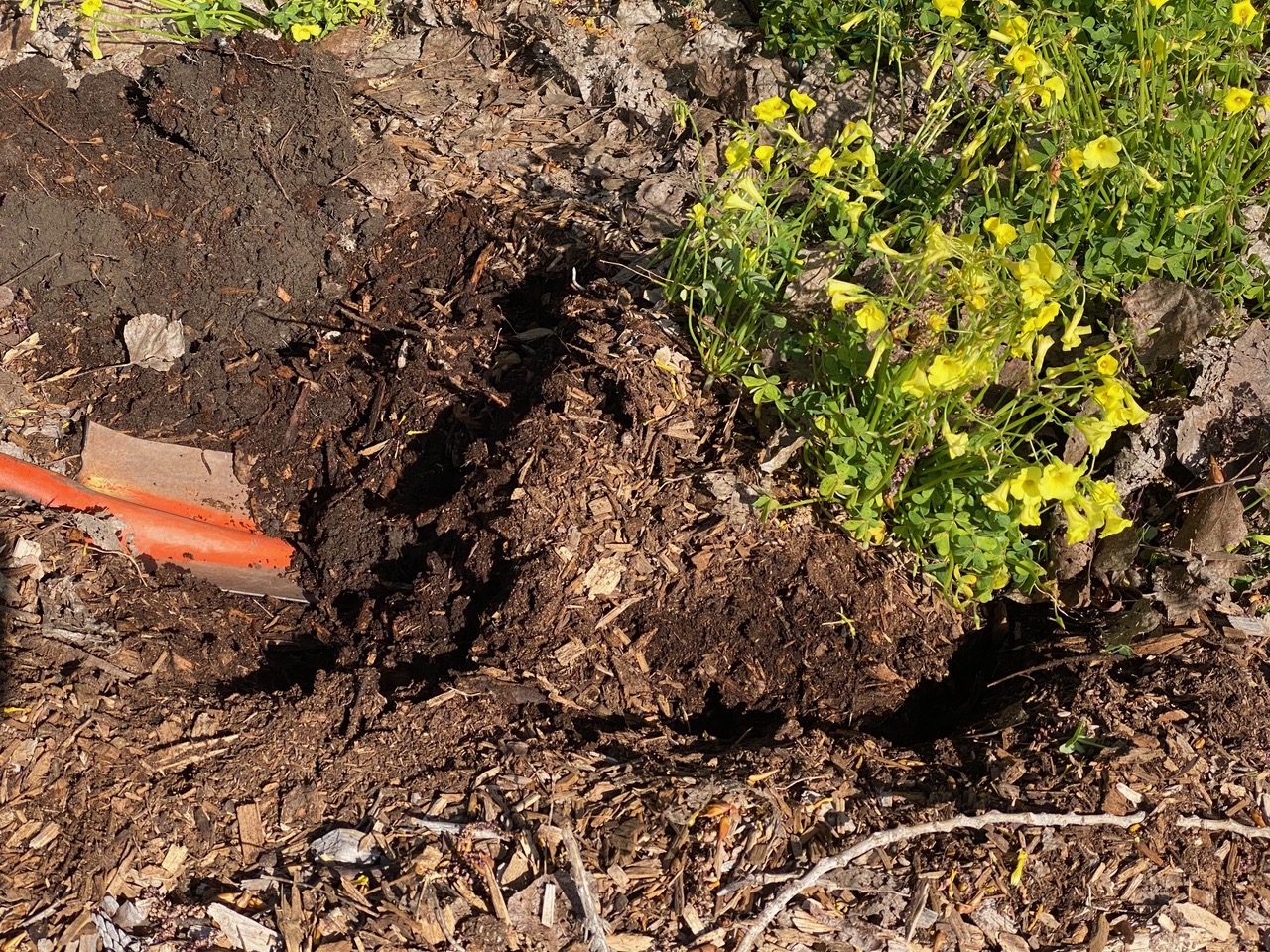



Tea and I have found the perfect spot, away from ground squirrel nests, with bare ground for ease of digging, and ideal light exposure. Holding her trusty arborist shovel, Tea proceeds to clear away the mulch around the Oxalis clumps to be removed.
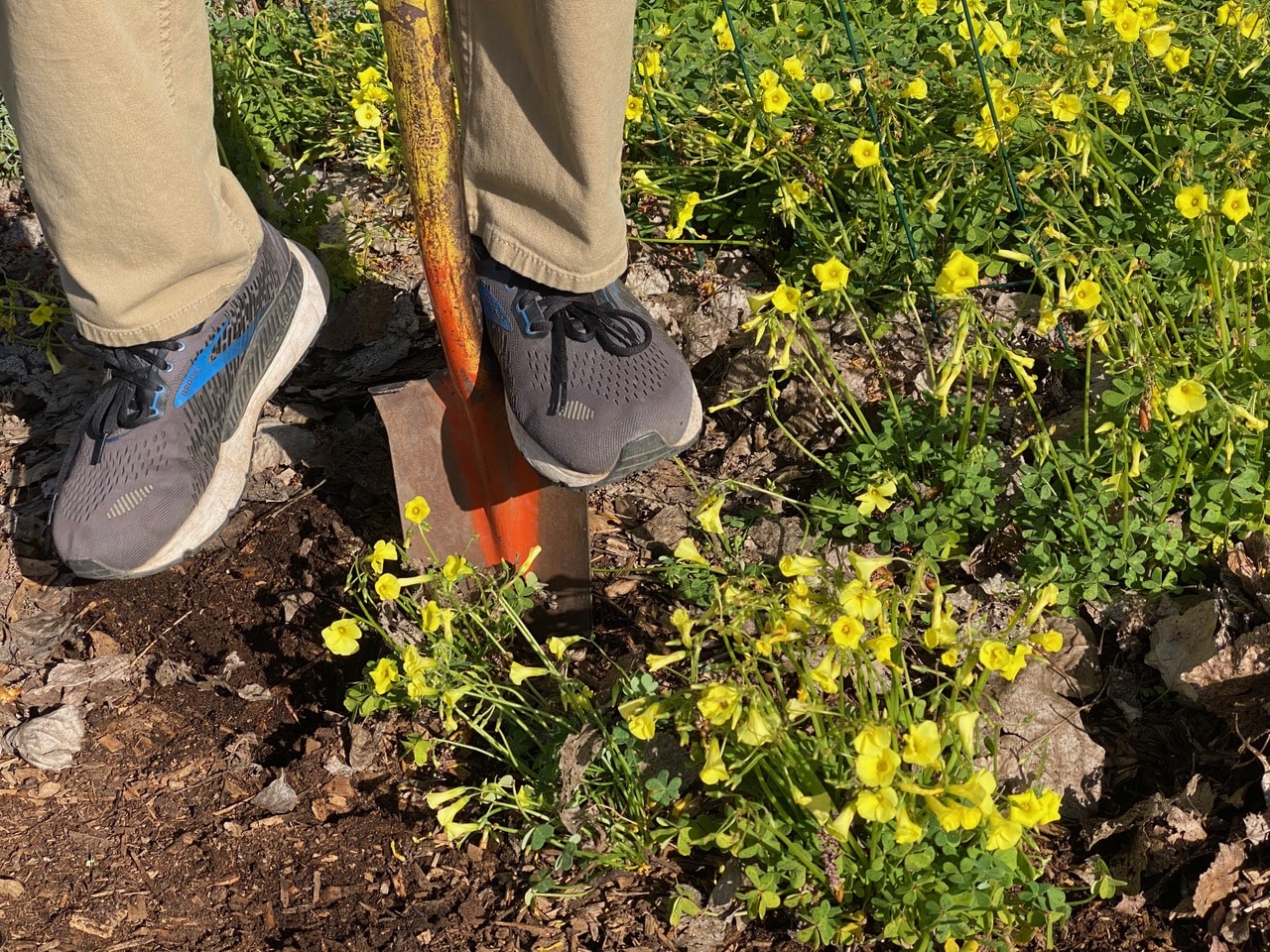
Tea sinks her 14-inch shovel vertically into the trench she has created around a clump of Oxalis.
The shovel has a little ledge for stepping on, so Tea is able to put her whole weight on the shovel.
Eventually, the whole root-ball is lifted out of the ground with the shovel. The rich soil is still somewhat moist from the winter rains, so the job is thankfully easy.
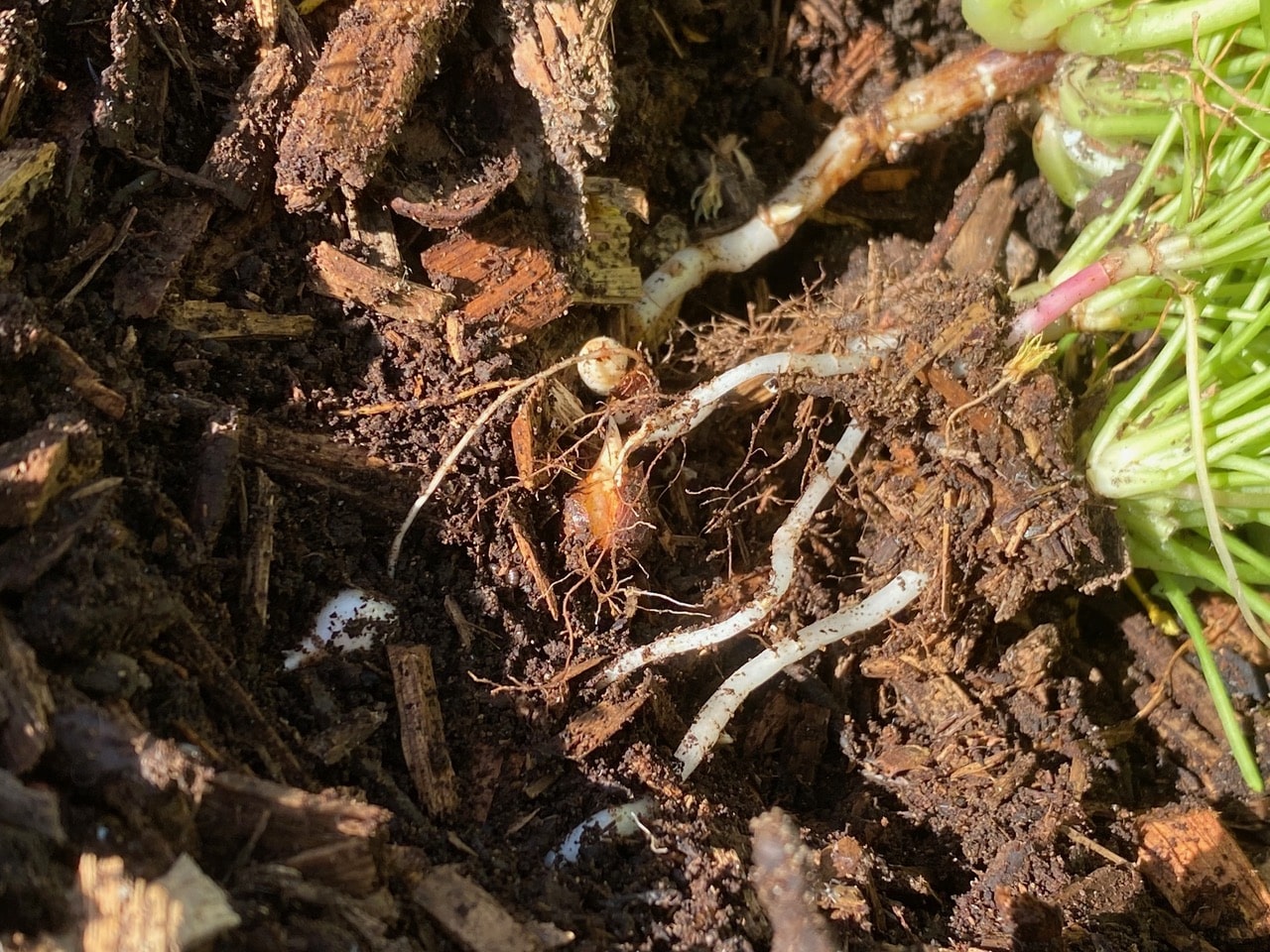
Tea carefully loosens up the soil around the Oxalis roots with her fingers, exposing the complex root system, while being careful not to let the bulblets break off.
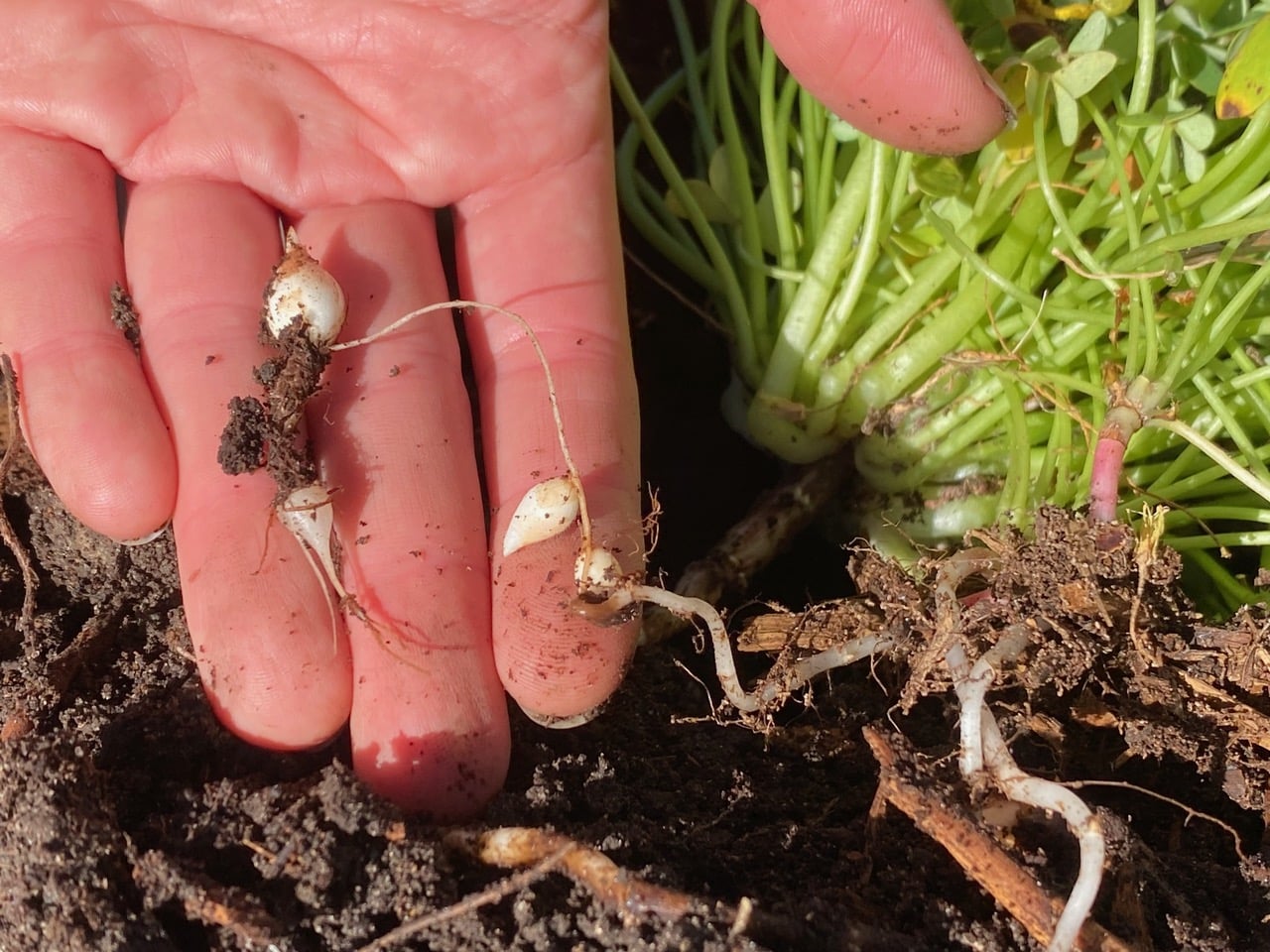
Rhizome, and bulbs of different sizes displayed on Tea’s hand.
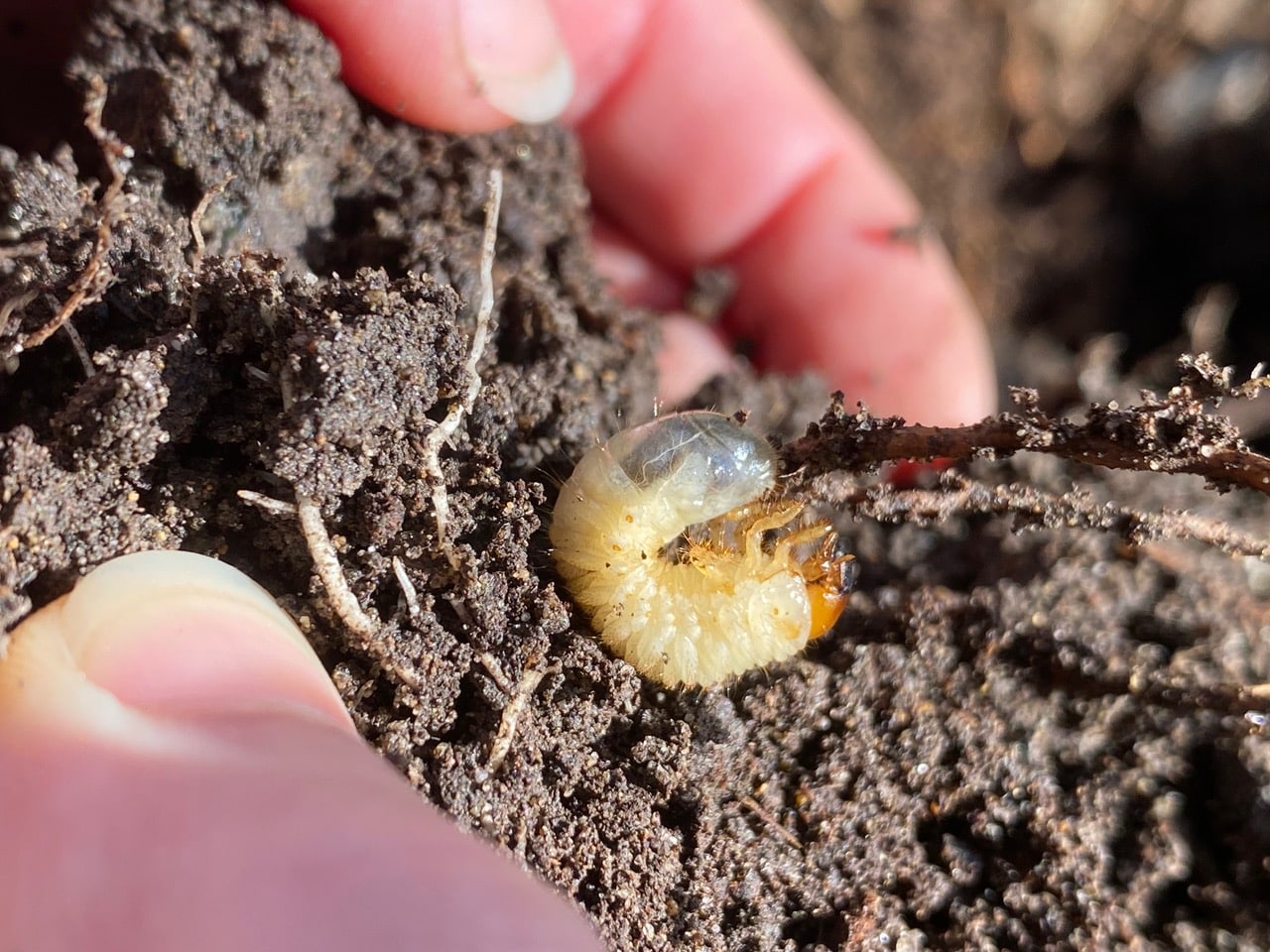
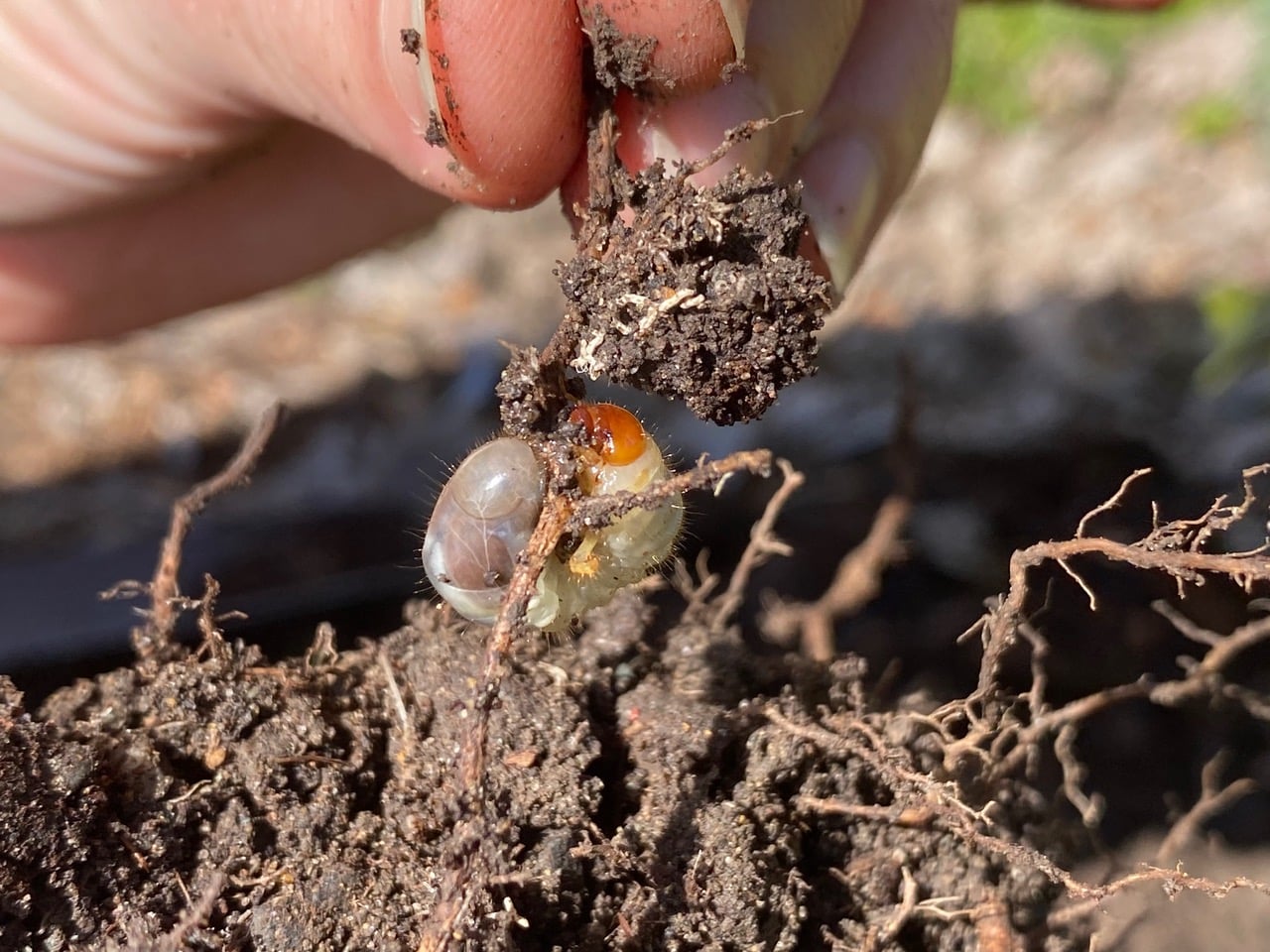
While taking apart the rootball, we find several fat beetle grubs in the root zone. iNaturalist has helped identify them as Scarab Beetles (superfamily Scarabaeoidea).
This beetle grub is still holding on to an old root.
Scarab beetle larvae (white grubs) live in the soil, feeding on organic matter, roots, or decaying wood depending on the species. While some act as beneficial decomposers, others are pests that damage lawns by feeding on grass roots. As the larvae burrow and move through the soil, they help improve soil structure. Larvae that break down decaying wood or organic matter release nutrients back into the ecosystem. They serve as a food source for birds, skunks, and other animals. If they are causing significant damage, they can be managed, but they are often a sign of a healthy, organic-rich soil environment.
The skin of the beetle larva is so thin and translucent, we can actually see its internal organs! By the way, no animal was harmed in the process. All the beetle grubs are returned to the soil when we refill the hole at the end of our demonstration.
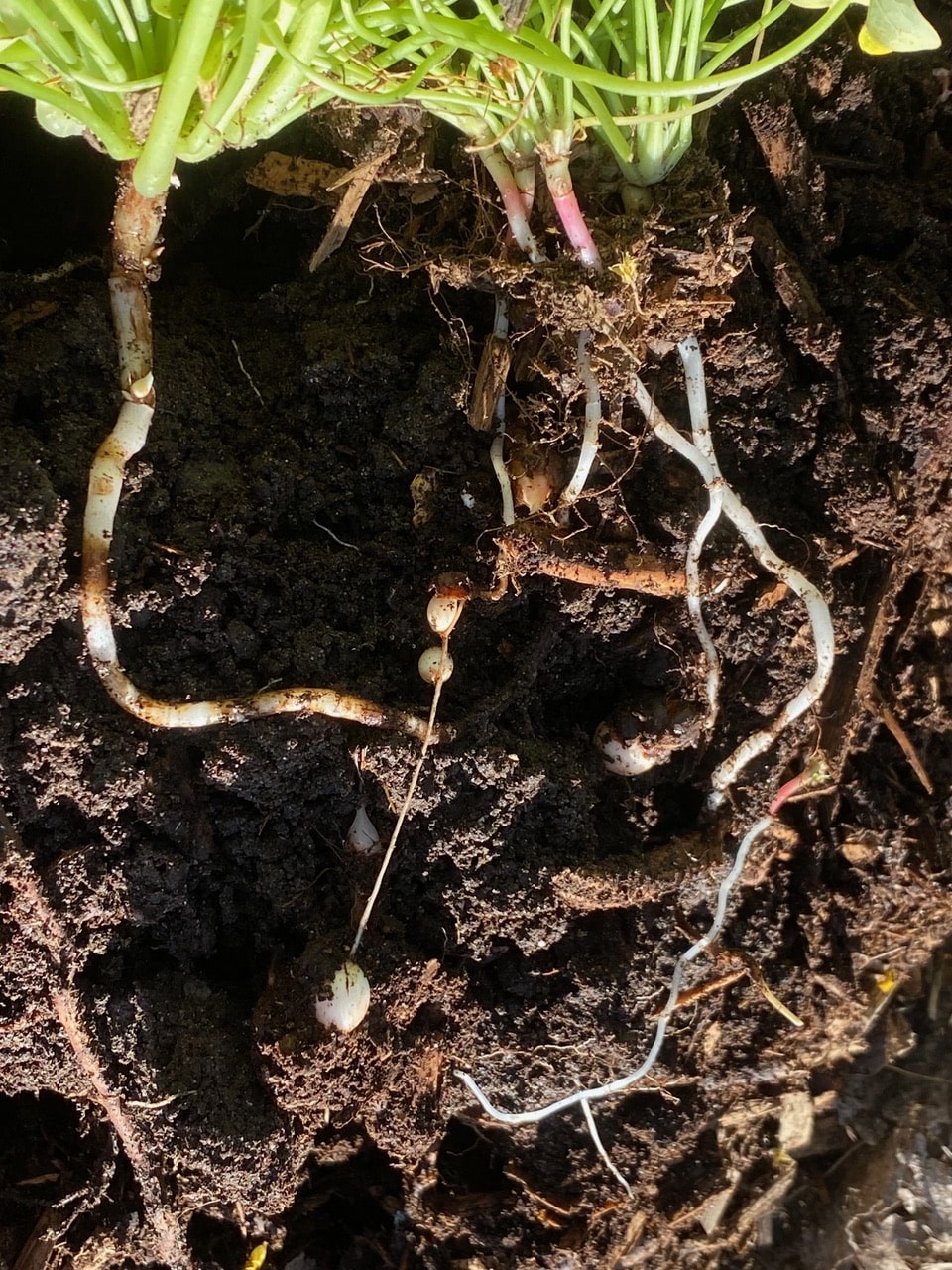
Oxalis sends its roots deep into the soil. In order to remove the bulblets, it is crucial to dig at least 12 inches into the ground. Pulling the weed from the top will only serve to break the roots and scatter the detached bulblets.
Oxalis pes-caprae features a complex, invasive root system characterized by a deep, vertical, contractile root that anchors the plant, alongside a horizontal or vertical underground stem (rhizome). Multiple, small, tear-drop-shapedd , pale brown, or white, bulblets grow from thread-like rhizomes, which can be easily broken off for rapid vegetative spread.
Several bulbs have grown along the thread-like rhizome of this Oxalis.
Tea proudly displays the root system of Bermuda Buttercup. At the end of our session, Tea thoroughly scrubs the shovel with a boot brush. She also cautions that all Oxalis bulbs removed should be disposed of carefully. Leaving them in a regular compost pile might encourage germination and eventual spread.
Thanks, Tea, getting our hands dirty was great fun! I look forward to learning more from your article.