

Pollinator Post 3/6/23 (1)

It’s not my habit to visit the Skyline Gardens in the afternoon, but I am glad for a pause in the rains – time for a short walk in the afternoon sun.
The long, furry leaves of the Wooly Mule’s Ears, Wyethia helenoides have poked up through the steep slope along Skyline Trail. It won’t be long before the plants greet us with their cheery, yellow sunflowers.
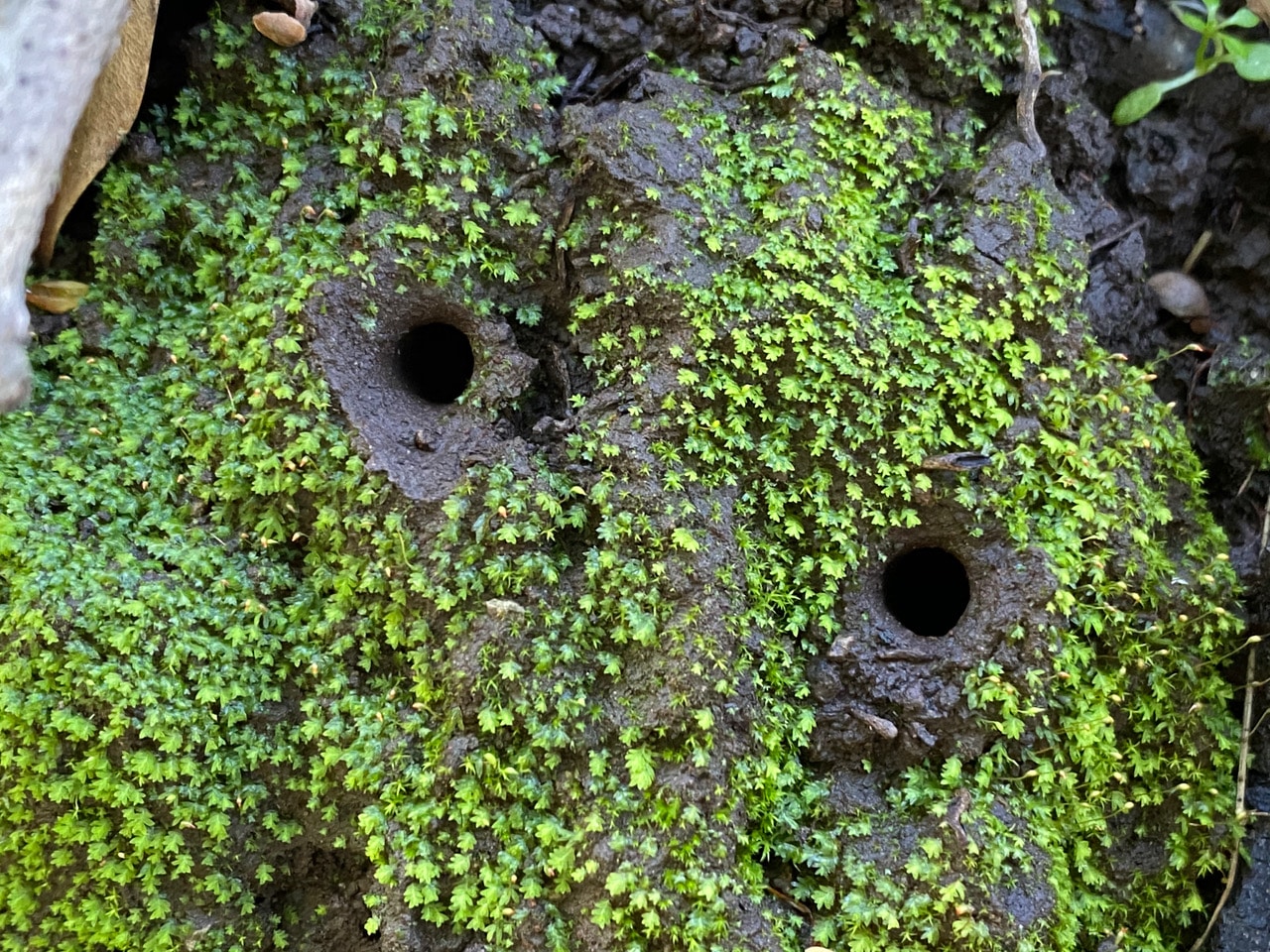
The mud banks along the Bay-Eucalyptus grove are greening up with mosses. This renders more visible the holes made by the larvae of the Night-stalking Tiger Beetles, Omus sp. (family Carabidae). Obviously the beetle larvae are still active, as their countersunk burrow entrances have been well maintained.
All members of the genus Omus occur along the west coast of North America. Both the larval and adult stages of the beetle are predacious. The pale colored larvae have large hooks at the bottom mid-rear to help anchor themselves when catching prey; the large head is capped with a black plate used to cover their burrow entrance. The larva waits near the entrance of the burrow for passing prey during day and night time, and quickly snatches and drags the prey back into the burrow. Prey includes small arthropods. The adult tiger beetles are nocturnal and are sometimes found on the ground during cloudy days or night when out hunting. The tiger beetle grasps its prey with the large, powerful mandibles protruding from the head. The mandibles contain glands that secretes enzymes that digest prey, and also serve as defense against predators.
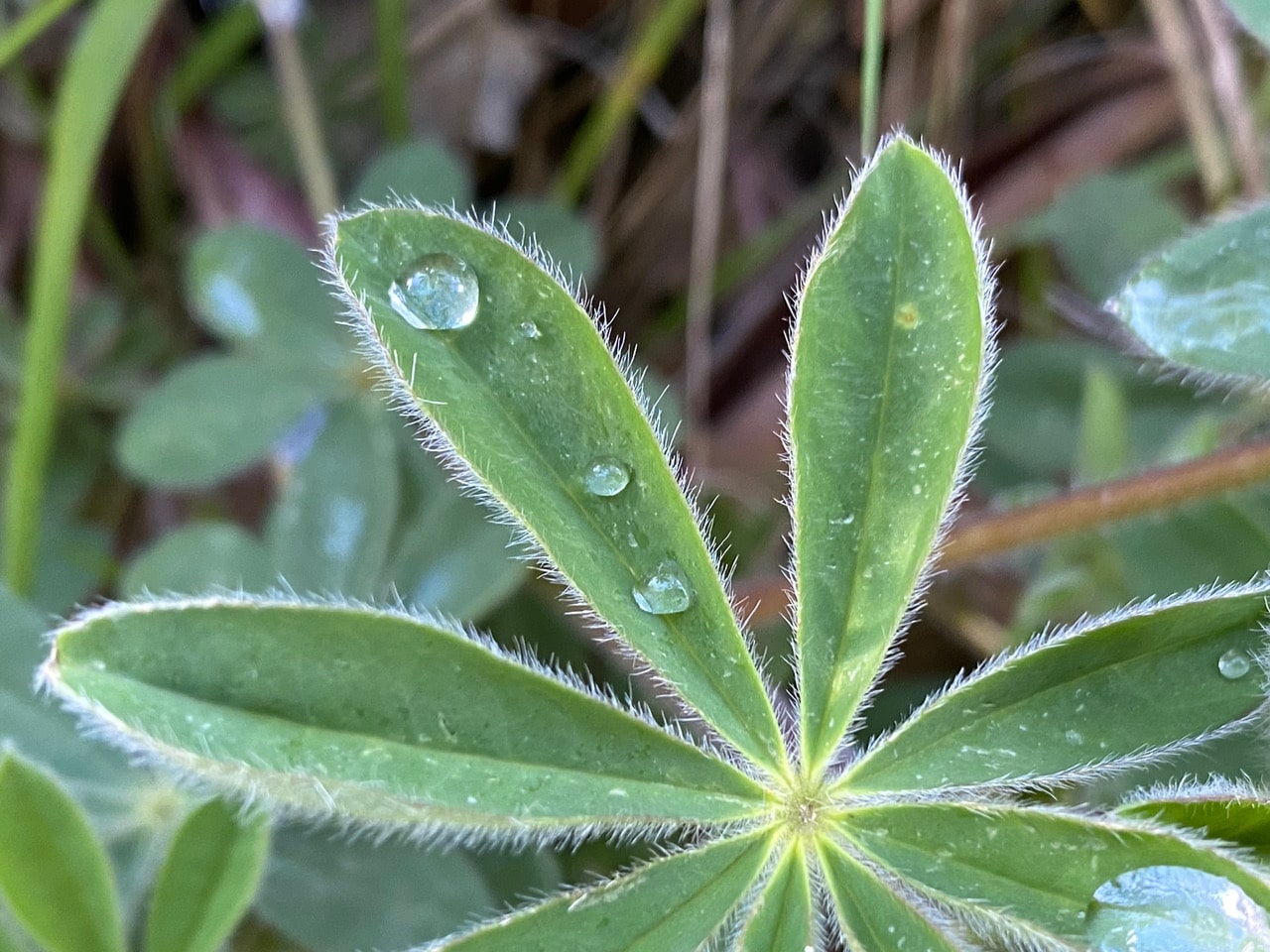
In the partial shade, another species of lupine has reared its head, the Arroyo Lupine, Lupinus succulentus.
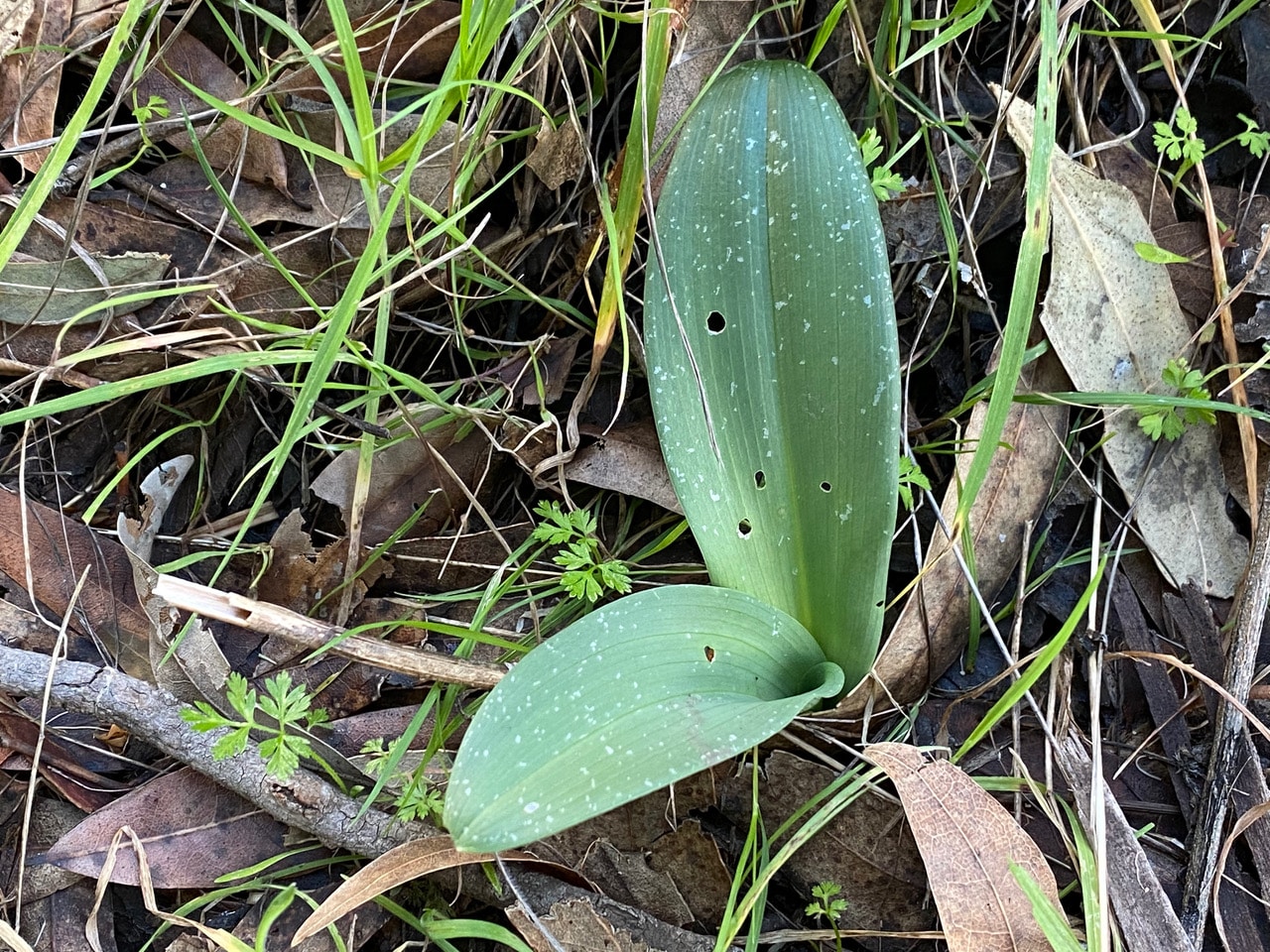
Basal leaves of the Elegant Rein Orchid, Piperia elegans? I remember seeing a spike of flowers here last year.

The Sticky Monkeyflower, Diplacus aurantiacus has put on new leaves on the branches to replace the old tired ones.
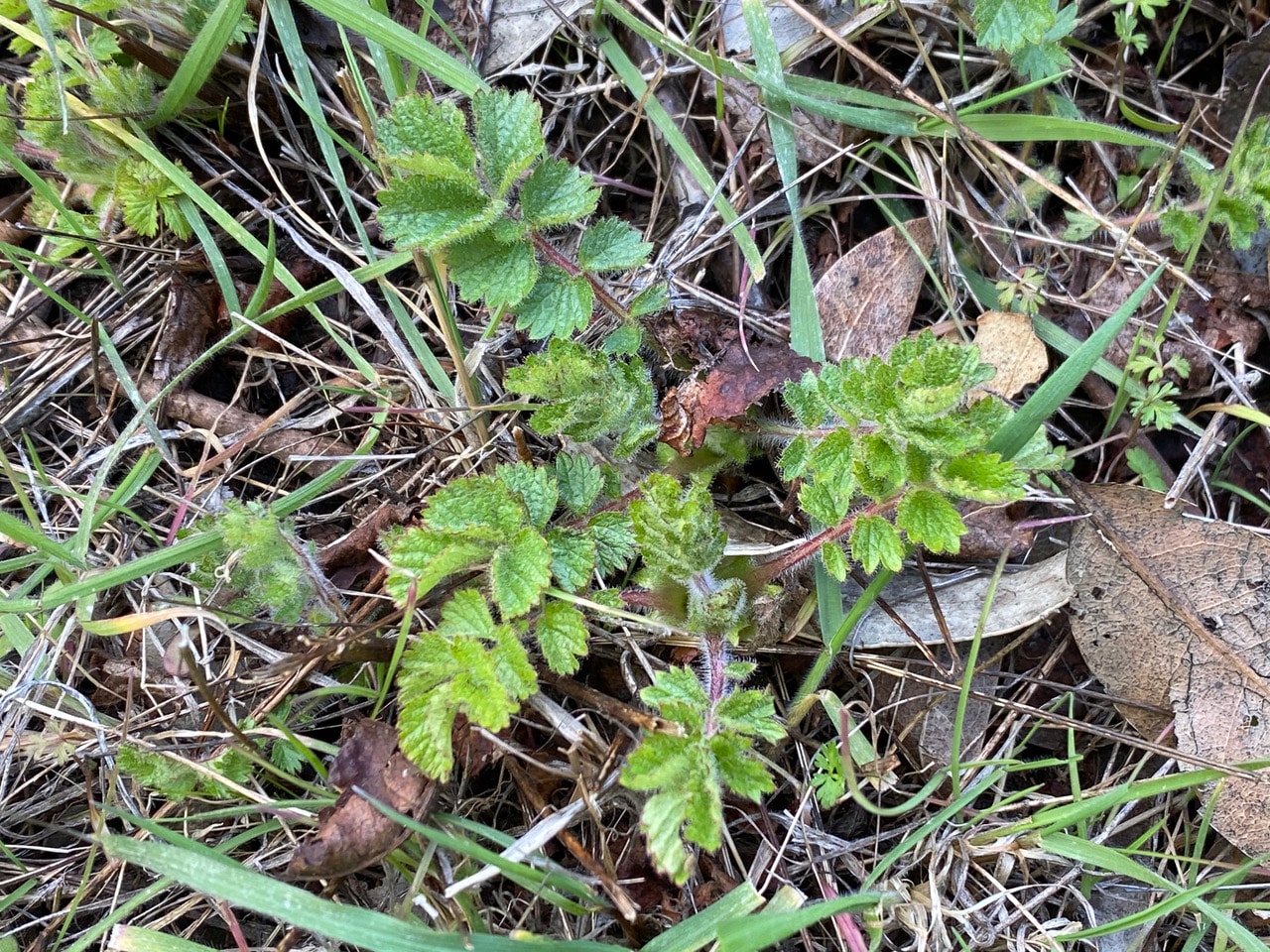
Tender leaves of the Sticky Cinquefoil, Drymocallis glandulosa have sprouted up everywhere. So good to see these old friends coming back!
I bend down to look at the Common Crystalwort, Riccia sorocarpa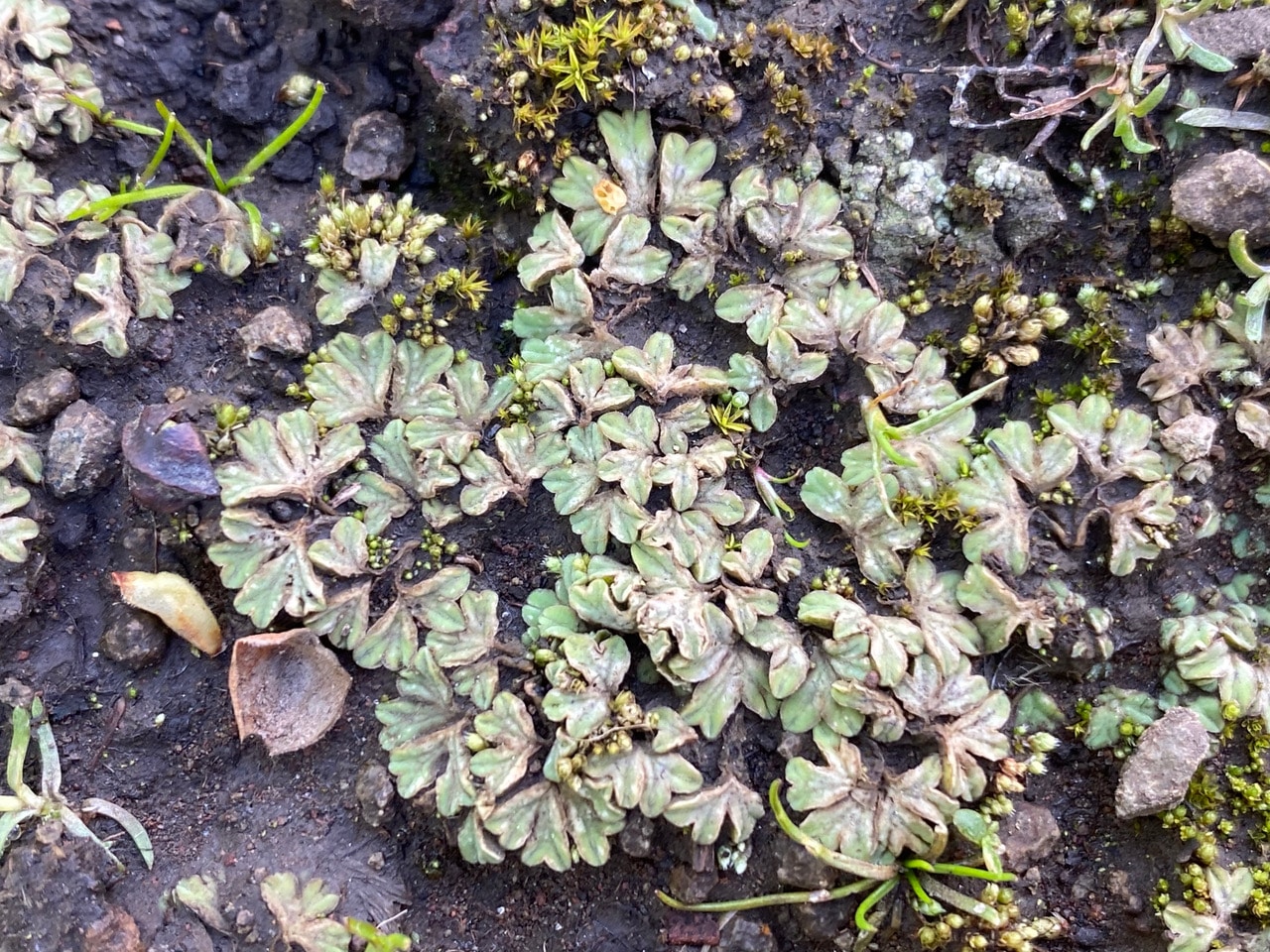
I bend down to look at the Common Crystalwort, Riccia sorocarpa growing in expanding mats on the damp soil on the edge of the trail.
Riccia is a genus of liverworts in the order Marchantiales. These plants are small and thalloid, that is not differentiated into root, stem and leaf. Some have thalli that are dichotomously branched and form rosettes spreading into intricate mats.

A red-legged mite enters my field of vision while I am looking at the liverworts. The small critter is moving at a fast pace among the uneven terrain of miniature plants.
Mites are arachnids closely related to spiders and ticks, but generally smaller in size. While they technically have two body regions, visually it looks like a single unsegmented body with legs. Mites have four life stages: eggs, larva (hatchling), nymph and adult, although there can be multiple nymph stages. As larvae, mites have three pairs of legs. However, as nymphs and adults, mites have four pairs of legs.
Mites occupy a wide range of ecological niches. Many are important decomposers in various habitats. They eat a wide variety of material including living and dead plant and fungal material, lichens and carrion; some are predatory. Others are parasites of plants and animals; some are gall inducers. The majority are beneficial, living in the soil or aqueous environments and assisting in the decomposition of decaying organic matter, as part of the carbon cycle.
iNaturalist has helped identify our mite as a member of Penthaleus, a genus of earth mite in the family Penthaleides, most likely an introduced species. These mites are a major winter pest of a variety of crops and pastures in Australia.
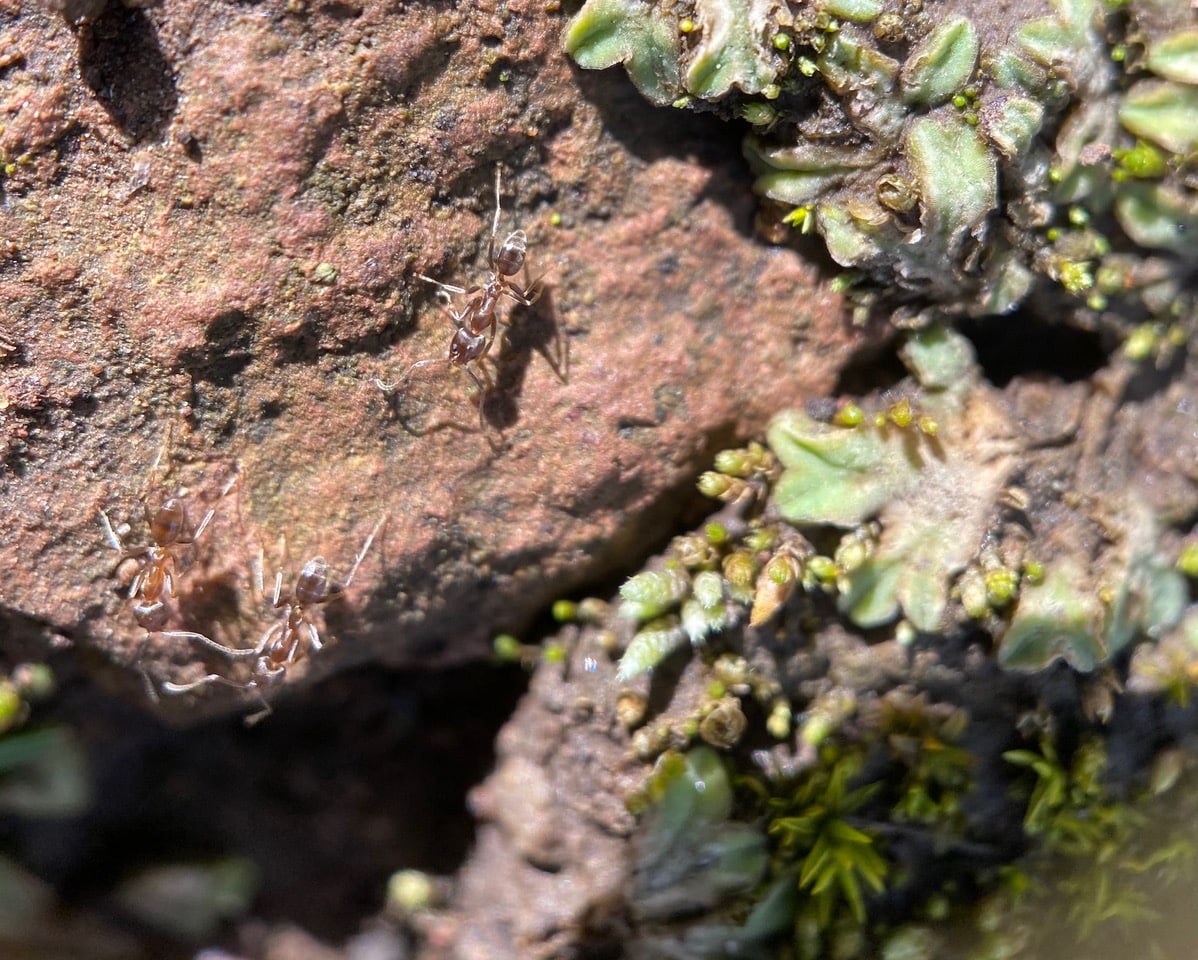
Almost invisible to the naked eye, Argentine Ants are foraging among the mosses and liverworts.
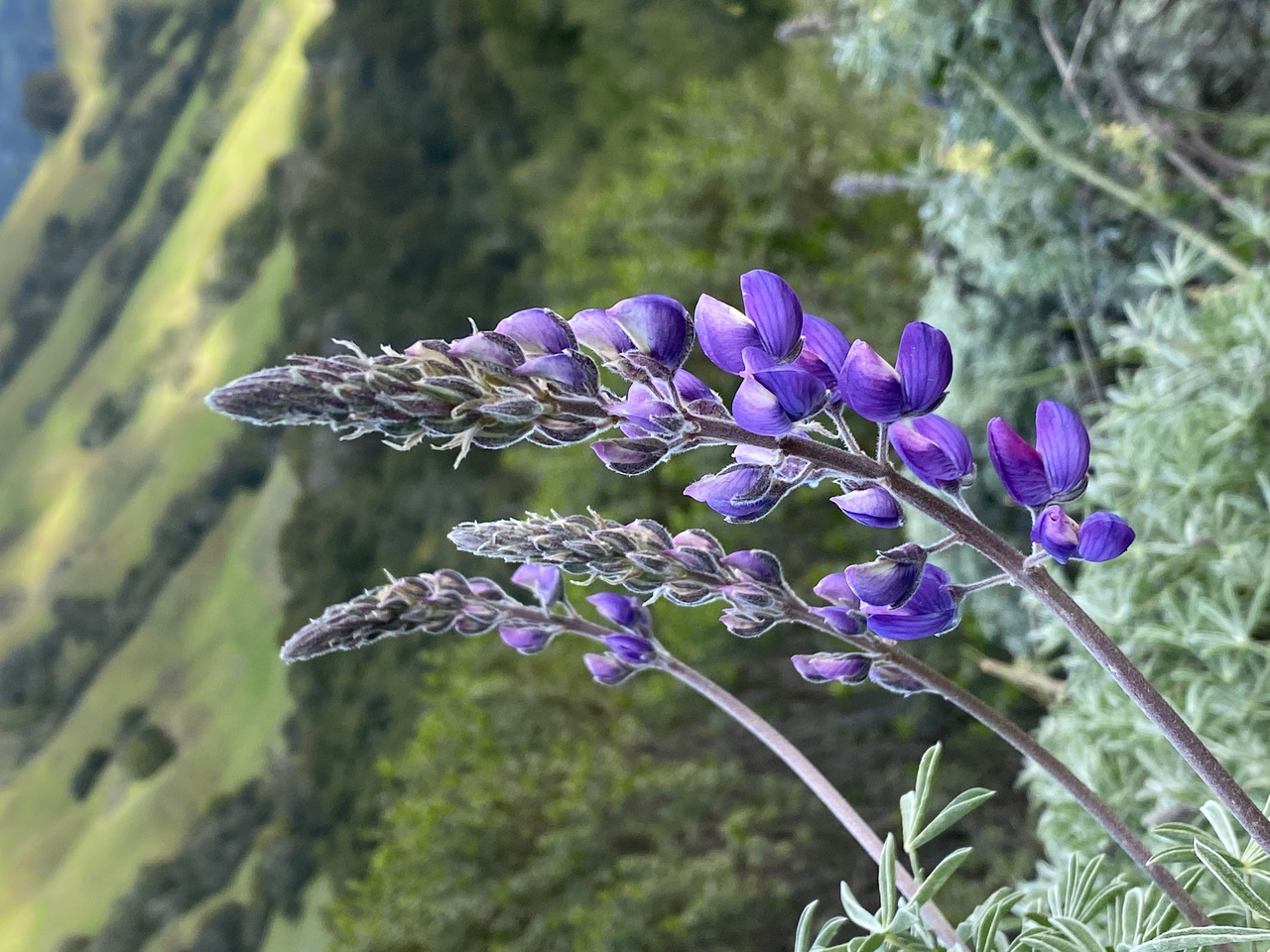
Some of the Silverleaf Lupine, Lupinus albifrons on the slopes Diablo Bend are blooming nicely. All of the flowers on this large inflorescence are pristine, seemingly untouched by pollinators. Perhaps the rains and perpetual overcast have prevented the bumble bees, the lupine’s major pollinator, from coming out to forage. The place is eerily silent – no bees are buzzing around. This does not bode well for either plant or pollinators.

I check the plant on which I have previously found a new colony of Lupin Aphids, Macrosiphum albifrons. The infestation appears to have remained small and limited in scope. I guess these sunless days are hard on most insects, even aphids. I examine the neighboring lupines and can’t find any aphids on them. The infestation has not spread, as the aphids are relatively sedentary at this stage of their life. It’s only later when overcrowding occurs and predators and parasites abound that the aphids will send off alates (winged reproductives) to seek new territories.
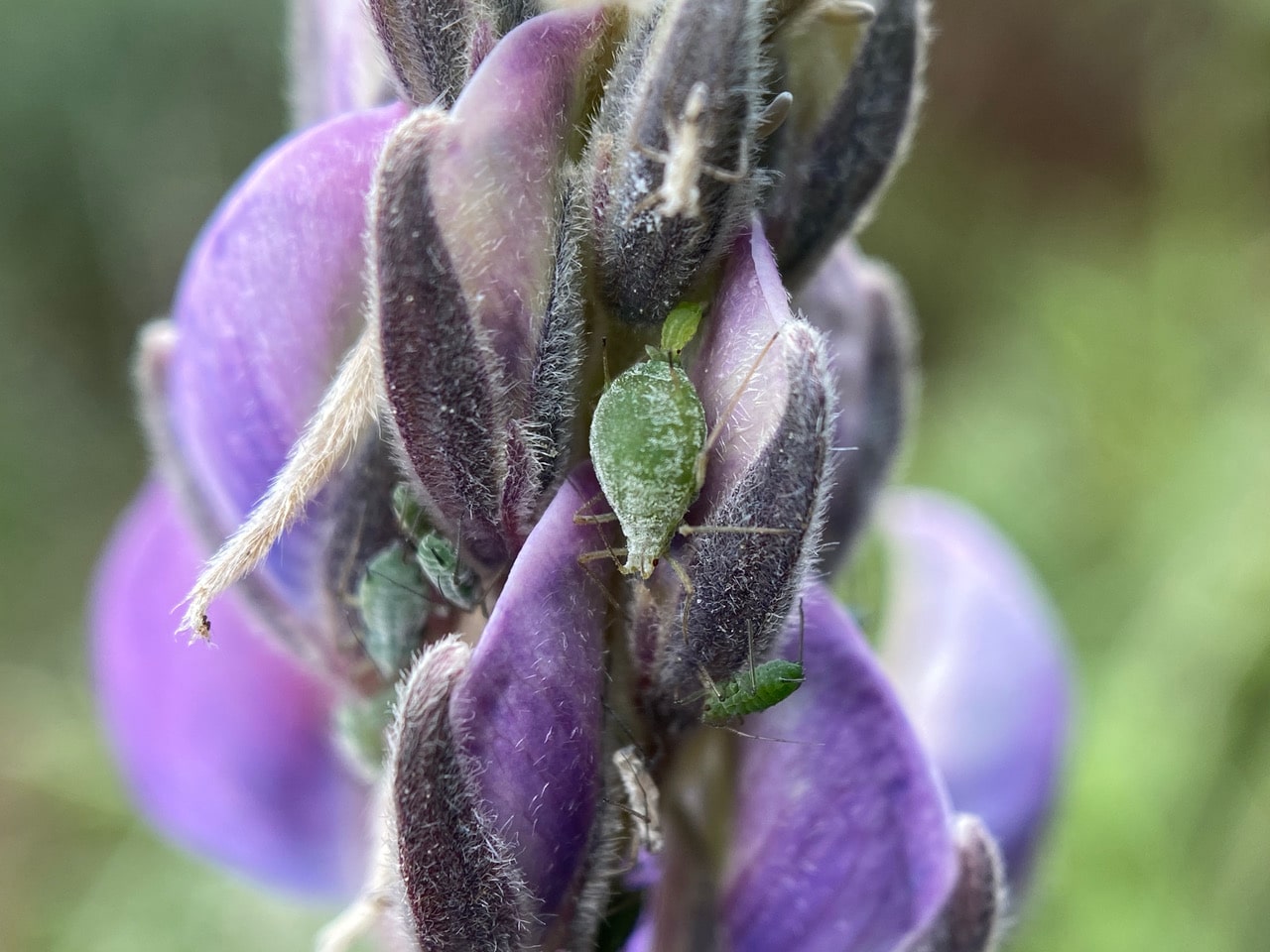
Yet, nothing can curb an aphid’s reproductive instincts. The big mama aphid is just about finished giving birth to a baby, a clone of herself!
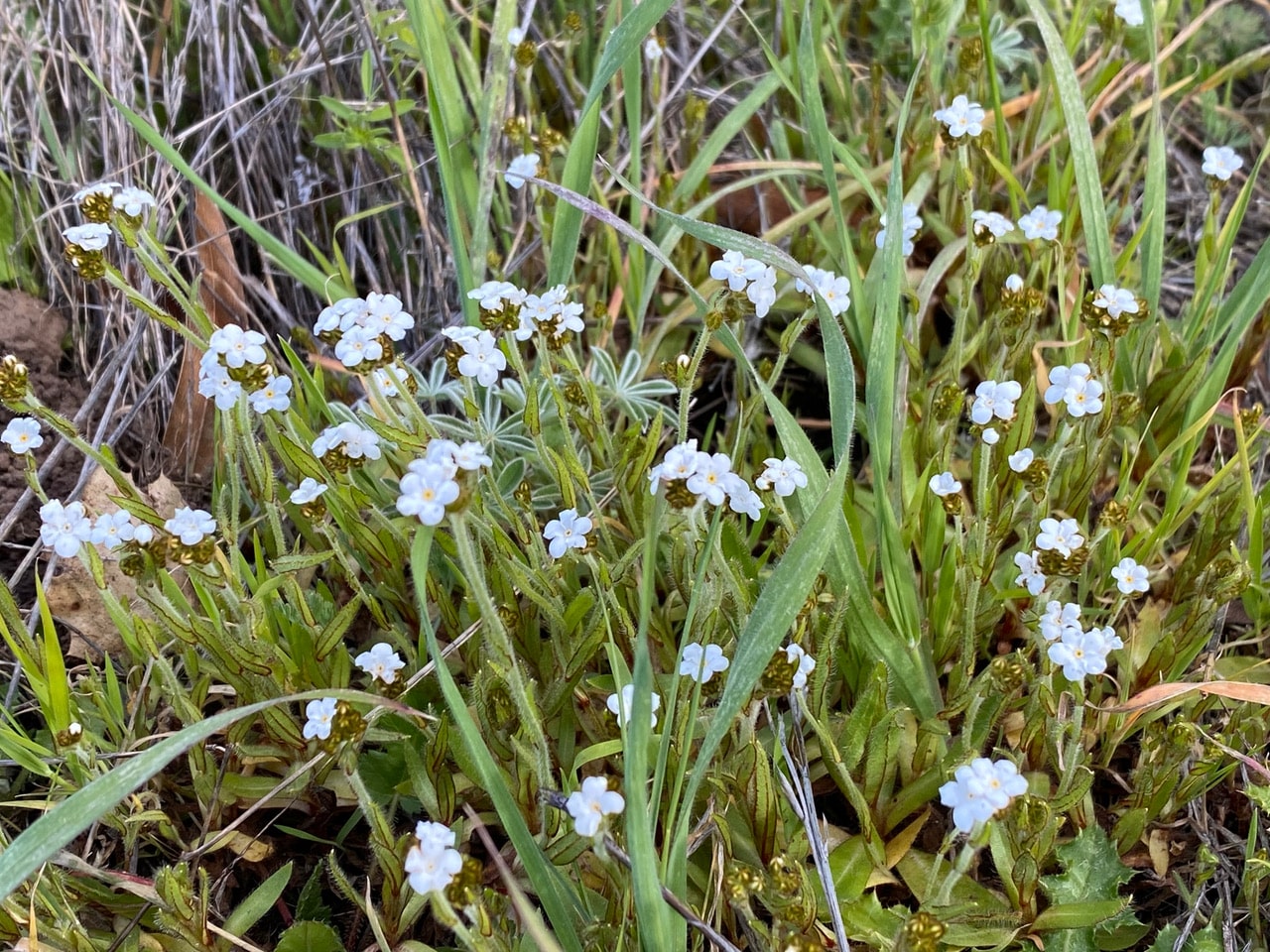
An annual herb, Rusty Popcornflowers, Plagiobothrys nothofulvus (family Boraginaceae) has started to bloom among the grasses at Diablo Bend.
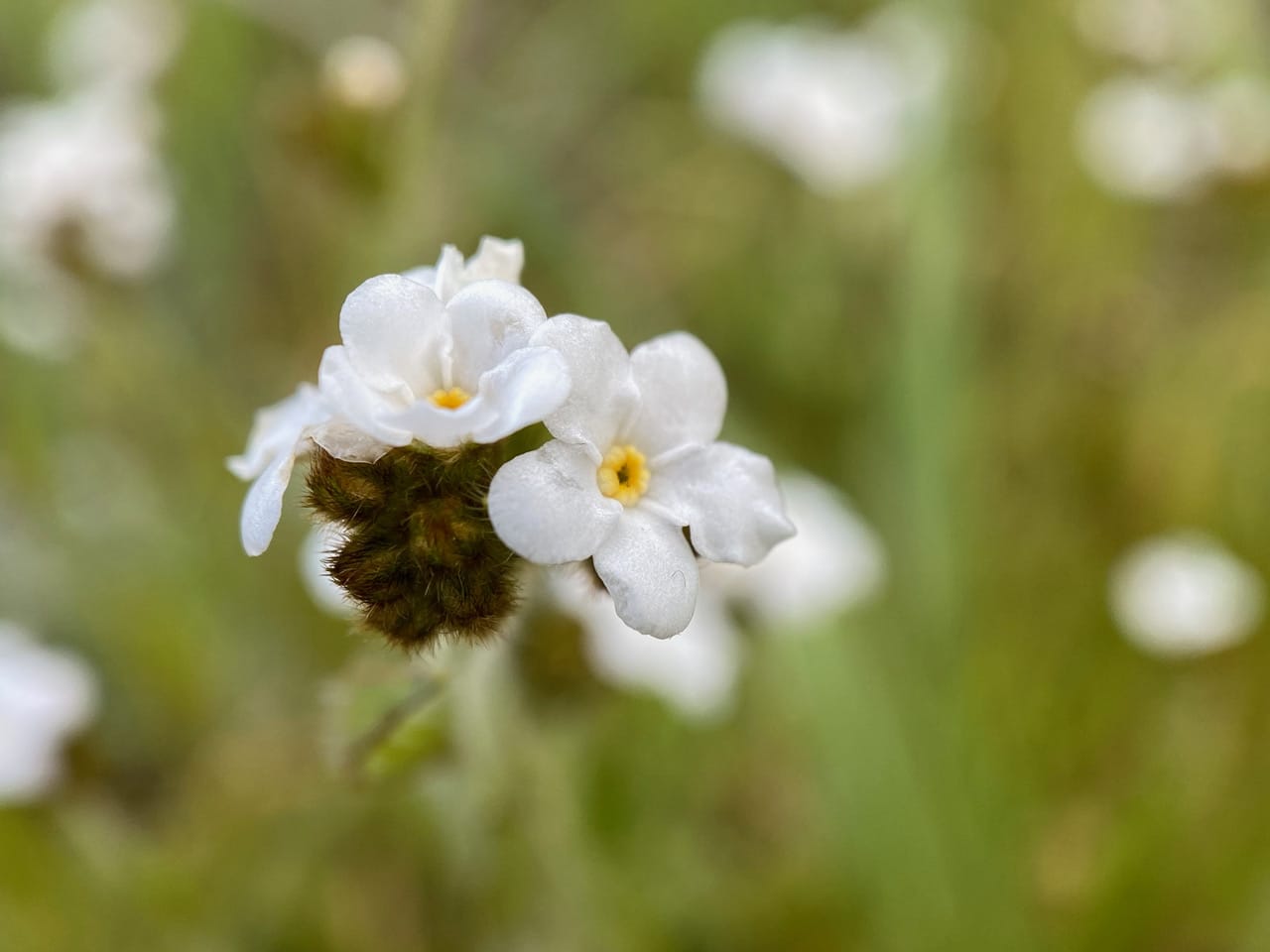
The flowers of Plagiobothrys nothofulvus generally bloom from February-April. As in many other members of the family Boraginaceae, the flowers unfurl from a scorpioid (coiled) cyme. The flower consists of five petals and are bisexual with both male and female parts. Bees, butterflies and moths drink its nectar as they pollinate the flowers, but none of the insects is to be found on this cold day.

Close-up, this is what the pop-corn looks like before it pops – clasped by rust-colored bristly bracts.