

Pollinator Post 3/31/23 (2)
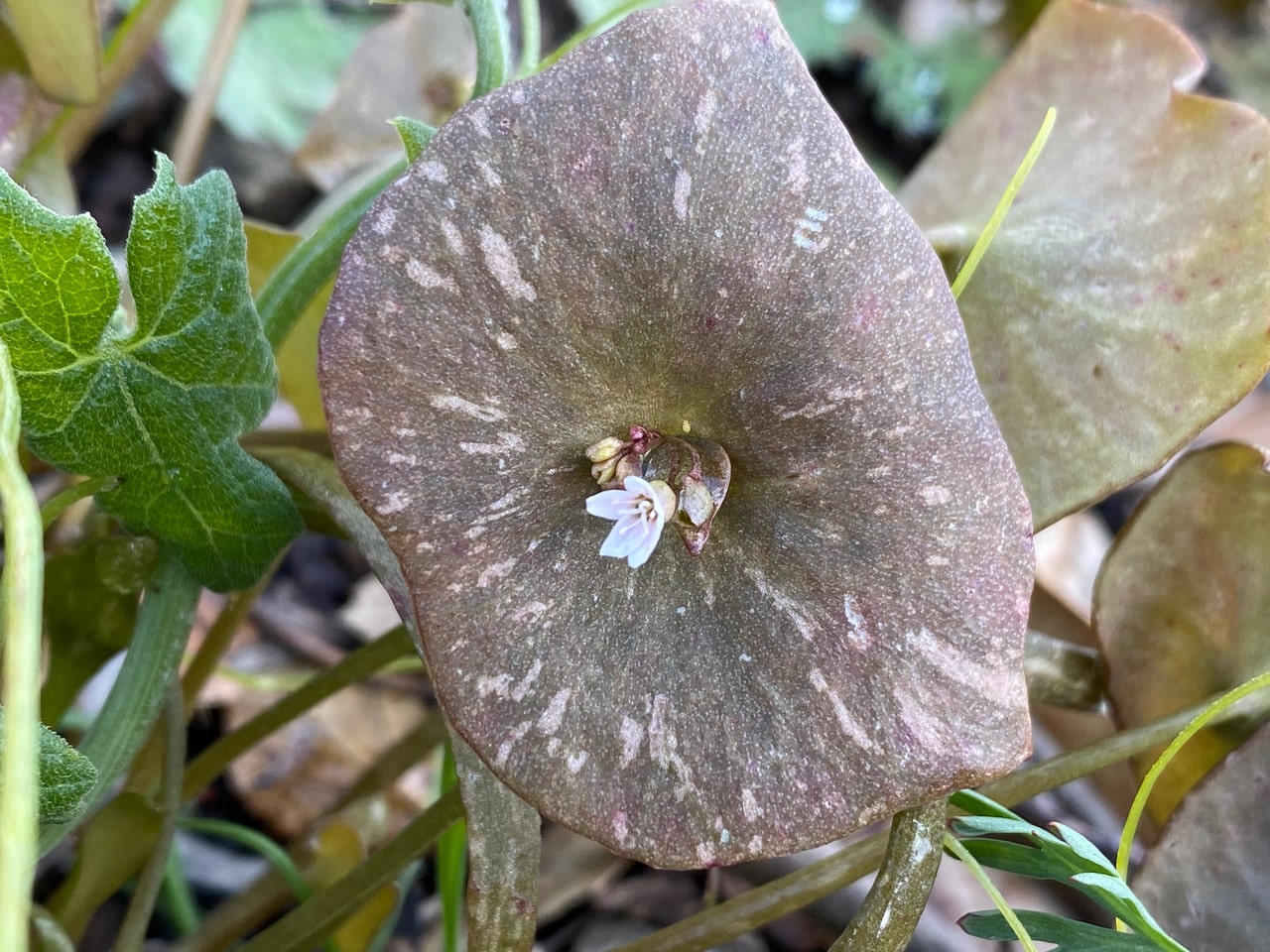
What an unusual Miner’s Lettuce! Probably the Red Miner’s Lettuce, Claytonia rubra? Although the perfoliate leaf looks brown and parched, it is actually succulent to the touch! It is not a senescent leaf, just colored that way!
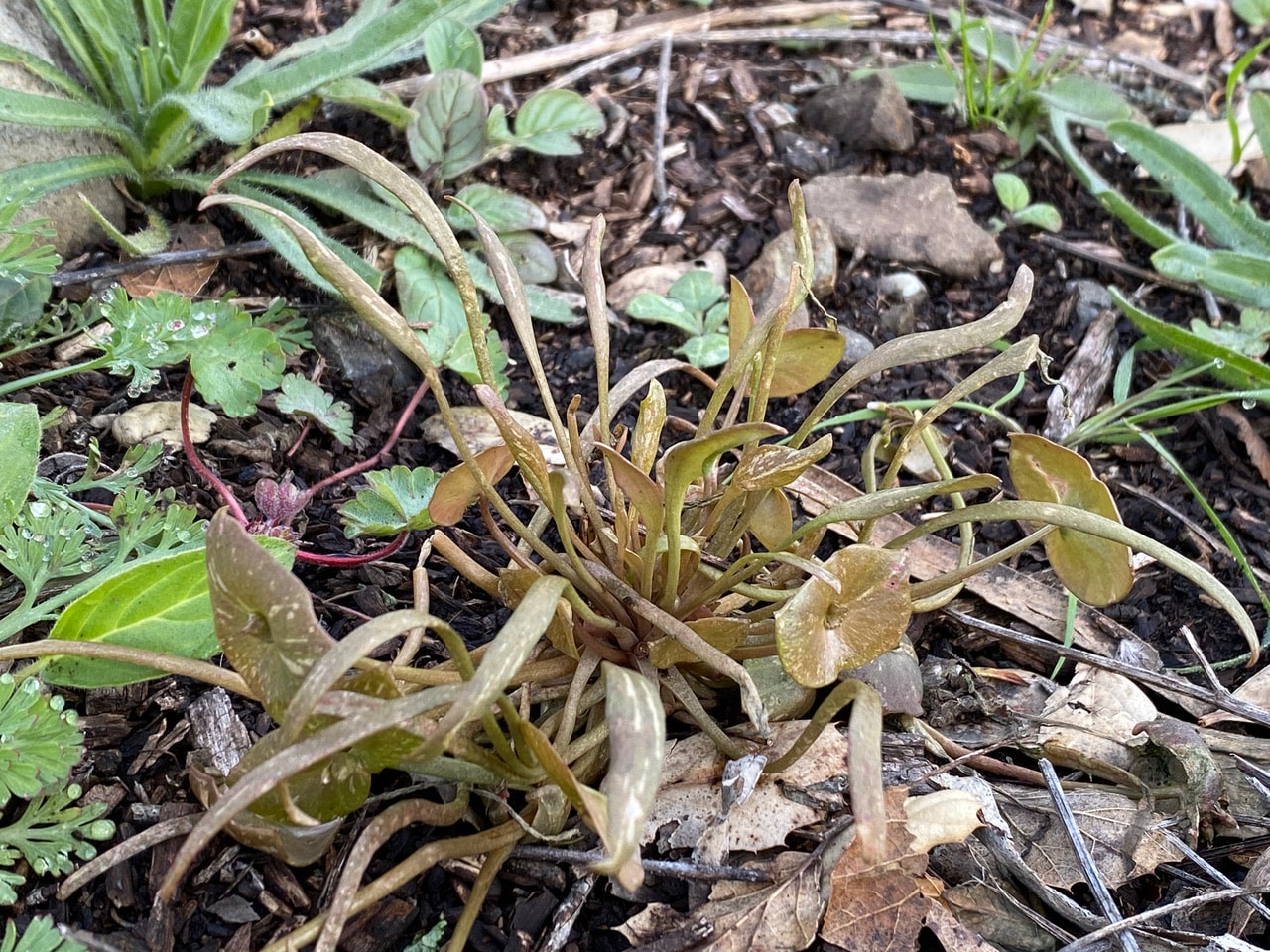
Here’s a young plant.
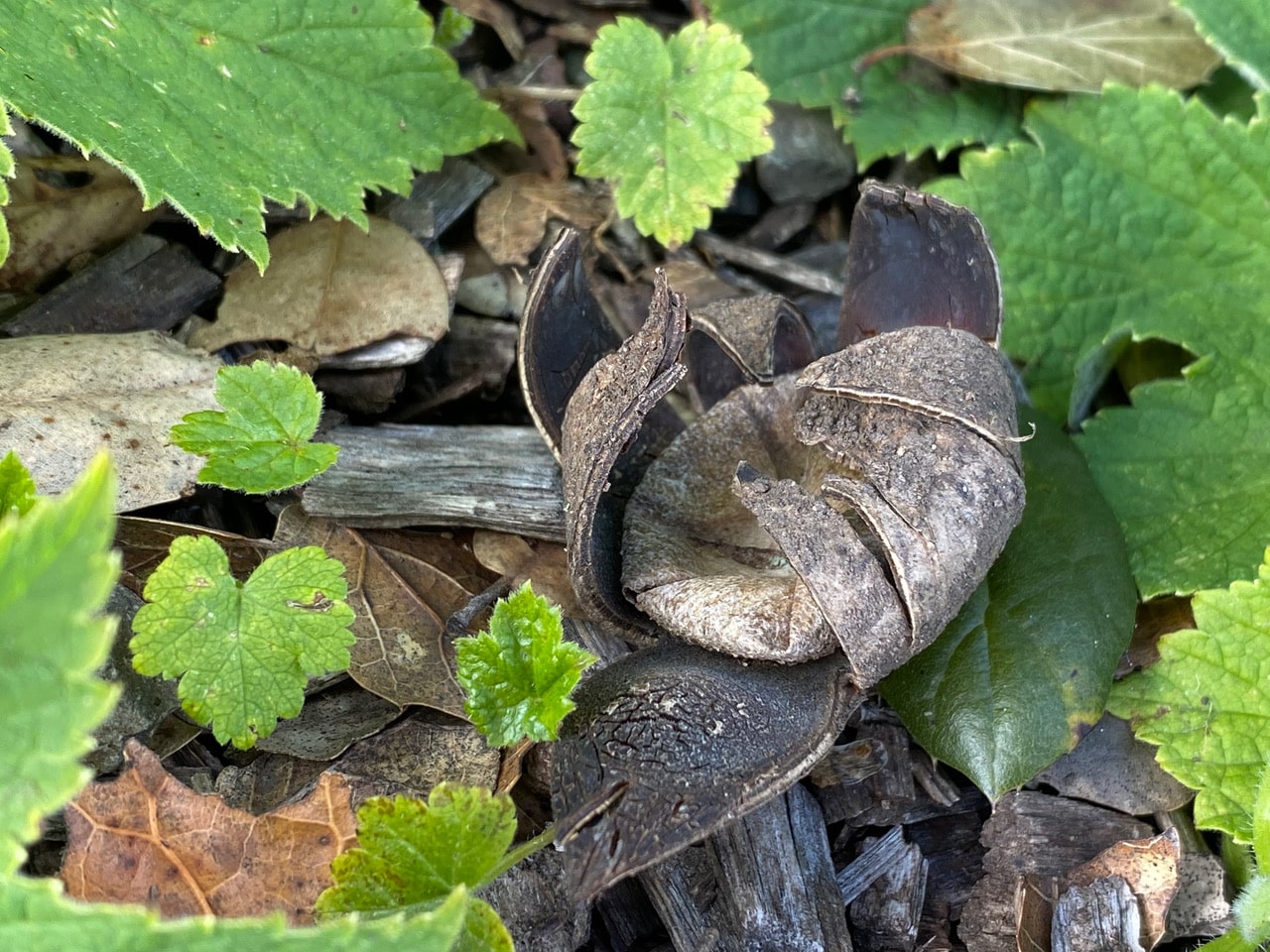
What a difference a day makes! Yesterday this Earthstar Fungus, Astraeus hygrometricus still had its spore sac atop its star-shaped pedestal. Today the rays of the pedestal has curled over the spore sac. The movement is caused by the different layers of the hygroscopic rays that absorb water at different rates. When wet, the rays curl downward, lifting the spore sac up, the better to release its spores in the rain. When dry, the layers shrink differentially, causing the rays to fold up around the spore sac. The spore sac is now protected from the elements until the next rain. Then the whole process is repeated. What a feat in engineering!
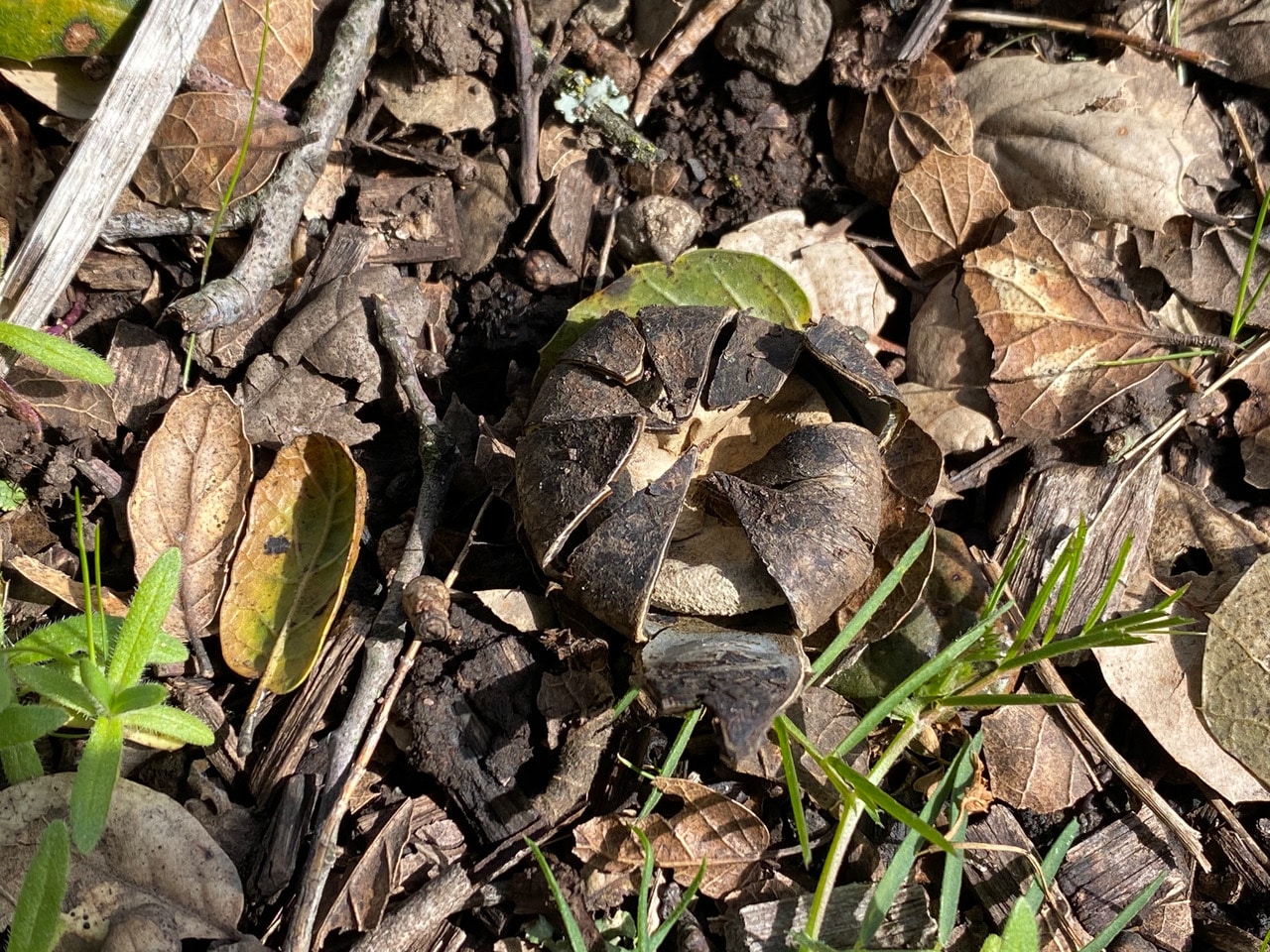
Here’s an Earthstar Fungus in the leaf litter, with its spore sac almost completely enclosed by the drying rays.

Is this a young Earthstar ready to pop up and open in the next rain?

To watch for insect activity I return to the Silverleaf Lupine with the California Manroot growing through it. No bees are flying this morning. It takes me a while to notice a dense swarm of very small insects dancing over the flowers.
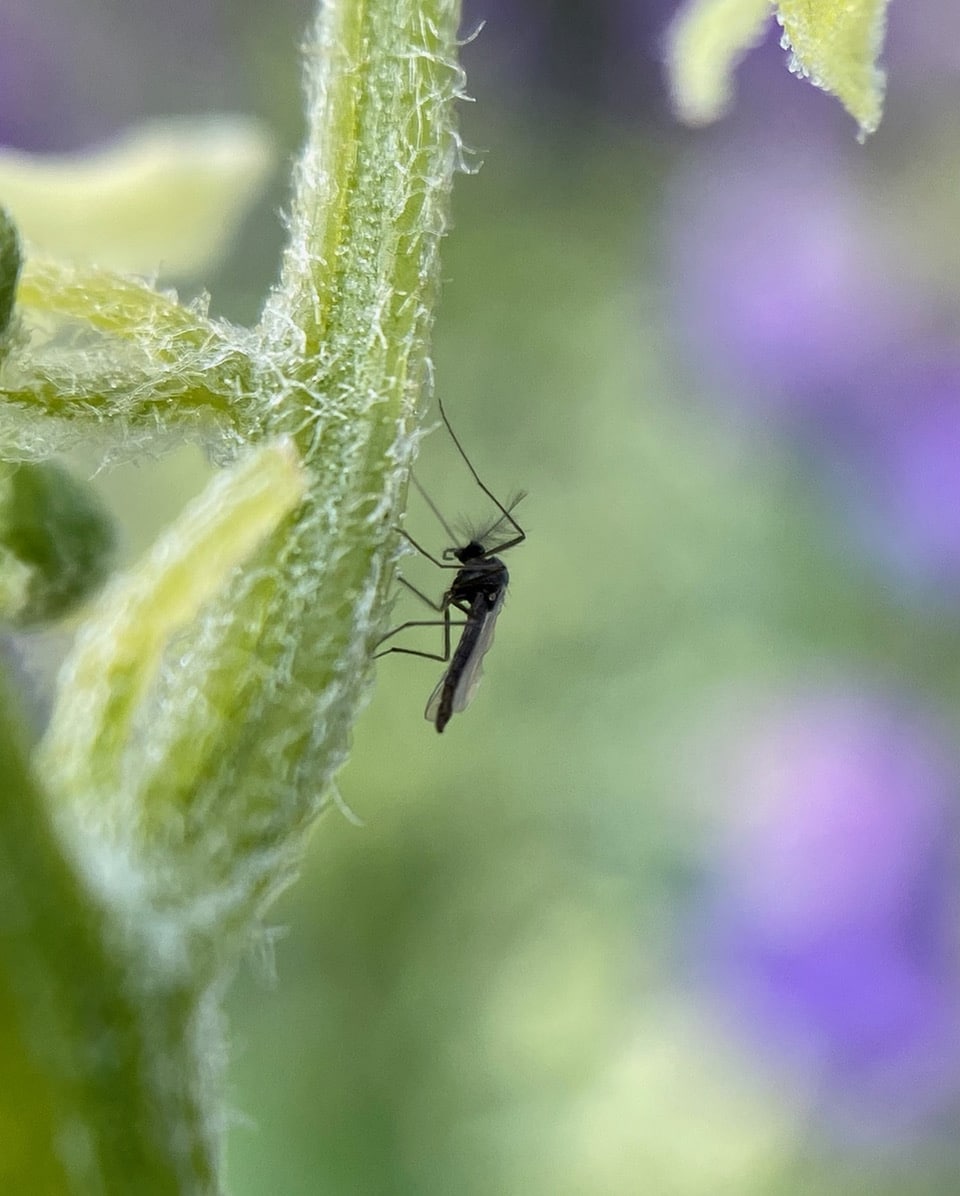
One of the insects lands on the Manroot. Judging by its plumose antennae, I figure it is probably a Non-biting Midge in the family Chironomidae. What are these midges doing here? They don’t seem to be interested in feeding. Is this a mating swarm? I am impressed that these seemingly delicate insects are so cold tolerant.

The Chironomidae are also known as nonbiting midges, with a global distribution. Males are easily recognized by their plumose antennae. Adults feed on fresh fly droppings, nectar, pollen, and honeydew, some possibly serving as pollinators. Larval stages can be found in almost any aquatic or semiaquatic habitat, including tree holes, rotting vegetation, soil, and in sewage. Larvae of some species are bright red in color due to a hemoglobin analog; these are often known as “bloodworms”. The larvae and pupae are important food items for fish, amphibians, and predatory aquatic insects. Adult midges are eaten by fish and insectivorous birds, bats, and predatory flying insects.
Aerial mating swarms of male Non-biting midges usually form at dusk and attract females from the surrounding vegetation. Females fly into the swarm, and copulation occurs on the wing.