

Pollinator Post 3/31/23 (1)
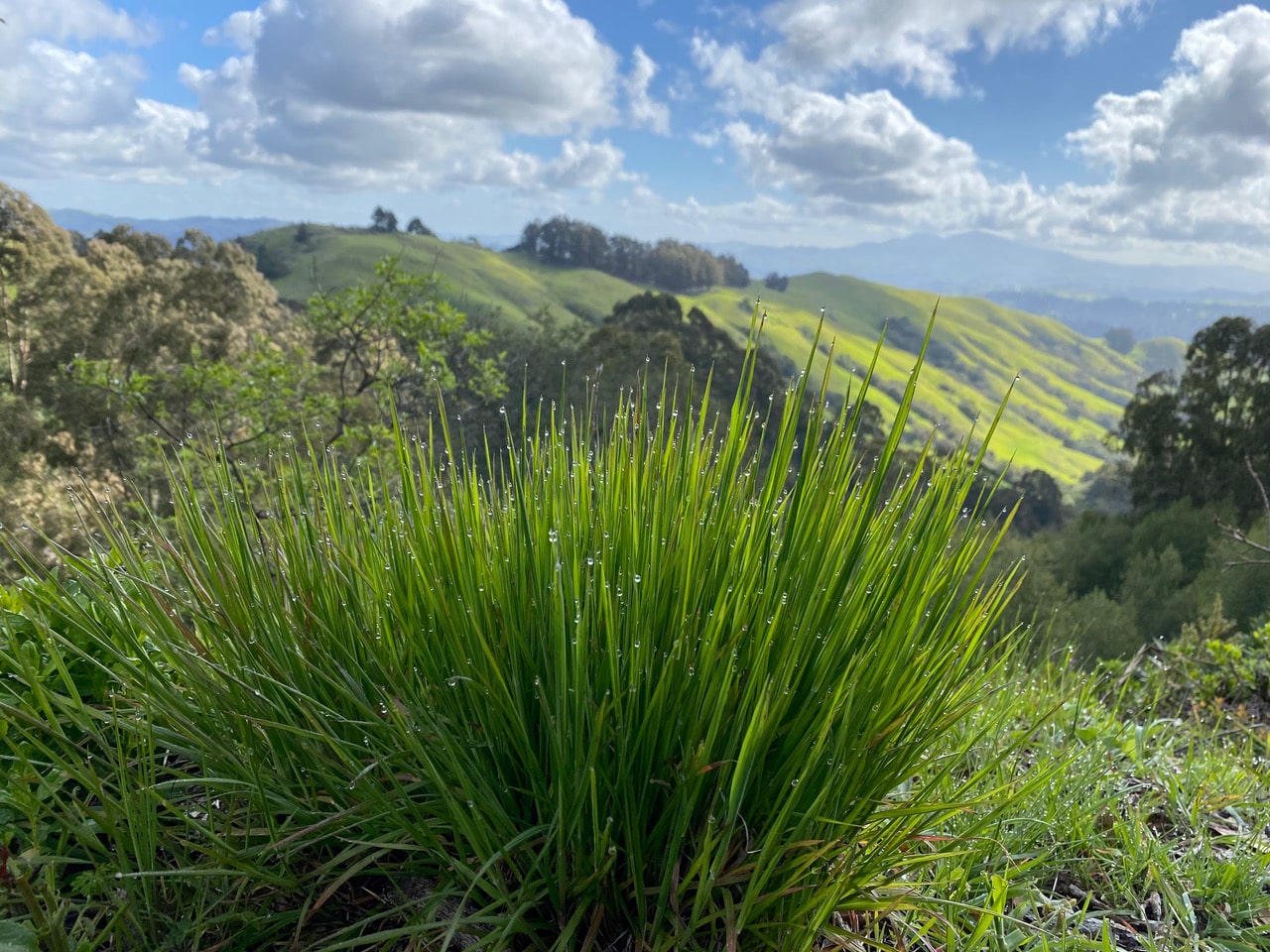
The weather this morning is a repeat of yesterday – cold and cloudy, with temperatures hovering around 50 F. I don’t expect to see much insect activity, but surely this view from the paved road at Skyline Gardens is worth a visit? Dew drops are still hanging on the tips of a bunch grass.

An inverted image of the scenery is reflected on every drop of dew on the grass tips. It’s a holographic universe!
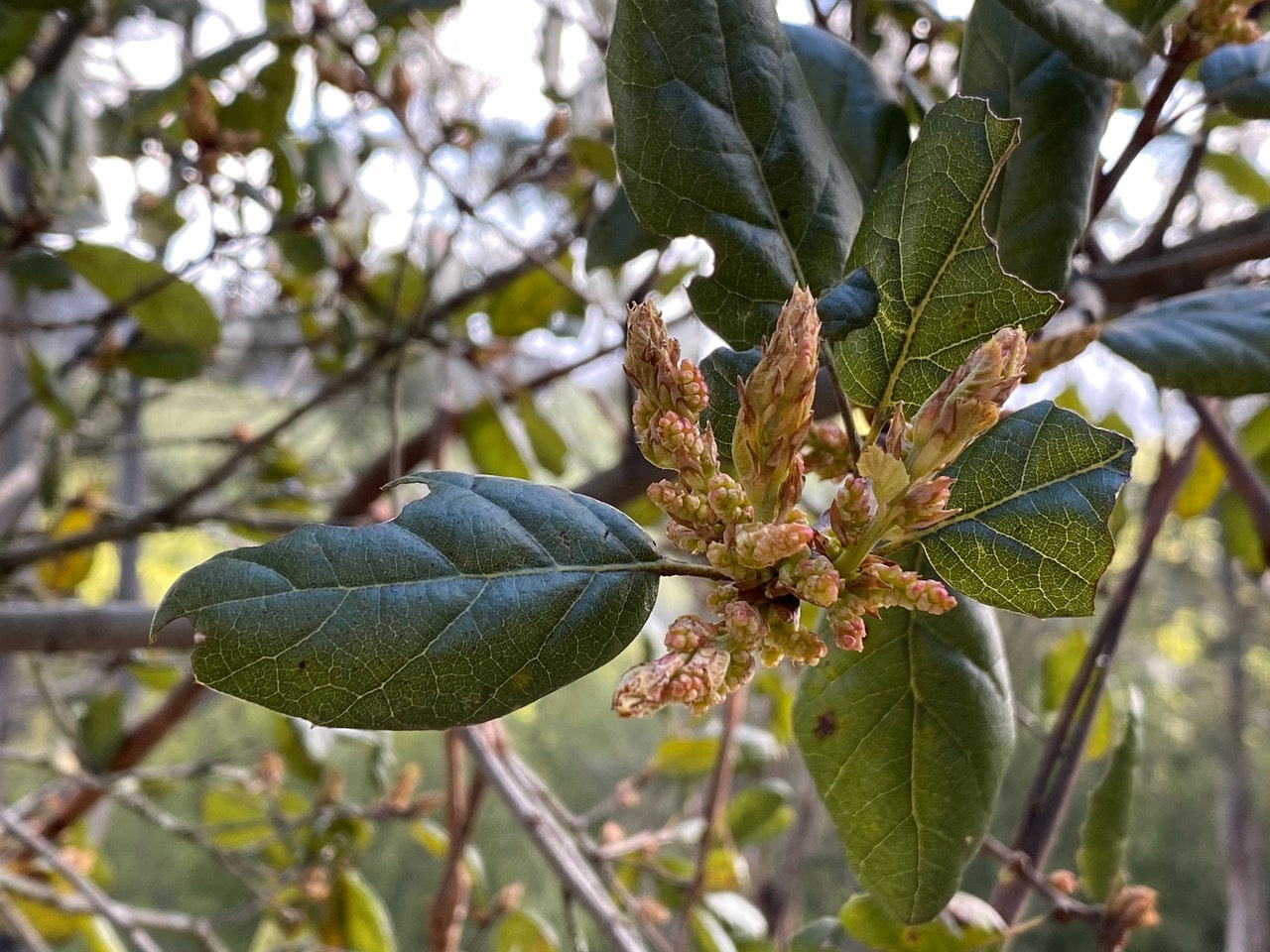
The old Coast Live Oak, Quercus agrifolia at the edge of the cliff has a cluster of leaf and flower buds at the tip of every branch.
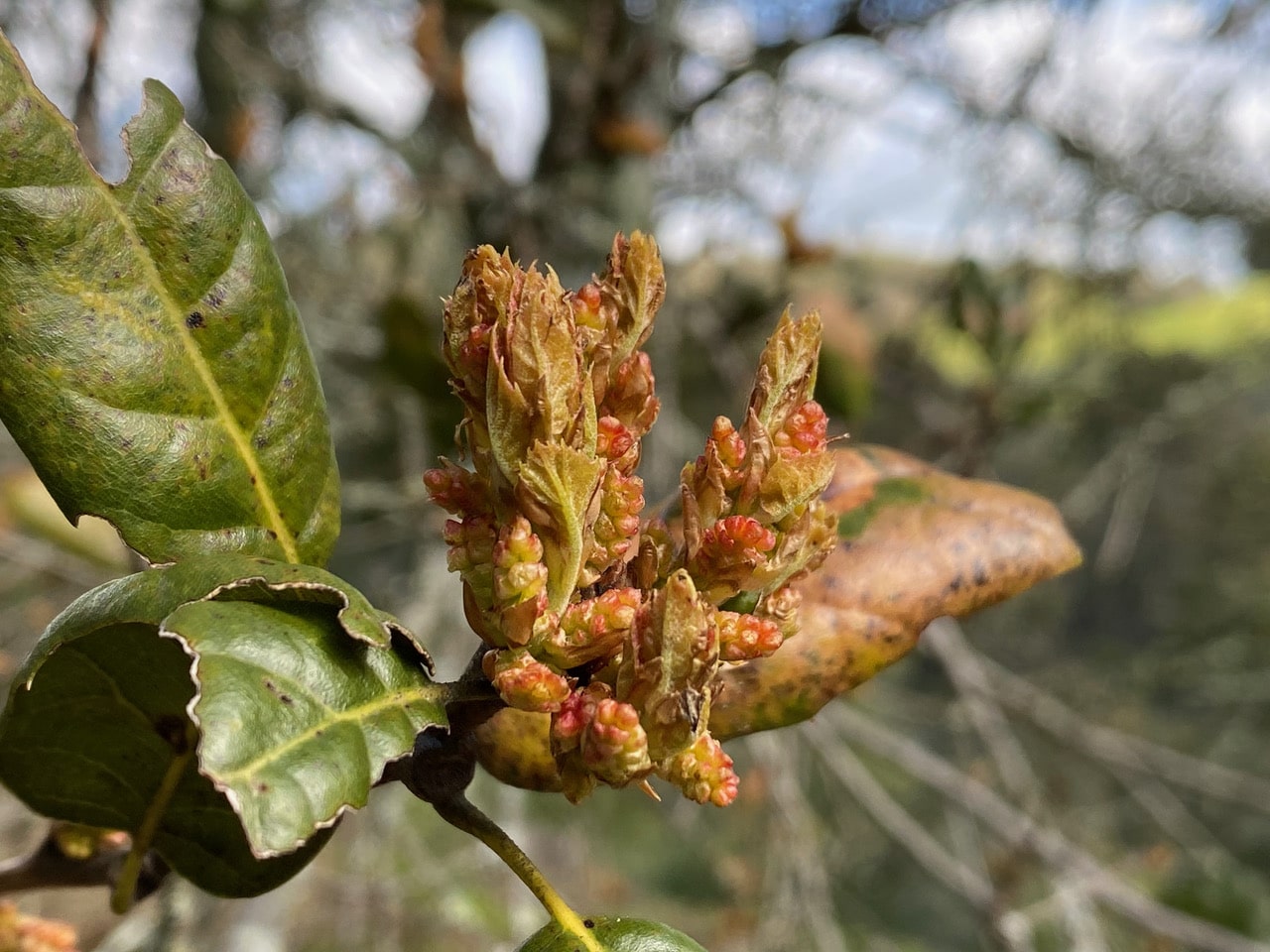
You can actually see the baby leaves on this one.
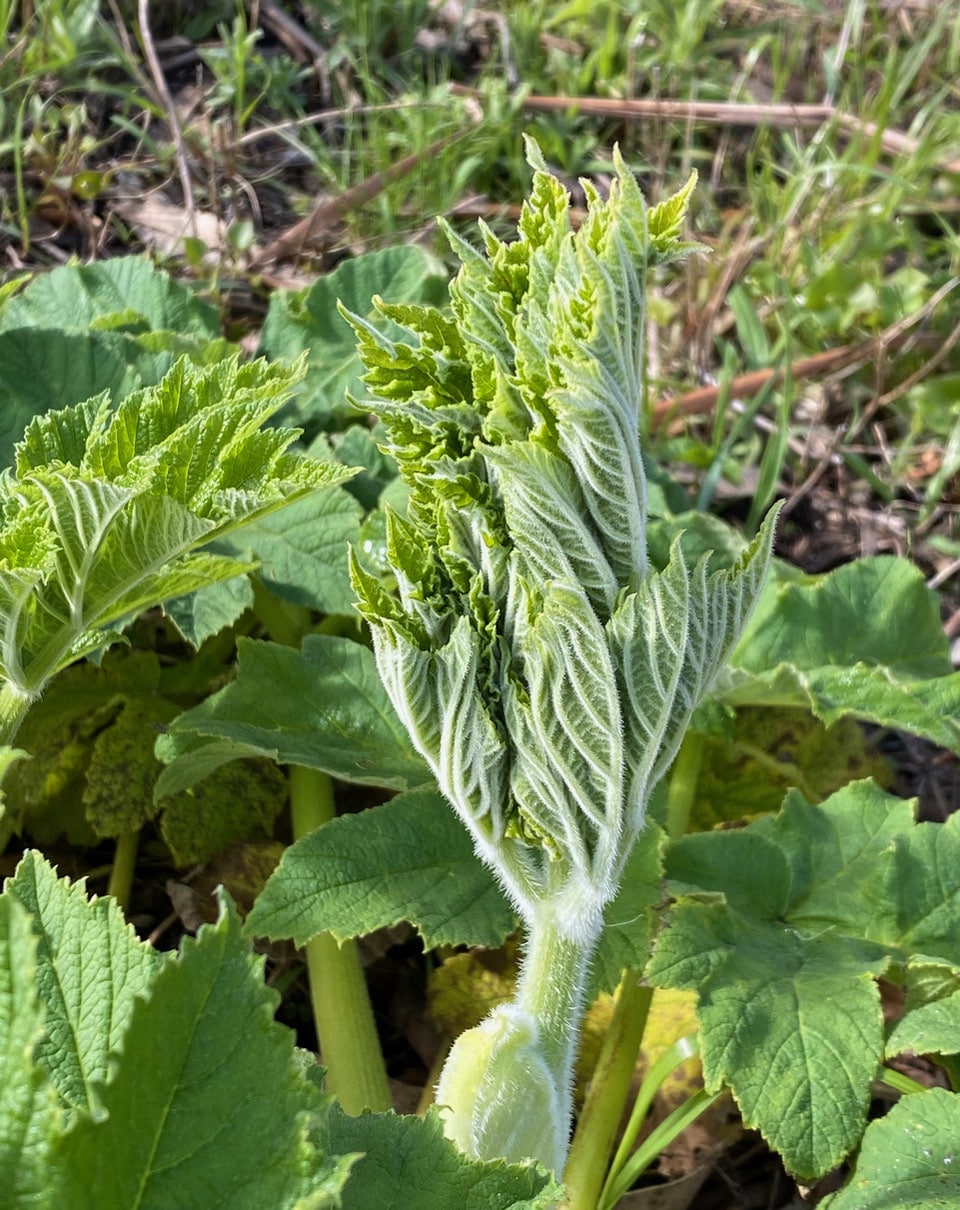
I stop to admire a Cow Parsnip, Heracleum maximum in the process of unfurling a new leaf.


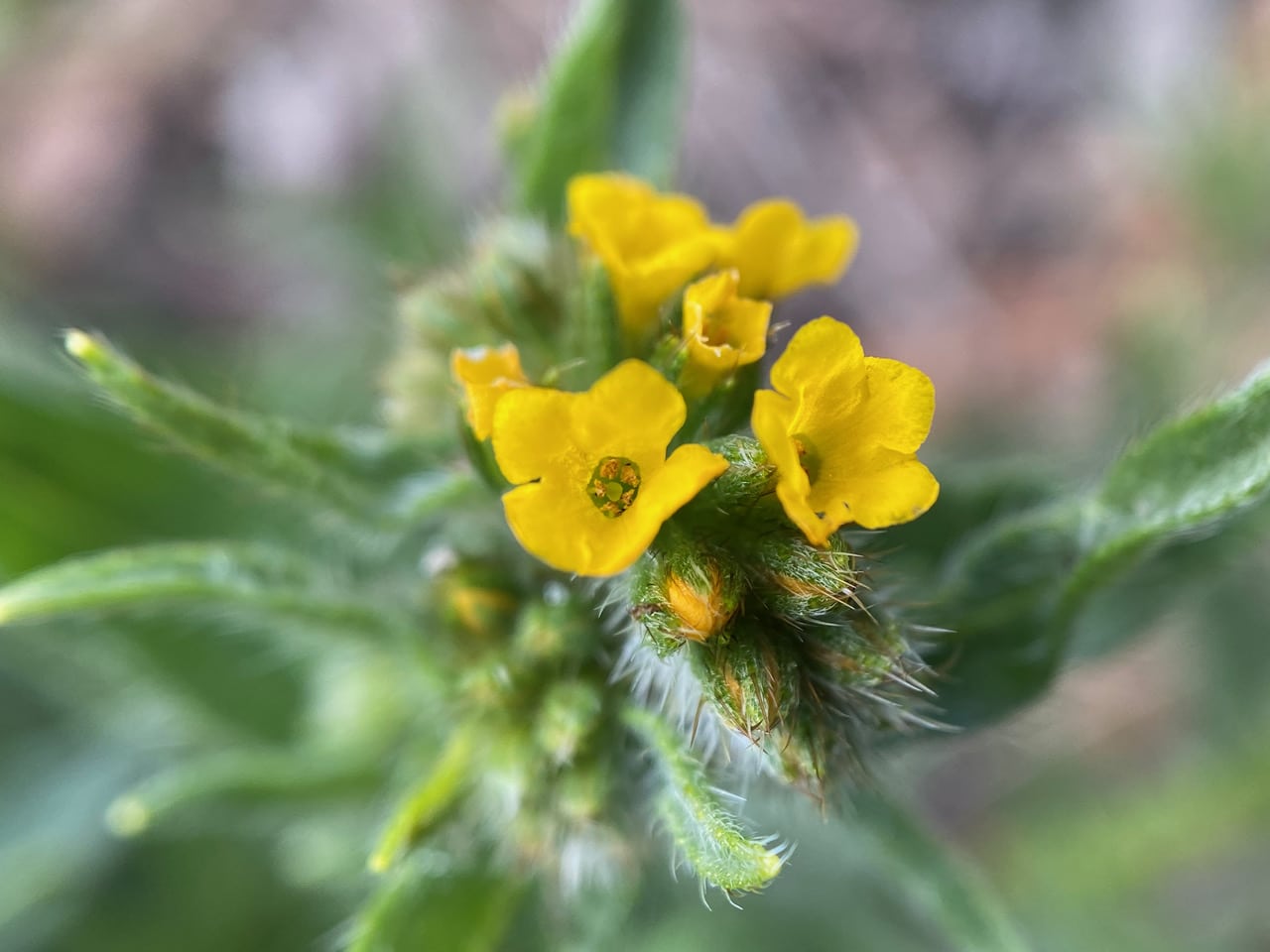
Looking through the narrow throat of the flower with the macro lens on my camera, I can see that the Common Fiddleneck flower, Amsinckia intermedia has 5 stamens surrounding a single stigma. The insects that pollinate this flower will have to be small enough to crawl in, or have a long enough tongue to reach the nectar at the base of the flower.
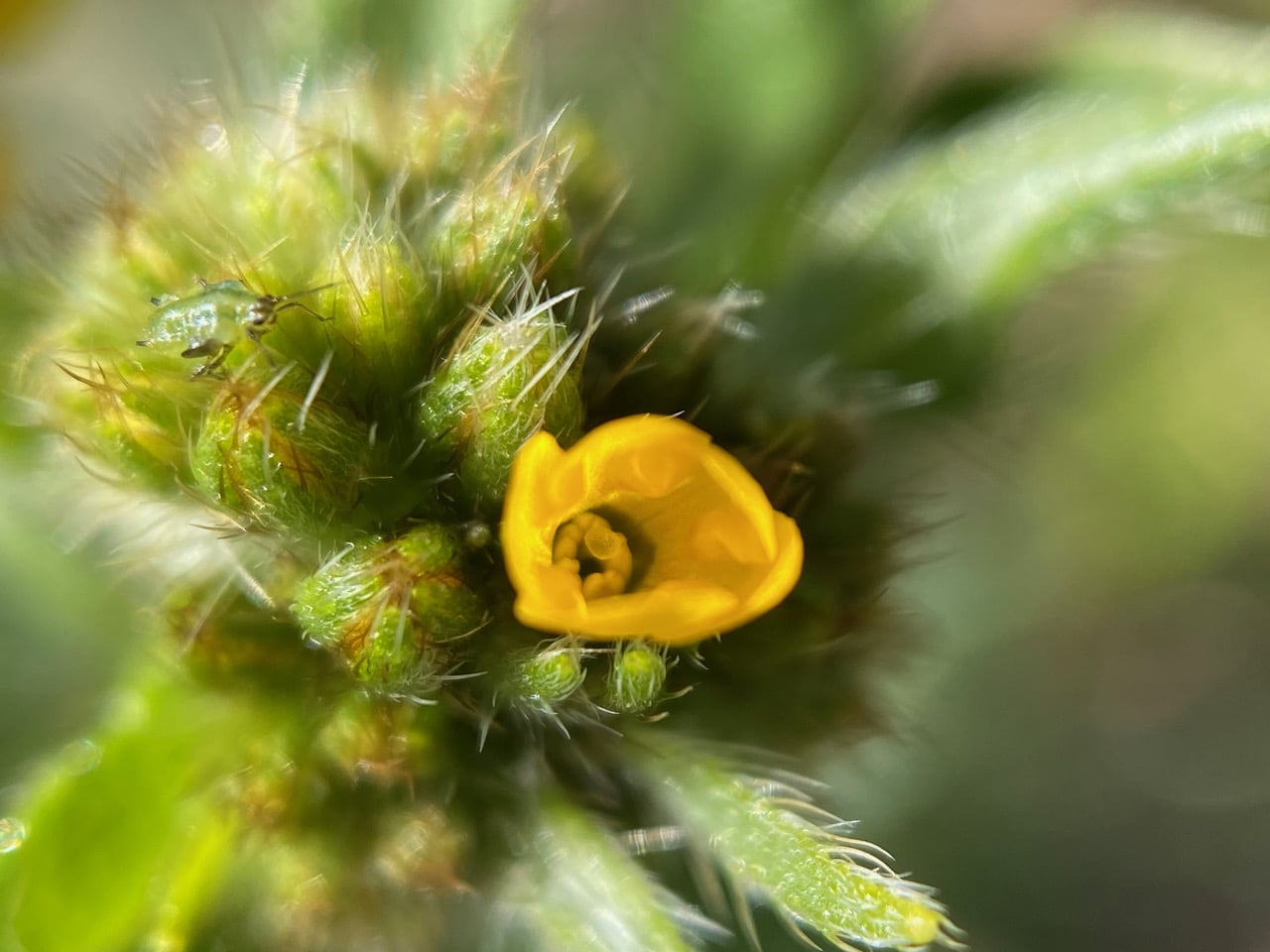
Focusing on the reproductive structures inside a Common Fiddleneck flower, I don’t even notice the immature winged aphid nearby.

These tiny green aphids are everywhere, especially in and around the flowers, but quite invisible unless one is equipped with a magnifying lens. Since the aphids move freely in and out of the flowers, might they be capable of pollinating the Amsinckia flowers?

There are at least a dozen aphids of various ages between the flowers in this cluster.
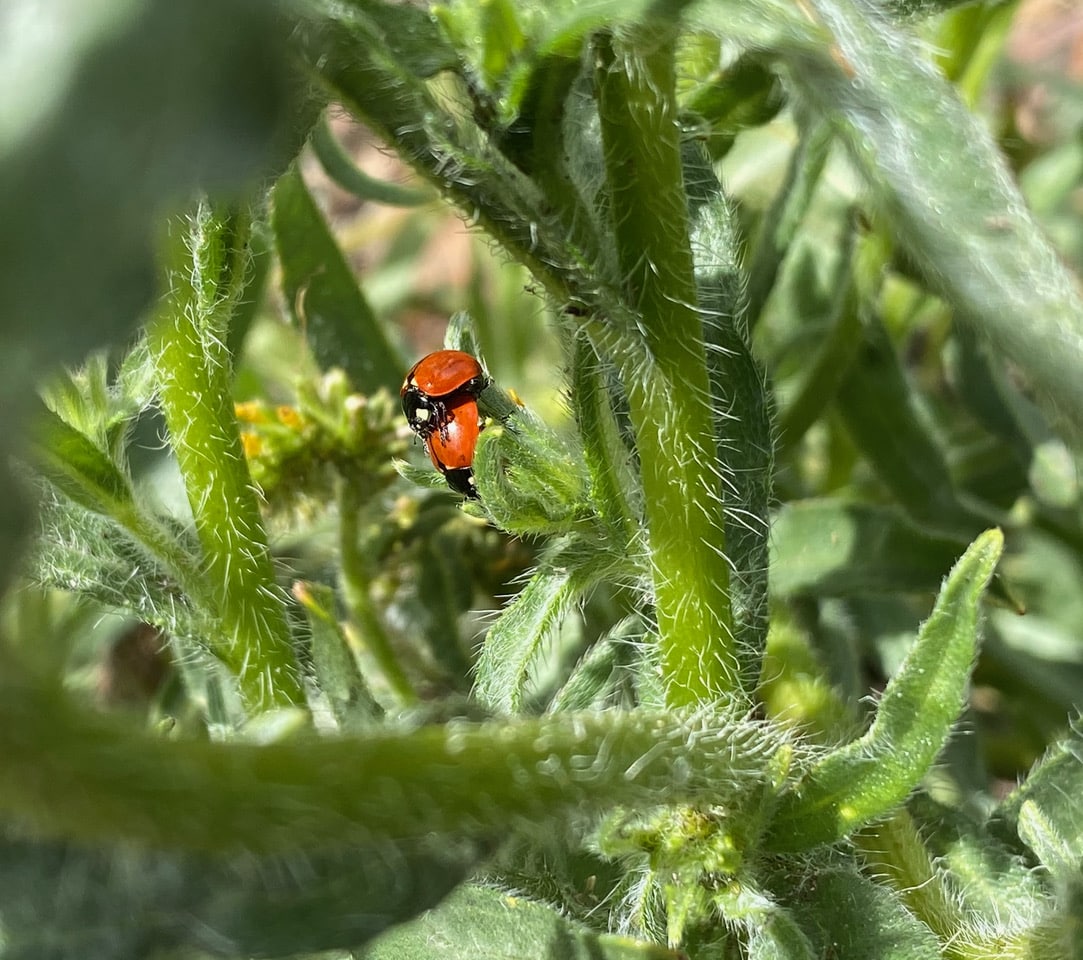
No wonder the California Ladybeetles, Coccinella californica are happy to make this plant their home. The female of this mating pair will probably be laying eggs on the plant soon. Both adults and larvae are voracious aphid predators.
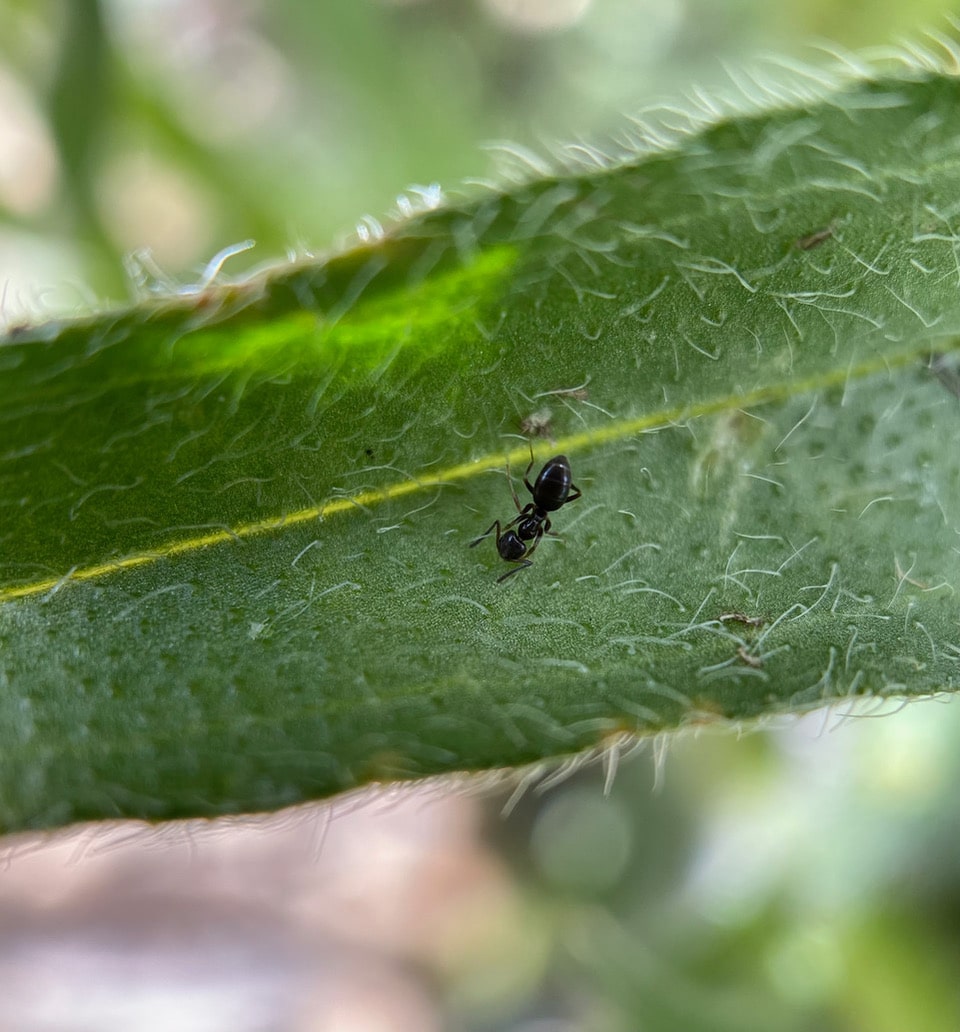
An ant roams a Fiddleneck leaf, probably to feed on the sweet honeydew excreted by the aphids.