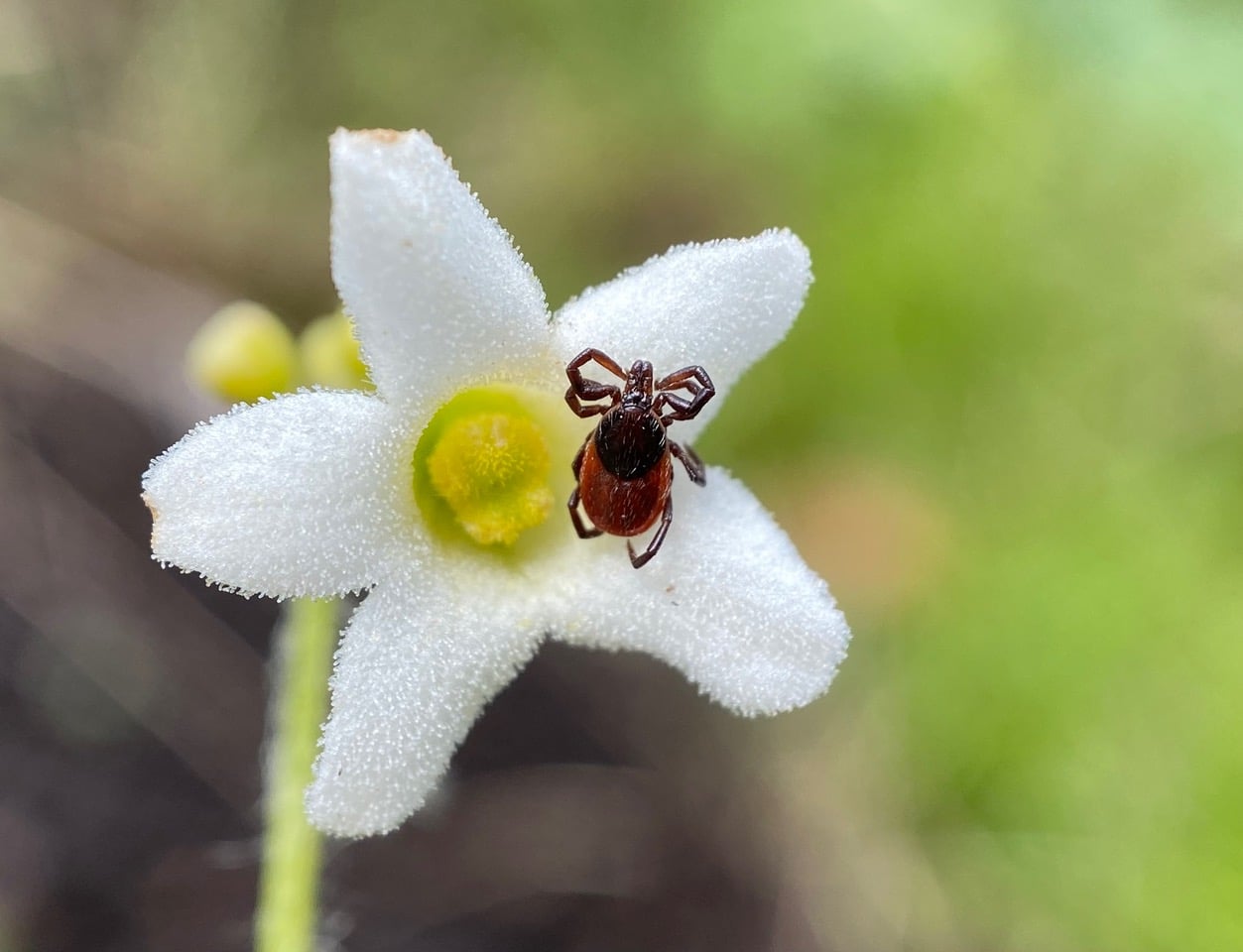
An adult female Pacific Black-legged Tick,
Ixodes pacificus is resting on a flower of Wild Cucumber,
Marah oregana.

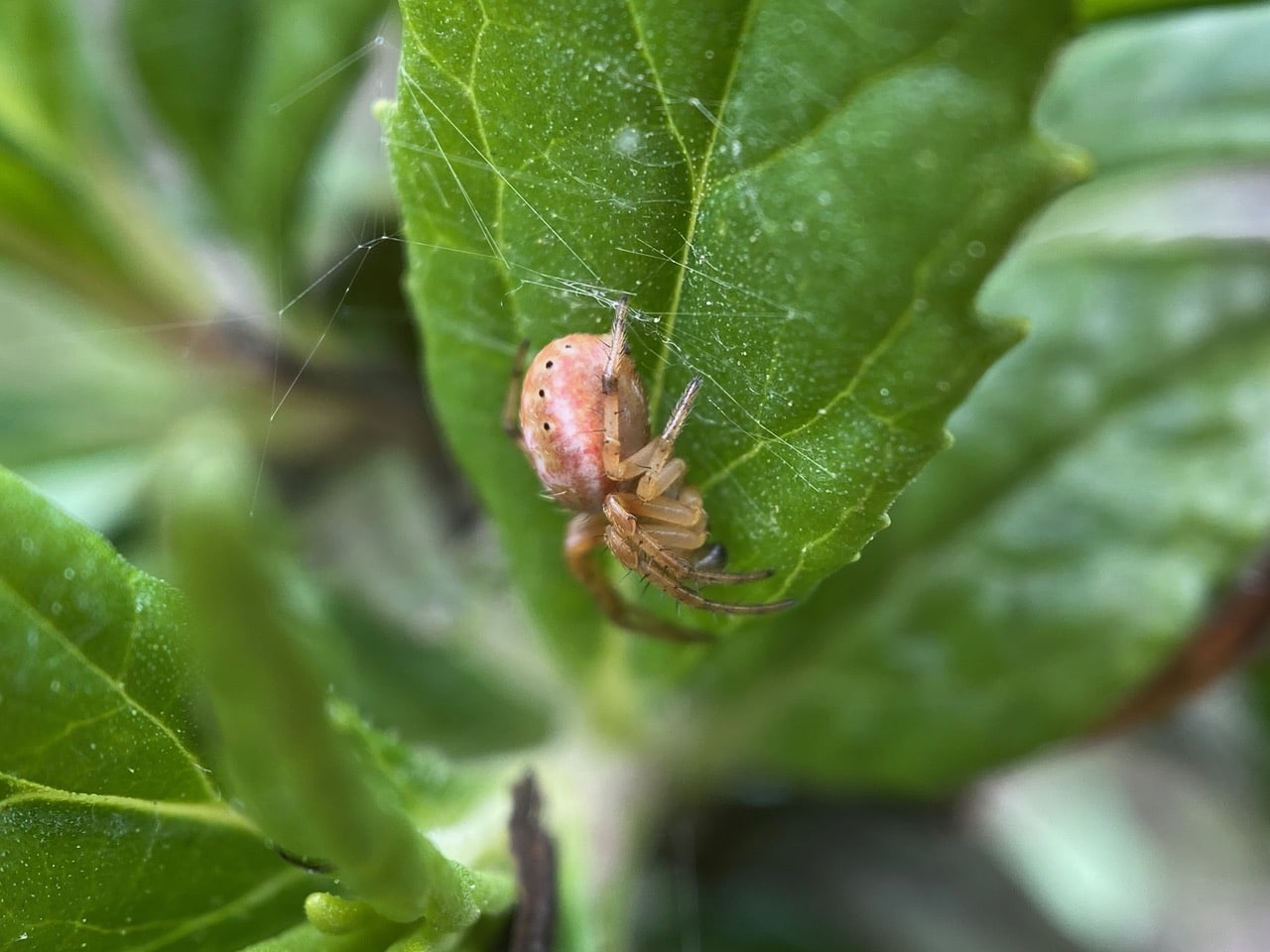
A small spider is resting on a terminal leaf of Sticky Monkeyflower,
Diplacus aurantiacus. There appears to be a loose matrix of silk strands around her.
On closer inspection, it turns out to be a Six-spotted Orbweaver, Araniella displicata (family Araneidae). There is no sign that it has constructed an orb web.
The Six-spotted Orbweaver is a small cucumber spider. It occurs throughout Europe and North America and in parts of Asia. It is found on trees and shrubs in woodland habitats. It is one of the most widely distributed arachnids in North America, but often overlooked due to its small size. Adult females measure only 4-8 mm in length, males 4-6 mm. The species is distinguished by three (sometimes four) pairs of black spots along the edges of the rear half of the abdomen. There’s quite a bit of color variation within the species.
Most orb weavers spin fairly large webs in proportion to their own body size, but not so with Araniella displicata. The web of an adult spider may be only three or four inches in diameter. The spiral snare is usually built well off the ground, and often oriented in the horizontal plane, frequently spanning the edges of a single large leaf. The spider sits in the center, hanging beneath a horizontal web. Adult Araniella displicata are often mistaken for “baby” orb weavers. In late May or early June mating takes place, and females produce egg sacs that contain 80 eggs and are covered in loose, fluffy, yellowish silk. The package may be deposited in a curled leaf that also serves as the mother’s retreat on the perimeter of the web.
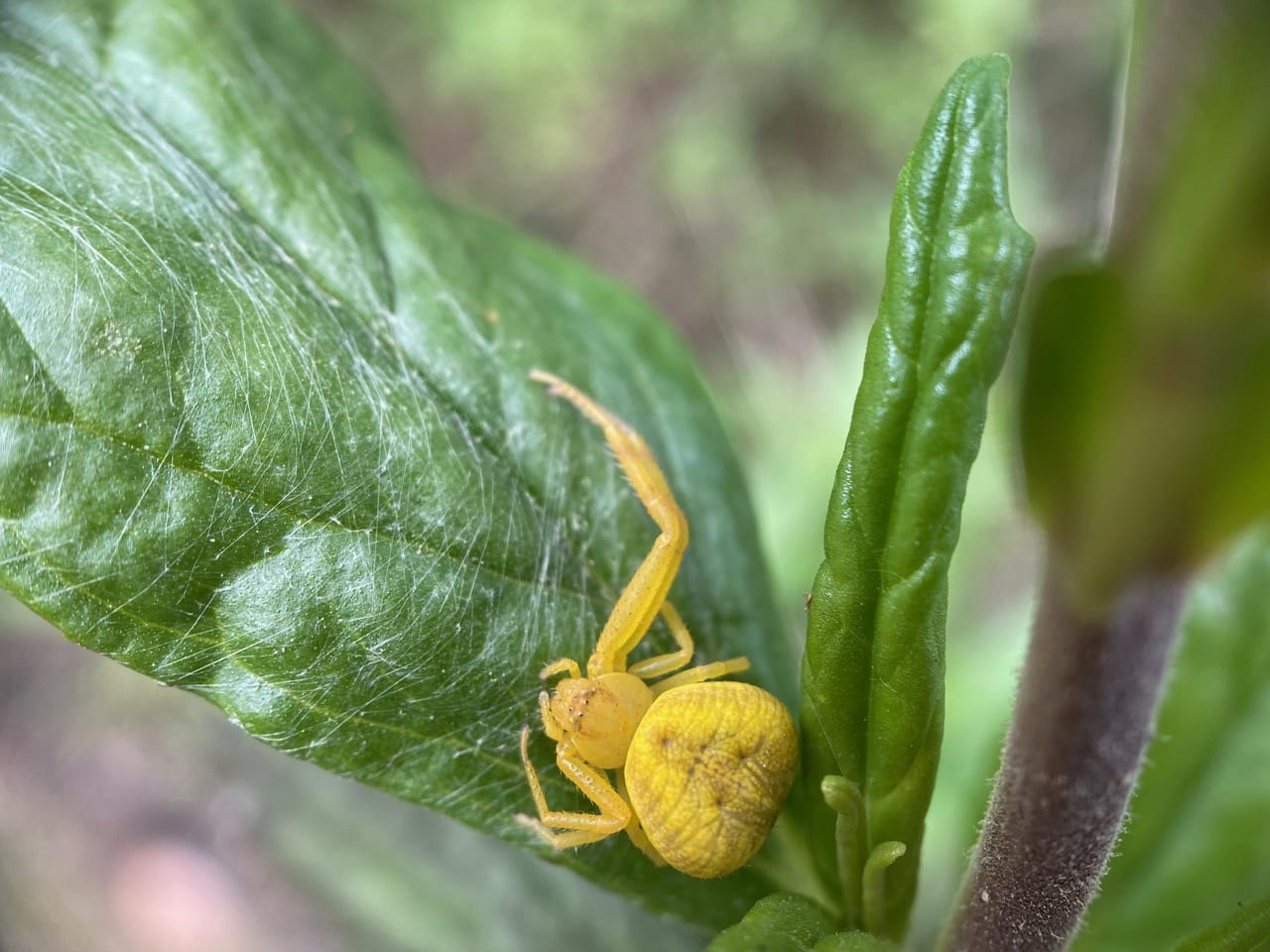
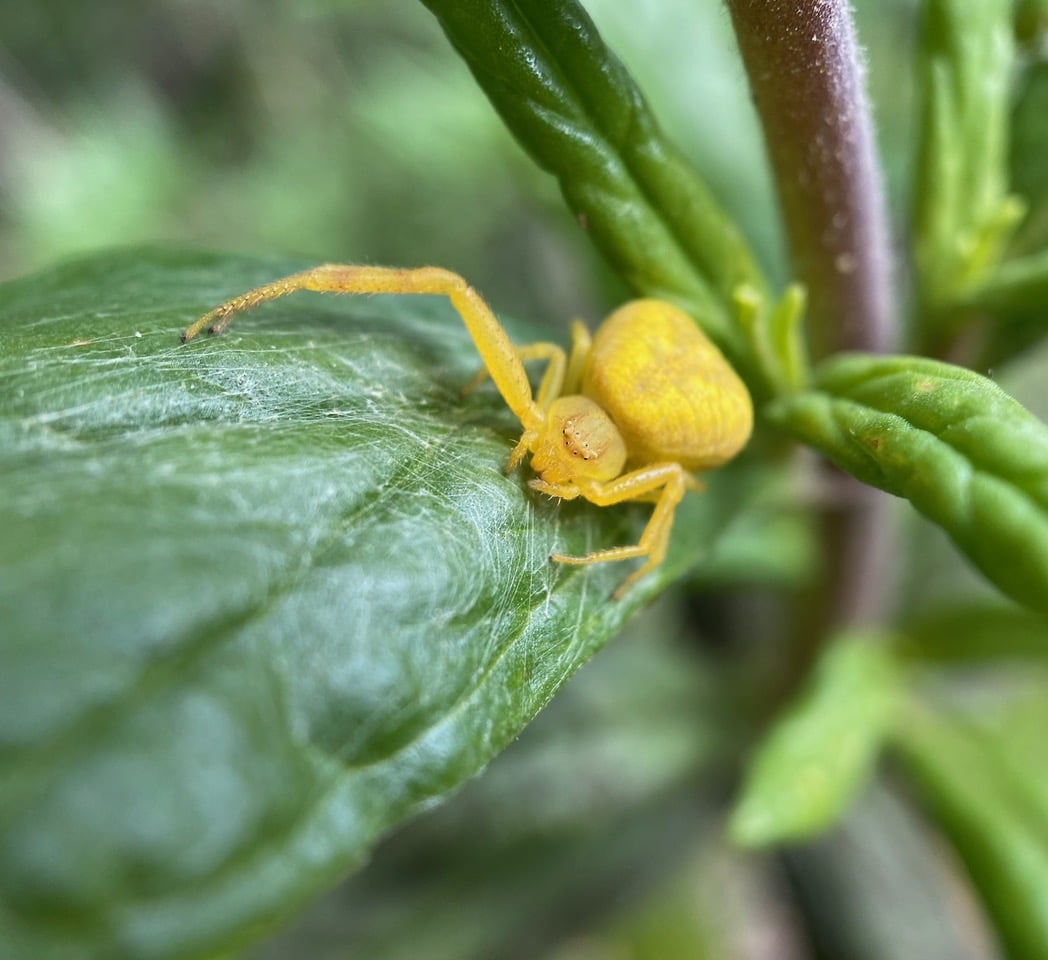
A Goldenrod Crab Spider, Misumena vatia (family Thomisidae) is sitting in ambush at a leaf axil of a Sticky Monkeyflower, Diplacus aurantiacus. She is not camouflaged – her bright yellow color makes her very visible on the green foliage. Has she just moved from a yellow flower, and hasn’t had time to change color? She has laid down quite a bit of silk on the leaf to secure herself. Why are her left front legs so undersized? Is it a congenital deformity? Or did she lose those limbs before her final molt and the regeneration hasn’t been fully successful? Whatever the reason, her poorly matched front legs probably present her with hunting problems. After all, Crab Spiders depend on those extra long front legs to grasp their prey. On the brighter side, the spider looks plump and healthy otherwise.
Here’s a good look at her characteristic Crab Spider eye arrangement – two sweeping curves running around the front of the face, with all 8 eyes about the same size and pretty much equally spaced along the curves.
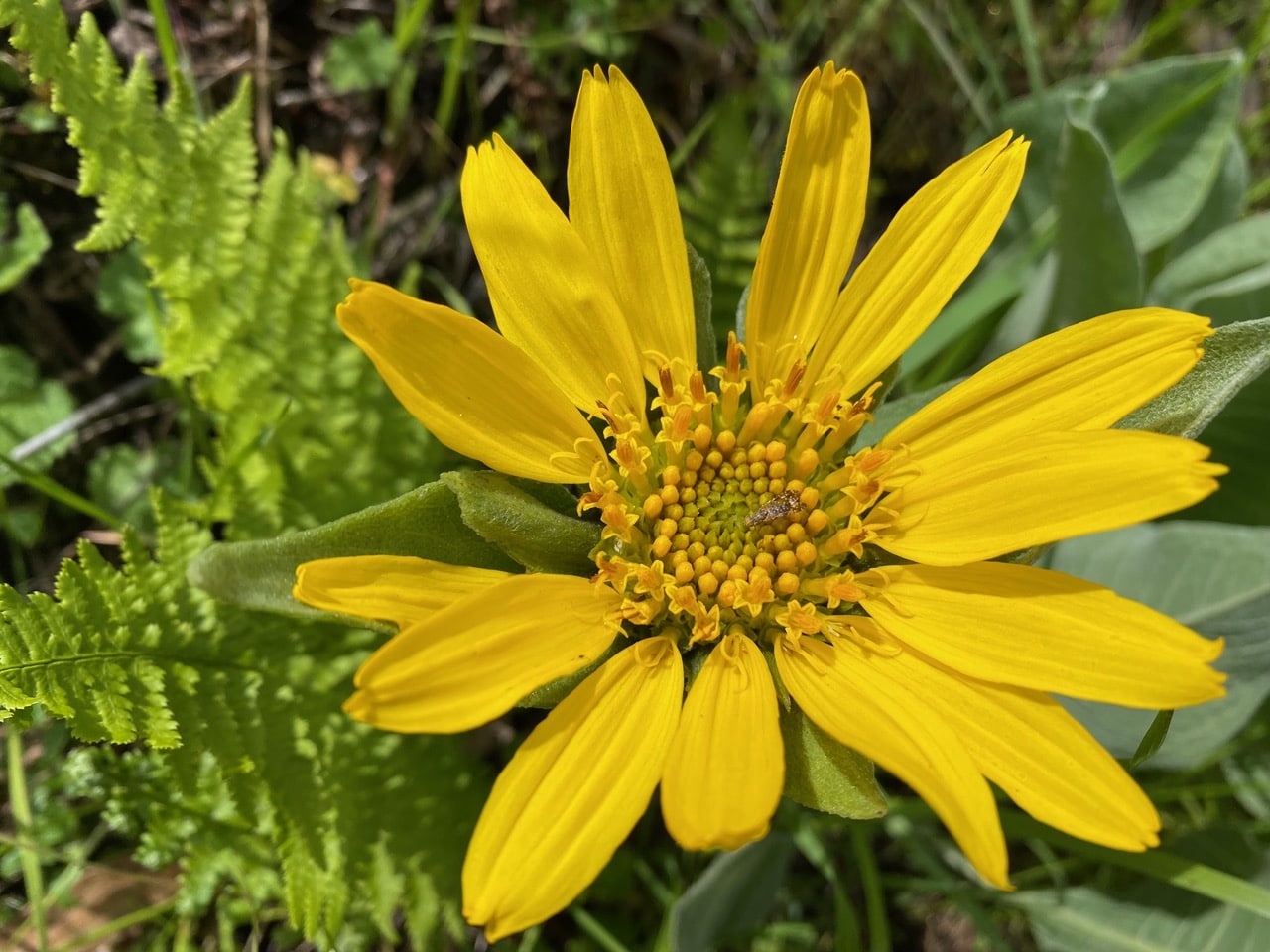
A beautiful fresh flowerhead of Mule’s Ear, Wyethia helenioides. The flowers on an Asteracea flowerhead usually open from the outside in. The female ray florets are showing their two-lobed styles. Only one or two rows of the disc florets along the rim are open. There’s already a Tephritid Fruit fly occupying the center of the flowerhead, which is currently still in buds.
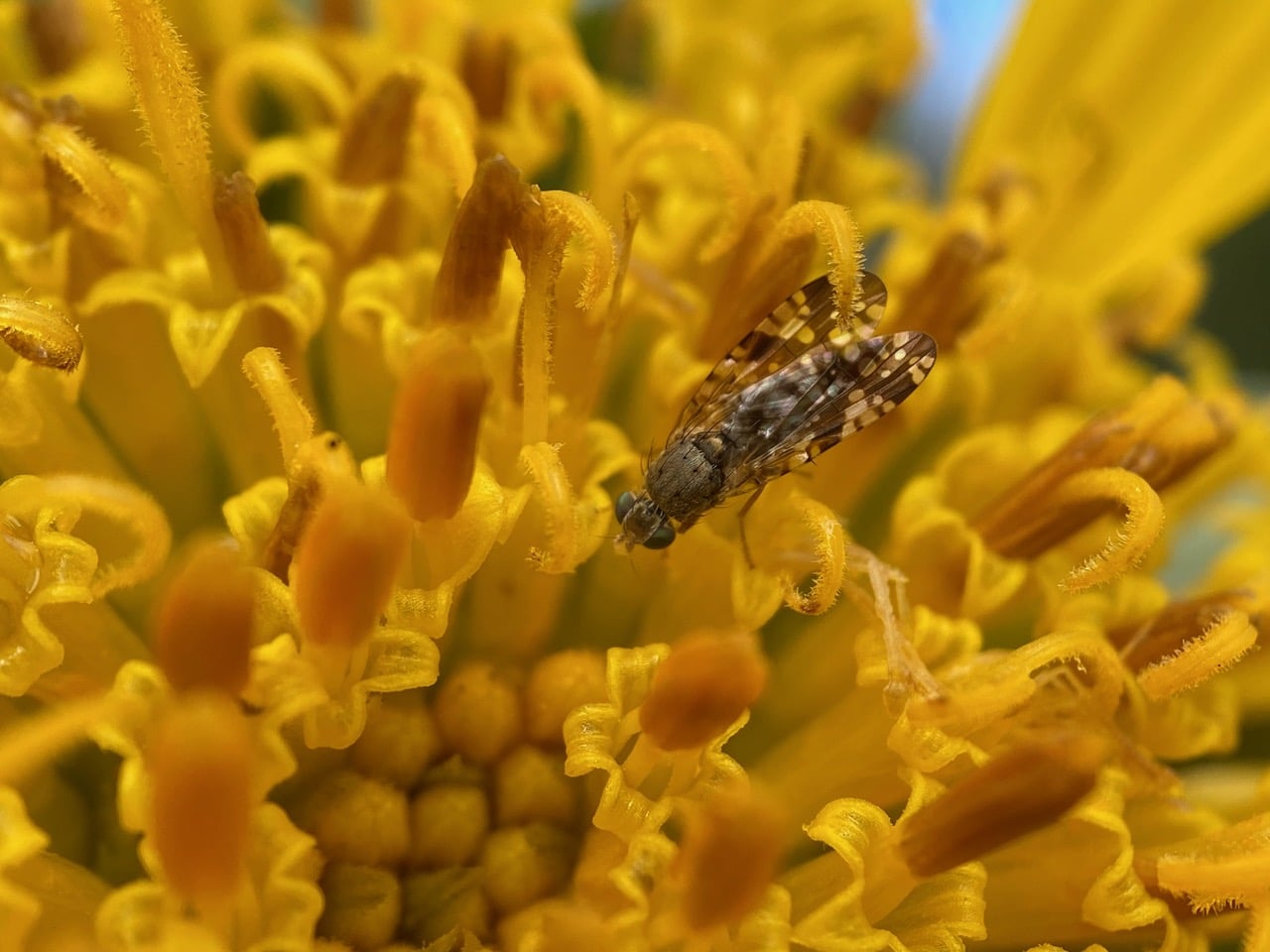
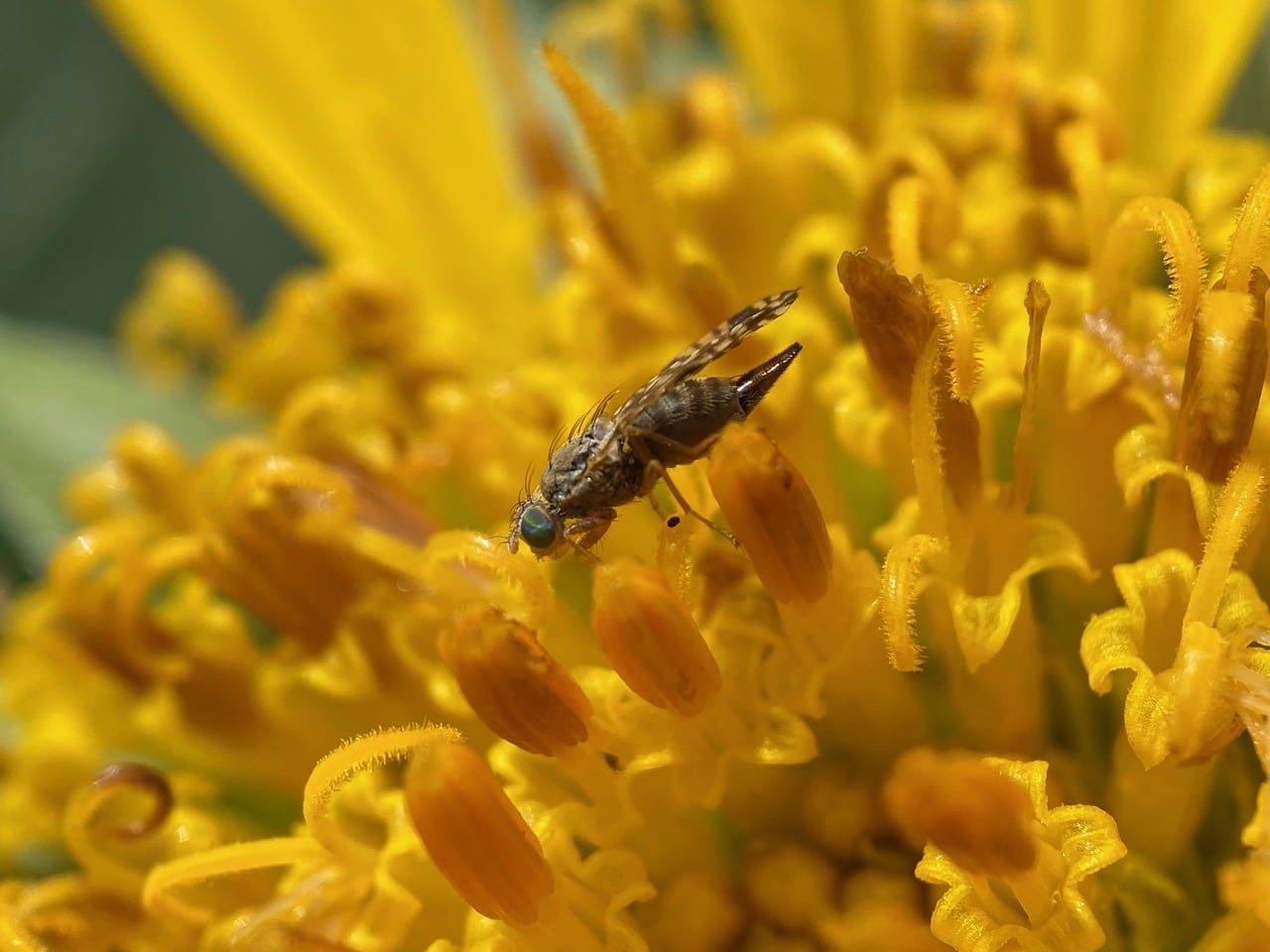
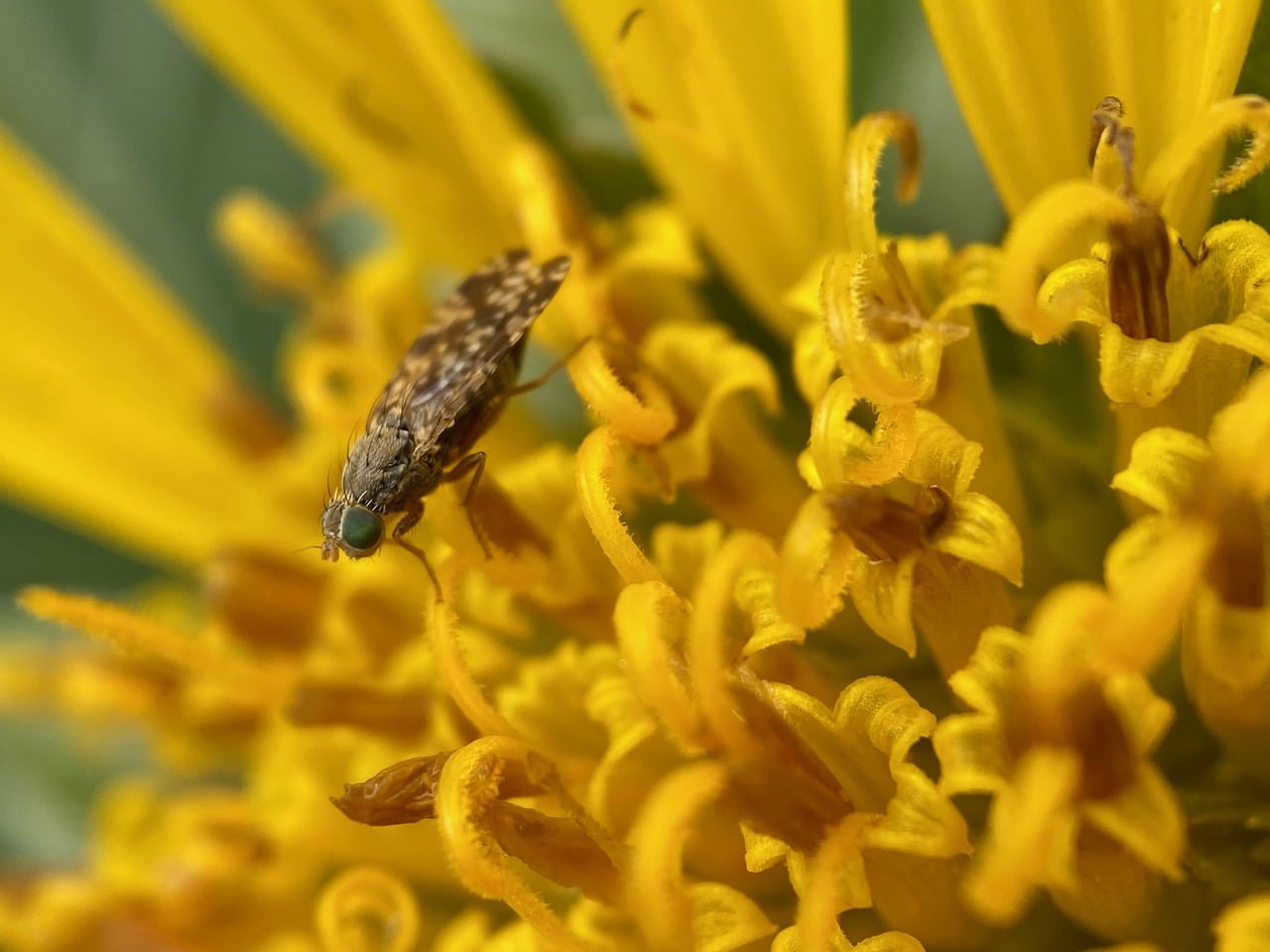
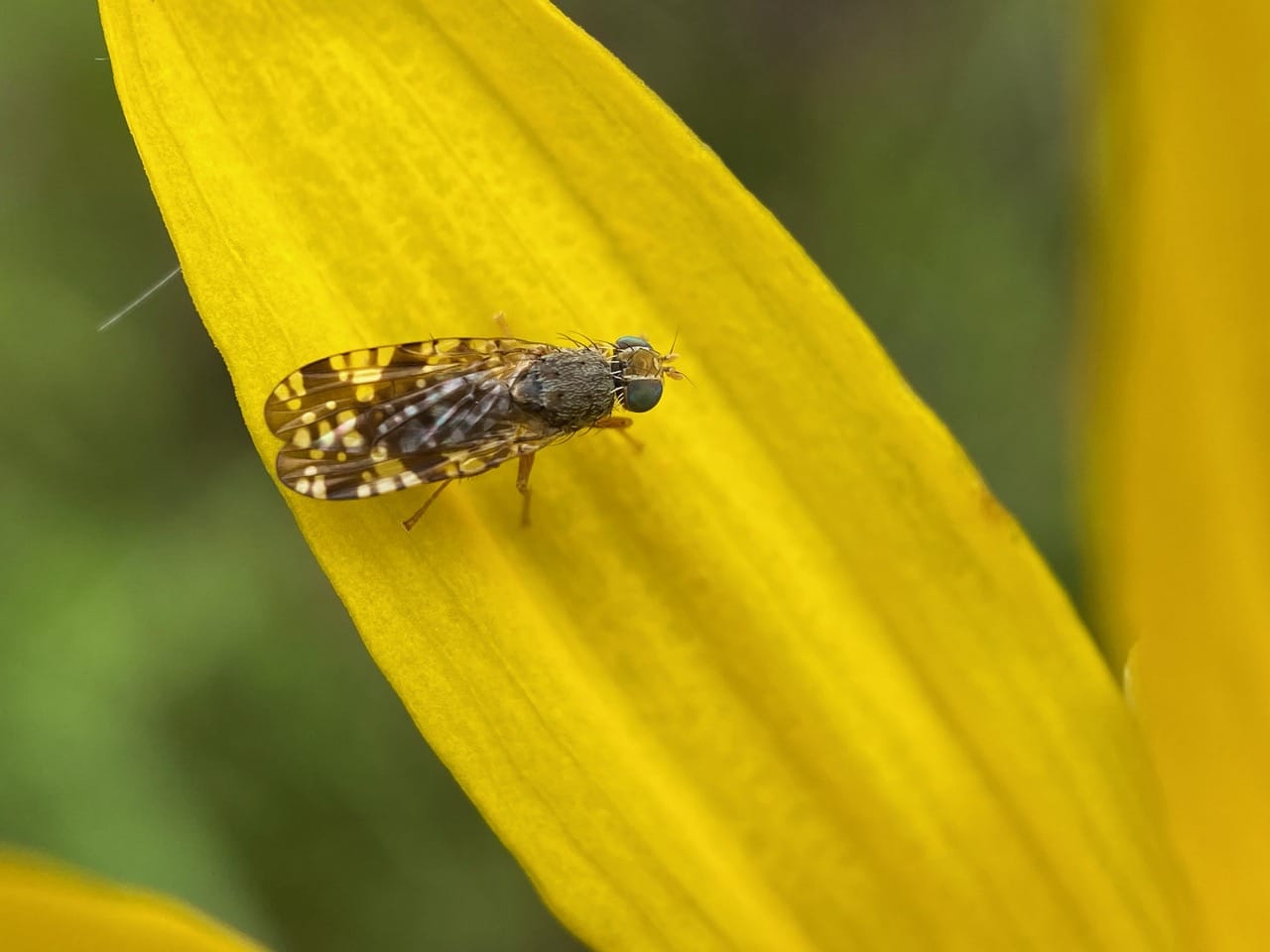
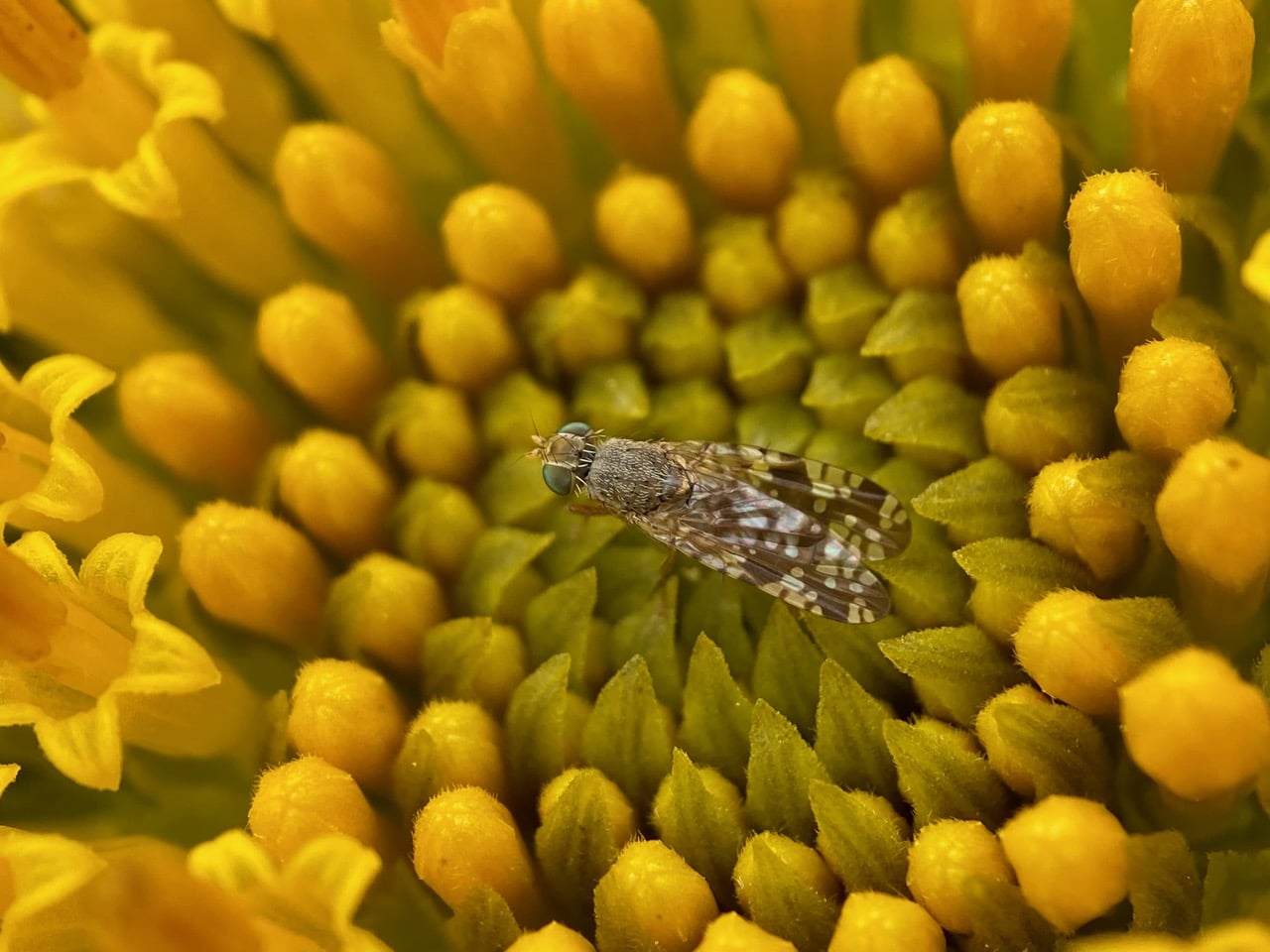
I am somewhat surprised to find a Sunflower Seed Maggot fly, Neotephritis finalis (family Tephritidae) in the middle of a very mature flowerhead. Only one or two circles of florets in the center are still in the male phase, while the rest are in the female phase with curly styles protruding. When I see that the fly is a female, it all begins to make sense. She is probably here to lay her eggs in the mature florets that are about to go to seed! Her larvae feed on immature sunflower seeds.
The sexes of Tephritid fruit flies are easy to tell apart. Females have a prominent, pointed oviscape at the tip of their abdomen through which their telescopic ovipositor is extended when laying eggs.
The female fly is busy running around, carefully checking on the florets. She is probably checking for maturity of the flowers, and maybe also for potential predators. Or perhaps she’s checking on the eggs that she has already laid?
Here’s a good view of her oviscape.
I track the fly’s movements through the florets for a while, hoping to see her lay eggs, but finally have to give up. It is visually exhausting!
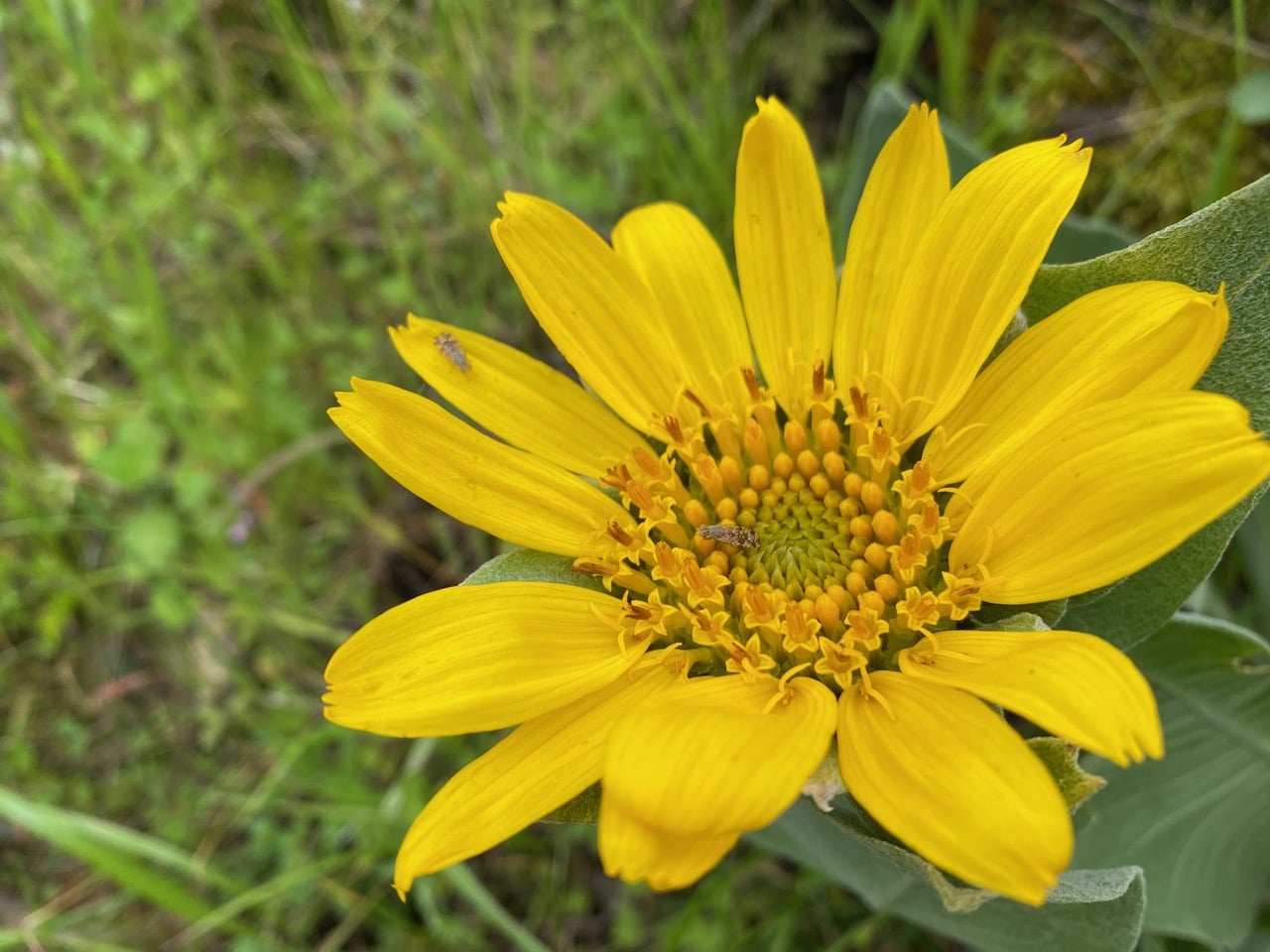
Another fresh flowerhead. There’s one Tephritid Fruit Fly on the disc florets, and another on a ray petal. I am curious to know the sexes of the individuals. Is there some kind of courtship going on? Or territorial behavior? It seems the flowerheads are claimed by a Sunflower Seed Maggot fly as soon as they open.
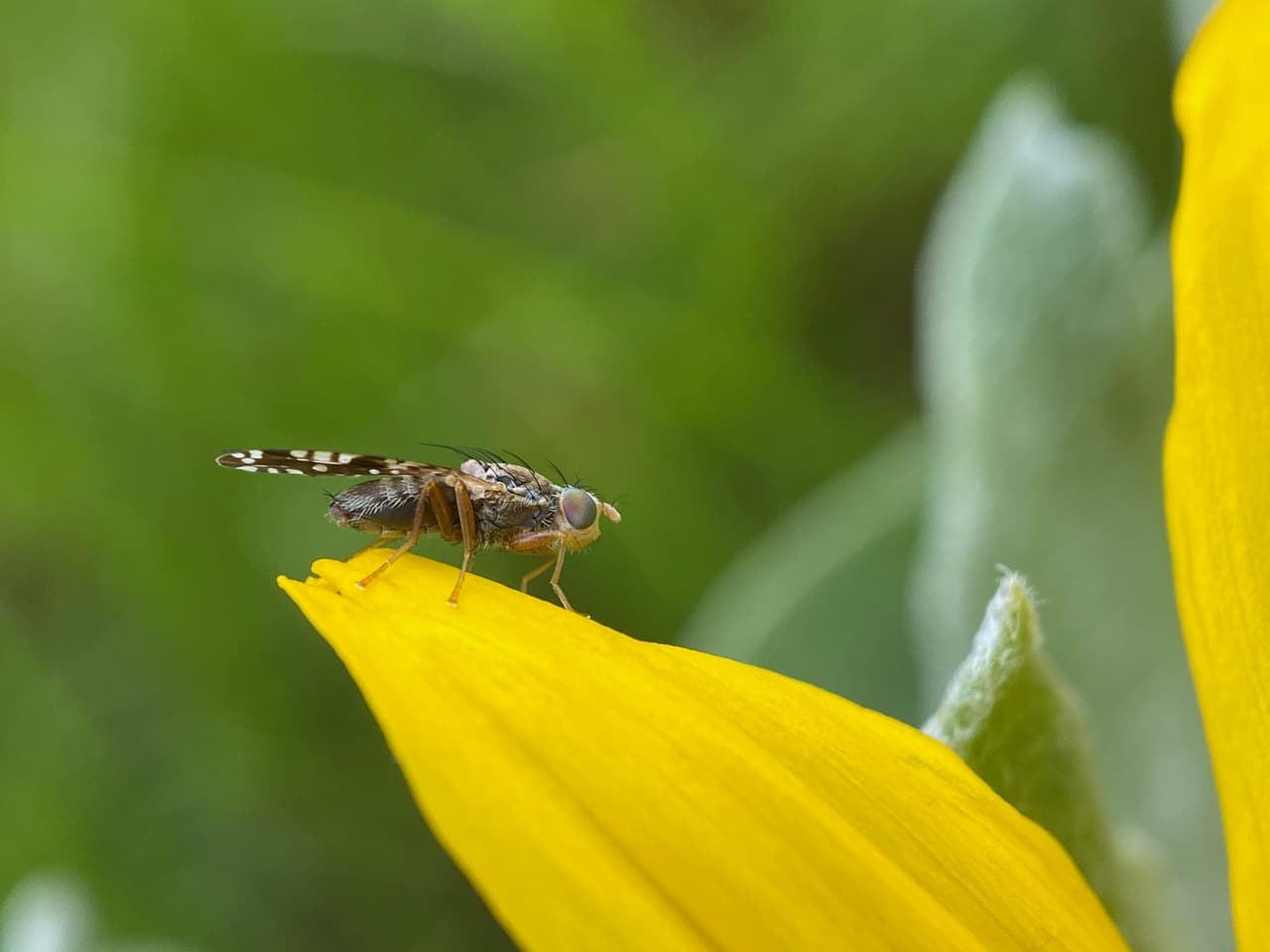
The one on the ray petal is male.
Close up of the male.
Alas, it’s not possible to tell the sex of this individual in the center of the flowerhead, as its abdomen is covered by the wings.
If the fly is a female, she has found a nice flowerhead on which to reproduce. But first she has to wait for the right male to come along. If the fly is male, he has claimed a nice flowerhead, and has a good chance of attracting a mate who is searching for a good oviposition site. But he also has to fight off other males to protect his territory.
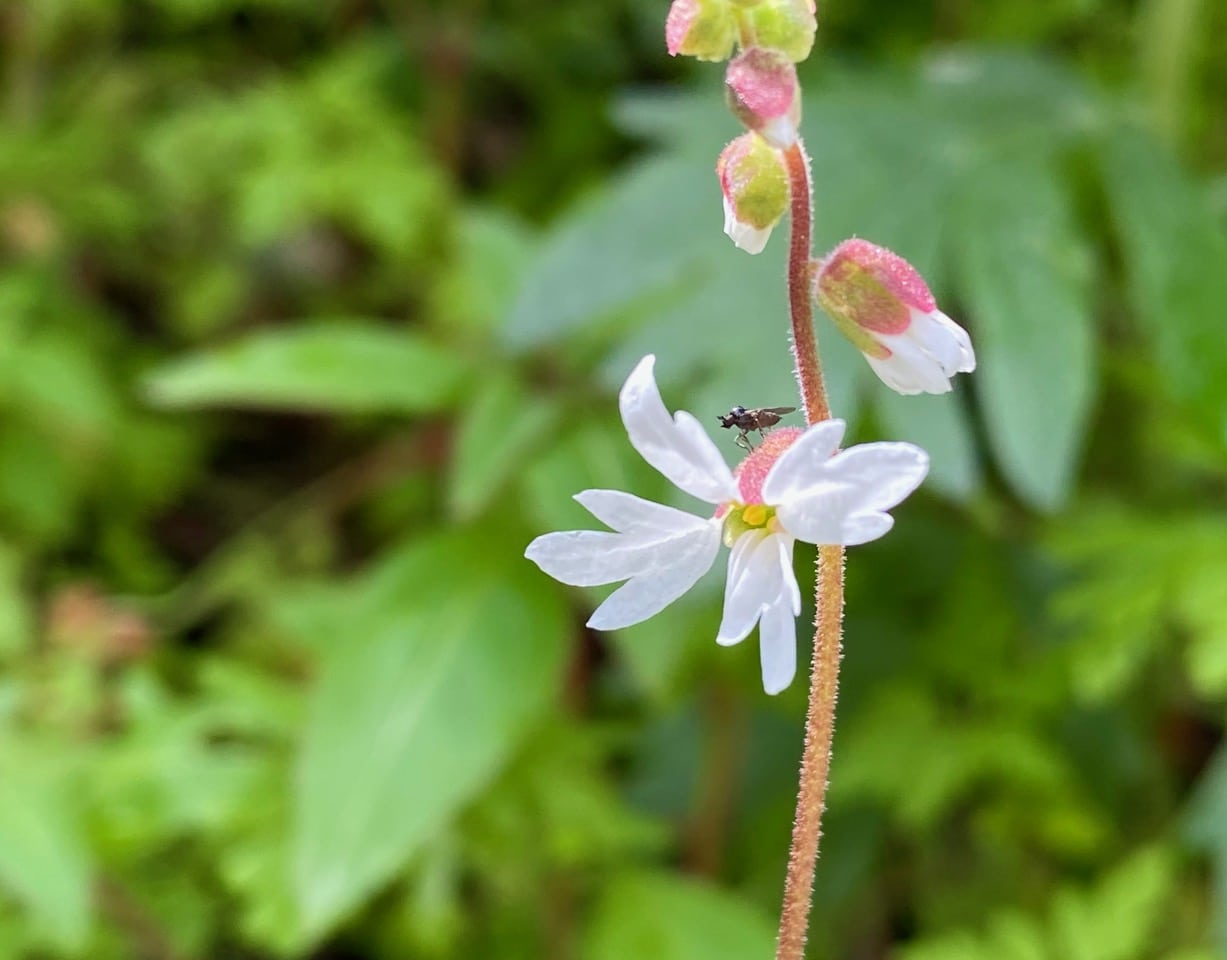
The Hybotid Dance Fly is still standing over the same Woodland Star flower when I pass it on the way back to Siesta Gate.
The Hybotid Dance Fly (family HYbotidae) is a small fly under 3 mm long. Its compound eyes seem to take up most of its spherical head. These flies belong to the superfamily Empidoidea and were formerly included in the Empididae as a subfamily. Empididae generally have a thick beak pointing down, while Hybotidae have a thinner beak, or a thick beak pointing forwards or diagonally. Some crucial wing venation further distinguishes the two families. Precious little is known about the life cycle and biology of Hybotids because they are not considered of economic consequence. Since their forelegs are generally not raptorial, I wonder if they’re predaceous like the Empidids. I have seen the Hybotids visit flowers for nectar and pollen, notably on Soap Plant, Miner’s Lettuce, California Saxifrage, and Wild Geranium, and I believe they may contribute to the pollination of these flowers. They seem to be especially abundant this year.