

Pollinator Post 3/30/23 (1)
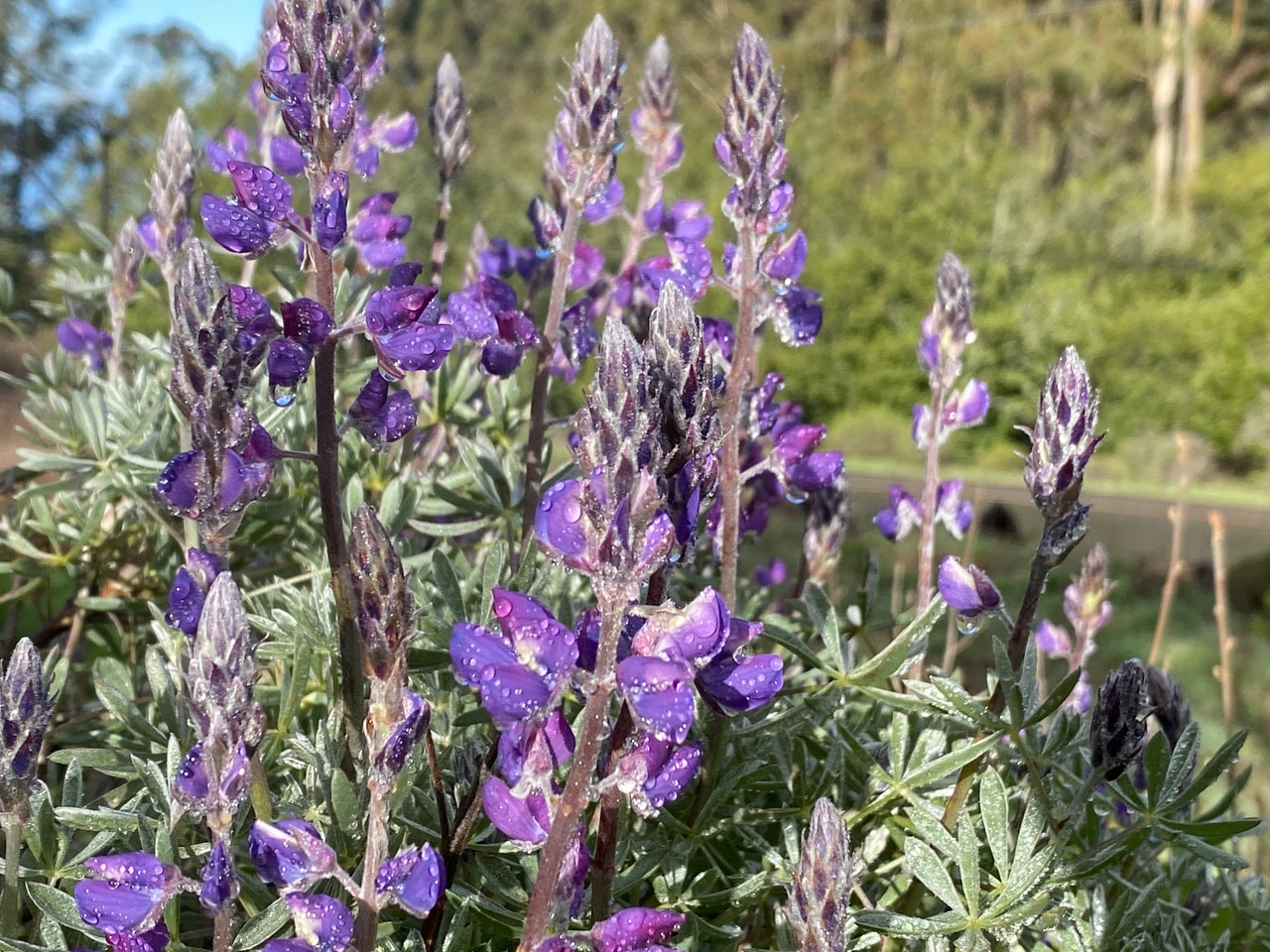
The latest outpour of the atmospheric river has drenched Skyline Garden. At Siesta Gate, sections of Grizzly Peak Blvd has water running on the surface. The Silverleaf Lupine, Lupinus albifrons is still covered with rain drops as I make my way uphill on this dry but cold morning.



Among the plant debris on the ground is this 2-inch square piece of bark covered with a green moss, a bluish lichen and a gelatinous jelly fungus. They appear none the worse for wear. Spore-forming life forms with no real roots, they can all propagate by spores or by bits and pieces that break off from themselves. For them being torn from a tree is no big disaster.
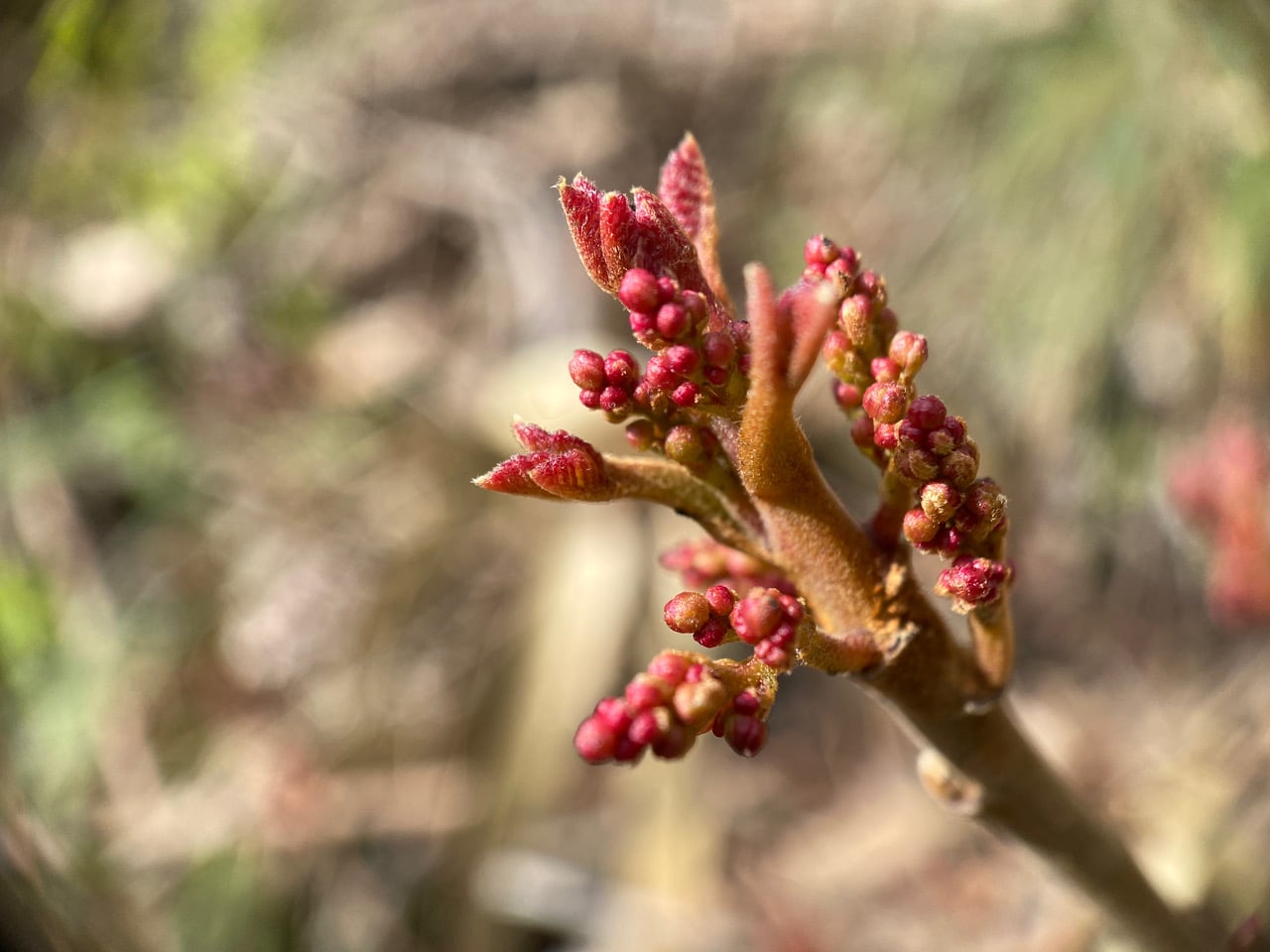
The tips of the bare stems of Pacific Poison Oak, Toxicodendron diversilobum are sprouting reddish leaf and flower buds.
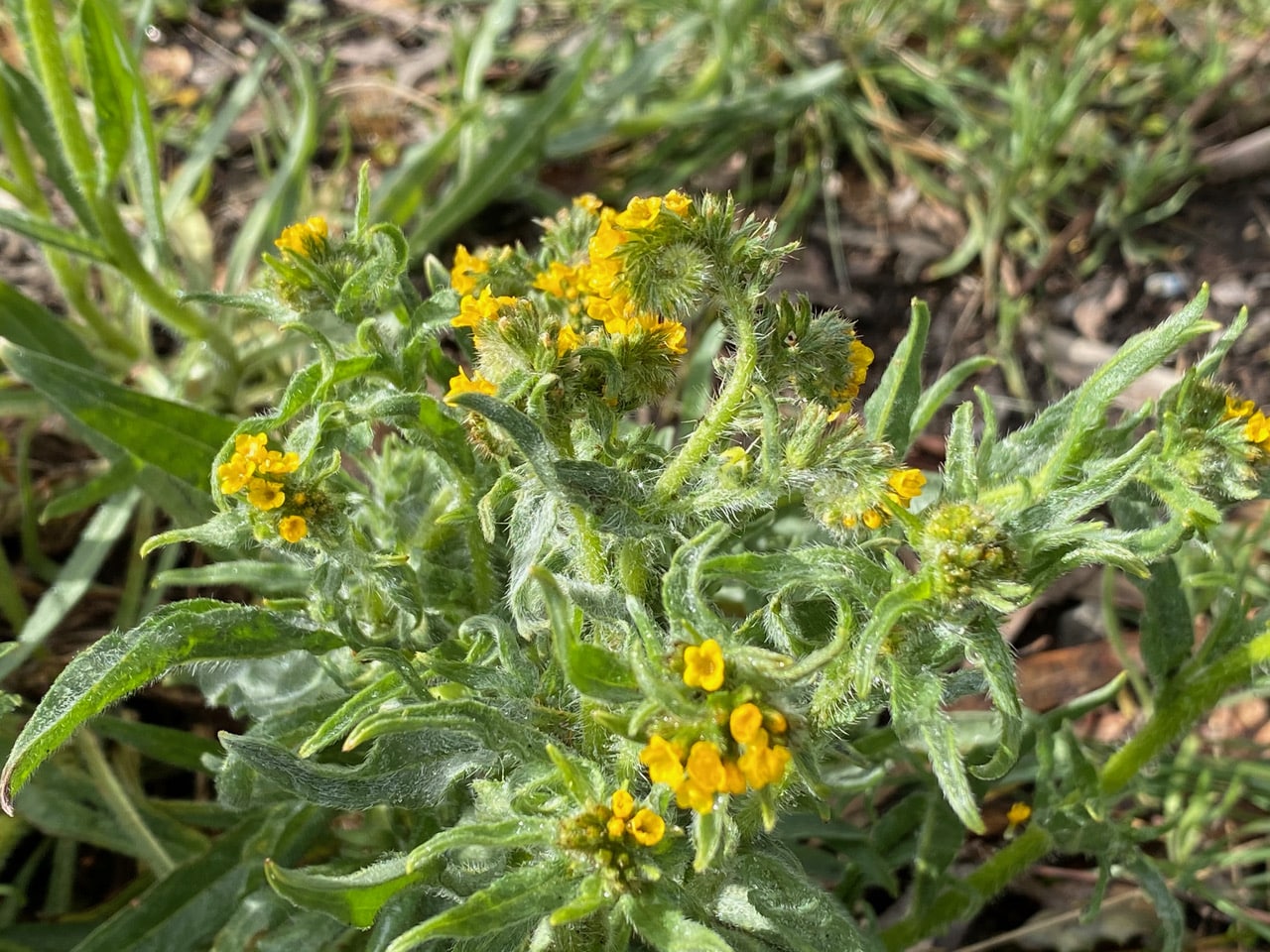
More flowers have unfurled from the tightly coiled buds of the Common Fiddleneck, Amsinckia intermedia.
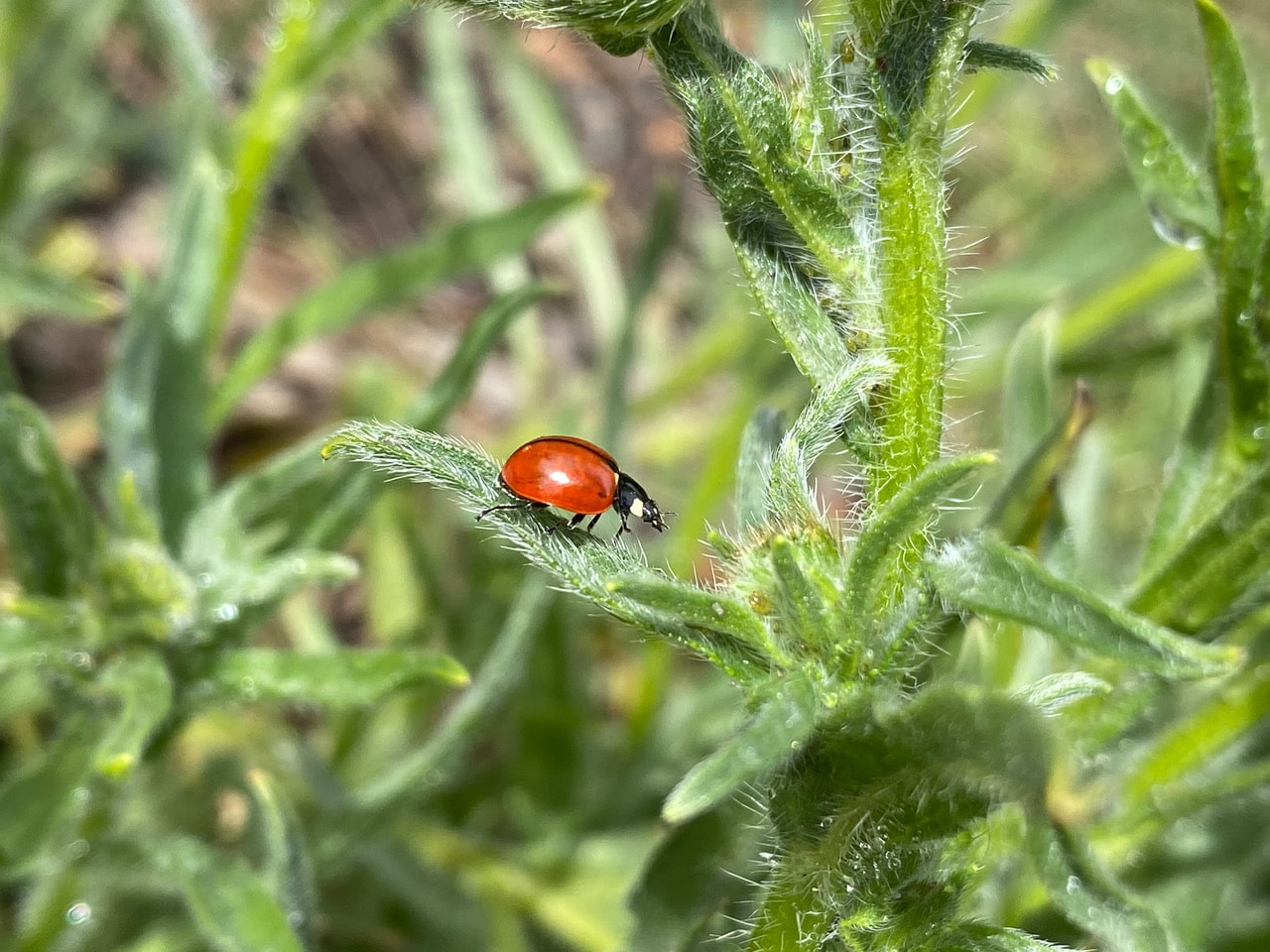
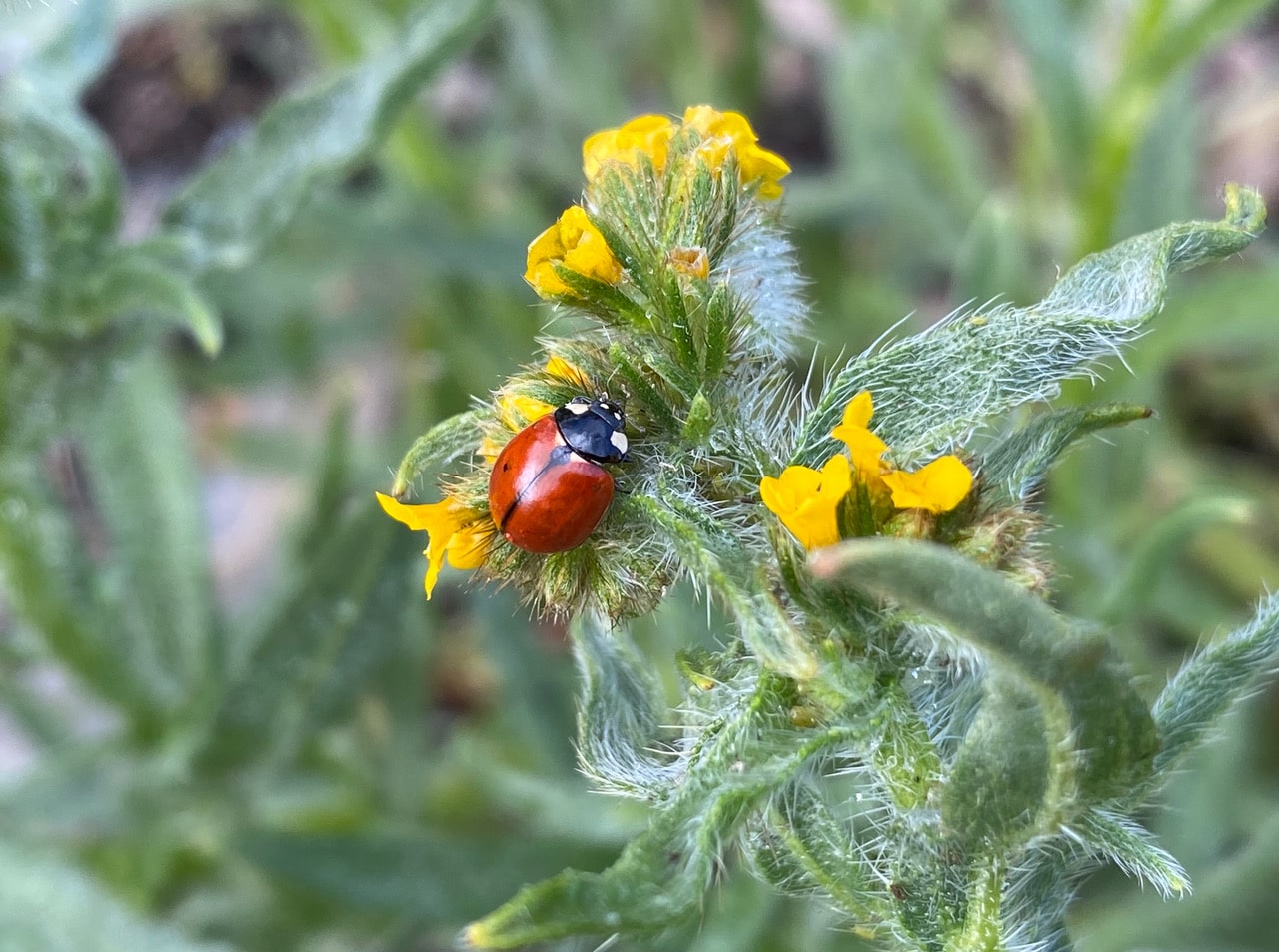
I am surprised to find a few California Lady Beetles, Coccinella californica roaming the foliage of the Fiddleneck on this cold, overcast morning.
A pair is mating as the female continues to move around to feed.
This one has settled nicely among a Fiddleneck inflorescence. By its busily moving head, I surmise that it is feeding on tiny green aphids invisible to my eyes.
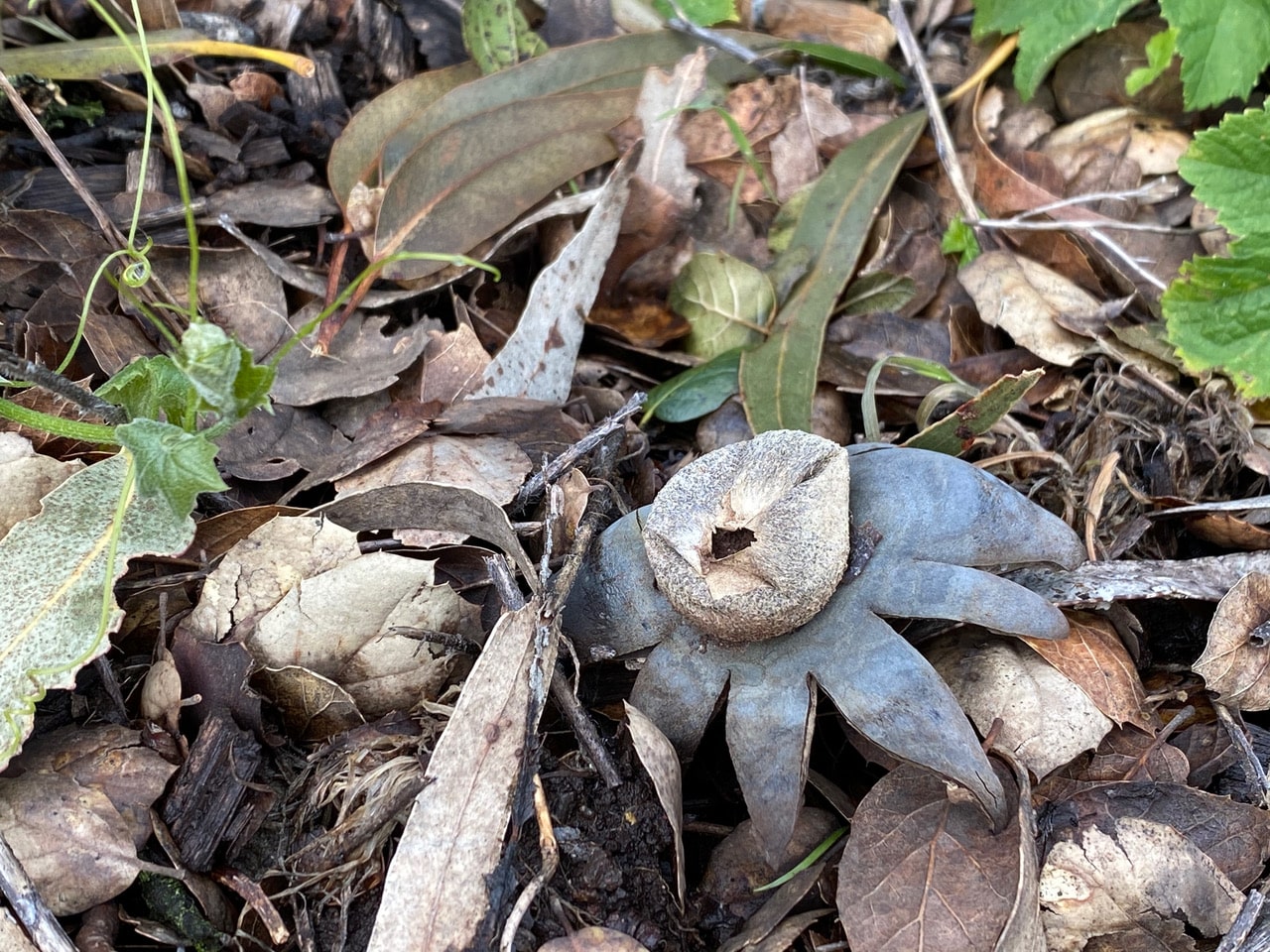
Among the leaf litter under a familiar oak tree I look for the Earthstar fungus. Sure enough, there’s plenty of them, all spent. The latest round of heavy rains must have been a major spore dispersal event for these unusual fungi. Here’s one with a partially deflated spore sac still on its star-shaped pedestal.
Astraeus hygrometricus, commonly known as the Hygroscopic Earthstar is a species of fungus in the family Diplocystaceae. Young specimens resemble a puffball when unopened. In maturity, the mushroom displays the characteristic earthstar shape that is a result of the outer layer of fruit body tissue splitting open in a star-like manner. A. hygrometricus is an ectomycorrhizal species that grows in association with various trees, including oaks. The name of the fungus refers to the fungus’ reaction to the amount of water in the air. When it’s very dry, the ray-shaped arms fold around the central puffball (or spore sac) to protect it from predators and the elements. However as the rains begin, the different parts of the hygroscopic rays absorb water at different rates, causing them to unfold to expose the puffball. As additional raindrops fall on the exposed puffball, the spores are puffed out through the pore. The rays curl and extend far enough to raise the puffball a couple of centimeters above the ground, the better for the spores to catch the air current that will transport them far and wide. This adaptation enables the mushroom to disperse spores at times of optimum moisture, and reduce evaporation during dry periods.

A few more spent Earthstar fungi can be seen next to the vibrant leaves of young Cow Parsnip, Heracleum maximum growing in the shade of the oak tree.
Although I look for them every time I pass this way, I have yet to see the fungi in their prime, with fresh spore sacs atop their pedestal. The emergence of the fungi above ground, and the opening of the rays lifting up the spore sac probably happens very quickly at the onset of rain. I guess I have to be prepared to get wet to catch the show… Mushrooms are magical stuff!
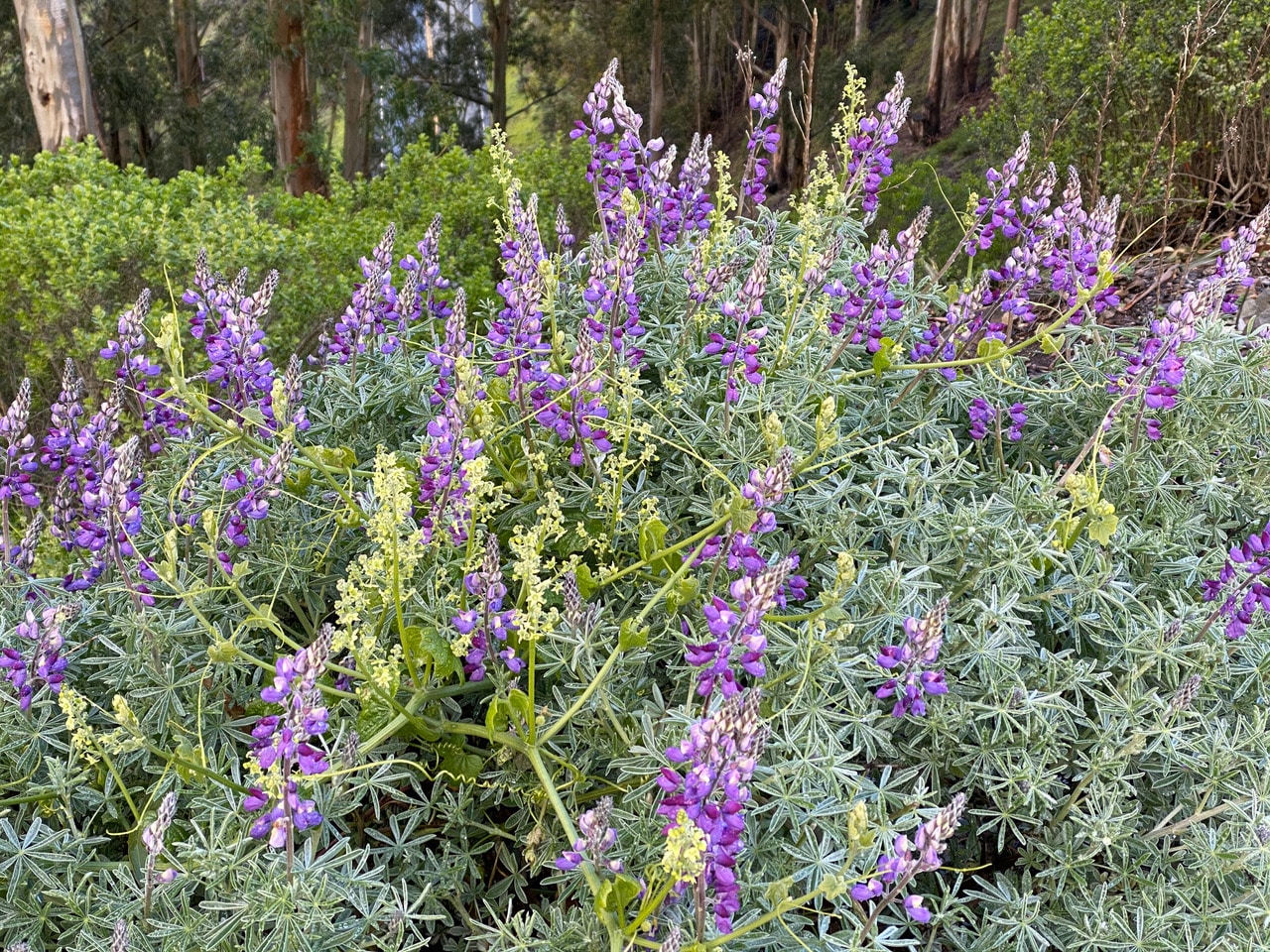
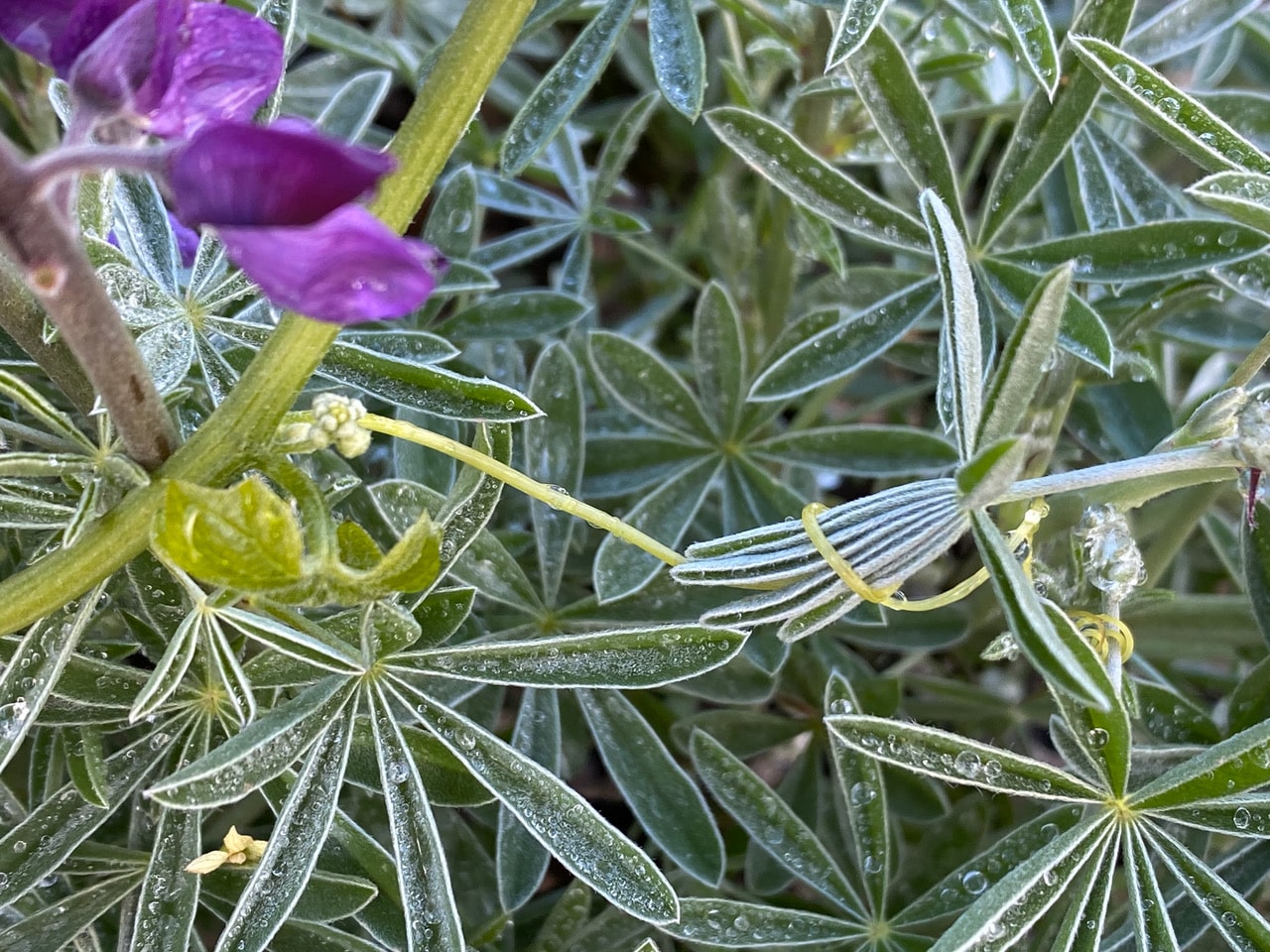
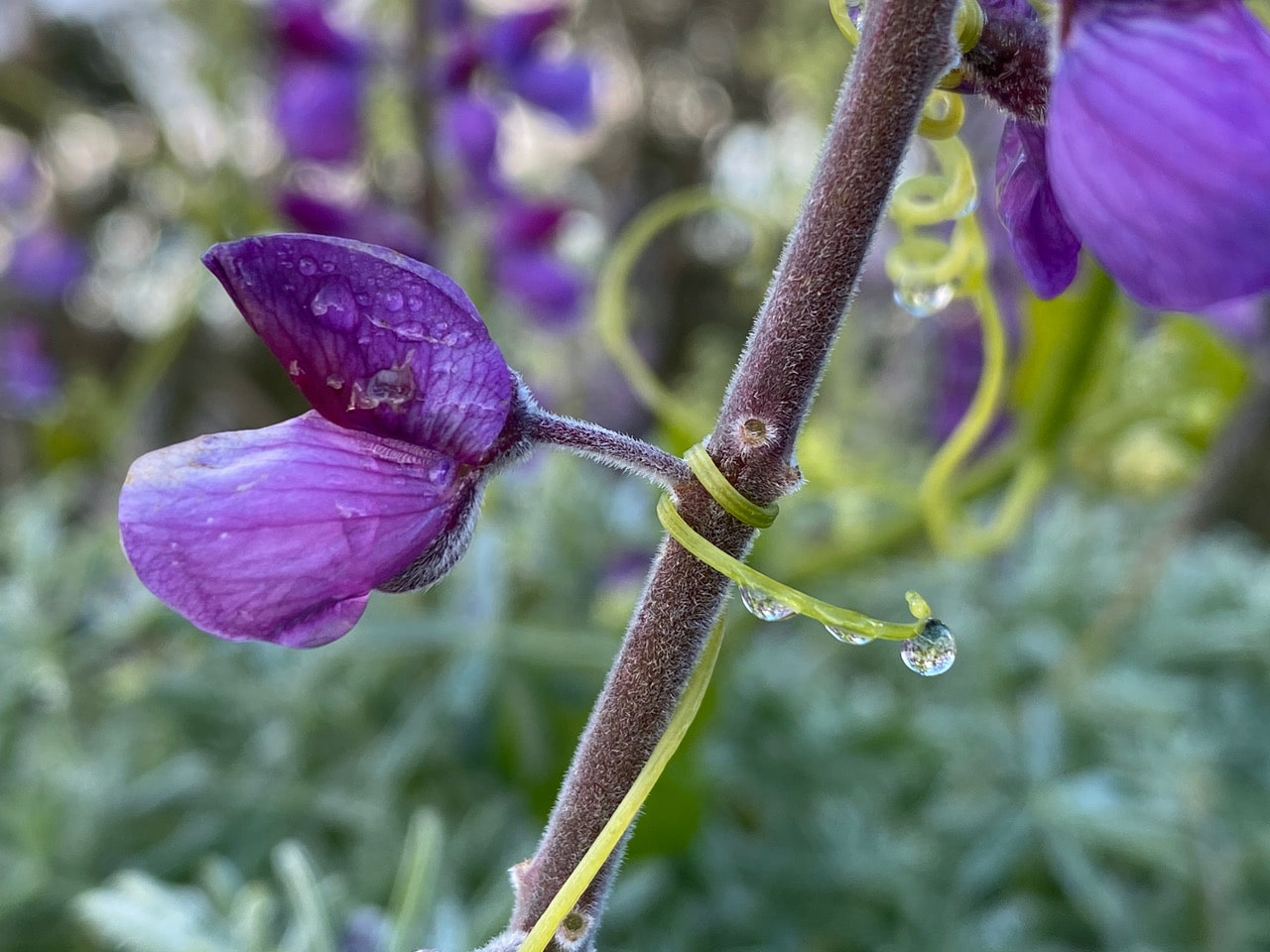
Here’s that Silverleaf Lupine, Lupinus albifrons that has a California Manroot, Marah fabacea growing through it.
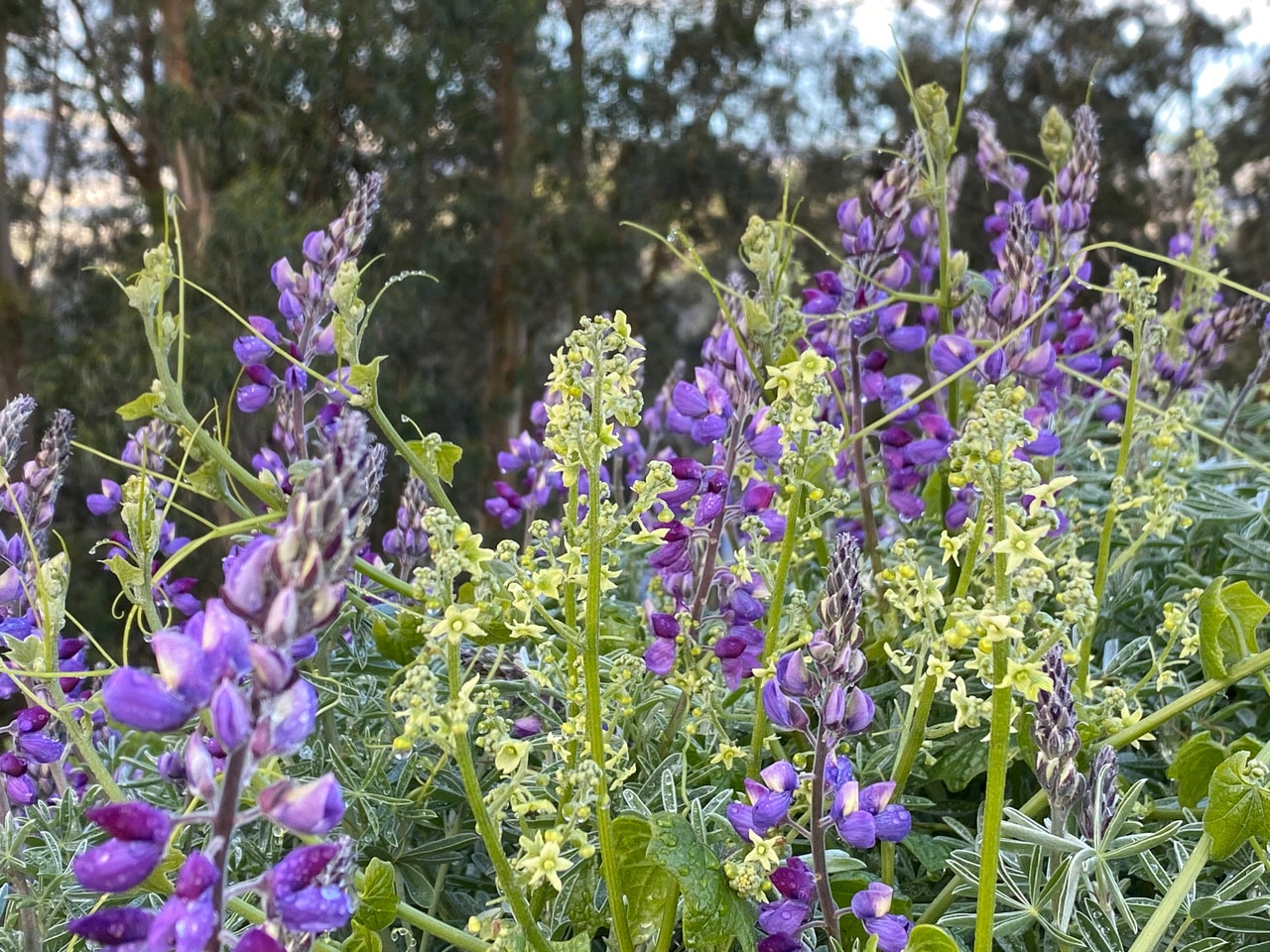
The California Manroot is blooming with erect spikes of small cream-white flowers. Straight, flexible tendrils are still being sent out in continuous search for more structural support.
The California Manroot has wrapped a tendril around a lupine leaf, ruining its chance of ever unfurling its leaflets
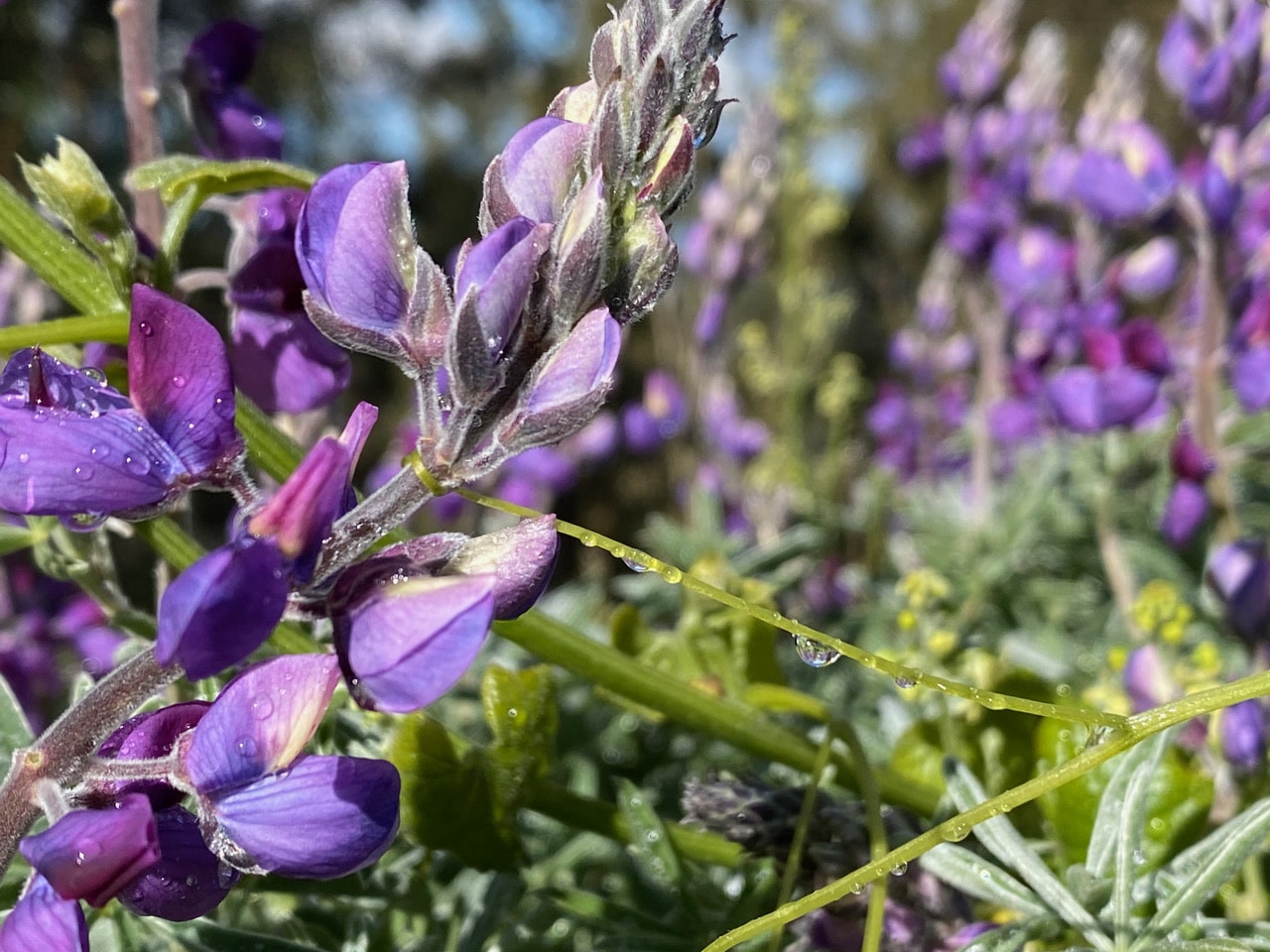
Another Marah tendril is wrapped around the stalk of the lupine inflorescence.
This tendril has such a strong hold on the lupine that the inflorescence is bent. Never underestimate the power of tendrils!