

Pollinator Post 3/3/26

I walk along the spit near the boat ramp at Crab Cove, enjoying the afternoon sun, and watching the antics of California Ground Squirrels on the rocks.
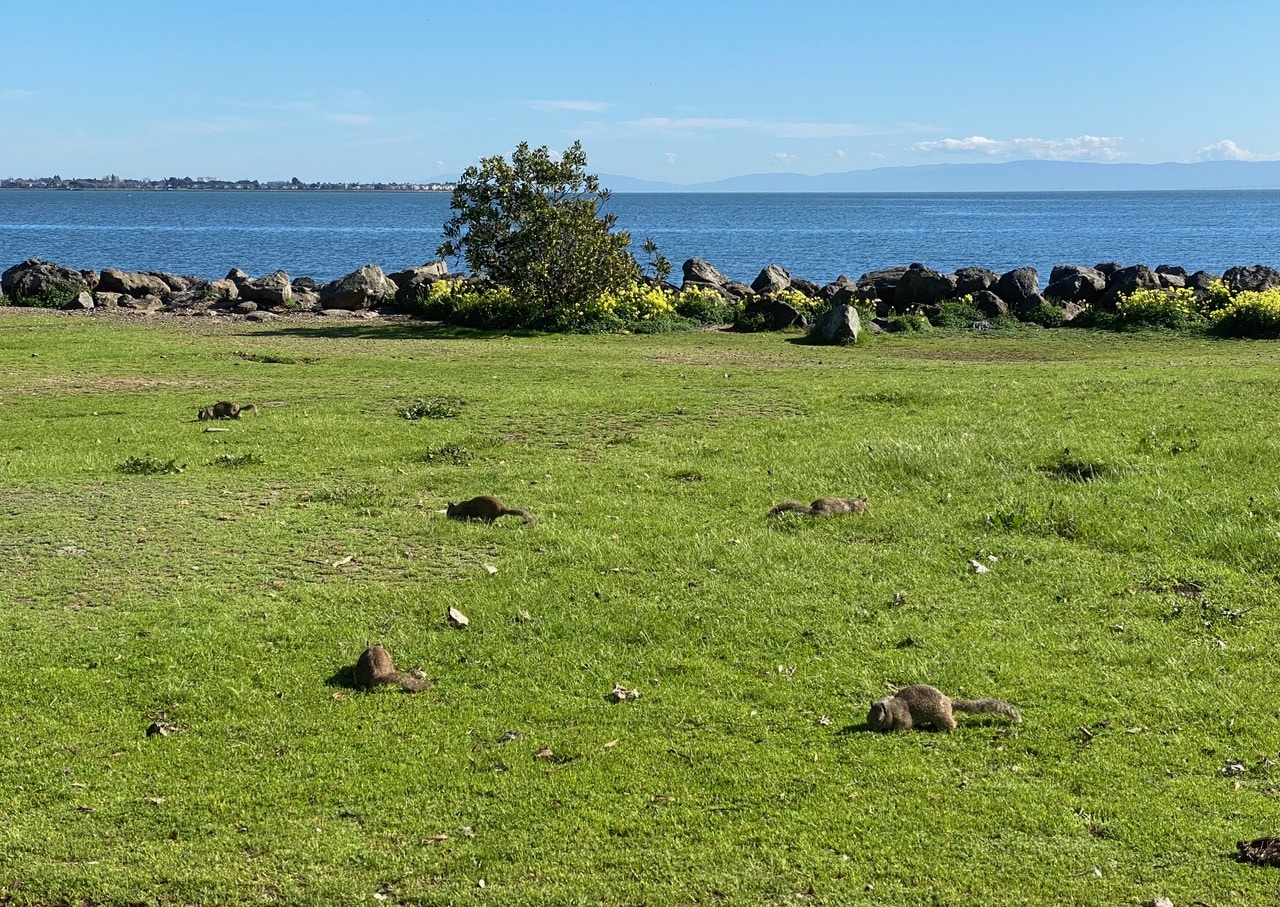
More Ground Squirrels are on the lawn area, feeding. Are they responsible for the abundance of the yellow-flowered Bermuda Buttercups in this park?
Bermuda Buttercup, Oxalis pes-caprae (family Oxalidaceae) is a low-growing perennial found along the coast of California. The plant was introduced as an ornamental from South Africa in the early 1900s. It is now a persistent nuisance in home gardens and has taken over the coastal grasslands. Despite the beautiful flowers, Bermuda Buttercup, Oxalis pes-caprae is essentially sterile in many areas (such as North America), relying entirely on bulbs to spread. The plant produces small, white bulbs (often called bulblets or bulbils) attached to the main bulb or along the underground stem (rhizome) in spring. Each plant can produce over 20 bulbs per year, which are spread by contaminated soil, garden tools, composting, and construction equipment. Rodents may eat or move the bulbs, depositing them in new locations, such as in caches. Such disturbances allow the plant to colonize rapidly in lawns, gardens, and natural areas. Specialized roots can pull the bulbs deeper into the soil, making them difficult to remove and allowing them to persist through summer dormancy.
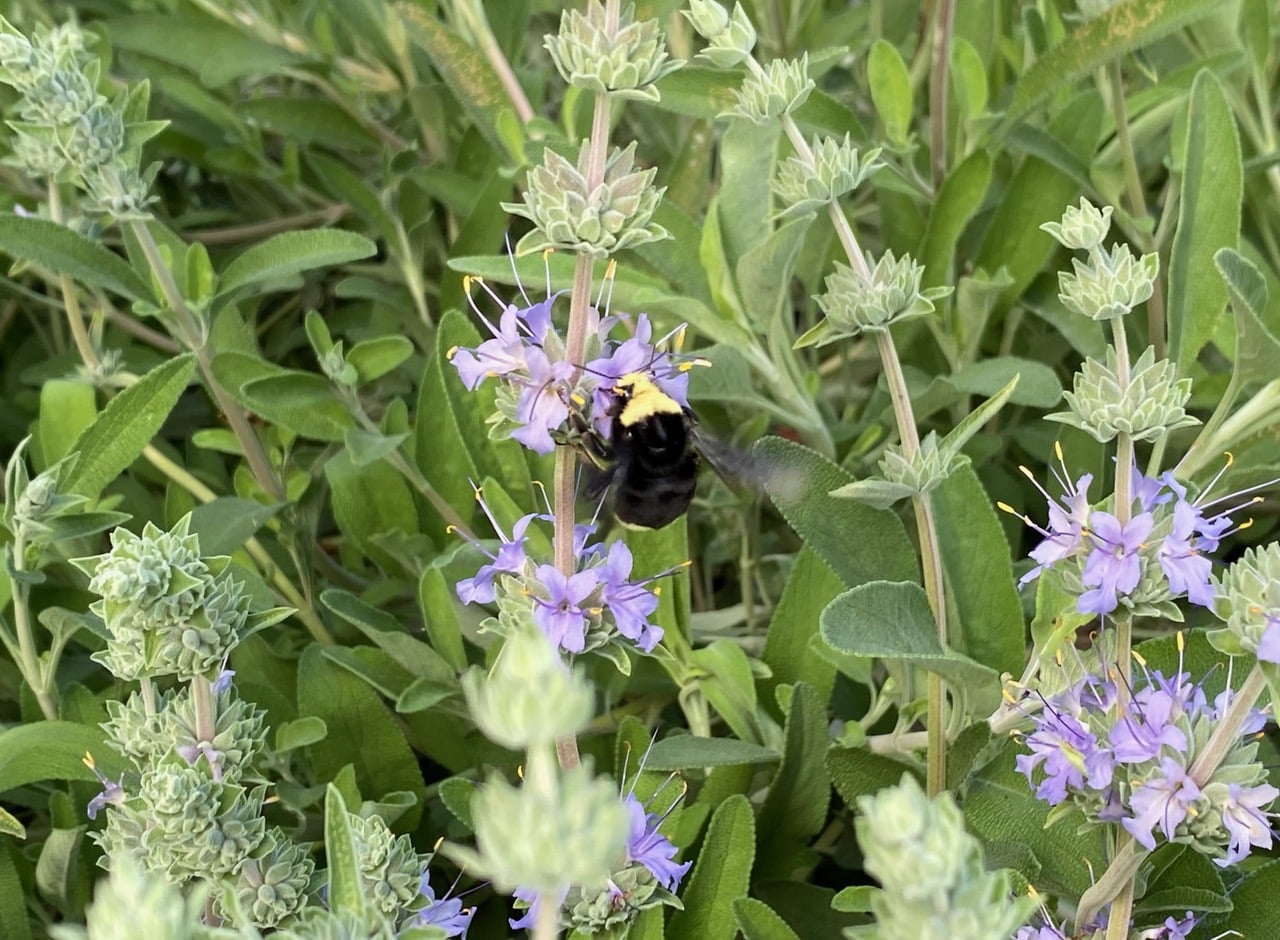
A queen Yellow-faced Bumble Bee, subgenus Pyrobombus (genus Bombus, family Apidae) flies busily around the patch of Cleveland Sage, Salvia clevelandii, stopping occasionally to refuel with nectar from the flowers.
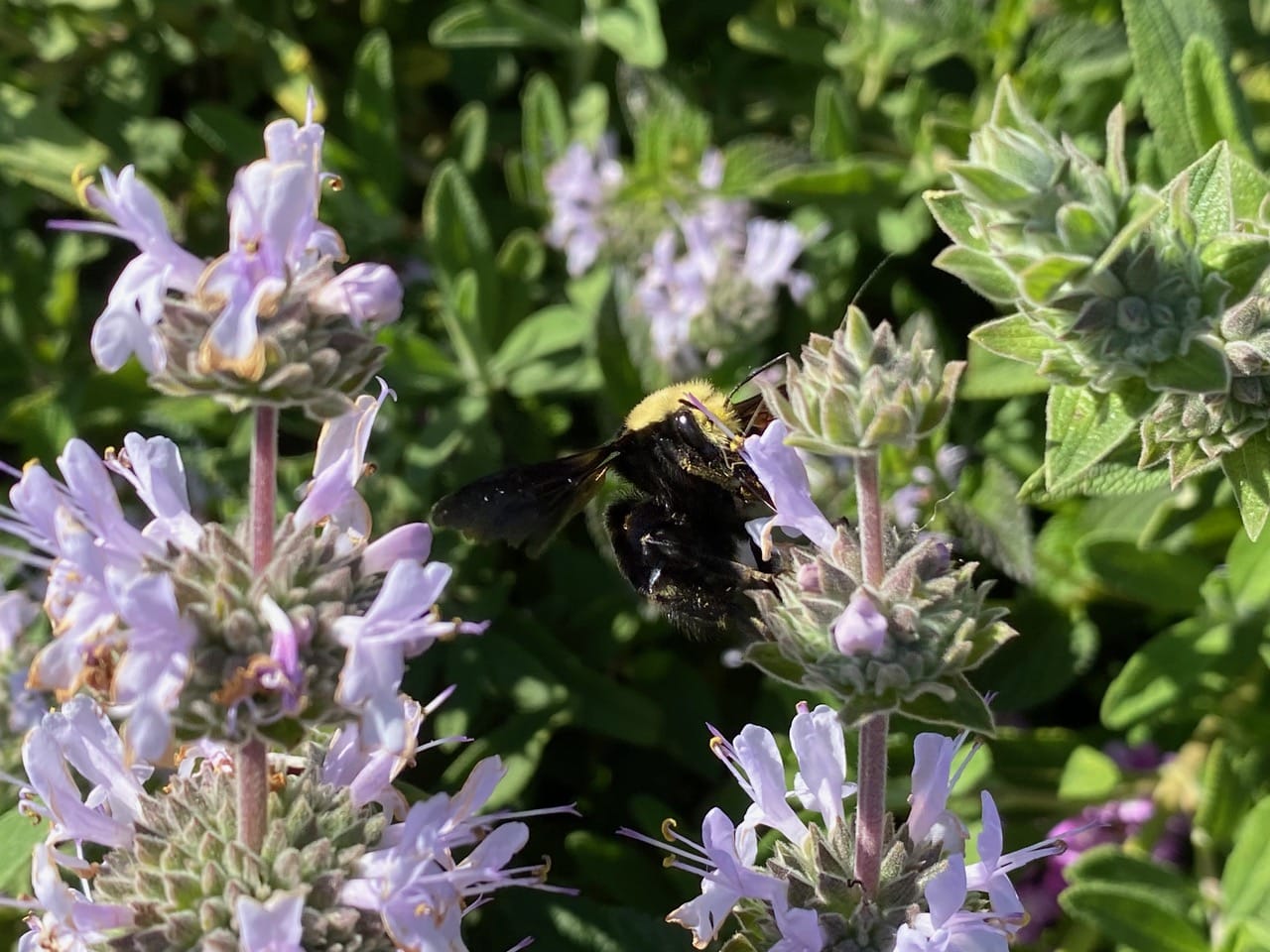
These large bees are only interested in the nectar; there is no way for them to intentionally collect pollen at the ends of the long, protruding stamens.
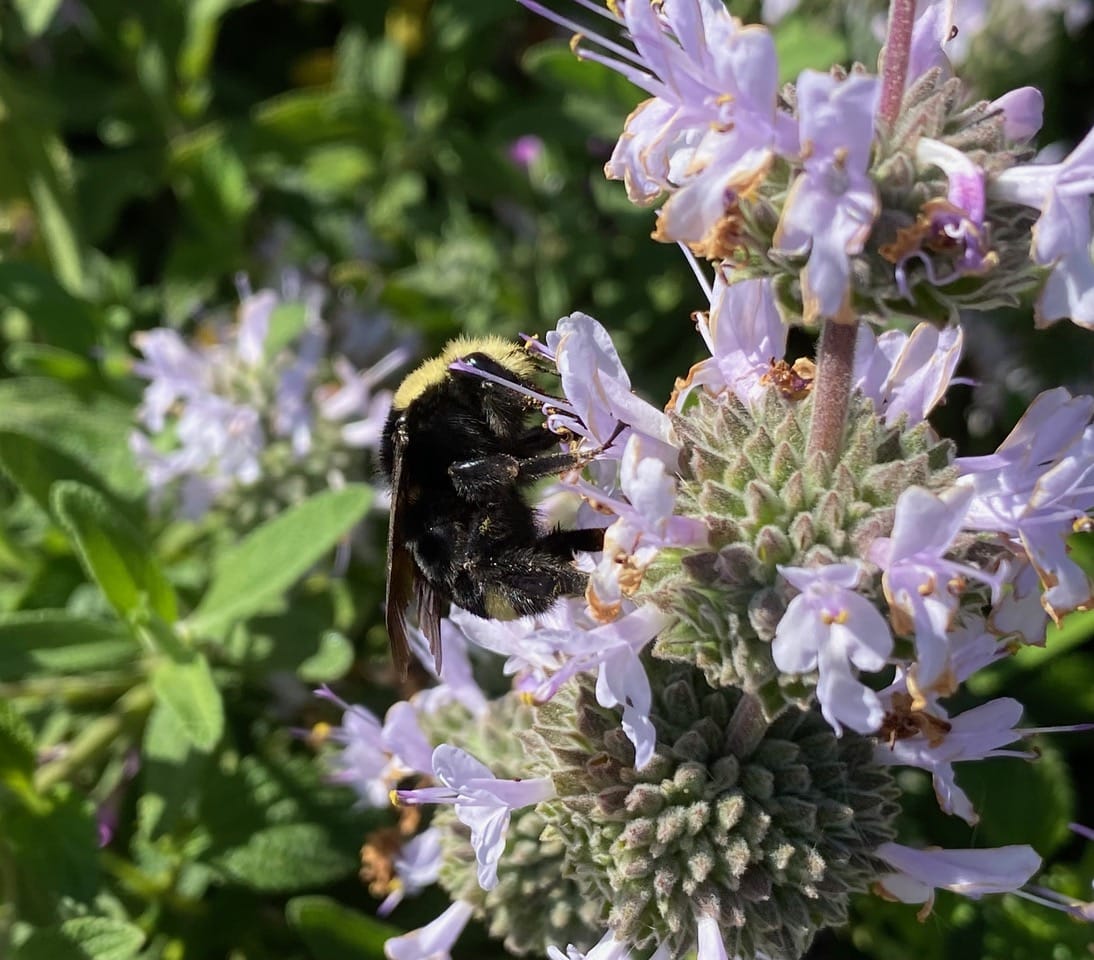
Pollen, however, does get on the bee passively as she probes for nectar. Note the even longer style protruding above the pair of stamens. When mature, the forked stigma can pick up pollen that is already on the bee’s body from a previous flower she has visited.
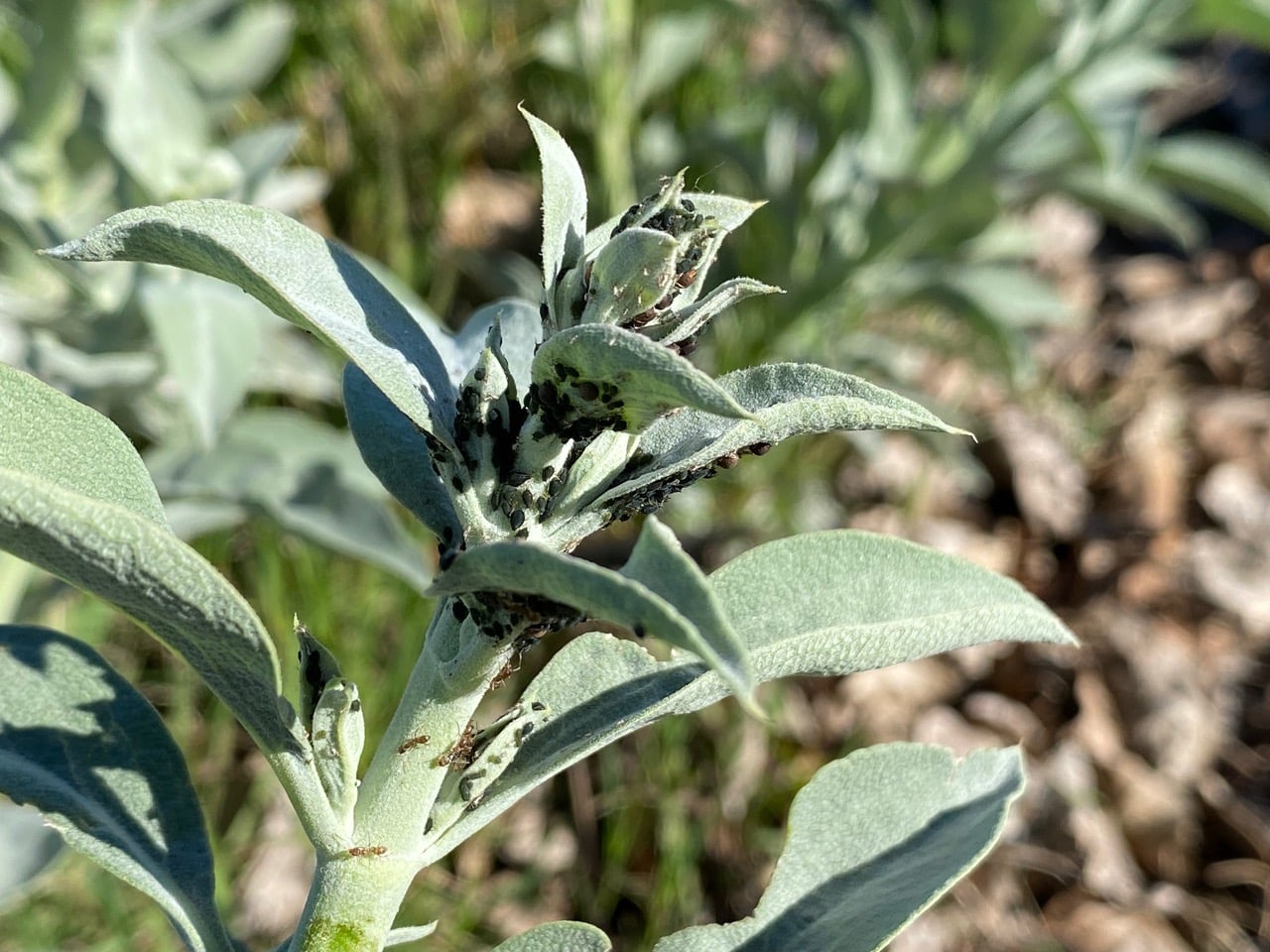
The White Sage, Salvia apiana in the native garden has sprouted new growths. Hey, what are those dark spots on the tip of that branch?
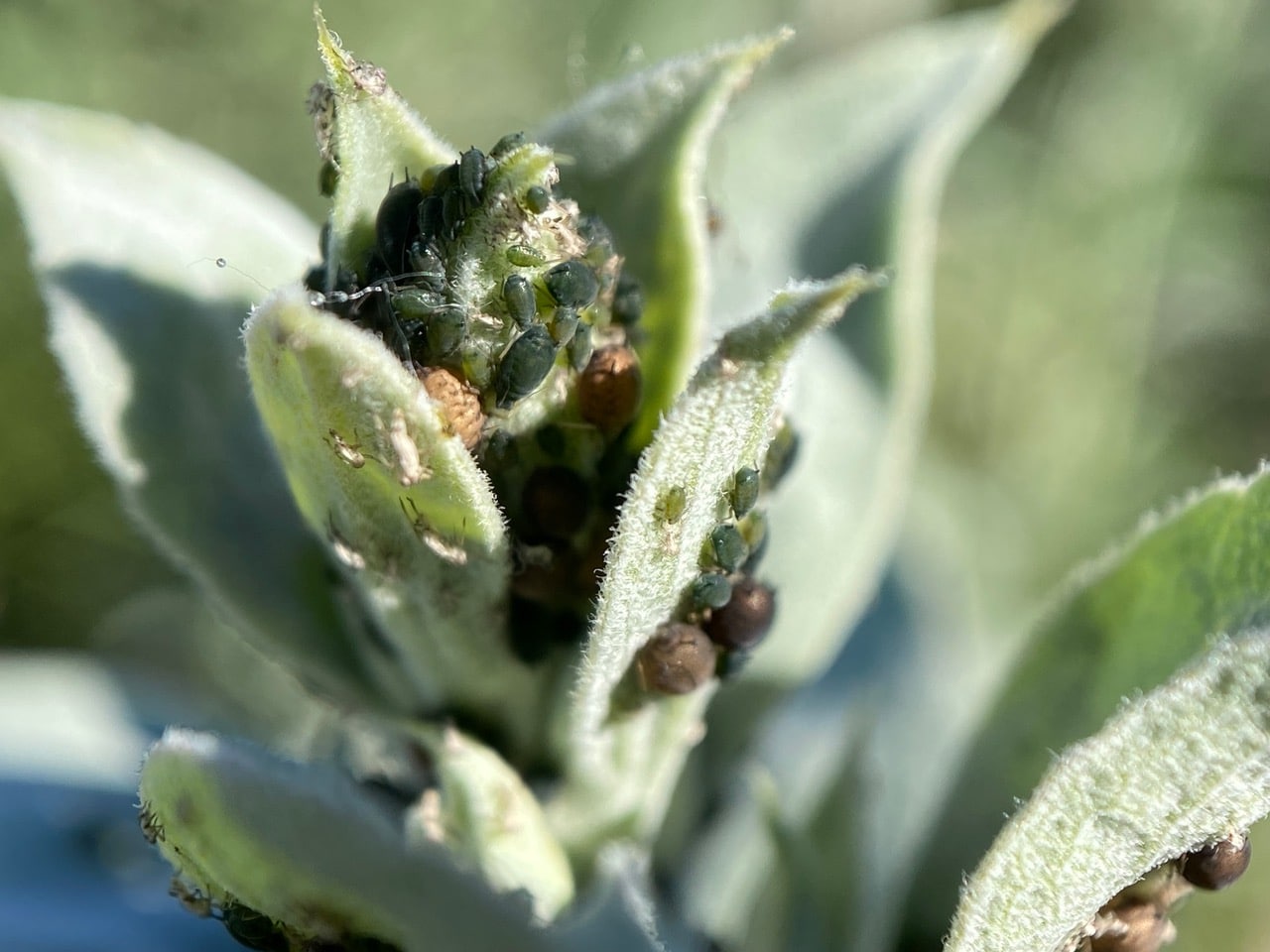
Closer inspection reveals a colony of dark green aphids (family Aphididae).
Aphids are small, soft-bodied, sap-sucking insects belonging to family Aphididae (order Hemiptera). They are characterized by their pear-shaped bodies, “cornicles” (a pair of pipe-like tubes on the rear), and unique asexual reproduction. Aphids have a unique, rapid lifecycle where wingless females give birth to live, female clones throughout the summer without fertilization (parthenogenesis). In autumn, they reproduce sexually to lay eggs that overwinter. Aphids consume vast amounts of plant sap, often causing stunted growth, deformed leaves, and, by excreting sticky “honeydew”, promotes the growth of sooty mold. Some aphids are specialists that feed on specific plants, while other species are generalists that feed on hundreds of plant types. Many species alternate between different host plants throughout the seasons, often moving from woody plants in winter to herbaceous plants in summer.
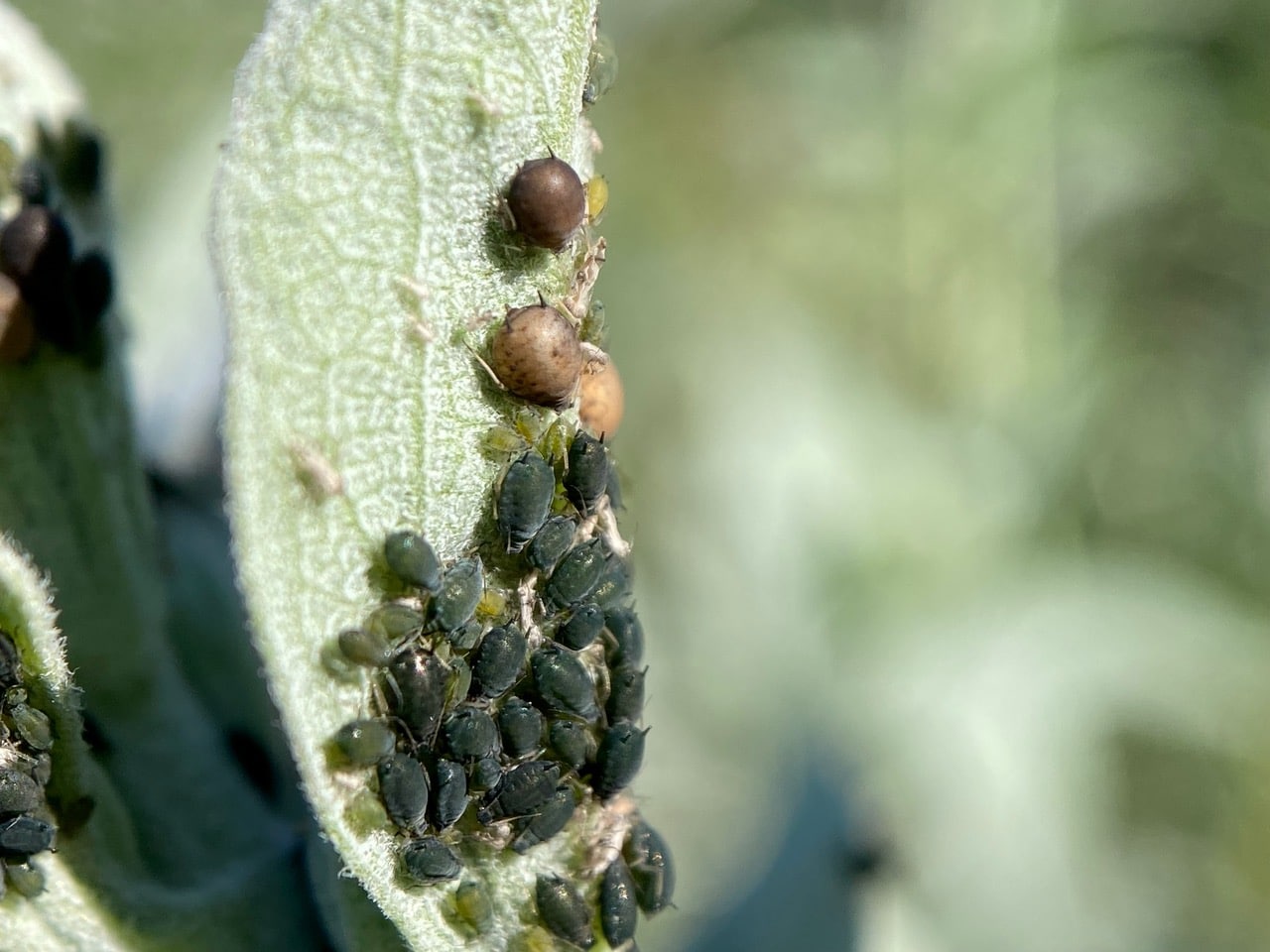
See the bloated straw-colored aphids? They are the same species as the others, but they have been parasitized by the Aphid Mummy Wasps, Aphidius sp. (family Braconidae). These tiny (< 3 mm) wasps are highly effective at controlling aphid populations, searching out even low-density colonies. Adult females inject a single egg into an aphid. The larva feeds internally, turning the aphid into a hardened, tan, or black “mummy”, and eventually killing the host and pupating inside the dry, bloated skin. The adult wasp emerges by chewing a circular exit hole on the side of the host aphid.
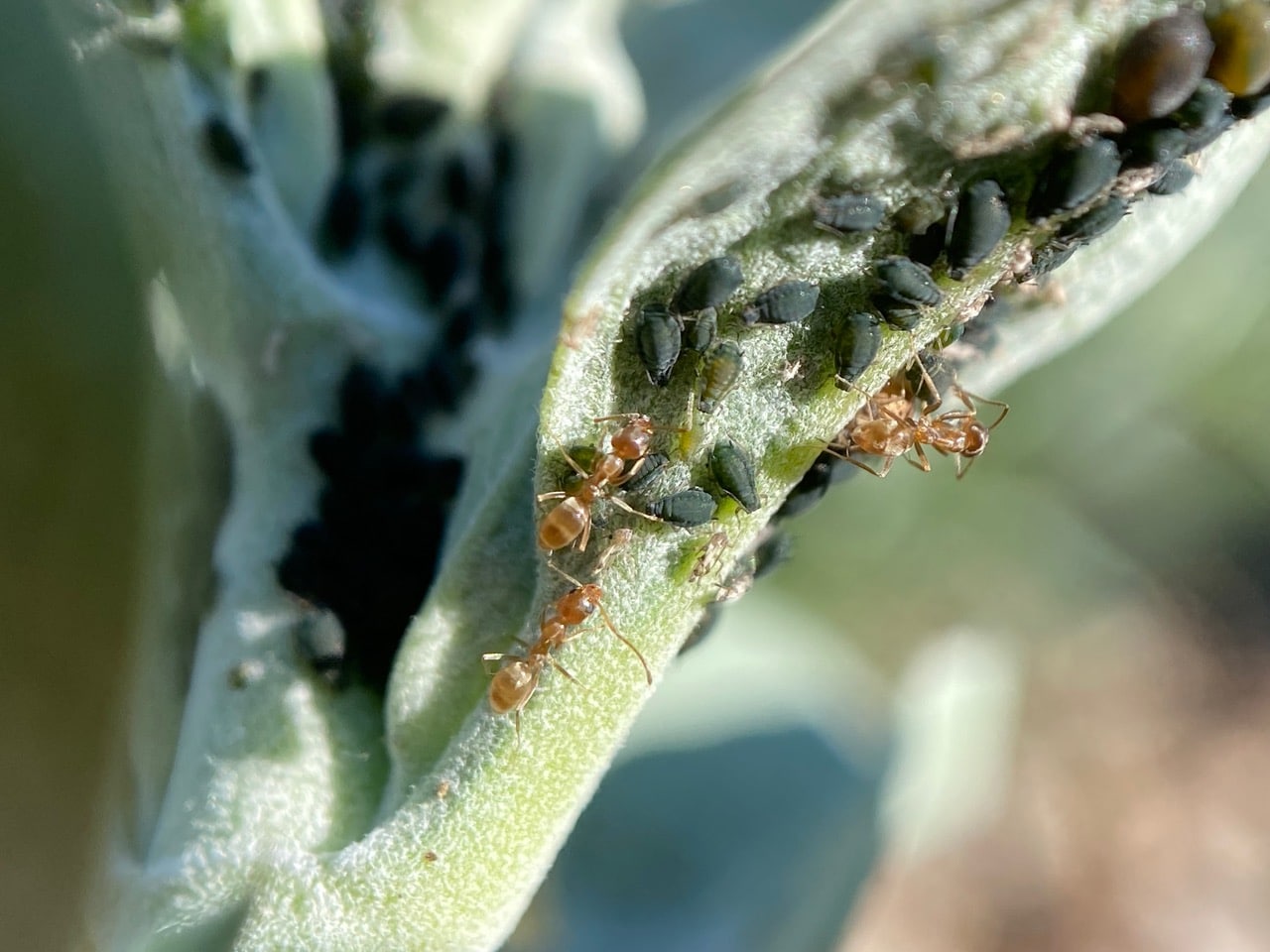
Some Argentine Ants, Linepithema humile (family Formicidae) are tending the aphids on the White Sage.
Ants and aphids share a well-known mutualistic relationship. The aphids produce honeydew, a sugary food for the ants; in exchange, the ants care for and protect the aphids from predators and parasites. Some ants will “milk” the aphids to make them excrete the sugary substance. The ants stroke the aphids with their antennae, stimulating them to release the honeydew. Aphid-herding ants make sure the aphids are well-fed and safe. When the host plant is depleted of nutrients, the ants carry their aphids to a new food source. If predatory insects or parasites attempt to harm the aphids, the ants will defend them aggressively. Some species of ants continue to care for aphids during winter. The ants carry the aphids to their nest for the winter months, and transport them to a host plant to feed the following spring.
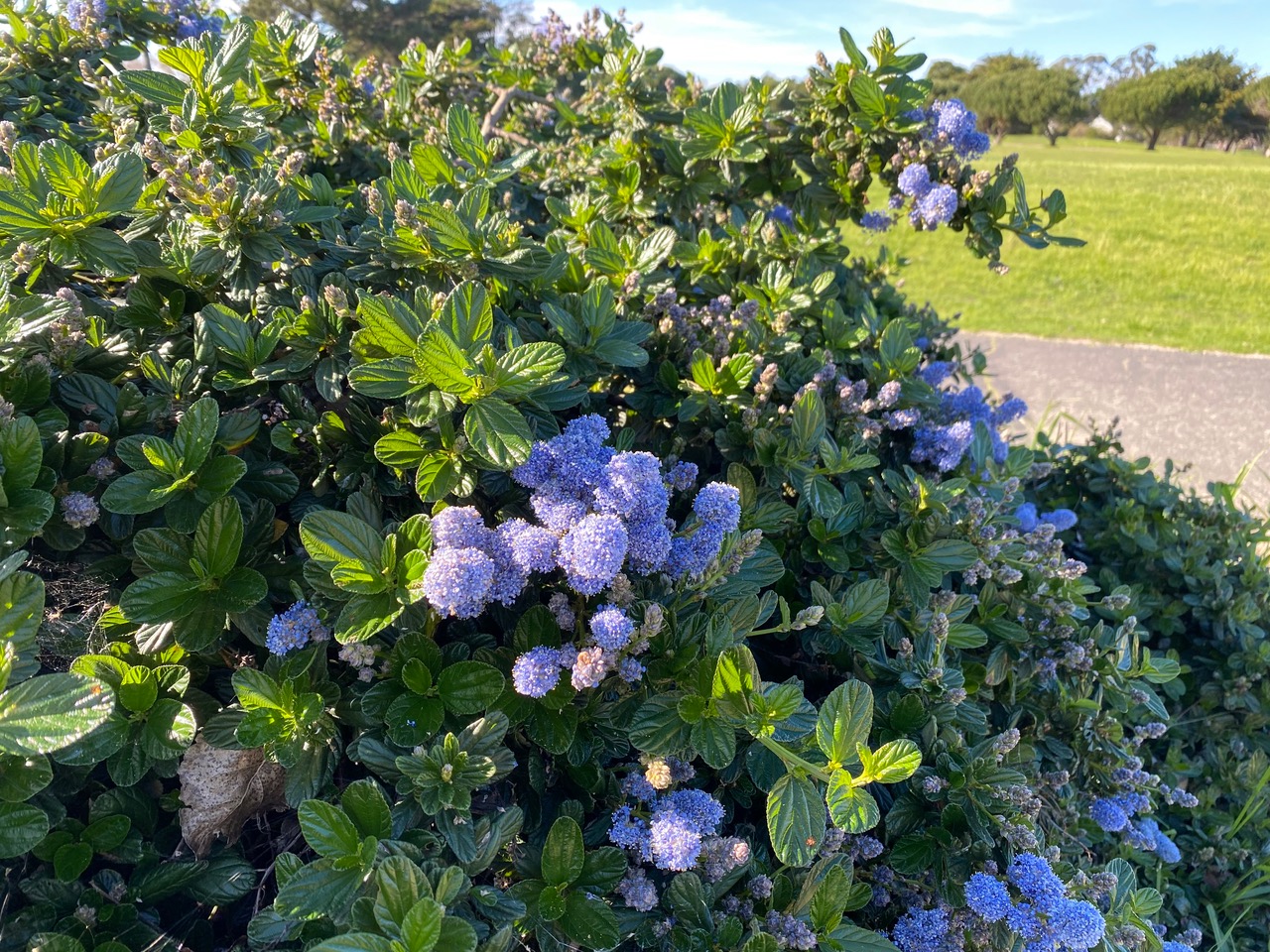
There are several species of Ceanothus in the native garden, from tree-size to ground covers, each in various stages of flowering.

The tiny flowers of Ceanothus are so tightly clustered it is difficult to figure out the floral structure. The individual flowers consists of 5 hooded sepals, 5 scoop-like petals, 5 stamens attached to a nectar-bearing disc, and a 3-lobed stigma. Both the sepals and petals are similarly colored. The anthers are fully exerted, making it easy for bees to collect pollen by simply walking over the inflorescence.
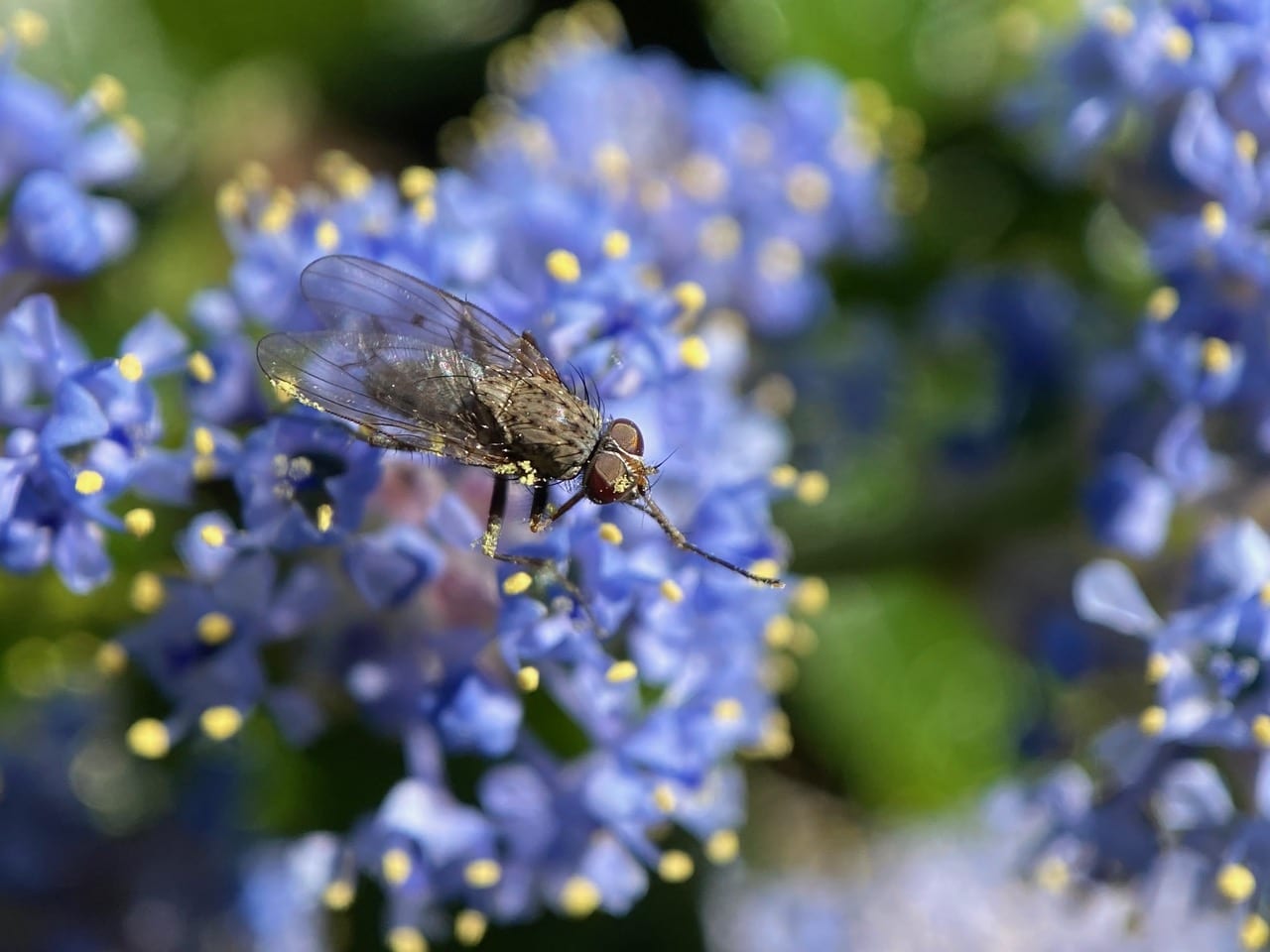
Mired in sticky pollen, a small fly is foraging on an inflorescence of Ceanothus.

The fly settles momentarily on a leaf to groom the pollen off its eyes and body.
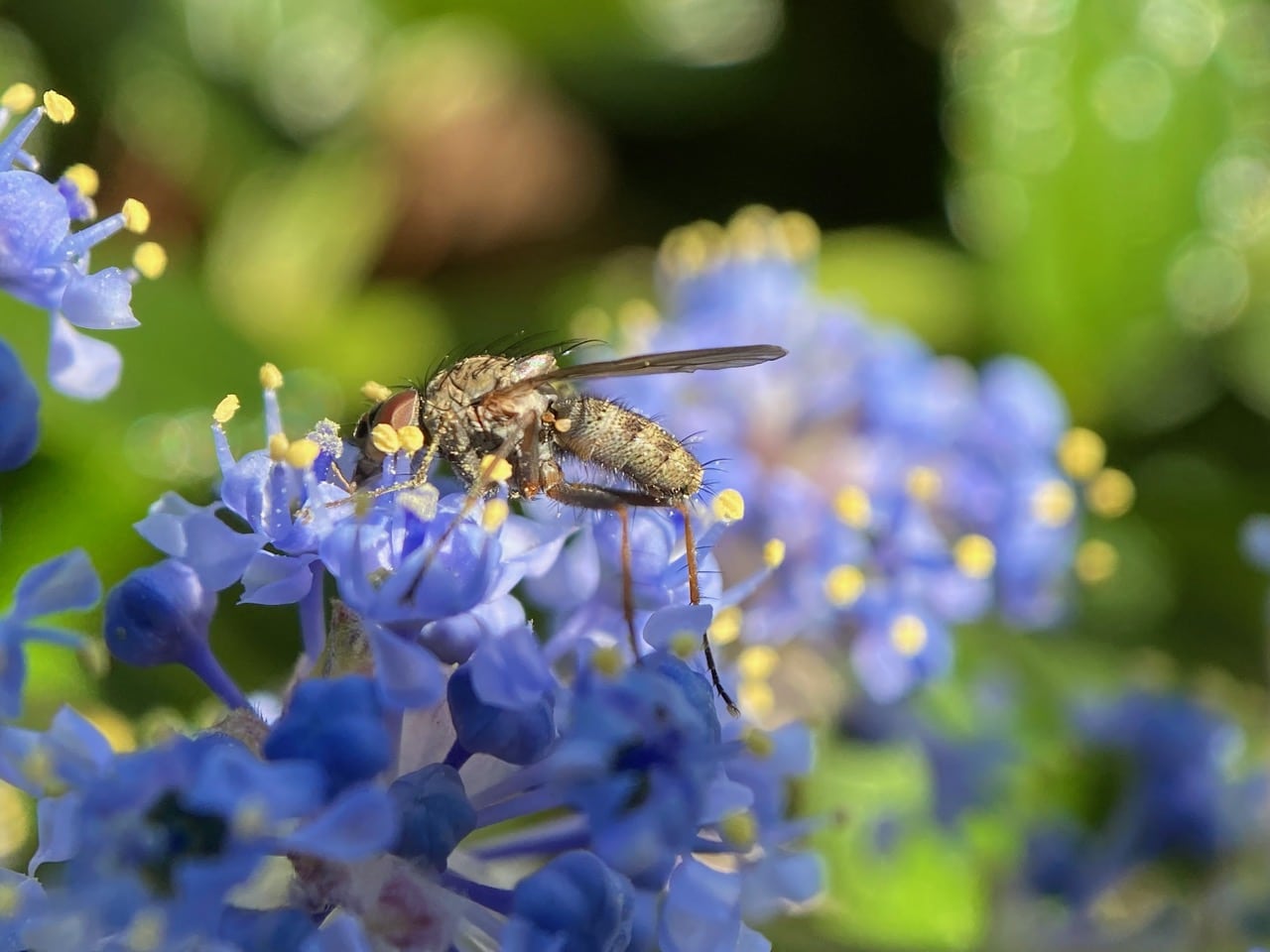
Then it is back on the Ceanothus flowers again, submerged in a sea of pollen-laden anthers. It is a Root-maggot Fly, Anthomyia sp. (family Anthomyiidae).
Members of the family Anthomyiidae are commonly called Root-maggot Flies. They are small to medium-size flies that resemble house flies but are somewhat more slender. They are usually dull gray or black and silver in color. The larvae typically feed in stems and roots of plants. Many are considered crop pests, and may attack root crops such as onions or rutabagas. Other species may feed on decaying matter, on feces, or are predators of other insects. Adult flies are important pollinators, usually feeding on nectar and pollen.
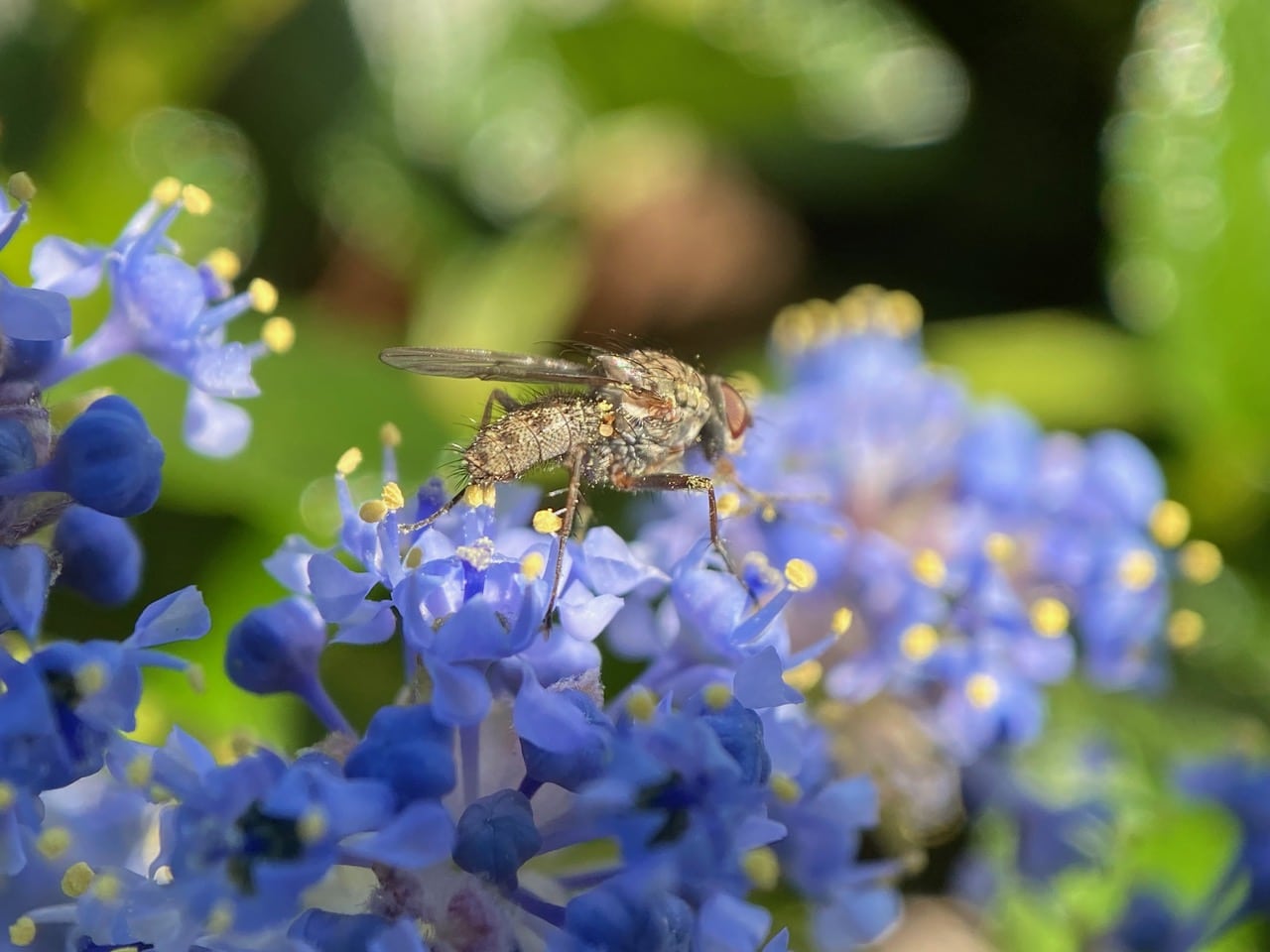
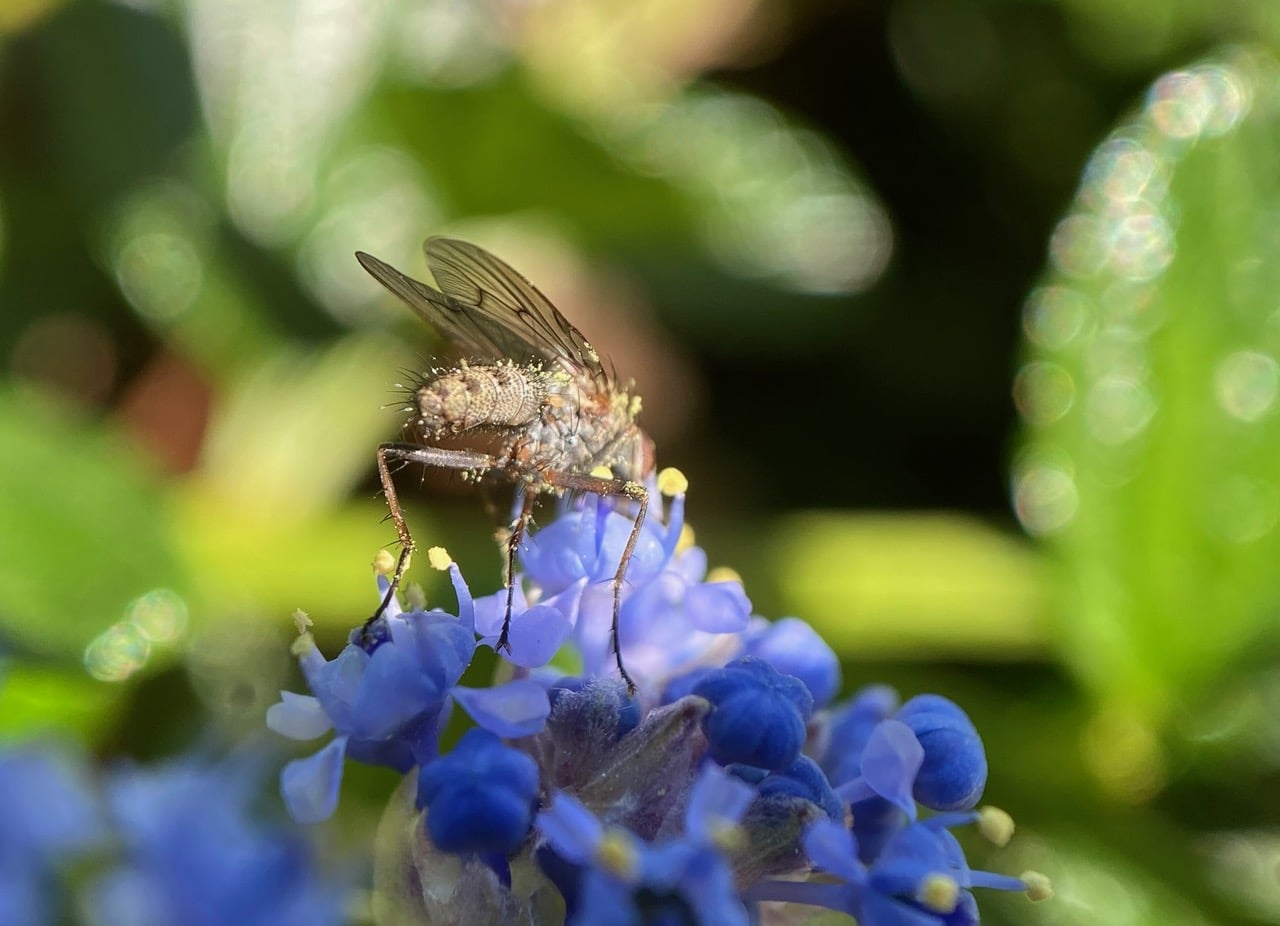
It doesn’t take long for pollen to adhere to the fly’s hairs. The fly is probably a good pollinator for Ceanothus.
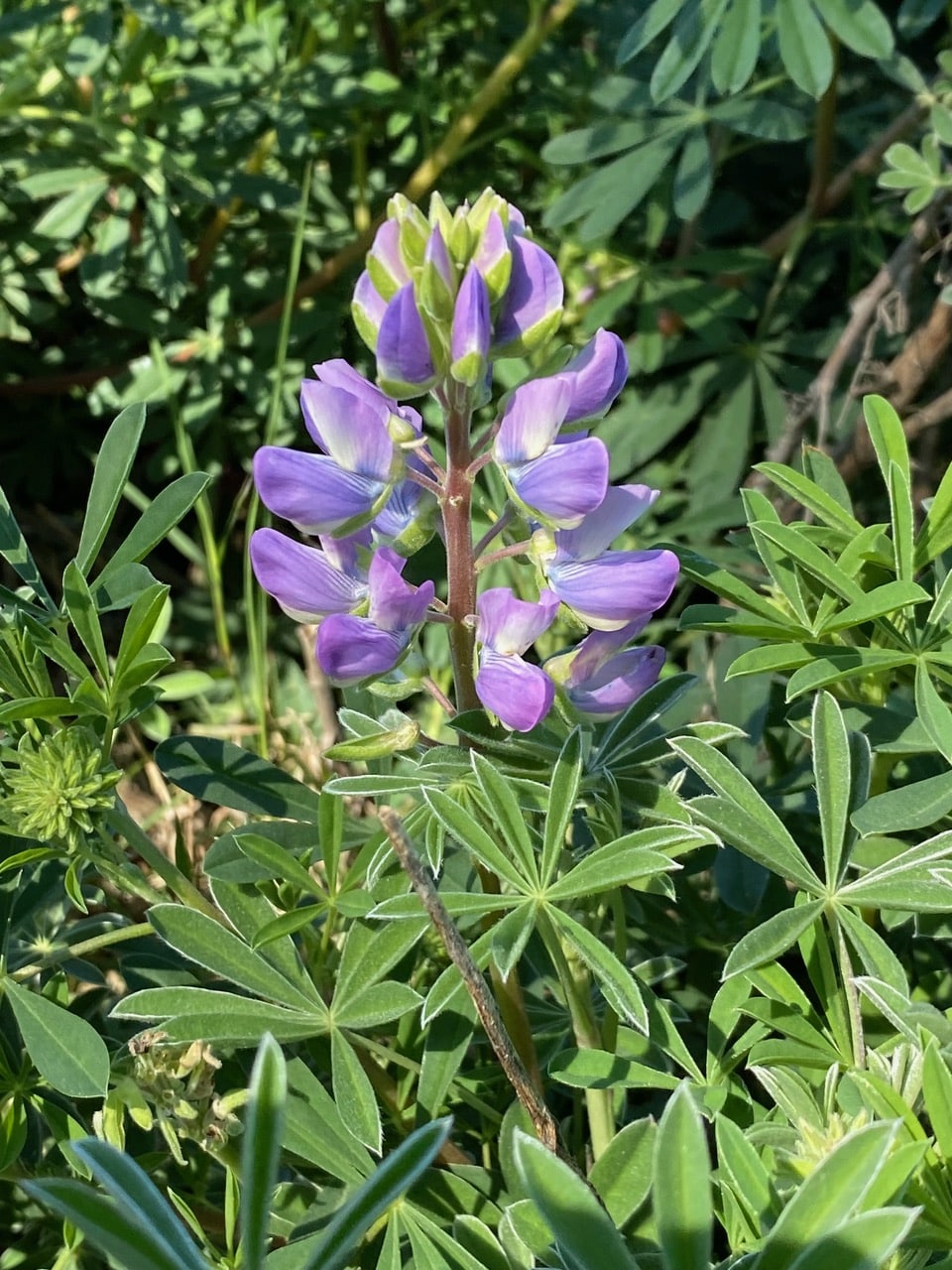
The Coastal Bush Lupine, Lupinus arboreus has started to bloom in the native garden. Note the fine blue lines on the top of the wing petals and also the lower part of the upper, vertically oriented banner petals . They serve as nectar guides to pollinators – nectar is hidden where the lines converge in the back of the flower. The horizontal surface formed by the pair of wing petals serve as convenient landing pad for pollinators. Only heavy-bodied bees, such as bumble bees, carpenter bee, and digger bees are able to depress the wing petals to gain access to the nectar.
Coastal Bush Lupine, Lupinus arboreus is a 4-7 ft. shrub native to California, featuring fragrant, pea-like flowers commonly found in bright yellow, but also in blue, lavender, or purple forms. Yellow forms often grow on coastal sand dunes, while blue/purple forms frequent inland scrub, hillsides, and bluffs. The plant thrives in sandy soils, full sun, and is salt-tolerant.
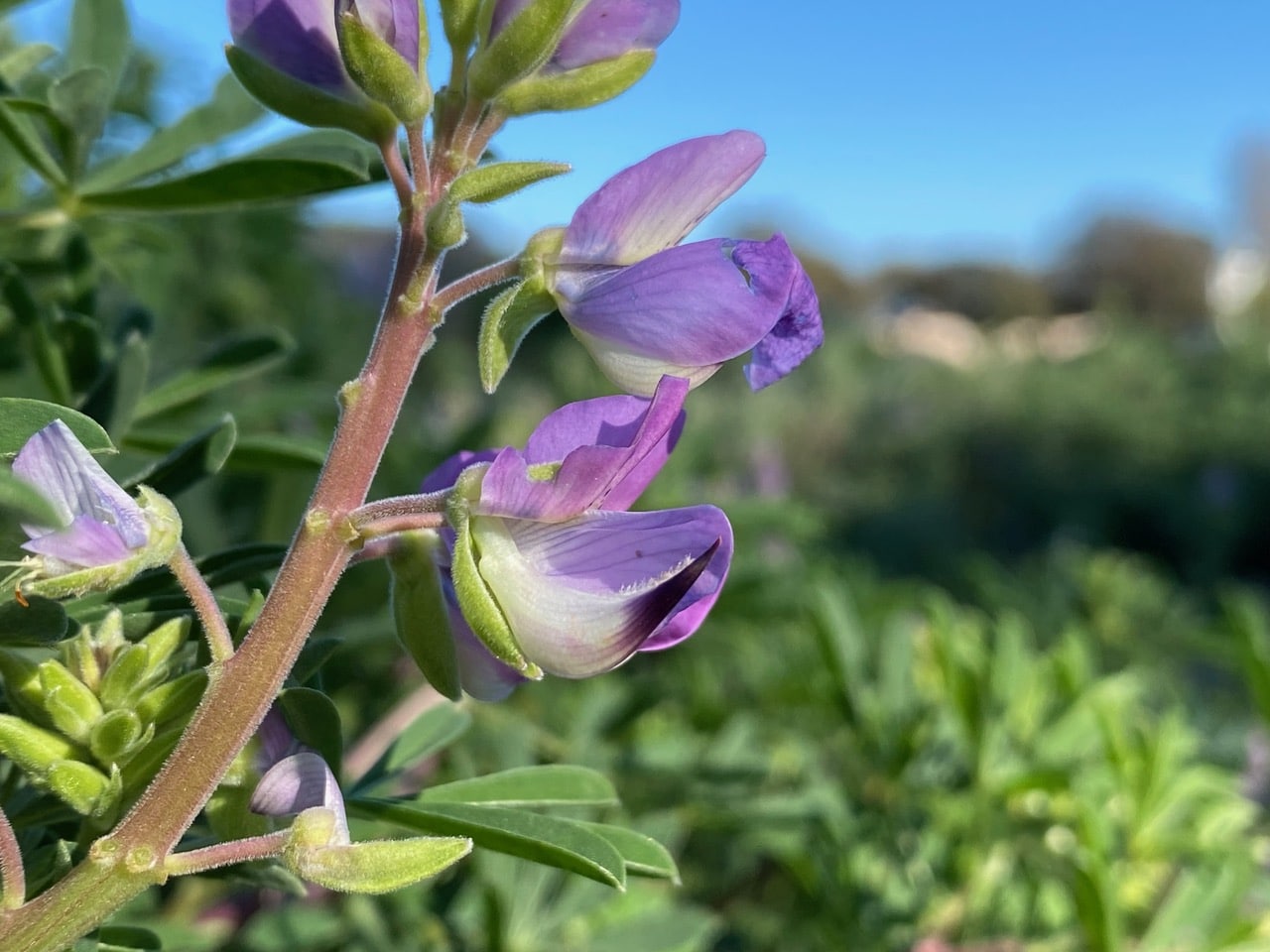
The flowers of this Coastal Bush Lupine have been ravaged by some insects – some have had their petals chewed, or damaged. Note the flower with a missing wing petal, revealing the dark-tipped, boat-shaped keel within.
The keel is formed by the fusion of two innermost petals, and encloses the reproductive structures (pistil and stamens) of the flowers. The arrangements of the floral parts of the pea flower restricts access to only certain insects that are heavy enough to cause the reproductive parts to spring up through the keel, dabbing pollen on the bee, or picking up pollen from the bee.