

Pollinator Post 3/3/25 (2)
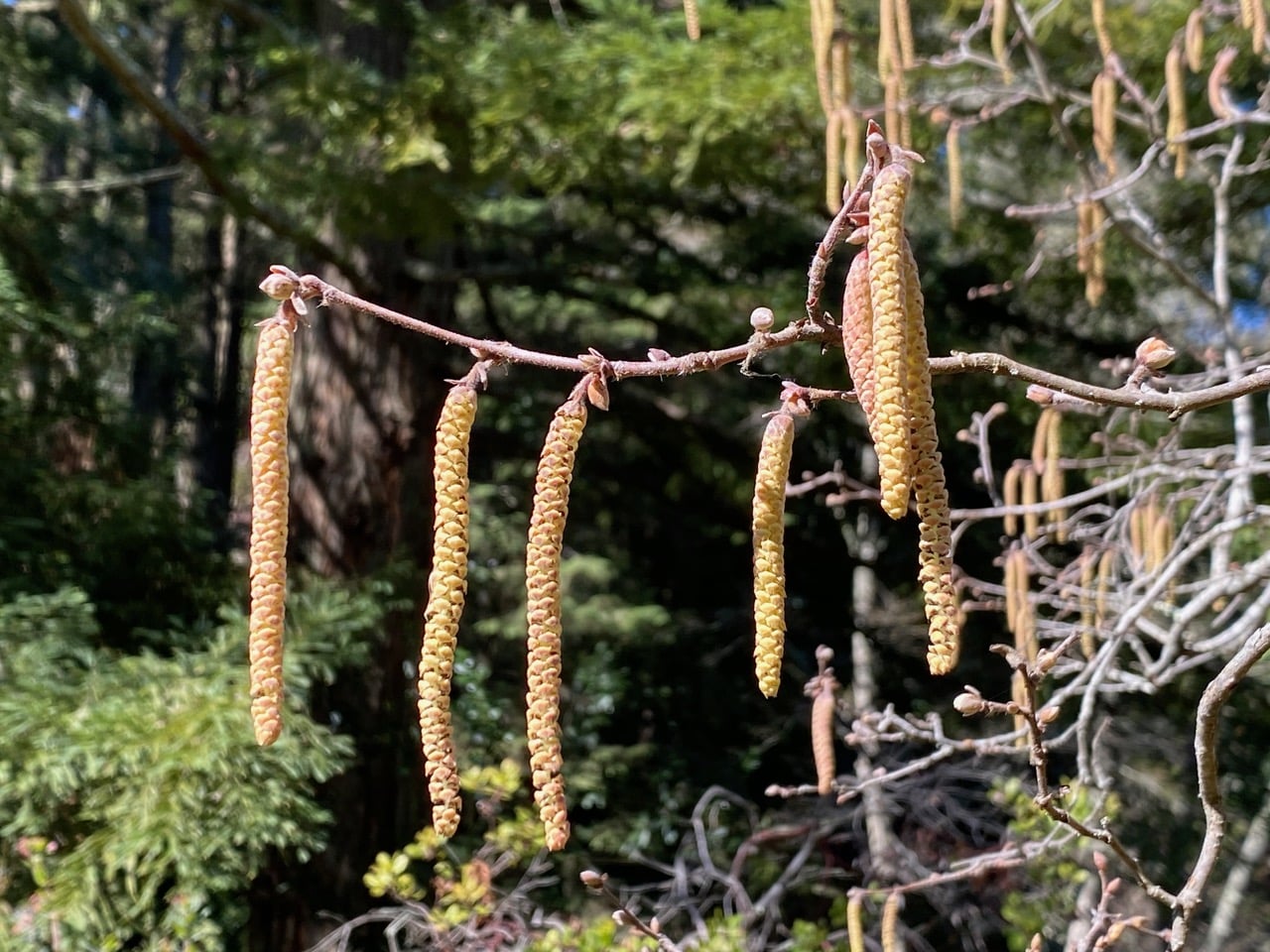
A large Beaked Hazelnut, Corylus cornuta in the back of the garden is blooming gloriously, with numerous male catkins dangling from bare branches.
The Hazelnut is monoecious, with separate male and female flowers borne on the same plant. The tree/shrub also exhibits dichogamy, with temporal separation of the male and female phases. The male flowers of Hazelnut show up before the female flowers, exhibiting protandry. The female flowers have yet to appear on this tree. Hazelnut flowers bloom before the leaves emerge, increasing the odds that the wind will successfully transport the pollen grains from the male flowers to a compatible female flower without leaf surfaces disrupting air movements and pollen delivery.
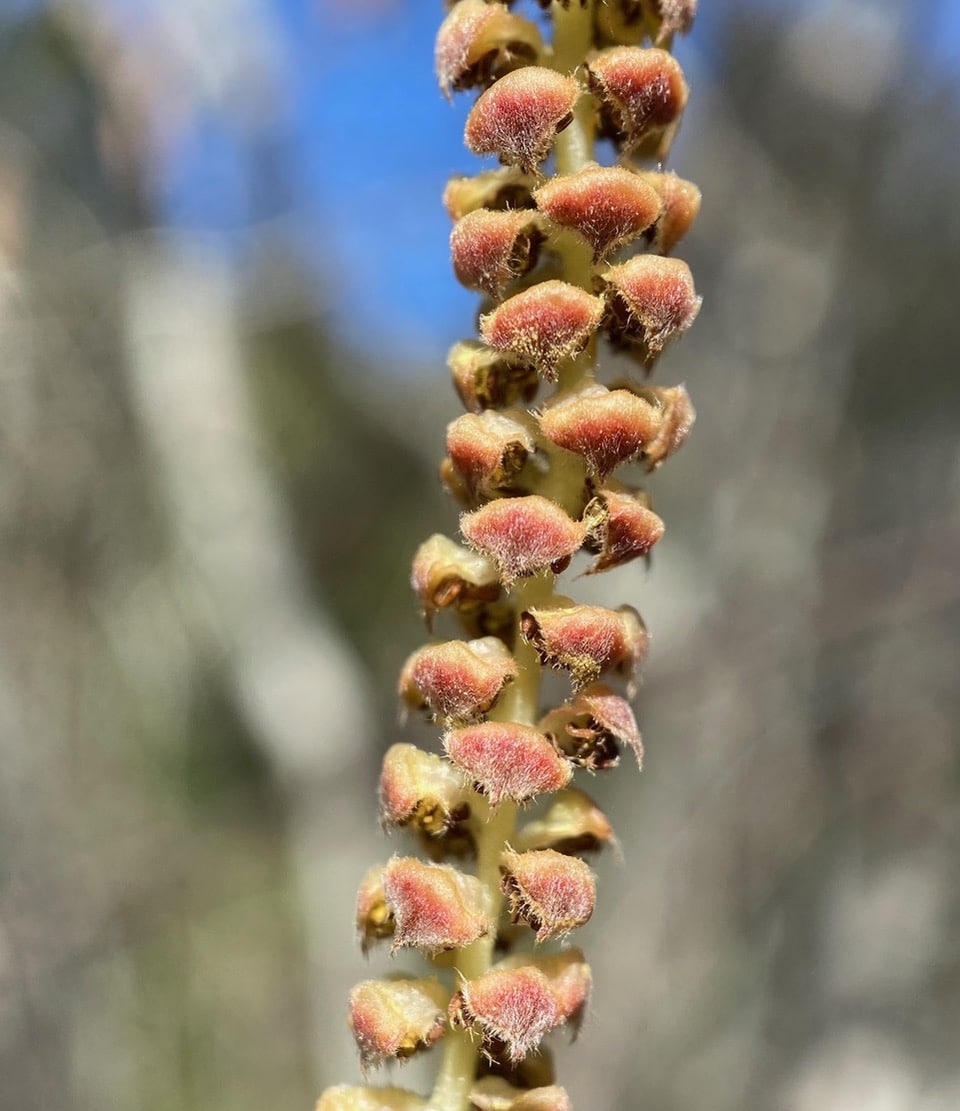
A catkin’s structure is designed to efficiently disperse pollen by wind, featuring long, dangling, cylindrical clusters of tiny, often unisexual flowers that readily release pollen when shaken by wind. Typically, male catkins produce large quantities of lightweight pollen, while female catkins have receptive stigmas to catch the airborne pollen. Many trees with catkins bloom before their leaves fully develop, further enhancing wind access to the pollen. Some examples are Willow (Salix), Alder (Alnus), Birch (Betula), Hazelnut (Corylus), and Poplar (Populus).
Both the male and female flowers of Hazelnut lack petals. In the male catkins, the tiny flowers (essentially bare stamens) are protected under bracts along a flexible dangling stem. At maturity, the bracts gape apart to expose the anthers loaded with dry pollen. A brisk breeze is enough to shake the dangling catkin, sending a cloud of pollen into the air, perchance to land on a receptive stigma of a female flower.
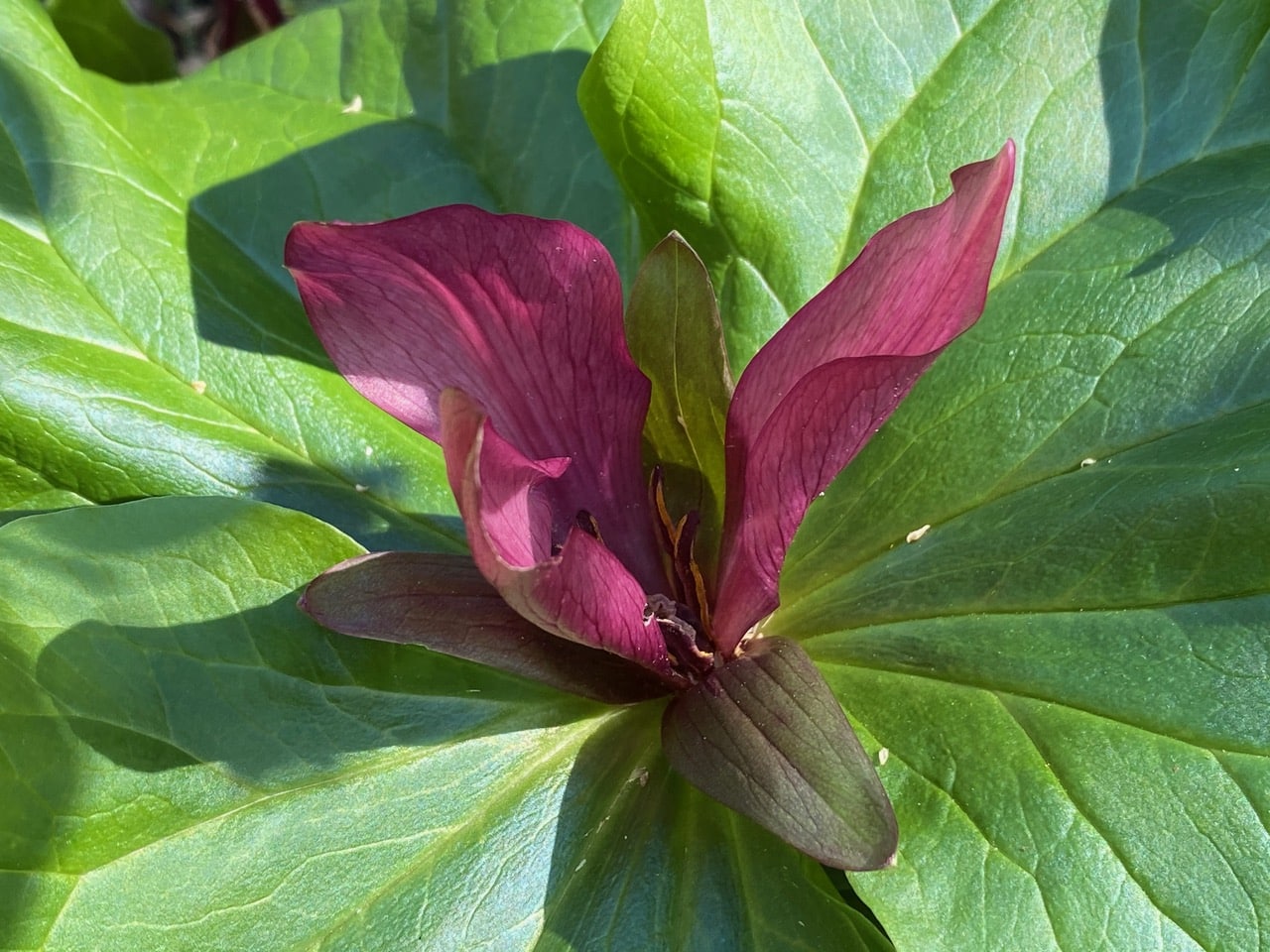
That Giant Trillium flower, Trillium chloropetalum has had a big piece chewed out of a petal.
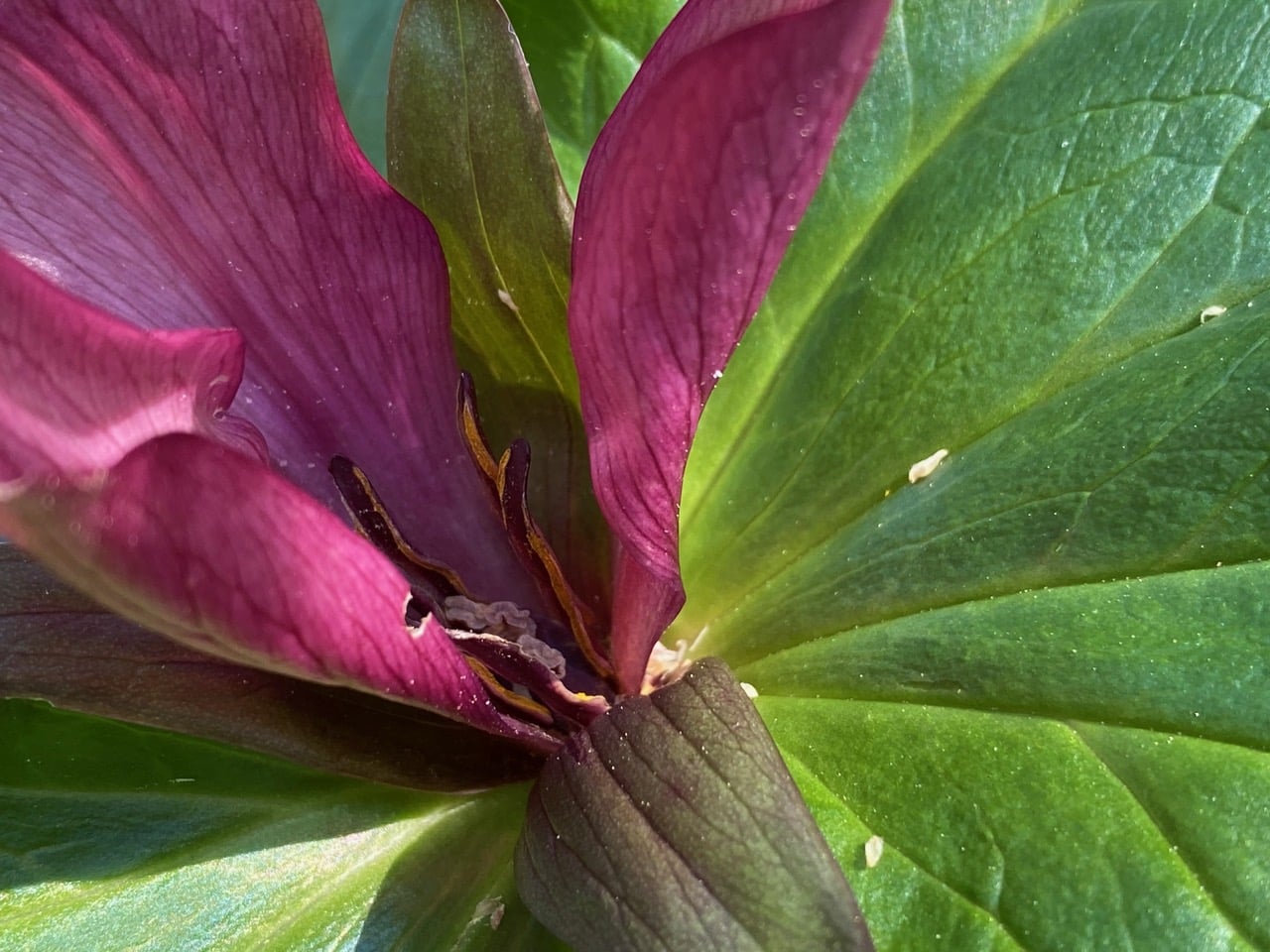
Another smaller bite has been taken from the same petal, and the adjacent anthers have been chewed as well. Who caused all this damage?
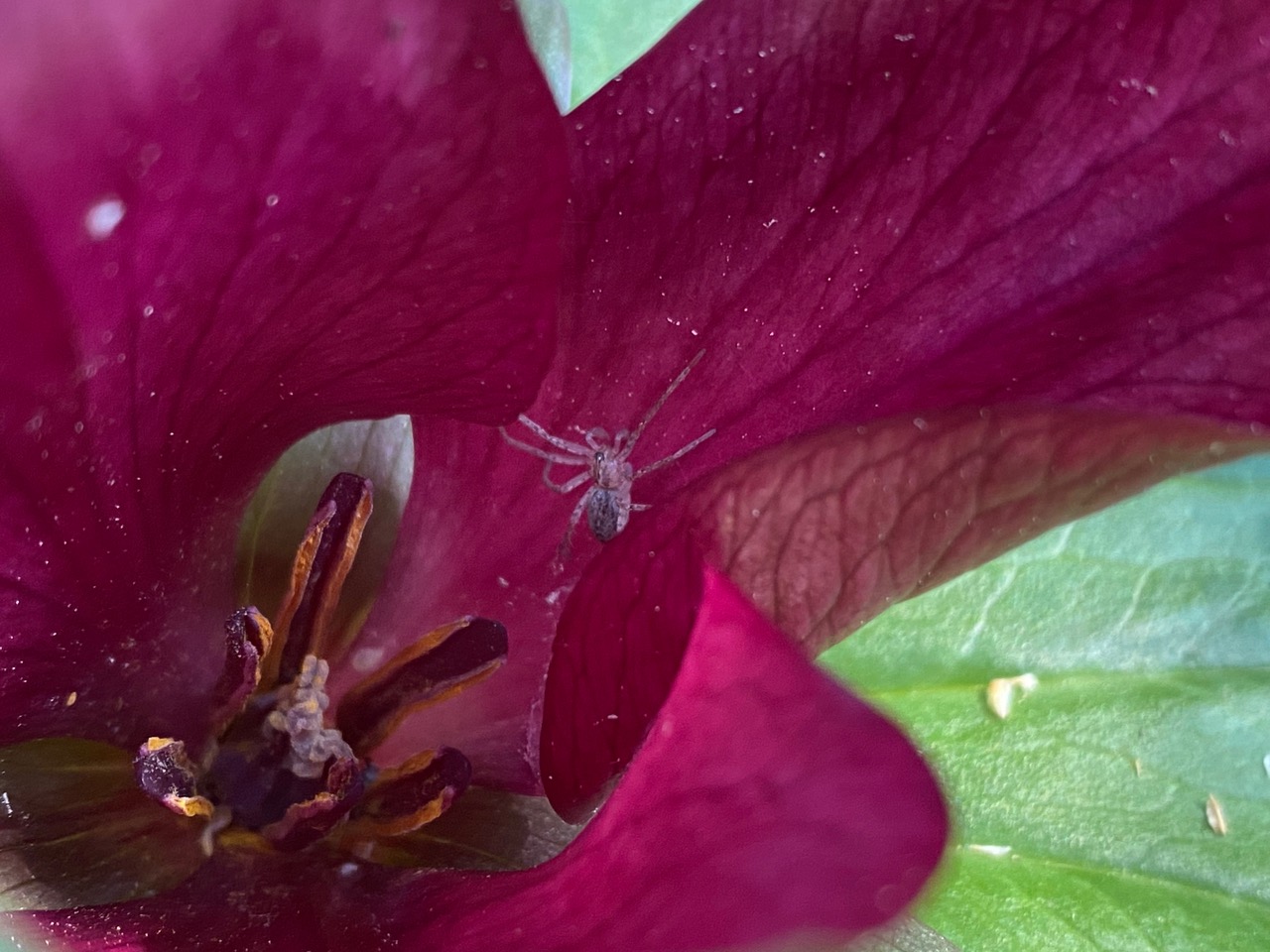
In lowering a petal to look insider the flower, I have inadvertently torn a silken spider retreat constructed between two overlapping petal edges. The occupant runs out in panic. It is a small, pale, long-legged spider. It is not responsible for damaging the flower. Spiders are carnivorous. It is merely taking shelter inside the flower, and maybe hunting small insects that come in.
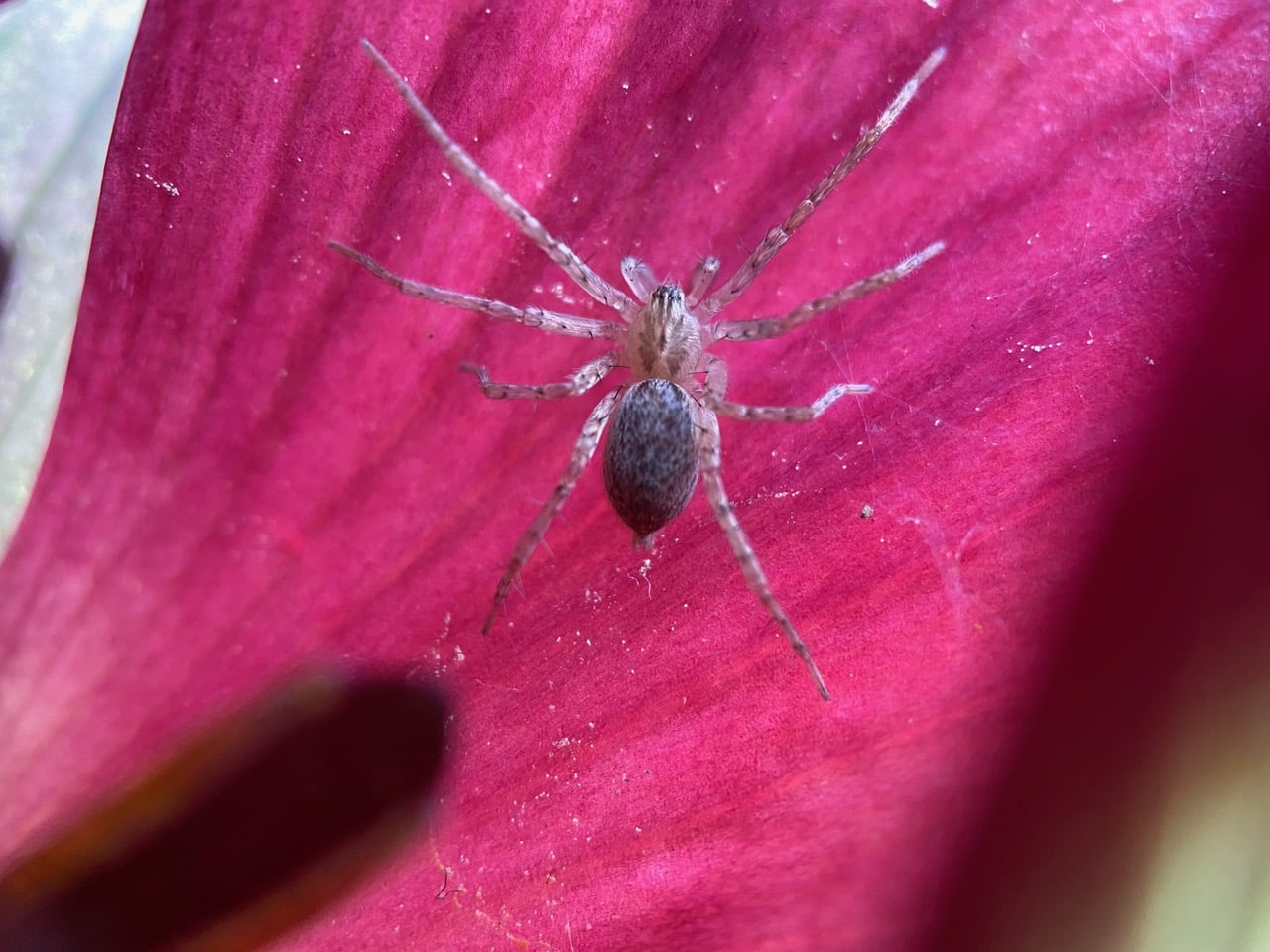
iNaturalist has helped identify the spider as a Ghost Spider (family Anyphaenidae) – a new one for me!
Spiders in the family Anyphaenidae are called Ghost Spiders or Anyphaenid Sac Spiders. The name refers to their pale coloration and habit of emerging mainly at night. They are generally nocturnal hunters, constantly running over the surfaces of vegetation in search of prey. Occasionally they do feed on plant nectar. During the day they rest in tubular silk retreats or “sleep sacs” under a rock or leaf, or in a curled leaf. Ghost Spiders are similar in appearance to Sac Spiders in the family Clubionidae, in which they were formerly placed. Anyphaenids differ in that their tracheal spiracle is located well in front of the spinnerets, unlike most spiders which have their tracheal opening right in front of the spinnerets. Members of both families are wanderers with prominent spinnerets.
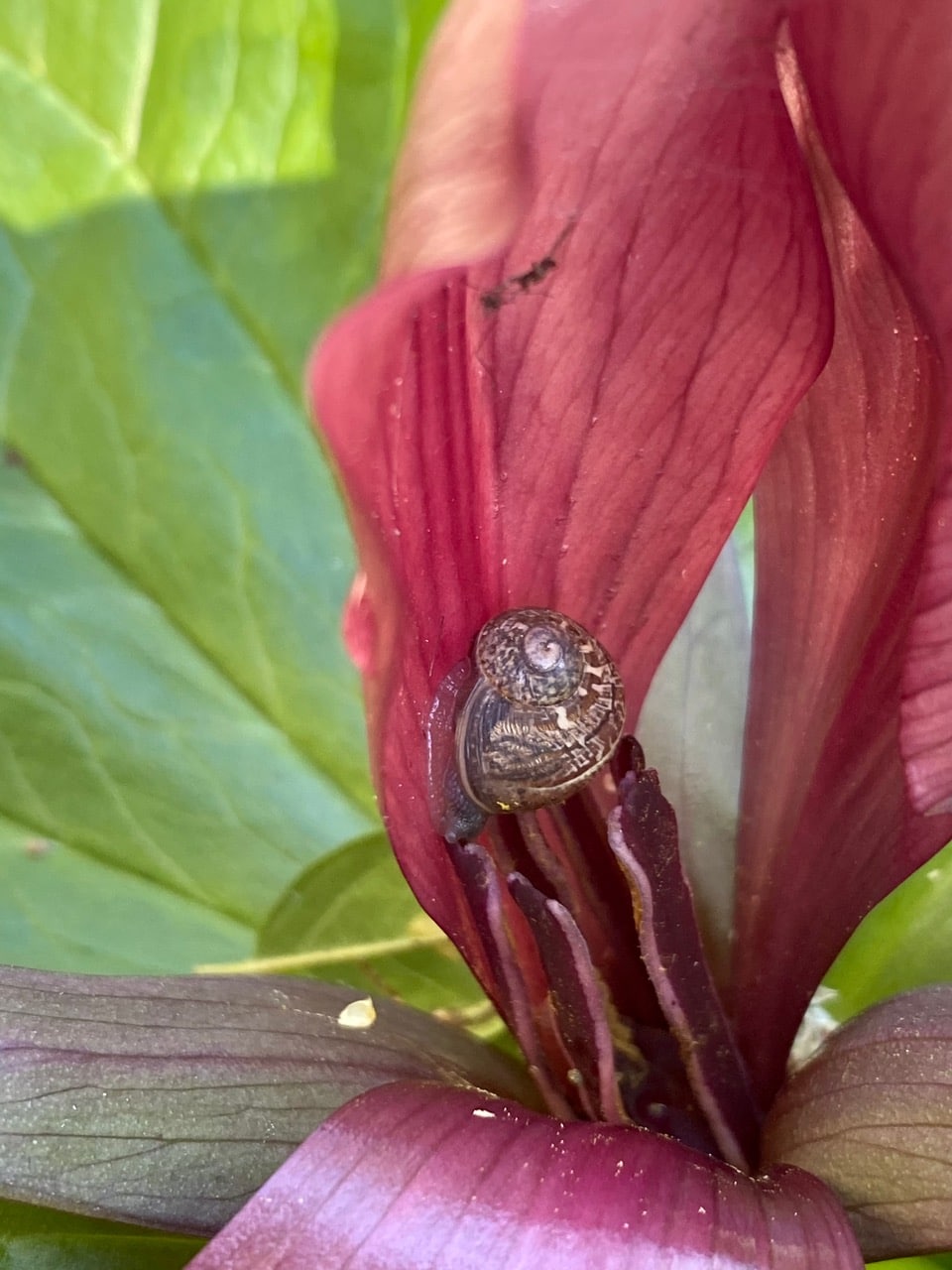
In the same flower bed, I find a snail inside a Giant Trillium flower. Maybe the damage in the first flower was caused by a snail?
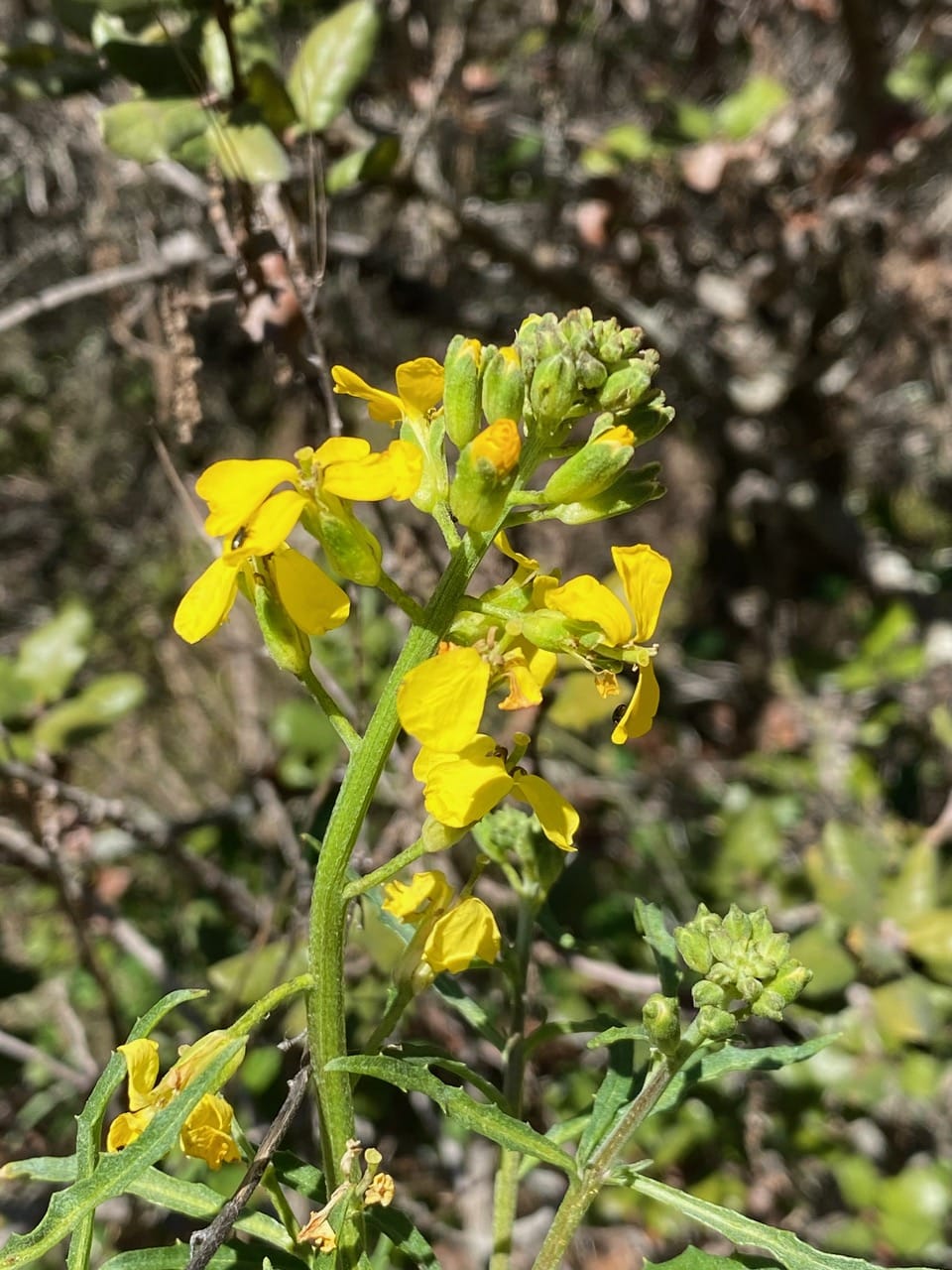
Why does this Western Wallflower, Erysimum capitatum (family Brassicaceae) look sick? Some of the flowers have lost petals, and the stamens are withered or missing.
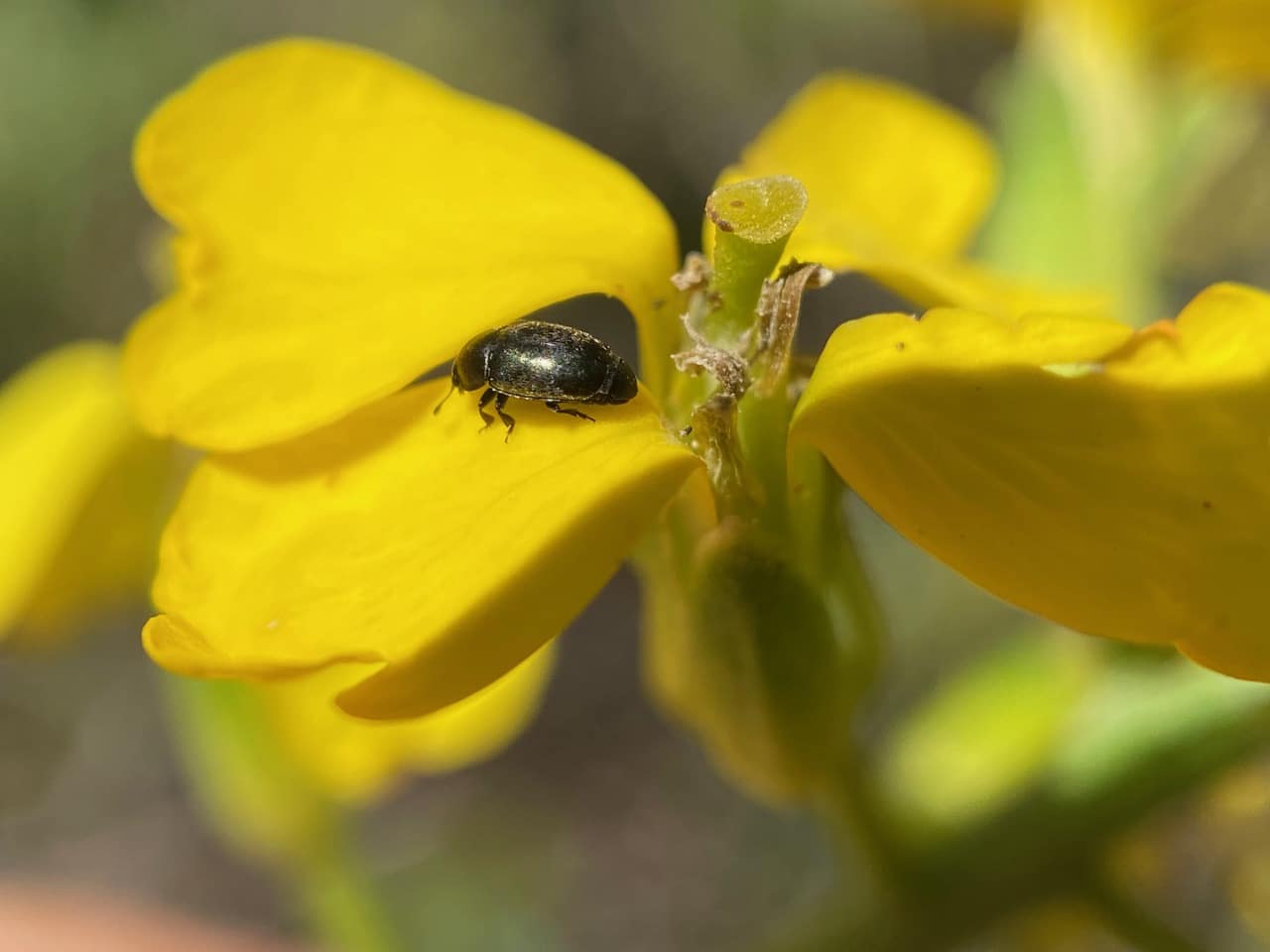
A tiny, shiny black beetle is moving on a flower. Ah, I think I have found the culprit – the Common Pollen Beetle, Brassicogethes aeneus (family Nitidulidae).
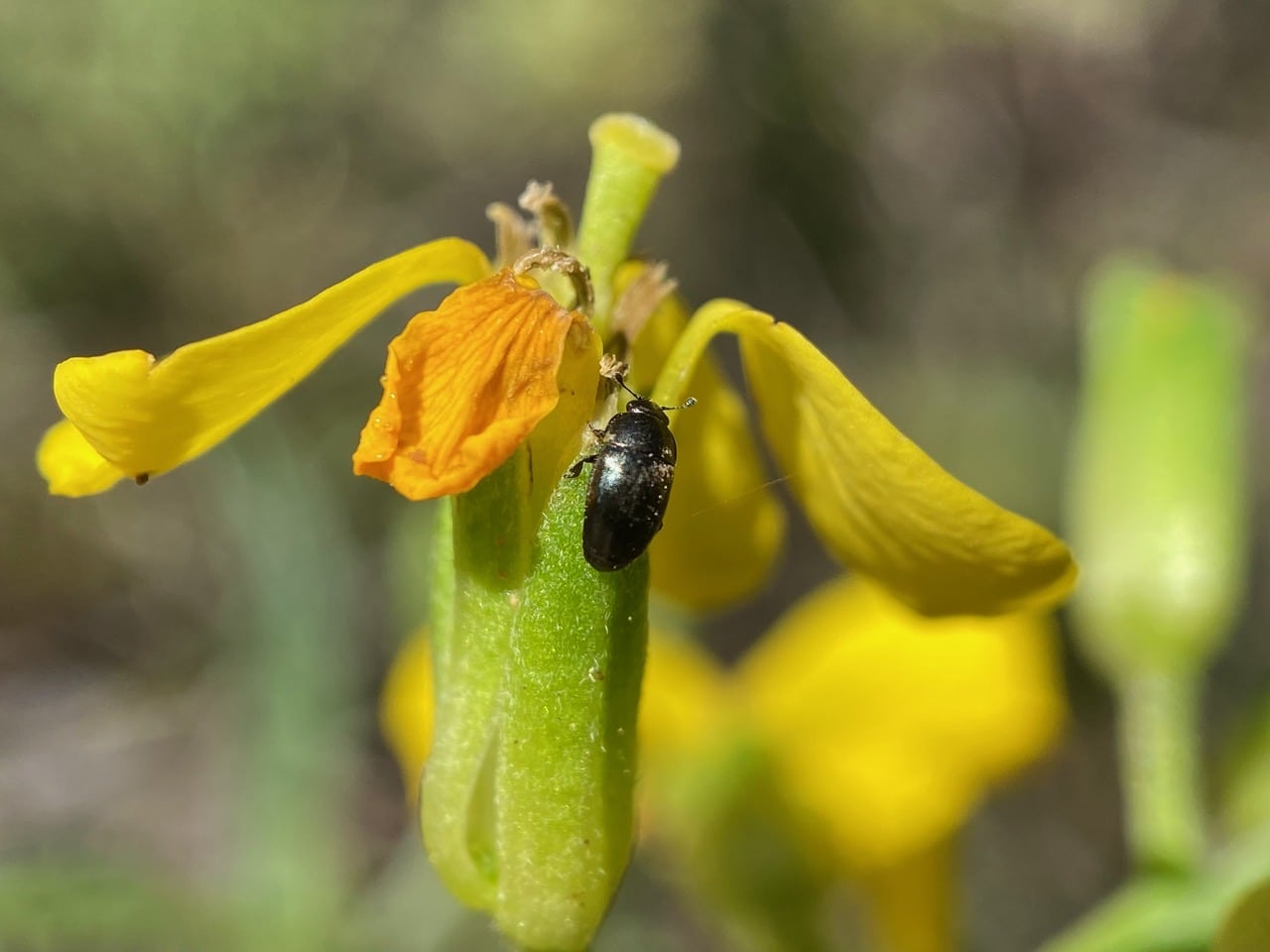
Another beetle is making its way up an already damaged flower.

The Common Pollen Beetle, Brassicogethes aeneus (family Nitidulidae) is found in Europe, Northern Asia and North America. Adults are 2-3 mm long, black with a hint of metallic green, and have knobbed antennae. It is a known pest of oilseed rape. It is unclear whether the beetles contribute to the pollination of the crop. The female beetle lays its eggs in the flower buds of the host-plant and the larvae develop within the flowers. Both adults and larvae feed on the pollen and nectar in the flowers.
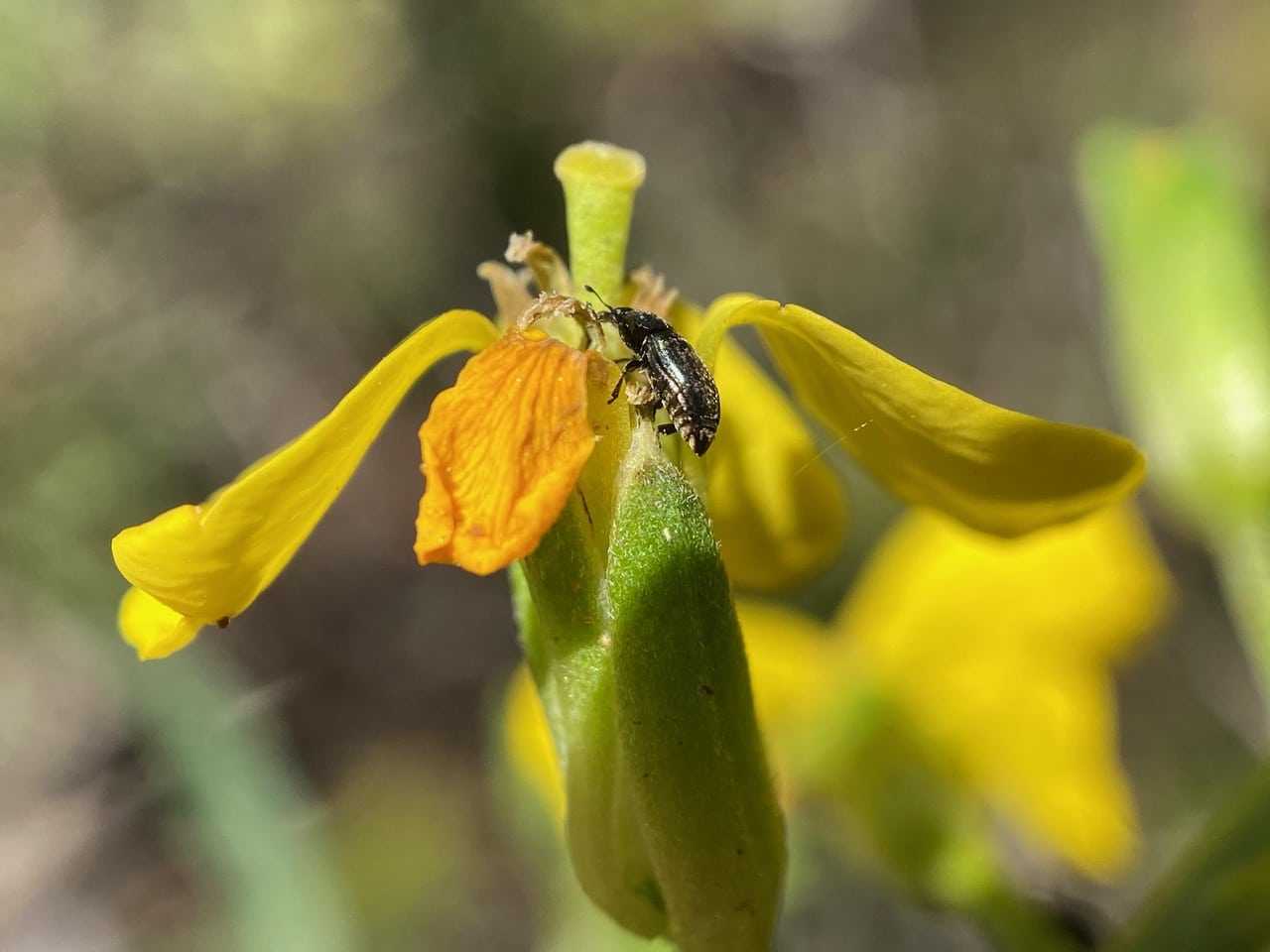
The beetle reaches for a stamen that is already withered. Note that its body is covered with pollen. While pollen beetles can caused severe damage to a flower, they are also capable of serving as pollinators. The beetles fly easily between flowers, transferring pollen on their bodies.
Beetles are among the first insects to visit flowers and they remain essential pollinators today. They are especially important pollinators of ancient species such as magnolias and spicebush. The beetles eat their way through petals and other floral parts. They often mate and defecate within flowers, generally making a mess. This behavior has earned them the nickname of “mess and soil” pollinators.