

Pollinator Post 3/28/25 (2)
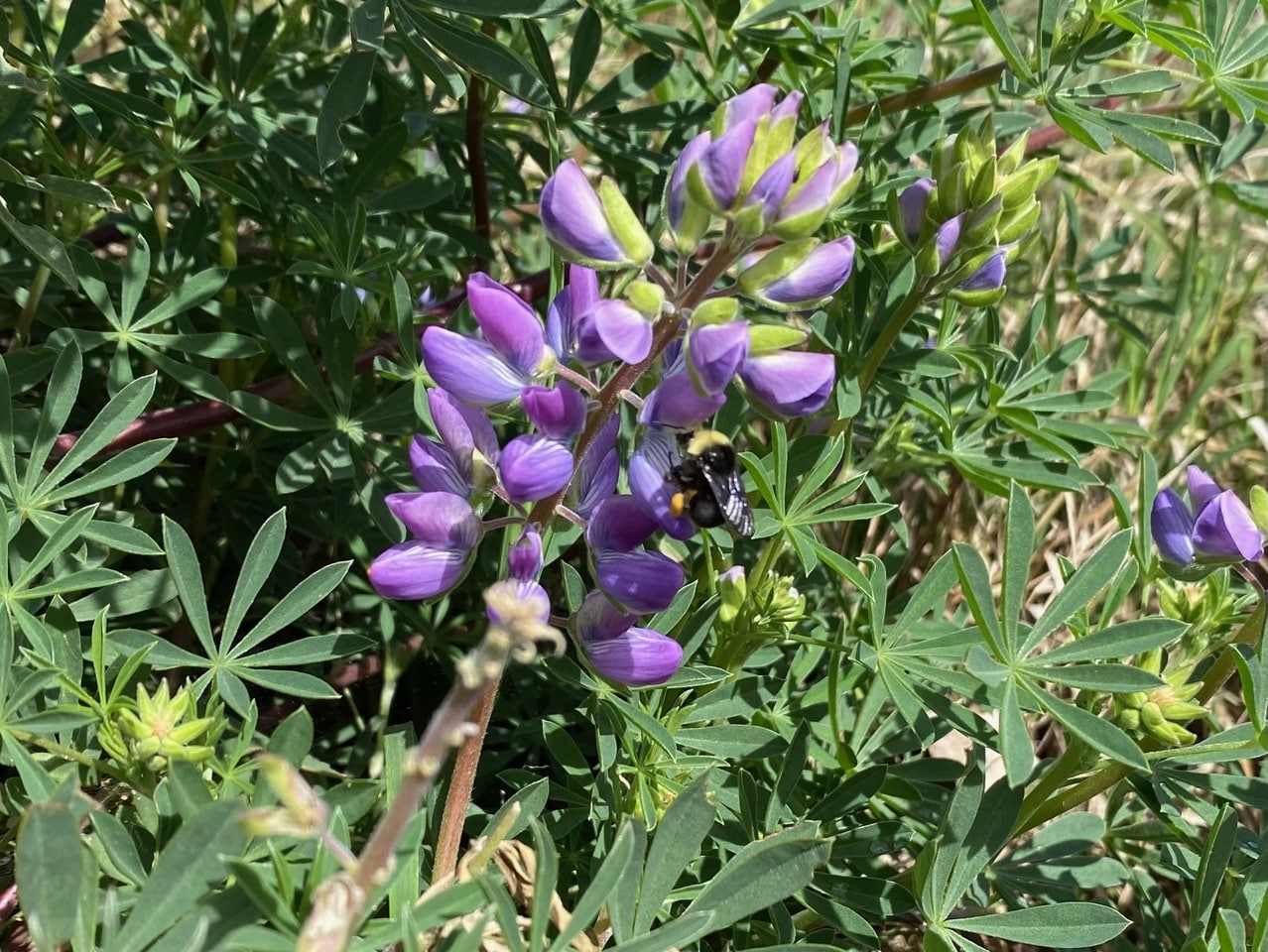
More Coastal Bush Lupine, Lupinus arboreus in the native garden have come into bloom. From a distance, I watch with amusement as a small worker Yellow-faced Bumble Bee, subgenus Pyrobombus (genus Bombus, family Apidae) forages on a spike of flowers.
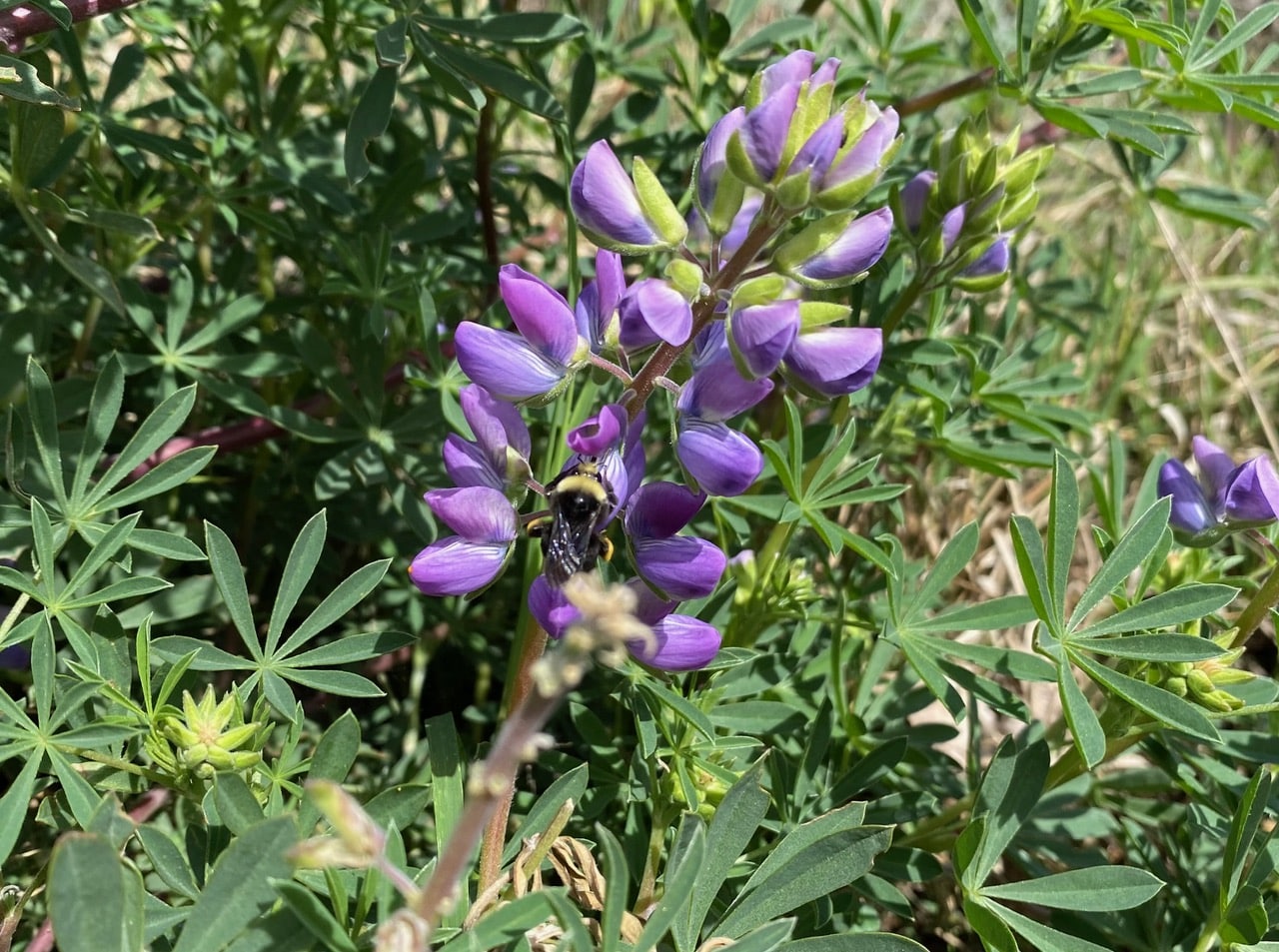
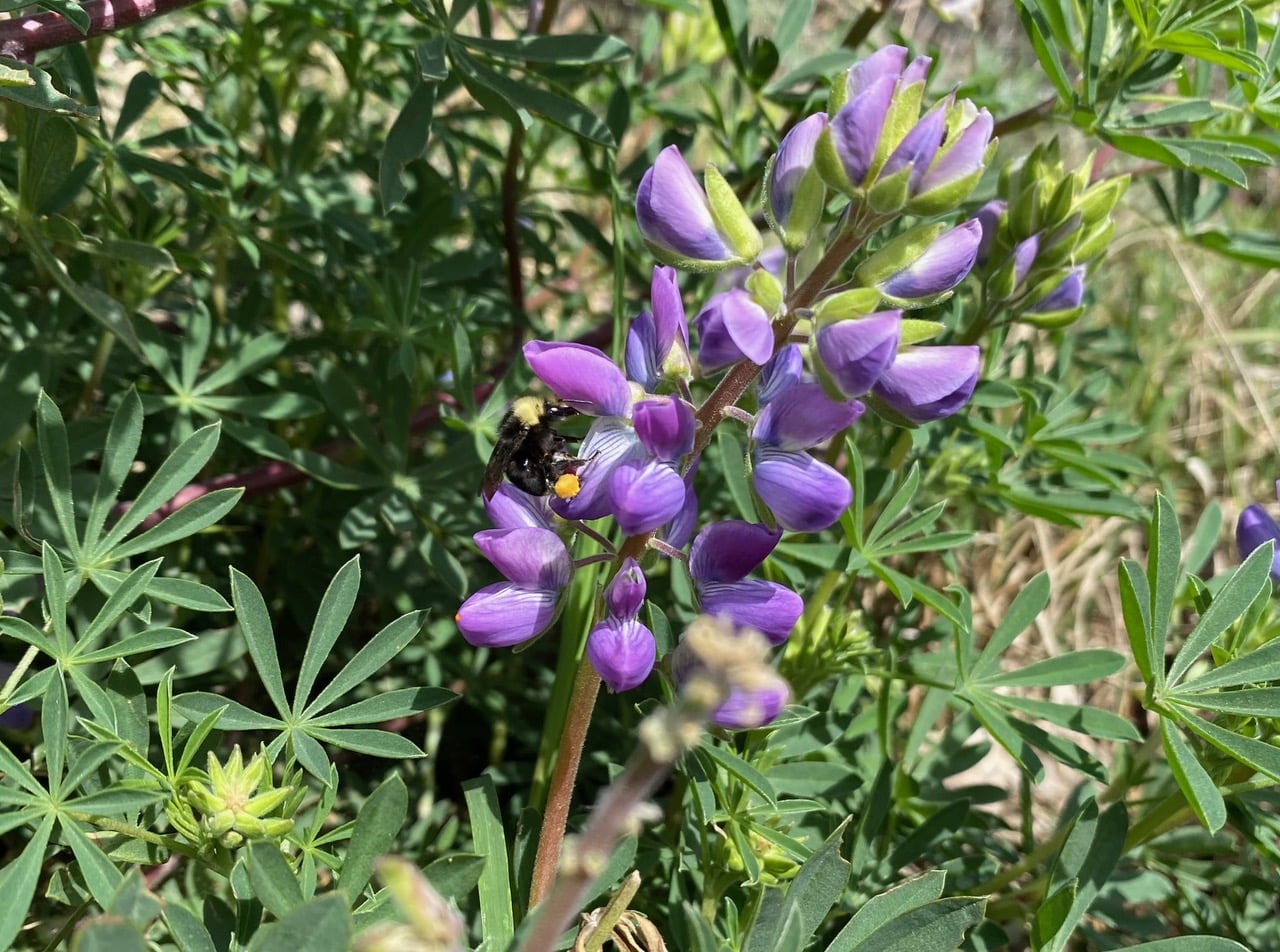
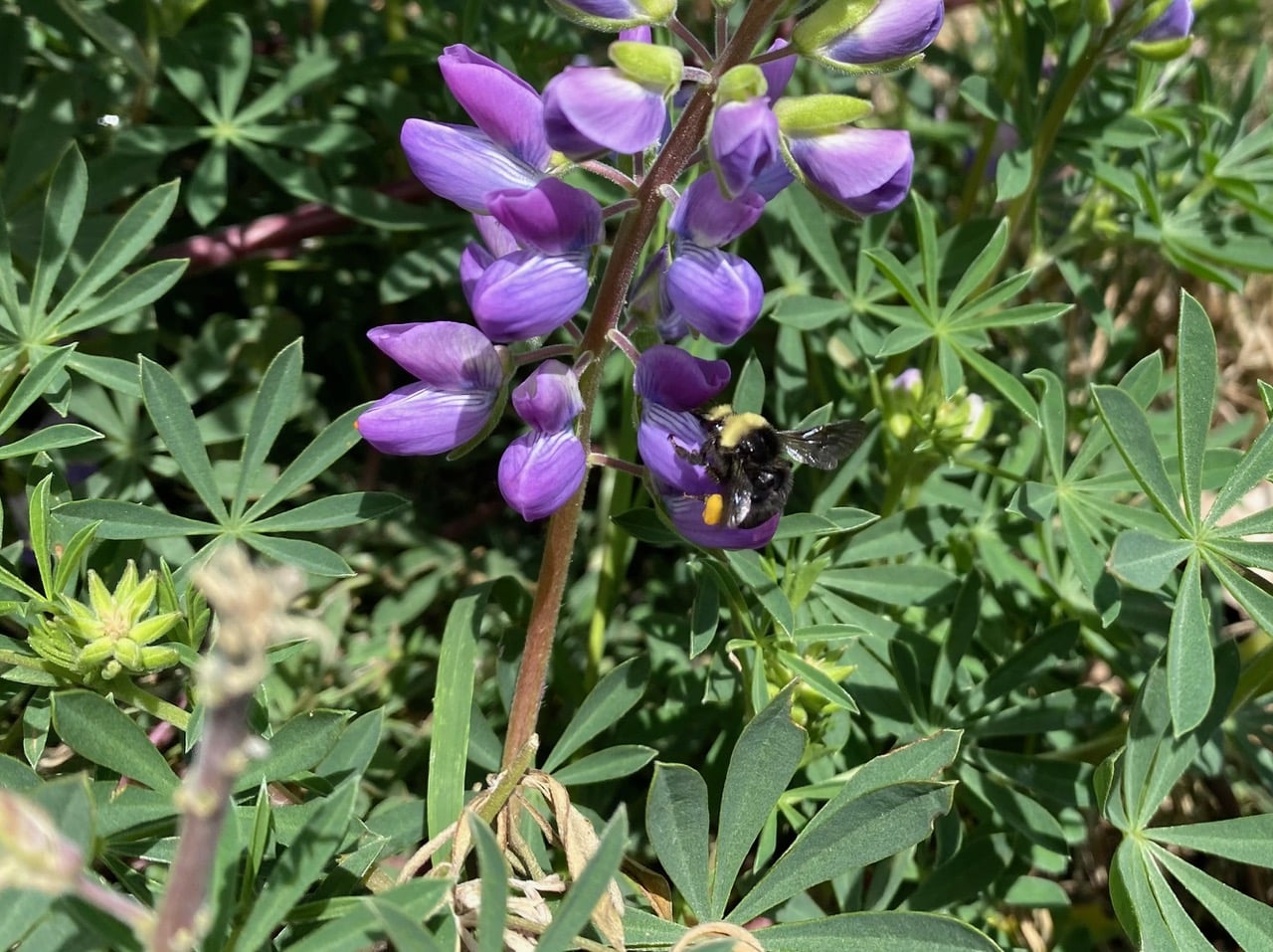

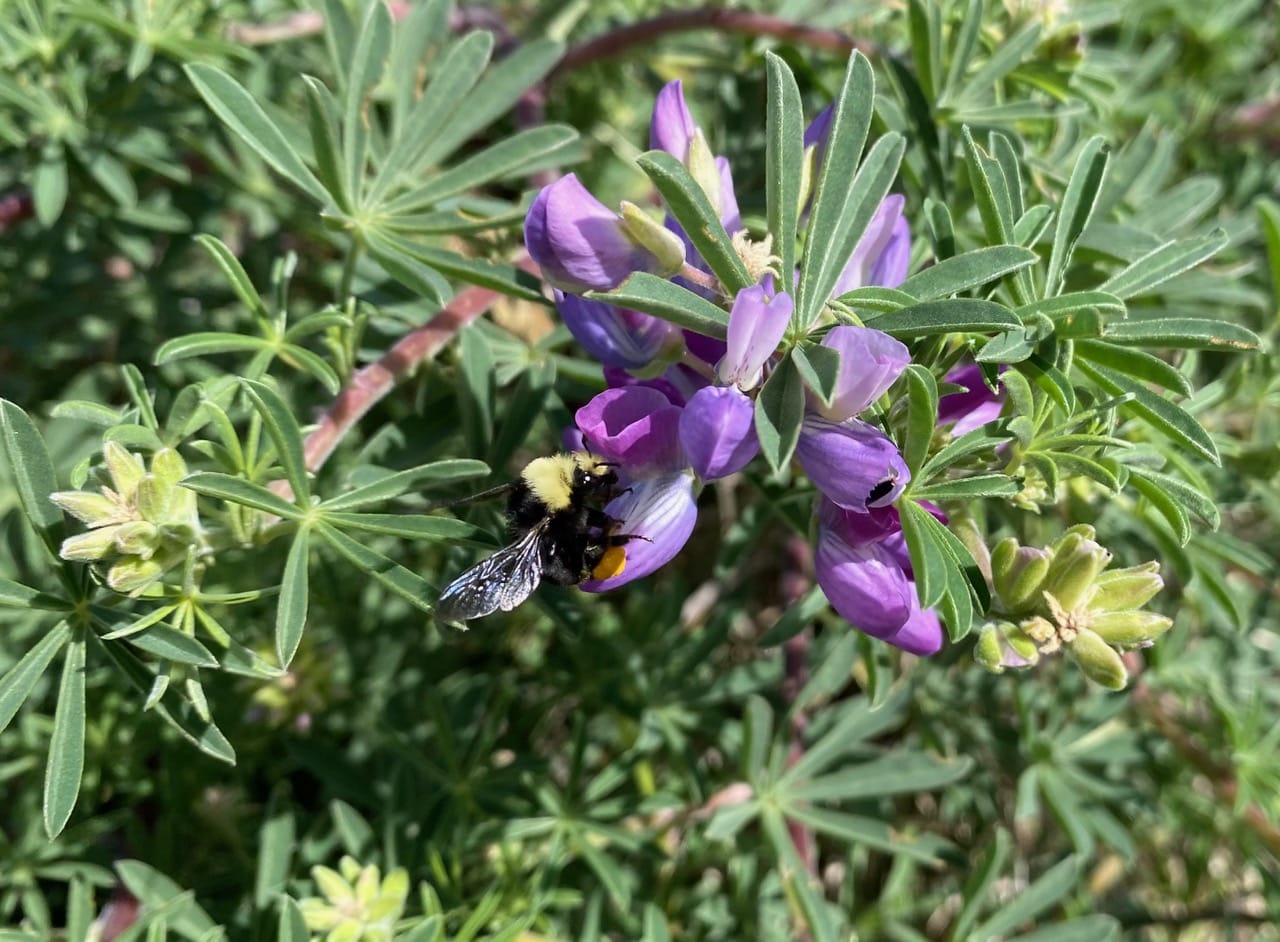
Lupine flowers has the typical floral structure of the pea flower (family Fabaceae). The reproductive structures of the lupine flowers are hidden from most insects other than the heavy-bodied ones that know how to access the nectar and pollen. The dark blue lines on the banners (upper petals) and the wing petals converge towards the base of the flower, serving as “nectar guides” to show pollinators where the nectar is hidden. As the bee lands on the horizontal surface provided by the paired wing petals, its weight lowers and spreads apart the wing petals, causing the keel structure within to spring up between the wing petals. Simultaneously, the reproductive structures enclosed under pressure within the keel spring through the keel to dab pollen on the bee’s belly. The protruding stigma may also pick up any pollen that is on the bee’s body. The whole pollination process is a well orchestrated dance between flower and bee.
The bee goes from one flower to the next on the same spike, tripping each effortlessly….
Note that each flower resumes its original shape and petal position after being tripped by the gentle little bumble bee, leaving no hint whatsoever of the visitation. Lupine flowers dispense their resources discreetly in little explosive bursts, and are visited repeatedly by the pollinators.
In this garden, most of the insects visiting the lupines are the bumble bees. Other heavy-bodied bees are capable of this feat, such as the Digger Bees, Anthophora sp. (family Apidae), but so far I have not seen them on the lupines here.
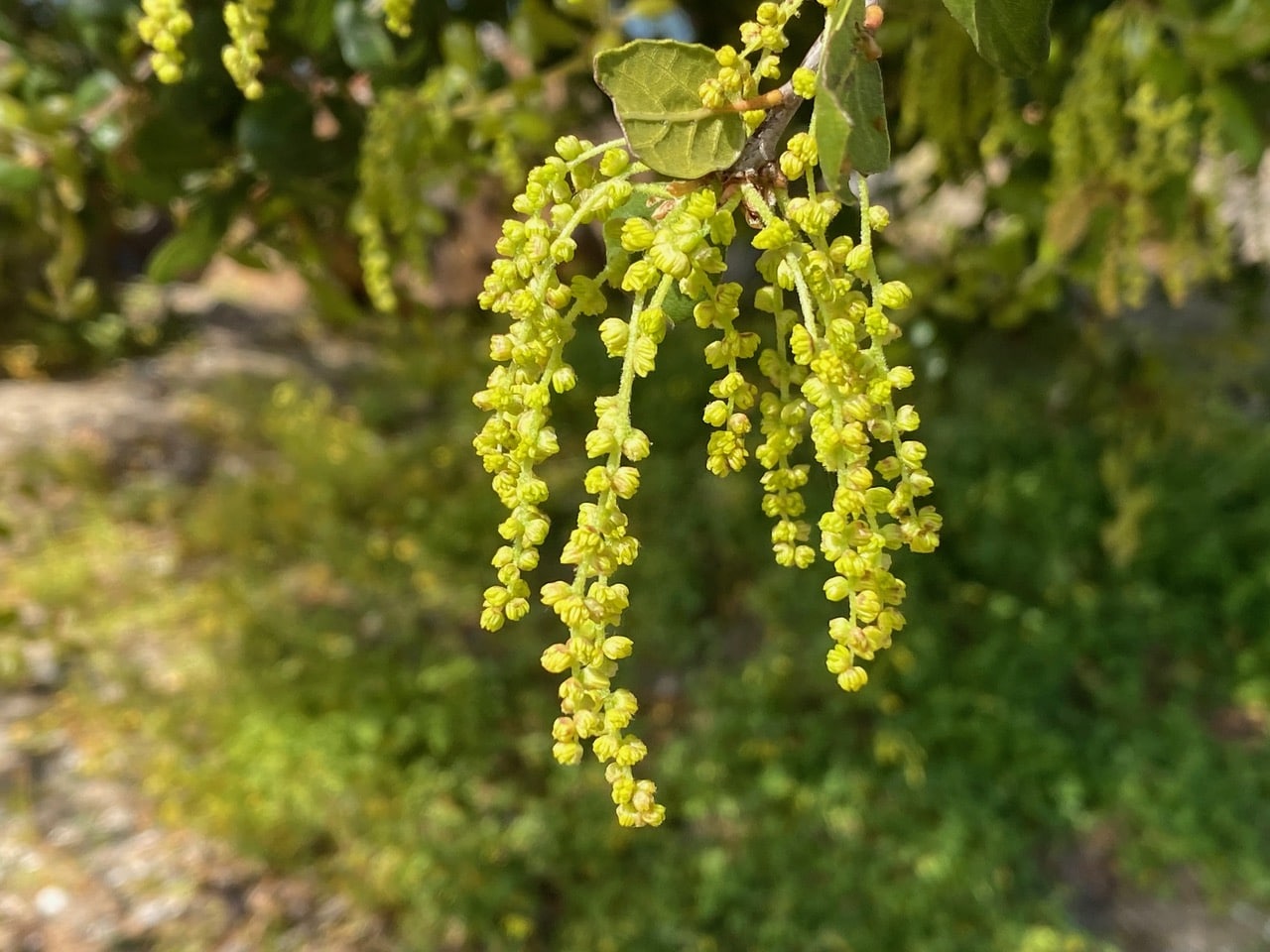
A small Coast Live Oak with low-hanging branches provides me the perfect opportunity to examine its pendant male catkins.
The Coast Live Oak, Quercus agrifolia is monoecious, with separate male and female flowers borne on the same tree. Male flowers are found on 2-4 inch long, drooping, yellow-green catkins, while the female flowers are inconspicuous reddish-green spikes in the leaf axils. The flowers are wind-pollinated, relying on the wind to carry pollen from the male catkins to the female flowers.
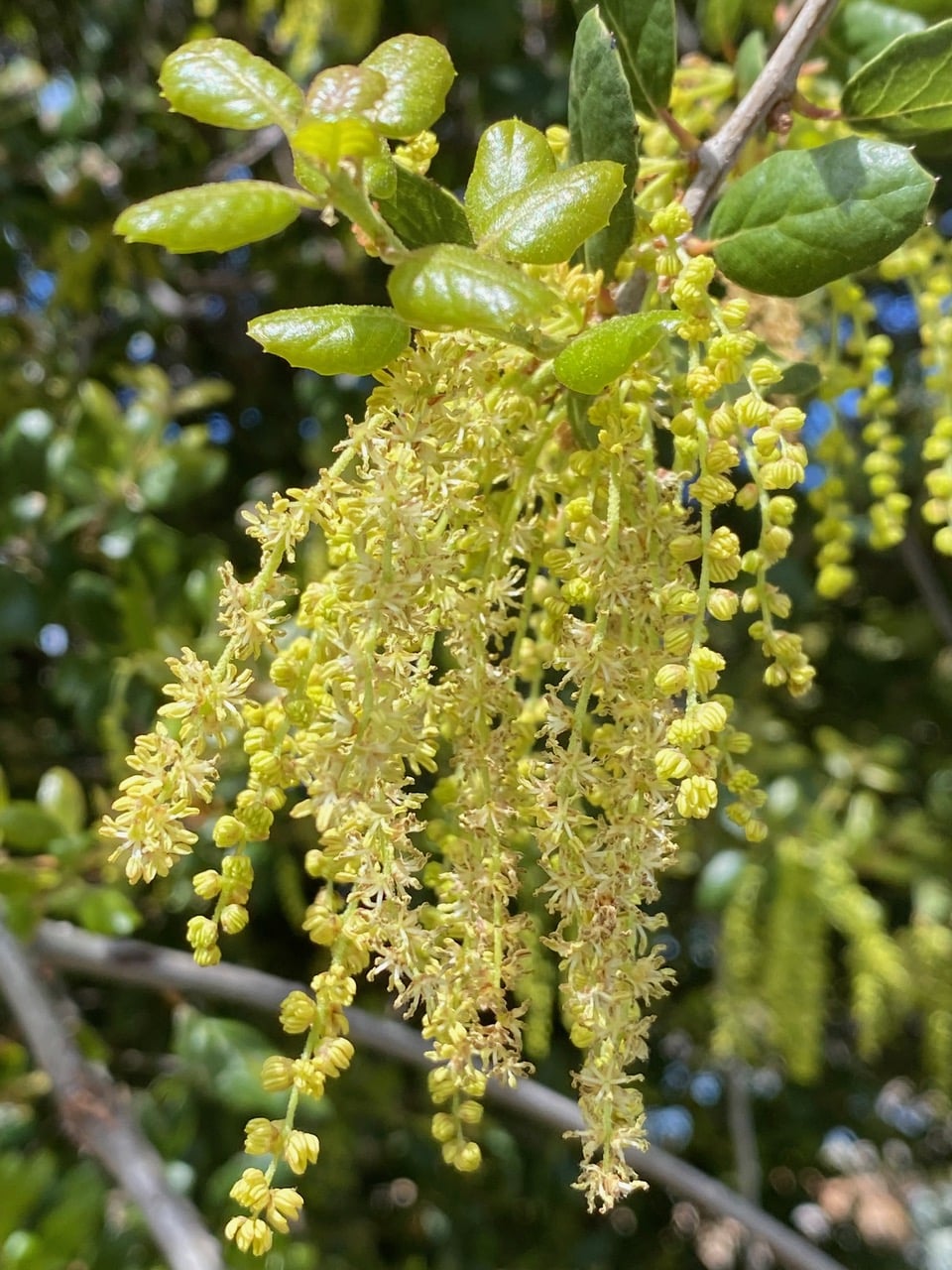
Here are some spent male catkins that have released their pollen to the wind.
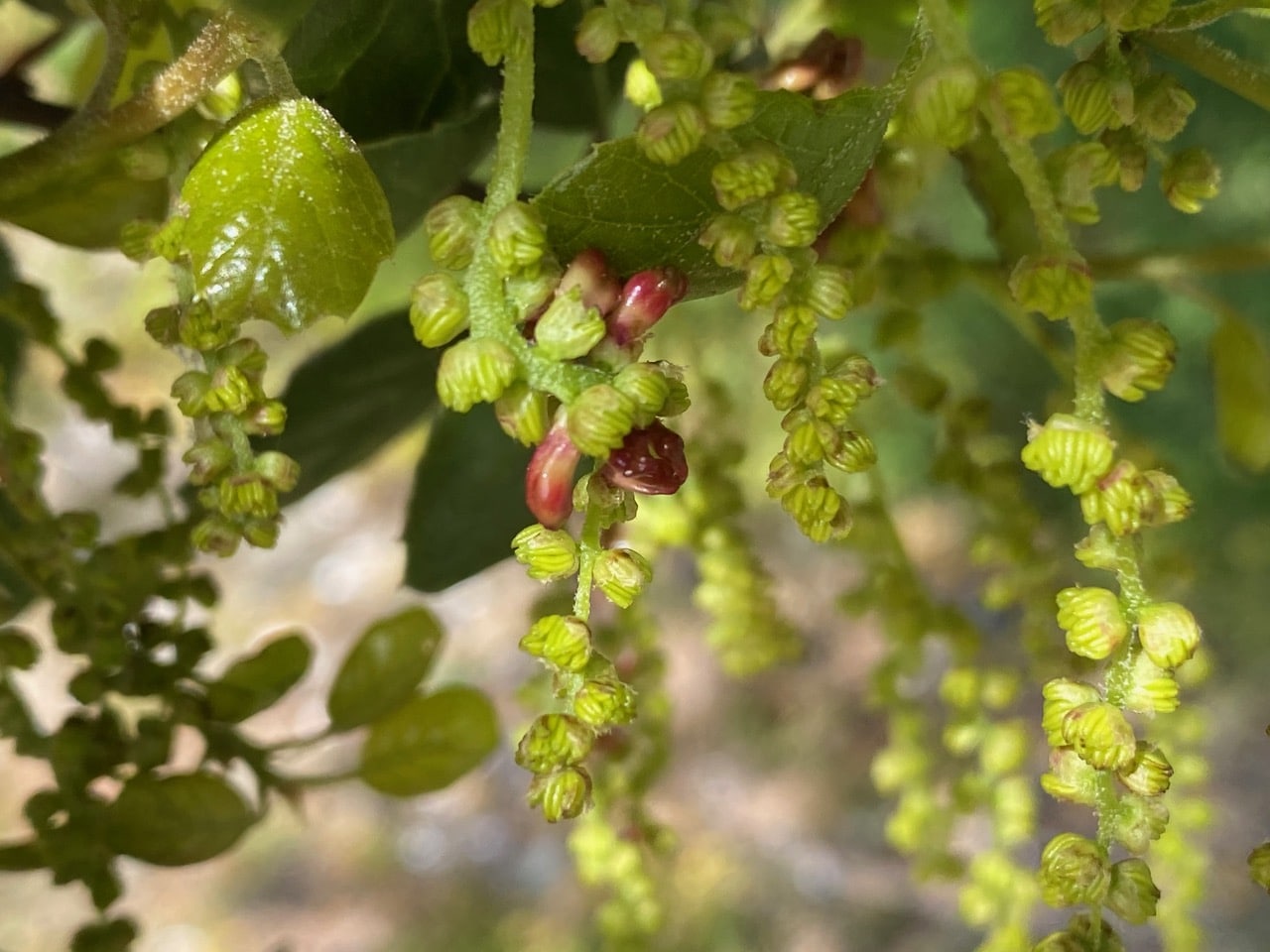
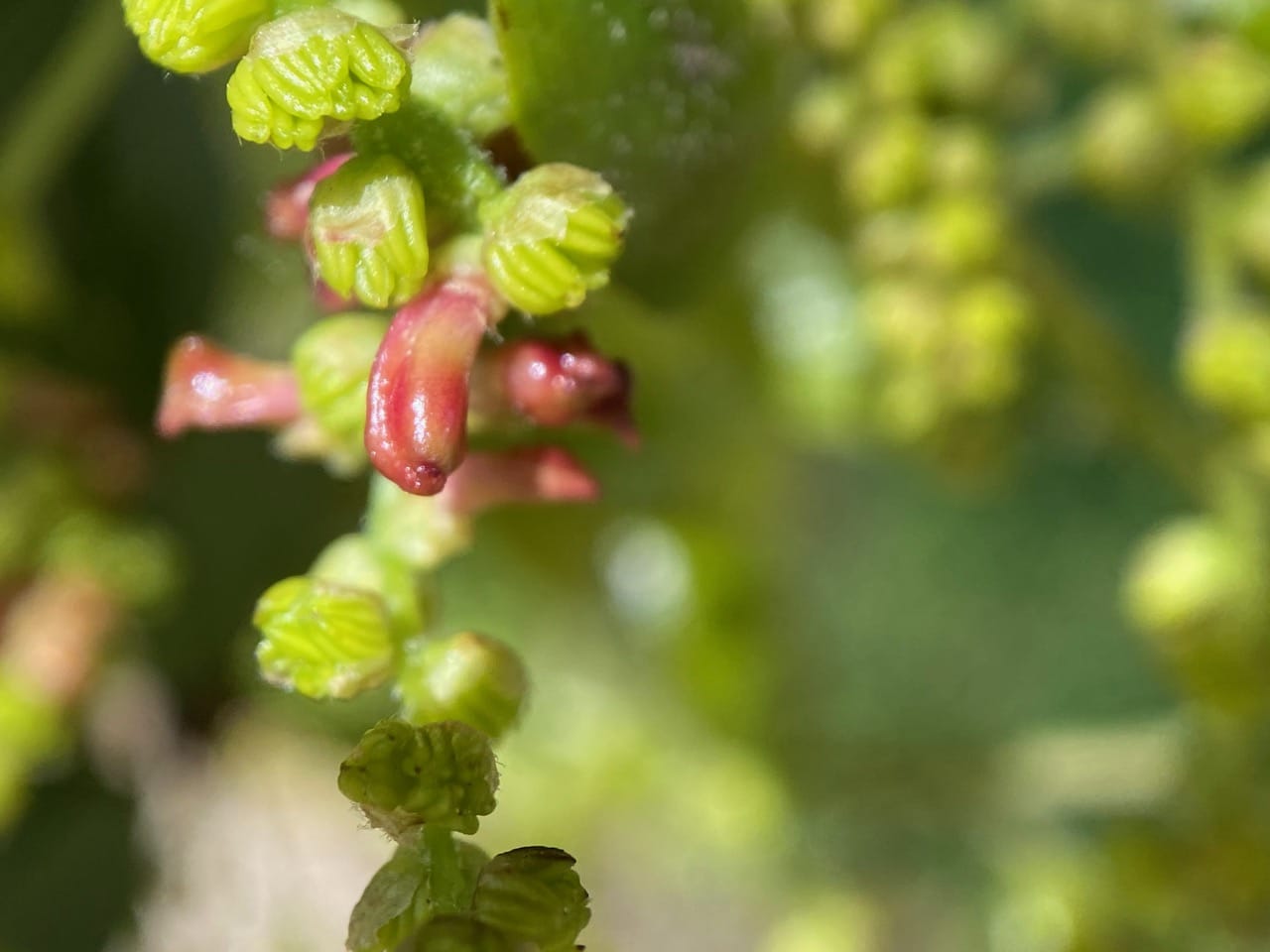
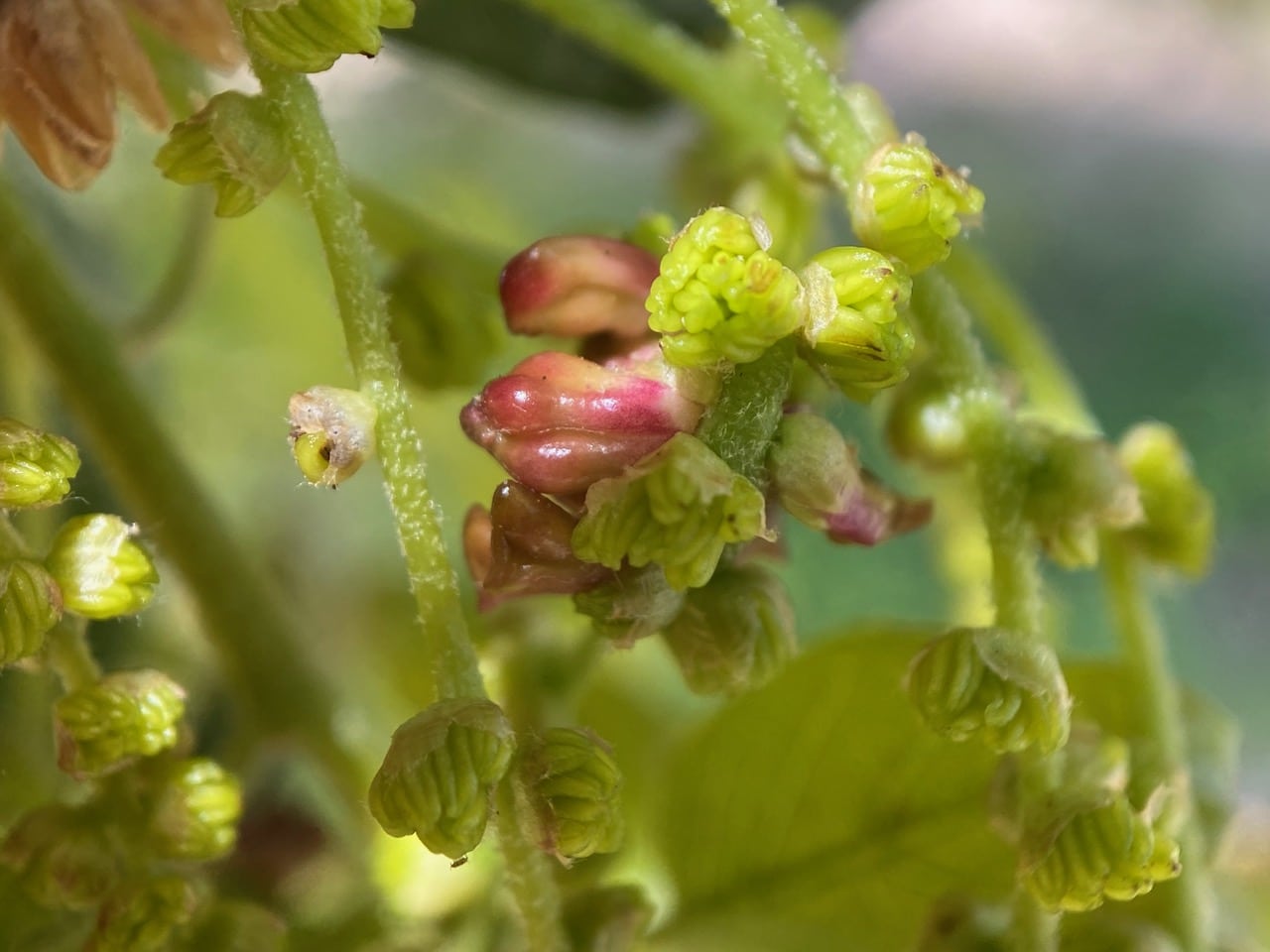
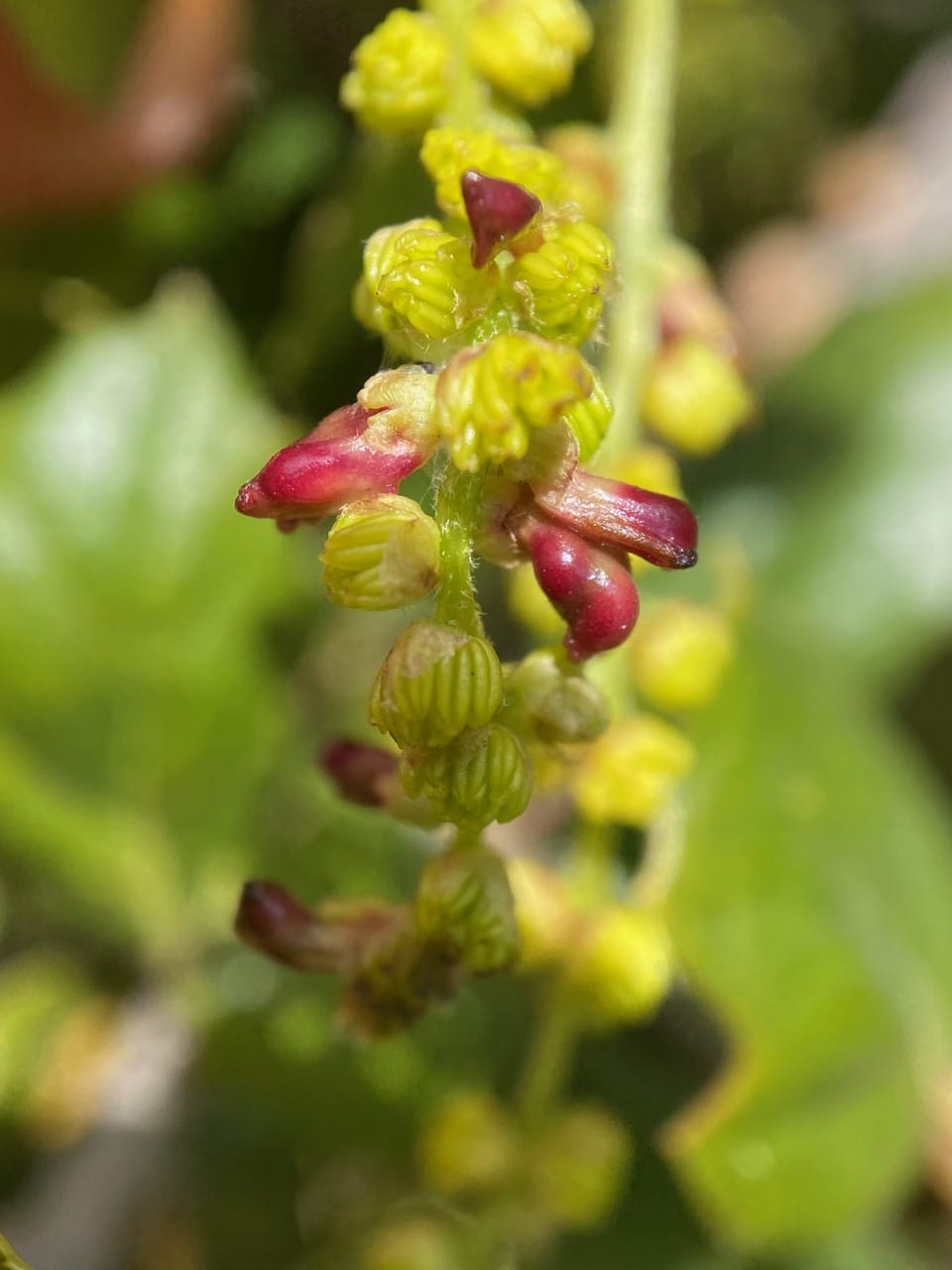
Some reddish succulent structures can be seen among the immature flowers of a distorted male catkin. Note that the male flowers are without any petals, each comprised of tightly packed stamens.
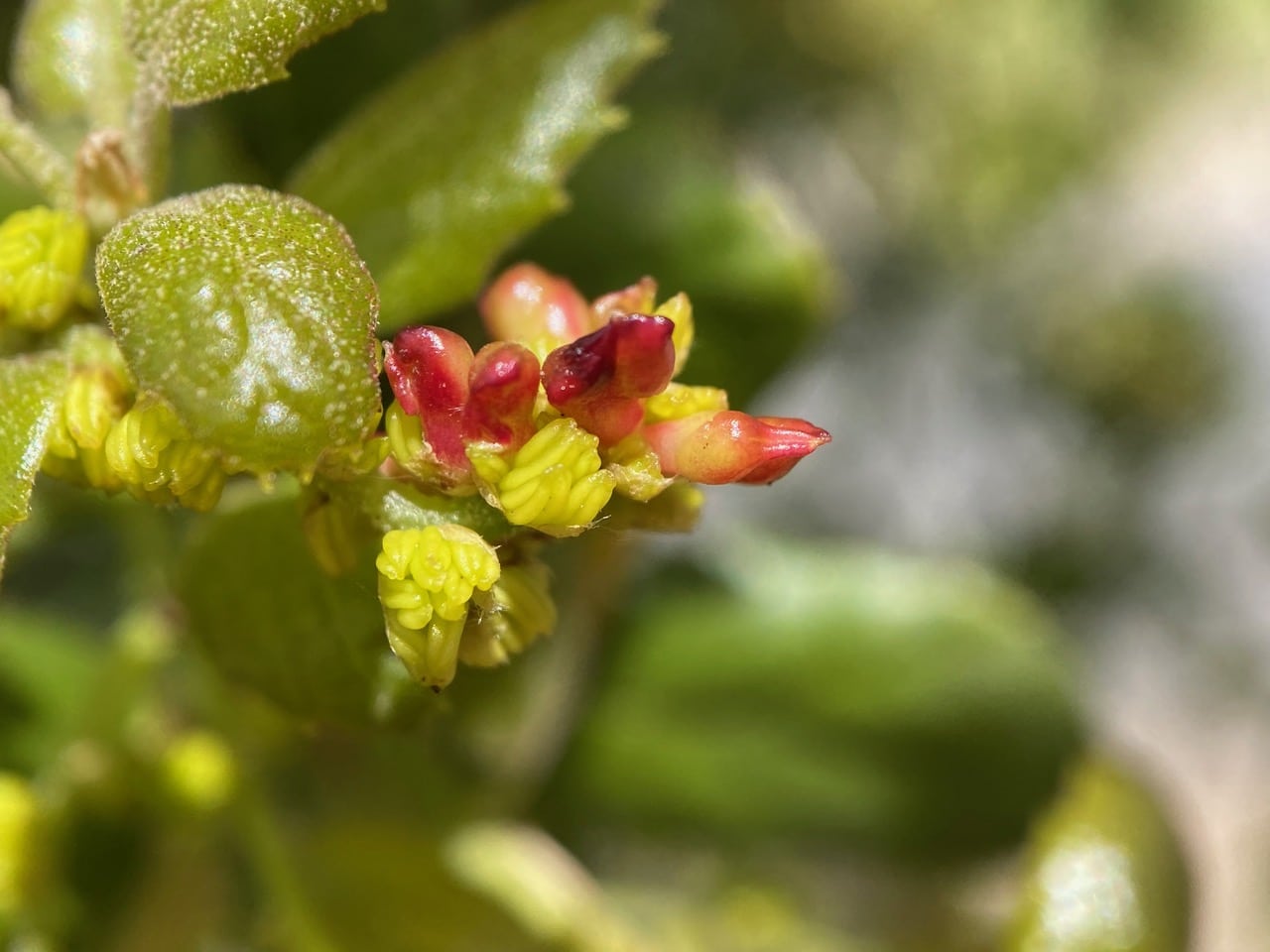
Close-up of the red structures. They are bud galls induced by the Two-horned Gall Wasps, Dryocosmus dubiosus (family Cynipidae).
Gall Wasps (family Cynipidae) are very small (2-8 mm), black wasps whose larvae induce the formation of galls in their host plants. Adults have a humpbacked profile, distinctive wing venation, and compressed abdomen with telescoped segments toward the rear. A given species of gall wasp will cause a characteristic type of gall to form on a certain part of a particular species of host plant. The gall wasps can often be identified by the galls they induce. Many Cynipid wasps attack oak trees or rose plants.
Oak gall wasps alternate between one sexual and one asexual generation each year. Male gall wasps are rare, and reproduction usually occurs by parthenogenesis (i.e. by cloning; female larvae develop from unfertilized eggs). The egg passes through the long ovipositor of the female into the plant tissue. After the egg hatches, the larva begins to secrete a substance that causes the plant tissue around it to grow faster than normal. The larva feeds on the plant tissue within the gall, pupates and eventually emerges from the gall as adult wasp. Gall wasps are naturally controlled by a complex of fungi, parasites, predators, and competing insects that live within the galls. The galls generally do not cause significant damage to trees.
The Two-horned Gall Wasp, Dryocosmus dubiosus (family Cynipidae) induces glossy, reddish, monothalamous galls (one larva per gall) on the catkins of coast live and interior live oaks. These bisexual generation galls are 2 mm wide by 4-5 mm long. Occasionally two or more galls coalesce, creating what appears to be one large gall. Generally, they appear singly, or grouped together on a catkin or along the edges of new leaves. Adults emerge in late April and live for about 7 days. Females ovipositor in the midrib and lateral veins on the underside of the leaves where the two-horned galls develop. Fresh galls are green and measure 3 mm long. Dozens of these galls can occur on a single leaf. As they develop on the veins, they appear to divert nutrients into the galls, depriving the surrounding leaf tissues of essential elements. This may result in the edges of the leaves turning brown.
The galls of this unisexual generation can be found on the leaves well into fall, and often, through winter. The larvae overwinter and emerge the following spring when flower buds are developing. This Gall Wasp has an interesting competitive relationship with the California Oak Moth, Phryganidia californica which also depends on oak leaves. The oak moth caterpillar eats the leaves that the gall wasp requires for larval development. As a result of the competition, the insects keep each other’s population in check, and continue to thrive using the same host trees.
The common name “two-horned” describes the galls on the underside of oak leaves that this gall wasp induces in its alternate, fall generation. A tiny wasp with a mind-bending life cycle!