

Pollinator Post 3/28/25 (1)
Another fine morning at Crab Cove, Alameda.
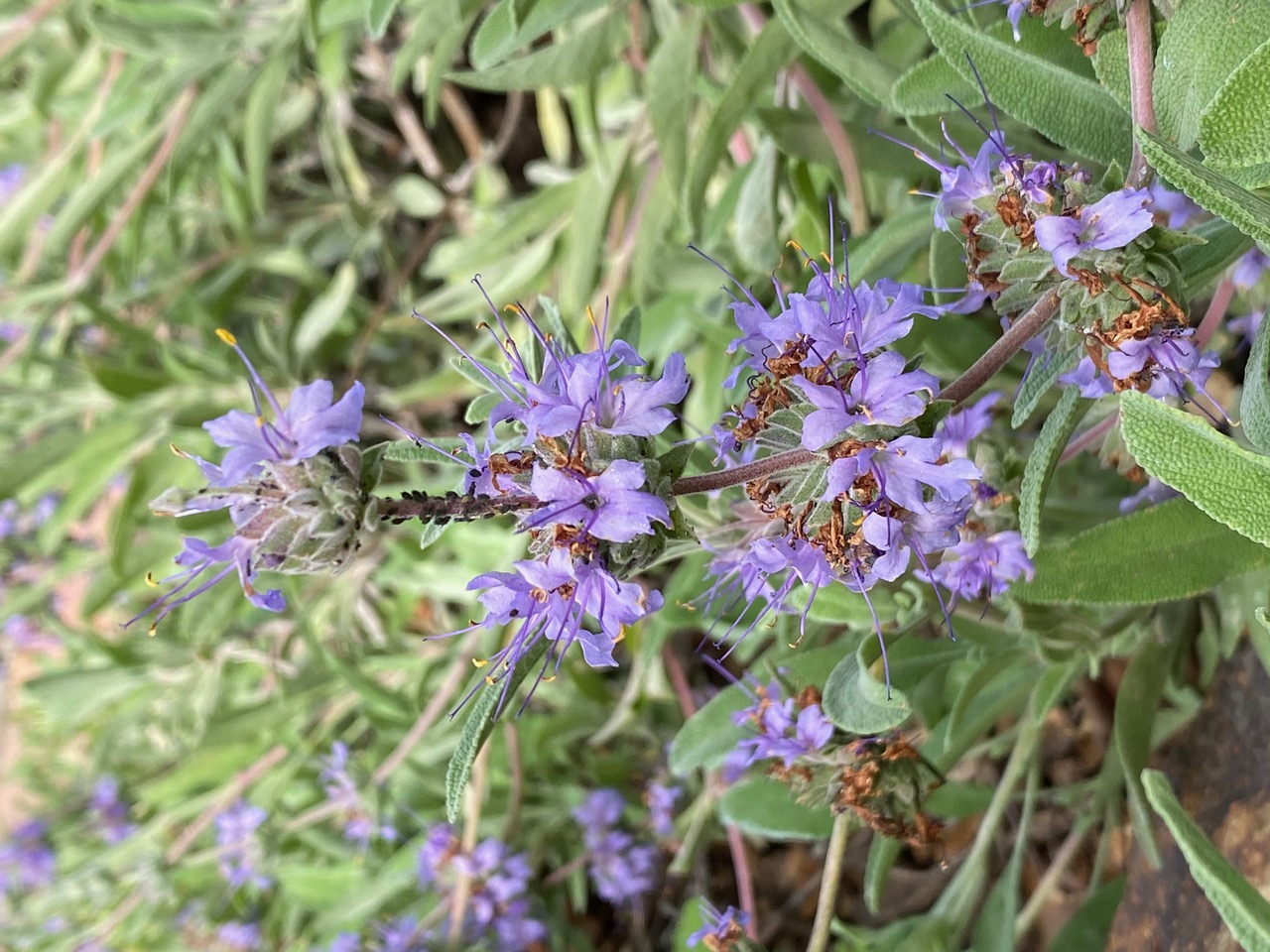
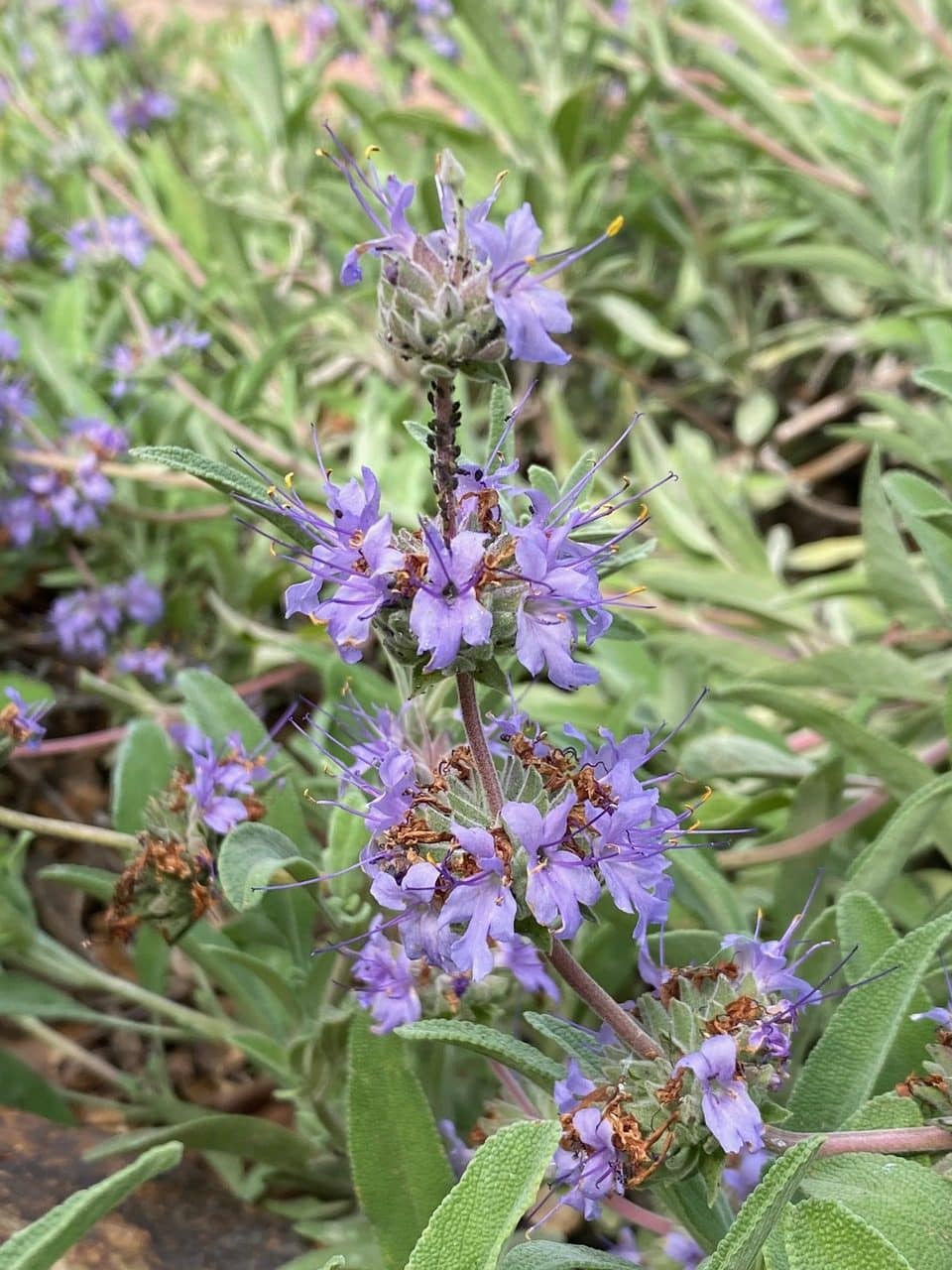
When I took this picture of an inflorescence of a Sage, Salvia sp. at the entrance to the parking lot on 3/22/25, I didn’t notice the dark aphids until I saw them later in the photo at home.
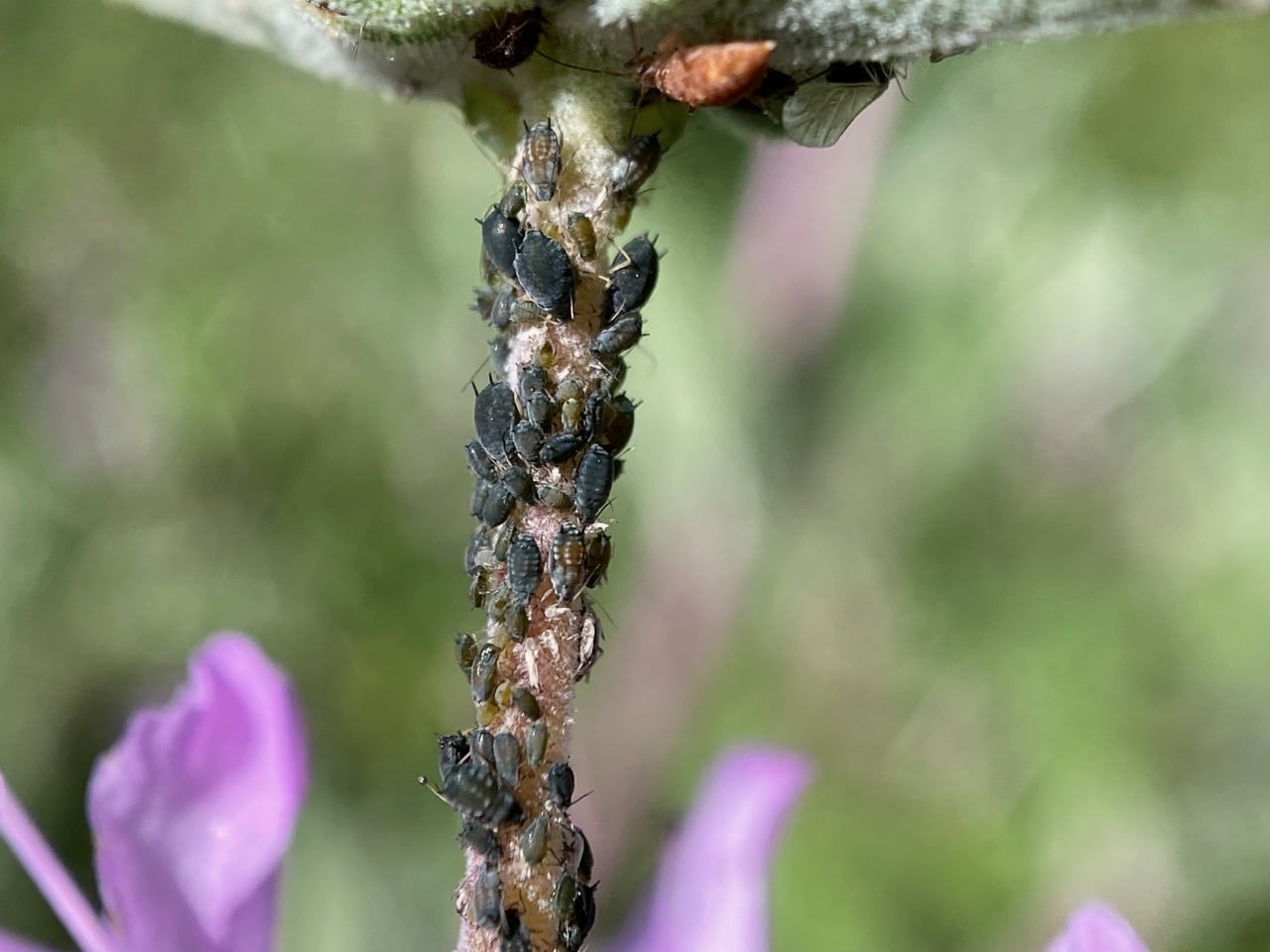
I manage to find those aphids again on the same plant this morning. Not surprisingly there are more of them crowded on the stem. Several generations must have been born. There are aphids of all sizes and ages here. iNaturalist has helped identify them as members of the genus Aphis (family Aphididae). Note the whitish things among the aphids – they are the skins or exuvia left behind by the aphid nymphs when they molt.
Aphids are small, soft-bodied insects that feed by inserting their slender mouthparts into phloem cells, the food conduits of plants. Most aphid species feed on only one species of plant, and closely related aphid species tend to feed on closely related species of plants.
Nymphs are the young of an insect that undergoes incomplete metamorphosis or no metamorphosis. Most aphid nymphs are born live (viviparous), rather than hatching from eggs. Aphid nymphs pass through 4 instars. Instar describes an immature arthropod between molts. For example, after hatching from its egg an insect is said to be in its first instar. When the insect molts, it is then a second instar and so on.
Aphids have soft pear-shaped bodies with long legs and antennae and may be green, yellow, brown, red, or black depending on the species and the plants they feed on. A few species appear waxy or woolly due to the secretion of a waxy white or gray substance over their body surface. Most species have a pair of tubelike structures call cornicles projecting backward out of their rear end. The presence of cornicles distinguishes aphids from all other insects.
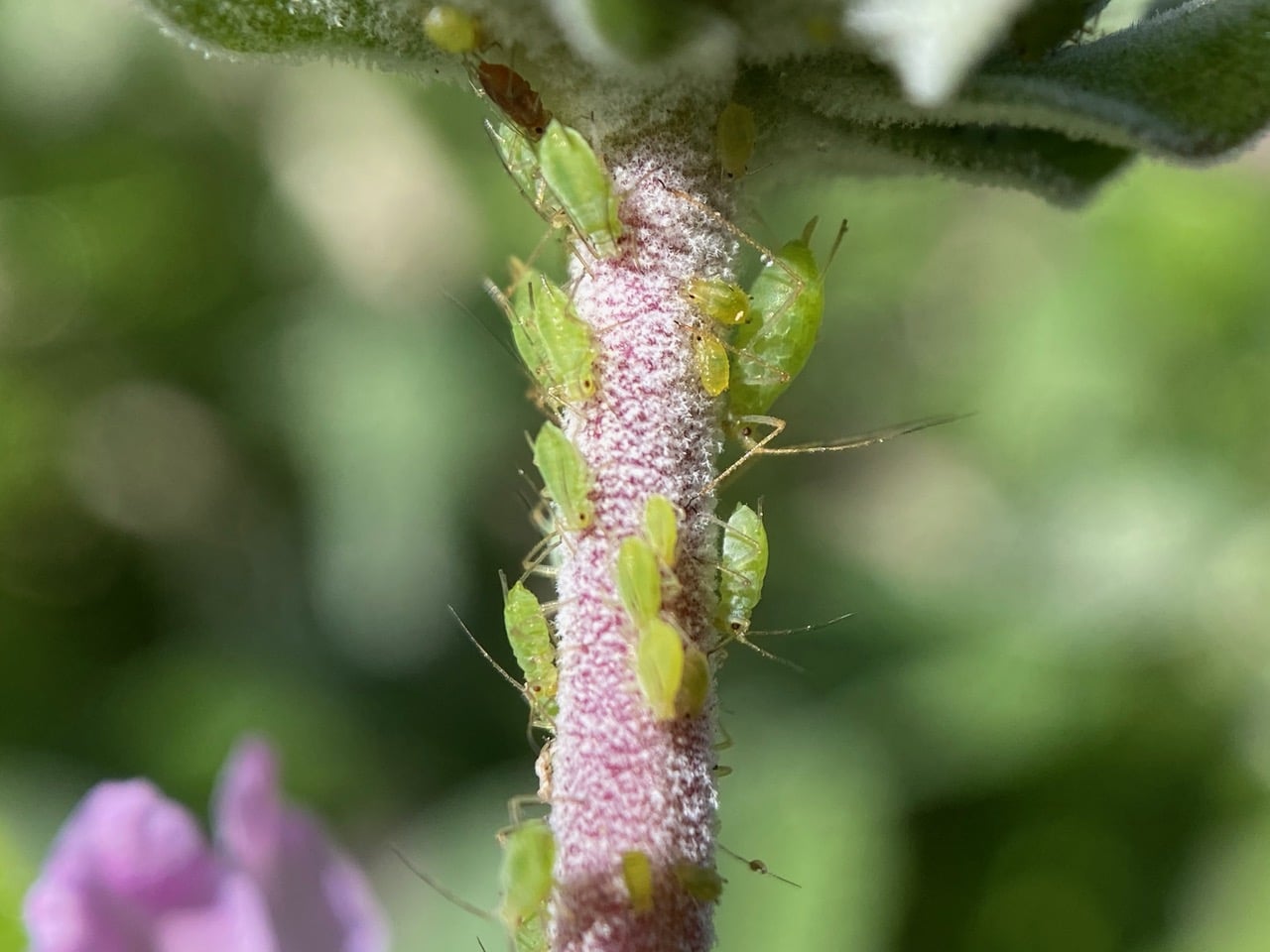
Ooh, these are different aphids on another inflorescence of the Sage plant. There’s a mix of different ages. iNaturalist has helped identify them as members of the genus Macrosiphum, the name referring to the long cornicles.
Aphids have many generations a year. Most aphids in California’s mild climate reproduce asexually through most of the year with adult females giving birth to live offspring (viviparous) – often as many as 12 per day – without mating (parthenogenesis). This can result in explosive population growths. Some species produce sexual forms that mate and produce eggs in fall or winter, providing a more hardy stage to survive harsh weather and the absence of foliage on deciduous plants. In some cases, aphids lay these eggs on an alternative host, usually a perennial plant, for winter survival.
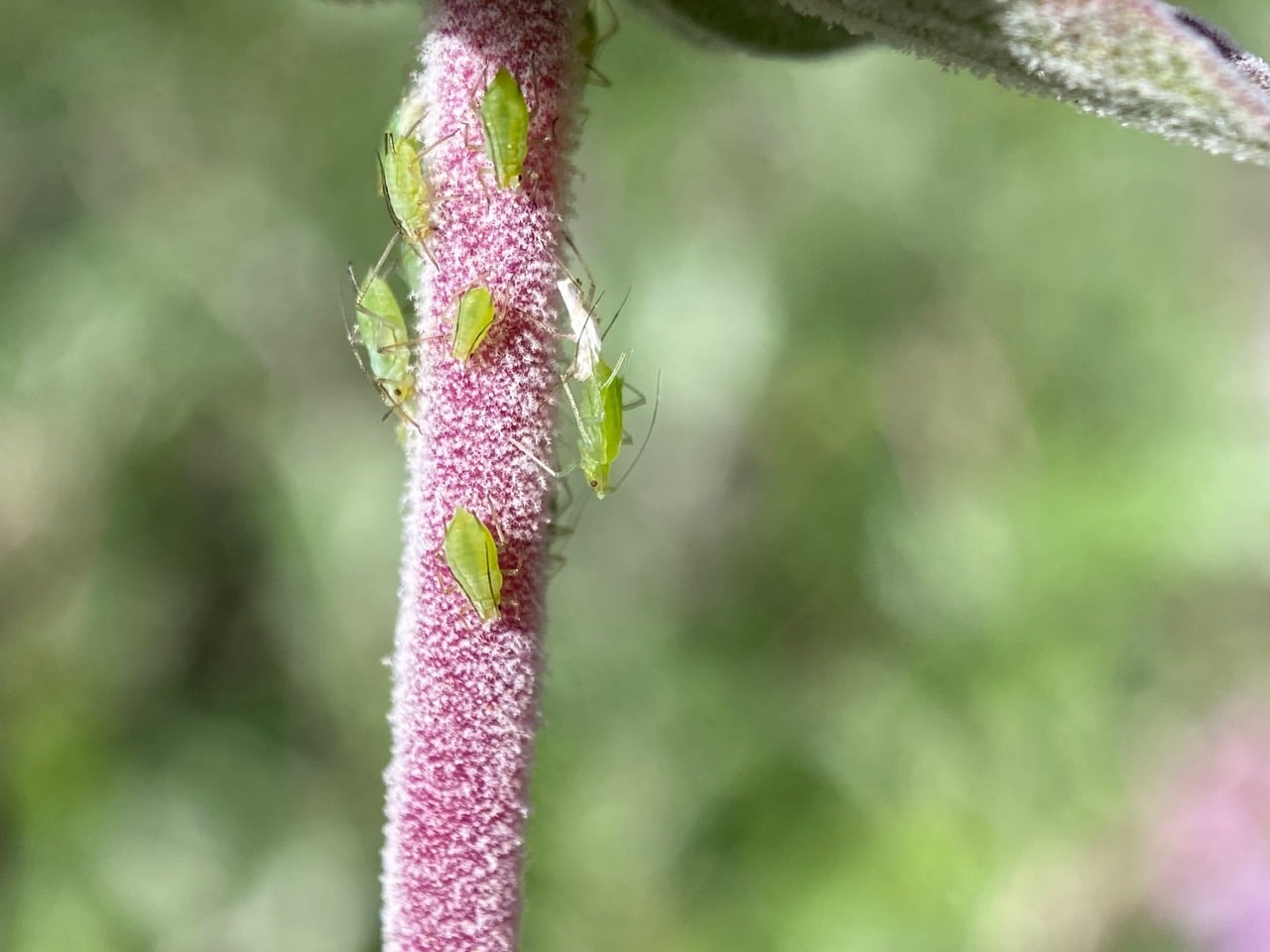
Look, an aphid nymph is just about finishing its molt, stepping out of its exuvia (shed exoskeleton).
Ecdysis is the molting of the cuticle in insects and other arthropods. Since the cuticle of insects typically forms a largely inelastic exoskeleton, it is shed during growth, and a new, larger covering is formed. The remnants of the old, empty exoskeleton are called exuviae. Molting also allows damaged tissues and missing limbs to be regenerated or substantially re-formed.
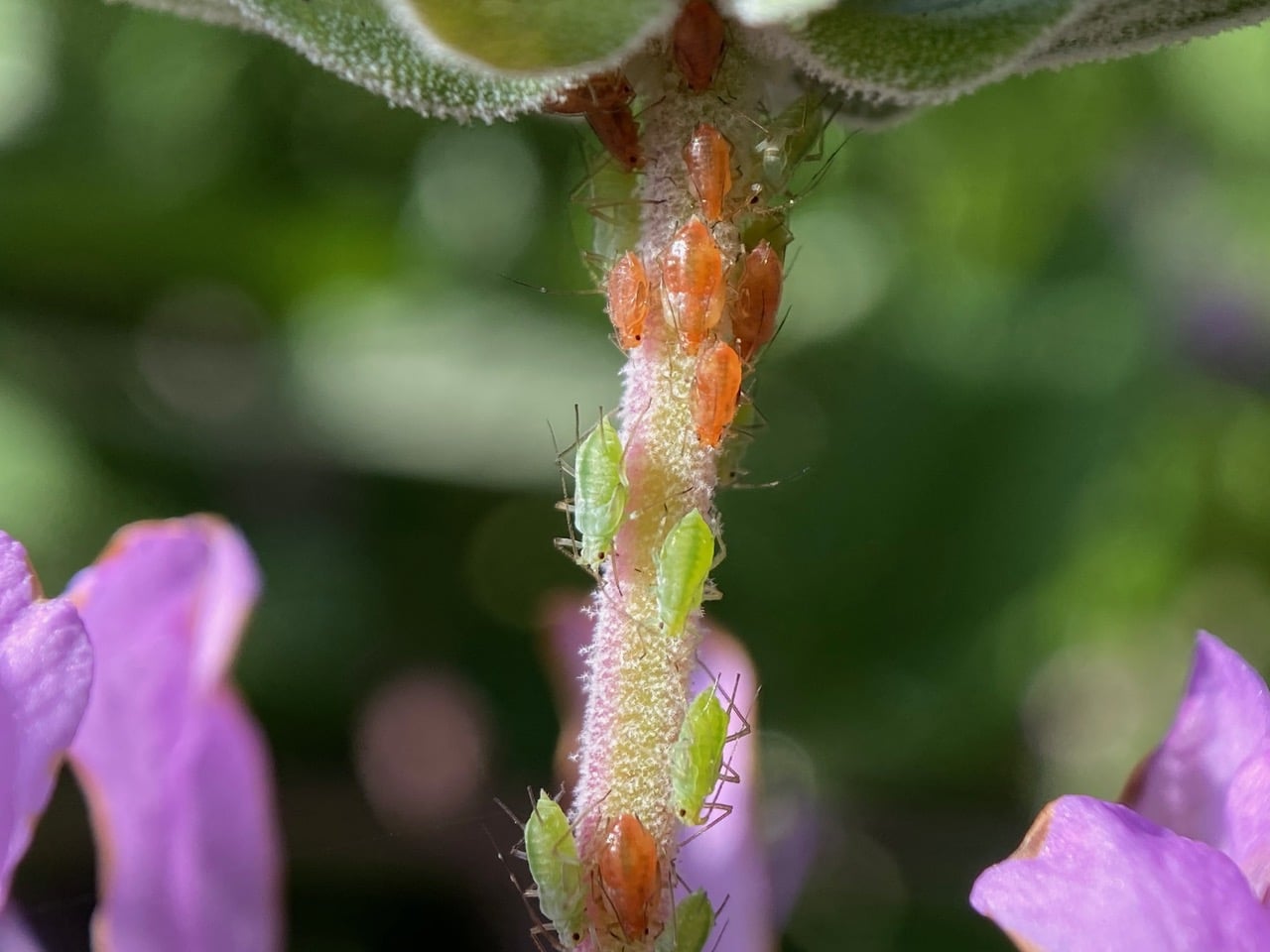
On yet another inflorescence, there is a mix of green and orange aphids. The green ones have long cornicles (“tail pipes” on their rear ends), while the orange ones have short cornicles. Are they different species? They all seem to be nymphs destined to become alates – note the wing pads. So early in the season?
Generally adult aphids are wingless, but most species also occur in winged forms (alates), especially when populations are high or during spring and fall. The ability to produce alates provides the aphids with a way to disperse to other plants when the quality of the food source deteriorates.

Behind the visitor center, new leaves have emerged on the compact Beaked Hazelnut, Corylus cornuta, providing a colorful contrast to the red stigmas of the few remaining female flowers. By now, most of the male catkins on the plant have withered.
The Hazelnut is monoecious, with separate male and female flowers borne on the same plant. The tree/shrub also exhibits dichogamy, with temporal separation of the male and female phases. The male flowers of Hazelnut show up before the female flowers, exhibiting protandry. As in many monoecious plants that are wind-pollinated, the flowers usually show up before the leaves emerge, increasing the odds that the wind will successfully transport the pollen grains from the dangling male flowers to a compatible female flower. The female flowers are inconspicuous, appearing as tiny, bud-like structures with a spray of red stigmas protruding from the center. They are found at the tips of the branches, often near the male catkins. After pollination, the female flowers will develop into the fruits/nuts in the fall. The nuts are enclosed in a husk with a tubular extension that resembles a beak, giving the plant its common name.
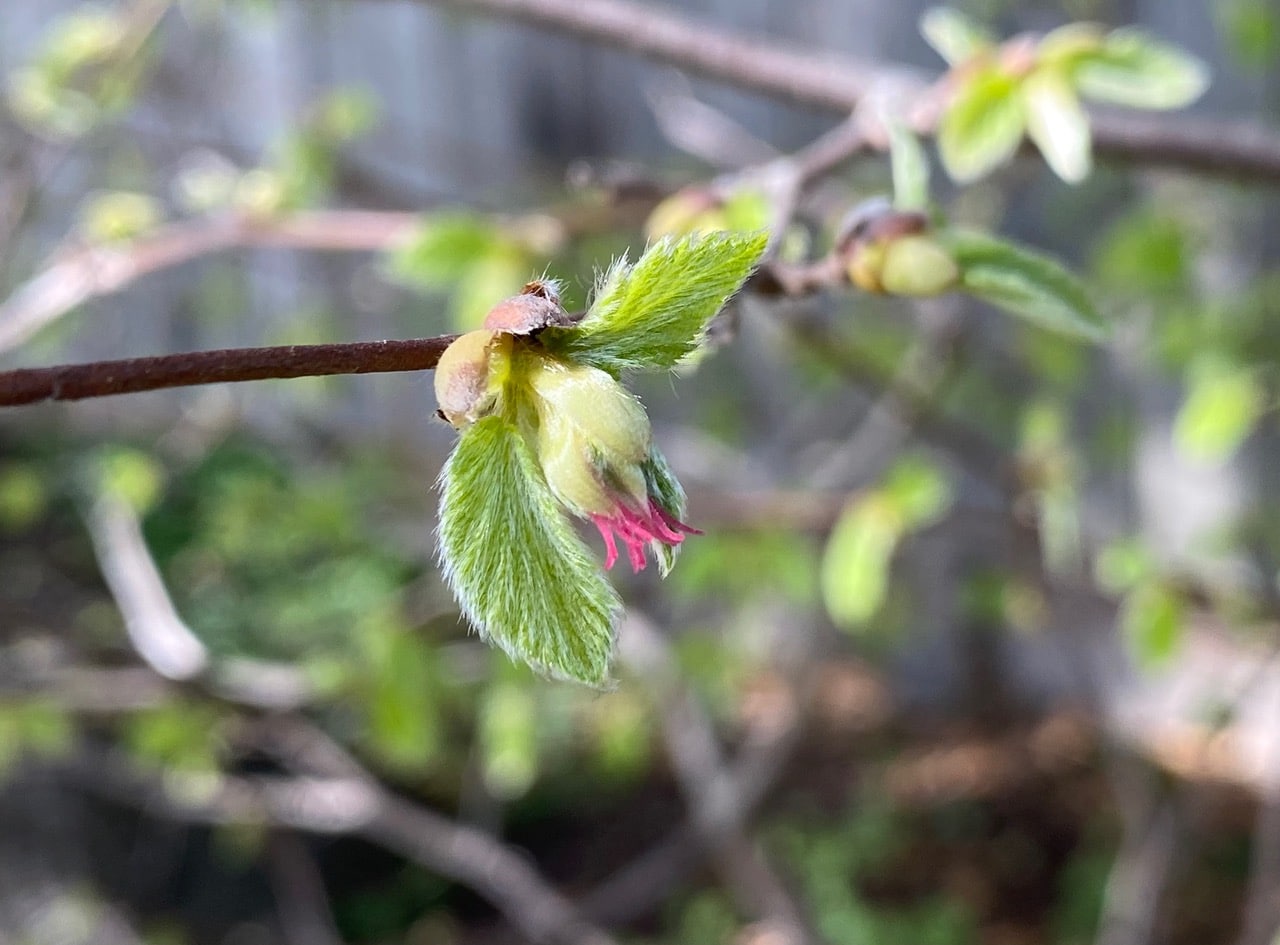
Here’s another female Beaked Hazelnut flower.
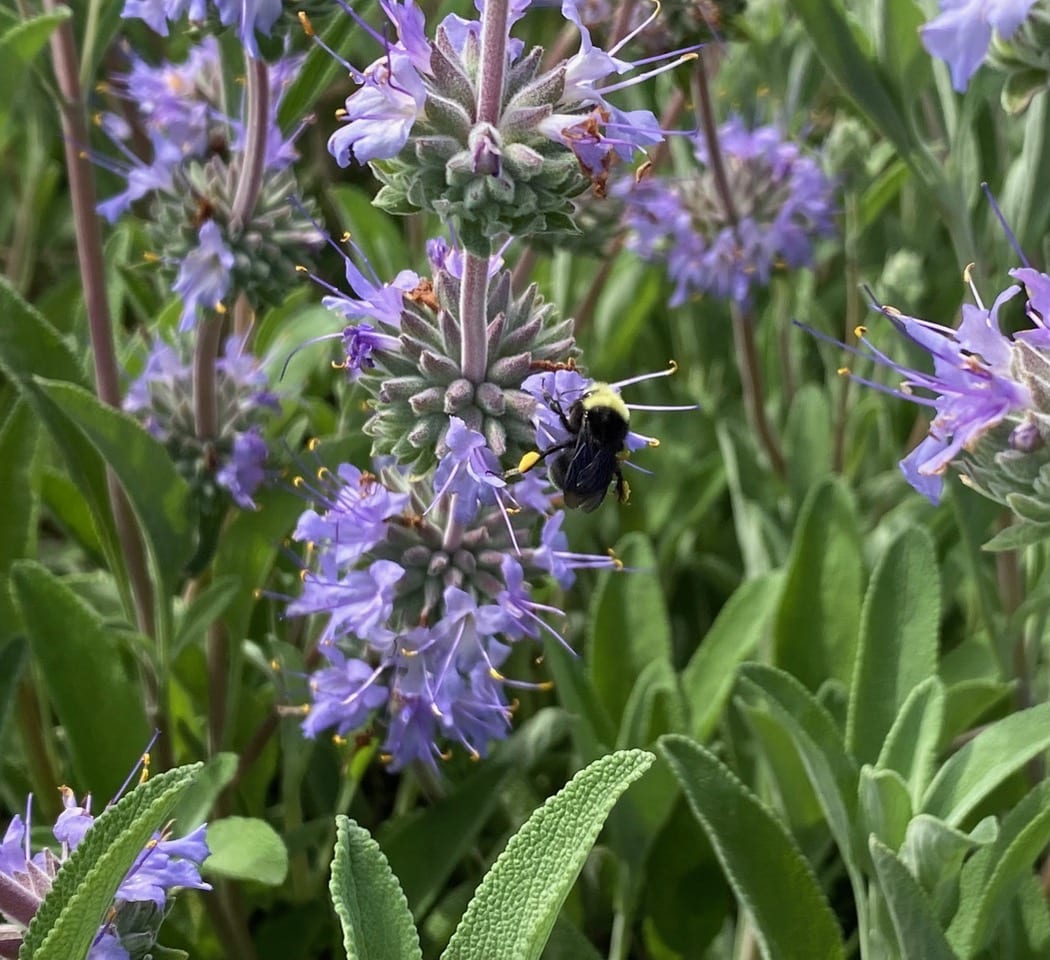
More Sages, Salvia sp. grow in the native garden by the Bath House. These are in peak bloom, attracting numerous bumble bees. A small worker Yellow-faced Bumble Bee, subgenus Pyrobombus (genus Bombus, family Apidae) is taking nectar from a sage flower.
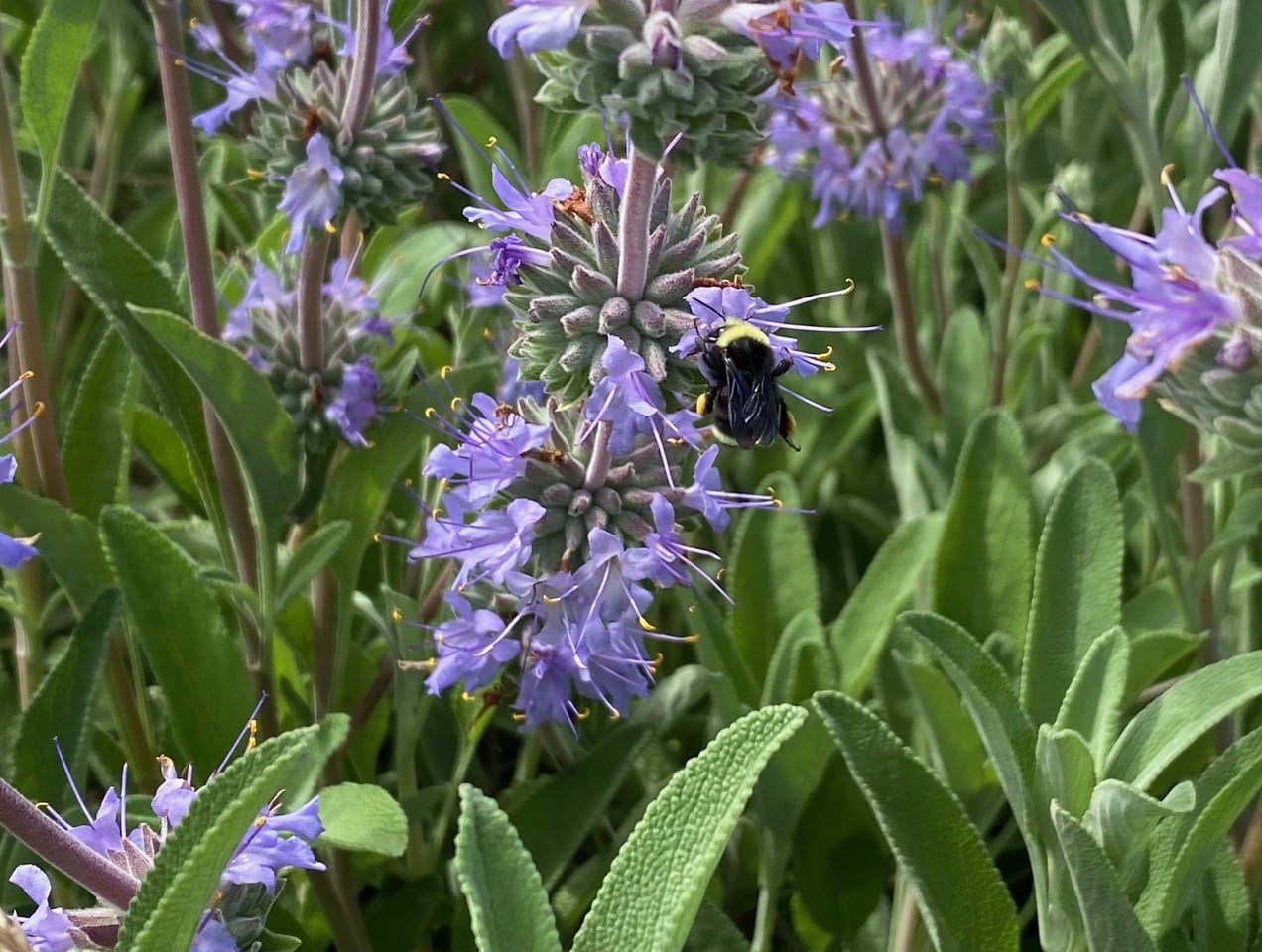
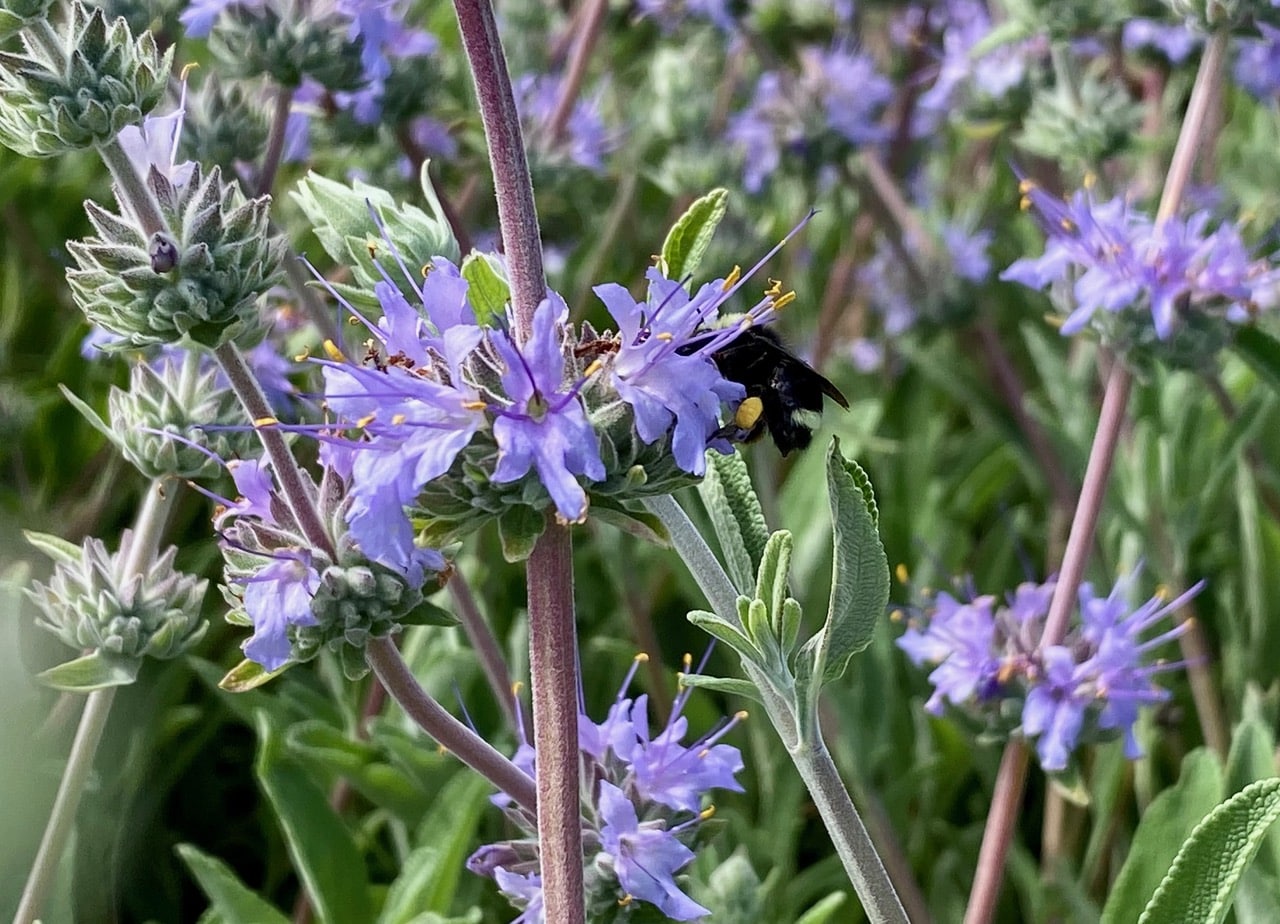
I never see the bumble bees intentionally collect pollen from the Salvia flowers. Pollen is released from the anthers that protrudes beyond the corolla. Perhaps some of the pollen comes in contact with the bee’s head or thorax as it approaches the flower for nectar, and is subsequently gathered into the bees’ pollen baskets?
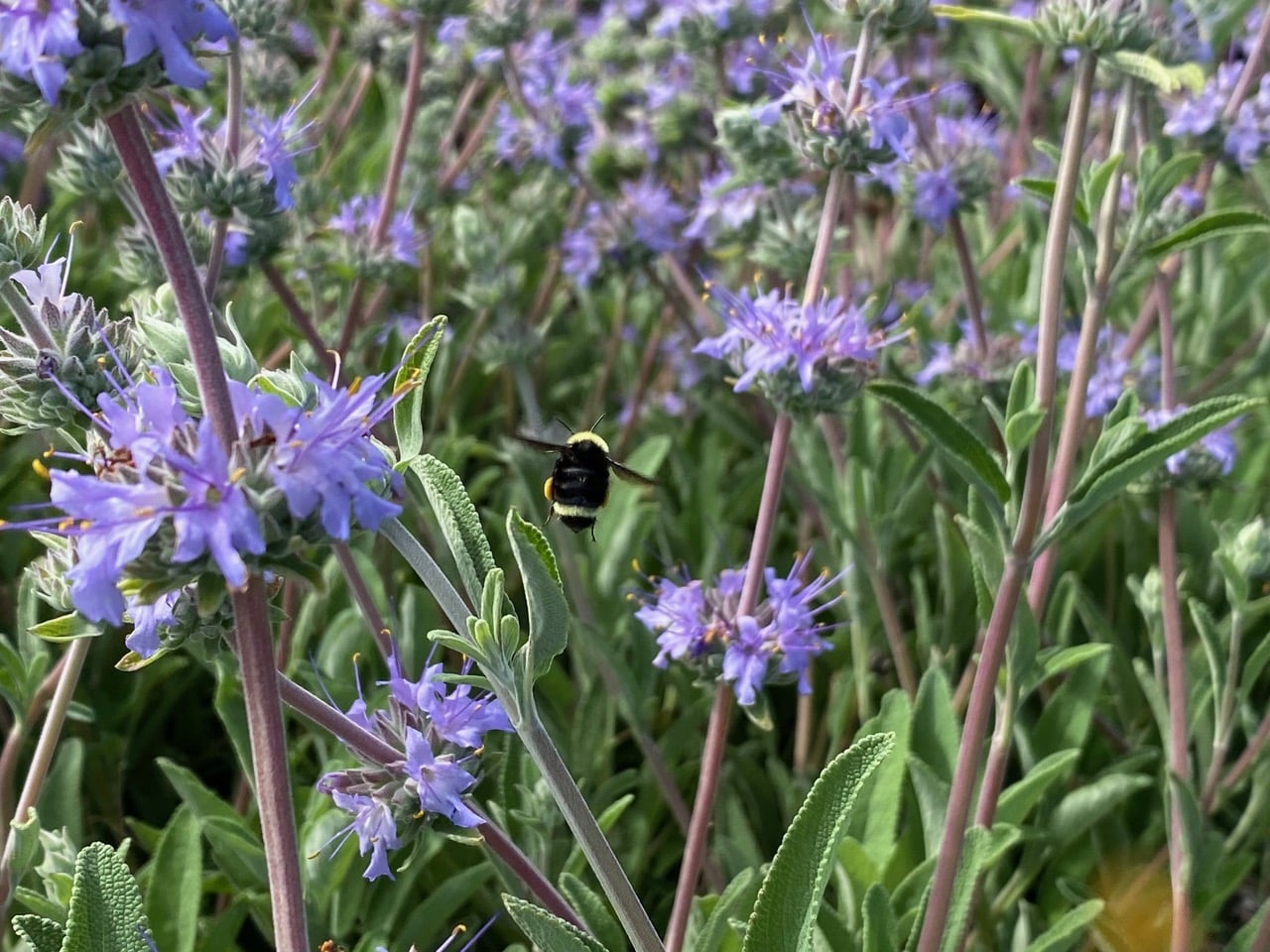
This forest of Salvia inflorescences is a playground for happy bumble bees!
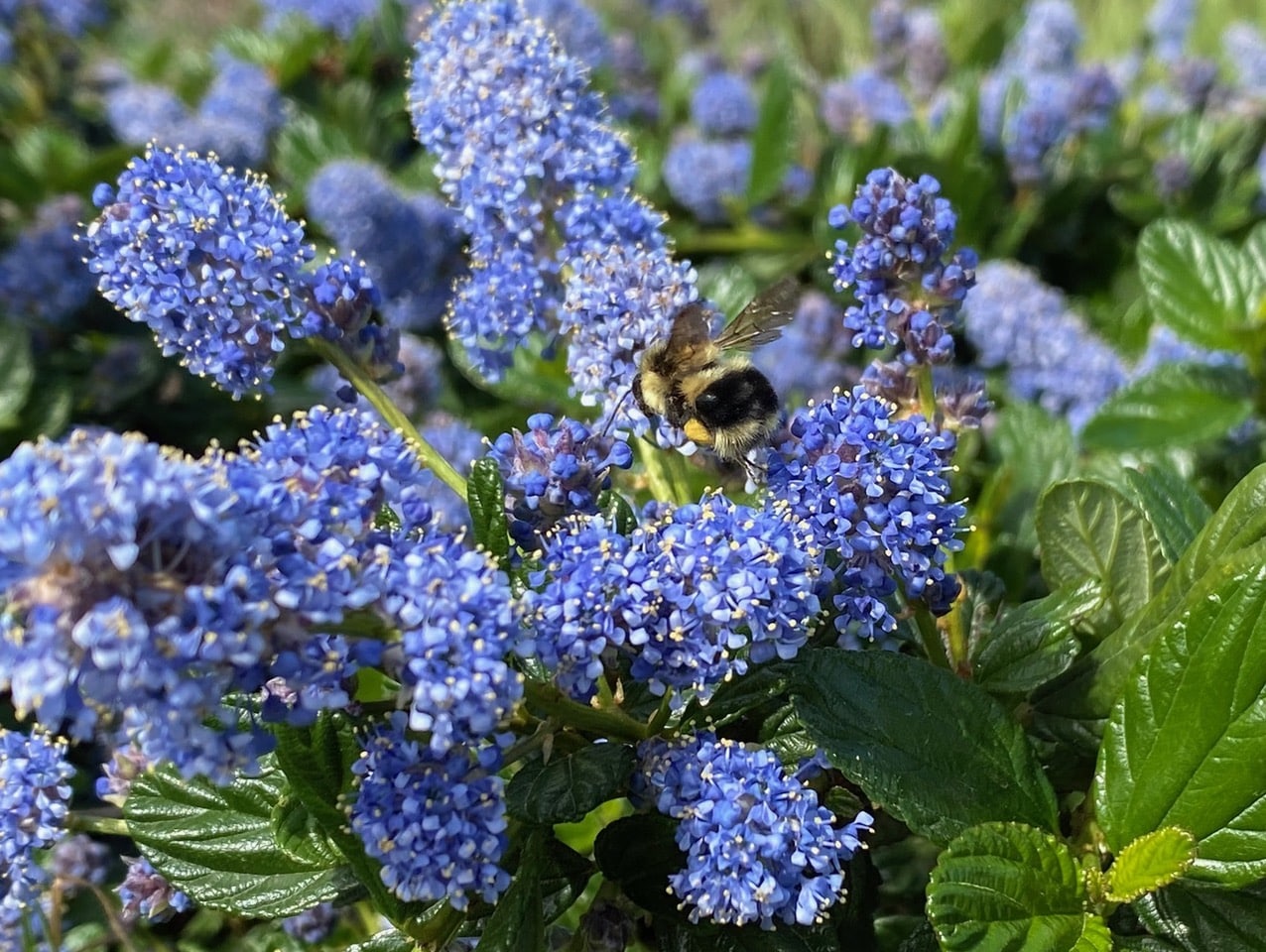
A large Black-tailed Bumble Bee, Bombus melanopygus (family Apidae) is foraging on the flowers of a prostrate species of Ceanothus. A queen? Queens are noticeably larger than worker bees, which is one of the easiest ways to distinguish them. Rather late in the season to be seeing a queen of this species. The Black-tailed Bumble Bee is one of the first, if not the first, species of bumble bees to be seen in late winter or early spring in our area.
Bumble bees are social and live in colonial hives. Many of the large individuals seen early in the season are queens. They are the only members of their colony to survive the winter, hibernating until the days begin to warm and their host plants are in bloom. These queens have mated before they went into hibernation. Now their first order of business is to each find a nesting site (usually an abandoned rodent burrow), lay eggs, brood and nurture the first batch of workers. Hence forth, the queens stay behind in the hive to concentrate on laying eggs while the workers take on hive duties and foraging. Bumble bees are among the most cold tolerant bees, and are usually the first bees we see out foraging.
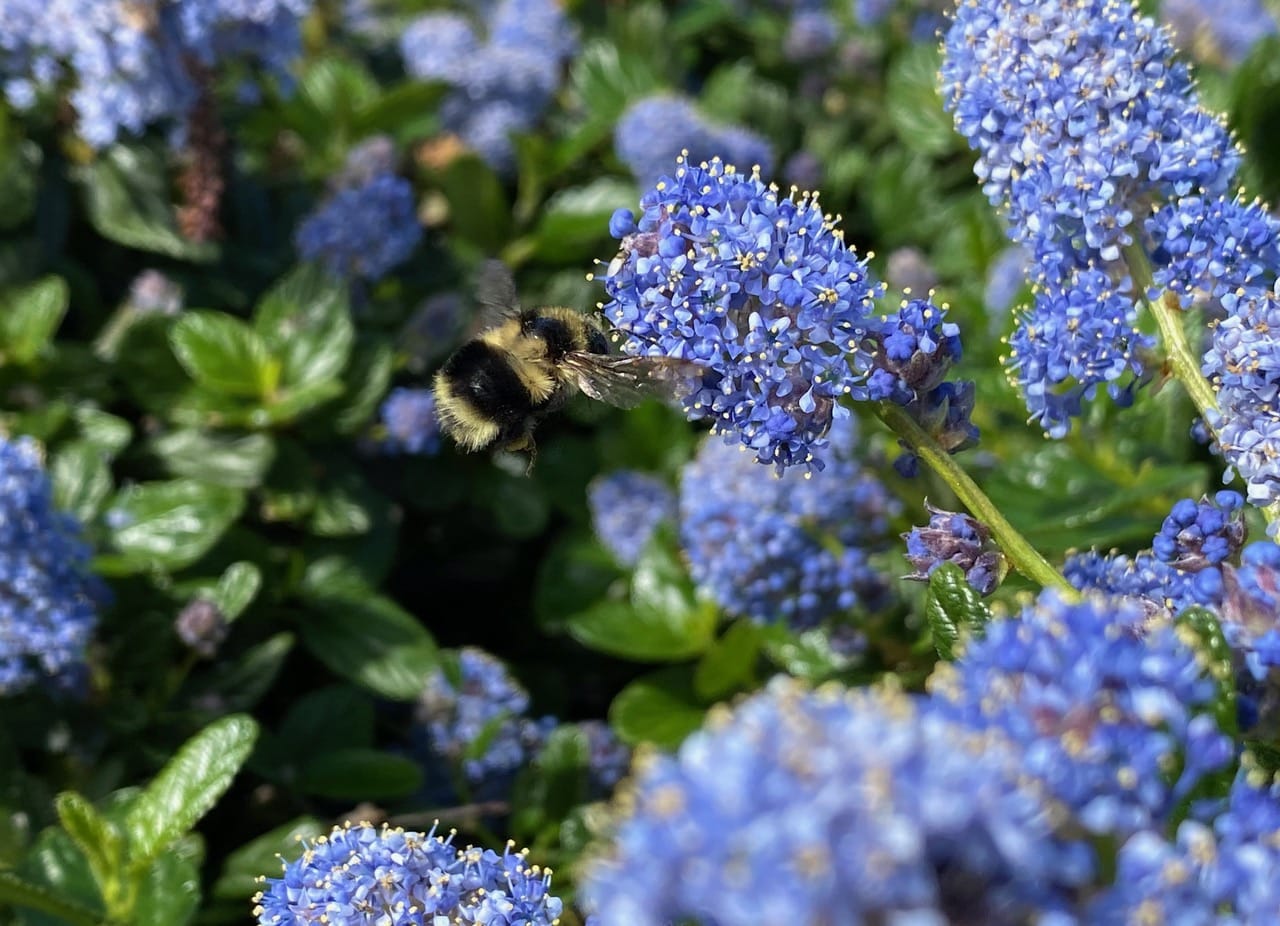
The Black-tailed Bumble Bee, Bombus melanopygus (family Apidae) is a species of bumble bee native to western North America, widely distributed from the Pacific to the Rocky Mountains, and from Alaska to Baja California. The species is found in various habitats, including agricultural and urban areas. The bees feed on many types of plants, including manzanitas, Ceanothus, golden bushes, wild buckwheats, lupines, penstemons, rhododendrons, willows, sages, and clovers. They nest underground or aboveground in structures.
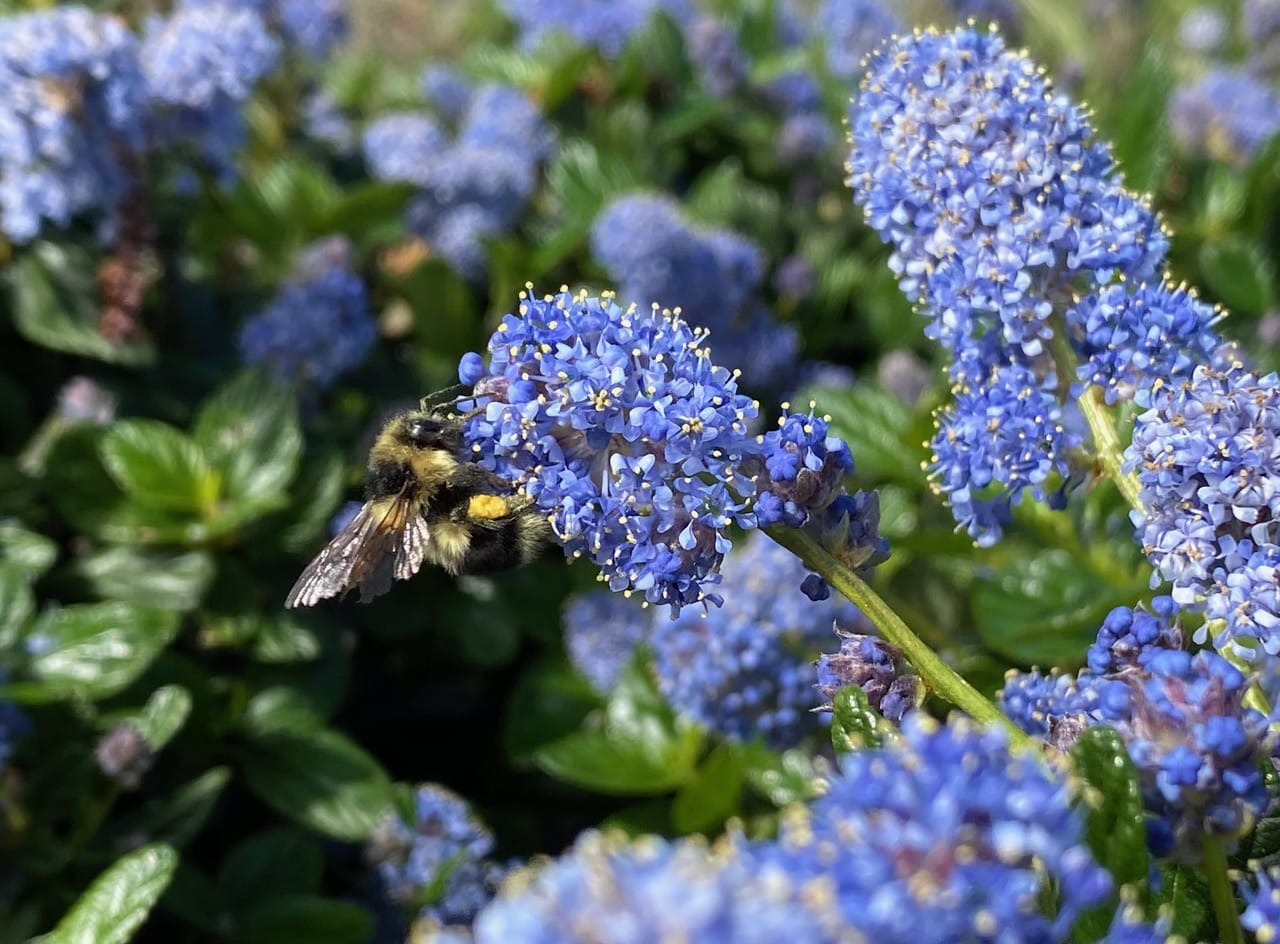
Her worn, tattered wings tell me that the bee is probably not a fresh queen produced this year. She is likely a queen that has emerged late and is still providing for her young.
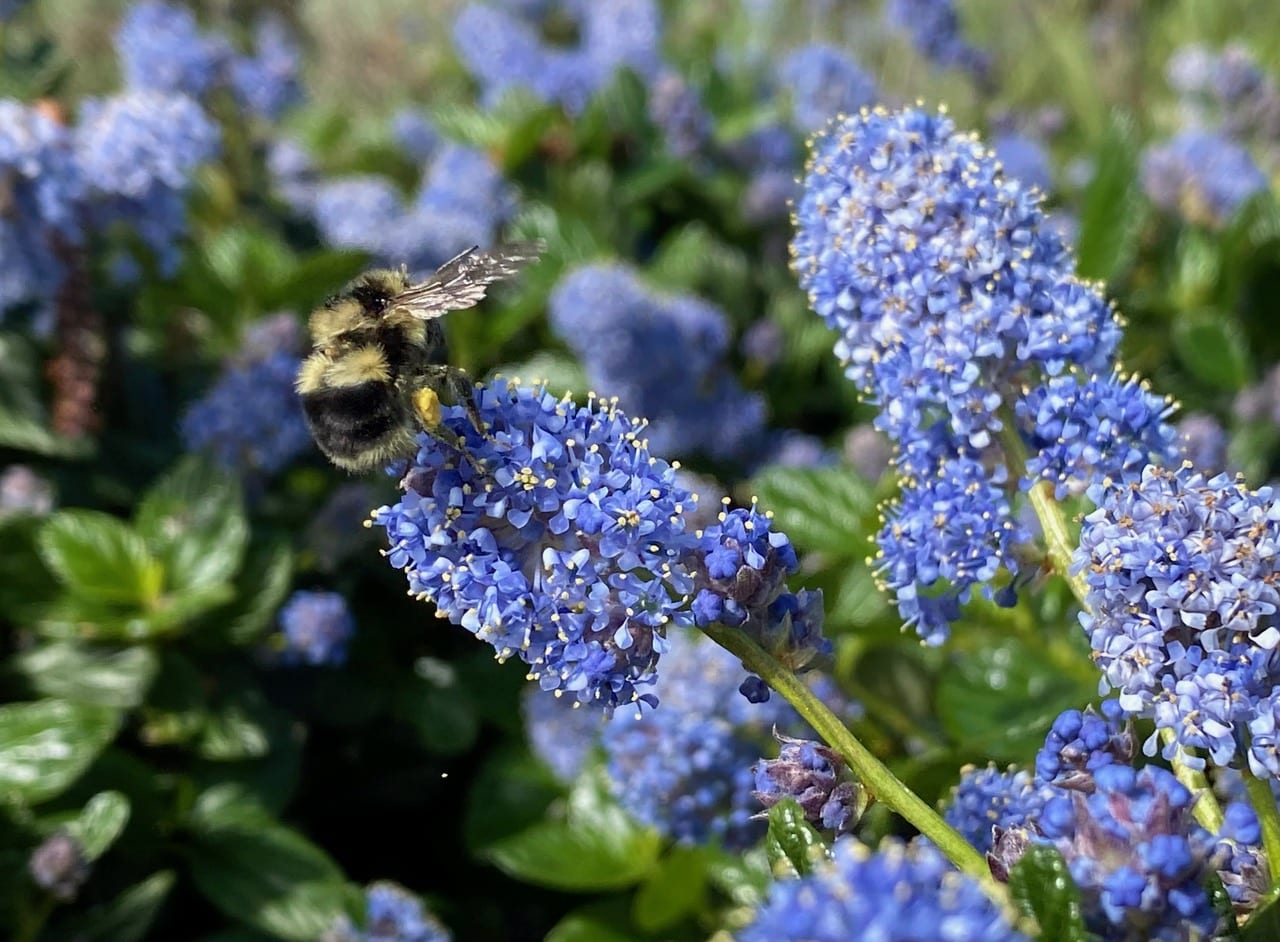
Long live the queen!
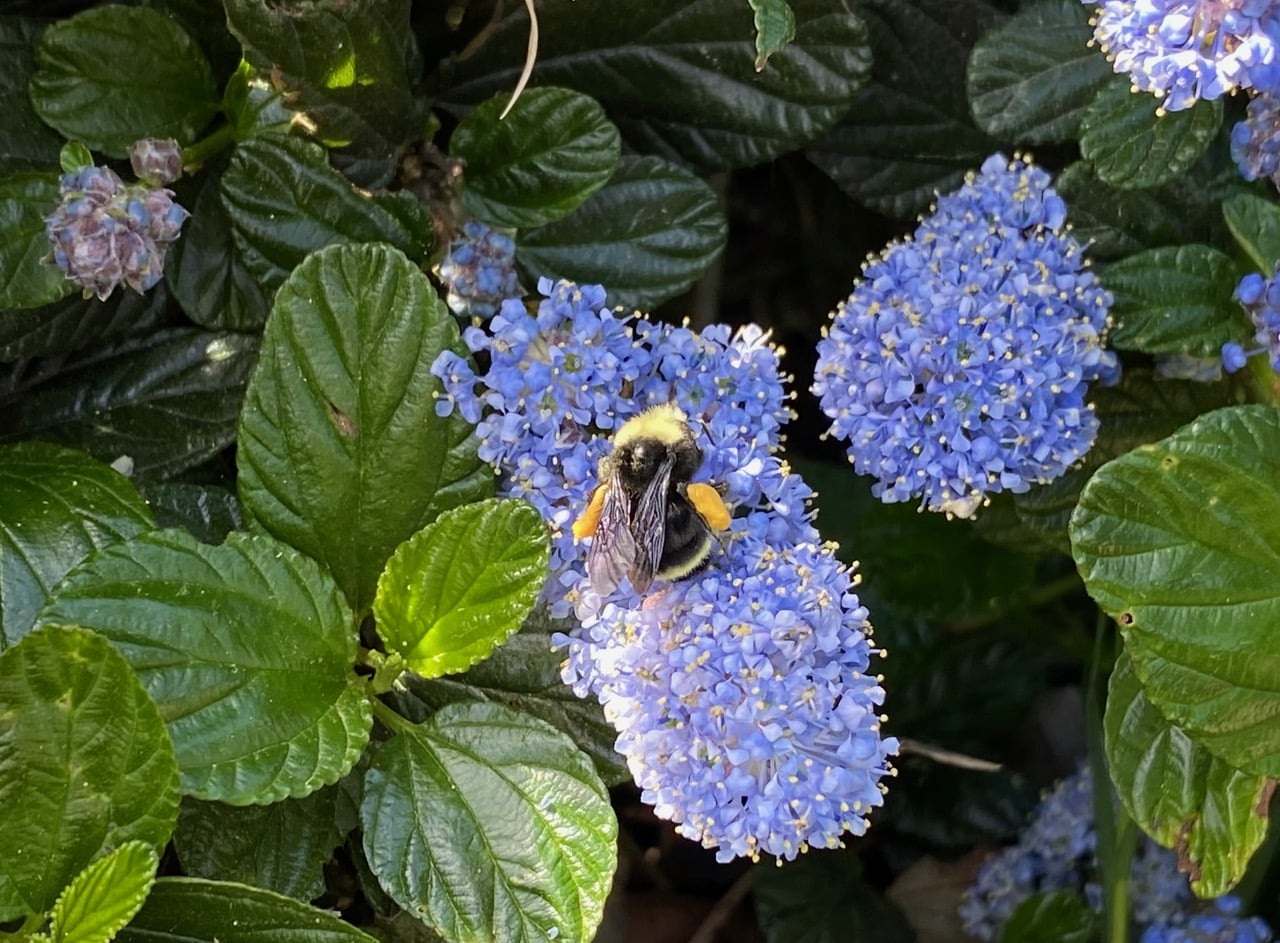
A Yellow-faced Bumble Bee, subgenus Pyrobombus (genus Bombus, family Apidae) is foraging on a cluster of Ceanothus flowers.
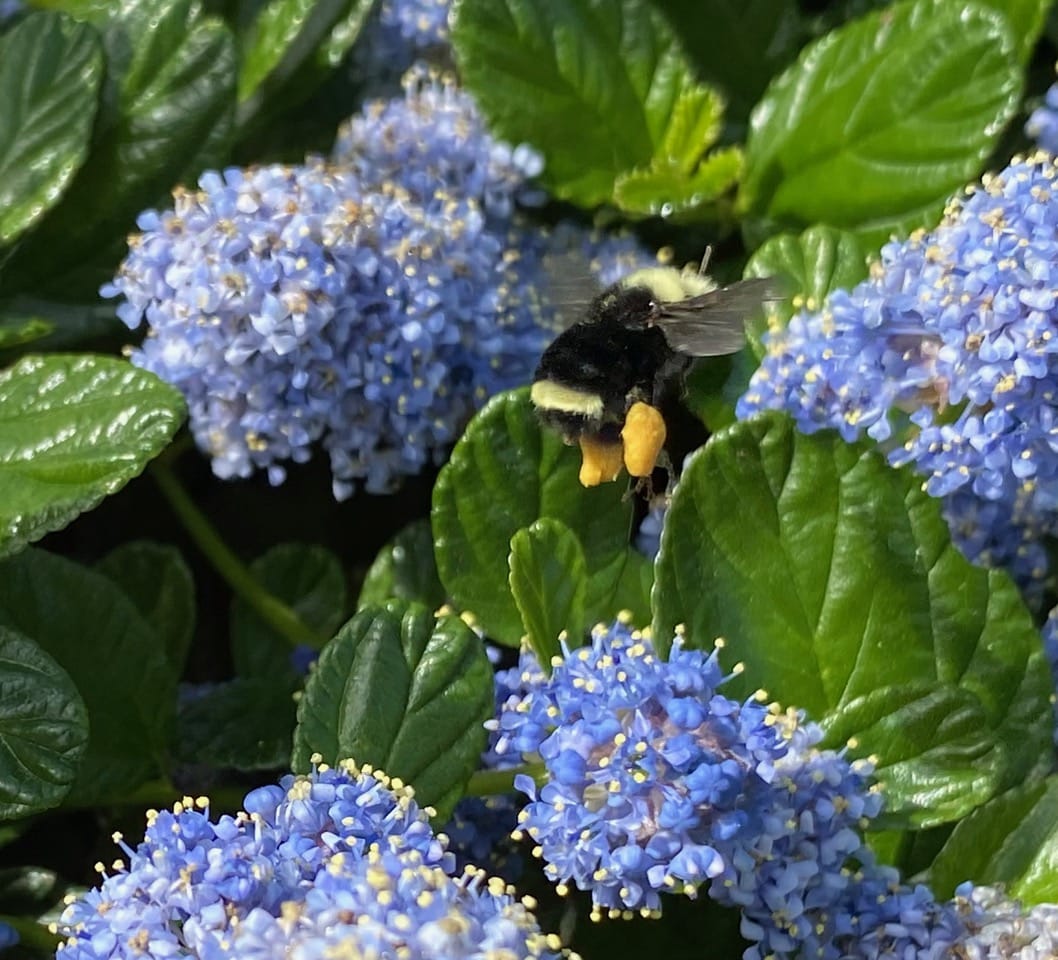
Whoa, check out that pollen load!
The pollen collecting apparatus in Apidae bees, which include honey bees and bumble bees, is commonly called a “pollen basket” or corbicula. This region is located on the tibia of the hind legs and consists of hairs surrounding a concave region. After the bee visits a flower, she begins to groom herself and brushes the pollen down toward her hind legs and packs the pollen into her pollen basket. A little nectar mixed with the pollen keeps it all together like putty, and the stiff hairs surrounding the pollen basket hold it in place. Remarkably bees are able to fly while carrying up to a third of their body weight in pollen.
.jpg)
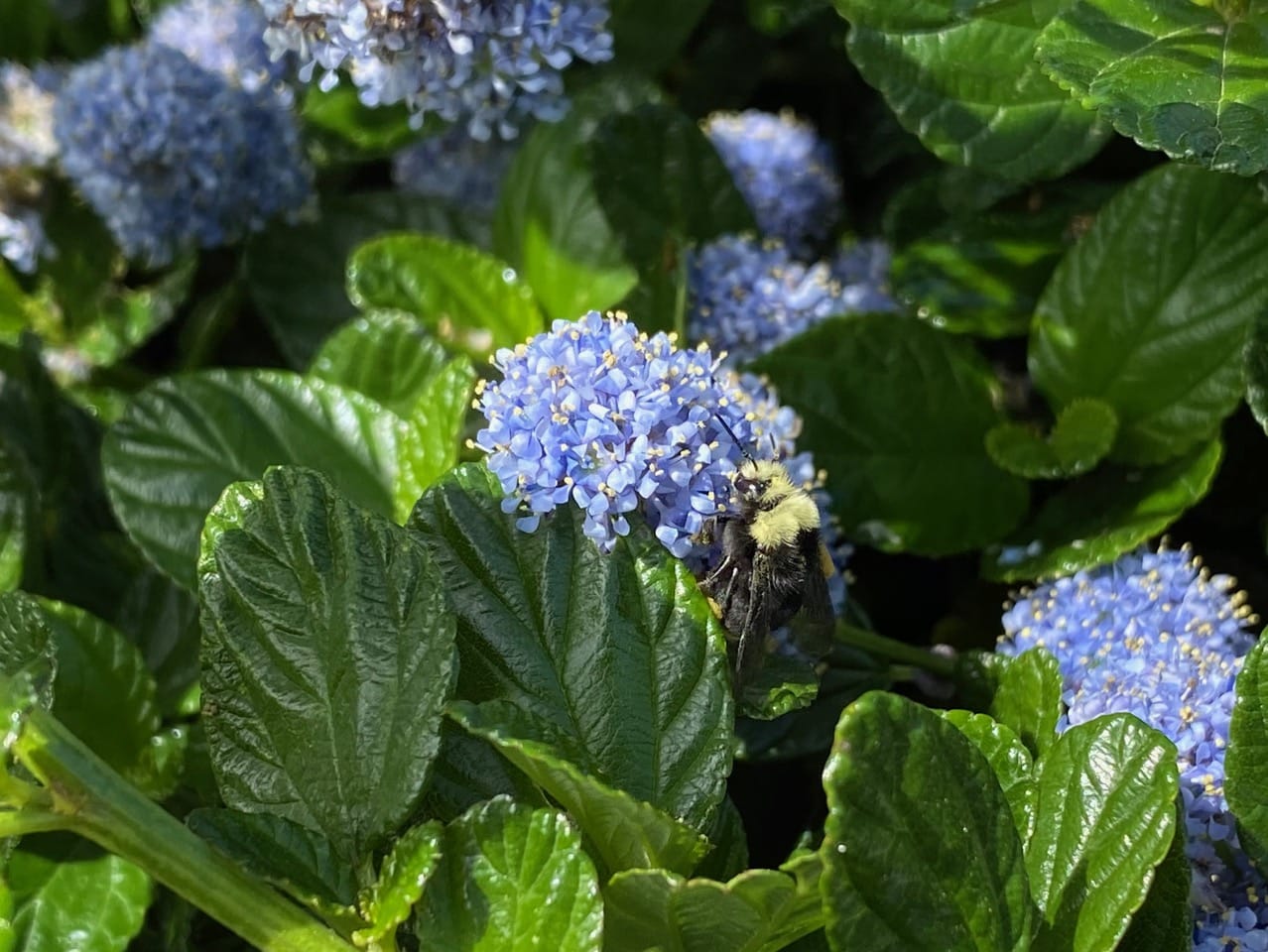
Another Yellow-faced Bumble Bee.