

Pollinator Post 3/26/26 (4)
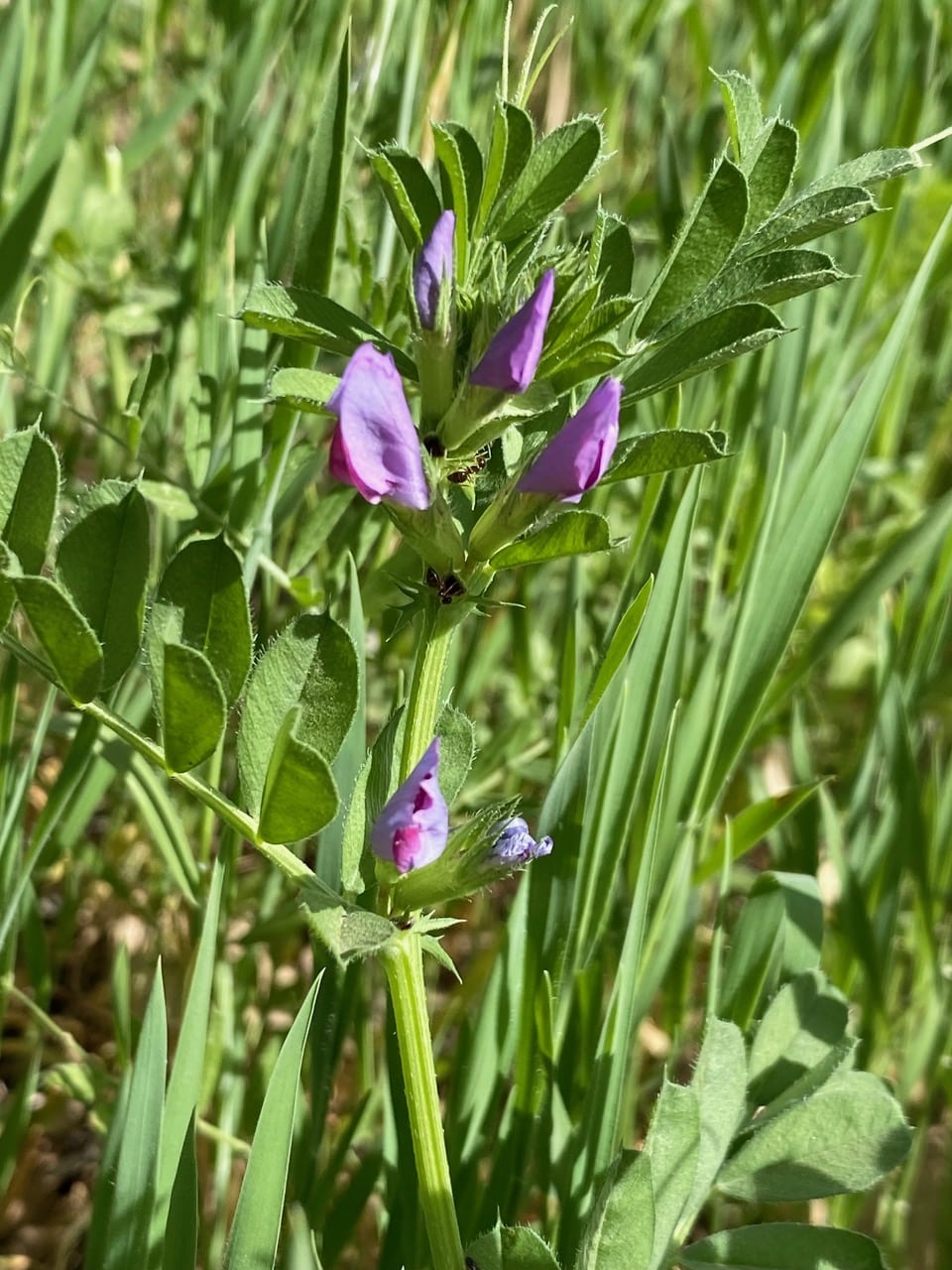
On the grassy slope along West Ridge Trail just south of Skyline Gate, the Common Vetch is starting to bloom. While the flowers are not fully open, there is already a steady traffic of ants on the plant. Ah, it’s fun time with the Common Vetch again!
Common Vetch, Vicia sativa is a nitrogen-fixing leguminous plant in the pea family Fabaceae. The origin of the plant is unclear, believed to be the Fertile Crescent. The sprawling annual is now naturalized throughout the world. It is occasionally planted as a food source for farm animals. Wild animals that feed on the foliage include deer, rabbits, caterpillars and butterflies, as well as some game birds. The plant is also grown as a cover crop in vineyards and orchards to assist in the suppression of spring weed.
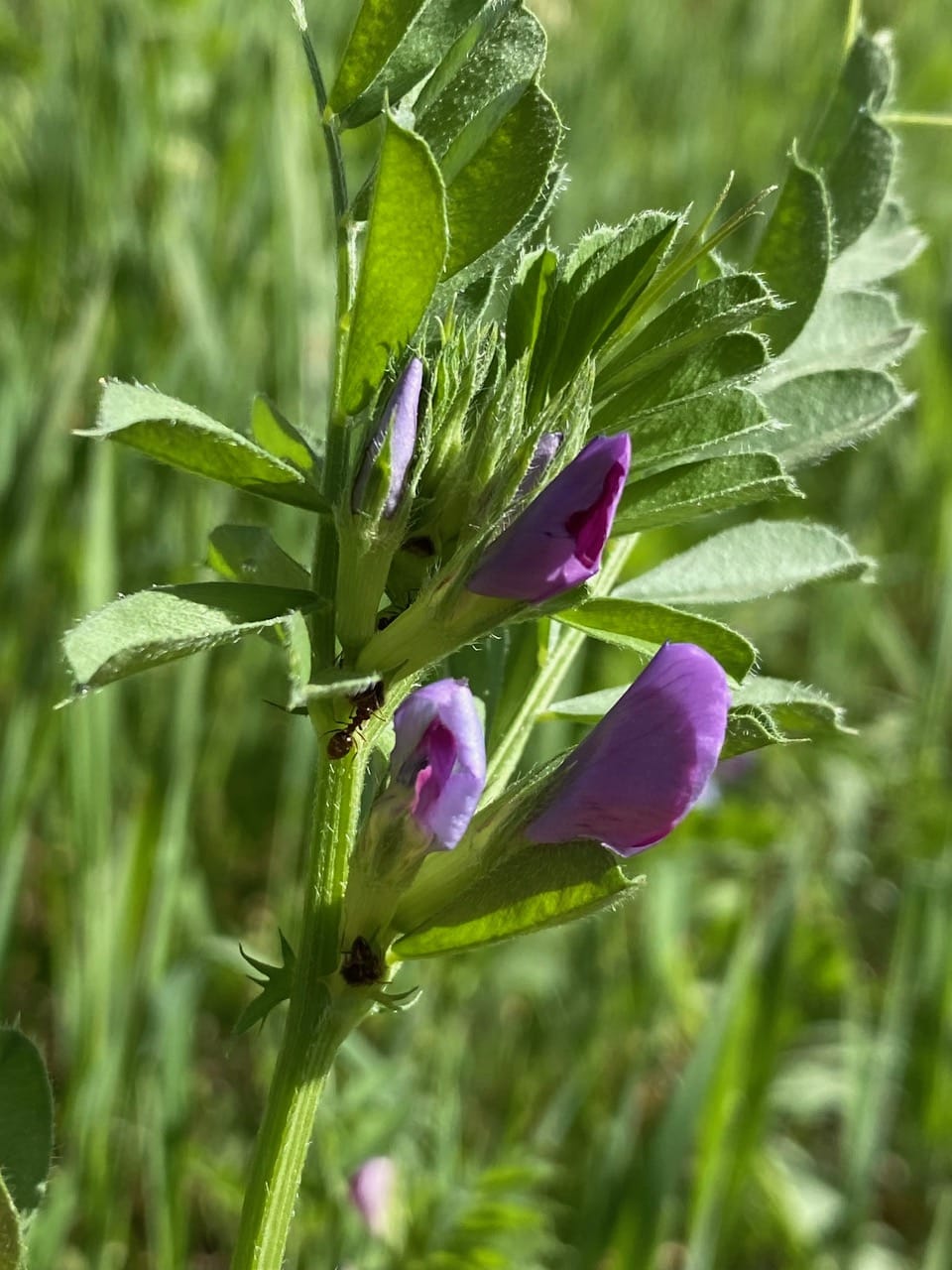
The ant activities seem to be concentrated around the base of the flowers.

An American Winter Ant, Prenolepis imparis (family Formicidae) is feeding on the reddish spot on the underside of a stipule at the base of a flower, while another is milling around waiting for her turn.
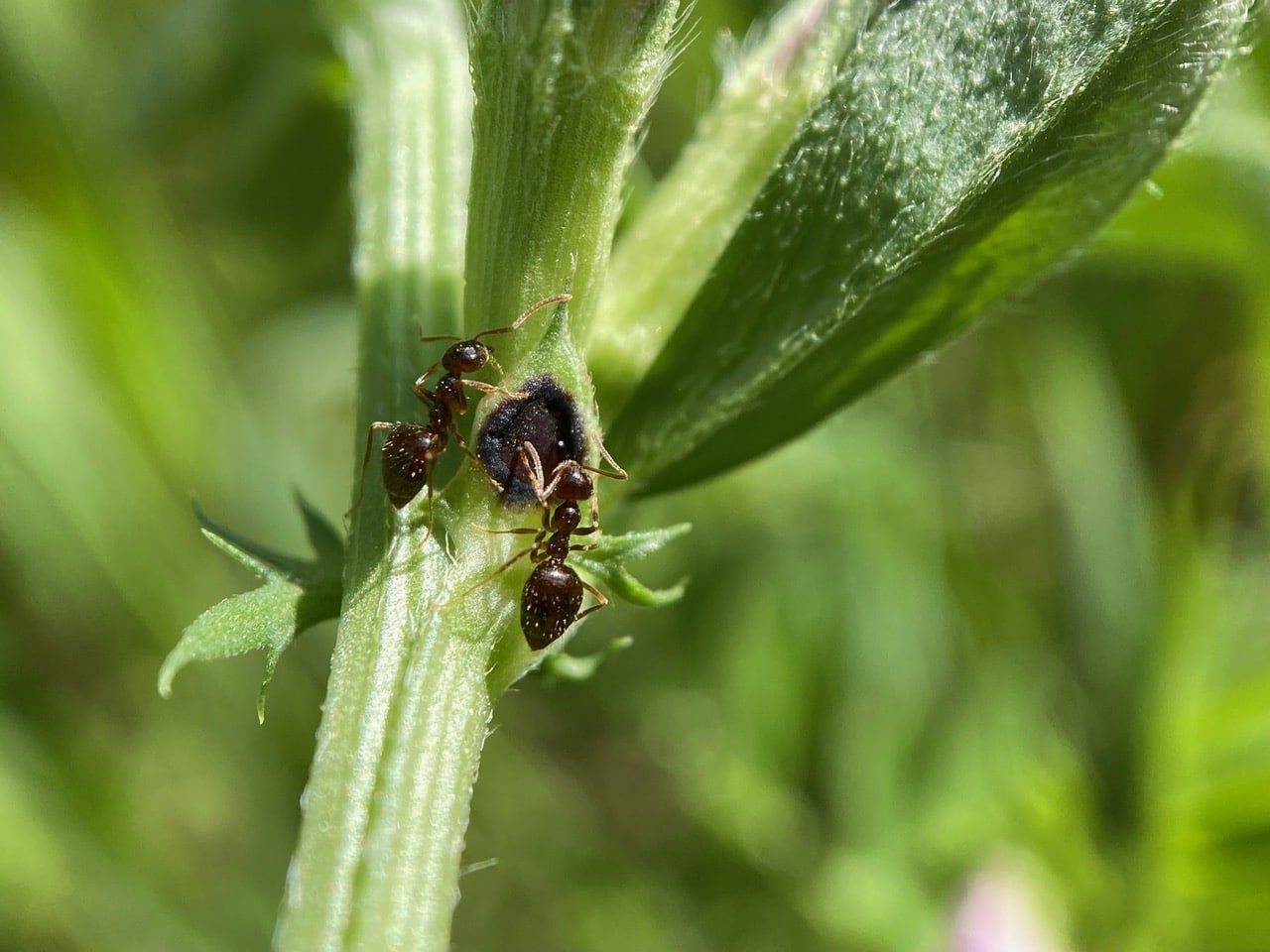
The American Ant, Prenolepis imparis is a widespread North American ant. A dominant woodland species, it is most active during cool weather, when most other ant species are less likely to forage. This species is one of a few native ants capable of tolerating competition with the invasive Argentine Ant, Linepithema humile. They are also aggressive toward other ants and produce abdominal secretions that are lethal to Argentine Ants. Prenolepis imparis is a generalist omnivore. Foragers are known for tending to aphids or scale insects from which they consume excreted honeydew, aggregating on rotting fruit, and exploiting protein-rich sources such as dead worms. The colony enters estivation (a hibernation-like state) and becomes inactive above ground for the warmer months, during which time eggs are laid and brood are reared. Reproductives overwinter and emerge on the first warm day of spring for their nuptial flight.

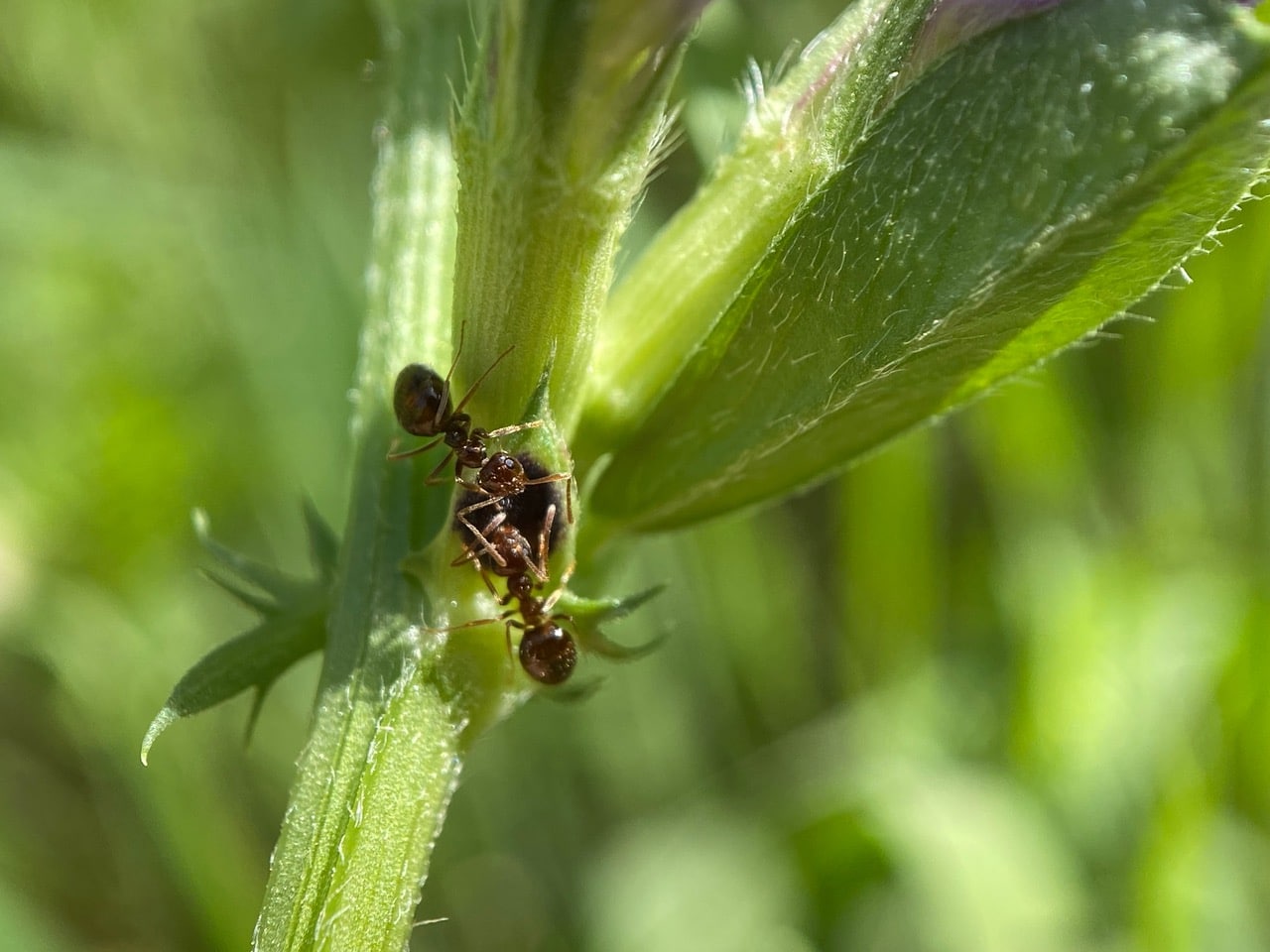
Now both ants are sharing the sweet treat.

I have to wait quite a while for the enthusiastic ants to leave before I could get a clear view of the extra-floral nectary.
There is a shallow depression on the underside of the stipule that is a dark red color. It is an extra-floral nectary that produces nectar to attract ants. Why does Common Vetch produce these extrafloral nectaries? Apparently the nectar is a kind of payment for the services of the ants that protect the plant from herbivorous insects.
I have recorded several kinds of ants partaking of this extrafloral nectar on the Common Vetch. Besides the American Winter Ants, there are the Wood Ants, Formica sp., and the Argentine Ants, Linepithema humile.
Common Vetch is a widespread, weedy plant found almost everywhere. How lucky that we get to observe this interesting relationship between the plant and its ant body guards every time we’re out in the wild, or even in our own garden! In case you wonder if any of our native plants have extrafloral nectaries, here’s an article for you: Extrafloral nectaries — In Defense of Plants Something to look forward to on your next trip to the desert!