

Pollinator Post 3/26/24 (1)
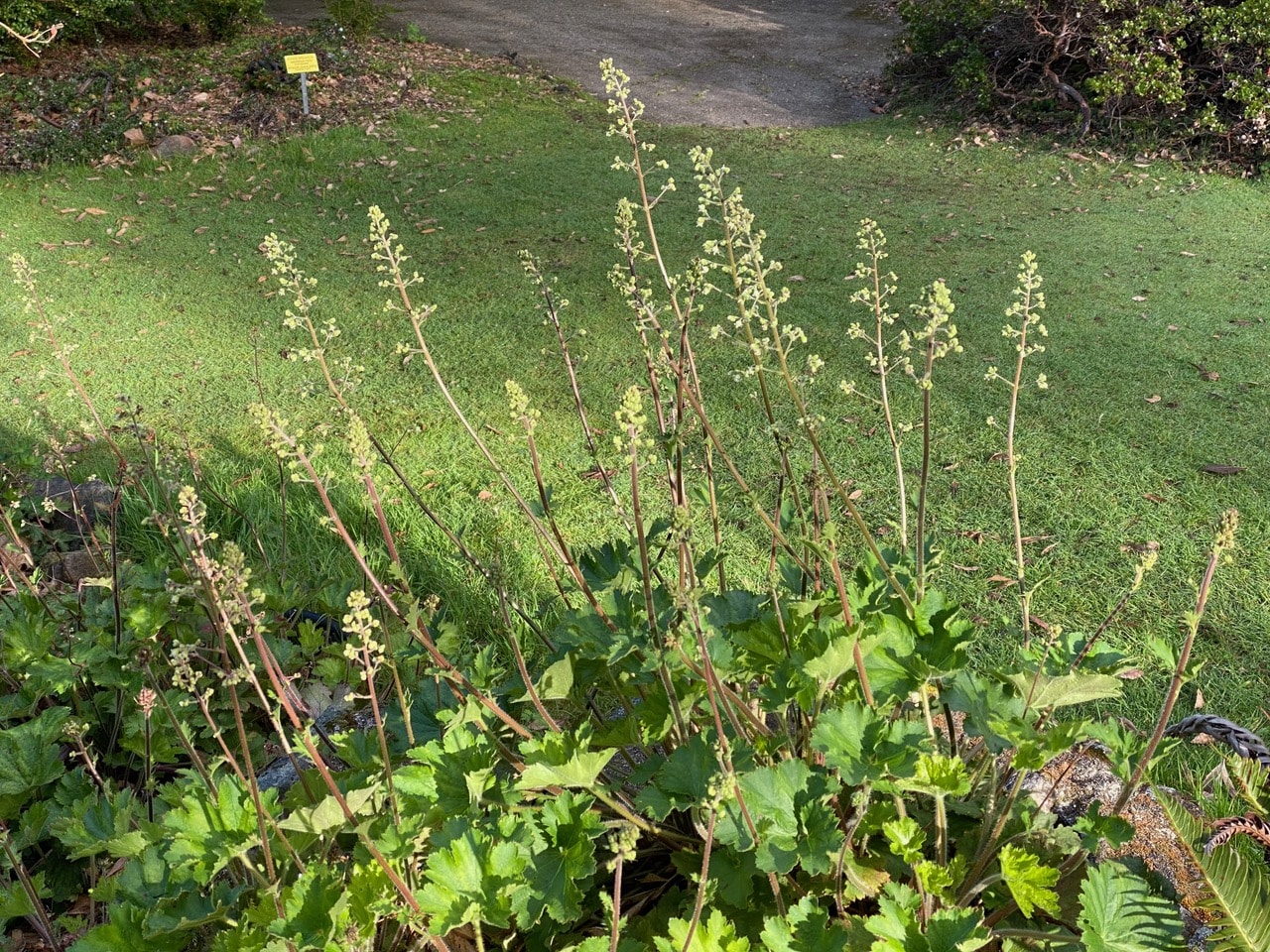
I arrive early at the Regional Parks Botanic Gardens hoping to find some hawk moths still out foraging. No such luck. But there are many botanical treasures to savor here.
The various Alumroots, Heuchera sp. (family Saxifragaceae) are blooming now. In past years, I have seen foraging Bumble Bees hang onto these tiny flowers, but have never really examined the blossoms to see what the bees are attracted to.
Heuchera, commonly called coral bells or alumroot, is a genus consisting of about 55 species of evergreen or semi-evergreen herbaceous perennials, all native to North America. The plants belong to the saxifrage family (Saxifragaceae), generally found in woodland or mountainous environments growing primarily in crevices or well-drained steep slopes. The name coral bells refers to the plant’s bell-shaped flowers. The other common name, Alumroot, referencences the medicinal use of some of the species as an astringent to stop bleeding. In horticulture, Heuchera is popularly used as a ground cover primarily for its foliage, and tidy, clumping habit. Many species also have attractive flowers favored by butterflies and bees. Individual tiny flowers are bell-shaped and appear in panicle inflorescence, which means a cluster or grouping of flowers along the stem.
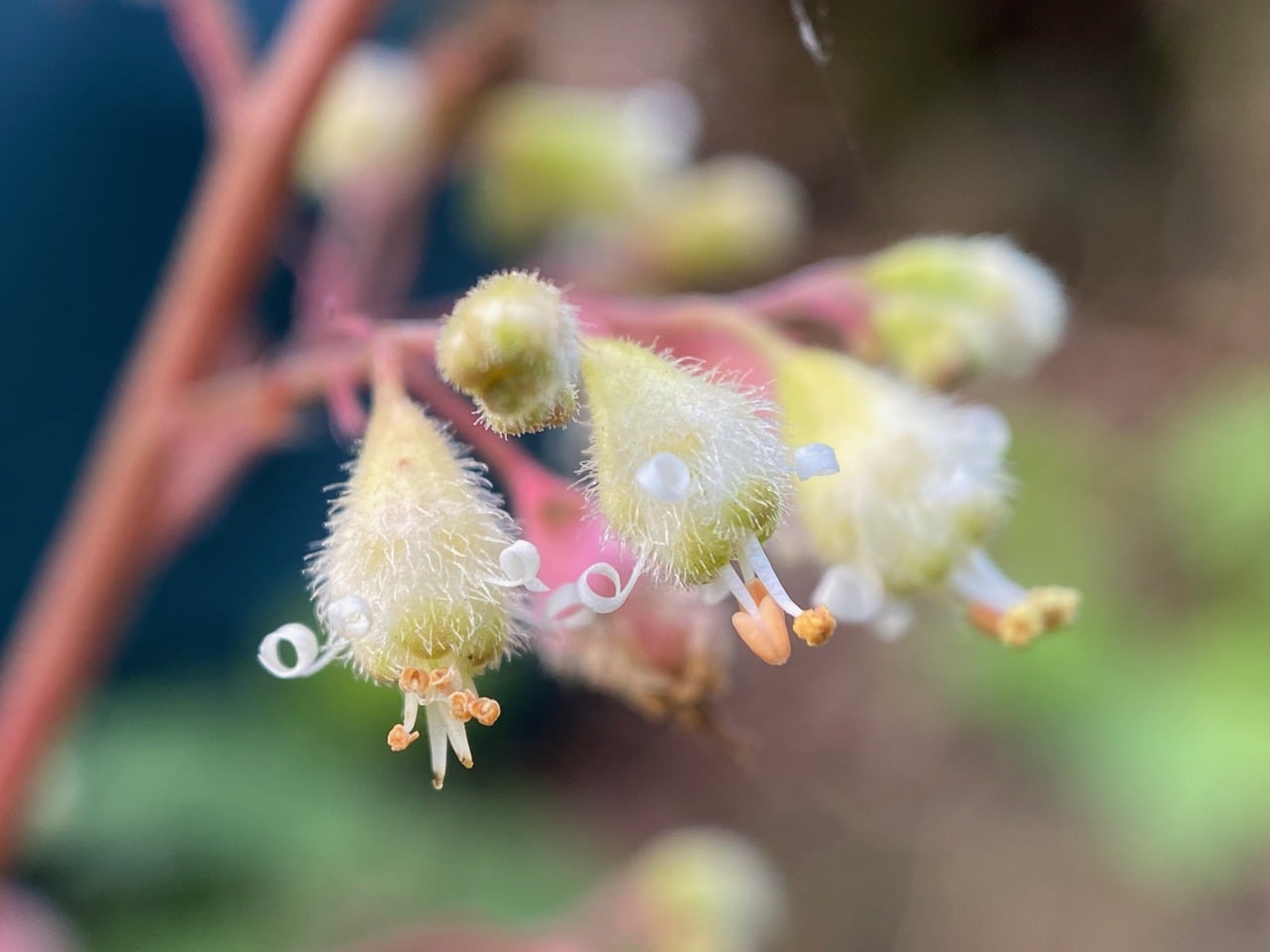
Zooming in with the macro lens, I have to laugh – the charming flowers look like something conjured up by Dr. Seuss! The hairy flowers are comically teardrop-shaped, with five minute white petals appearing as curly straps between the fused calyx. Protruding from the flower are five stamens with large anthers, and a two-pronged style. Any insect that probes the flower for nectar would come away with lots of pollen as well.
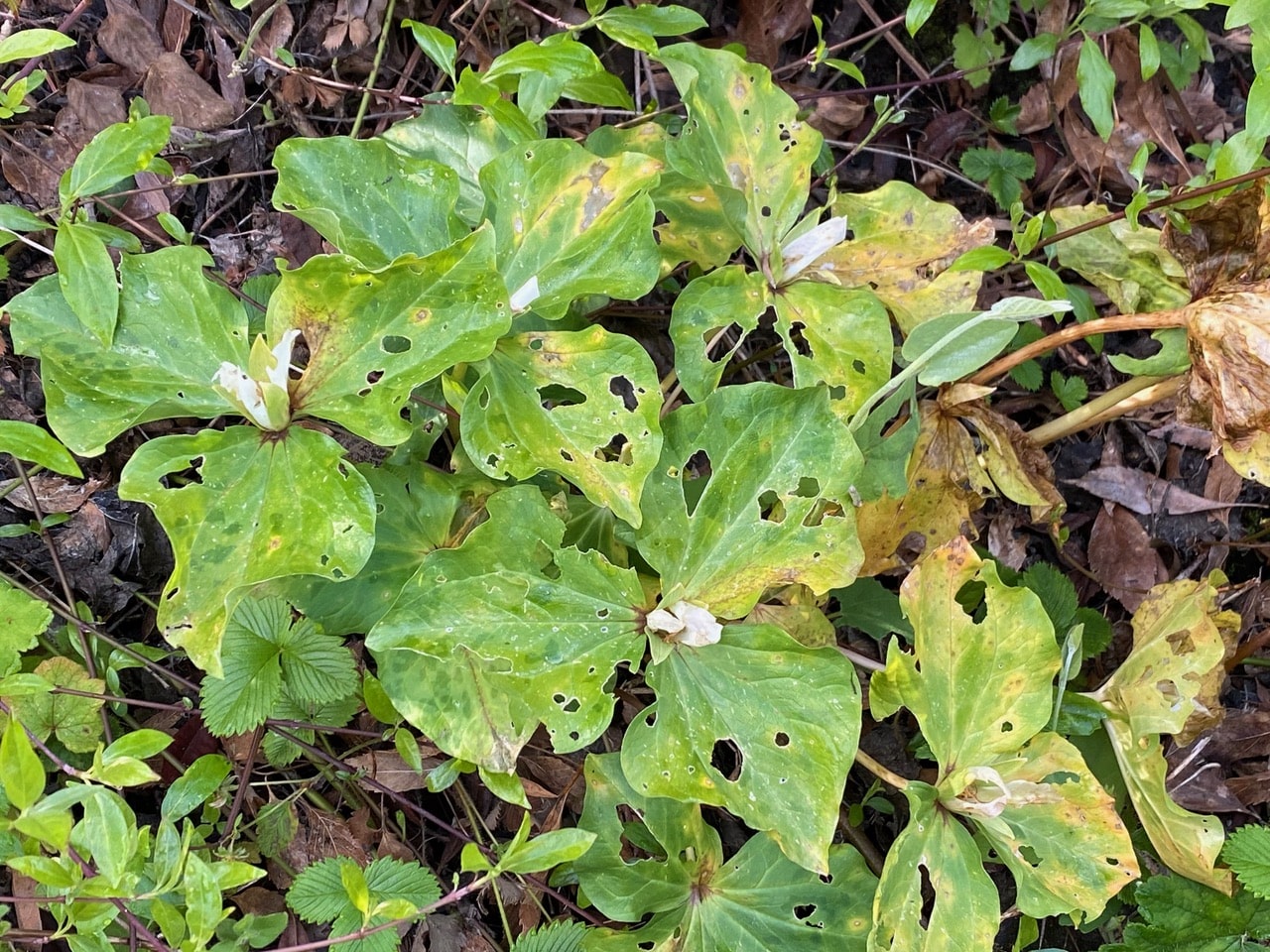
Gee, what happened to these Giant Trilliums, Trillium chloropetalum? The leaves and flowers are shot through with irregular holes.
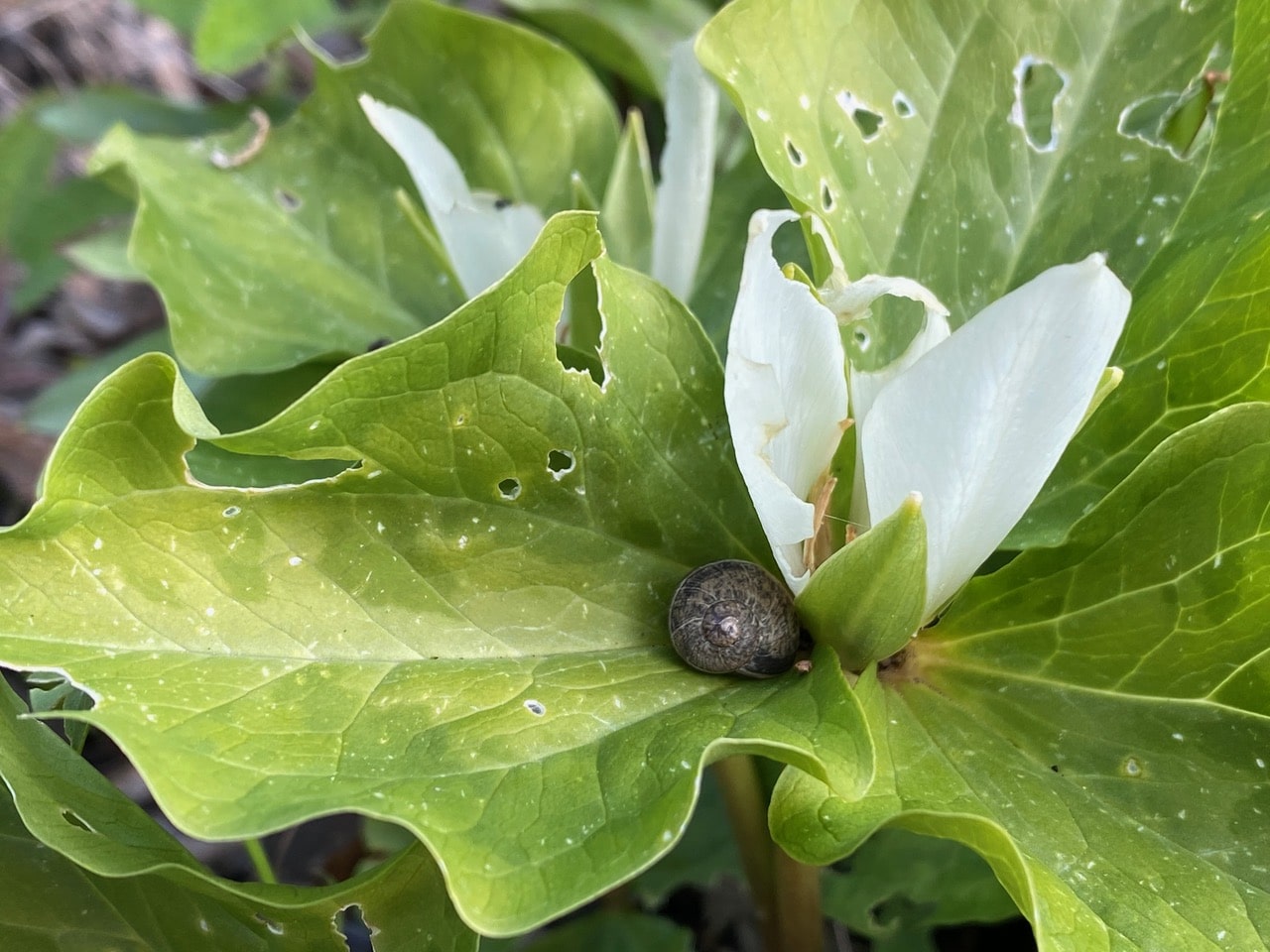
In the next patch of the same Trillium, I found the probable culprit – a snail!

I check on the patch of California Pipevine, Aristolochia californica. While the older vines bearing flowers are senescing on the support shrub, a profusion of young growths have emerged from the ground. I scan the tender leaves for the orange eggs of the Pipevine Swallowtail butterfly, but can’t find any. Instead, there’s this caterpillar that appears to be a Variable Checkerspot. Wow, is this caterpillar capable of tolerating the defensive chemicals of the plant?

The Sand-loving Wallflowers, Erysimum ammophilum are reaching the end of their bloom and looking somewhat ragged.
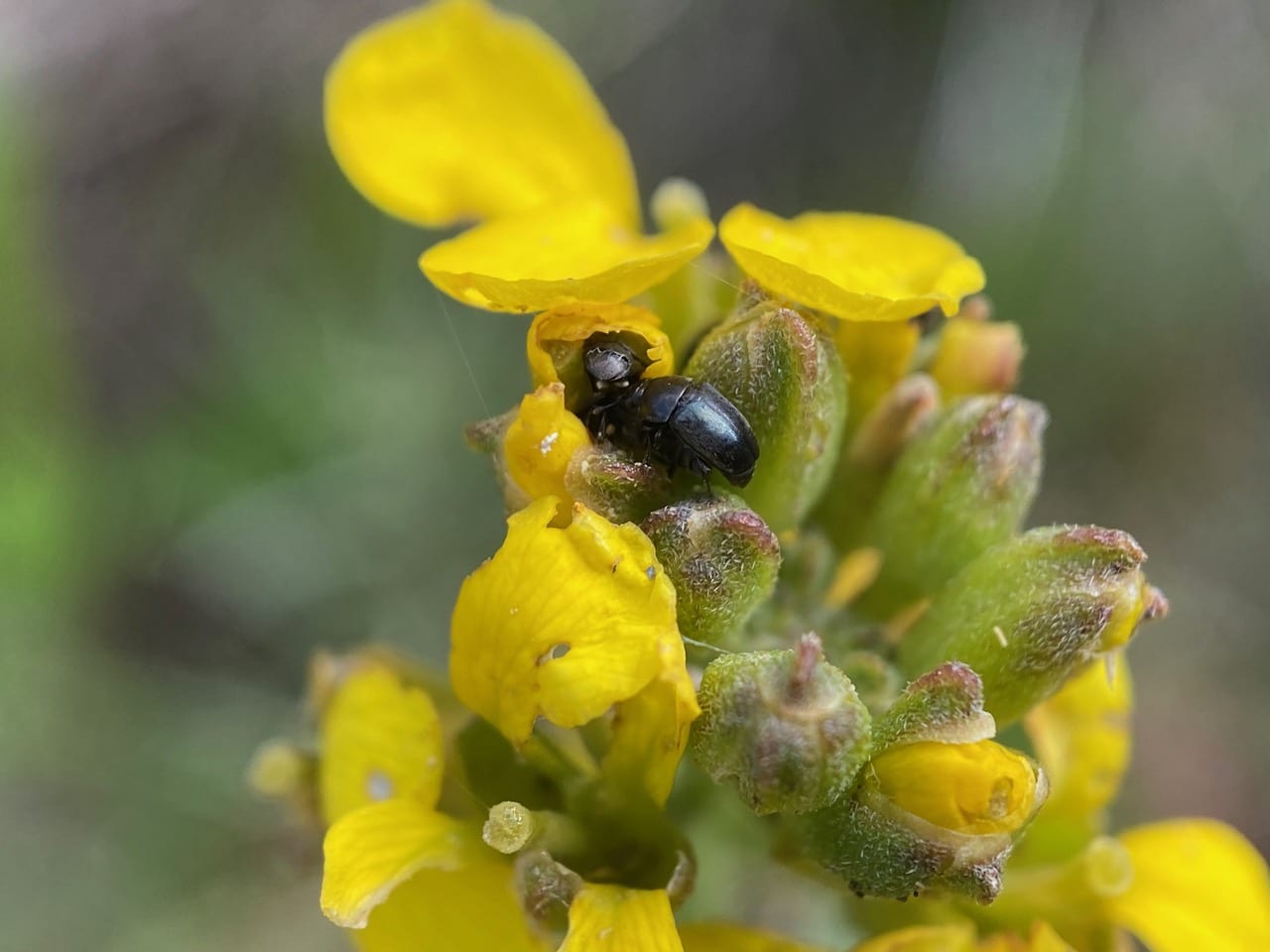
Worse, the flowers are being ravaged by tiny black beetles.

Ah, this one just crawled into full view – it is a Common Pollen Beetle, Brassicogethes aeneus (family Nitidulidae).
The species is found in Europe, Northern Asia and North America. Adults are 2-3 mm long, black with a hint of metallic green, and have knobbed antennae. It is a known pest of oilseed rape. It is unclear whether the beetles contribute to the pollination of the crop. The female beetle lays its eggs in the flower buds of the host-plant and the larvae develop within the flowers. Both adults and larvae feed on the pollen and nectar in the flowers.

This amorous pair of the Common Pollen Beetle is mating.
Beetles are among the first insects to visit flowers and they remain essential pollinators today. They are especially important pollinators of ancient species such as magnolias and spicebush. The beetles eat their way through petals and other floral parts. They often mate and defecate within flowers, generally making a mess. This behavior has earned them the nickname of “mess and soil” pollinators.

A small, chunky fly lands on the flower buds of the Sand-loving Wallflower. A audacious fly, it is not easily spooked.
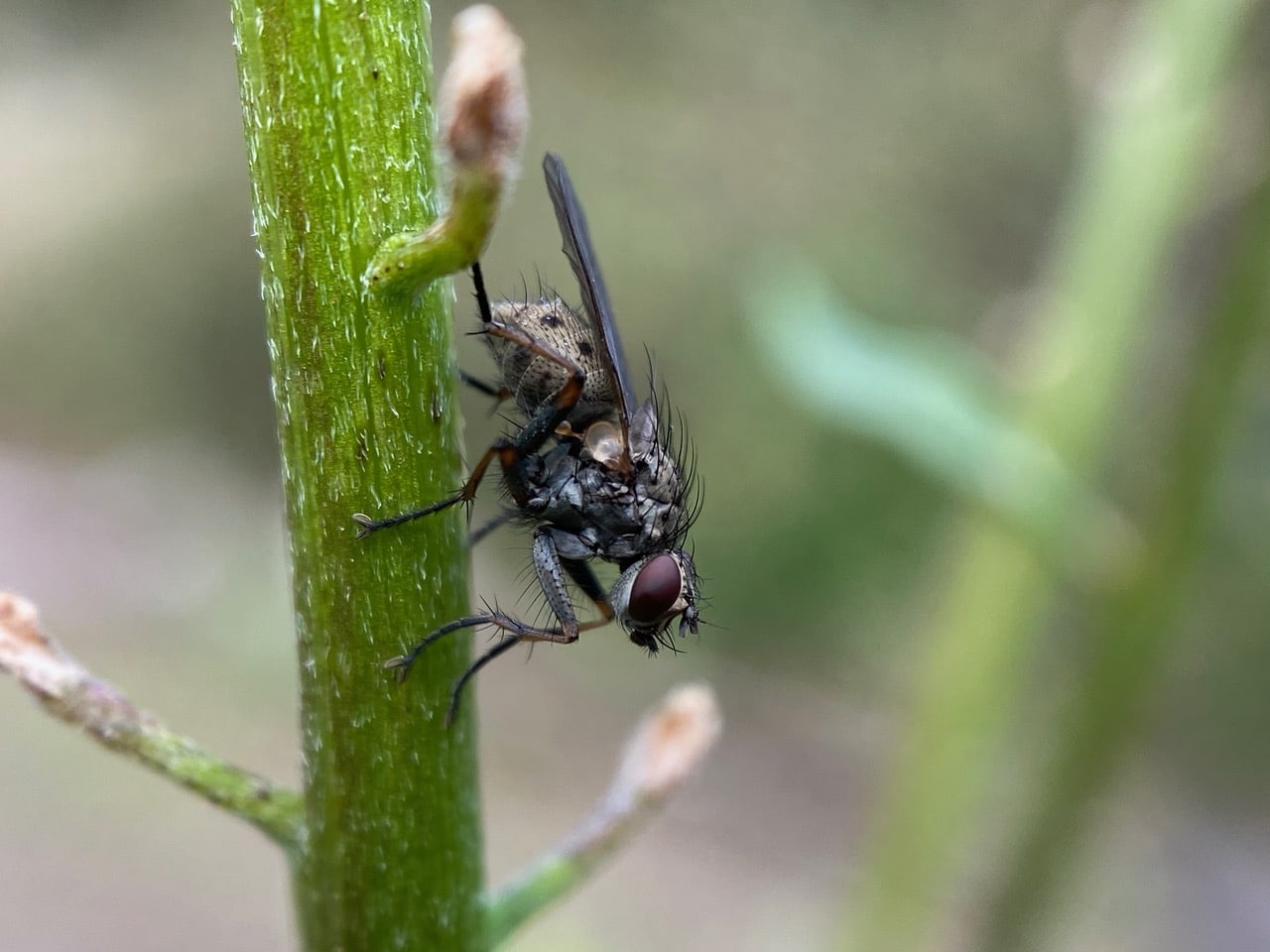
The insect next flies to perch on a stem of the Sand-loving Wallflower. It is a Tiger Fly. Is it hunting the beetles?
The Tiger Fly, Coenosia tigrina (family Muscidae) is also known as Hunter Fly or Killer Fly. Native to Europe, the fly was introduced in the early 1800s. Tiger Flies only attack flying prey. Potential prey are caught only in mid-air with its front legs. While holding the prey in its front legs, the Tiger Fly punctures the insect with specialized proboscis, and eats the insides of the prey, leaving the carcass behind. When food is scarce, the flies may turn on each other. Adult females lay eggs in the soil where the larvae feed on earthworms.
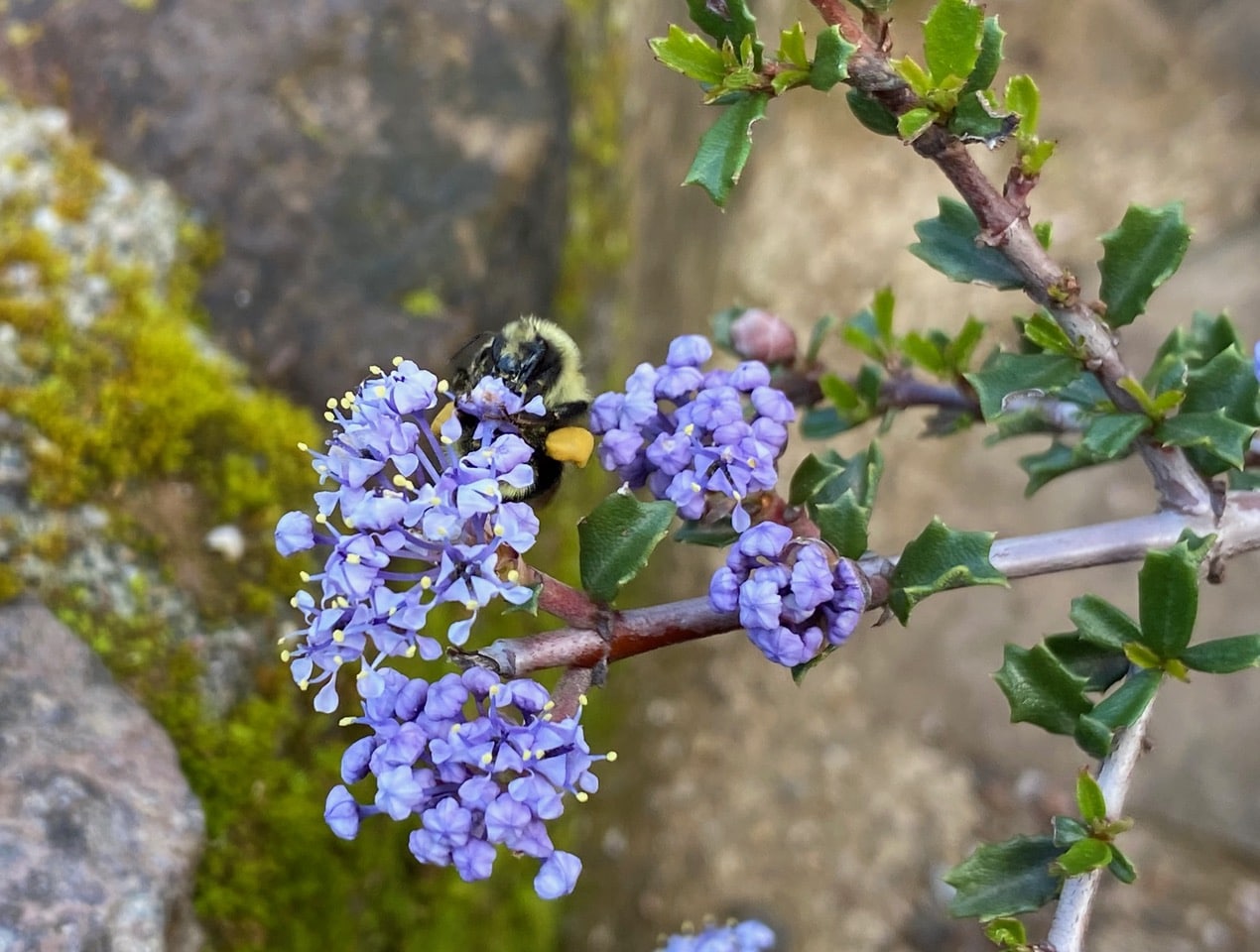
While many Ceanothus in the garden have finished blooming, some species are just coming into their own. Loaded with bulging pollen baskets, a Black-tailed Bumble Bee, Bombus melanopygus (family Apidae) is foraging on a cluster of fresh Ceanothus flowers.
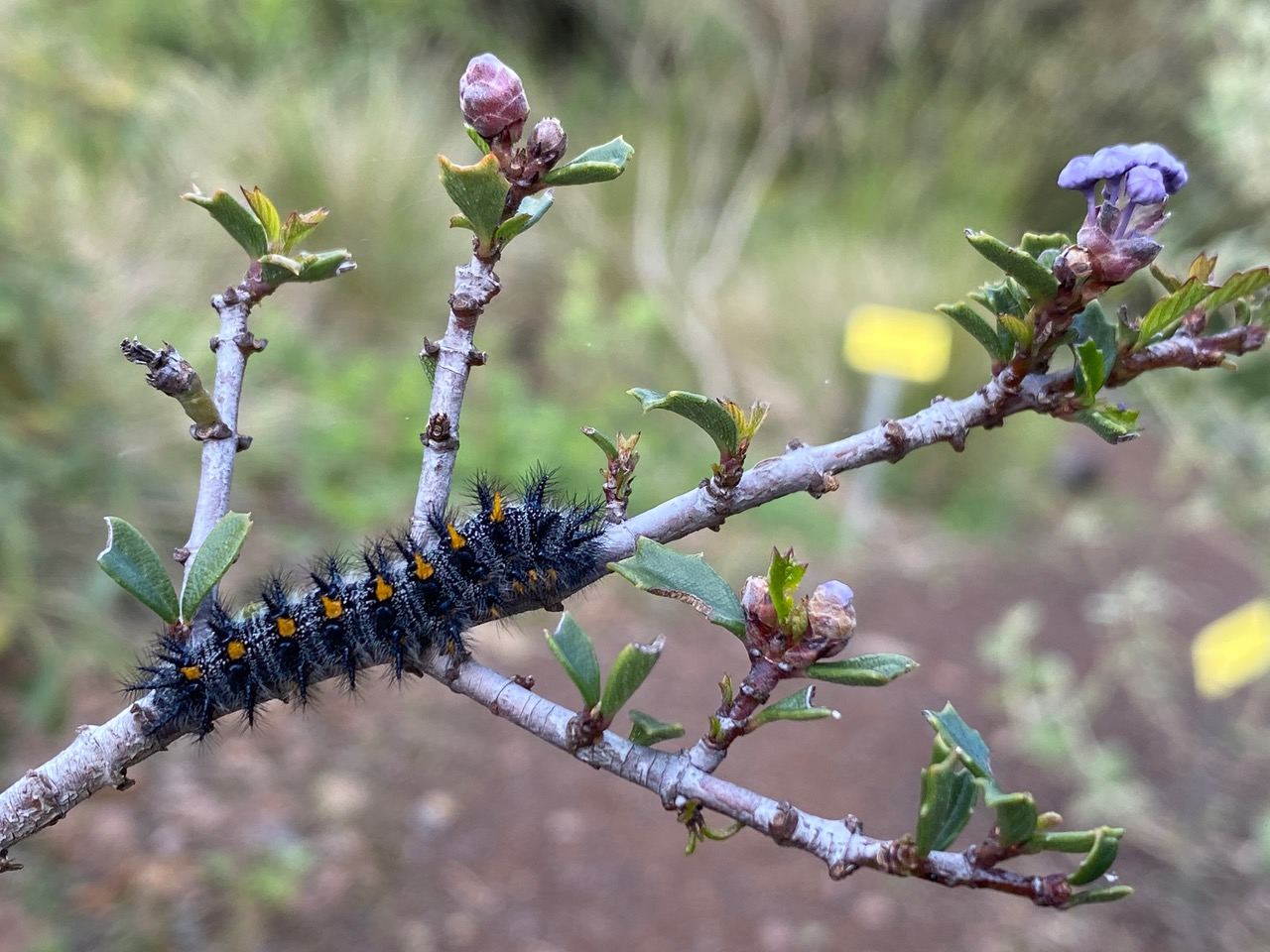
What a surprise to see a Variable Checkerspot caterpillar on a Ceanothus! Maybe Calscape should add this plant to their long list of the caterpillar’s food plants. This is a caterpillar with wide ranging appetite! Variable Checkerspot, Euphydryas chalcedona

Hooker’s Fairybells, Prosartes hookeri has reached peak bloom in the garden. Often encountering this plant on my hikes through shady woodlands, I have wondered who pollinates these shy flowers that hide under the terminal leaves. Few insects fly in these dark, dank places to start with.
The nodding flower is bell-shaped, with 6 white to green tepals, and 6 dangling stamens with large anthers.
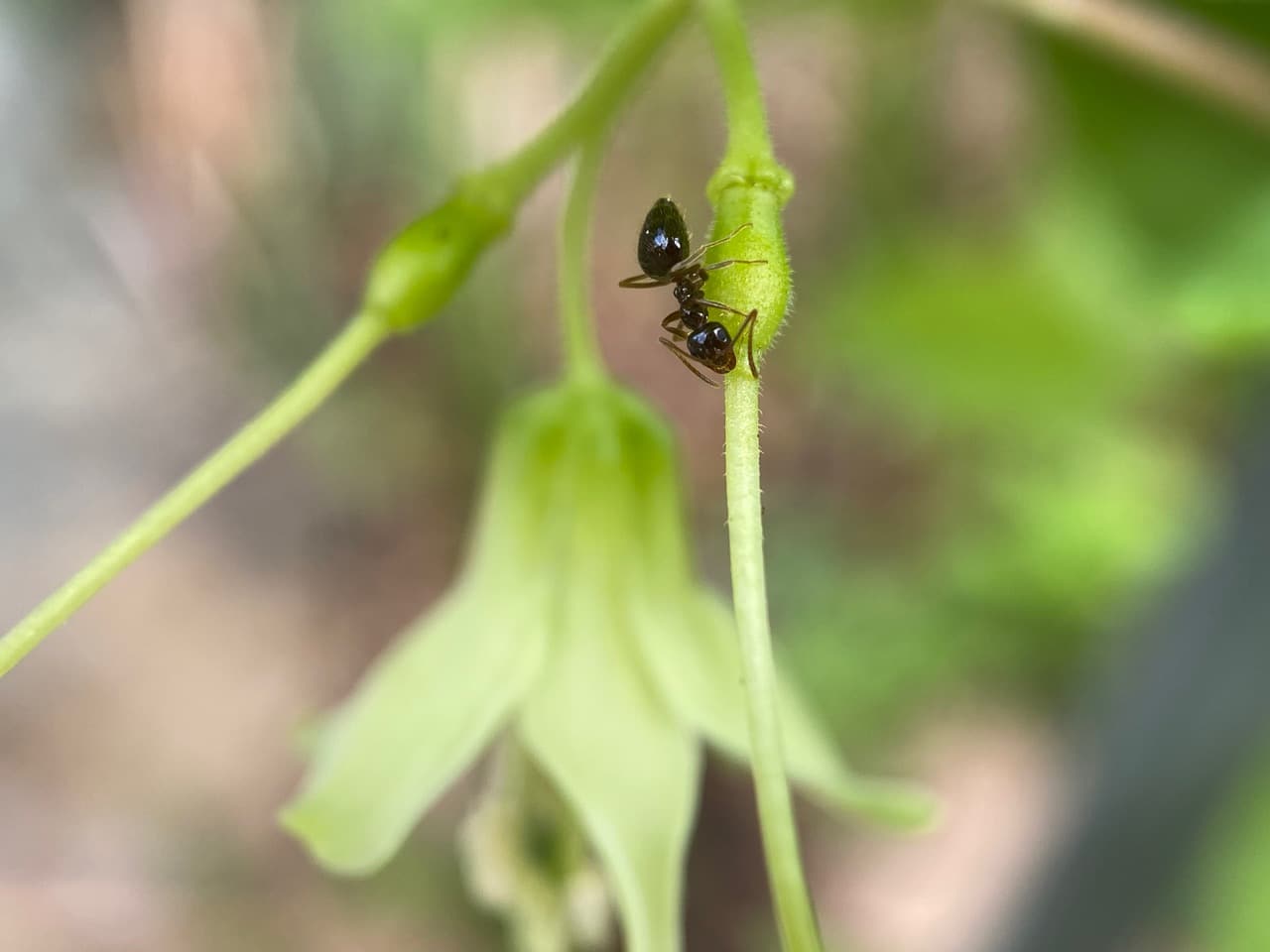
Hey, an American Winter Ant, Prenolepis imparis (family Formicidae) is checking out the exposed ovary of one of the fairybells flowers that have shed its tepals. If the flower has been pollinated, the ovary will develop into an orange to bright red berry just a centimeter wide.
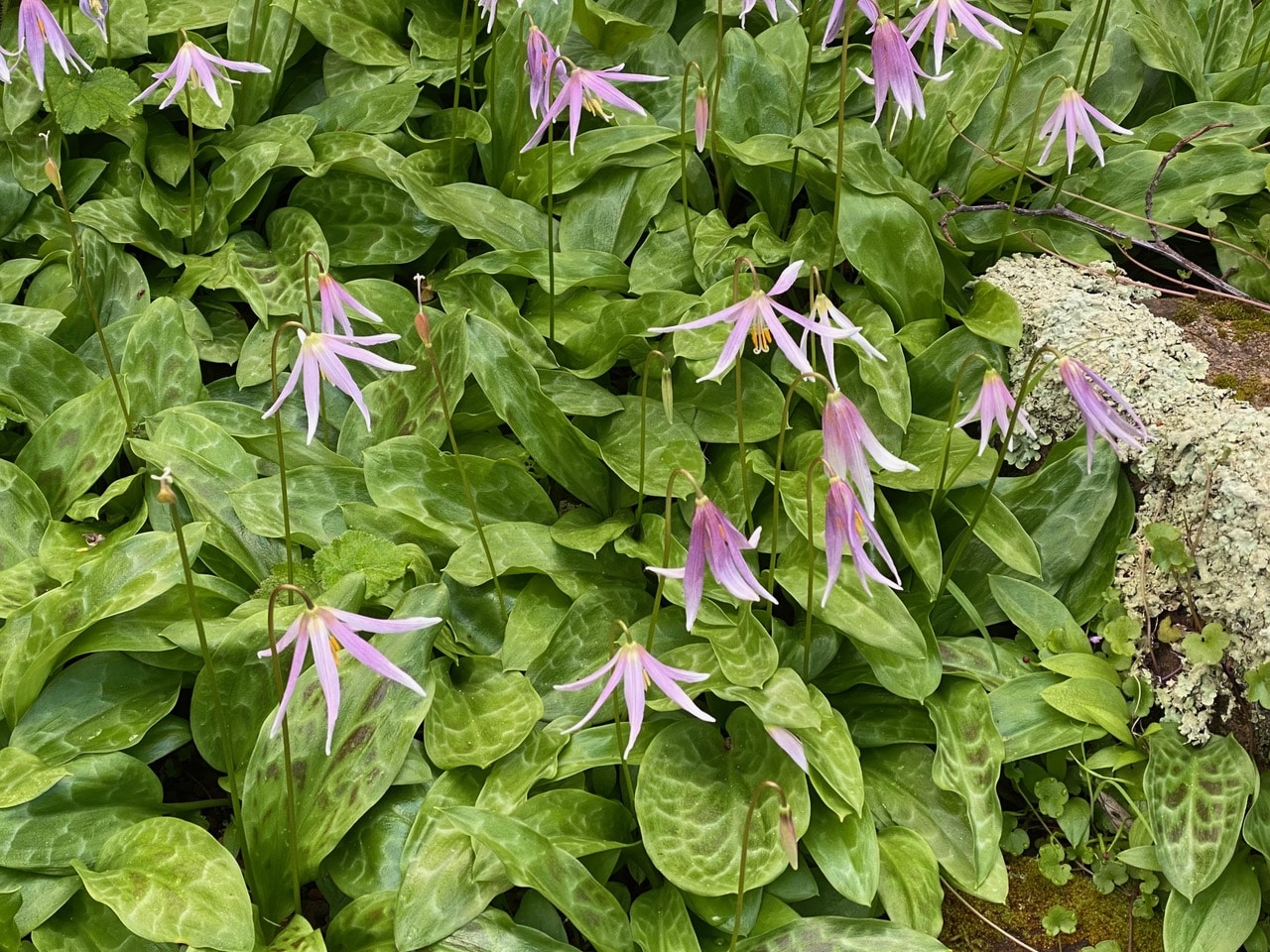
I have been admiring their mottled leaves for a while, and today the Coast Fawn-Lily, Erythronium revolutum (family Liliaceae) is in full bloom! In fact, many of the flowers are already past their prime. These flowers are fleeting beauties. Borne atop broad foliage spotted like a fawn, the nodding blooms of fawn lily appear in early spring and then vanish, going dormant for the rest of the year. About 20 species of Erythronium are found worldwide and most occur in the western U.S.

Here’s a plant growing by itself, still pristine..
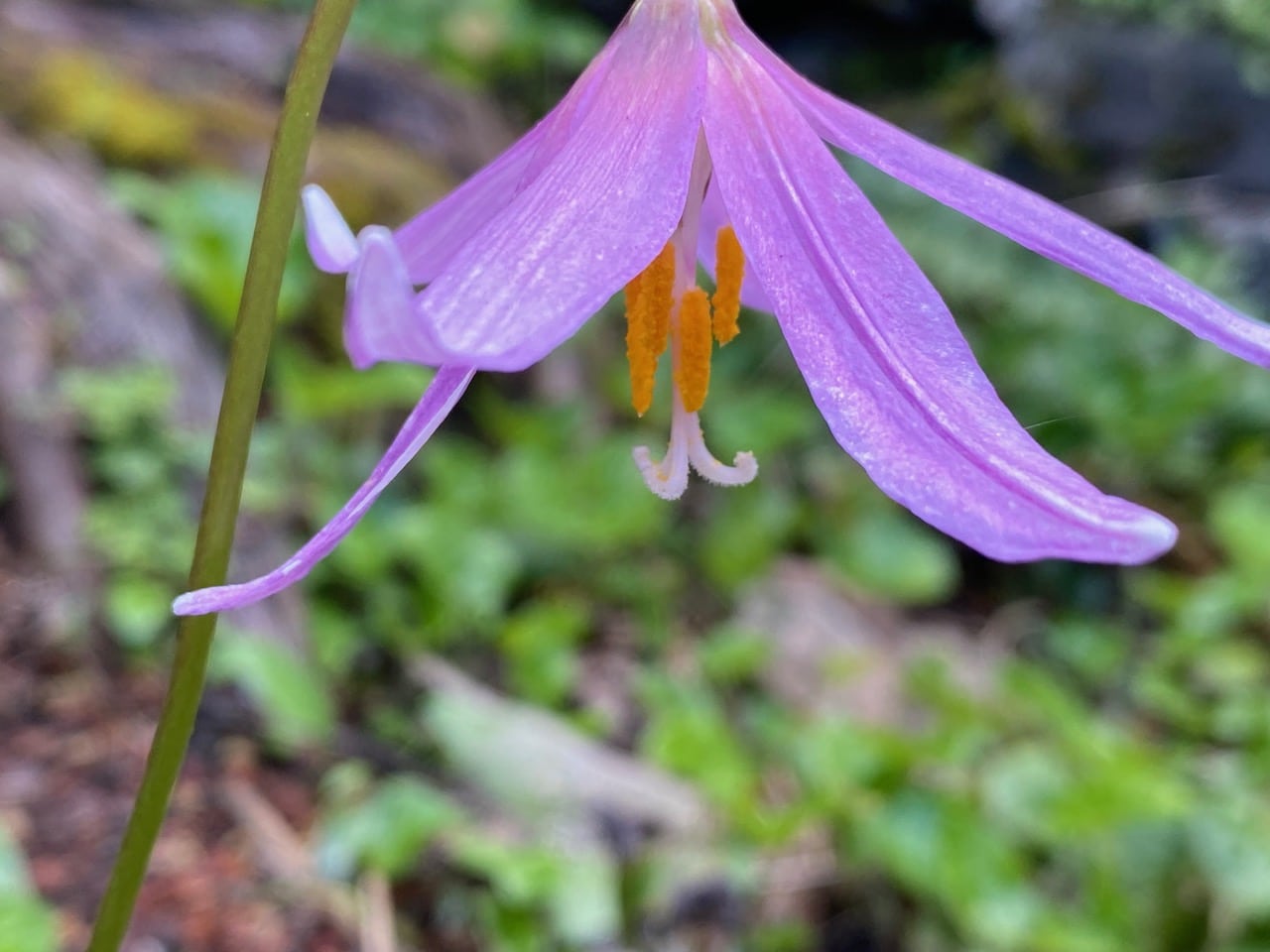
The rose-pink, nodding flower contains 6 tepals (sepals and petals which cannot be properly distinguished) which are narrowly lance-shaped, and bent backwards. There are 6 stamens with flattened filaments. The anthers are large, producing copious amount of pollen. The stigma is deeply divided into 3 slender, recurved lobes.
Although I have not seen any insects visit the flowers, Fawn-lilies are purportedly pollinated by native bumble bees, butterflies, moths and hummingbirds.

In the same bed as the Fawn-lilies, are the Wild Ginger, Asarum caudatum. I am delighted to see some fresh flowers.
The plant Asarum caudatum (family Aristolochiaceae) is native to rich moist forests of western North America. It is an evergreen perennial herb from rhizomes with freely rooting, trailing stems. Its heart-shaped leaves emit a ginger aroma when rubbed. The three-lobed purplish flower sits at the end of a 6-inch leafstalk, often on the ground, hidden by the leaves.
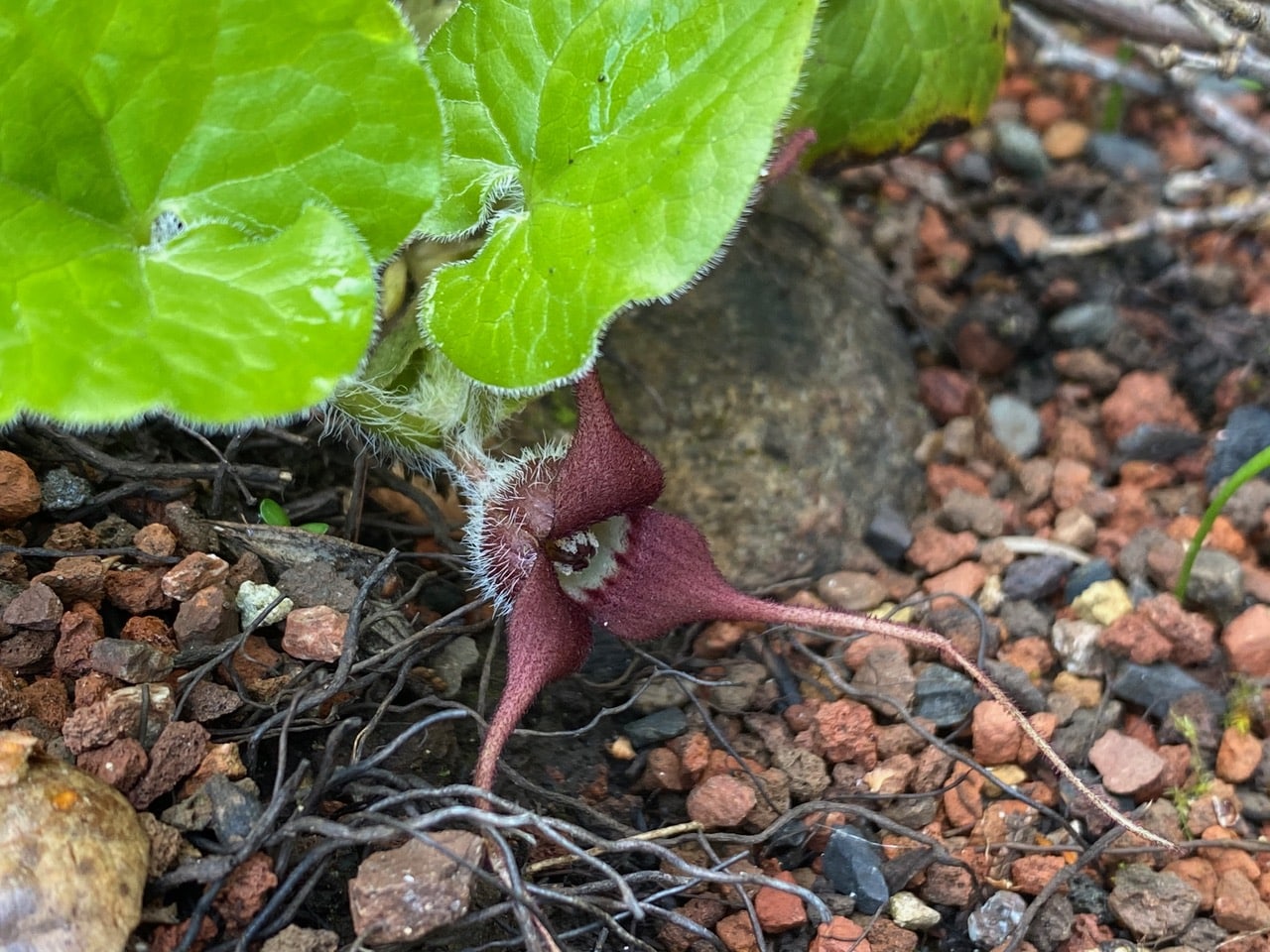
This Wild Ginger flower seems to be in the male phase.
The solitary brownish-purple flower of the Wild Ginger is hirsute (hairy) and cup-shaped, formed by fused sepals that terminate in three long, curved lobes. There are no petals. 12 stamens surround a prominent stigma. The flower is protogynous, the female parts maturing before the male parts. As soon as the flower opens, the stigma is receptive but the pollen is not initially located nearby because the stamen filaments are bent outwards parallel with the base of the floral cup. Over time, the filaments straighten, bringing the pollen-bearing anthers into proximity of the stigma. The flower emits a faint musty odor that attracts Fungus Gnats (family Mycetophilidae). It is believed that Asarum mimics the fruiting bodies of fungi and are pollinated by flies whose larvae feed on mushrooms. The flies lay eggs in the flowers and are responsible of pollinating them, in a phenomenon known as brood-site or nursery pollination.

The Redwood Sorrel, Oxalis oregana (family Oxalidaceae) is putting up a sweet display of pink-lavender flowers. The species grows from a scaly rhizome in cool, moist Douglas-fir and coastal redwood forests of the west coast. Being adapted to shady environments, Redwood Sorrel is capable of photosynthesis at low light levels. Higher intensity light can damage the sensitive leaves. As a protective measure, leaves fold downward within several minutes when struck by direct light, a process known as nyctinasty. But what insects pollinate the flowers that grow in such dim light? The question occurred to the students of the Pollination Ecology and Conservation Lab based in California State University East Bay in Hayward, CA. After they made observations in several locations in the Santa Cruz area, this is what they reported:
“We observed that many of the smaller bees seem to cling to the underside of redwood sorrel leaves, until a stray sunbeam illuminates their patch of forest. Warming up, they gracefully begin to stretch and awaken, eventually following the meandering paths of sunbeams across the forest floor as they drink nectar and collect pollen to provision their nests. In total, we found 14 different species of bees living in the understory of redwood forests… The bees include several genera (Andrena, Bombus, Ceratina, Lasioglossum, Nomad, and Osmia.)
Wow! Sounds like a forest fairytale!