

Pollinator Post 3/26/23 (3)

Along the paved road approaching the Water Tower, two big shrubs of Silverleaf Lupine, Lupinus albifrons are in glorious bloom. A robust California Manroot, Marah fabacea has grown up through one of the bushes, sending out a profusion of vertical flower spikes above the lupine foliage. By dint of its tenacious tendrils, Marah has successfully hoisted itself into the sun!
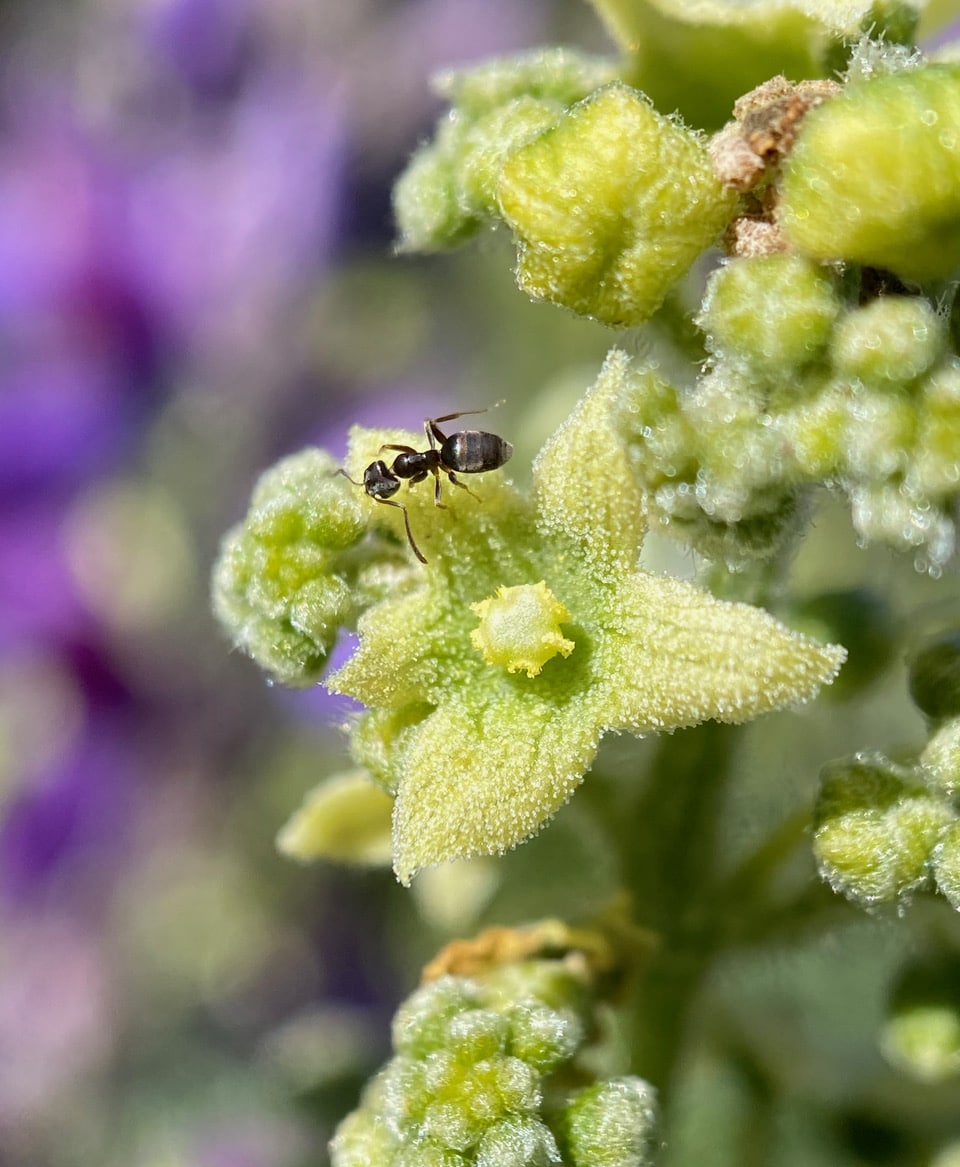
An Odorous House Ant, Tapinoma sessile (subfamily Dolichoderinae) is approaching a male flower of the California Manroot.
The ant is native to North America, ranging from southern Canada to northern Mexico. The species is found in a vast diversity of habitats, including within houses. The ants mainly feed on floral nectar and other sugary food. They also forage for honeydew produced by aphids and scale insects that they guard and tend.
Odorous House Ants are small ants, the workers measuring 2-3 mm. As in all members of the subfamily Dolichoderinae (odorous ants), this species does not possess a sting, instead relying on the chemical defense compounds produced from the anal gland. Such compounds are responsible for the smell given off by the ants when crushed or disturbed.
T. sessile colonies are polydomous (consist of multiple nests) and polygynous (contain multiple reproductive queens). The species practices seasonal polydomy – the colony overwinters in a single nest, and forms multiple nests during spring and summer when resources are more abundant and spread out.
The Odorous House Ants are rather docile, with little propensity for attack, preferring to use chemical secretions instead of biting. For this reason they are vulnerable to the invasion of the aggressive Argentine Ants, Linepithema humile.
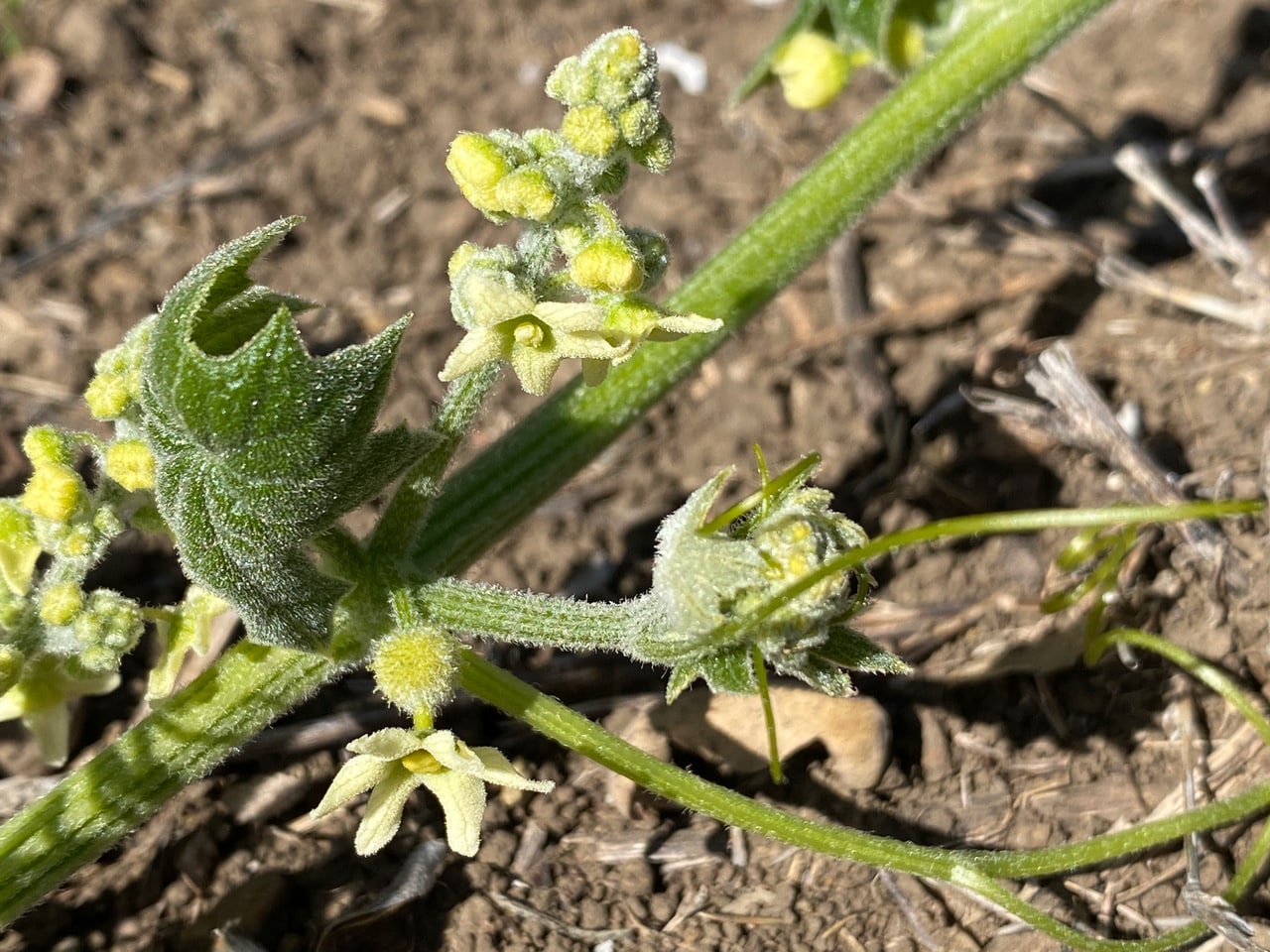
This picture was taken on 2/17/23.
California Manroot is monoecious, with separate male and female flowers on the same plant. There are more male flowers, borne on inflorescences. The rare solitary female flowers are usually found at the leaf axil below the male flowers. Superficially the sexes appear very similar. The best clue to the female is the presence of an inferior ovary below the corolla.
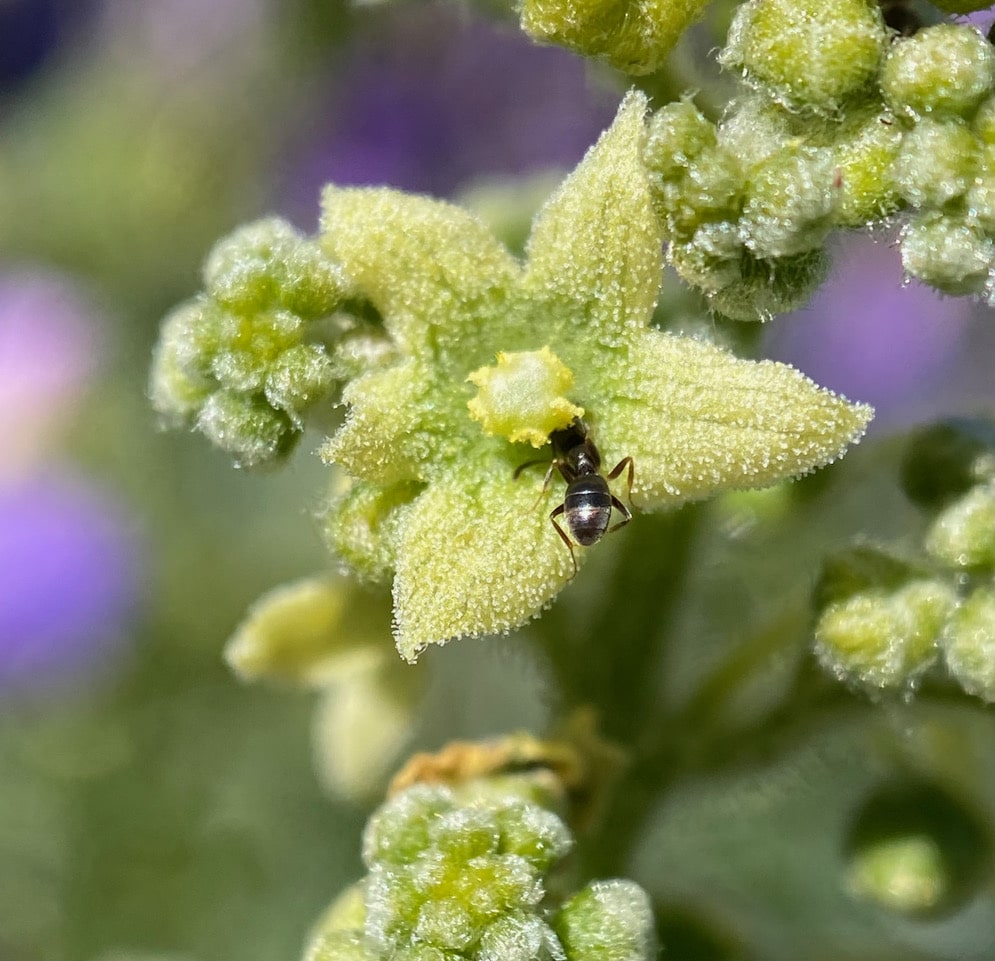
Typical of the Cucurbitaceae or gourd family, the male flowers of Manroot are synandrous, meaning the five stamens are fused along both their filaments and anthers. Pale yellow pollen is dispensed from the fused structure in the middle of the flower.
Lowering its head, the ant skillfully angles itself under the fused stamens to reach the nectar underneath.
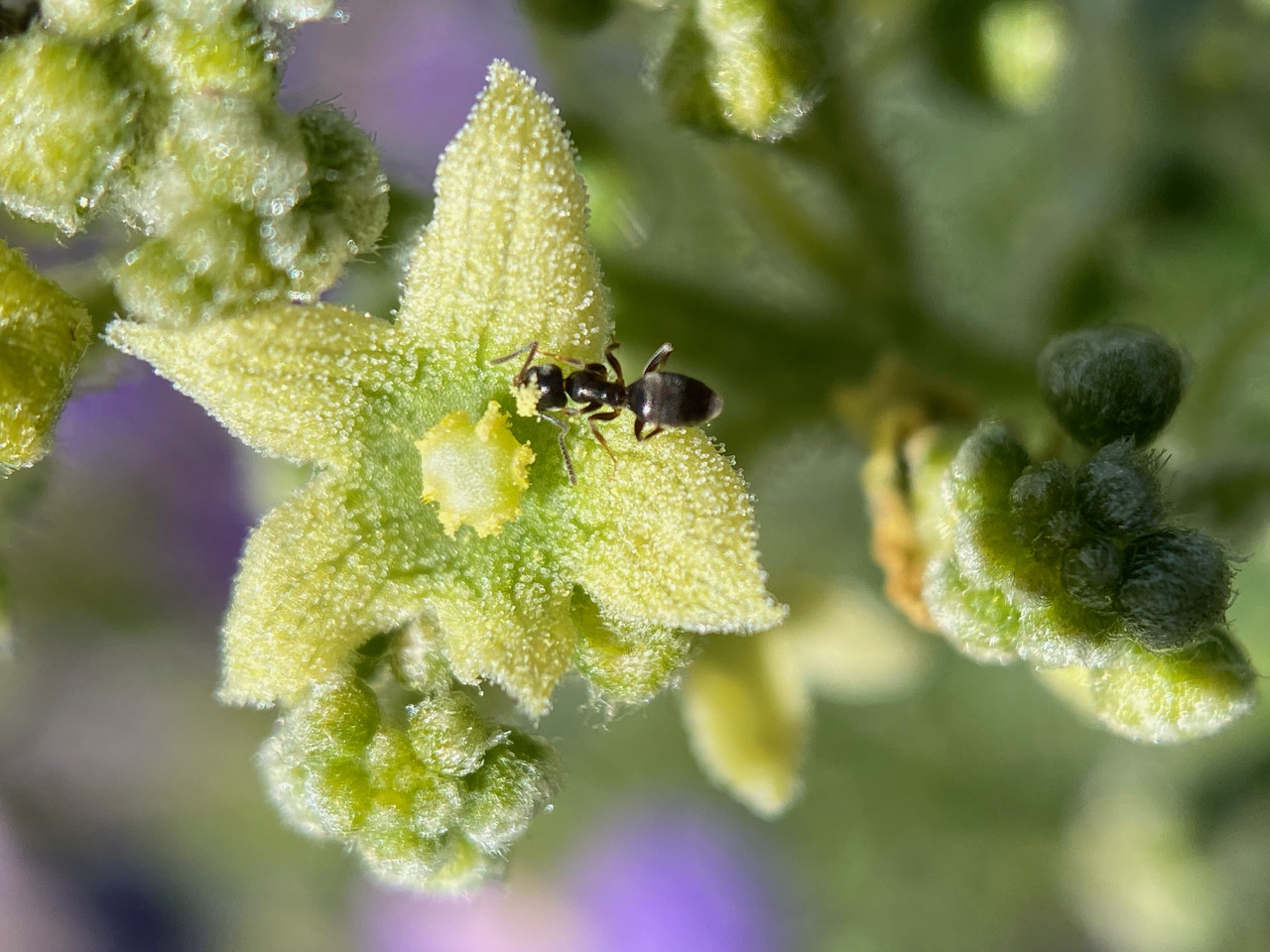
Lifting its head, the ant discovers that some sticky pollen has adhered to its head. Apparently not bothered by the inconvenient load, the ant returns to feed on nectar.
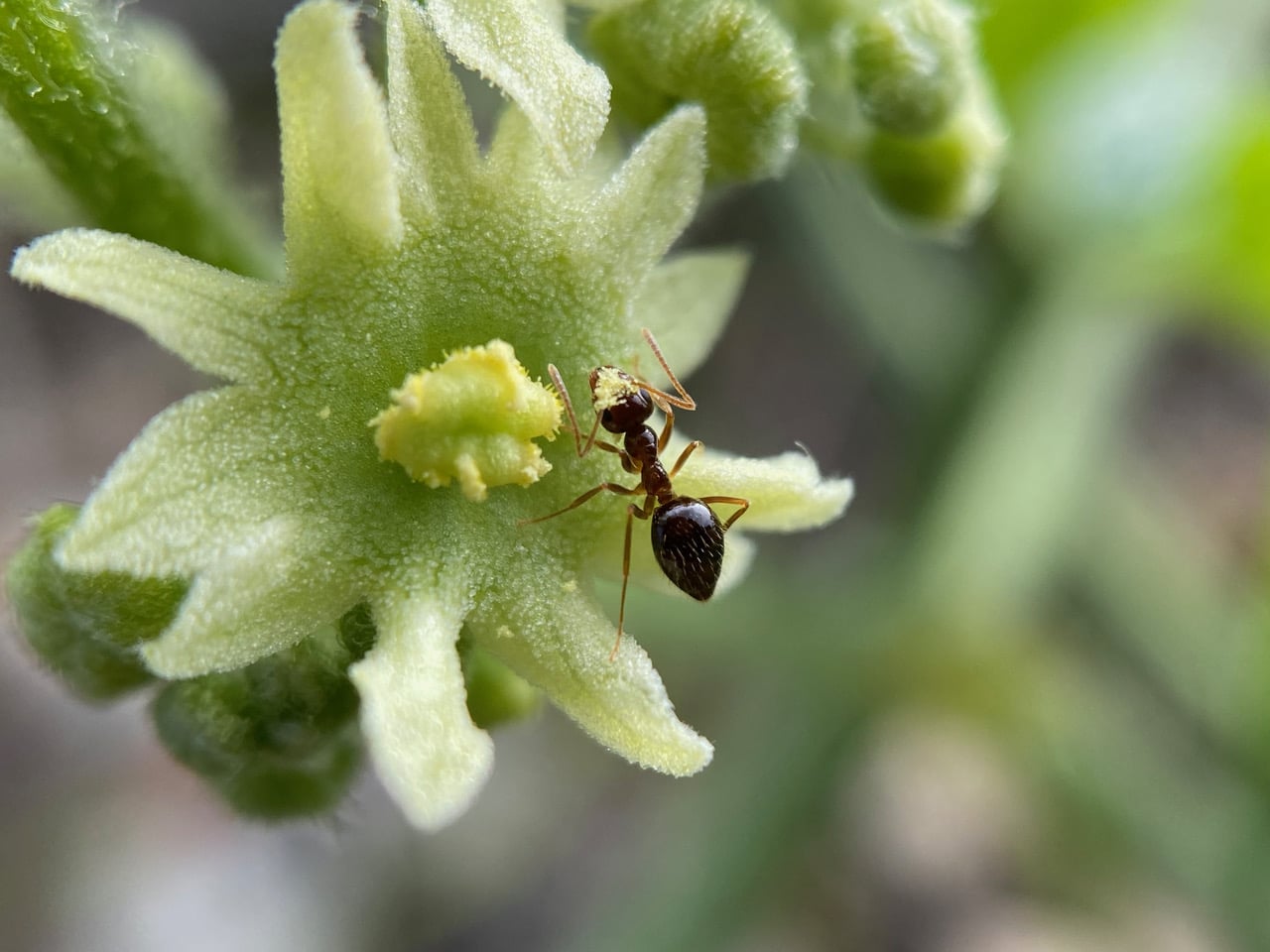
Similar ant behavior was observed on California Manroot on 2/21/23 along this road. Except it is a different species of ant, the American Winter Ant, Prenolepis imparis. This ant is foraging on a male flower of California Manroot with extra petals.
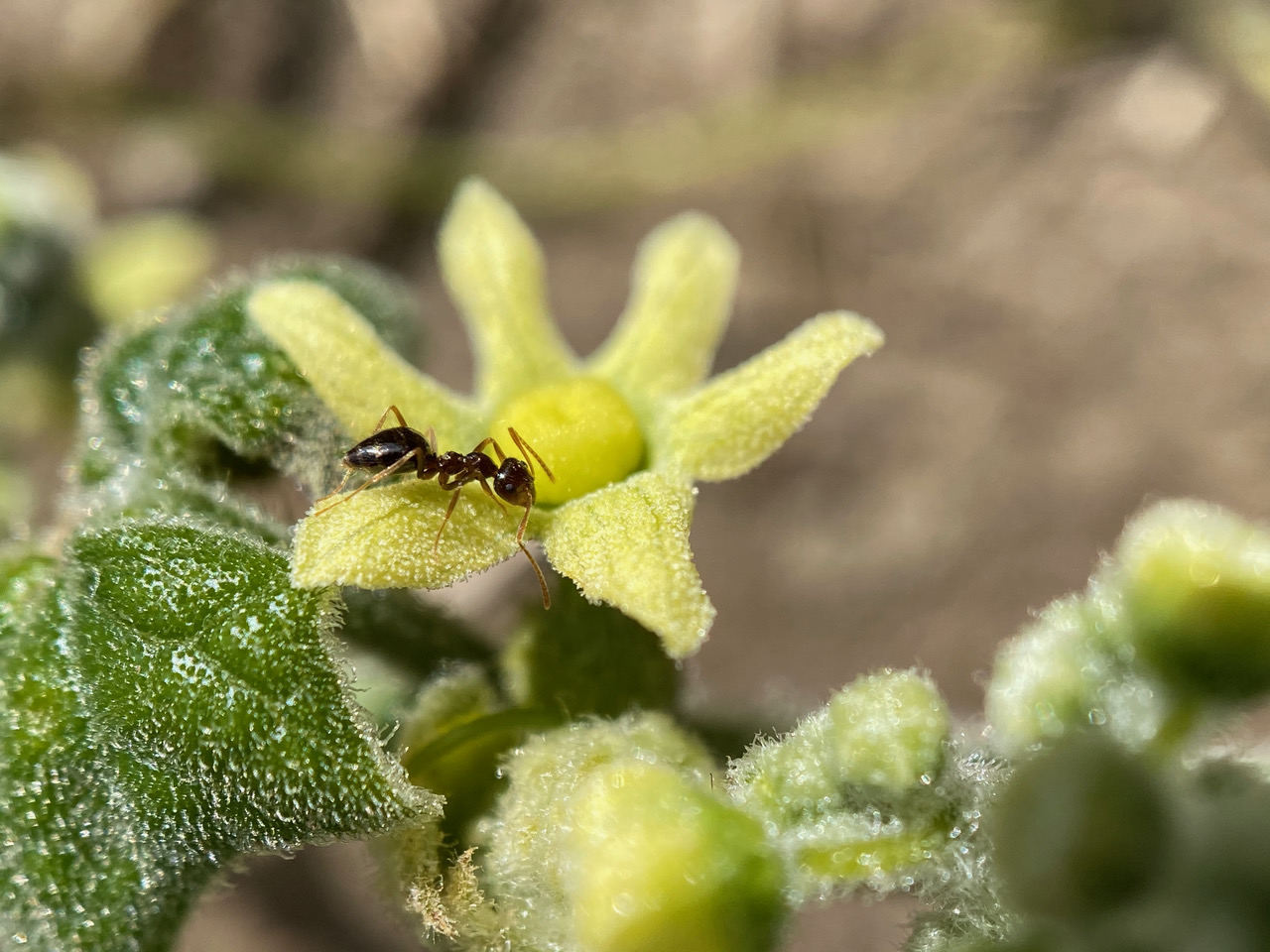
Going further back, an American Winter Ant, Prenolepis imparis was recorded on a female flower on 2/17/23.
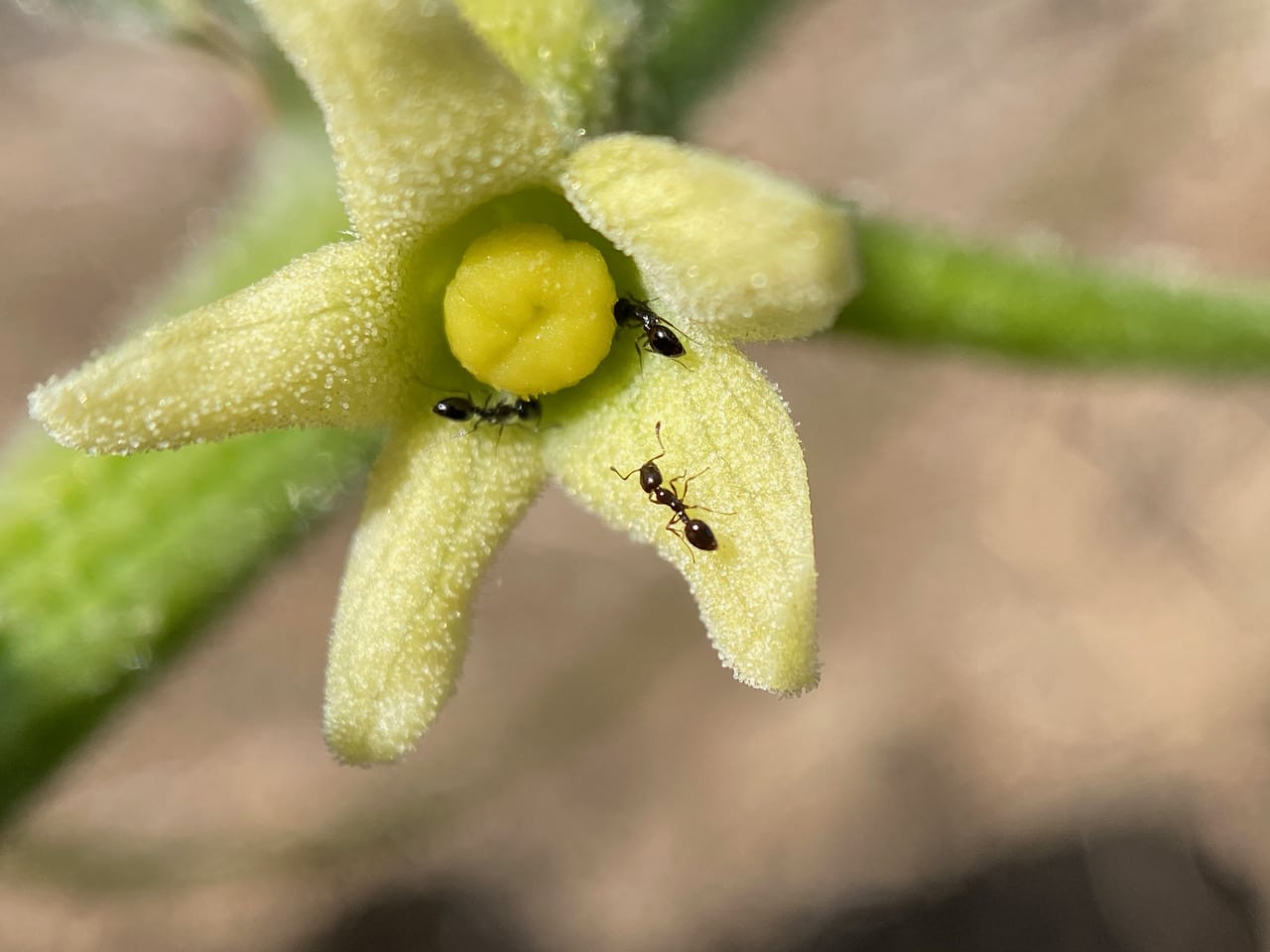
On 2/17/23, another species of ants were photographed foraging on a female flower of California Manroot. These tiny black ants are Ergatogyne Trailing Ants, Monomorium ergatogyna.
Note the moist globular structure in the center of the female flower. Three stigmas have been fused into this single structure that sits on a single short style above the nectary. When ants crawl down the narrow space to access the sweet reward, any pollen that may be on their body is likely to be rubbed off on the moist stigma, effectively pollinating the plant. What a clever ploy on the part of the plant! Both the male and female flowers offer irresistible nectar, and the structures of both sexes are so similar that the ants are probably not aware or don’t care if they are exploring a male or female flower. The job gets done anyway!
In reviewing what I have recorded on the California Manroot so far, I realize that there are at least three species of native ants that pollinate the plant at Skyline Gardens – the American Winter Ant (Prenolepis imparis), the Ergatogyne Trailing Ant (Monomorium ergatogyna), and the Odorous House Ants (Tapinoma sessile). I am indebted to several ant experts/enthusiasts on iNaturalist who rallied to help identify the ants. I have learned so much from this wonderful community of nature lovers!