

Pollinator Post 3/26/23 (1)

The large Common Fiddleneck, Amsinckia intermedia that grows on the side of the paved road to the Water Tank looks less than happy this morning. I notice a general white cast over the plant, and stop to investigate. Has the plant been infected with
powdery mildew?
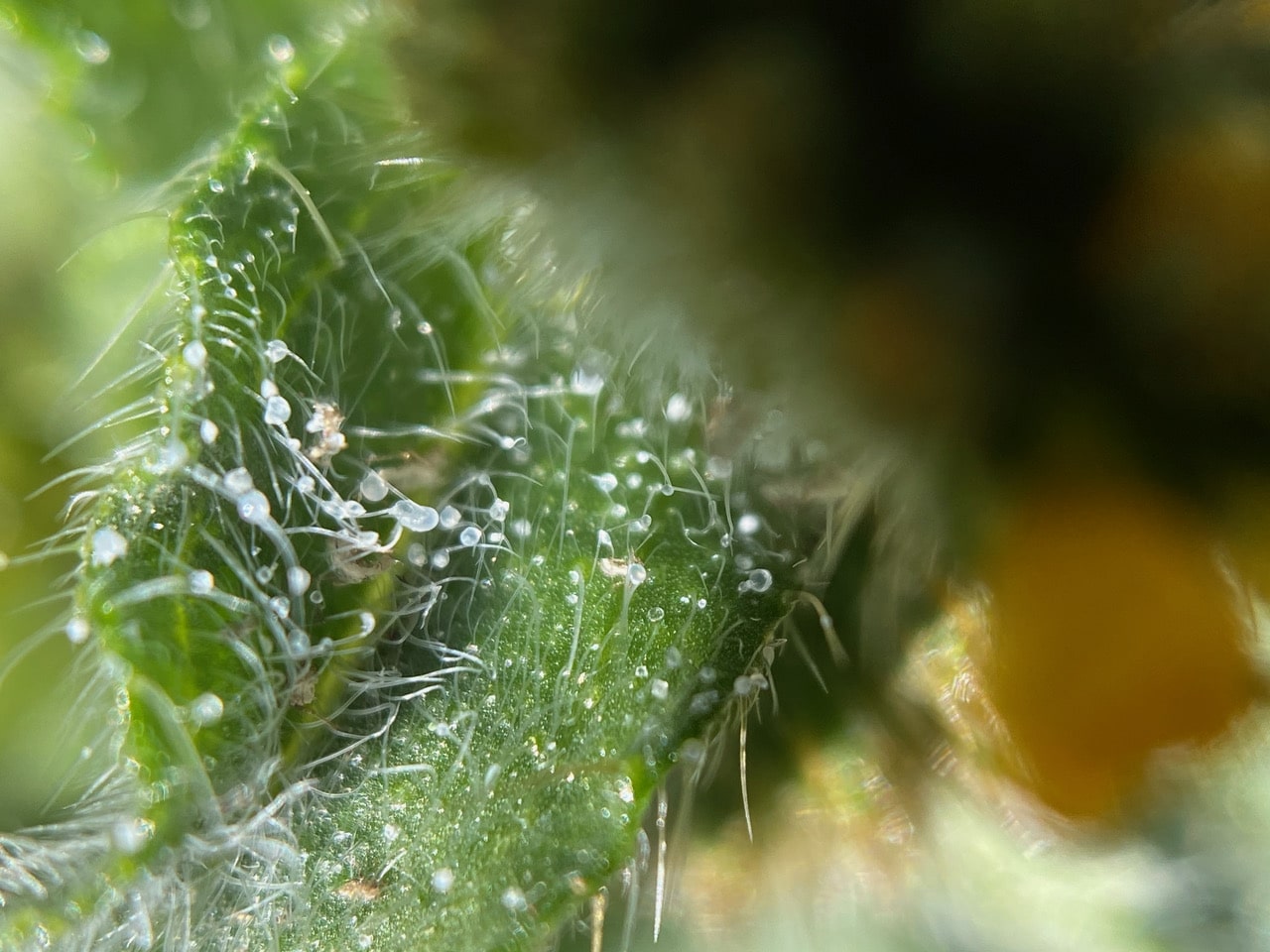
The leaves of Common Amsinckia naturally bristle with stiff white hairs. But mixed in with the hairs now are little milky droplets. That’s not powdery mildew, a fungal infection. Honeydew then? I remember photographing a couple of tiny aphids on this plant a while ago.

The white droplets are especially numerous at the base of the inflorescences.

Is that green aphid excreting a drop of honeydew from its anus?

There’s a handful of similar aphids tucked between the flower buds.
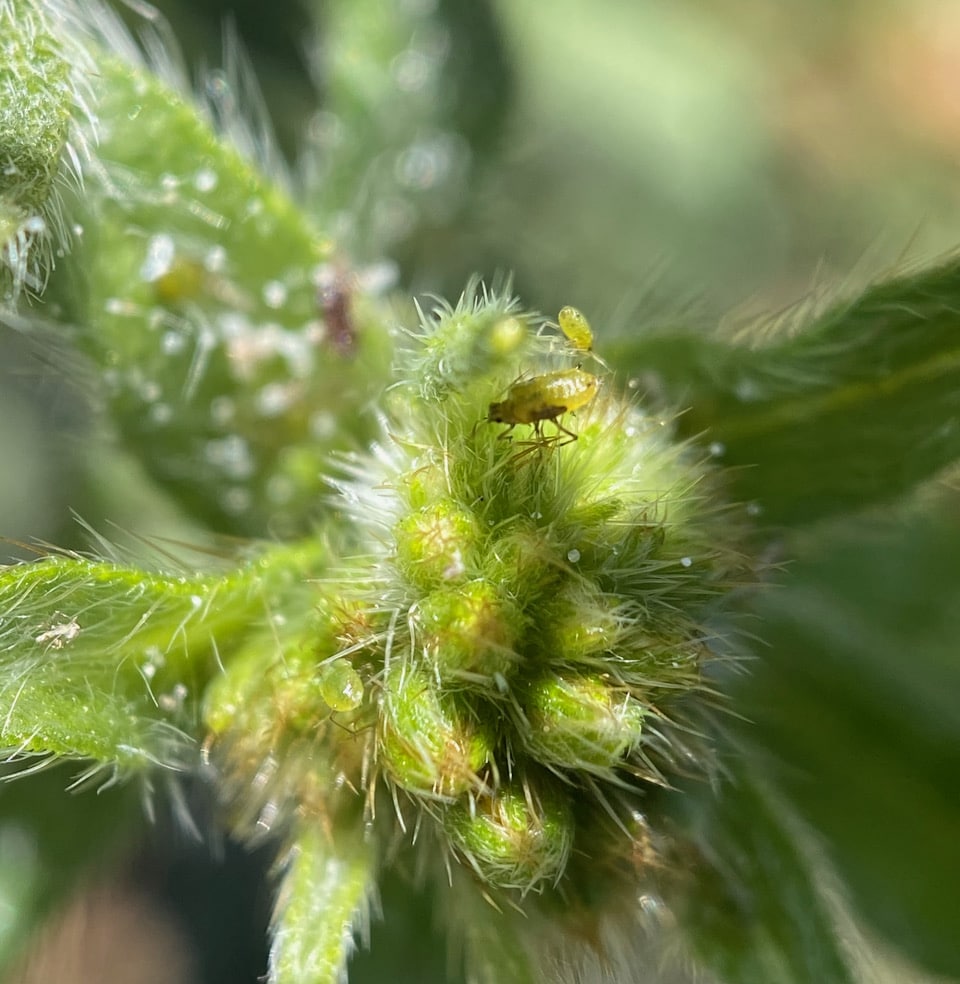
That big one with the dark wing pad appears to be an immature alate. These are the smallest aphids I have ever seen, barely visible to the naked eye. They seem to be quite mobile, not stuck in place with their mouthpart sunk into plant tissues like the other aphid species I know. And they have very short cornicles (those “tail pipes” that define aphids).
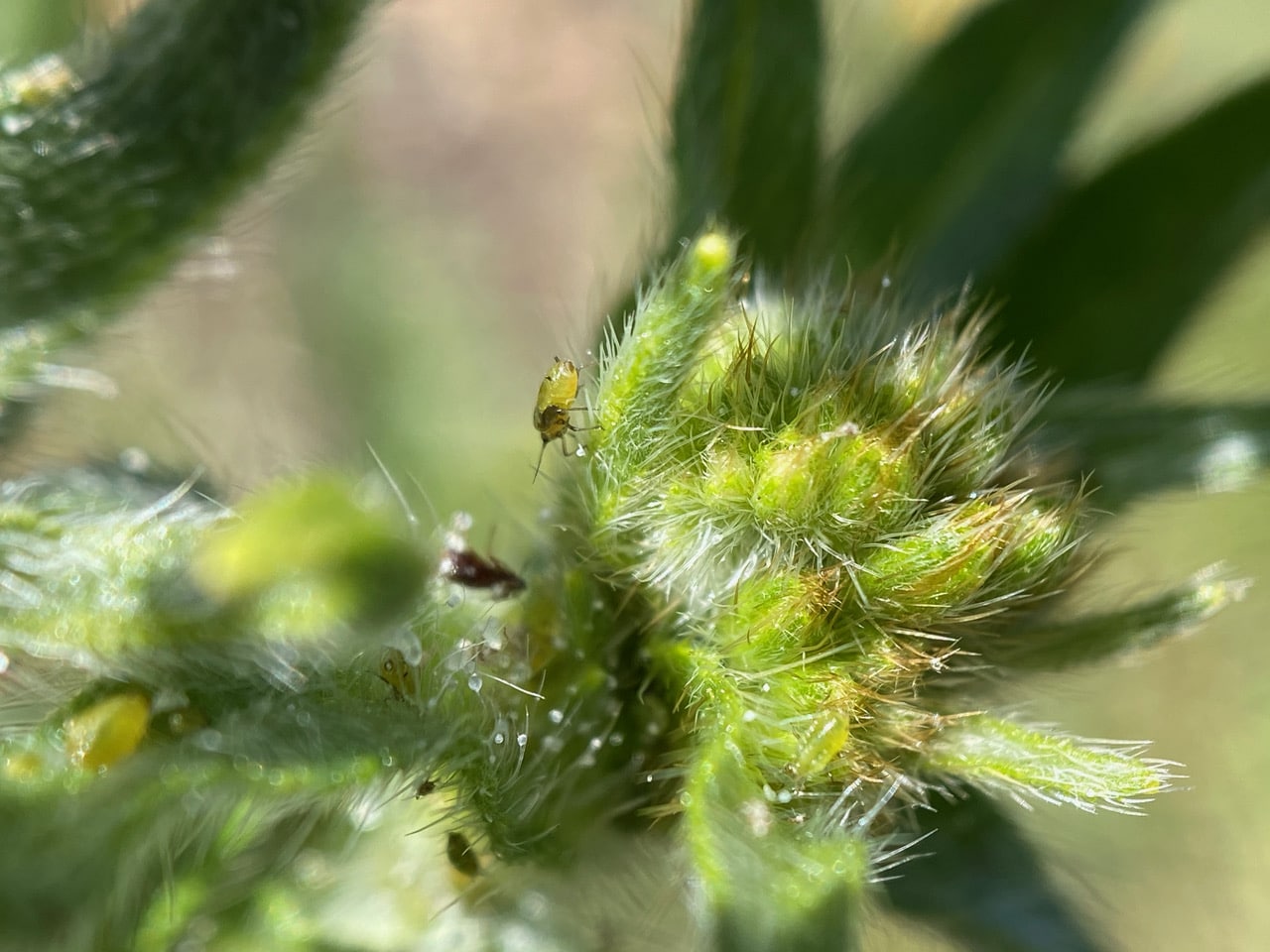
There, the aphid is moving around the flower buds. See those dark stubs on its abdomen, the cornicles?

There’s an aphid in the space between the leaves. Has it just given birth to a baby?
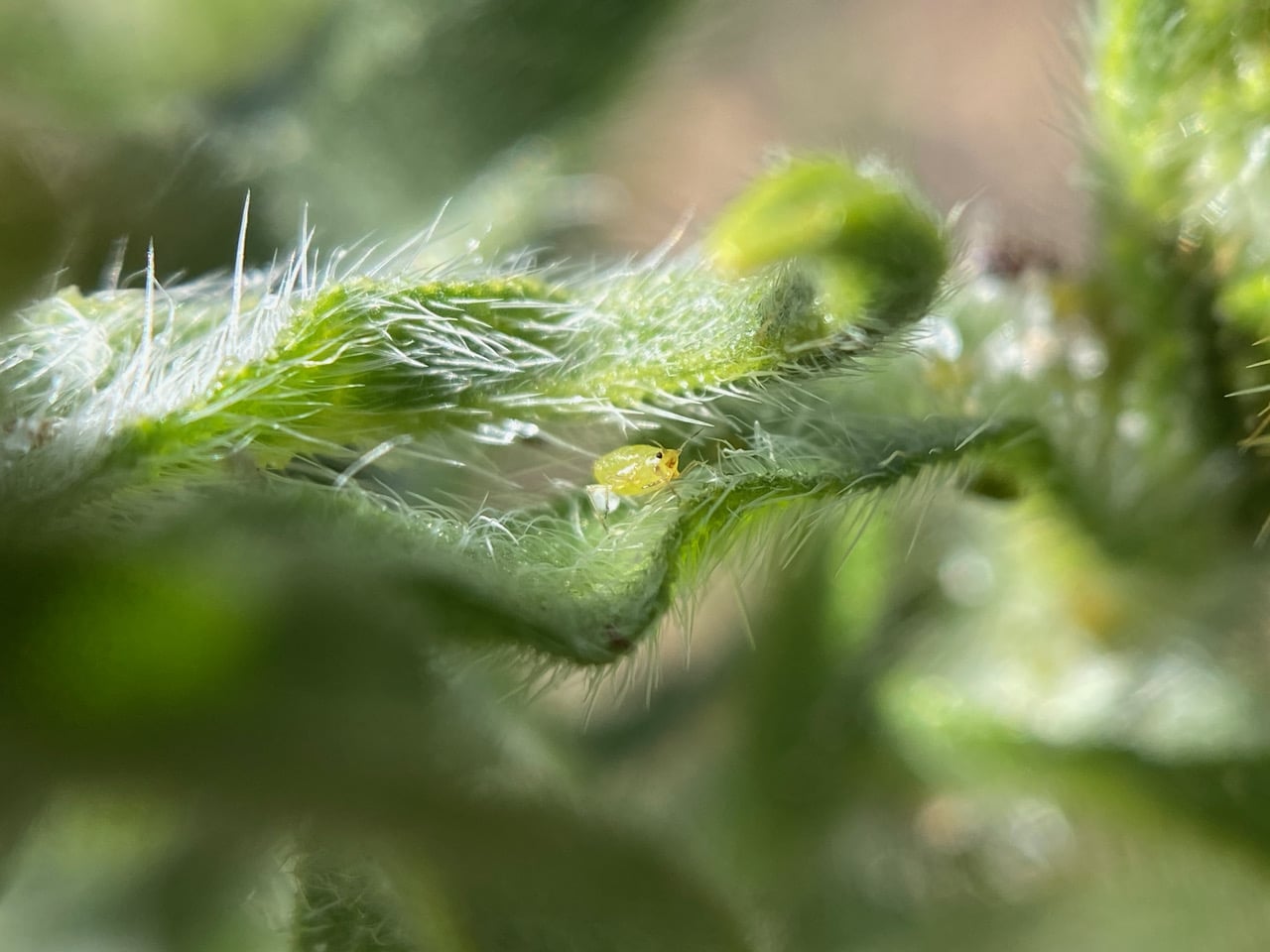
Now it is looking straight at the camera. OK, there’s no doubt that the plant is infested with aphids. But where are the aphid predators?

It takes me a while to find them. Some California Lady Beetles, Coccinella californica (family Coccinellidae) are milling around at the base of the plant. There’s even a pair mating. Both adult and larval lady beetles are voracious predators of aphids. It would be fun to observe the insect interactions on the plant from now on.
How do the beetles know to gather here for the feast? When plants are attacked by herbivores, most can send out SOS by releasing volatile chemicals into the air to summon the predators and/or parasitoids of the herbivores. The messages can be quite specific. In some cases, the predators simply home in on the chemicals released by damaged plant tissues. Lady beetles are known to be able to detect the specific odor of honeydew excreted by the aphids. Honeydew volatile emission acts as a kairomonal message for the Asian lady beetle Harmonia axyridis (Coleoptera: Coccinellidae) | Request PDF
Mother Nature takes care of everything!