

Pollinator Post 3/25/24 (2)
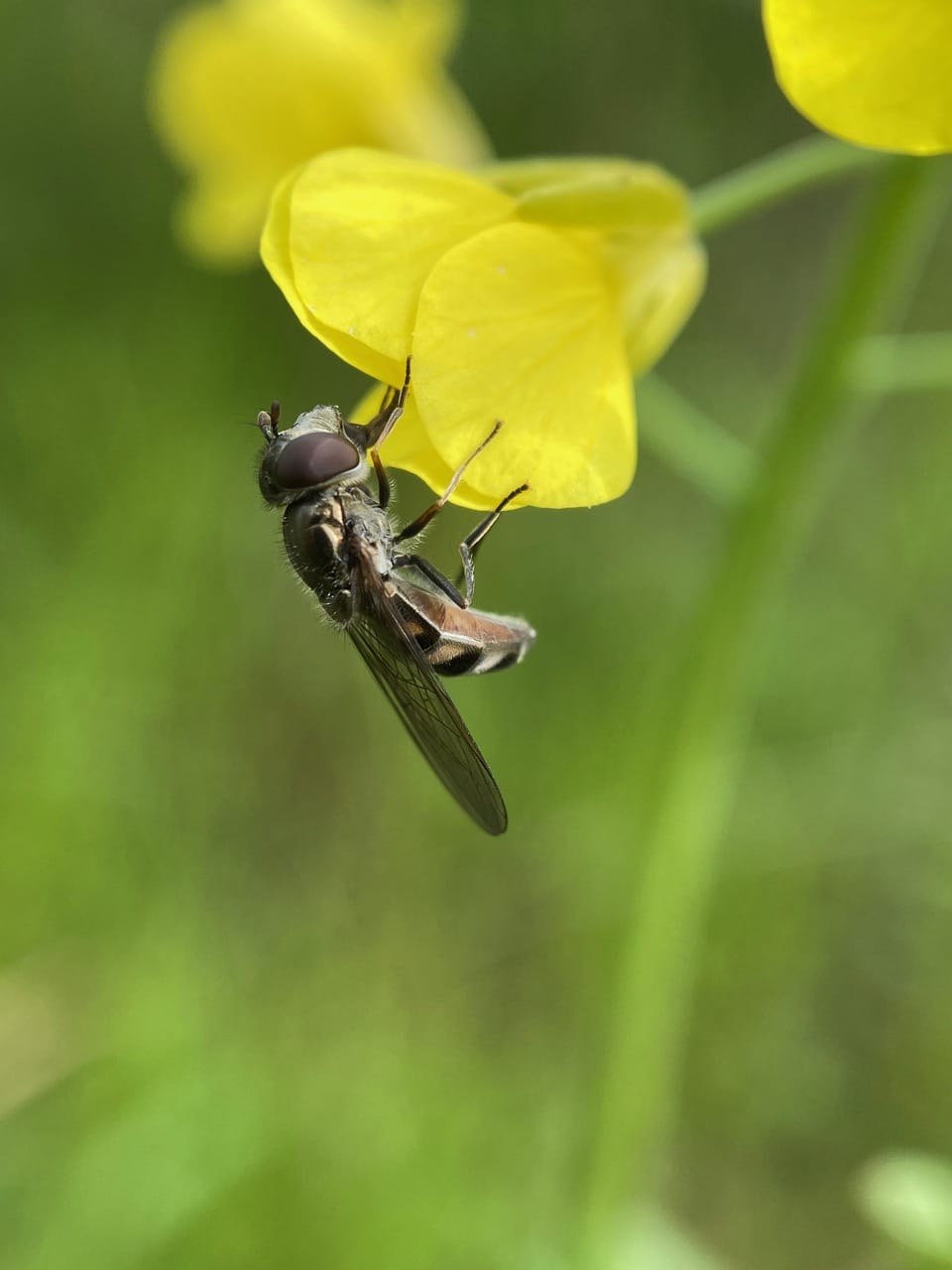
Its proboscis extended, a Sedgesitter, Platycheirus sp.(family Syrphidae) is getting ready to feed on a Wild Mustard flower that is yet to fully open.
Platycheirus is found in grass and herb vegetation. Adults of many species feed on pollen of wind-pollinated plants, such as Salix, Plantago, Poaceae, Cyperaceae, but they visit other flowers also. Many stay active during cold and rainy weather. Larvae feed on aphids.

A female Conical Trashline Orbweaver, Cyclosa conica sits in the middle of her web, the tip of her abdomen denting the orb web.
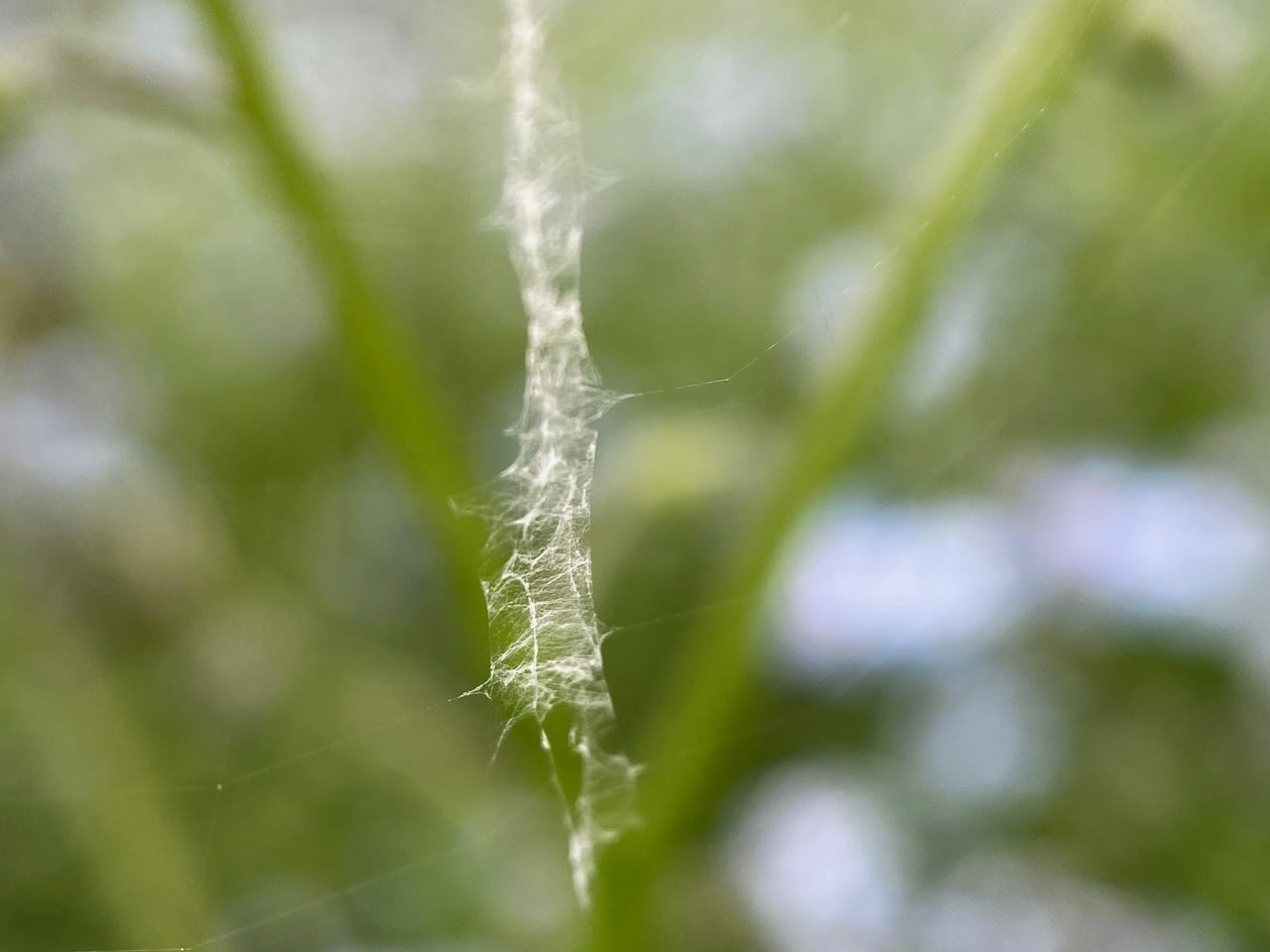
The thick “trash line” beneath her is still pristine, without any attached debris. I take a close-up of it and find that it is made up of multiple layers of wavy silk. Interesting that every spider of her species knows how to set up its web this way, with a special thickened line ready for trash attachment.
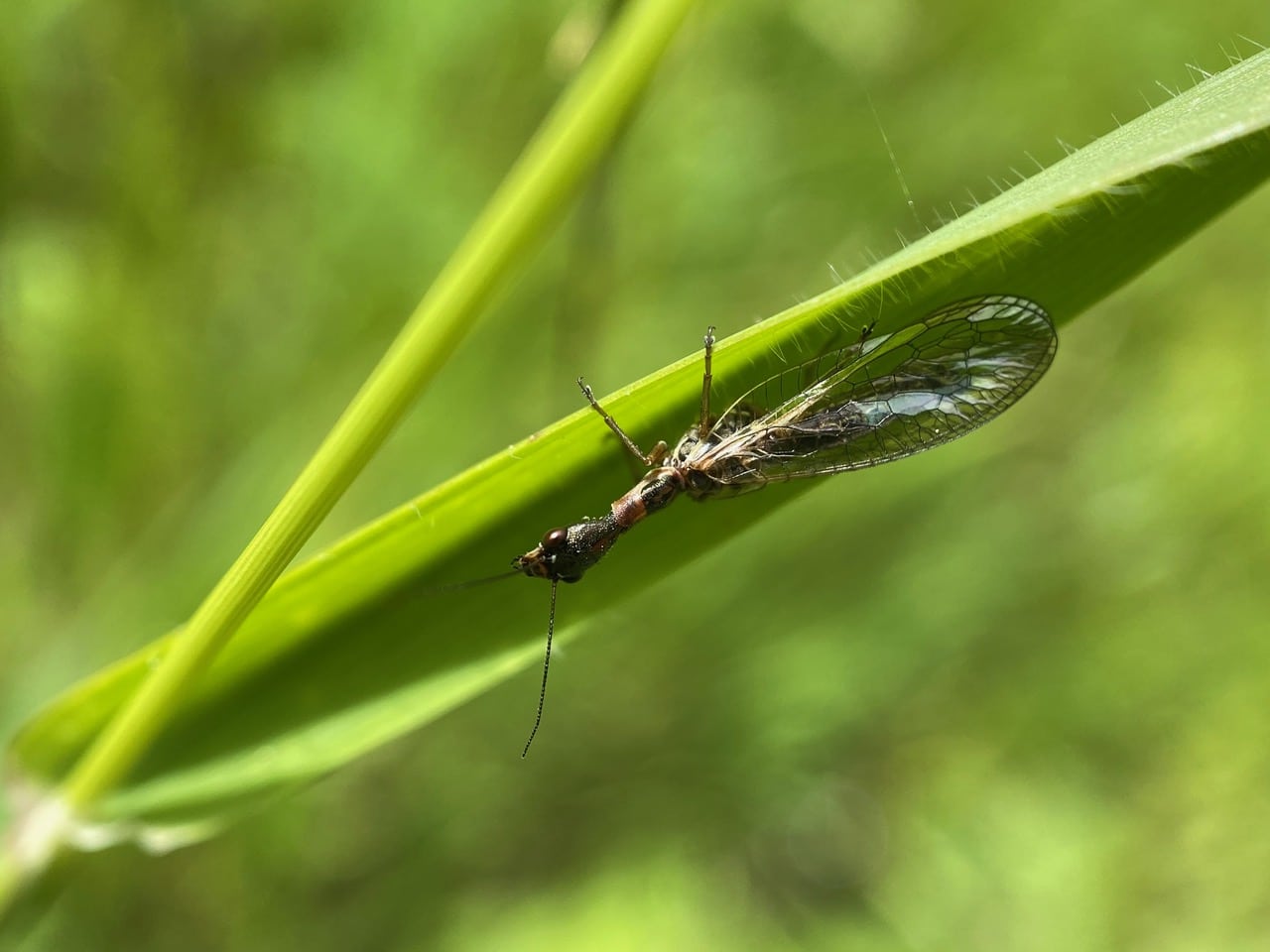



A male Snakefly is perched on a blade of grass. I wonder how these predators are doing, with so few prey insects available to hunt. The scarcity ripples up the food chain.
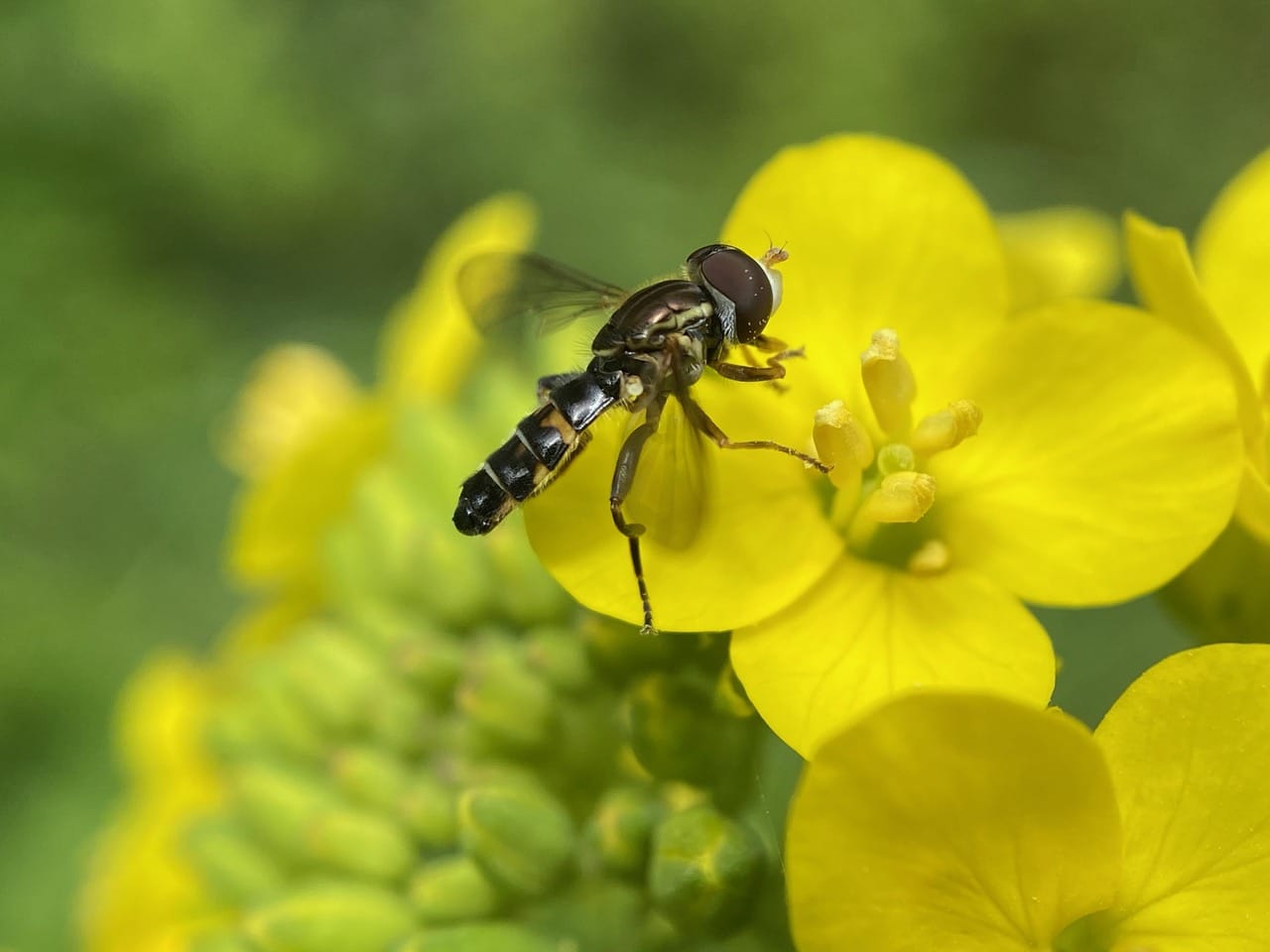
A male Western Calligrapher, Toxomerus occidentalis (family Syrphidae) lands on a Wild Mustard flower, Brassica kaber. His abdomen is much narrower than the female’s, and lacks the beautiful pattern.
He does, however, have a more pronounced “bow-leg”, which I have hardly noticed on the females. The genus name Toxomerus comes from Greek toxon for ‘bow’ and meron for ’thigh’, referring to the bow-shaped hind femur. Colors vary with overall temperature during pupation: higher temperatures produce more yellow, while lower temperatures produce adults with darker markings. Adults visit flowers for nectar and pollen. Larvae feed on aphids and other soft-bodied insects.
The dark insects between the terminal leaves of Bedstraw, Galium sp. are not Hybotid Dance Flies as I have originally thought, but aphids!
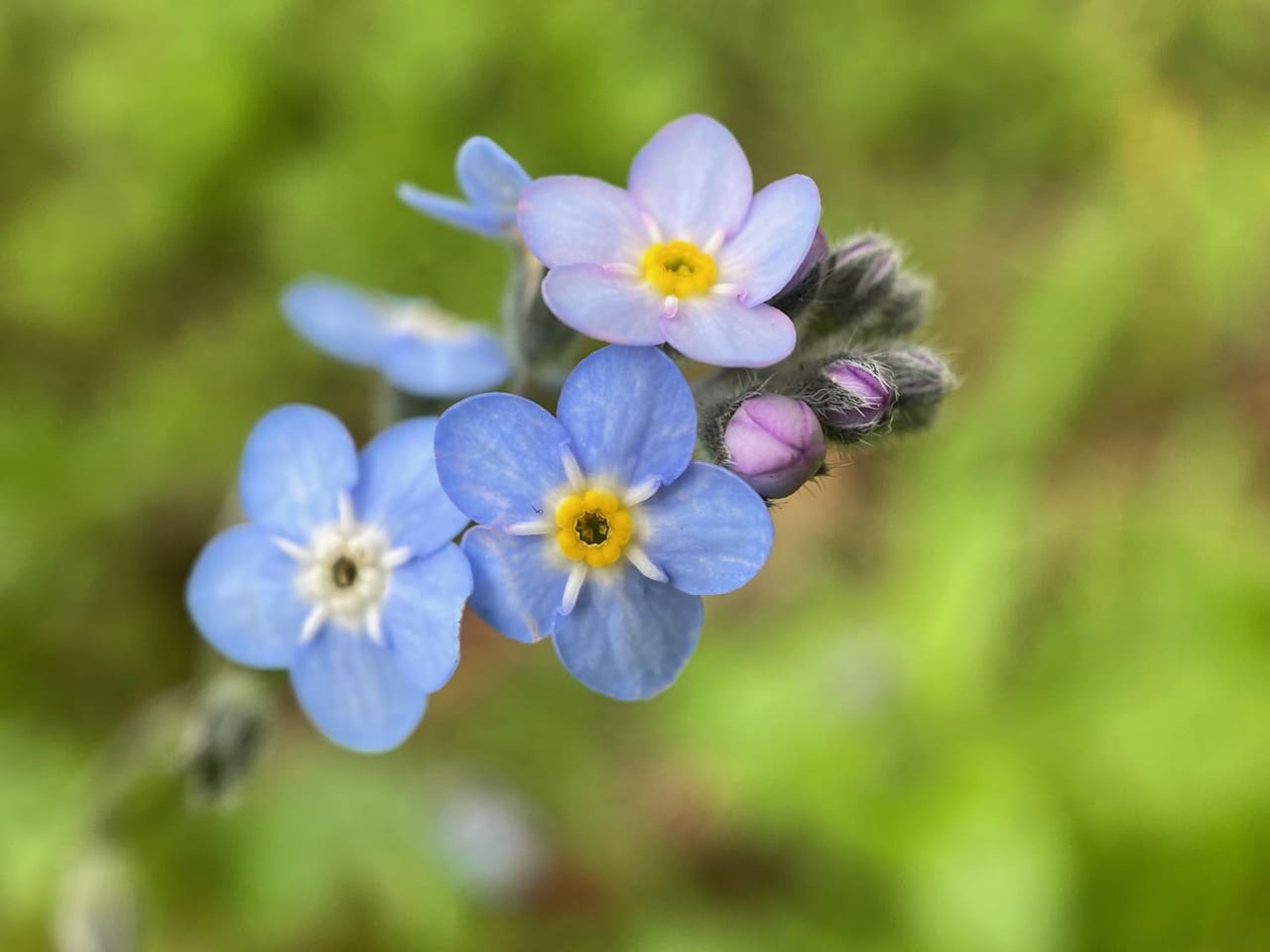
Passing a large patch of Forget-me-not, Myosotis sp. in the shade, I pause to look for insects on the small flowers. Peering into the flowers with the macro lens, I realize that these flowers can only be pollinated by insects with thin, long proboscis than can be inserted into the narrow floral tube. And since the pollen is held in the floral tube, and not likely to come into contact with any other parts of the insect, it has to be transferred to another flower on the insect’s tongue!
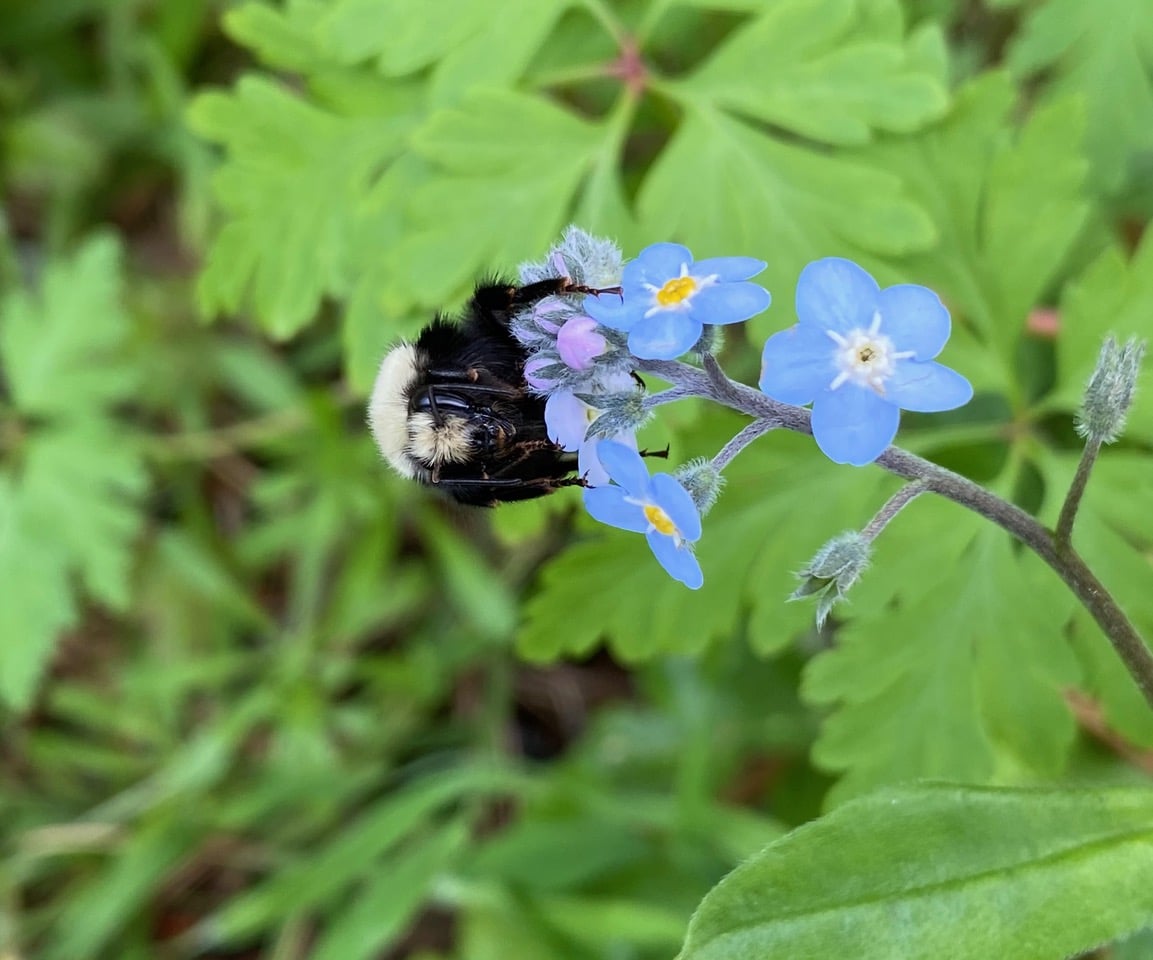
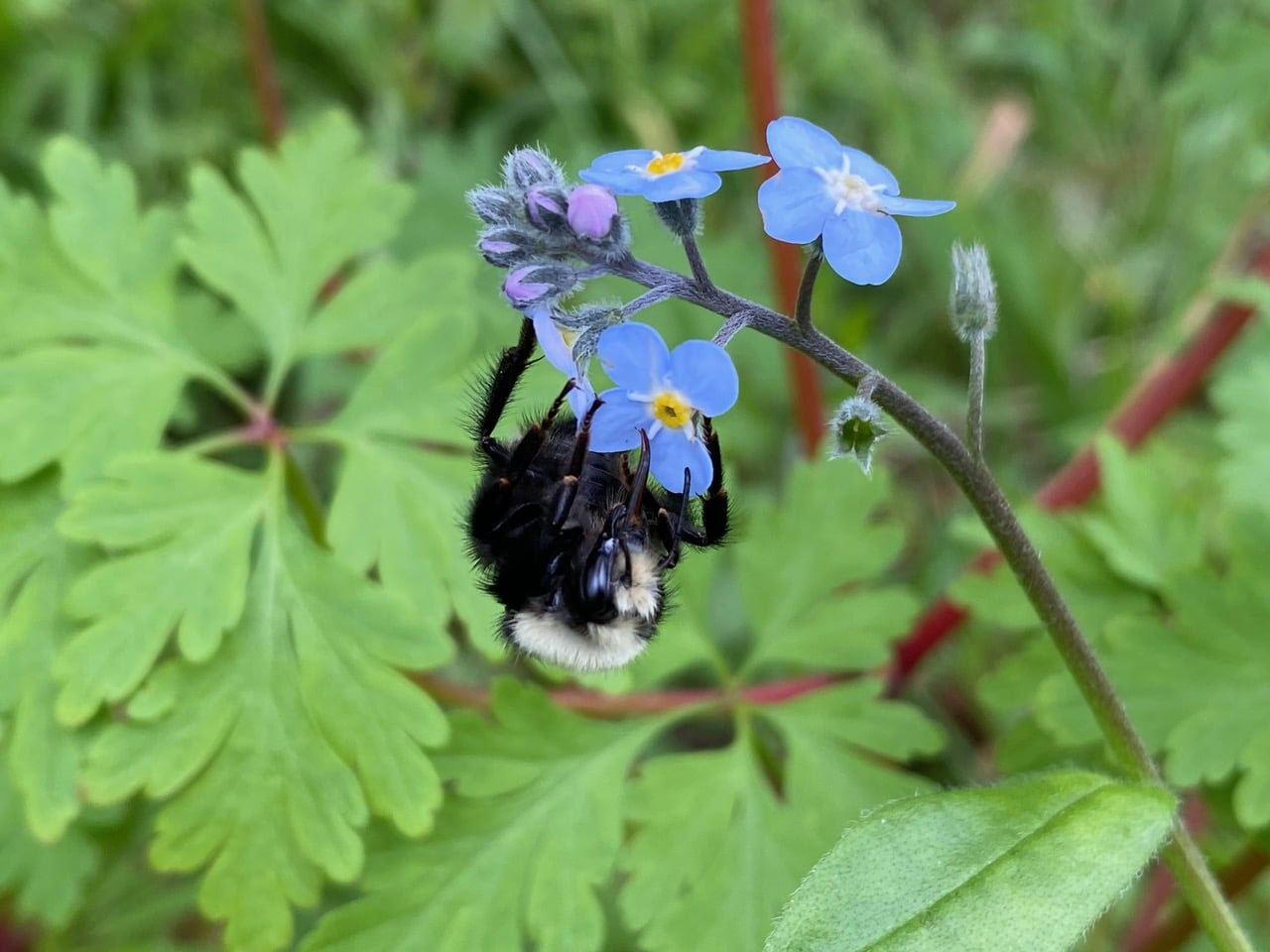
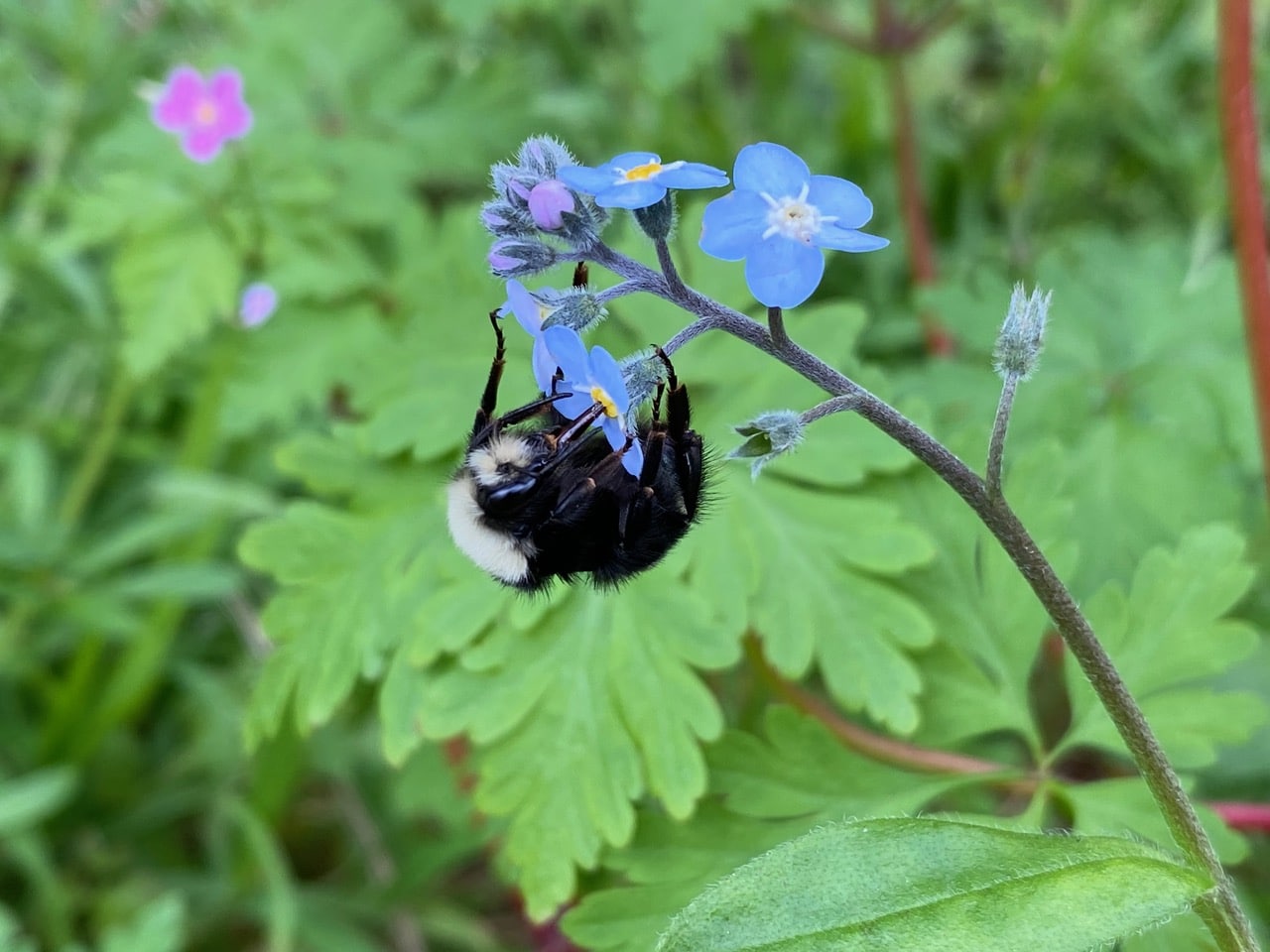
Much to my surprise I find a large queen Yellow-faced Bumble Bee, Bombus vosnesenskii (family Apidae) hunkered motionless on a cluster of Forget-me-not flowers, her antennae drooping. Is she alive? Or just resting?
As I take her pictures, the bee begins to stir and slowly moves to a flower and extends her tongue.
It takes her almost a minute to successfully aim her tongue into the narrow floral tube. Surely this is not a flower of choice for her – how much nectar can she get from the tiny flower? She must be desperate.
The year has been really hard on the Bumble Bees. There has been few sunny and warm days when the queens, fresh out of hibernation, can forage for food. The plants are also off kilter on their schedule, blooming later than normal. There simply is very little food for these struggling bees. My heart goes out to all of them.
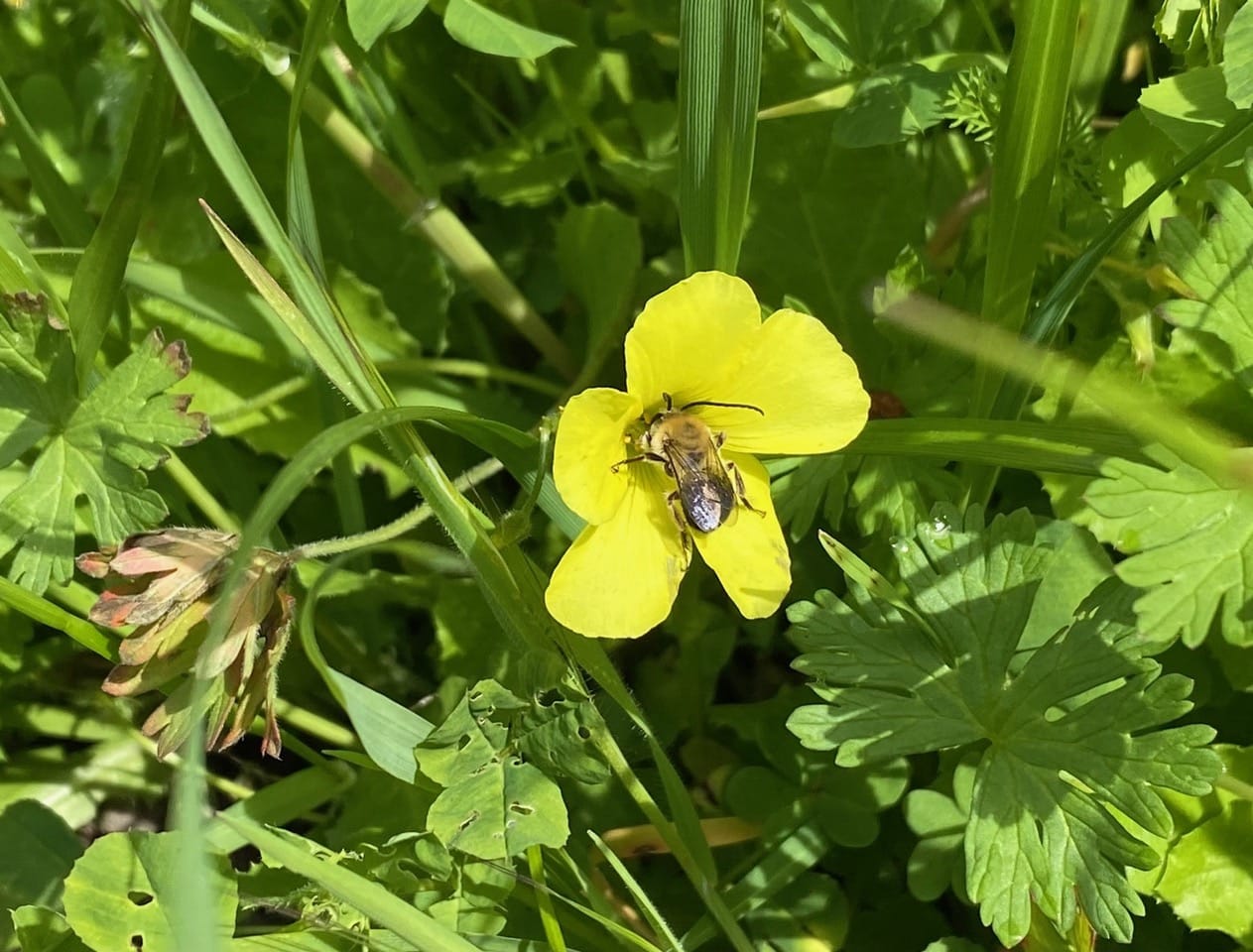
A male Mining Bee, Andrena sp. (family Andrenidae) is taking nectar from a flower of Bermuda Buttercup, Oxalis pes-caprae. Again, another native insect surviving on a plant long considered a pernicious weed.
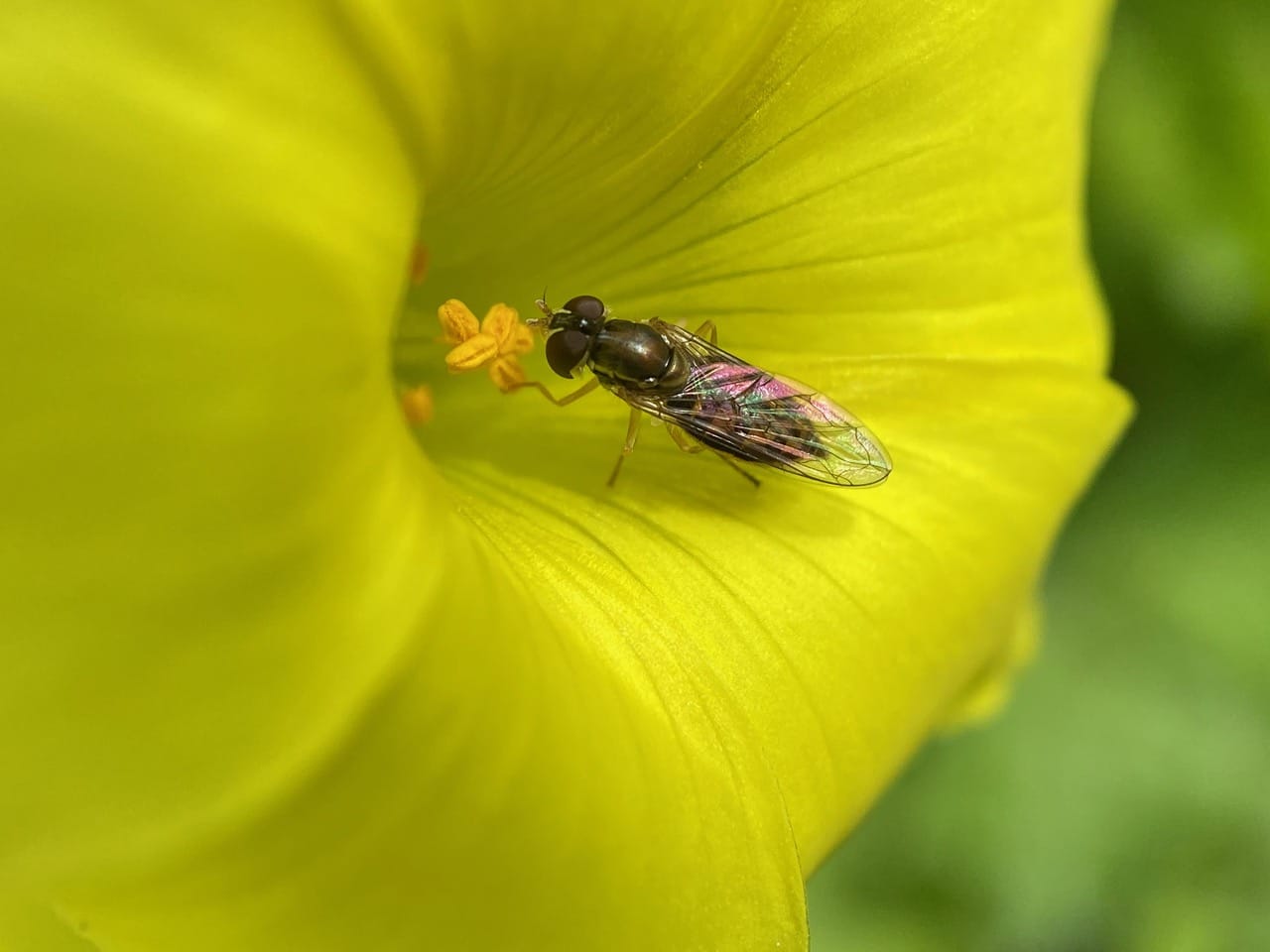
Isn’t that a Western Calligrapher, Toxomerus occidentalis (family Syrphidae) on a Bermuda Buttercup flower?
Manipulating the anthers with her front legs and proboscis, the female Western Calligrapher is feeding on pollen of the Bermuda Buttercup.