

Pollinator Post 3/25/24 (1)

To avoid muddy trails, one of my first choices for a walk after a series of rain is the Nimitz Trail at Inspiration Point in the Berkeley hills.
Ah, that lush patch of Miner’s Lettuce in the shady section of the trail. It’s early and cool in the morning, nothing is flying.


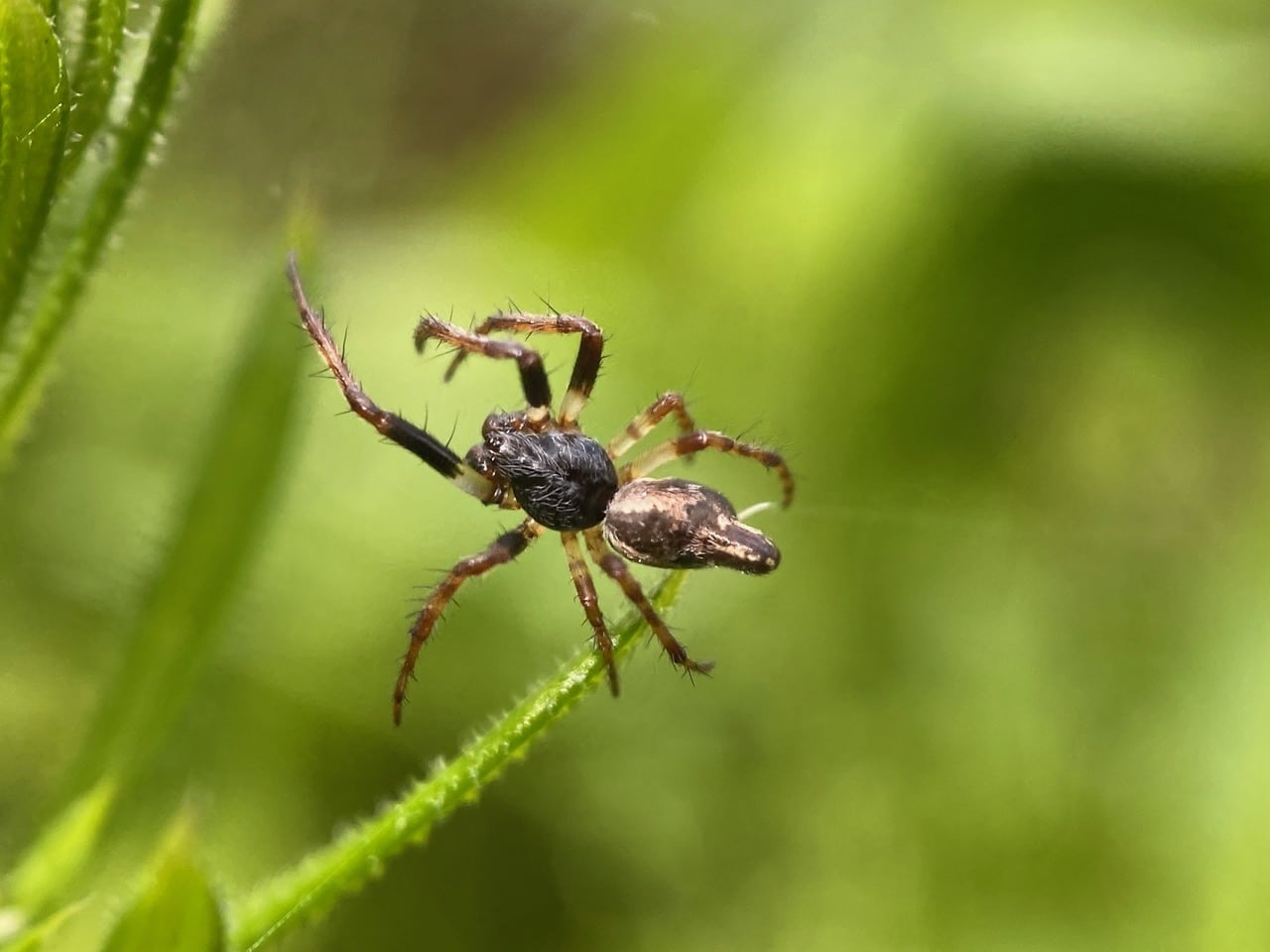
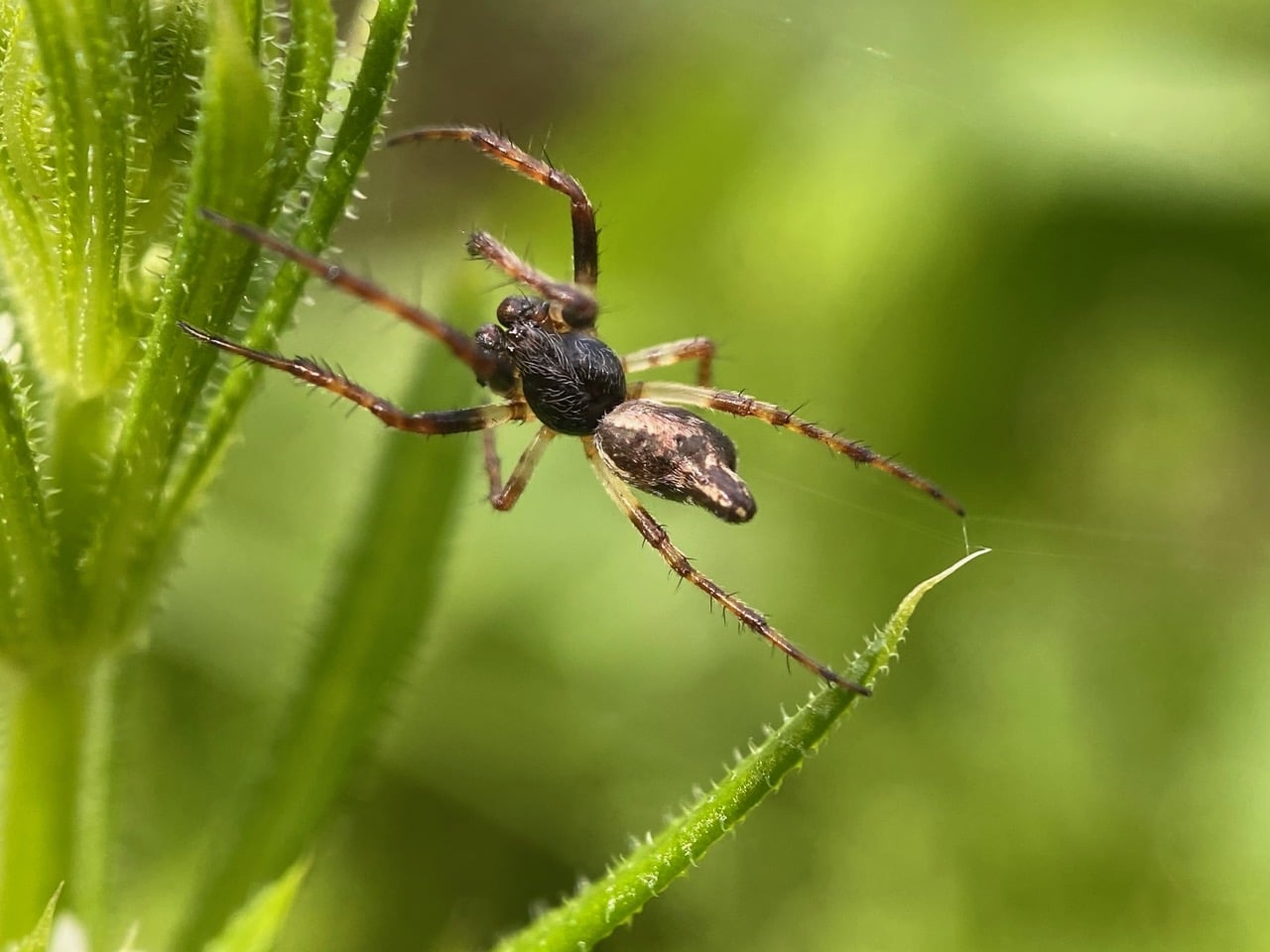
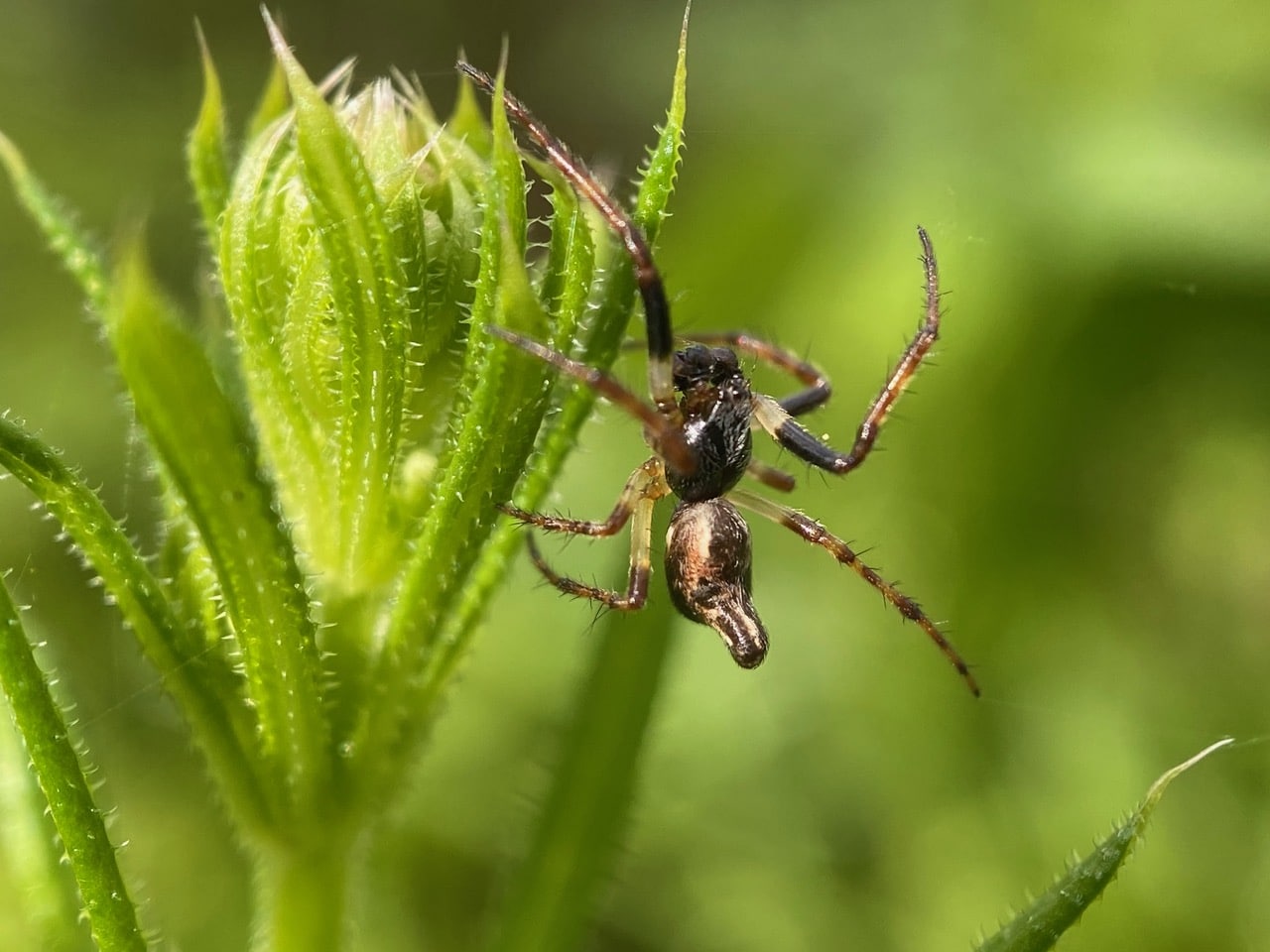
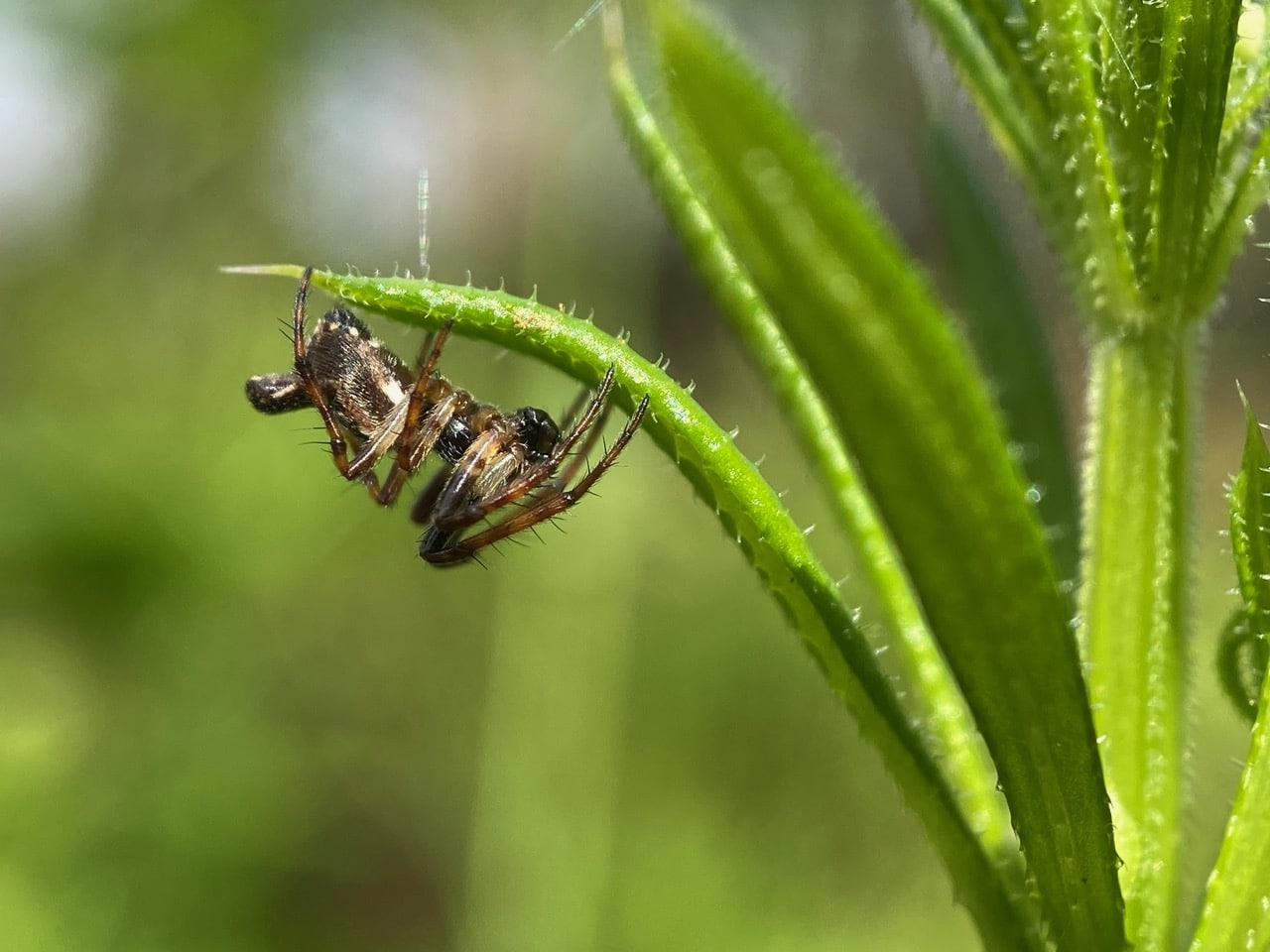




 This male is touching down on a leaf of Bedstraw. Note the clumps of white silk behind him. Spiders bunch up silk strands to control their tension as they travel.





I can’t help but look for the Hybotid Dance Flies on the Miner’s Lettuce flowers, Claytonia perfoliata. Sure enough, there are many of them, all tucked in the nooks and crannies between the flowers.
Here’s another aggregation of the Hybotid Dance Flies. These flies seem to have an intimate relationship with the Miner’s Lettuce, feeding on nectar and pollen during the day, and roosting in aggregation on the flowers at night.
The small flies, under 3 mm long are members of the Typical Dance Flies or Hybotid Dance flies (family Hybotidae). Its compound eyes seem to take up most of its spherical head. These flies belong to the superfamily Empidoidea and were formerly included in the Empididae as a subfamily. Empididae generally have a thick beak pointing down, while Hybotidae have a thinner beak, or a thick beak pointing forwards or diagonally. Some crucial wing venation further distinguishes the two families. Precious little is known about the life cycle and biology of Hybotids because they are not considered of economic consequence. Since their forelegs are generally not raptorial, I wonder if they’re predaceous like the Empidids. I have seen the Hybotids visit flowers for nectar and pollen, notably on Soap Plant, Miner’s Lettuce, California Saxifrage, and Wild Geranium, and I believe they may contribute to the pollination of these flowers.
A small, dark spider suddenly comes into my view. It has carefully walked on an invisible strand of silk crossing the space between the weeds, and is now closing in on a Bedstraw. By the prominent protrusion on its abdomen, I gather that it is a Conical Trashline Orbweaver, Cyclosa conica. Its small size and slim build tell me that the spider is a male. The males of this species are rarely seen. I have only seen them a couple of times before. And to have such a good view of one is thrilling.
Note the pair of boxing-glove-like structures it is holding in front of its face. Those are the large pedipalps of male spiders.
The spider has landed lightly on the leaf of Bedstraw.
Side view of the spider showing the blunt protrusion on its abdomen, and the dark pedipalps under its face. The pedipalps of spiders serve many functions. They are large, paired mouthparts used variously to manipulate food, as supplementary walking legs, communication devices, sensory structures and sex organs. In sexually mature male spiders, the palms terminate in bulbous tips resembling boxing gloves (a handy rule of thumb for distinguishing males and females). These are used to suck sperm from the genital opening on a male’s belly and inject it into the female’s reproductive tract during mating.

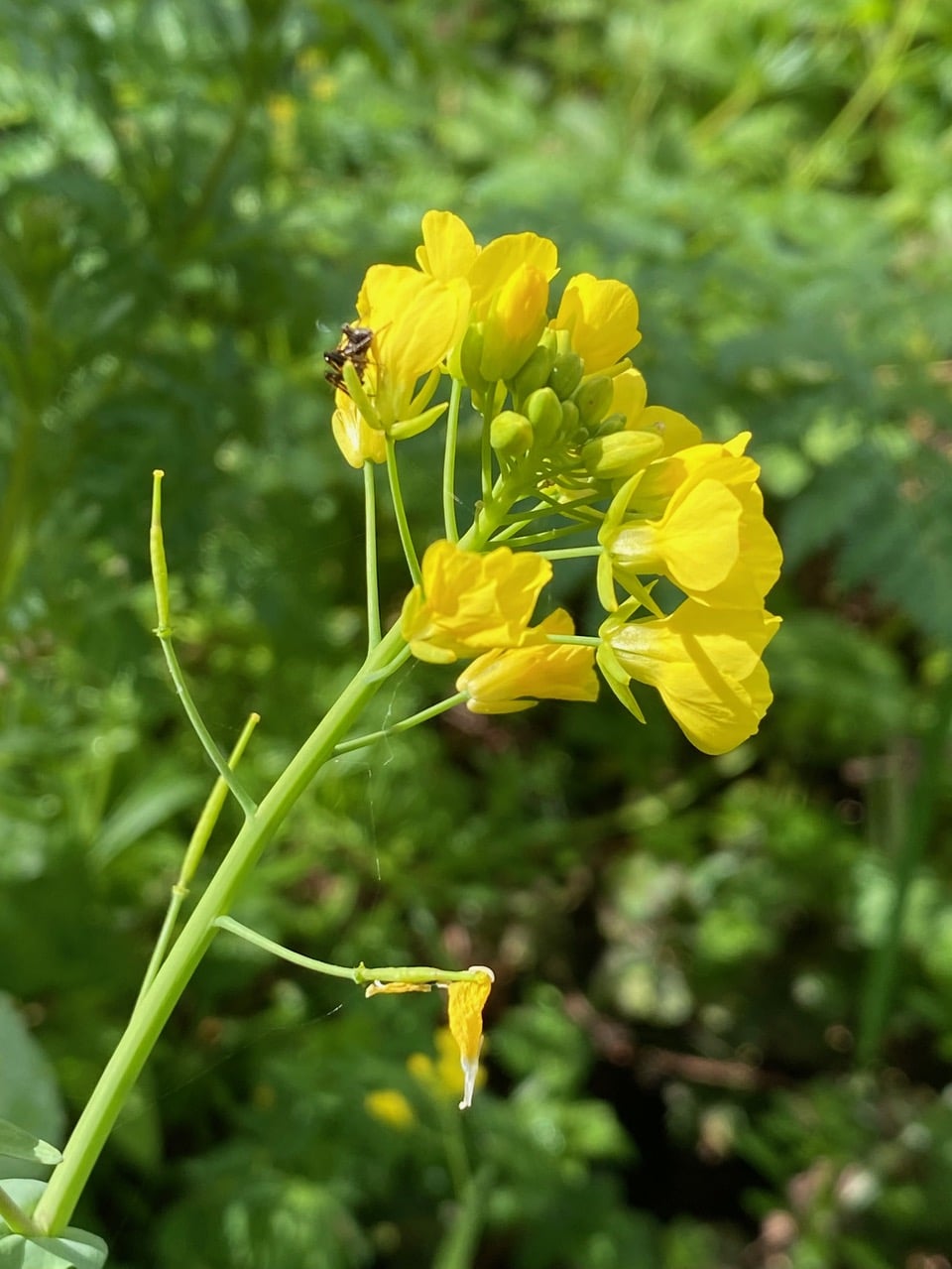
Hey, I think there’s another male Trashline Orbweaver on the Wild Mustard flower.
Yep, here he is closeup.
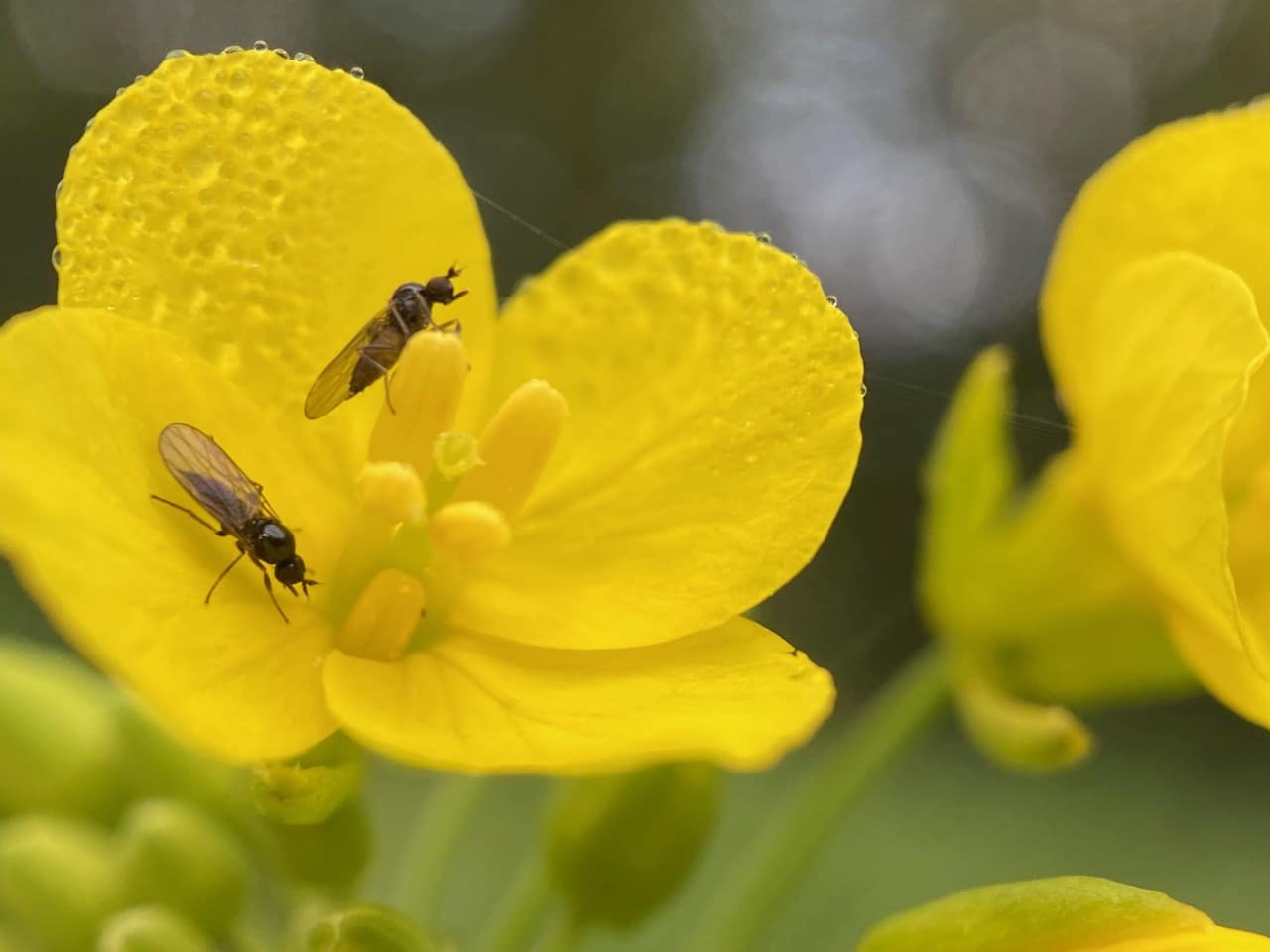
Two Hybotid Dance Flies on a rain-drenched Wild Mustard flower.
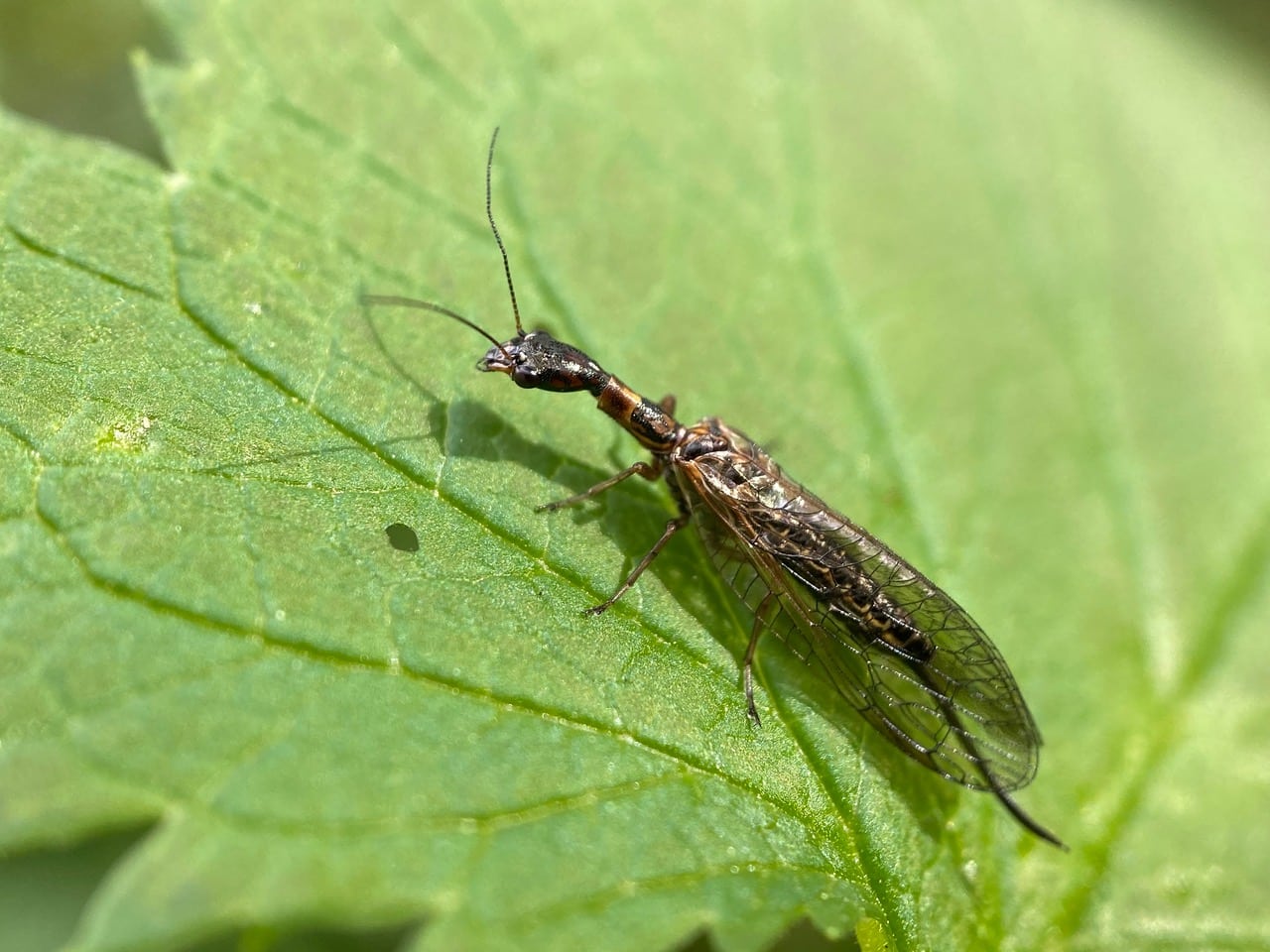
A female Snakefly, Agulla bicolor (family Raphidiidae) is resting on a stem of Bedstraw. Note her long ovipositor that extends beyond her wings, rendering her even more snake-like in appearance..
Snakeflies are a group of predatory insects comprising the order Raphidioptera. They are a relict group, having reached their apex of diversity during the Cretaceous before undergoing substantial decline. Adult Snakefly has a notably elongated thorax which, together with the mobile head, gives the group their common name of snakefly. The body is long and slender and the two pairs of long membranous wings are prominently veined. The head is long and flattened and heavily sclerotized. The mouthparts are strong and relatively unspecialized, being modified for biting. The large compound eyes are at the sides of the head. Females have a large and sturdy ovipositor which is used to deposit eggs into crevices or under bark. Snakeflies are holometabolous insects with four-stage life cycle consisting of eggs, larvae, pupae and adults. Both adults and larvae are predators of soft-bodied arthropods such as aphids and mites.
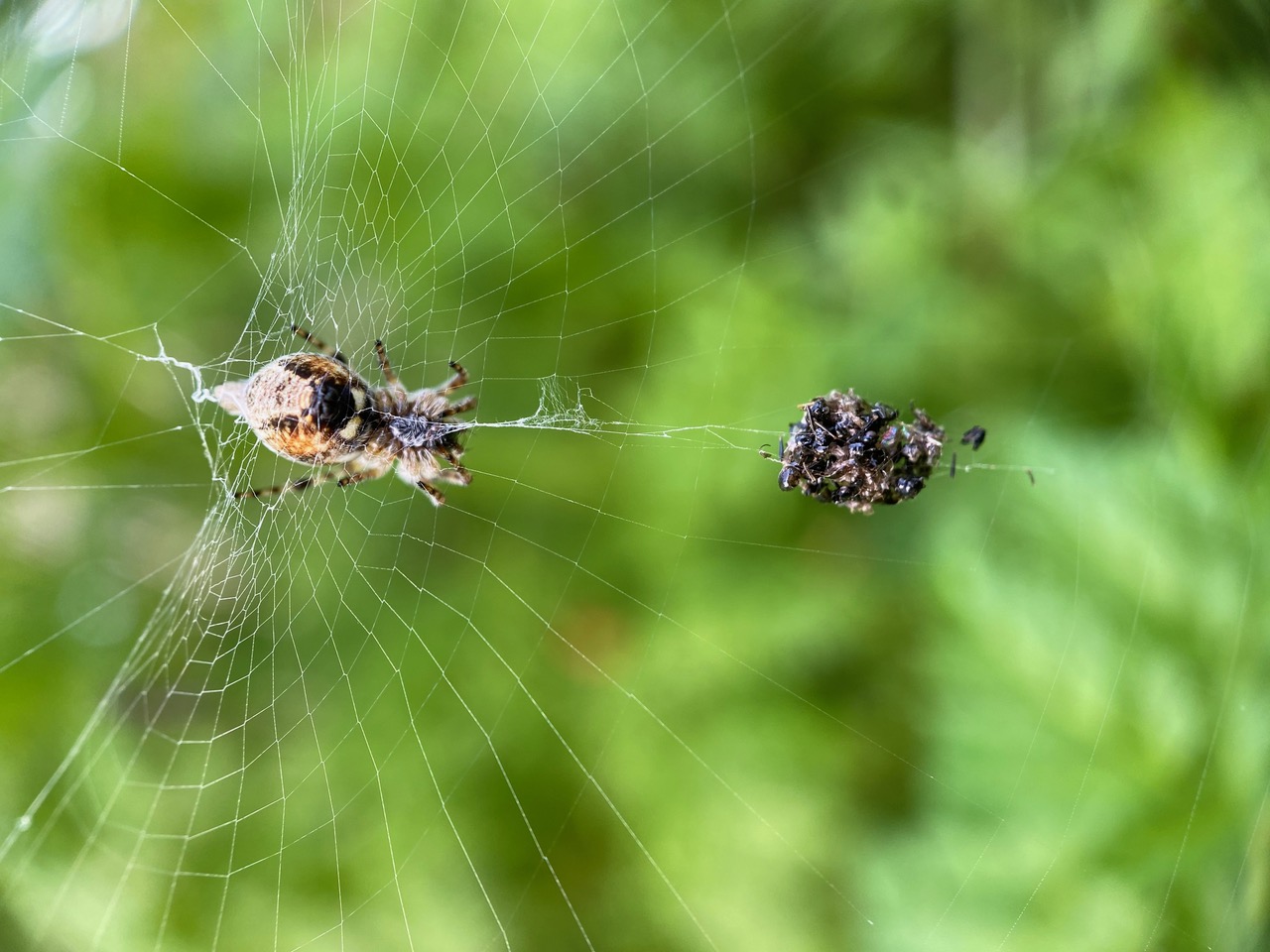
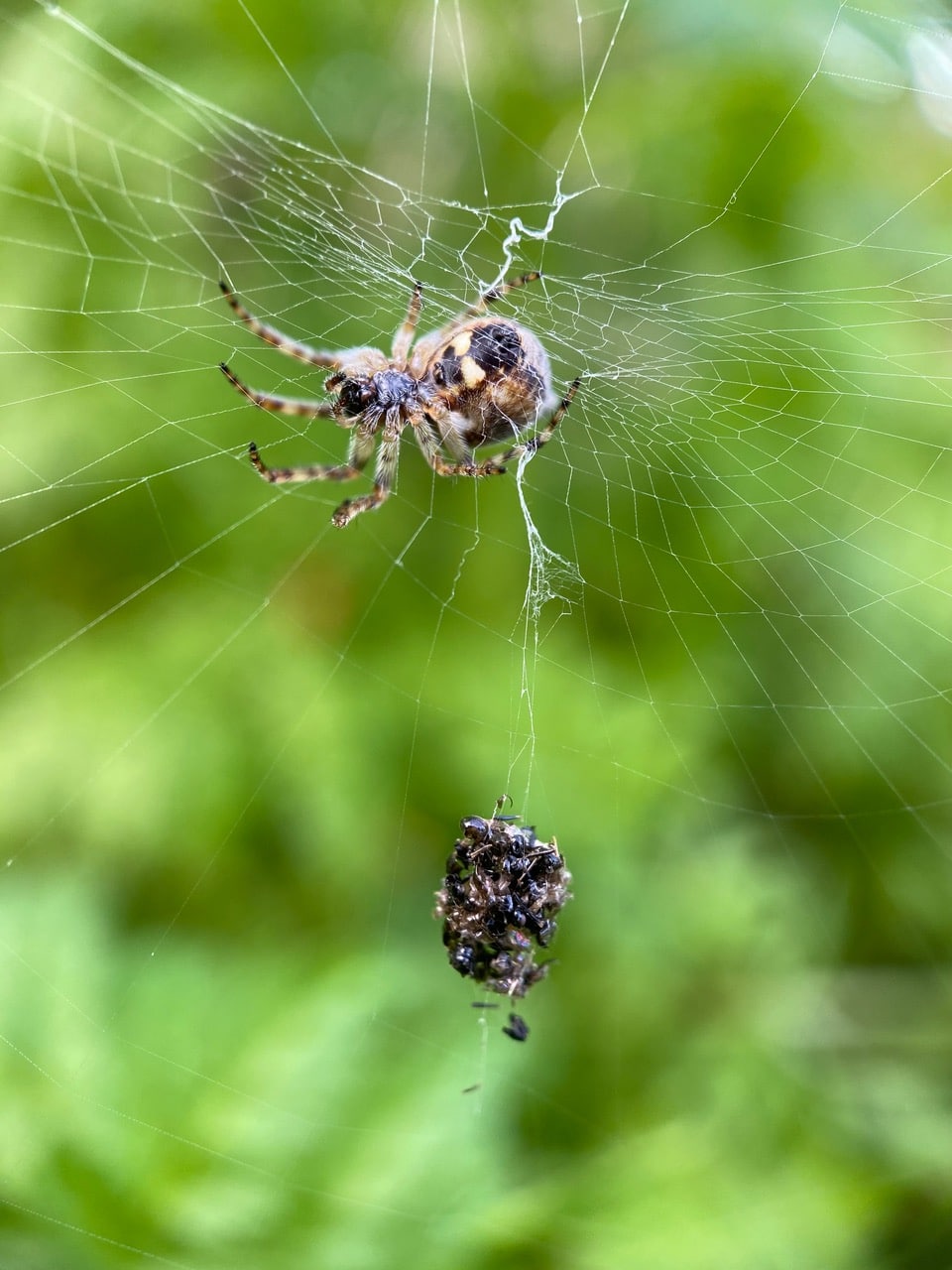
A female Trashline Orbweaver, Cyclosa conica (family Araneidae) is in the hub of her vertical orb web. (We are looking at her underside through the web.) She has hung up a sizable bundle of trash on the web below her, mostly composed of insect parts.
Trashline spiders are so-called for their web decoration. Cyclosa create orb-shaped webs using both the sticky and non-sticky threads, mostly during times of complete darkness. Across its spiral wheel-shaped web, Cyclosa fashions a vertical “trashline” made of various components such as prey’s carcasses, detritus, and at times, egg cases. The trashline helps the spider to camouflage exceptionally well from predators. The spider sits in the web hub to conduct its sit-and-wait hunting, ensnaring prey at nearly any time of day; it only leaves its spot to replace the web prior to sunrise.
Note that the female spider has a rounder, more robust build than the males we have seen. Her small pedipalps can be seen in front of her jaws. The large, dark structure on the tip of her abdomen is a collection of spinnerets, from which silk is extruded.
Ooh, here’s yet another male Conical Trashline Orbweaver, making his way across on a fine strand of silk. Note the cluster of black spinnerets at the tip of his abdomen. The spider has his hind legs on the silk, controlling its tension as he travels. So cool!
Here’s another male on a stalk of grass seeds.
This male is touching down on a leaf of Bedstraw. Note the clumps of white silk behind him. Spiders bunch up silk strands to control their tension as they travel. What is happening? Why so many males all of a sudden, while I go for years without seeing one. Is it mating season? Are they summoned by the pheromones emitted by the females? I have never seen a male on a web, and wonder if they even construct a web. All the Cyclosa males I have seen are on the go.
This is what I learn:
“These spiders reach adulthood in the spring. Mature males do not spin webs, wandering instead in search of potential mates…. The rarity of males is perplexing, an unsolved arachnid mystery. The strangely vestigial external genitalia of the females, with no external opening, has lent some weight to the theory that the species is parthenogenic, a scientific term meaning the ability to reproduce without males.”
Here’s a plump female Conical Trashline Orbweaver in her web. She will have plenty of suitors, even if she doesn’t need any.
Another female Snakefly, Agulla bicolor (family Raphidiidae).
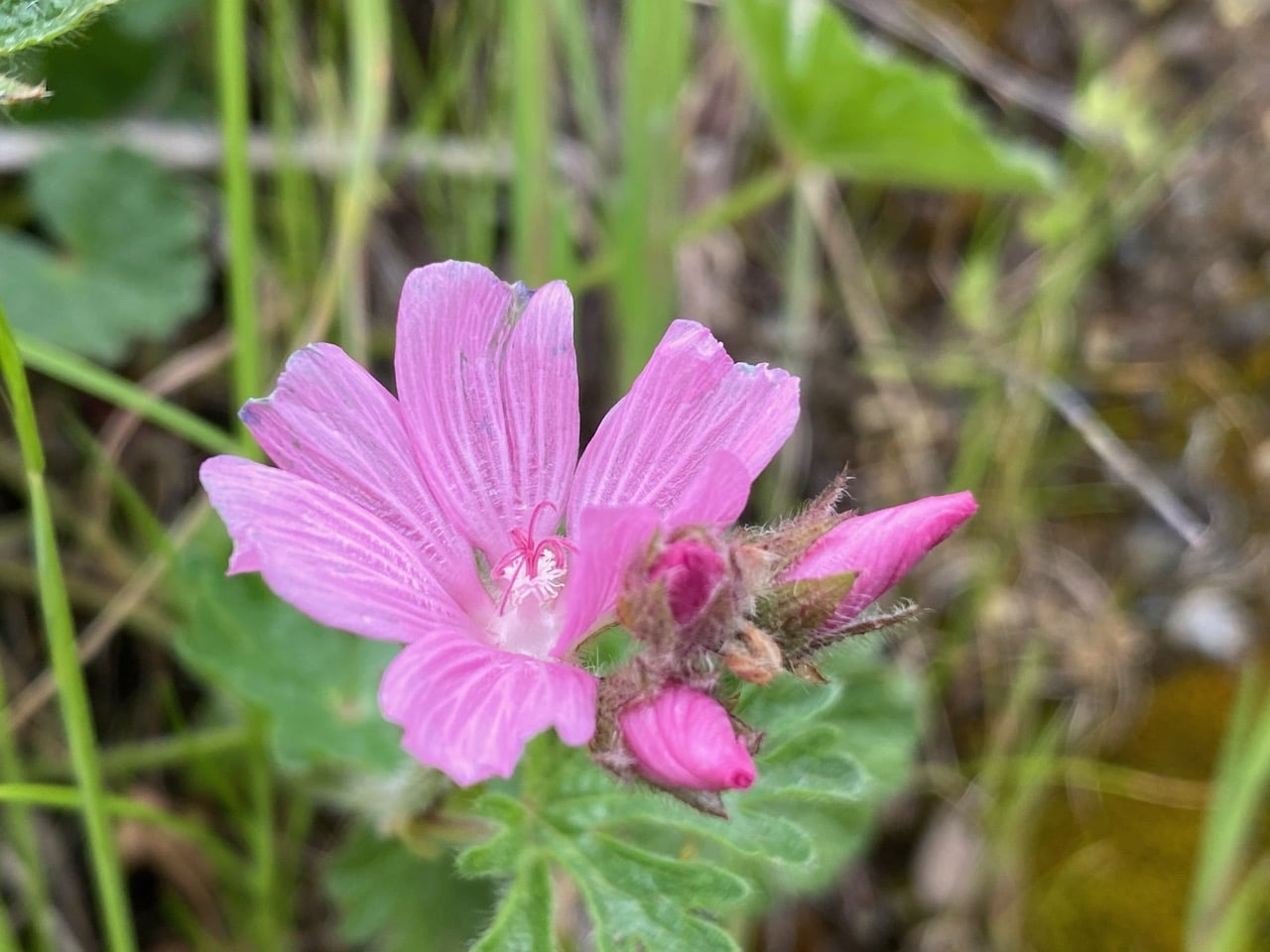
Pink flowers have appeared on the rocky trail bank. They are Checkerbloom, Sidalcea malviflora, one of the larger and eye-catching of our native wildlfowers.
I peer down the corolla of a flower to look for pollinators. The nectar is held in the calyx at the base of the petals, and visiting insects access the sweet stuff through the spaces between the petals. All clear. The Sidalcea flower is protandrous, the male parts maturing before the female parts. This flower is transitioning between the male and female phases. The white stamens have ceased pollen production, and the curly, pink styles have emerged through the column to receive incoming pollen.
There are many lovely Checkerblooms in flower, but no visiting insects.
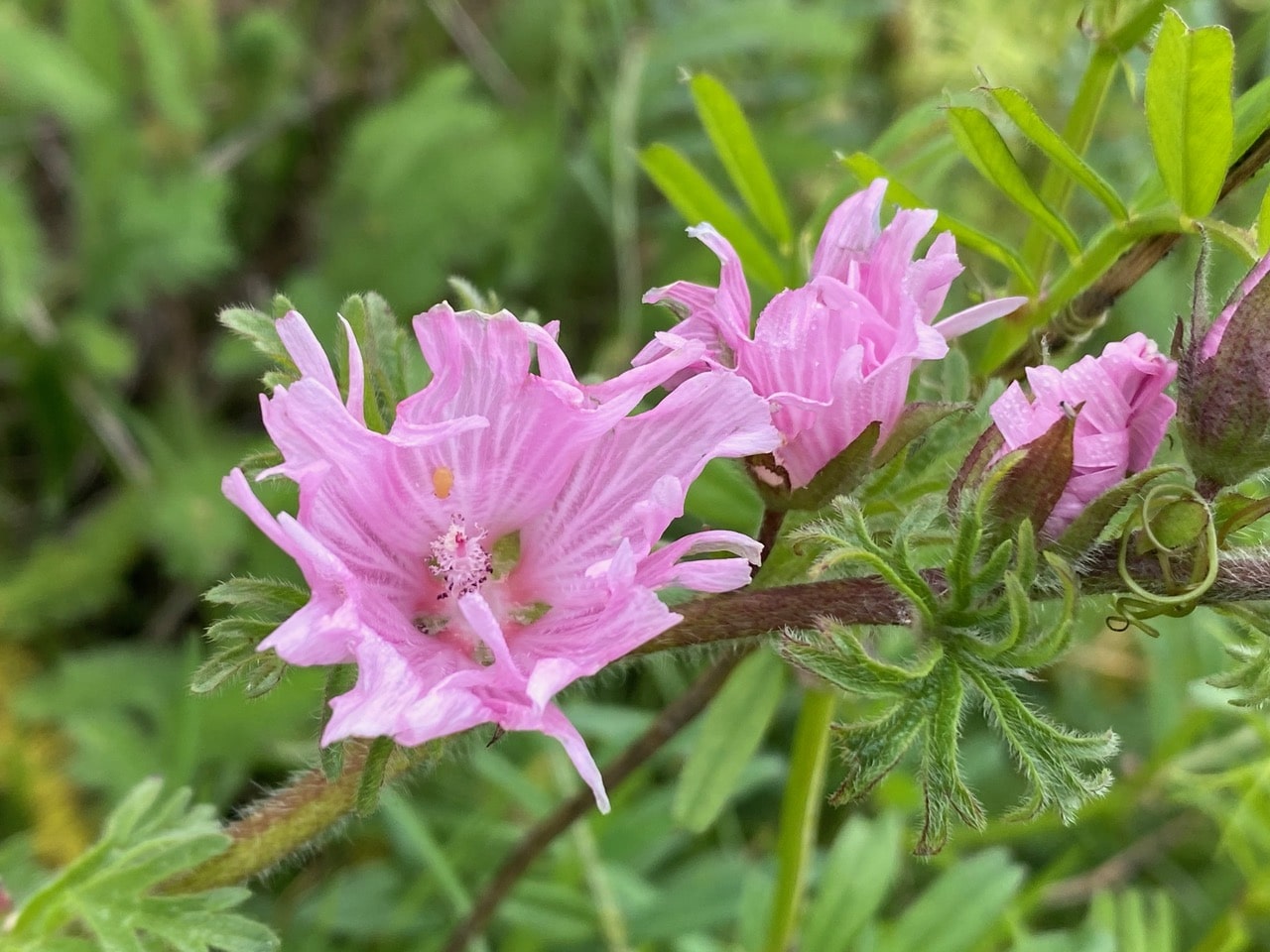
Just ten yards away, I spot this unusual Checkerbloom with frilly petals. I have never seen anything like this, and wonder if it was the same species, Sidalcea malviflora, or just a beautiful variant. Note the flower facing us. It is in the male phase, releasing pollen.
A pink style is beginning to protrude through the stamens, and the profusion of stamens is subsiding. This flower is transitioning into the female phase. Note the spaces between the bases of the petals. That’s where insects would probe for nectar. Looks like there’s a yellow aphid on the petal, but otherwise no insect.
An Arroyo Lupine, Lupinus succulentus has sent up a spike of beautiful flowers on the slope. I clamber up to photograph a little blue butterfly at the base of the spike, but it folds its wings and flies away.
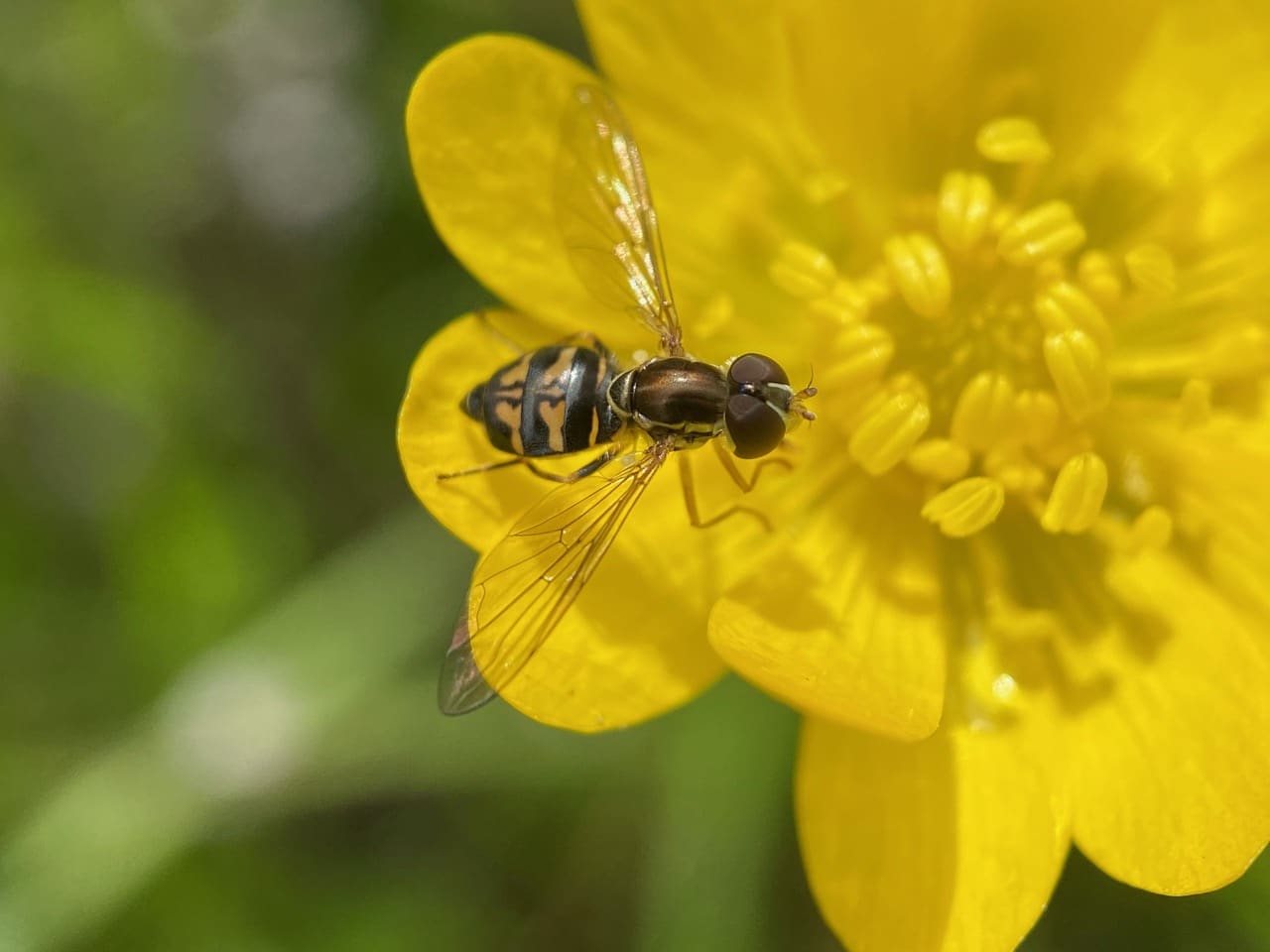
A female Western Calligrapher, Toxomerus occidentalis (Syrphidae) is feeding on pollen of a California Buttercup, Ranunculus californicus.
The genus name Toxomerus comes from Greek toxon for ‘bow’ and meron for ’thigh’, referring to the bow-shaped hind femur. Colors vary with overall temperature during pupation: higher temperatures produce more yellow, while lower temperatures produce adults with darker markings. Adults visit flowers for nectar and pollen. Larvae feed on aphids and other soft-bodied insects.
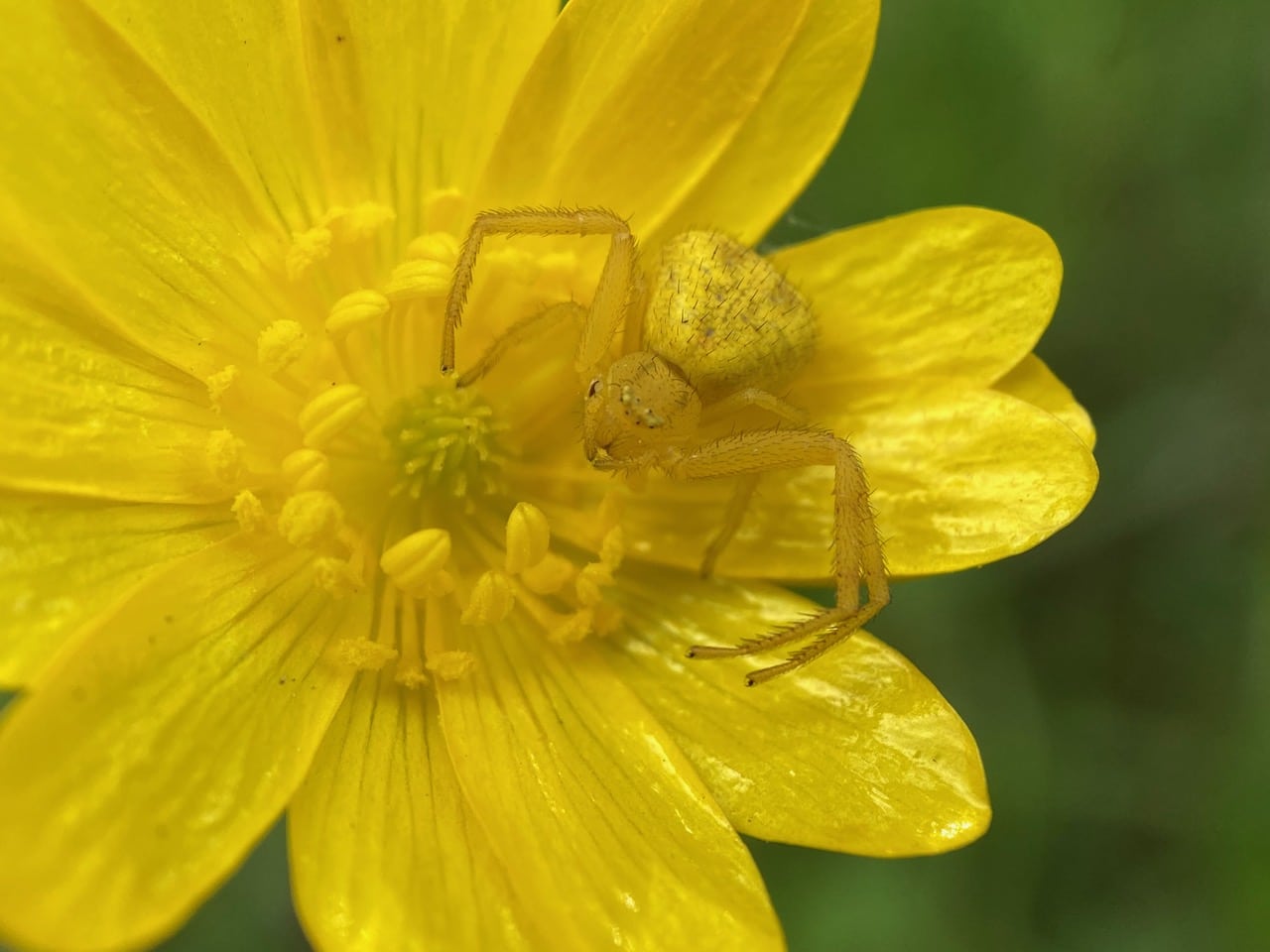
Whoa! I almost didn’t see the Crab Spider, Mecaphesa sp. (family Thomisidae) sitting in ambush on a California Buttercup. Her color is almost a perfect match for the flower. The trap is set! Her two front pairs of legs cocked, the spider is ready to grab any insect that comes within reach.
Crab Spiders are usually yellow or white. This ultimately depends on the flower on which they are hunting (active camouflage). They have the ability to change between these colors based on their surroundings, using visual cues. The color-changing process is not instant and can take up to 25 days to complete. Depending on the color of flower they see around them, the spiders can secrete a liquid yellow pigment into the body’s outer cell layer. The baseline color of the spider is white. In its white state, the yellow pigment is sequestered beneath the outer cell layer so that the inner glands which are filled with white guanine are visible. While the spider is residing on a white flower, it tends to excrete the yellow pigment instead of storing it in its glands. In order to change back to yellow, the spider must first produce enough of the yellow pigment. For this reason it takes these spiders much longer to turn from white to yellow than it does the reverse. The color change from white to yellow can take between 10-25 days while the opposite color change takes only about 6 days.
Hybotid Dance Flies (family Hybotidae) feasting on pollen of a California Buttercup flower.
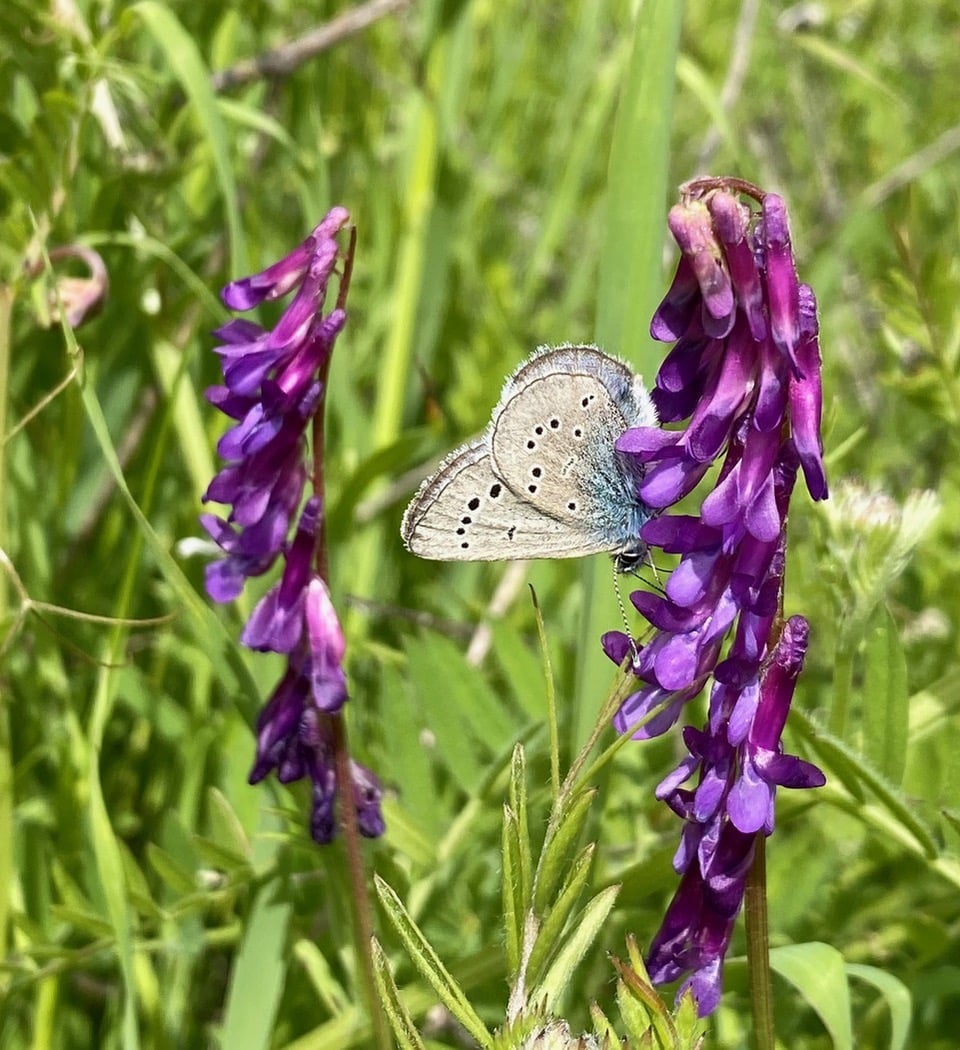
A female Silvery Blue butterfly is perched on an inflorescence of Hairy Vetch, Vicia villosa (family Fabaceae). She holds still in this position for a while. I wonder if she’s laying eggs.
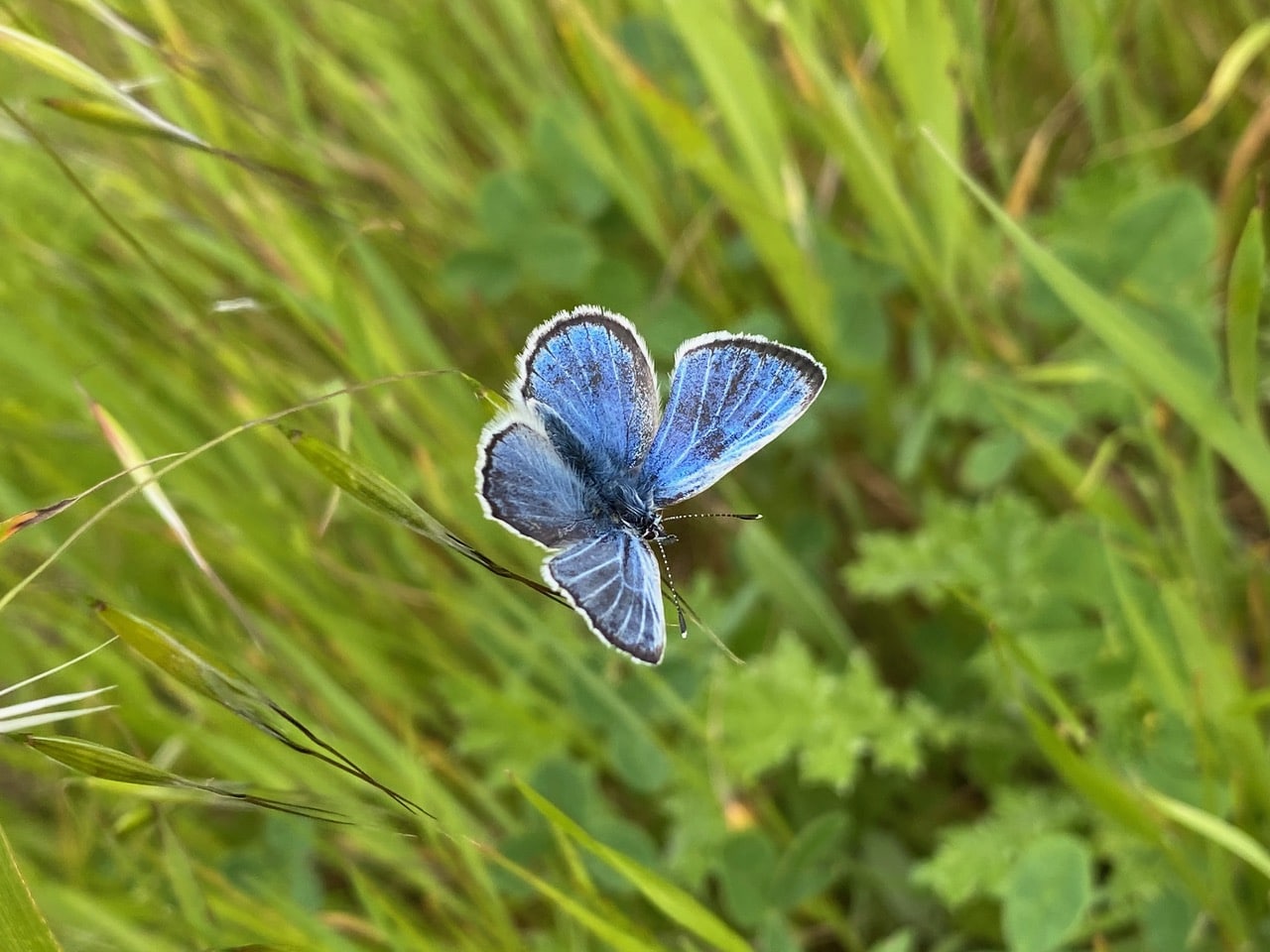
The Silvery Blue, Glaucopsyche lygdamus (family Lycaenidae) is a small butterfly native to North America, found over much of the western states and most of Canada. Males patrol near the host plants for females. Eggs are laid singly on flower buds and young leaves of host plants in the pea family, Fabaceae. Caterpillars feed on flowers, seedpods, and young leaves and are tended by ants.
Hairy or Winter Vetch, Vicia villosa (family Fabaceae) is native to Europe and western Asia. Although non-native, it is widespread in the United States and is considered invasive by some states. The plant is widely used by organic growers in the US as a winter cover crop and in no-till farming, as it is both winter hardy and a prolific nitrogen fixer. It is also used in organic gardens as companion plants, as an alternative to rotating crops on small growing areas. The vetch provides both nitrogen and an instant mulch that preserves moisture and keeps weeds from sprouting. In wild landscapes it is observed that the vetch is a good pioneer plant in disturbed areas, preserving fertility of the soil for vegetation that follows in plant succession.
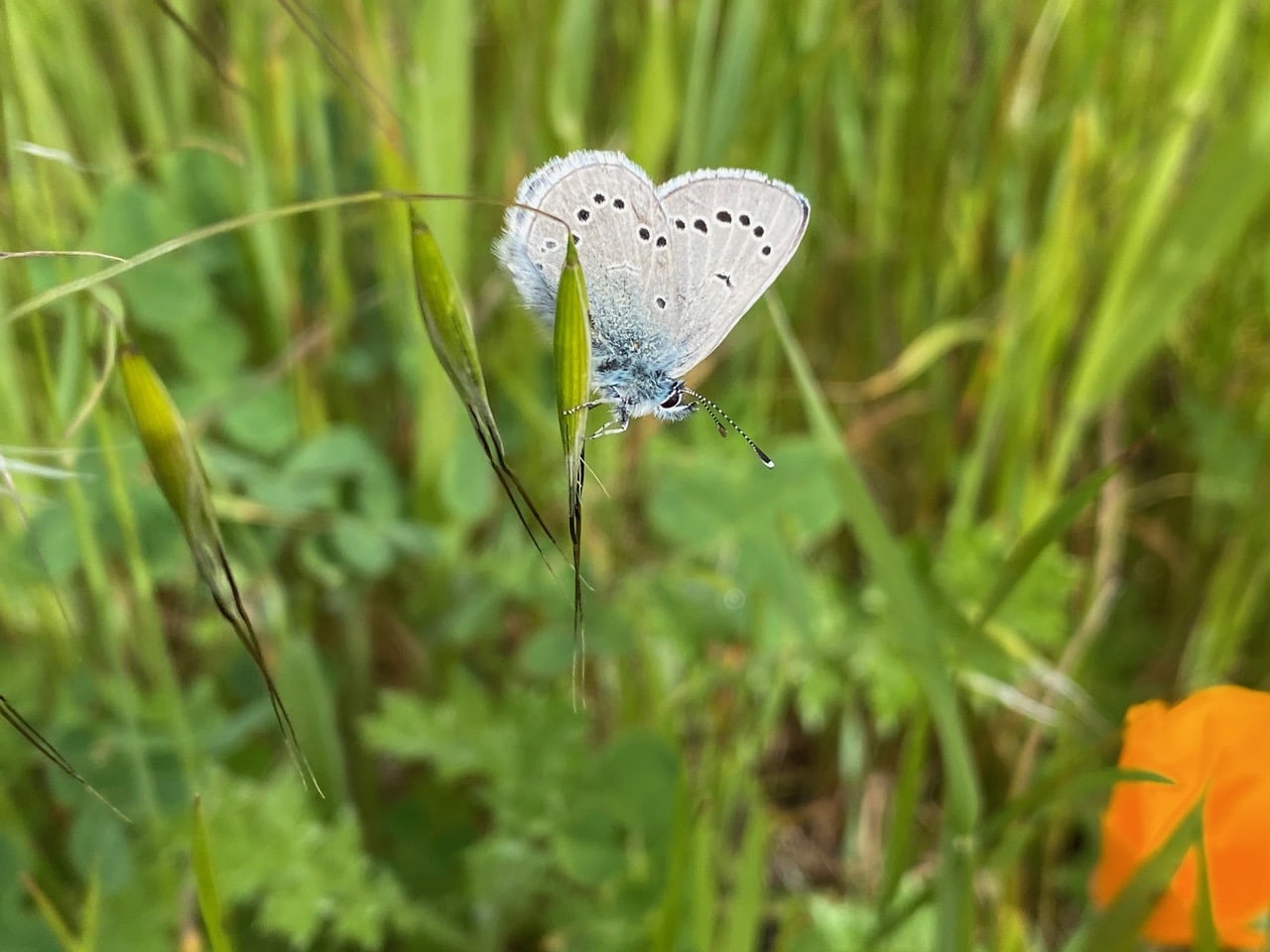
Nearby, I spot a glint of brilliant blue among the tall grasses. A male Silvery Blue butterfly is perched on a drooping seed head, waving in the breeze.
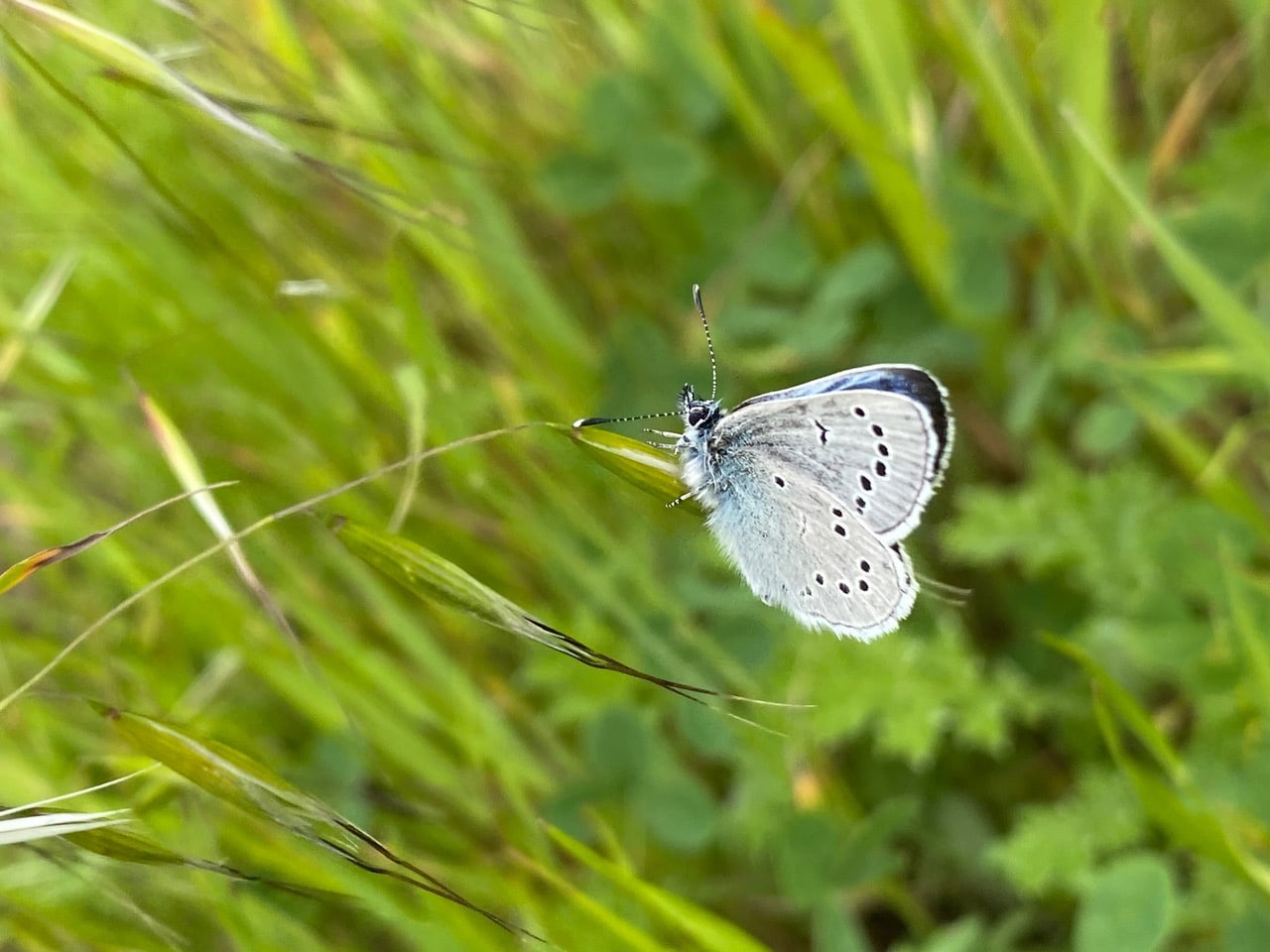
The little butterfly finally folds its wings and turns around, giving me a view of its underwings.
What a sweet, cooperative butterfly!
The Gossamer-winged Butterflies, family Lycaenidae comprises the blues, the coppers, the hairstreaks, and the harvesters. Adults are small, under 5 cm usually, sometimes with a metallic gloss. Larvae are often flattened rather than cylindrical, with glands that may produce secretions that attract/appease ants. The larvae are capable of producing vibrations and low sounds that are transmitted through the substrates they inhabit. They use these sounds to communicate with ants. About 75 % of species associate with ants, a relationship called myrmecophily. Ants harvest a sweet liquid from the caterpillar’s dorsal nectary organ (“honey gland”) and in exchange may protect them from predators.