

Pollinator Post 3/24/25 (1)
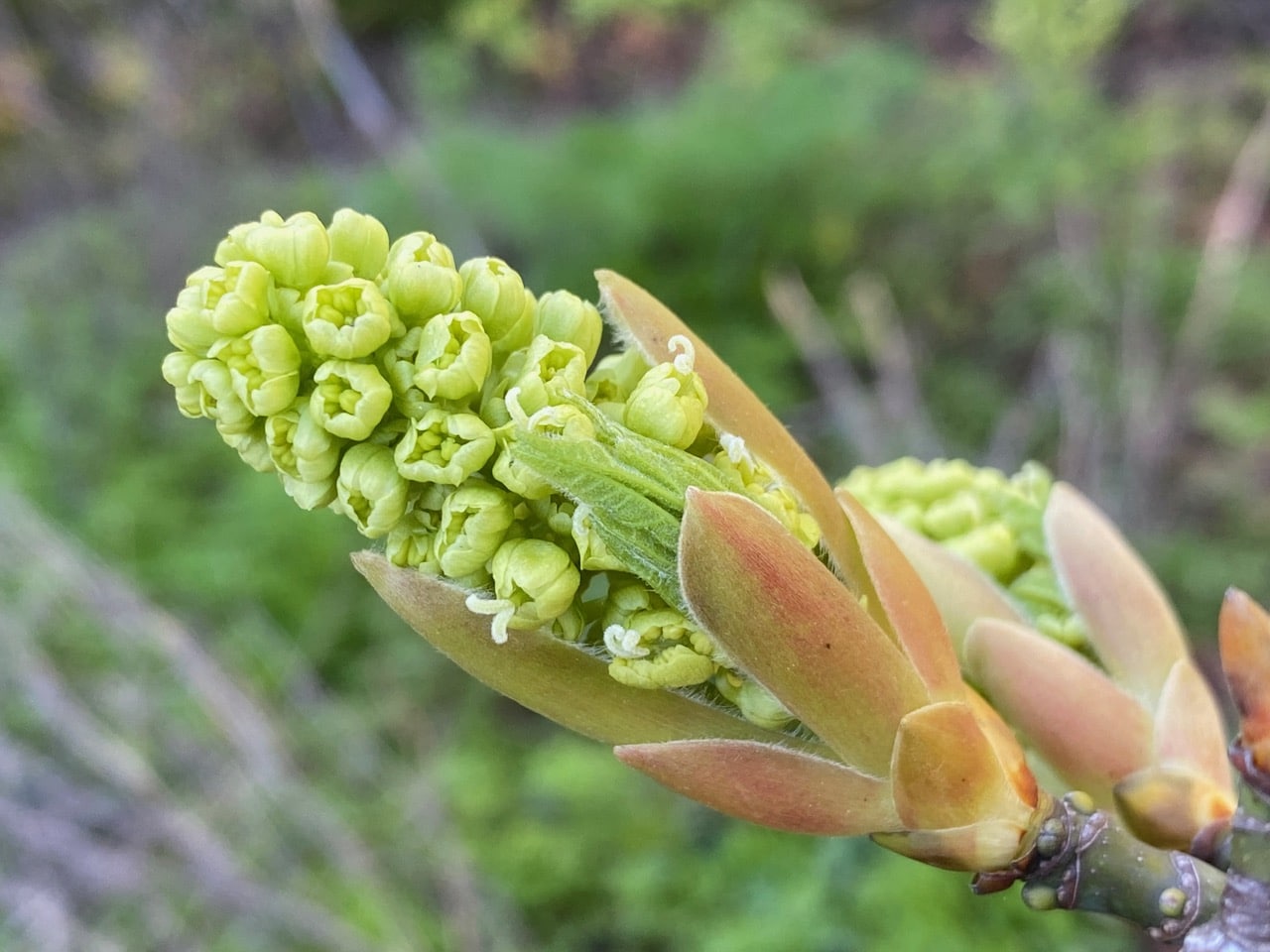
Expecting an unusually hot day ahead, I decide to botanize at the Tilden Regional Parks Botanic Garden up in the hills, with plenty of shade and cover if necessary.
Ah, budburst is still occurring on the Big-leaf Maple, Acer macrophyllum near the parking lot. Checking on the emerging inflorescences confirms my previous observations that the flowers are all bi-sexual, containing the reproductive structures of both sexes. However, the ones to mature first are exposing their female parts first (see those squiggles of white styles), followed by the male parts (pollen releasing stamens). The sequence is indicative of a species that is protogynous (“female-first”). The temporal separation of the genders is the plant’s strategy for avoiding self-pollination.
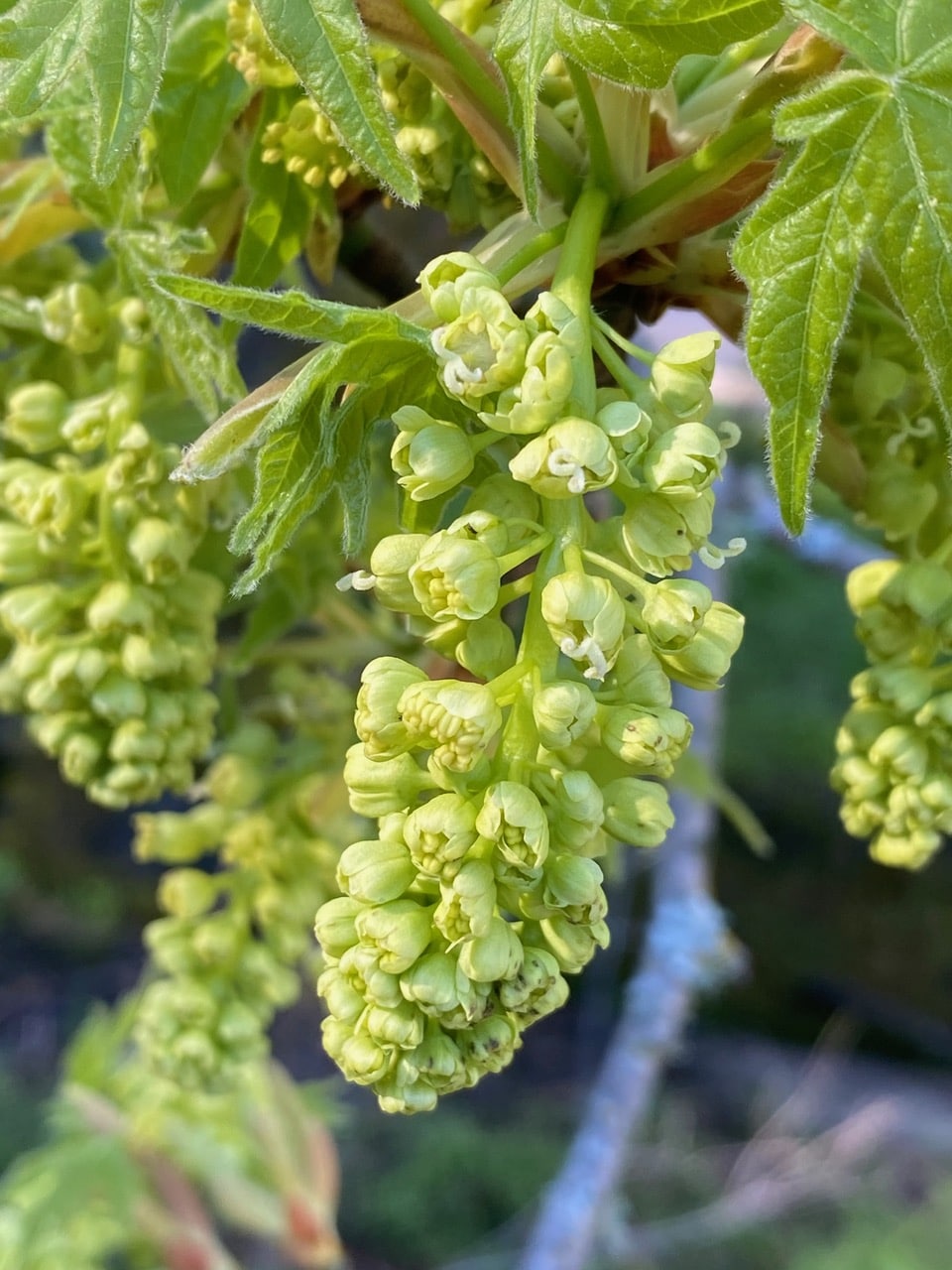
As each flower matures, the white styles wither away while the stamens are extruded from the cup-shaped corolla to release their pollen.

The tree-size Ceanothus along the path is still abuzz with bee activity. Most of the visitors are worker Black-tailed Bumble Bees, Bombus melanopygus (family Apidae).
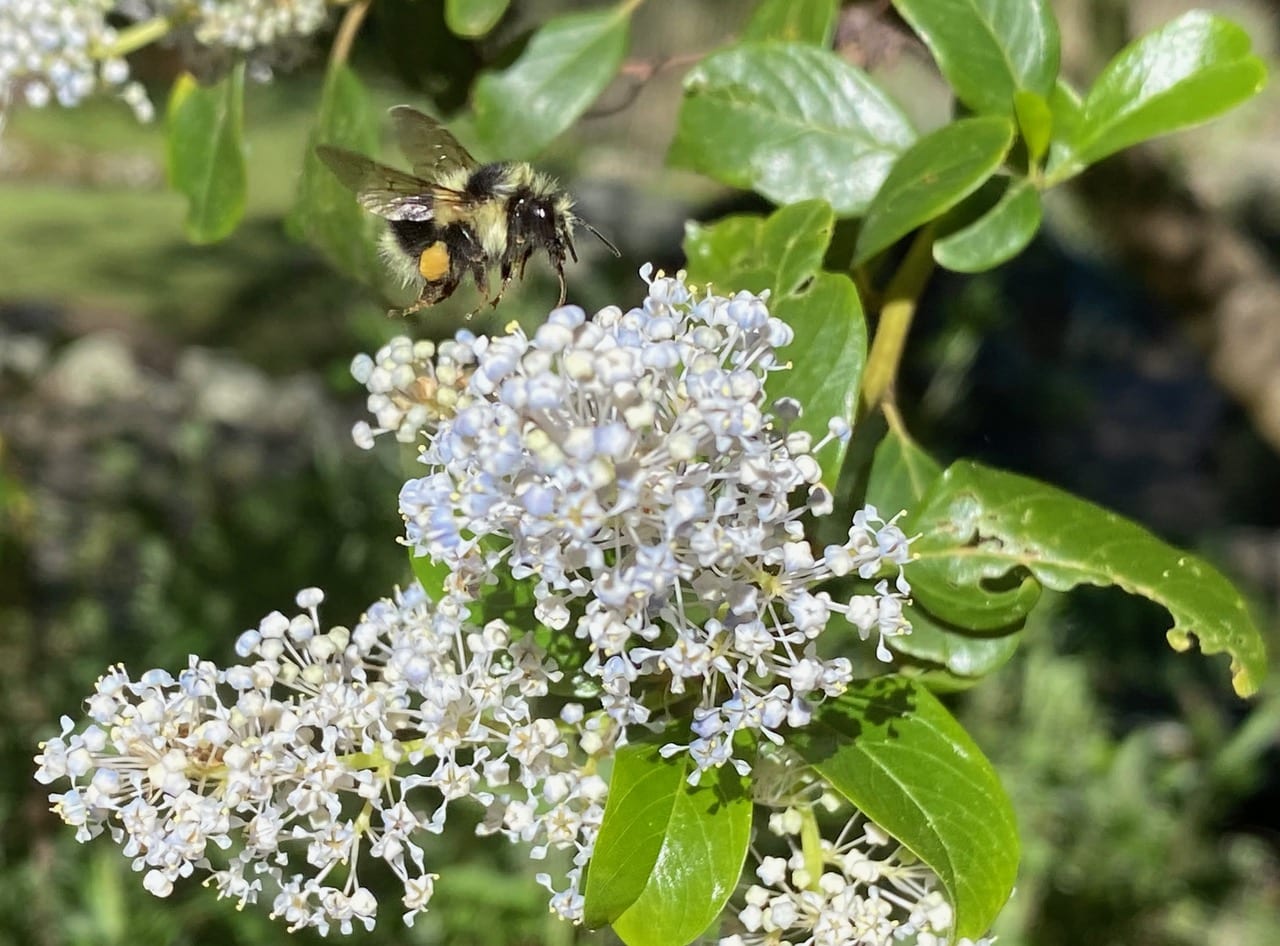
Bombus melanopygus is a species of bumble bee native to western North America, widely distributed from the Pacific to the Rocky Mountains, and from Alaska to Baja California. The species is found in various habitats, including agricultural and urban areas. The bees feed on many types of plants, including manzanitas, Ceanothus, golden bushes, wild buckwheats, lupines, penstemons, rhododendrons, willows, sages, and clovers. They nest underground or aboveground in structures.
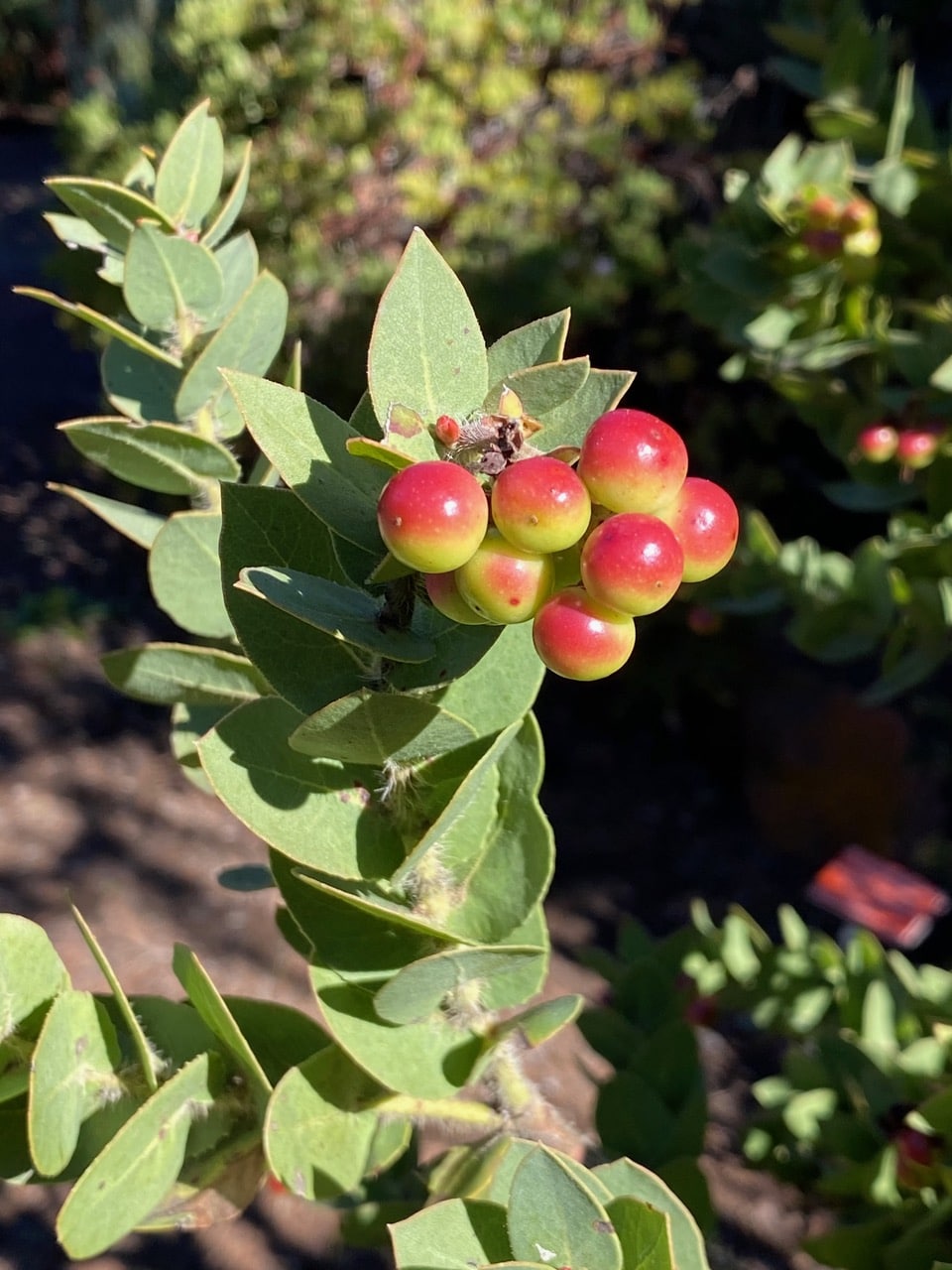
Most of the manzanitas in the garden are finished blooming, and well on their way to developing fruits. Luscious “little apples” are ripening on the tip of this manzanita branch. Manzanita is a common name for many species of the genus Arctostrphylos. The word manzanita is the Spanish diminutive of manzana meaning “little apples”. Manzanita fruit is technically a drupe, which means it has a large seed in the center surrounded by fleshy tissue and thin skin. Many animals eat manzanita fruits, including bears, deer, birds, and rodents. Coyotes and foxes help disperse the seeds in their droppings.
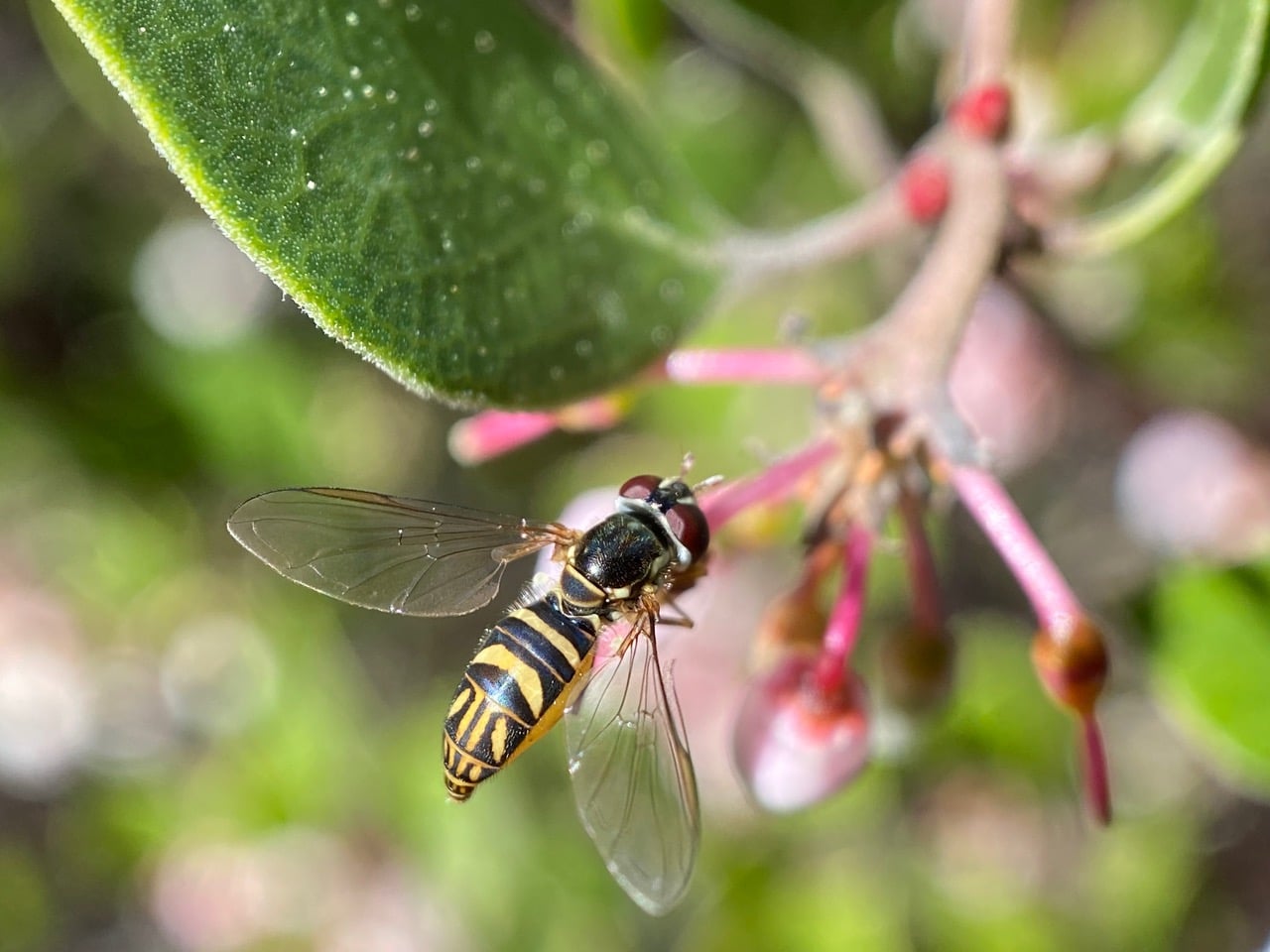
An Oblique Streaktail, Allograpta obliqua (family Syrphidae) has landed on a senescing manzanita inflorescence. Although small in size, the hover fly is easy recognizable for the unique pattern on its black-and-yellow abdomen. It is a female, as evident from its dichoptic eyes (not meeting each other on top of the head), and the plumper abdomen with a pointed tip.
The Oblique Streaktail, Allograpta obliqua is a common North American species of hover fly. Adults, 6-7 mm long, visit flowers for nectar and pollen, and are pollinators. Females lay eggs on plant surfaces near aphids. Larvae feed on the aphids.
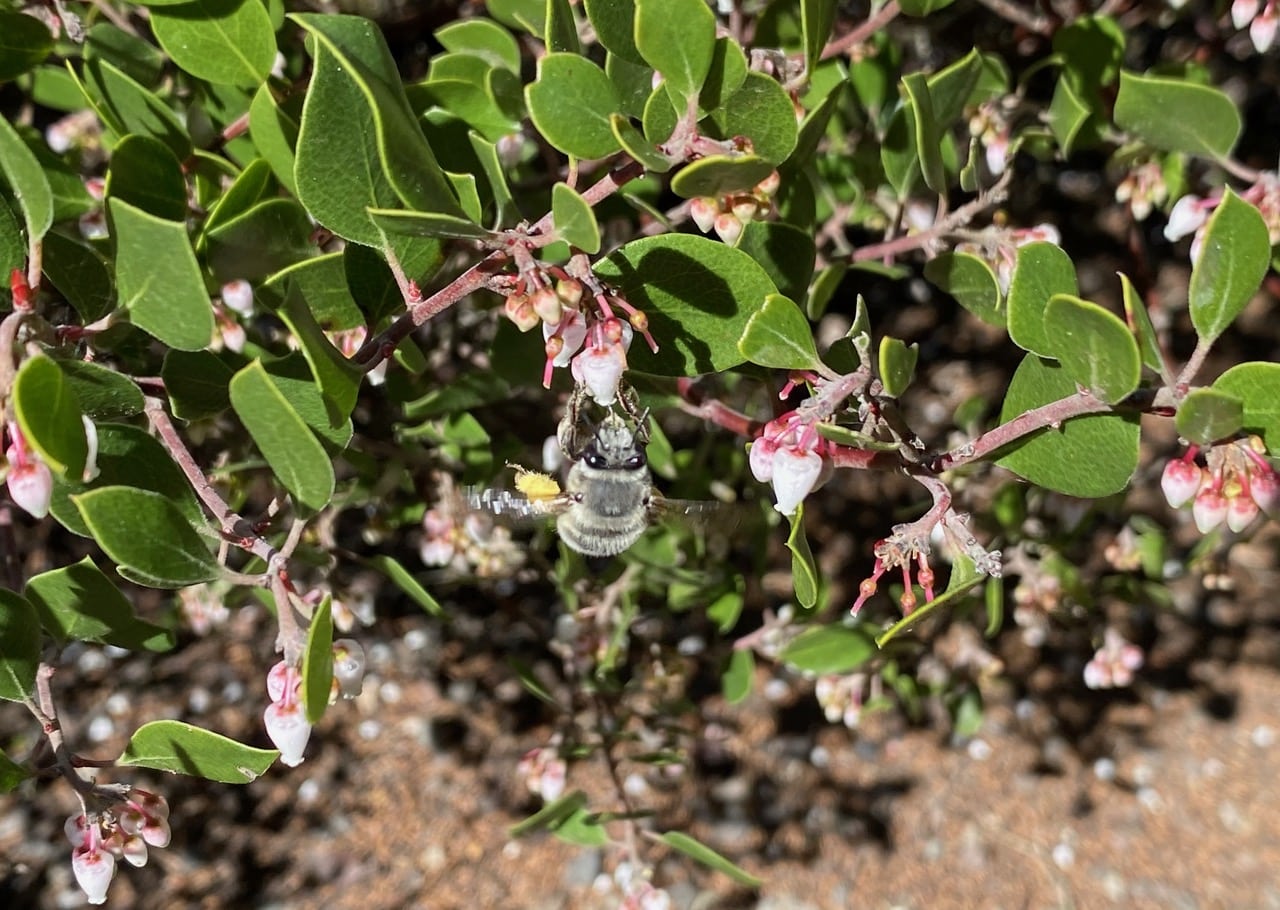
This late-blooming manzanita is still attracting numerous pollinators, notably the Pacific Digger Bees, Anthophora pacifica (family Apidae). Compared to earlier in the season, there are a lot more females than males now. See the yellow pollen load on this female’s hind leg? Male bees do not collect pollen; neither do they have the anatomy for the job.
As their name implies, the Digger Bees nest in the ground, sometimes in huge aggregations. These fast and noisy flyers buzz around flowers, appearing to “hop” from flower to flower while foraging. The chubby, furry Digger Bees resemble the bumble bees in many ways, but are a lot noisier. They are a fearless, rowdy lot – fun to watch but a challenge to photograph. Male digger bees of many species have white or yellow integuments on their faces. Females have shaggy hairs on their back legs, used to carry pollen. Female Anthophora are capable of buzz pollination – i.e. they vibrate their wing muscles to shake pollen from the anthers of some flowers. Digger bees are generalist pollinators that visit an impressively wide range of plants. They are exceptionally effective pollinators and play an important role in maintaining wildflower diversity, in part because their long tongues allow them to pollinate deep-throated and tubular blossoms inaccessible to other bees.

Female Pacific Digger Bees have long, shaggy hairs on their hind legs – they are the special pollen-collecting hairs collectively called scopae.
In contrast to the corbiculate bees such as bumble bees and honey bees with corbiculae (“pollen baskets”) on their hind legs, the non-corbiculate bees such as this digger bee, do not wet and compress the pollen they have gathered, but instead take it away loosely held to the scopal hairs by electro-static attraction. Compared to pollen packed in corbiculae, pollen transported in the scopae are much easier to dislodge, resulting in more effective pollination and fertilization.
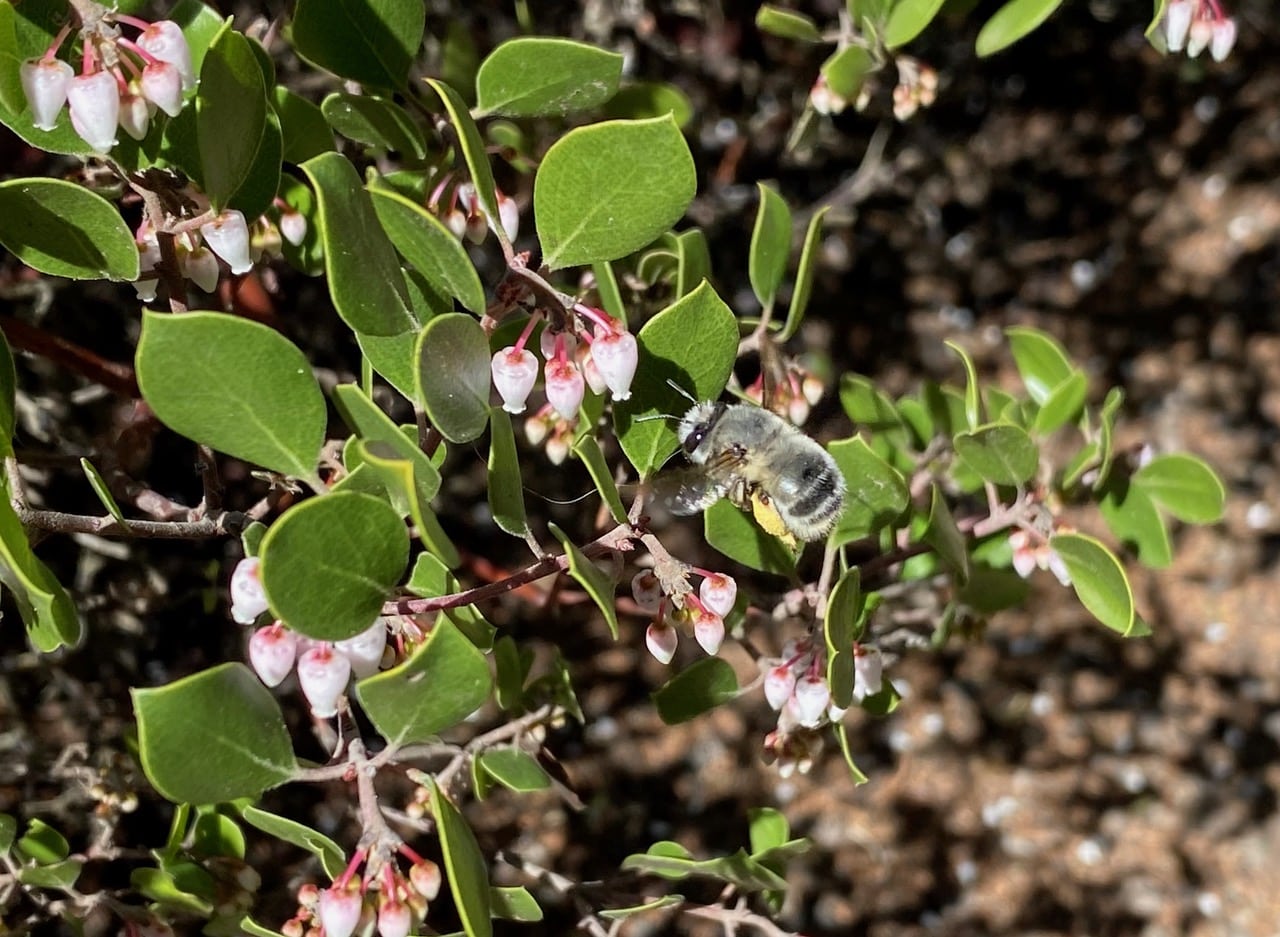
Female bees are easily recognized in the field for the pollen that they carry.
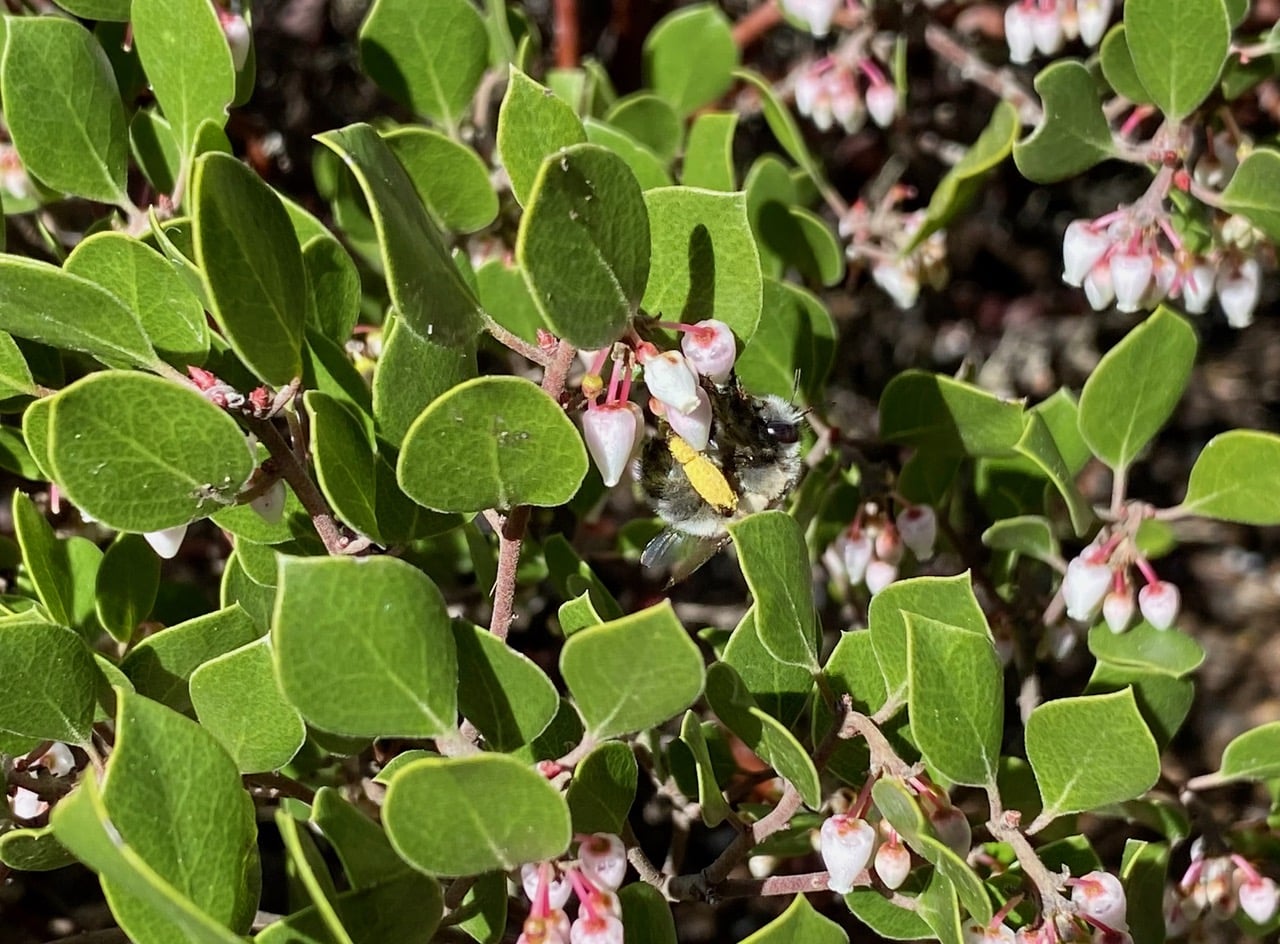
Another view of a female Pacific Digger Bee and her pollen-laden scopa.
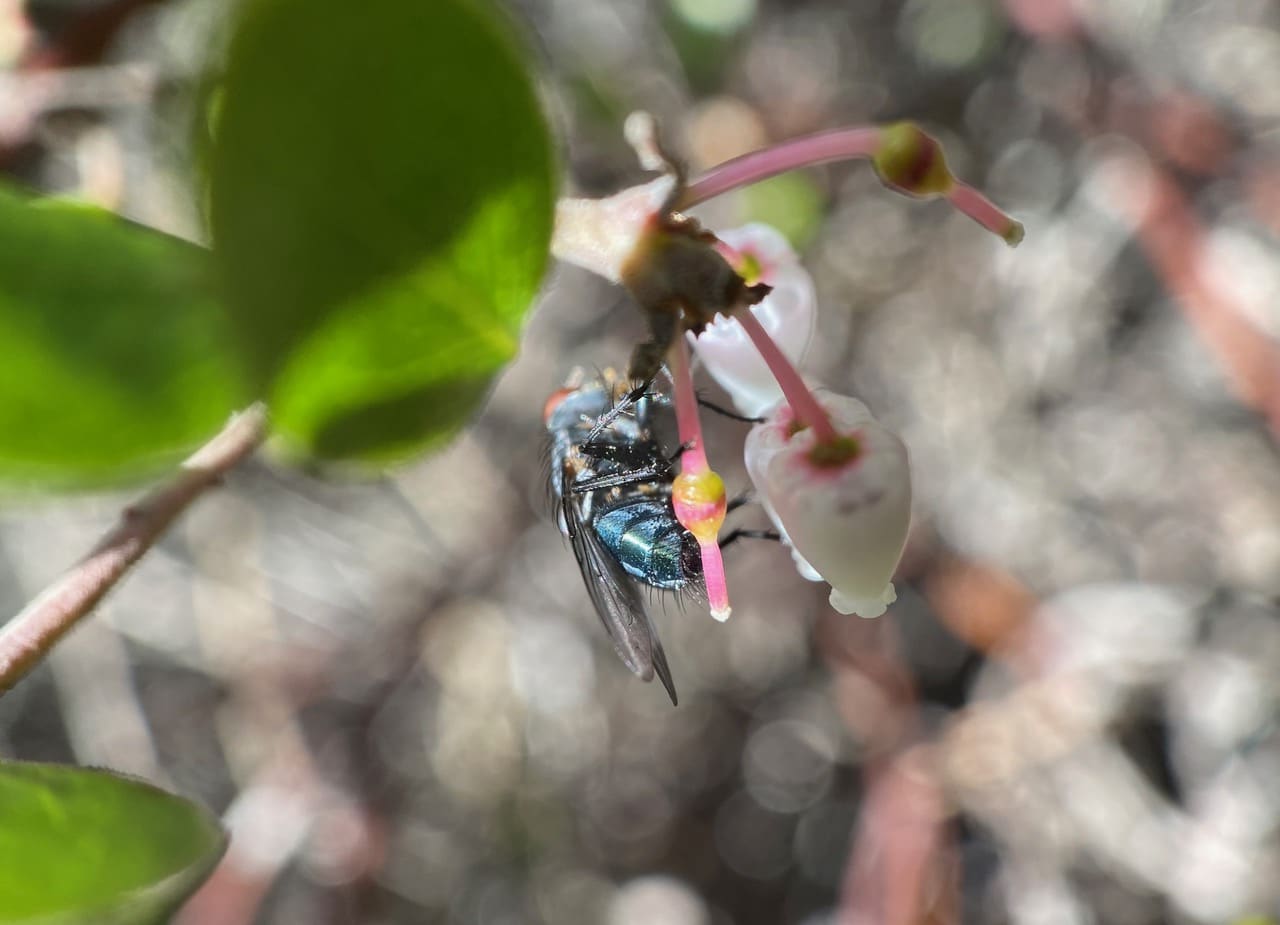
Though hardly ever talked about, the Bluebottle Fly, Callifphora sp. (family Calliphoridae) is probably one of the most common visitors to the manzanita flowers.
The Calliphoridae are variously known as blow flies, carrion flies, greenbottles, and bluebottles. Adults are usually brilliant with metallic sheen, often with blue, green, or black thoraces and abdomens. There are three cross-grooves on the thorax; calypters are well developed. Females visit carrion both for proteins and egg laying. The larvae that hatch feed on dead or necrotic tissue, passing through three instars before pupation. After the third instar, the larva leaves the corpse and burrows into the ground to pupate. Adult blow flies are occasional pollinators, being attracted to flowers with strong odors resembling rotting meat. The flies use nectar as a source of carbohydrates to fuel flight.
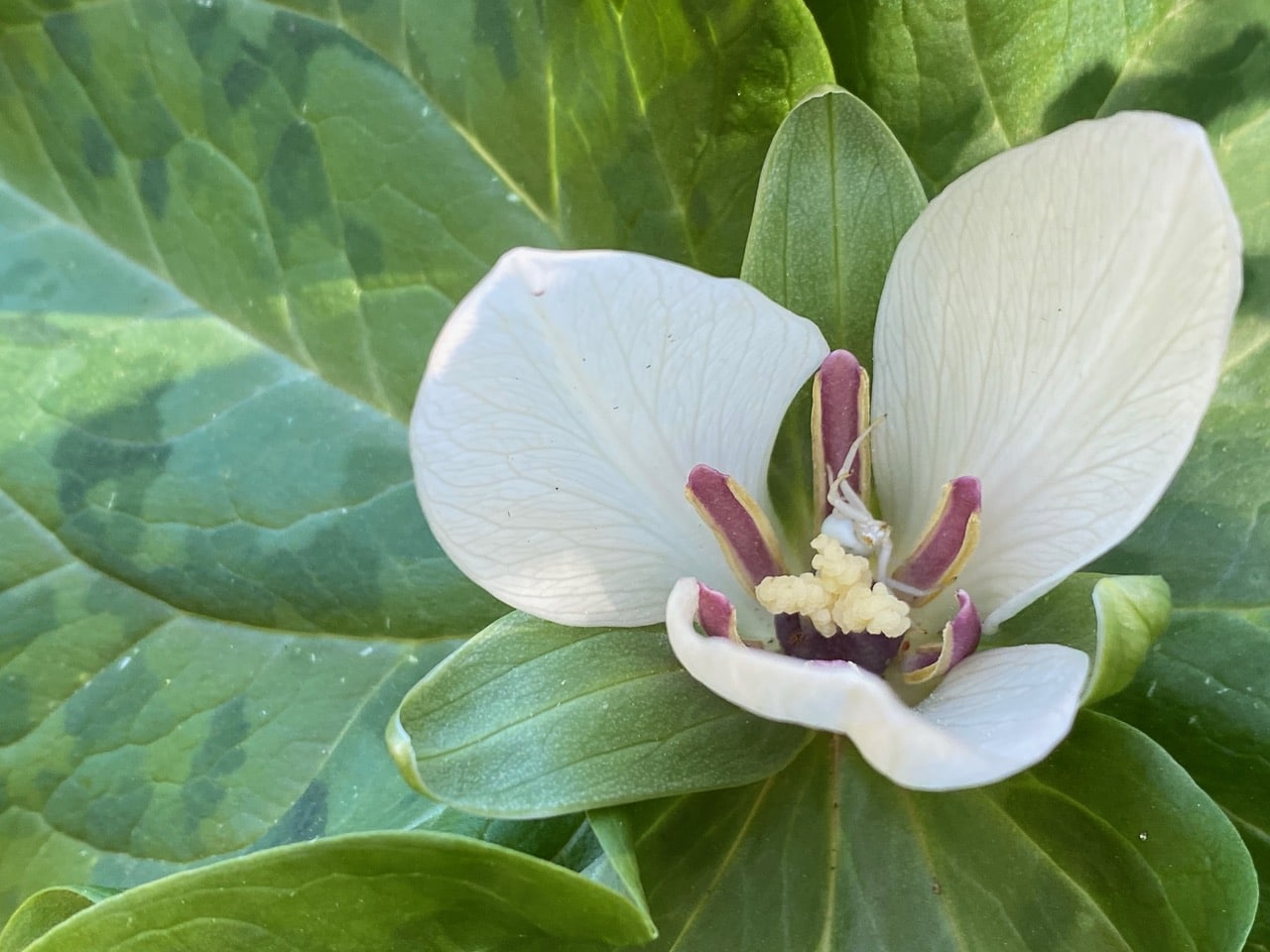
Hey, there’s a Crab Spider (family Thomisidae) in that white-flowered Giant Trillium, Trillium chloropetalum. The presence of the predator reassures me that these flowers are being visited by insects.
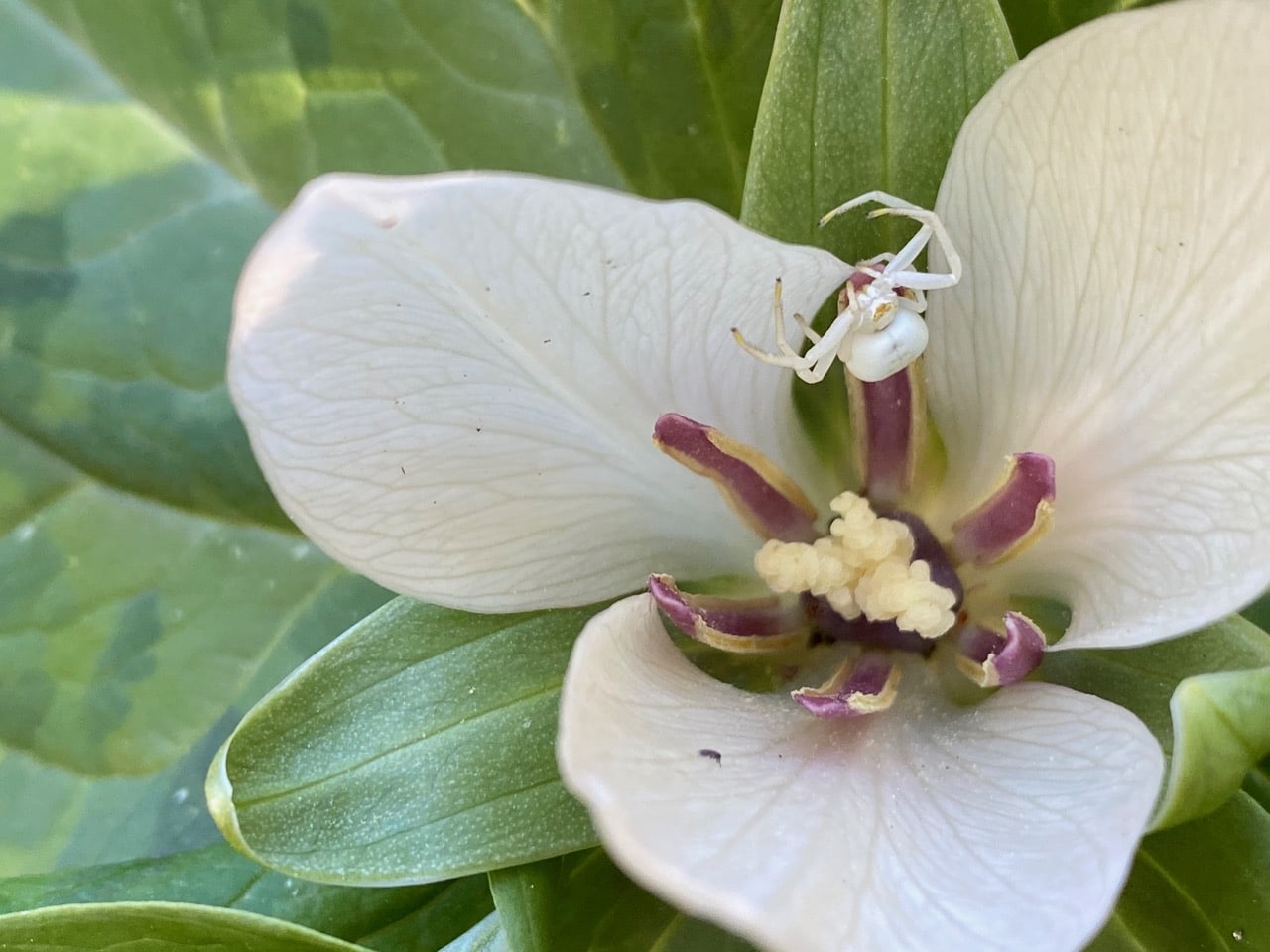
Sensing my approach, the spider rushes up a stamen to confront me.
Members of the family Thomisidae do not spin webs, and are ambush predators. The two front legs are usually long and more robust than the rest of the legs. Their common name derives from their ability to move sideways or backwards like crabs. Most Crab Spiders sit on or beside flowers, where they grab visiting insects. Some species are able to change color over a period of some days, to match the flower on which they are sitting.

Deciding that I am of no interest to her, the spider climbs down onto a leaf. It is a very pale female Goldenrod Crab Spider, Misumena vatia (family Thomisidae).
The Goldenrod Crab Spider, Misumena vatia is a species of Crab Spider found in Europe and North America. The species is highly dimorphic, the females (up to 10mm) are much larger than the males (5mm at most). Misumena vatia feed on common insects, often consuming prey much larger than themselves. Females are stationary and choose a flower to settle on, while males cover great distances searching for mates. Females do not emit pheromones, rather, they leave “draglines” of silk behind them as they move, which males follow. After mating, females guard their nests until the young have hatched, after which they die.
Misumea vatia are usually yellow or white or a pattern of these two colors. They have the ability to change between these colors based on their surroundings through the molting process. They have a complex visual system, withe eight eyes, that they rely on for prey capture and for their color-changing abilities. The color of the spider depends on the flower on which they are sitting (active camouflage), based on visual cues. Depending on the color of flower they see around them, they can secrete a liquid yellow pigment into the body’s outer cell layer. The baseline of the spider is white. In the white state, the yellow pigment is sequestered beneath the outer cell layer, so that the inner glands which are filled with white guanine are visible. While the spider is on a white plant, it tends to excrete the yellow pigment instead of storing it in its glands. In order to change back to yellow, the spider must first produce enough of the yellow pigment. For this reason it takes these spiders much longer to turn from white to yellow (10-25 days) than it does for them to go from yellow to white (6 days).
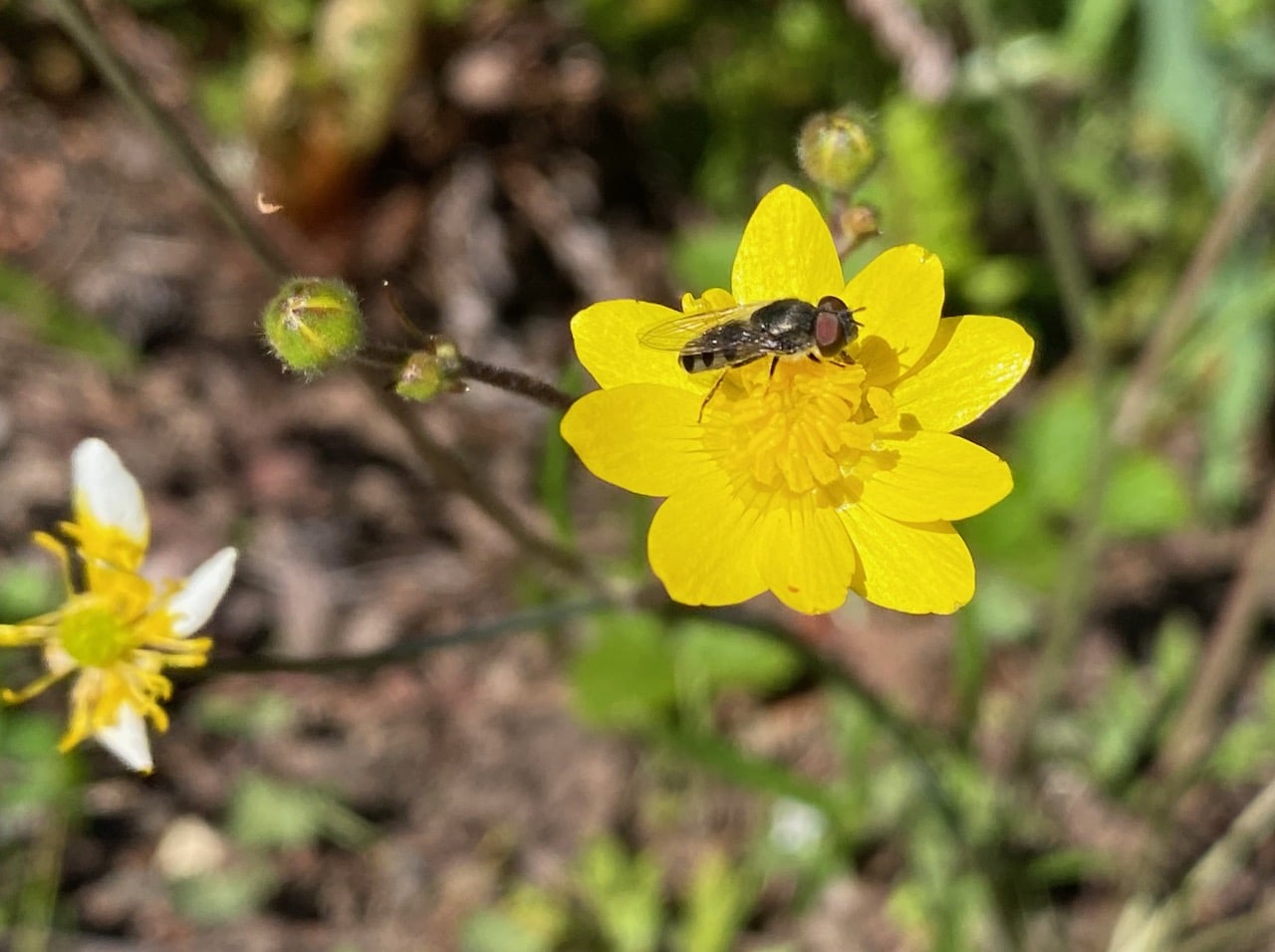
A few California Buttercup, Ranunculus californicus along the path are in bloom. A Sedgesitter, Platycheirus sp.(family Syrphidae) is feeding on pollen from the stamens.
Platycheirus is found in grass and herb vegetation. Adults of many species feed on pollen of wind-pollinated plants, such as Salix, Plantago, Poaceae, Cyperaceae, but they visit other flowers as well. Many stay active during cold and rainy weather. Larvae feed on aphids.
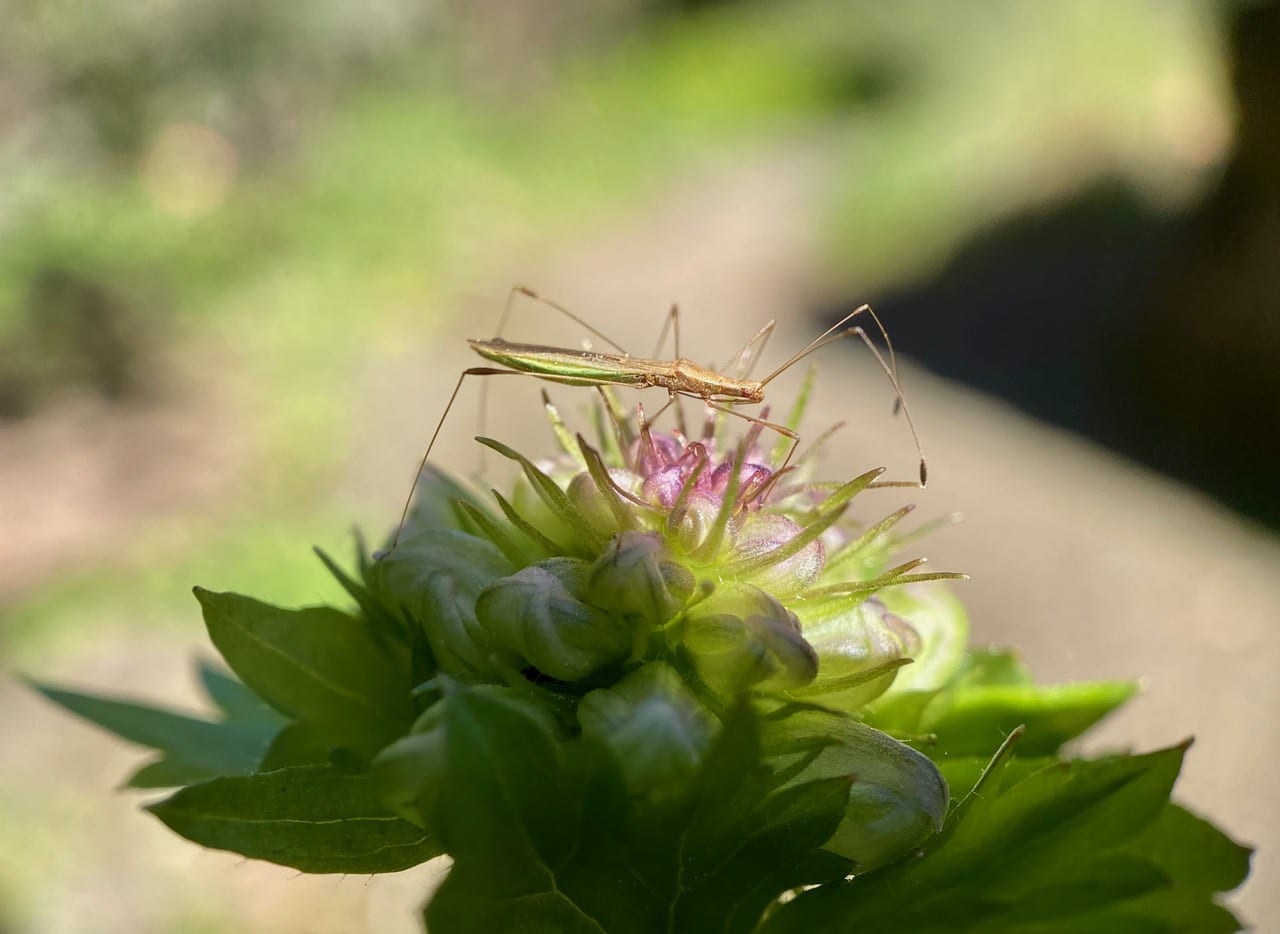
A mere sliver of an insect, a Stilt Bug, Neoneides muticus (family Berytidae) is perched atop an inflorescence of an unidentified plant on the path. Note the long, sharp rostrum, the piercing-sucking mouthpart folded under its body. The mouthpart is characteristic of “true bugs” in the order Hemiptera.
The Berytidae are extremely gracile insects with legs so long and slender as to suggest common names such as “thread bugs” and “stilt bugs”. They resemble some Assassin Bugs, but lack the raptorial forelegs of the predators. Antennae have 4 segments, the fourth enlarged, appearing as a swelling at the tip.
Stilt Bugs occur worldwide and throughout North America. Most are phytophagous (plant-feeders); many may be host-specific, often associated with plants with glandular hairs in Geraniaceae, Onagraceae, Scrophulariaceae, and Solanaceae. Some are occasionally omnivorous, feeding opportunistically on insects entrapped in plant exudates or on lepidopteran eggs or aphids.
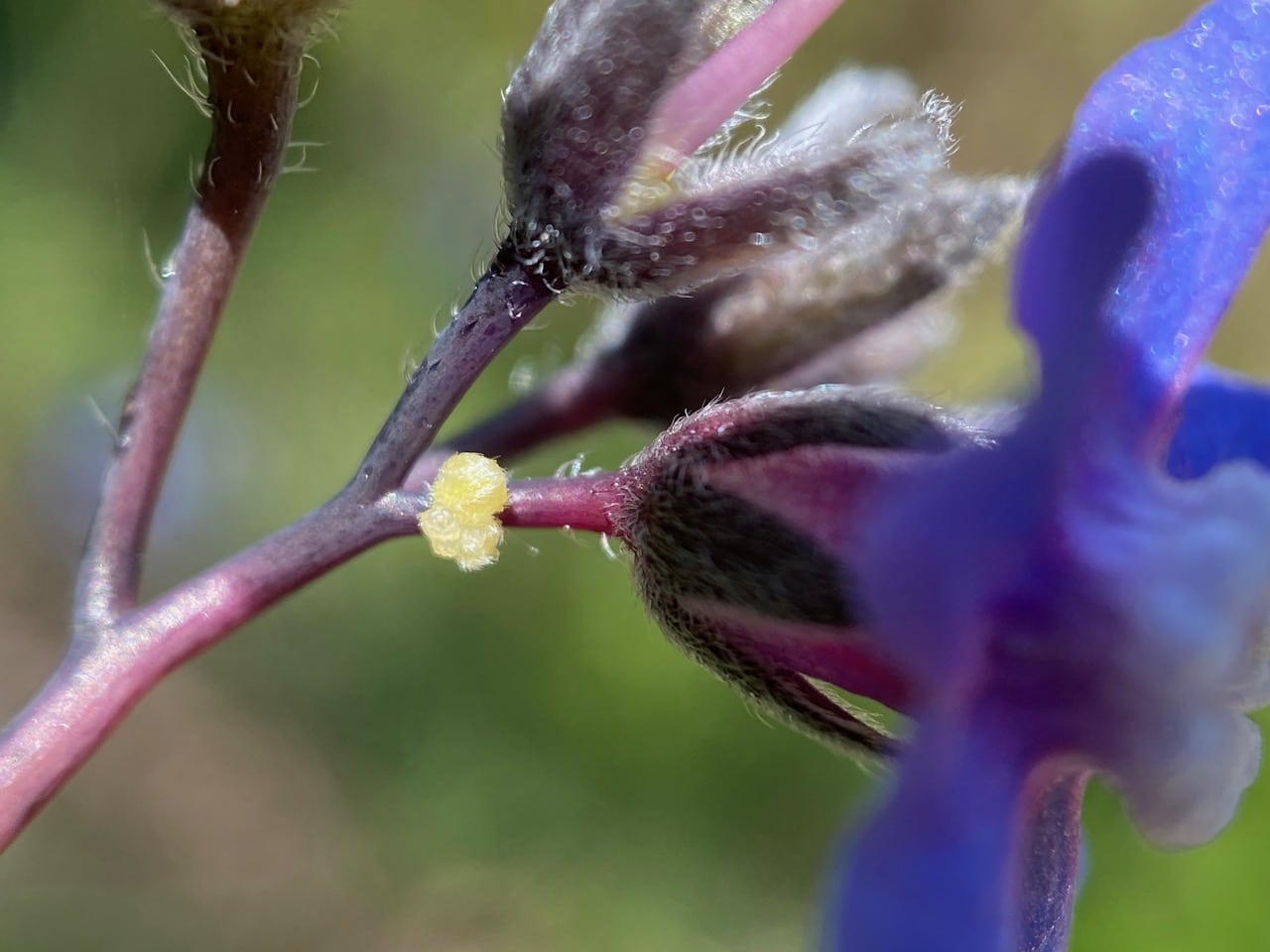
Passing the patch of Hound’s Tongue, Adelinia grandis, I stop to look for the “galls” on the flower stalks that I discovered on 3/19/25.
Plant galls are abnormal growths, resembling tumors or warts, that form on plants due to the influence of other organisms such as insects, mites, bacteria, fungi, or nematodes, providing them with food, shelter, and protection. The gall-inducing organism lays eggs or penetrates the plant tissue, triggering a response in the plant. The plant cells begin to proliferate and reorganize, forming the gall tissue within which the gall organism feeds, protected from predators and harsh environmental conditions. Different gall-inducing organisms can create galls with unique appearances, shapes, and colors, allowing for identification of the gall-maker.
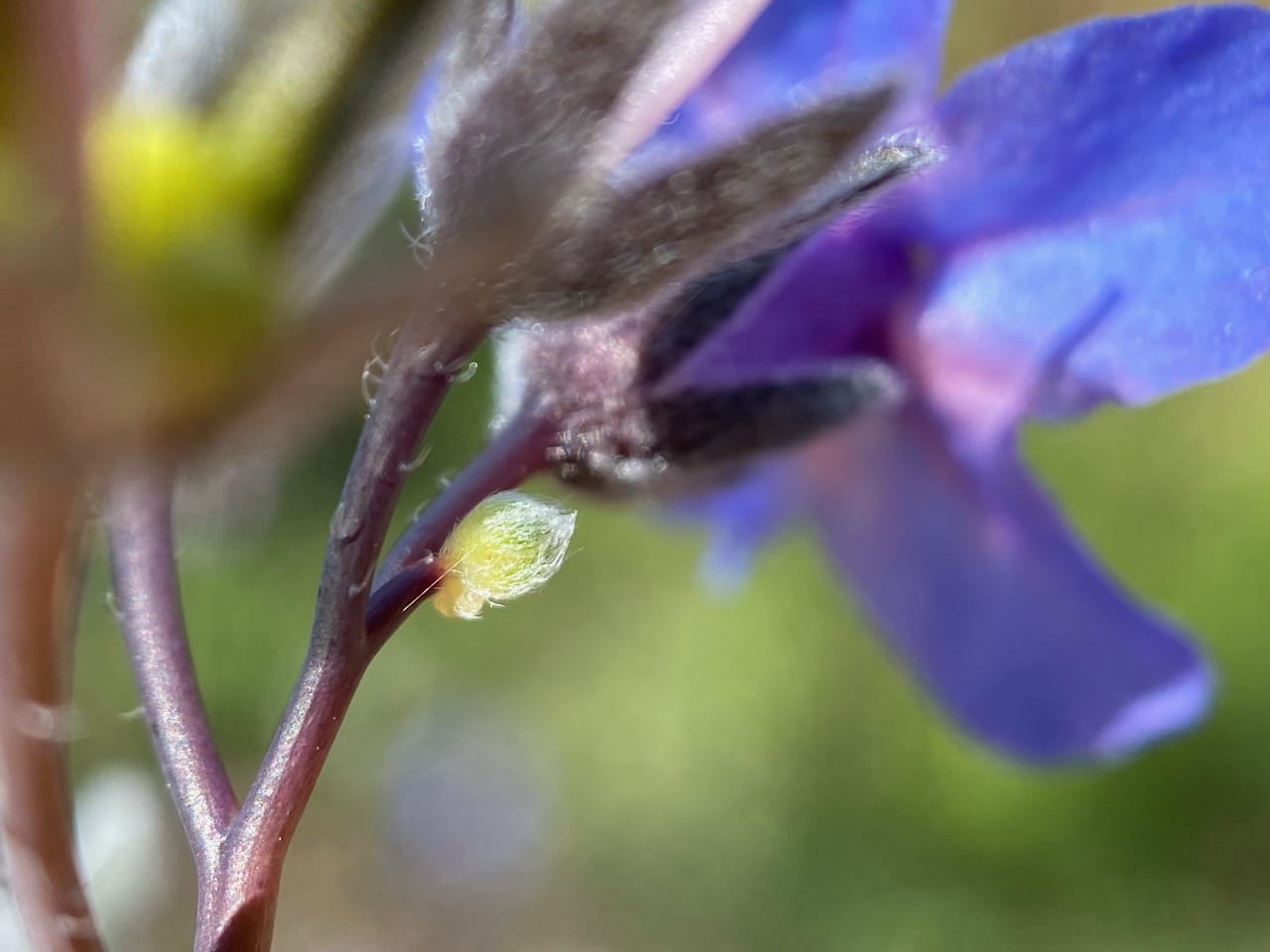
Some of these galls have transformed from amorphous lumps of tissues to assume the appearance of plant parts, such as hairs, and….
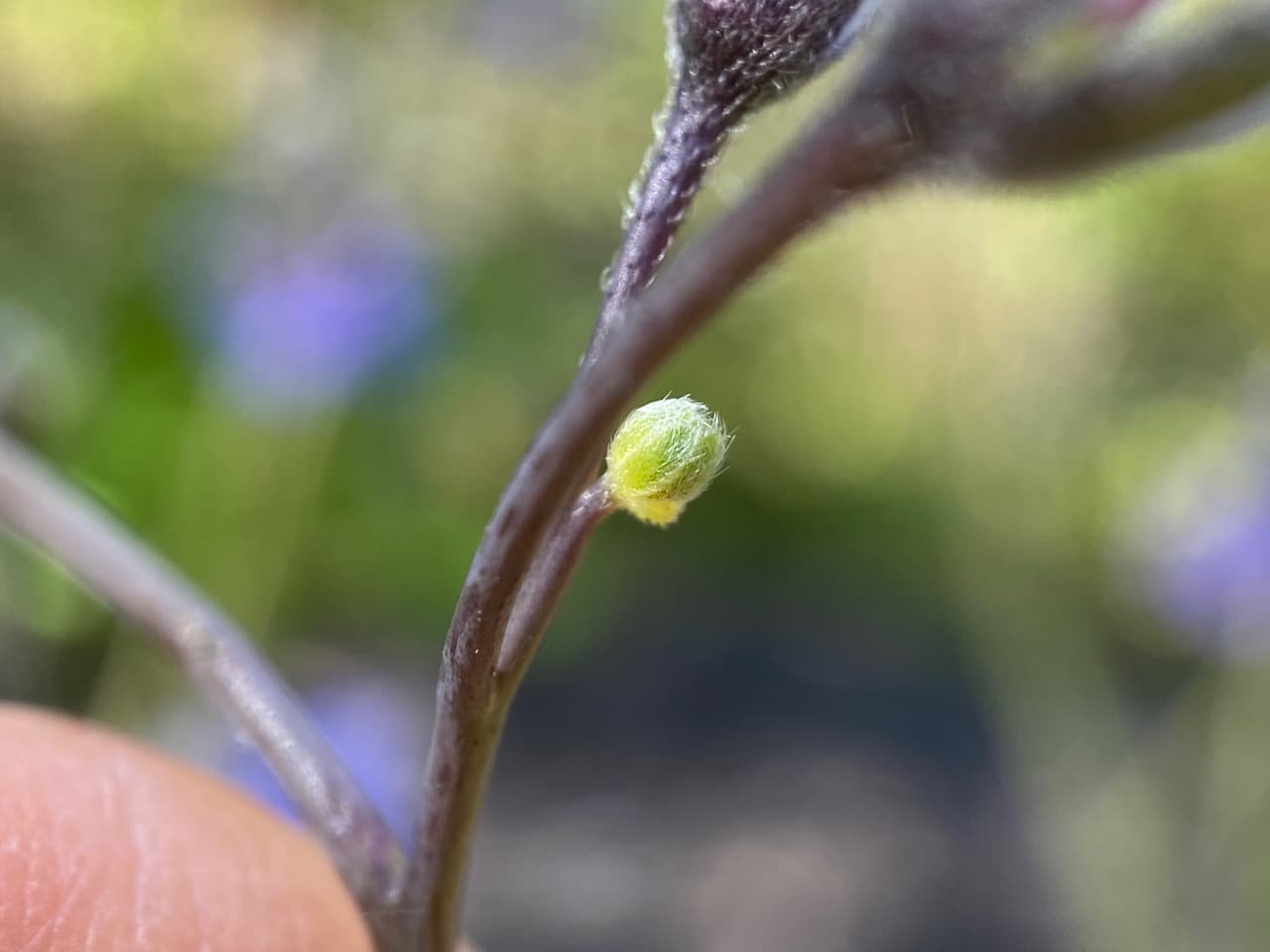
green bracts?
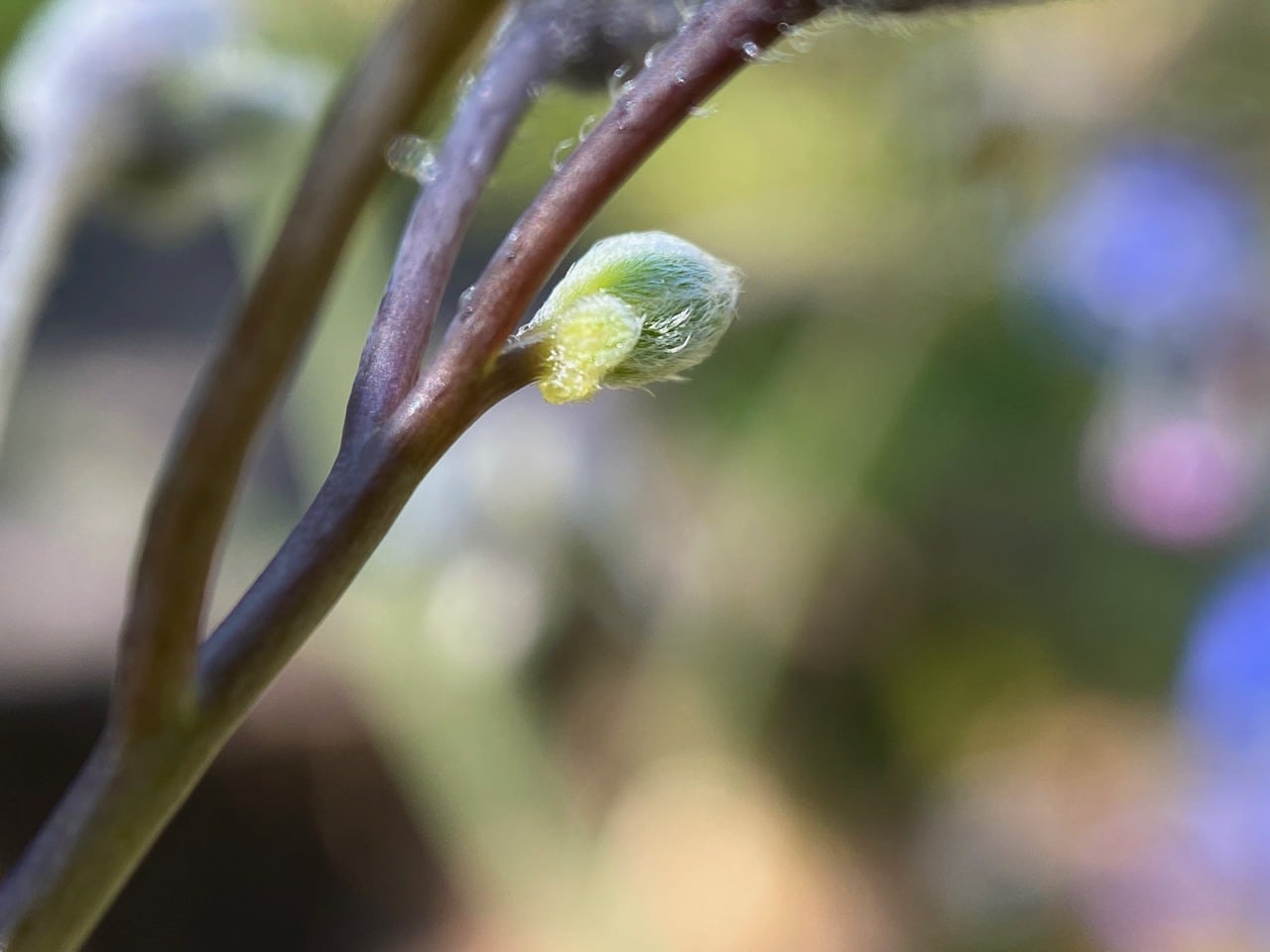
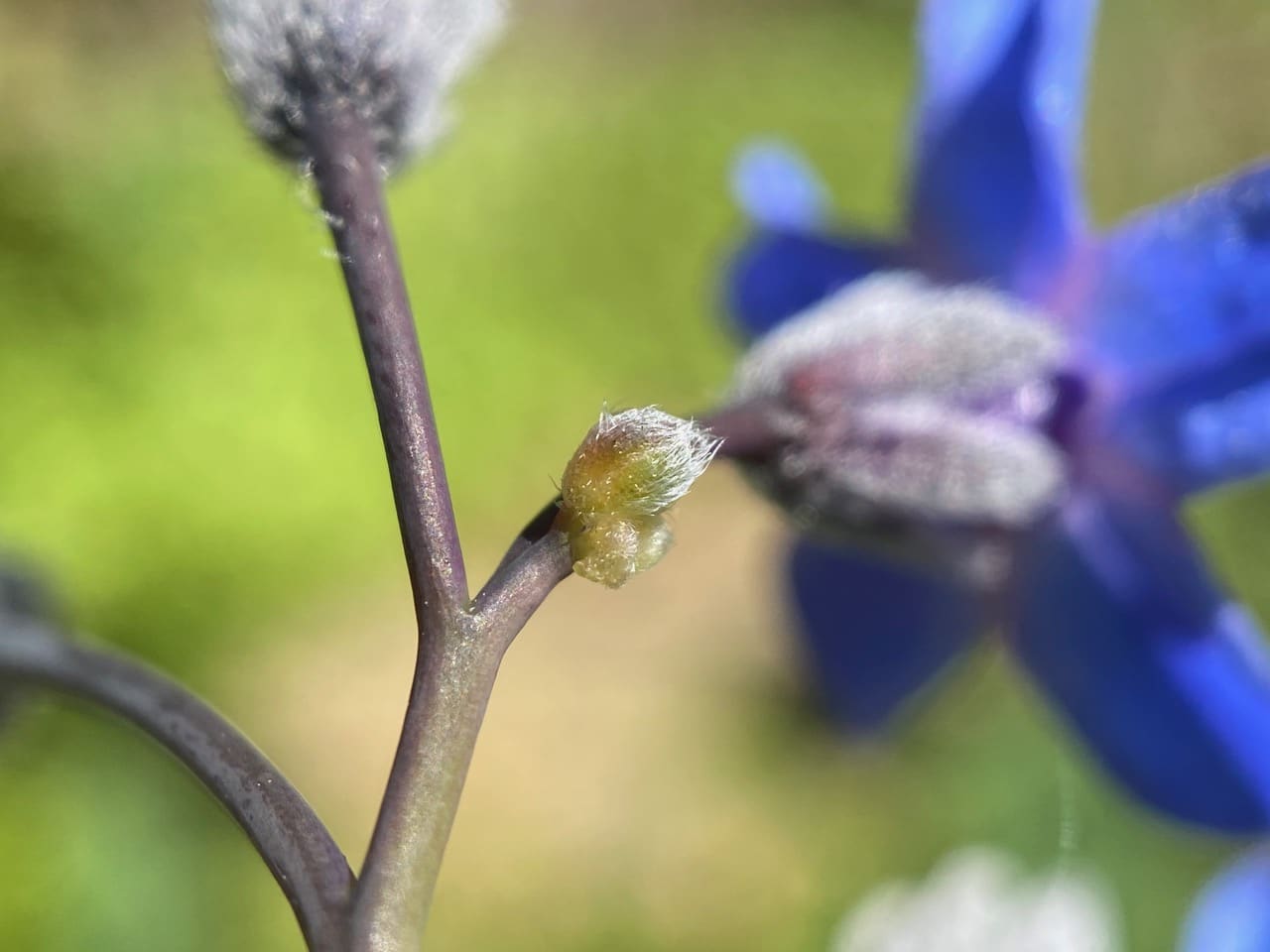
The bracts on this gall has turned a little purplish, like the rest of the flower stalk.

This one looks like a miniature flower bud. These are most likely flower galls. Ron Russo, the gall expert I consulted, thought they might be an unknown midge gall. He has suggested that I cut open some to see if the larvae inside were white or orange. Orange larvae will indicate gall midges (family Cecidomyiidae). I am still hesitant as the galls are so small and I am not sure I even have a knife sharp enough for the job. If I waited too long, the larvae would have developed into pupae. What if I reared them to adulthood instead? I think I will knock some of the more mature galls off the plant next time and keep them in a container – with luck, the pupae might eventually emerge as adults? Timing is everything in the study of plant galls. Collect the galls too early, and you risk starving the larvae to death. If the galls are collected while the insect inside is in pupation, there is a chance that the pupae will continue its development into an adult. Pupae no longer feed. Hmm…
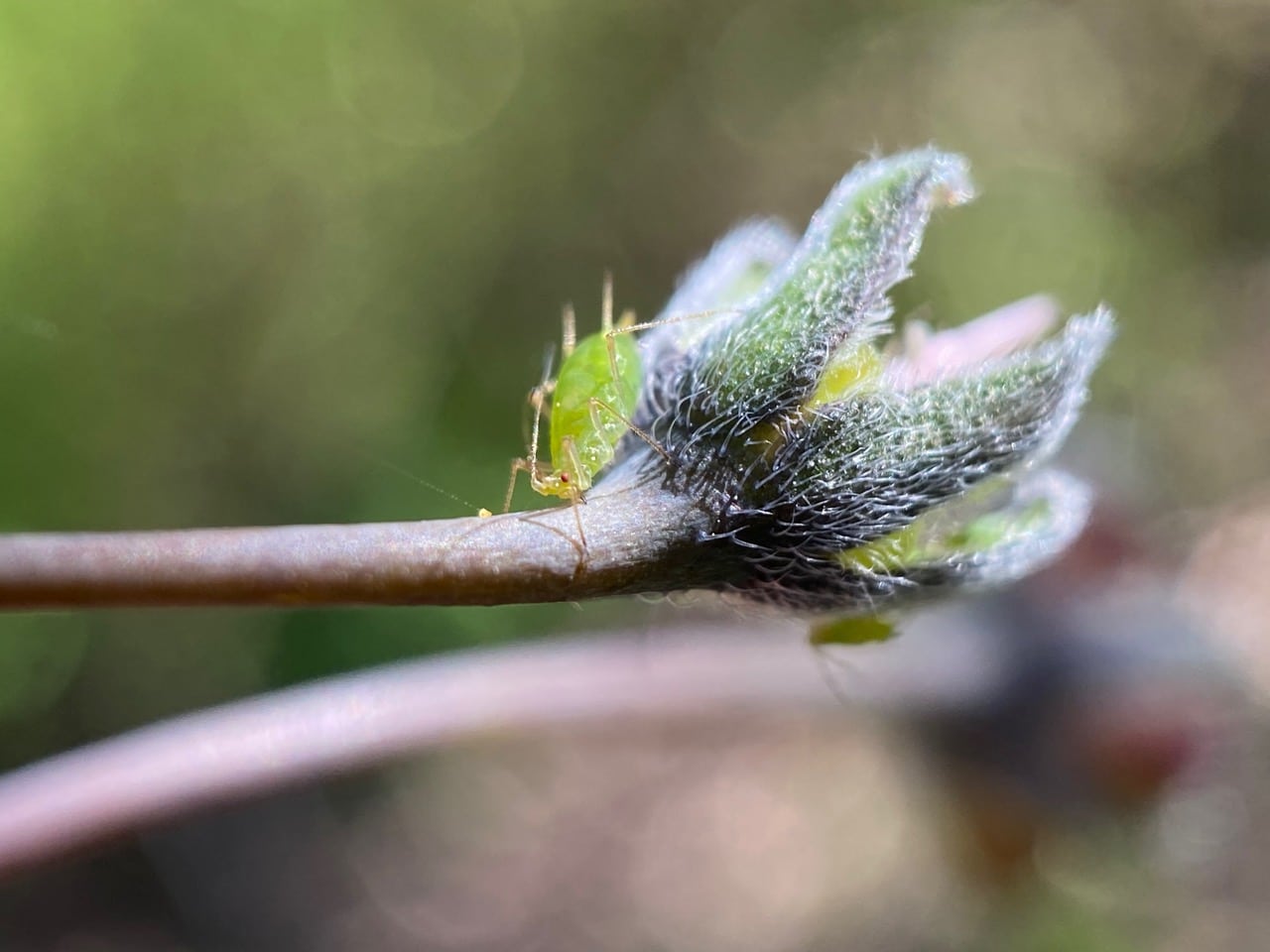
Hey, there’s an aphid at the base of the calyx of this spent Hound’s Tongue flower that has shed its petals. There are smaller aphids behind her. The big aphid has its rostrum firmly buried in the tissue of the pedicel, obviously feeding.
Aphids (family Aphididae) are small sap-sucking insects in the order Hemiptera. Aphids usually feed passively on phloem of plants. Once the phloem vessel is punctured, the sap, which is under pressure, is forced into the aphid’s food canal. Aphids produce large amounts of a sugary liquid waste called “honeydew”. A fungus called sooty mold can grow on honeydew deposits that accumulate on leaves and branches, turning them black.
A typical life cycle involves flightless females giving live birth to female nymphs, – who may also be already pregnant, an adaptation called telescoping generations – without the involvement of males. Maturing rapidly, females breed profusely so that the population multiplies quickly. Winged females may develop later in the season, allowing the insects to colonize new plants. In temperate regions, a phase of sexual reproduction occurs in the autumn, with the insects often overwintering as eggs. The life cycle of some species involves an alternation between two species of host plants. Some species feed on only one type of plant, while others are generalists, colonizing many plant groups. Some ants have a mutualistic relationship with aphids, tending them for their honeydew and protecting them from predators.