

Pollinator Post 3/24/24 (1)
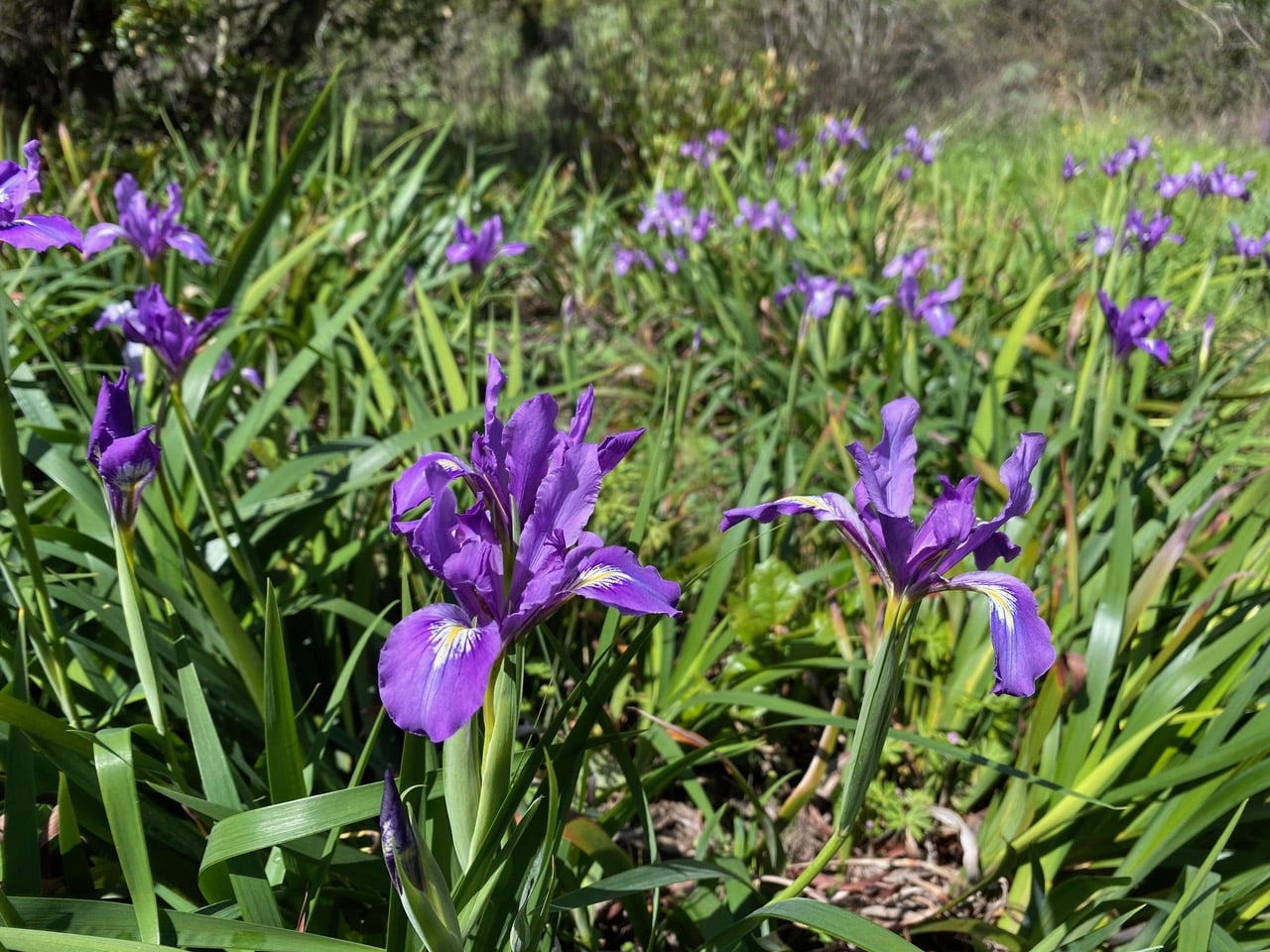
I visit the Bridgeview Pollinator Garden in Oakland early this afternoon. I have not set foot in this garden for more than 2 years, and it is sad to find the place weedy and unkempt.
It is a joy to see that the patch of Douglas Iris, Iris douglasiana has expanded and is blooming beautifully. The species is obviously hardy and capable of taking care of itself.
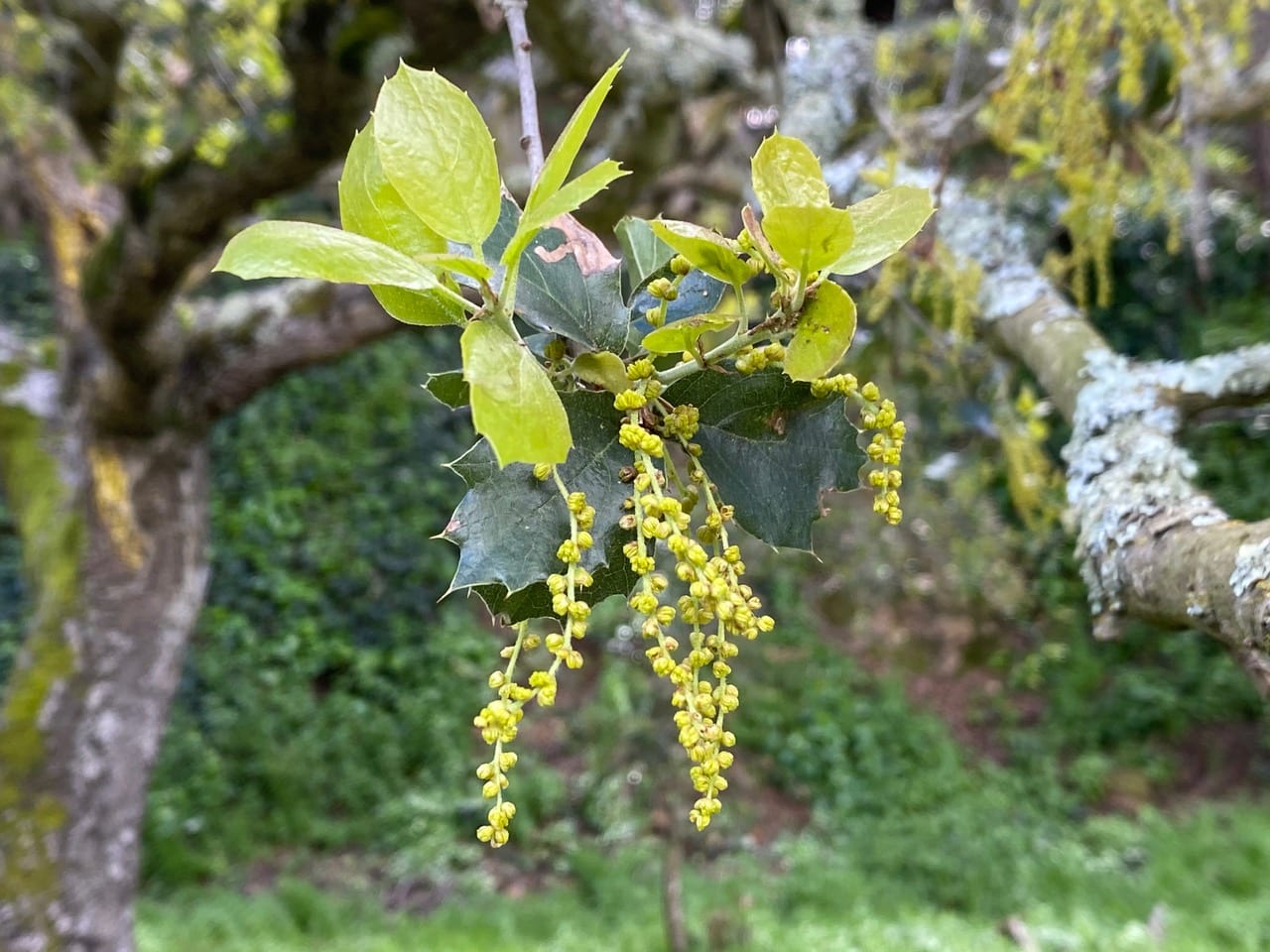 The big Coast Live Oak, Quercus agrifolia seems to be doing well, with hanging catkins ready to burst into bloom.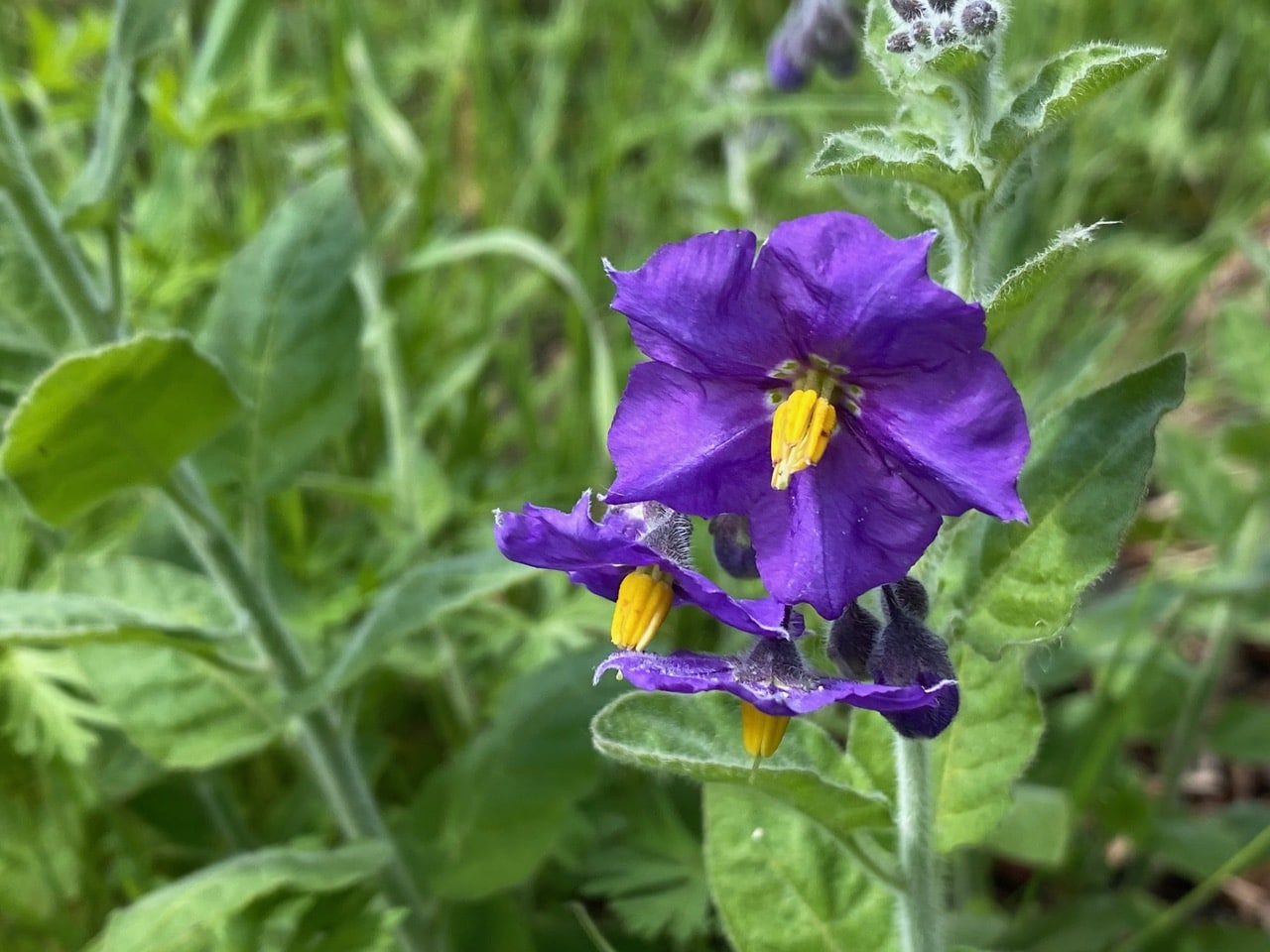
Many of the Purple Nightshade, Solanum xanti we planted have disappeared, leaving this lone plant that seems to hold its own valiantly.

My heart misses a beat as I spot color in the back corner of the garden – the old De la Mina Verbena, Verbena lilacina is in full bloom. Another survivor of neglect!
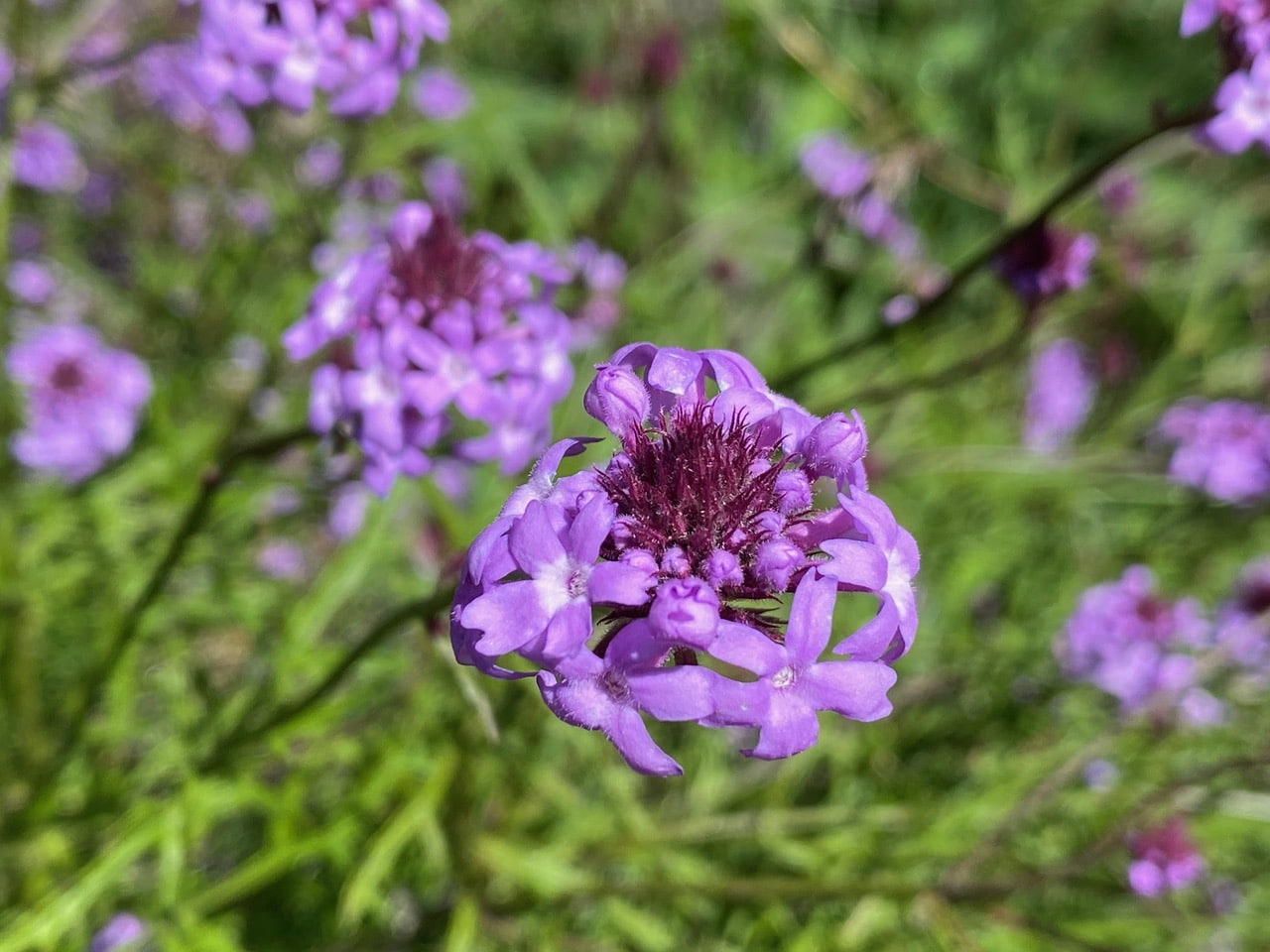




The flowers are small, with five petals, and borne in dense clusters. The tubular flowers require the services of long-tongued insects for pollination. I watch in frustration as a couple of Digger Bees, Anthophora sp.(family Apidae) visit the flowers, but are too wary to be photographed.
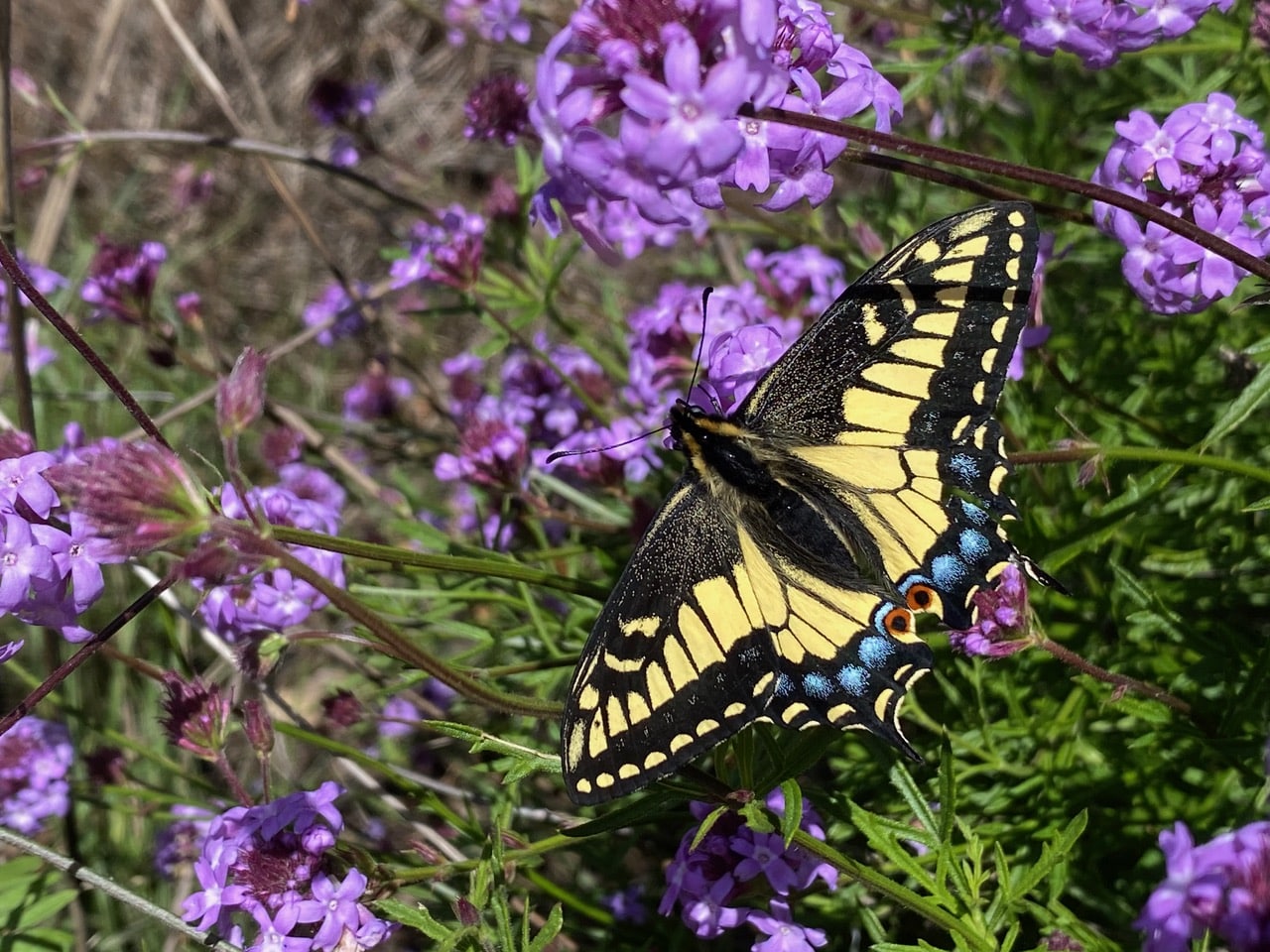
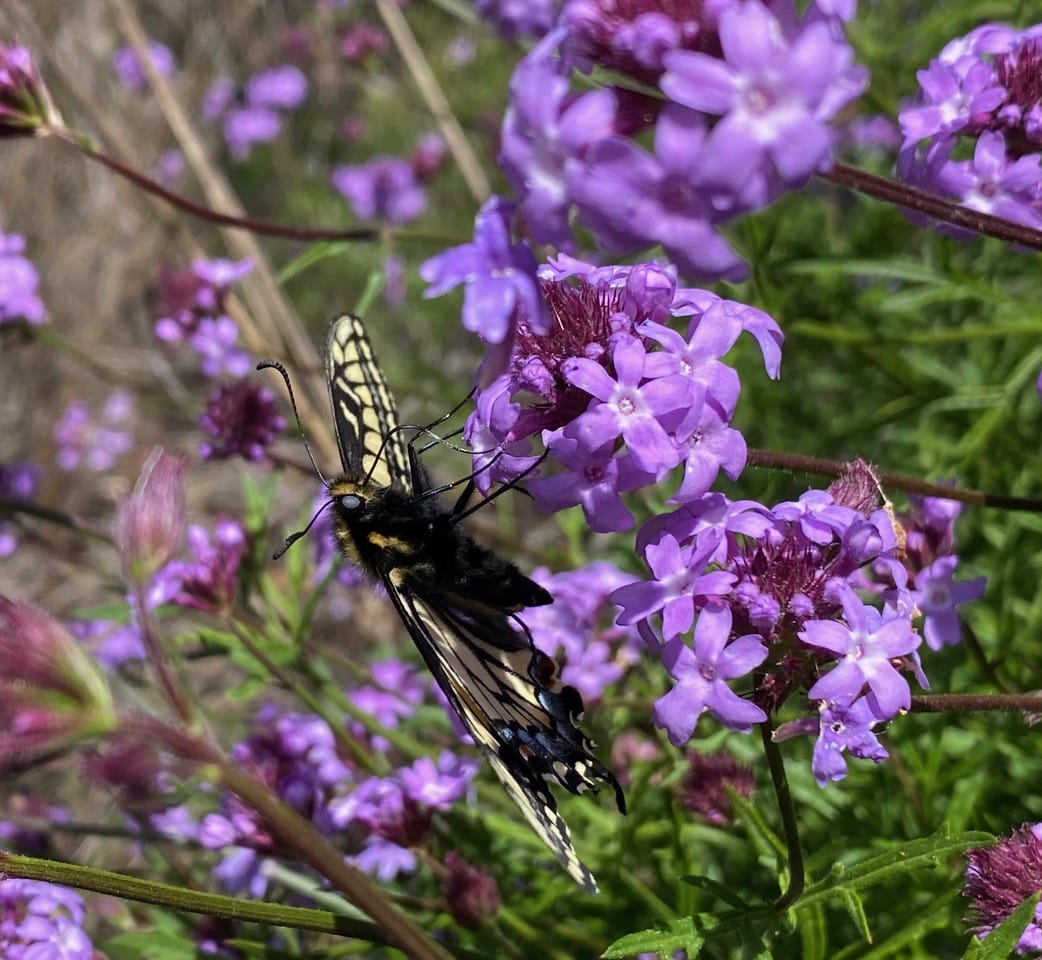
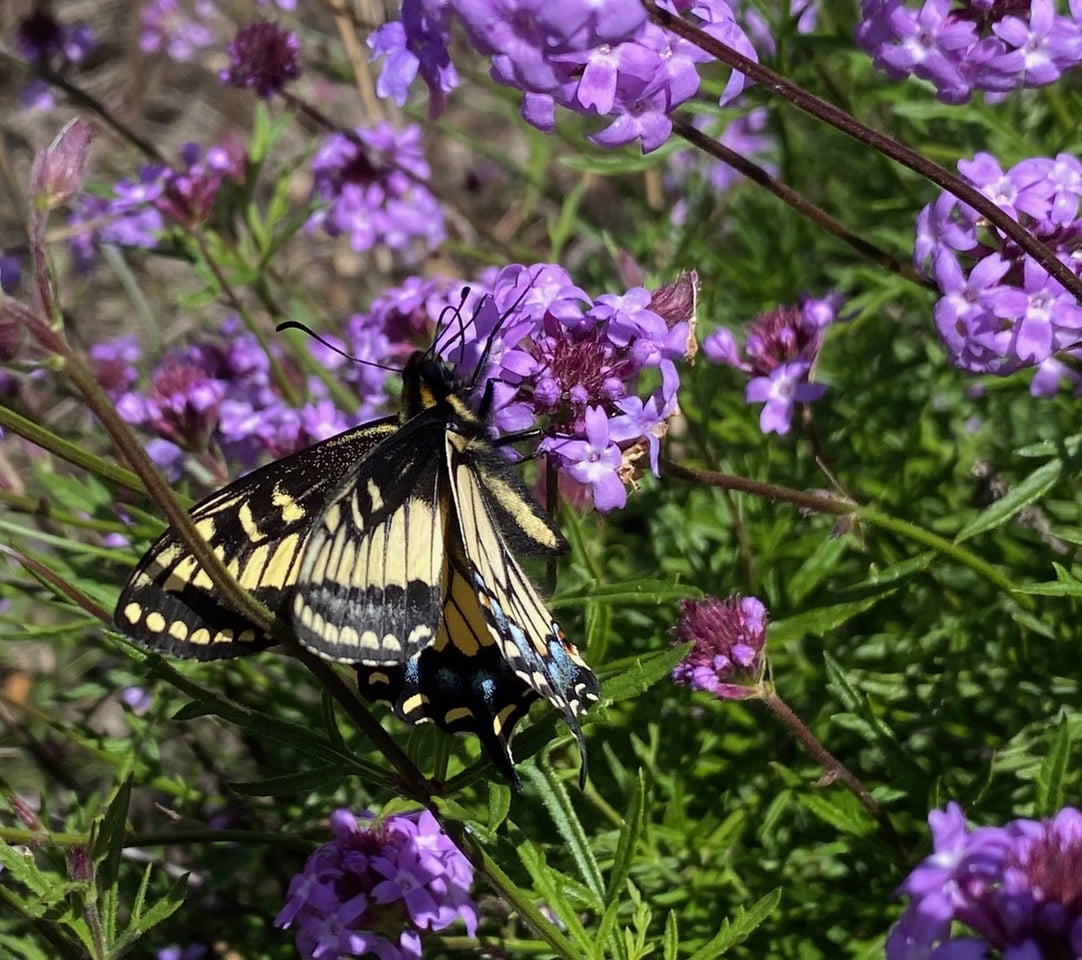
I suddenly detect movements on the plant close to me – an Anise Swallowtail butterfly has come to take nectar from the flowers! It is stunningly beautiful, not a scale out of place. Maybe freshly eclosed from its chrysalis? Over the years, I have reared dozens of these butterflies on the Fennel that grow wild along Bridgeview Trail, and have tracked the caterpillars on the Yampah that we planted from bulbs in this garden. The butterfly seems to sense that I am a friend, and hangs around me with no fear.
The verbena flowers are butterfly magnets. The large clusters provide secure landing pads, and with its long, flexible proboscis, the butterfly can probe for nectar from several flowers in one sitting.
I have never noticed that the butterfly has a yellow stripe down the side of its abdomen.
The Anise Swallowtail, Papilio zelicaon (family Papilionidae) is a common butterfly of western North America, often seen on bare hills, in fields, roadside, gardens and vacant lots. Adult females lay eggs singly on the undersides of host plant leaves. Their major food plants are members of the carrot family (Apiaceae), including fennel, and also some members of the citrus family (Rutaceae). Caterpillars undergo several molts, each instar with a distinct coloration and markings. Young caterpillars eat leaves while older ones eat flowers. The species hibernates as chrysalids (which can be green or brown). There is one flight per year, from April to July.
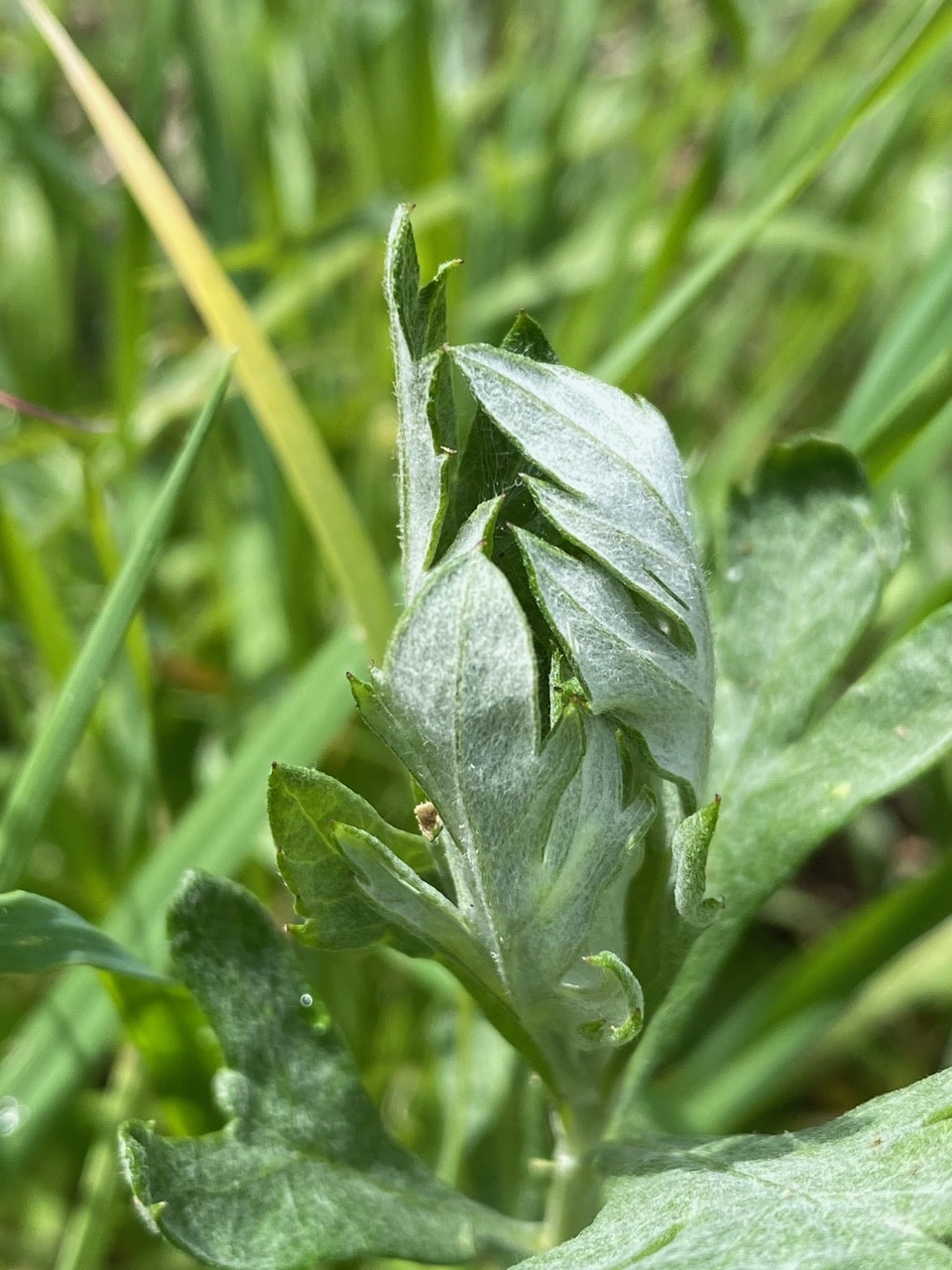
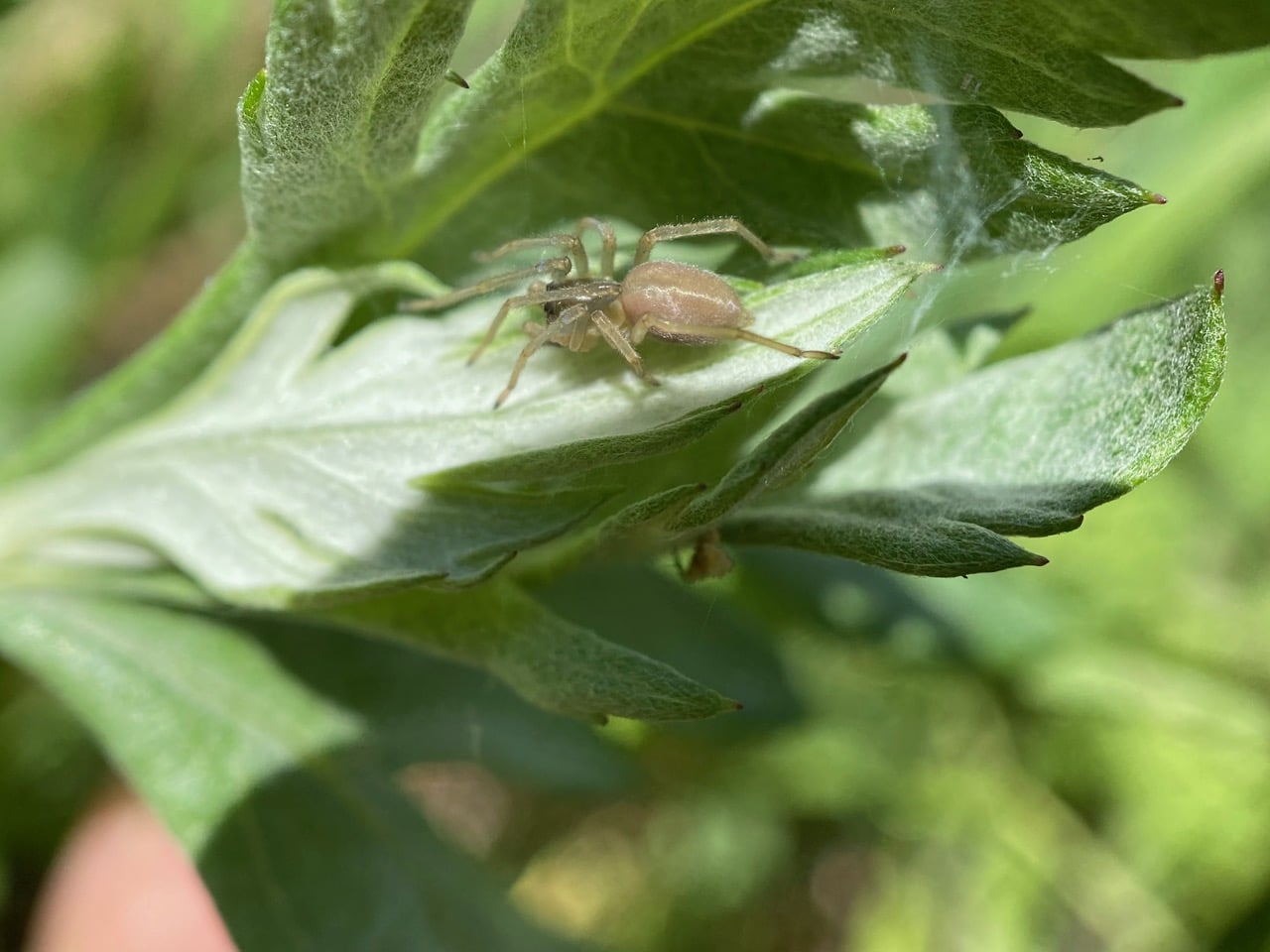
The terminal leaves of the Mugwort have been loosely bound together with silk. Ah, I think I know who is responsible!
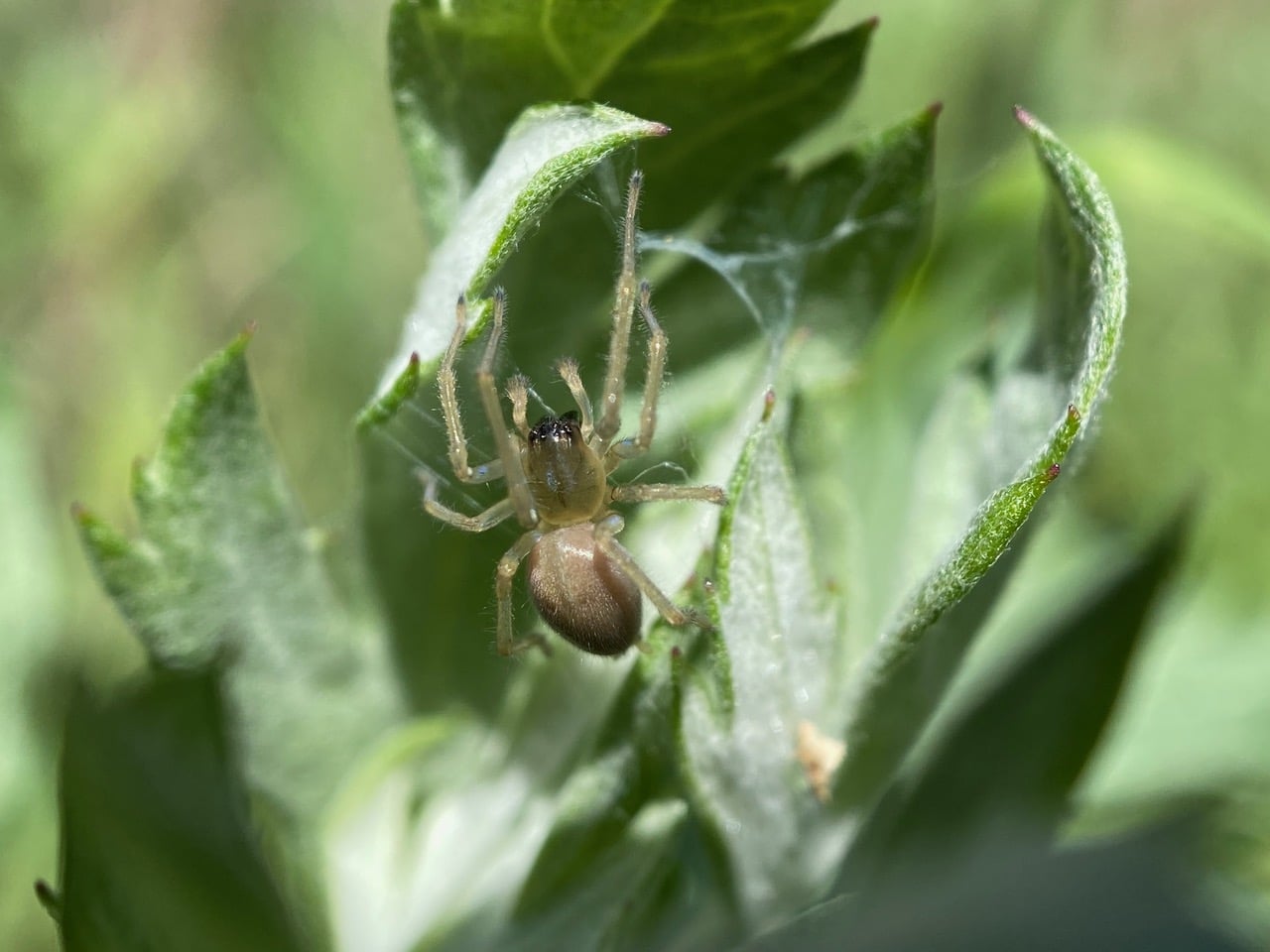
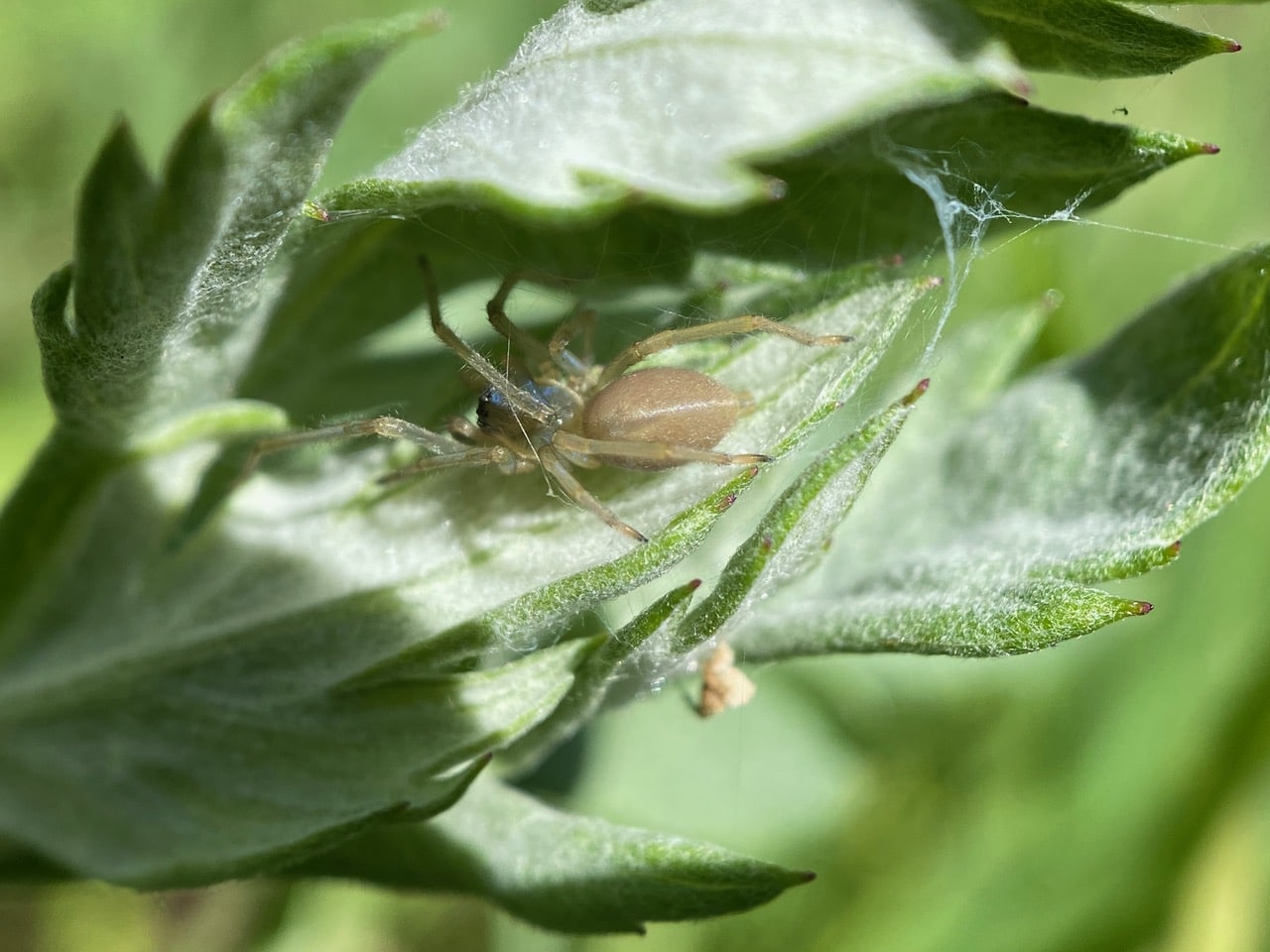
I carefully peel back one of the leaves. As I have anticipated, there is an American Yellow Sac Spider inside. She has yet to construct a tubular nest inside this enclosed space. This brings back fond memories of my chance observation of one of these spiders constructing its retreat in this very patch of Mugworts in 2021. It is reassuring to know that the spider is capable of repairing the damage I have done in minutes. These spiders are compulsive builders.
The American Yellow Sac Spider, Cheiracanthium inclusum (family Cheiracanthiidae) are native to the New World. They are most often found in trees and shrubs in forests and gardens, but may also find shelter in houses and other human-made structures. The spider is a pale yellow-beige color with dark brown markings on its palps, chelicerae (jaws) and on the ends of its tarsi (feet). The front pair of legs are longer than the other 3 pairs. Eight similarly sized eyes are distributed in two parallel horizontal rows. Since the spider is nocturnal, its eyesight is of minor importance. The spider relies more on its palps to sense its environment. Being nocturnal, the spiders feed and mate at night. C. inclusum do not make webs to catch prey; instead, they are active predators, feeding on a variety of insects and other spiders. During the day, they retreat in small silk nests. A new nest may be completely closed, open on one side, or open on both sides, is built every day, often enclosed in terminal leaves that have been drawn together.
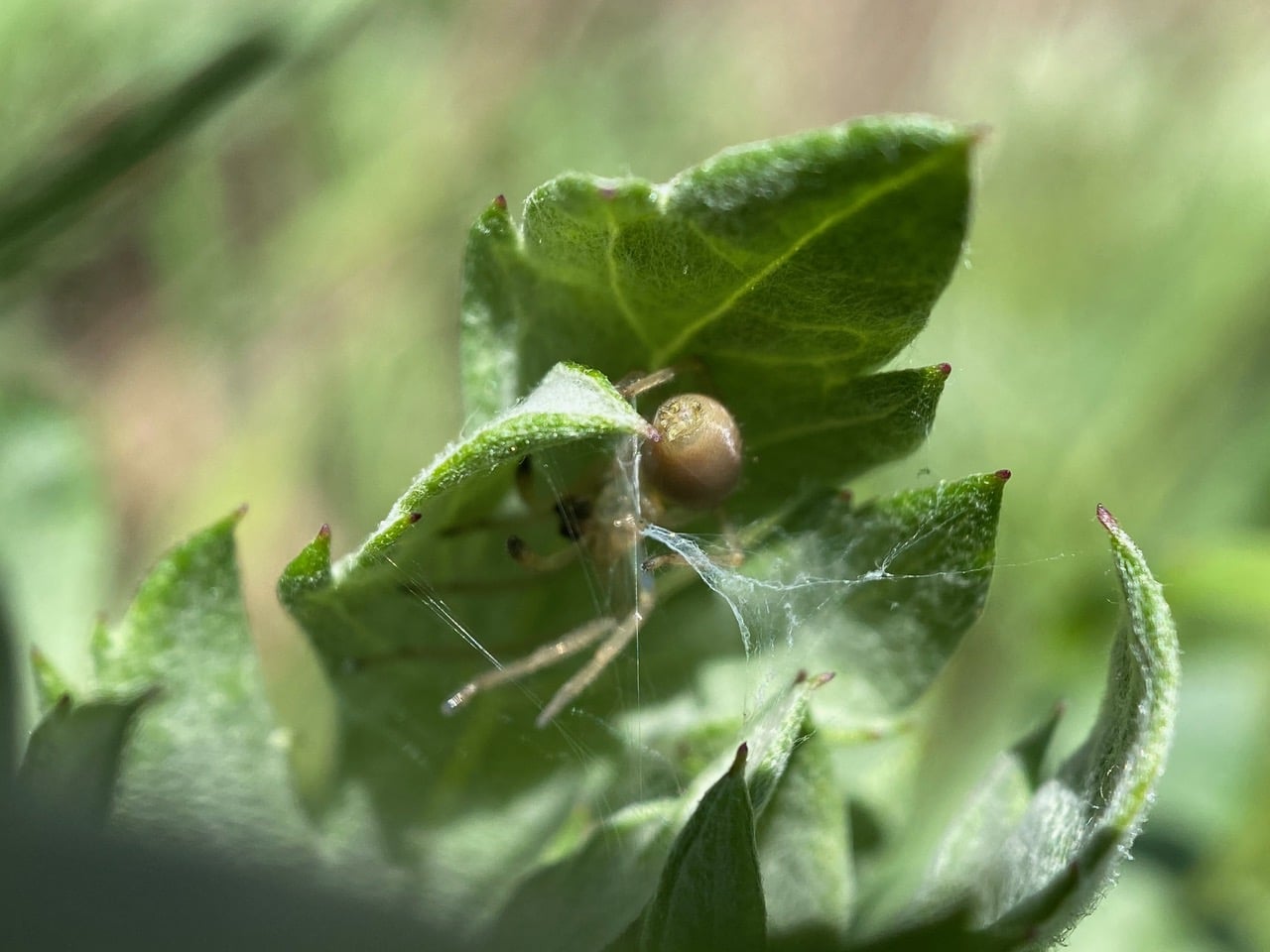
Instead of running away, the spider instantly sets to work to repair the damage.
That’s the business end of the spider. Spiders have structures called spinnerets on their abdomen, usually on the underside to the rear. A spinneret is a silk-spinning organ of a spider. Spiders have special glands that secrete silk proteins (made up of chains of amino acids). The spider pushes the liquid solution through long ducts, leading to microscopic spigots on the spider’s spinnerets. Most spinnerets are not simple structures with a single orifice producing a single thread, but complex structures of many microscopic spigots, each producing one filament. The spigots allow the spider to combine multiple filaments in different ways to produce many kinds of silk for various purposes.
The spider is drawing all the leaves closer together with silk. Pretty soon she’ll have her retreat again.
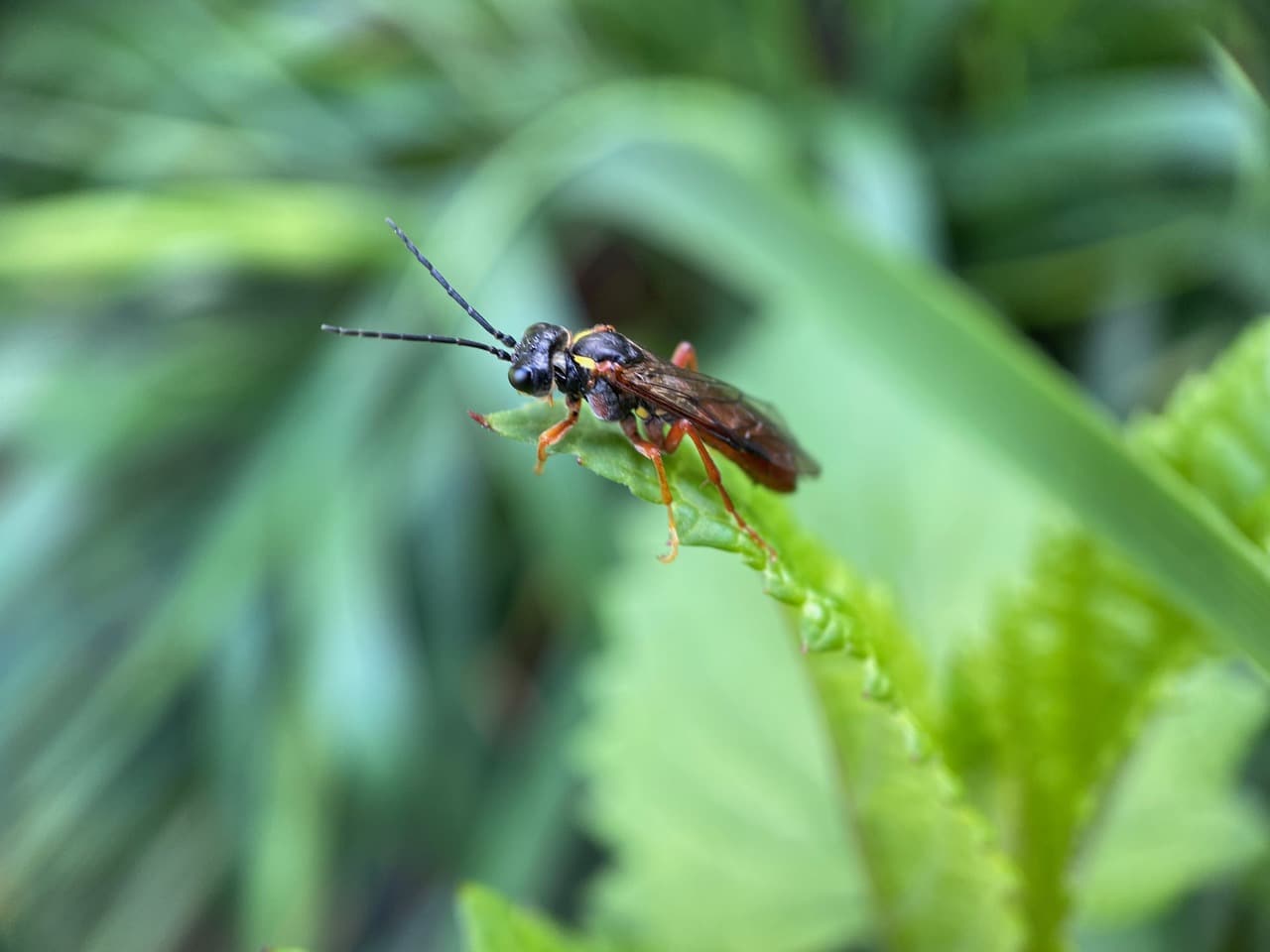
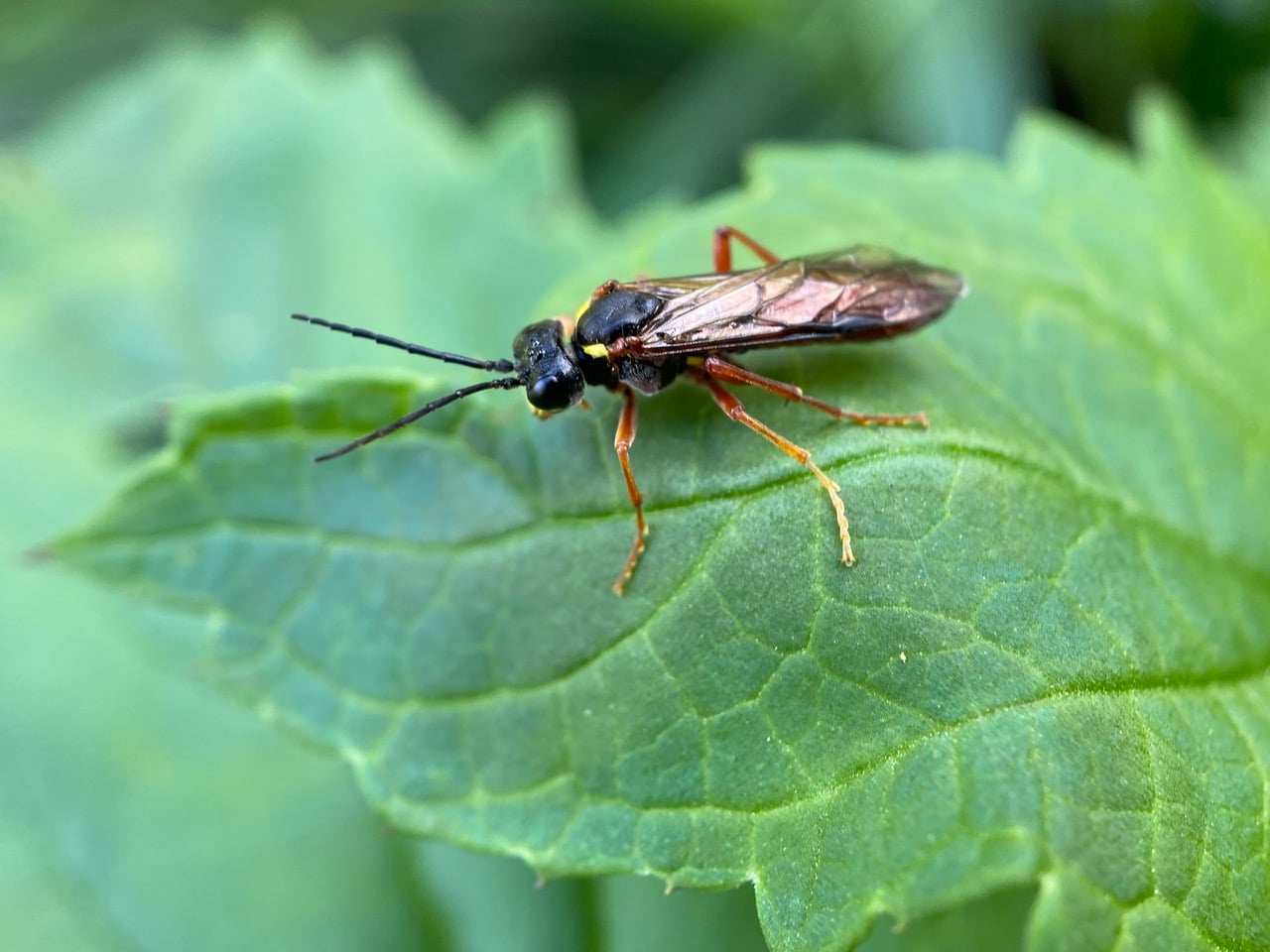
A Common Sawfly (family Tenthredinidae) is perched on a Bee Plant leaf.
Sawflies are part of the insect order, Hymenoptera, together with bees, wasps and ants. They are considered to be the most primitive group and form the sub-order Symphyta. They differ from the bees, wasps and ants in not having a narrow ‘waist’ and in their wing venation. The common name comes from the saw-like ovipositor that the females use to cut into plant tissues to lay their eggs. Larvae are caterpillar-like and can be distinguished from lepidopteran caterpillars in that all body segments following the three bearing true legs have a pair of fleshy prolegs. Like the lepidopteran caterpillars, sawfly larvae walk about and eat foliage. In many species, the larvae feed in groups.
Tenthredinidae is the most species-rich family of sawflies, making up 66% of all sawfly species. Larvae are herbivores and typically feed on foliage of trees and shrubs, with occasional exceptions that are leaf miners, stem borers, or gall makers. The larvae of externally feeding species resemble small caterpillars. The Tenthredinidae are often somewhat dorsoventrally flattened, which distinguishes them from the similar looking Cephid wasps.
Some Tenthredinidae feed as adults, on flower nectar and pollen, or on other insects.