

Pollinator Post 3/22/26 (1)
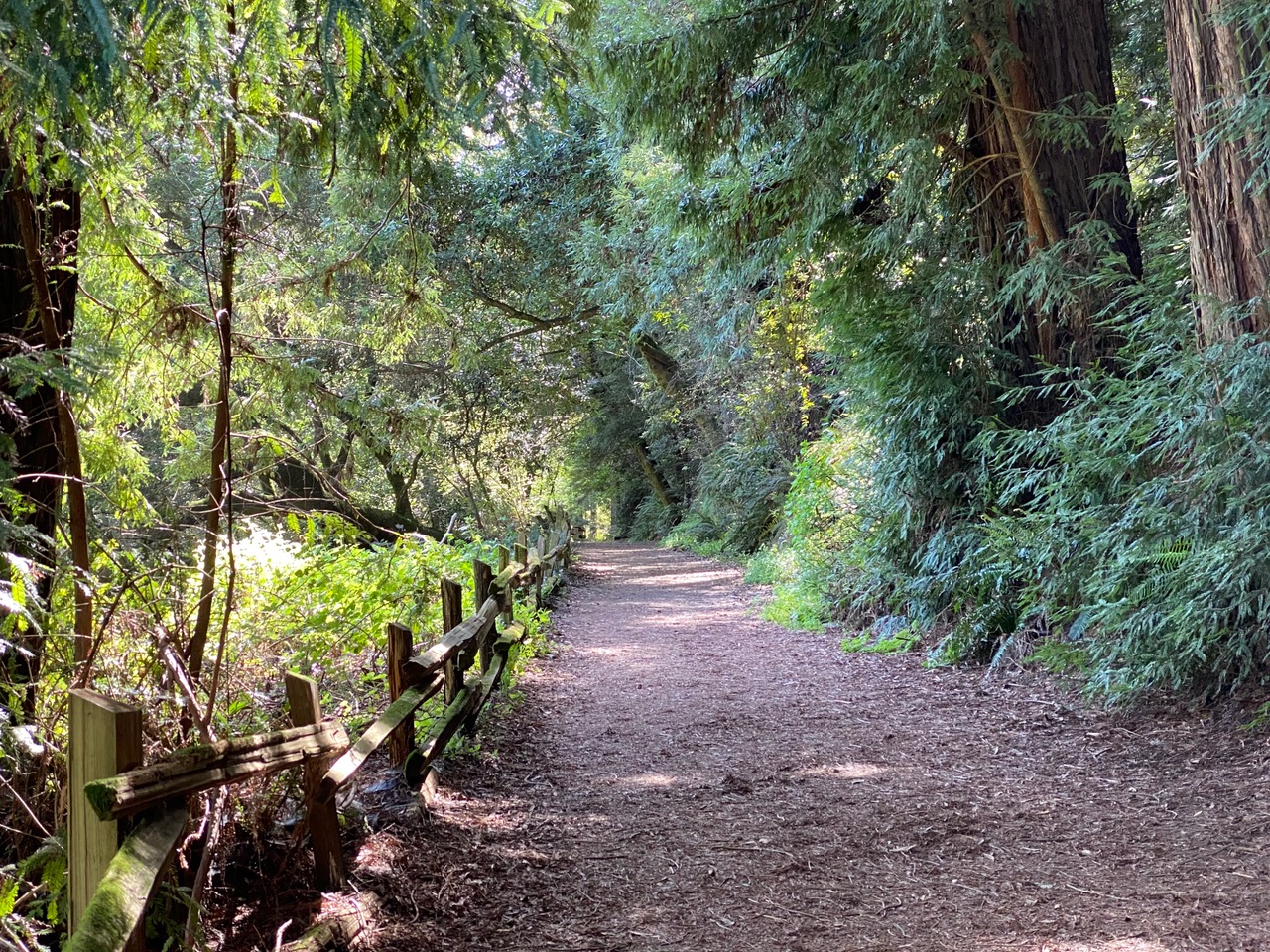
Although the worst of the heat wave is behind us, the days are still unseasonably warm for spring, with temperatures peaking in the high 70s. I opt for the cool of the Reinhardt Redwood Regional Park in the Oakland hills for my ramble today, taking the short Stream Trail – Bridle Trail loop along Redwood Creek.
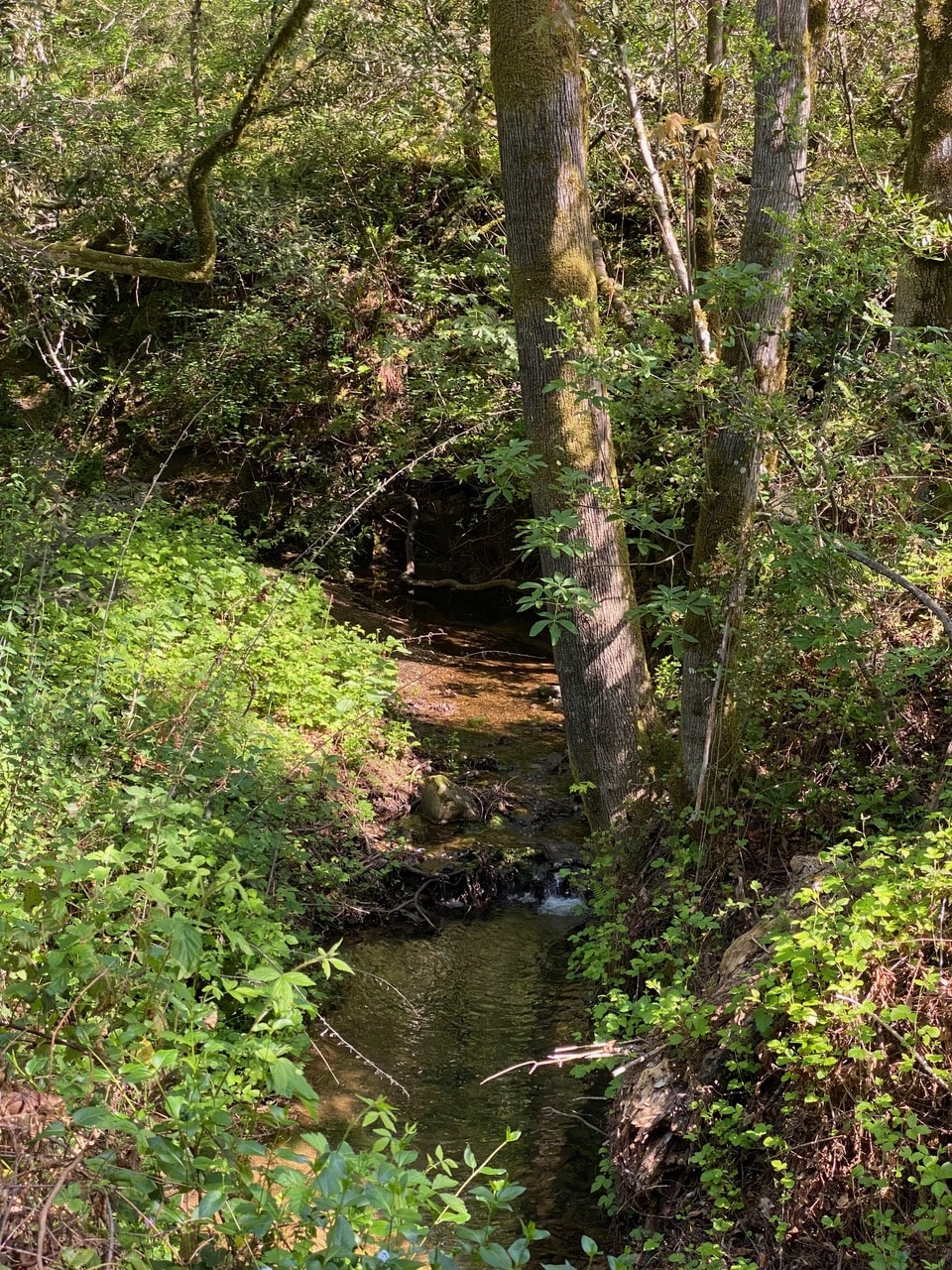
There is still some water running in the creek, and the vegetation looks lush.
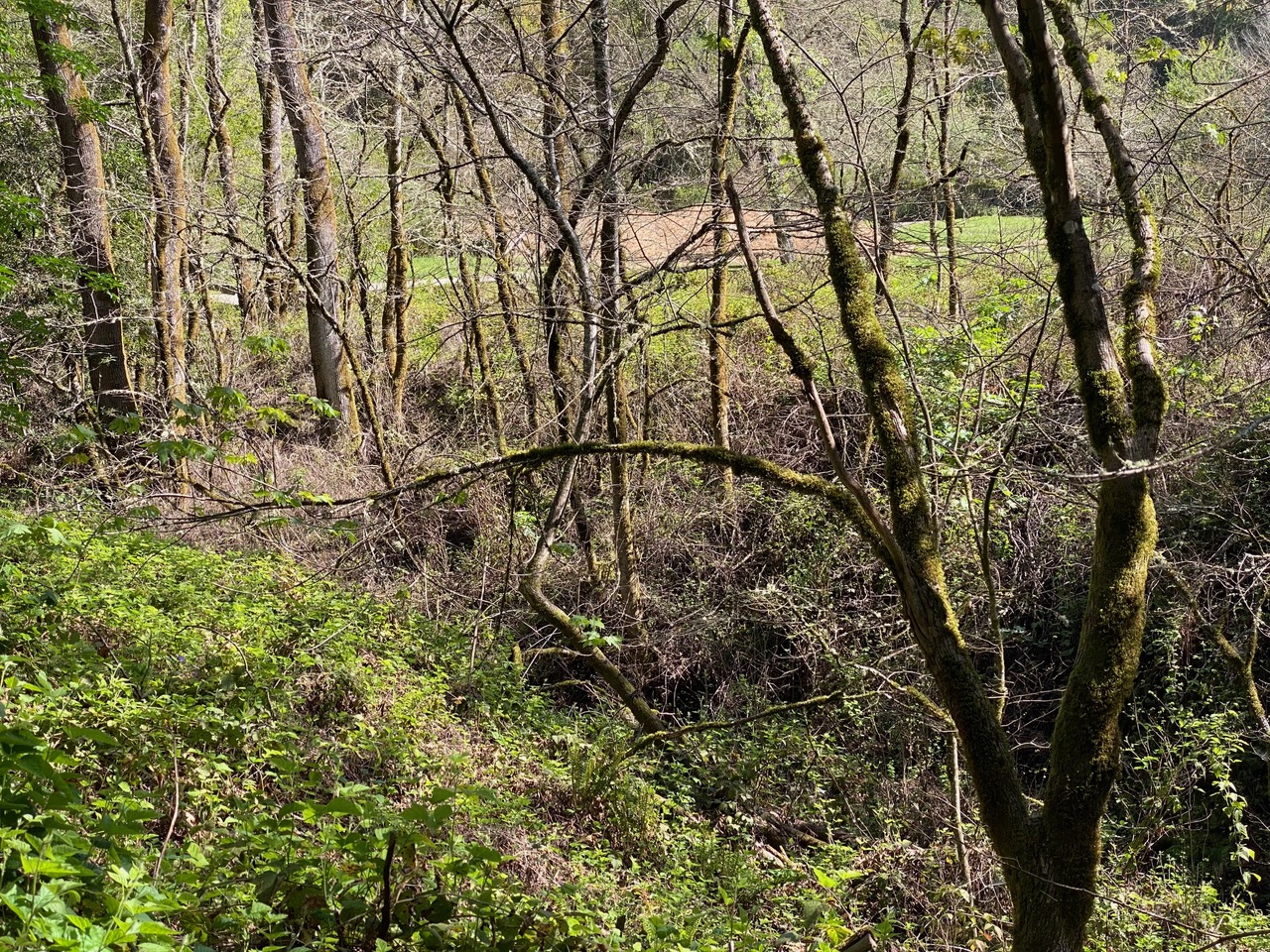
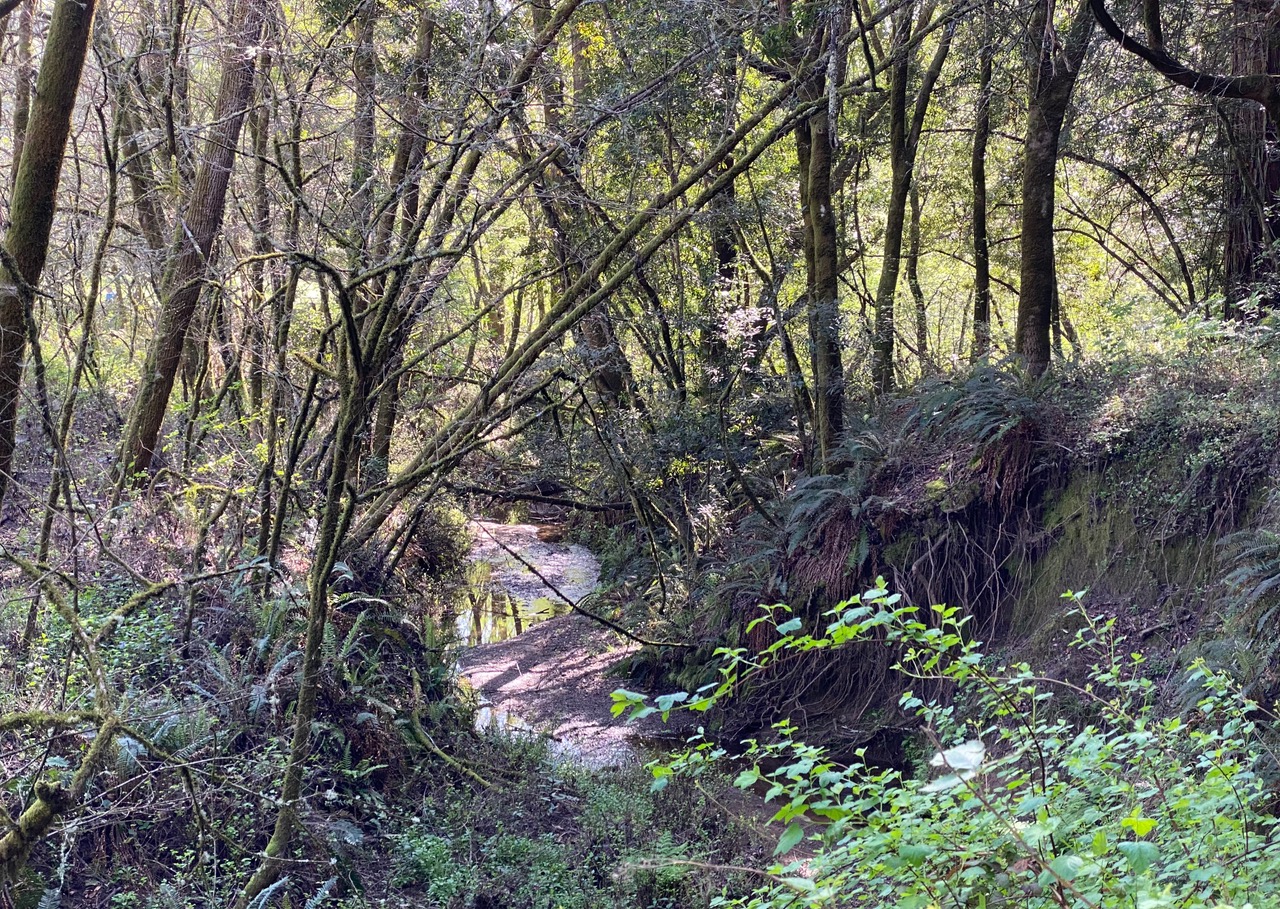
I am infinitely grateful that such a magical place exists within a short driving distance from my home.
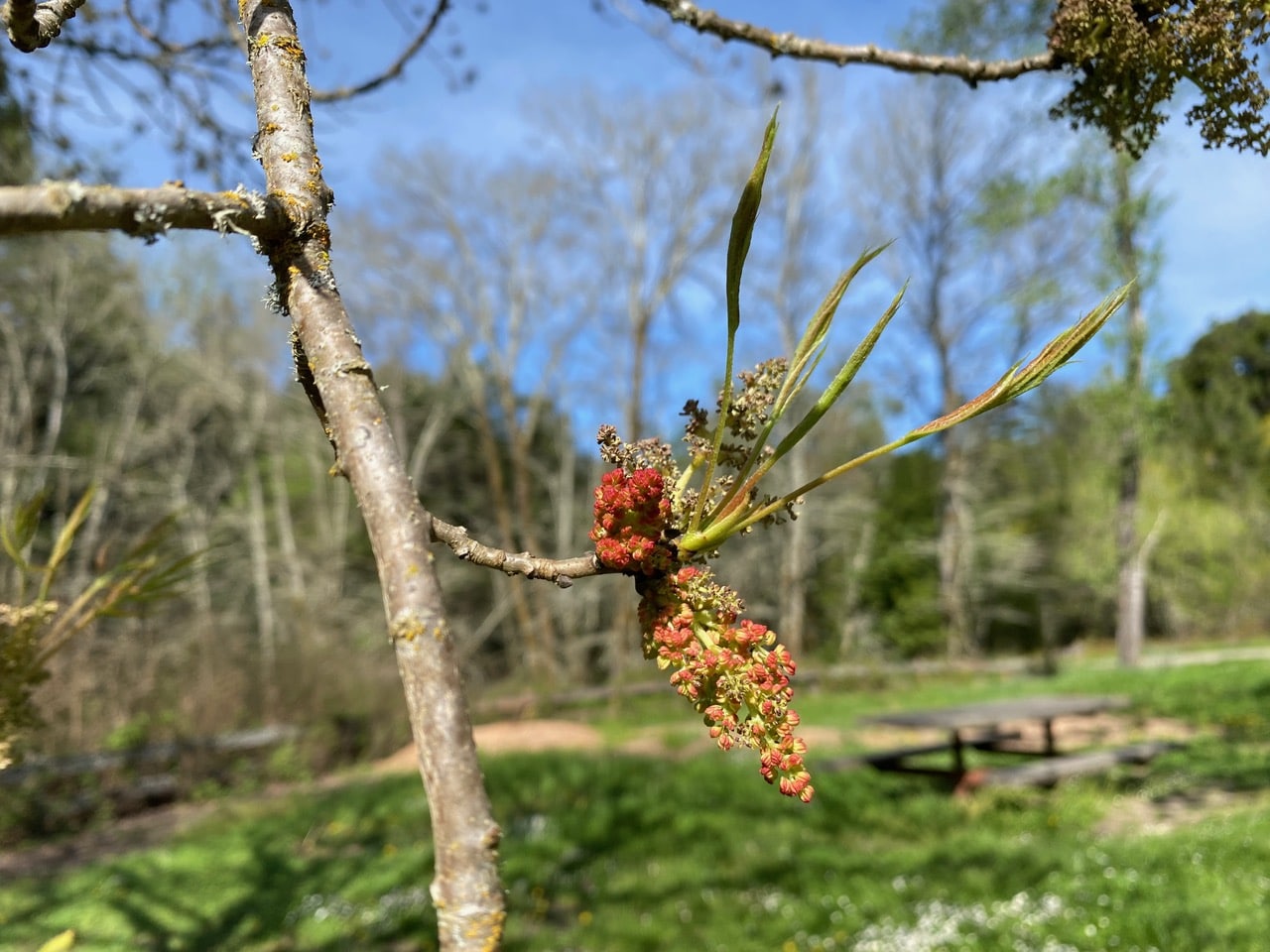
The deciduous Chinese Pistachio trees in the picnic area are beginning to send out fresh shoots with clusters of orange-red flower buds.
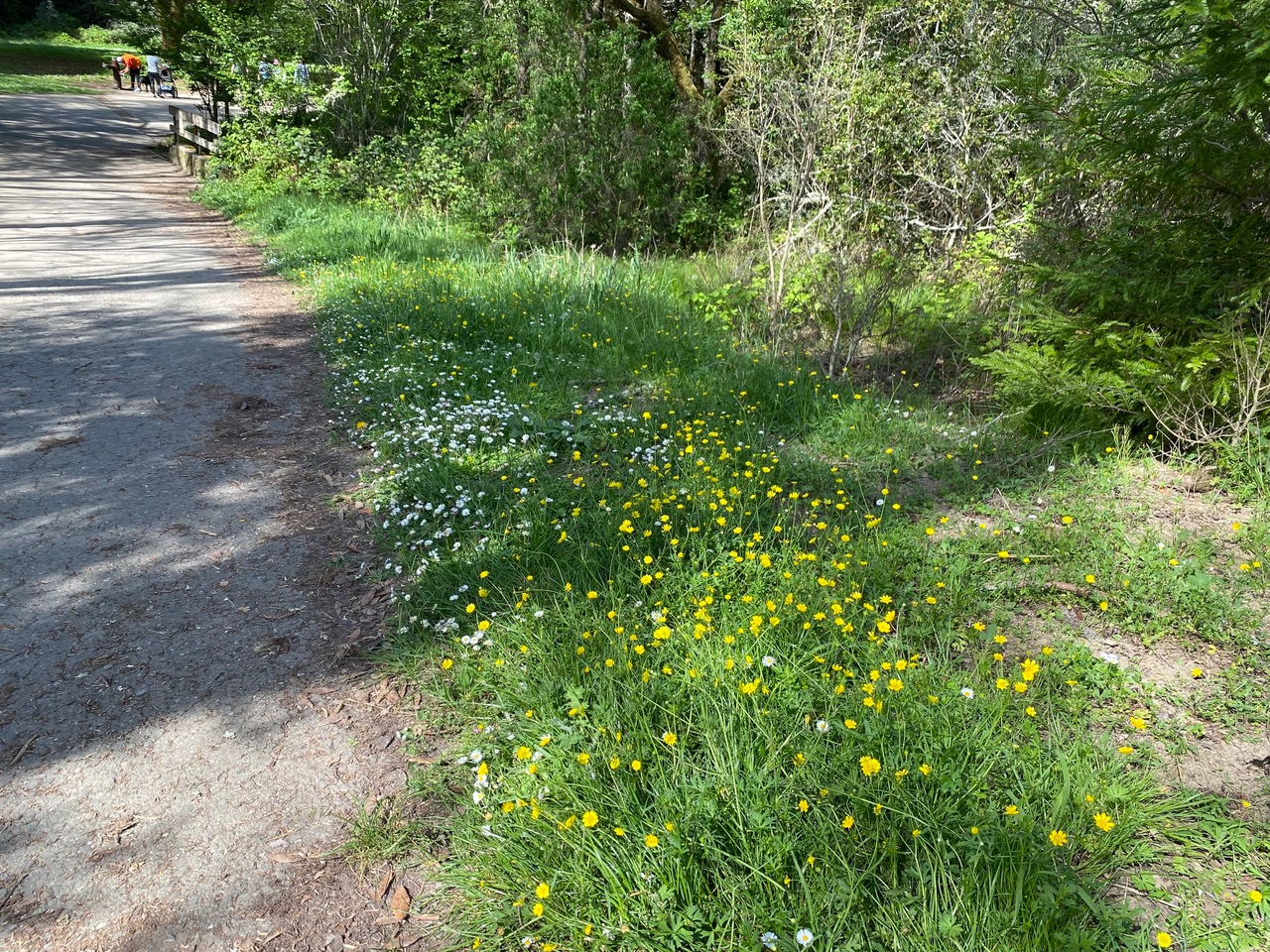
In partial shade by the creek, a patch of California Buttercup and English Daisy is blooming profusely. I know I can happily park myself here for an hour just observing insects.
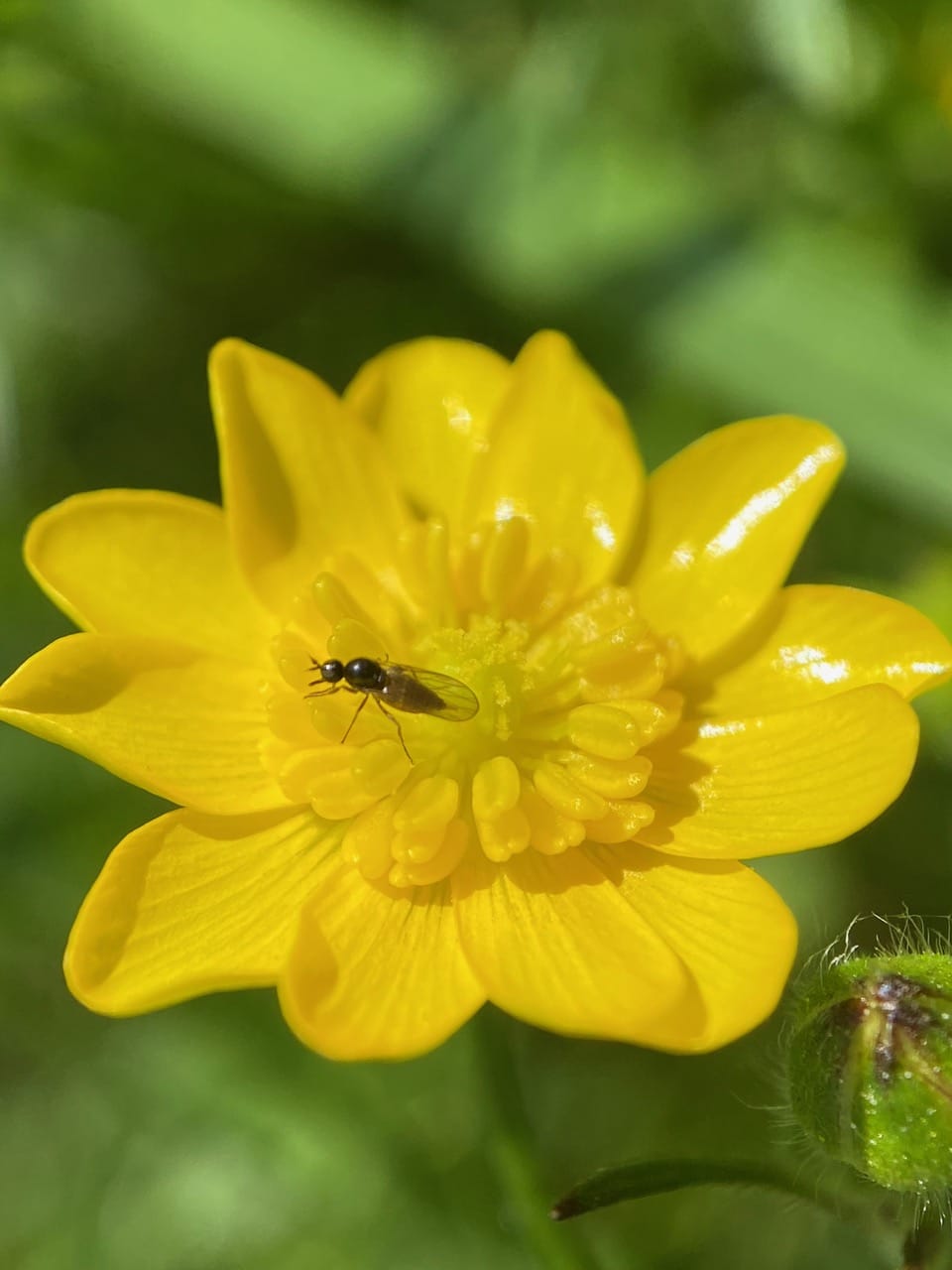
A Hybotid Dance Fly (family Hybotidae) is feeding on pollen from an anther of California Buttercup, Ranunculus californicus.
Why are the petals of Buttercup flowers glossy?
Buttercups (genus Ranunculus) have a trick for warming their flowers that may be unique to this group of plants. The coloration of glossy buttercup flowers is due to a rare combination of structural and pigmentary colorations. The top single-cell layer of the petal, the epidermal layer is ultra-smooth and contains pigments that reflect yellow. This layer is anchored lightly to a starch layer below. Between the epidermis and the starch are pockets of air. The interference between the epidermis and the airy layer below creates a thin-film producing a shiny, mirror-like effect. The light that is not absorbed by the pigments in the epidermis ends up passing through and hitting the starch layer below the air pockets. The starch layer has a scattering effect, sending the scattered light back through the pigment layer, intensifying the yellow color. Essentially the pigment is used twice.
Are there any evolutionary advantages to the buttercup’s intense color and glossiness? There are two likely functions. It provides a strong visual signal to insect pollinators. The petals also act together like a parabolic reflector, focusing visible and infrared light on the flower center. Warming the pollen-producing stamens boost their maturation and chance of pollination. What’s more, insect pollinators prefer warmer flowers because it allows them to forage on cold mornings.

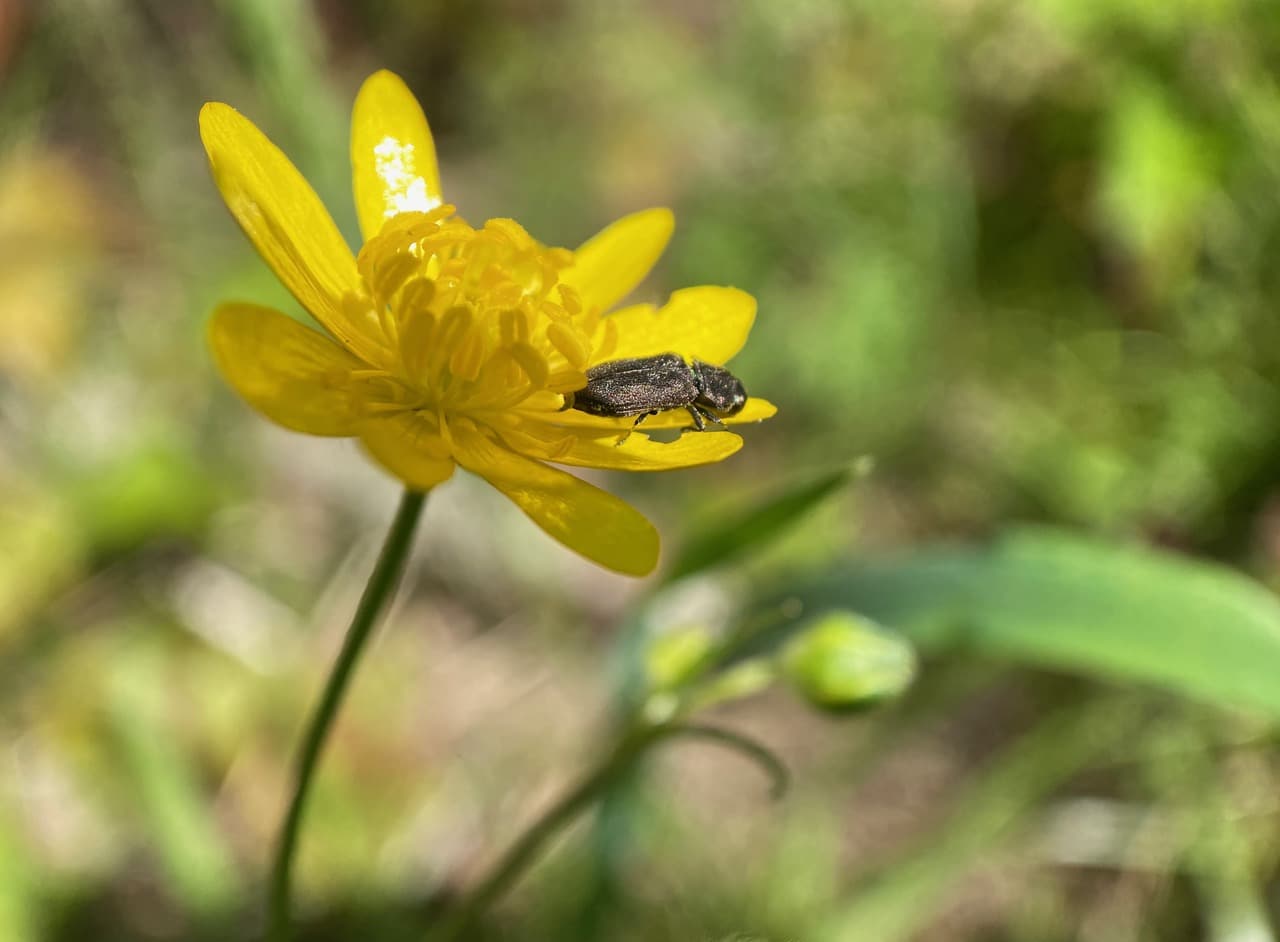
A dark form is perched on a flower of California Buttercup, Ranunculus californicus.
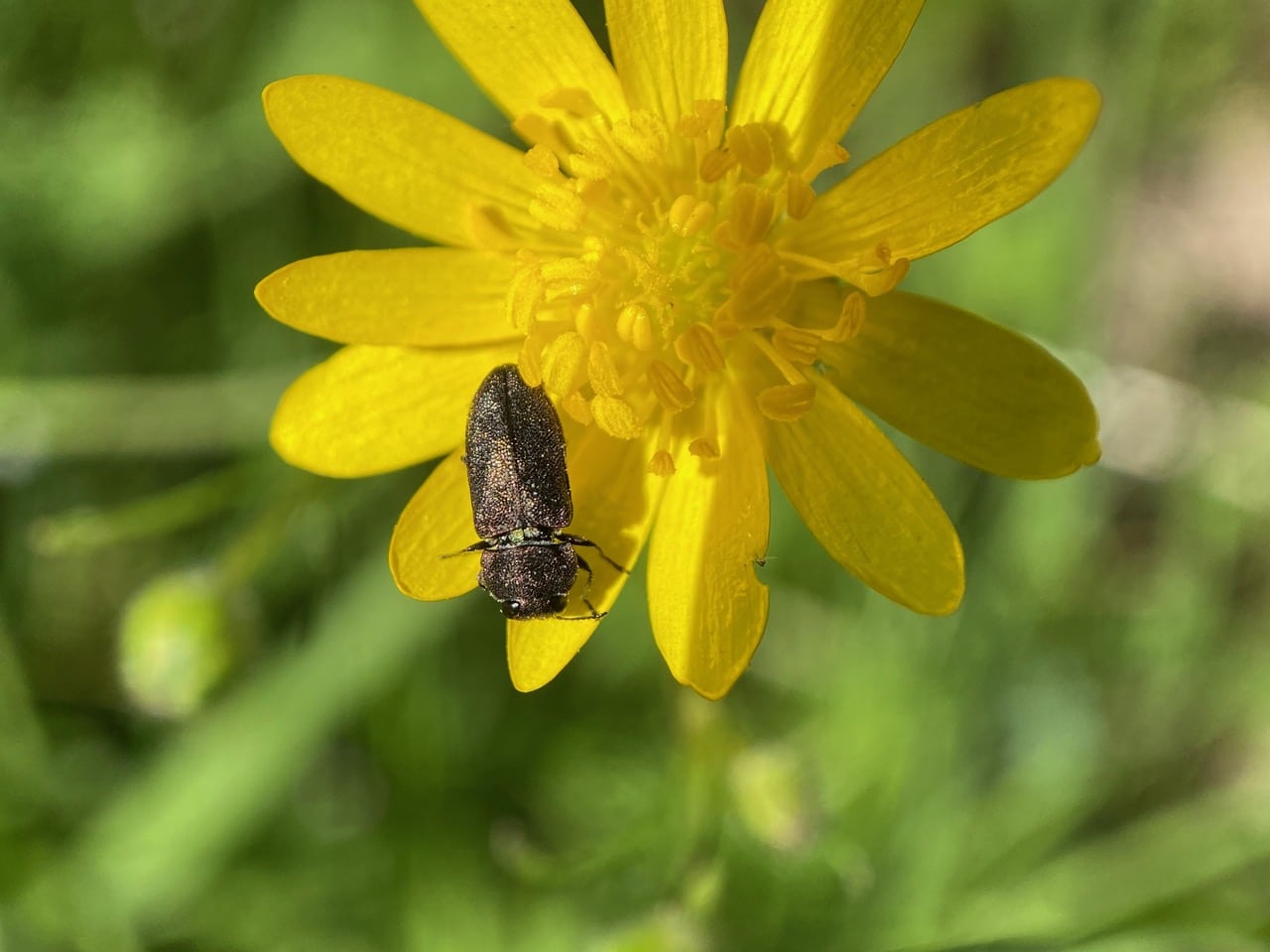
It is a Jewel Beetle in the subgenus Melanthaxia (genus Anthaxia, family Buprestidae).
Buprestids are sometimes also called Jewel Beetles because of their glossy, iridescent colors. The larger and more spectacularly colored ones are highly prized by insect collectors. Their elytra have been traditionally used in beetlewing jewelry in some Asian countries. The iridescence common to these beetles is not due to pigments in the exoskeleton, but instead is caused by structural coloration, in which microscopic texture in their cuticle selectively reflects specific frequencies of light in particular directions. Buprestid larvae are known as flathead borers. They bore through roots, logs, stems, and leaves of various types of plants, ranging from trees to grasses. Adult jewel beetles mainly feed on plant foliage or nectar, although some species feed on pollen and can be observed visiting flowers.
Members of the subgenus Melantaxia have an affinity for yellow flowers, such as buttercups and dandelions. I have seen them gather in large numbers to feed and mate on dandelion flowers.

A Sedgesitter, Platycheirus sp.(family Syrphidae) is foraging on a buttercup flower. Instead of facing the middle of the flower, the hover is fly pivoting around the flower with its head lowered to take nectar from the base of each petal. This is a common behavior of insects visiting buttercup flowers.
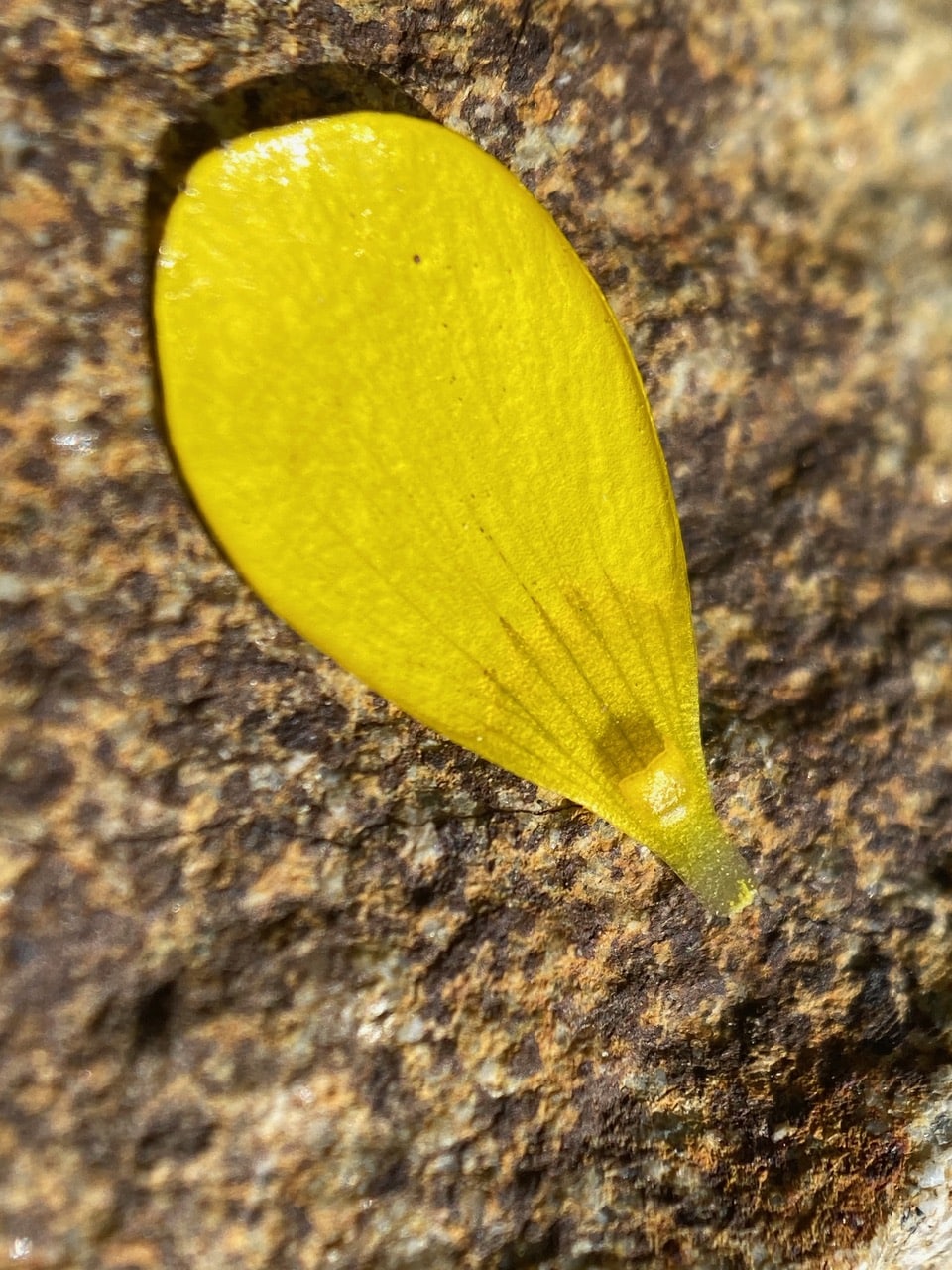
Photo from 4/2/21
I pick a petal from a fresh buttercup flower and look for the nectariferous spot – it is a cup-like scale that holds the nectar at the base of each petal, usually hidden under the stamens. Unlike most flowers that have a pool of nectar in a single nectary, the buttercup dispenses her sweet treats discreetly in these pockets, ensuring that the visiting pollinator would probe meticulously and thoroughly around the flower, and get covered with her sticky pollen. Note the faint, greenish nectar guides, lines on the petal that direct the pollinator to the sweet reward.
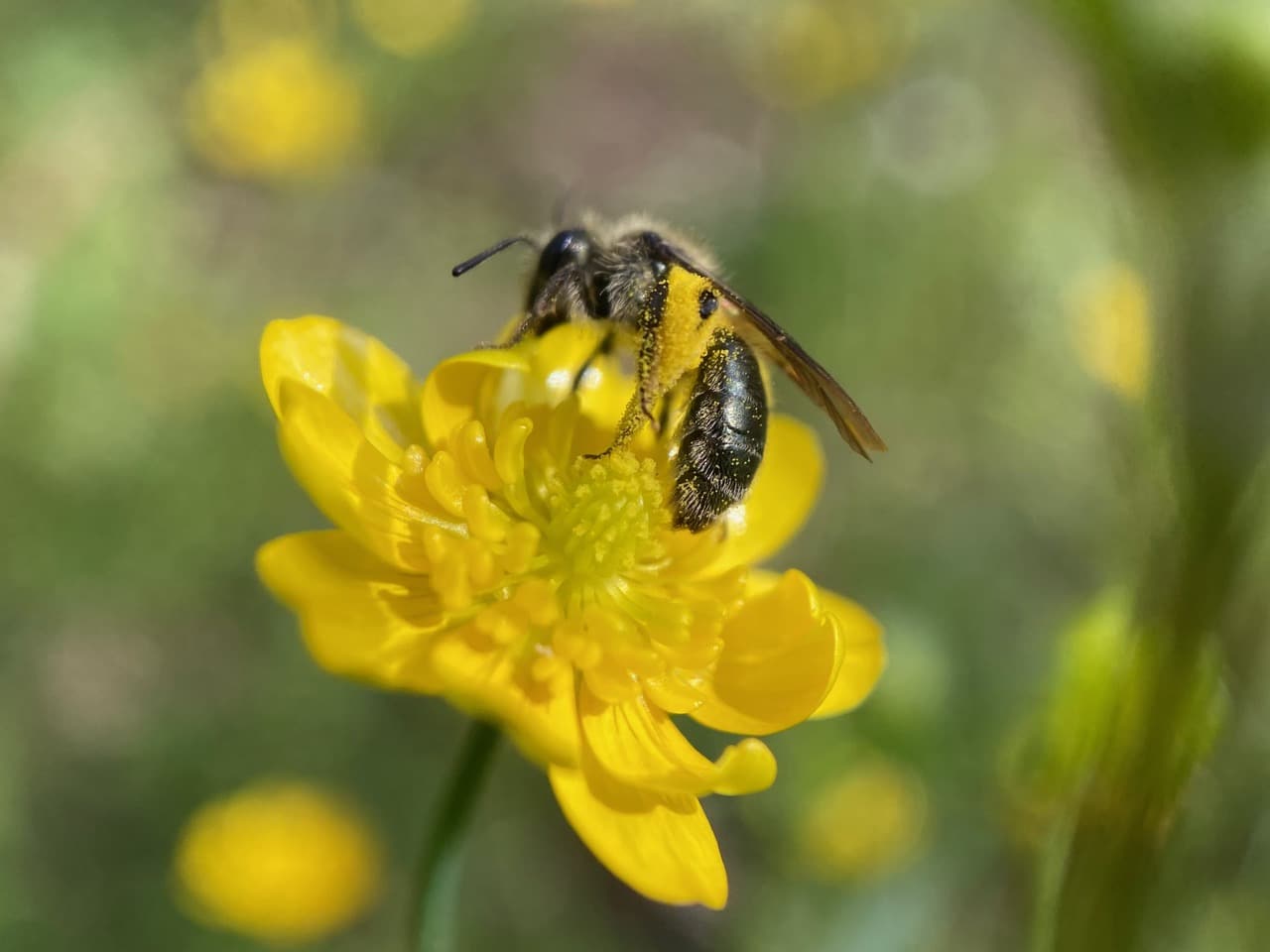
A female Mining Bee, subgenus Diandrena (genus Andrena, family Andrenidae) is using her middle leg to secure the buttercup pollen grains onto the scopa of her hind leg before flying off to another flower.
Andrena is likely the largest and most species-diverse bee genus in California. It is one of the largest bee genera in the world. The floral preferences of Andrena species span the range of bee diets; some are broad generalists, and a number are strict specialists. Andrena are among the first bees to fly in the spring; their ability to withstand the chill is still a puzzle to scientists. The bees can’t fly until their body temperatures reach 50-60 F. They rely on the warmth of the sun to get them to speed, and it is not uncommon to see them warming up on leaves or rocks. This cold-hardiness makes Andrena excellent pollinators of early spring wildflowers and cultivated crops.
Andrena are solitary, ground-nesting bees, but often nest in large, close groups, digging burrows in sunny, sparse soil. These medium-sized pollinators (8-17 mm) are generally brown to black, often with white or tan hair. They have a “furry” thorax. Females are identified by facial foveae (velvety patches), and carry pollen on scopae (specialized pollen-carrying hairs) on their hind legs and thorax. Females use a specialized “pygidial plate” on the abdomen to apply waterproofing secretions to their nest chambers.
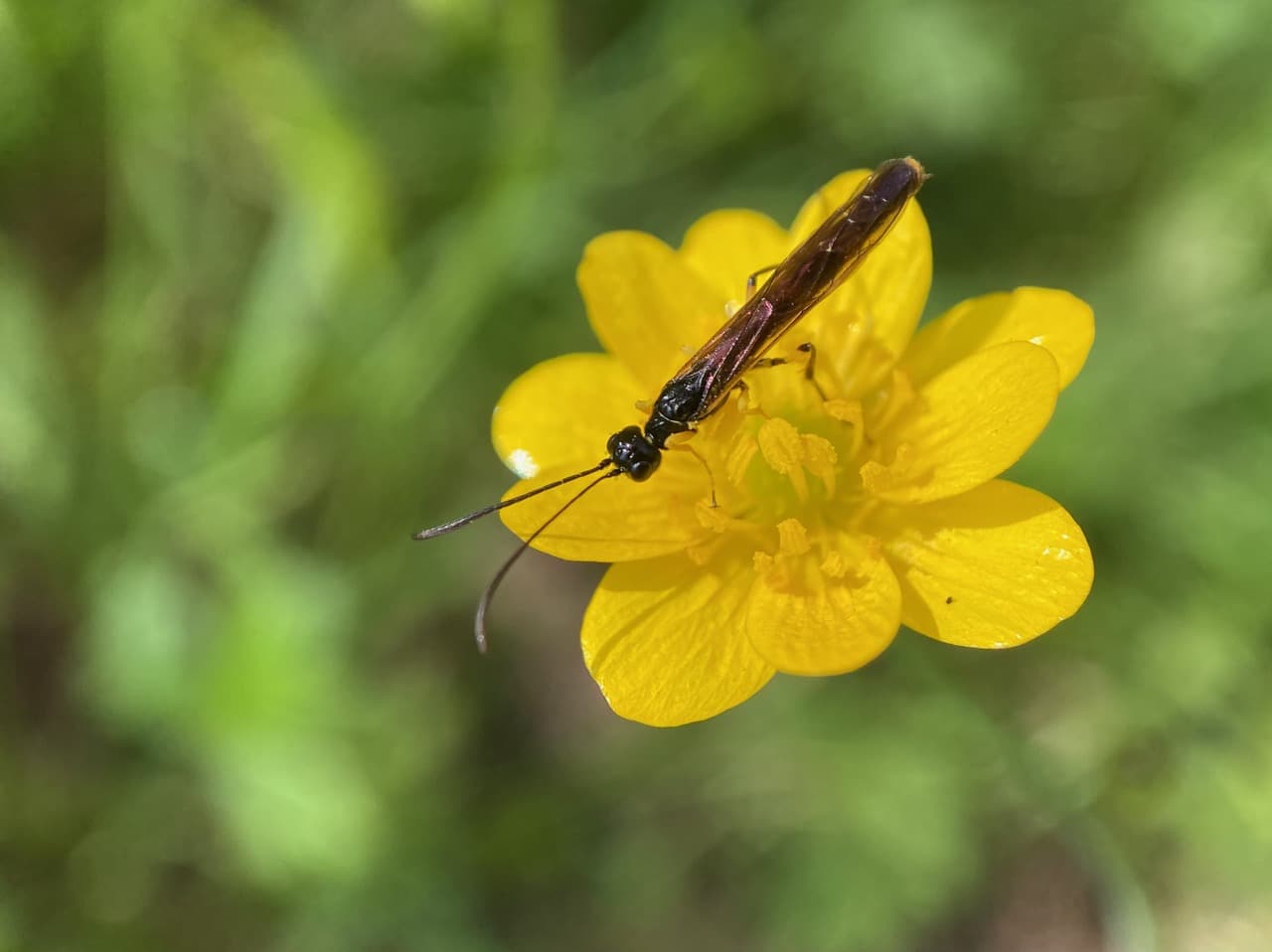
Check out that long, slender insect on the buttercup! it is a Stem Sawfly, Calameuta sp.( family Cephidae).
Sawflies are part of the insect order, Hymenoptera, together with bees, wasps and ants. They are considered to be the most primitive group and form the sub-order Symphyta. They differ from the bees, wasps and ants in not having a narrow ‘waist’ and in their wing venation. The common name comes from the saw-like ovipositor that the females use to cut into plant tissues to lay their eggs. Larvae are caterpillar-like and can be distinguished from lepidopteran caterpillars in that all body segments following the three bearing true legs have a pair of fleshy prolegs. Like the lepidopteran caterpillars, sawfly larvae walk about and eat foliage. In many species, the larvae feed in groups.
Stem Sawflies in the family Cephidae feed on grasses (including grain crops) and shrubs (including berries, roses, willows). The genus Calameuta is found in western North America. Calameuta larvae are grass stem borers. Adults are commonly attracted to yellow flowers.

I am fortunate to be able to watch a female Mining Bee, subgenus Diandrena forage on a buttercup, pivoting anti-clockwise a full circle around the flower.
Diandrena is a subgenus of Andrena bees, often called the “two-celled Andrena” for having two submarginal wing cells rather than three, with at least one species identified visiting buttercups (genus Ranunculus). Identification involves looking at head shape, facial fovea, hair distribution, and body shape.
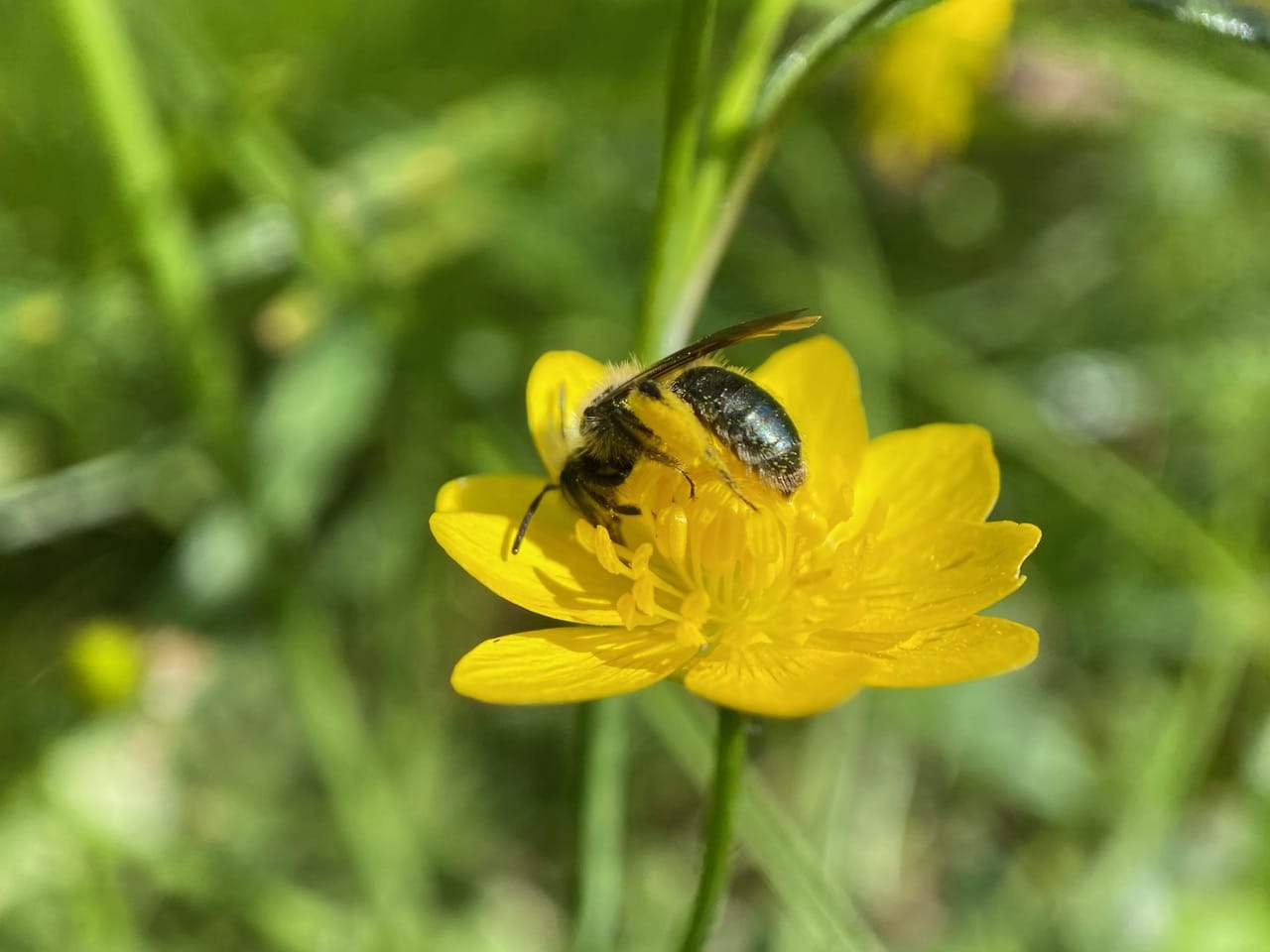
The bee has her head down all the time, going from one petal to the next to collect nectar with her tongue from the nectariferous spot at the base of each petal. In the mean while, she is doing a fancy footwork to rake up pollen from the anthers and gathering it into the scopae on her hind legs.


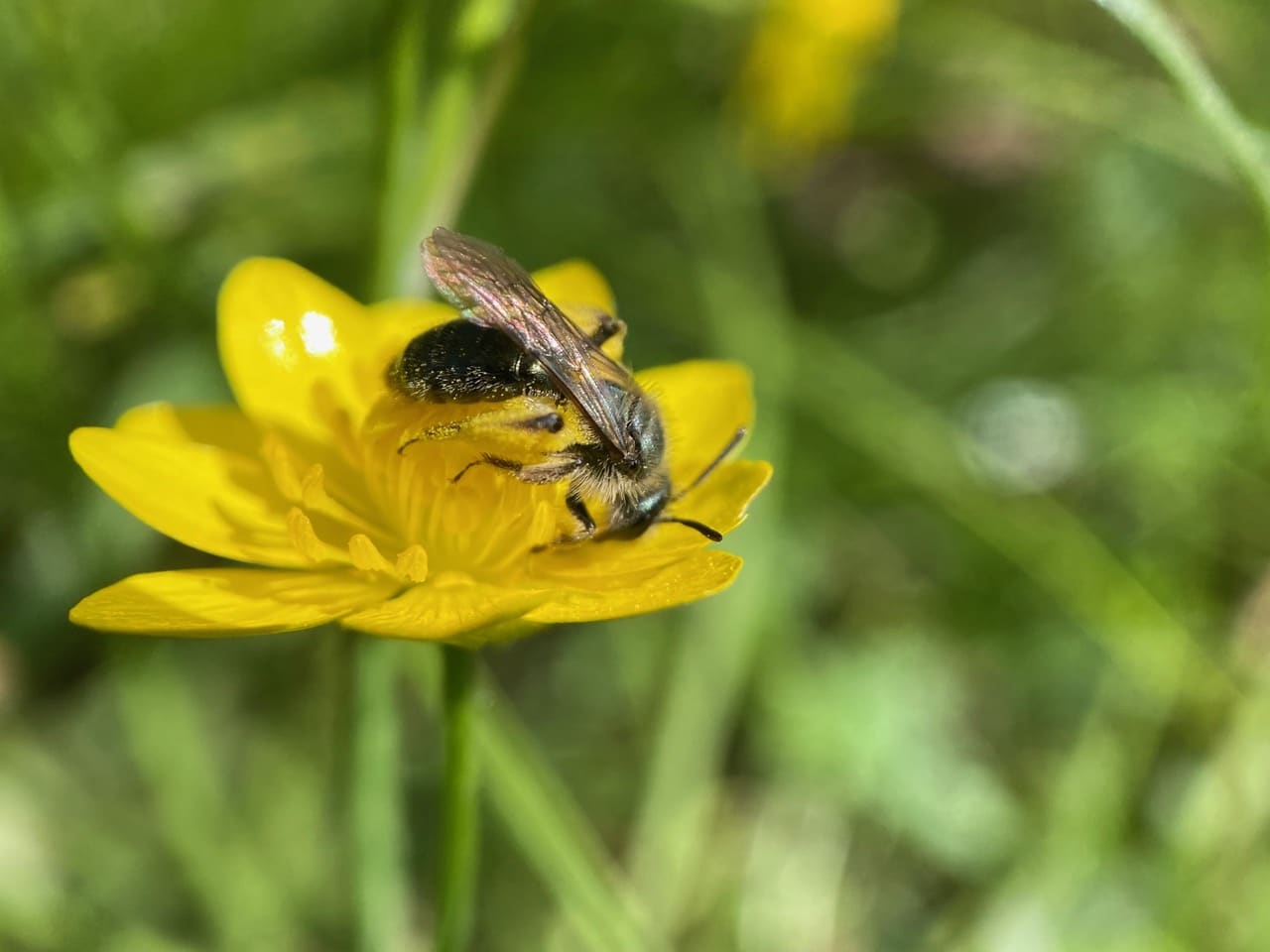
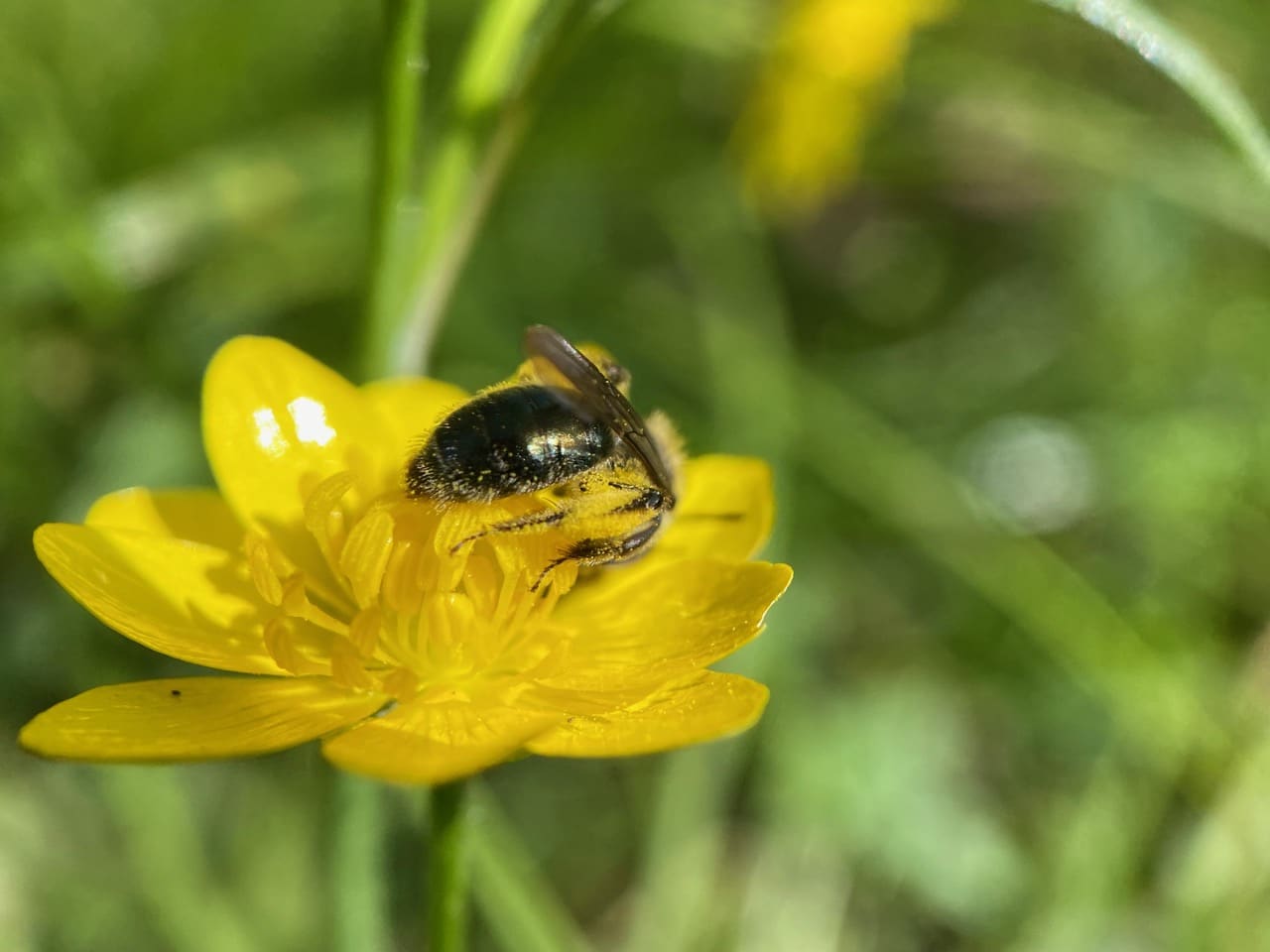

There, that’s a full 360 degrees around the flower. I think the bee deserves a standing ovation for that performance. The pollen grains are held loosely in her scopae by electrostatic attraction, and not moistened with nectar as in bees with corbiculae (pollen baskets). Bees with this mode of pollen transport are deemed more effective pollinators since the pollen grains fall off easily as the bee visits subsequent flowers.