

Pollinator Post 3/21/24
On this sunny afternoon, I am exploring the north end of the Skyline Garden, from the Steam Train Entrance.
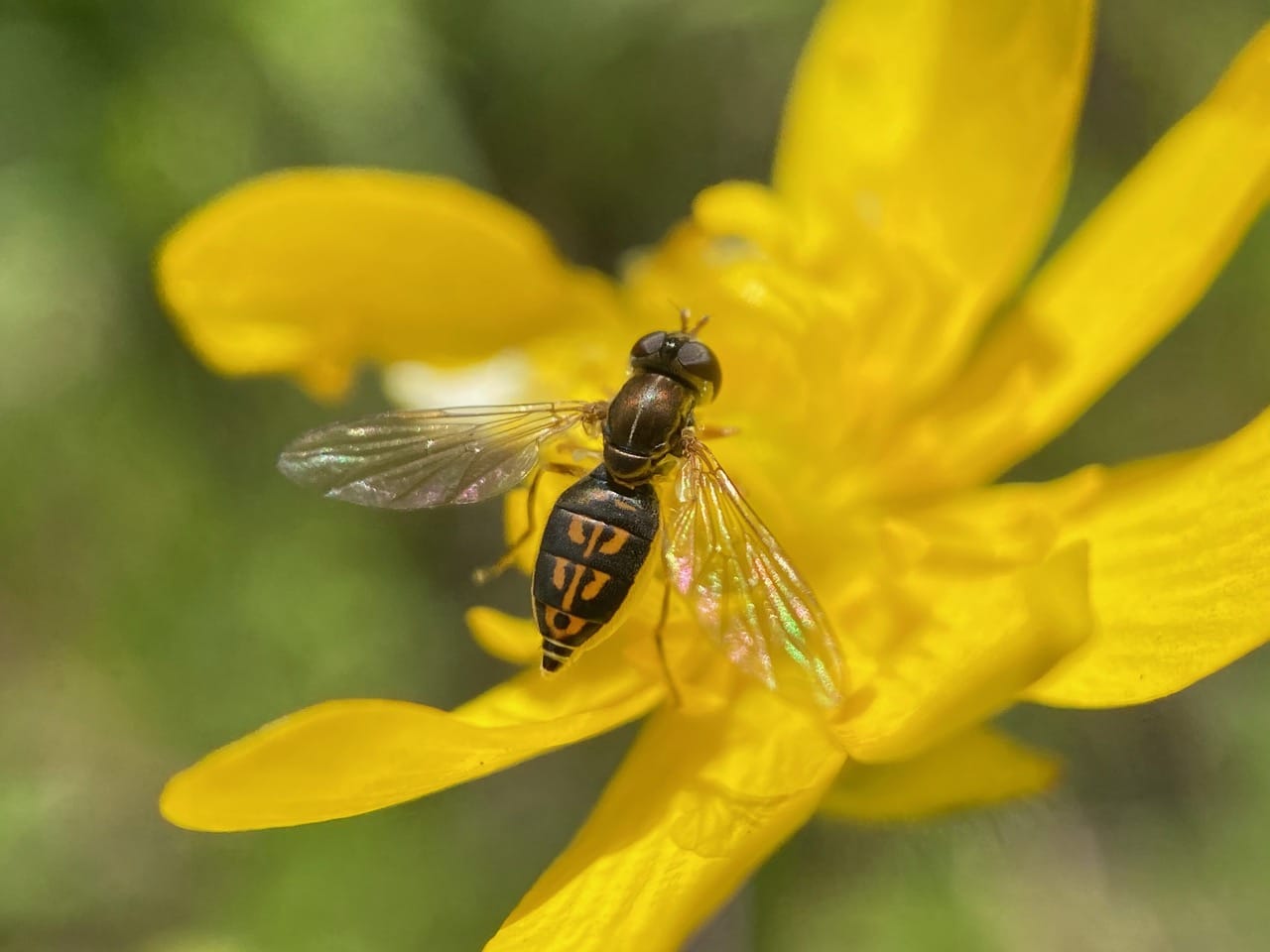
Near the cattle gate, a few more California Buttercups, Ranunculus californicus have come into bloom in the grassy field, delighting this small hoverfly, the Margined Calligrapher, Toxomerus marginatus (family Syrphidae).
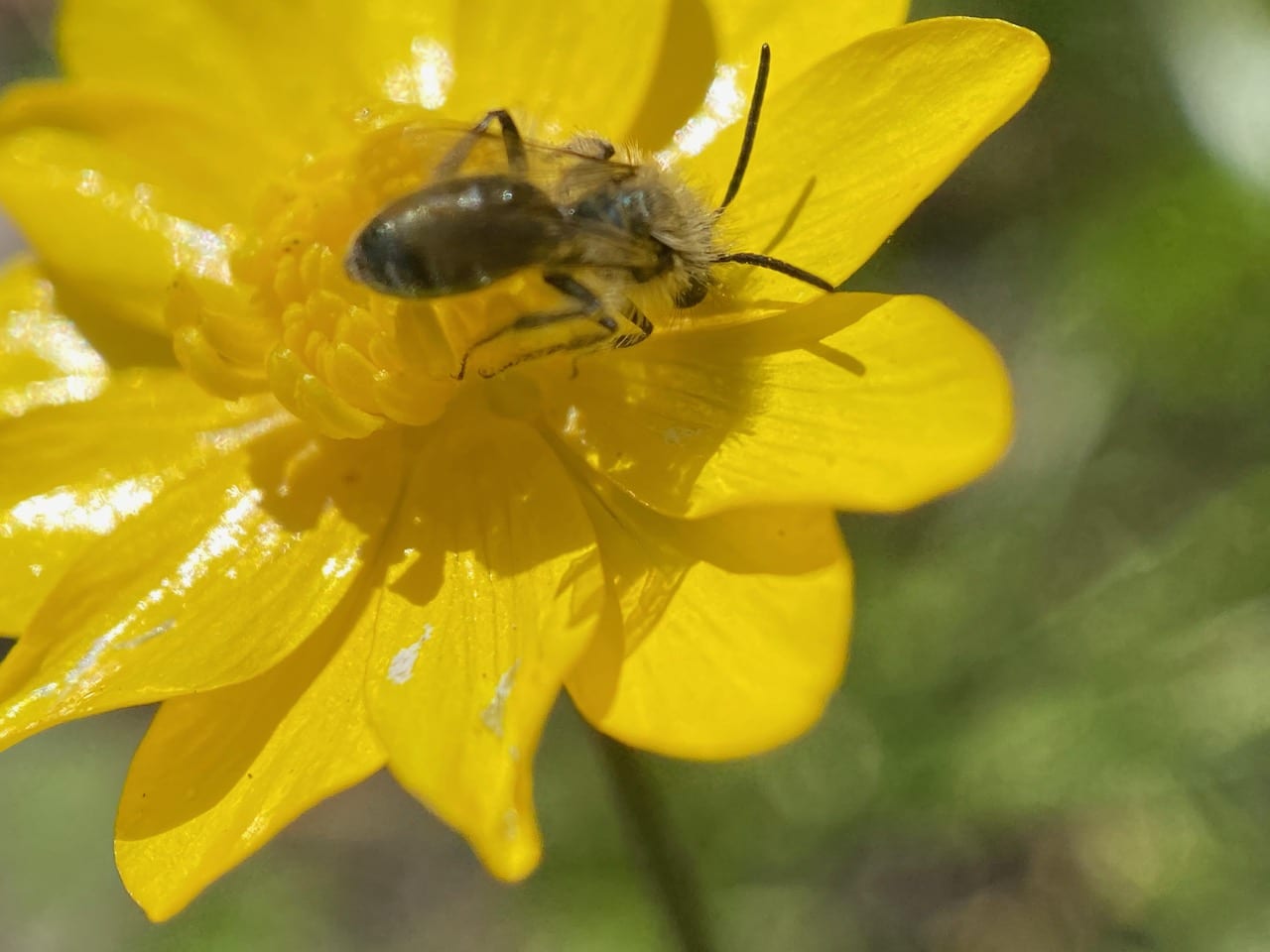
There is a small, slender bee that is flying around, persistently visiting the buttercup flowers. It is fast and wary, almost impossible to get close enough for a photo. From its long antennae, I gather that it is a male.
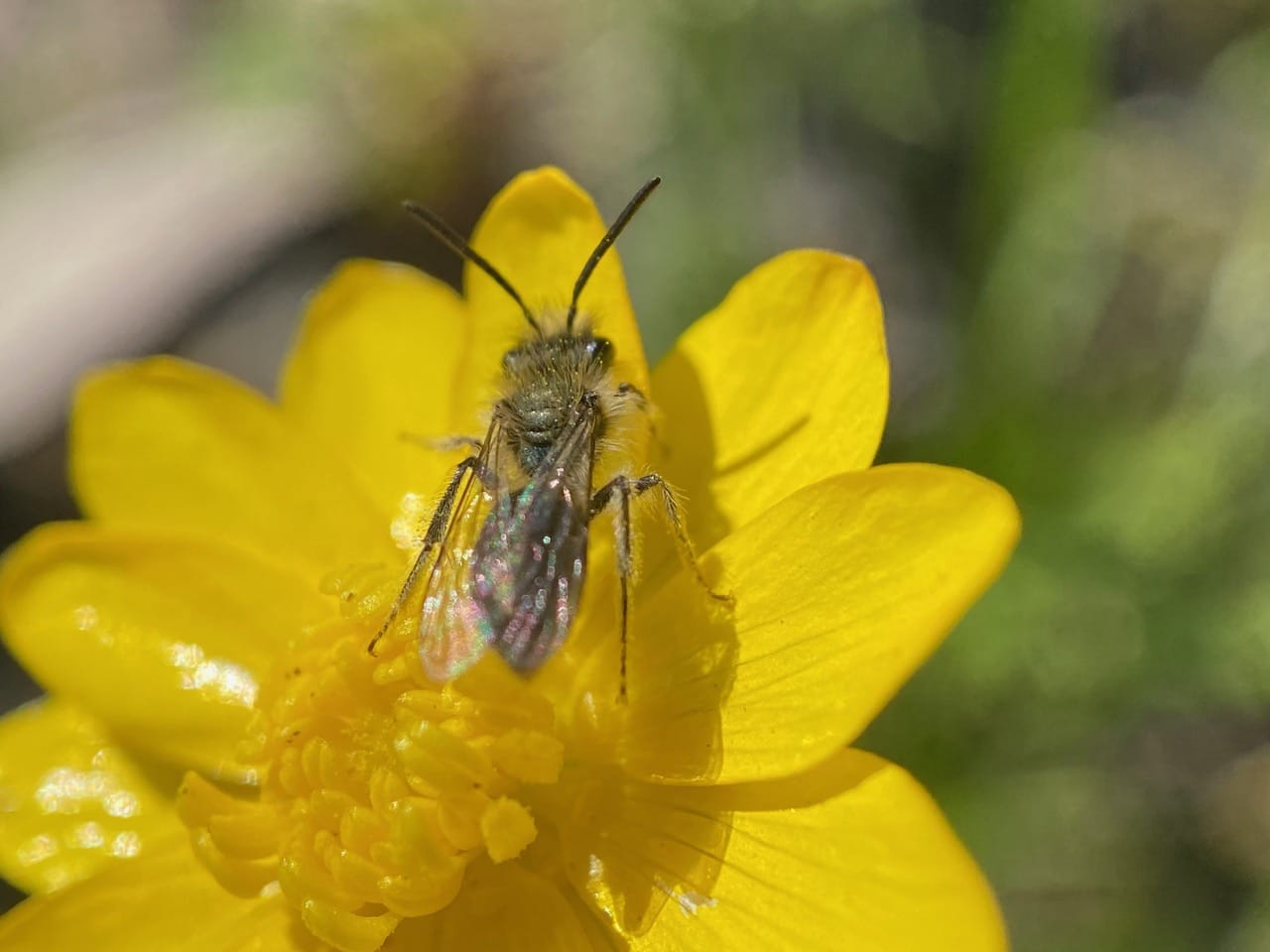 A fleeting look shows a wasp-like body with very sparse hairs. I think it is probably a Mining Bee (family Andrenidae). Both the absence of scopae on the hind legs and the long antennae confirm that it is a male. I hang around the patch of buttercups for a while hoping to capture a good picture of the bee’s head, but finally have to give up and move on.
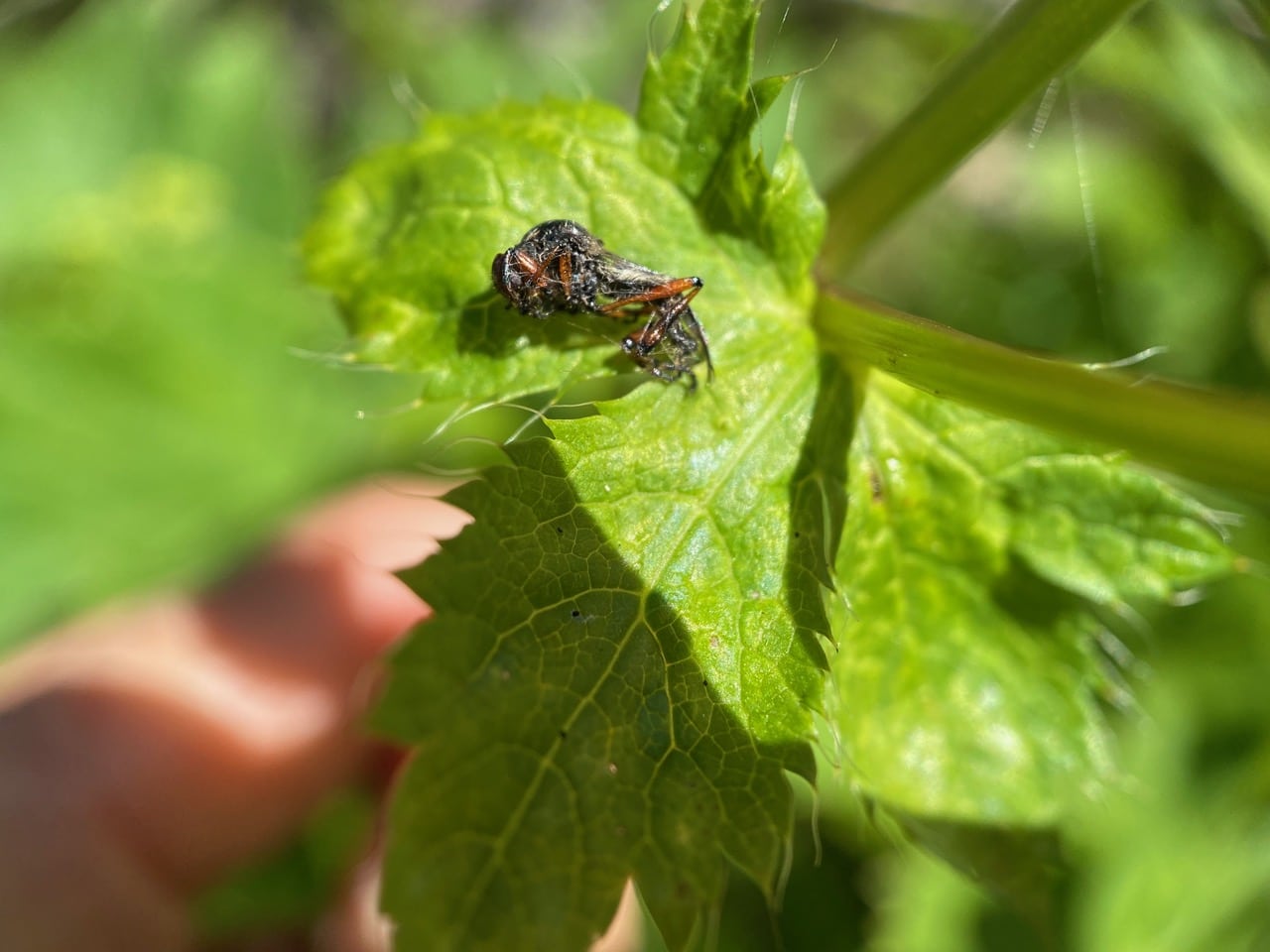 Passing a blooming Pacific Sanicle, Sanicula crassicaulis, I spot something dark on a leaf. Wow, it is a dead March fly that has been wrapped in silk. Victim of a spider? The packet must have been cut off from a web above. Since Crab Spiders and Jumping Spiders do not wrap up their prey, they are not responsible.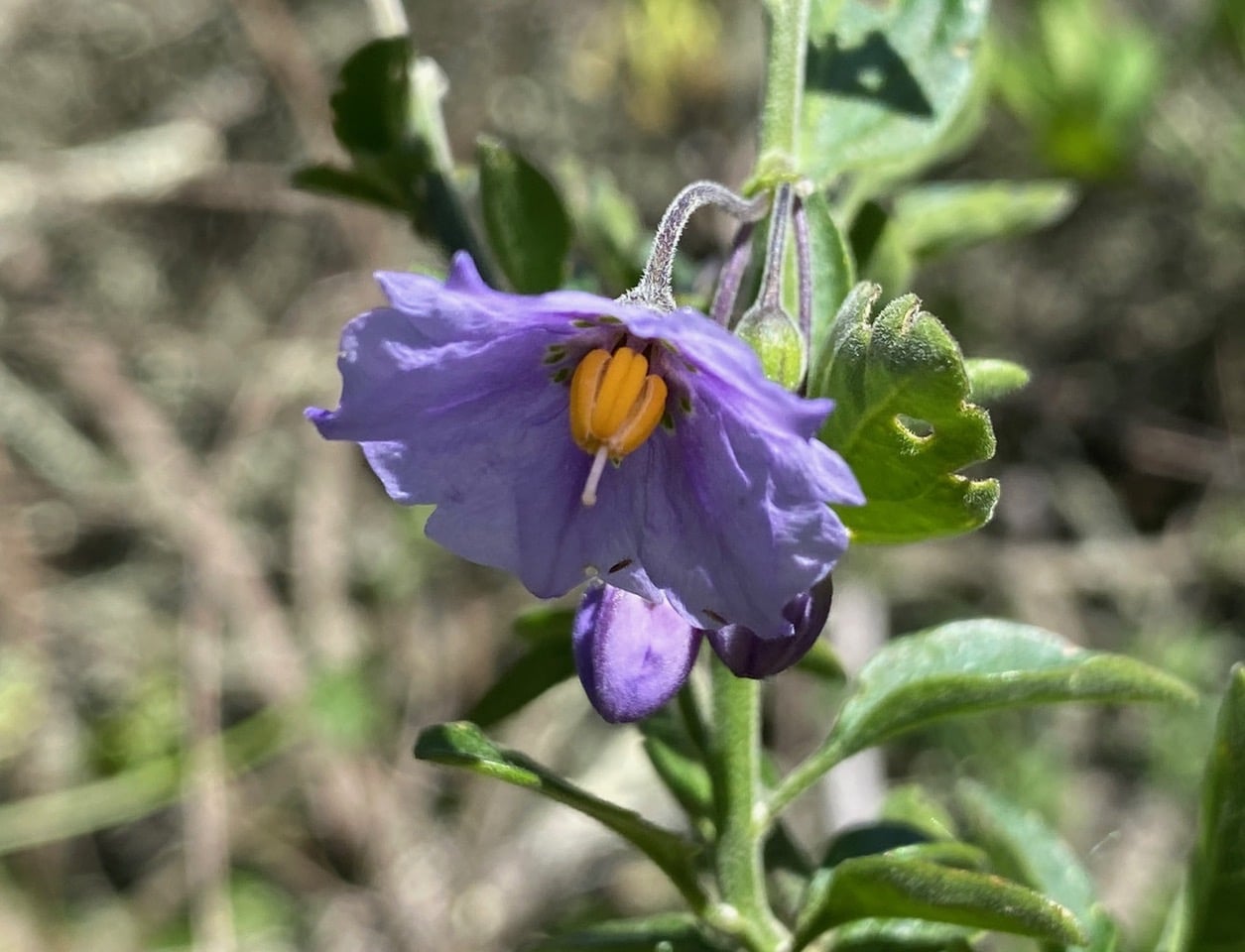
The Blue Witch, Solanum umbelliferum is blooming. The nodding flowers are not the easiest to photograph, as they require kneeling or sitting down. Although there are some green marks at the base of the petals, these are not the usual nectar guides. Solanum flowers do not produce nectar. They do however produce generous amounts of pollen, but it is hidden in special anthers. The prominent yellow anthers are fused into an anther cone in the middle of the flower. The anthers are “poricidal”, meaning they do not split open along the side when mature like most other anthers. Instead, they have a terminal pore from which pollen has to be shaken out, salt-shaker style in a process called buzz pollination. Only Bumble Bees and a few other large native bees such as Carpenter Bees and Digger Bees are capable of the feat. A bee arrives at the flower, grasps the anther cone with its feet and mandibles and hangs upside-down. It disengages its flight muscles from the wings, then vibrates the muscles at a specific frequency, causing the anthers to vibrate, showering pollen onto the bee’s belly. When the bee next visits another Blue Witch flower, the pollen on its belly may be rubbed off on the flower’s stigma which protrudes prominently from the flower. Pollination accomplished!
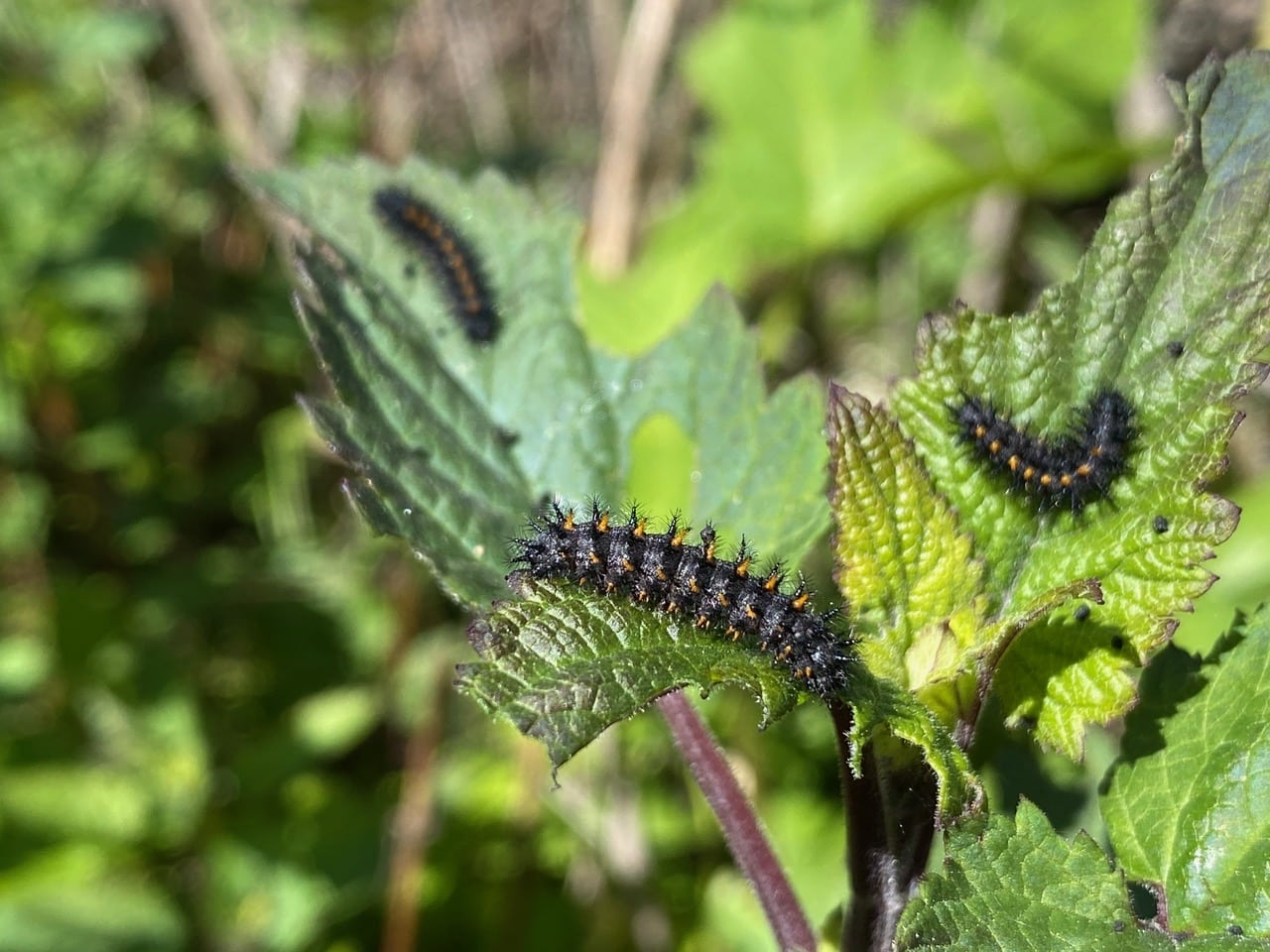
Wow, the Variable Checkerspot caterpillars have really ravaged this California Bee Plant, Scropularia californica. It is interesting that some of the Bee Plants are left totally untouched, while a few are crawling with caterpillars. These caterpillars have overwintered in the leaf litter. How did they decide which plants to climb on to feed when they woke up from diapause? Usually it is the mother butterflies’ choice on where to lay their eggs (usually favoring the plants with the appropriate level of defensive chemicals to provide protection for their larvae). These are smart, independent caterpillars that know what’s good for themselves!

A caterpillar is laying down more silk on a badly chewed leaf, its exuvium (shed exoskeleton) lying close by. The caterpillar undergoes several molts to reach pupation stage.
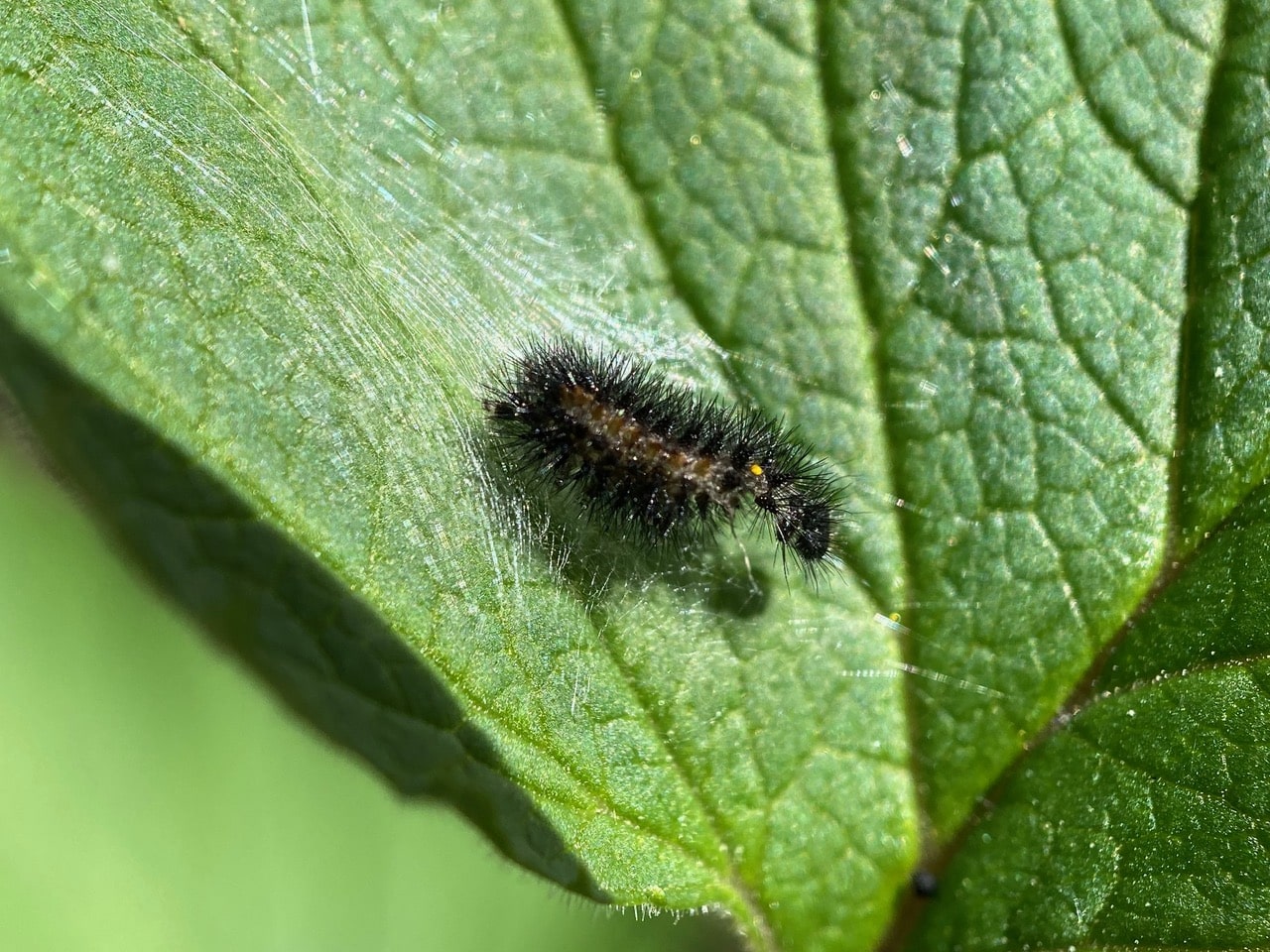
Close-up of a scrunched-up exuvium with an old head capsule at the end. During ecdysis (molting), the caterpillar literally wriggles out of its old skin, and finally expels the old head capsule. Note the mat of silk that the caterpillar has spun to secure itself on the leaf.

Three tiny flies are perched on a Bee Plant leaf. For this size, I suspect Leafminer Flies in the family Agromyzidae.
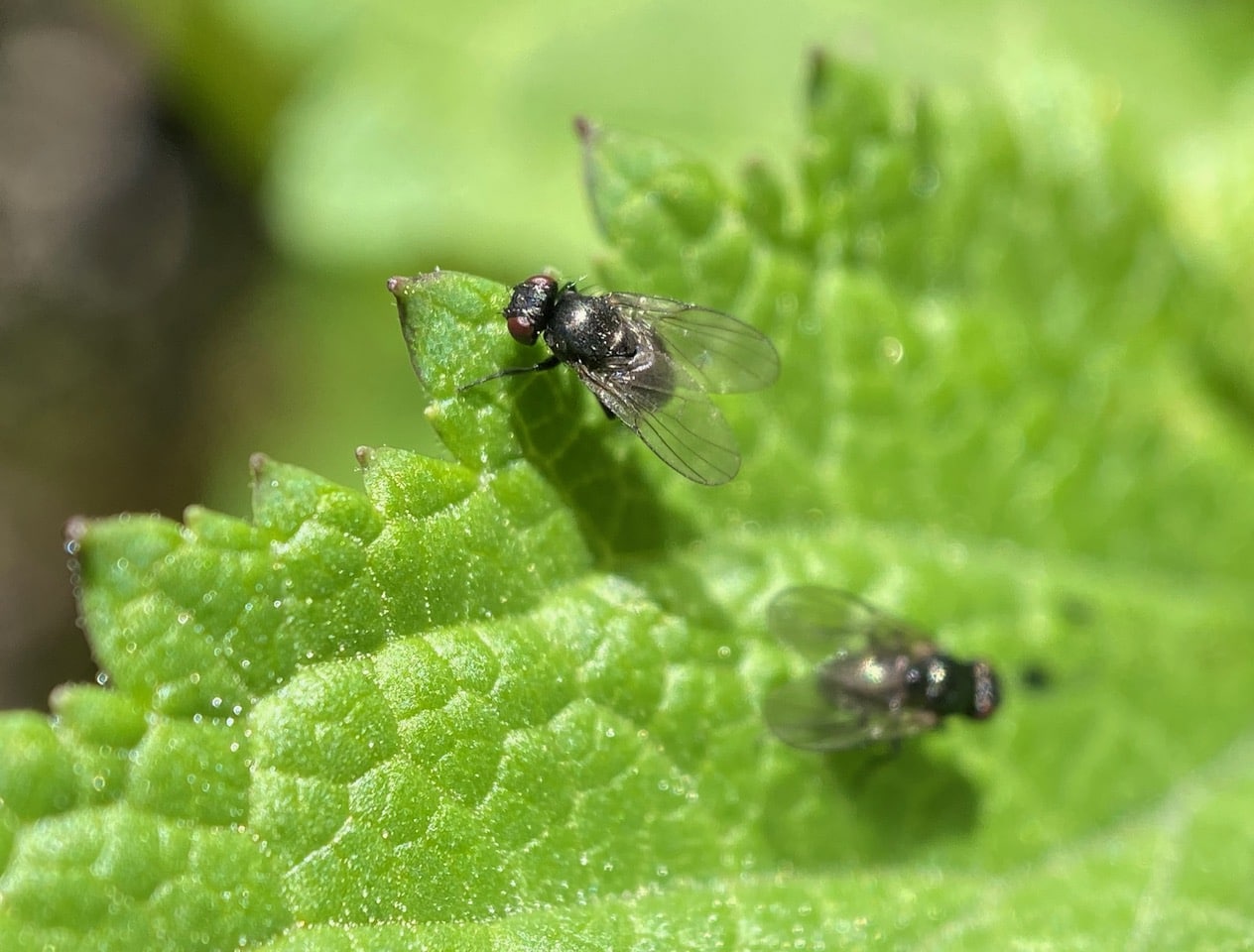
iNaturalist has suggested an ID of genus Ophiomyia (family Agromyzidae).
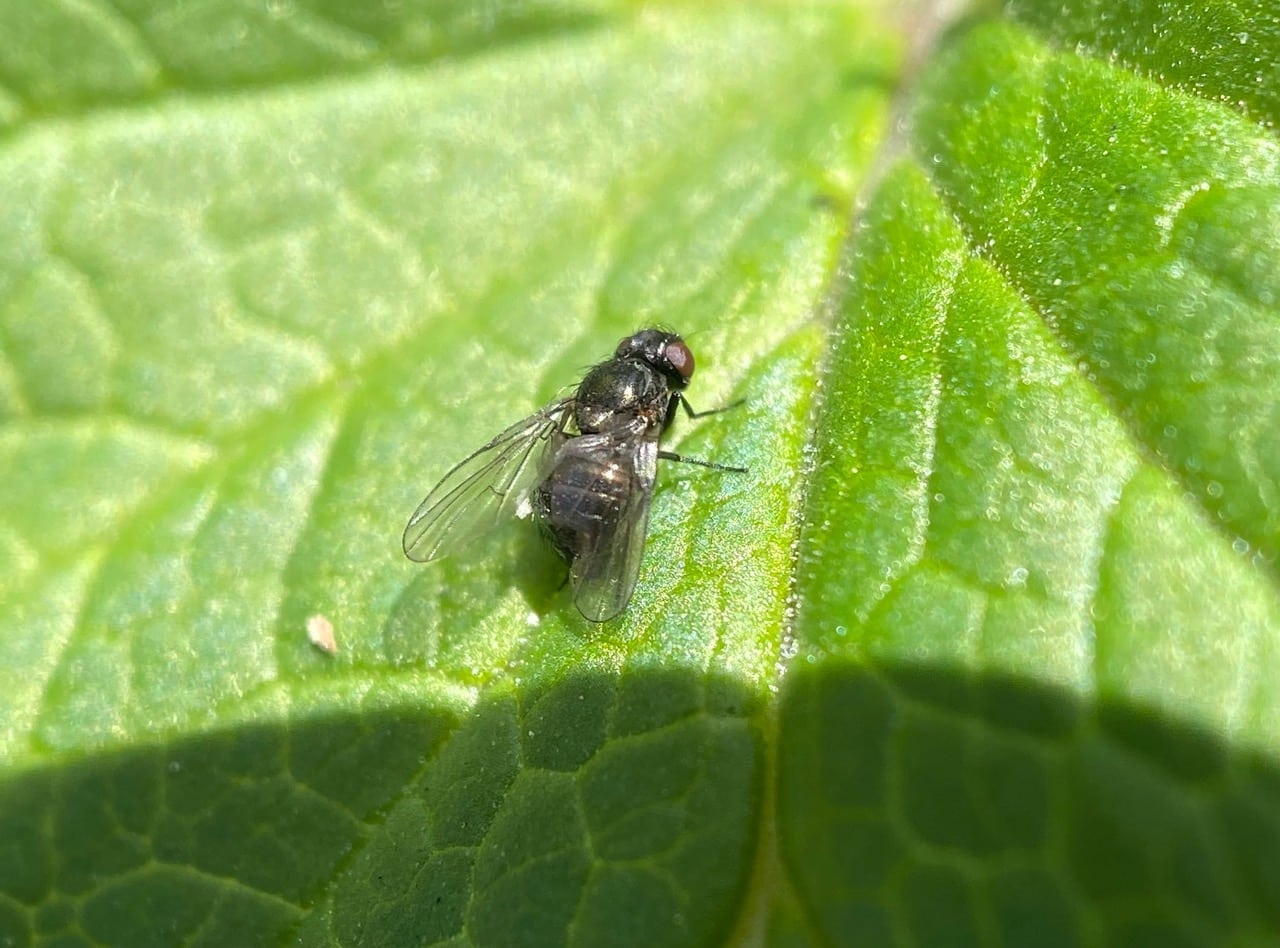
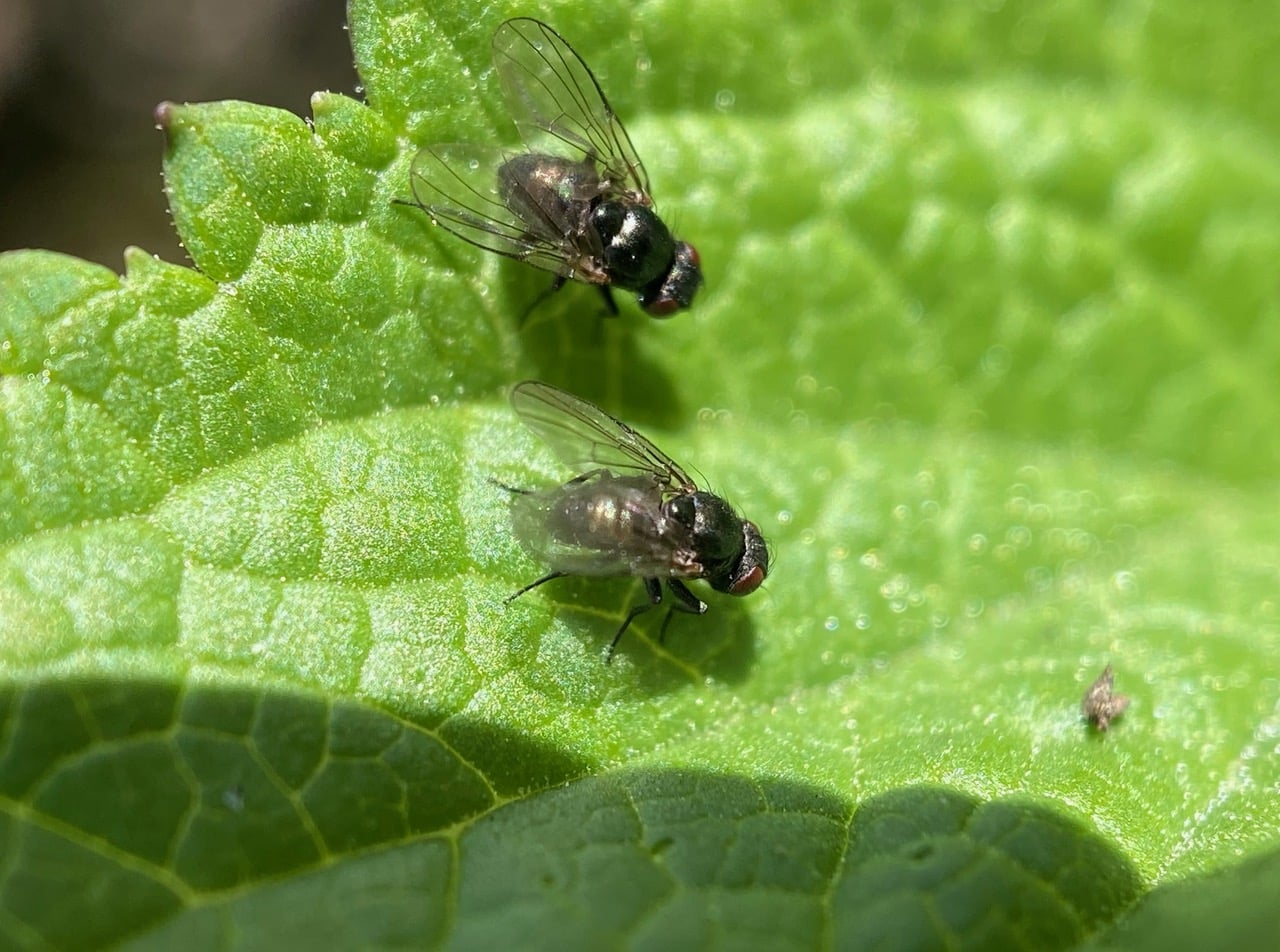
Have the flies gathered here to mate?
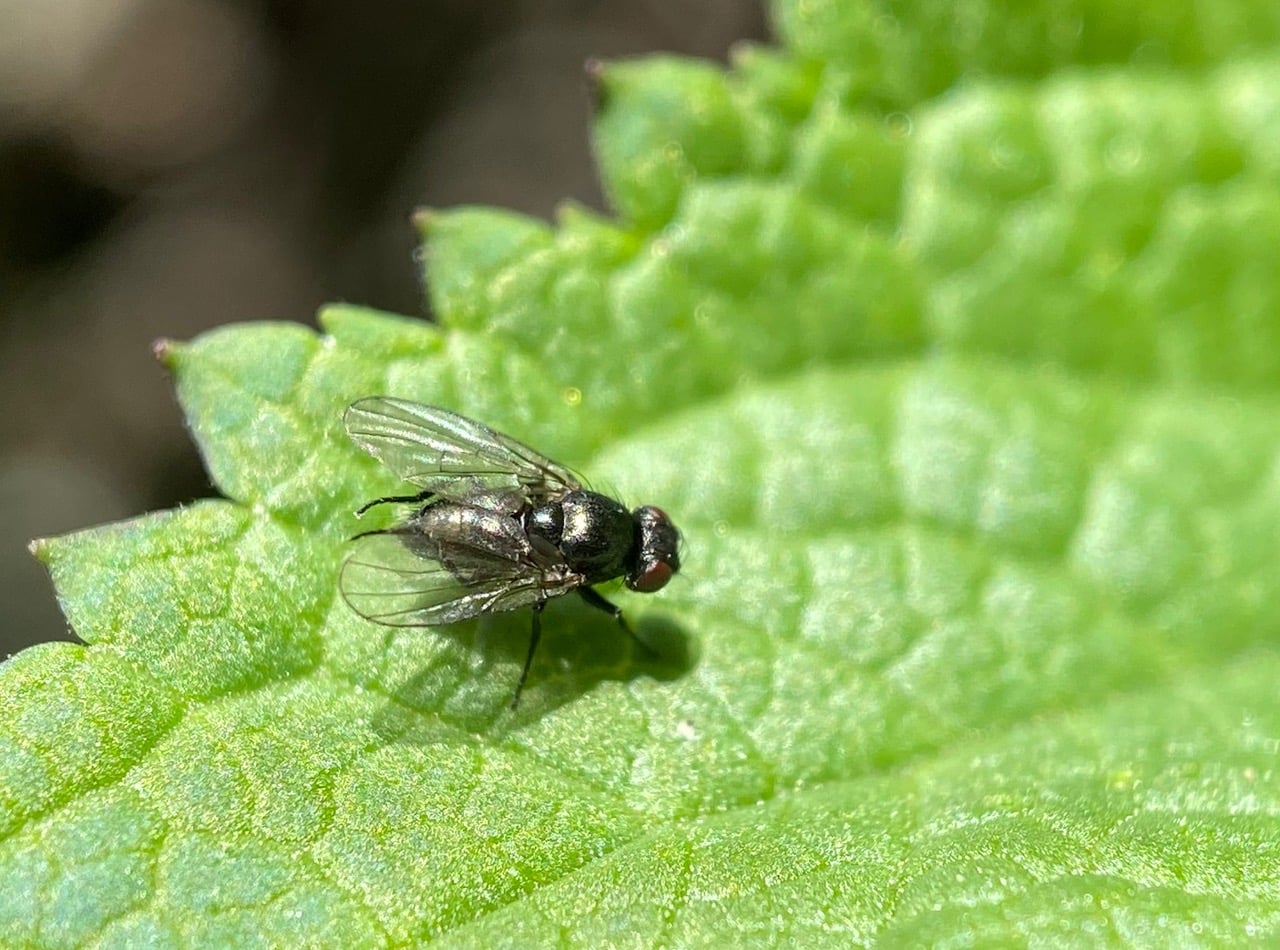
This one is grooming itself using its hind legs.


The Agromyzidae are a family commonly referred to as the Leaf-miner Flies, for the feeding habits of their larvae, most of which are leaf miners on various plants. They are small flies, most species in the range of 2-3 mm. Agromyzidae larvae are phytophagous, feeding as leaf miners, less frequently as stem miners or stem borers. A few live on developing seeds, or produce galls. There is a high degree of host specificity. A number of species attack plants of agricultural or ornamental value, so are considered pests. The shape of the mine is often characteristic of the species and therefore useful for identification. Adults occur in a variety of habitats, depending on the larval host plants.
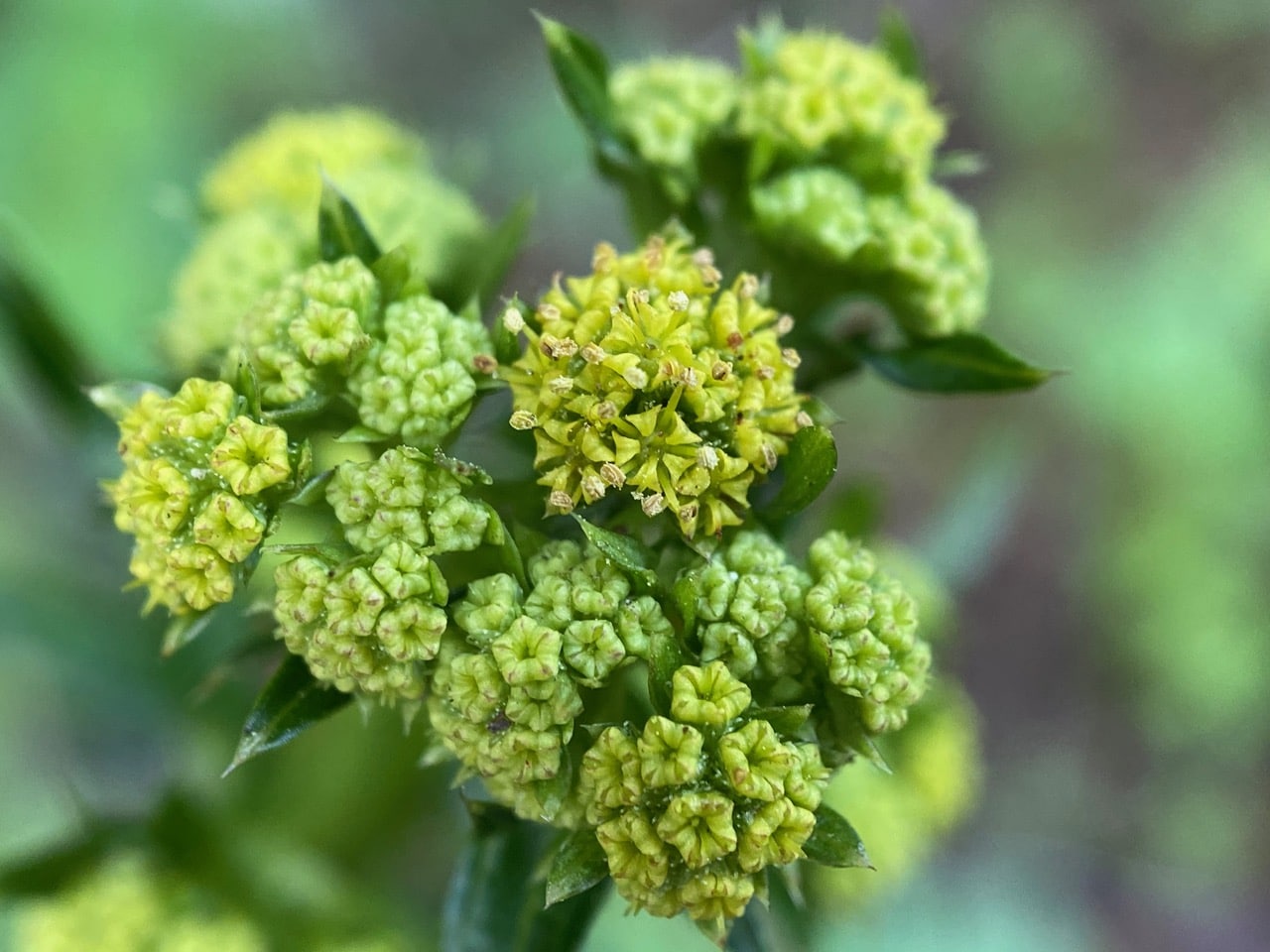
So common along the trail, the Pacific Sanicle, Sanicula crassicaulis, is blooming in profusion now. It takes patience to scan the tight clusters of minute flowers to find any insects. The mature flowers have fully exerted anthers.

An American Winter Ant, Prenolepis imparis (family Formicidae) is foraging on an inflorescence of Pacific Sanicle.

In an open area, a male March Fly, Bibio xanthopus (family Bibionidae) is perched atop a cluster of Pacific Sanicle flowers.
March Flies (family Bibionidae) generally live in wooded areas and are often found on flowers – adults of some species feed on nectar, pollen, and honeydew, while adults of other species don’t feed at all; and in either case, they are very short-lived. They are considered important pollinators in orchards. They are also important food for other insects and spiders. The larvae feed en masse on rotting organic materials like leaves, wood, compost, and rich soil.
March flies exhibit extreme sexual dimorphism – the sexes are morphologically distinct. The female is usually more colorful, has small eyes on the sides of long, narrow head, while the all-black males have huge eyes that touch in the middle and are split in half horizontally. Scientists speculate that the split makes it easier for them to see the other males that are above and below them in a mating swarm. Males gather in swarms that can blanket the ground and low vegetation. Female are attracted to the party and select mates in the frenzy of fly bodies.

The Hybotid Dance Flies (family Hybotidae) have gathered for nectar and pollen on this flower of Woodland Strawberry, Fragaria vesca.
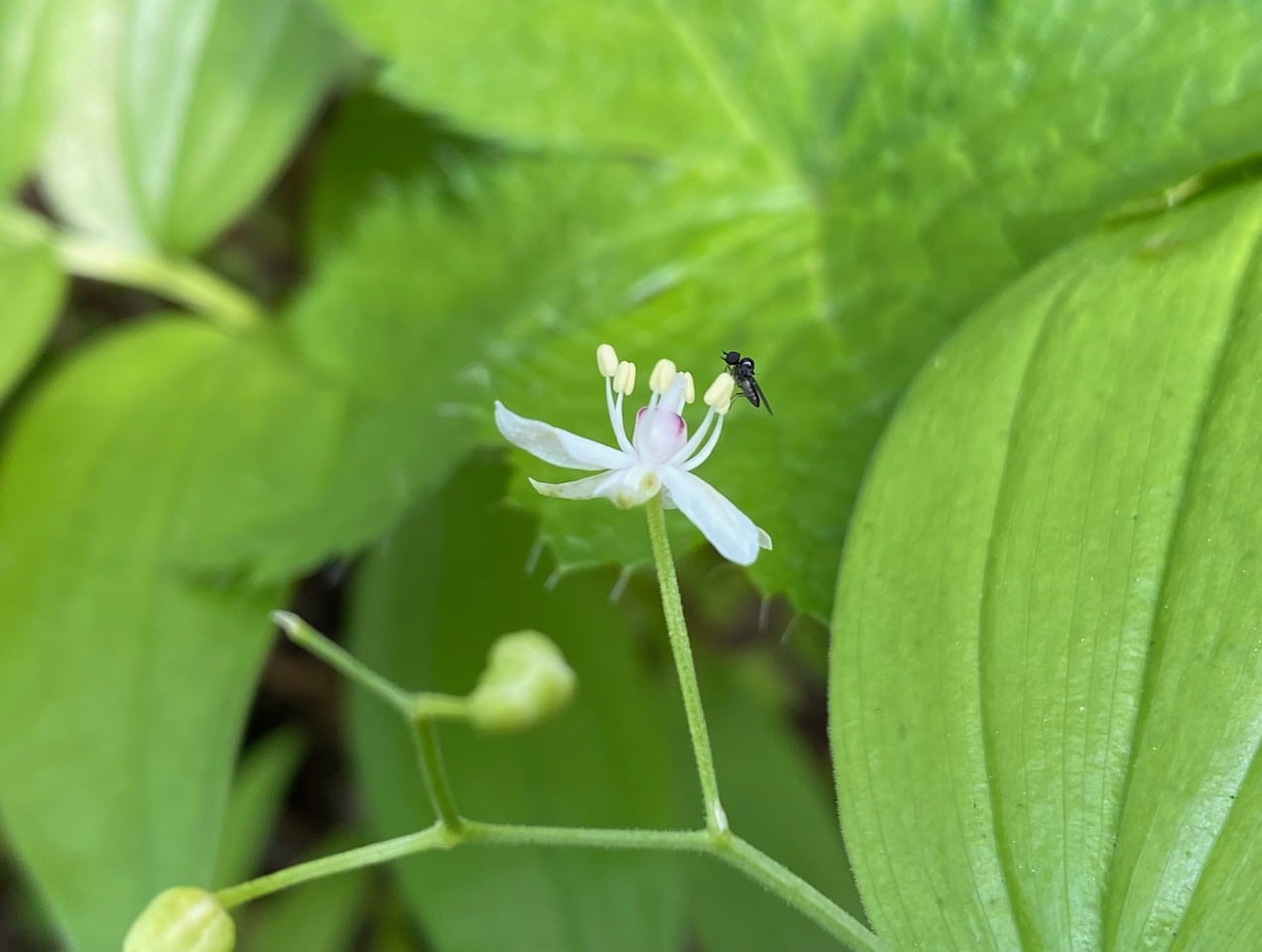
In a shady area along the trail, some Star-flowered Lily-of-the-Valley, Maianthemum stellatum are beginning to open up small white flowers along arching stalks. Guess who’s on top of that flower?
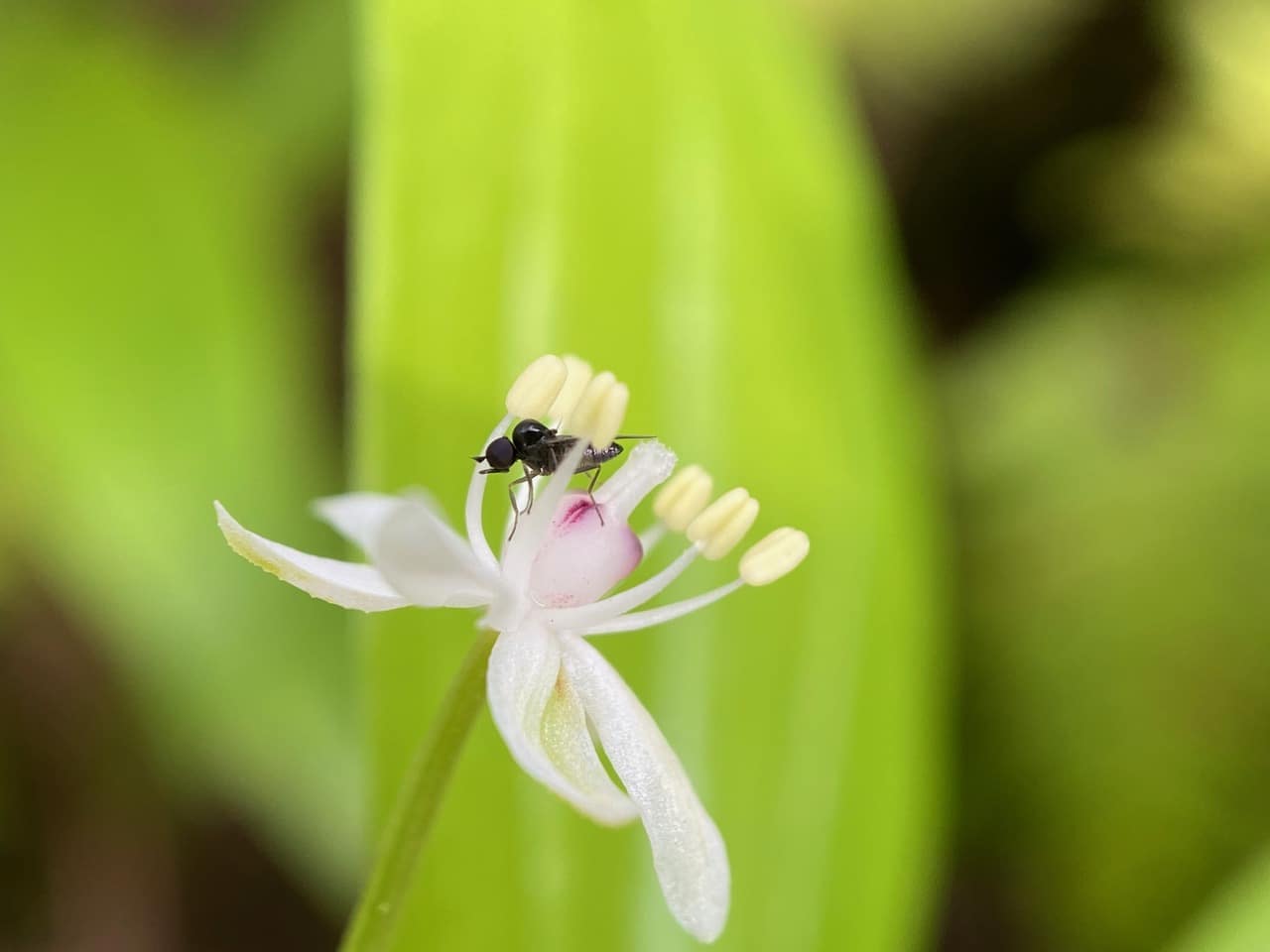
The Hybotid Dance Fly is perched atop the bulbous ovary of the Star-flowered Lily-of-the-Valley. Note the stigma on top of the short, stout style – it looks viscid and ready to receive incoming pollen.

The fly goes on to explore an anther of the flower. These anthers appear immature, not yet releasing pollen. The flower is probably protogynous, the female parts maturing before the male parts. The temporal separation of the sexes ensures that the flower does not self-pollinate.
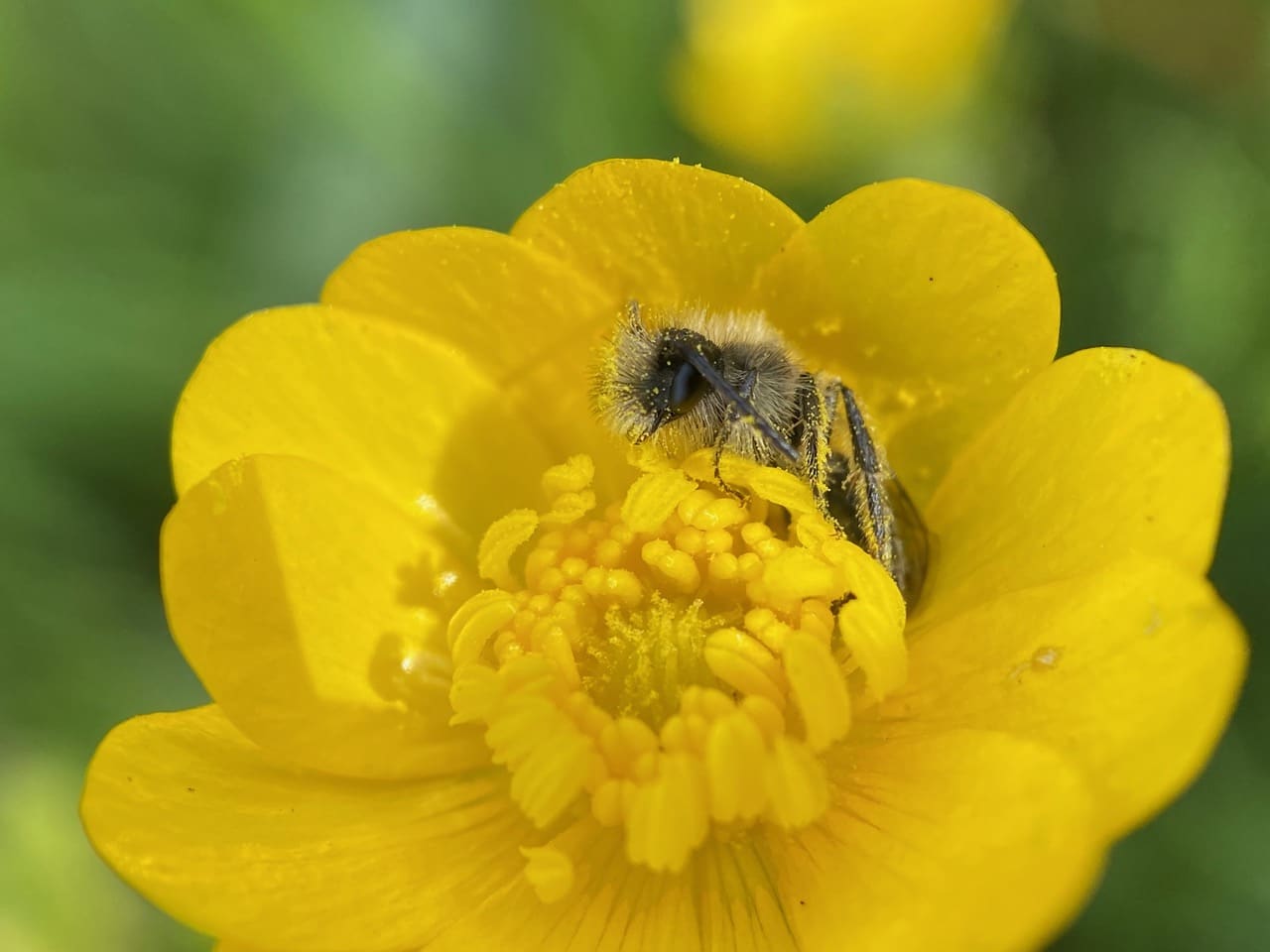
Passing the patch of California Buttercups, Ranunculus californicus on my way out, I again pause to look for insects. All is quiet now with nothing flying at 4:30 pm. I spot something dark wedged between the stamens and petals of a flower. On closer inspection, it turns out to be a male Andrenid bee, covered with pollen! Is this the same bee I have been trying to photograph earlier? Why is it not moving? I suspect foul play, but can’t find a Crab Spider (unless it is hidden under the bee). Is the bee sleeping? Insects don’t have eyelids, so it’s hard to tell. Unlike females, male solitary bees do not construct nests. They sleep out in the open at night, often on flowers.
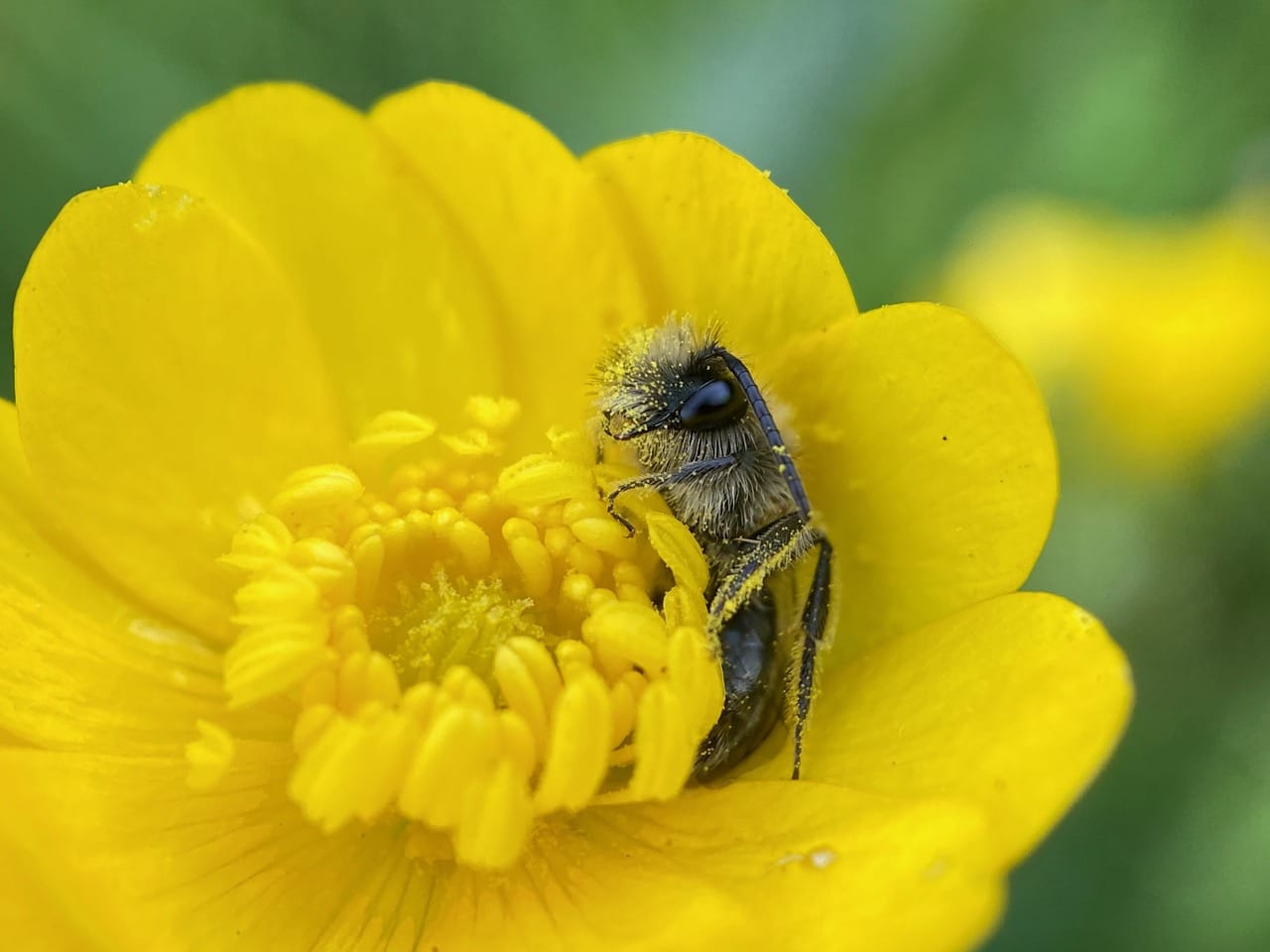
Hopeful, I keep a finger on the flower under the bee to see if some heat could revive the insect. The bee stirs and moves its legs weakly. It is not dead! I hope it gets to enjoy another day in the sun! Thanks for the beautiful portrait!