

Pollinator Post 3/20/24 (3)
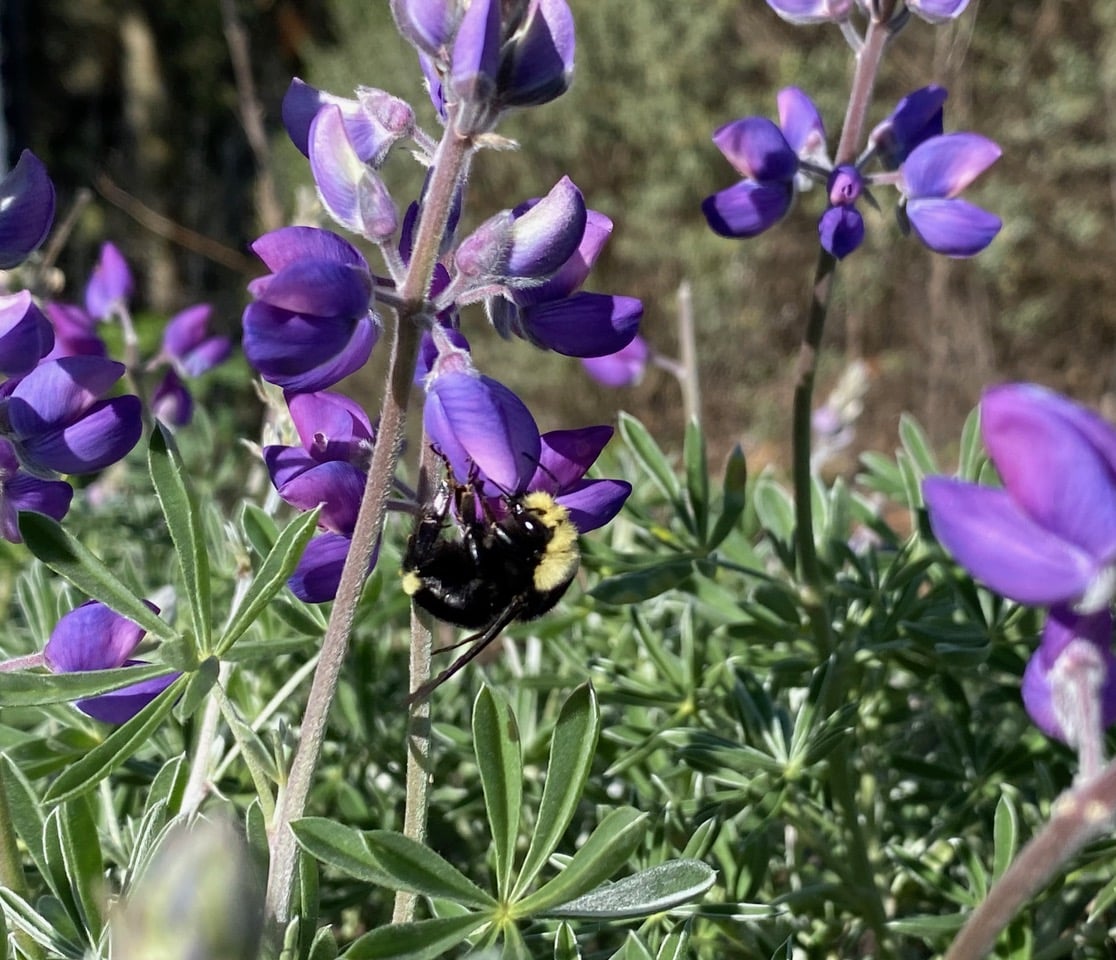
The two big Silverleaf Lupine, Lupinus albifrons near the Eucalyptus grove just south of the Radio Tower are blooming beautifully. A huge Yellow-faced Bumble Bee, Bombus vosnesenskii (family Apidae), undoubtedly a queen, is buzzing around the spikes of flowers, stopping only for nectar. The lupine’s pollen is a bright orange color, and is easily seen if the bee is collecting it. The queen bee’s pollen basket is empty. The bee is so heavy that the flowers droop whenever she lands on them.
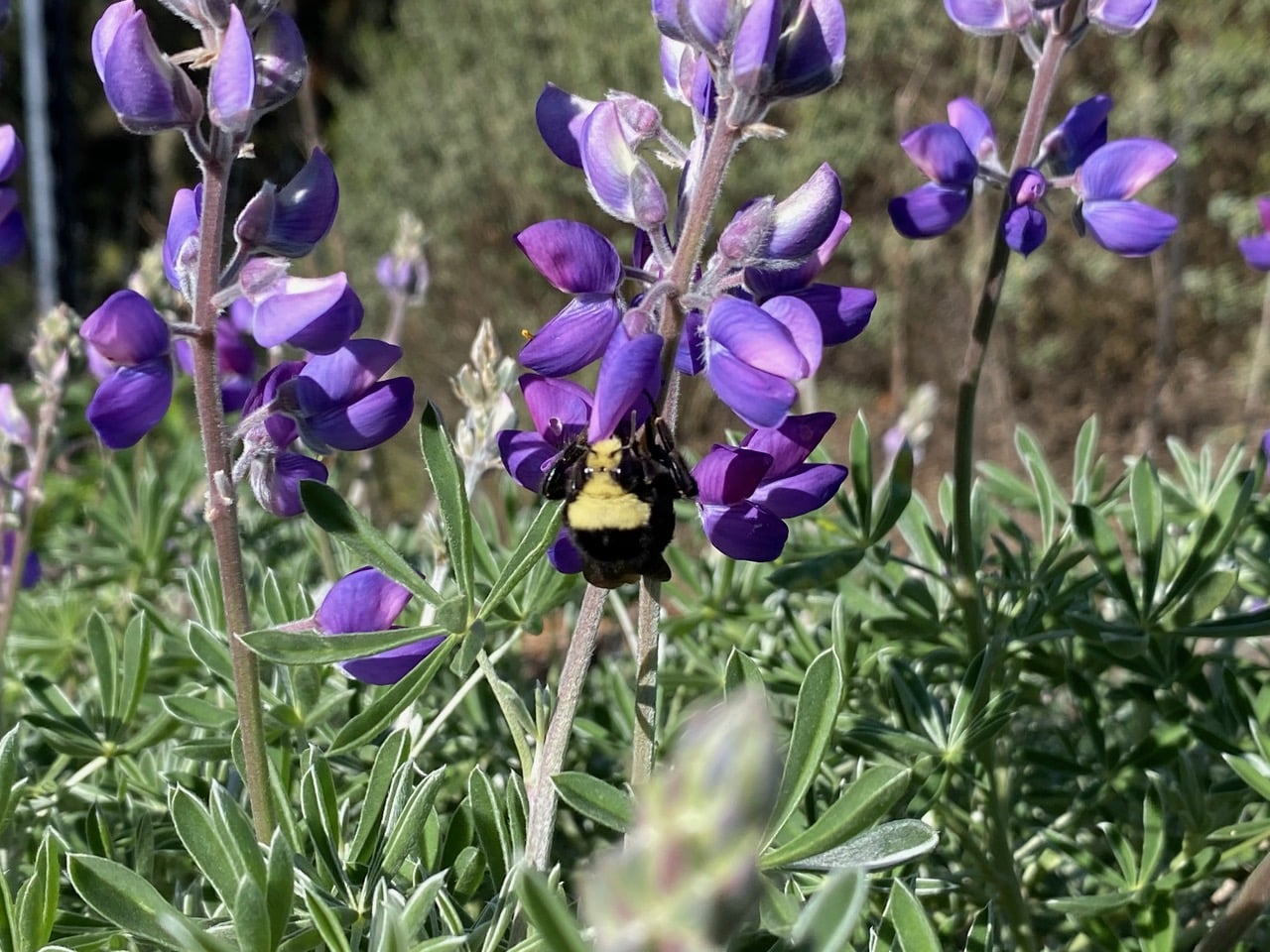
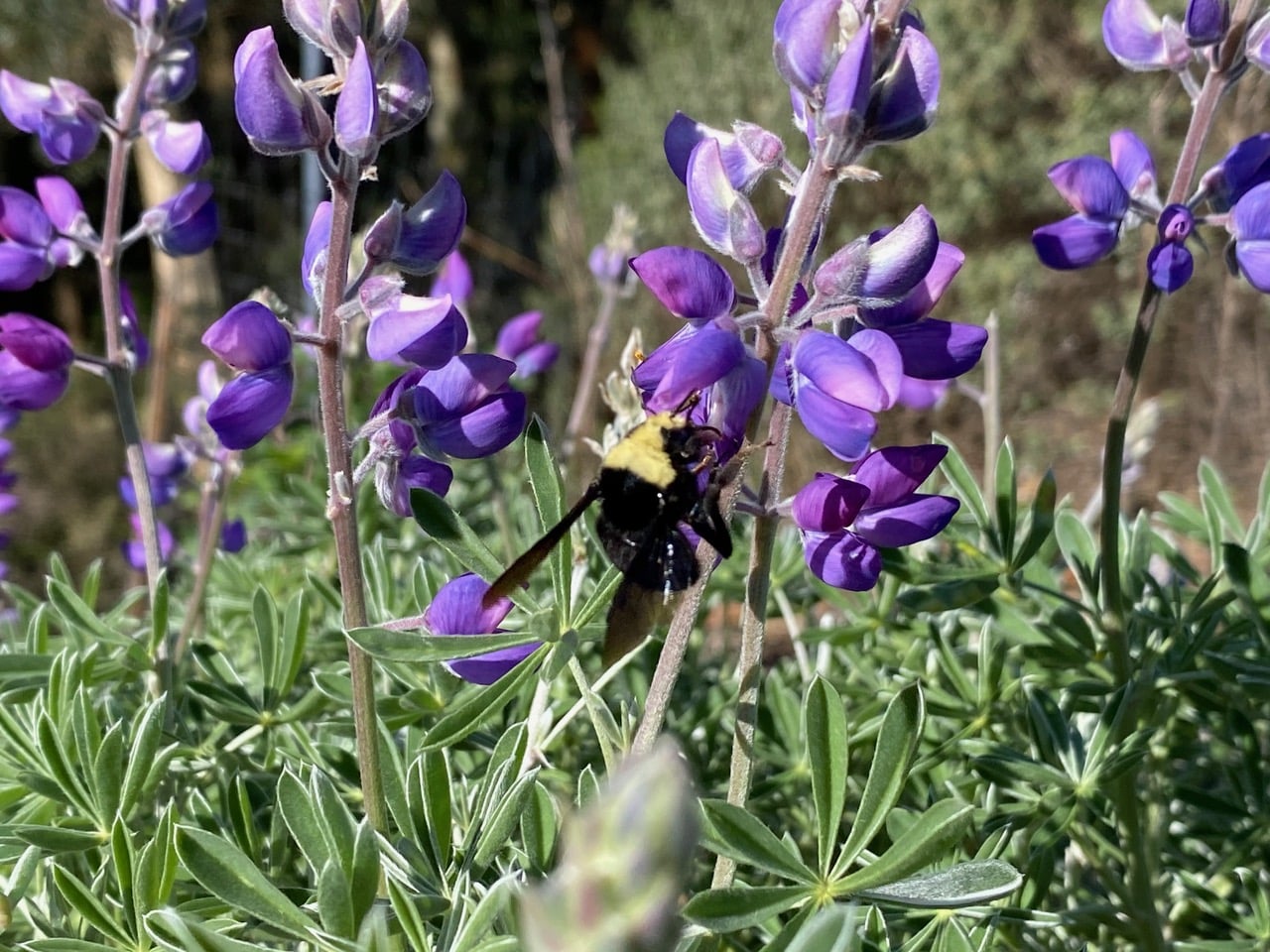
The weight of the bee has spread the two wing petals apart, exposing the keel and the reproductive structures within.
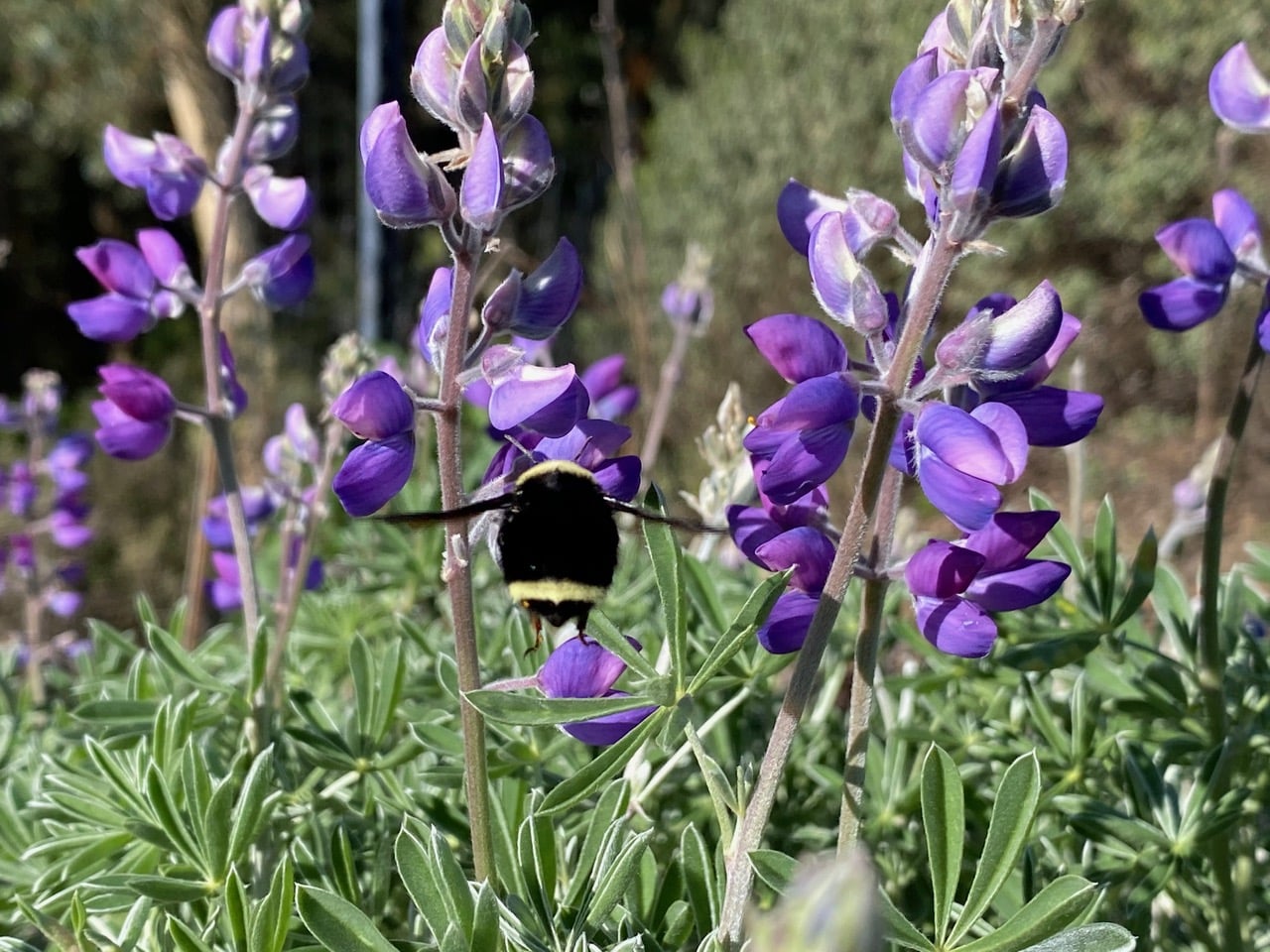
On to the next flower!
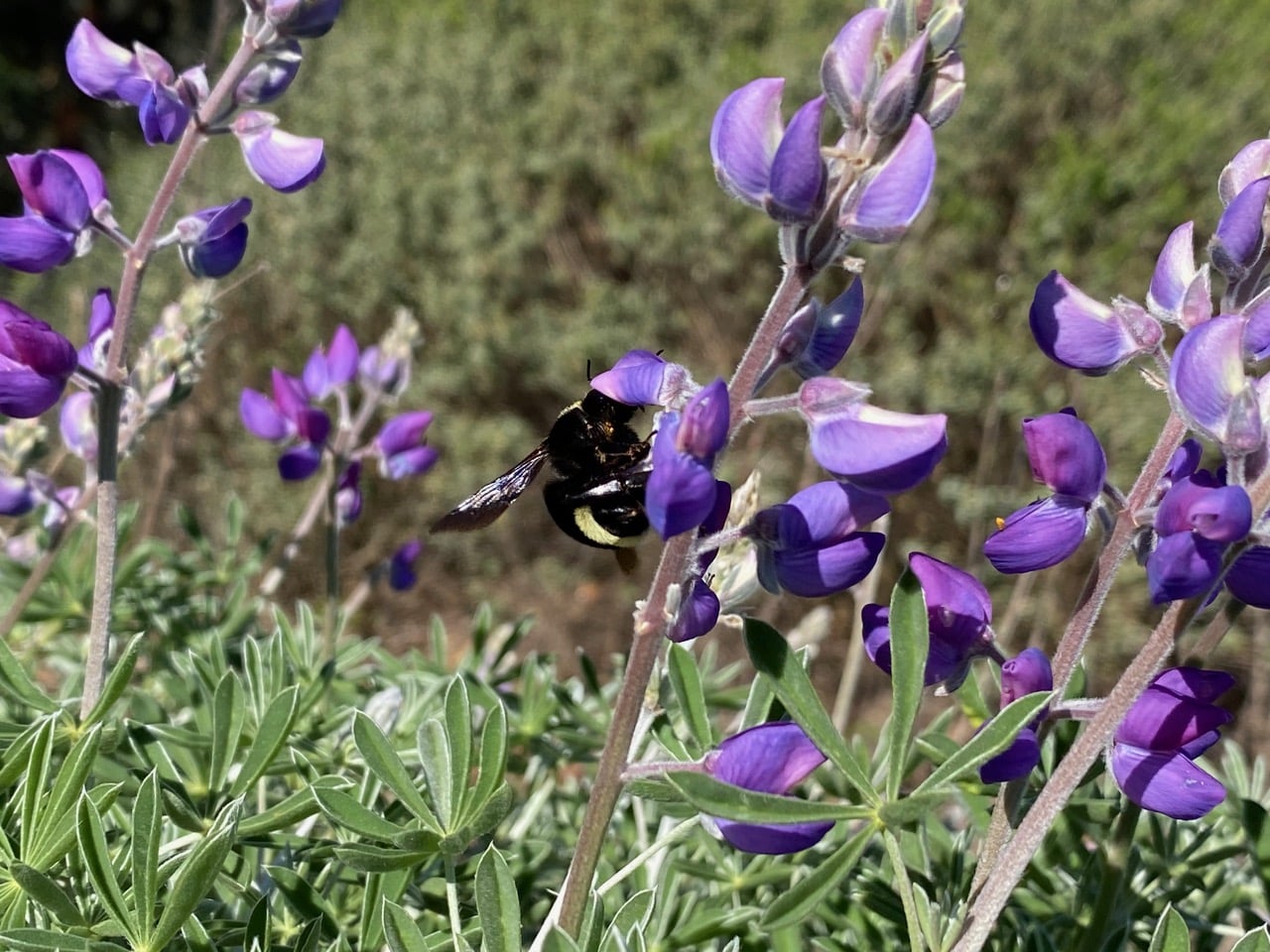
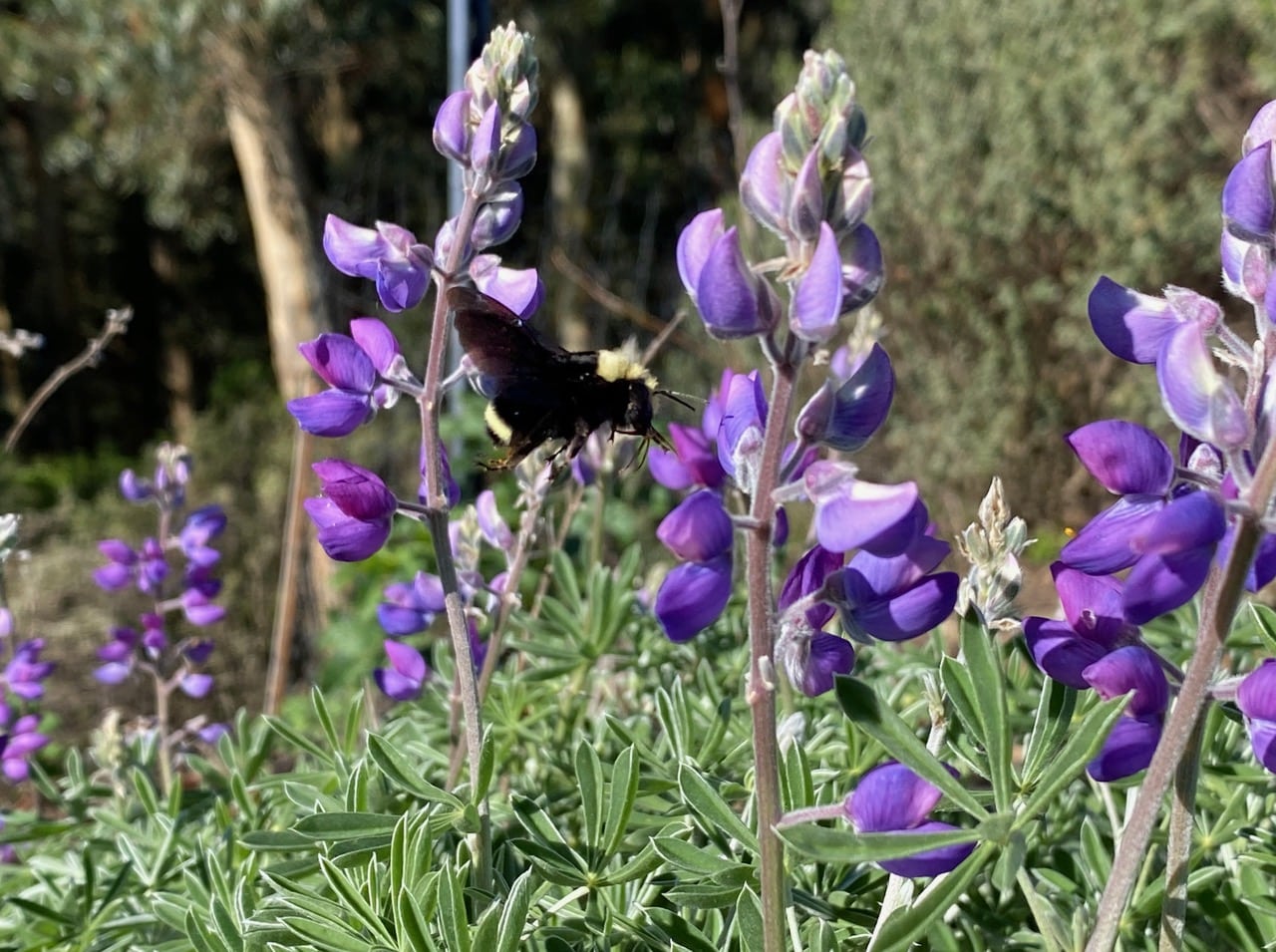
The queen still has her tongue out when backing out of the flower. She has been taking nectar at the back of the flower.
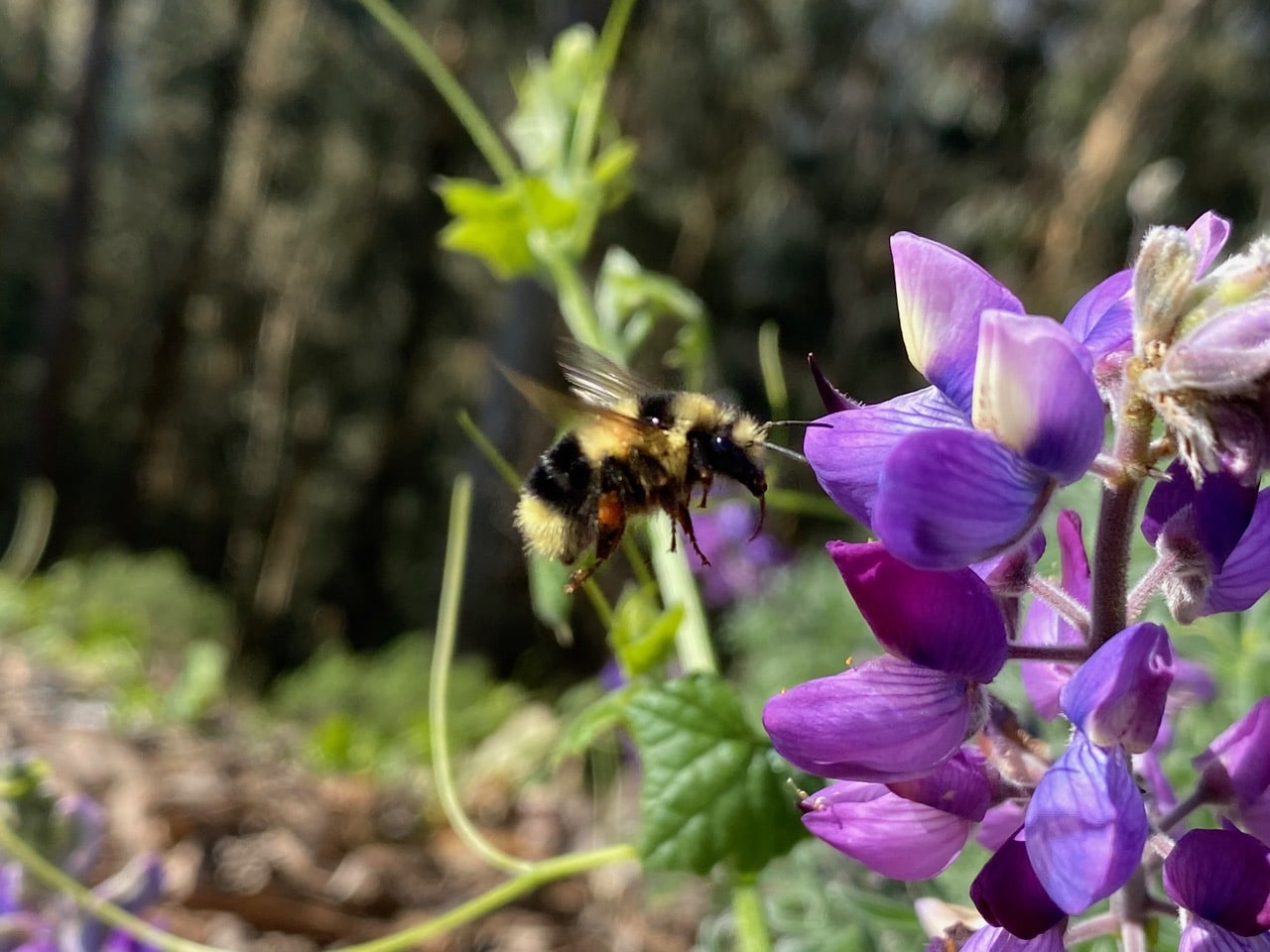
Here comes another bumble bee, a Black-tailed Bumble Bee, Bombus melanopygus (family Apidae). The species is markedly smaller than the Yellow-faced, but is an important bee fauna of early spring. She has a tiny load of pollen in the pollen basket of her hind leg.

See those dark purple lines on the wing petals of the lupine flowers? They converge at the base of the flower where the nectary is located. The lines serve as “nectar guides” that direct the pollinators to the sweet reward. The bumble bee lands on the horizontal surface provided by the wing petals and aims its long tongue towards the back of the flower to access the nectar. On touch down, the bee’s heft lowers and spreads the wing petals apart, allowing the keel to spring up, exposing the reproductive structures within. The bee is forcefully dabbed with pollen on her belly and she grooms it into her pollen baskets while flying to the next flower. The pollination of lupine flowers is a well-orchestrated dance, benefiting both flower and bee.
The other thing of interest in this picture is the colors of the banners of the flowers – the top pair of petals that are held up vertically. Note that the banners on the lower flowers are a deep maroon-wine color, while the upper flowers have white banners. This is another way that lupine talks to the bees. When the flowers of Silverleaf Lupine, Lupinus albifrons first open, they have white banners (the upper, erect petals). After the flowers are pollinated, the banners turn reddish-purple when the levels of the anthocyanin pigment rises 3-5 time. The color change is a response to ethylene (a gaseous plant hormone) produced by the pistil (female part of the flower) after it has been pollinated and is no longer receptive. Bees’ eyes are sensitive to white, but are blind to red hues. Bumble Bees, who are the lupine’s principal pollinators use the color change to guide them to the fresh flowers with the biggest rewards. This arrangement benefits both the plant and pollinator, maximizing pollination efficiency.
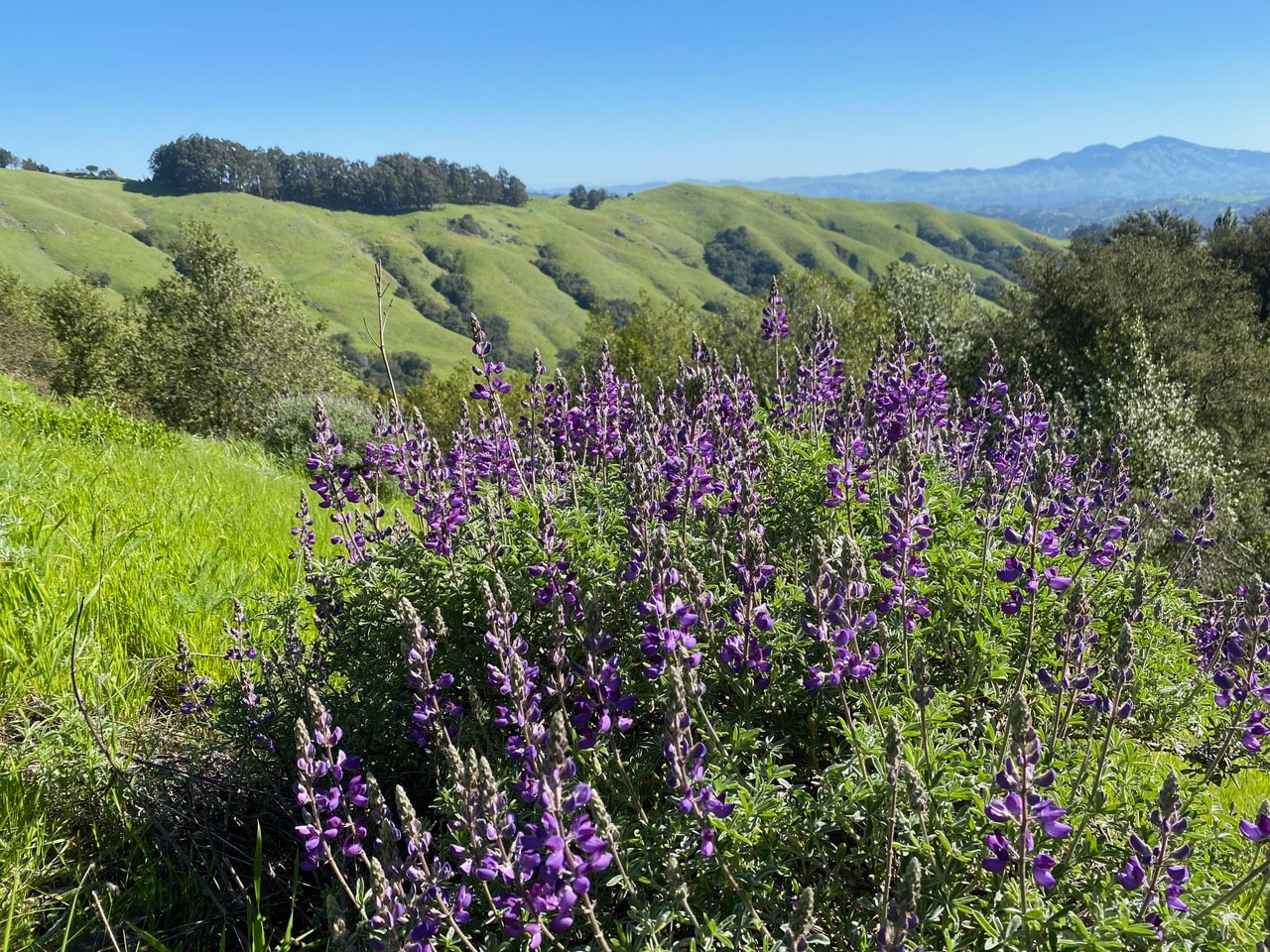
View from the top of Yampah Bowl.

The Baby-blue-eyes, Nemophila menziesii on the grassy slope of Yampah Bowl are displaying their charming blue flowers, but I don’t see any insect on them.
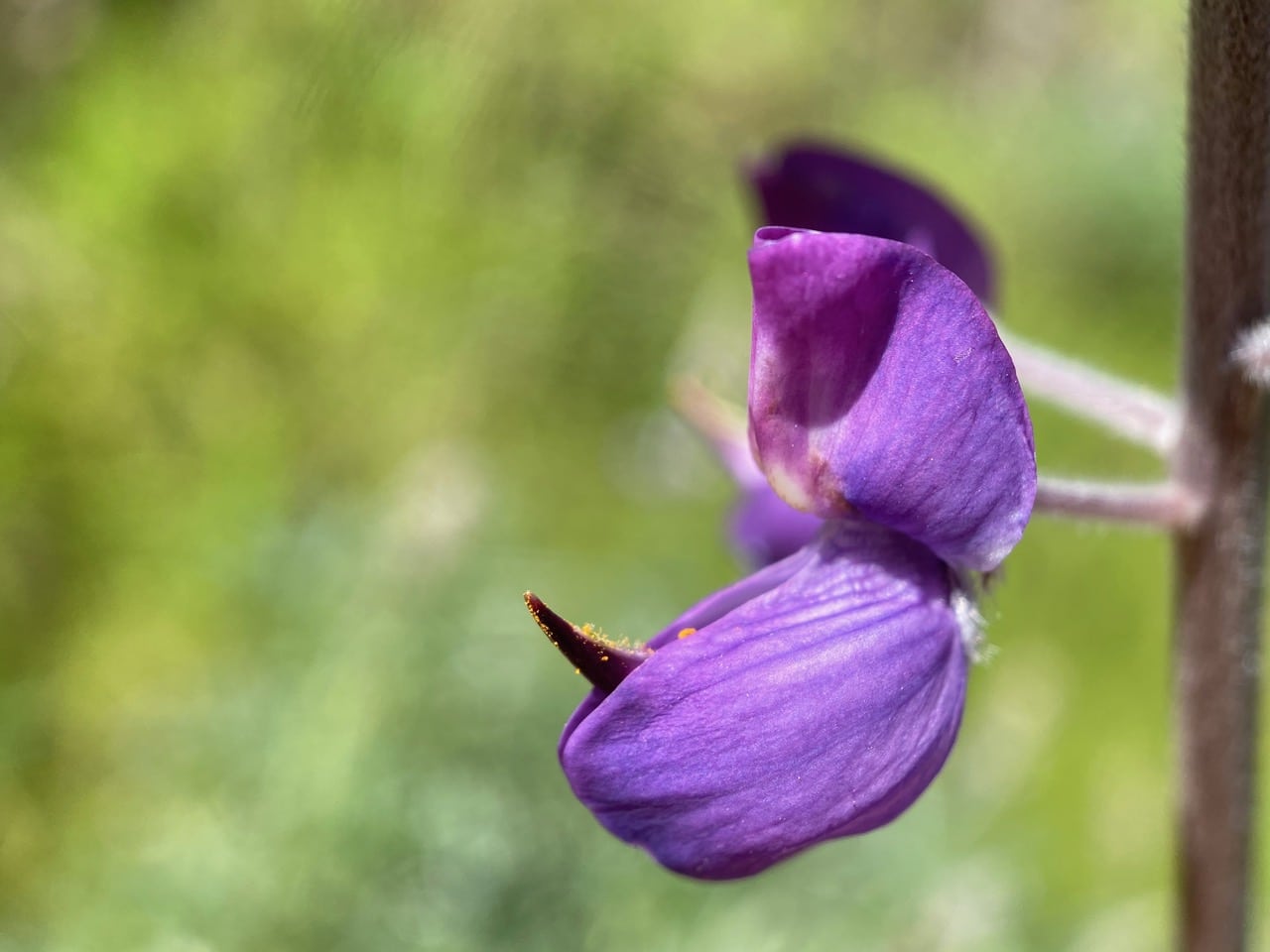
Along Skyline Trail, I check for signs of pollination on the few Silverleaf Lupines, Lupinus albifrons that are in bloom. Most of the lower flowers on the spikes have been “tripped” by pollinators.
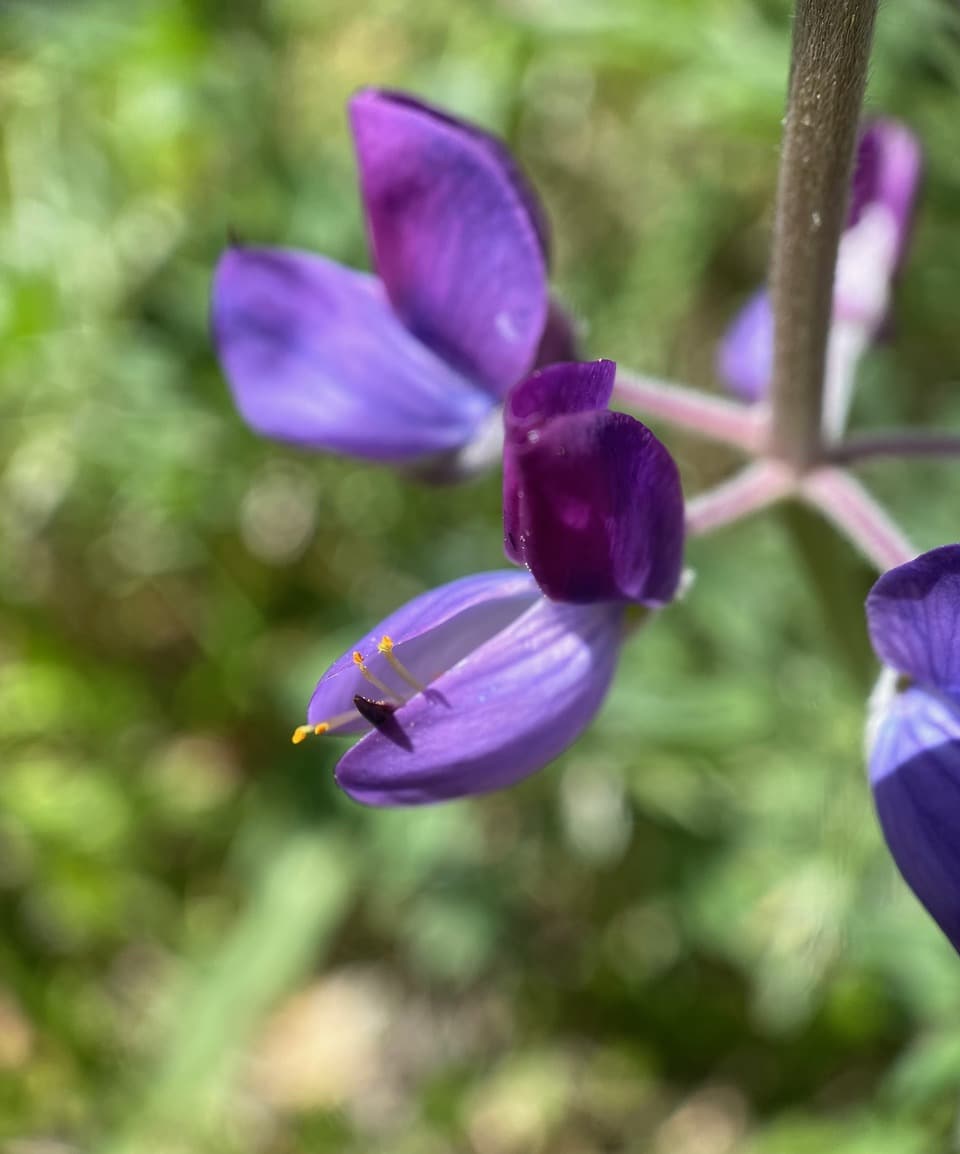
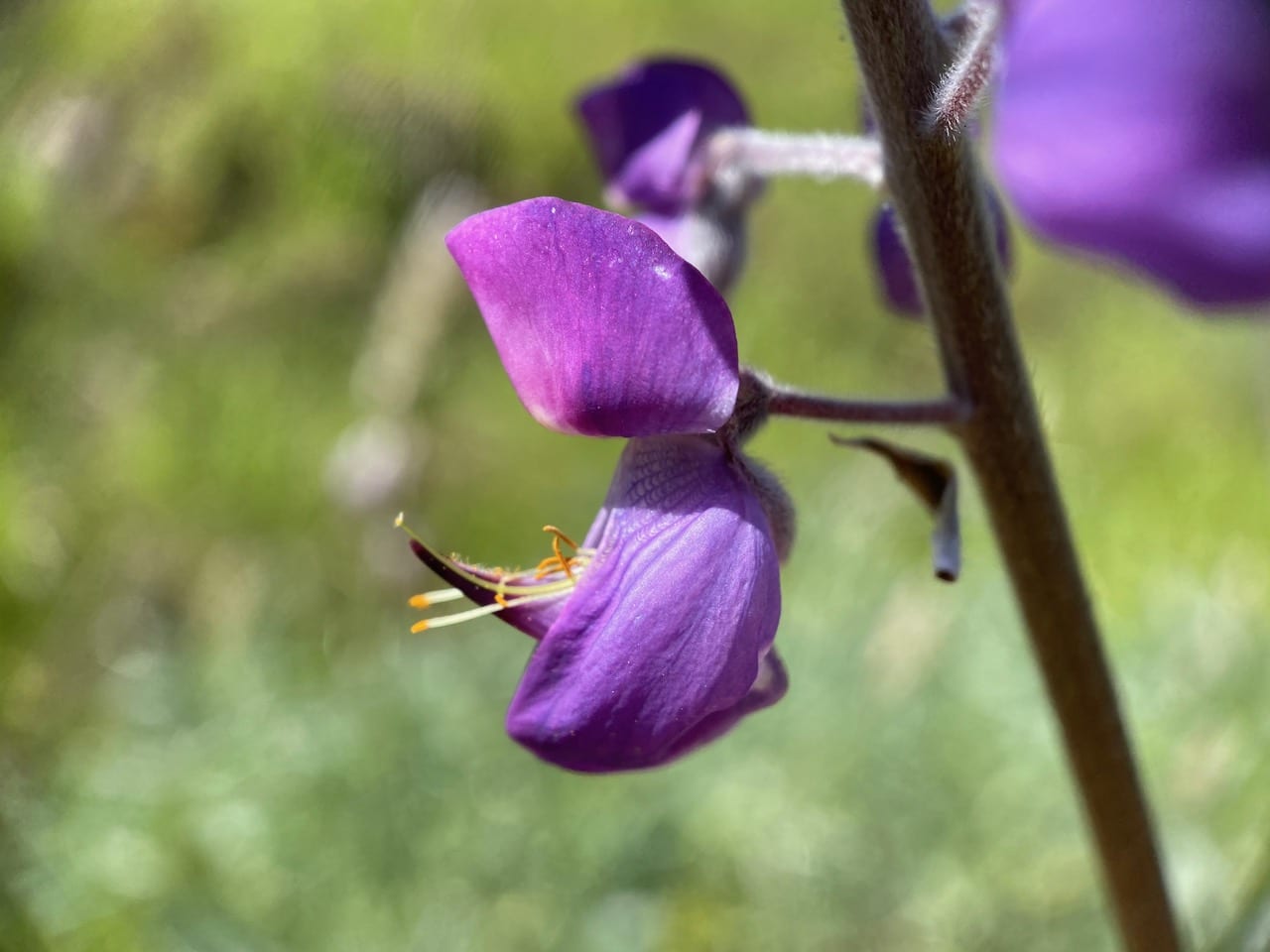
All the reproductive structures have been extruded from this flower. Although I don’t see many of them around, the Bumble Bees and the Digger Bees have obviously been busy working these lupines.
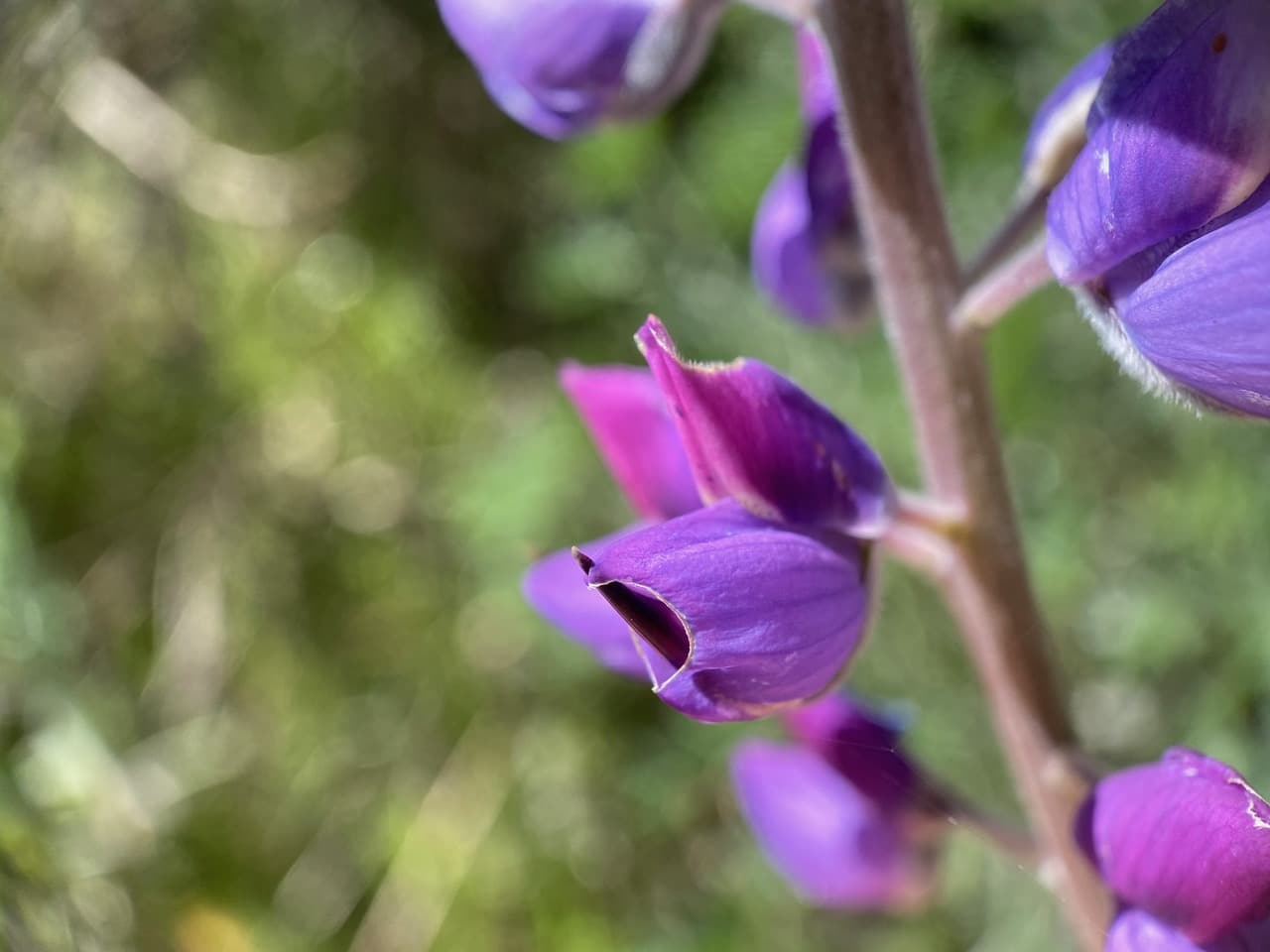
The dark, pointy keel of this chewed flower has grown beyond the wing petals. It’s amazing that damaged flowers still go on developing. I wonder if the reproductive structures inside the keel were viable?

Hey, even the reproductive structures of this badly chewed bud have grown up!
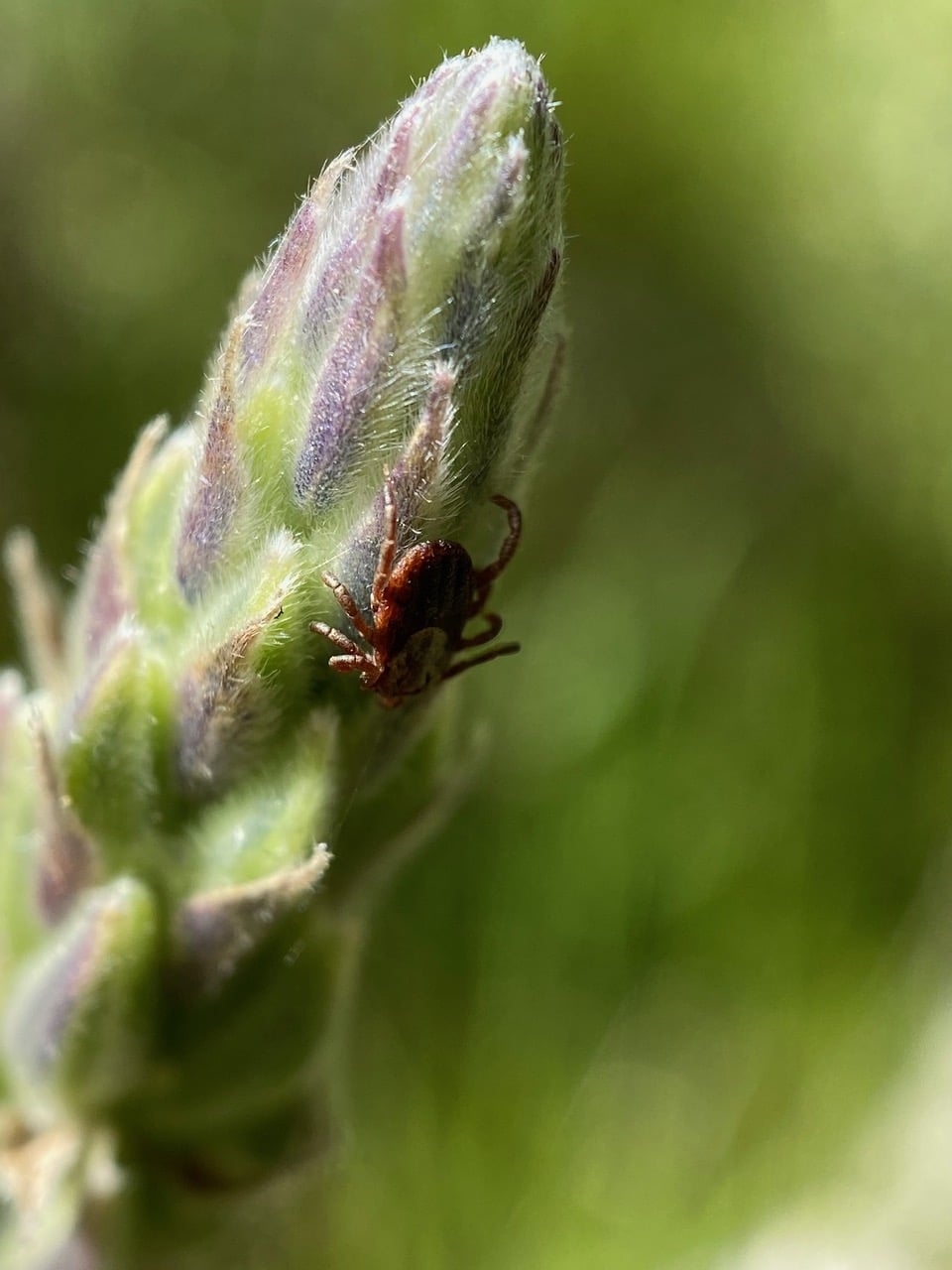
Uh oh, it’s tick season again! A tick is clinging to an immature spike of Silverleaf Lupine flowers that protrudes into Skyline Trail just south of Diablo Bend.
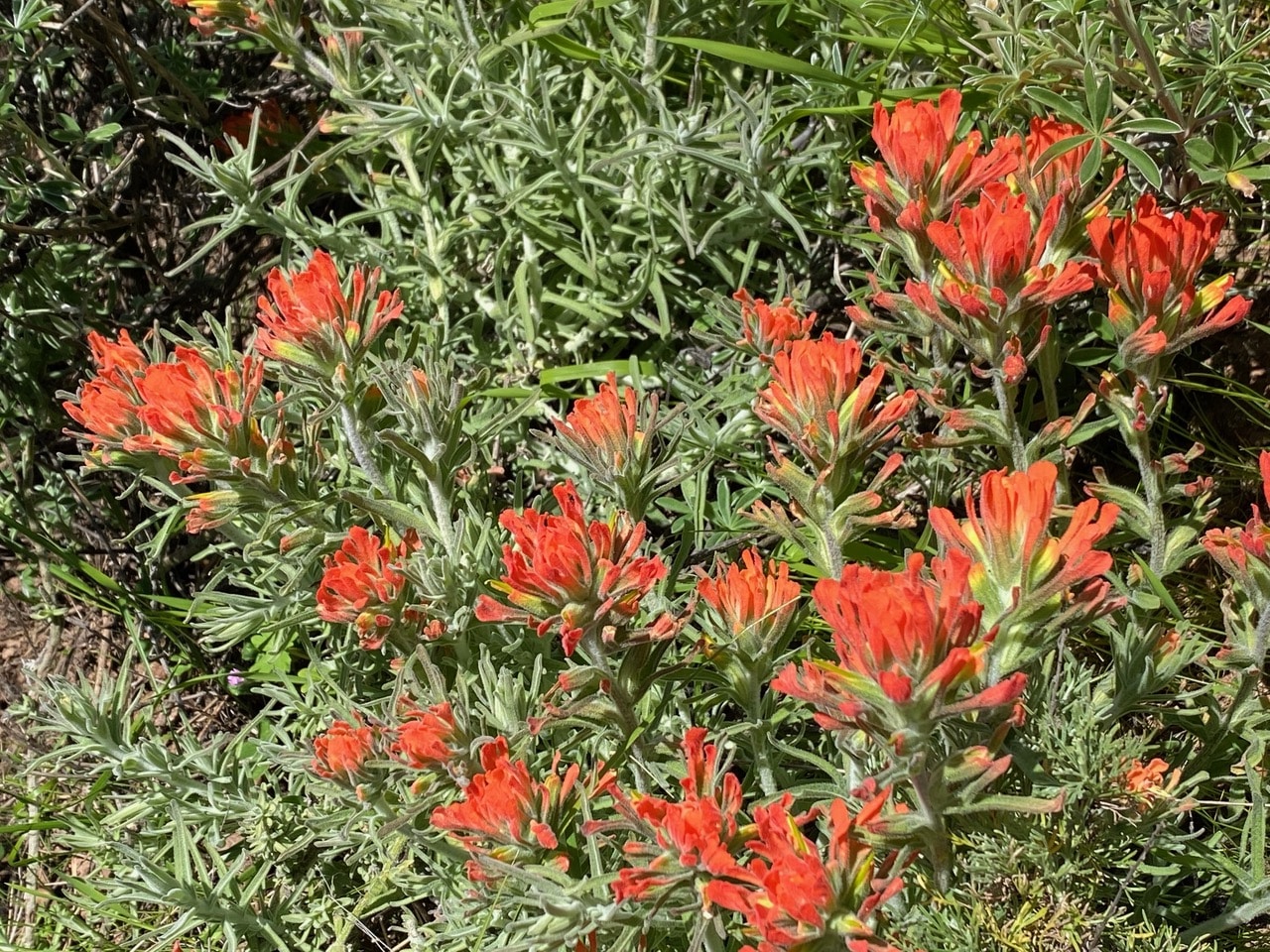
I stop to admire the beautiful flowers of Indian Paint Brush, Castilleja sp. at Diablo Bend. According to my records, this plant has been blooming since late January.

Close up, the inflorescence look felty.
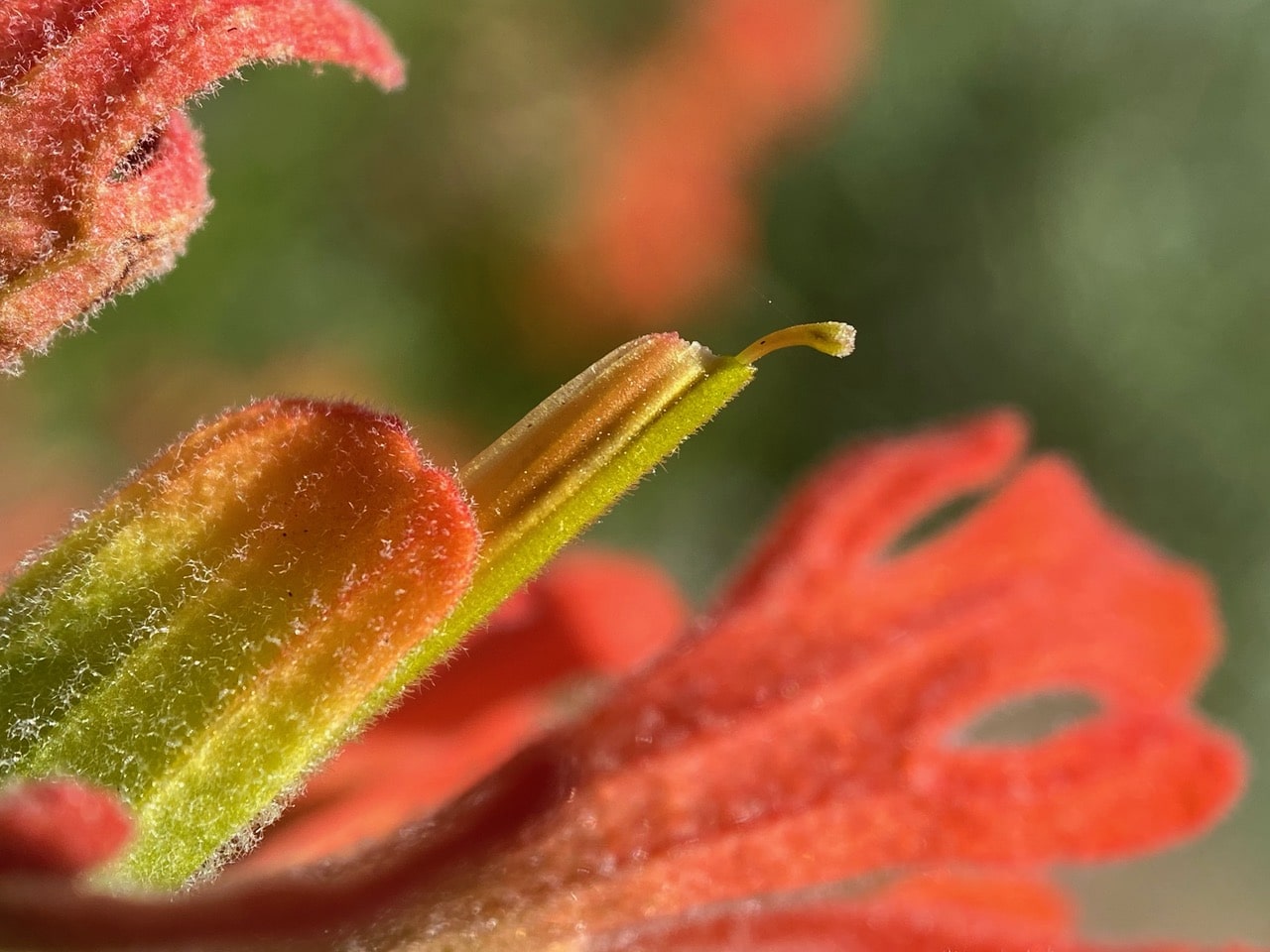
Behold, the bilobed stigma of the Indian Paintbrush protruding inconspicuously from the actual flower. The showy red structures of Indian Paintbrush are technically not petals, but bracts, a type of modified leaf. The tip of the sepals are tinged with red as well. The petals are usually green or yellow, and curiously arranged, with the upper two extending out into a long, pointed beak that envelops the stamens and style. With tubular design and red color, the flower is especially adapted for pollination by hummingbirds. The hummers have long slender bills that allow them to reach the nectar rewards at the base of the flowers.
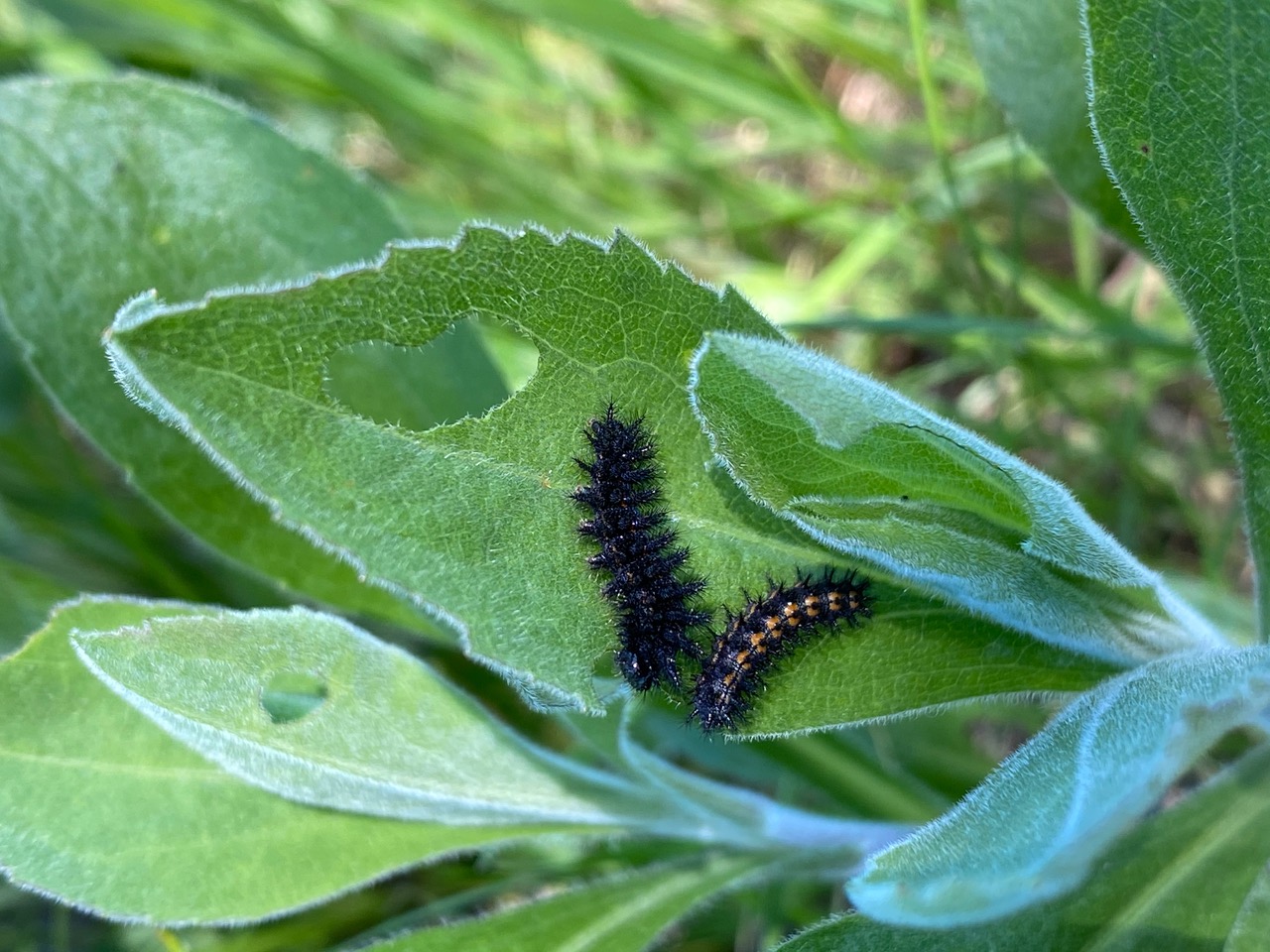
Two caterpillars are feeding on a young California Goldenrod, Solidago velutina. The leaves are already riddled with holes. The caterpillars look a lot like those of the Variable Checkerspot that we saw earlier on Bee Plant, but I can’t find any mention of the goldenrod being a host plant for the butterfly, even on the extensive list provided by Calscape.
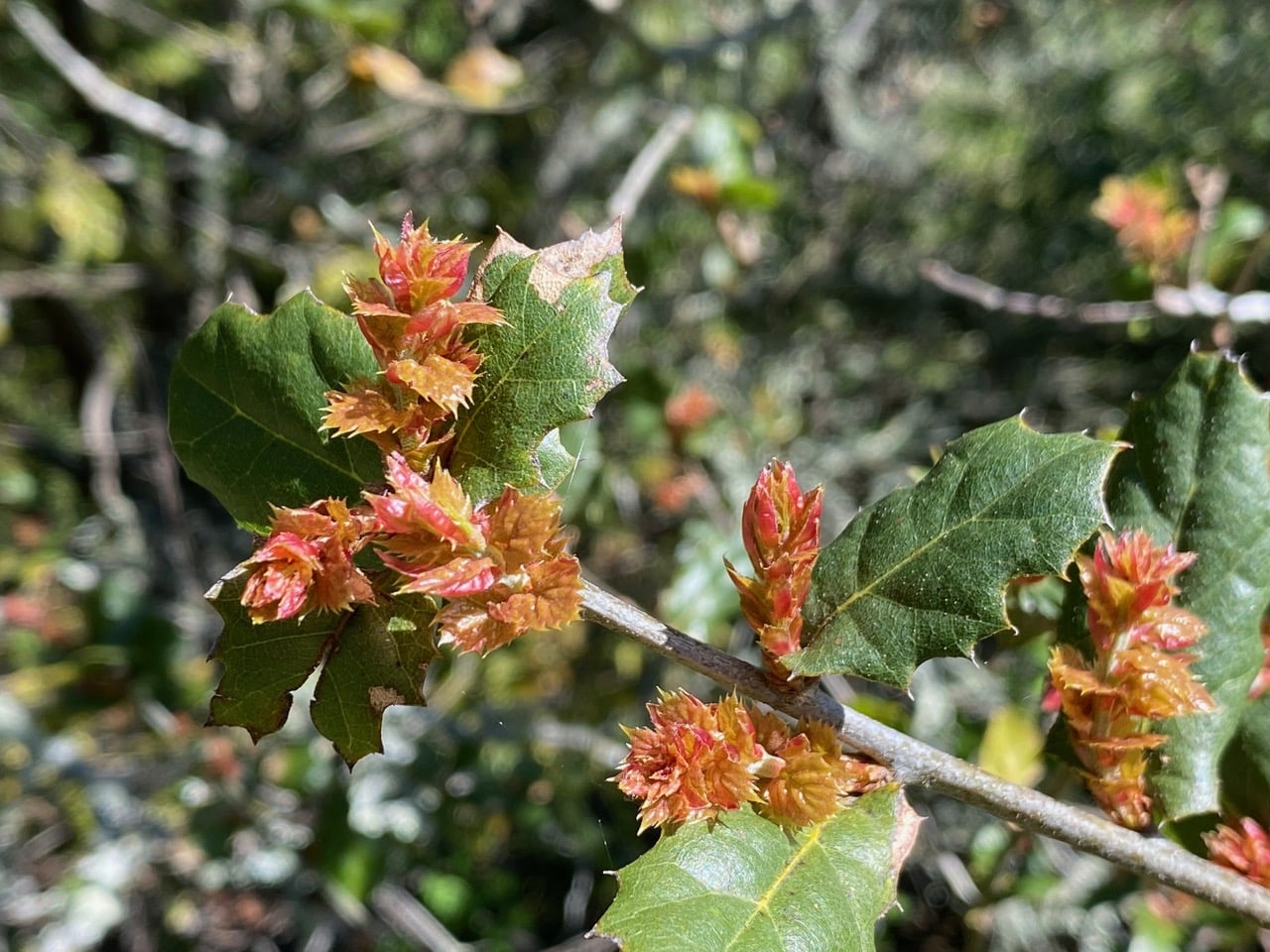
The Coast Live Oak, Quercus agrifolia along Skyline Trail has put out reddish-bronze young leaves.
The young leaves of many plants are transiently red because of the accumulation of a pigment, anthocyanin. The purple-red compounds near the leaf surface act as a sunscreen of sorts by physically shielding green chlorophyll deeper in the leaf tissue from too much sun.
The optical properties of the anthocyanins have been studied in relation to herbivores. Most invertebrate herbivores, such as insects, can detect colors in the blue range but not in the red range of the spectrum. Also, most mammals, with the exception of primates, essentially are blind to color in the yellow to red range, and perceive those colors as shades of gray. Perhaps the red of the new leaves make them cryptic or unattractive to the herbivores.