

Pollinator Post 3/20/24 (2)

I love the immature flowerheads of the Cobweb Thistle, Cirsium occidentale. They appear to be wrapped in spider web. What is the function of the webbing? To deter insects? To regulate temperature of the flowerhead?

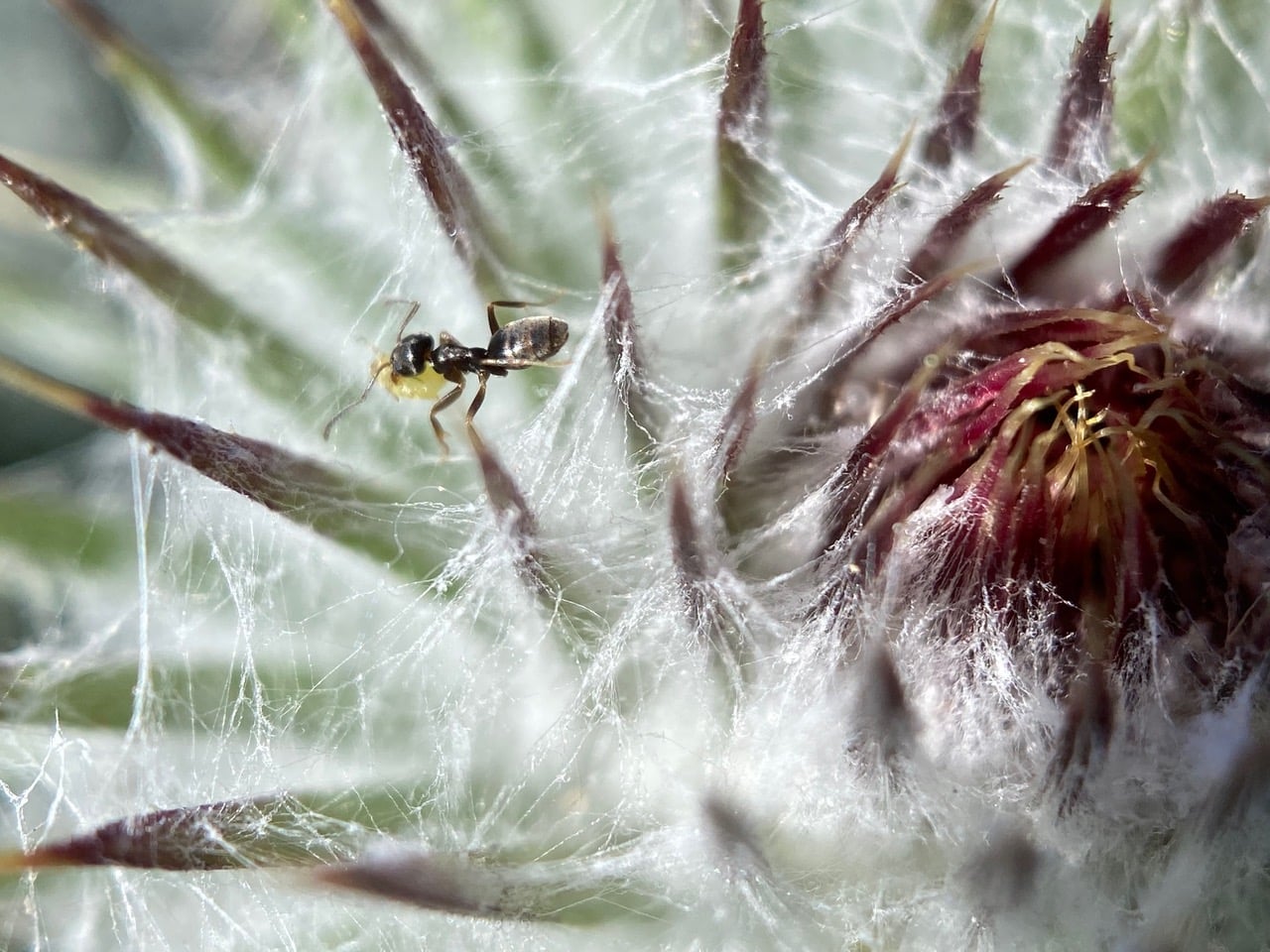
Look, there are small ants crawling on the webbing. About the size of Argentine Ants, these are darker and has silvery banding on their abdomen. I recognize them as the Odorous House Ants, Tapinoma sessile (subfamily Dolichoderinae, family Formicidae).
The ant is native to North America, ranging from southern Canada to northern Mexico. The species is found in a vast diversity of habitats, including within houses. The ants mainly feed on floral nectar and other sugary food. They also forage for honeydew produced by aphids and scale insects that they guard and tend.
Odorous House Ants are small ants, the workers measuring 2-3 mm. As in all members of the subfamily Dolichoderinae (odorous ants), this species does not possess a sting, instead relying on the chemical defense compounds produced from the anal gland. Such compounds are responsible for the smell given off by the ants when crushed or disturbed.
T. sessile colonies are polydomous (consist of multiple nests) and polygynous (contain multiple reproductive queens). The species practices seasonal polydomy – the colony overwinters in a single nest, and forms multiple nests during spring and summer when resources are more abundant and spread out.
The Odorous House Ants are rather docile, with little propensity for attack, preferring to use chemical secretions instead of biting. For this reason they are vulnerable to the invasion of the aggressive Argentine Ants, Linepithema humile.

Navigating the webby terrain with difficulty, but determination, this ant is carrying something in its jaws.
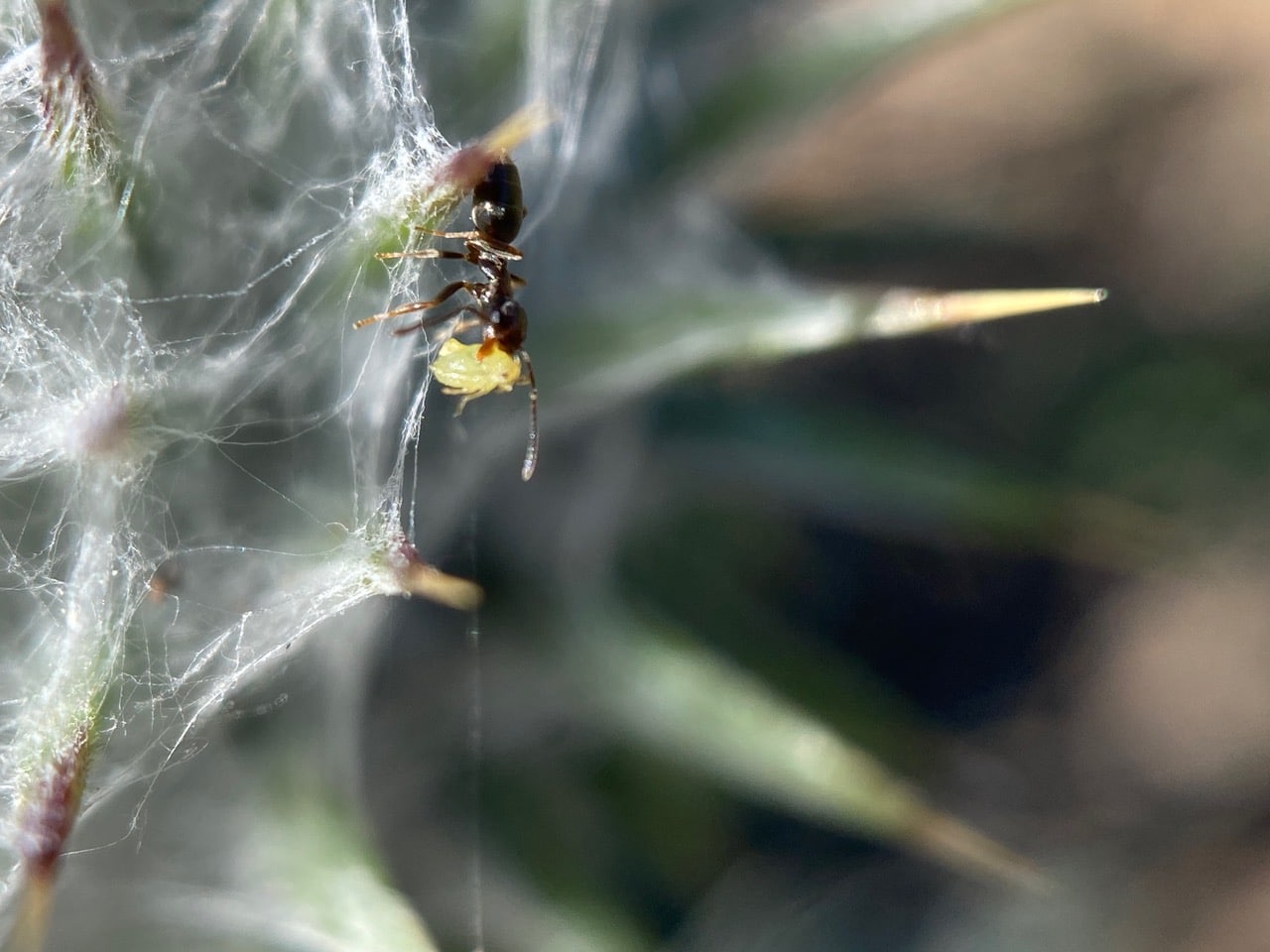
Ah, I think it is ferrying a young aphid. After all, the Odorous House Ants are known to tend aphids.
Ants and aphids share a well-known mutualistic relationship. The aphids produce honeydew, a sugary food for the ants; in exchange, the ants care for and protect the aphids from predators and parasites. Some ants will “milk” the aphids to make them excrete the sugary substance. The ants stroke the aphids with their antennae, stimulating them to release the honeydew. Aphid-herding ants make sure the aphids are well-fed and safe. When the host plant is depleted of nutrients, the ants carry their aphids to a new food source. If predatory insects or parasites attempt to harm the aphids, the ants will defend them aggressively. Some species of ants continue to care for aphids during winter. The ants carry the aphids to their nest for the winter months, and transport them to a host plant to feed the following spring.
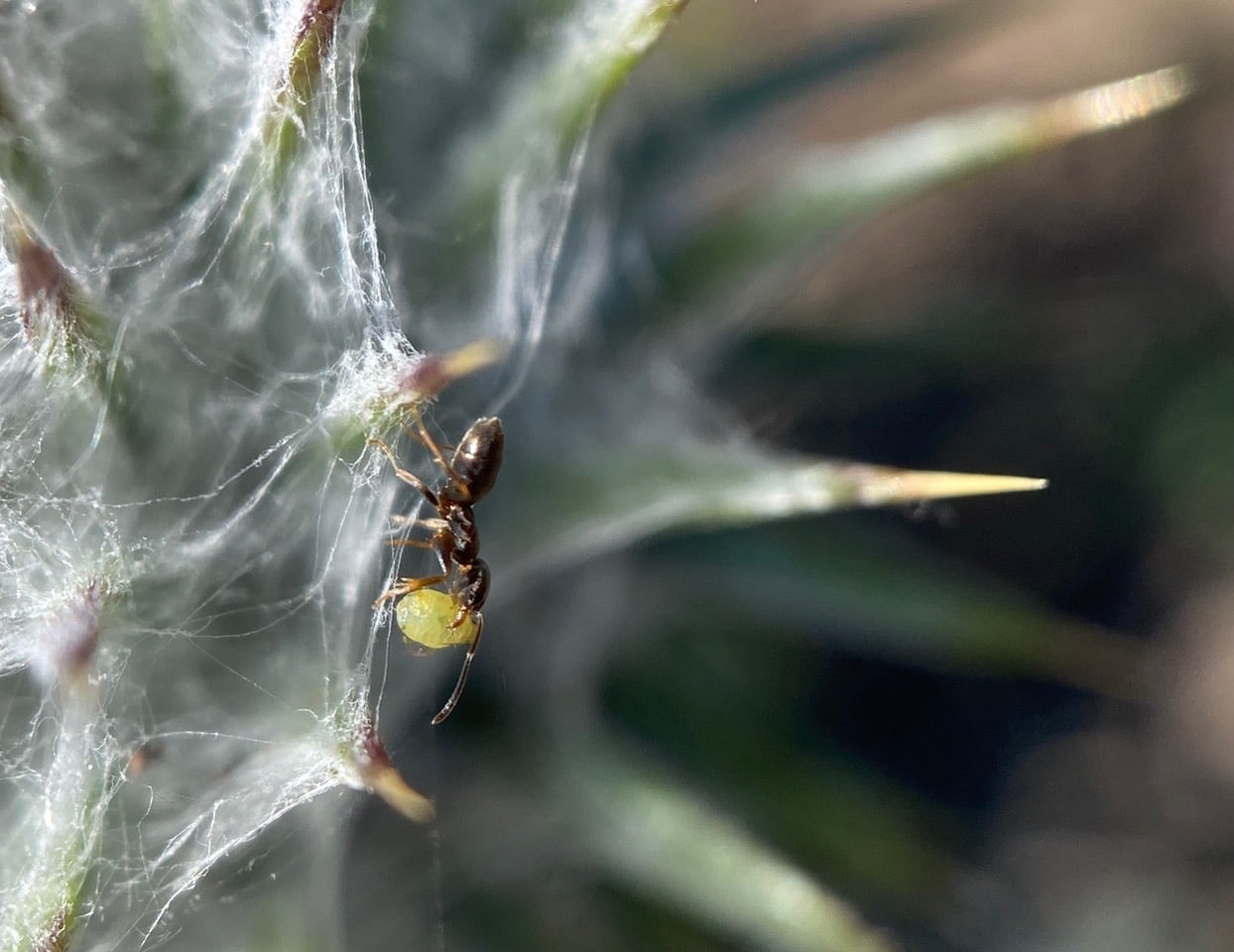
The ant is very gentle with its charge, always holding it high and never letting it drag. It’s a joy to watch.

Fascinated, I follow the ant’s every movement. Where is it transporting the aphid?
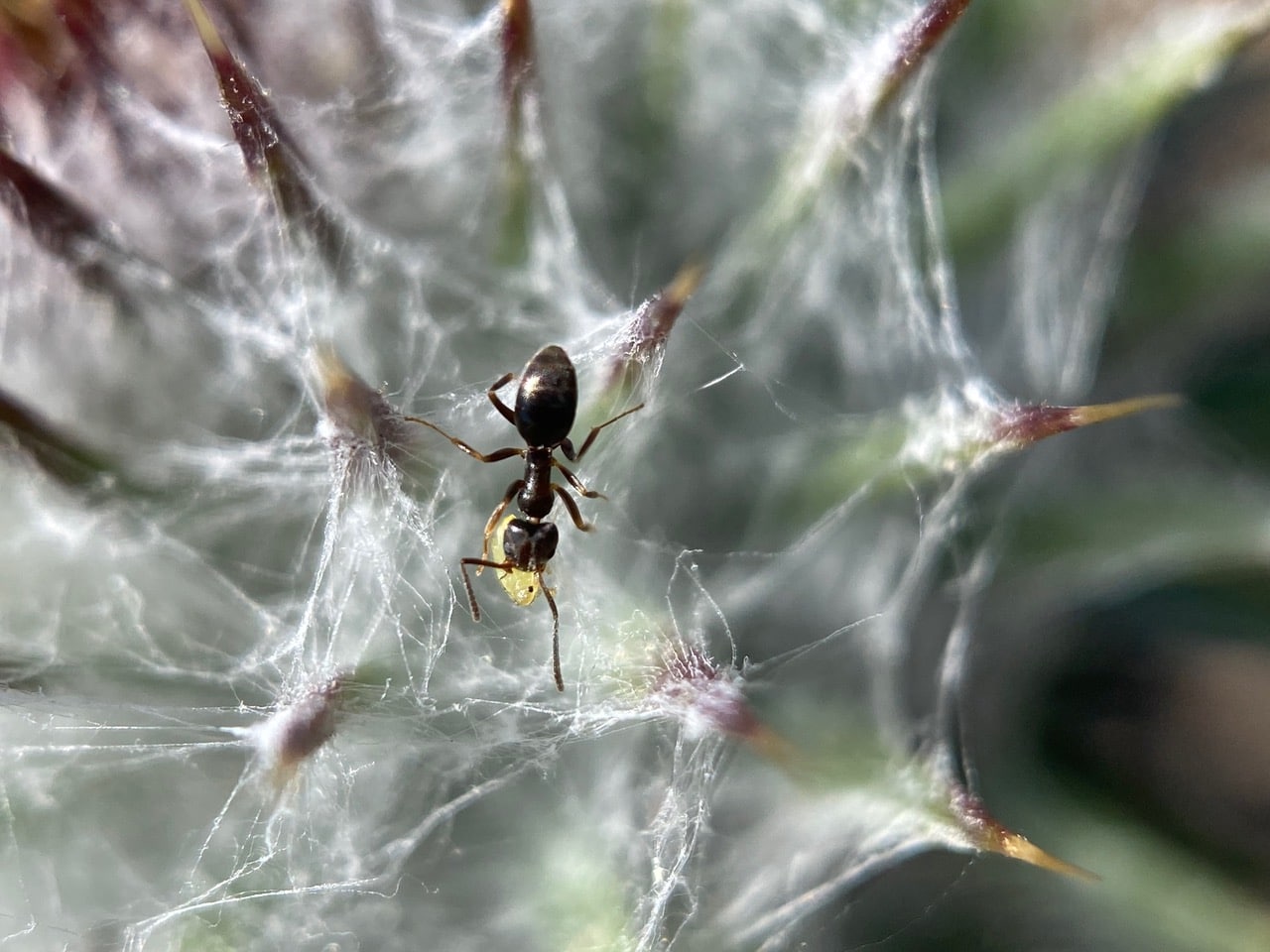
The young aphid is in for a wild ride!
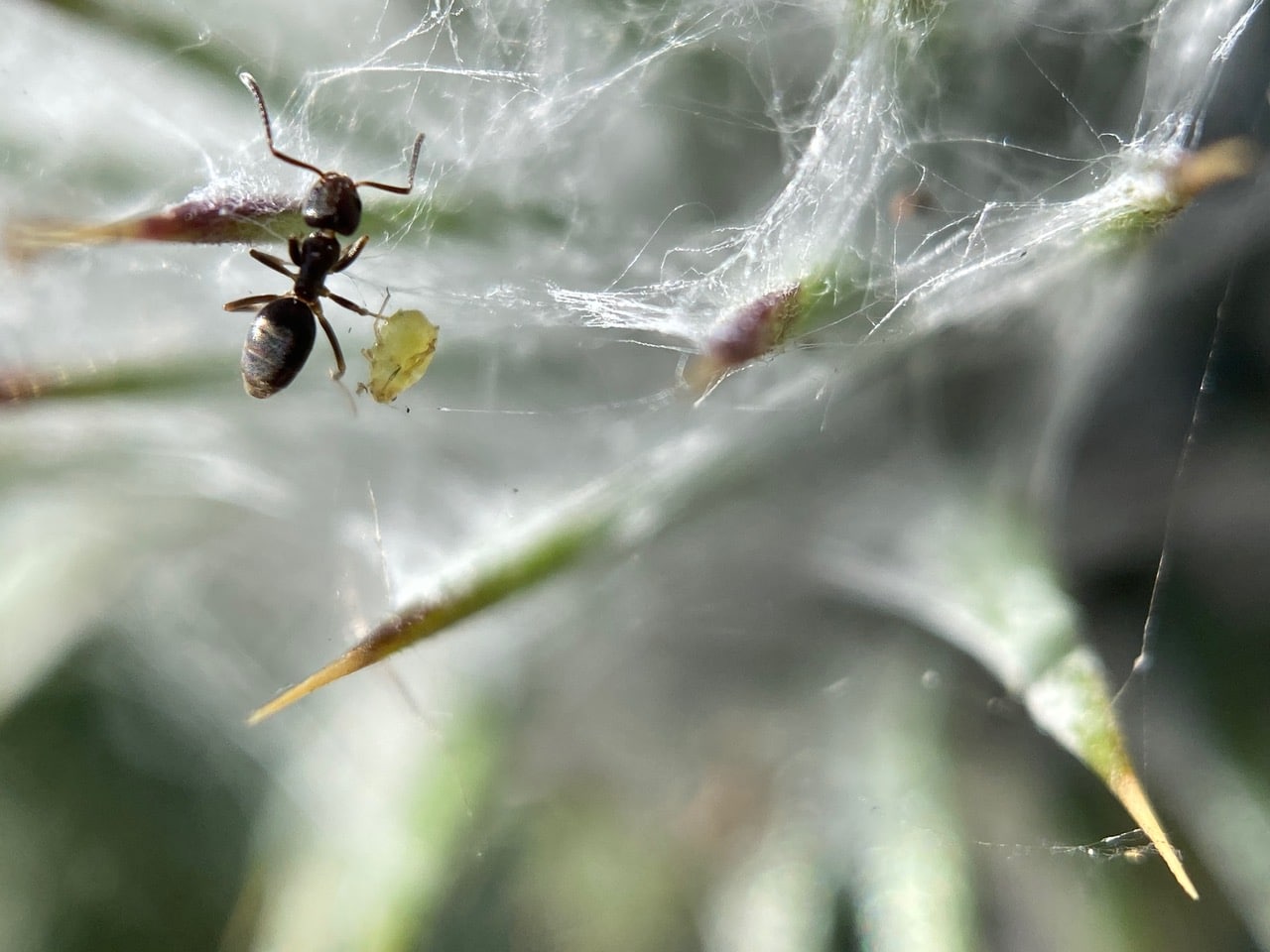
For a moment, the ant puts the aphid down. Taking a break?
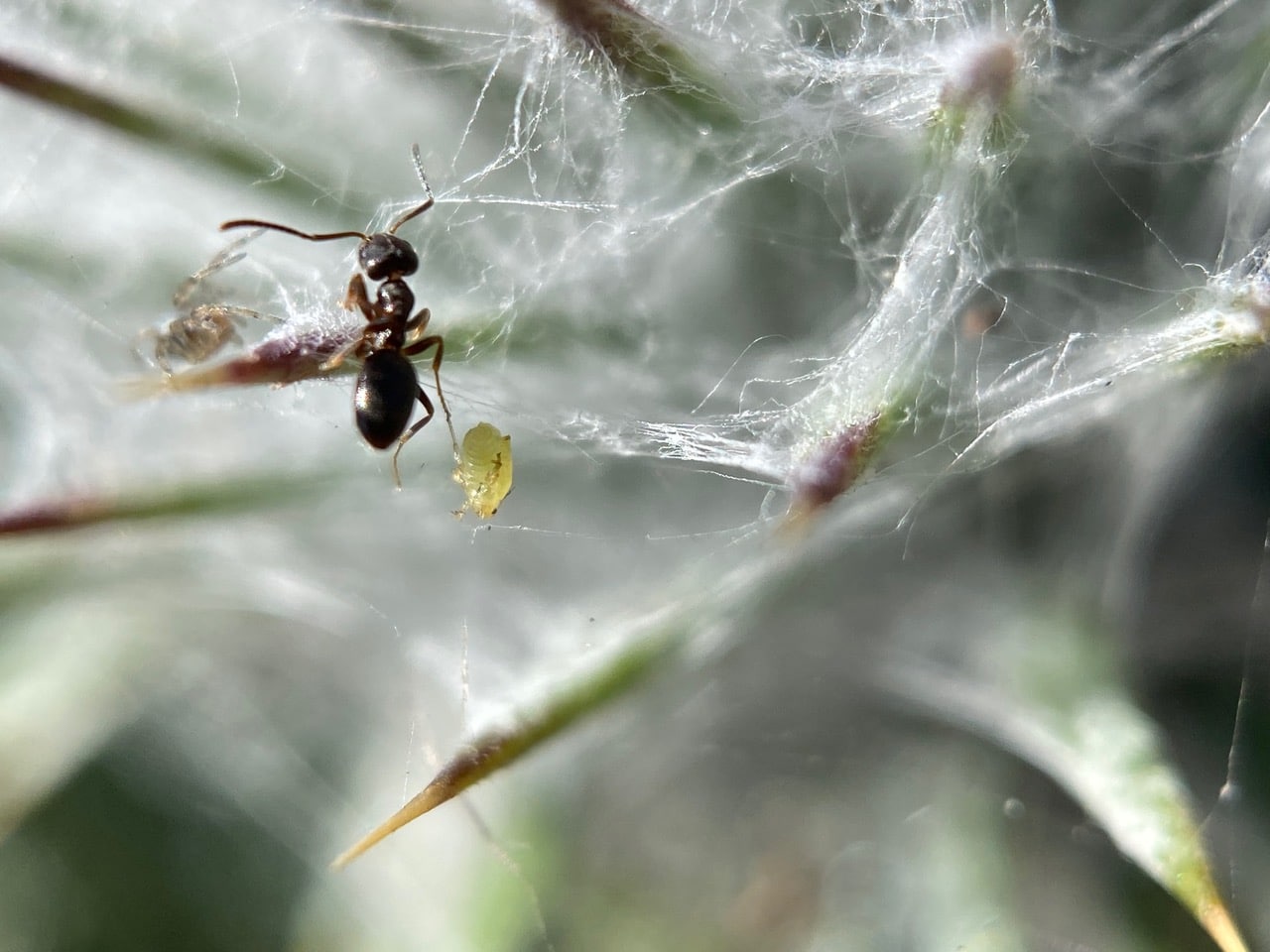
Oh no, it has to deal with a potential enemy, an approaching spider.
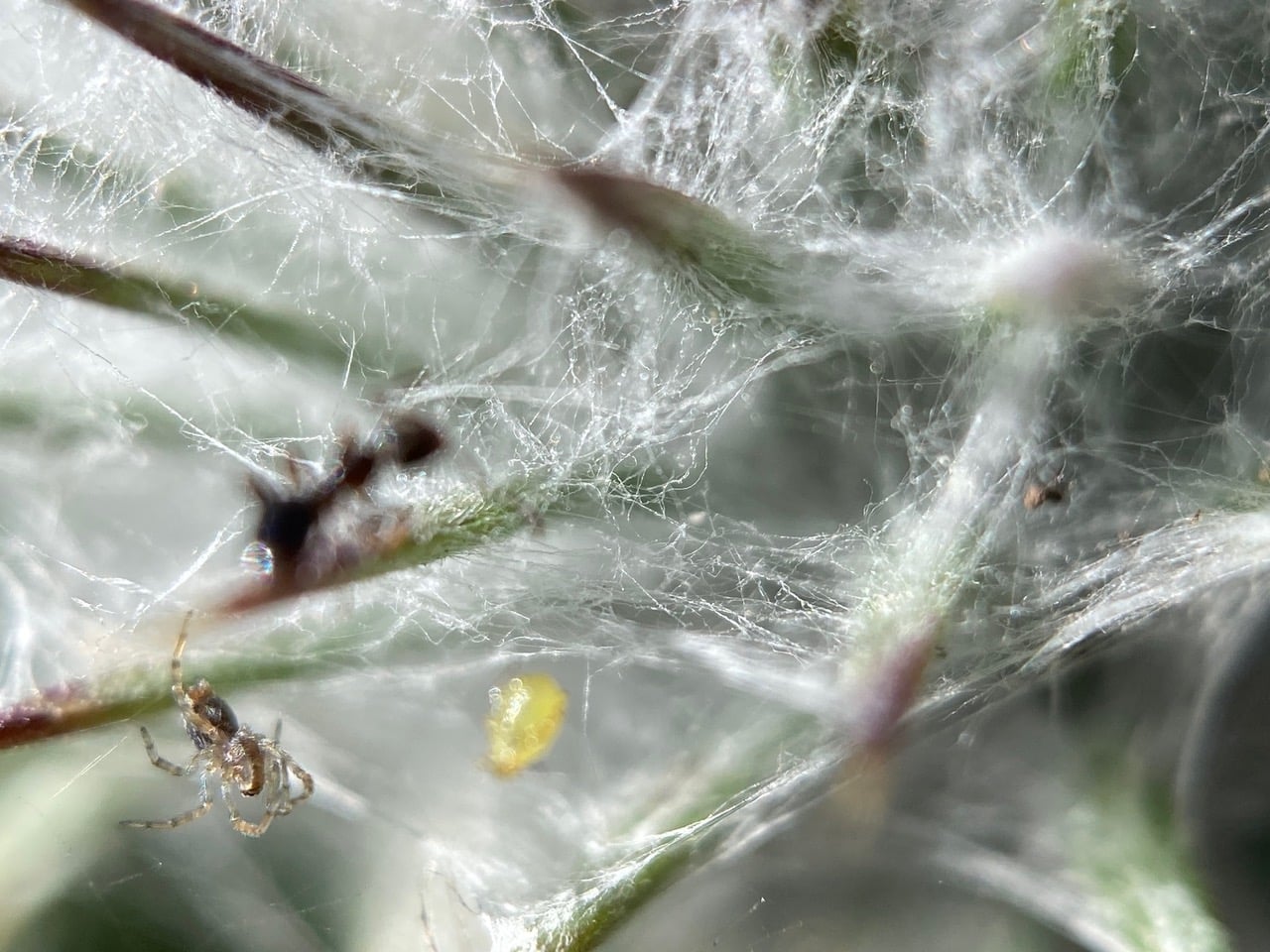
The spider is heading for the aphid.
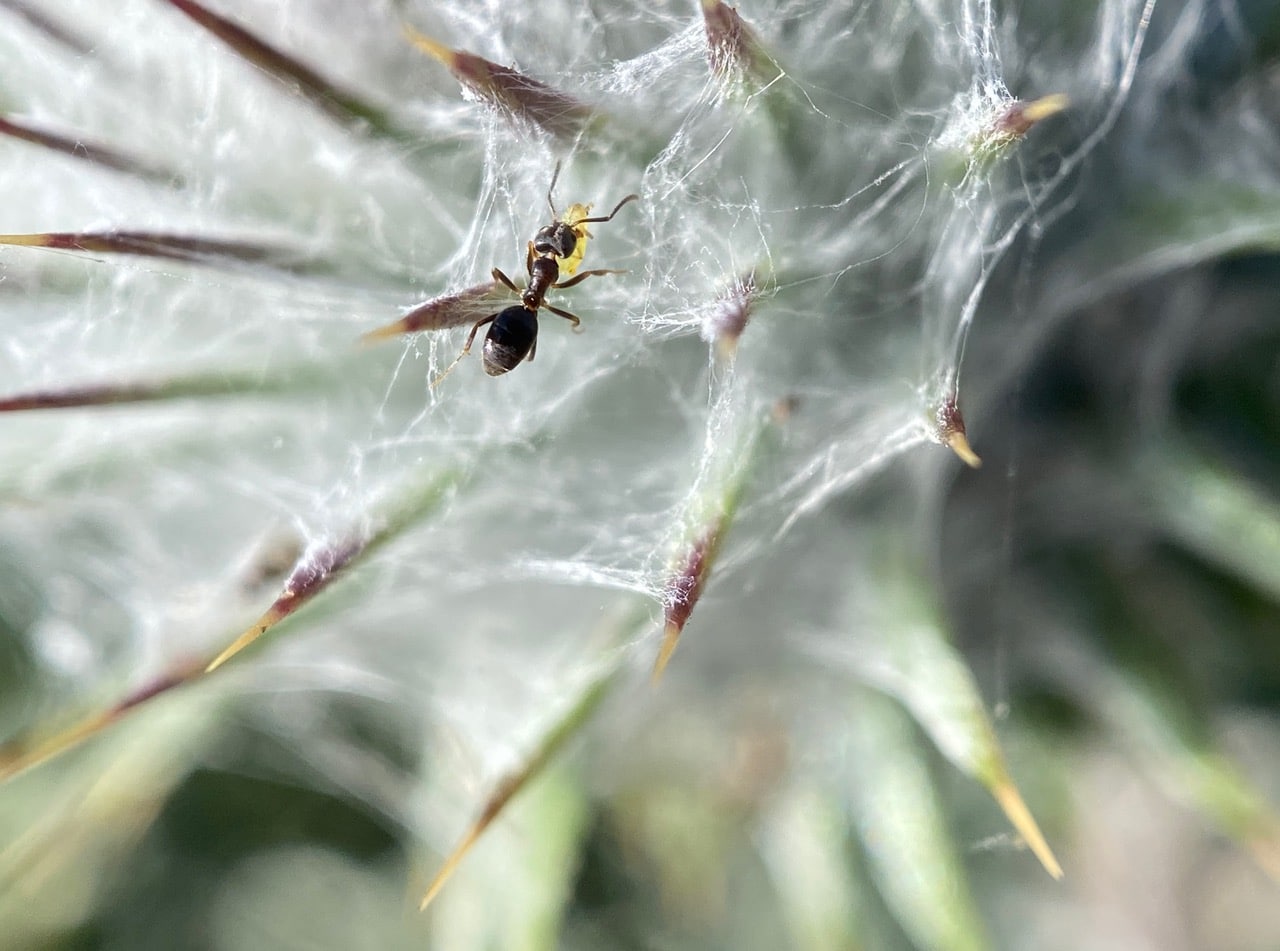
Swiftly the brave ant picks up its precious charge and makes a fast escape.
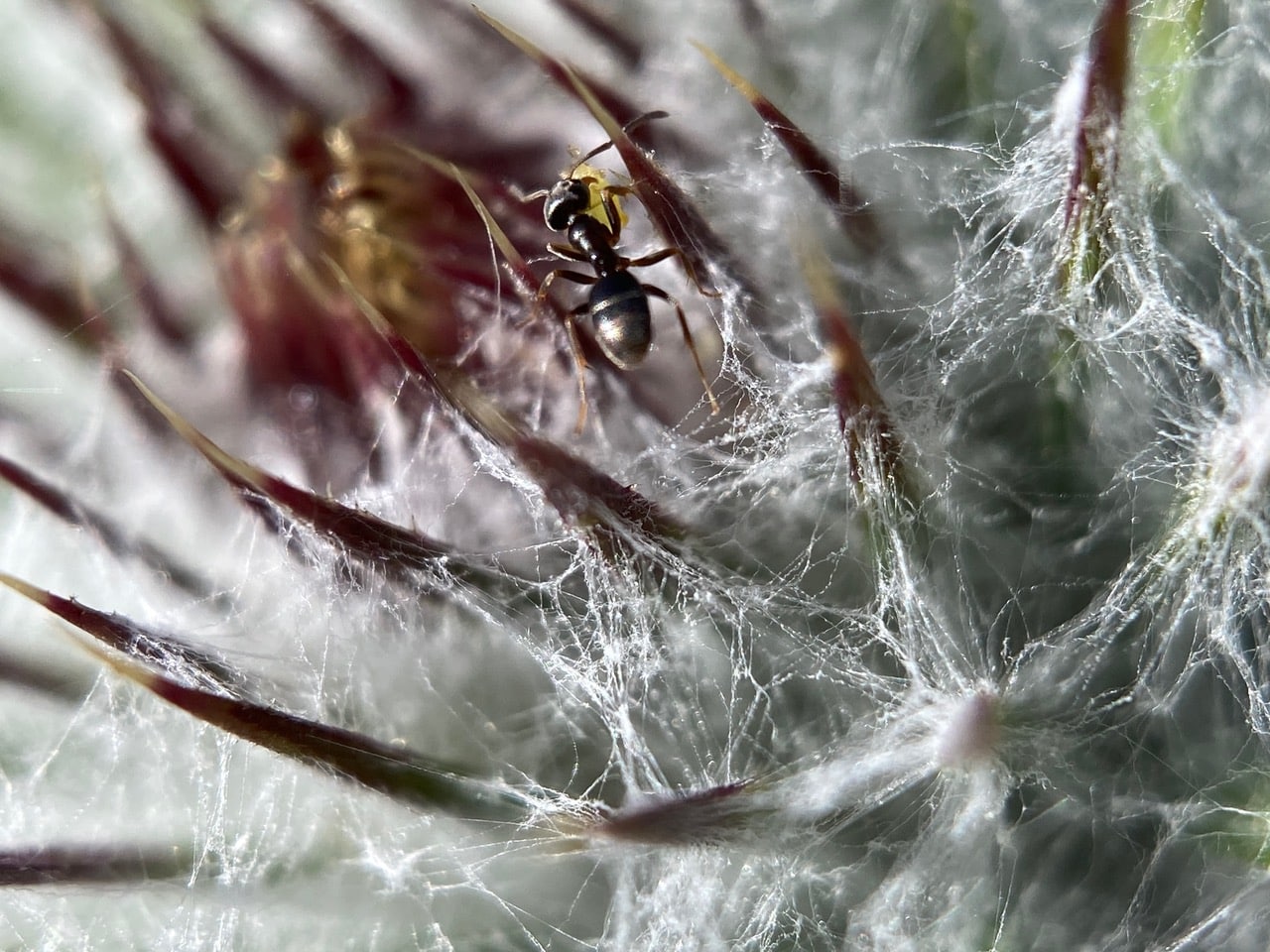
The ant makes it to the tip of the flowerhead, but does not deposit the aphid there. It continues on its arduous journey.

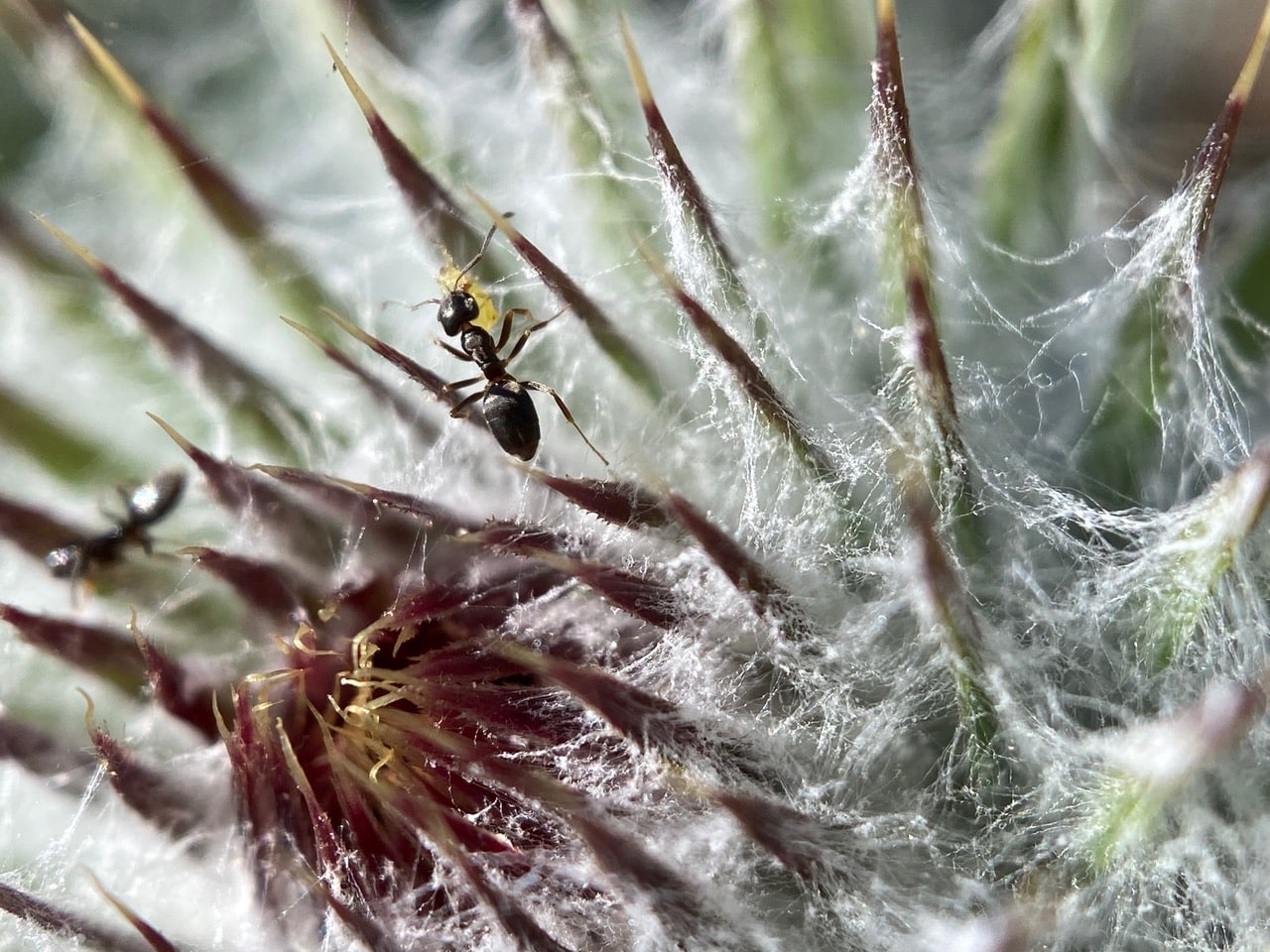
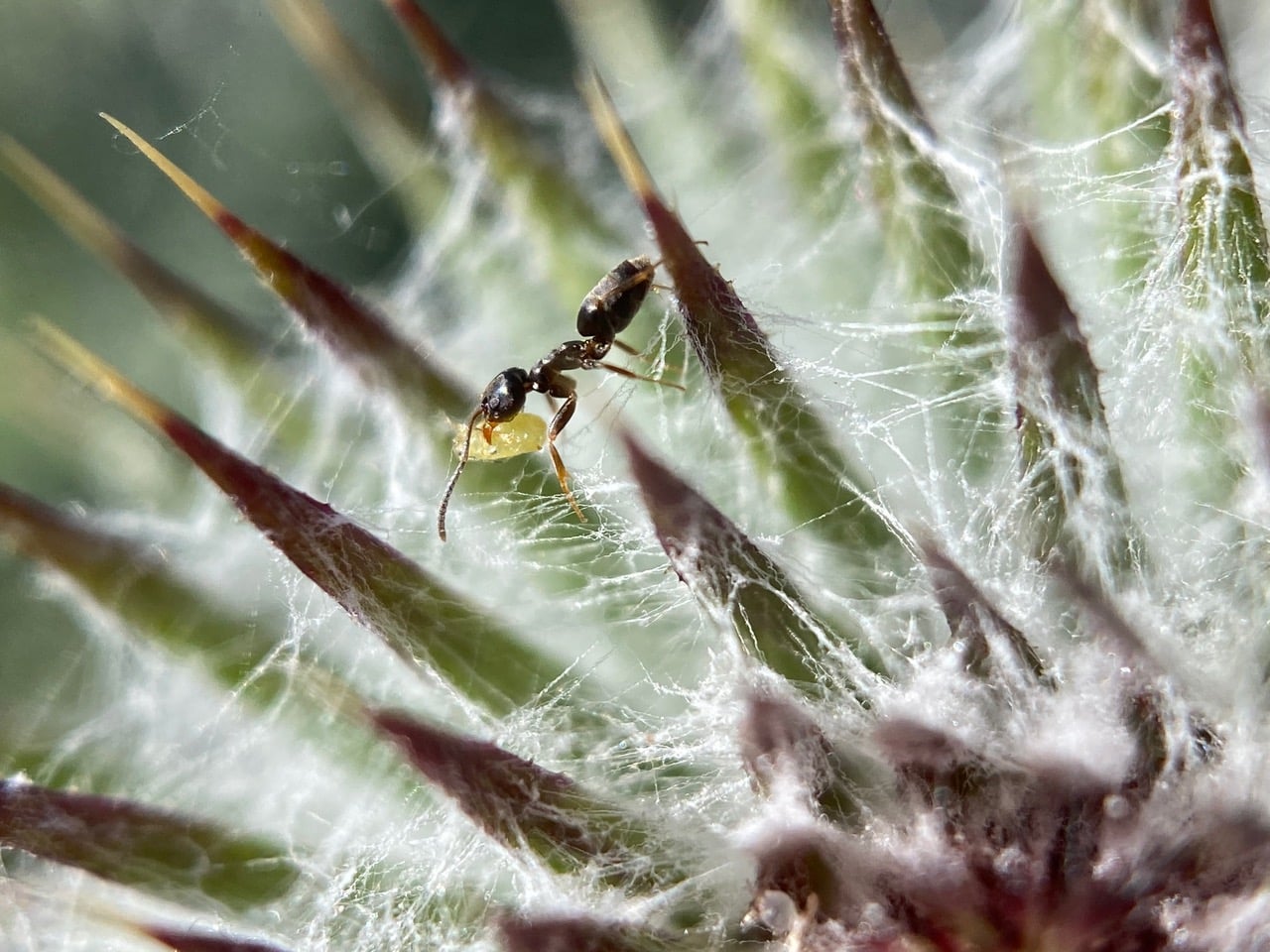
Where is the ant going with the aphid? Is it searching for a good feeding ground to plant the aphid?
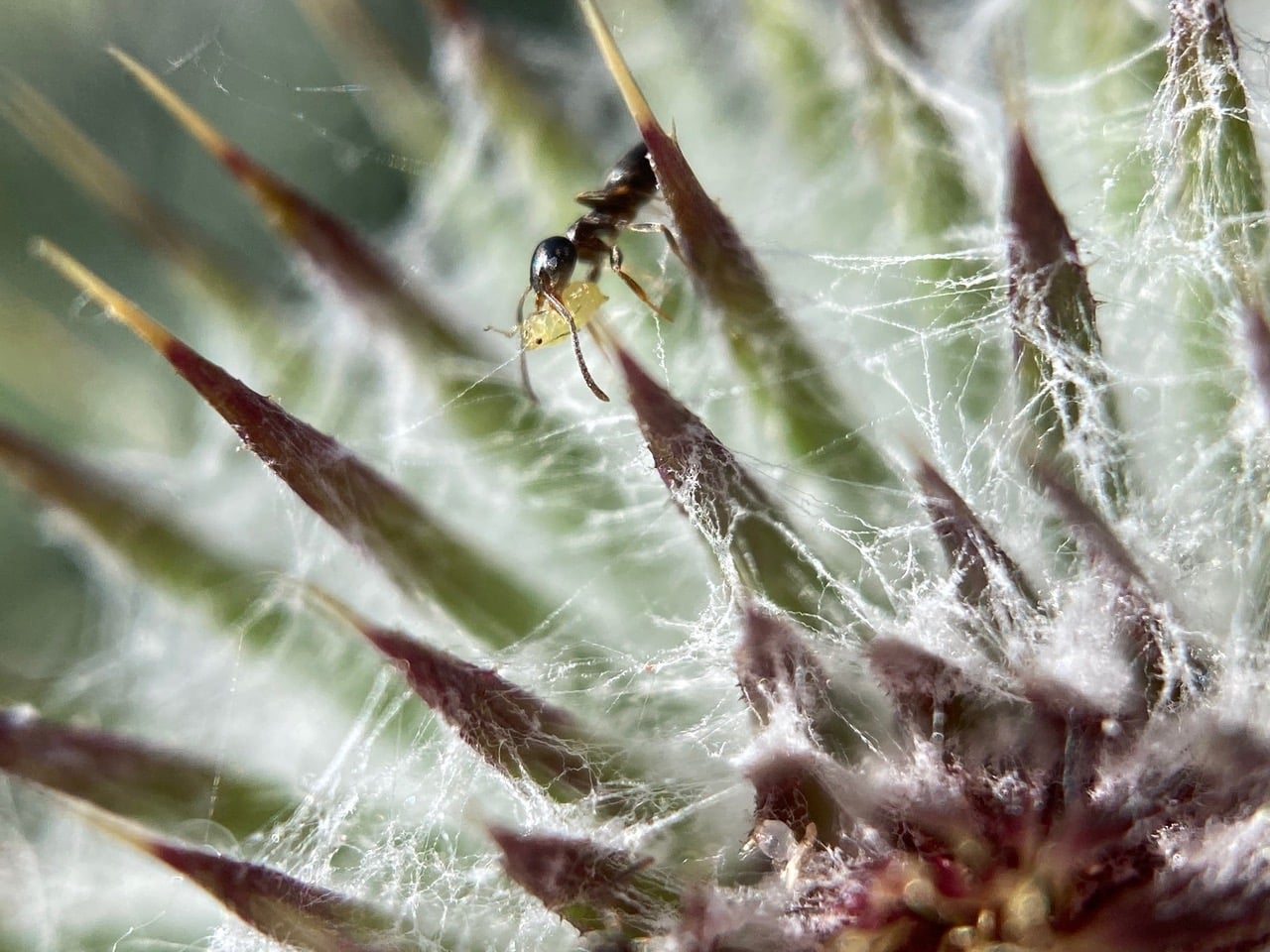
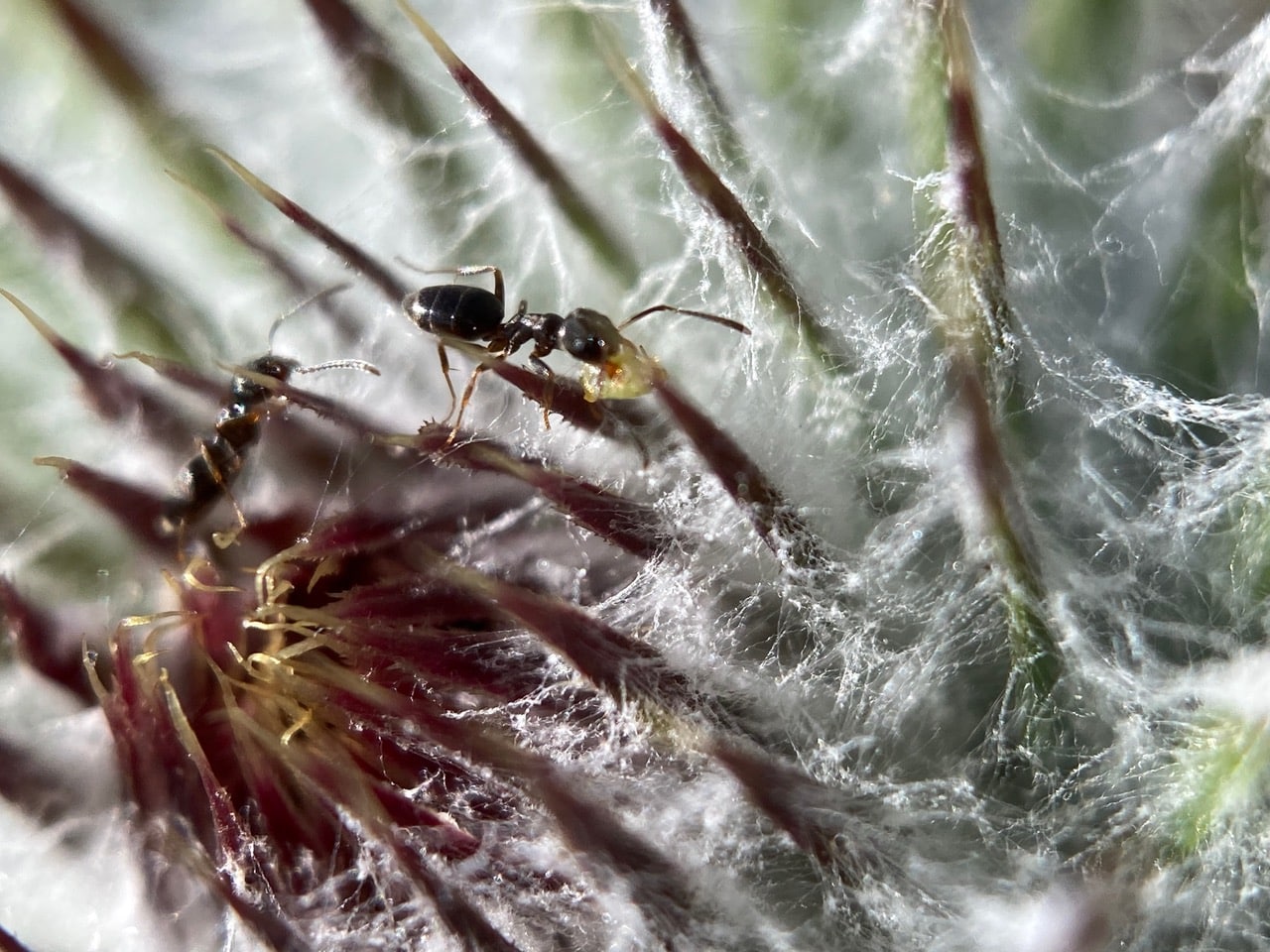


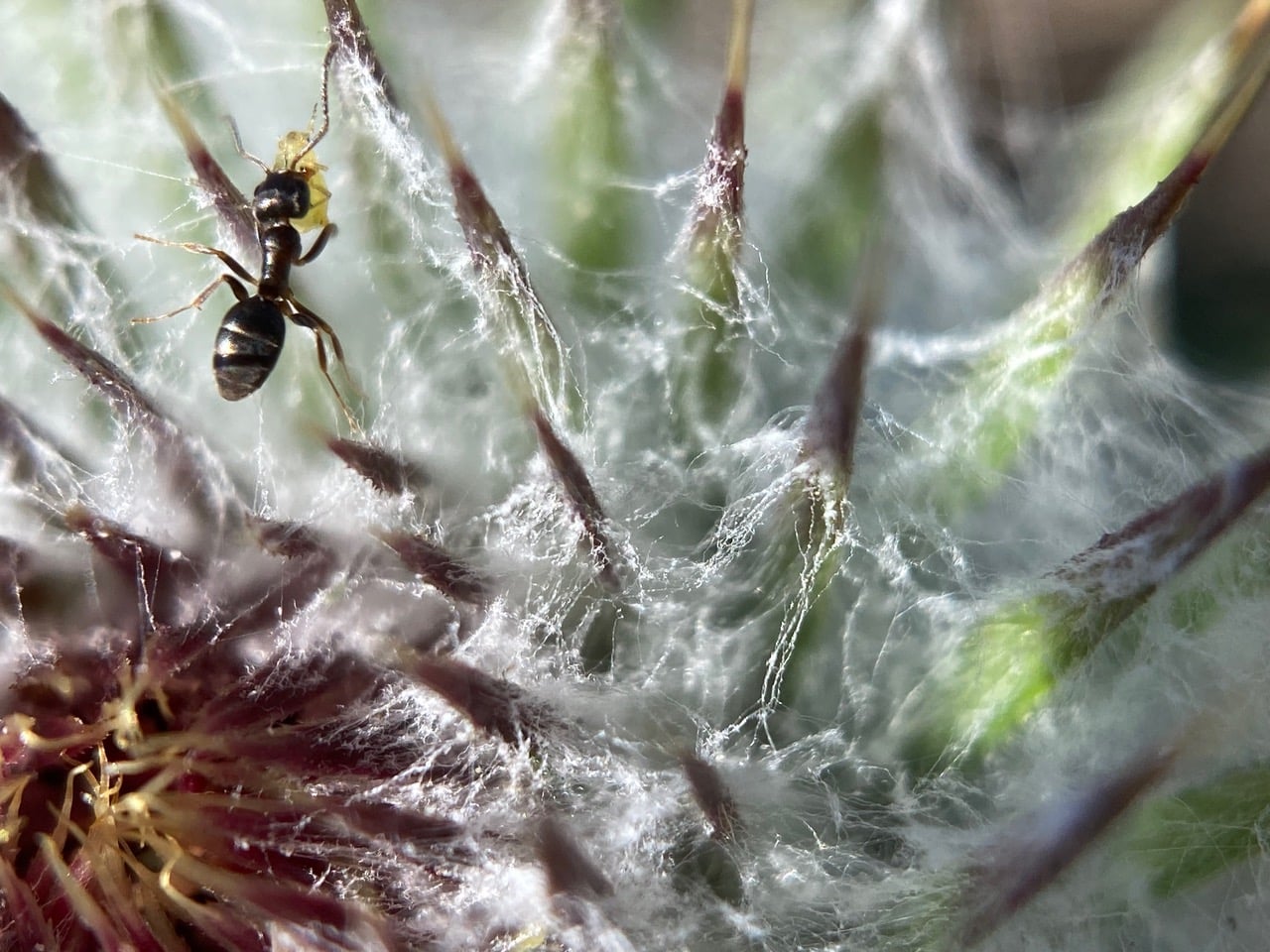
I finally have to give up tracking the little ant and its cargo. It is visually exhausting!
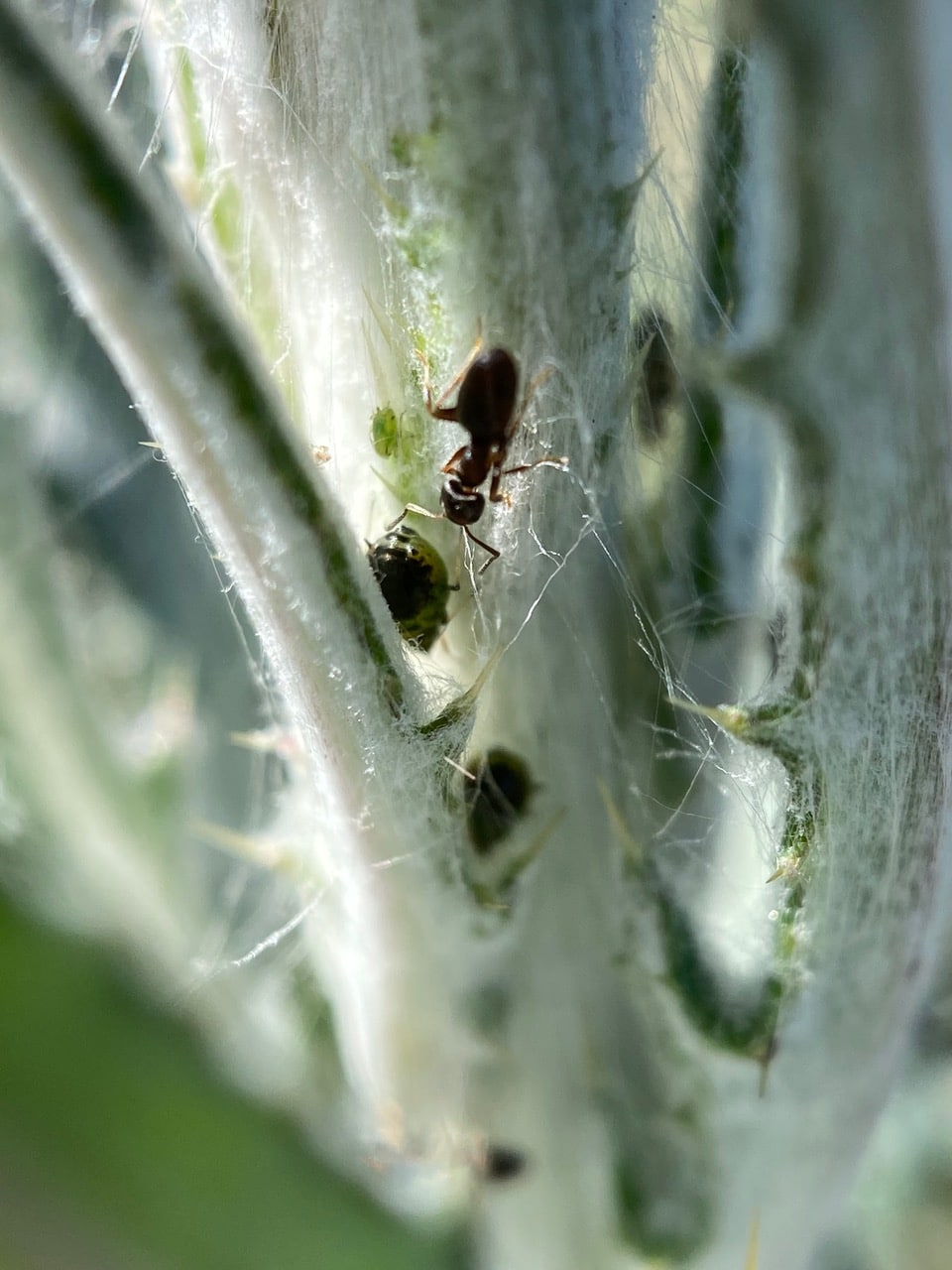
I look all over the plant to try to find where the aphids are. Finally I find a small colony on one of the stems behind thorny leaves. The ants are tending some large aphids almost as big as themselves. I recognize the aphids as the Thistle Aphids. The mature aphids are green with black markings on their back. There are also a few tiny green baby aphids. Perhaps when the young aphids reach a certain age, the ants spread them out on the plant to avoid over-crowding and competition for food? Wow, this is serious husbandry!
The Thistle Aphids, Brachycaudus cardui (family Aphididae) have a wide distribution in Europe, Asia, North Africa and North America. The primary host of this species is plum, cherry, apricot, or peach, but during the summer months it moves to a secondary host, often a thistle in the genera Carduus or Cirsium where it is commonly seen on the stems and flowerheads. The viviparous (live-bearing) wingless females of B. cardui have an oval or pear-shaped body and grow to a length of 1.8 to 2.5 mm. The colors varies from green, yellowing, reddish or brown. The abdomen has a dark, shining patch on the dorsal surface.