

Pollinator Post 3/20/24 (1)
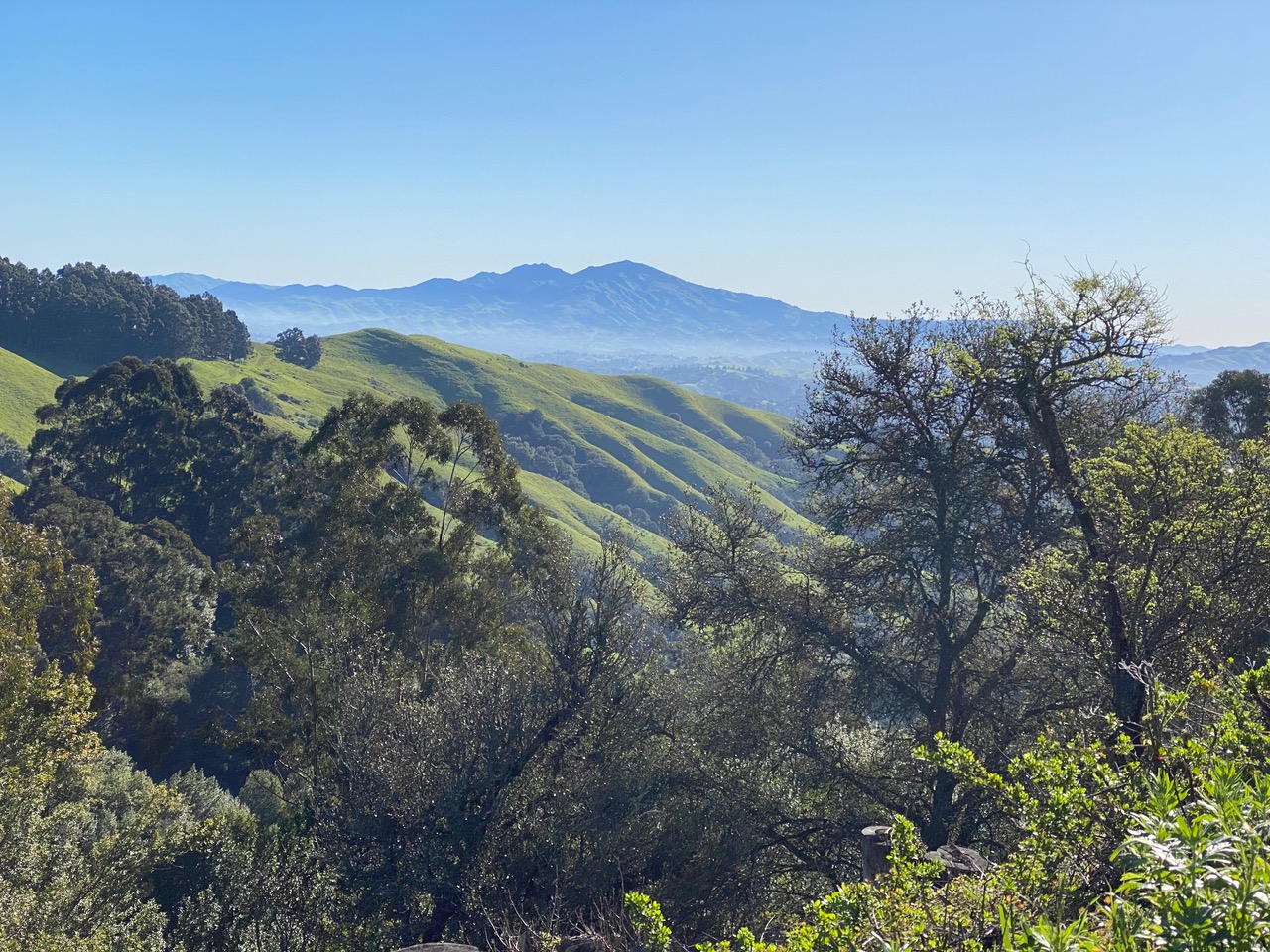 A beautiful warm morning at Skyline Gardens. The picture is taken from the paved road to the Water Tank.

Who’s that tiny insect resting on a California Phacelia leaf? Its back view does not look familiar to me.
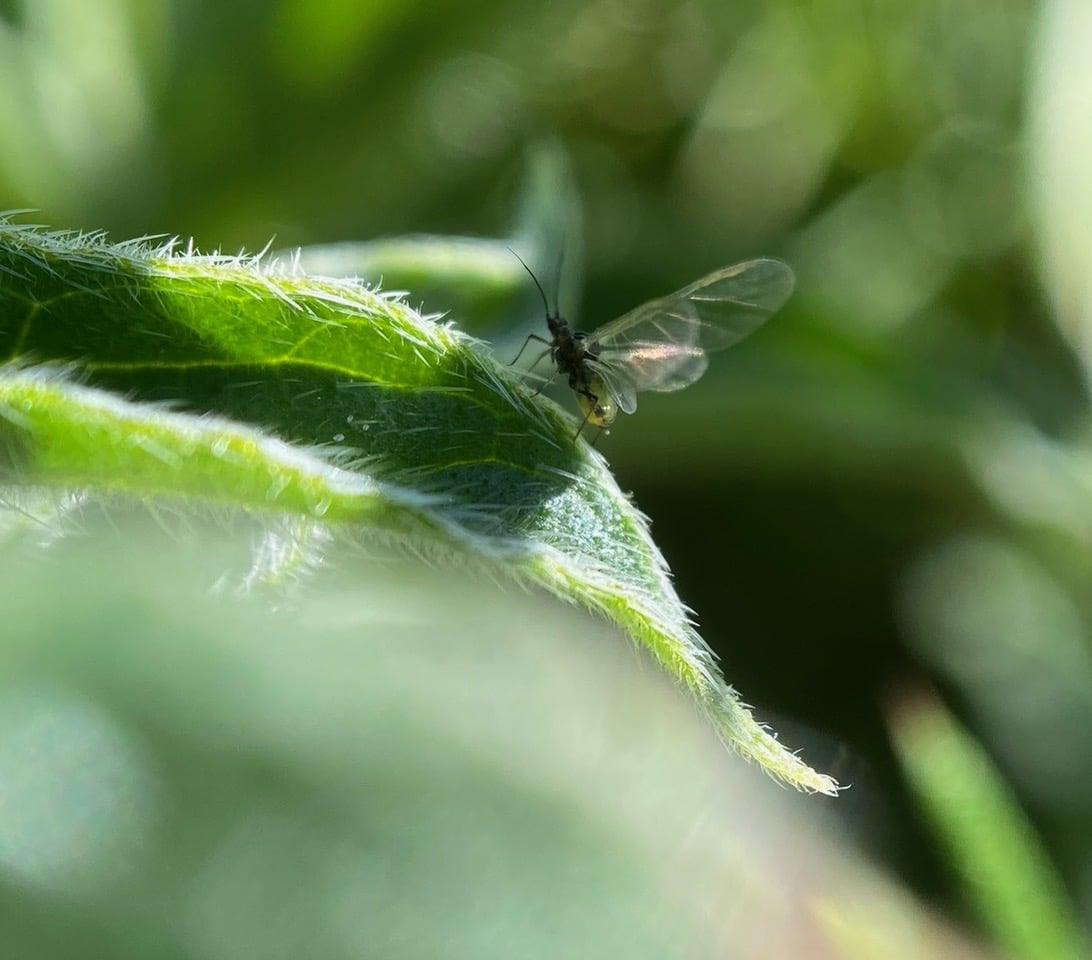
The insect suddenly spreads its wings and lifts off – it’s a winged aphid! Spring has sprung!

An American Winter Ant is foraging on a Woodland Strawberry flower, Fragaria vesca.
The American Ant, Prenolepis imparis is a widespread North American ant. A dominant woodland species, it is most active during cool weather, when most other ant species are less likely to forage. This species is one of a few native ants capable of tolerating competition with the invasive Argentine Ant, Linepithema humile. They are also aggressive toward other ants and produce abdominal secretions that are lethal to Argentine Ants. Prenolepis imparis is a generalist omnivore. Foragers are known for tending to aphids or scale insects from which they consume excreted honeydew, aggregating on rotting fruit, and exploiting protein-rich sources such as dead worms. The colony enters estivation (a hibernation-like state) and becomes inactive above ground for the warmer months, during which time eggs are laid and brood are reared. Reproductives overwinter and emerge on the first warm day of spring for their nuptial flight.

On the side of the road, a Silverleaf Lupine, Lupinus albifrons is already in full bloom! I linger a bit to check for pollinators – only a noisy Digger Bee, Anthophora sp. makes an occasional stop.
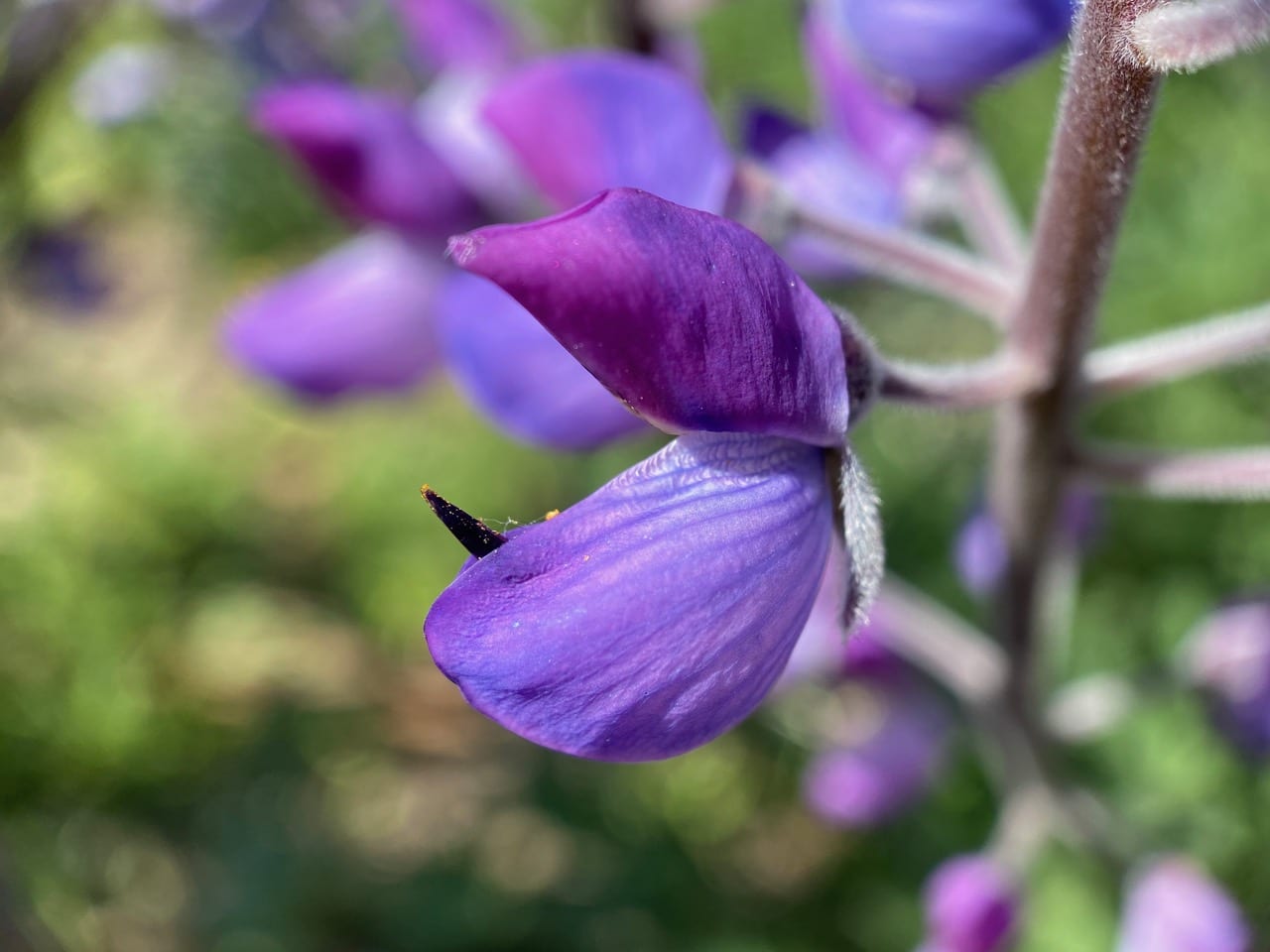
But there are signs that these flowers have been pollinated. This one has its keel exposed. Only a bee heavy enough to lower the wing petals is capable of extruding the keel and the reproductive parts inside. Most likely the work of Bumble Bees and Digger Bees.
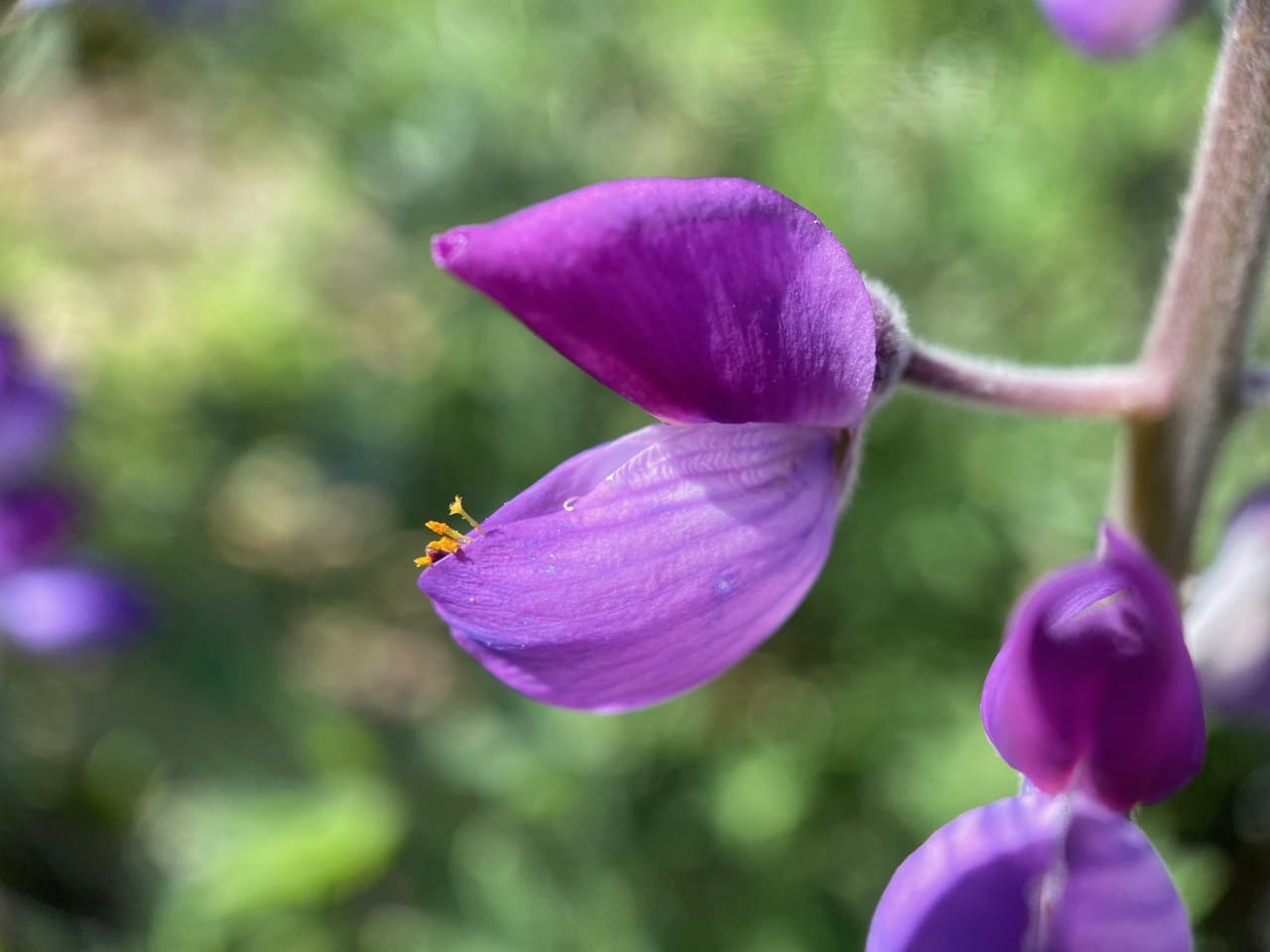
This flower has had its wing petals pushed apart, exposing the anthers within the keel.

All the reproductive structures have been extruded from the dark purple keel, and the wing petals remain agape. The flower might have been visited by a large queen Bumble Bee.

A satiated Hybotid Dance Fly (family Hybotidae) is perched on a petal of a Miner’s Lettuce flower, with a sprinkling of pollen on its body and the tip of its proboscis.
The small fly, under 3 mm long is a member of the Typical Dance Flies or Hybotid Dance flies (family Hybotidae). Its compound eyes seem to take up most of its spherical head. These flies belong to the superfamily Empidoidea and were formerly included in the Empididae as a subfamily. Empididae generally have a thick beak pointing down, while Hybotidae have a thinner beak, or a thick beak pointing forwards or diagonally. Some crucial wing venation further distinguishes the two families. Precious little is known about the life cycle and biology of Hybotids because they are not considered of economic consequence. Since their forelegs are generally not raptorial, I wonder if they’re predaceous like the Empidids. I have seen the Hybotids visit flowers for nectar and pollen, notably on Soap Plant, Miner’s Lettuce, California Saxifrage, and Wild Geranium, and I believe they may contribute to the pollination of these flowers.
 At the highest point of the road, a Woolly Mule’s Ear, Wyethia helenioides has started to bloom. The large, sunny flowers instantly adds color and cheer to the place.
Wyethia belongs to the sunflower family, Asteraceae. In Asteraceae, what is commonly mistaken as a “flower” is in fact not a single flower, but an inflorescence of numerous flowers, packed in the center of the flowerhead or capitulum. The individual flowers or florets are star-shaped, and made of 5 fused petals. The flowers clustered in the middle are called disc flowers, while the ones on the rim are called ray flowers. The latter have an irregular corolla – tubular at the base but elongated on the outside into a generally flat projection, the ray, or ligule. The rays are the petal-like parts. Asteraceae
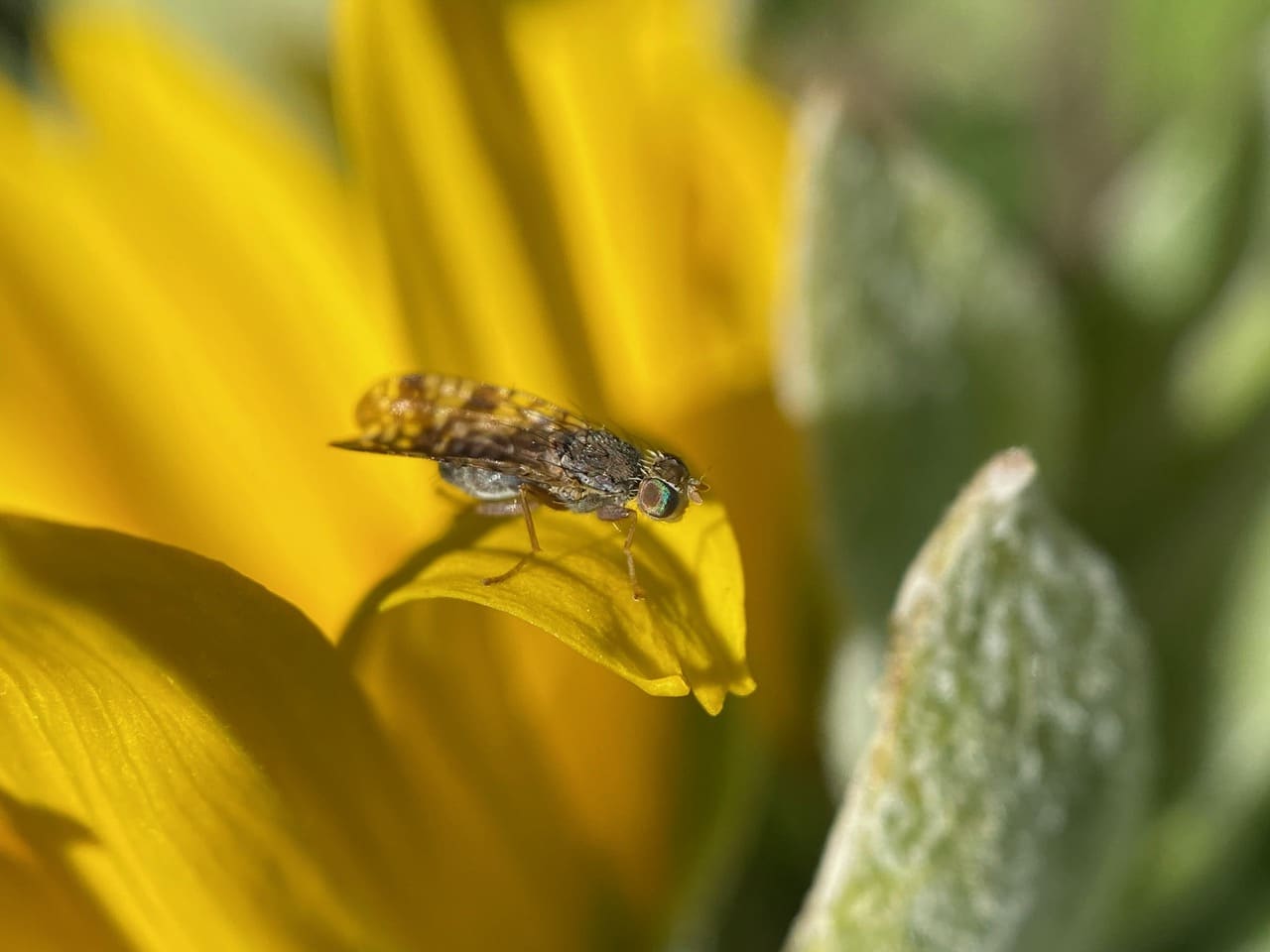
Someone else is happy for the flowers – the Sunflower Seed Maggot, Neotephritis finalis (family Tephritidae). Perched on a petal, it is grooming itself using its hind legs to clean its abdomen. Note the shiny green eyes and the intricate patterns on its “picture” wings.
Commonly called Fruit Flies, Tephritids are small to medium-sized flies that are often colorful, and usually with picture wings. The larvae of almost all Tephritidae are phytophagous. Females deposit eggs in living, healthy plant tissues using their telescopic ovipositors. Here the larvae find their food upon emerging. The larvae develop in leaves, stems, flowers, seeds, fruits, and roots of the host plant, depending on the species. Adults are often found on the host plant and feeding on pollen, nectar, rotting plant debris, or honeydew. Tephritid flies are of major economic importance as they can cause damage to fruit and other plant crops. On the other hand, some Tephritids are used as agents of biological control of noxious weeds.
The Sunflower Seed Maggot is a sunflower specialist, found on over 20 species of Asteraceae. Larvae feed on immature seeds and pupate in flowerheads.
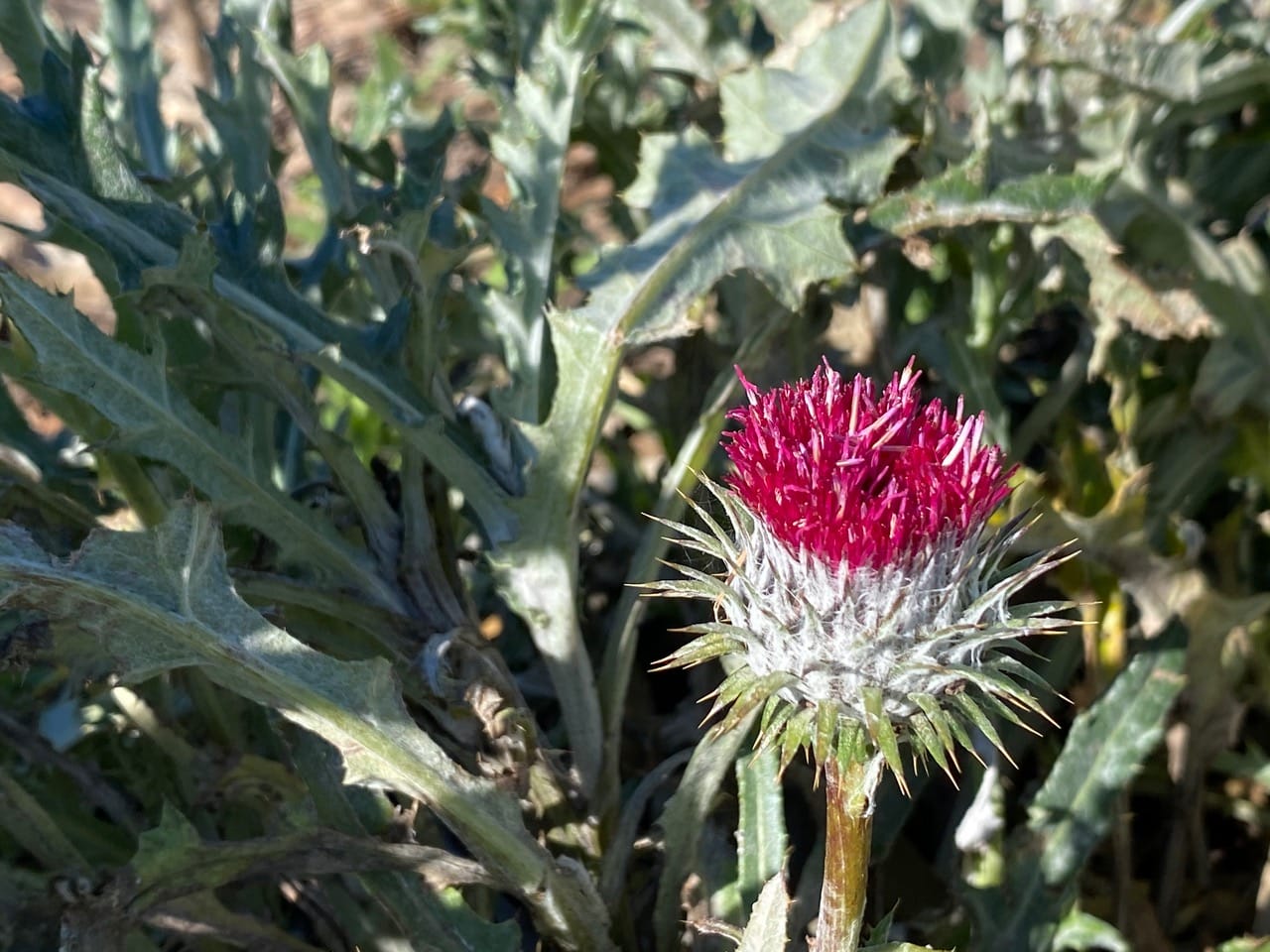
The Cobweb Thistle, Cirsium occidentale, barely 2 feet tall, is already bearing three crimson flowerheads.
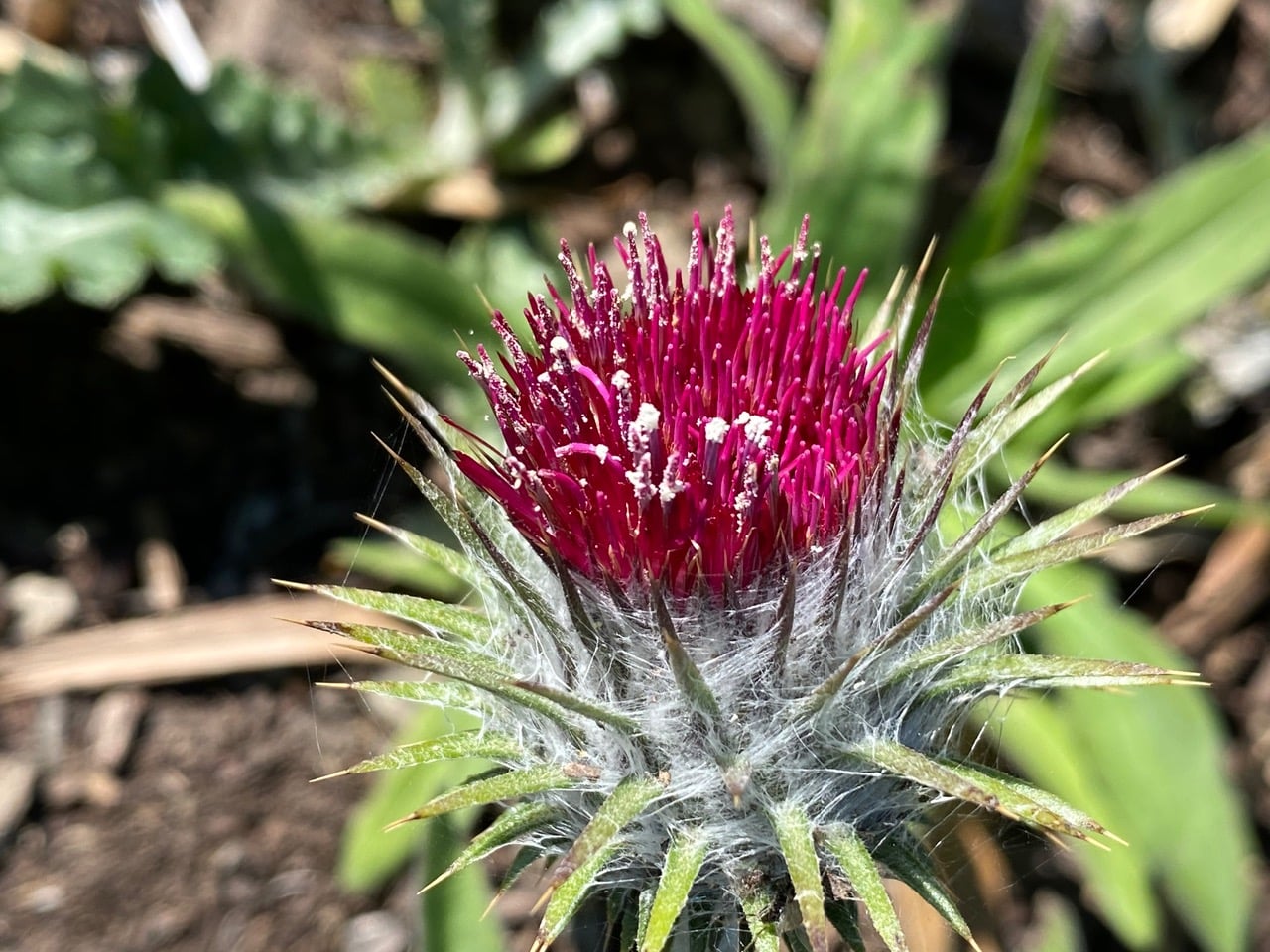
Some of the stamens on this flowerhead are already releasing cream-colored pollen. Where are the pollinators?
While the Mule’s Ear and the Cobweb Thistle both belong to the sunflower family, Asteraceae, their flowerheads can’t look more different. The Thistles have all disc flowers that are shaped into long red tubes. As in the Mule’s Ear, the Cobweb Thistle florets are borne on a flowerhead or capitulum. The scale-like bracts (phyllaries) around the outside of the head are armed with very long, spreading spines which are laced in fibers resembling cobwebs.