

Pollinator Post 3/19/24 (2)
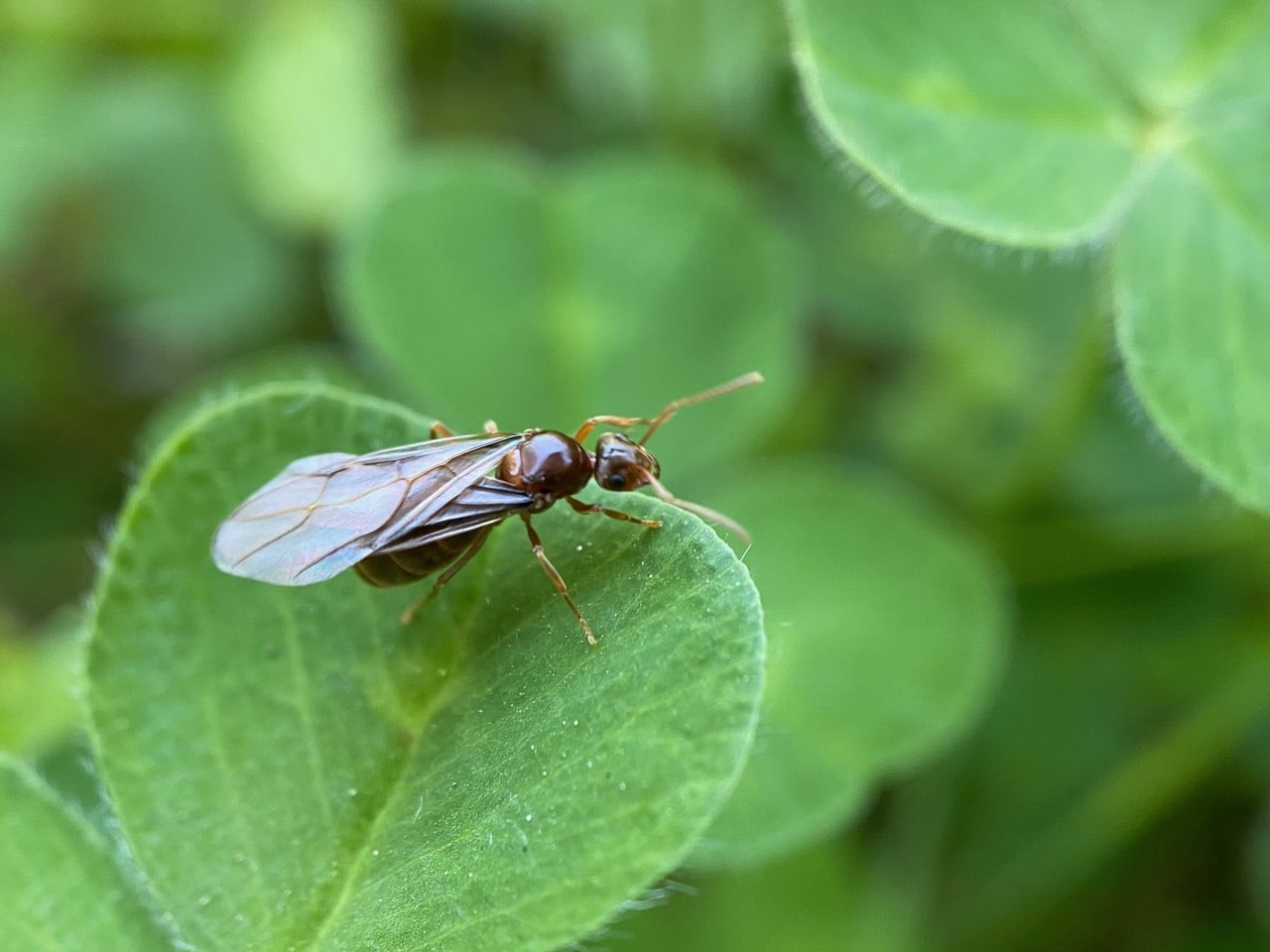
While photographing the Hybotid Dance Flies on the Miner’s Lettuce, I notice a movement in the clovers close to me – it’s a winged ant! Not only that, it is female – a queen or gyne! It must be an American Winter Ant – they are the first species in our area to have nuptial flights in the spring.
Native to North America, these generalist omnivores nest deep within the ground. Unusual among ants, the American Winter Ant, Prenolepis imparis prefers lower temperatures, including near freezing, and is only active outside the nest during winter and early spring. The colony enters estivation (a hibernation-like state) and becomes inactive above ground for the warmer months, during which time eggs are laid and brood are reared. Reproductives overwinter and emerge on the first warm day of spring for their nuptial flight. The queens are much larger and distinctly lighter in color than males.

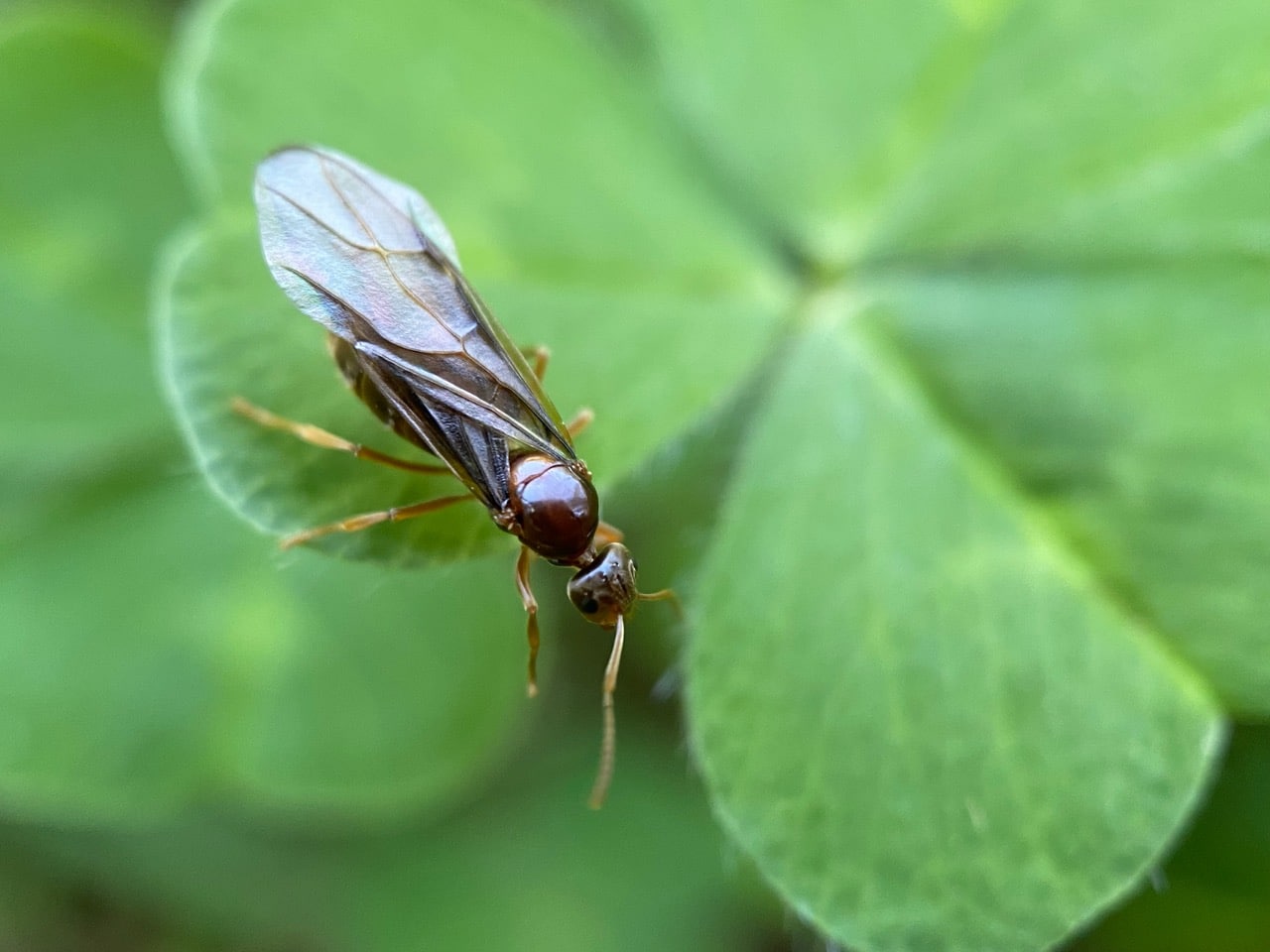
Nuptial flight is an important phase in the reproduction of most ant, termite, and some bee species. A mature ant colony seasonally produces winged virgin queens and males, called alates. In what is known as the haplo-diploidy sex determination system, unfertilized eggs develop into males, while fertilized eggs usually develop into wingless, sterile workers, but may develop into virgin queens if the larvae receive special nutrition. Young queens and males stay in their parent colony until conditions are right for the nuptial flight. The flight requires warm, rain-free and relatively windless weather, often after some rain. Different colonies of the same species often use environmental cues to synchronize the release of the alates so that they can mate with individuals from other nests, thereby avoiding inbreeding. The sudden take off of huge numbers of the ants all at once also serves to momentarily overwhelm their predators (birds, lizards, etc.) to ensure that a few alates will survive to establish new colonies.
During the nuptial flight, each virgin queen usually mates with several males. The sperm is stored in a special organ in her abdomen, the spermatheca, and lasts throughout her lifetime. Once the alates have mated, the role of the males is over, and they soon die. The mated queens quickly chew off their own wings and begin looking for a suitable site in which to nest and set up a new colony. She digs herself an underground chamber and lays her first few eggs, which she rears to adulthood. After the first workers appear, the queen’s role in the colony typically becomes one of exclusive egg-laying.
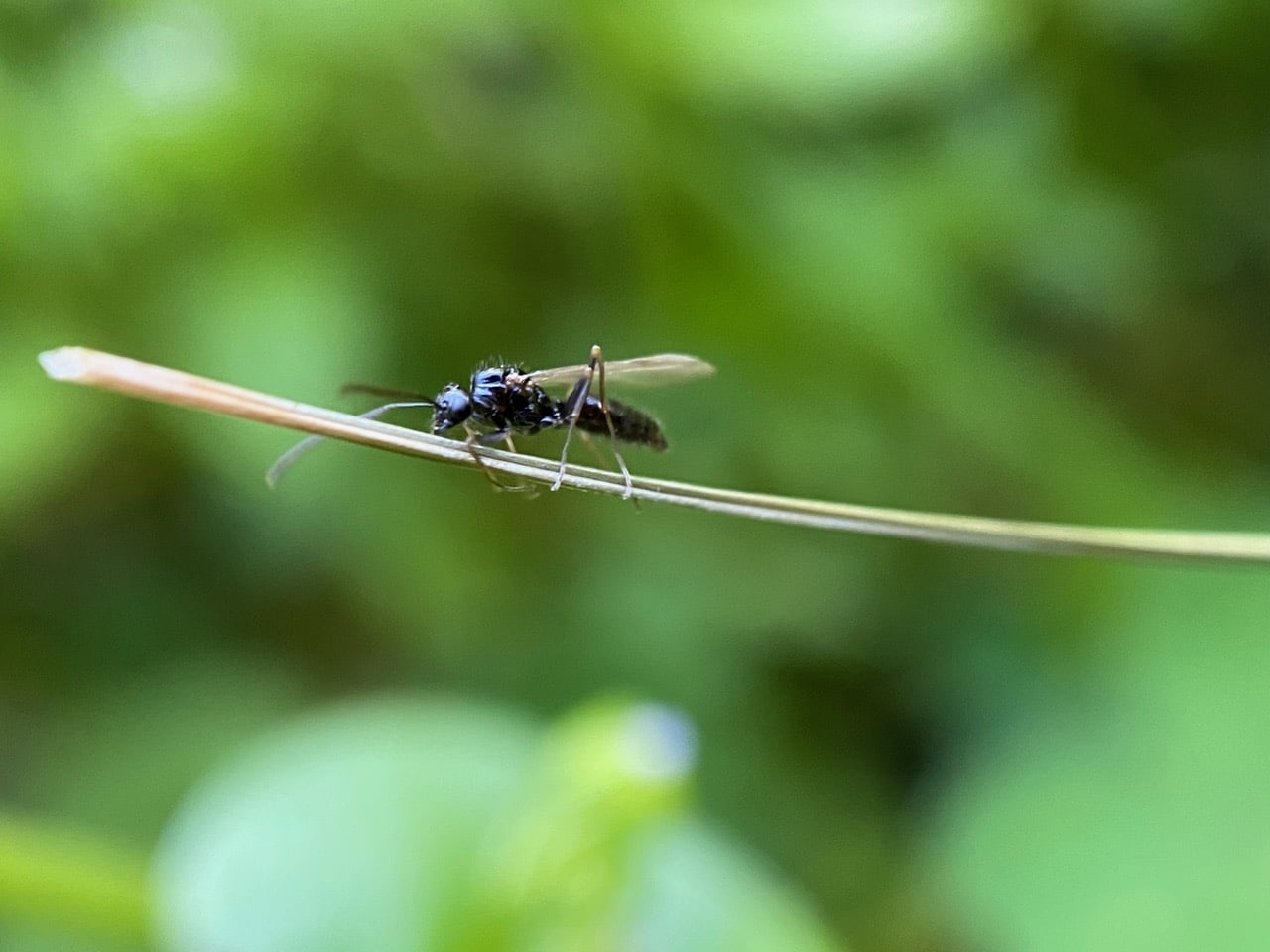
I immediately scan the surroundings for male alates (winged reproductives). None are flying, but I spot a couple running around on the vegetation. They are all black and only a fraction the size of the queen. One is closing in on our queen…
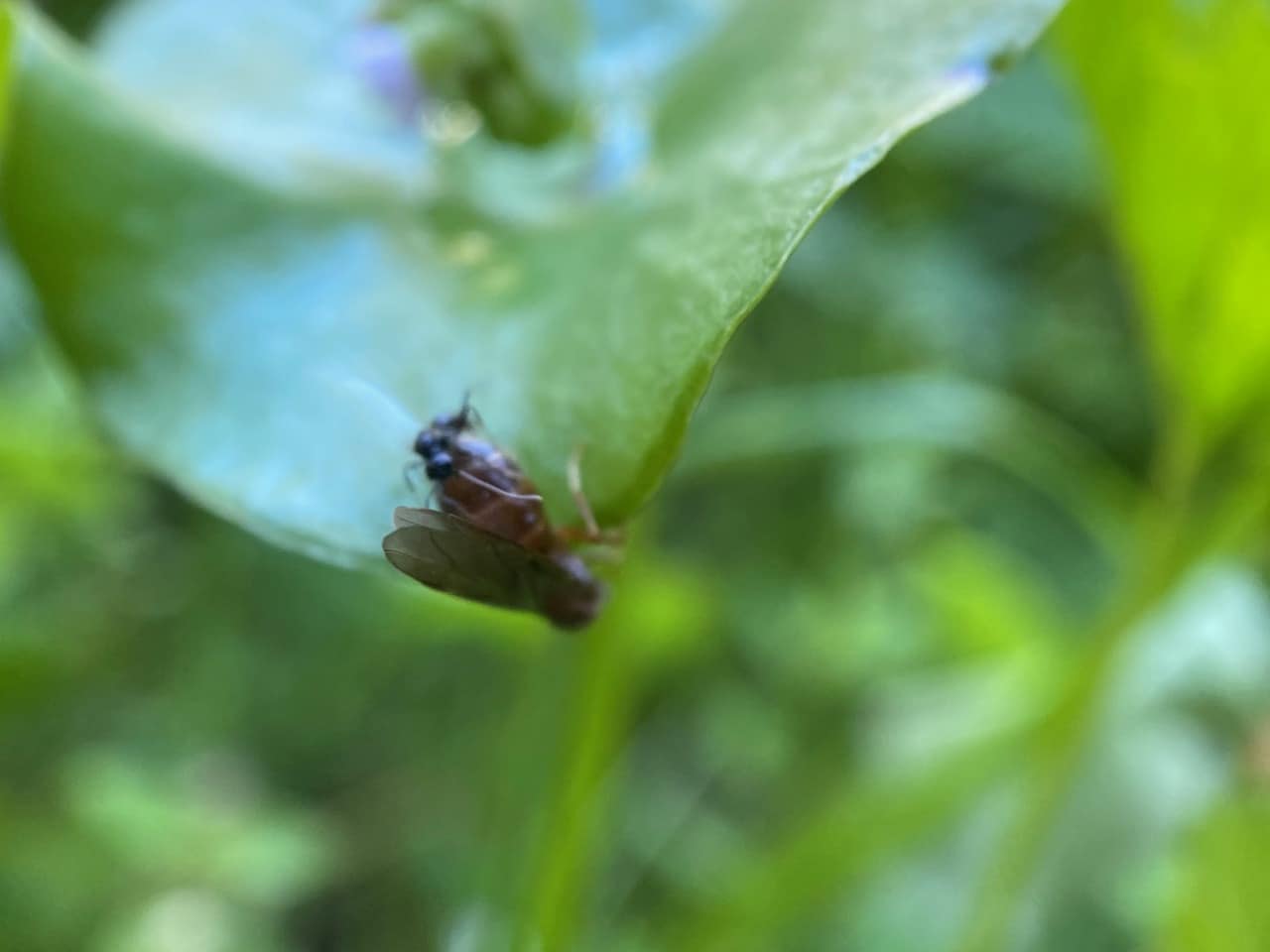
I have the camera focused on the queen, but the action is so fast I only get a blurry picture of the mating event. As soon as the male alate makes contact with the queen, the pair tumbles off the leaf into the undergrowth below.
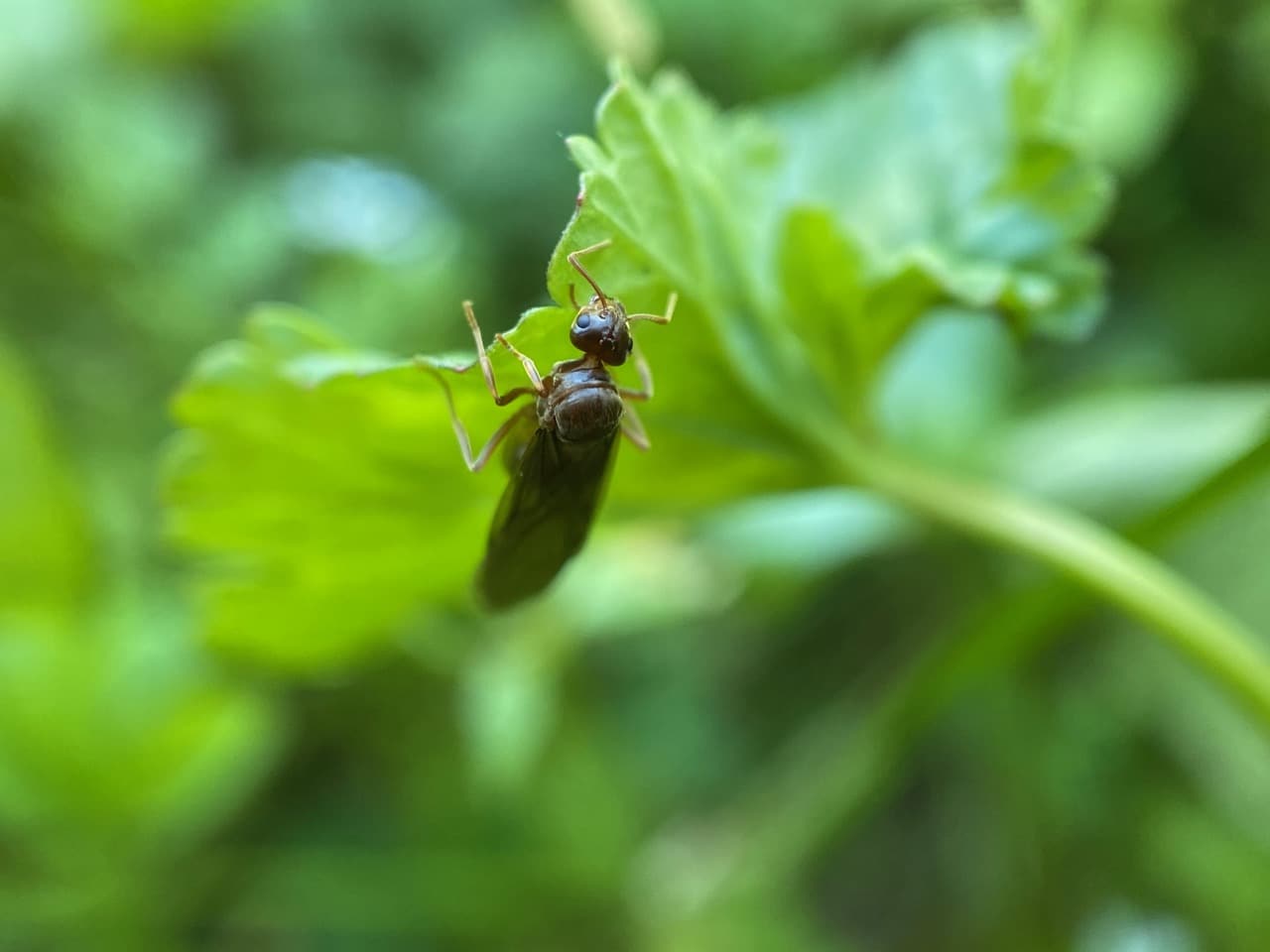
A little while later I spot another queen clinging upside down on a geranium leaf.

Look at the size of her abdomen!

The queen lingers here for quite a while…
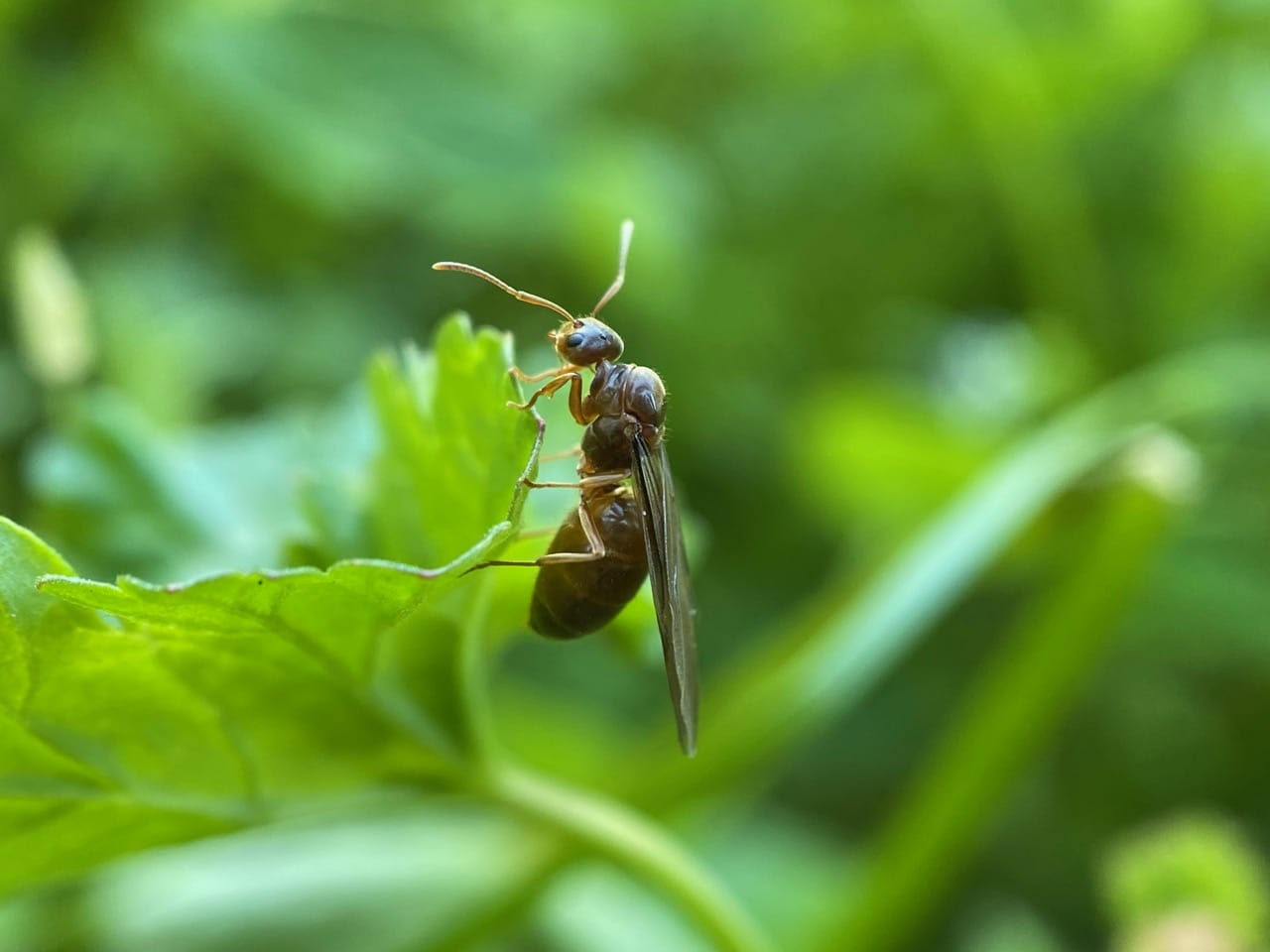
Maybe she’s releasing pheromones to summon the males?
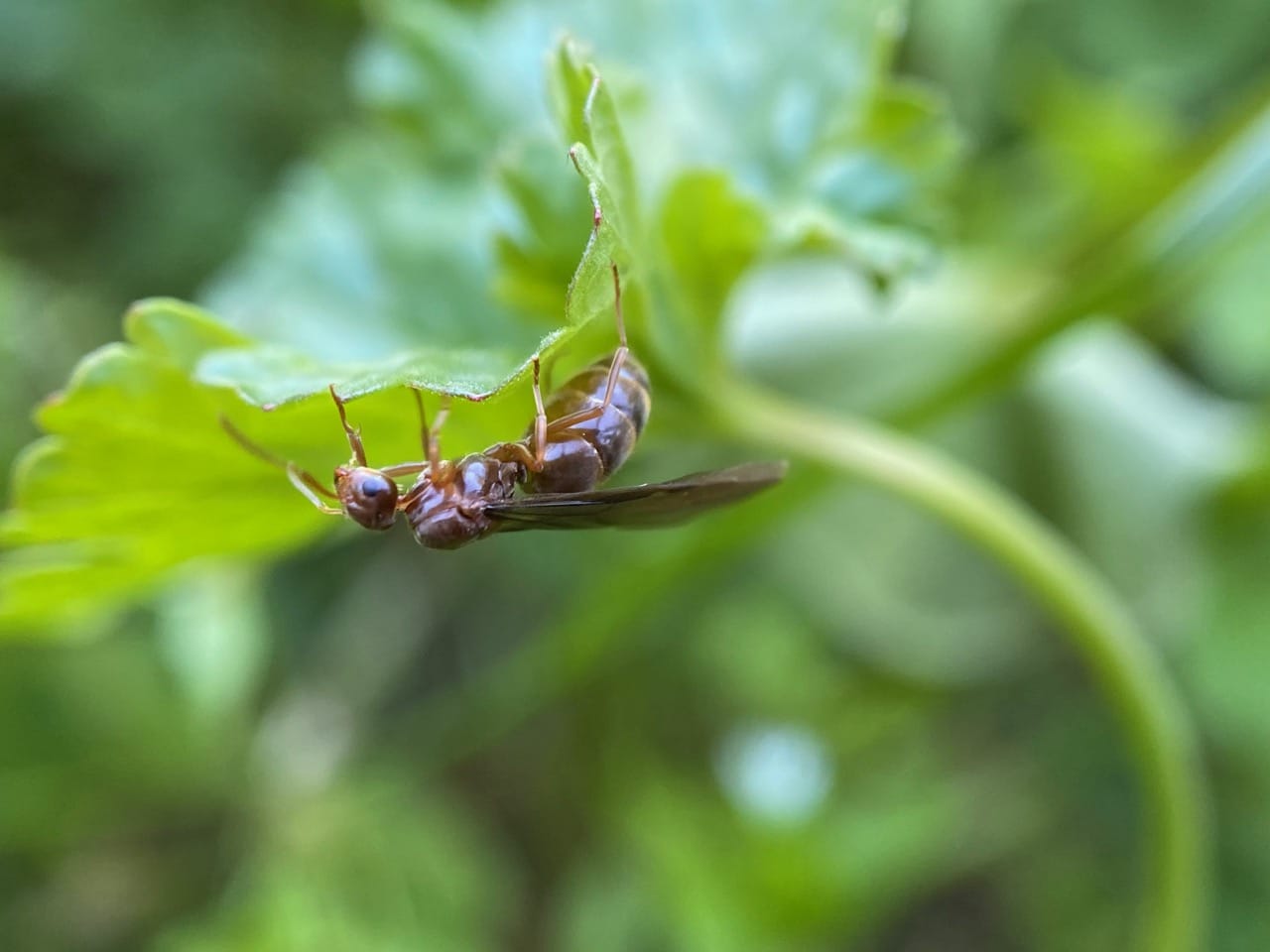
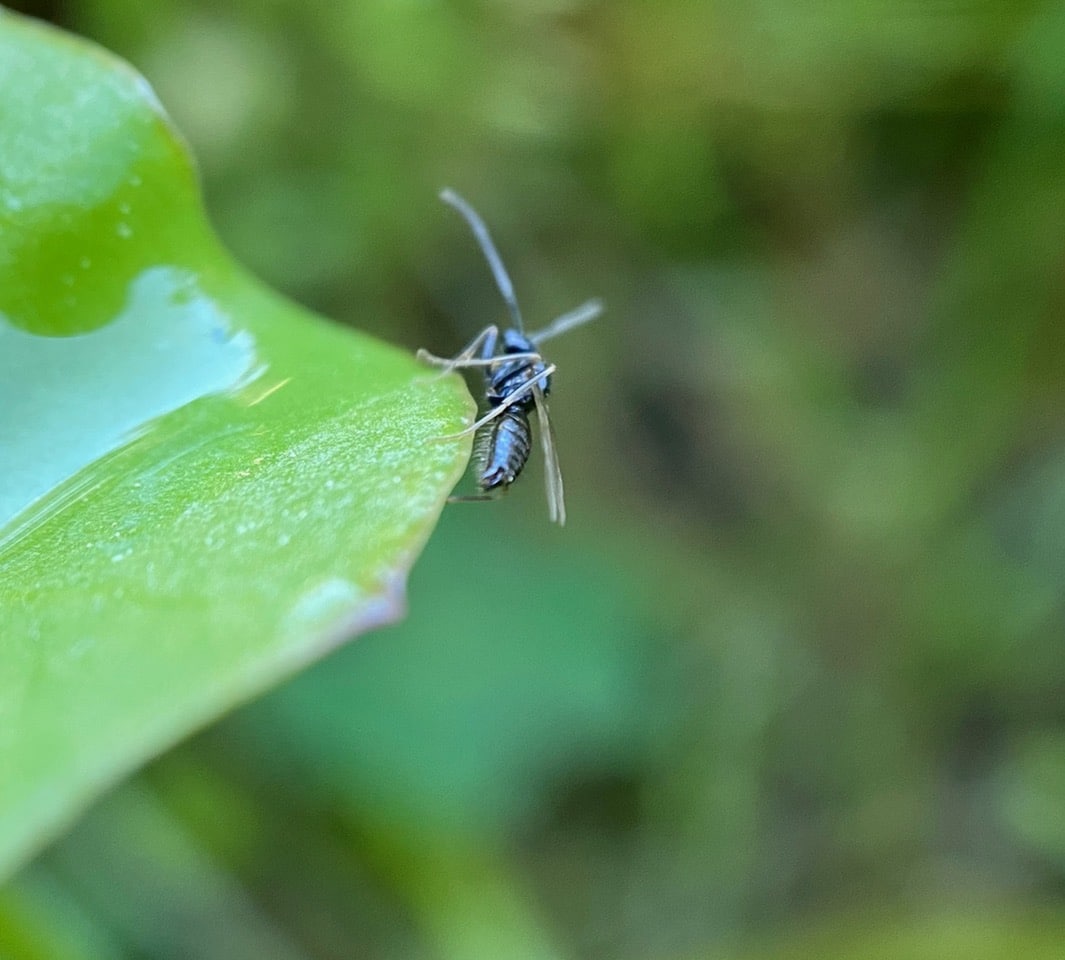
Here comes a male alate…
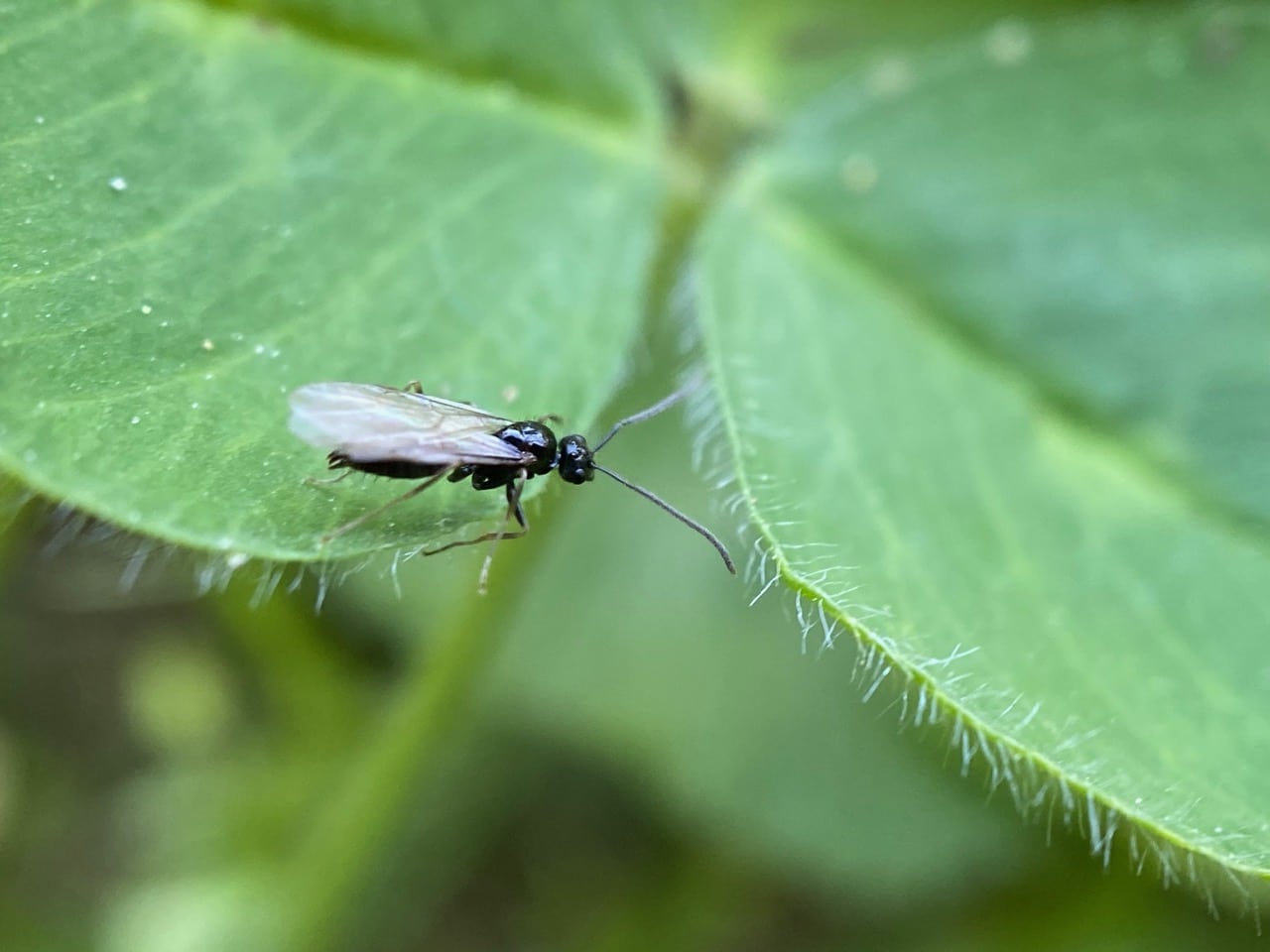
He’s fast and fleet footed, running around frantically.
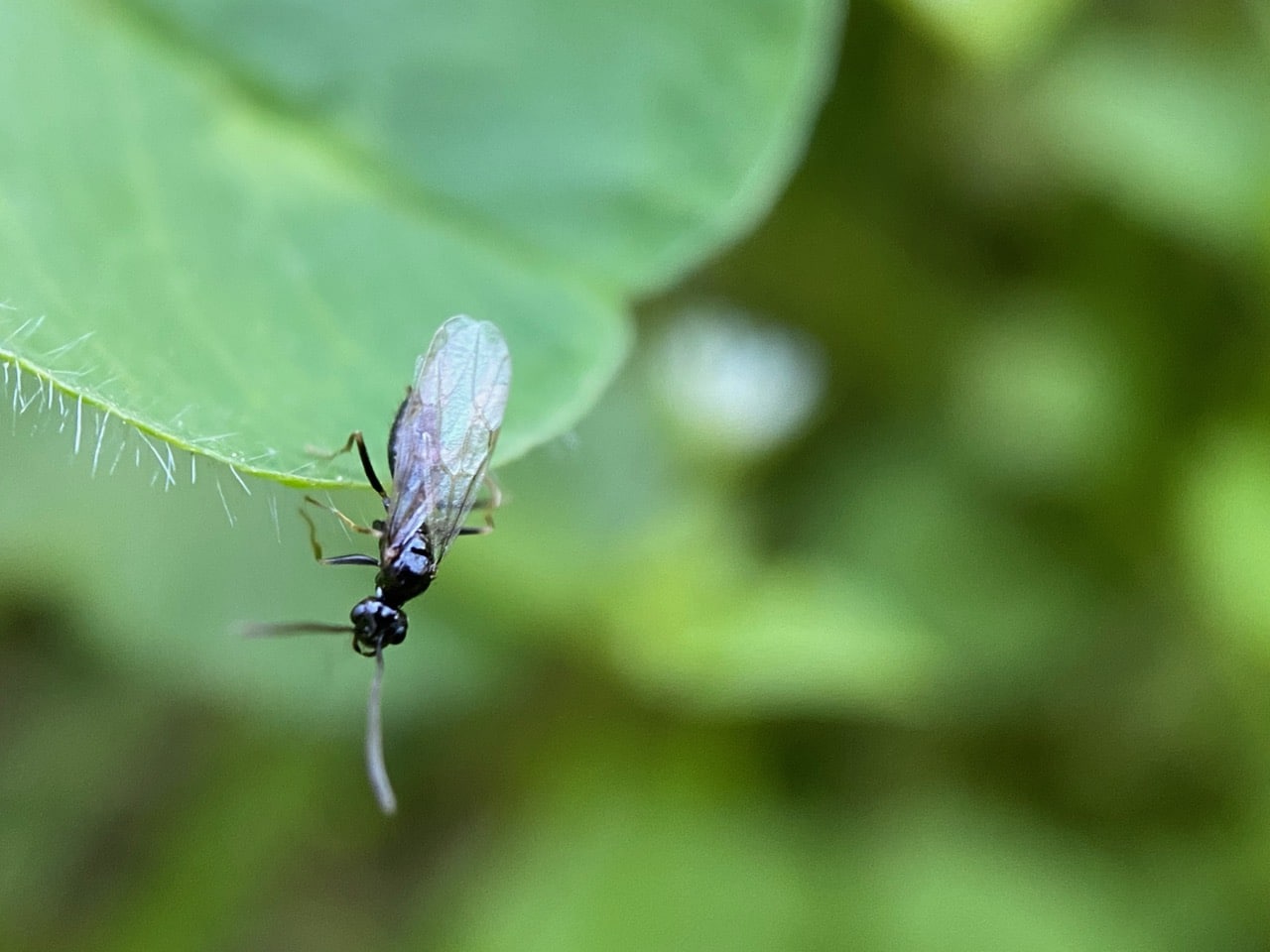
Although his movements seem haphazard, he is closing in on the queen. He must be following her scent trail.
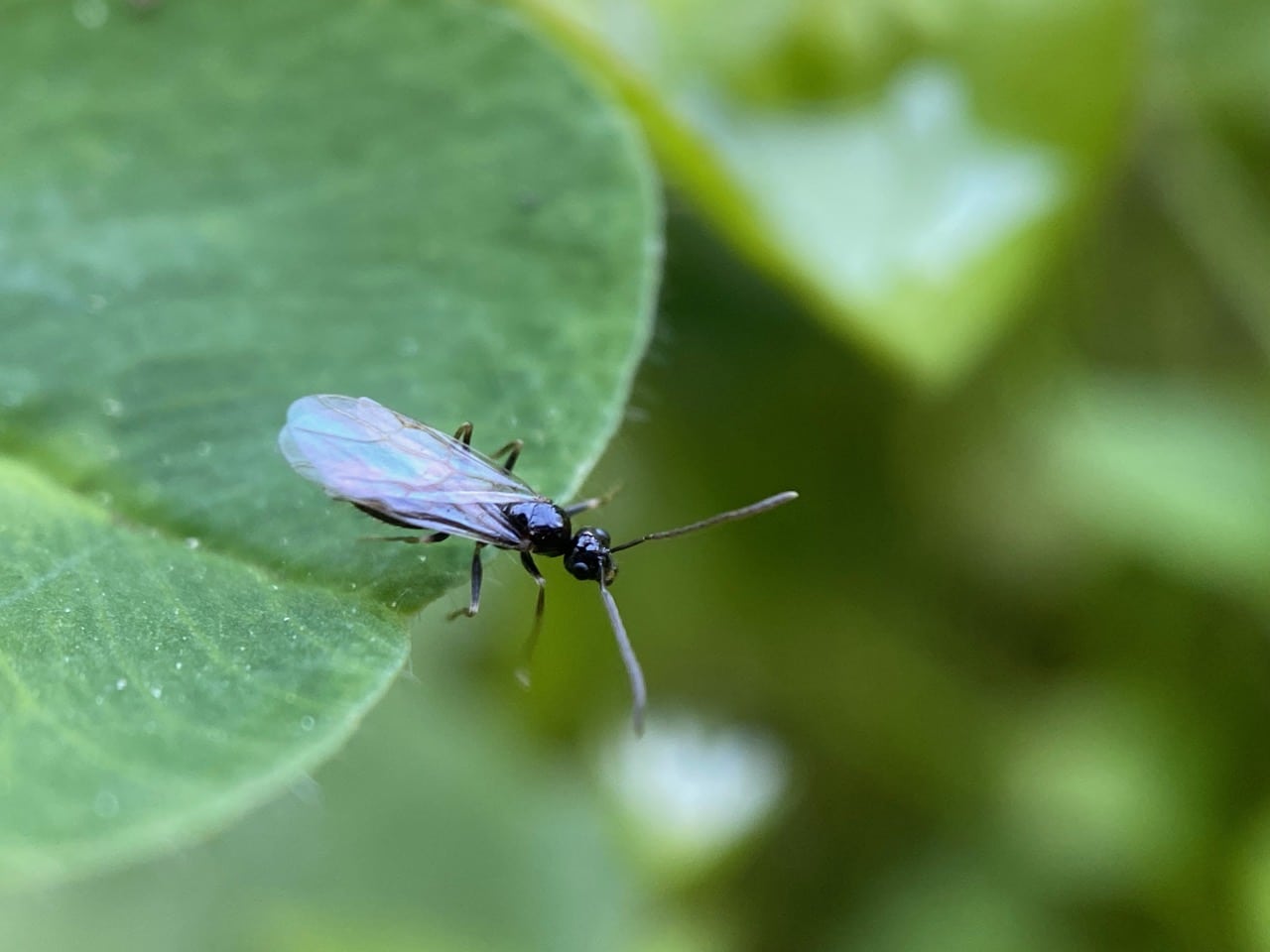
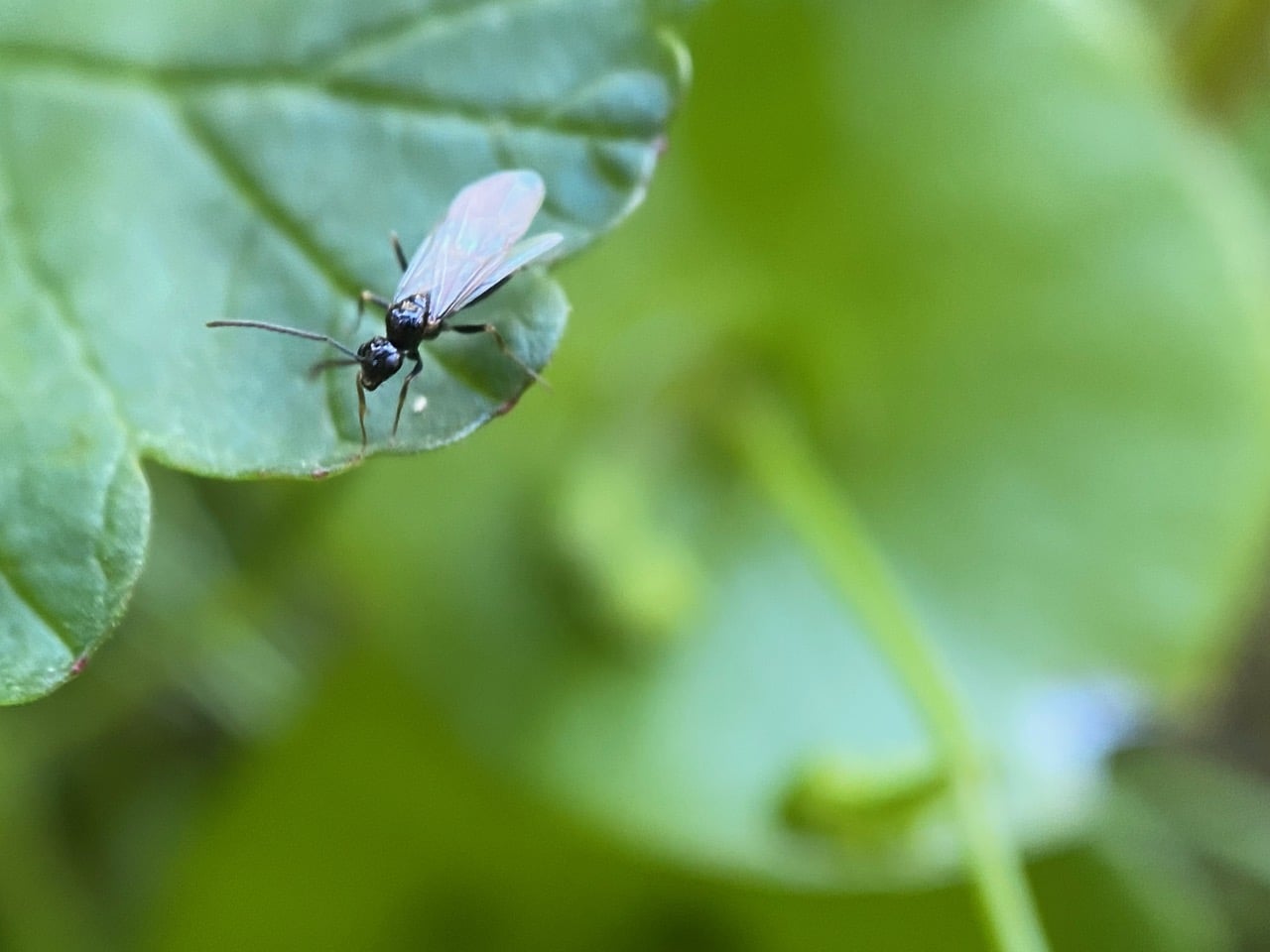
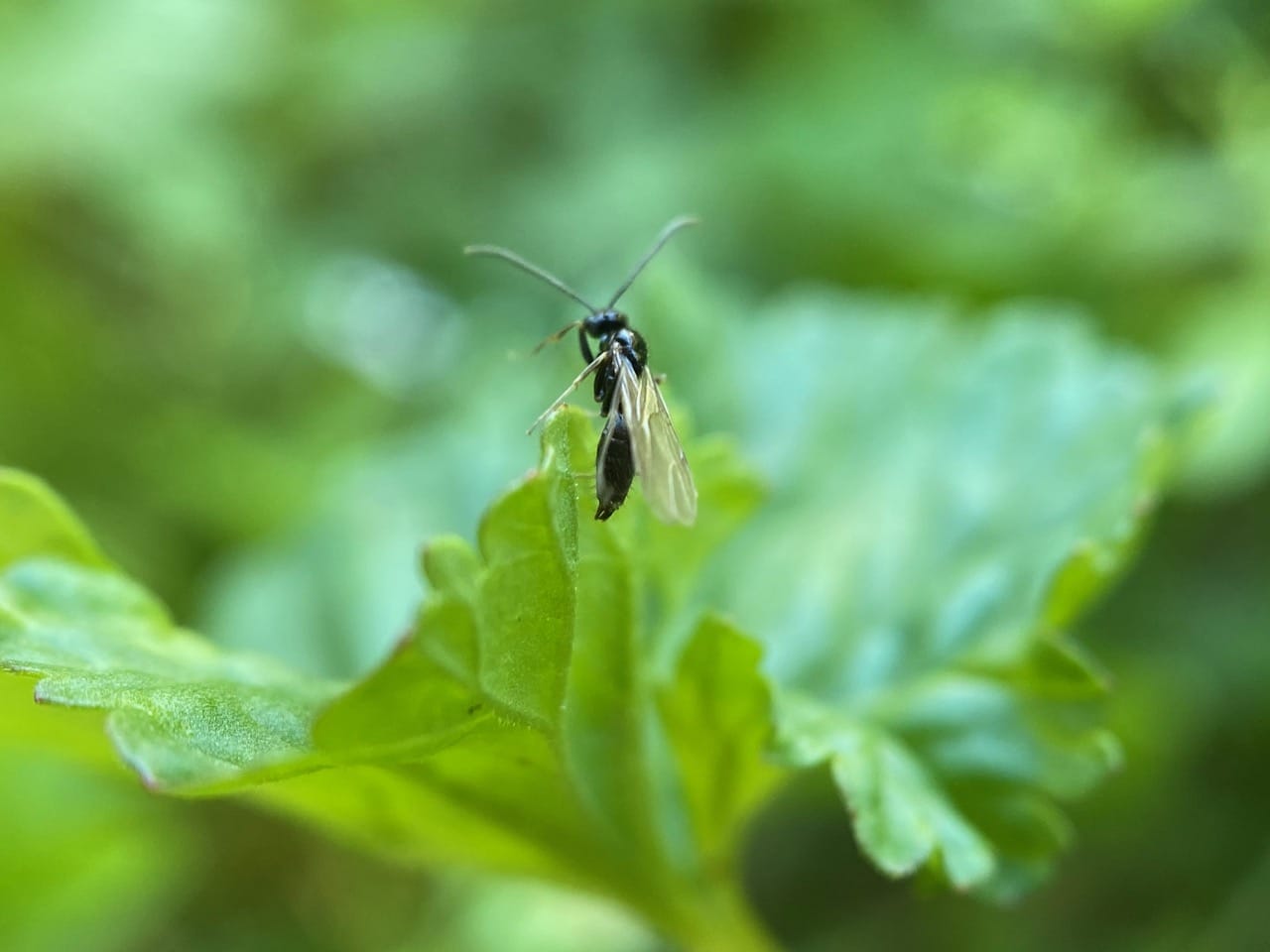 The male finally arrives at the leaf where the queen has been hanging out, but she’s gone!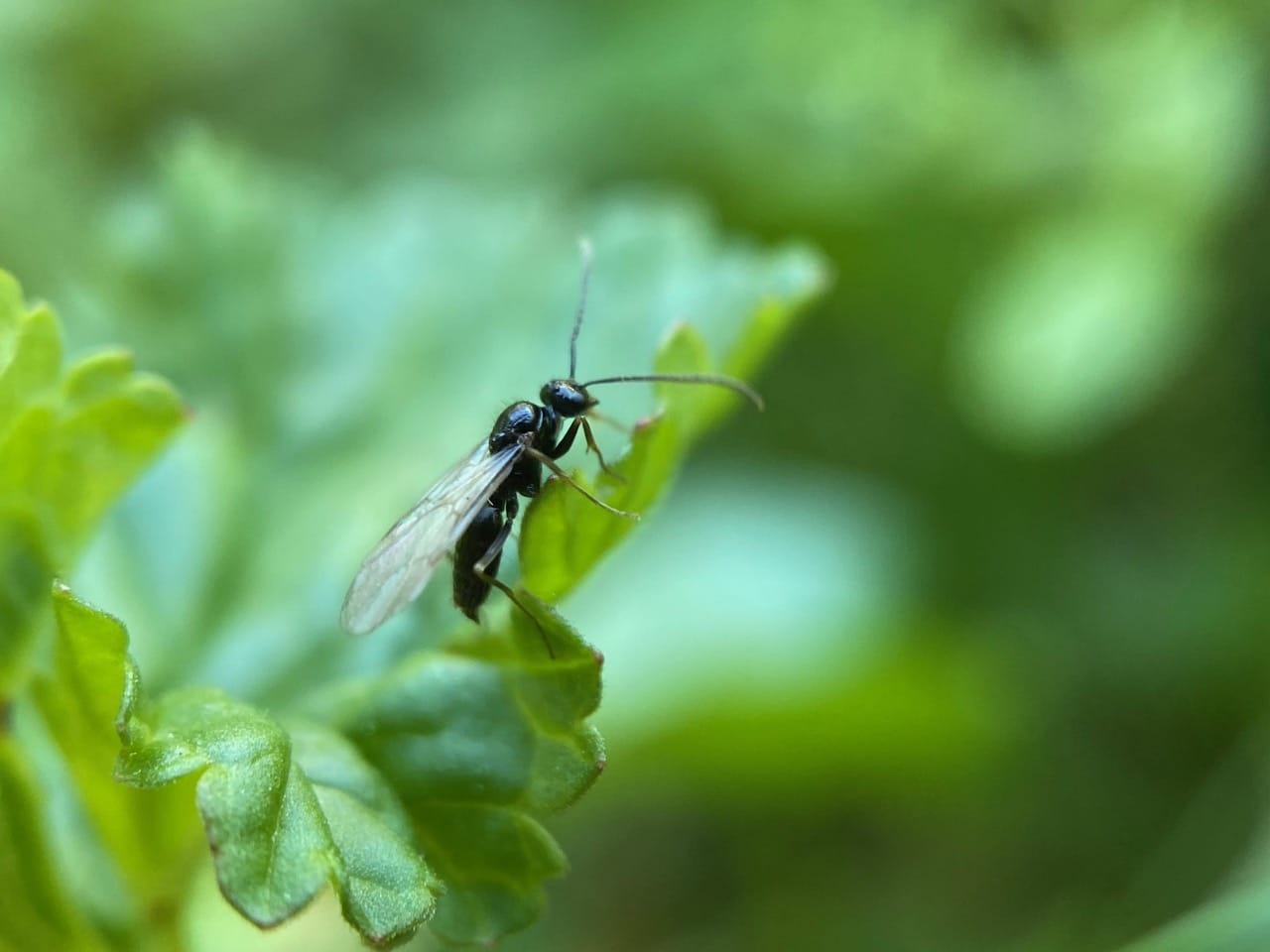
Now the male is even more frantic. He checks out every nook and cranny of the leaf.
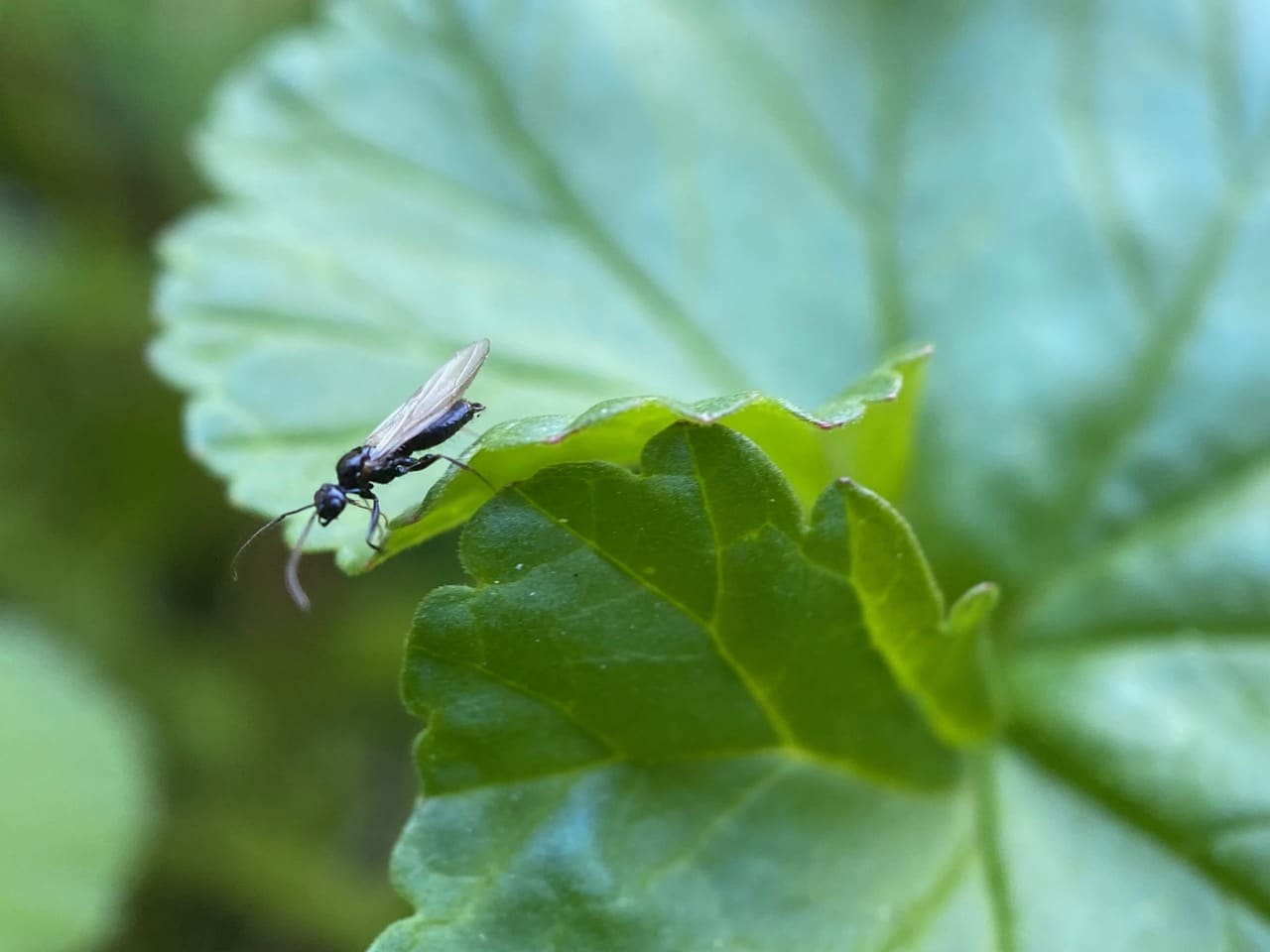
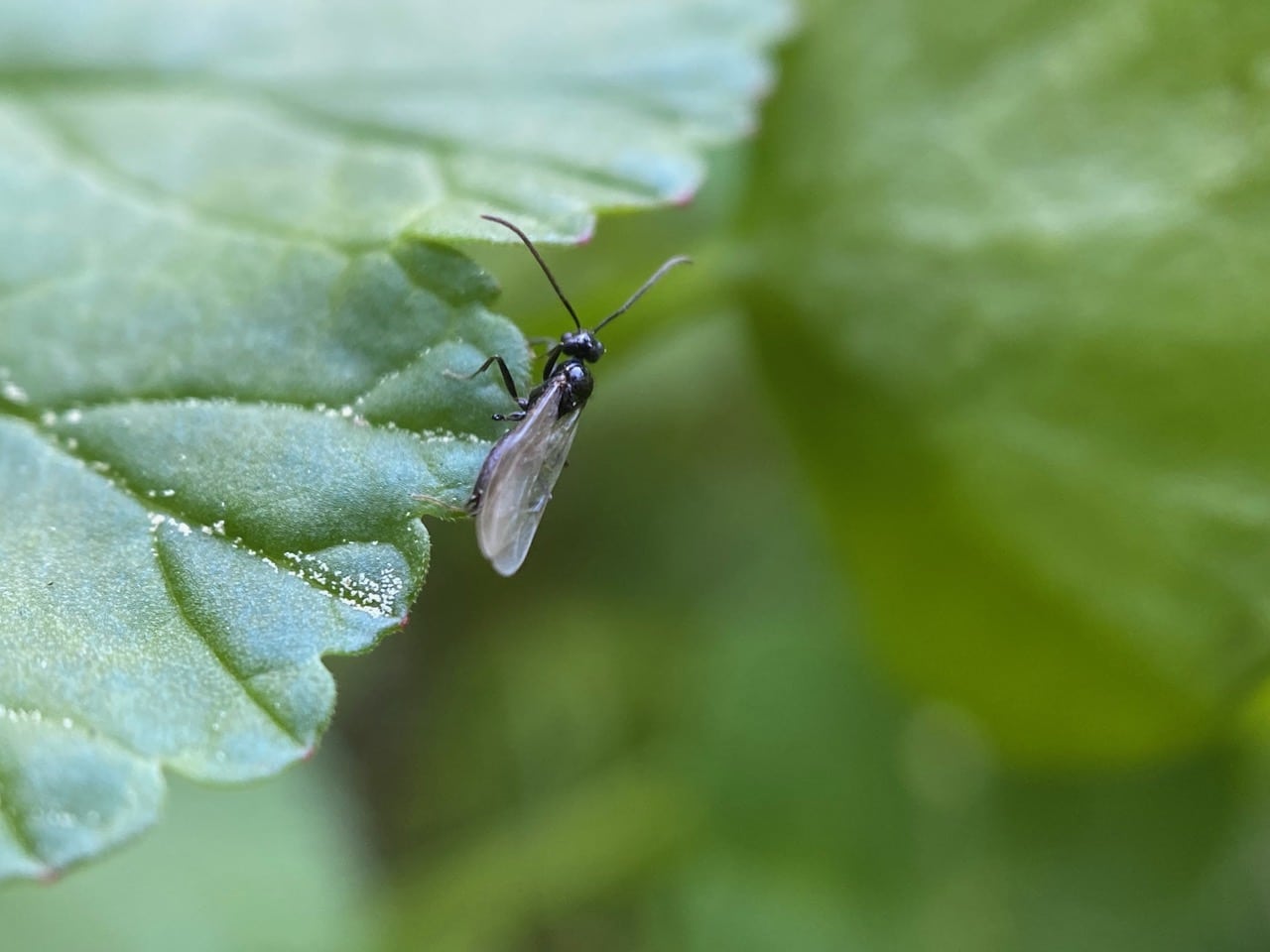
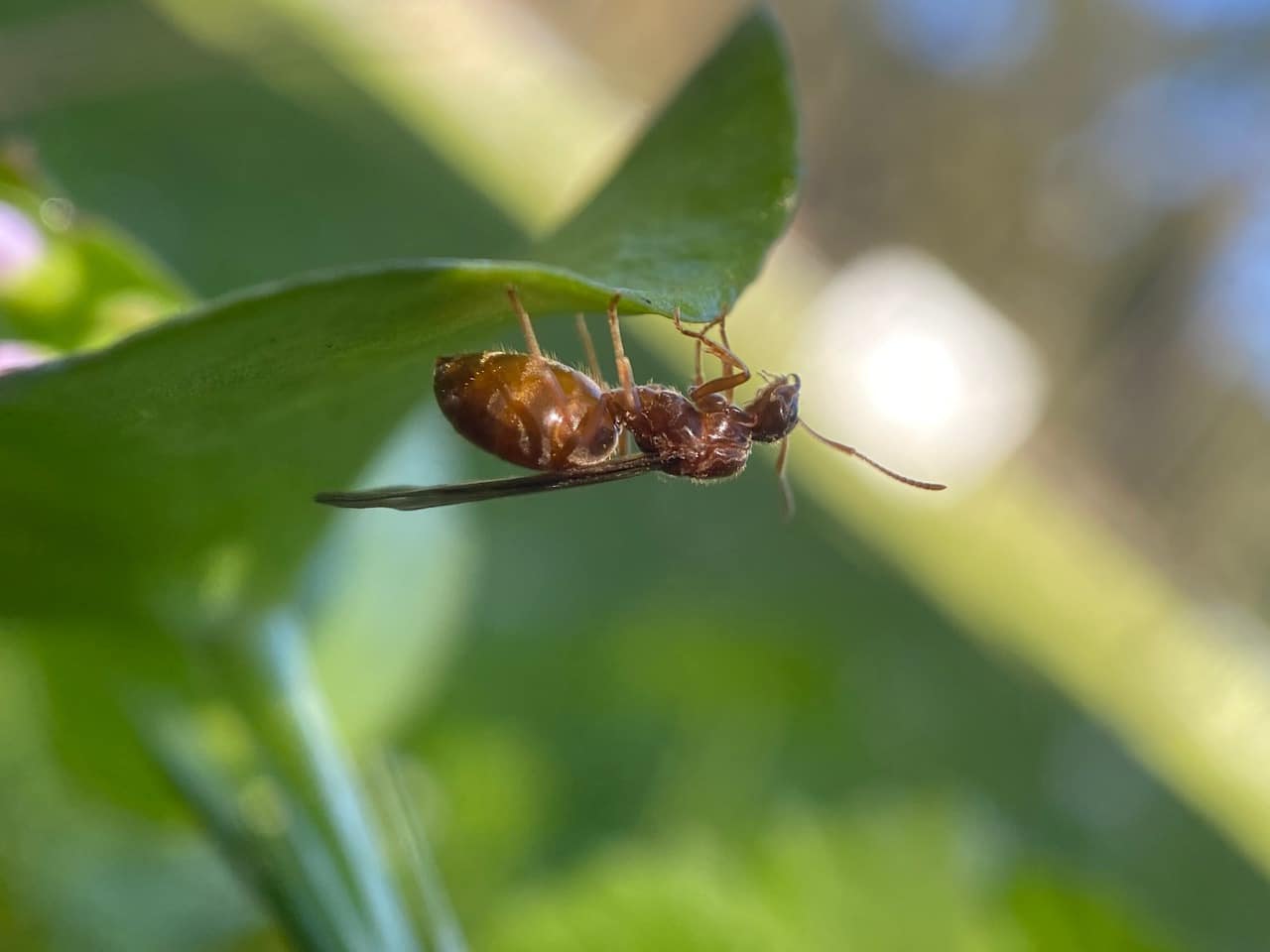
The queen has found another place to perch, hanging under a Miner’s Lettuce leaf. She must be cautious, being large and conspicuous, surely the target of many a hungry predator.
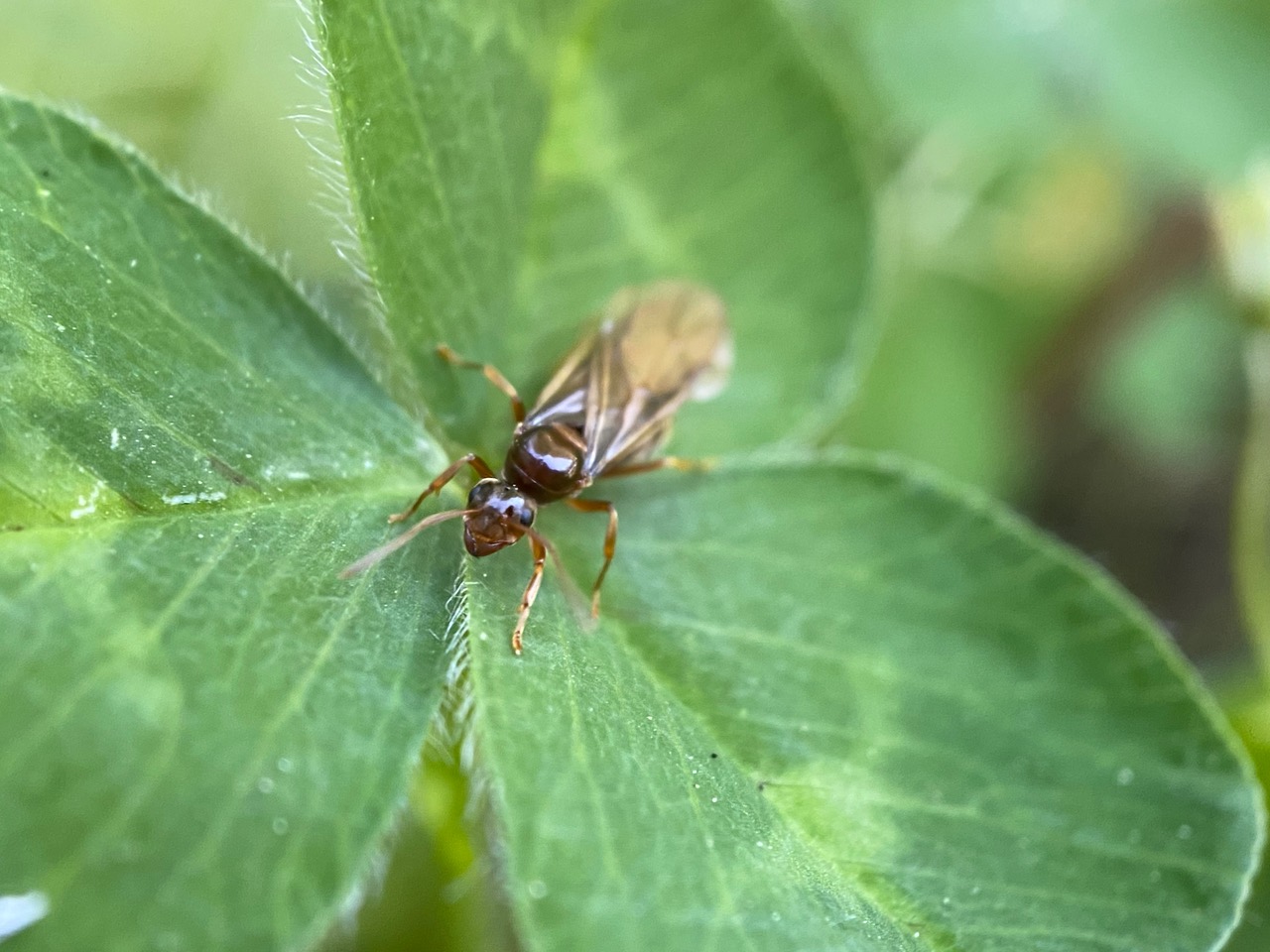
I find another queen ant scrambling around among the clovers.
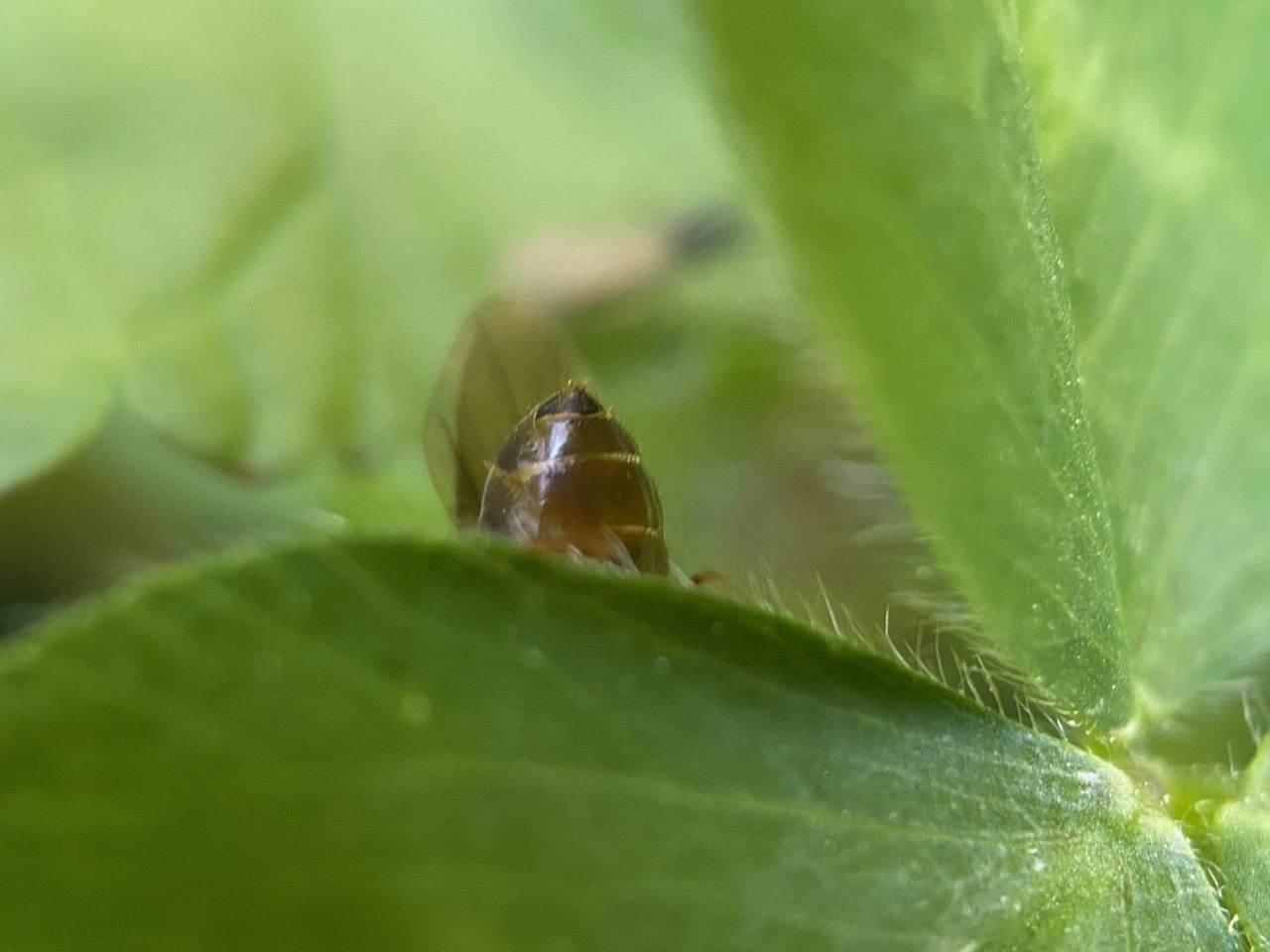
Eventually she assumes this awkward position behind a leaf with only the tip of her abdomen visible. Meanwhile a male is running amok, approaching her.

Again, I only get a blurry view of the intimate moment before the couple tumbles into the undergrowth. Alas! Hope the mating is successful and that the queen goes on to establish a new colony.

In the same small patch of weedy vegetation by the horse arena, two Hybotid Dance Flies are feeding on a Chickweed flower, Stellaria media.
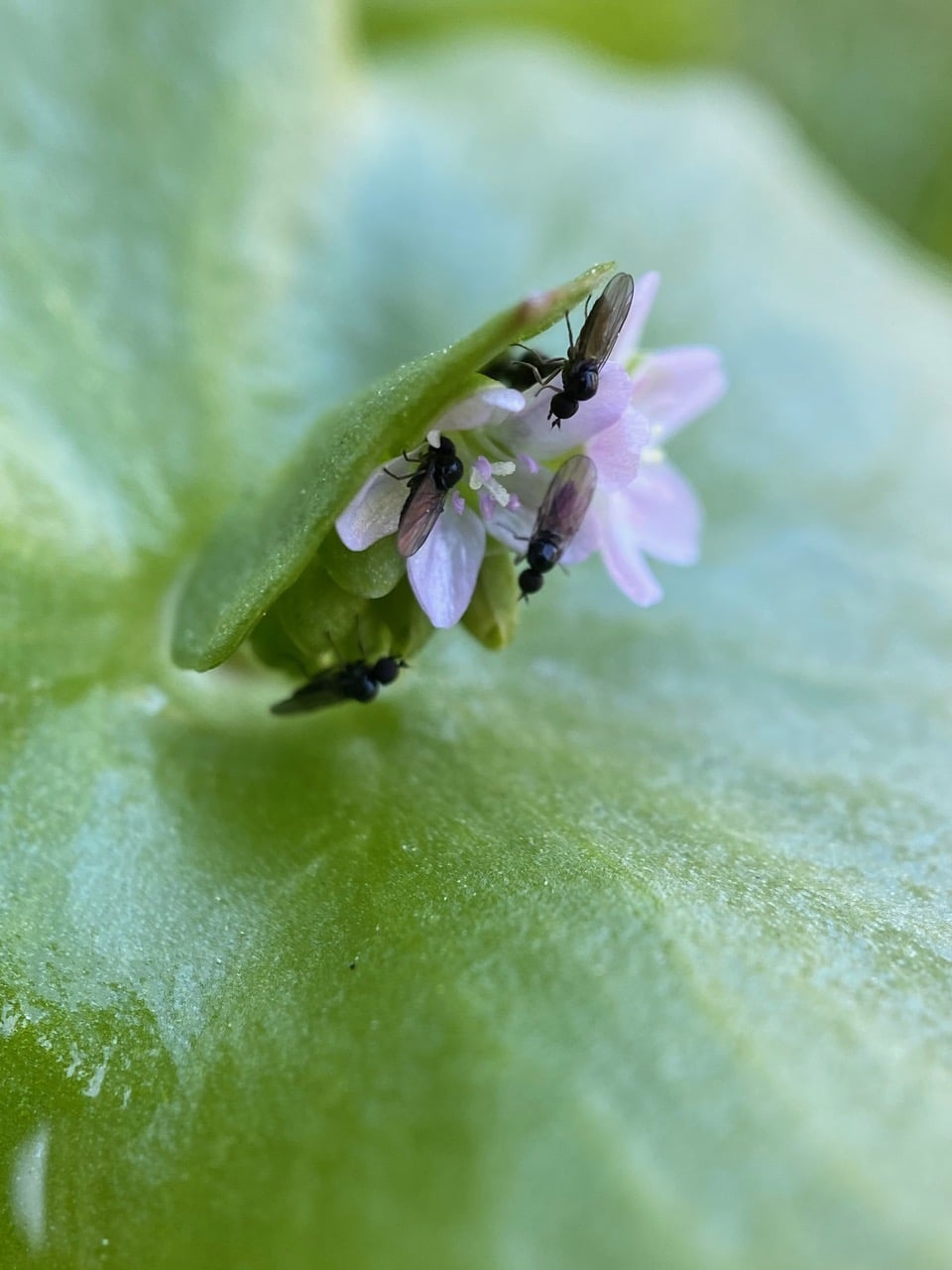
As evening approaches, the Hybotid Dance Flies gather on the Miner’s Lettuce flowers in large numbers. I think this is how they spend the night.

Hybotid Dance Flies on a Woodland Strawberry flower, Fragaria vesca.
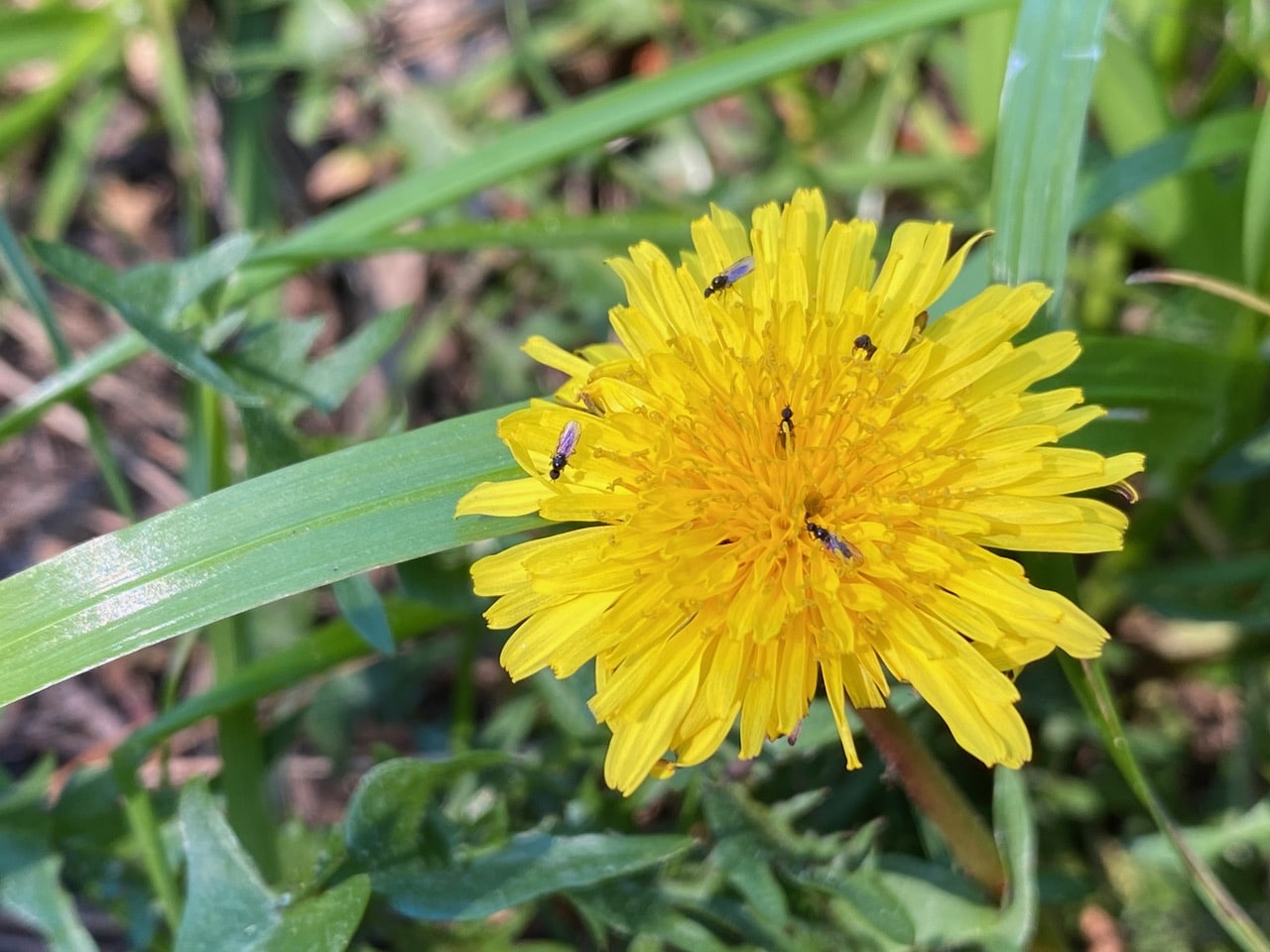
In an open weedy patch, the Hybotid Dance Flies are all over the Dandelion flowers.
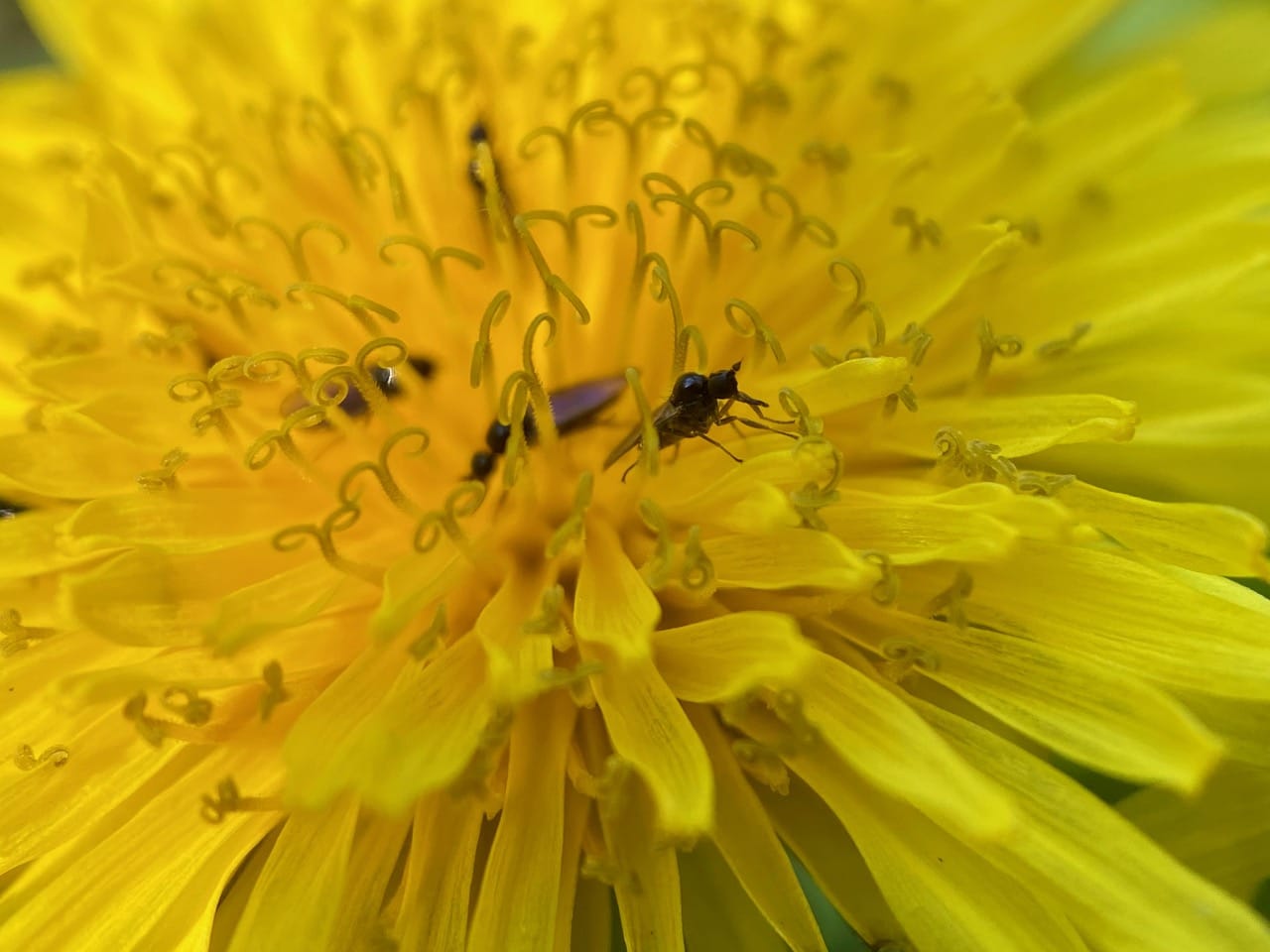
Some of the flies go deep into the Dandelion flowerhead, probably to access nectar.


Making my way out of the preserve in the fading light of late afternoon, I spot a chunky little fly on a leaf and decide to try for a last photo. It turns out to be quite an interesting fly!
The Tiger Fly, Coenosia tigrina (family Muscidae) is also known as Hunter Fly or Killer Fly. Native to Europe, the fly was introduced in the early 1800s. Tiger Flies only attack flying prey. Potential prey are caught only in mid-air with its front legs. While holding the prey in its front legs, the Tiger Fly punctures the insect with specialized proboscis, and eats the insides of the prey, leaving the carcass behind. When food is scarce, the flies may turn on each other. Adult females lay eggs in the soil where the larvae feed on earthworms.