

Pollinator Post 3/18/25 (2)
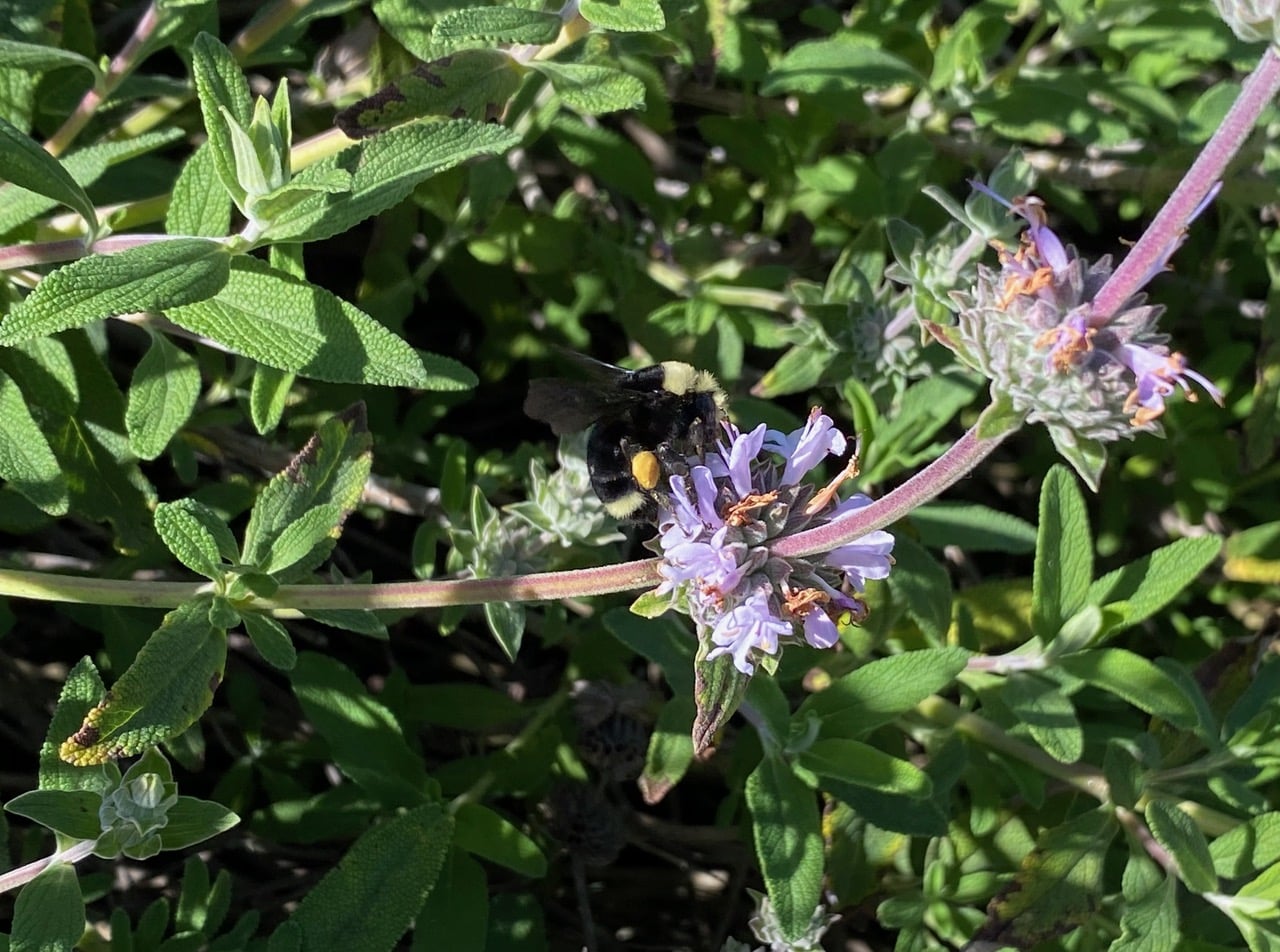
A large queen Yellow-faced Bumble Bee, subgenus Pyrobombus (genus Bombus, family Apidae) lands on a whorl of sage flowers, Salvia sp. to take nectar. She has obviously been busy foraging – there’s some yellow pollen in her pollen baskets. I am so glad to see her. I have wondered how the queen bumble bees fared during last week’s cold and wet weather. This is a crucial period of their lives. Freshly awake from their hibernation, they have to forage for themselves, find a nest site, lay eggs and raise the first batch of worker bees all by themselves. The successful establishment of new colonies this year is totally dependent on these queens.

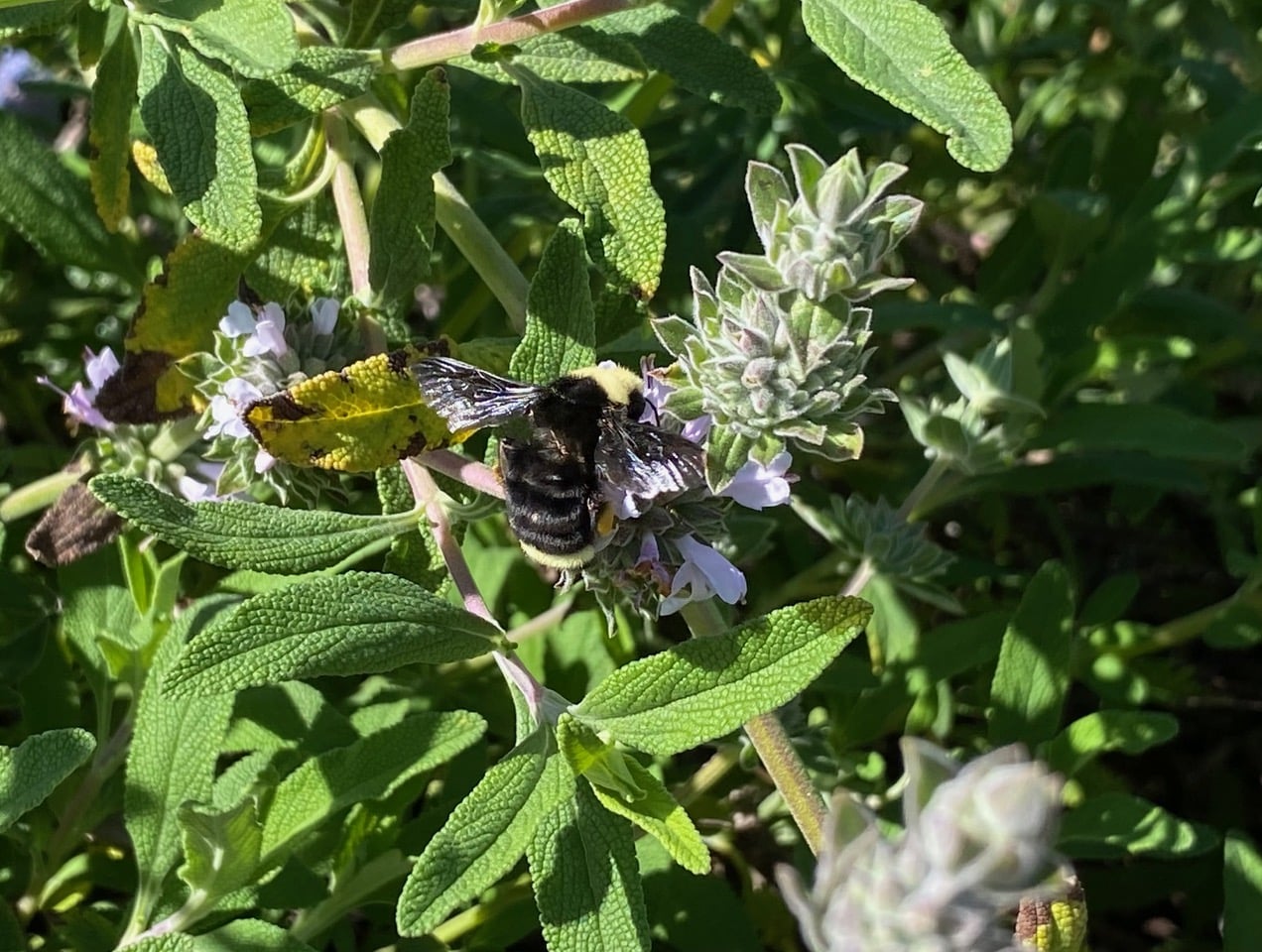



Bumble bees are social and live in colonial hives. Many of the large individuals seen early in the season are queens. They are the only members of their colony to survive the winter, hibernating until the days begin to warm and their host plants are in bloom. These queens have mated before they went into hibernation. Now their first order of business is to each find a nesting site (usually an abandoned rodent burrow), lay eggs, brood and nurture the first batch of workers. Thereafter, the queens stay behind in the hive to concentrate on laying eggs while the workers take on hive duties and foraging. Bumble bees are among the most cold tolerant bees, and are usually the first bees we see out foraging.
Ooh, this might be another queen Yellow-faced Bumble Bee! She is foraging on a young spike of Sage flowers.
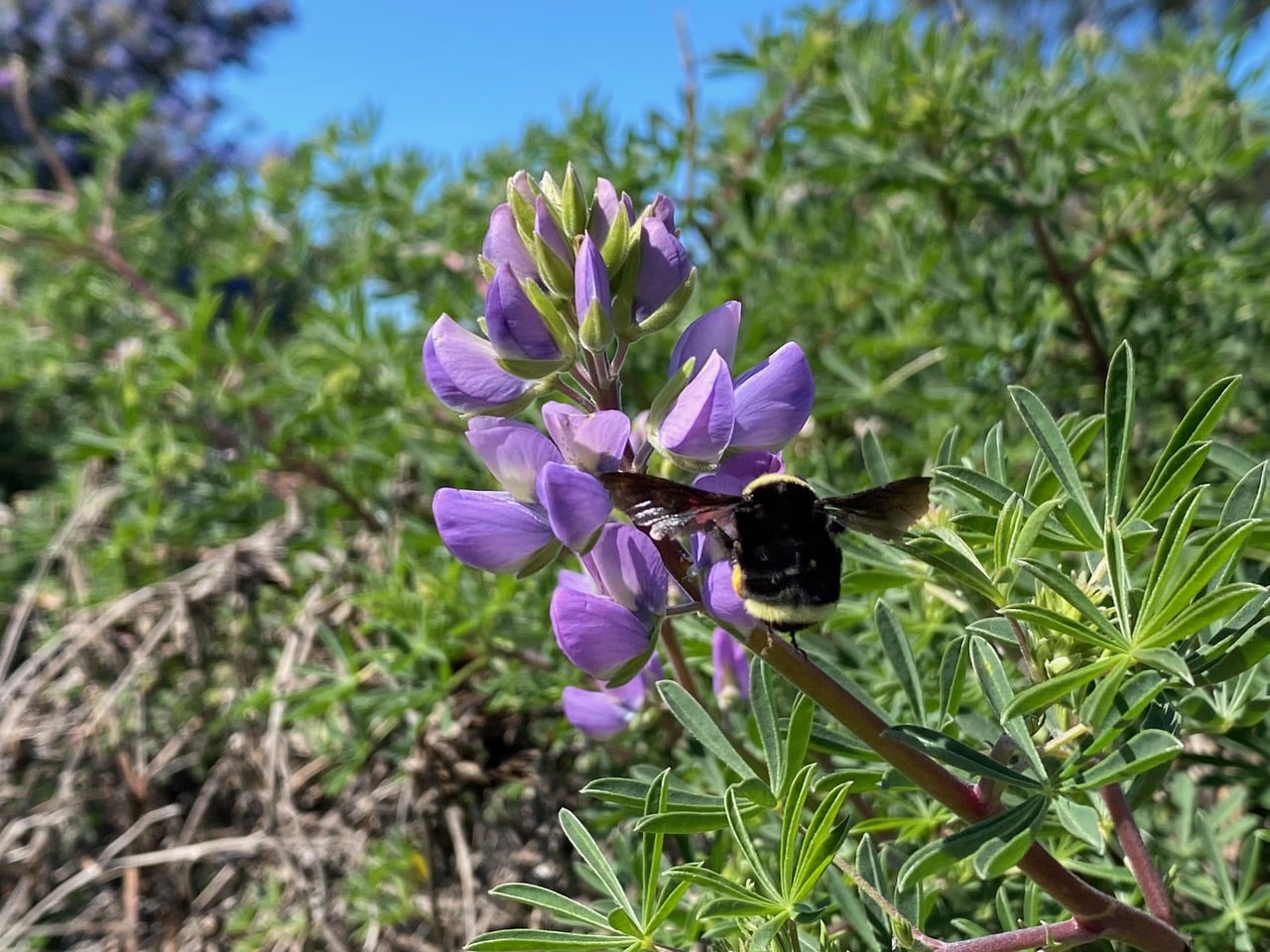
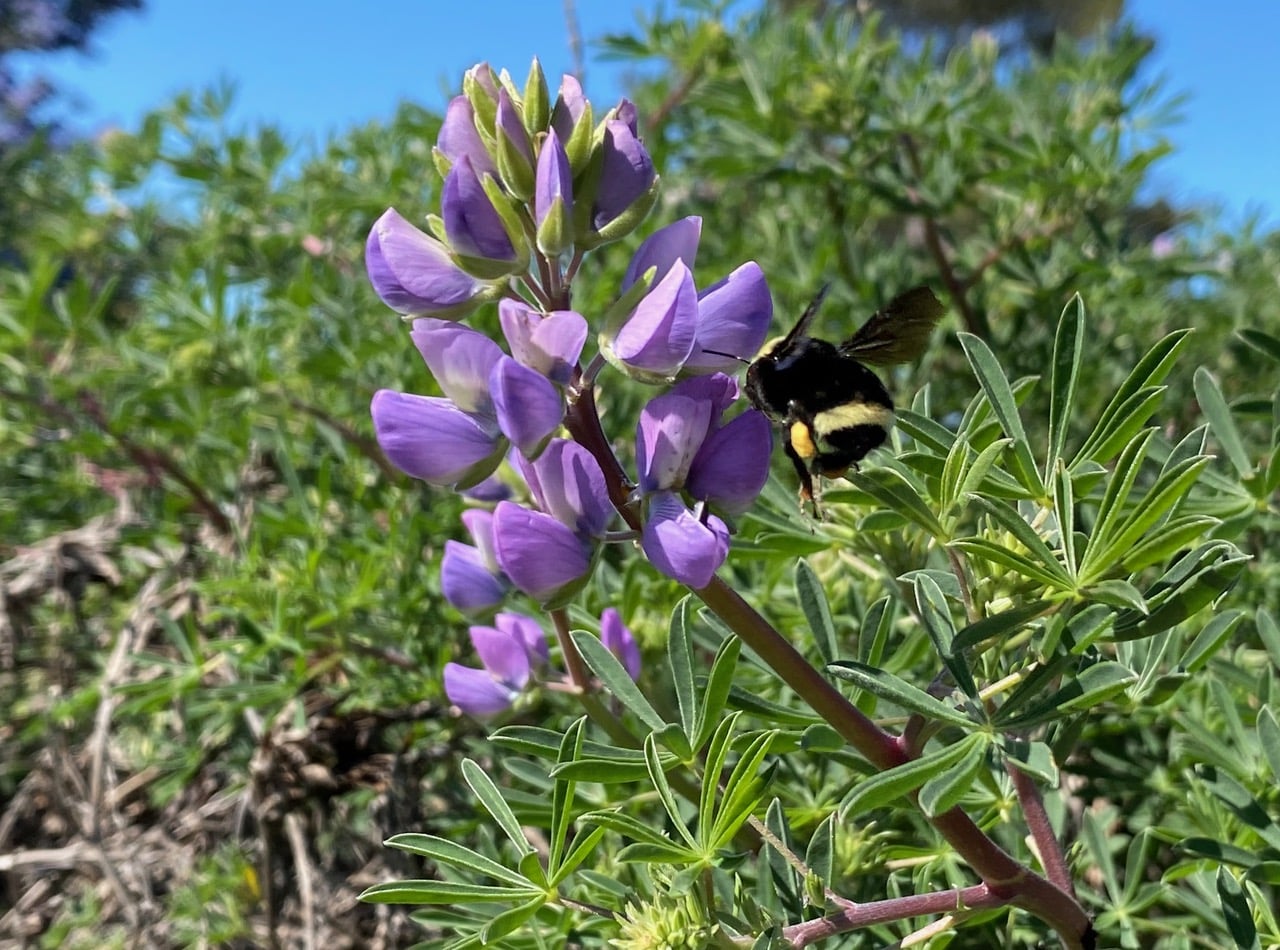
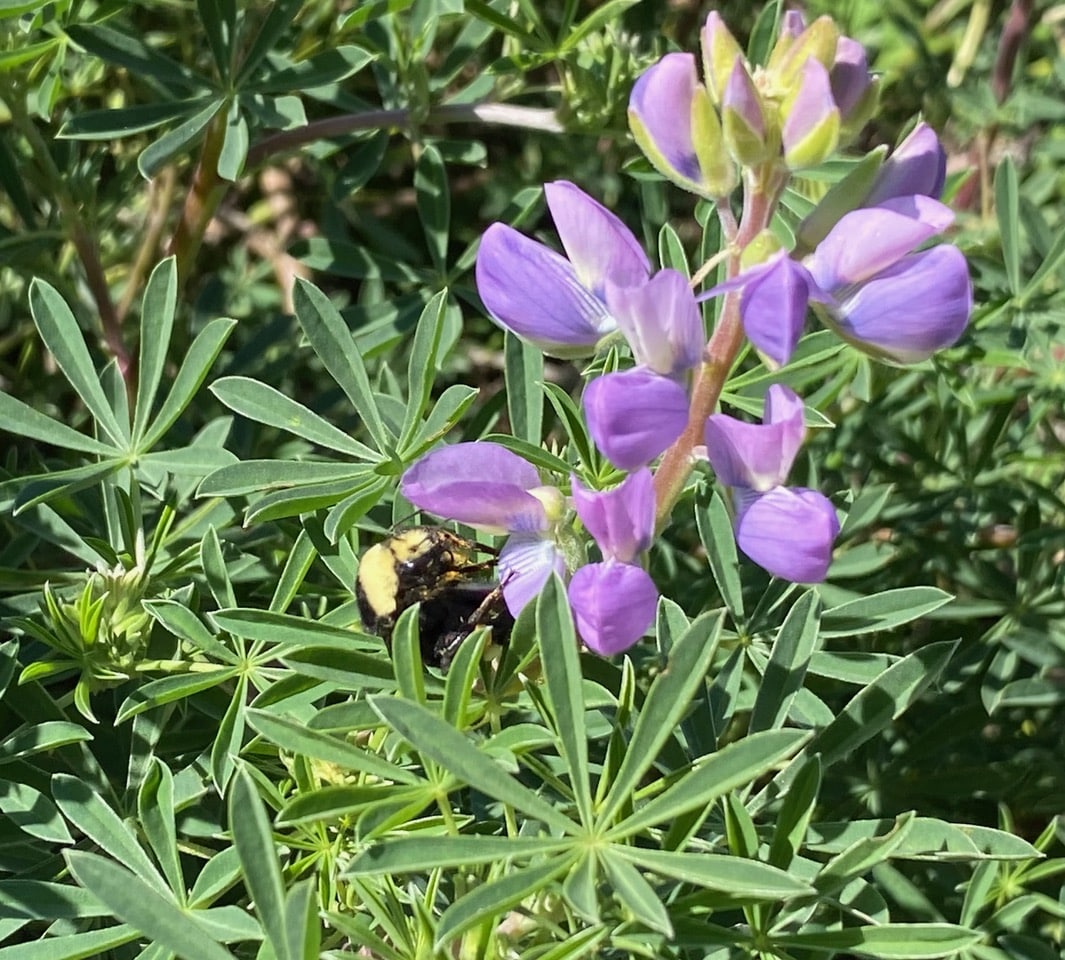
The queen Bumble Bee next visits an inflorescence of an adjacent Coastal Bush Lupine, Lupinus arboreus that is just coming into bloom. She lands on one of the lowest flowers on the spike. Her weight lowers and spreads apart the pair of wing petals she has landed on.
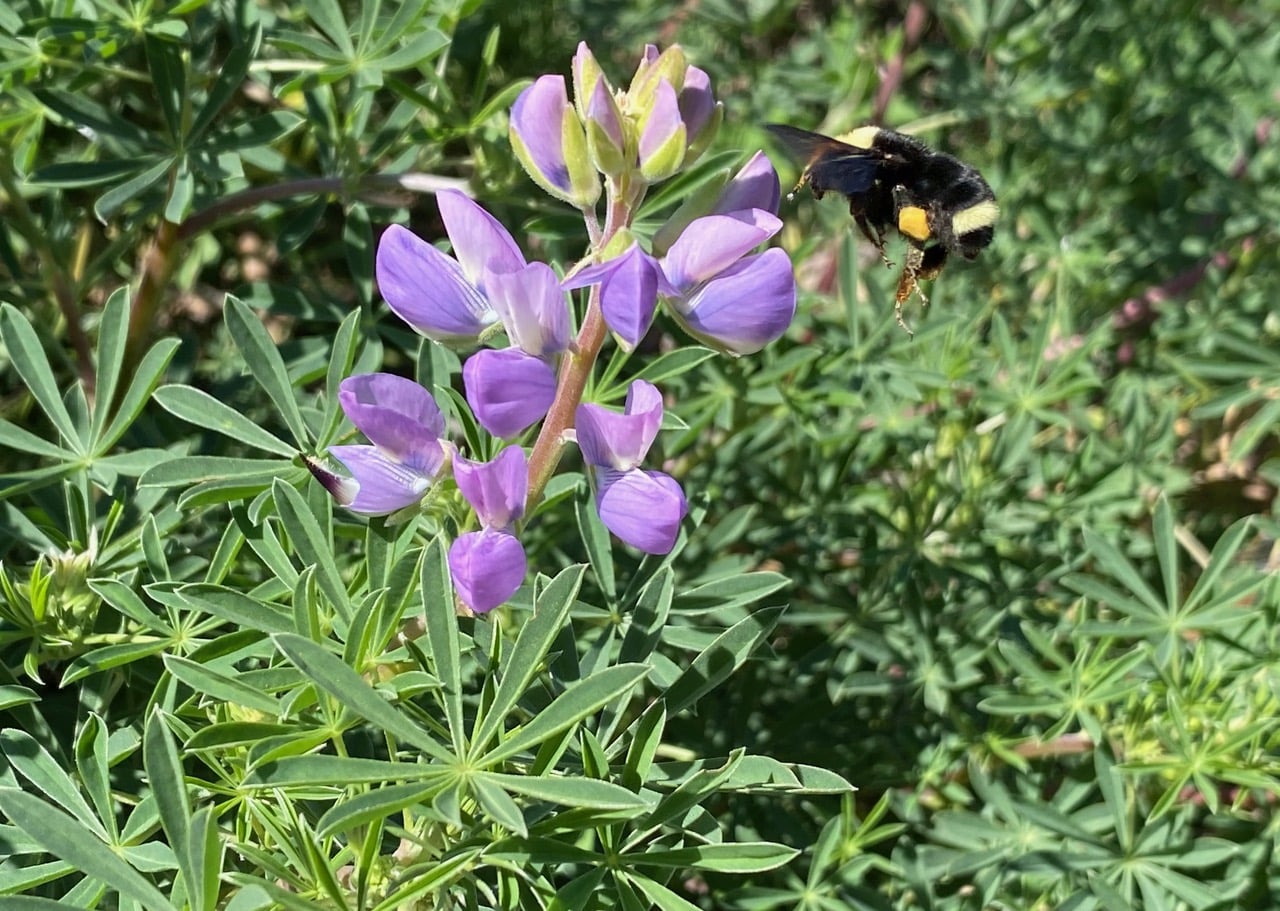
As she bounces up from the flower, I notice that her right wing is already quite worn out on the edges.
Note that the dark and sharp-tipped keel has protruded from between the wing petals. It very quickly retreats to its original position, concealed by the wing petals.
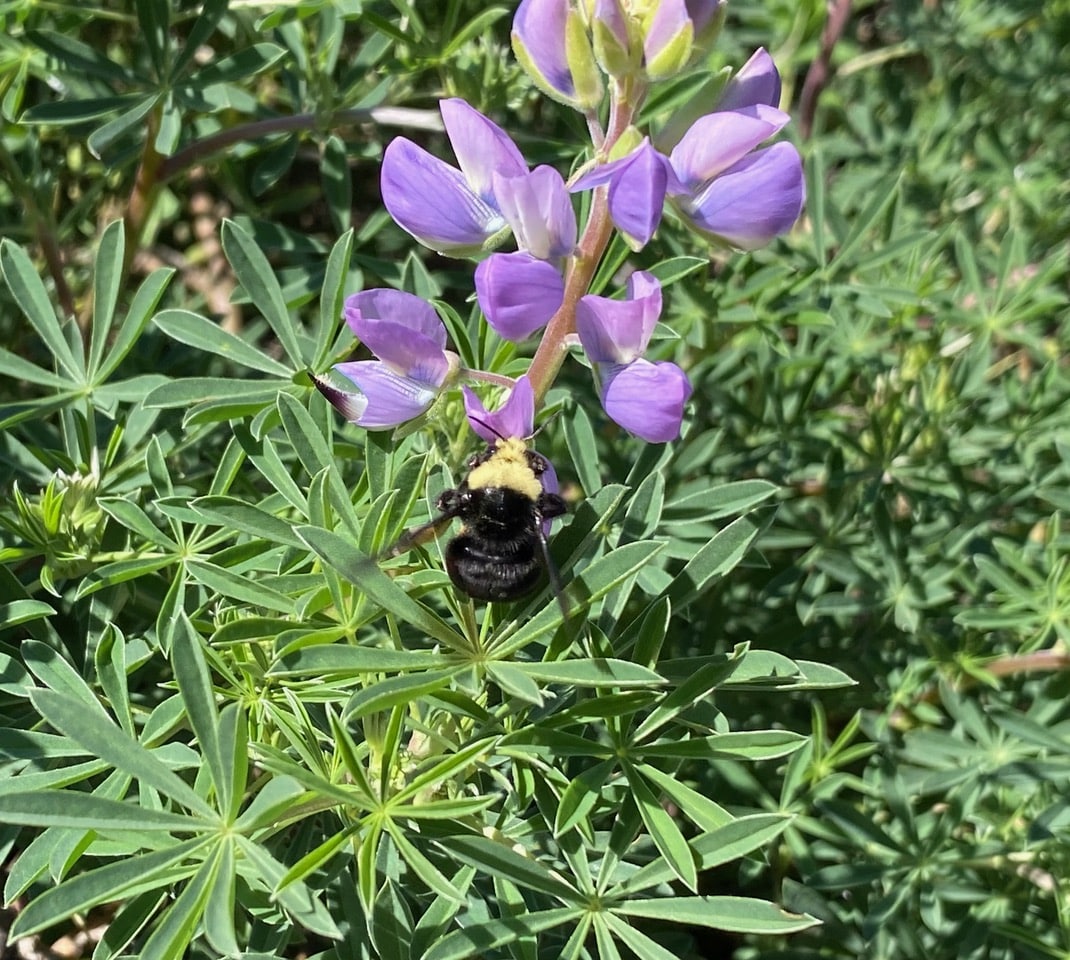
I watch as the bee visits several other lupine flowers, each time “tripping” the unique pollination mechanism. Here, her underside is being dabbed with yellow pollen from the reproductive structures that are extruded from within the exposed keel. Note the dark blue lines on the pale section of the wing petals and the banners (upper petals) – they converge toward the back of the flower and serve as ‘nectar guides’ showing the pollinators where the nectar is hidden. Bumble bees usually land on the lupine flowers with their tongues already extended and directed toward the nectary. While the bee sips nectar, the flower explosively serves up a blast of pollen from its stamens, and the flower’s stigma picks up whatever pollen is already on the bee’s underside. Pollination accomplished!
Here the bee lands on another lupine flower. To its left, there is a flower whose left wing petal has had its the front section chewed off, exposing the dark and sharp-tipped keel. That conveniently serves as a marker for us, helping to keep track of the flowers.
While the wing petals are lowered, the bee is sipping nectar from the back of the flower.
The bee bounces off the flower. Almost instantly the wing petals resume their original position, completely concealing the reproductive structures again.
Close-up of the chewed lupine flower. I wonder who did this? Probably a nectar or pollen thief who couldn’t get to the goodies the legitimate way. The dark and sharp-tipped keel is a special fused petal that forms an envelop enclosing the reproductive structures held under tension.