

Pollinator Post 3/17/23 (2)

More flowers have appeared on the Silverleaf Lupine, Lupinus albifrons at Diablo Bend.
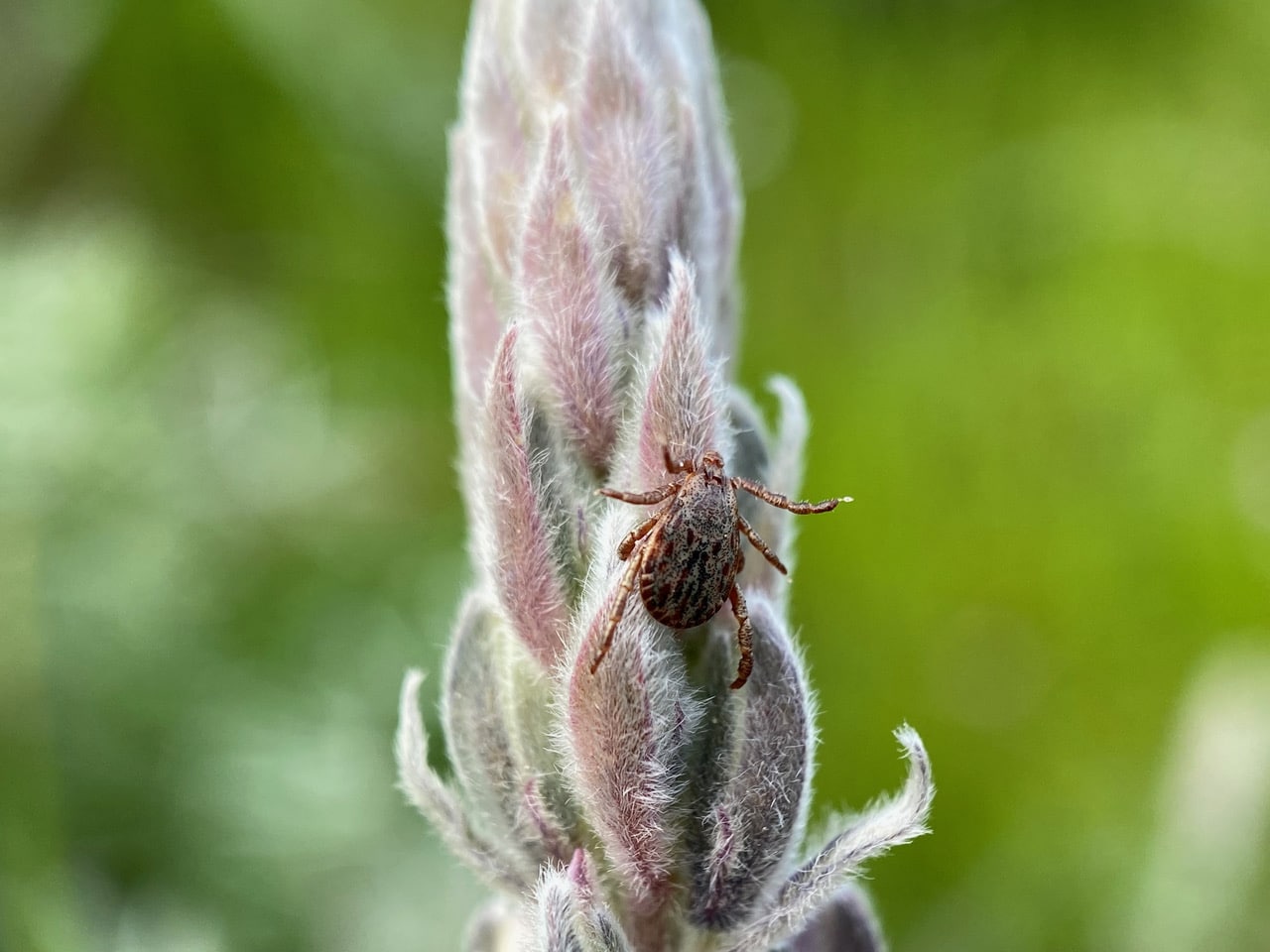

But, better watch out. Right by the trail, this Pacific Coast Tick, Dermacentor occidentalis is questing on an immature inflorescence of Silverleaf Lupine.
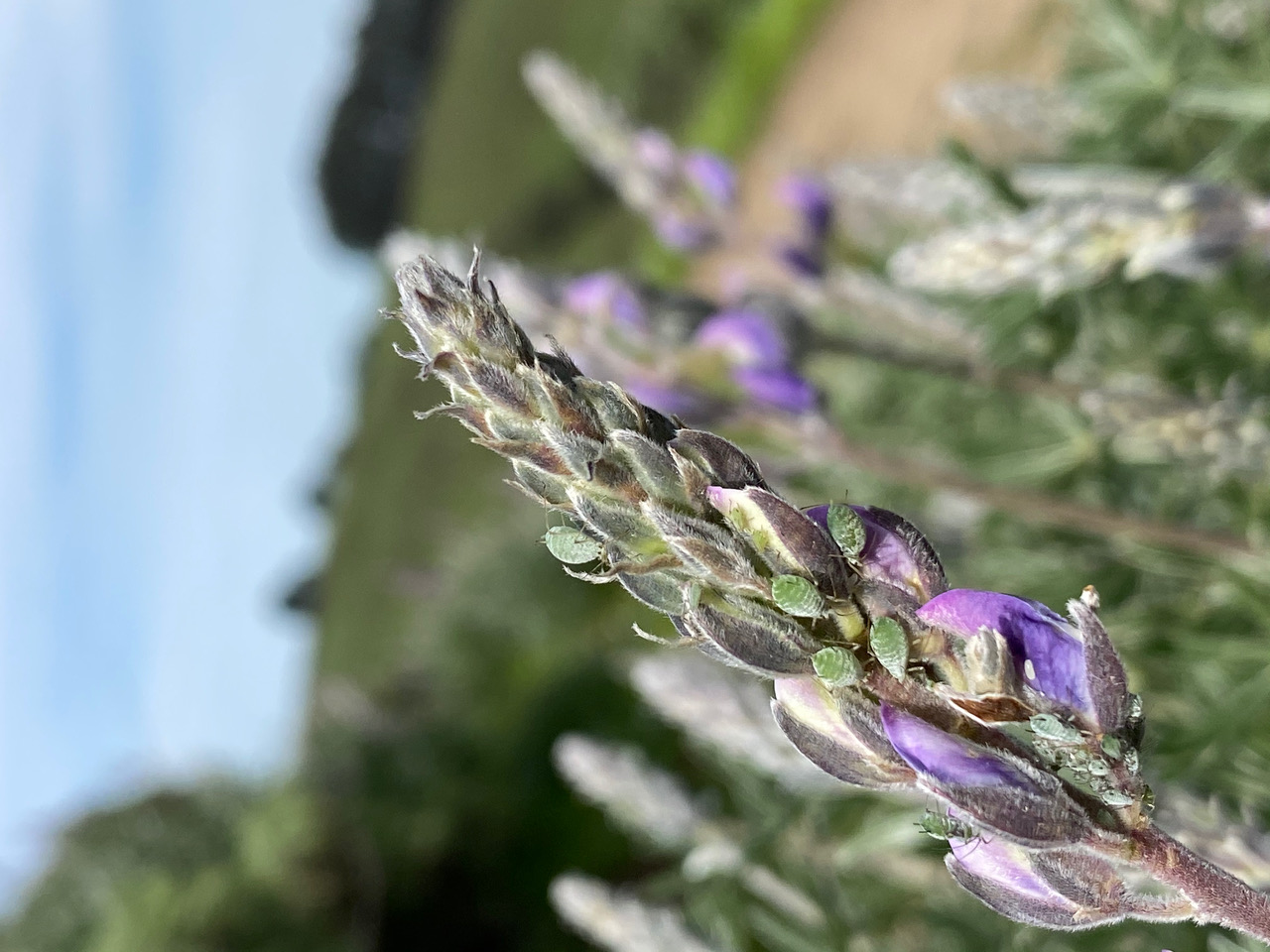
The Lupin Aphids, Macrosiphum albifrons (family Aphididae) have spread to all the inflorescences on this plant. Several generations have been propagated by cloning or asexual reproduction. Do you see an egg of a Hover Fly (family Syrphidae)? It looks like a miniature rice grain situated near the group of baby aphids at the base of the spike. Female Syrphids tend to lay their eggs among or near aphid colonies to ensure that their young would have plenty to eat when they hatch out. Syrphid larvae are voracious aphid predators.
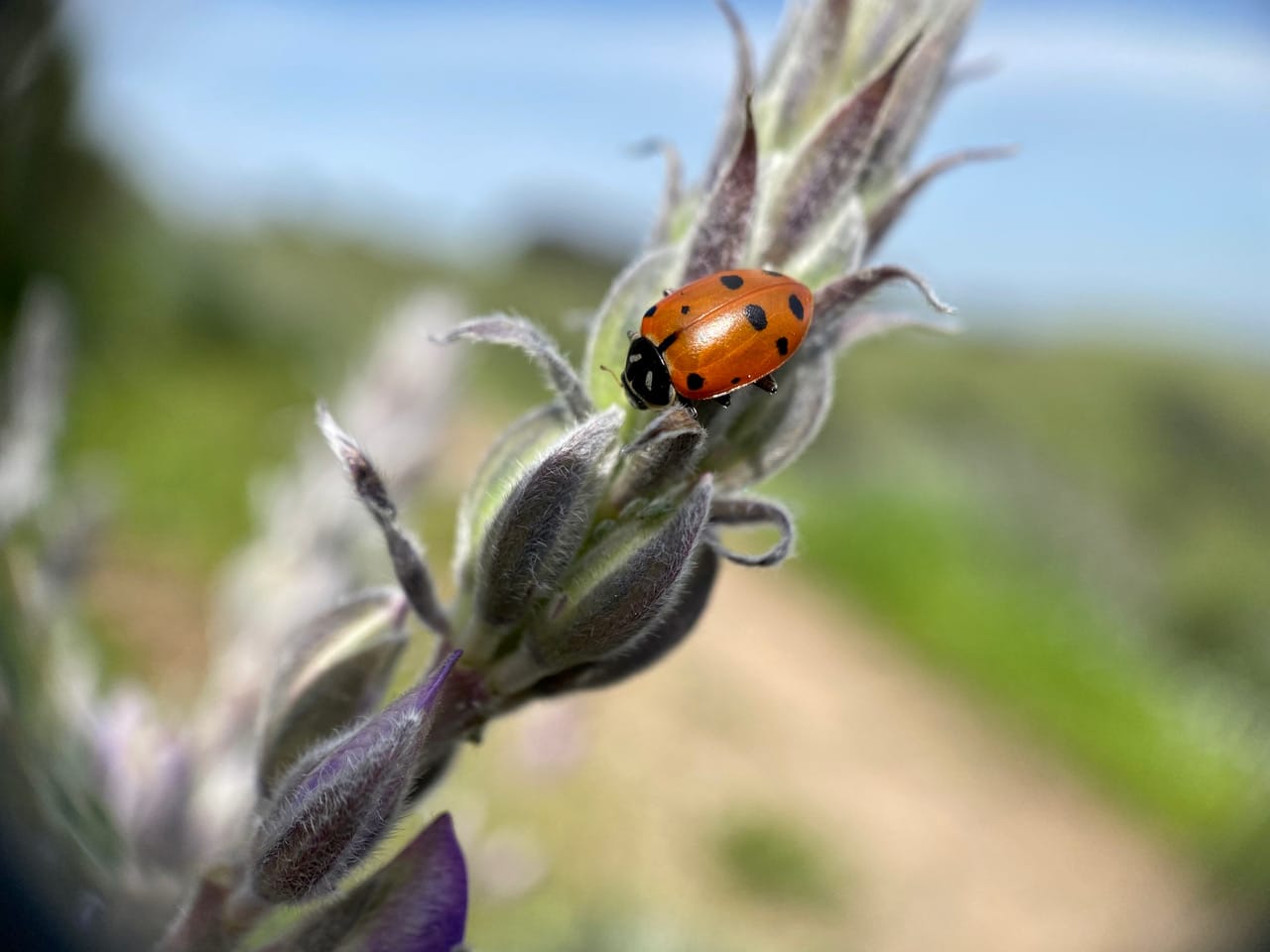
Another aphid predator is here for the feast – a Convergent Lady Beetle, Hippodamia convergens (family Coccinellidae).
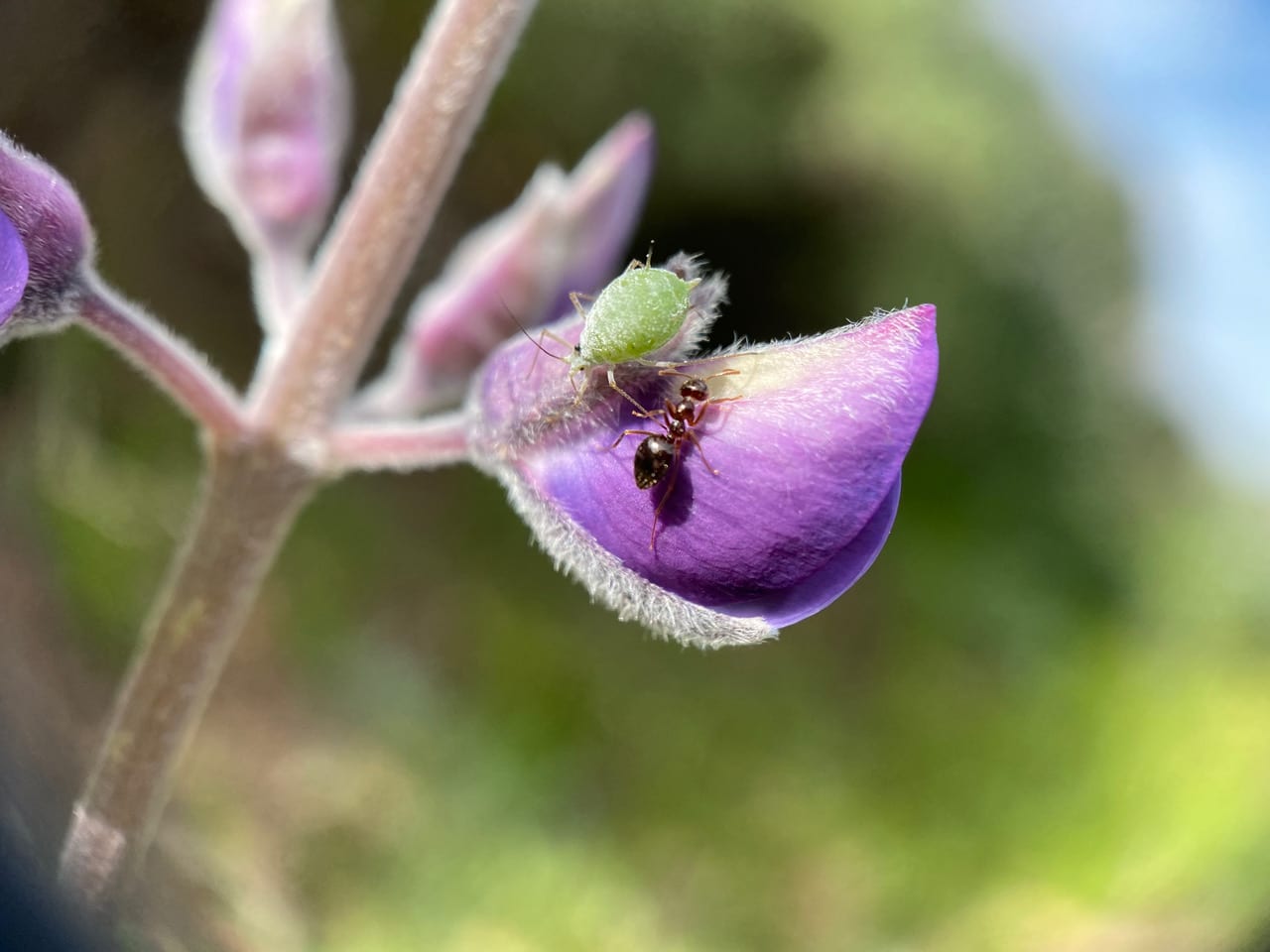
An American Winter Ant, Prenolepis imparis is slowly approaching a large Lupin Aphid, Macrosiphum albifrons on a lupine flower bud. What is the ant after? Honeydew, of course.
Honeydew is a sugar-rich sticky liquid, secreted by aphids and some scale insects as they feed on plant sap. When their mouthpart penetrates the phloem, the sugary, high-pressure liquid is forced out of the anus of the aphid. Yums!
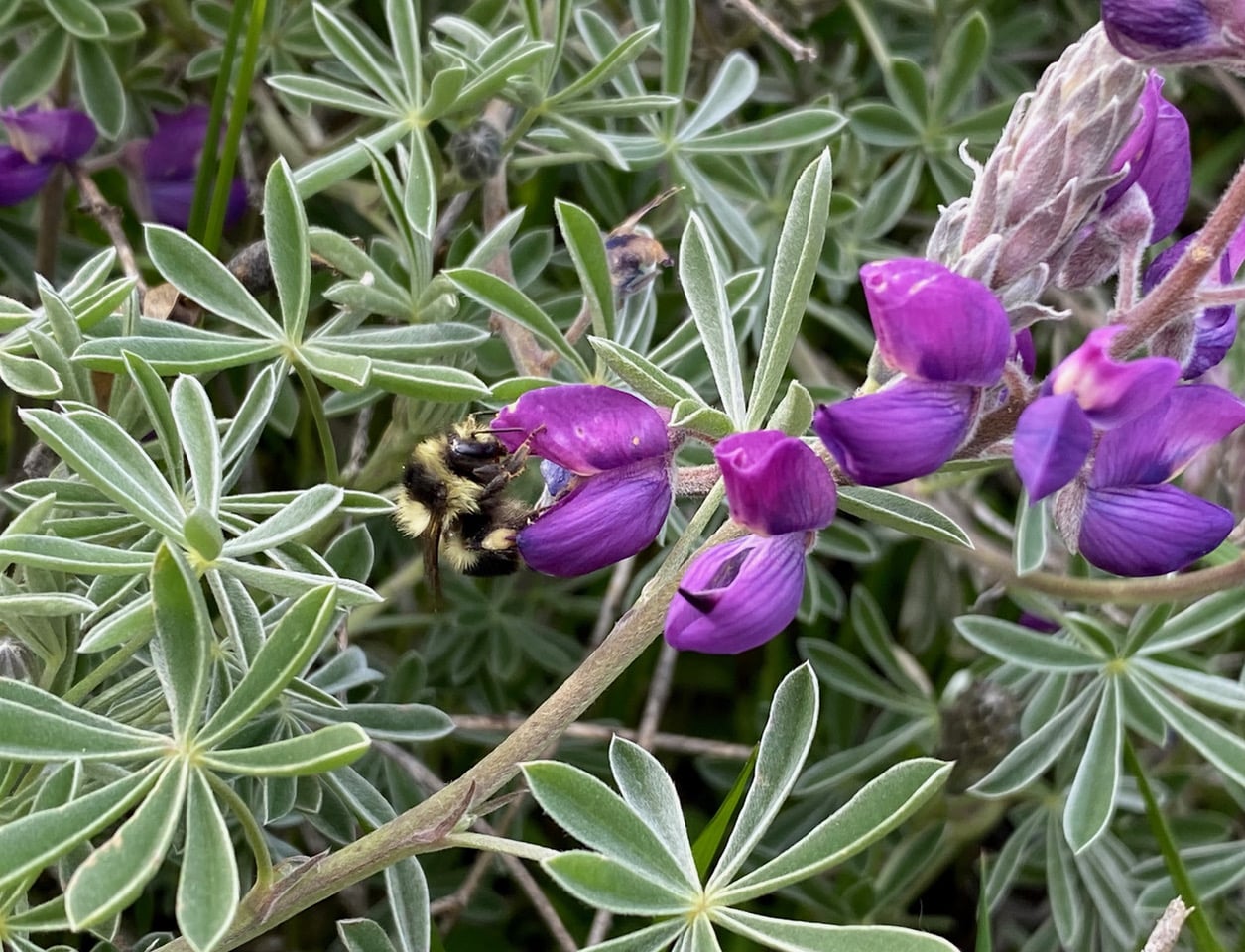
A Black-tailed Bumble Bee, Bombus melanopygus comes in for a landing, guided by the lupine flower. See those dark lines on the wing petals that converge toward the base of the petals where the nectar is stored? Commonly referred to as “nectar guides”, these markings serve to guide pollinators to their sweet reward. Bumble bees invariably land on the horizontal surface on top of the wing petals with their tongue extended, ready to sip nectar.
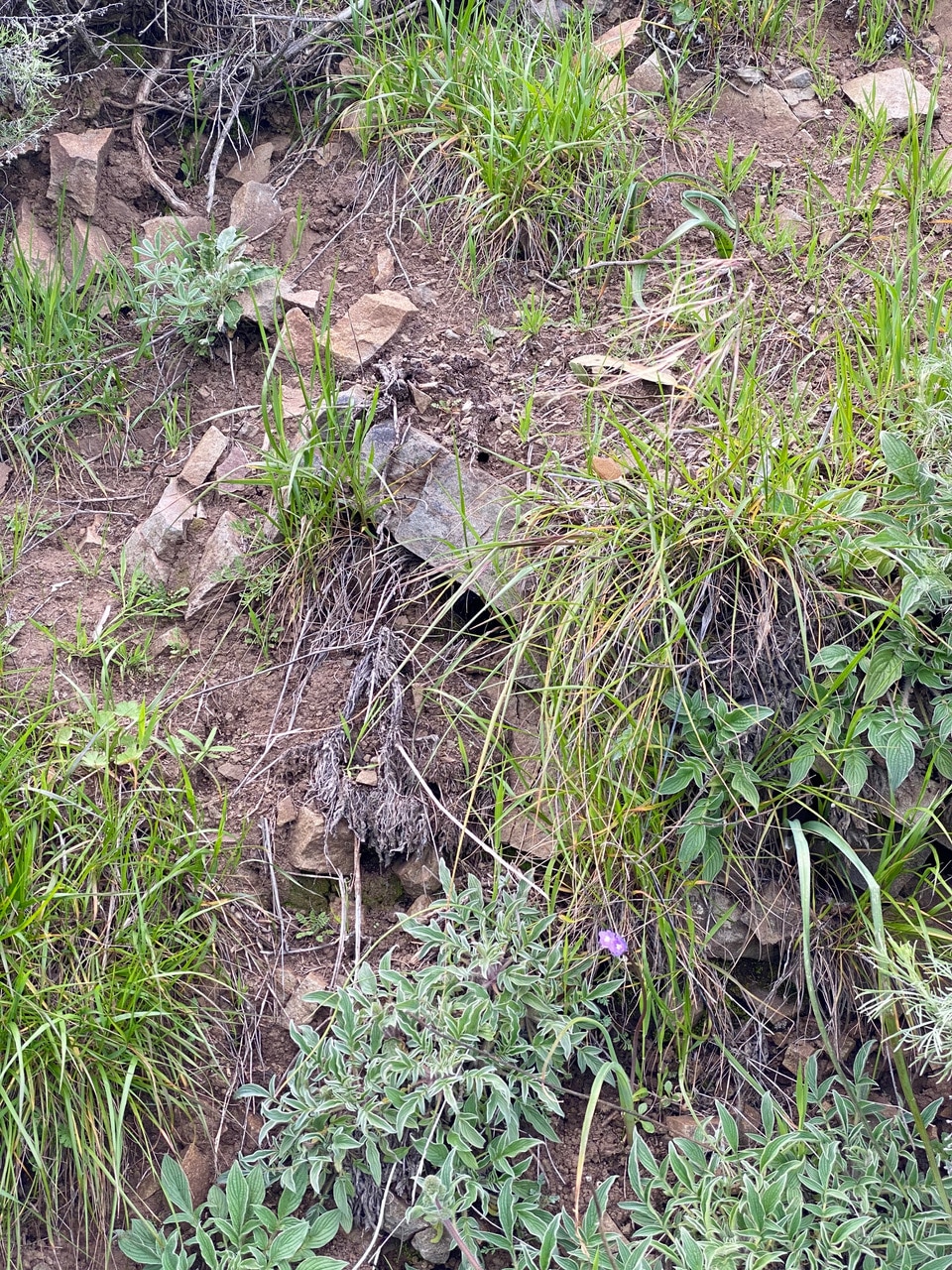
A Digger Bee (tribe Anthophorini, family Apidae) flies around me in large circles, buzzing loudly. I look up to see a hole on top of a large rock on the bank right in front of me. Is that the bee’s nest? Is that why she’s so annoyed with me? The hole is less than two feet from the other bee burrow I discovered on 3/15. Although these ground-nesting bees are solitary, they tend to nest in aggregations.
The bee makes a bee line for the hole (puns fully intended), and disappears swiftly into it as I watch.
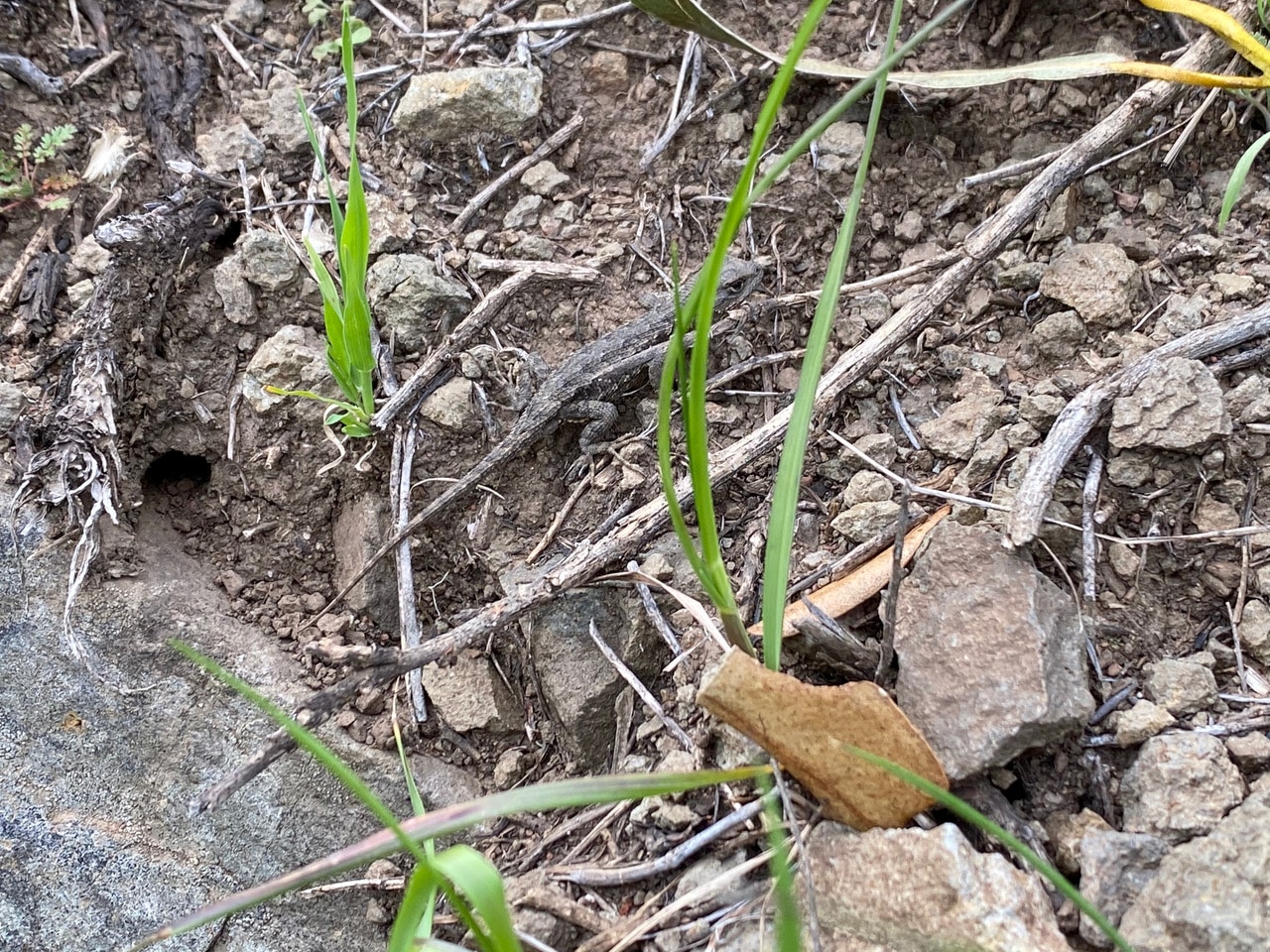
In a split second, a young Fence Lizard lunges toward the bee but misses. When I recover enough from the shock to take a picture, the lizard is sprinting away. Was it waiting in ambush outside the bee’s burrow?
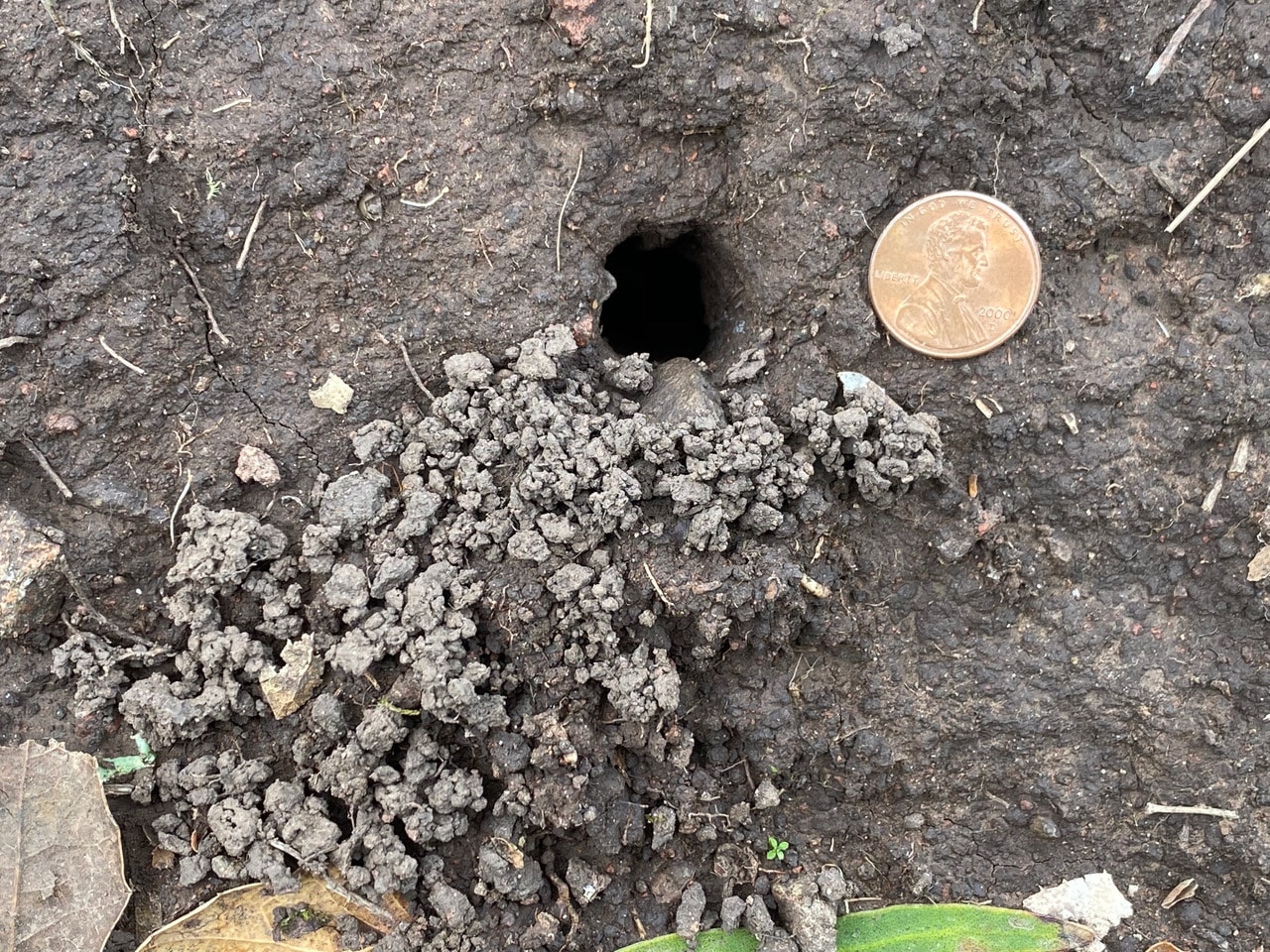
This burrow is on the ground, on the edge of the trail. Its owner has been busy house-cleaning after the rains, dumping clods of soil outside the entrance. Is it the nest of a False Tarantula, Calisoga longitarsis? I can’t be sure as I don’t see any silk lining the burrow.
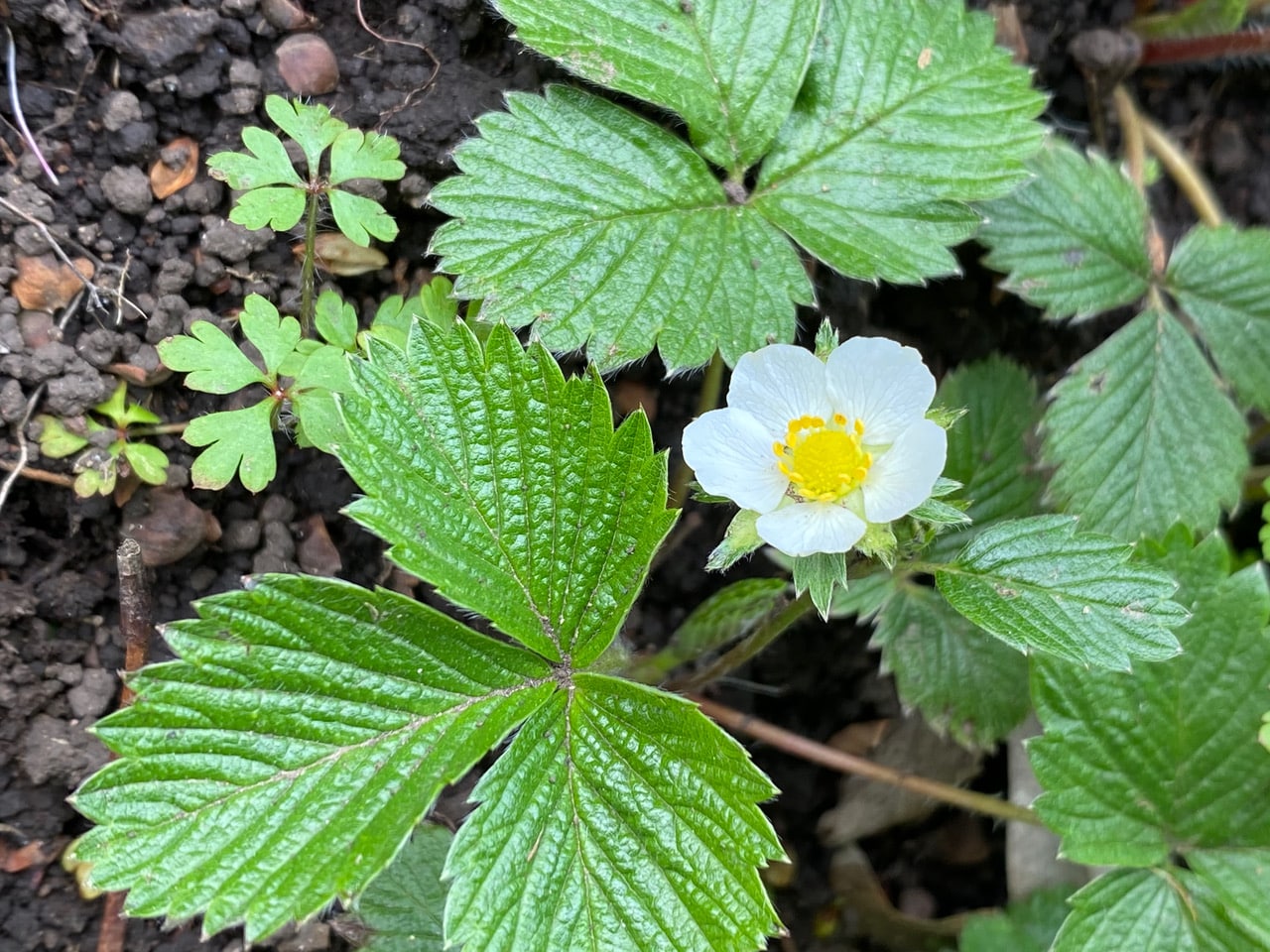
Aah, the Wood Strawberry, Fragaria vesca is blooming!