

Pollinator Post 3/16/23 (2)

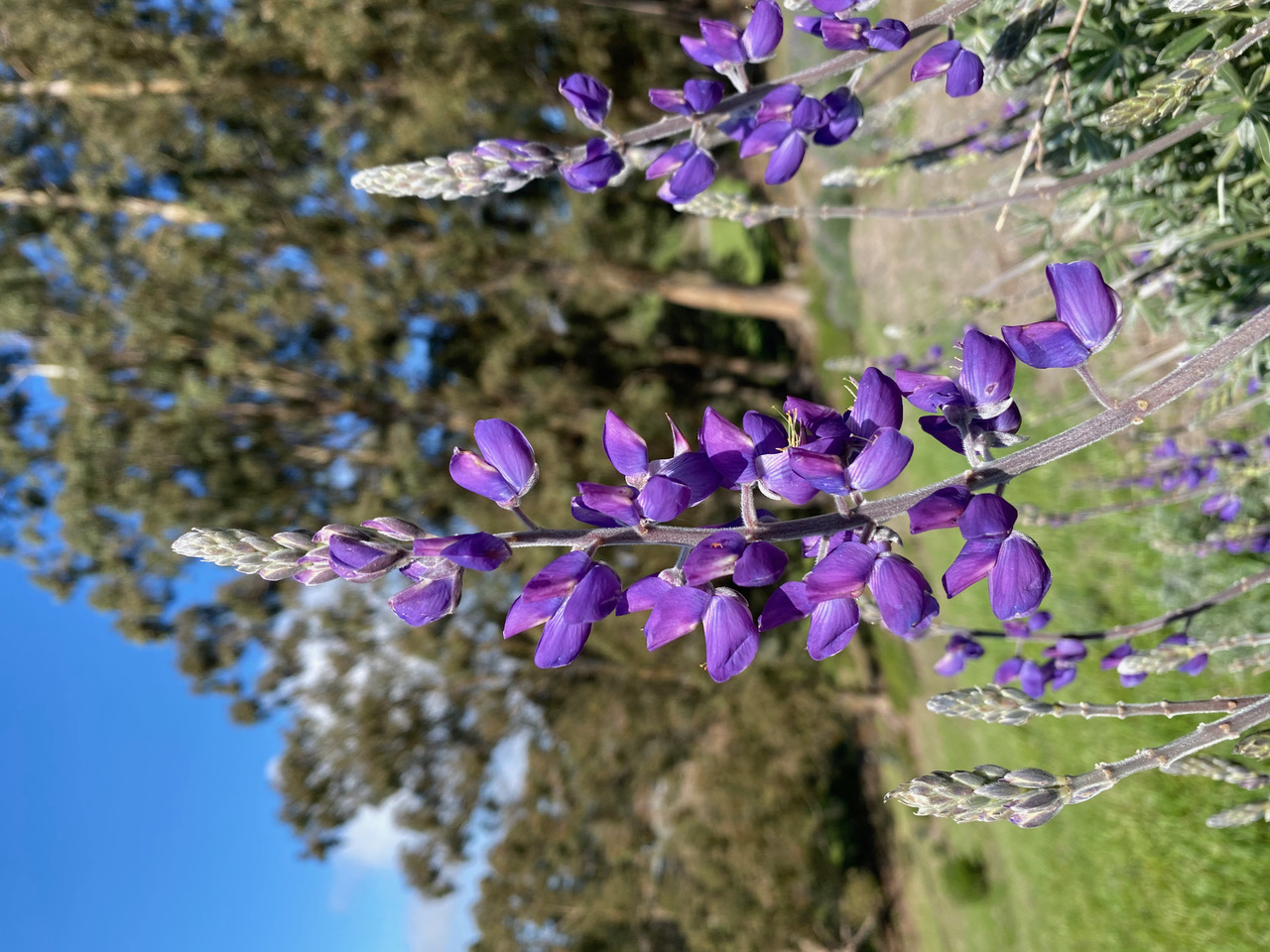
Time to check on the Silverleaf Lupine, Lupinus albifrons along the Bypass Trail. The blooming here appears to be a little more advanced than those at Diablo Bend. It is gratifying to see that most of the older flowers on the lower part of the inflorescence have been well pollinated. How can I tell?
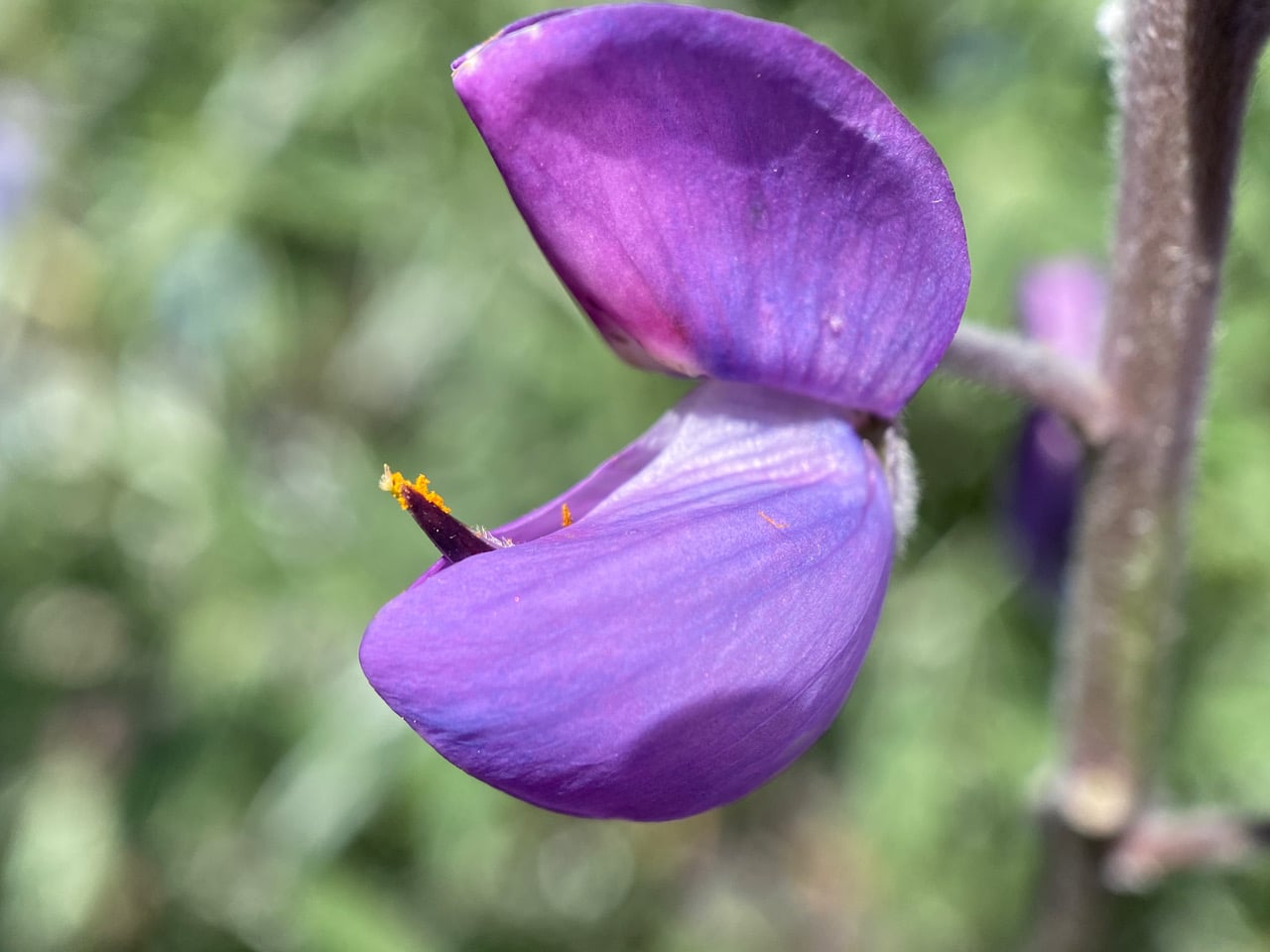
A heavy bee, either a Bumble Bee or a Digger Bee, has landed on the horizontal surface of the wing petals, lowering and parting them. This causes the dark-tipped keel to bounce up through the gap between the wing petals. Simultaneously the reproductive structures are extruded through the keel. When the bee flies off, some pollen has been scraped off the anthers onto the tip of the keel as the flower parts bounce partially back into position.
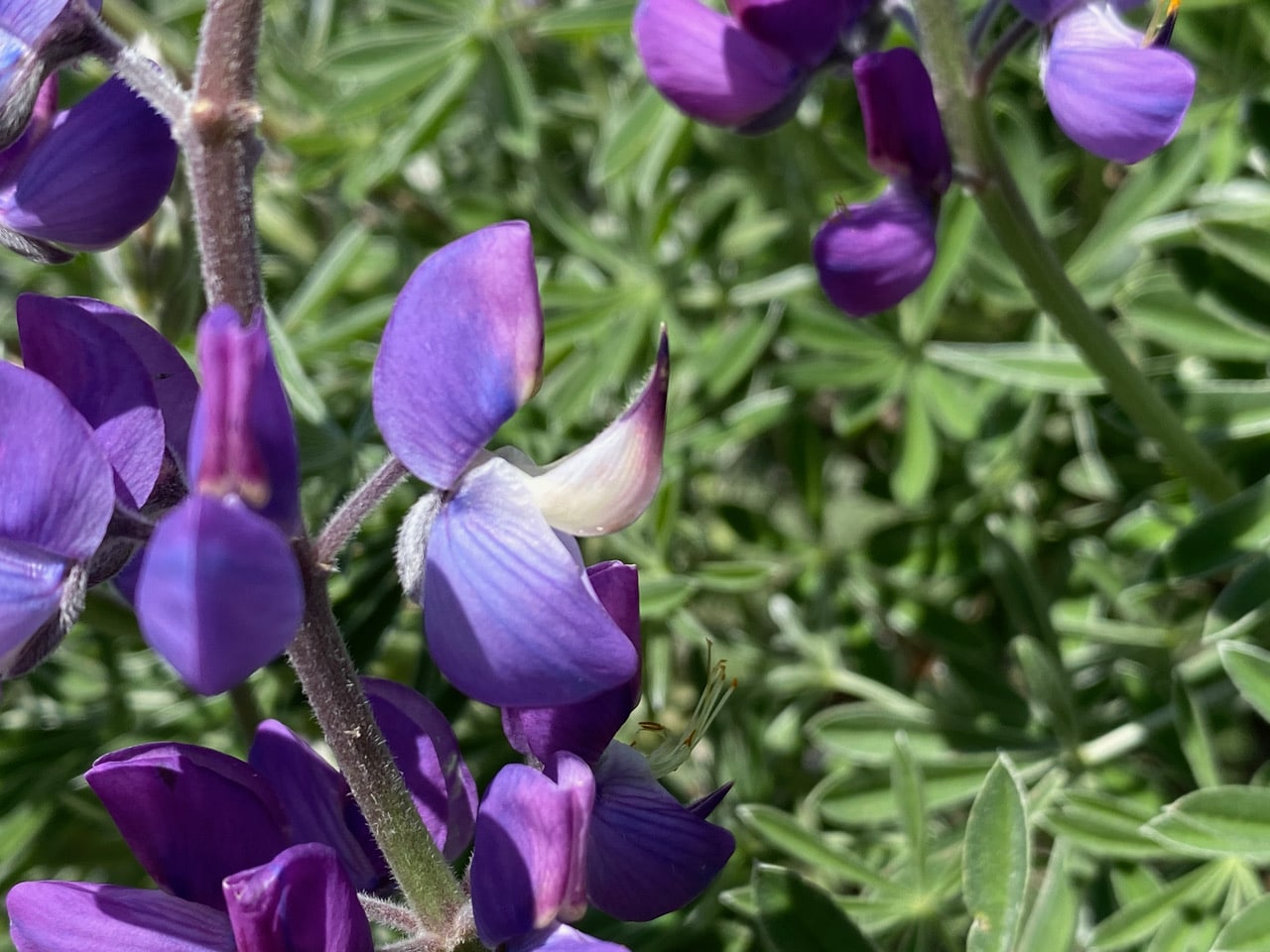
An extra heavy bee, probably a queen, has permanently lowered the wing petals, exposing the entire keel inside.
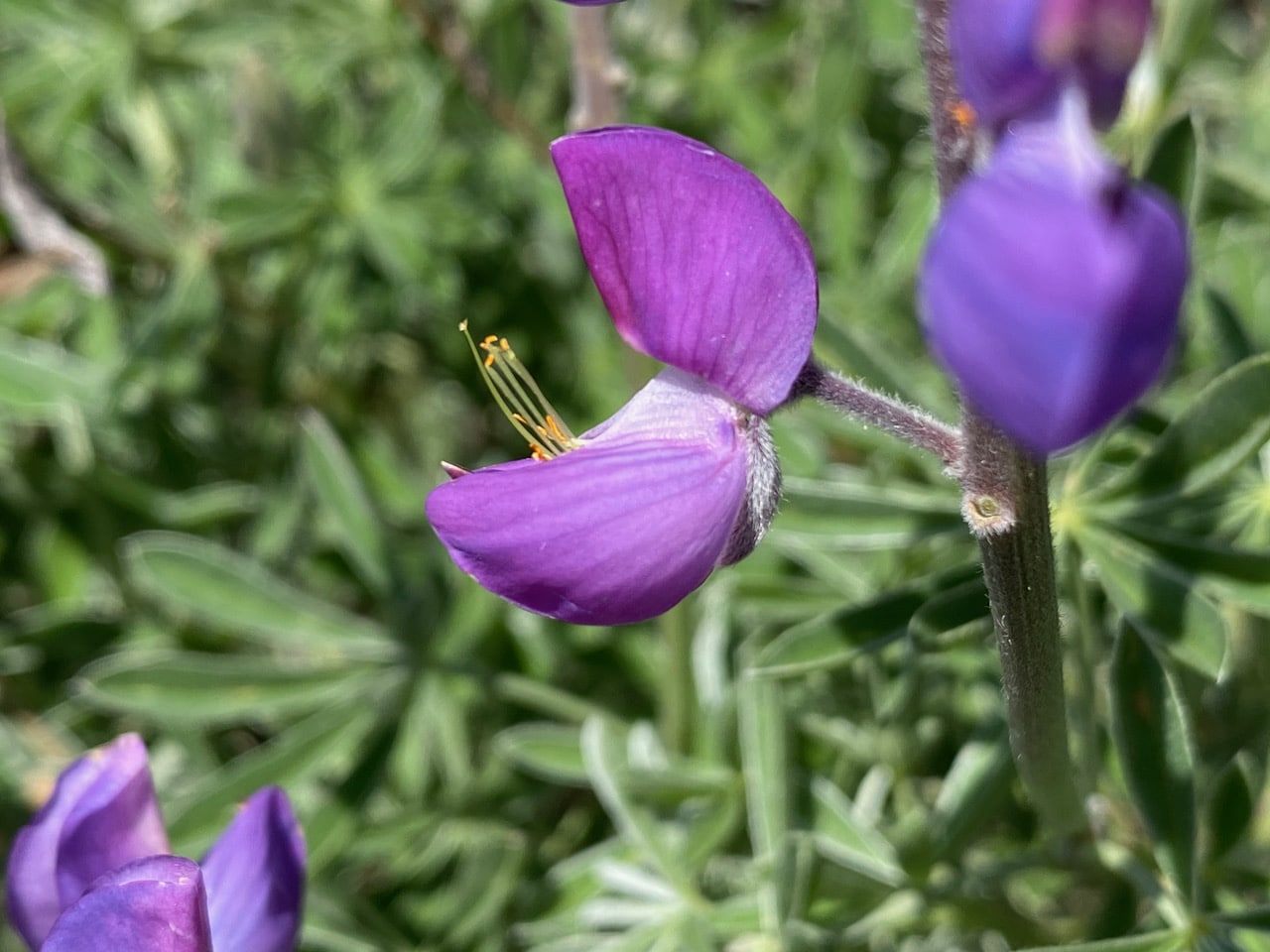
The reproductive structures are left exposed on this flower…

…and this flower.
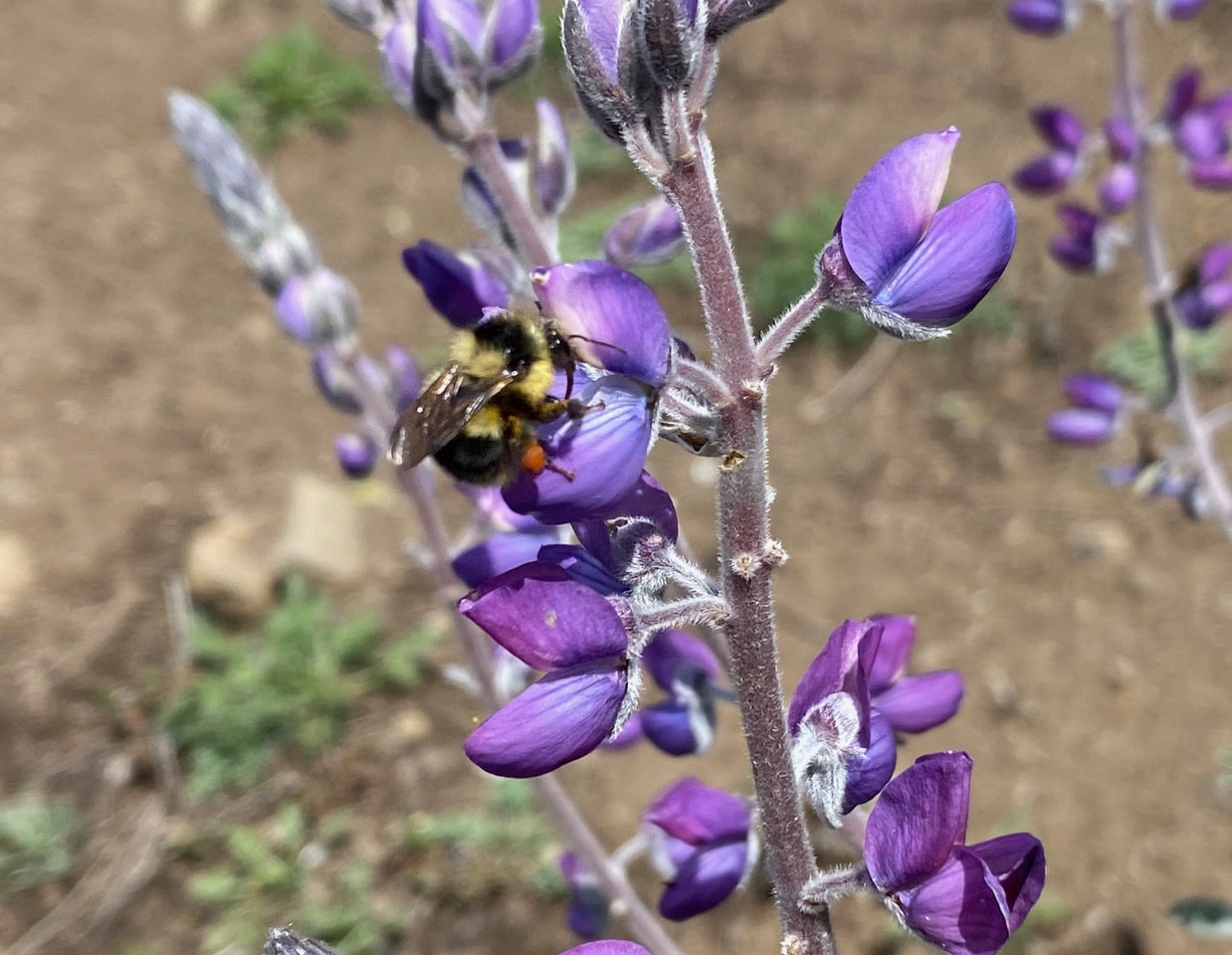
The most common bees visiting the lupine flowers today are the Black-tailed Bumble Bees, Bombus melanopygus. There are some noisy Digger Bees as well, and an occasional Yellow-faced Bumble Bee, Bombus vosnesenskii.
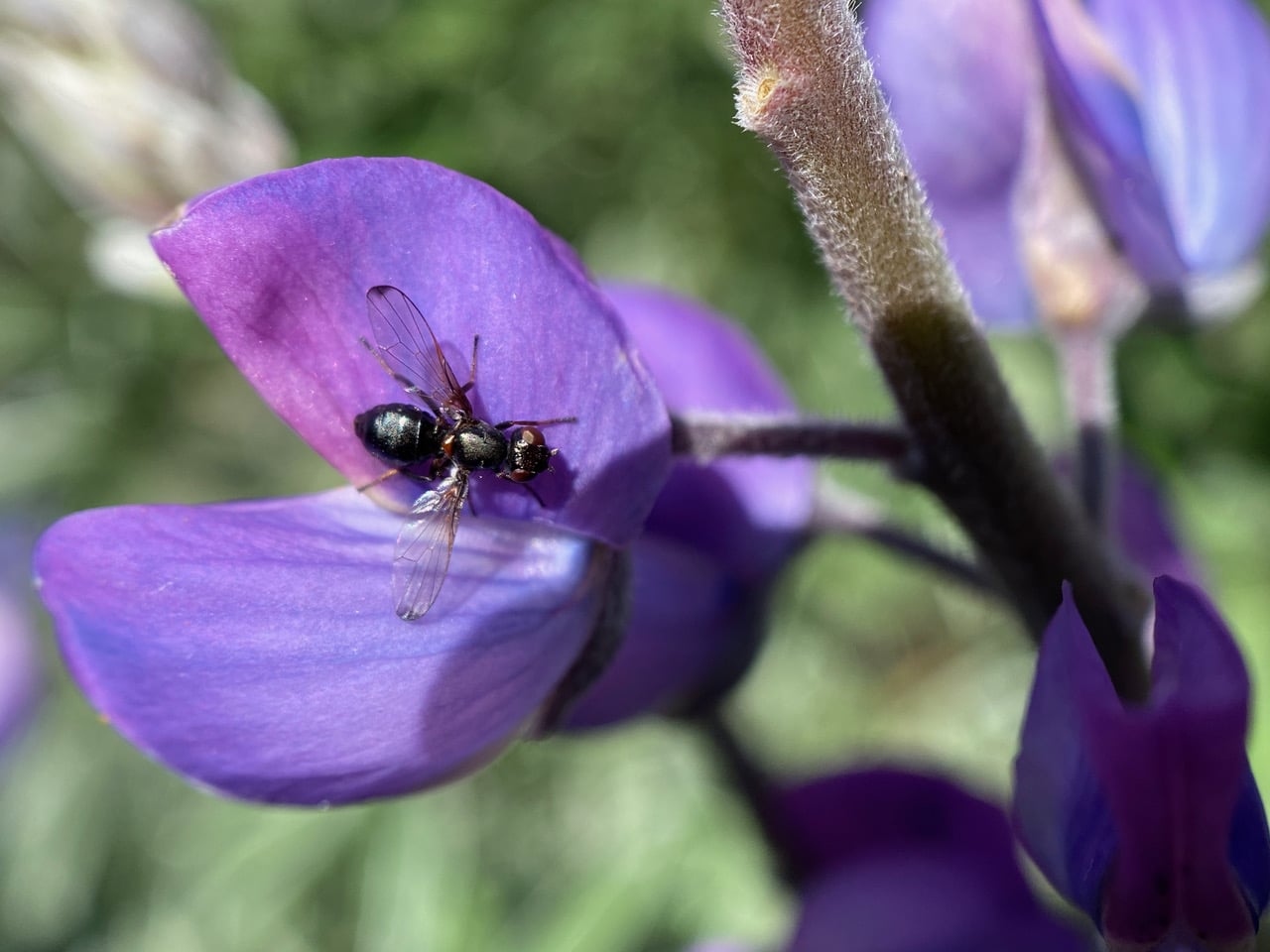
A shiny, black insect on a lupine flower catches my eye. It is by now a familiar sight around the lupines – the Picture-winged Fly in the genus Curranops, family Ulidiidae.
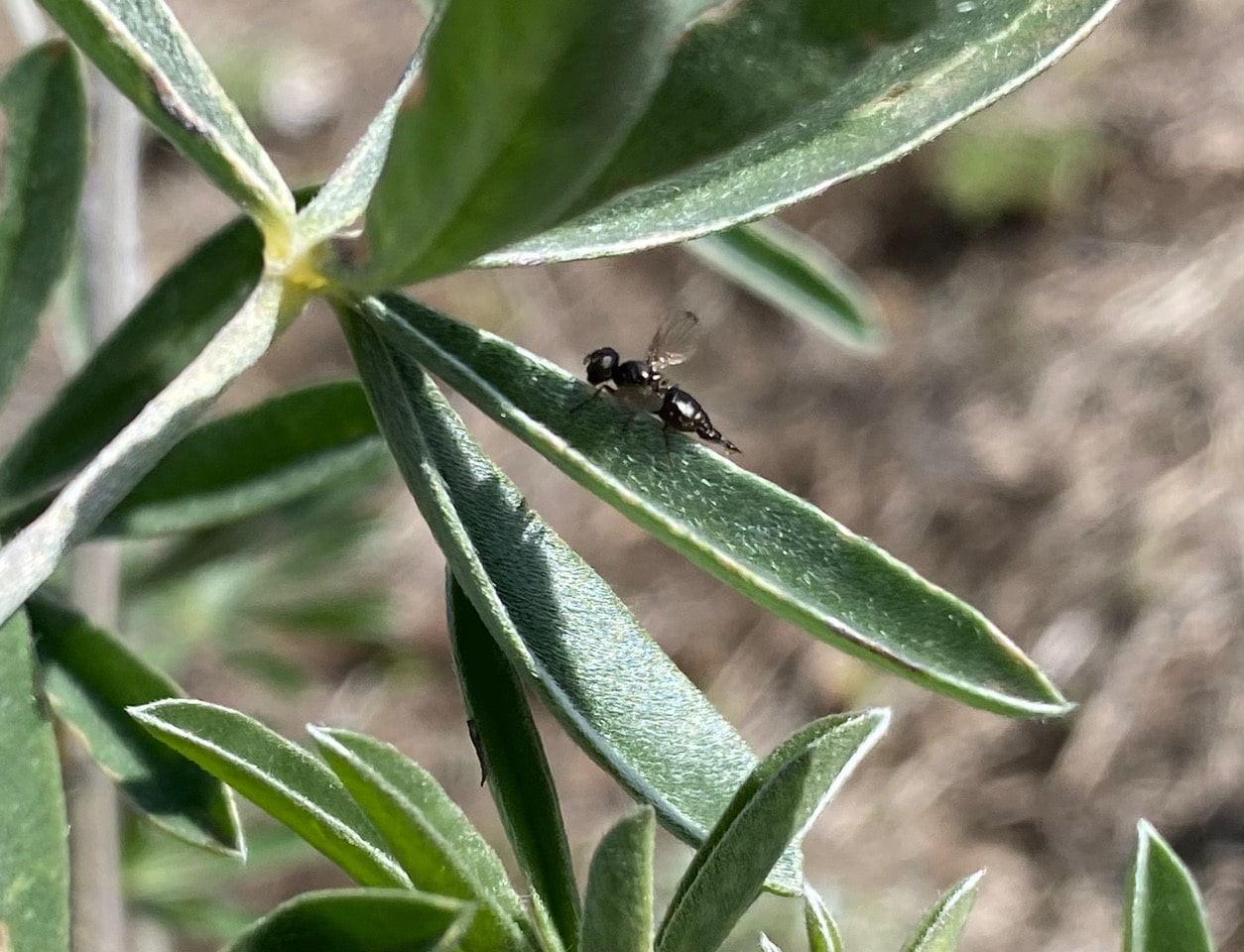
A female Curranops is running around on a lupine leaflet, its ovipositor fully extended. She must have been laying eggs. Where? On the plant?
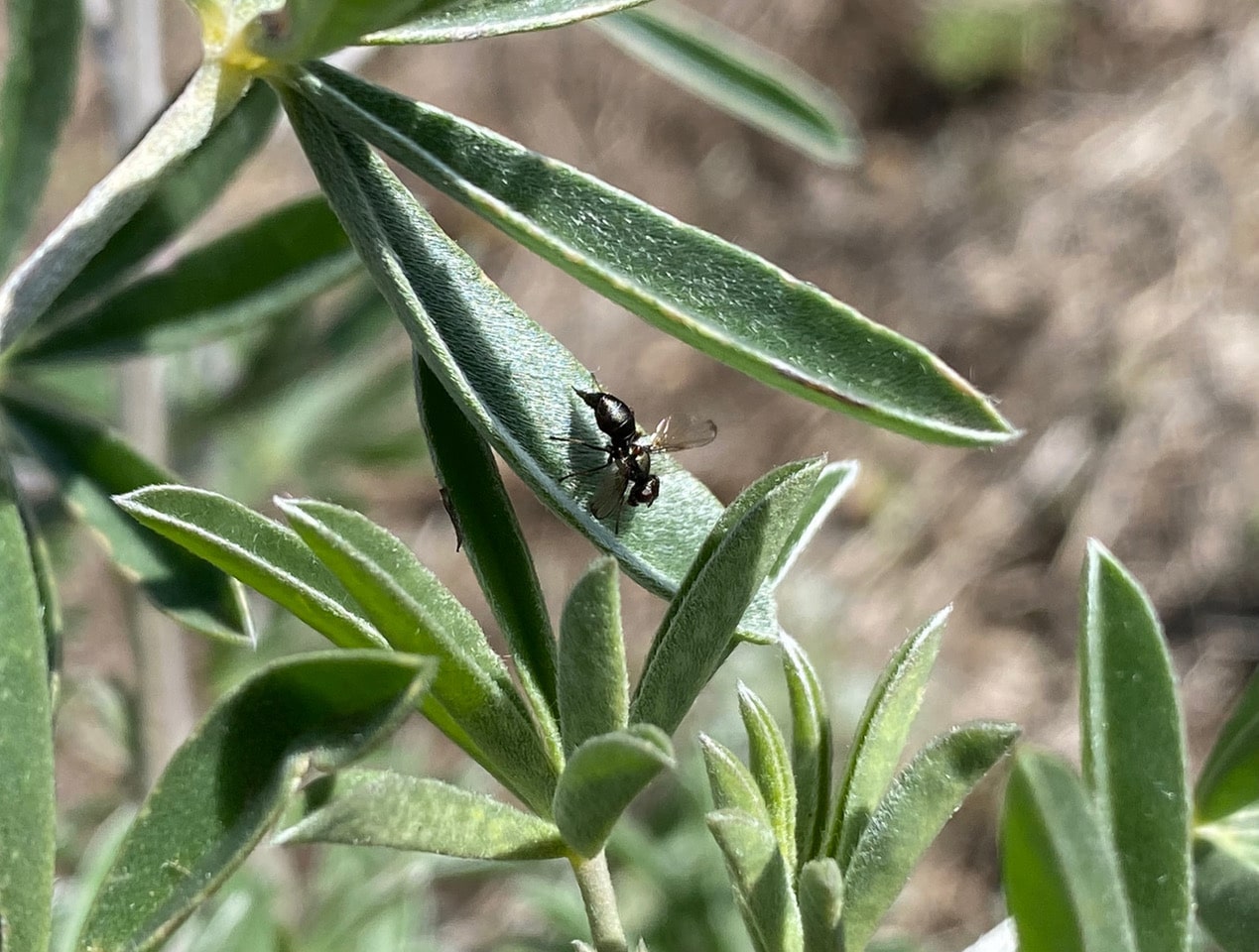
Another view of the same Curranops female running up and down the same leaflet, gently waving her outstretched wings.
Little is known about the natural history of Curranops. They seem to hang out on the Silverleaf Lupine a lot. We have seen a pair mating on an inflorescence. Is the Silverleaf Lupine their specific host plant?
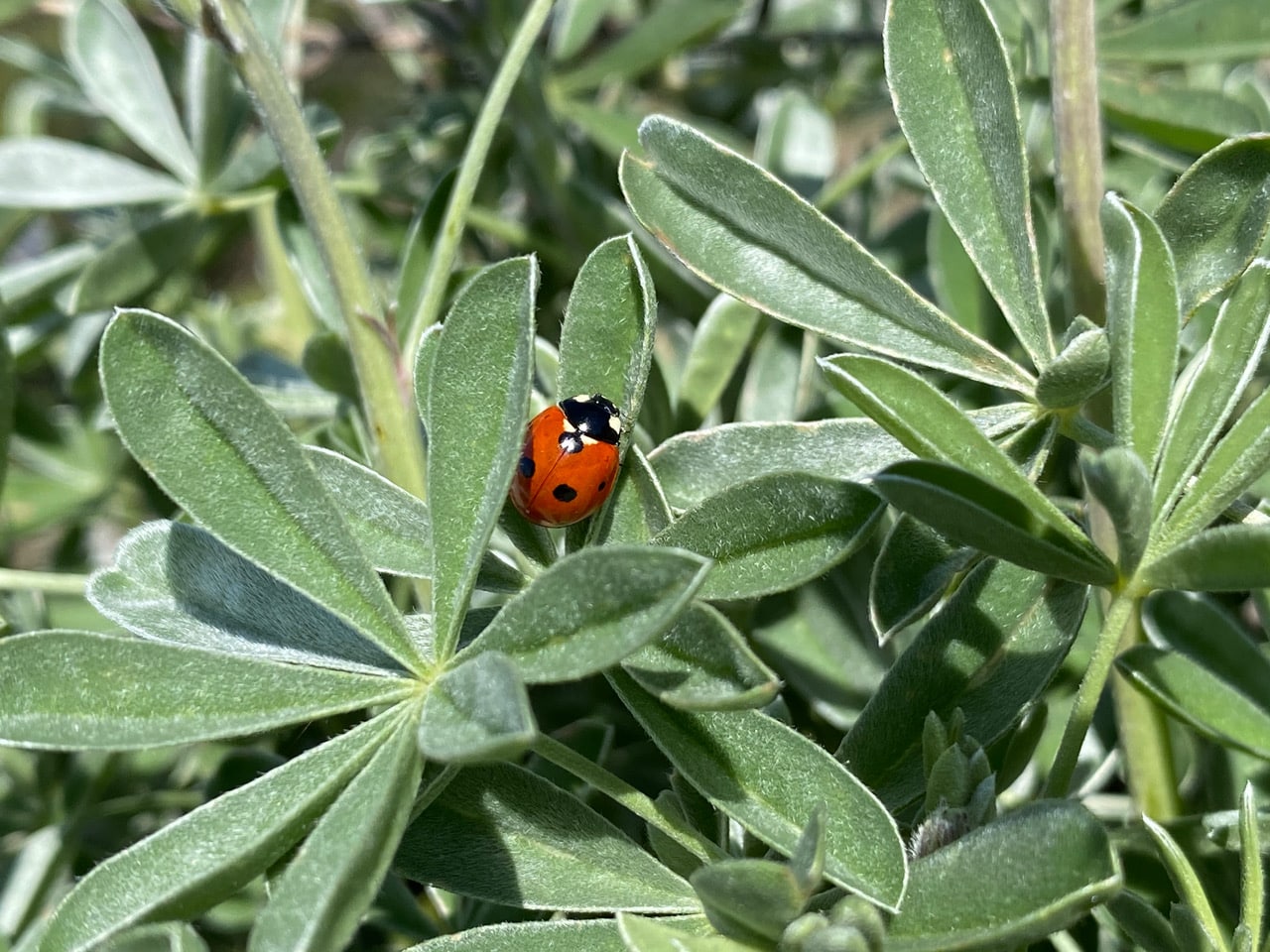
Here’s a new species of Lady Beetle for the garden this year – the Seven-spotted Lady Beetle, Coccinella septempunctata (family Coccinellidae).
The most common lady beetle in Europe, the species now enjoys a worldwide distribution. The species has been repeatedly introduced to North America as a biological control agent to reduce aphid numbers. It has since spread by natural dispersion to many states, outcompeting some native species of lady beetles. The Seven-spotted Lady Beetle has red elytra punctuated with three black spots each, plus one additional spot being spread over the junction of the two elytra behind the thorax, making a total of seven spots.
While both adults and larvae mainly eat aphids, they also feed on other soft-bodied insects, and eggs and larvae of bugs, beetles and butterflies. There are one or two generations per year. Adults overwinter in ground litter in parks, gardens and forest edges and under tree bark and rocks. The species occupies a broad range of habitats, generally living wherever there are aphids to eat. The distinctive spots and conspicuous colors warn of their toxicity, making them unappealing to predators. When threatened, the beetles can secrete a foul-tasting toxic fluid from their leg joints.

It’s amazing what you can see when you sit still among the flowers. A fast moving orange mite races all over a lupine flower. It is most likely a Phytoseiulus species of predatory mites (family Phytoseiidae).
Mites are minute arachnids (8-legged arthropods), ranging in size from 0.01 to 0.03 in. Unlike spiders, the mite has the cephalothorax and the abdomen fused into one single body part, with no obvious segmentation. The predatory mites feed on plant-feeding mites, as well as thrips and other small insects. They are faster moving and slightly larger than their prey. Predatory mites are widely used to control pest mites, and are commercially available.

Thanks to the work of the Bumble Bee or Digger Bee, an American Winter Ant, Prenolepis imparis (family formicidae) has free access to the pollen that have been extruded through the keel of this lupine flower. Yums, free lunch!

Someone has cut through the petals of a lupine flower bud exposing the reproductive parts. It is a remarkably clean, and precise operation. A pollen thief? A nectar robber? Did an ant do this?
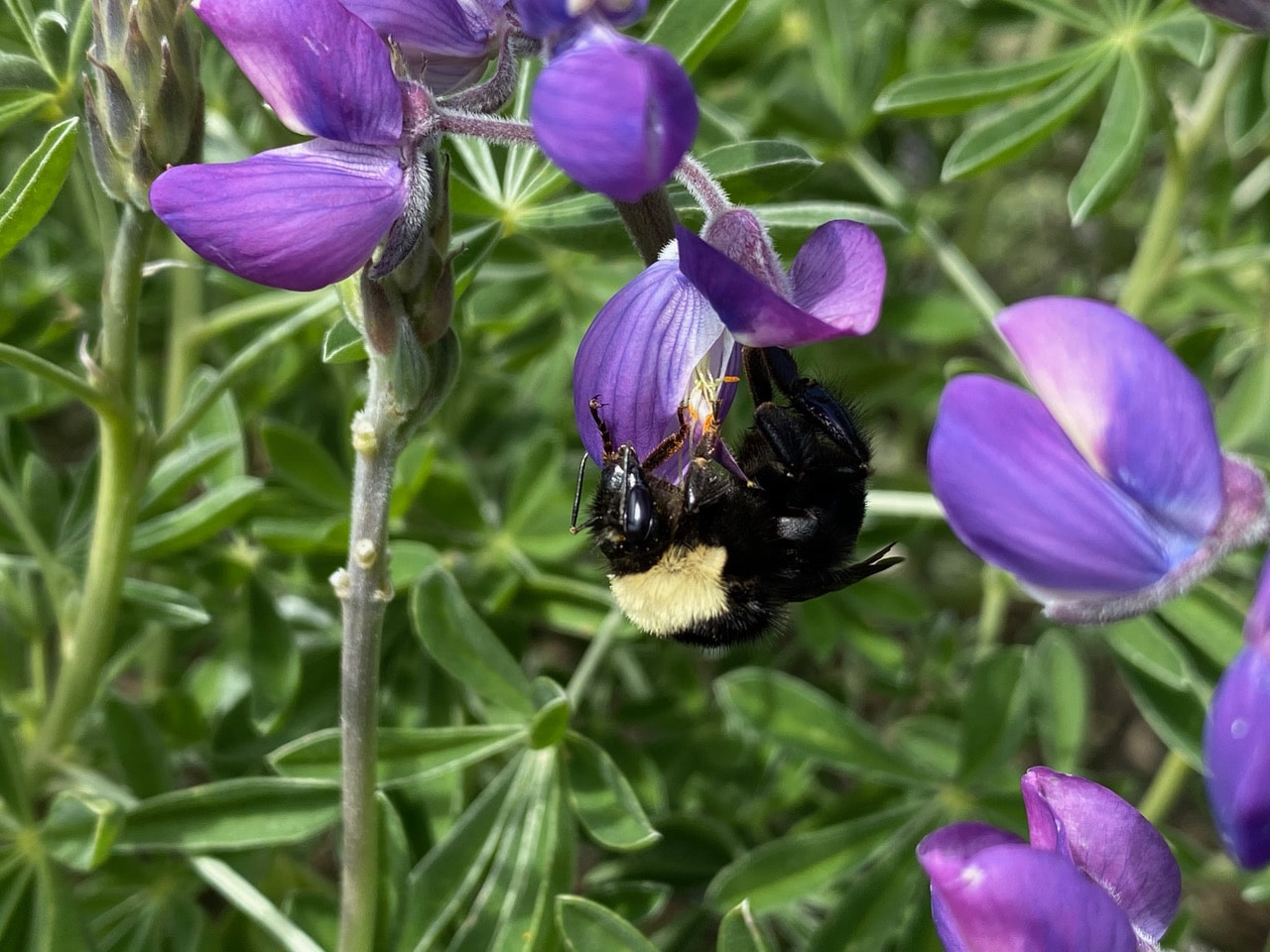
While running around to photograph a foraging bumble bee worker, I came across this huge Bumble Bee hanging listlessly from a lupine flower. Its weight has totally eviscerated the flower when it landed. I thought it was a queen Yellow-faced Bumble Bee until I got home and looked at the photo on the big screen. The bee has a black face, Duh! A California Bumble Bee? I wish I had tried to take a picture of the top of its abdomen. The color pattern would greatly help with identification.