

Pollinator Post 3/15/23 (1)

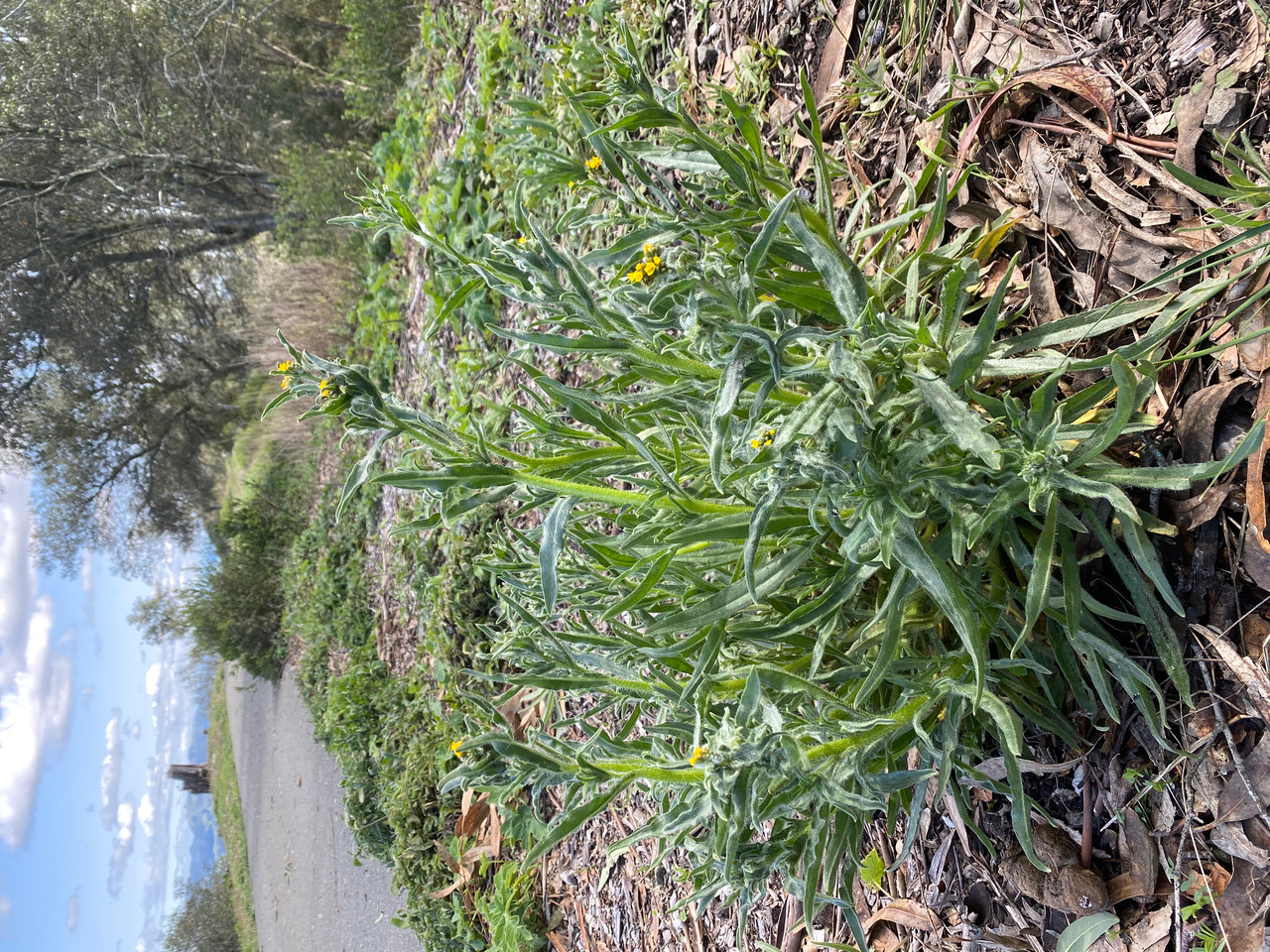
I am taking a walk on the paved road to the Water Tank at Skyline Gardens on this beautiful, sunny afternoon. Everything has greened up after all the rains, and the air is sparkling fresh. A large Common Fiddleneck, Amsinckia intermedia has started to bloom on the side of the road.
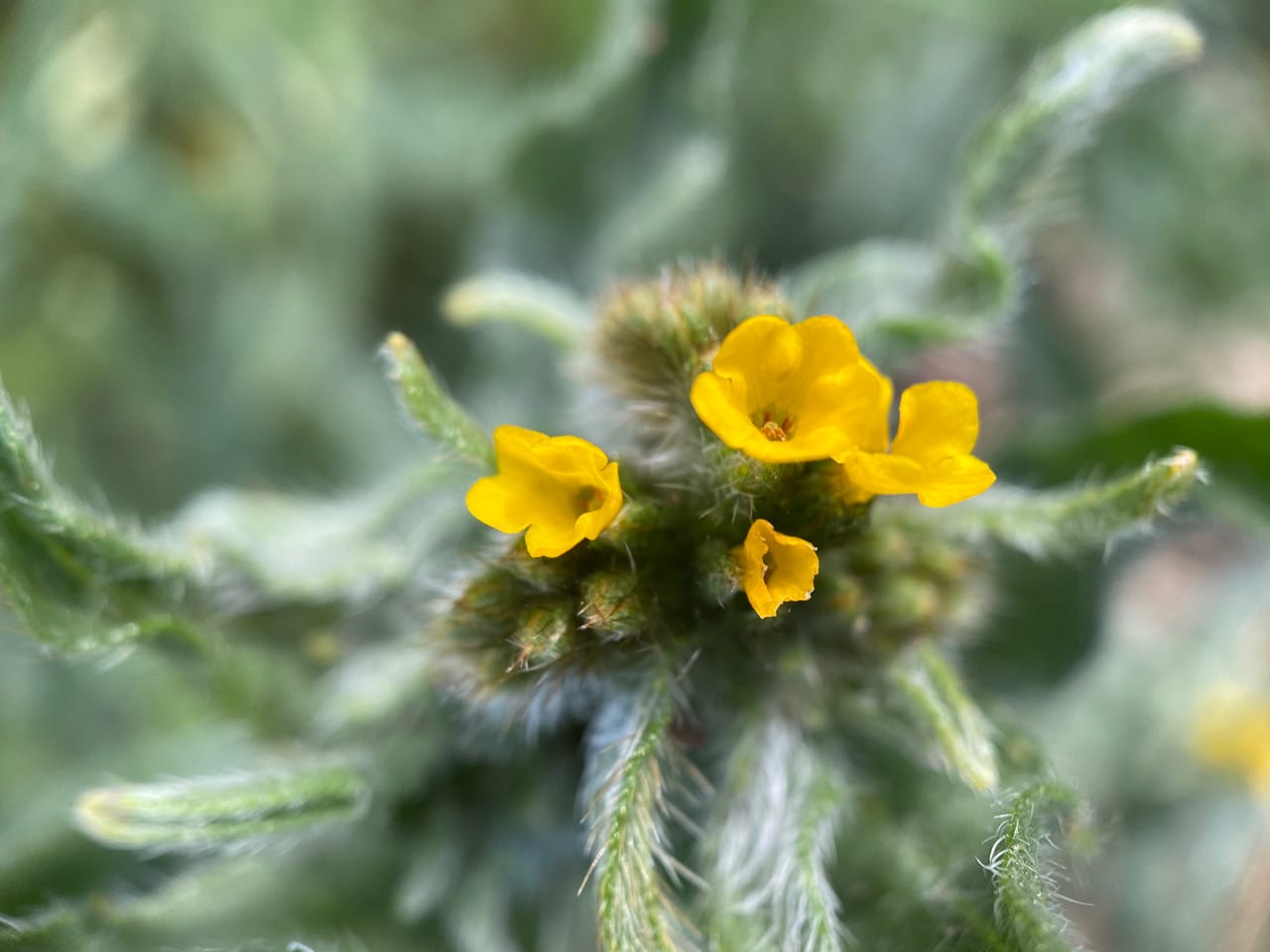
Like other members of the family Boraginaceae, the flowers are coiled in their terminal flowering whorl shaped like a violin or fiddle, hence the name fiddleneck. The five petaled golden yellow funnel-shaped flowers are borne on scorpionoid spikes with leafy bracts at the base. Close-up, the entire plant is rather bristly.

Even with the highest magnification on my camera, I can barely make out the reproductive structures within the floral tube of the tiny flowers – a globular stigma surrounded by five stamens. For pollinators these flowers probably rely on very small insects, or insects with long tongues able to reach the nectar.
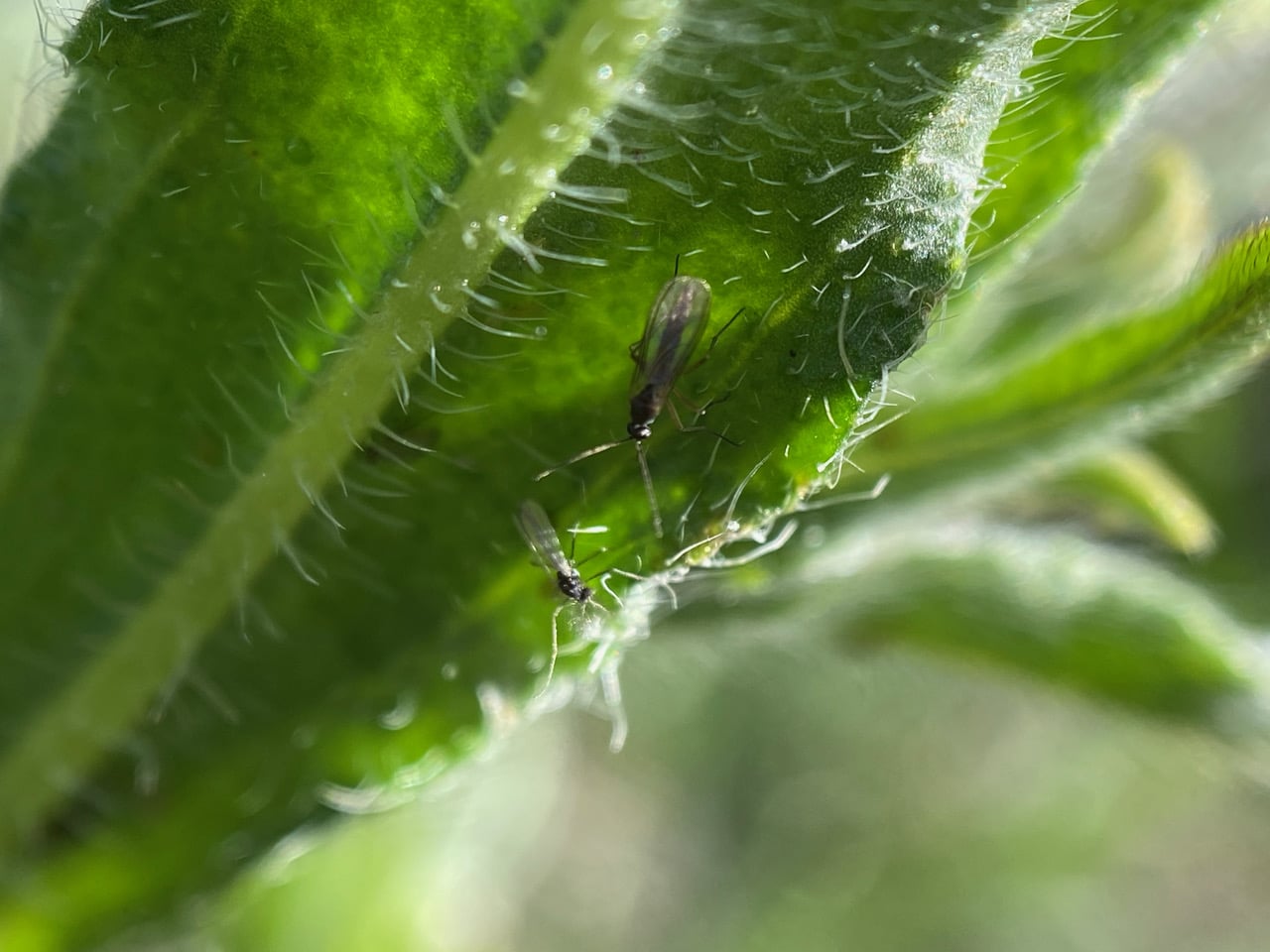
Numerous small flies are moving around in the moist shadowy areas of the lower foliage.

This one looks like a Dark-winged Fungus Gnat, in the family Sciaridae.
Adult Sciridae are small, dark flies usually less than 5 mm long. The gnats occur worldwide, even in extreme habitats such as subarctic areas, mountainous regions, deserts and caves, but most species live in forests, swamps, and moist meadows, where they live in the foliage. In moist and shadowy areas, up to 70% of all dipteran species can be Sciaridae. They are known to be a pest of mushroom farms and are commonly found in household plant pots. Sciaridae larvae often occur in decaying plant matter such as rotten wood or under the bark of fallen trees, but can also be found in animal feces or fungi.
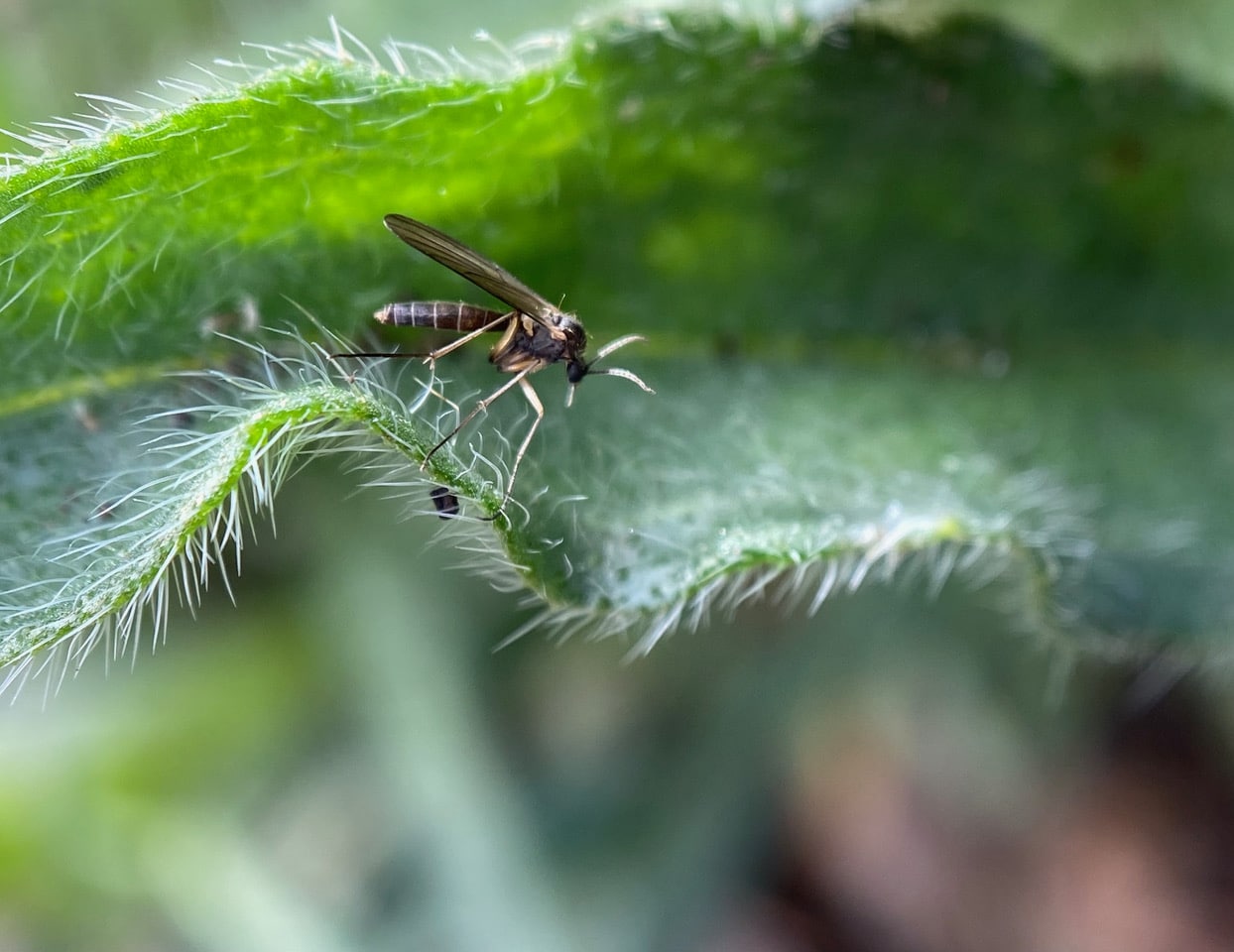
This fly has been identified by an expert on iNaturalist as a member of the superfamily Sciaroidea, that includes Fungus Gnats and Gall Midges. The Fungus Gnats, Mycetophilidae are denizens of the dank and dark, generally found in the damp habitats favored by their host fungi and sometimes form dense swarms. Adults of this family are usually distinguished from other small flies by the strongly humped thorax. The larvae usually develop in soil on decaying plant matter, and predominantly feed on fungi, while some are predatory. Some species have been recorded on mosses and liverworts. Members of family Cecidomyiidae, the Gall Midges, induce plant galls in which their larvae live and feed.

Wow, these are incredibly small aphids, barely visible to the unaided eye.
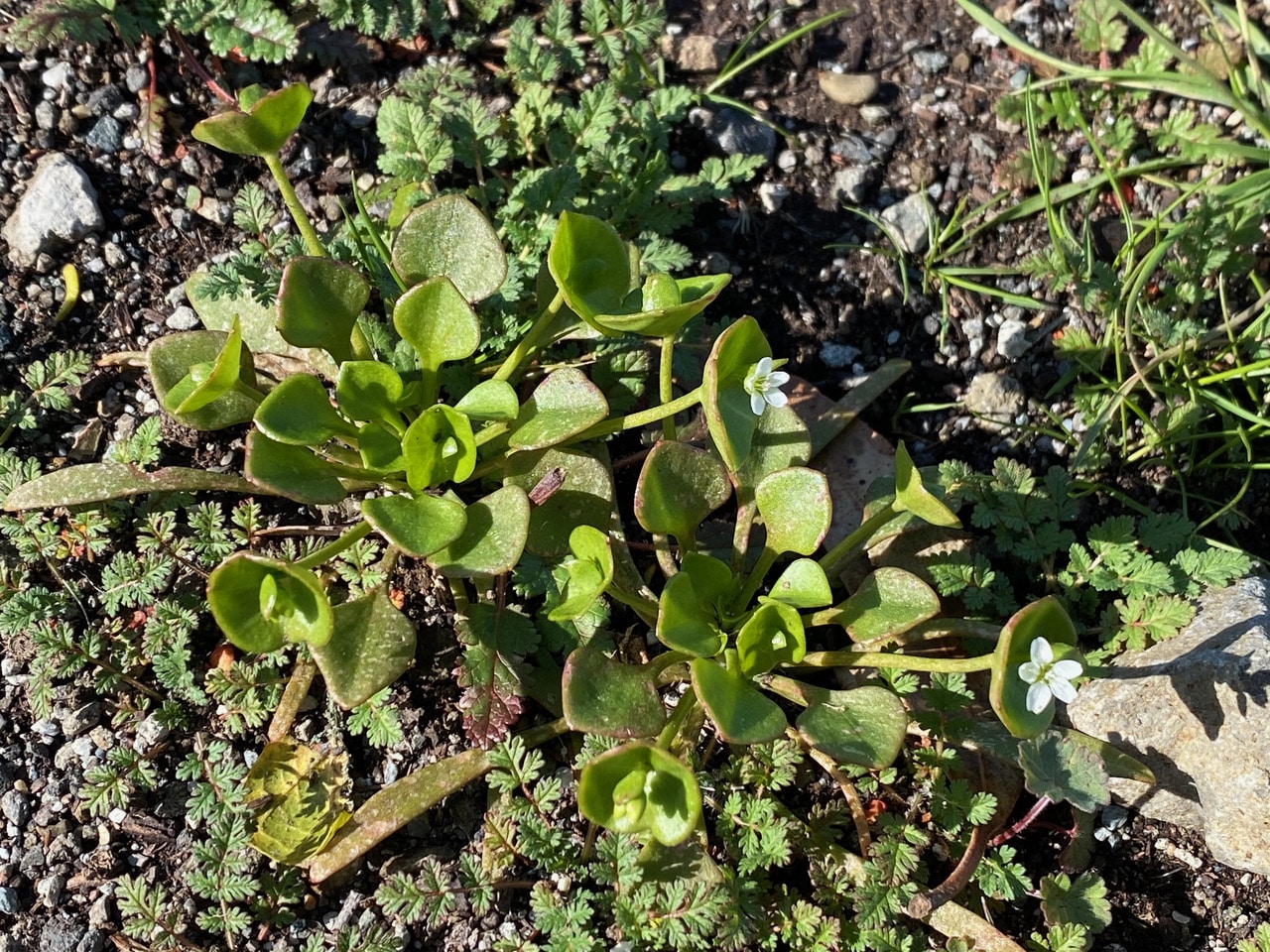
The Miner’s Lettuce, Claytonia perfoliata that grow up here in full sun and wind exposure tend to be diminutive. The flowers grow above a pair of leaves that are fused around the stem to form what looks like a single circular leaf.
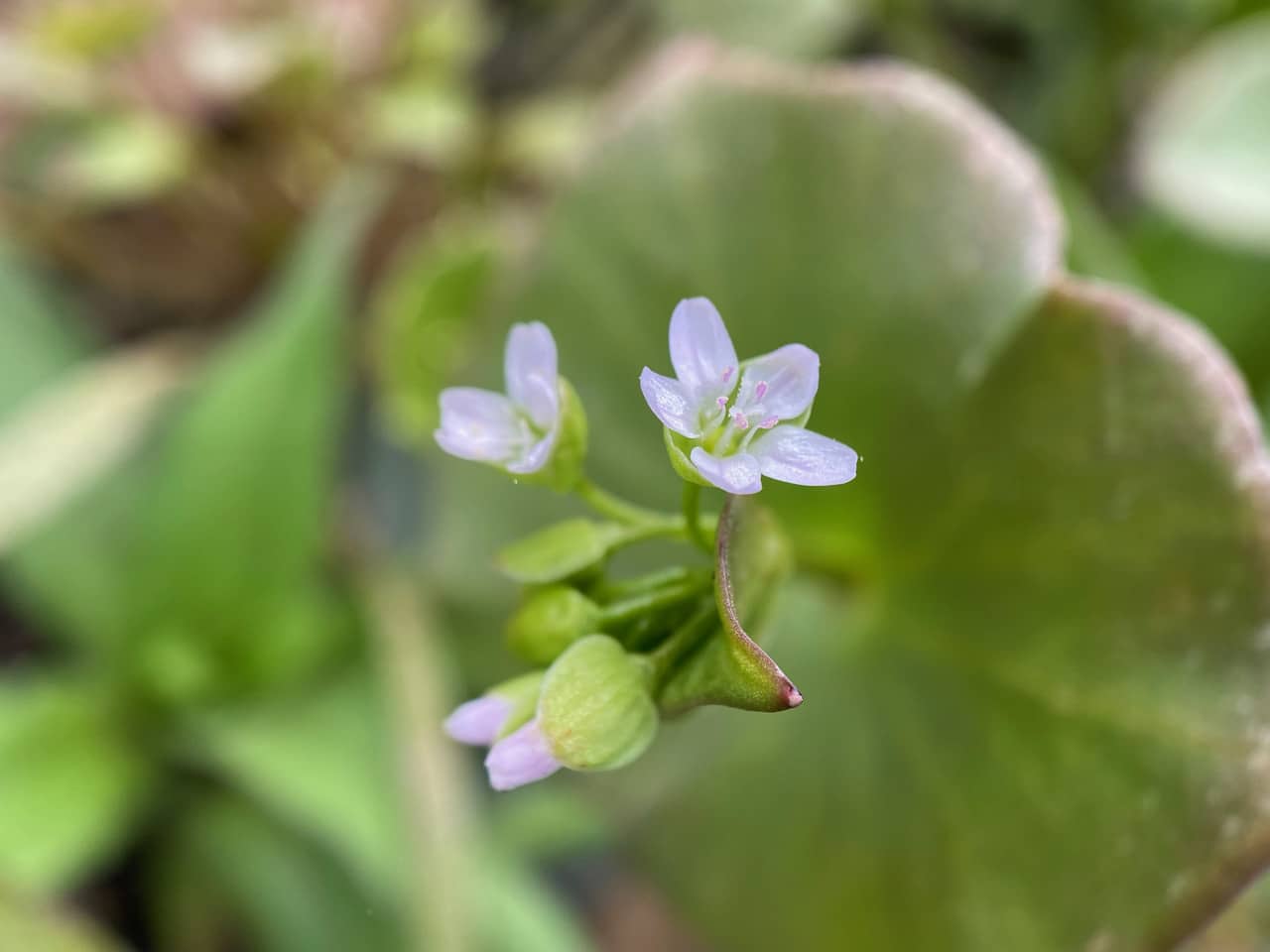
The small pink or white flowers have five petals, five stamens, and a three-lobed style.
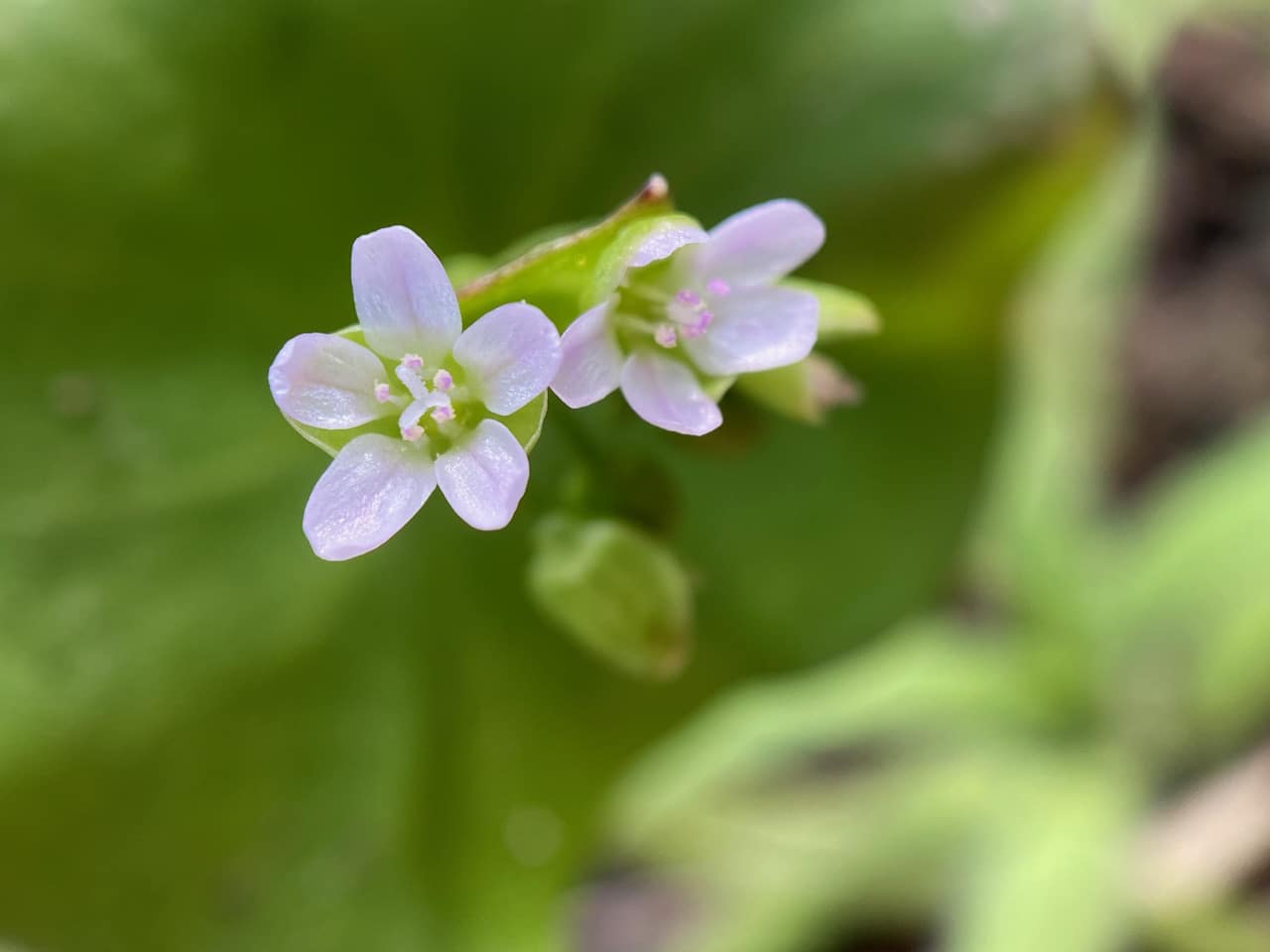
I wonder how these flowers are pollinated?
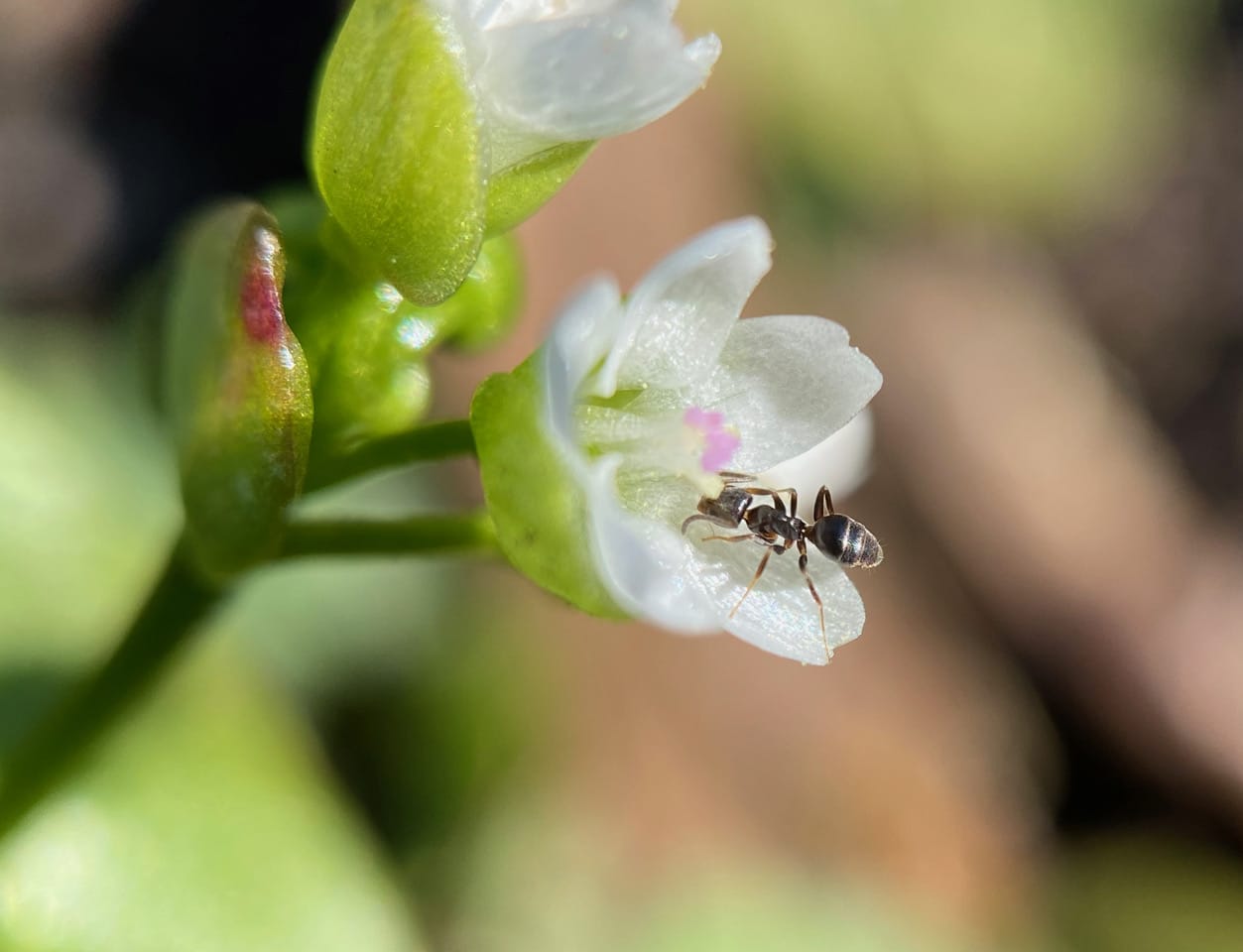
Just then, I notice an Argentine Ant, Linepithema humile (family Formicidae) approach a flower and lower itself under the stamens to seek nectar at the base of the corolla!

After a long while the ant emerges and crawls over the flower’s reproductive parts. The insect can certainly be an agent for pollen transfer!
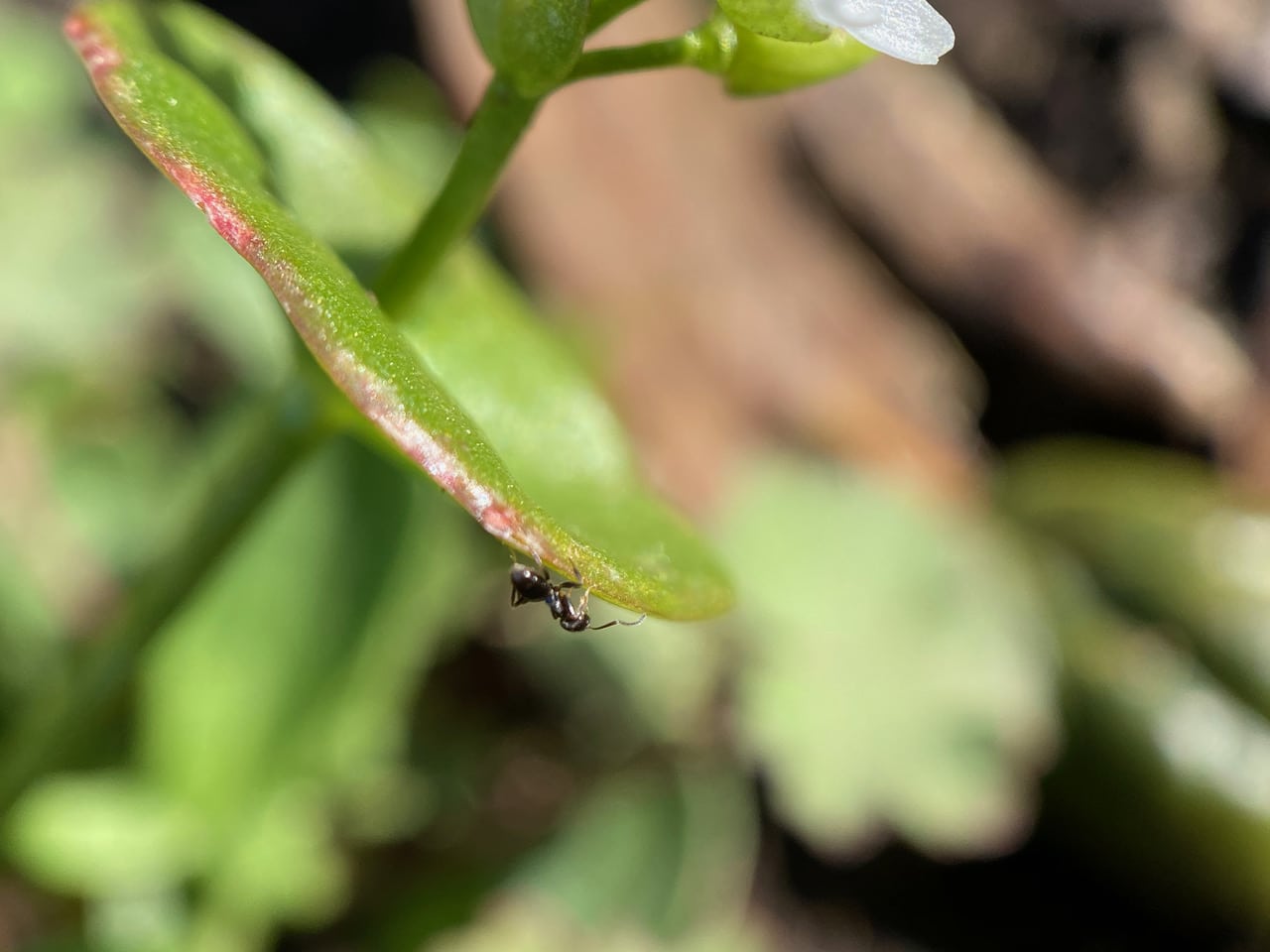
Interestingly, the ant descends from the flower and runs around the rim of the circular leaf three time in a fast pace. Is it marking the plant for future reference?
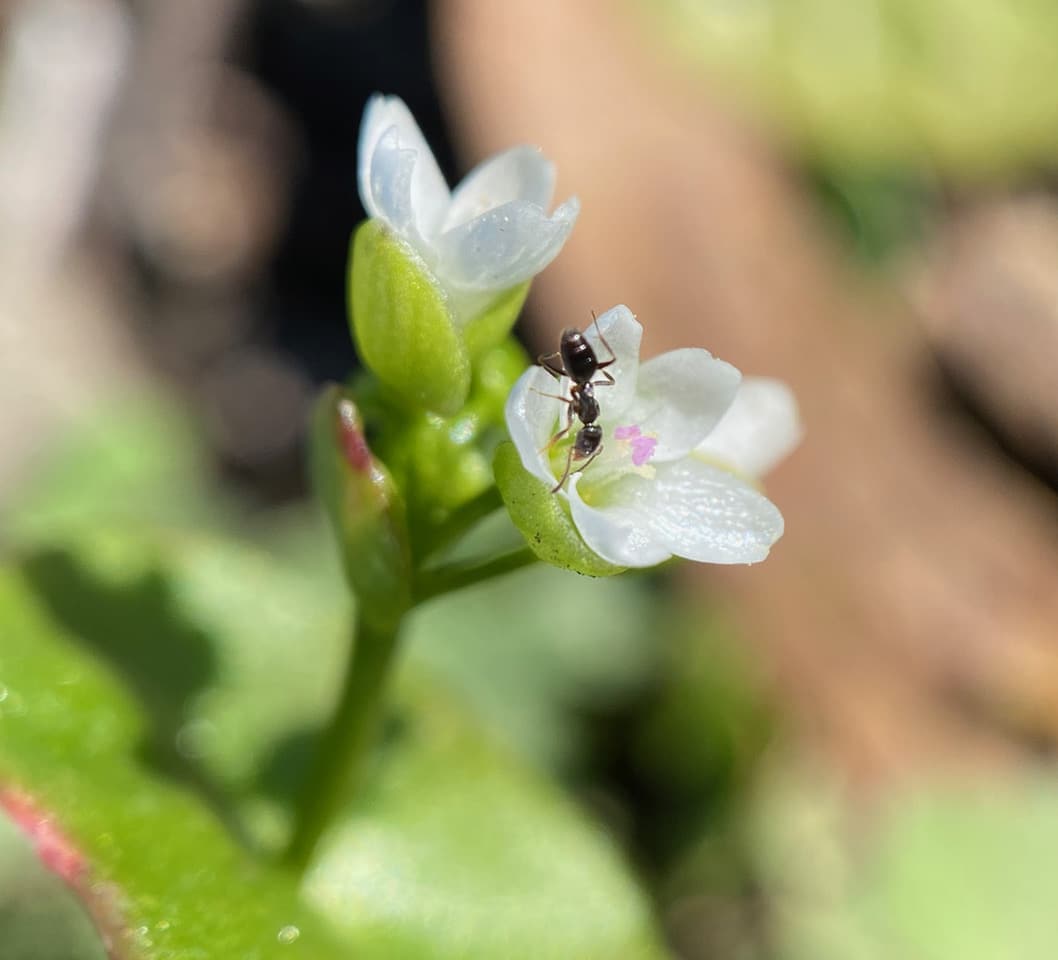
The ant explores the other flower on the same stem, but returns to the original flower again and again for more nectar.
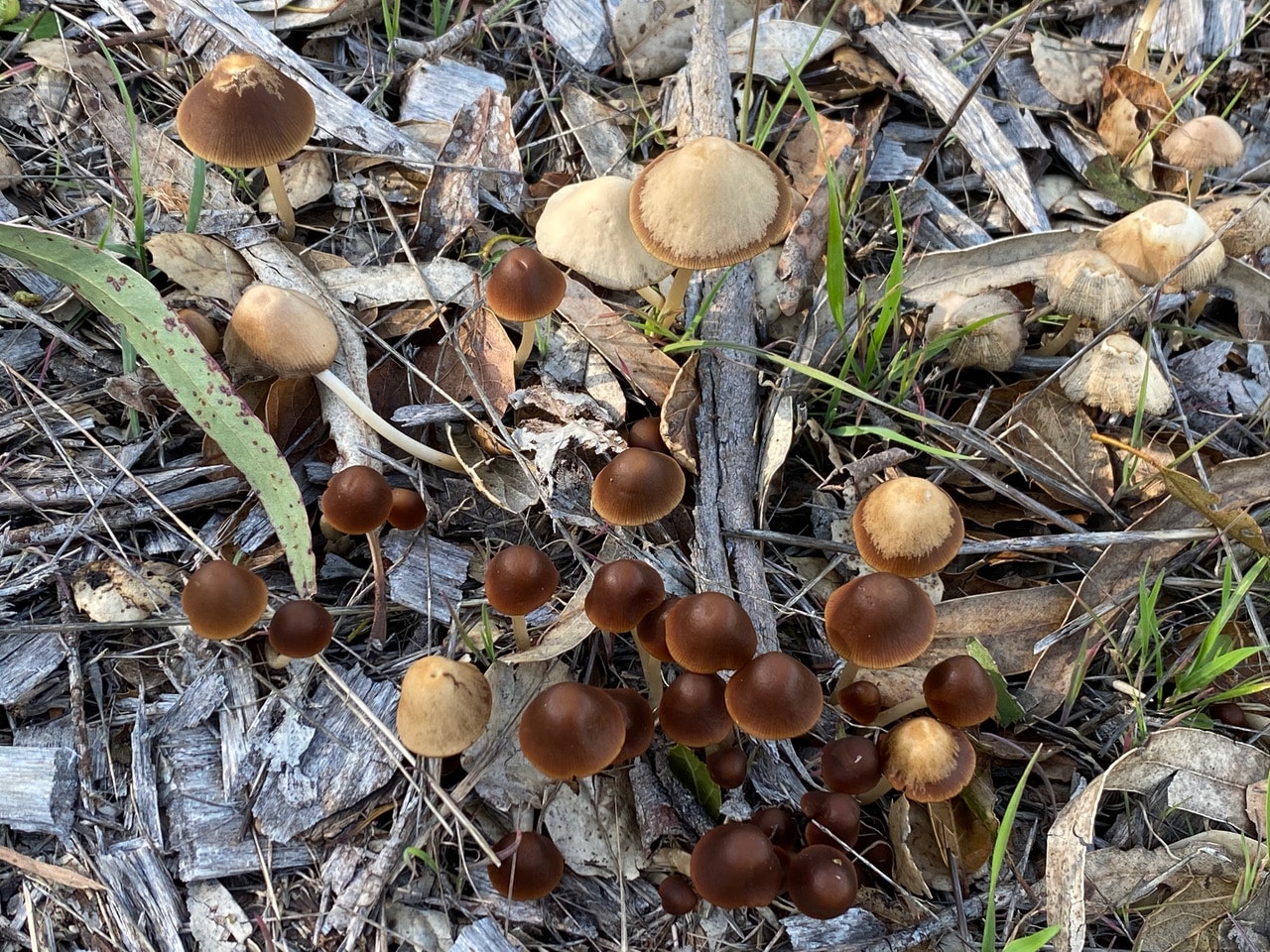
A massive crop of little brown mushrooms have sprouted from the old wood chip mulch along the road. I think these belong to the genus Psathyrella.
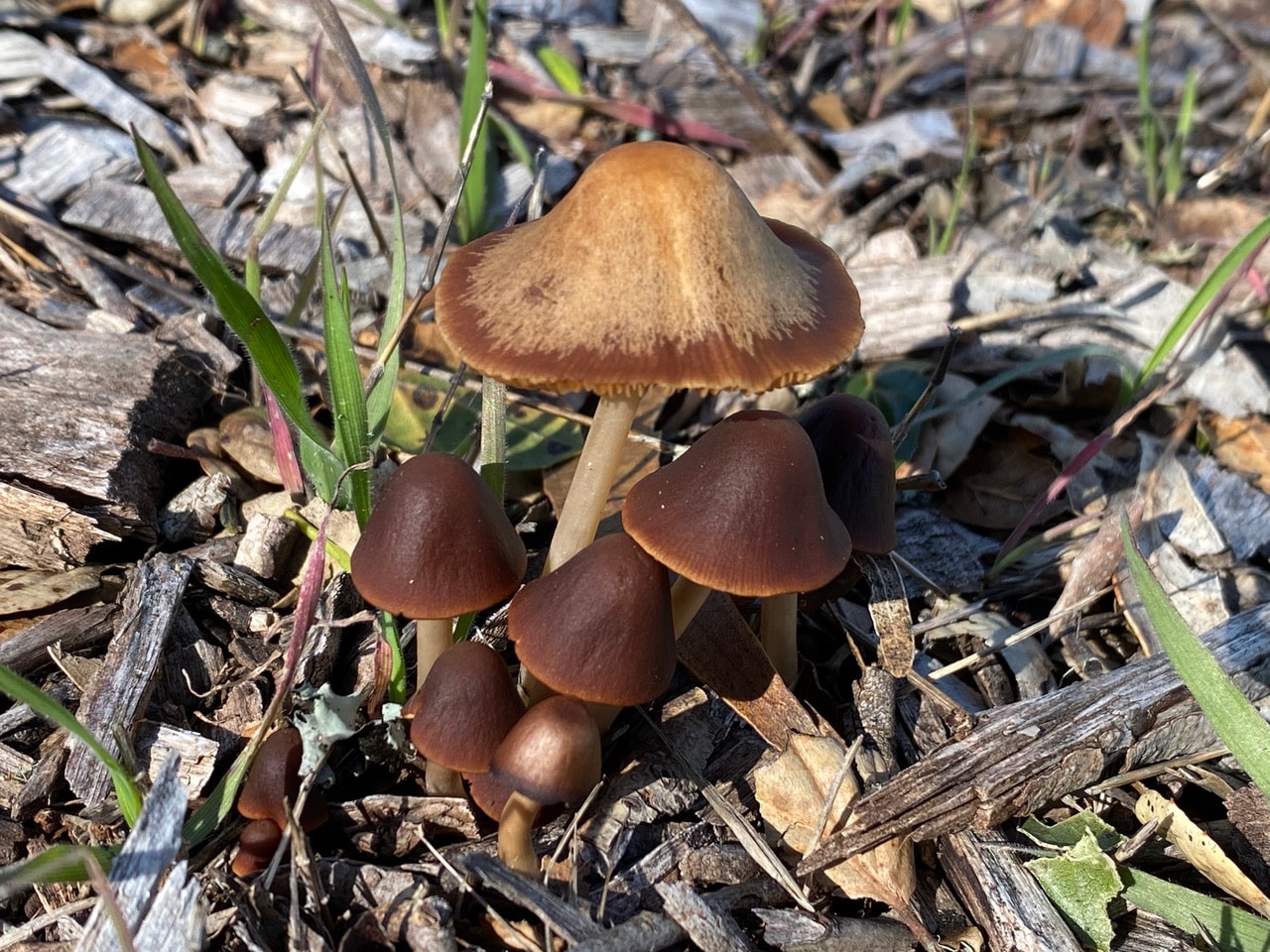
The author of Mushroom Demystified, David Arora describes Psathyrella thus:
“Few fleshy fungi have less to offer the average mushroom hunter than the Psathyrellas. They constitute an immense, monotonous and metagrobolizing multitude of dull whitish, buff, grayish, or brownish mushrooms with a fragile stem, fragile flesh, and purple-brown to blackish spores… Psathyrellas are largely wood inhabitants, but often appear terrestrial because they feed on wood in the final stages of decay, after all the other wood-lovers have had their fill.”

I am disappointed not to find any larvae of the fungus gnats between the gills of the mushroom.