

Pollinator Post 3/14/24 (2)
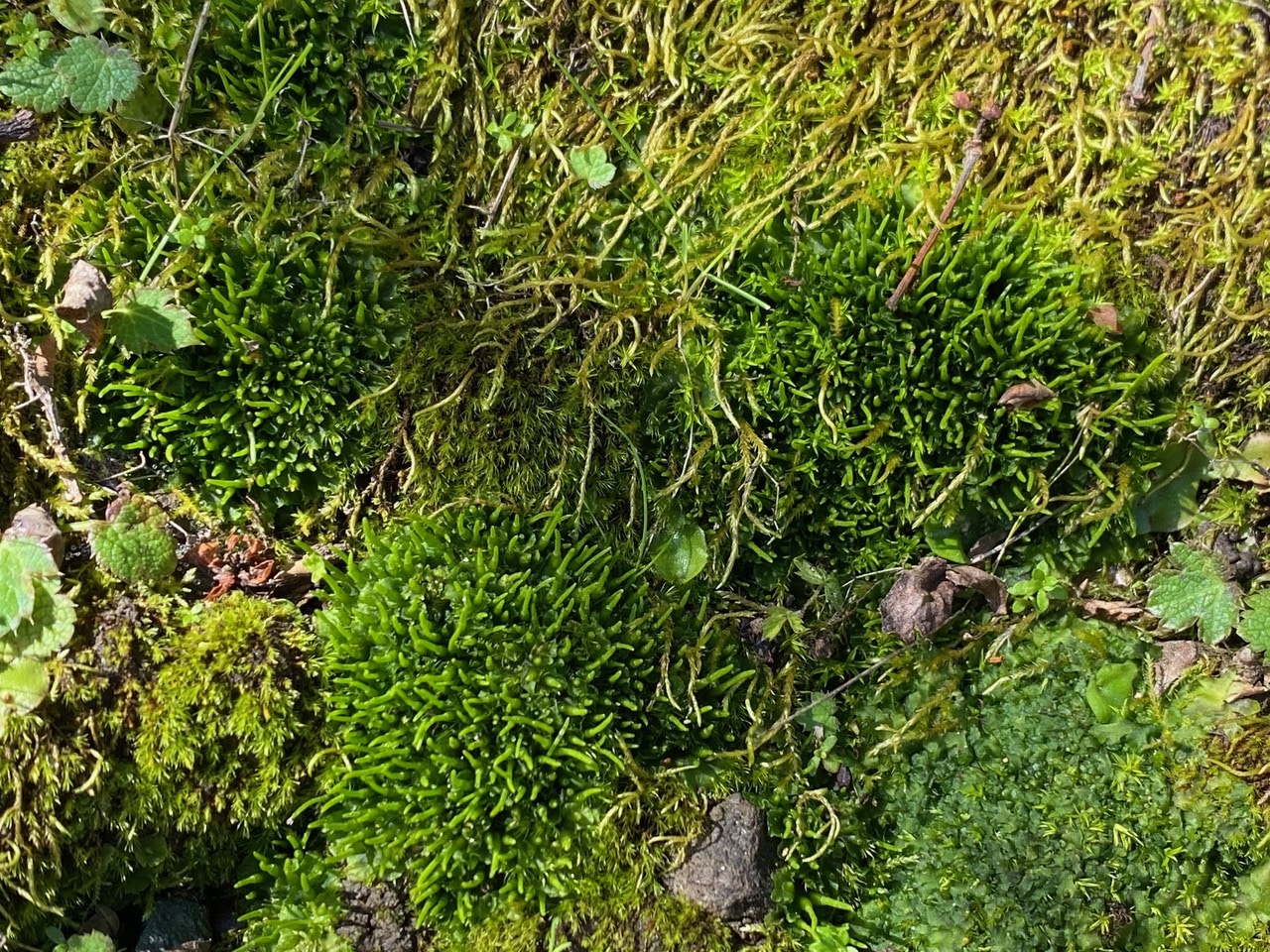
Remember the Bryophytes (mosses, liverworts and hornworts) that we’ve been talking about previously? I am walking the same stretch of Skyline Trail, and finding that the mosses have turned yellowish and stringy, while the Hornworts (the darker patches) have produced their signature “horns”! I have been waiting for this moment for years – in recent years the plants dry up before producing the horn-like sporophytes. The relentless rains we had this winter must have made the hornworts really happy. The sperm could finally swim to the eggs to fertilize them, resulting in this lush display of sporophytes!
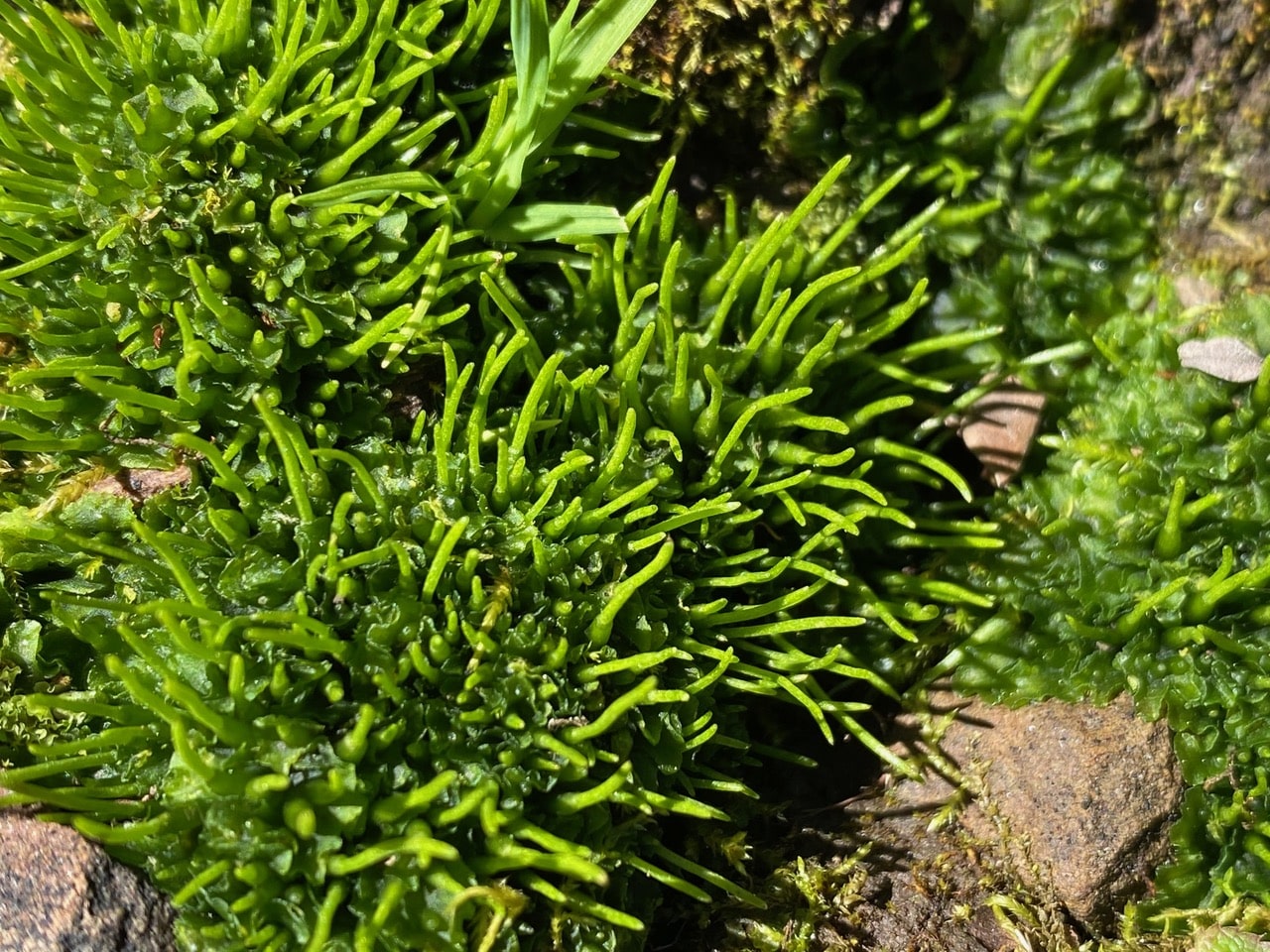
Close-up of the Hornwort with their horn-like sporophytes.
The Hornworts (Anthocerotophyta) belong to the broad bryophyte group that have colonized a variety of habitats on land, although they are never far from a source of moisture. The life cycle of the hornworts follows alternation of generations, cycling between haploid gametophytes and diploid sporophytes. The gametophyte is the dominant phase of the life cycle of a hornwort. The gametophytes grow as flat, blue-green thalli on the soil with embedded gametangia. Flagellated sperm swim to the archegonia and fertilize the eggs. The zygote develops into a long and slender sporophyte that eventually splits open, releasing spores. The haploid spores germinate and produce the next generation of gametophytes. Some hornworts may also reproduce asexually through fragmentation.

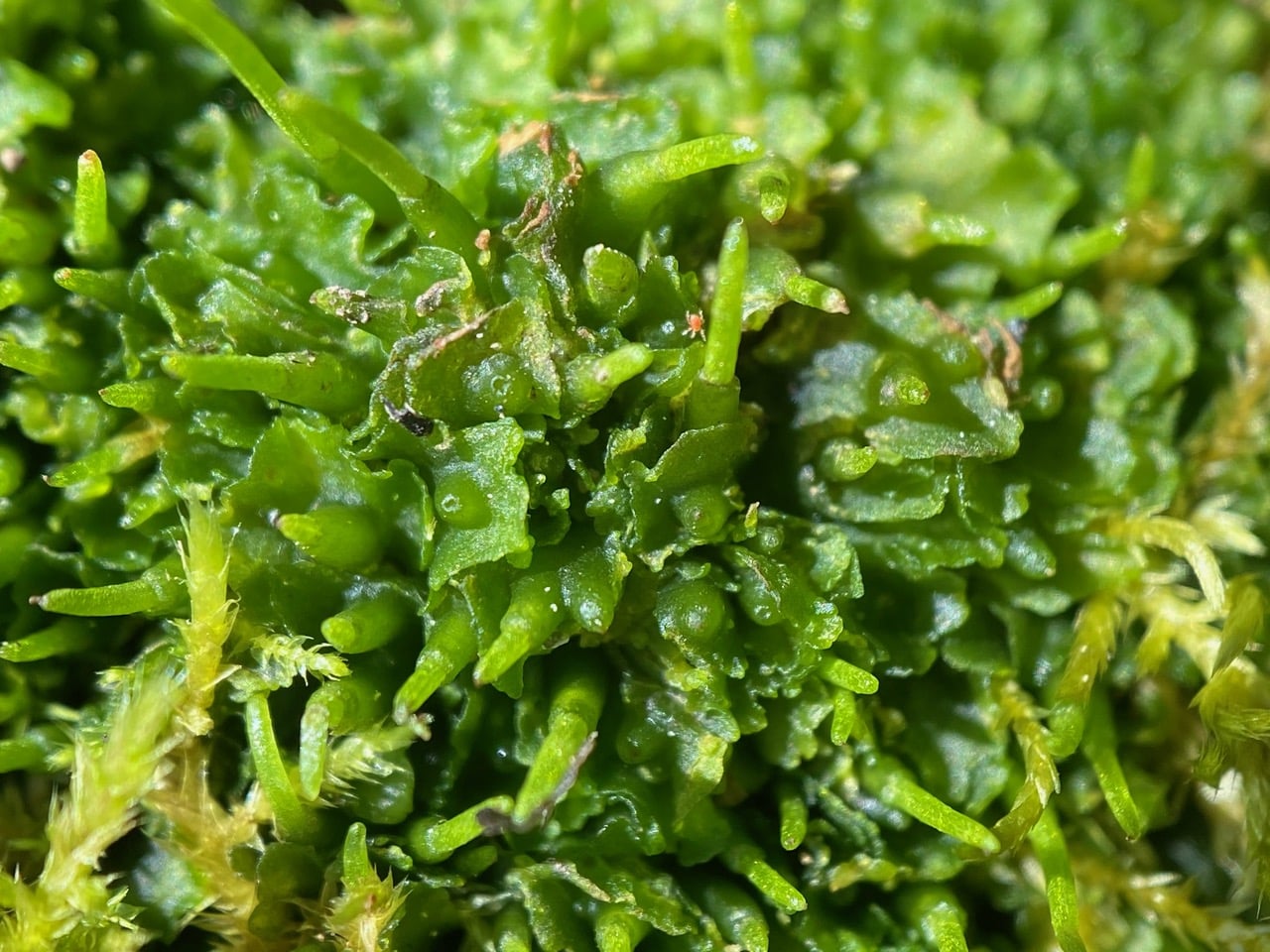
Close-up of Hornwort gametophytes with young sporophytes sprouting from the thalli.
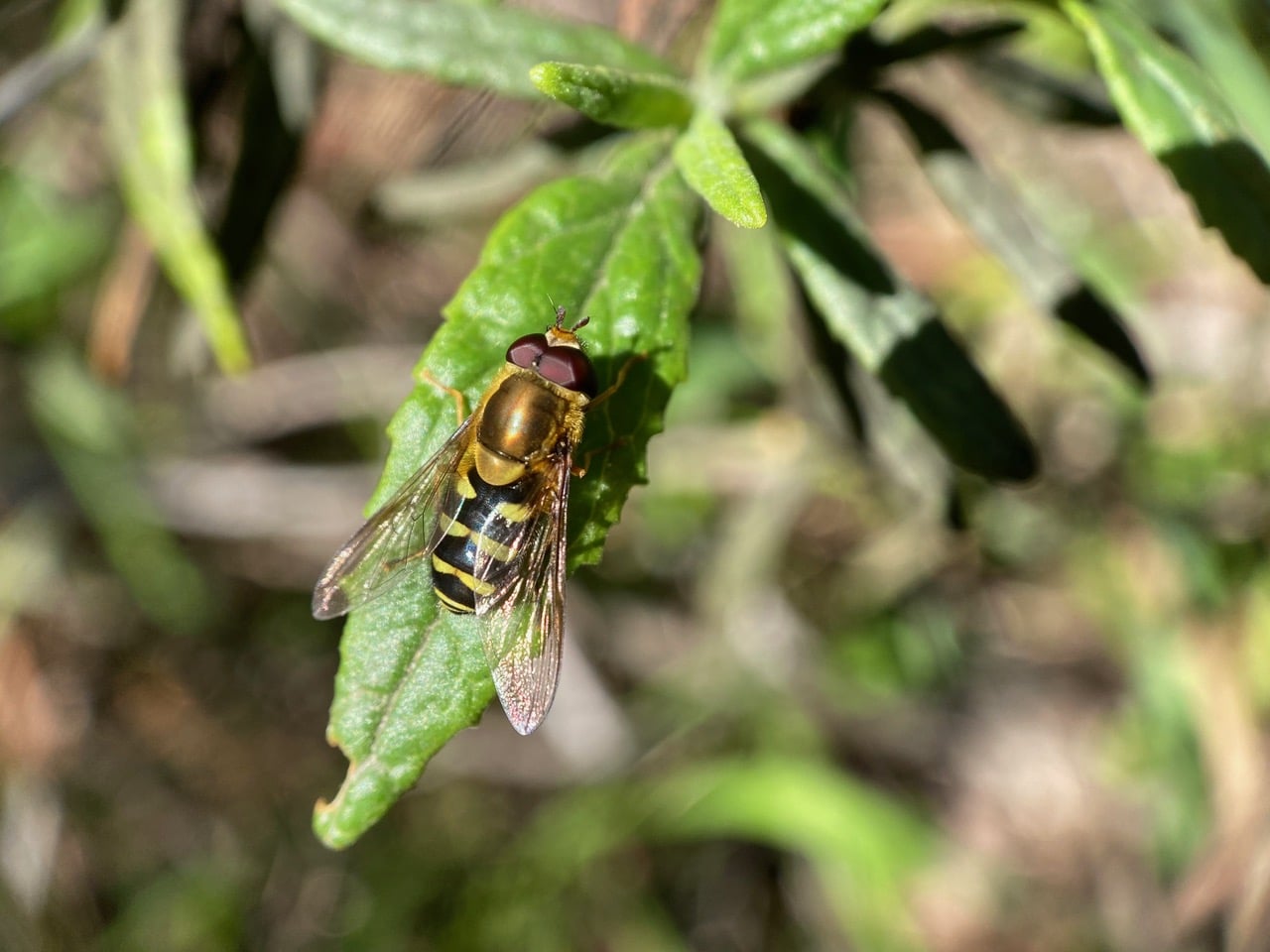
A Black-margined Flower Fly, Syrphus opinator (family Syrphidae) lands on a Sticky Monkeyflower leaf to bask.
The Black-margined Flower Fly, Syrphus opinator is common in central California during winter months. It can be distinguished from similar species by the abdominal fascia restricted to the sides and isolated from the margins. It is the quintessential hover fly that mimics bees or wasps. The black-and-yellow banding on the abdomen serves to ward off potential predators that want to avoid prey with stings – a form of Batesian mimicry. Larvae of Syrphus opinator feed on aphids and other soft-bodied insects.
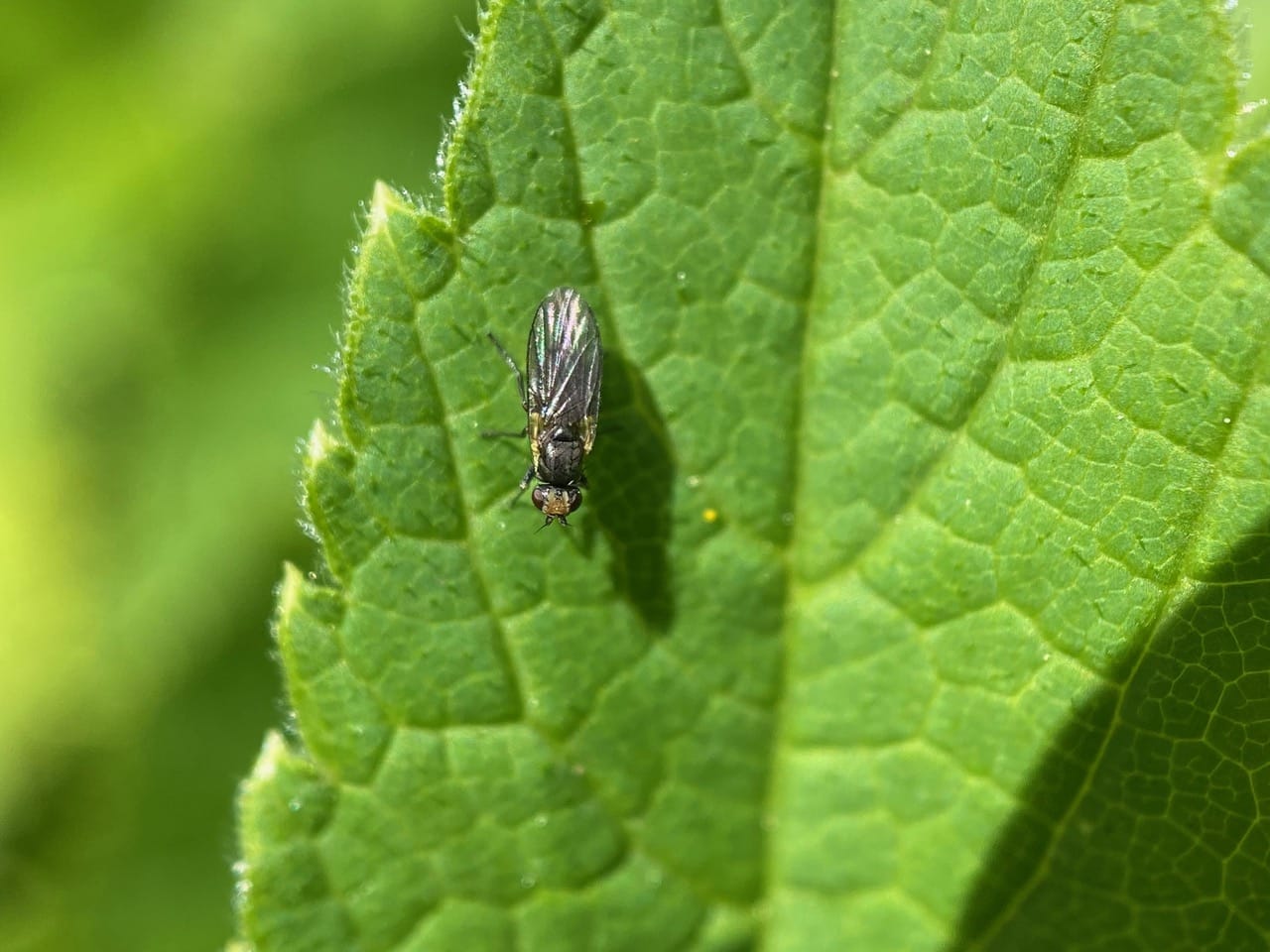
A tiny fly, barely 2 mm is walking on a leaf.
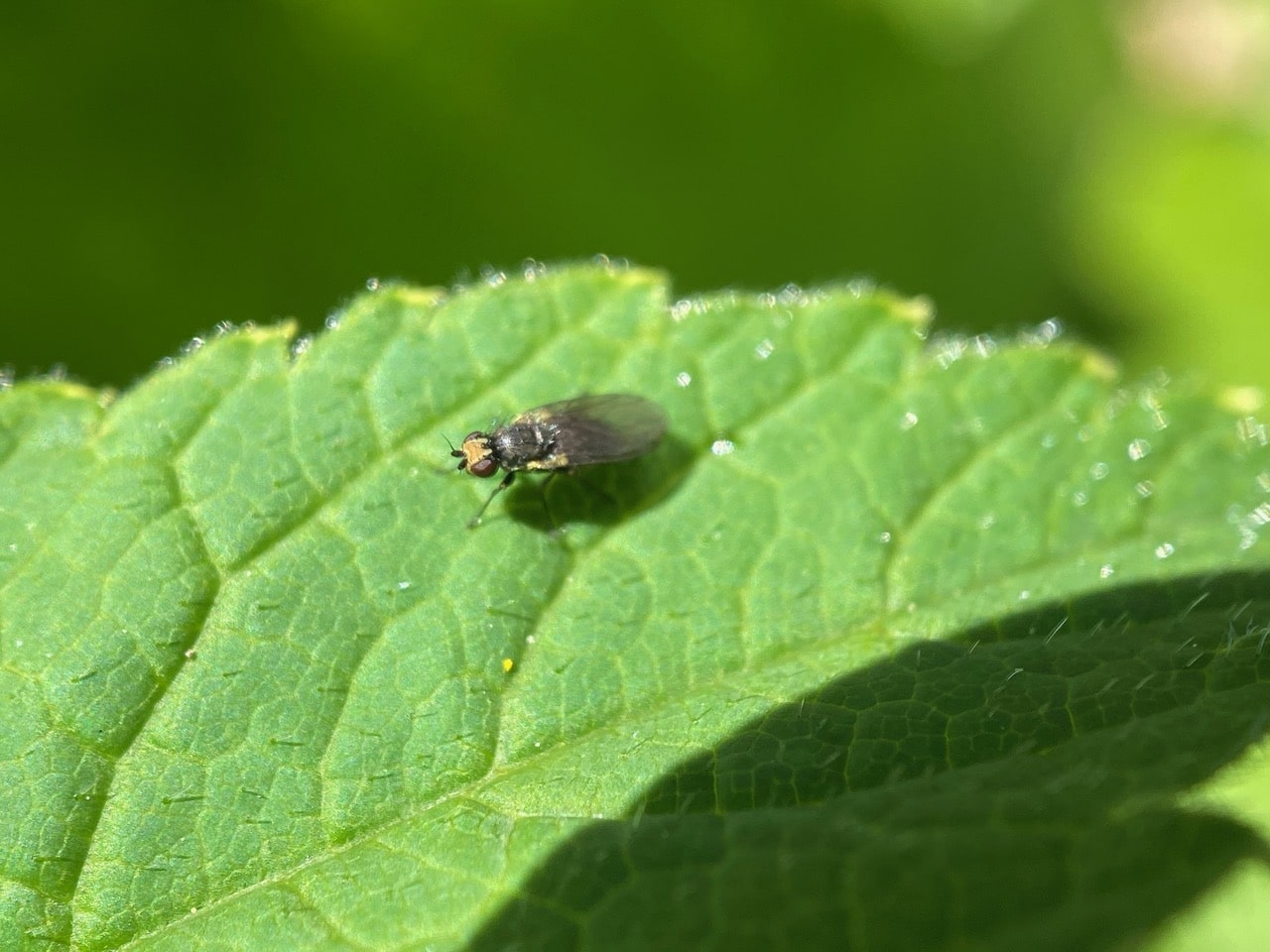
Judging by its minute size, I am almost sure that it is a Leaf-miner Fly (family Agromyzidae).
The Agromyzidae are a family commonly referred to as the Leaf-miner Flies, for the feeding habits of their larvae, most of which are leaf miners on various plants. They are small flies, most species in the range of 2-3 mm. Agromyzidae larvae are phytophagous, feeding as leaf miners, less frequently as stem miners or stem borers. A few live on developing seeds, or produce galls. There is a high degree of host specificity. A number of species attack plants of agricultural or ornamental value, so are considered pests. The shape of the mine is often characteristic of the species and therefore useful for identification. Adults occur in a variety of habitats, depending on the larval host plants.
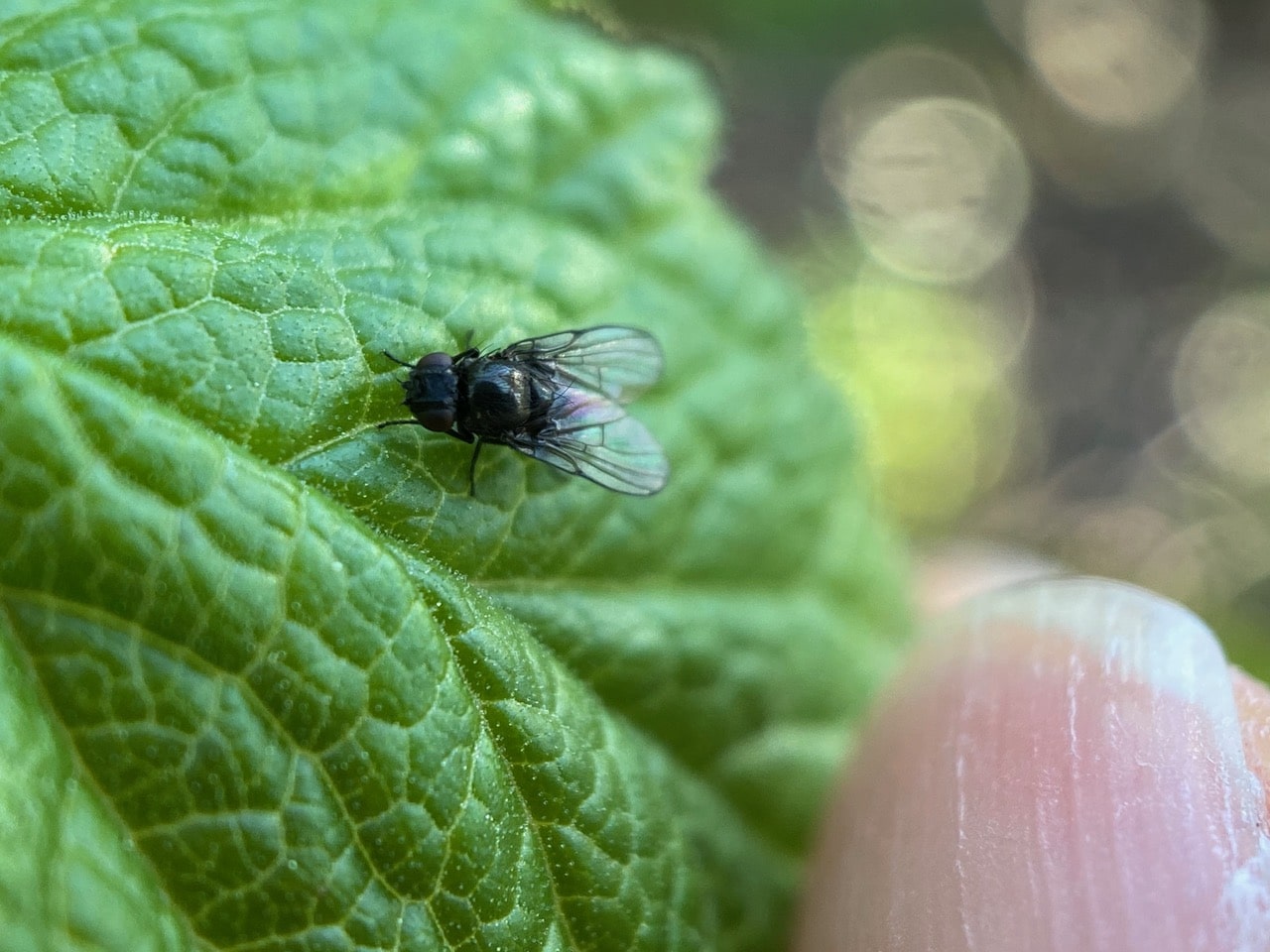
Ooh, here’s another Leaf-miner Fly (family Agromyzidae). What interesting wing venation! I think it might belong to the genus Ophiomyia.

Returning to the Steam Train entrance, I pass the same patch of California Buttercups again. The morning has warmed up considerably and I see more insect activity on the few flowers. Look, there’s a little bee foraging on one of the flowers, its body already covered with scattered pollen. I think this might be a male as I don’t see much of a scopa (pollen-collecting hairs) on its hind legs.
Bee are generally hairy creatures. That’s what makes them excellent pollinators. Their “hairs” are not true hairs, as technically, only mammals have hair (made of keratin). The bee’s hairs are made of chitin. These hairs are also branched, the better to pick up pollen by electro-static attraction.

Bees actually evolved from their less hairy relatives, the wasps. I like to tell kids that bees are wasps that have turned vegetarian. While most wasps feed their young a carnivorous diet, the bees have evolved to rely on pollen and nectar instead. Pollen is a rich source of protein for the growing young.
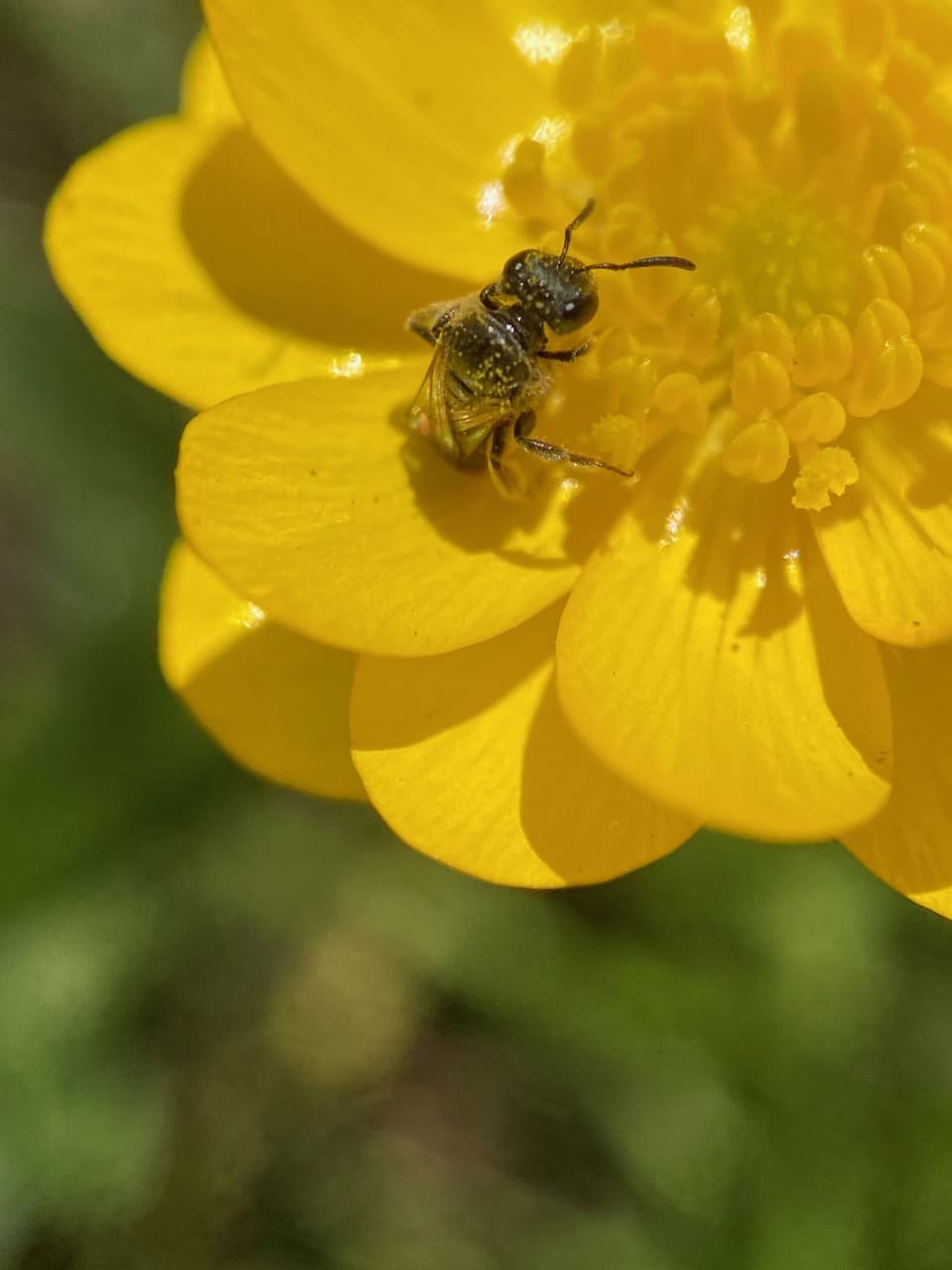
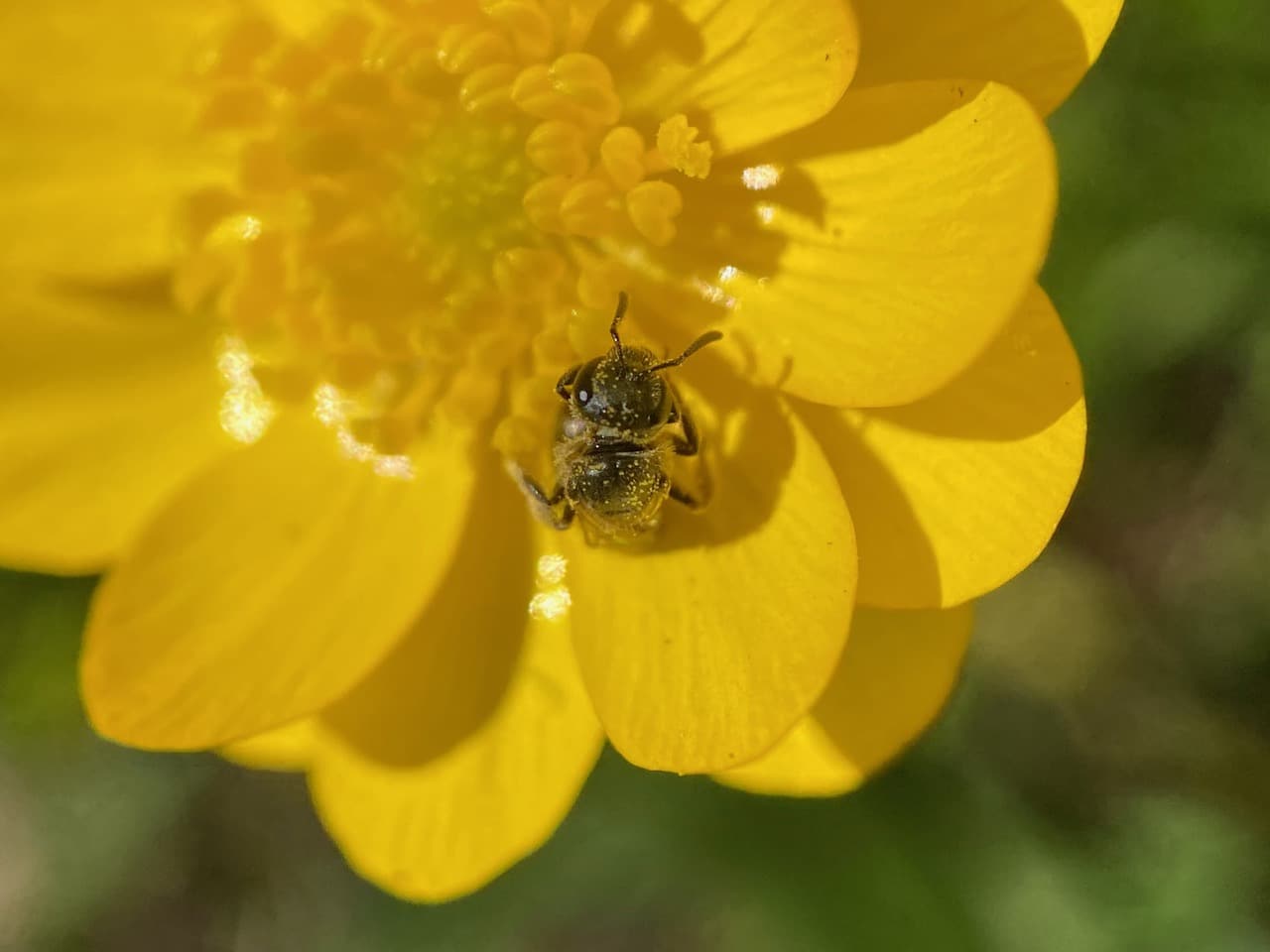
Ah, I think I finally see the feature I’m looking for – the faint hairs that line the eyes that is characteristic of the Mining Bees in the genus Andrena (family Andrenidae).
Andrena is likely the largest and most species-diverse bee genus in California. It is one of the largest bee genera in the world. The floral preferences of Andrena species span the range of bee diets; some are broad generalists, and a number are strict specialists. Andrena are among the first bees to fly in the spring; their ability to withstand the chill is still a puzzle to scientists. The bees can’t fly until their body temperatures reach 50-60 F. They rely on the warmth of the sun to get them to speed, and it is not uncommon to see them warming up on leaves or rocks. This cold-hardiness makes Andrena excellent pollinators of early spring wildflowers and cultivated crops.
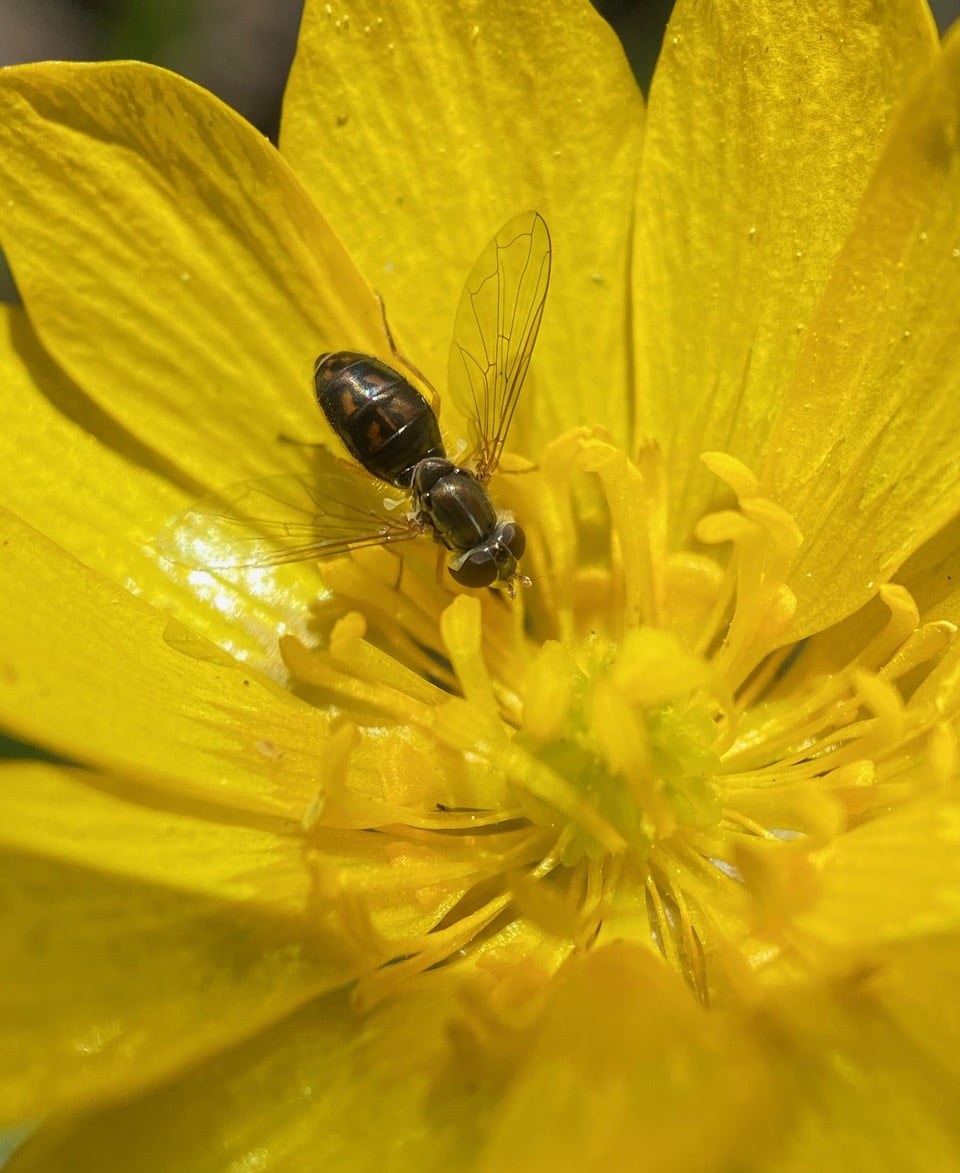
So much easier to identify a Hover Fly! Many have distinctive and beautiful abdominal patterns. This one is a female Western Calligrapher, Toxomerus occidentalis (family Syrphidae), albeit an exceptionally dark individual.
Toxomerus is a very large genus of Hover Flies. They are found in North and South America. The majority of species are only 6-9 mm in length. They are notable for their mimicry of stinging Hymenoptera to avoid predators. Their unique abdominal patterns are diagnostic at the species level within the genus. Most larvae feed on soft bodied insects, such as aphids; a few feed on pollen. Adults feed on the pollen of a wide range of flowers. A female can lay up to hundreds of eggs at a time and will place them where prey or pollen food sources are readily available. They can be found in a wide variety of habitats, often in dense ground cover.