

Pollinator Post 3/14/24 (1)
Before I walk through the cattle gate at the Steam Train entrance to the Skyline Gardens, I stop to watch a coyote saunter through the grassy field and disappear behind the Coyote Brushes. Cool! Not a bad way to start the day!
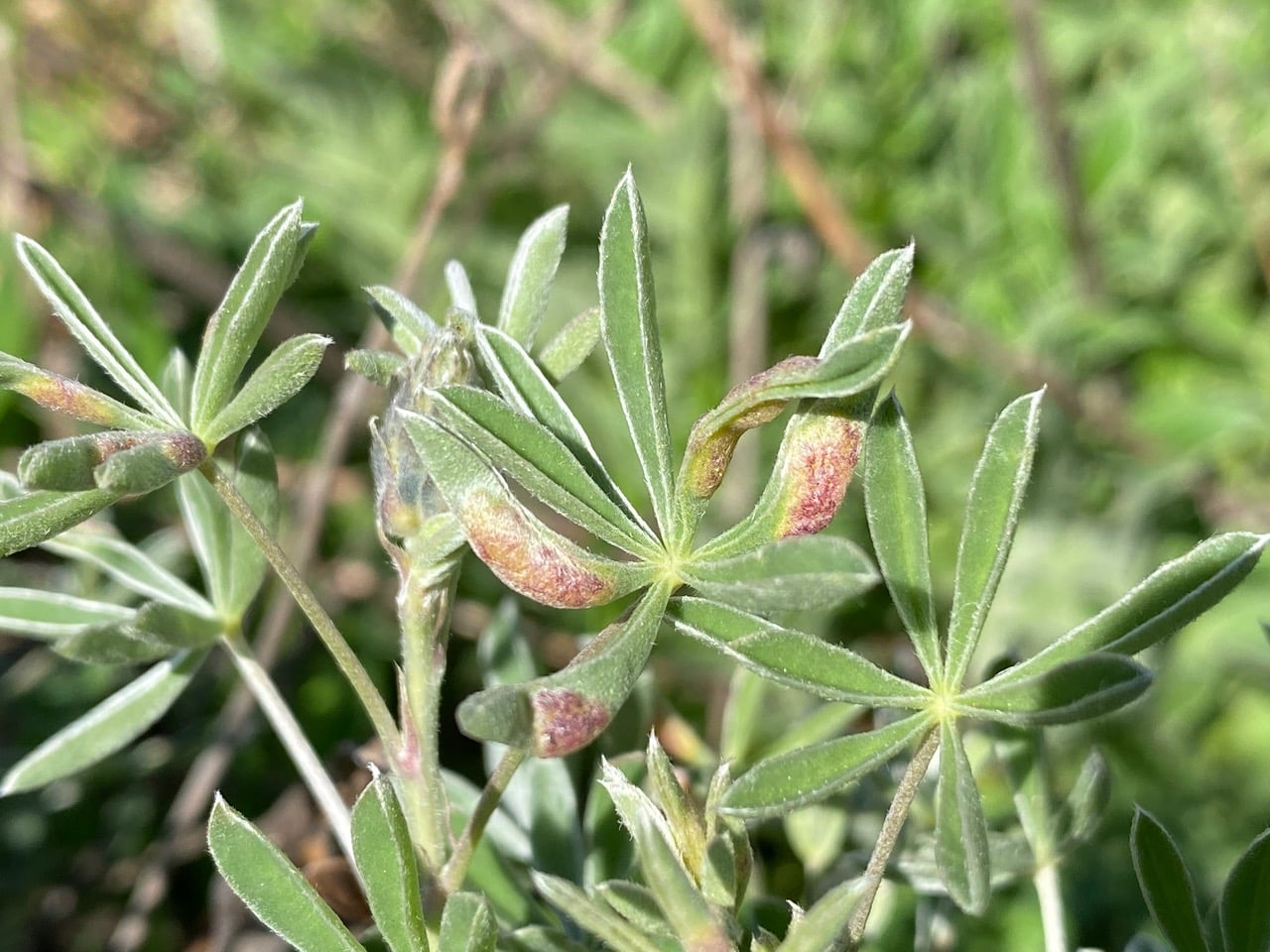
The Silverleaf Lupine, Lupinus albifrons at the entrance are not yet in bloom. Instead I notice numerous reddish swellings on the leaflets that are folded along the midrib. These tumor-like growths are induced by the Leaf-fold-gall Midge, Dasineura lupinorum, family Cecidomyiidae. Females lay their eggs on unopened leaflets in growing buds. Newly hatched larvae crawl between the closed halves of the leaflets and begin feeding, stimulating formation of the swollen galls. The larvae complete development inside the gall and remain there through pupation. The midge produces several generations per year.
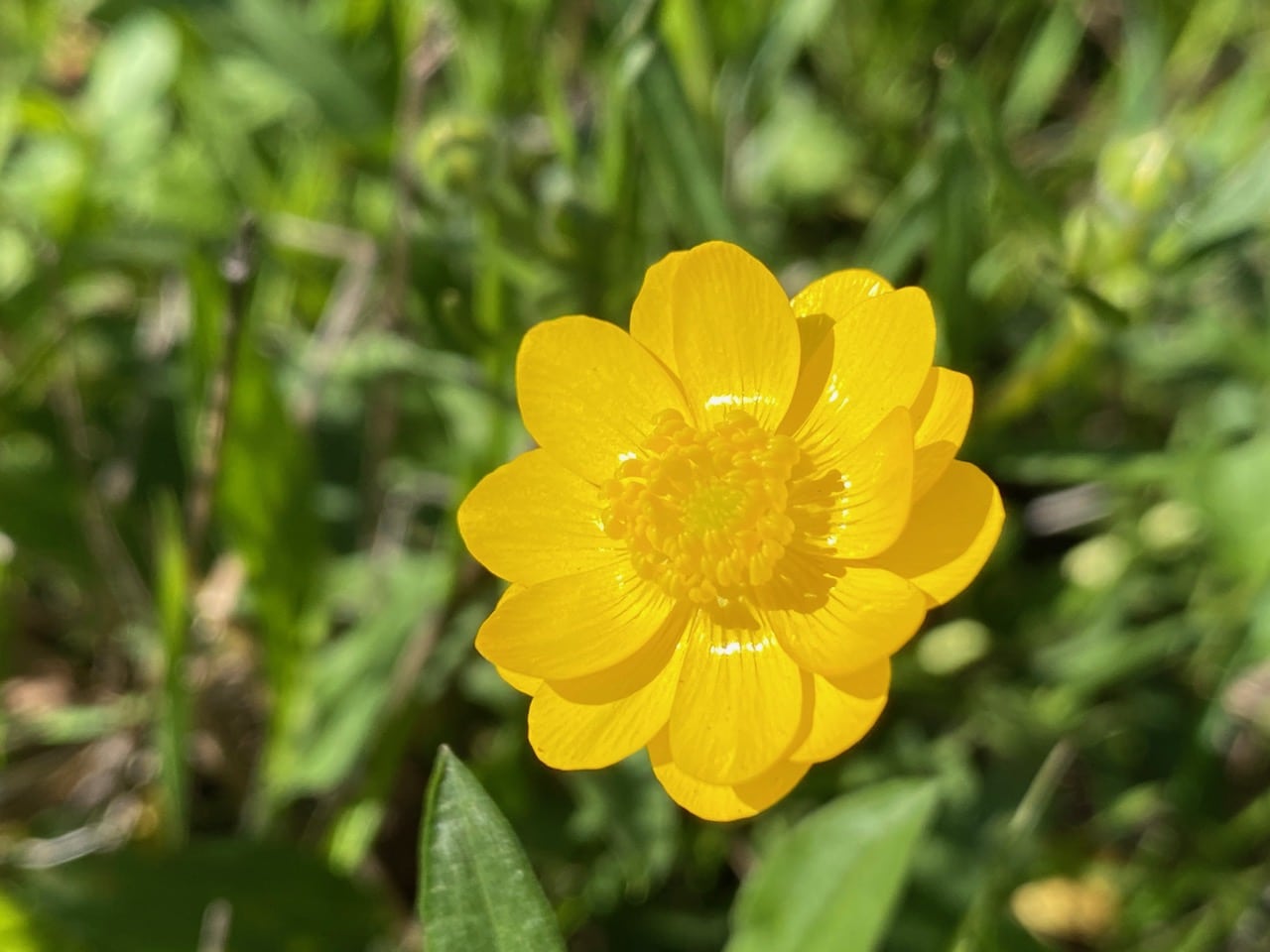








Near the gate, a small patch of California Buttercup, Ranunculus californicus has started to bloom. The dozen or so flowers track the sun with their glossy yellow petals.
Buttercups have a trick for warming their flowers that may be unique to this group of plants. The coloration of glossy buttercup flowers is due to a rare combination of structural and pigmentary colorations. The top single-cell layer of the petal, the epidermal layer is ultra-smooth and contains pigments that reflect yellow. This layer is anchored lightly to a starch layer below. Between the epidermis and the starch are pockets of air. The interference between the epidermis and the airy layer below creates a thin-film producing a shiny, mirror-like effect. The light that is not absorbed by the pigments in the epidermis ends up passing through and hitting the starch layer below the air pockets. The starch layer has a scattering effect, sending the scattered light back through the pigment layer, intensifying the yellow color. Essentially the pigment is used twice.
Are there any evolutionary advantages to the buttercup’s intense color and glossiness? There are two likely functions. It provides a strong visual signal to insect pollinators. The petals also act together like a parabolic reflector, focusing visible and infrared light on the flower center. Warming the pollen-producing stamens boost their maturation and chance of pollination. What’s more, insect pollinators prefer warmer flowers because it allows them to forage on cold mornings.

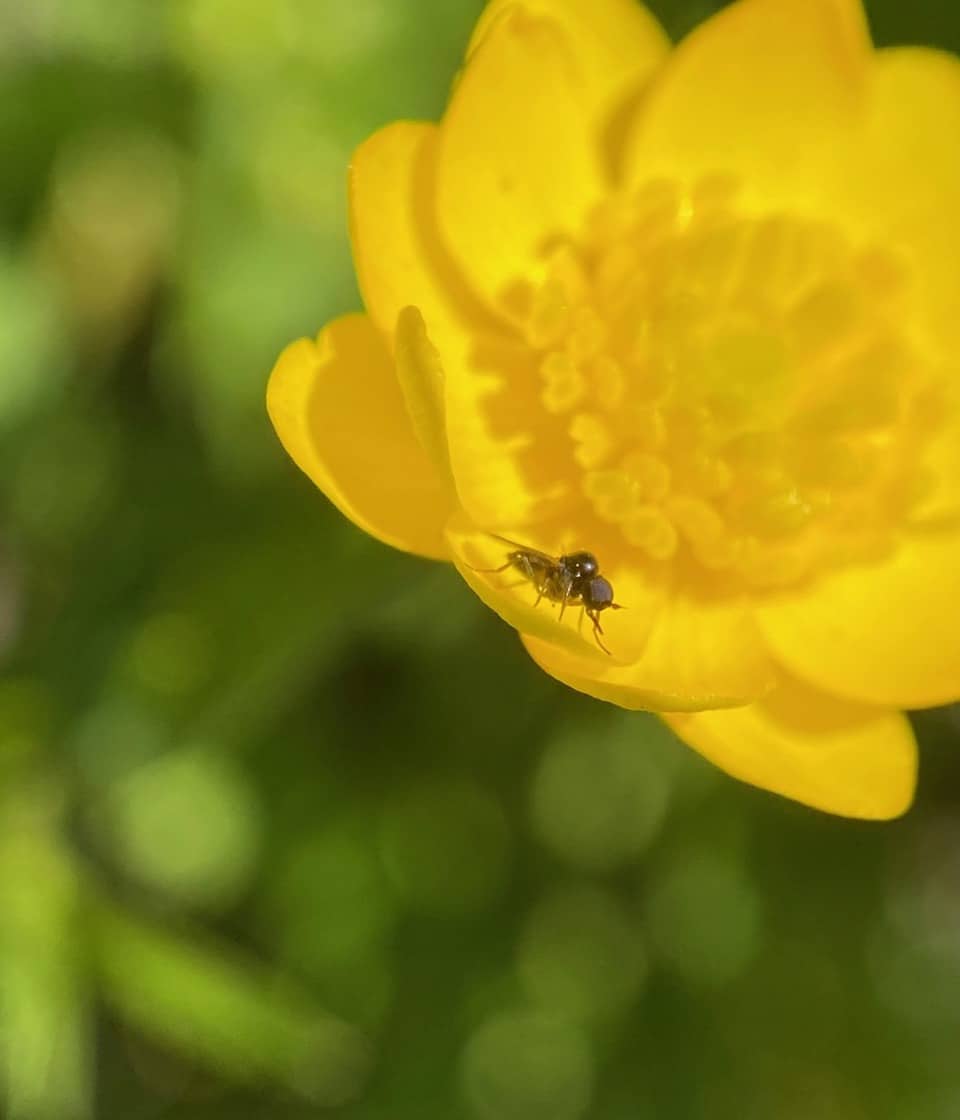
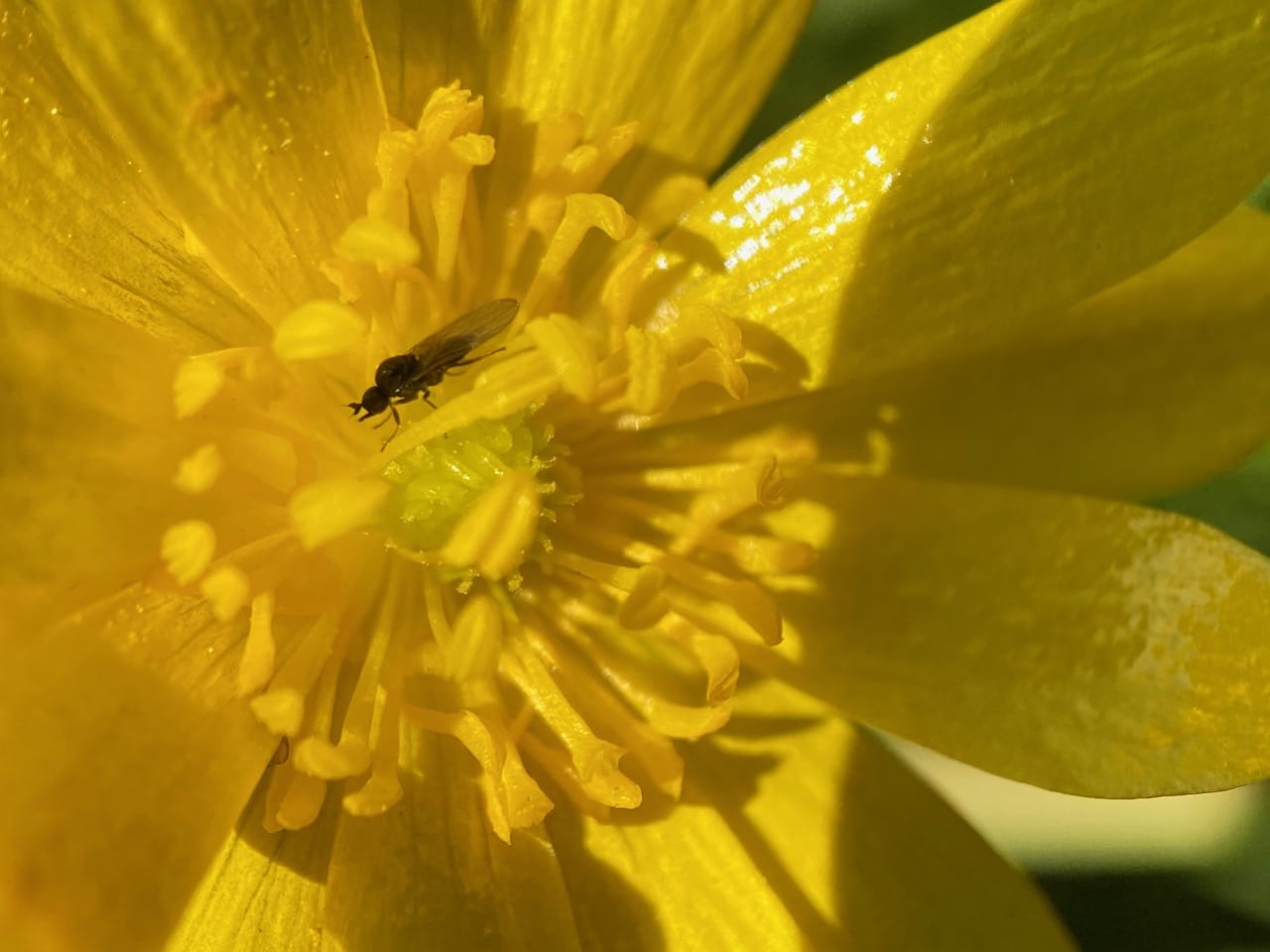
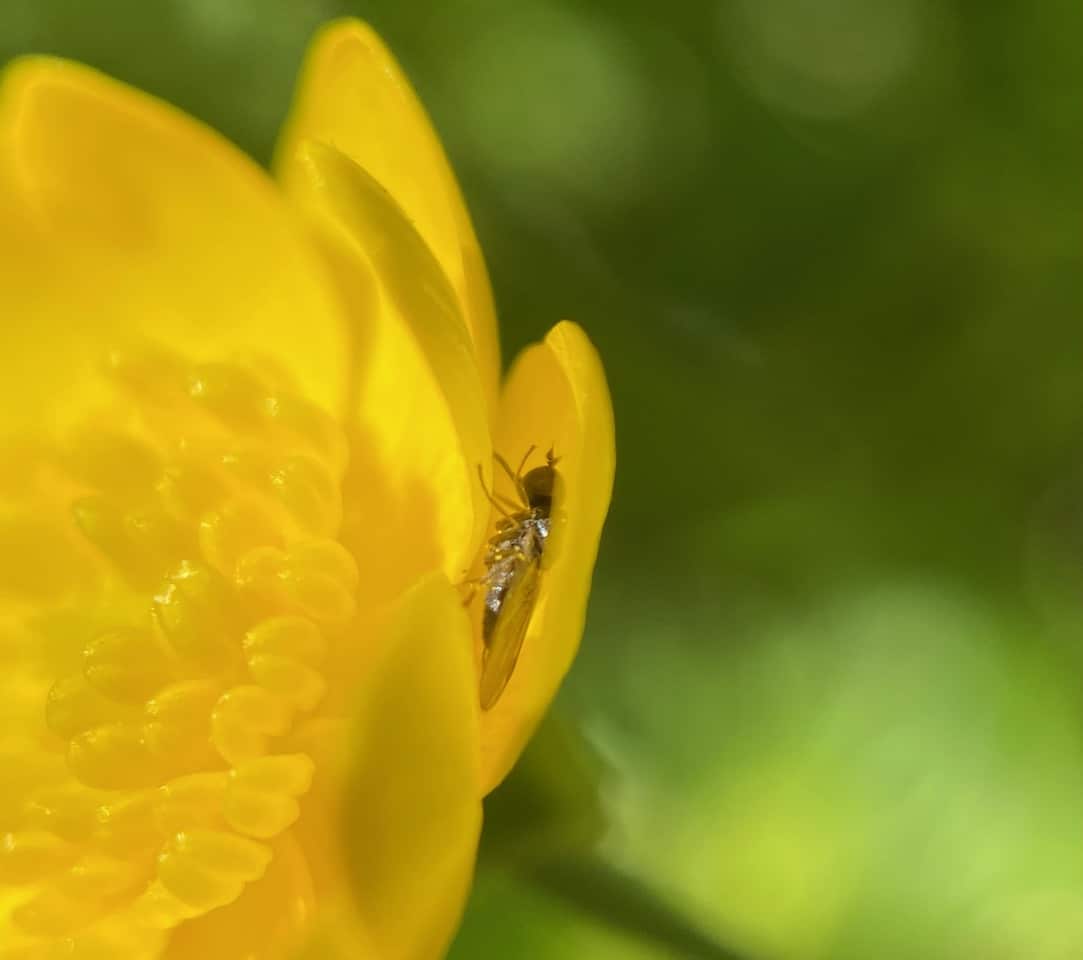
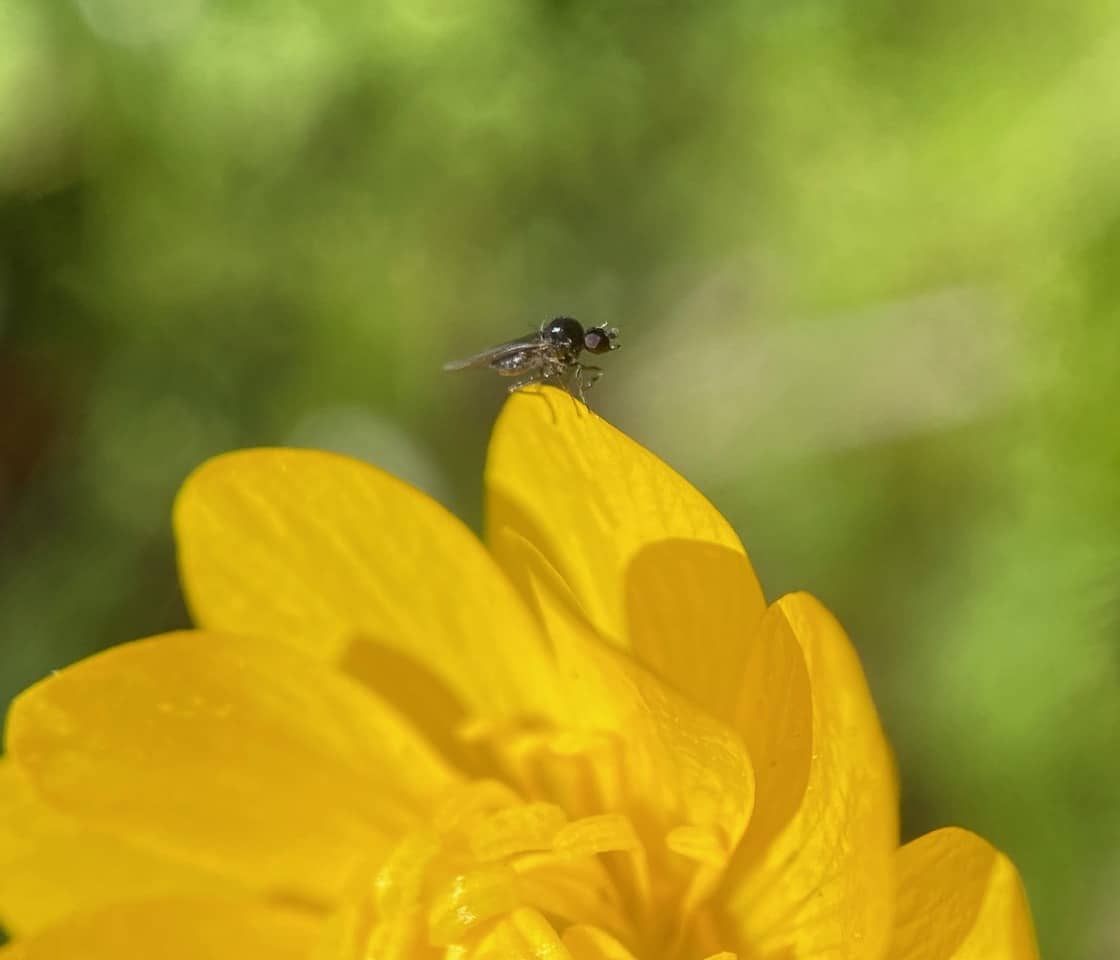
As it is still early and cold, hardly any insects are out foraging yet. But look who has beaten me to the buttercups – none other than a Hybotid Dance Fly (family Hybotidae). The small size, humped thorax and straight proboscis are recognizable characteristics. I often see these tiny flies on small flowers – the buttercups are almost too big for them. The insects are cold tolerant and seem to be found wherever there’s pollen and nectar. This individual looks like a gravid female.
Measuring merely 2-3 mm, these flies have large compound eyes that seem to take up most of their spherical heads. These flies belong to the superfamily Empidoidea and were formerly included in the Empididae as a subfamily. Empididae generally have a thick beak pointing down, while Hybotidae have a thinner beak, or a thick beak pointing forwards or diagonally. Some crucial wing venation further distinguishes the two families. Precious little is known about the life cycle and biology of Hybotids because they are not considered of economic consequence. Since their forelegs are generally not raptorial, I wonder if they’re predaceous like the Empidids. I have seen the Hybotids visit flowers for nectar and pollen, notably on Soap Plant, Miner’s Lettuce, California Saxifrage, and Wild Geranium, and I believe they may contribute to the pollination of these flowers.
I watch as a fly crawls down between the petals, probably seeking nectar.
There’s one in the middle of a flower among the stamens.
What is this fly doing, holding still between the petals. Keeping warm? Or has it gone down to access nectar at the base of the petal?
Pollen grains can be seen adhering to the body of many of the Hybotid Dance Flies.
This one crawls out of a flower with pollen grains stuck on its body and wings. Tiny as these flies are, they are probably capable of transferring pollen between the buttercup flowers and effectively pollinating them.
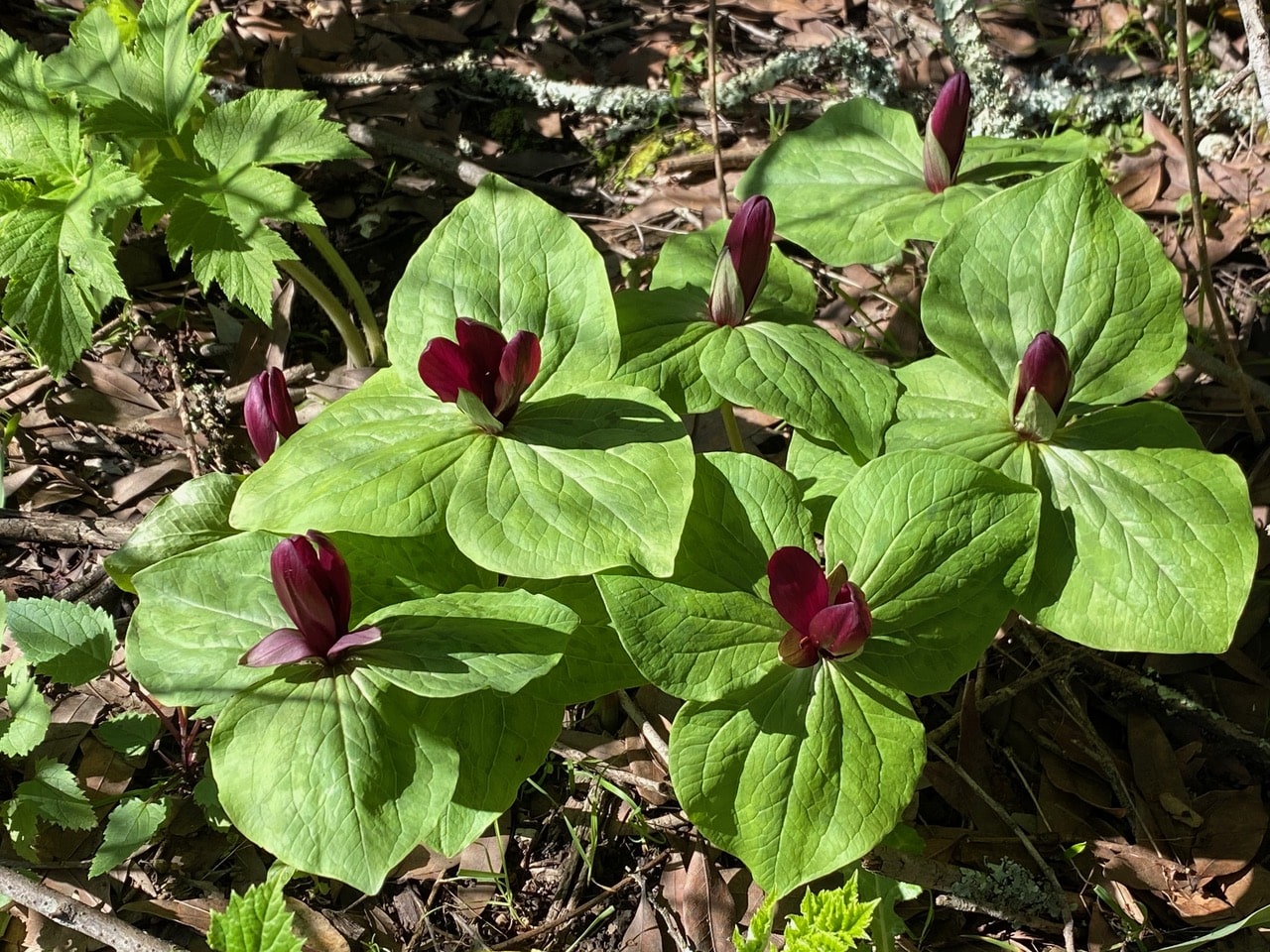
A patch of Giant Trillium, Trillium chloropetalum is blooming beautifully. As is my habit now, I peek into each flower to make sure that I am not missing any pollinator. Nada, all’s quiet. These flowers are not divulging their pollination secrets.
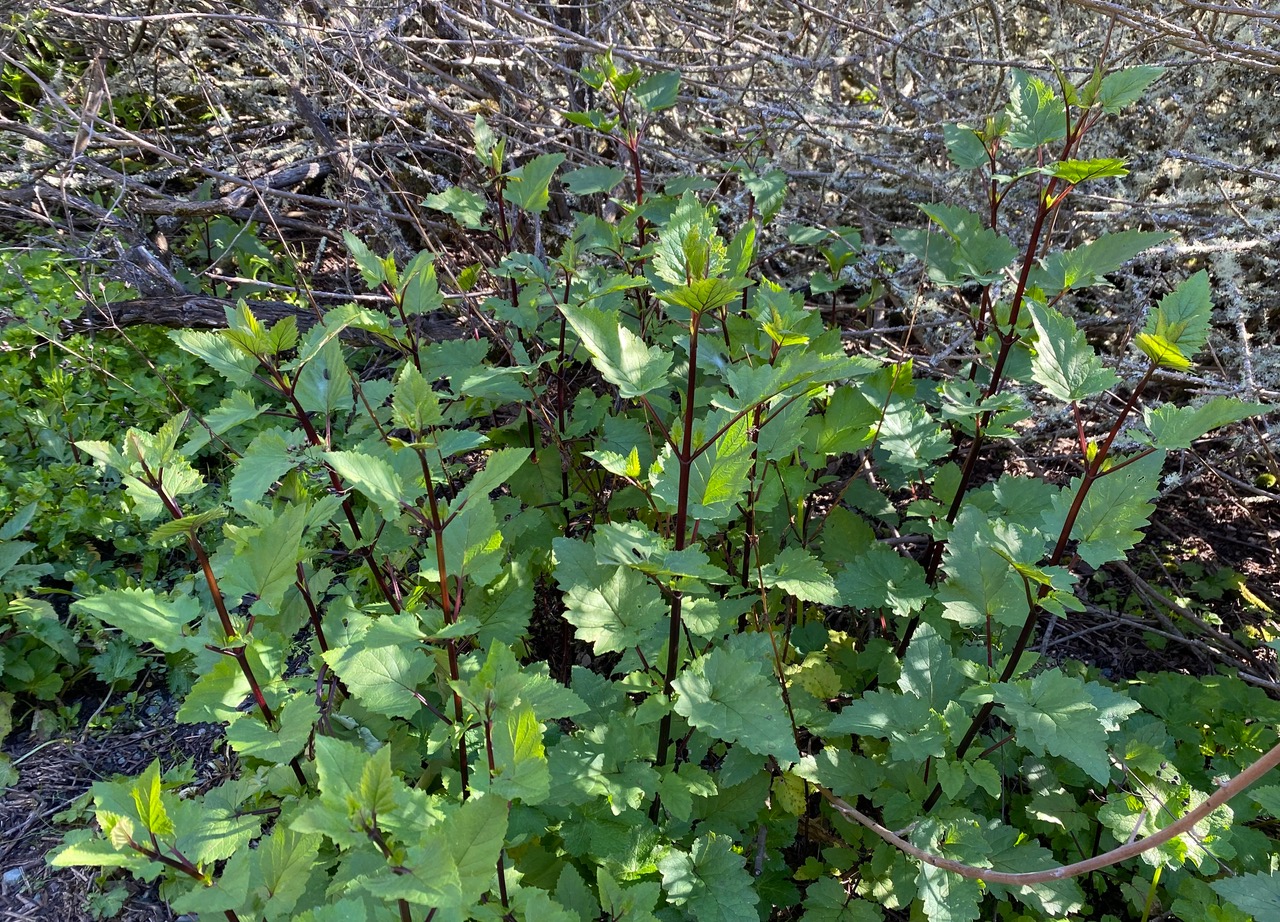
Along the trail, the Bee Plant, Scrophularia californica has grown big and tall, but not showing any flowers yet.
A tiny insect lands on a leaf of Bee Plant. It is a male Non-biting Midge (family Chironomidae). Love those plumose antennae!
The Chironomidae is a large and diverse family of flies, with over 20,000 species known world-wide. Adult midges are small, most measuring 1-10 mm long, with narrow bodies and long legs. They resemble mosquitos, but do not bite. Males have long, feathery (plumose) antennae. Adults are short-lived. They feed on fly droppings, nectar, pollen, honeydew, and various sugar-rich materials. Larvae are mostly aquatic or semi-aquatic; most occur in freshwater habitats, a few occur in decaying matter, under bark, in moist ground, or tree holes. Larvae are mostly scavengers/detritivores. Collectively, they play a vital role in freshwater ecosystems as primary consumers. They harvest an enormous amount of energy from detritus and are important food items for fish, amphibians, birds, and predatory insects such as dragonflies and dance flies. Adult Chironomids can be pests when they emerge in large numbers, forming mating swarms over water or road surfaces.

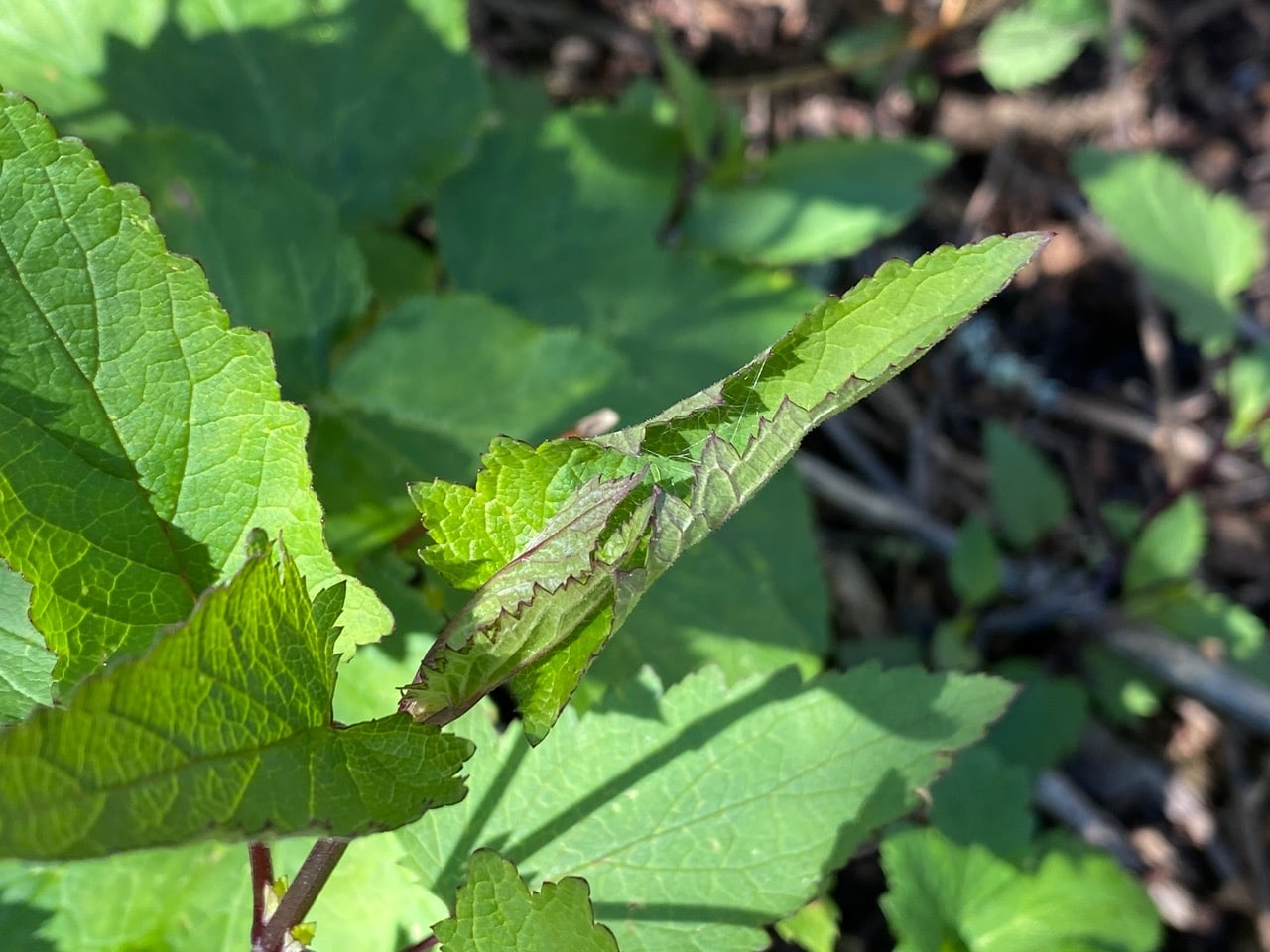
The terminal leaves of this Bee Plant have been tied together with silk. The work of a spider? Or caterpillar? I peek through the open end, but don’t see any occupant.
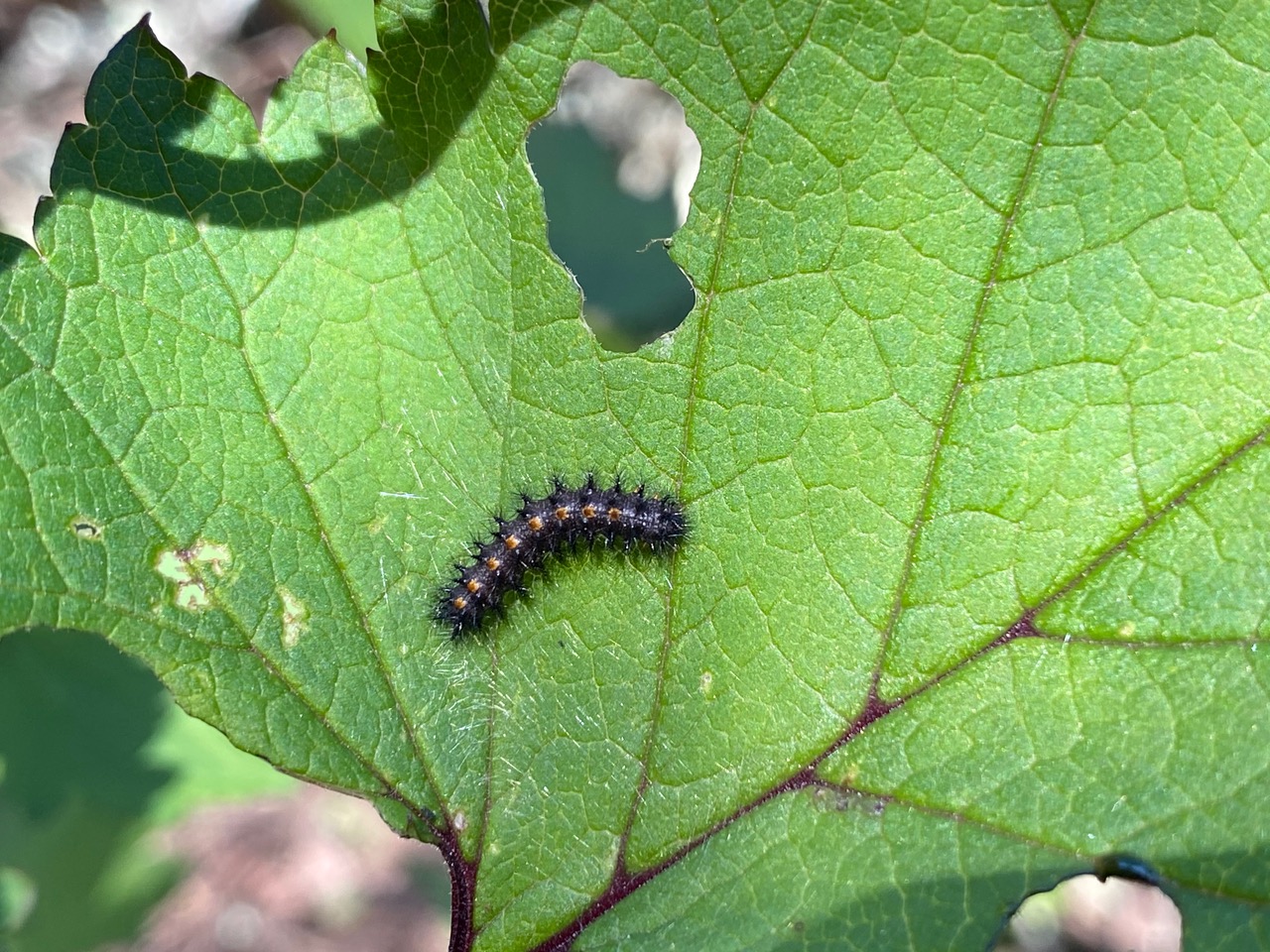
The holes on the Bee Plant leaves alert me to the possible presence of caterpillars. Hah, here’s a tiny one, barely half an inch long. It is probably the larva of the Variable Checkerspot butterfly for whom the plant is a favorite food. The caterpillar has laid down a thin layer of silk to anchor itself on the leaf.
The Variable Checkerspot, Euphydryas chalcedona (family Nymphalidae) is found across western North America. The butterfly occupies a wide range of habitats, including sagebrush flats, desert hills, prairies, open forests and alpine tundra. Males perch or patrol around larval host plants to encounter females. Eggs are laid in large groups on underside of leaves of host plants. Host plants include California Bee Plant, Scrophularia californica, and Sticky Monkeyflower, Diplacus aurantiacus. These plants provide the caterpillars with iridoid glycoside, a chemical that imparts unpalatable taste to birds, protecting the caterpillars from predators. Larvae feed in large, loose groups on the host plants. Individuals overwinter (enter diapause or hibernation) as third or fourth instar larvae in sheltered sites under bark or dead branches, in hollow stems and in rock crevices. Pupation begins in early to mid April and the adult flight season begins between mid-April and May and continues into June. The adults feed exclusively on nectar, and have a life span of about 15 days.
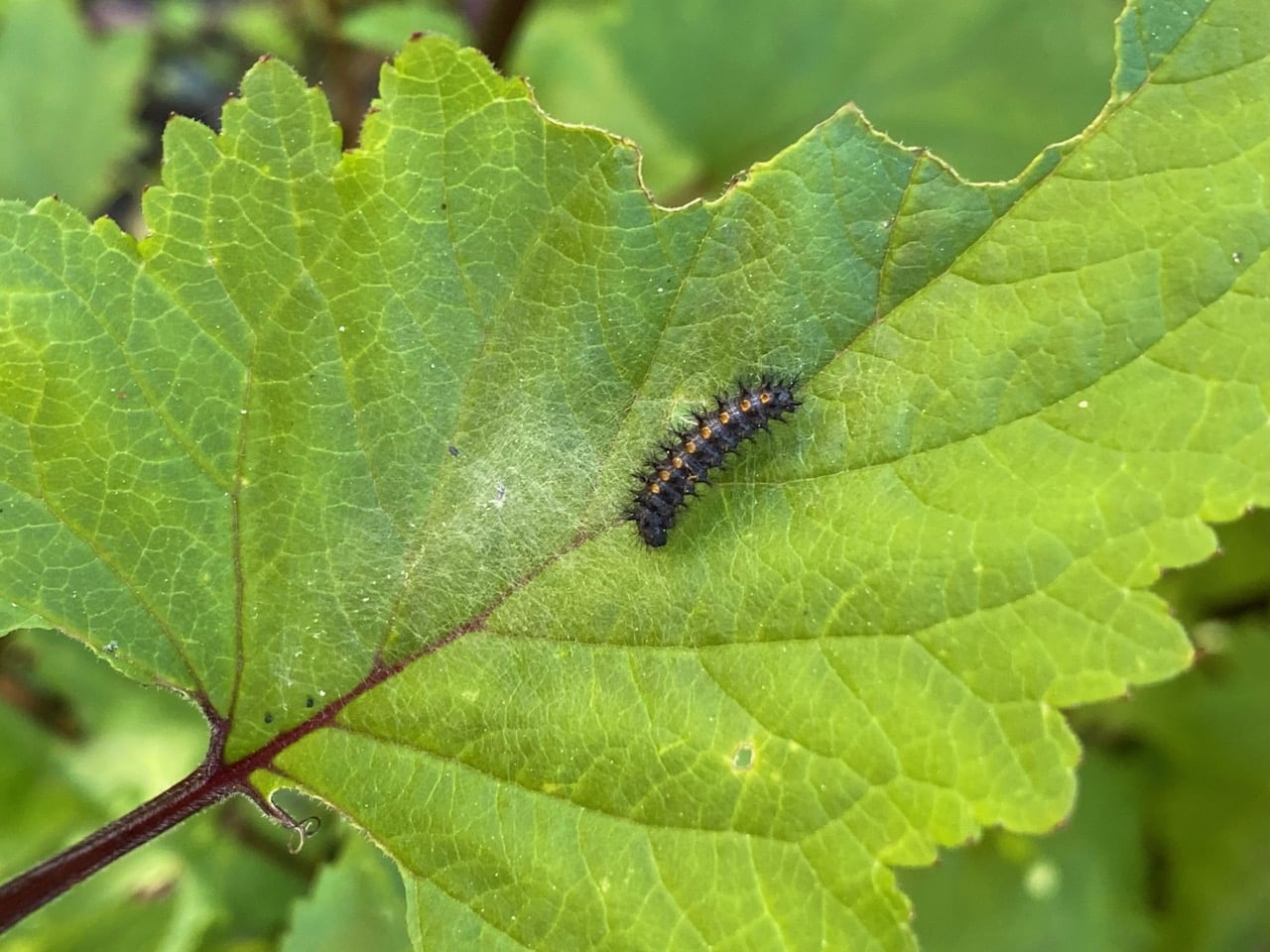
Here’s another one. The silk is more visible on this leaf. It blows my mind to think that the tiny caterpillar has been in diapause (insect version of hibernation) in the leaf litter or under a rock through the winter, and has now woken up to continue its life cycle on the host plant.
Gardeners should be aware that many caterpillars hibernate in the leaf litter near their host plants. Cleaning up the garden excessively in the fall may destroy these young lives.
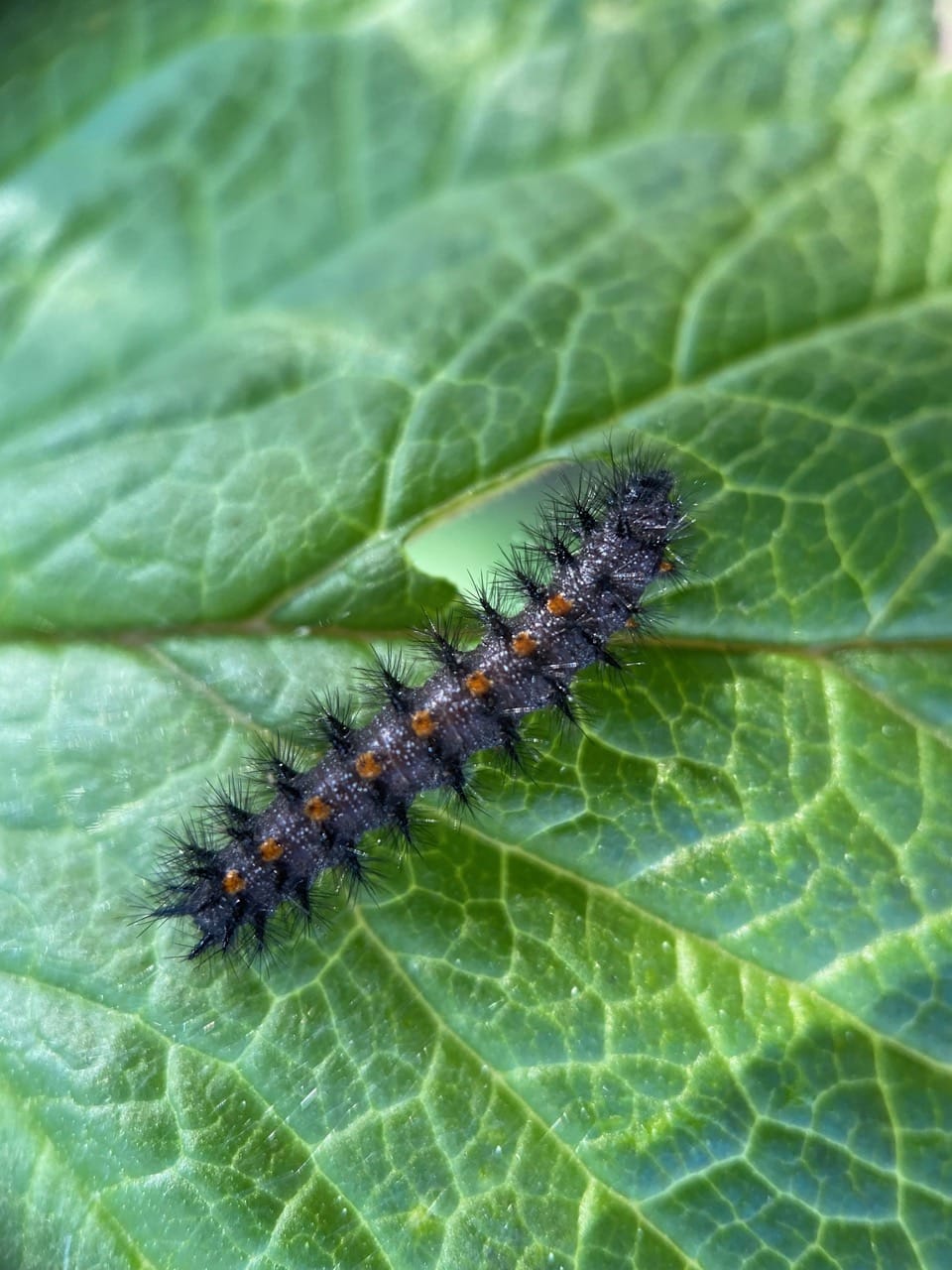
This caterpillar has nibbled on the edge of the tender leaf, and left little pellets of frass (insect poop) below it. Most accounts of the life cycle of the species tell that the young caterpillars tend to feed in aggregation, but I am seeing about a dozen of them, all feeding solo, each on its own leaf. Perhaps they have yet to find each other, or maybe they feed solo after hibernation?
Close-up view of the Variable Checkerspot caterpillar feeding on a Bee Plant leaf.
This caterpillar seems to be undertaking a construction project with silk. Is it making a retreat in which to molt?
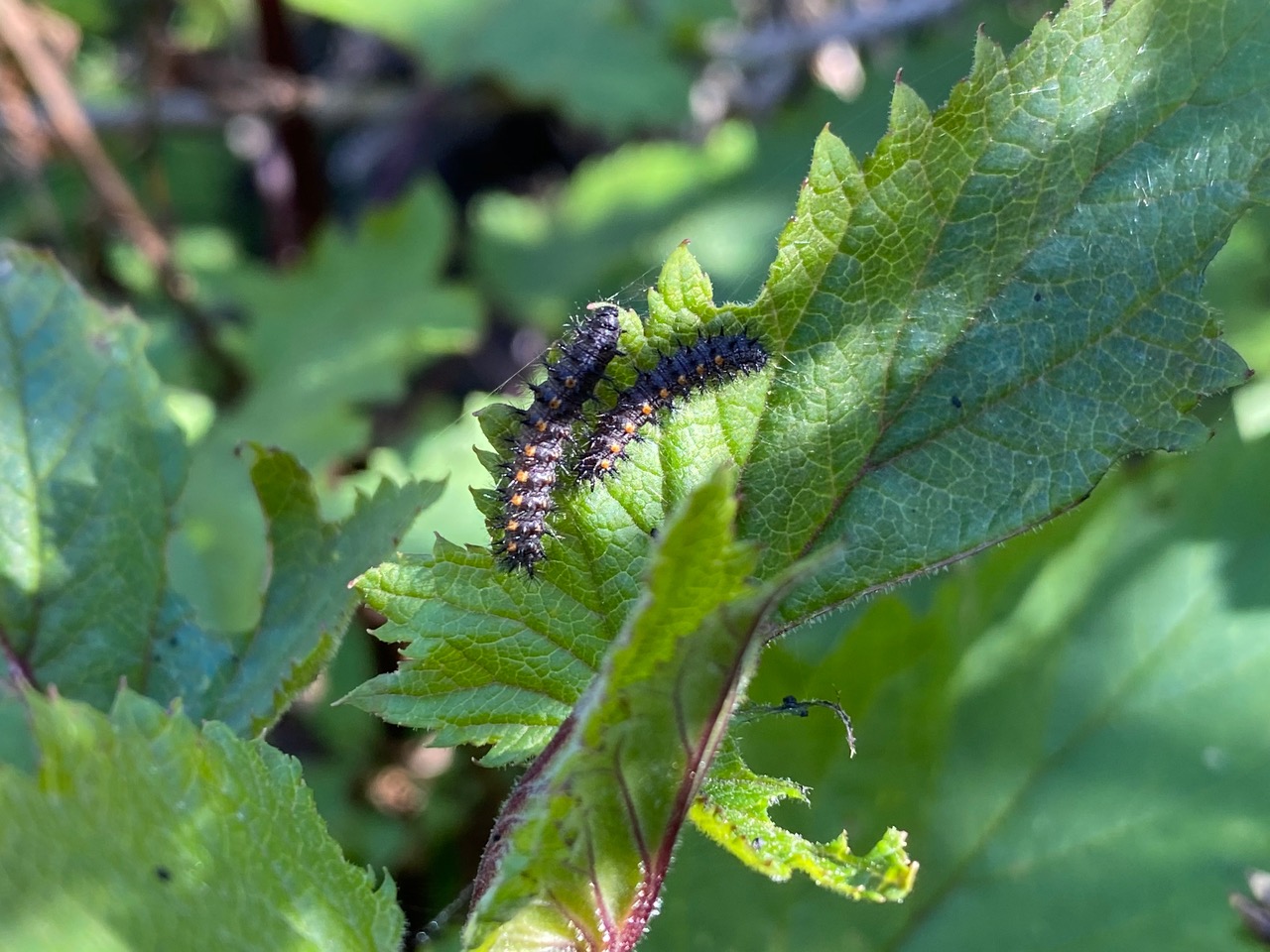
Ah, here are two caterpillars together. Is the larger one spinning silk?
Resting on a silk mat, a caterpillar has just molted, leaving its bunched-up exuvia (shed skin of insects) on the side. Note the separated head capsule that was the last to come off the caterpillar during ecdysis (molting).
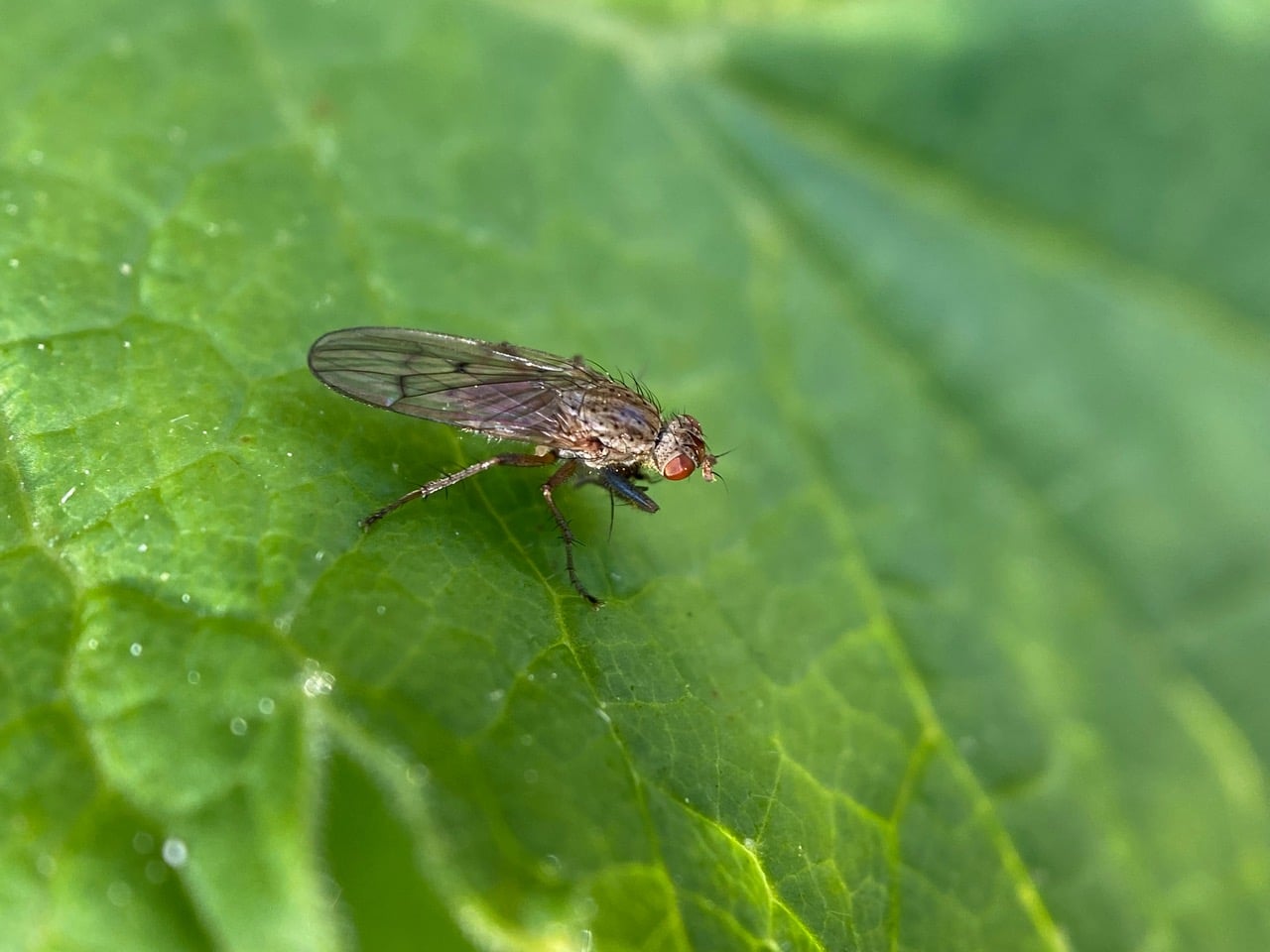
A fly lands on a leaf, seeming to be holding something in its blue front legs.
As the fly turns around to fly away, I get a glimpse of its prey. The fly is obviously a predatory species! iNaturalist has suggested a Golden-haired Dung fly (a predaceous species), but I have serious doubt about the ID. The fly does not have any golden hair, and the Golden-haired Dung Fly is not known to have blue front legs. Let’s see what the human experts have to say.