

Pollinator Post 2/9/25 (2)
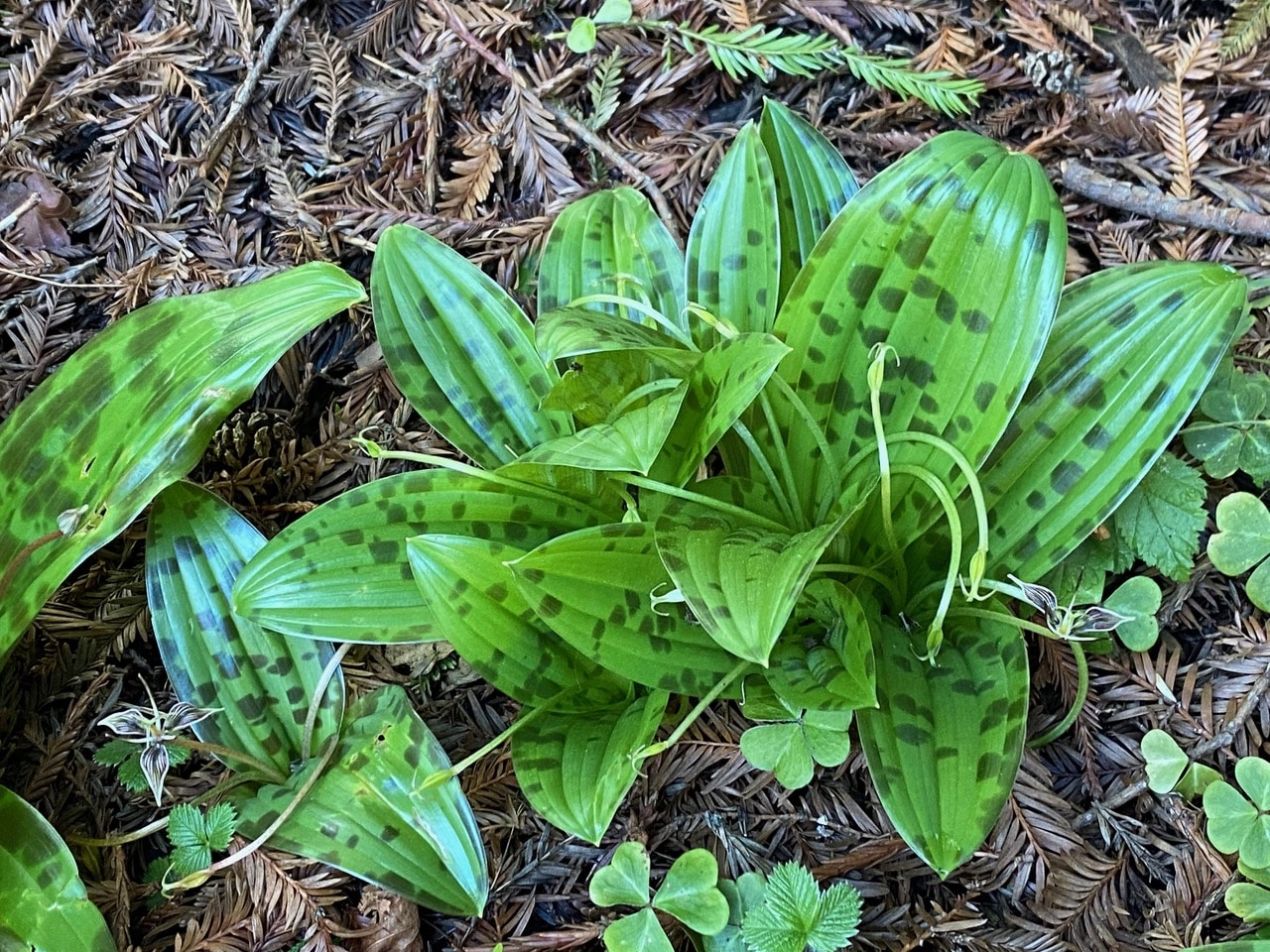
Under the redwood canopy, the vibrant green spotted leaves of Fetid Adder’s Tongue, Scoliopus bigelovii show up conspicuously despite the dim light. The leaves have expanded and flared out from the center of the individual plants since I last saw them.
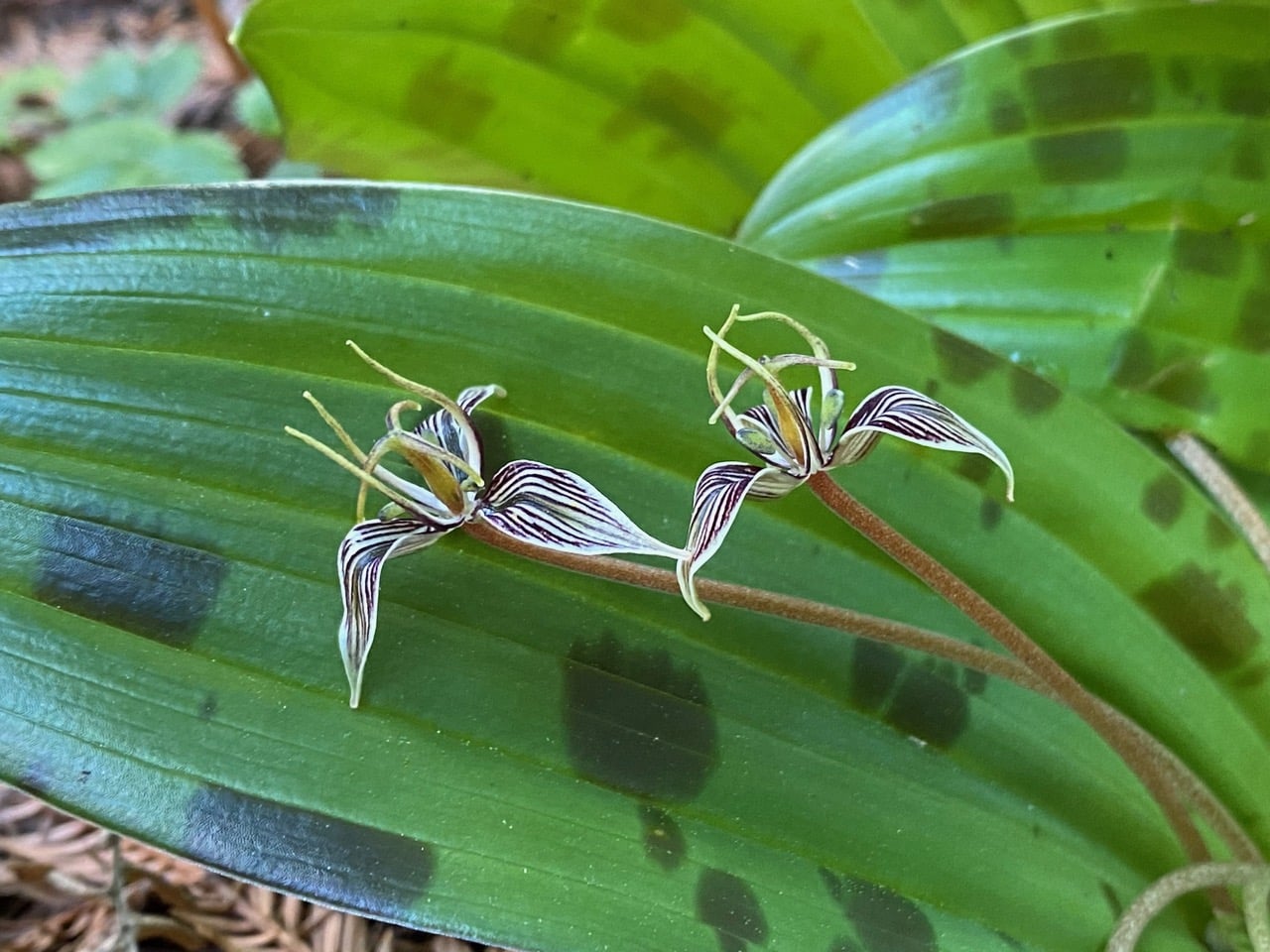
There are still a few flowers, but they no longer stand erect as before, but lie limp on the foliage.
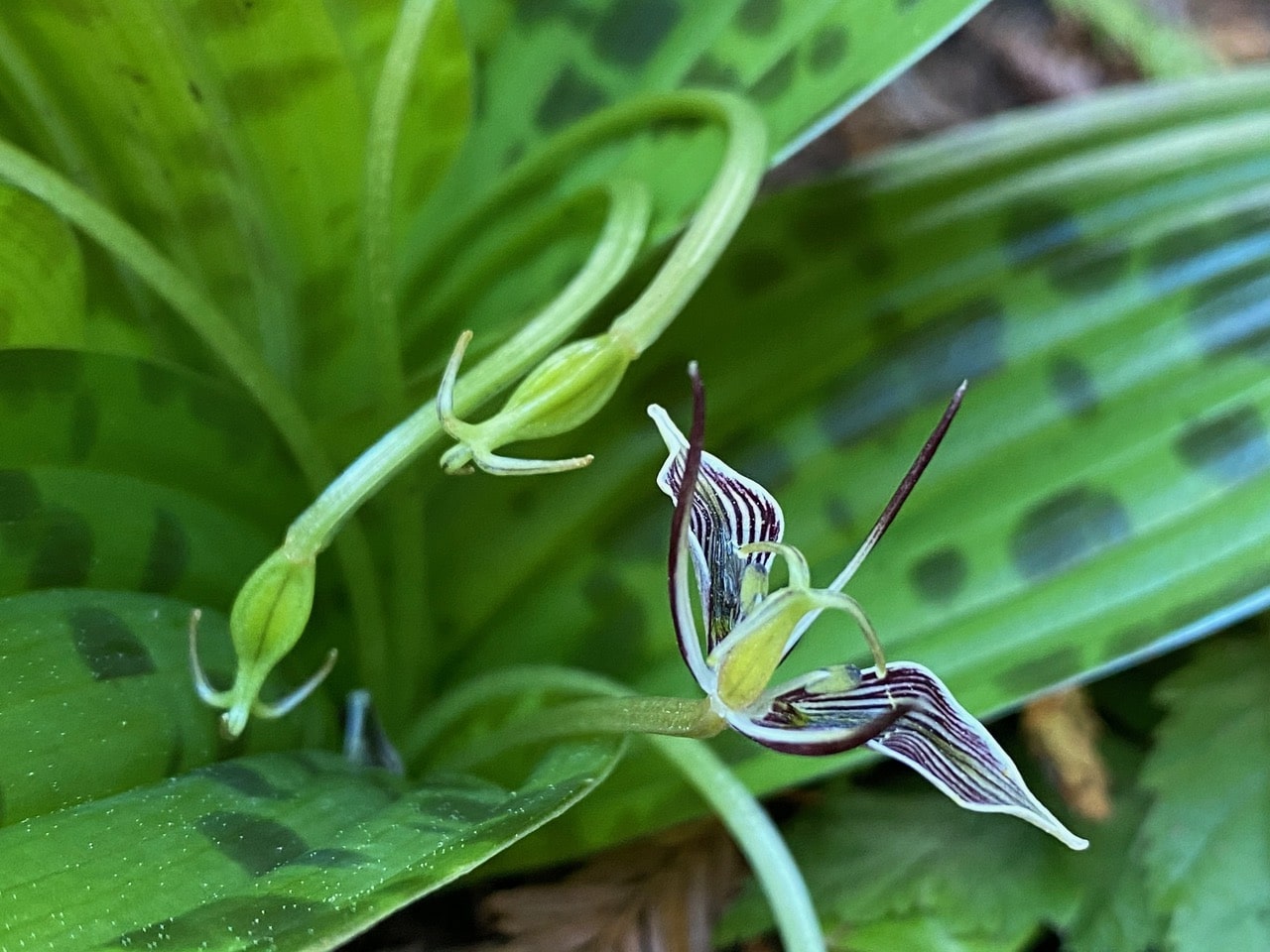
Most flowers have gone to seed, the developing fruits slinking their way down towards the ground. This is due to the lengthening and twisting of the pedicels (flower stalks) after the flowers are pollinated. Alas, my opportunity for seeing an insect in the act of pollinating these unusual flowers is coming to an end. It will be another year for such an opportunity to present itself again. In their prime, the flowers of Fetid Adder’s Tongue emit a funky smell that attracts Fungus Gnats (family Mycetophilidae), their primary pollinators. As the tiny insects probe from nectar in the base of the flower, their back comes into contact with the anthers and gets coated with pollen. In mature flowers, the three prongs of the style droop downward; the moist stigmatic surface at the tips pick up pollen from the insect’s body from a previously visited flower. What an ingenious arrangement!
This is not the end to the plant’s charm. I will continue to check on these plants for the next phase of their development – seed dispersal. Stay tuned!
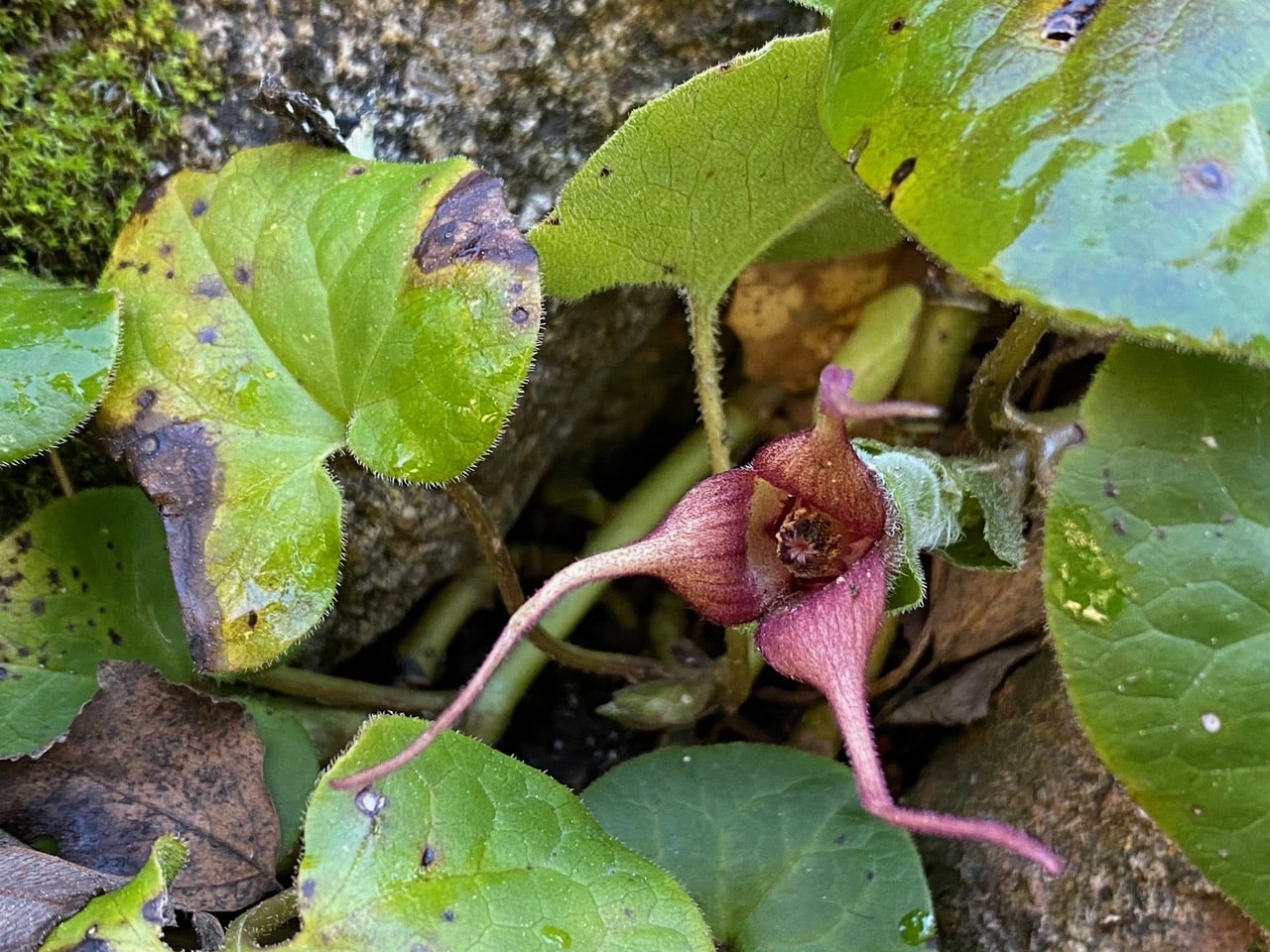
I lift up a leaf of the Wild Ginger, Asarum caudatum to expose a flower hidden beneath. Looking for these flowers is a game of hide-and-seek.
The plant Asarum caudatum (family Aristolochiadeae) is native to rich moist forests of western North America. It is an evergreen perennial herb from rhizomes with freely rooting, trailing stems. Its heart-shaped leaves emit a ginger aroma when rubbed. The three-lobed purplish flower sits at the end of a 6-inch leafstalk, often on the ground, hidden by the leaves.
The solitary brownish-purple flower of the Wild Ginger is hirsute (hairy) and cup-shaped, formed by fused sepals that terminate in three long, curved lobes. There are no petals. 12 stamens surround a prominent stigma. The flower is protogynous, the female parts maturing before the male parts. As soon as the flower opens, the stigma is receptive but the pollen is not initially located nearby because the stamen filaments are bent outwards parallel with the base of the floral cup. Over time, the filaments straighten, bringing the pollen-bearing anthers into proximity of the stigma. The flower emits a faint musty odor that attracts Fungus Gnats (family Mycetophilidae). It is believed that Asarum mimics the fruiting bodies of fungi and are pollinated by flies whose larvae feed on mushrooms. The flies lay eggs in the flowers and are responsible of pollinating them, in a phenomenon known as brood-site or nursery pollination.
Both the Wild Ginger and the California Pipevine belong to the family Aristolochiaceae. The floral structures are essentially the same, with a more deeply fused calyx in the case of the pipevine, forming a pipe-shape. If you take a sniff of the flowers, you’d find that they also emit very similar scents. It’s no wonder that both species are attractive to Fungus Gnats and are pollinated by them.
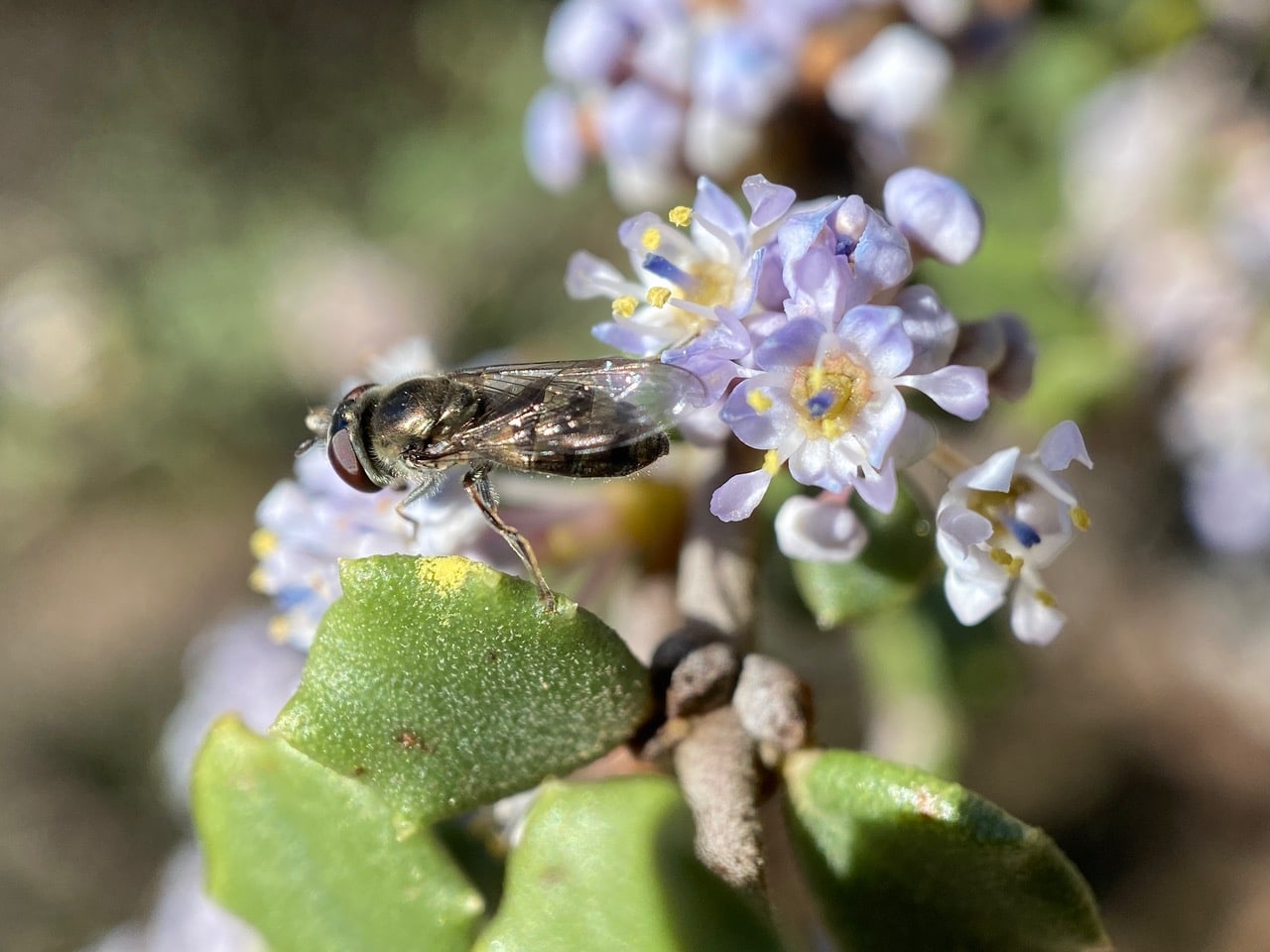
I stop by the Otay Mountain Ceanothus, Ceanothus otayensis on my way out, knowing that the warmer temperatures now should bring more insects to the flowers.
I am not disappointed. Look, there’s a Sedgesitter, Platycheirus sp. (family Syrphidae). These dusky, metallic hover flies tend to hold their wings folded over their abdomen when not in flight. This one is a female, as evidenced by her dichoptic eyes that do not meet on top of the head the way that males’ eyes do.
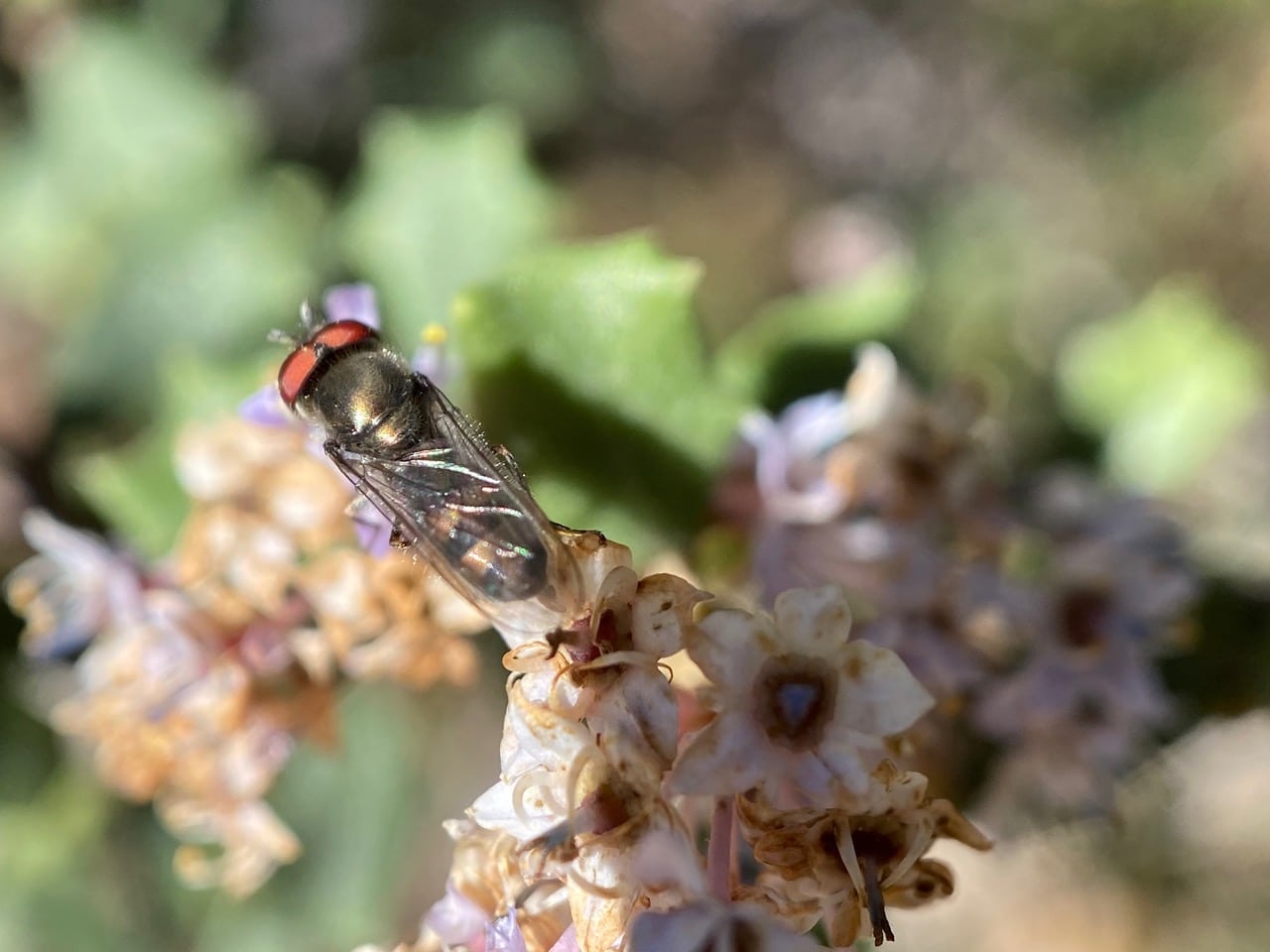
Hah, here’s a male Sedgesitter, Platycheirus sp. (family Syrphidae). See those holoptic eyes? The color of the eyes can look dramatically different depending on the incident light.
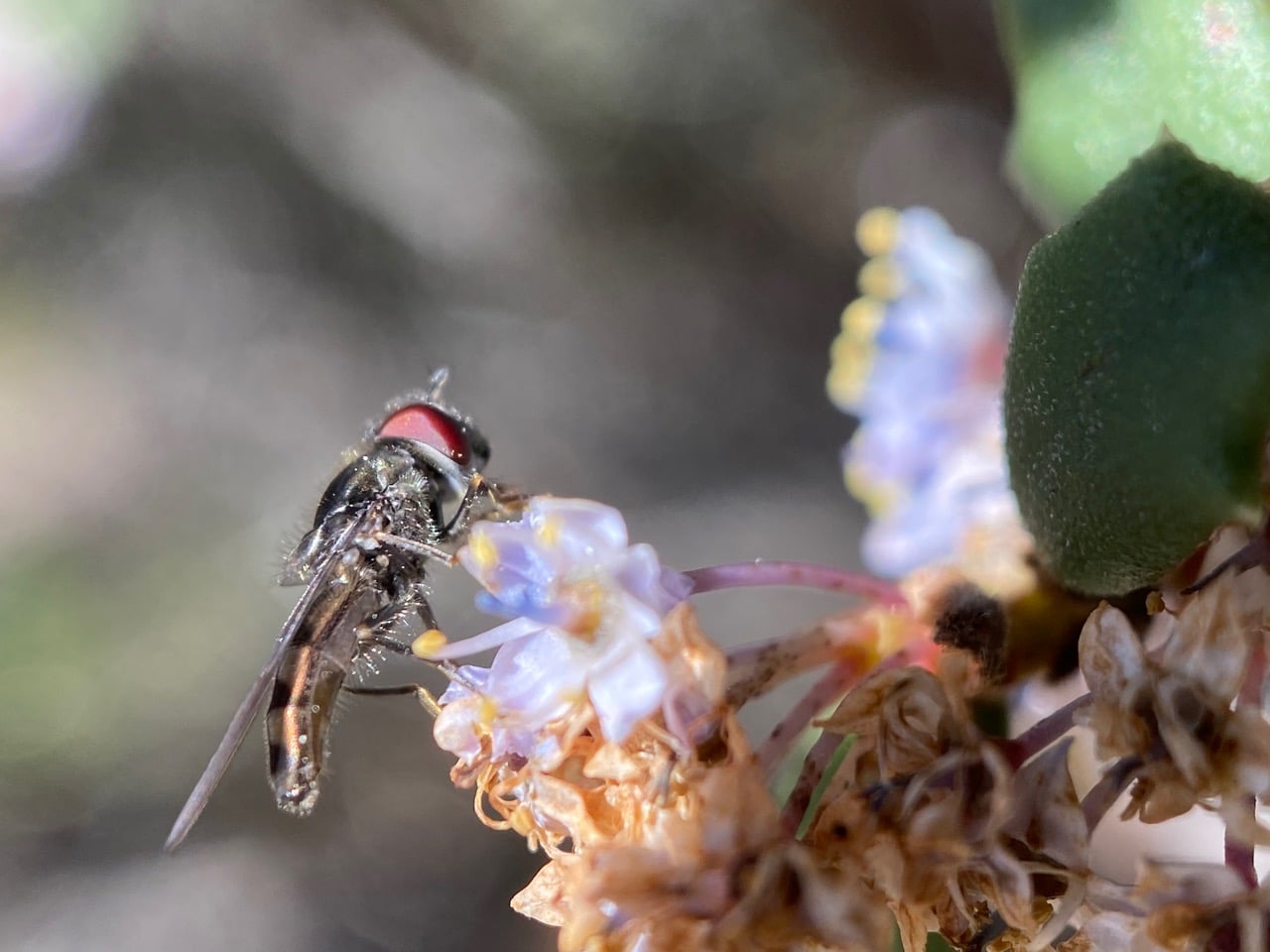
Platycheirus is found in grass and herb vegetation. Adults of many species feed on pollen of wind-pollinated plants, such as Salix, Plantago, Poaceae, Cyperaceae, but they visit other flowers as well. Many stay active during cold and rainy weather. Larvae feed on aphids.
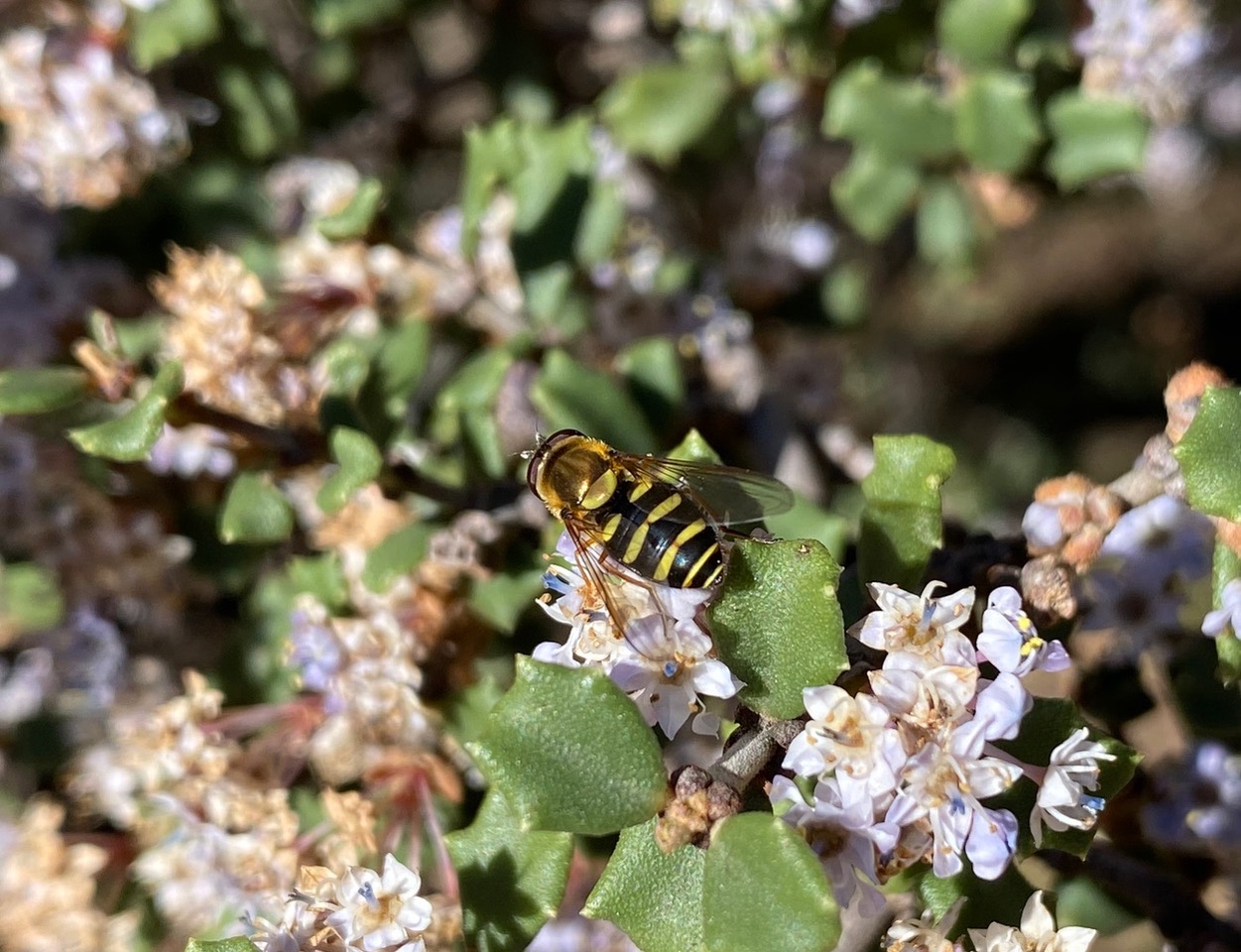
A Black-margined Flower Fly, Syrphus opinator (family Syrphidae) has landed on a cluster of Ceanothus flowers. It is the quintessential hover fly that mimics bees or wasps. The black-and-yellow banding on the abdomen serves to ward off potential predators that want to avoid prey with stings – a form of Batesian mimicry.
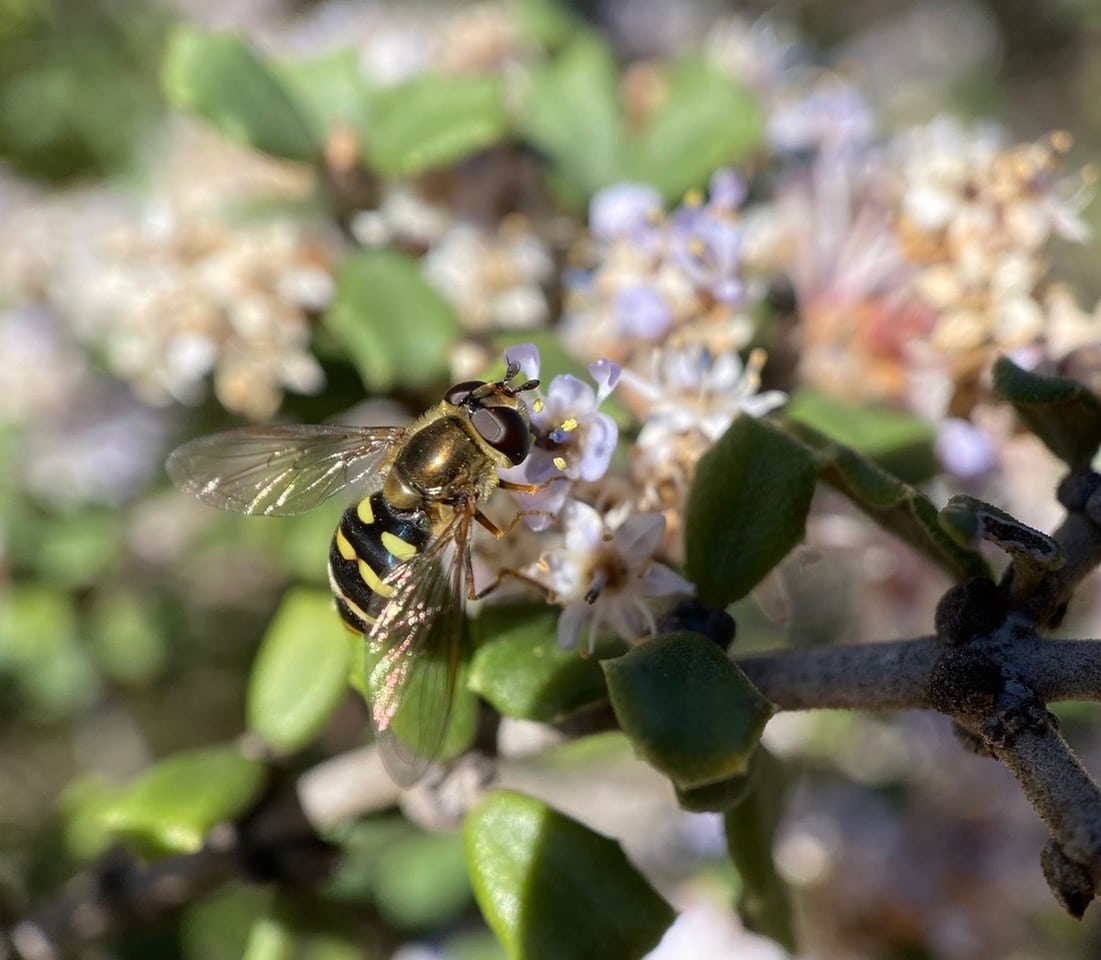
The Black-margined Flower Fly, Syrphus opinator (family Syrphidae) is common in central California during winter months. It can be distinguished from similar species by the abdominal fascia restricted to the sides and isolated from the margins. Adults visit flowers for nectar and pollen. Larvae feed on aphids and other soft-bodied insects.

Hey, that’s an easily recognizable hover fly! Look at the large abdominal extension on this male!
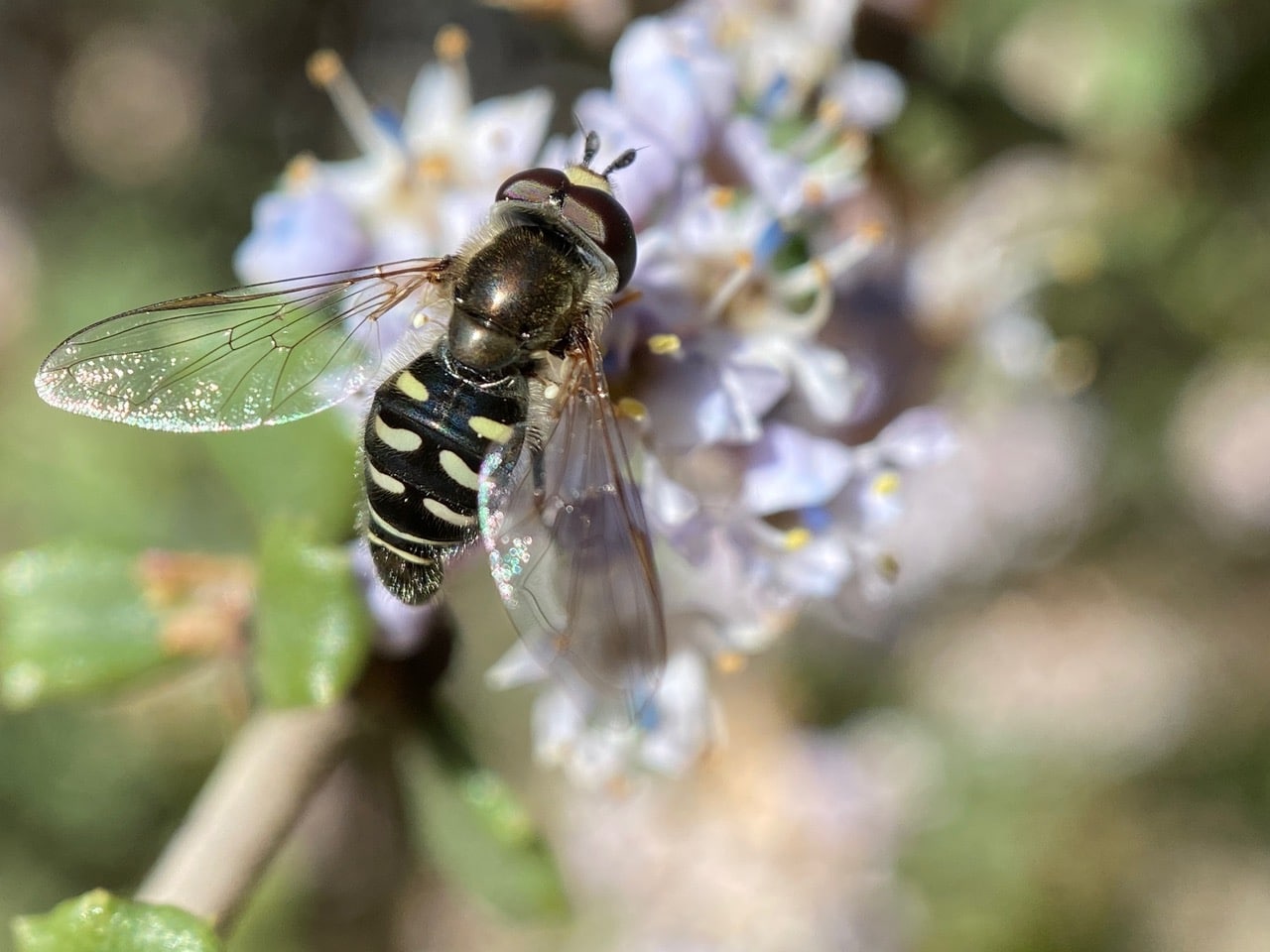
The Large-tailed Aphideater, Eupeodes volucris (family Syrphidae) is found in western North America, and is active March through November. The common name of the species refers to the distinctive “large tail” or projecting cylindrical abdomen of the males. As the rest of the common name implies, the larvae of the species are voracious predators of small plant-sucking insects such as aphids. Females seek out dense aphid colonies on plants to lay eggs among them. Adults visit flowers for nectar and pollen.