

Pollinator Post 2/8/24 (3)
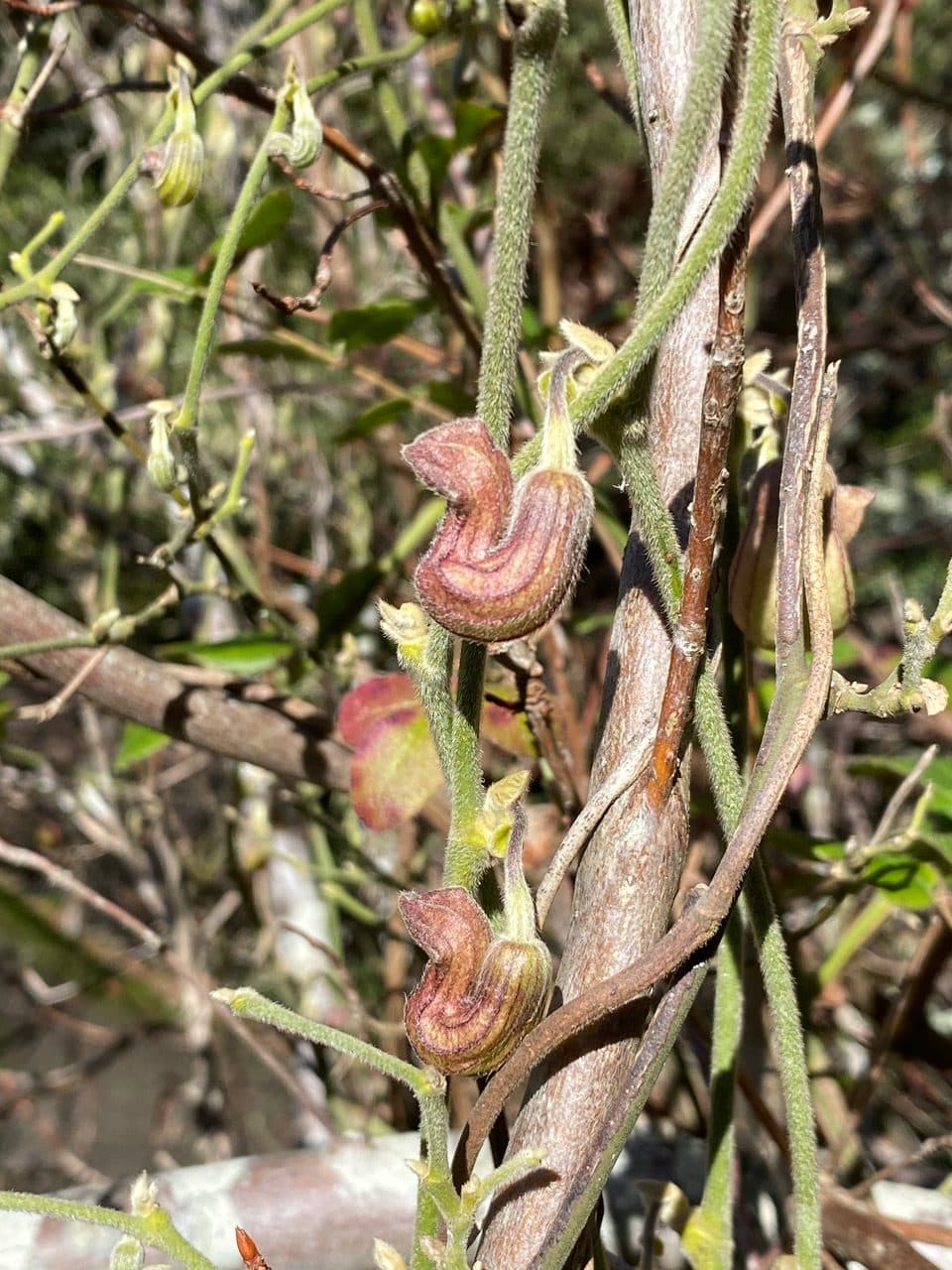
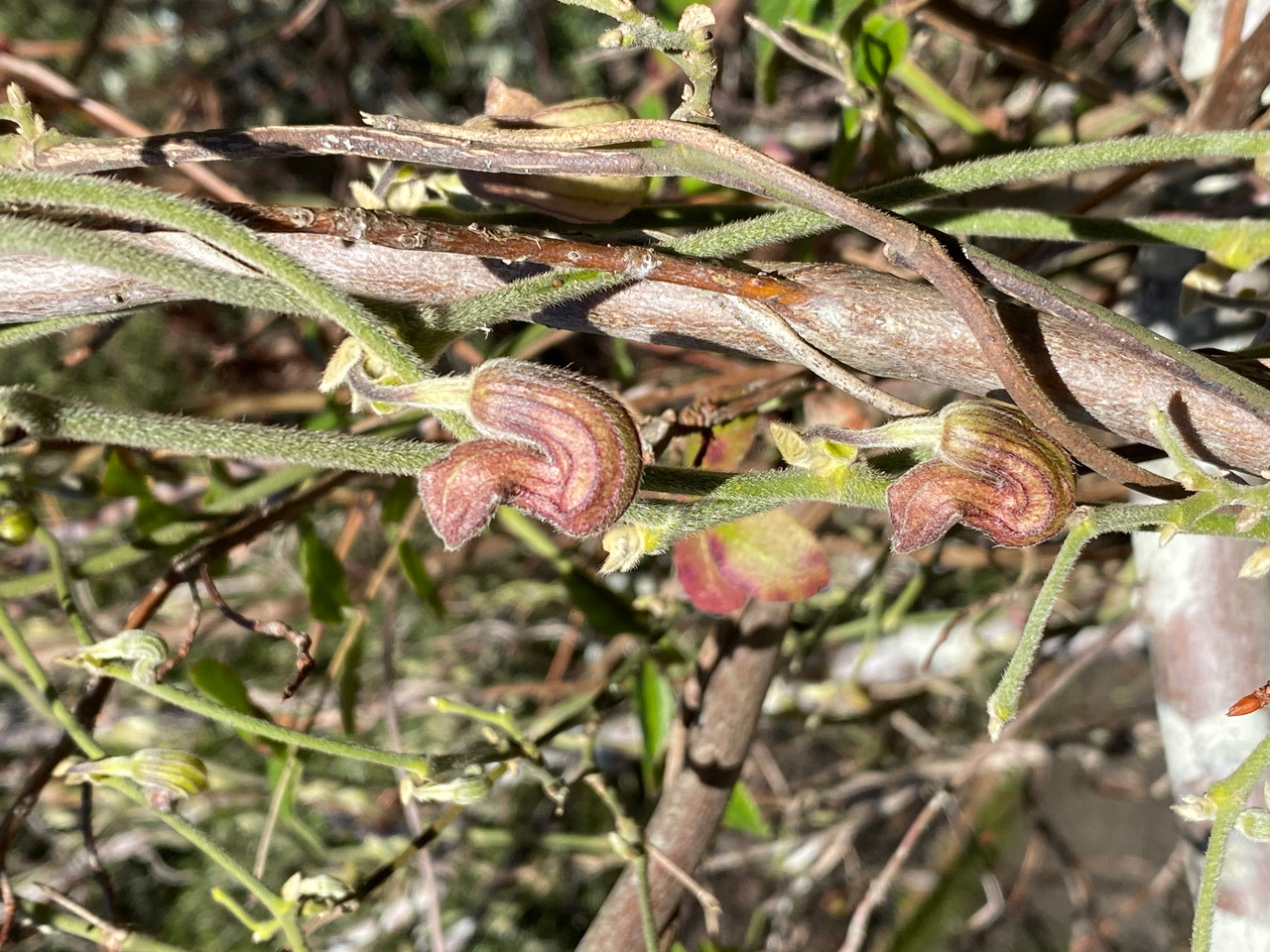
I wind my way to the grove of shrubs that support a healthy stand of California Pipevine, Aristolochia californica. It is too early in the season. Most of the vines emerging from the ground are still trying to establish themselves on neighboring shrubs. There are some flowers, but they are small and not fully opened. It is so hard to find these brownish flowers in the midst of the wild tangle.
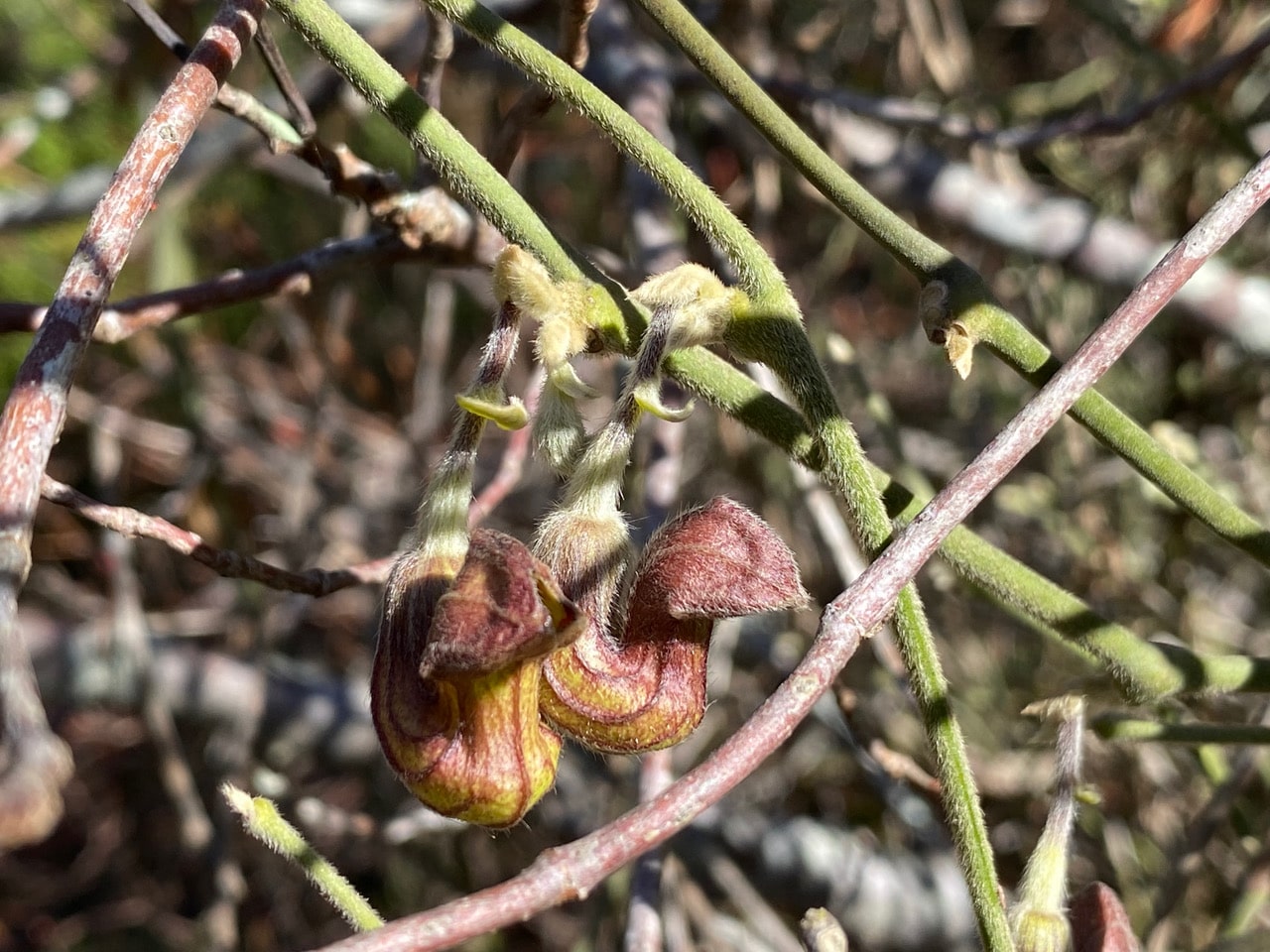
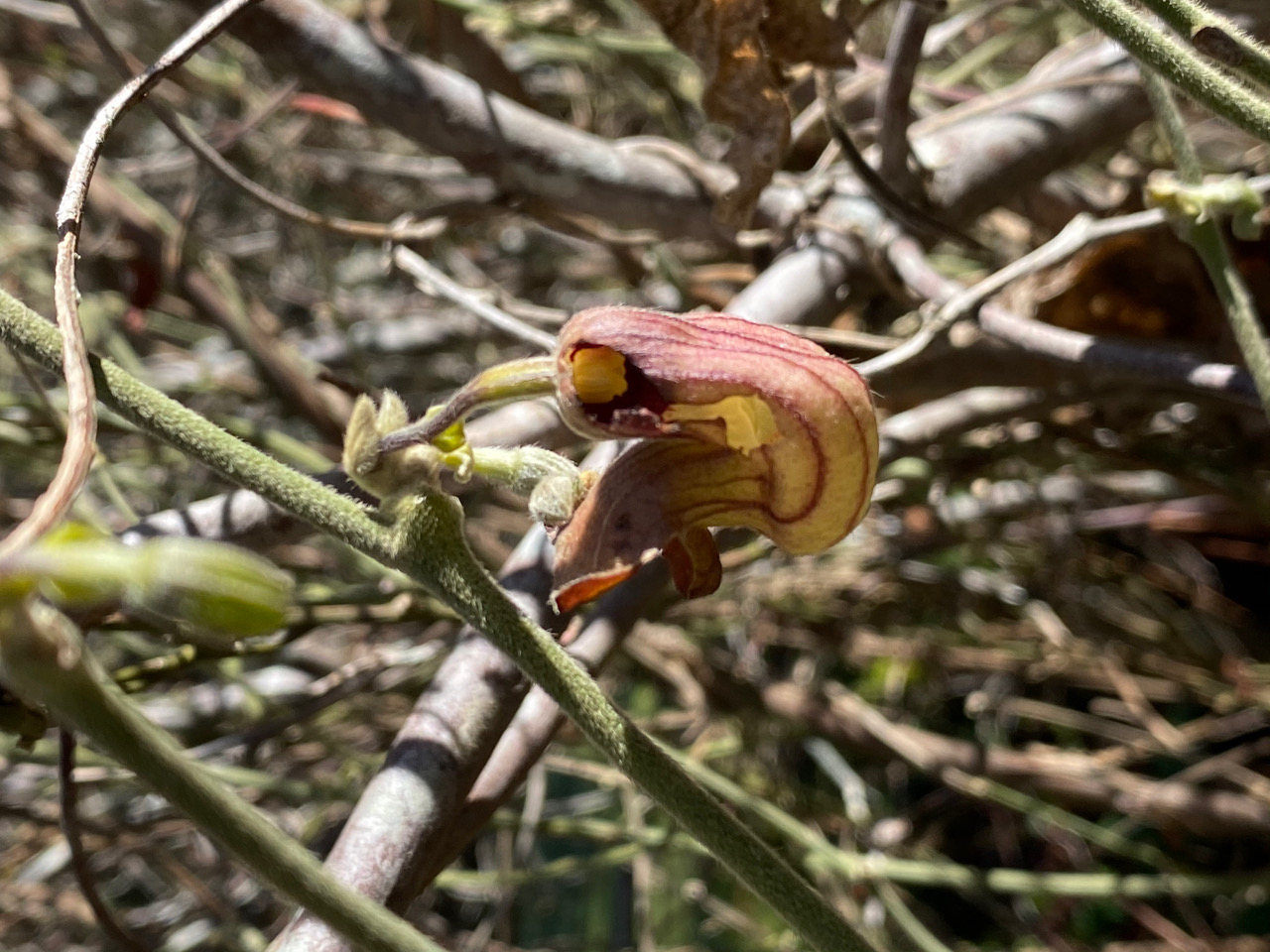
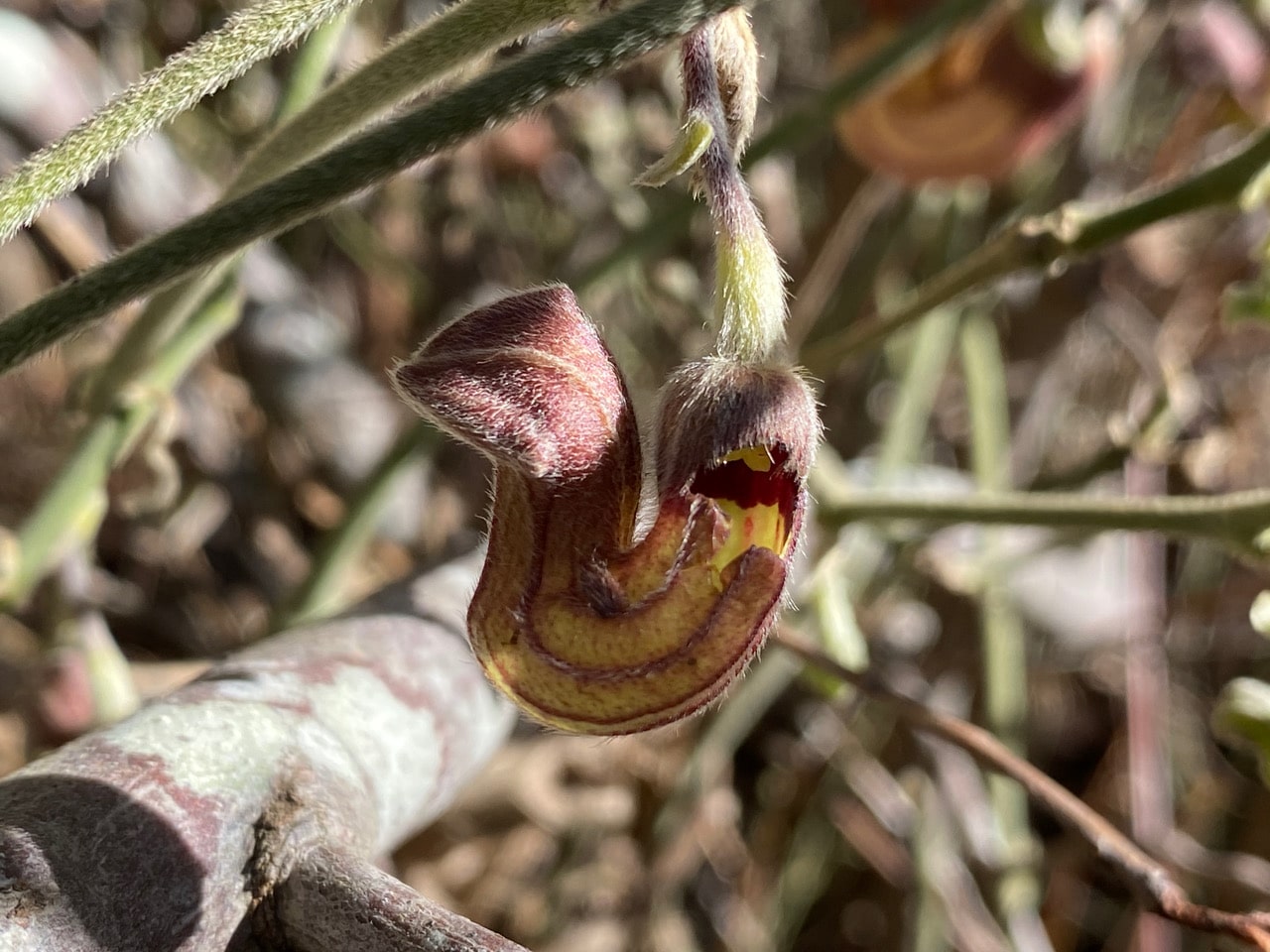
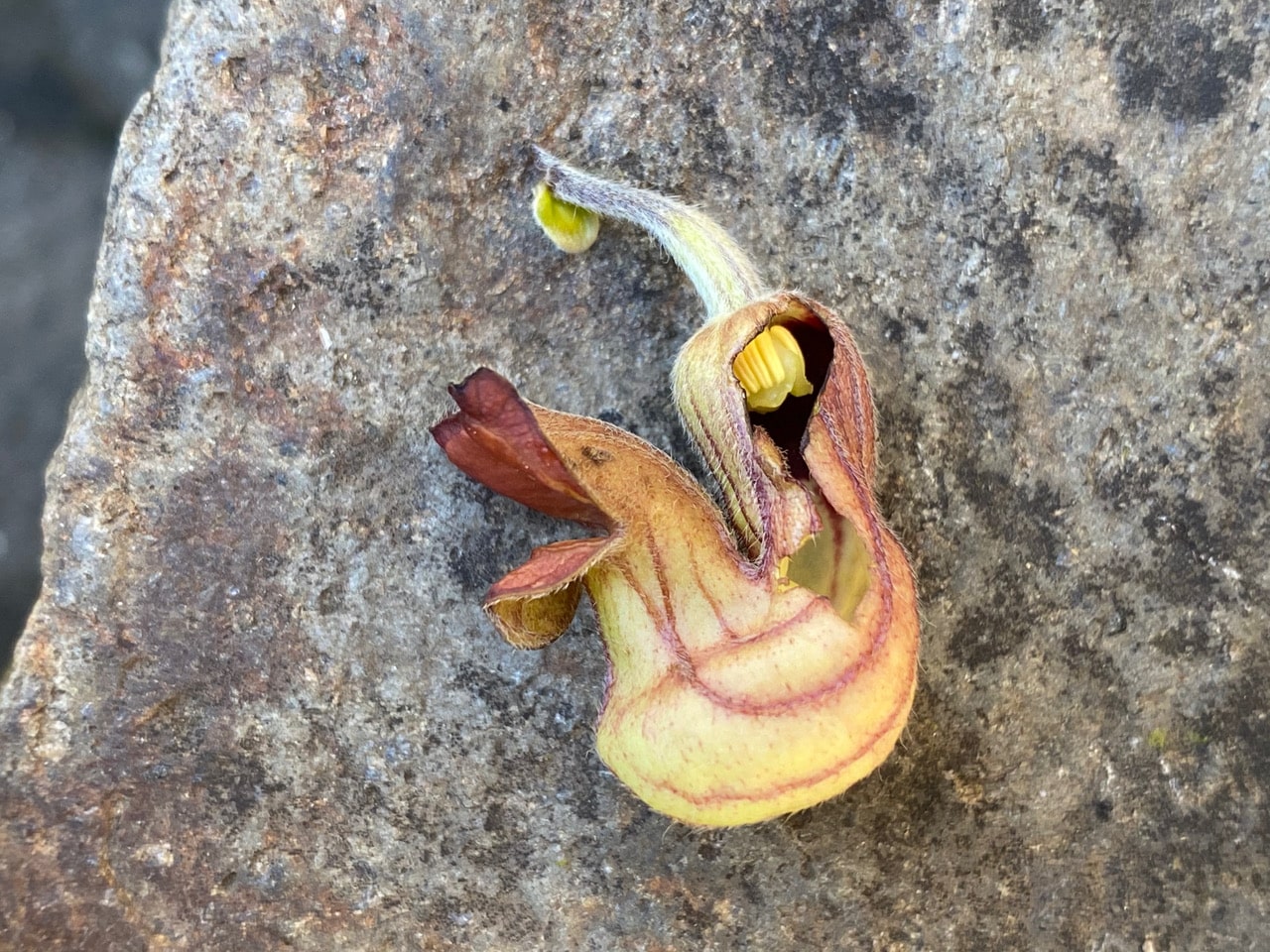


Here are two Pipevine flowers, side by side from different vines. The lips of the flowers are not yet open.
The California Pipevine flower resembles a calabash pipe and begins to bloom in late winter or early spring. The flowers are actually fused sepals, shaped to protect the reproductive parts within. Many flowers emerge before the bare stems of the deciduous vine begin to leaf out. The flower not only protects its own reproductive parts, it also offers shelter to small insects from the rain and cold. As the flower opens, it emits a foul odor that attracts tiny fungus gnats, a type of flies (family Mycetophilidae). Sometimes when you cut open a flower, some of these gnats would fly out. They look like miniature mosquitoes. They are the primary pollinators for the California Pipevine.
Hey, someone has cut a big hole in the side of that mature Pipevine flower!
Here’s another flower, not even open, with similar damage. It seems that someone has tried to break into the flower for the nectar.
I pick the more mature flower, hoping that I’m not breaking any rules here in the garden. The flower is old and damaged, and not likely to produce a fruit. I lay it on a rock to assess the damage through the irregular gaping hole. Note the yellow structure at the base of the flower (which is on the top end of the pipe-shaped flower as seen here). That consists of anthers embracing a large stigma in the center. The inner wall of the flower surrounding the reproductive structures is a deep maroon color, distinct from the rest of the interior. This colored tissue usually looks wet and grainy; it is where nectar is produced. Whoever (insect? bird?) broke into the flower was probably going after this sweet tissue!
I tear away the flower leaving only the parts relevant to pollination. We are now looking straight into the base of the flower where the reproductive parts are. See the fleshy yellow, three-parted stigma in the center, surrounded by yellow anthers? The surrounding interior of the flower that is colored a deep maroon, the nectar secreting tissue? Note that immediately around the reproductive parts there is a little pale area with no pigments. This window presumably can let in sunlight, a “skylight”, so to speak?
Enticed by the foul odor emitted by the flower, the fungus gnat enters through the maroon three-lipped opening. Insects in general are attracted to light. In the darkness inside the flower, sunlight streaming through the skylight directs the gnat to the top of the flower where the nectar and the reproductive parts are located. While taking nectar, the gnat may bump into the reproductive parts of the flower, getting dusted with the pollen from the anthers.
The California Pipevine is strongly protogynous, the female parts maturing before the male parts. As the flower matures, the stigmatic lobes close up, exposing the stamens beneath them. The stamens begin to peel away from the base of the stigma, and the anthers start to release pollen. Before the gnat leaves the flower, it is dusted with pollen to be ferried into the next flower it visits. If the subsequent flower happens to be in the famale phase, the pollen on the gnat might be deposited on the receptive stigma, effectively pollinating the flower. Separation of the female and male phases ensures that the flower will not pollinate itself; only cross-pollination happens. The gnats are likely to stay in the flower for days while the going is good. They may even find mates while gathered in the enclosure. Once the feast and fun is over, they make their way out through the opening, to be lured by the next flower.
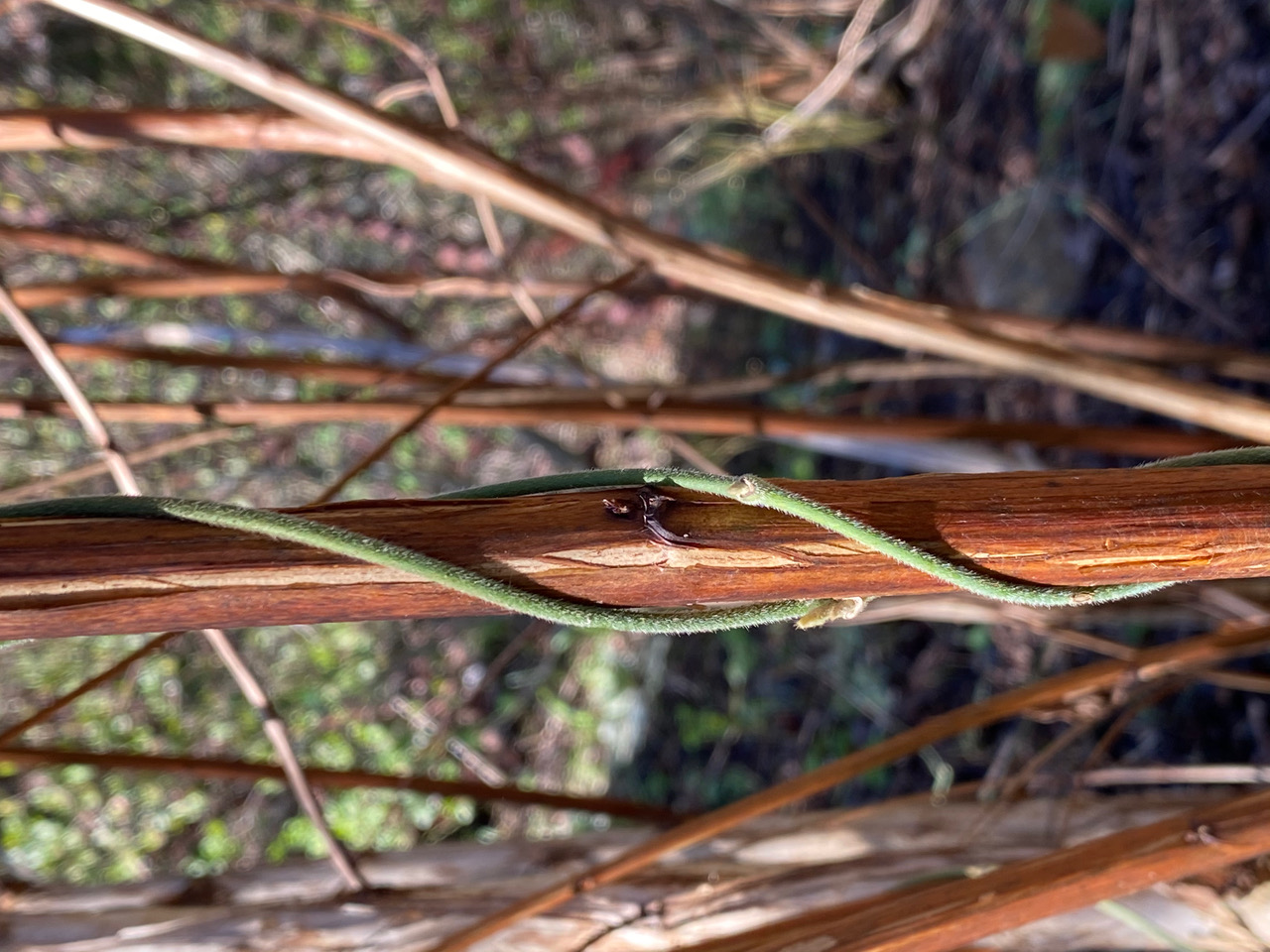
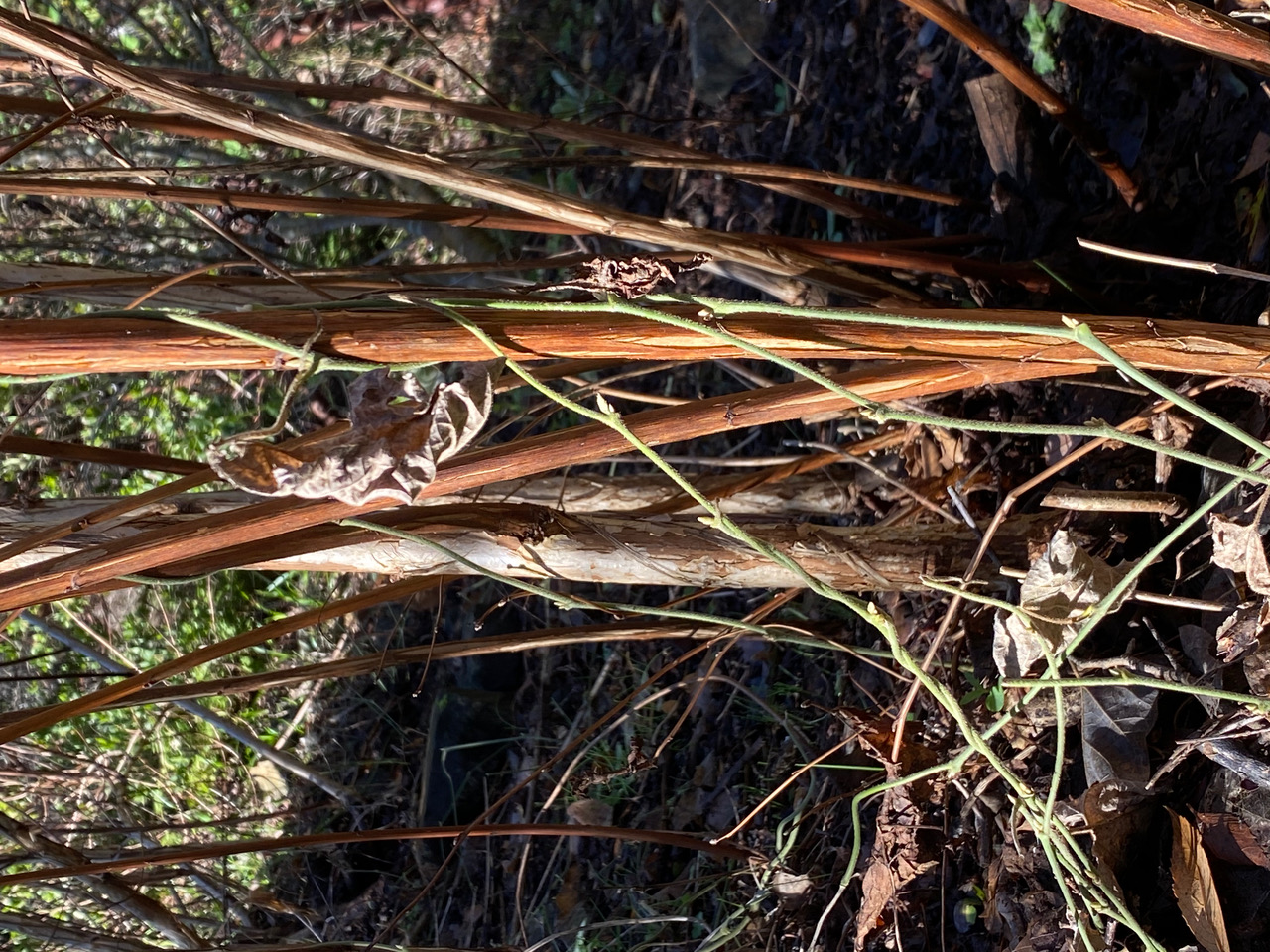
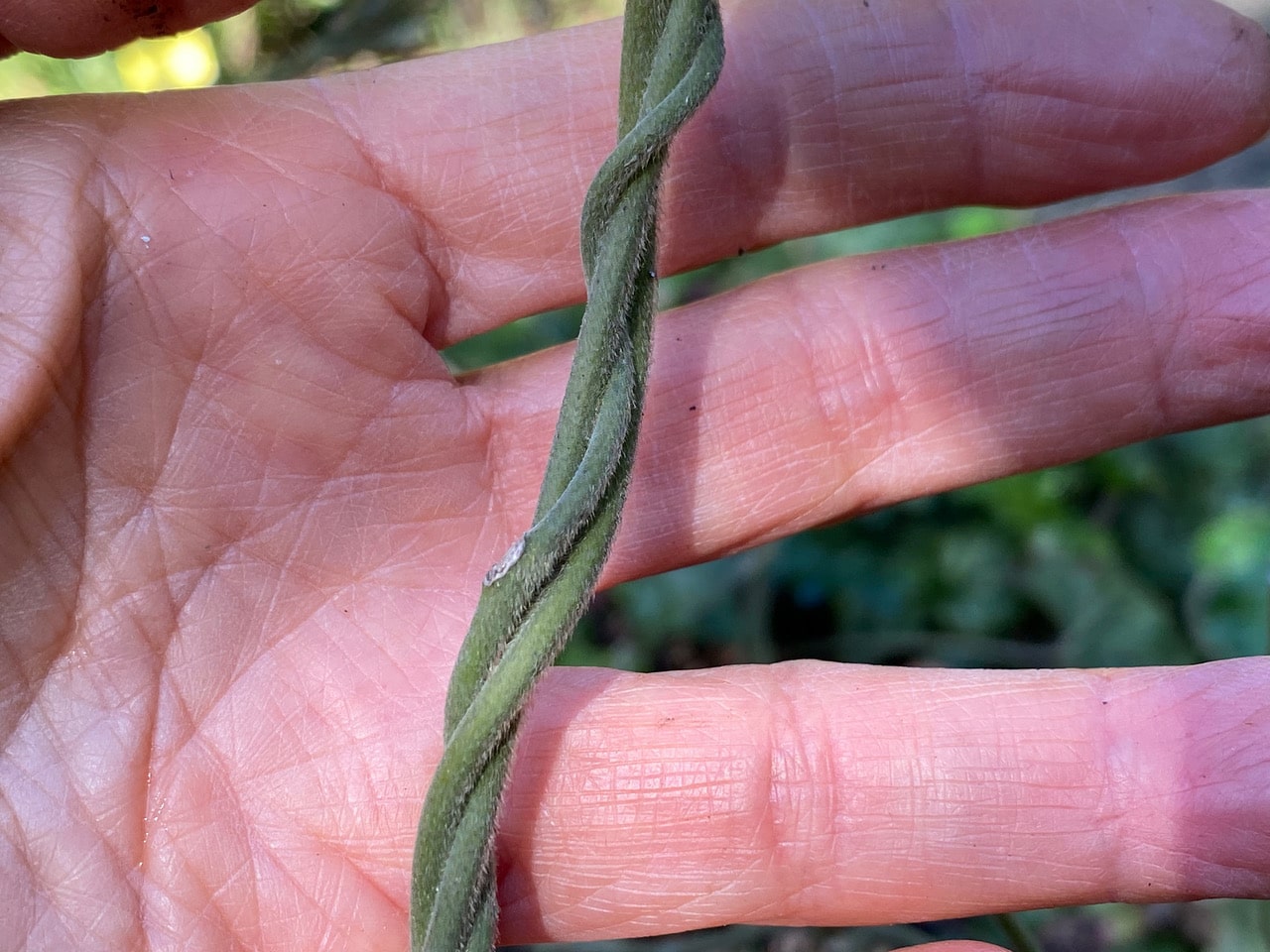
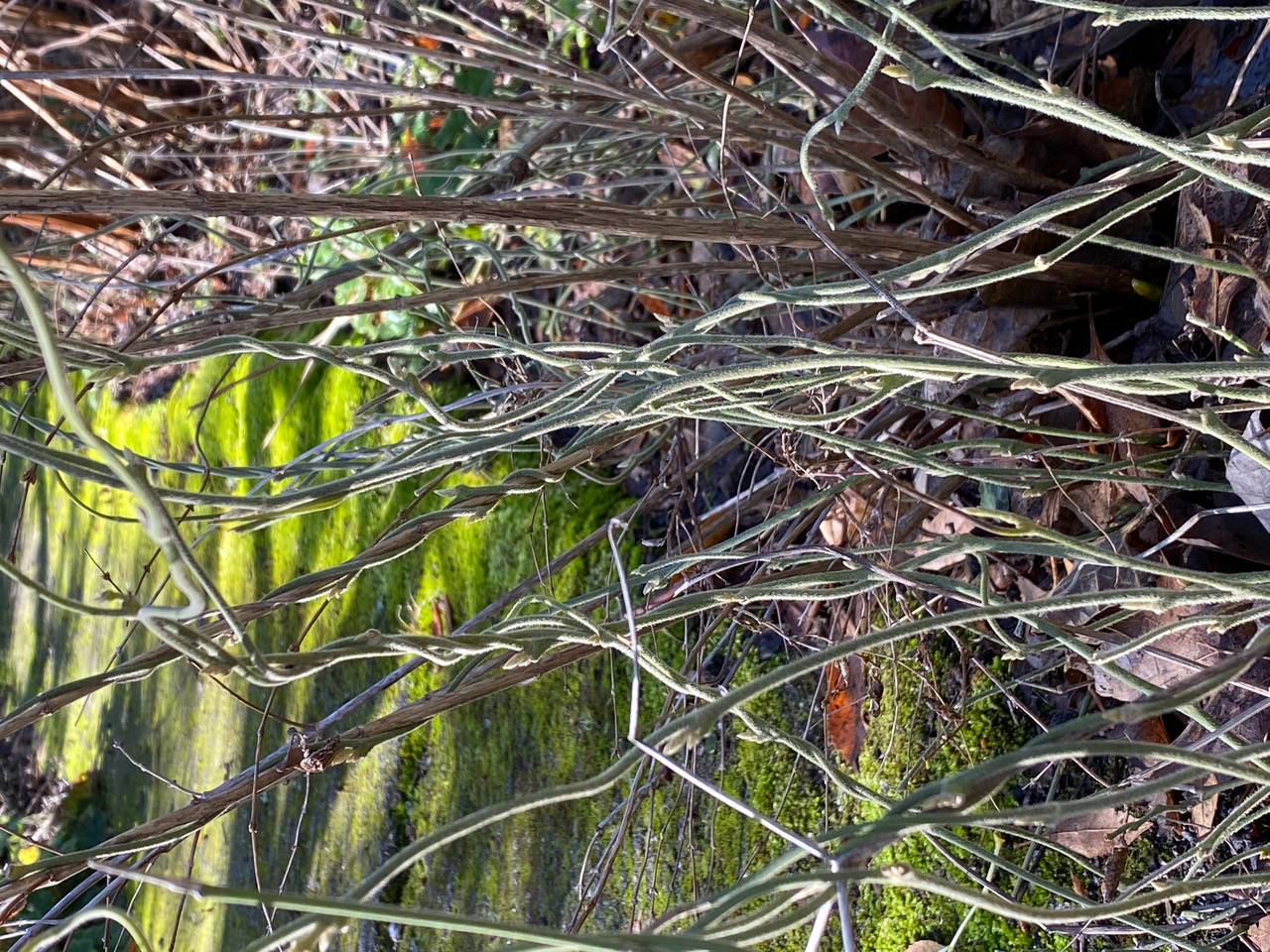
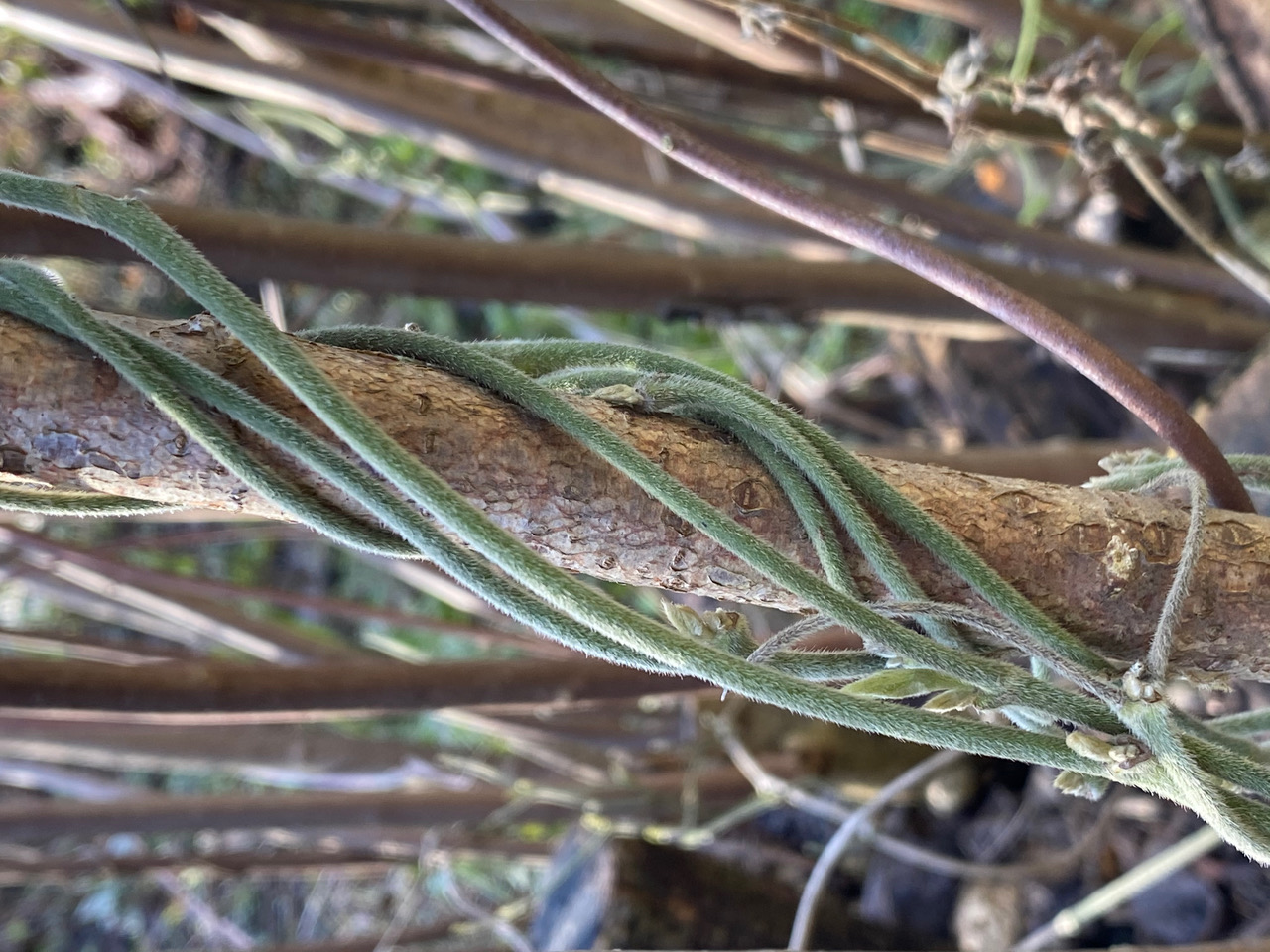
There’s yet no leaves on the California Pipevine. The hairy green vines are beginning to snake their way up neighboring shrubs. I am awed by the way the plant knows how to twine around other objects.
Finding support to reach the sunlight.
Often the vines even twine around each other, creating thick ropes.
This mad tangle of vines will growing into a spectacular stand of California Pipevine supporting a population of Pipevine Swallowtail butterflies.
This young California Pipevine already has a secure hold on a supporting shrub. You can see buds emerging from the nodes of the vine.
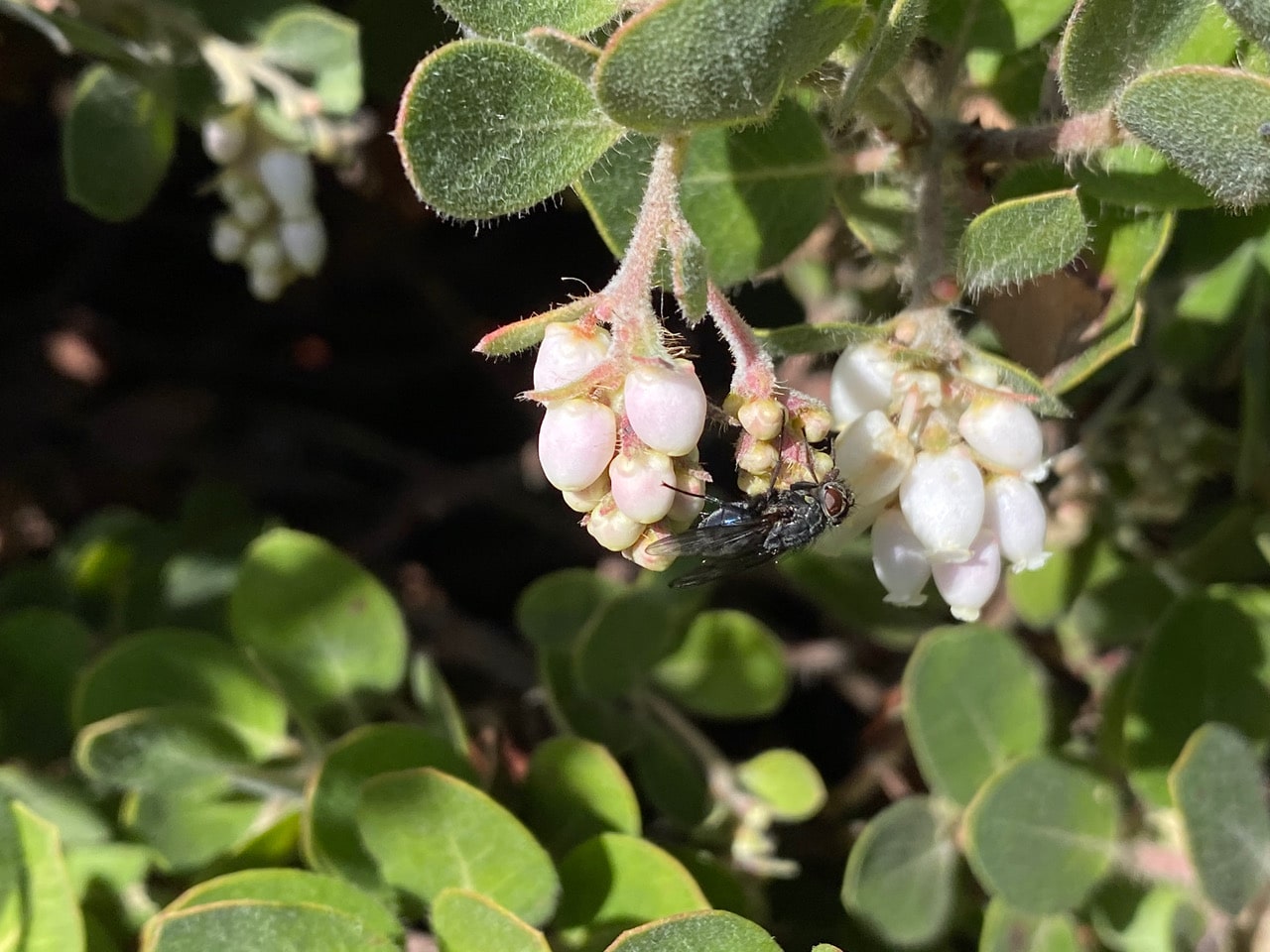
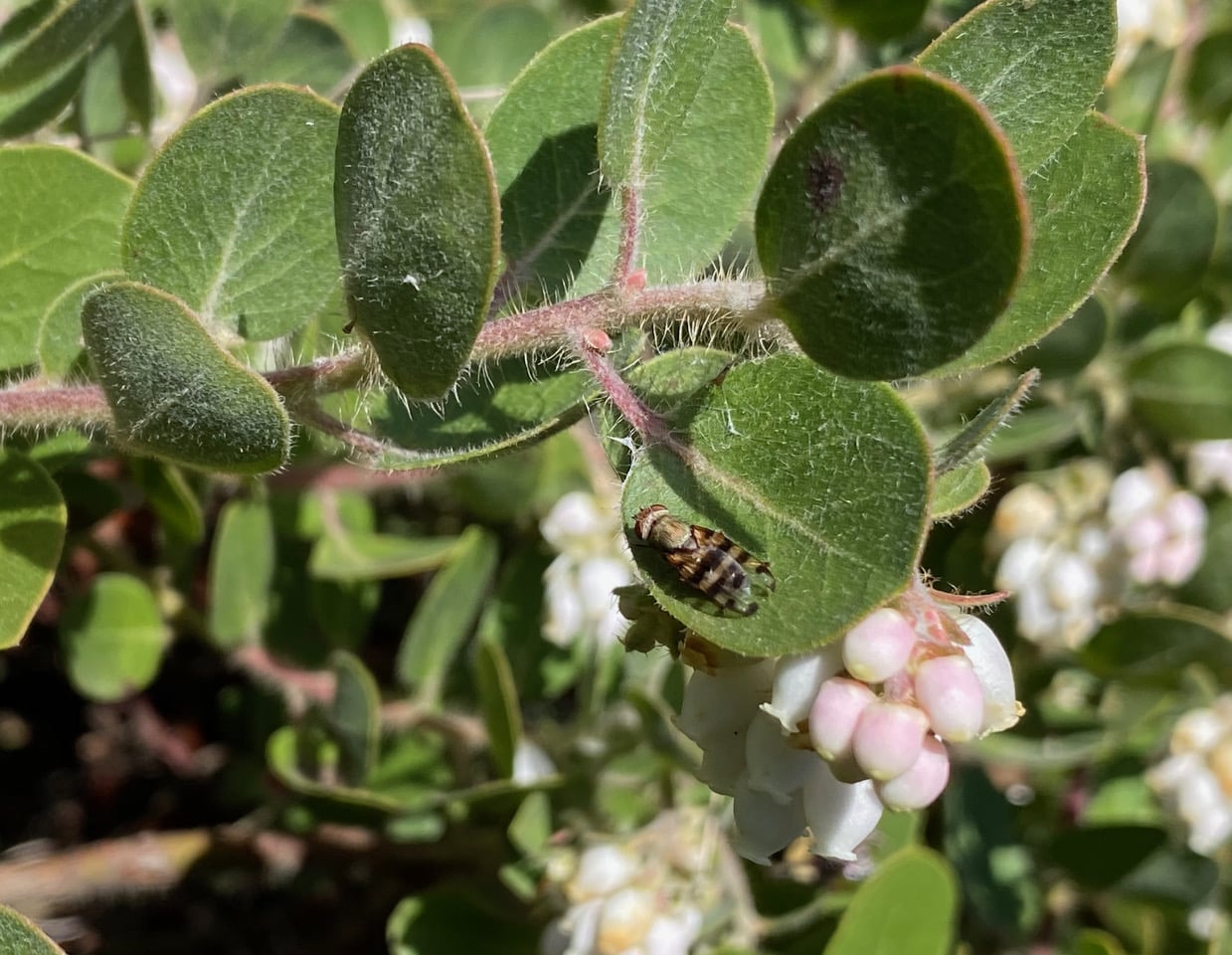
As the day warms up, more and more insects appear on the plants. An unidentified fly rummages through some Manzanita flower buds.
Then I notice a fly, about the size of a house fly on a Manzanita leaf. It is flicking its beautiful picture wings rhythmically, as if doing a ritualistic display. Unfortunately it closes its wings at my approach and shortly flies away. It is a Narrow-banded Picture-winged Fly, Ceroxys latiusculus (family Ulidiidae).
Picture-winged flies belong to the family Ulidiidae. They are among the more common, ornate, and entertaining of all Diptera, thanks to their lovely wing patterns and adorable courtship behaviors. Most have some kind of pattern of spots, bars, or lines on the wings, and at least a few have metallic bodies. Many can often be found on certain plants, dung, logs, wooden fences, or the trunks of trees. These locations serve as food sources, basking sites, or display sites for courtship. Most species of Picture-winged flies are herbivorous or detritivorous.
Ceroxys latiusculus is common throughout western North America. Larvae develop in the seed heads of Senicio, and other composite flowers. The adult flies are known to invade homes and other buildings in the fall, seeking winter shelter.
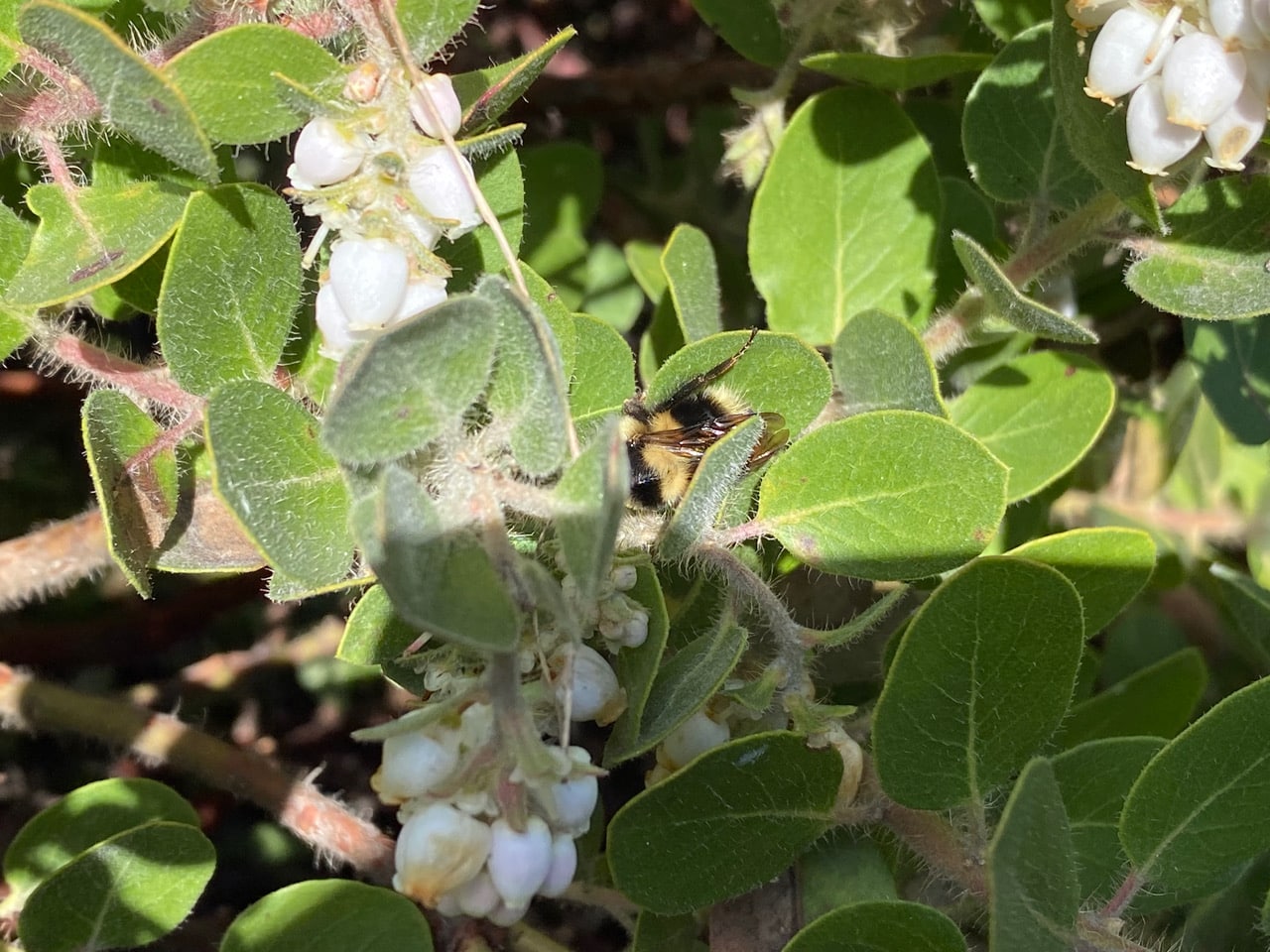
A large Black-tailed Bumble Bee, Bombus melanopygus (family Apidae) lands on a Manzanita leaf and quietly hunkers down without moving. Is the queen taking a break from foraging? Many queen bumble bees are out this time of year, freshly awakened from their hibernation. They are the only members of their colony that have survived winter. They have mated last fall and are set for reproduction. Their first order of business however is to nourish themselves, find a good nest site (usually an abandoned rodent burrow), and then lay eggs. The queen nurtures her first brood of offspring all by herself, foraging for them, and keeping them warm in cold weather by shivering to generate heat. Once the first batch of workers is produced, the queen stays back at the nest to concentrate on laying eggs. Hence forth, the workers take on hive duties, brood care, and foraging.
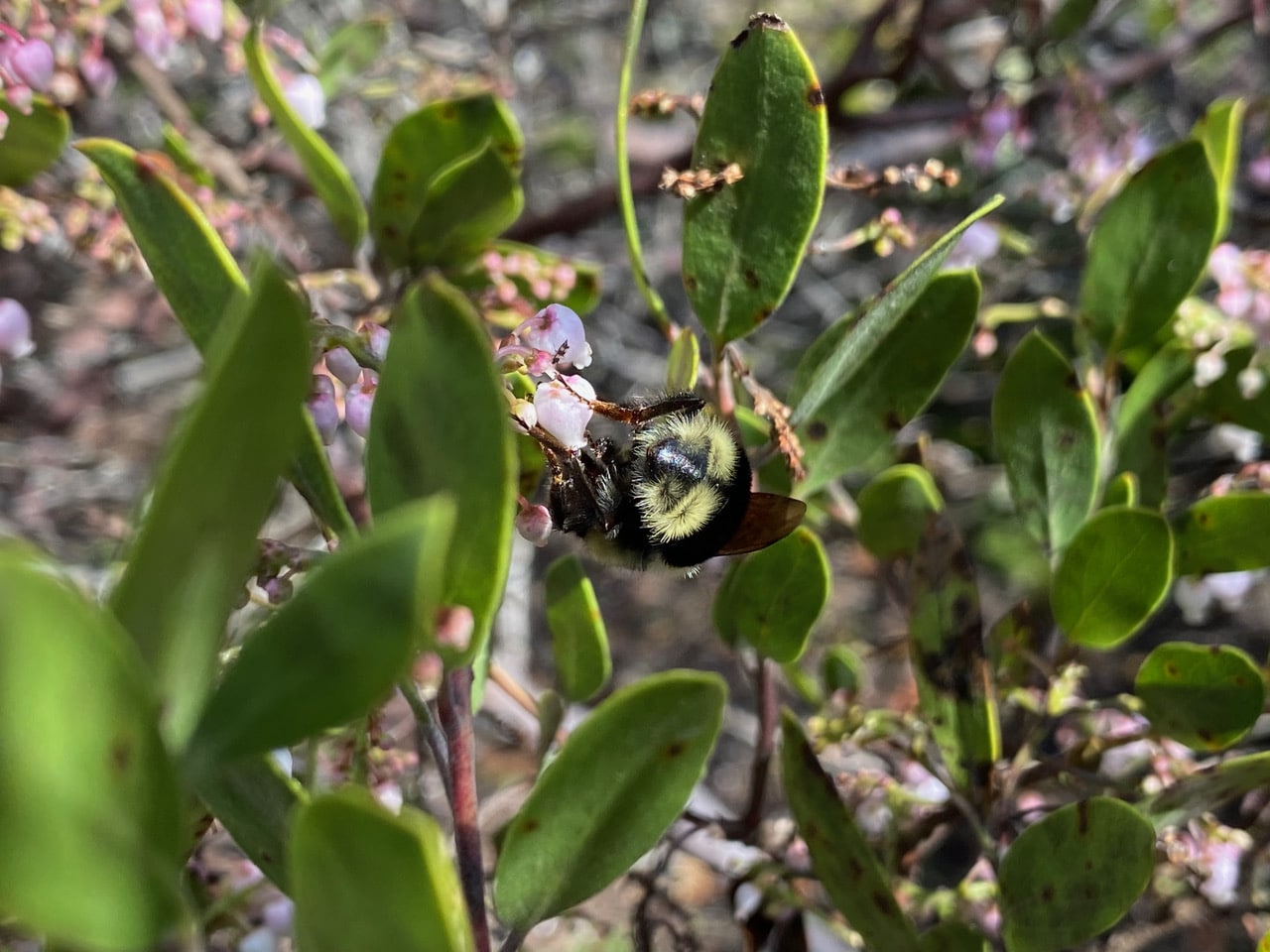
Here’s a rear view of a large Black-tailed Bumble Bee, Bombus melanopygus (family apidae) hanging upside-down from a Manzanita flower and sticking her tongue through the narrow opening. The pollen baskets on her hind legs are empty. Apparently the bee is not collecting pollen, just taking nectar.
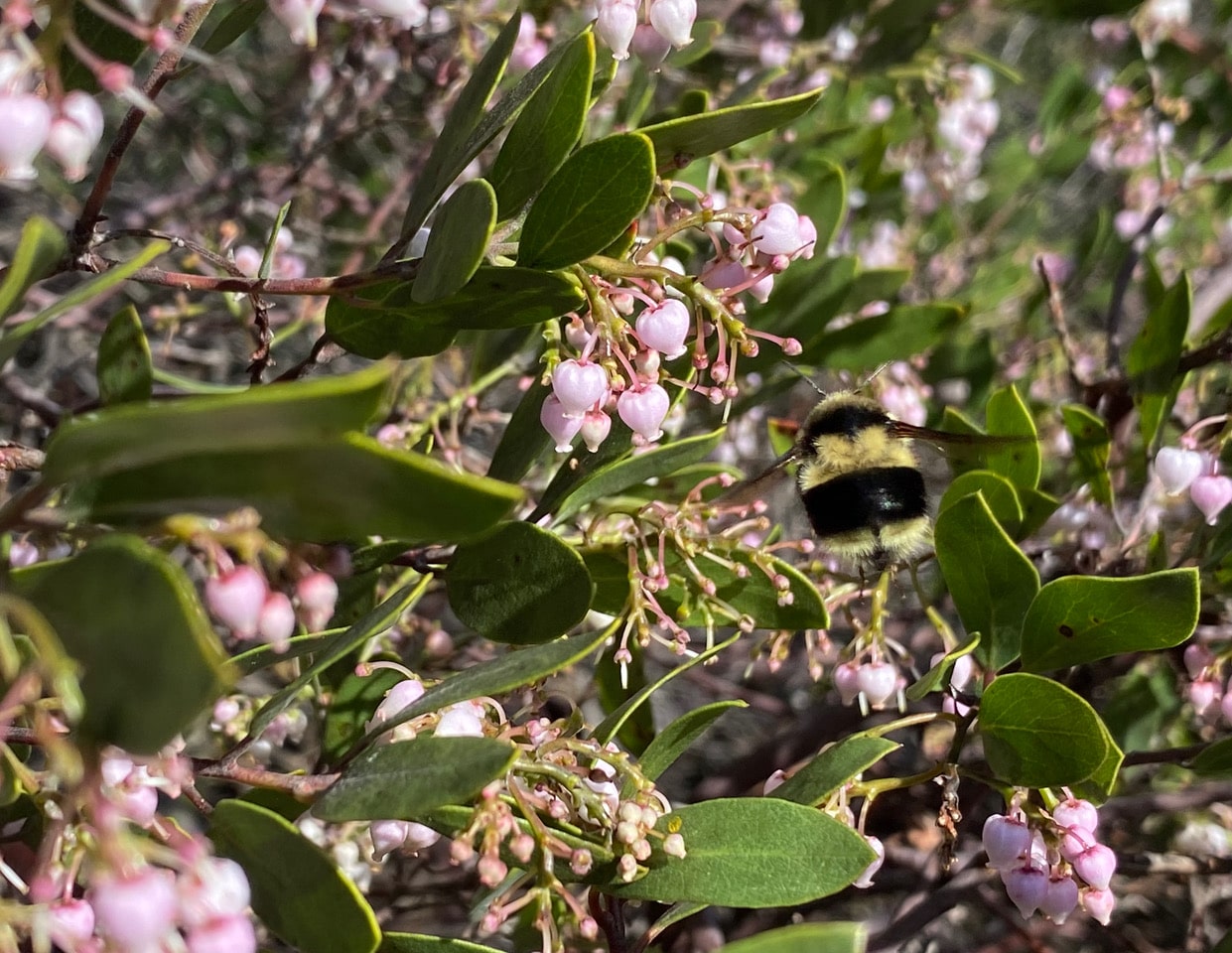
Another view of the Black-tailed Bumble Bee foraging on the Manzanita flowers. She is huge for her species, obviously a queen. I see many like her today visiting the Manzanita flowers. None of them is collecting pollen. After the rain storm that lasted for days, these bees must be famished. They probably have to take care of their own energy needs first by taking nectar. Many new queens might not even have established a nest yet, so there’s no need for pollen, which is mostly gathered to feed the larvae.
Off to the next flower cluster! I am happy to see that the bee looks robust and healthy. The botanic garden is a wonderful place for the bumble bees, as it has so many of the early blooming native plants that support these single moms through their most crucial time of trying to establish a colony.
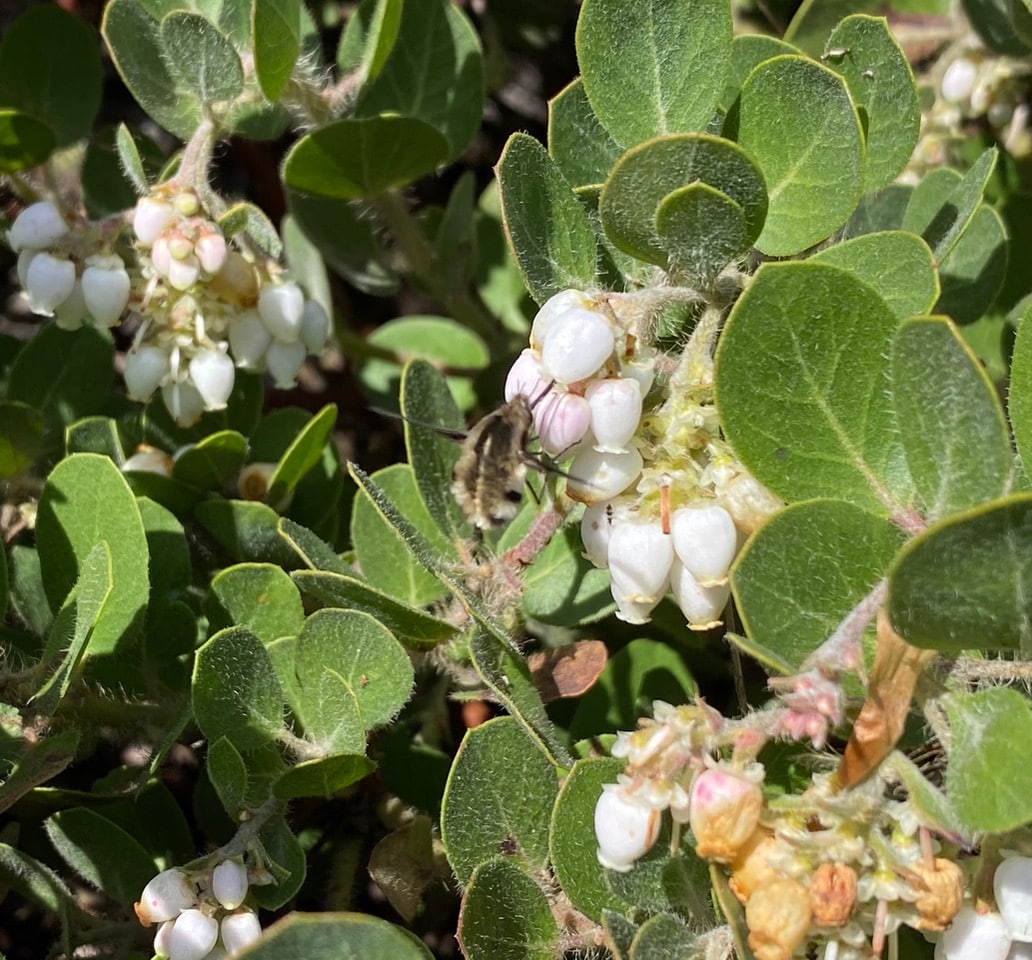
From the corner of my eye, I detect some movements in front of a cluster of Manzanita flowers. It is a Greater Bee Fly, hovering in front of the flowers, and sticking its needle-like proboscis into the flower to access nectar. It is almost impossible to get a good picture of the fly as it is in constant motion. I decide to switch my camera to video mode, and am thrilled by the results.
Bombylius major, commonly known as the Greater Bee Fly is a parasitic bee mimic fly in the family Bombyliidae. It derives its name from its close resemblance to bumble bees. Its flight is quite distinctive – hovering in place to feed, and darting between locations. The species has long skinny legs and a long rigid proboscis held in front of the head. Bombylius major is easily distinguished from the other local species of Bombylius for having wings with dark leading edge, hyaline trailing edge with sharp dividing border. This feature is visible even as the fly is hovering. Adults visit flowers for nectar (and sometimes pollen) from a wide variety of plant families, excelling at small tubular flowers, and are considered good generalist pollinators. Often the pollen is transferred between flowers on the fly’s proboscis.
The bee fly larvae, however, have a sinister side. They are parasitoids of ground-nesting bees and wasps, including the brood of digger bees in the family Andrenidae. Egg deposition takes place by the female hovering above the entrance of a host nest, and throwing down her eggs using a flicking movement. The larvae then make their way into the host nest or attach themselves to the bees to be carried into the nest. There the fly larvae feed on the food provisions, as well as the young solitary bees.