

Pollinator Post 2/8/24 (1)
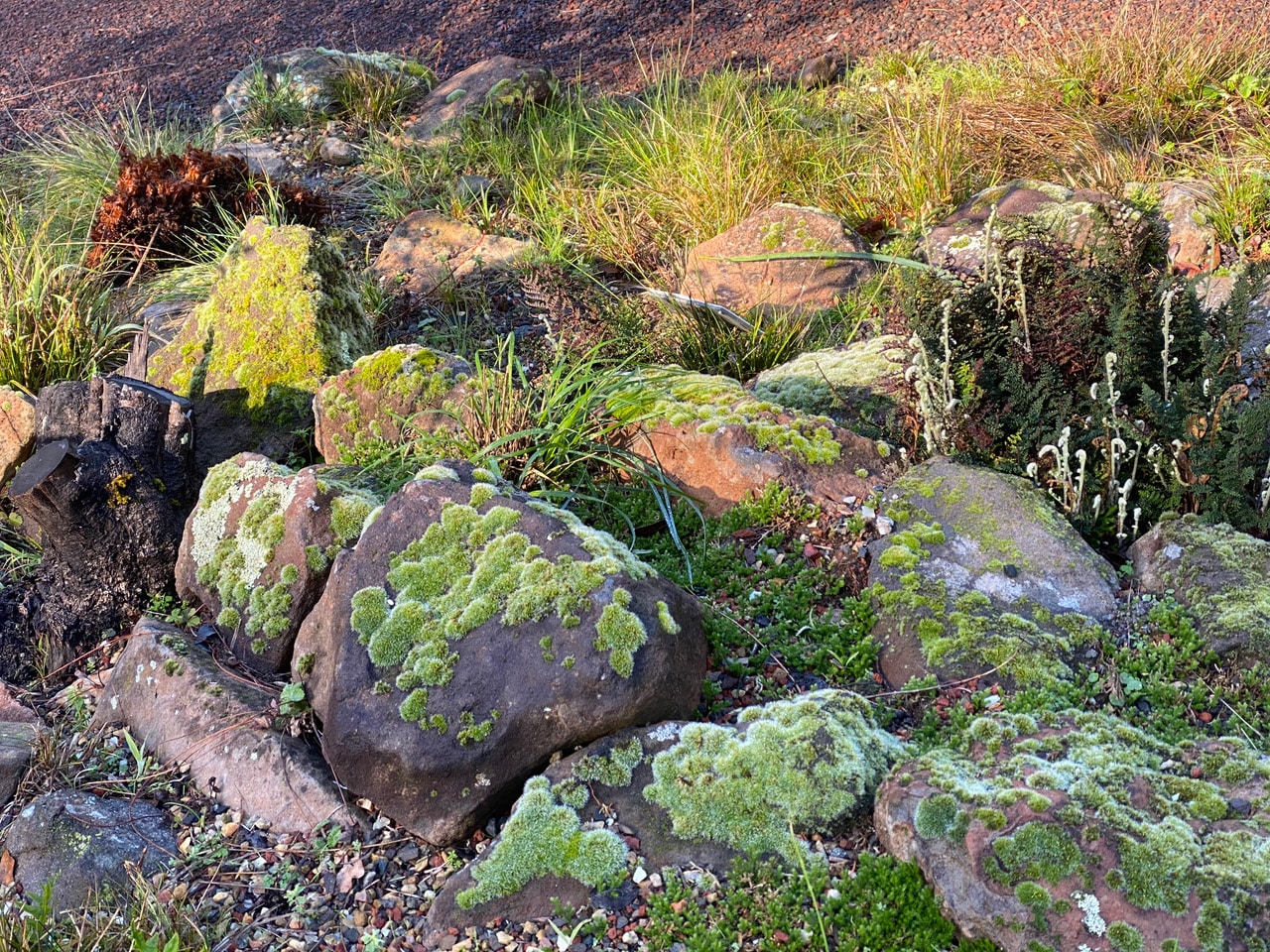
This is the first clear, sunny day after the deluge from the atmospheric river that lasted days. I sprint out the door and head to the East Bay Regional Parks Botanic Gardens after breakfast.
It is still cold when I arrive, and there’s little insect activity. I first spend time looking at the non-flowering plants in the garden. Every rock is covered with mosses and lichens.
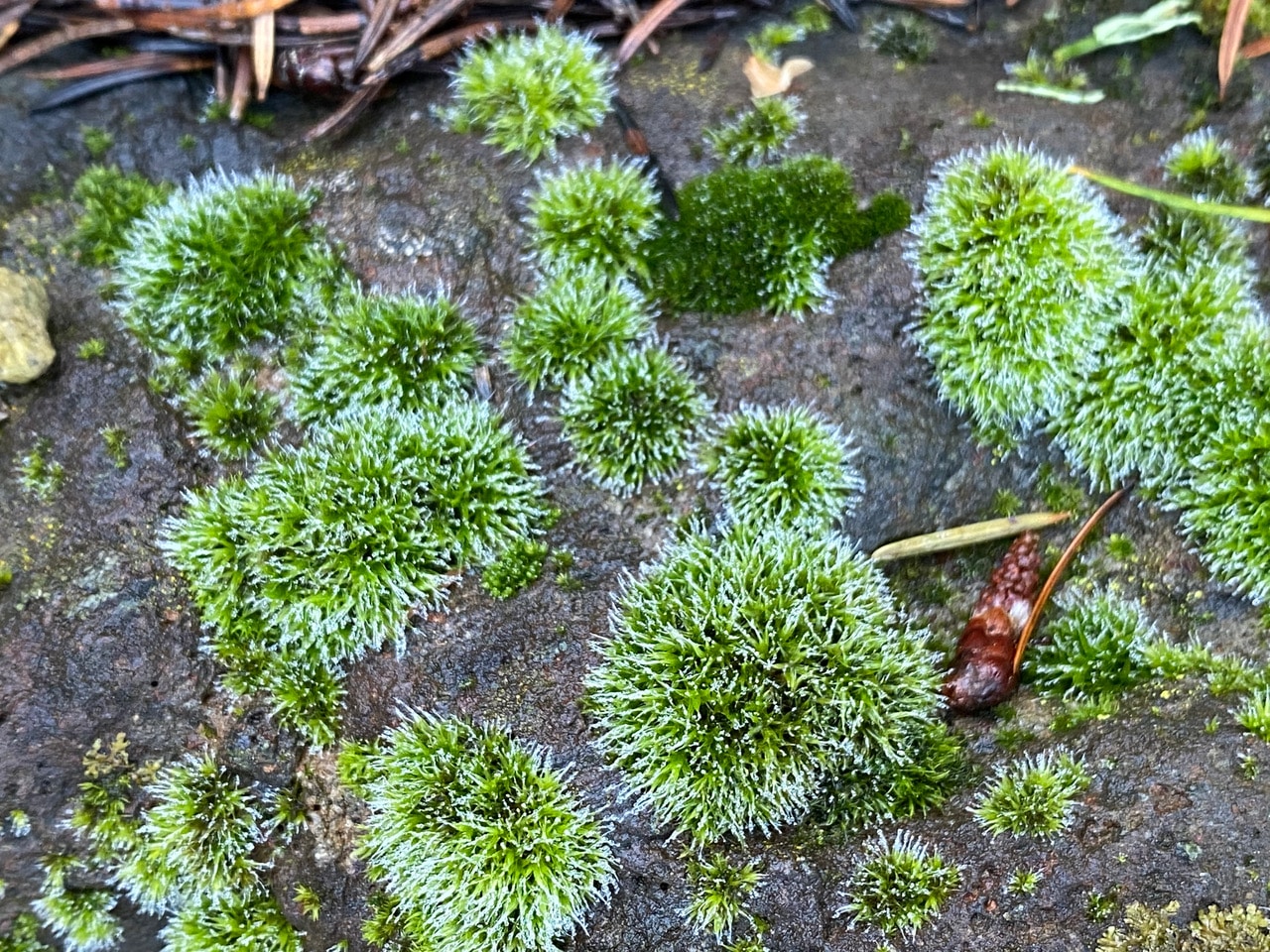

Discreet little mounds of the Grey-cushioned Grimmia, Grimmia pulvinata dot the surface of this rock. It is a common moss found on rocks, forming round, almost furry, grey cushions about 1-2 cm tall. A distinct character is the leaf tip, which is abruptly contracted into a long hair point, which may be as long as the leaf blade.
Tiny water droplets cling to the white tips of the leaves today.
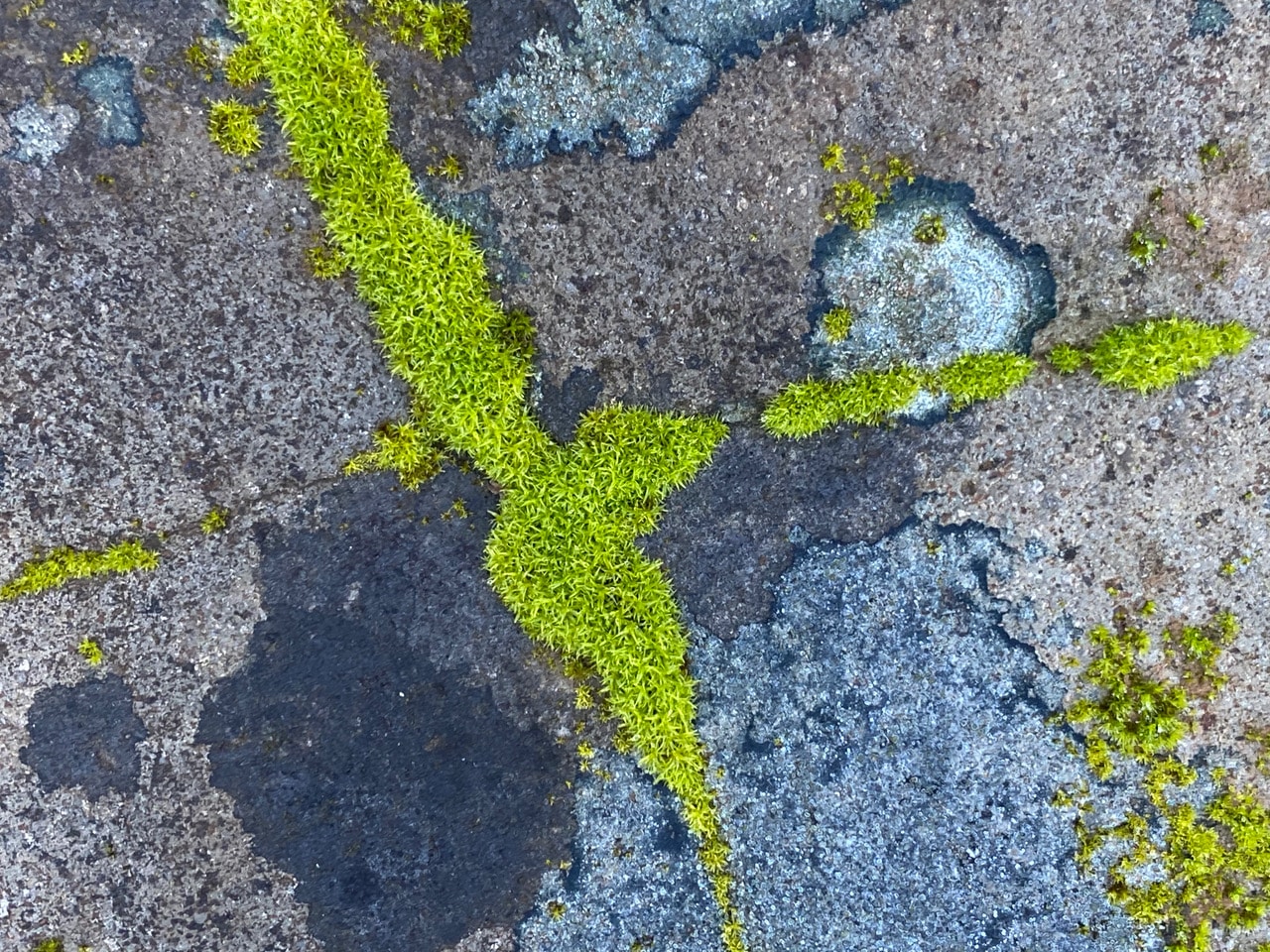
A bright green moss has filled up the cracks on this rock, criss-crossing the surface that is already decorated with grey, and bluish crustose lichens.
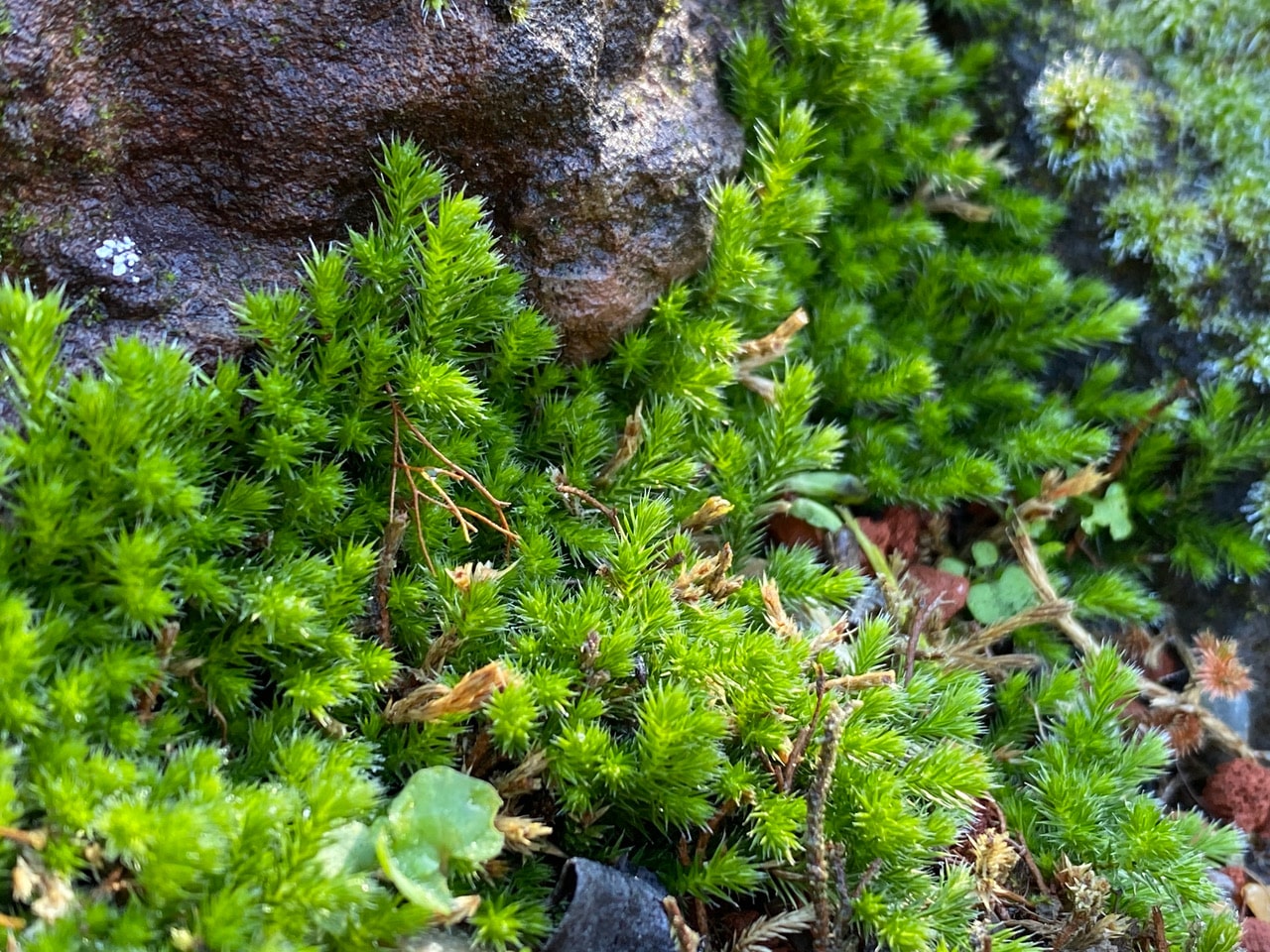
Hey, that’s new! Although moss-like, the plant hugging the ground around the rocks is more robust and stiff-looking. The label next to the plant identifies it as a Spikemoss, in the genus Selaginella (family Selaginellaceae). Unlike the mosses, it is a vascular plant.
Selaginella species are creeping or ascendant plants with simple, scale-like leaves (microphylls) on branching stems from which roots also arise. The plants produce spores of two types, known as megaspores and microspores. Under dry conditions, some species of Selaginella can roll up into brown balls and be uprooted, but can rehydrate under moist conditions, turn green again and resume growth. For this reason, they are referred to as “resurrection plants”.
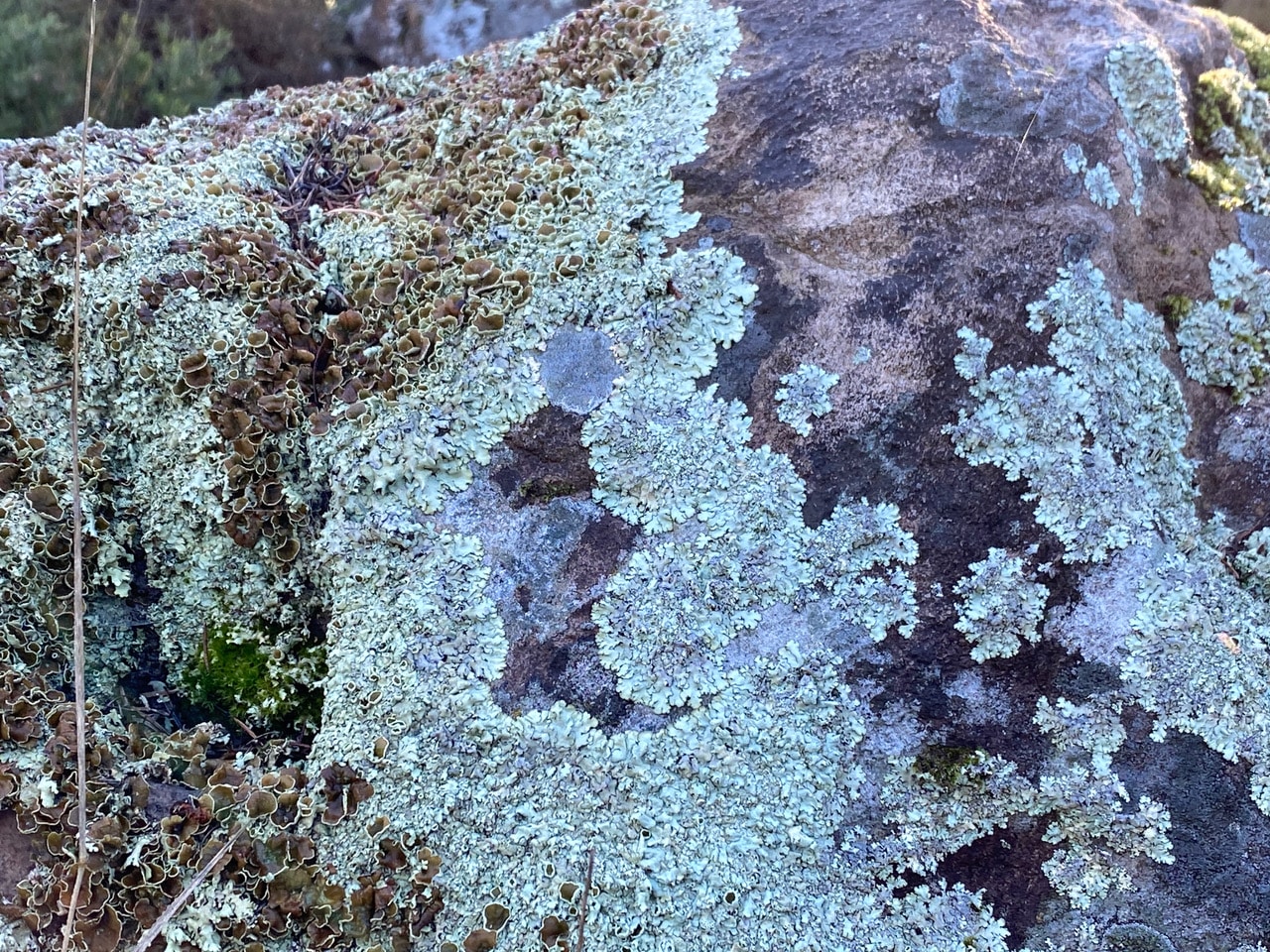
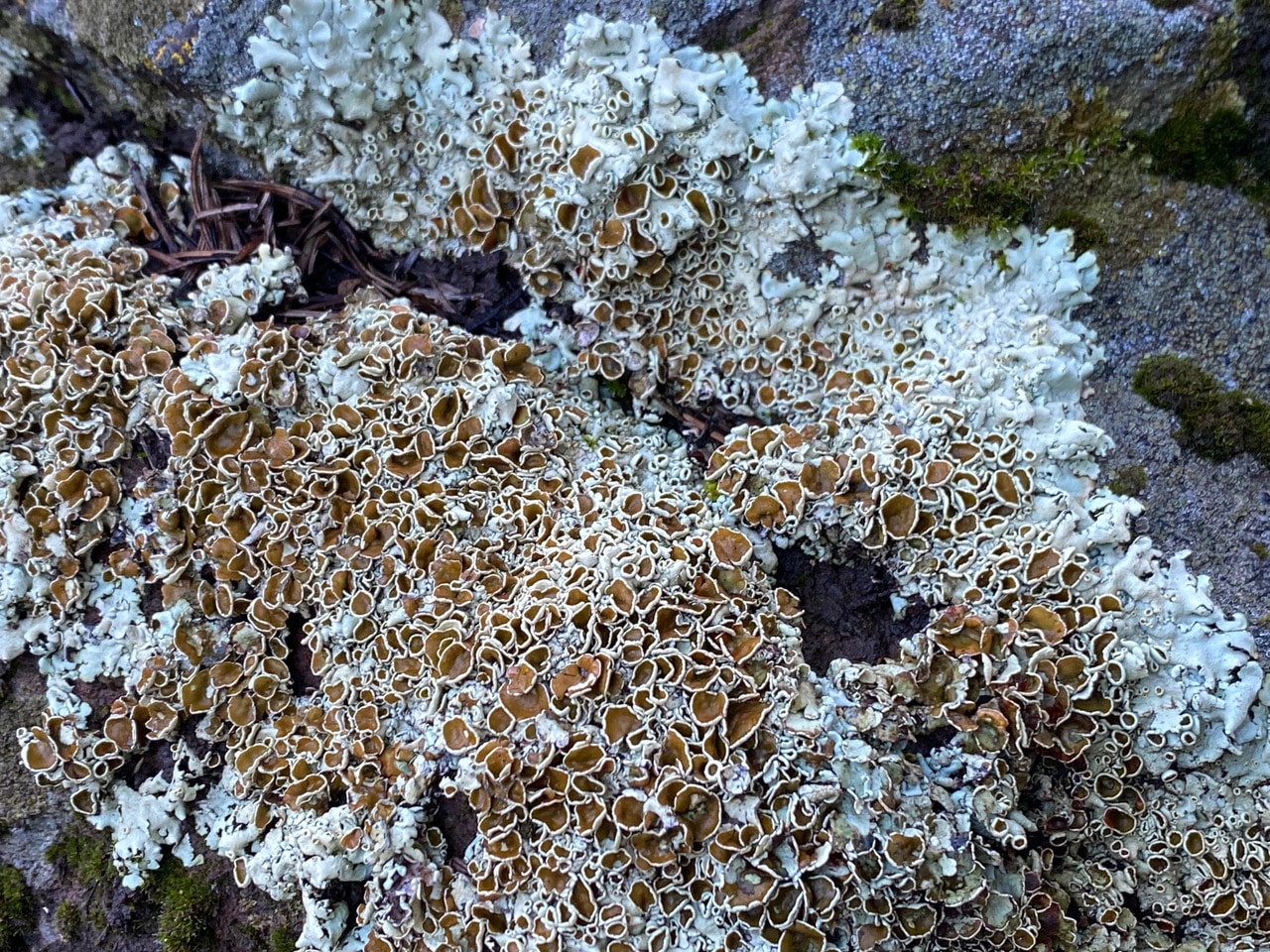
A large boulder is almost completely covered with the grey-blue lichen, Shingled Rock Shield, Xanthoparmelia stenophylla.
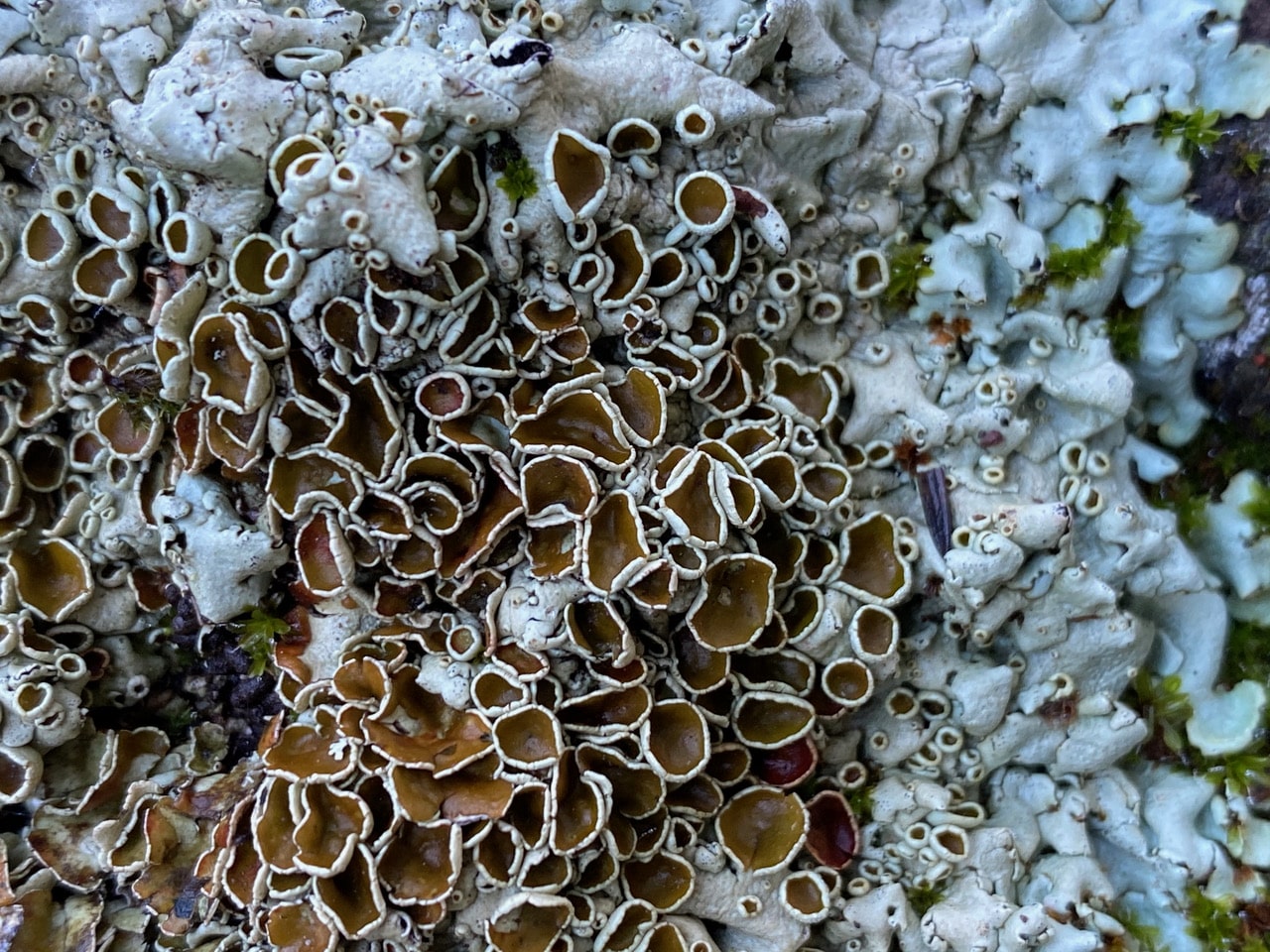
These brown, irregularly shaped discs are the apothecia, or the reproductive structures of the fungal component of the lichen that produce the spores. In sexual reproduction, only the fungal partner is reproduced. The spores that germinate must find the appropriate photobiont (algae) in order to form a new lichen. Since this is not a dependable process, lichens also resort to vegetative reproduction. Fragments of the lichen containing both the photobiont and the mycobiont (fungus) may break off and grow into a new lichen. In some lichens, specialized structures have evolved to facilitate this type of reproduction.
Close-up of the lichen showing the disc-shaped apothecia that produce the fungal spores.
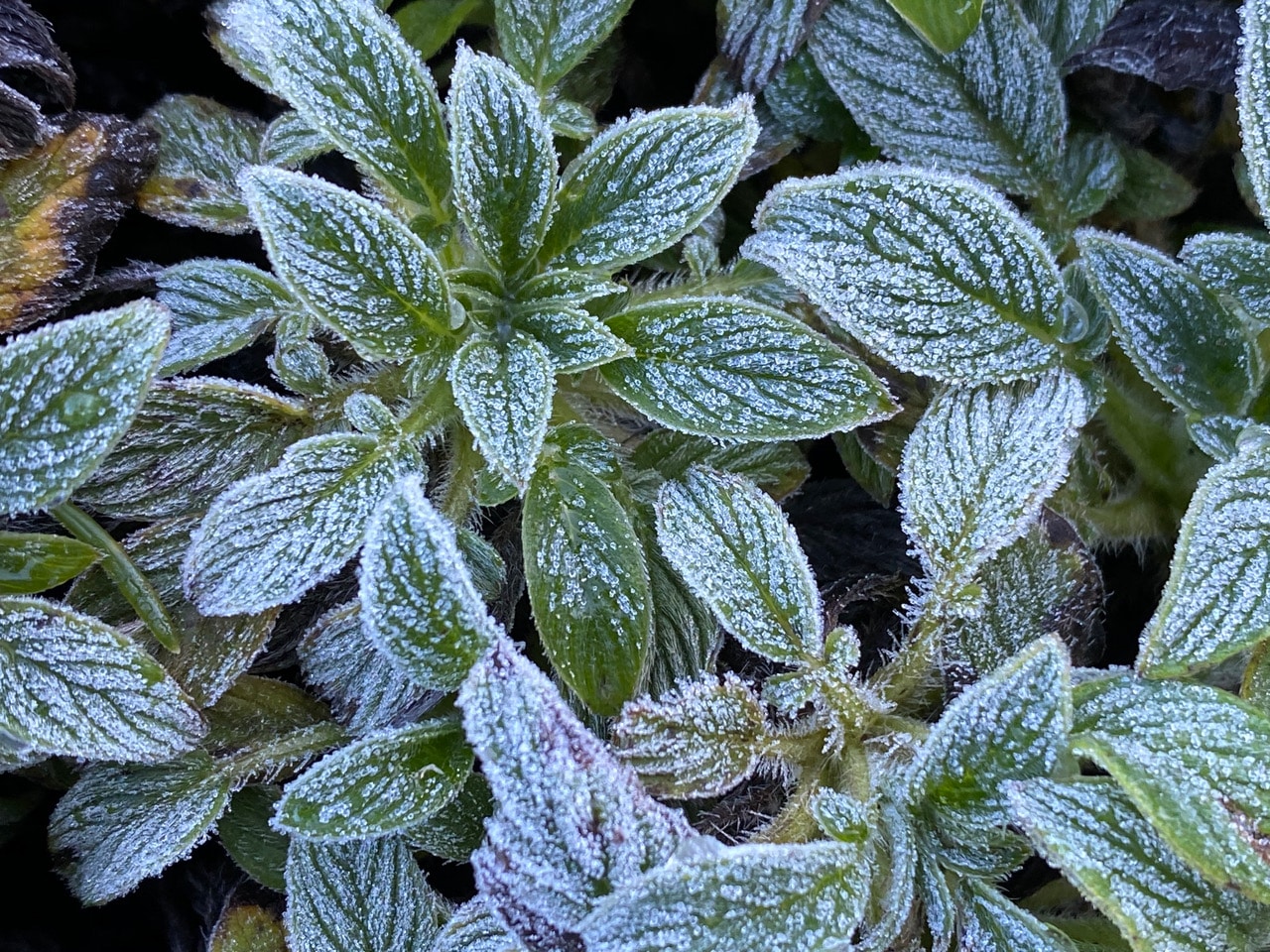
These frosted foliage low to the ground look like Phacelia leaves, although I can’t find a label for the plant.
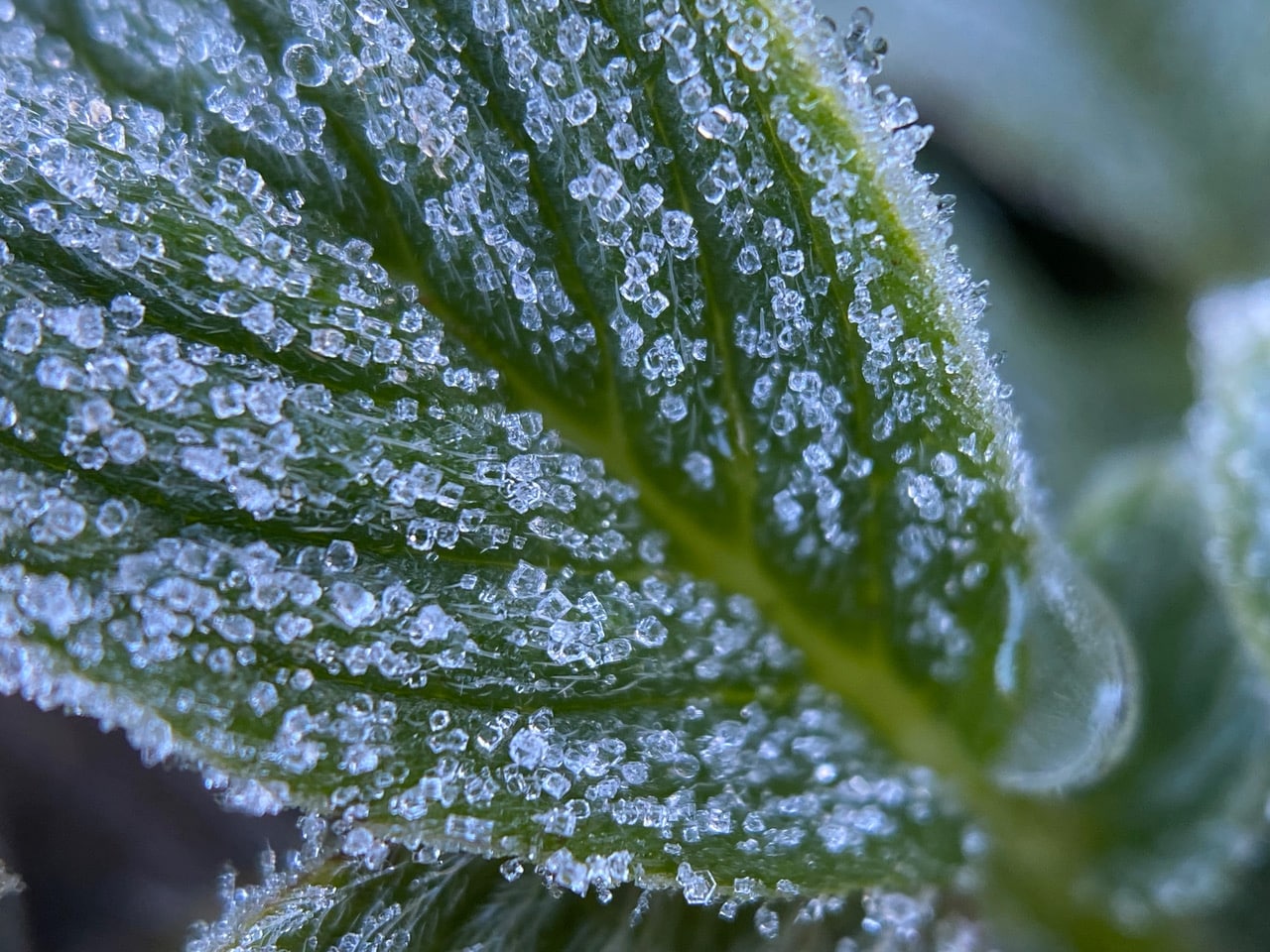
Close-up with the macro lens shows tiny ice crystals on the hairy leaf. Just today I read a newsletter from my naturalist friend, David Lukas titled “Bacteria making Rain”. In it David covers the topic of bioprecipitation feedback cycle involving bacteria that serve as nucleation sites for ice formation. You will enjoy the article: Bacteria Making Rain
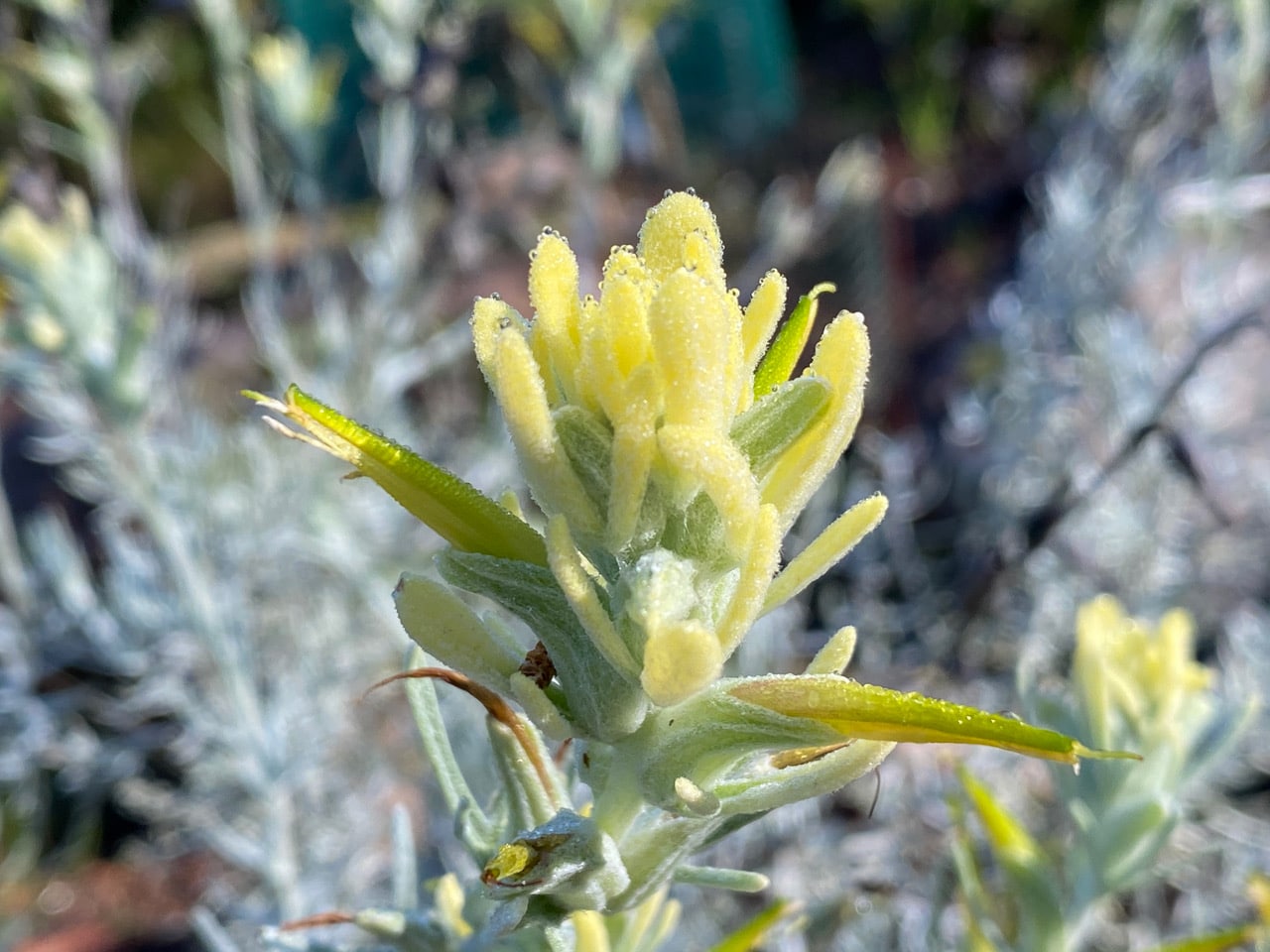
A very pale yellow inflorescence of an Indian Paintbrush, Castilleja affinis holds several spent flowers.
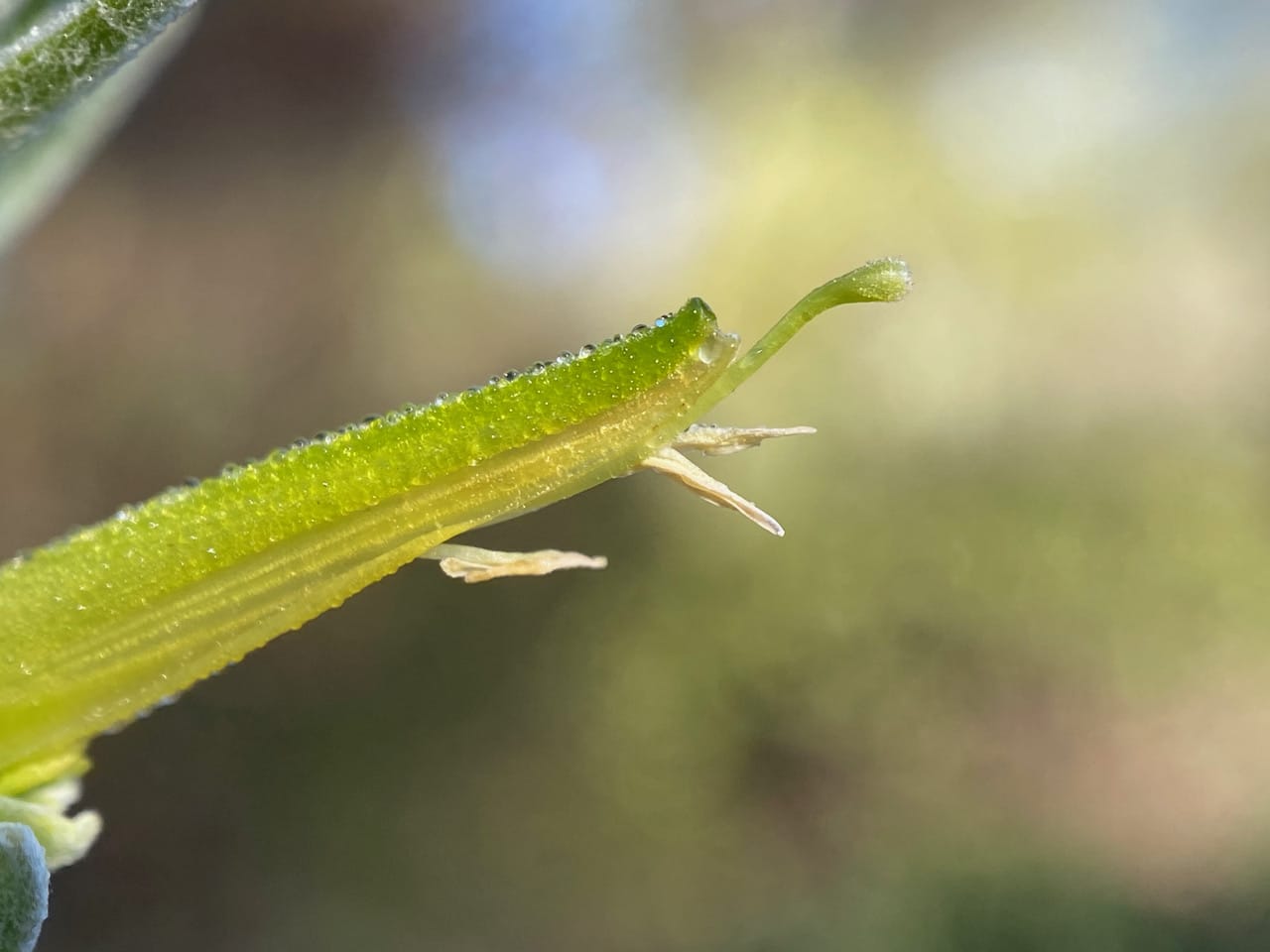
Here’s one of the inconspicuous flowers on the Indian Paintbrush. It might have been probed by the bill of a hummingbird seeking nectar. First time I see anthers sticking out of the corolla of Indian Paintbrush! The anthers are male structures that produce pollen. The slender green thing that curves upward out of the flower is the pistil (female reproductive structure) with a two-lobed stigma at the tip to receive incoming pollen from the bird’s head or neck. The plant is predominantly pollinated by hummingbirds.