

Pollinator Post 2/28/26 (3)

At Sequoia Arena, I venture onto the shady Sequoia Bayview Trail, hoping not to be run over by mountain bikers who enjoy the bumpy ride down this badly eroded, narrow trail.
I have been noticing similar brown patches on the leaves of Coast Live Oak, Quercus agrifolia in many places in the East Bay lately. They do not seem to be caused by insects. Fungal infection?
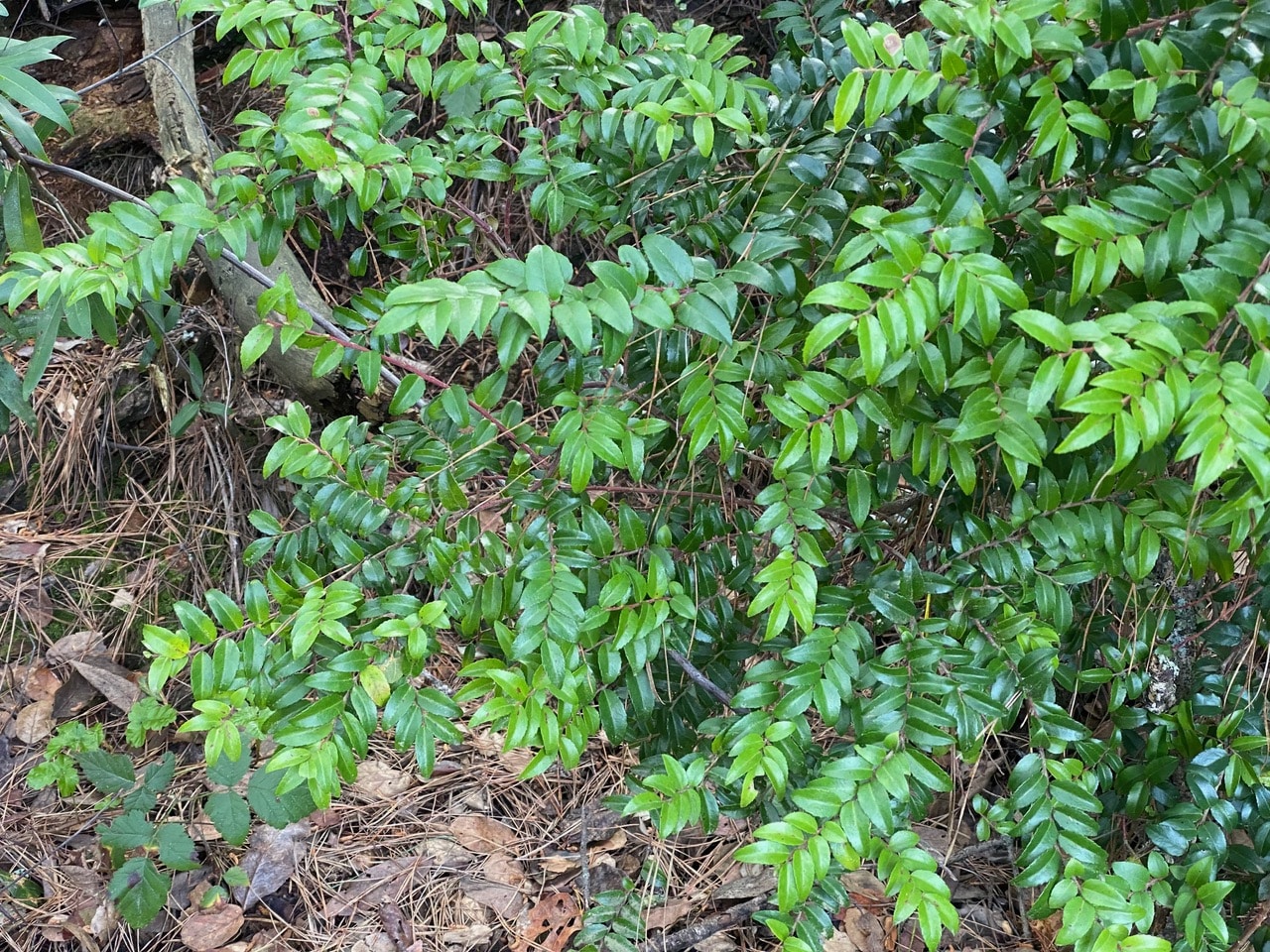



The notoriously slow-growing Evergreen Huckleberry, Vaccinium ovatum along the trail have produced prolific new growths this year. The timing of our rains this winter must be to their liking. Can we expect a good crop of berries later?
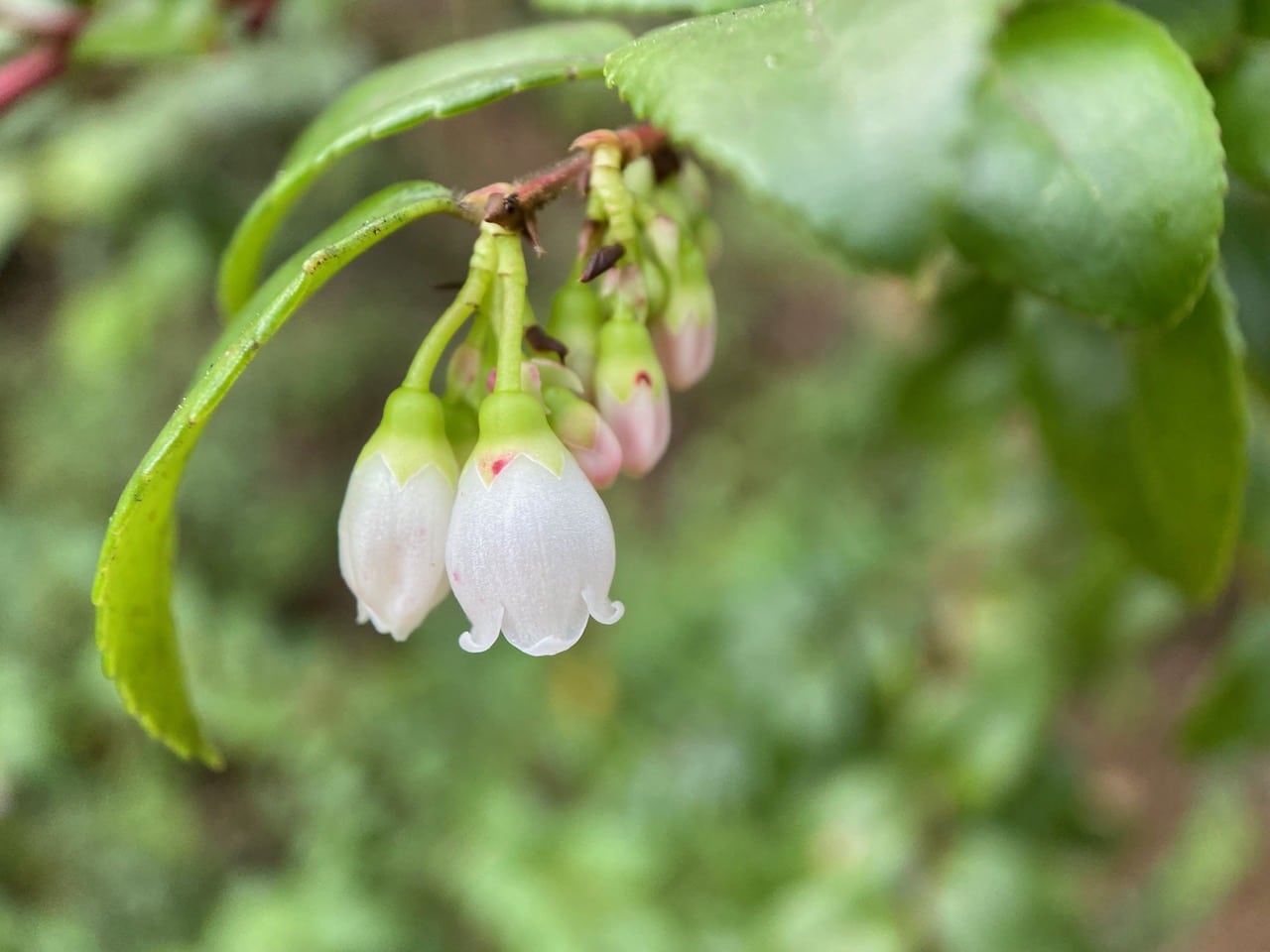
Hey, a few of the Evergreen Huckleberry are in bloom! The shrub produces flowers very similar to those of Manzanita (Arctostaphylos) – after all, both plants belong to the Heath family, Ericaceae. Like manzanita, huckleberry also blooms early in the season, providing early resources for queen bumble bees emerging from hibernation. The small, white to pink nodding flowers appear in clusters at leaf axils, often in early spring. The flower is composed of five fused petals (corolla) that form a bell-shaped structure, with five small, green sepals at the base.
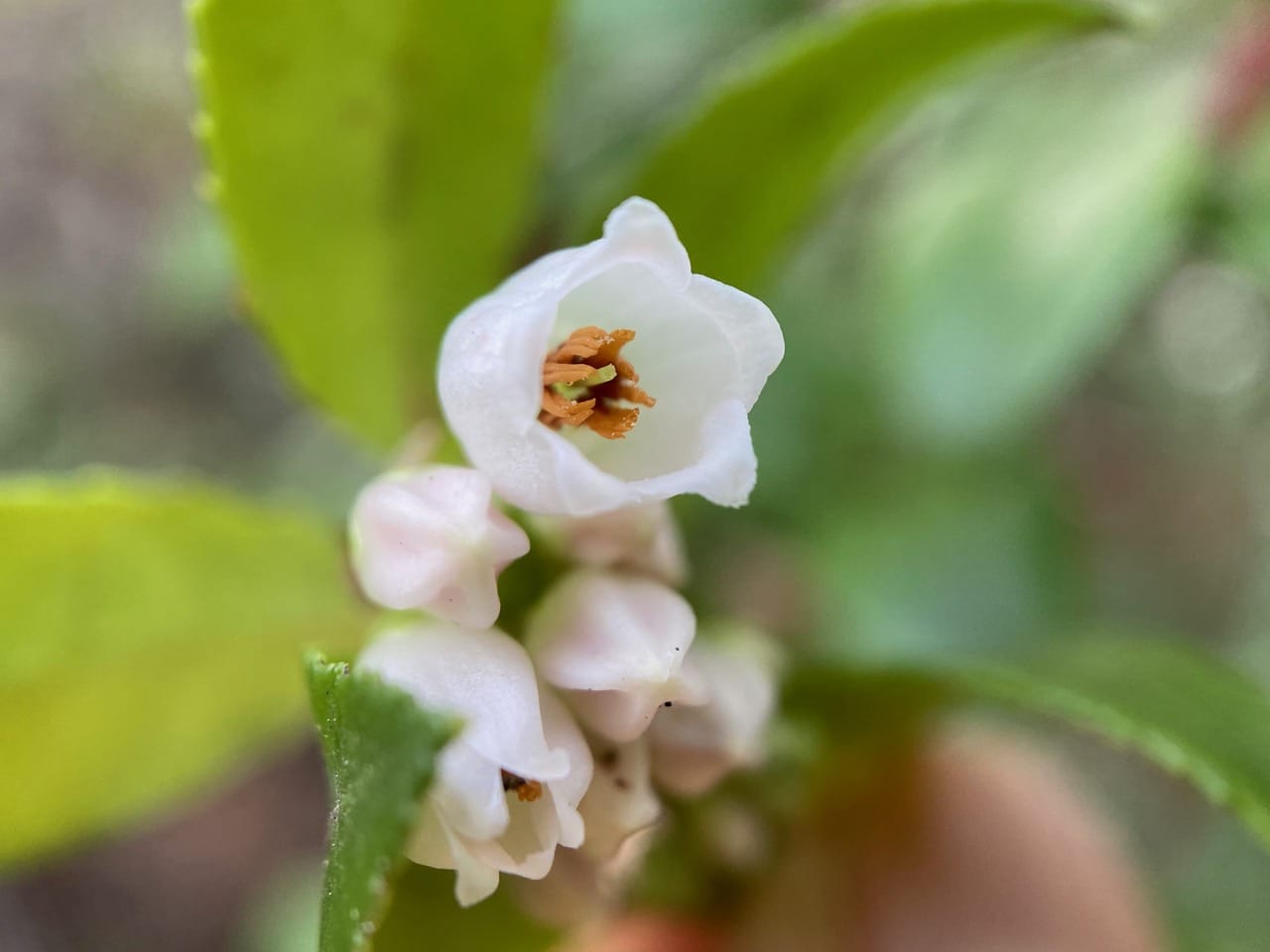
I lift up the branch to peek inside the flowers of Evergreen Huckleberry. A single, central pistil is surrounded by five stamens with anthers that release pollen through terminal pores (poricidal anthers).
Bumble Bees are the most common and efficient pollinators of the huckleberry, although other native bees (Halicitidae, Andrenidae) and sometimes flies or butterflies contribute. Bumble bees are skilled at a specialized technique called buzz pollination, where they vibrate their flight muscles to shake pollen from the anthers while hanging upside down from the flower. Cold and rainy weather during the early blooming period can significantly reduce the activity of pollinators. Denser, shaded forest canopies can reduce sunlight, leading to lower pollination rates and decreased fruit production.
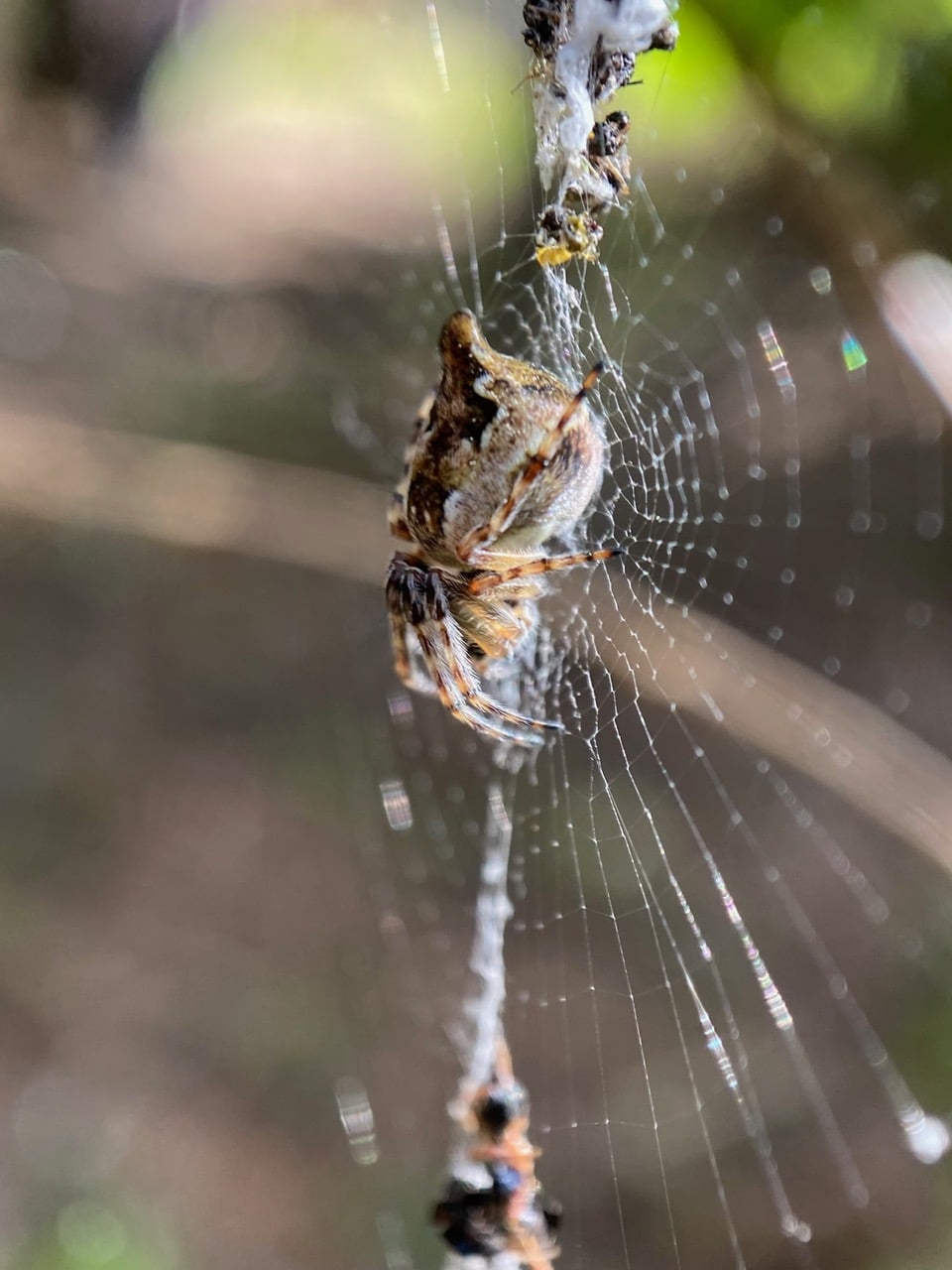
A large, beautifully marked female Conical Trashline Orb Weaver, Cyclosa conica is resting head-down in the hub of her web, her cephalothorax completely hidden behind her folded front legs. Judging from the abundant prey carcasses that she has incorporated into the trashline above and below her, she must be well-nourished.
Cyclosa, also called Trashline Orbweavers, is a genus of orb-weaver spiders (family Araneidae). The tiny spider (5-7.5 mm) is easily recognized by its web decoration; the spider strings together the dead bodies of insect prey and other debris and hangs them in a vertical line through the middle of its web. The decoration, which sometimes includes egg cases as well, probably serves to camouflage the spider. Cyclosa creates its webs mostly during times of complete darkness. The females occupy the web hub (center) to sit-and-wait for prey. The spider can ensnare prey at nearly any time of day, and it only leaves its spot to replace the web prior to sunrise.
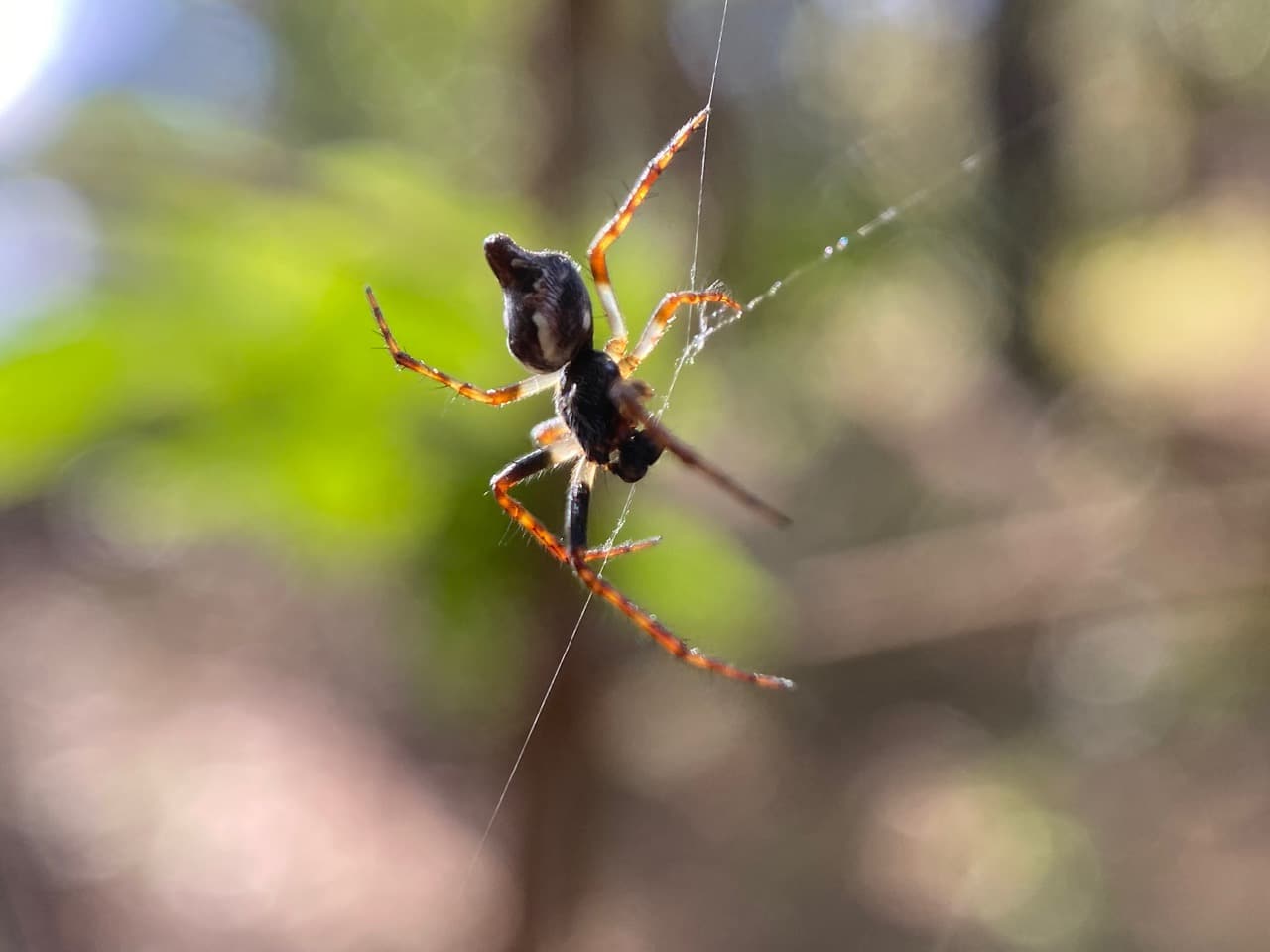
Just outside the female’s web, a smaller, slender male is busy weaving a silk thread, occasionally making quick incursions into the female’s web. Note the pair of dark bulbous appendages, the pedipalps held in front of his face.
Spiders’ pedipalps are short, leg-like appendages near the mouth that function as sensory organs for touch, smell, and taste, as well as for handling food and manipulating prey. Mature male spiders possess conspicuously enlarged, bulbous tips on their pedipalps – often resembling “boxing gloves” – which function as organs to store and transfer sperm to females during mating. These structures, which develop upon reaching sexual maturity, are also used for courtship displays, sensory perception, and cleaning. The specialized appendages are crucial for distinguishing mature males from females and immature spiders.
I was to learn after these pictures were taken that Cyclosa males construct mating threads to interact with the female’s web during courtship. What a stroke of luck for me to have witnessed the behavior!
Cyclosa males, which generally do not build full orb webs, create specific mating threads for courtship, often placing them on or near the female’s web to facilitate communication. He typically attaches this mating thread, then jerks and taps it to send signals to the female, attempting to avoid being mistaken for prey. If the female accepts the signals, mating occurs while both spiders hang from this mating thread. Males typically aim to insert sperm into both female genital openings, sometimes mutilating the scape to prevent further mating by rivals. Multiple males may compete for a single female’s web, with each potentially using this technique to secure a mating opportunity.
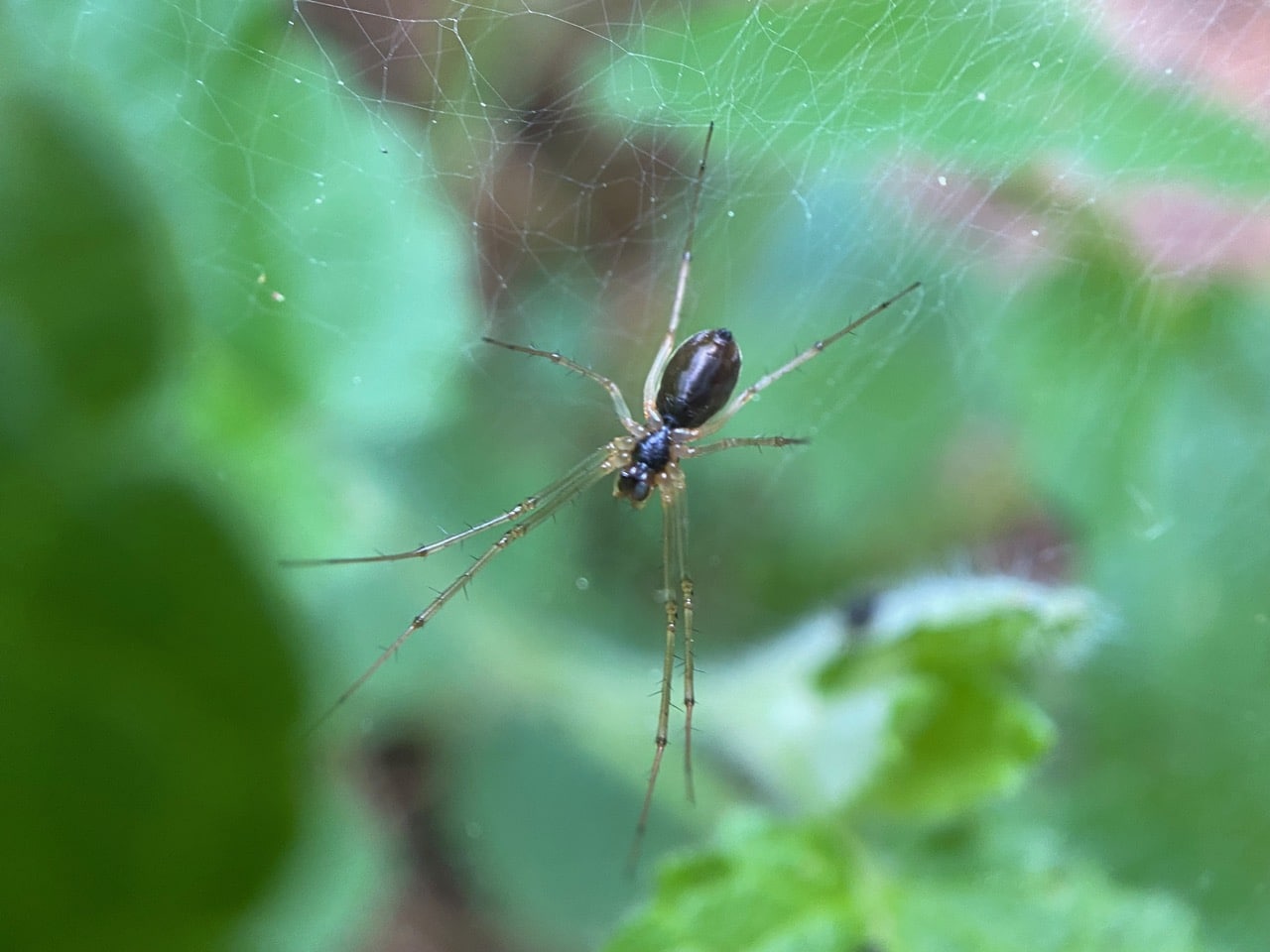
In the low vegetation under the forest canopy, a small, long-legged spider is hanging upside down on its fine mesh web.
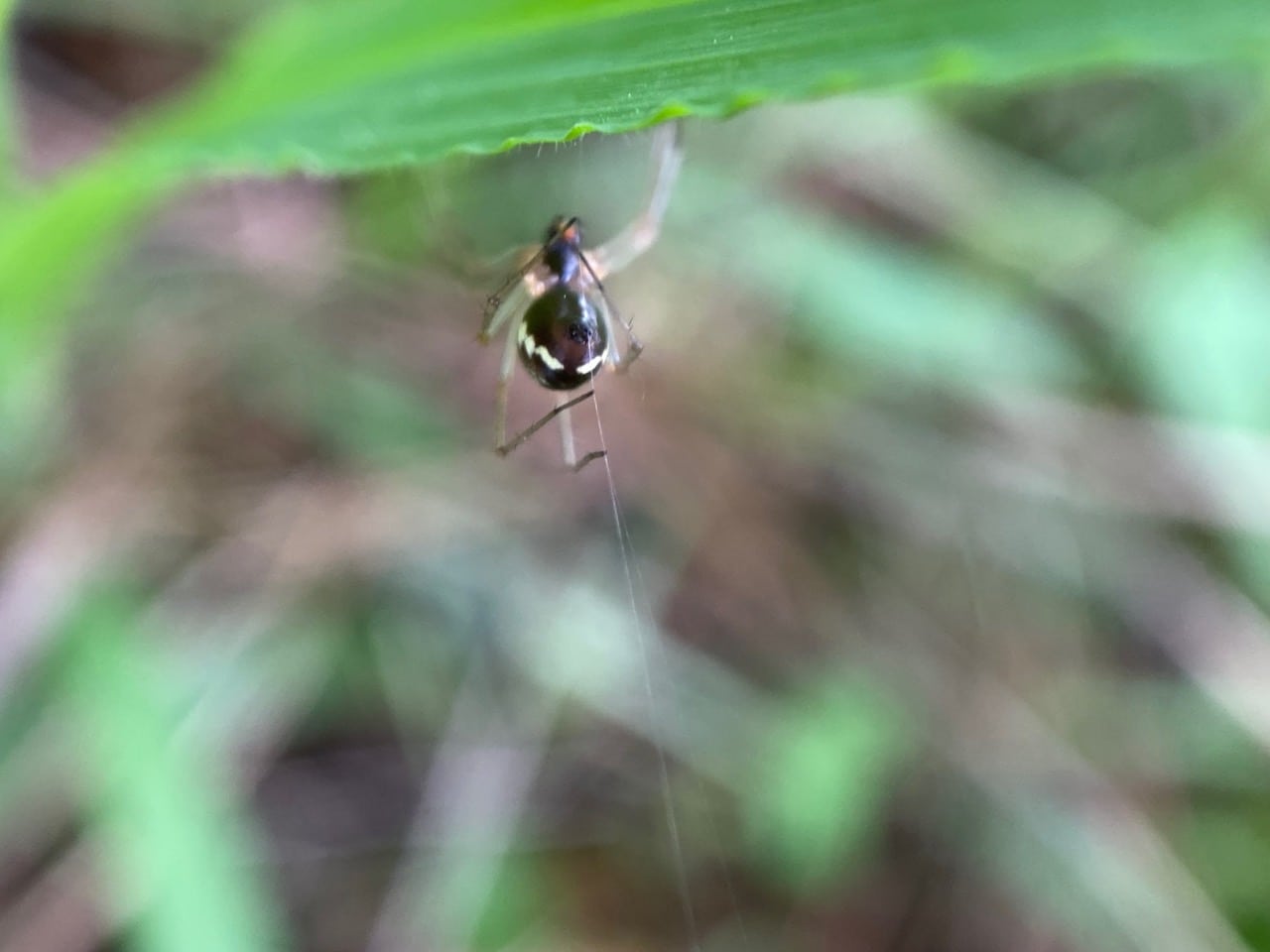
As I approach with the camera, the spider scoots under a blade of grass, riding on an invisible silk thread while releasing another thread from the spinneret on its abdomen.
iNaturalist has helped identify the spider as a Sheet-weaver (subfamily Linyphiinae, family Linyphiidae).
There are two subfamilies: the true sheet weavers (Linyphiinae), and their tiny relatives the Dwarf Sheetweavers (Erigoninae). The web of these spiders form a flat or curved surface suspended from vegetation or over an opening on the ground. The spiders hang beneath the web and attack prey that wander or fall onto the web surface by biting directly through the silk webbing. Most species are tiny; some are among the smallest of spiders. A few of the common and larger species build distinctive webs for which they are named, for example, the “bowl-and-doily” spider, and the “filmy-dome” spider. Many of the dwarf sheet weavers aren’t known to build a web, but wander through the leaf litter on the ground in search of prey. Linyphiids are famous for dispersing by ballooning (flying by means of silk strands carried in a breeze), and these spiders are often responsible for the sheets of gossamer which sometimes coat fields and fences.
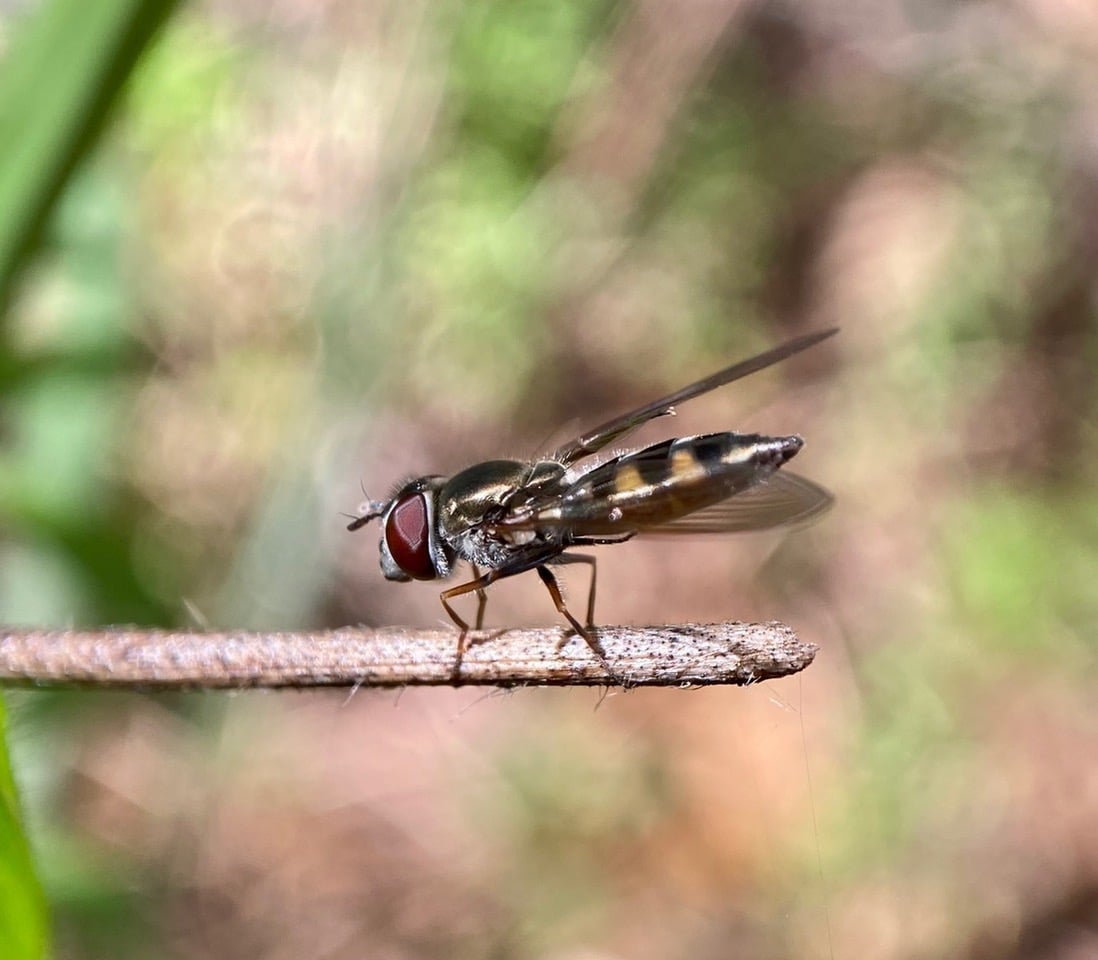
A female Western Forest Sedgesitter, Platycheirus trichopus (family Syrphidae) has landed on a twig in the undergrowth.
In the hover flies (family Syrphidae), the sexes can be easily distinguished by the placement of the compound eyes. Males usually have holoptic eyes that meet on top of the head, while females have dichoptic eyes that are set apart from each other.
The Western Forest Sedgesitter proceeds to lift its wings and groom its abdomen. It is a rare treat to see the abdomen at all, as it is usually hidden under the folded wings when the hover fly is not flying.
The Sedgesitters are generally small to medium-sized flies, active from spring through autumn, frequently visiting flowers in gardens and woodland edges. Known as “flower flies”, adults are frequently found on plants feeding on nectar and pollen. They can hover almost motionless. Larvae are aphid-eaters, providing natural pest control. The hover fly is commonly found in grass, herb vegetation, and forest environments. Many stay active during cold and rainy weather. The Western Forest Sedgesitter is found in Western North America, from Alaska to California.
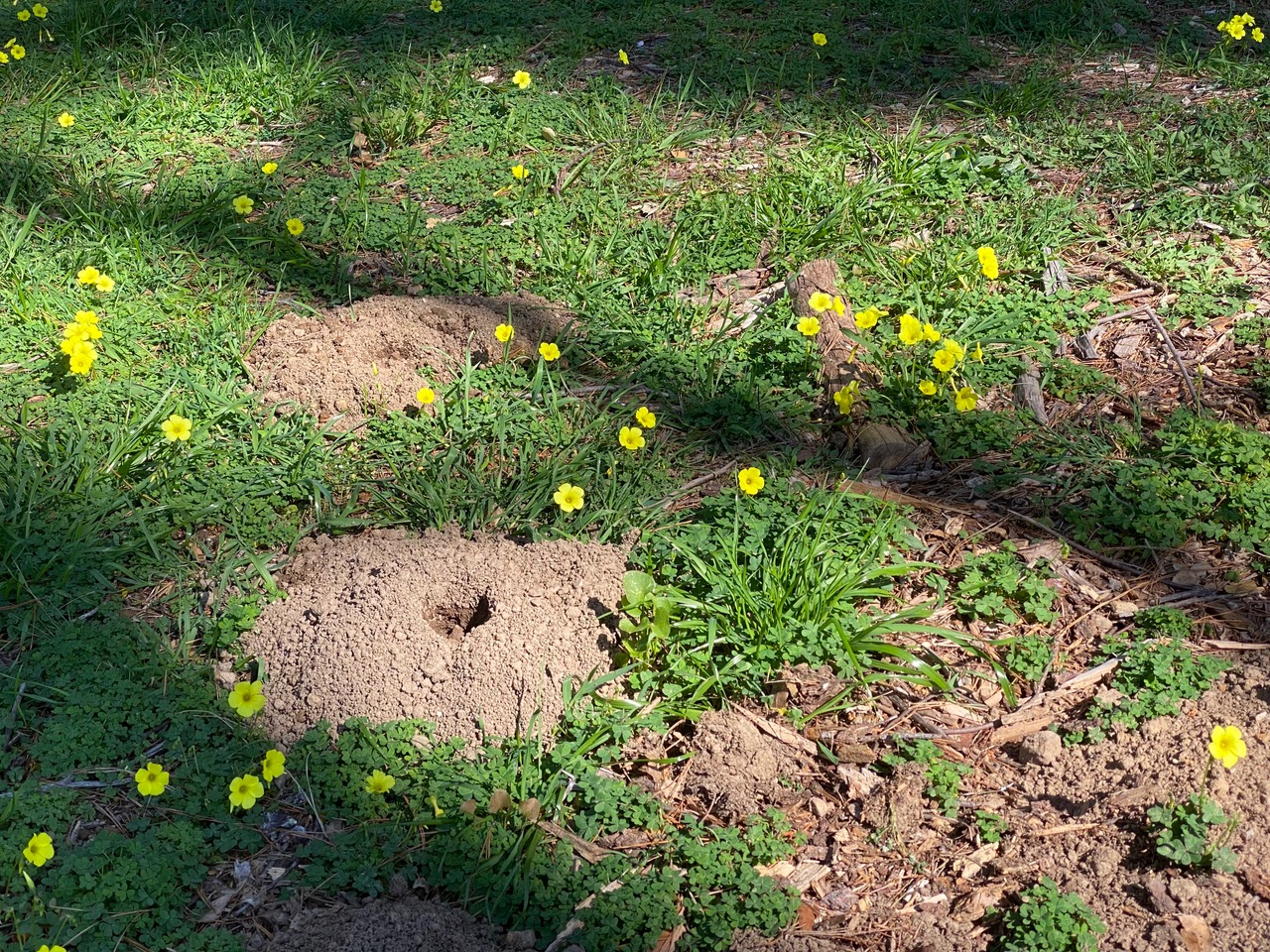
In dappled shade, a weedy patch of ground is riddled with gopher mounds. Are the fossorial (burrowing) rodents responsible for the spread of the yellow-flowered Bermuda Buttercups, Oxalis pes-caprae? It is conceivable that the gophers could move the plant’s bulblets around during their burrowing activities.
Bermuda Buttercup, Oxalis pes-caprae (family Oxalidaceae) is a low-growing perennial found along the coast of California. The plant was introduced as an ornamental from South Africa in the early 1900s. It is now a persistent nuisance in home gardens and has taken over the coastal grasslands. Despite the beautiful flowers, Bermuda Buttercup, Oxalis pes-caprae is essentially sterile in many areas (such as North America), relying entirely on bulbs to spread. The plant produces small, white bulbs (often called bulblets or bulbils) attached to the main bulb or along the underground stem (rhizome) in spring. Each plant can produce over 20 bulbs per year, which are spread by contaminated soil, garden tools, composting, and construction equipment. Rodents may eat or move the bulbs, depositing them in new locations, such as in caches. Such disturbances allow the plant to colonize rapidly in lawns, gardens, and natural areas. Specialized roots can pull the bulbs deeper into the soil, making them difficult to remove and allowing them to persist through summer dormancy.