

Pollinator Post 2/28/25 (1)
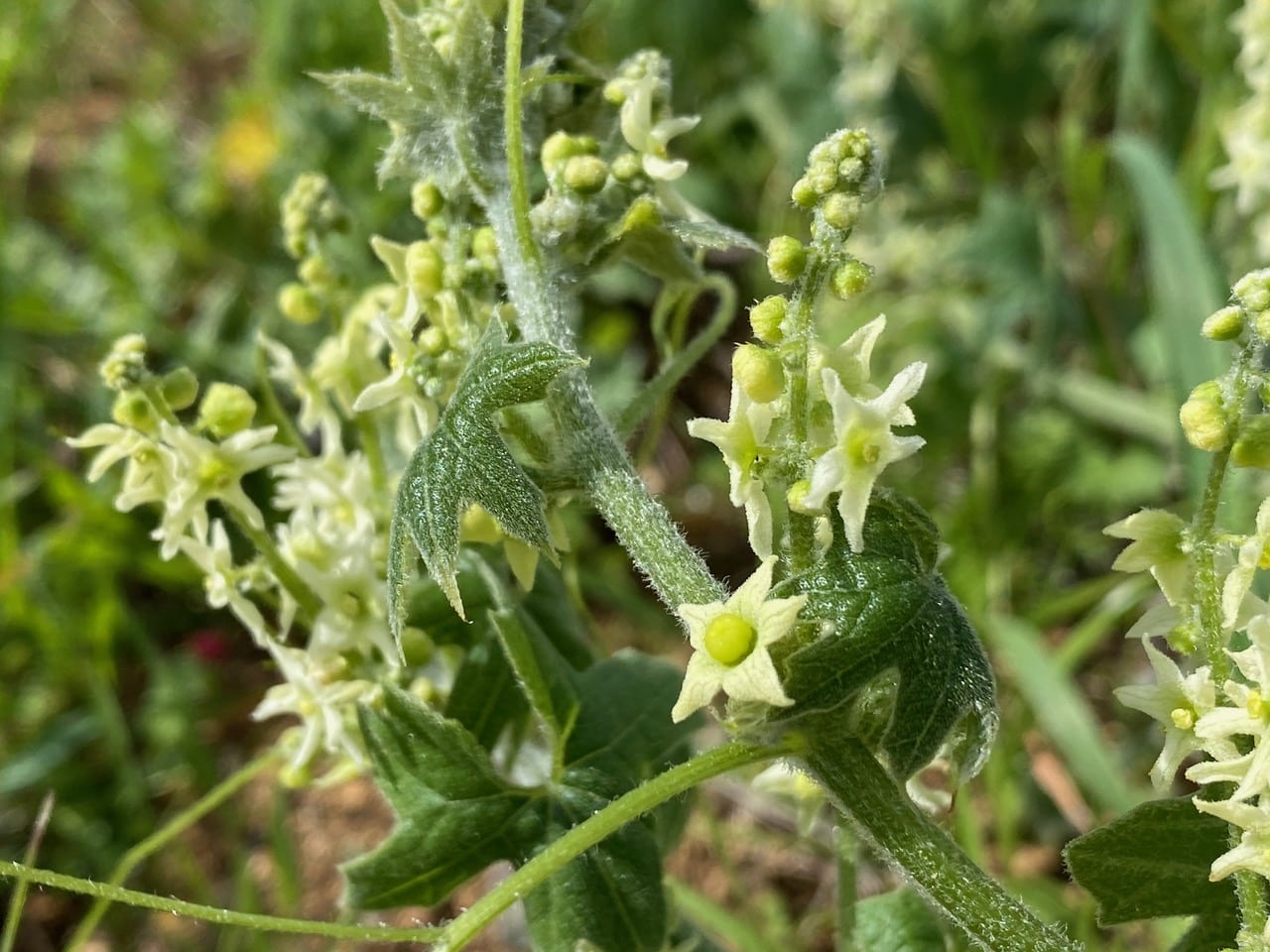
I take my walk on Nimitz Way at Inspiration Point, Berkeley this morning.
On the grassy slope on the side of the paved trail, a California Manroot, Marah fabacea is blooming prolifically. Marah species are monoecious, meaning separate male and female flowers are borne on the same plant. A quick check shows numerous female flowers at the leaf axils below the inflorescences of male flowers of this plant. This is in stark contrast to the plant that I found at Sibley Volcanic Preserve not long ago – that plant had zero female flowers. I guess the individual plants of the species vary quite a bit on their male/female flower ratios. Is this genetically determined or does the ratio vary with environmental conditions?
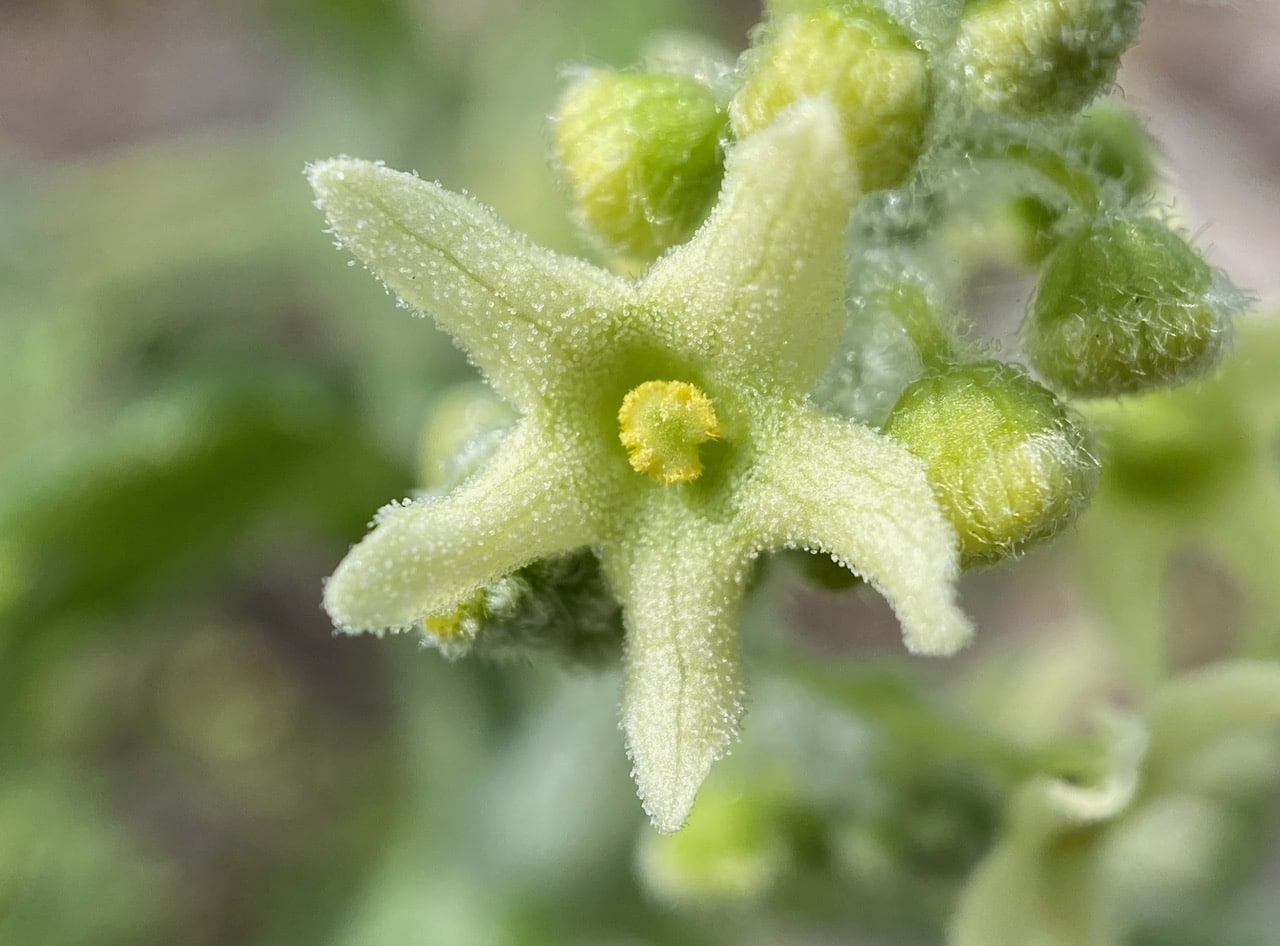
Here’s a typical male flower with stamens fused and twisted together to form the yellow knob in the center of the flower. Sticky pollen is produced that has the affinity to adhere to the body of small insects that probe for nectar at the base of the flowers.

At the base of some inflorescences of male flowers is a large female flower with a globular style/stigma in the center.
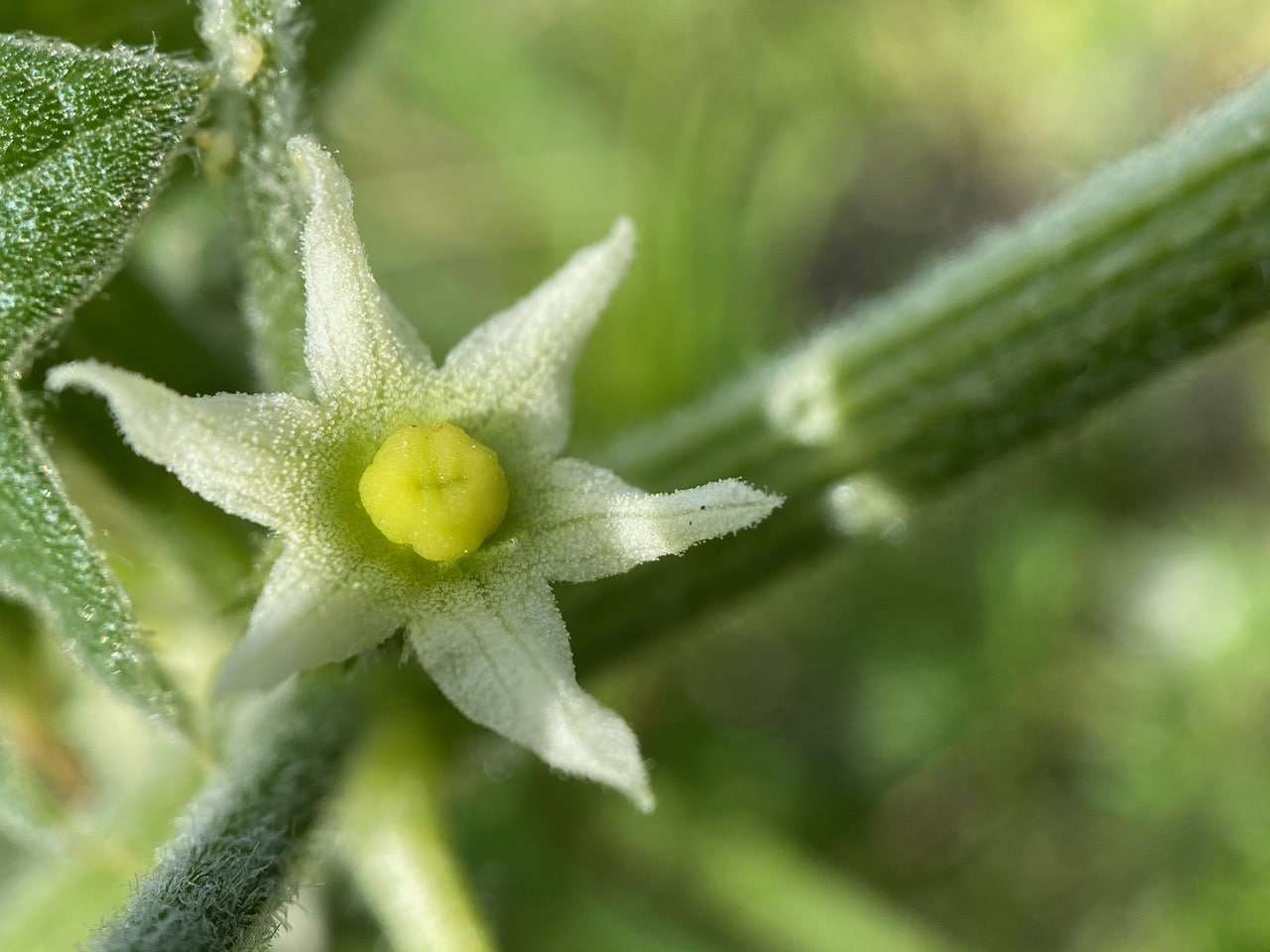
Close-up of a female Marah flower. The large stigma in the center is moist and sticky at maturity, the better to receive pollen delivered inadvertently by small insects visiting for nectar. The ovary of a female flower is “inferior”, located beneath the corolla. After pollination, the ovary develops into the spiky fruit we are familiar with. Surprisingly, despite the profusion of flowers on this plant, I am not seeing any insect visitors. Elsewhere I have observed American Winter Ants, Argentine Ants, a Braconid Wasp, and a Fungus Gnat visit the male Marah flowers and come away with sticky pollen.
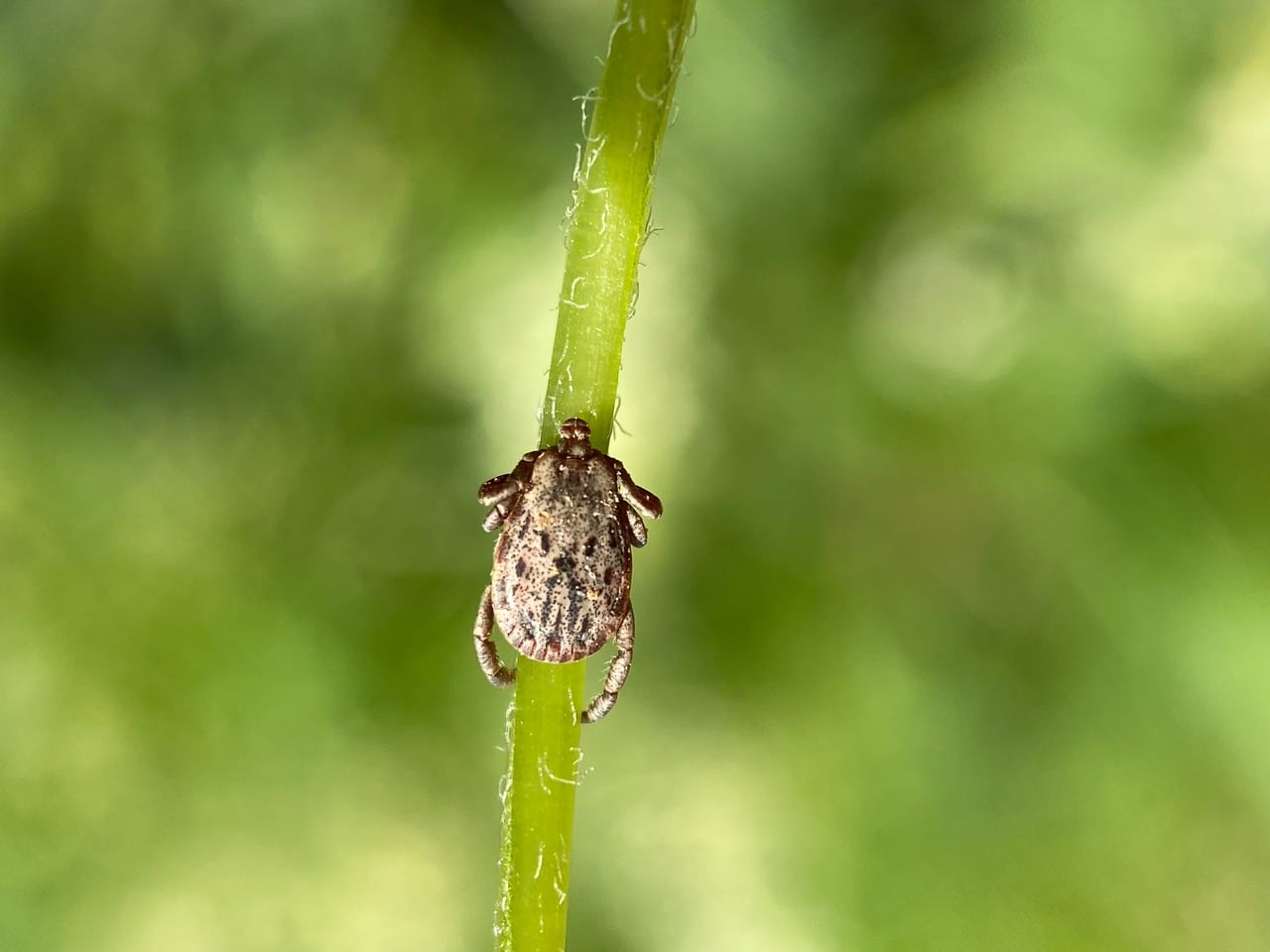
A Pacific Coast Tick, Dermacentor occidentalis (family Ixodidae) is questing on a straight strand of Marah tendril that has yet to coil around a support. The tick lowers its front legs as it detects the approach of my camera. This is not where I expect to find ticks!
Ticks pick a place to wait by identifying well-used paths, resting on the tips of grasses and shrubs. They find their hosts by detecting animals’ breath and body odors, or by sensing body heat, moisture, and vibrations. Some species can even recognize a shadow. Ticks can’t fly or jump, but many species wait in a search position known as “questing”. Holding onto leaves or grass by their third and fourth pair of legs, they hold the first pair of legs outstretched, waiting to climb on to a passing host. When a host brushes the spot where the tick is waiting, it quickly climbs aboard. Recent research has shown that ticks are significantly aided by electrostatic forces (static electricity) when attaching to their hosts, allowing them to be passively attracted across air gaps to land on potential hosts due to the natural electrical charges animals accumulate on their bodies.
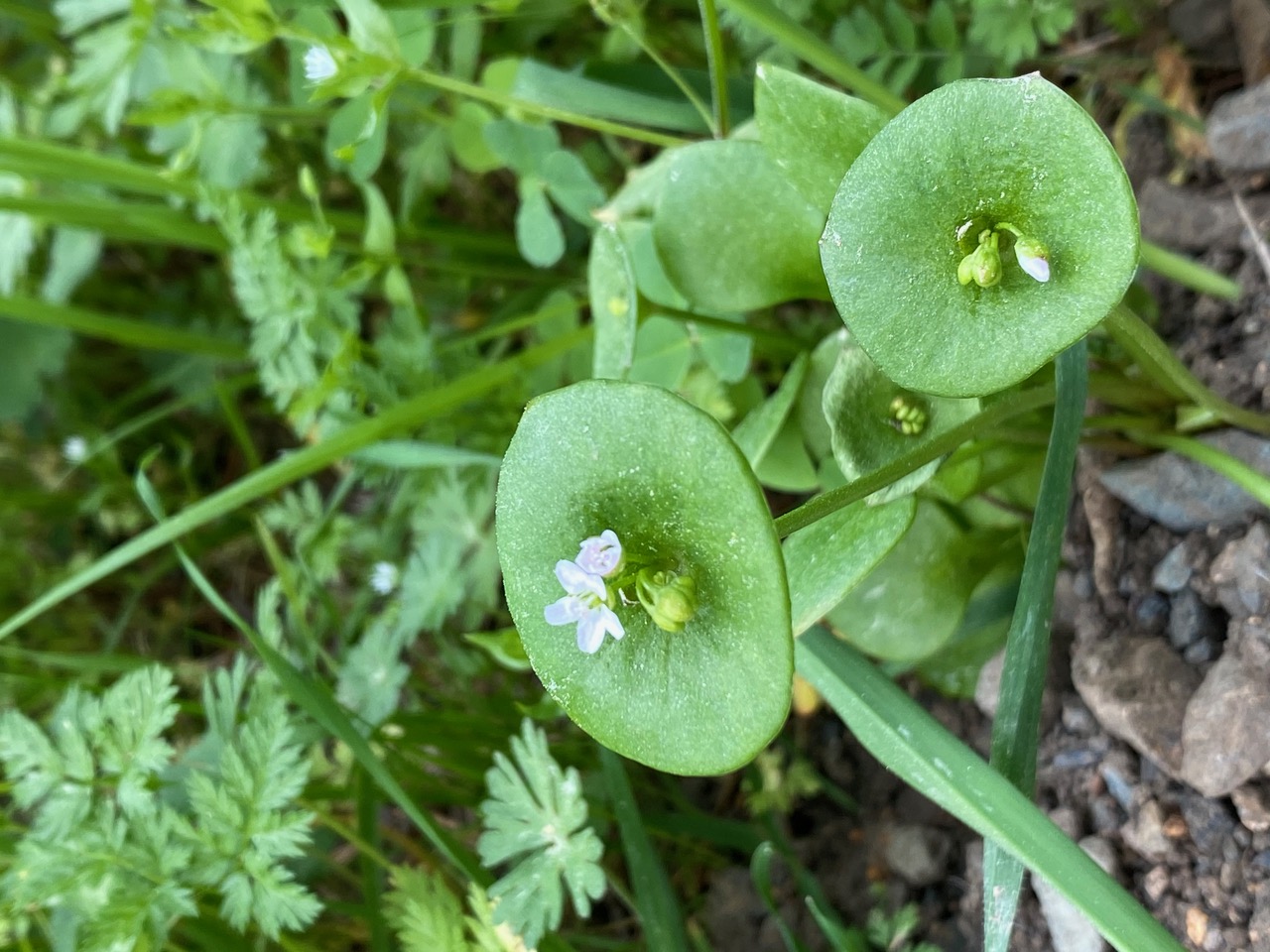
The native Miner’s Lettuce, Claytonia perfoliata has started to bloom among the weedy vegetation along the path. Tiny white flowers are borne in clusters atop a round leaf like a fairy’s posy. I simply love these flowers and have been on the trail of their pollinators for a couple of years.
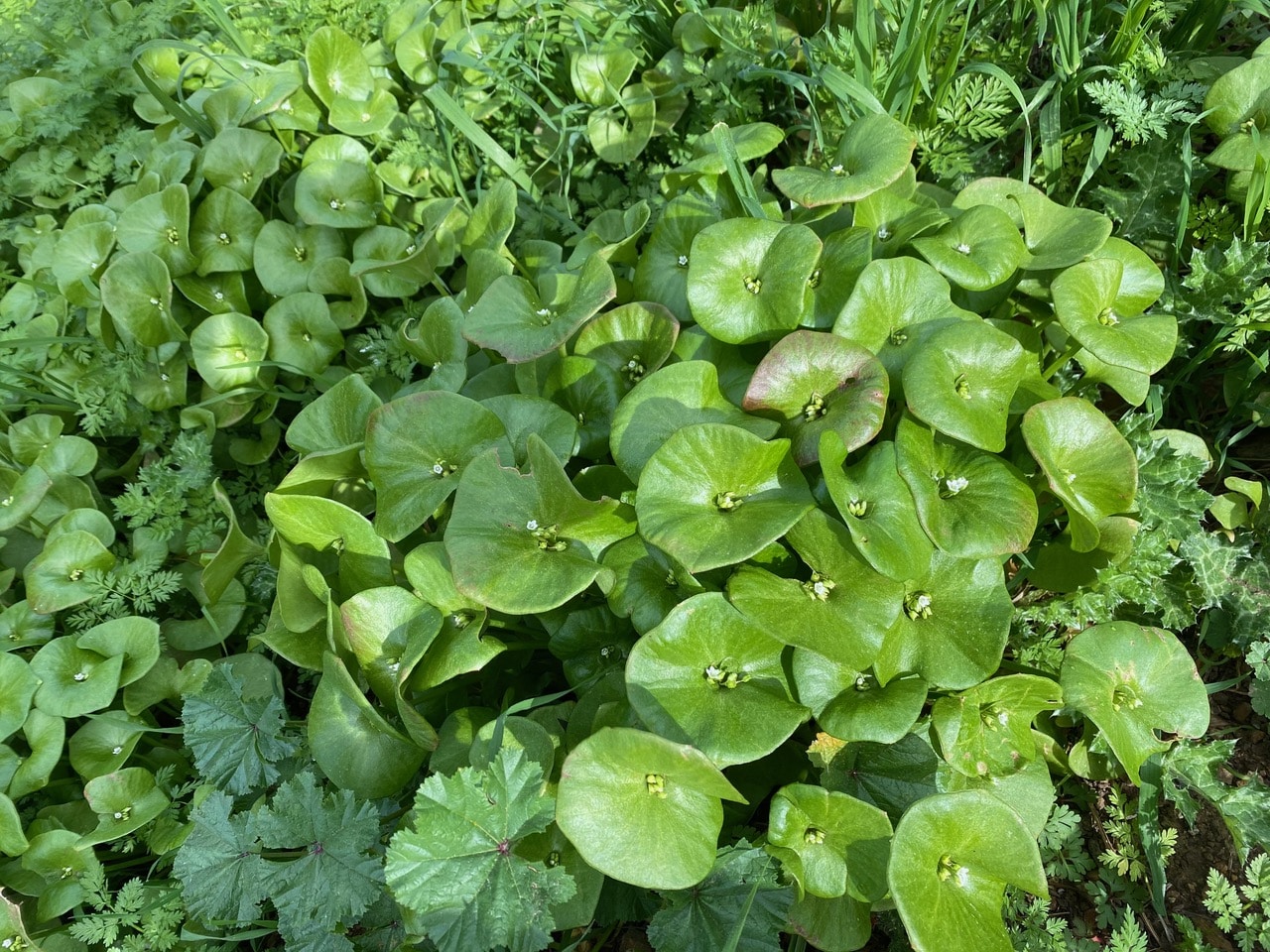
Wow, surely I will find some insects on this profusion of Miner’s Lettuce in bloom?
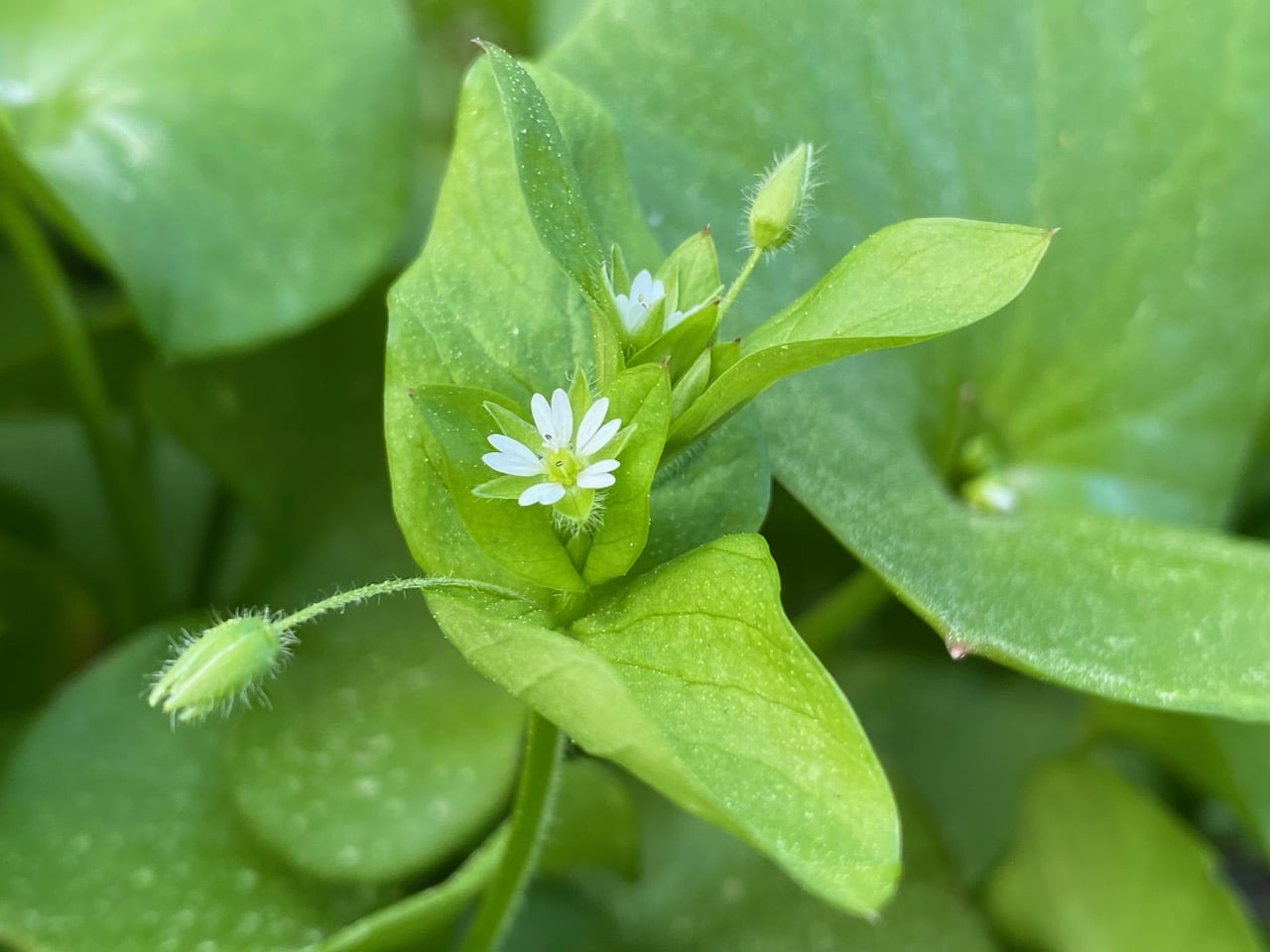
Mixed in among the Miner’s Lettuce are the Common Chickweed, Stellaria media with equally small white flowers. These have been blooming before the Miner’s Lettuce. Looks like I’ll be spending a lot of time on my knees this morning!

The chickweed flower appears to have 10 white petals, but actually there are only 5 deeply dissected petals. There are 5 stamens surrounding a 3-lobed style. The flower is supported by a calyx made of 5 sepals that form a flaring cup.
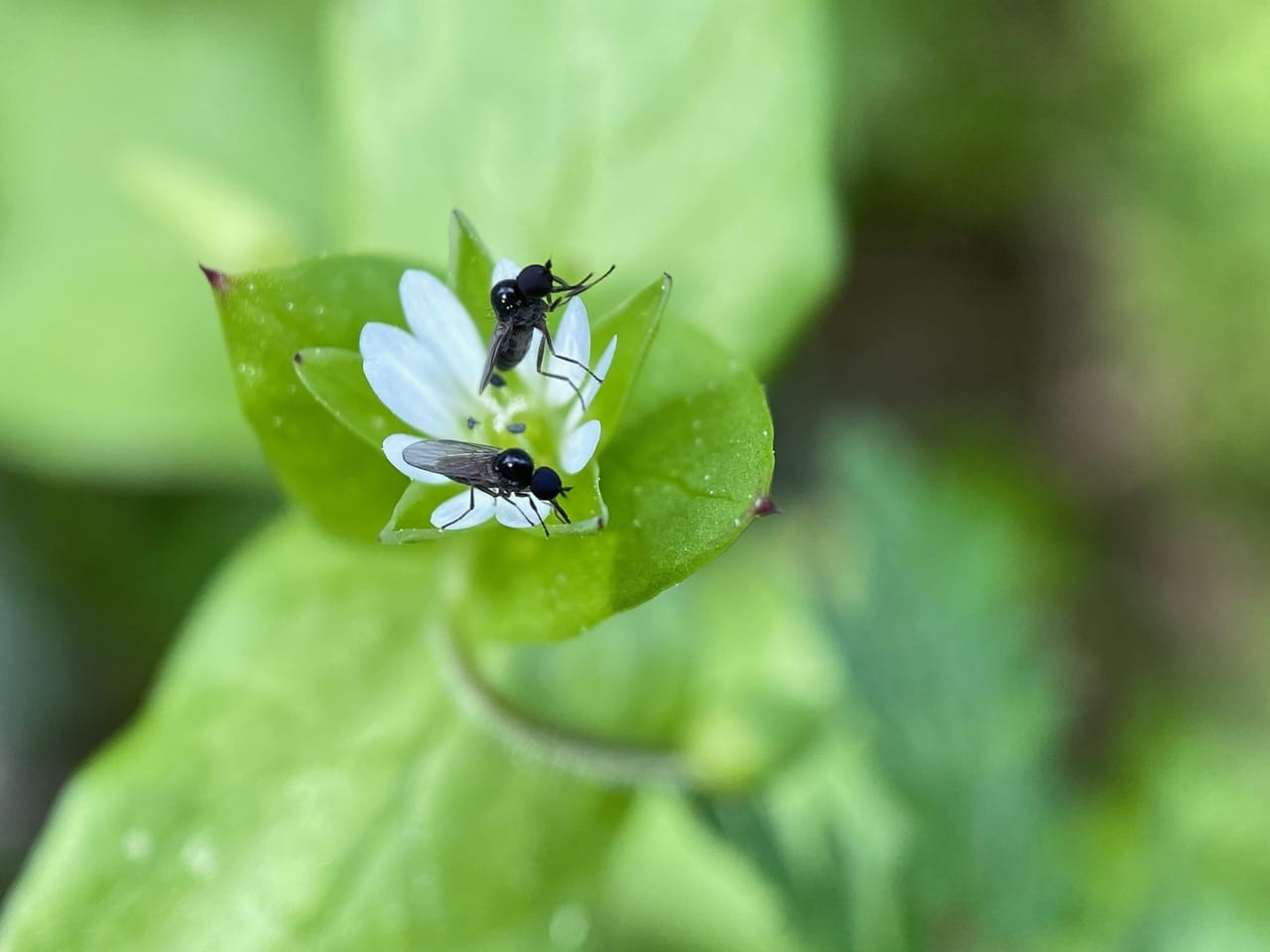
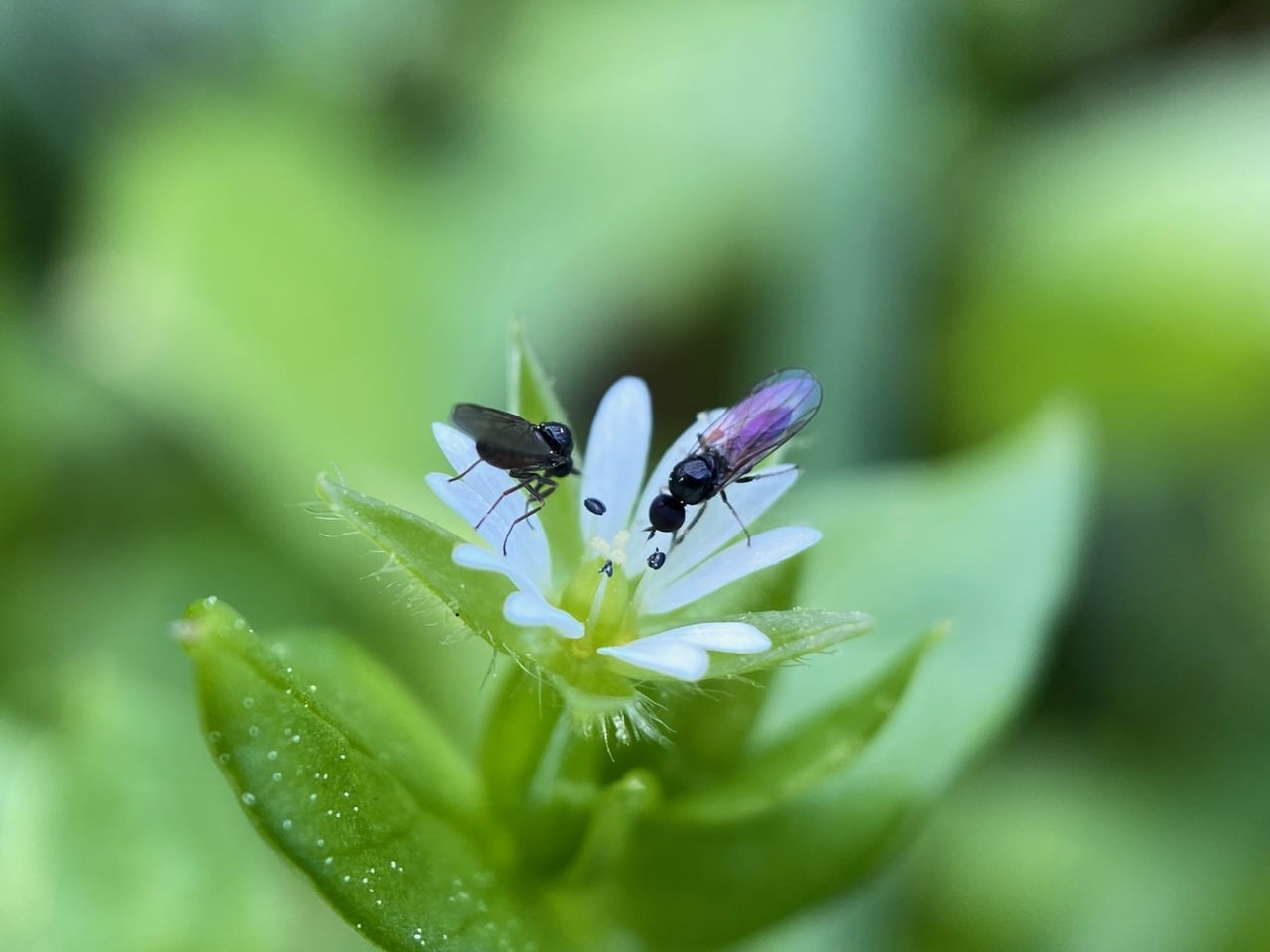
In the shade, two small Dance Flies, Anthalia sp. (family Hybotidae) are foraging on a chickweed flower.
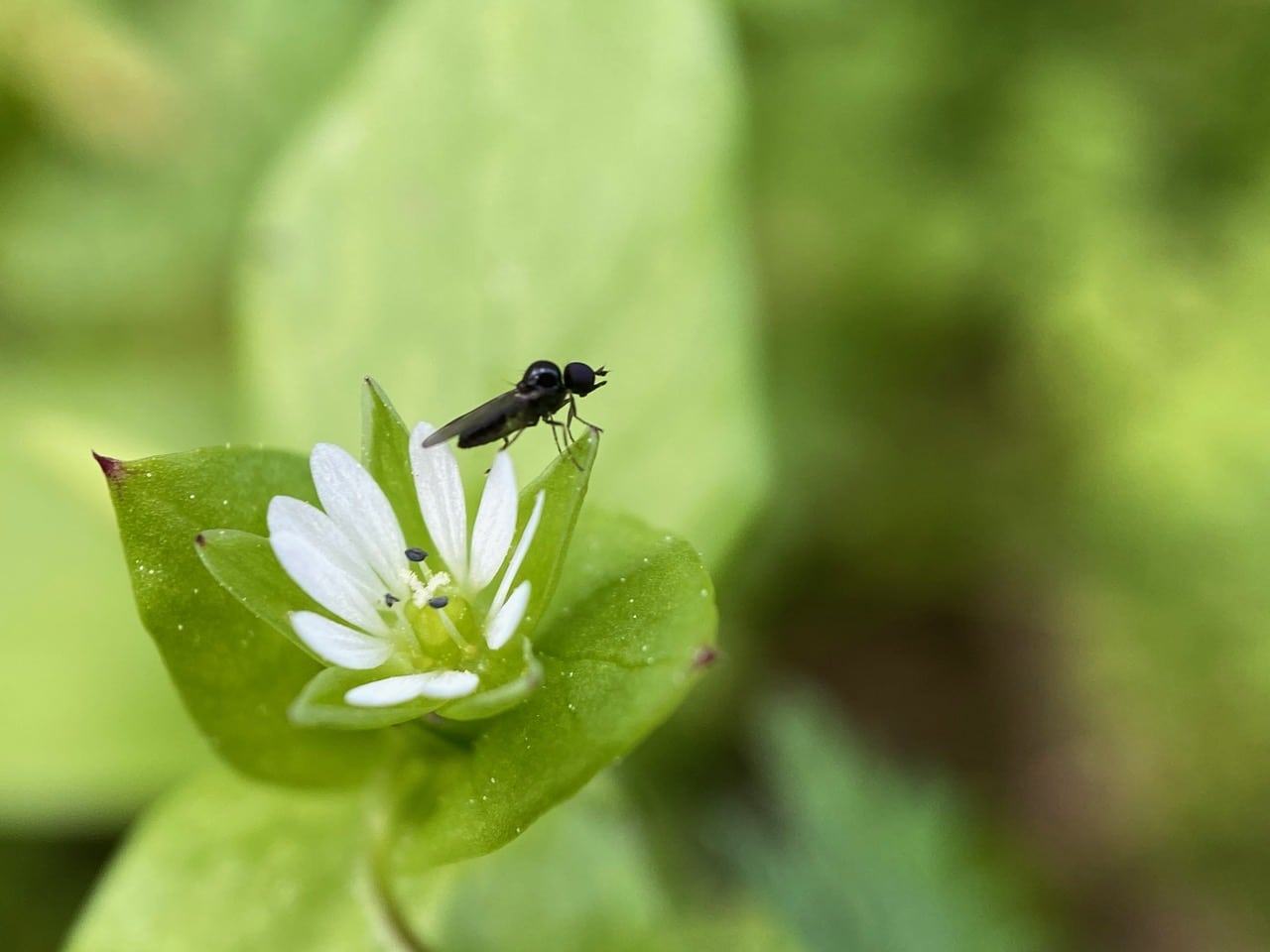
A typical profile of an Anthalia dance fly resting on the calyx of a chickweed flower – a humped thorax, a globular head that is occupied mostly by eyes, and a short thick beak pointing forwards. As these flies typically frequent shady areas, I have never been able to get color or better resolution on their photos.
The small fly, under 3 mm long is a member of the Typical Dance Flies or Hybotid Dance Flies (family Hybotidae). Its compound eyes seem to take up most of its spherical head. These flies belong to the superfamily Empidoidea and were formerly included in the Empididae as a subfamily. Empididae generally have a thick beak pointing down, while Hybotidae have a thinner beak, or a thick beak pointing forwards or diagonally. Some crucial wing venation further distinguishes the two families. Precious little is known about the life cycle and biology of Hybotids because they are not considered of economic consequence.

Why the name “dance fly”? This is derived from the mating swarms of males of many species. They gather in clouds over prominent objects, each individual seeming to bounce or “dance” in mid-air. Many other flies do this, notably midges, but the Empidids and the Hybotids got the moniker.

Reaching for nectar at the base of the chickweed flower.
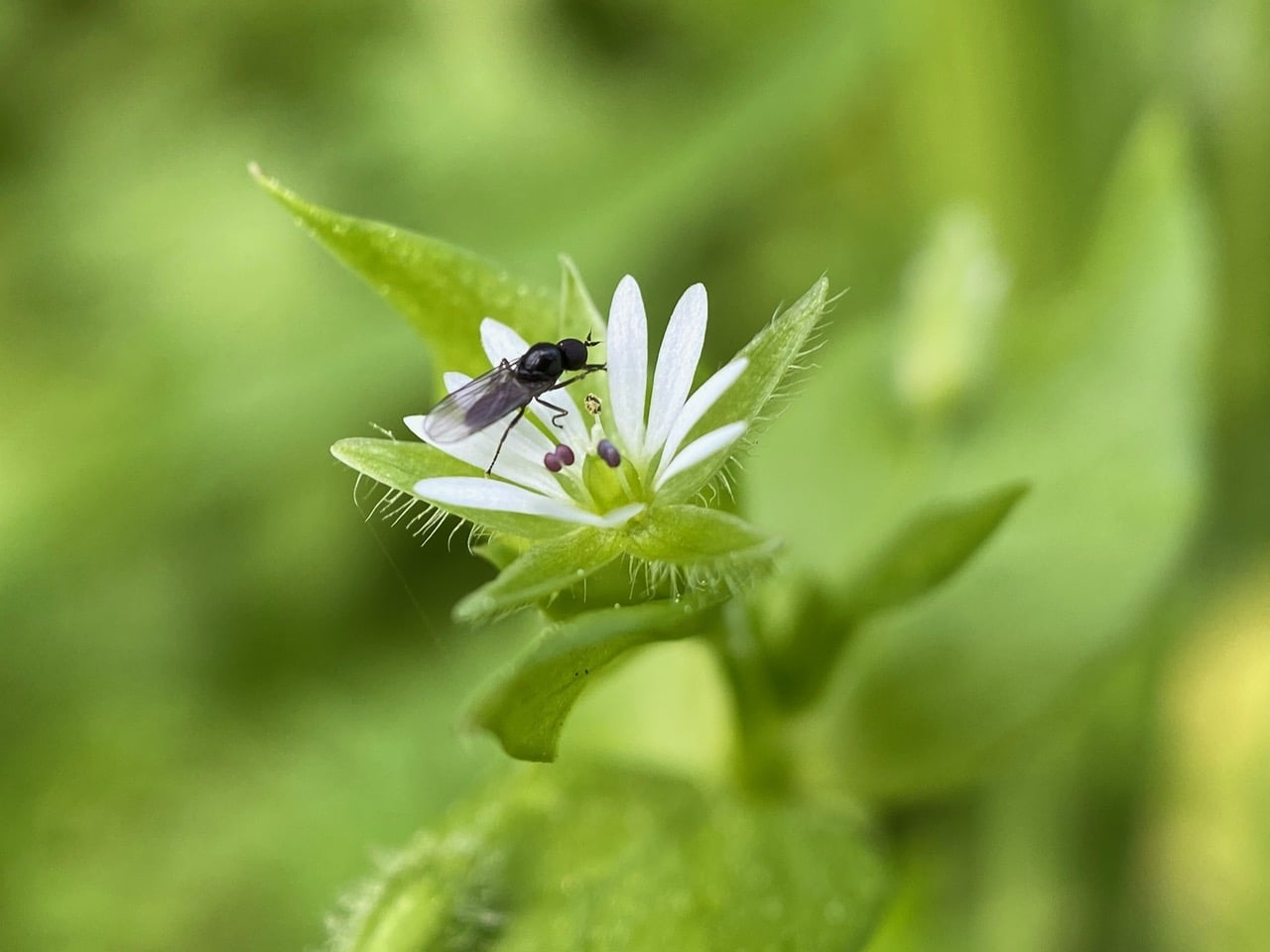
Cleaning proboscis.

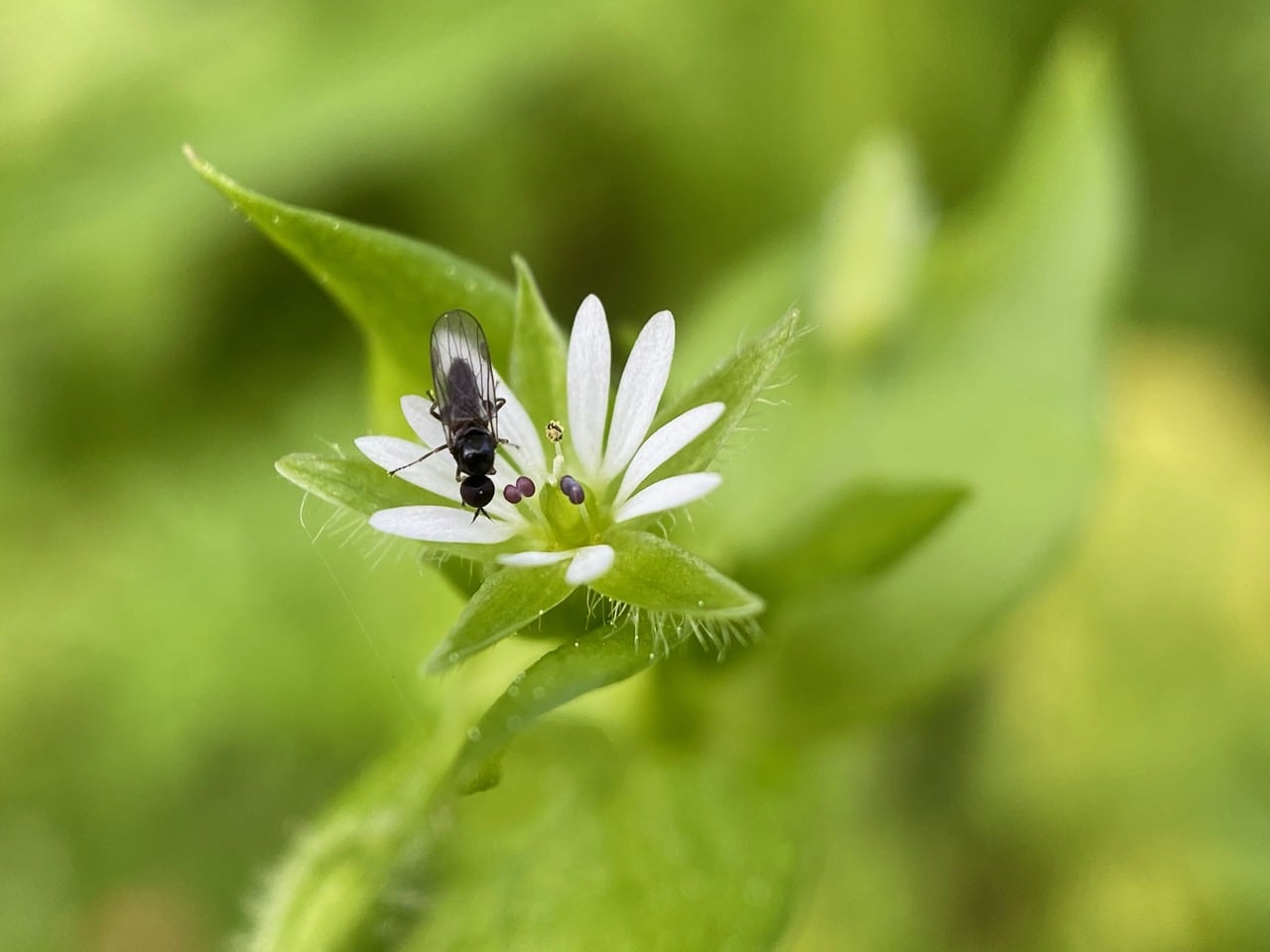

This Hybotid Dance Fly is reaching down to access nectar at the base of the flower.

This chickweed flower is at the stage when its stamens are releasing pollen. The Hybotid Dance Flies that visit get covered with pollen.
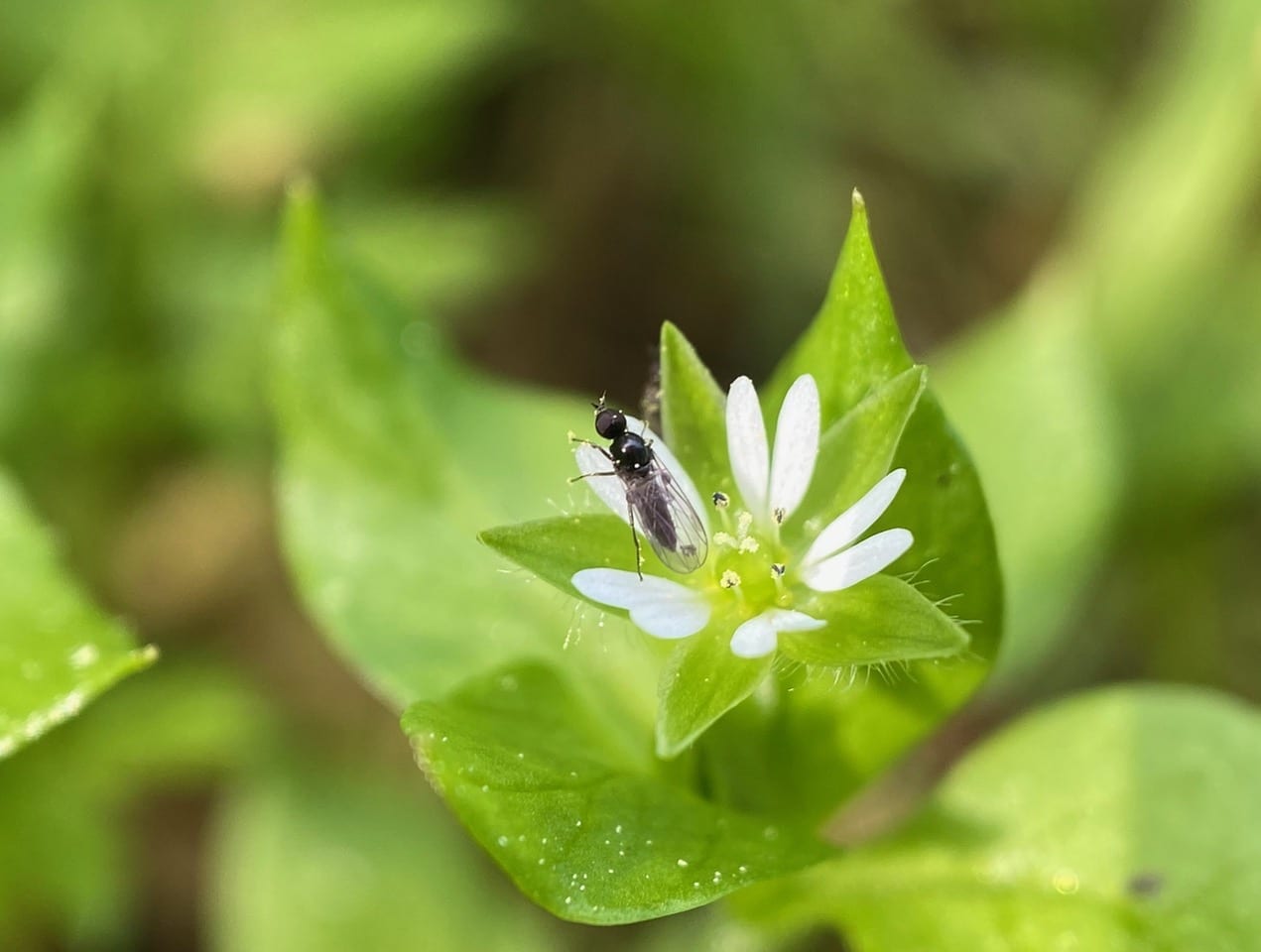
On to the next flower!
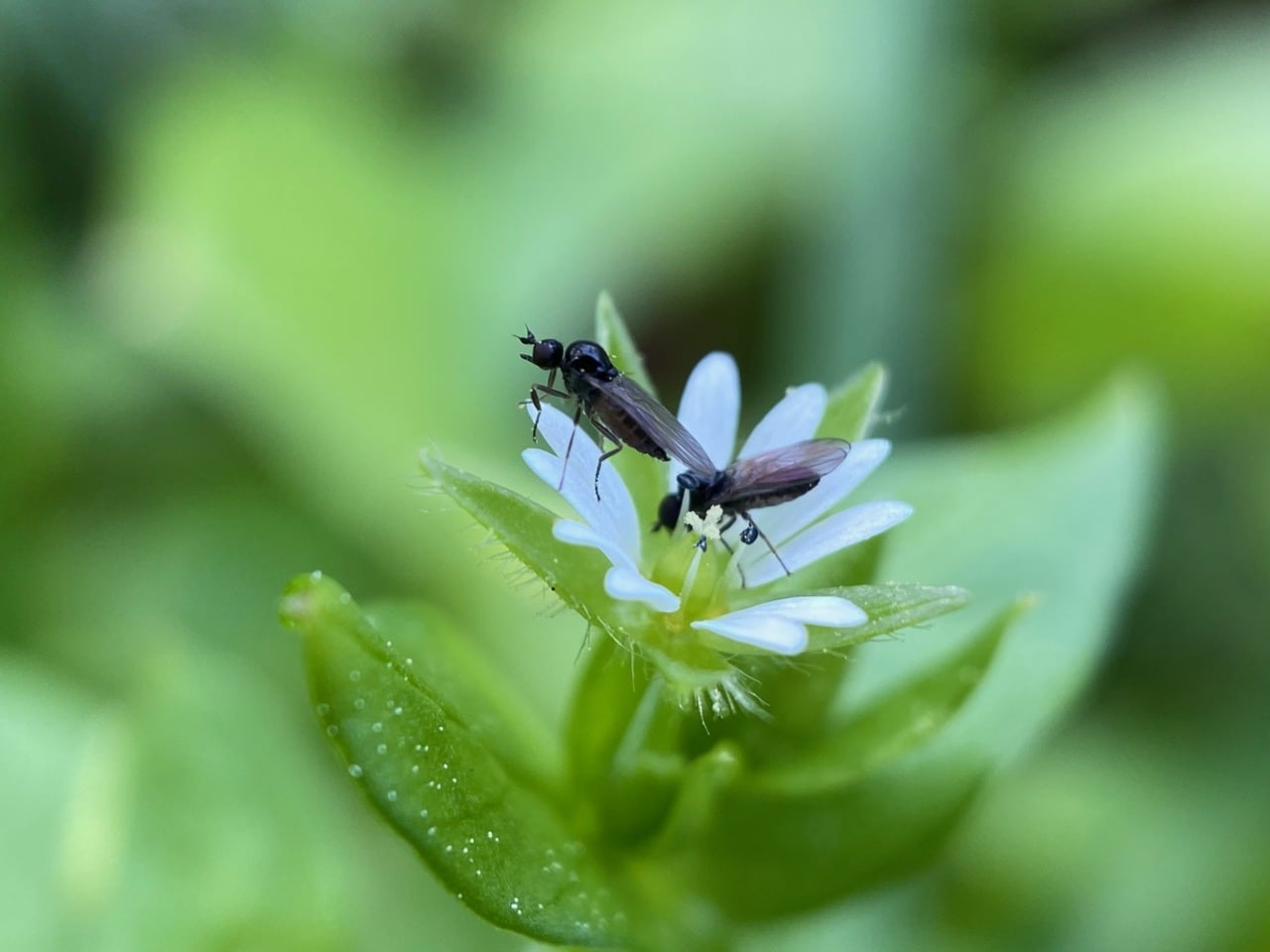
In deep shade, two Hybotid Dance Flies are foraging on a Common Chickweed flower.
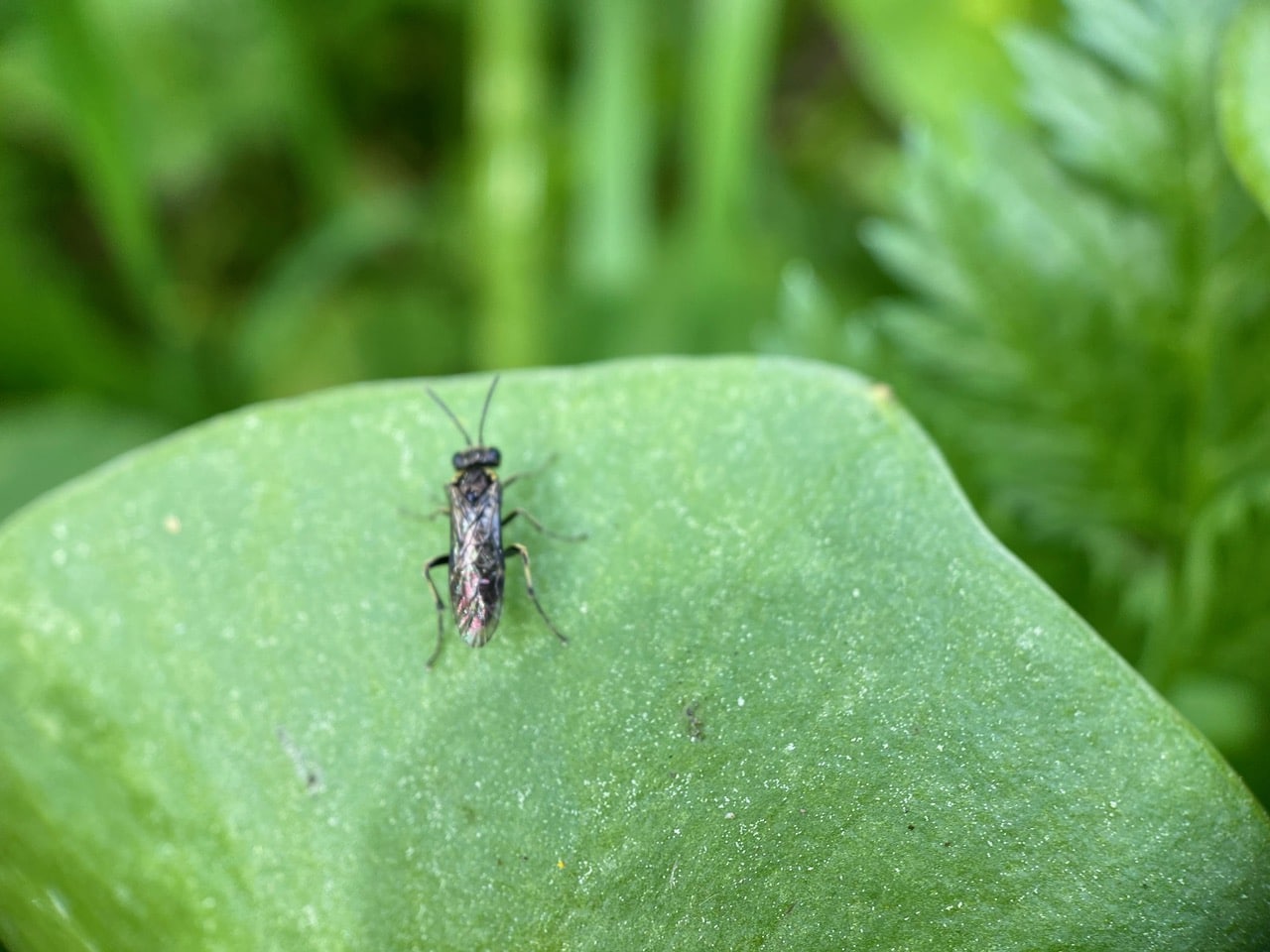
In a flash, a Sawfly, Filacus sp. (family Tenthredinidae) lands on a leaf of Miner’s Lettuce.
Sawflies are part of the insect order, Hymenoptera, together with bees, wasps and ants. They are considered to be the most primitive group and form the sub-order Symphyta. They differ from the bees, wasps and ants in not having a narrow ‘waist’ and in their wing venation. The common name comes from the saw-like ovipositor that the females use to cut into plant tissues to lay their eggs. Larvae are caterpillar-like and can be distinguished from lepidopteran caterpillars in that all body segments following the three bearing true legs have a pair of fleshy prolegs. Like the lepidopteran caterpillars, sawfly larvae walk about and eat foliage. In many species, the larvae feed in groups.
Filacus are sawflies that are small, stout, black and yellow in color. They are native to western North America. Filacus larvae feed on plants of several families. Confirmed hosts include Phacelia, Amsinckia (fiddle necks), and Ranunculus (buttercups). Adult Filacus have been observed visiting a variety of flowers from several plant families and carrying pollen on their bodies, making them a potential pollinator. It is not known if the adults feed on the nectar, pollen, or other flower parts.
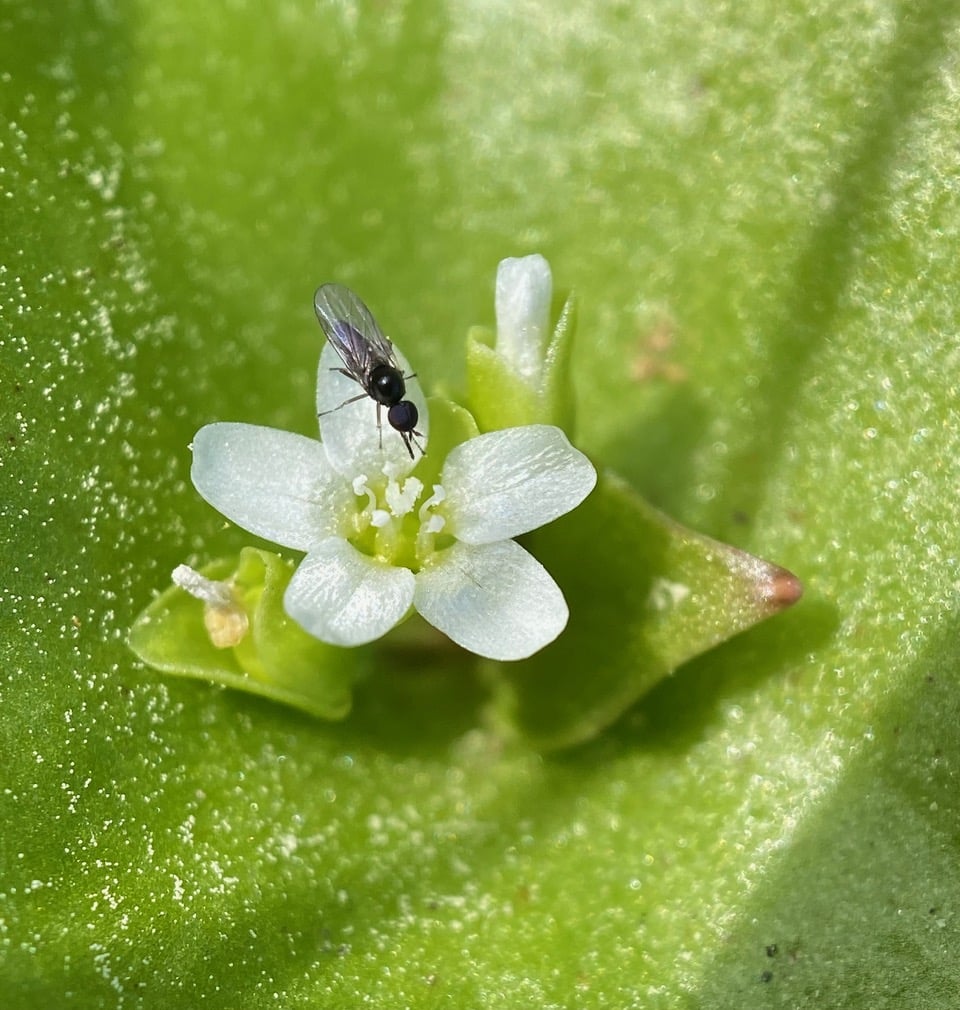
A Hybotid Dance Fly forages on a flower of Miner’s Lettuce. The diminutive fly is the perfect size for pollinating the tiny flower.
Miner’s Lettuce, Claytonia perfoliata is rather unique in that the leaves at the flower stem are fused together, forming a circular structure around the stem (“perfoliate”). The flowers are small, white to pale pink, growing in clusters from the center of the perfoliate leaf. Each flower has 5 petals, 2 sepals, 5 stamens, and one pistil with 3 stigmas.
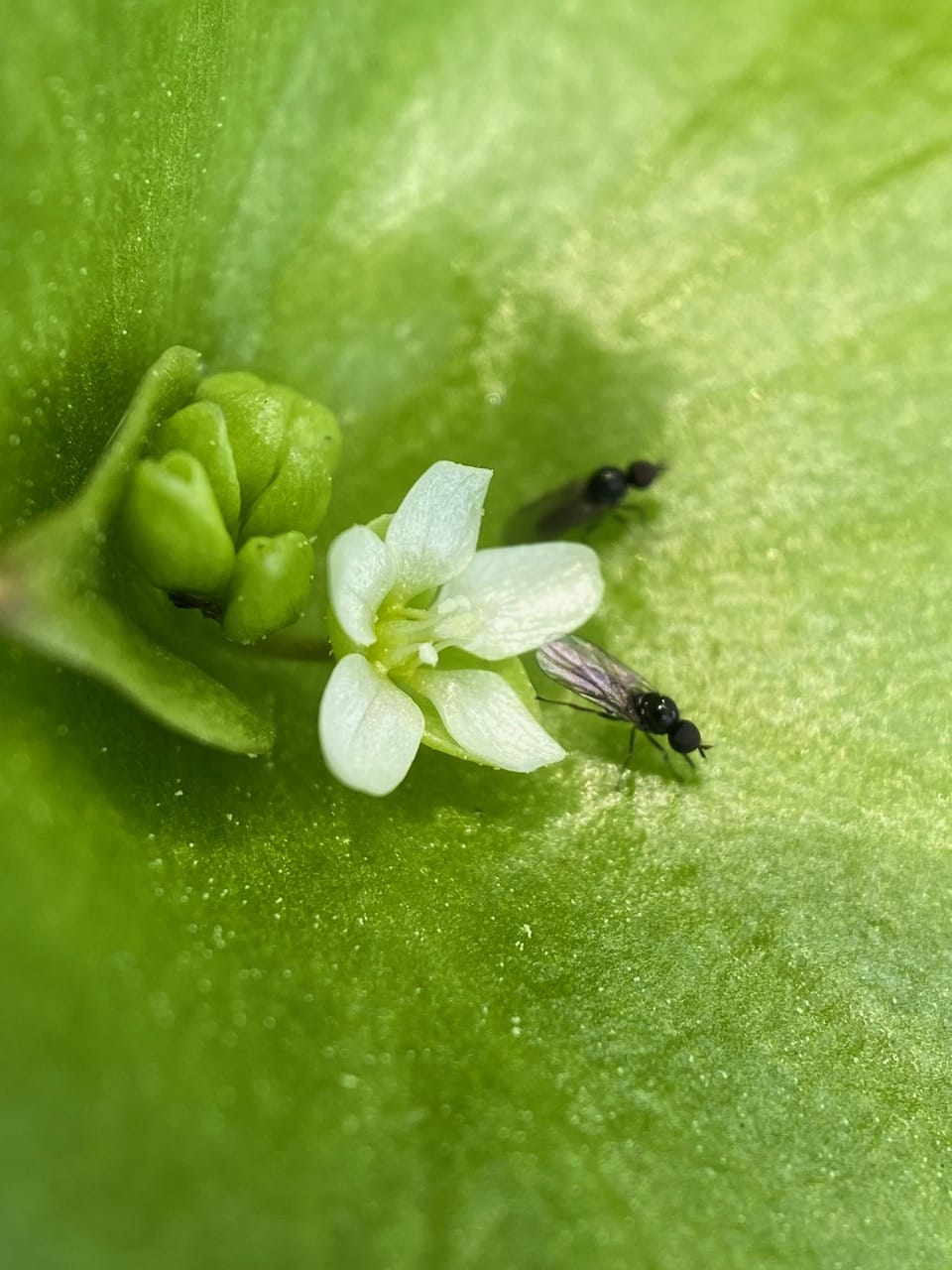
Around a Miner’s Lettuce flower, two Hybotid Dance Flies are scavenging spilled pollen on the perfoliate leaf.
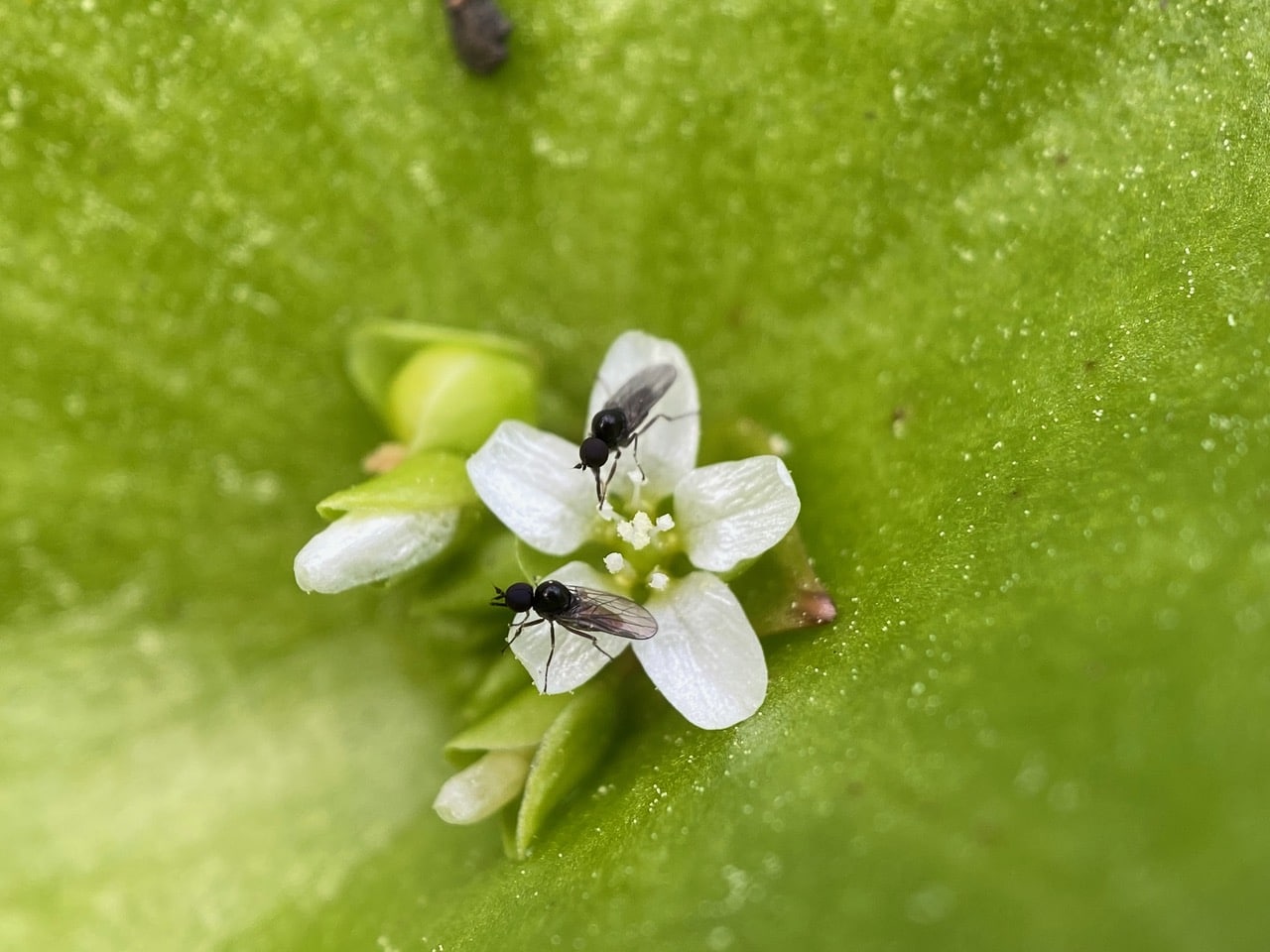
Two Hybotid Dance Flies, Anthalia sp. (family Hybotidae) are foraging on a Miner’s Lettuce flower.

Note the pollen grains adhering to the flies’ body.